Improving Students’ Motivation, Engagement and Learning Environment in a Transnational Civil Engineering Program


Abstract
1. Introduction
1.1. Background and Context
1.2. Problem Statement and Research Gap
1.3. Purpose and Significance of the Study
1.4. Structure of the Paper
2. Theoretical Framework
2.1. Socio-Cultural Constructivism
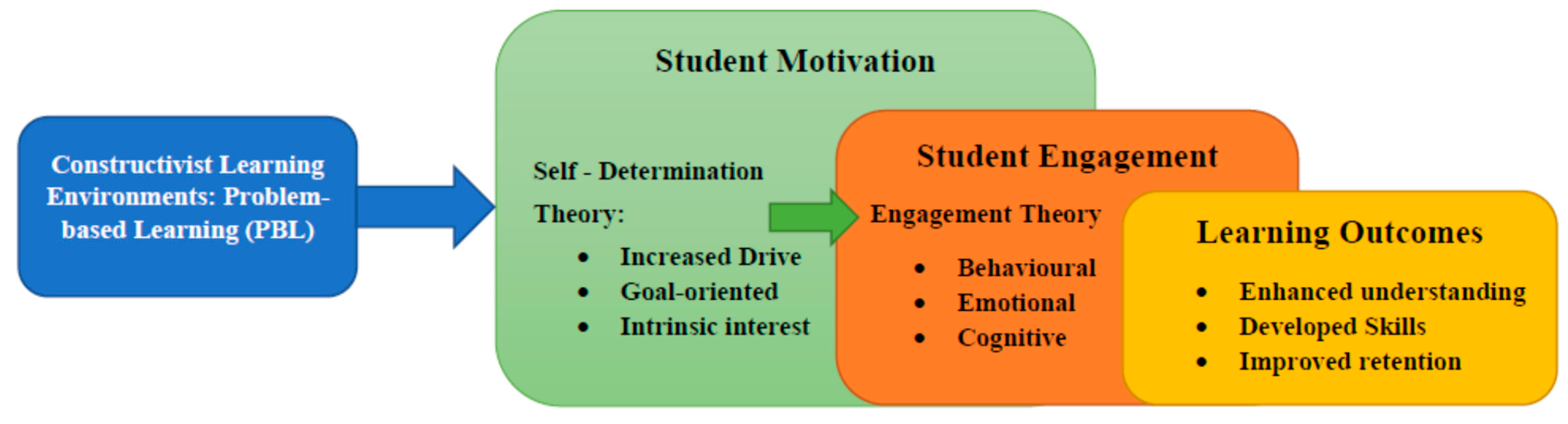
2.2. Motivation and Self-Determination Theory
2.3. Engagement Frameworks
- Behavioural engagement refers to participation, effort, and persistence.
- Emotional engagement reflects interest, enjoyment, and a sense of belonging.
- Cognitive engagement denotes investment in learning strategies and self-regulation.
2.4. Learning Outcomes and Constructive Alignment
2.5. Integrative Theoretical Model
2.6. Research Questions
- RQ1: Did the intervention with handouts achieve the aim to help students learn during the class, understand the concept, and prepare for the exam?
- RQ2: Did the intervention with the handouts motivate students to participate in the class from their perspective?
- RQ3: How did intervention with the handouts impact the overall learning environment?
- RQ4: Did students find the tutorial videos useful for better understanding the learning content?
3. Methodology
3.1. Research Design
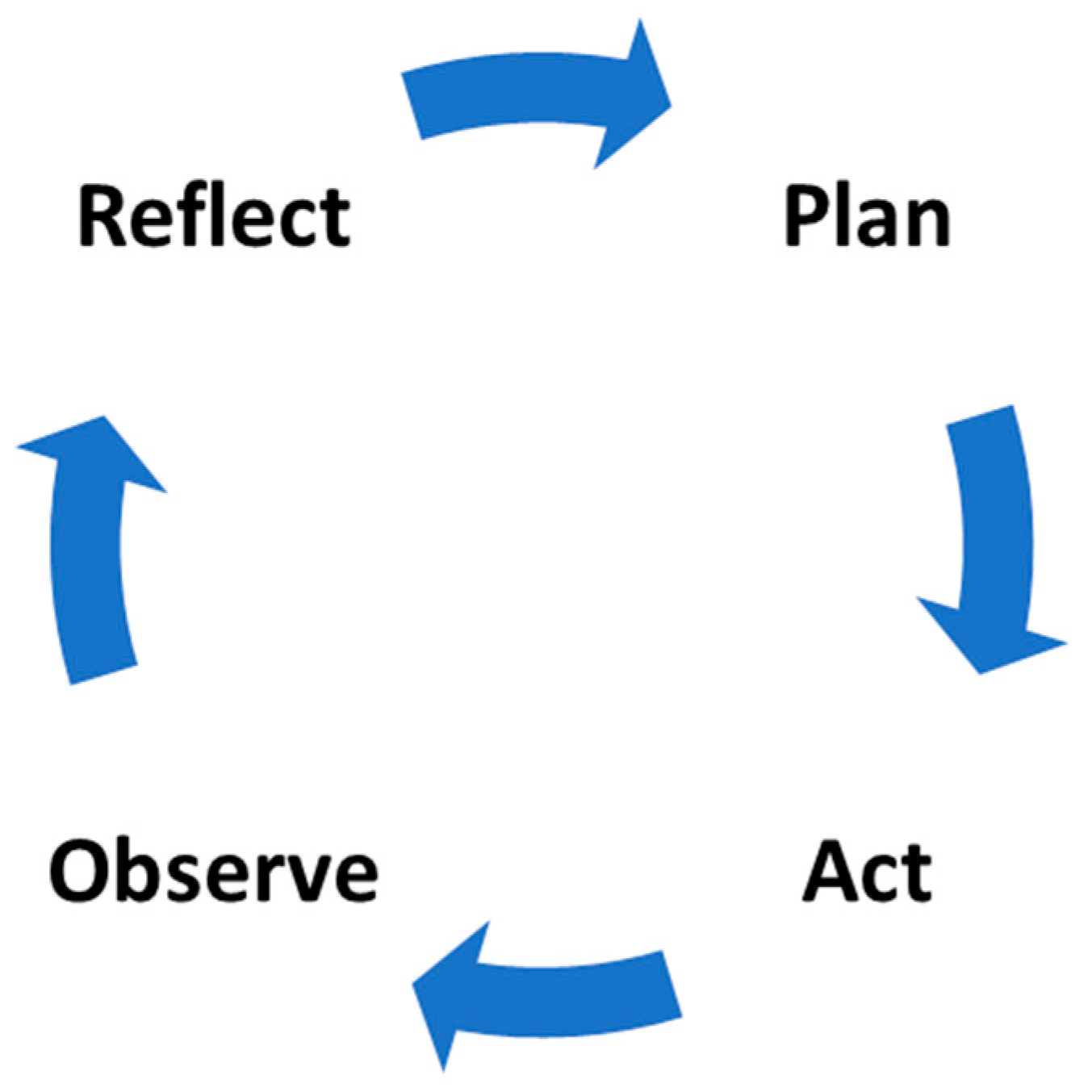
- Reflect: This is the initial step in the cyclical model. In the first iteration, the reflection process is applied to identify the issues that arise in the current classes. Reflecting on classes, a noticeable lack of motivation in the learning process and participation is evident. When students were asked to review the class, it was observed that they employed a surface-level approach to learning from the class. The surface-level learning process is characterised as a learning process in which the student directs his attention towards the teaching content with the intention of remembering it and just reproducing it (Marton & Säljö, 1976).
- Plan: Developing strategies and interventions aimed at addressing the identified issues and enhancing the overall learning experience. In the planning process, the idea of handouts is considered.
- Act: Implementing the planned strategies within the classroom, integrating them into the teaching and learning process.
- Observe: Monitoring the implementation of interventions by gathering evidence from classroom interactions, student behaviour, and feedback.
- Reflect: In other iterations except the first iteration, the task is to critically evaluate the teaching experience, the impact of the intervention, and student responses. This includes both personal reflection by the educator and analysis of student feedback.
3.1.1. Stage 1—Reflect
3.1.2. Stage 2—Plan
- Embedding student activities into lectures,
- Improving classroom technology (e.g., microphone use),
- Enhancing the learning environment, and
- Incorporating short instructional videos to visualise construction practices.
3.1.3. Stage 3—Act
3.1.4. Stage 4—Observe
3.1.5. Stage 5—Reflect
3.2. Context and Participants
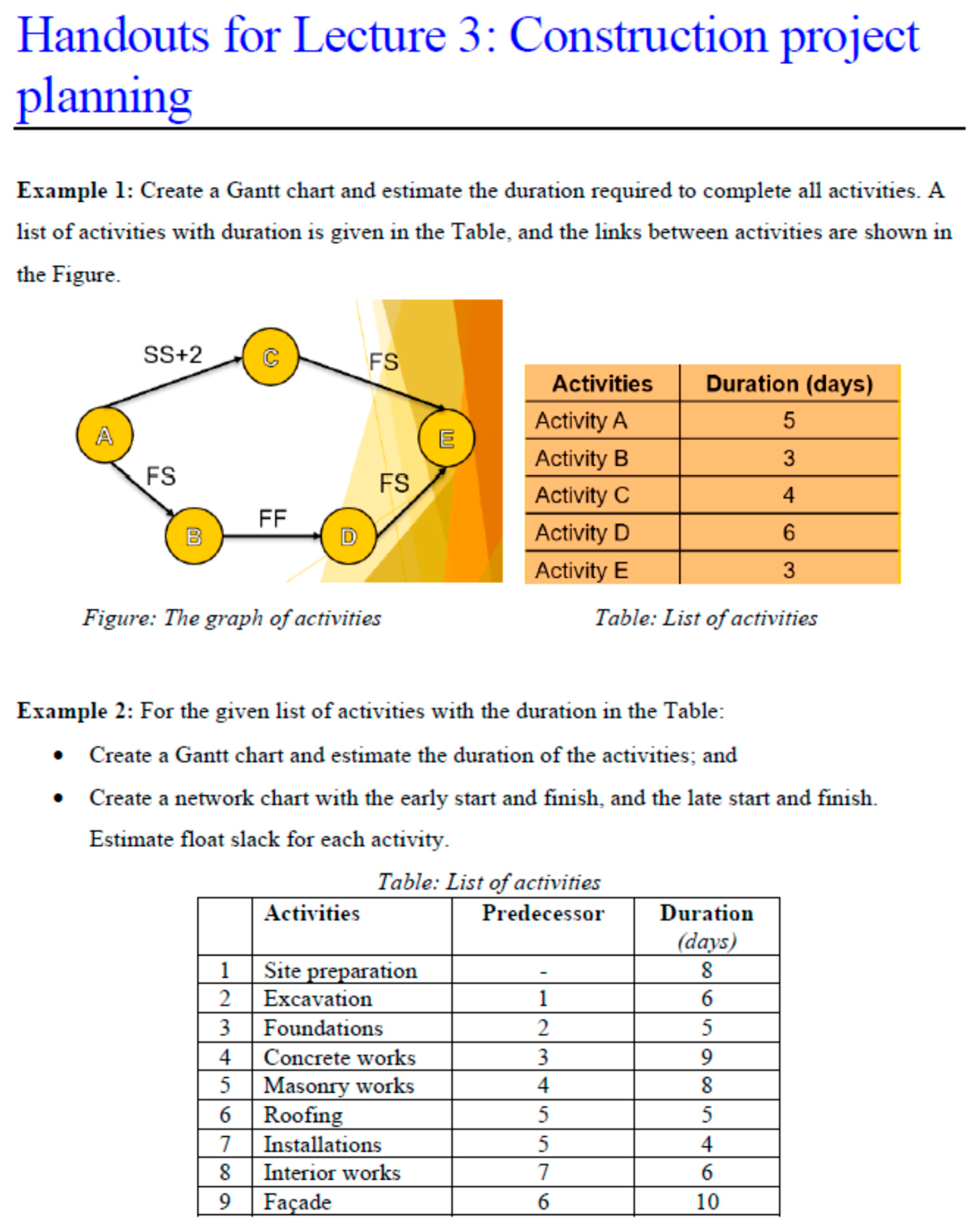
- CEN002: Introduction to Civil and Architectural Engineering Design and Practice (Year 1, Civil and Architectural Engineering);
- CEN201: Construction Methods (Year 3, Civil and Architectural Engineering);
- CEN208: Capstone Design 1 (Year 3, Civil Engineering); and
- CEN222: Building Services Engineering (Year 3, Architectural Engineering).
3.3. The Intervention: Scaffolded Interactive Handouts
- Sequential problem-solving questions mapped to lesson outcomes.
- Mini-scenarios simulating authentic engineering contexts.
- Spaces for individual reasoning followed by group discussion.
3.4. Mixed Methods Design
3.5. Data Analysis
3.6. Ethical Consideration
4. Results
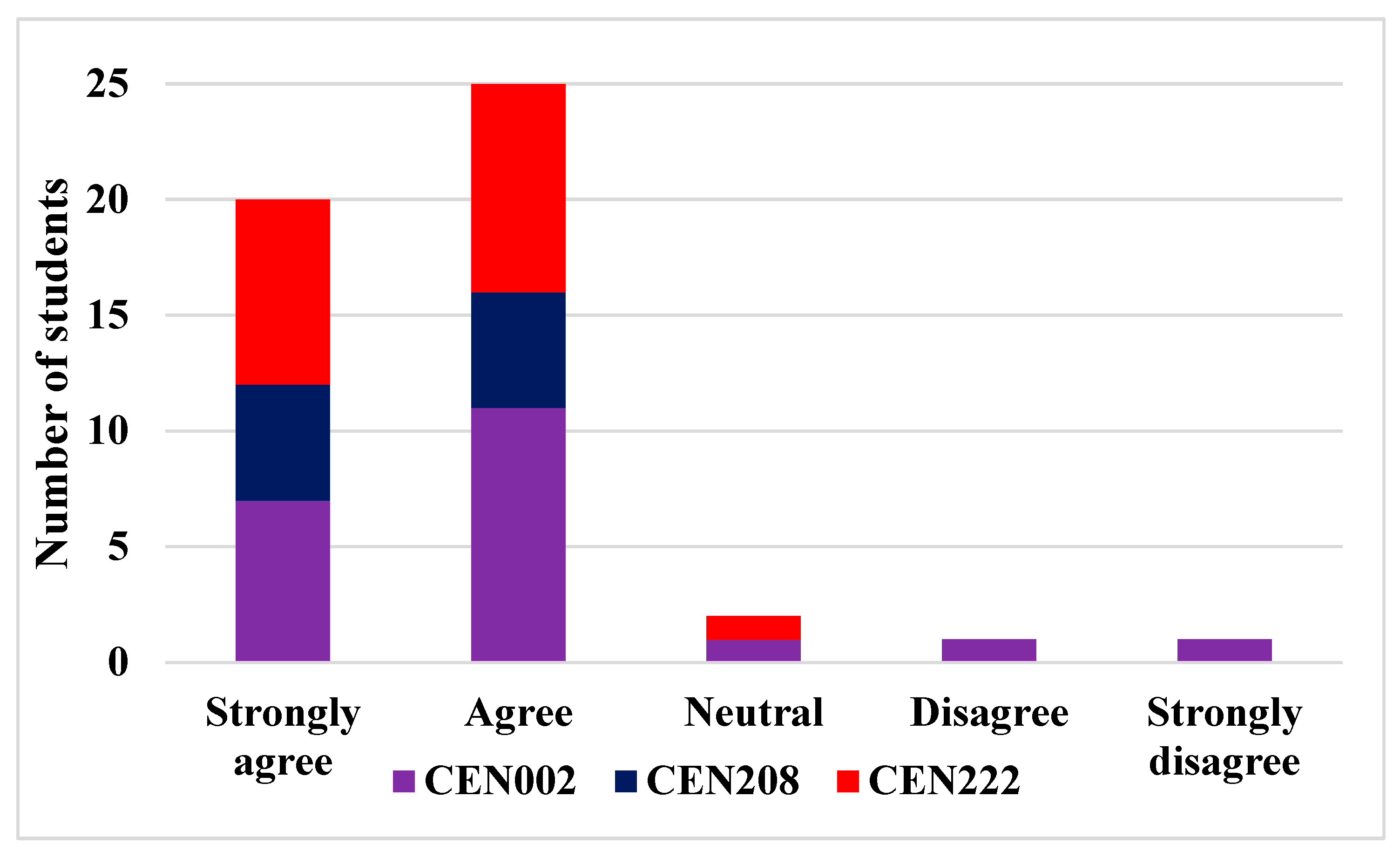
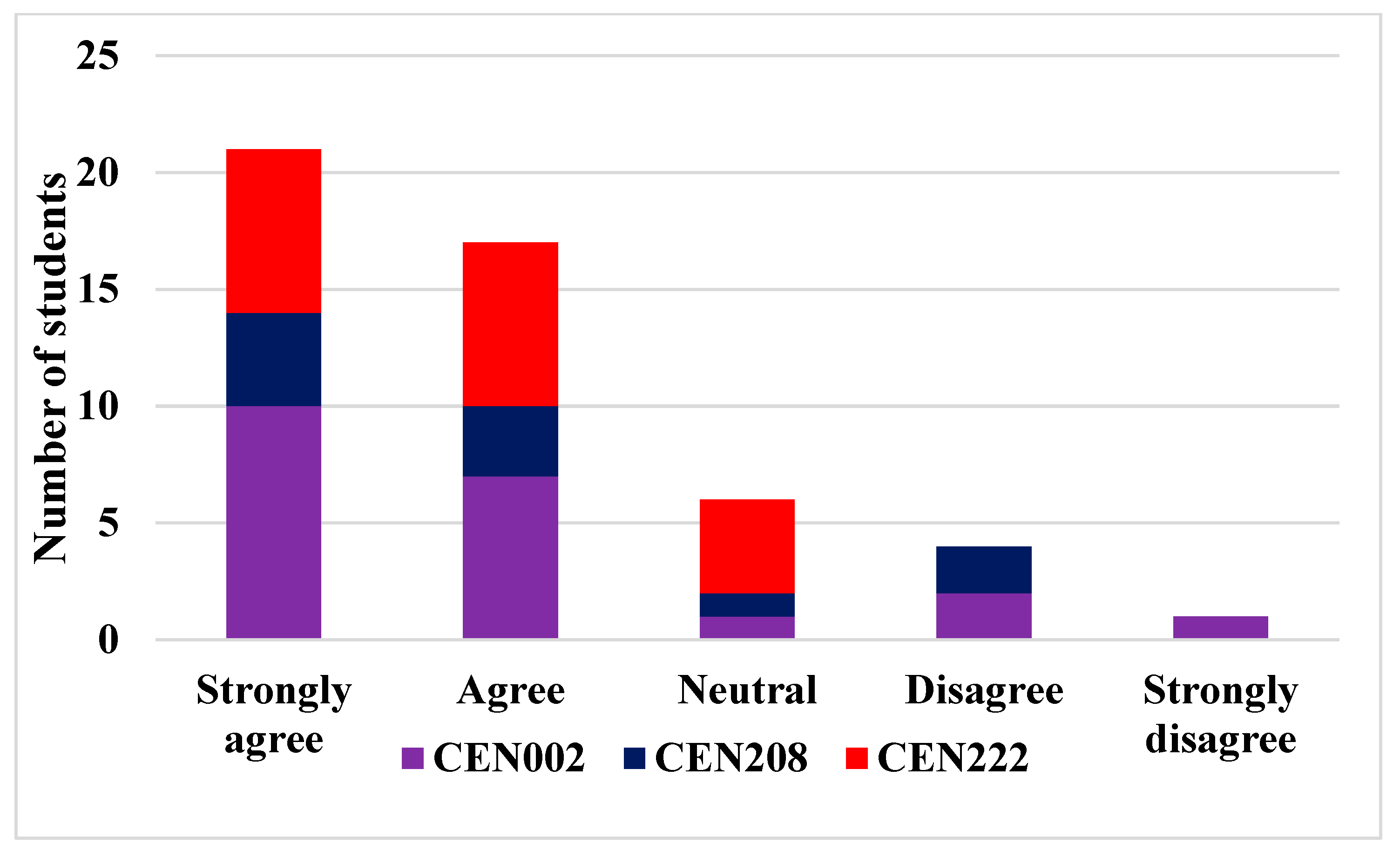
- 21 students in Module CEN002;
- 10 students in Module CEN208; and
- 18 students in Module CEN222.
4.1. Quantitative Findings
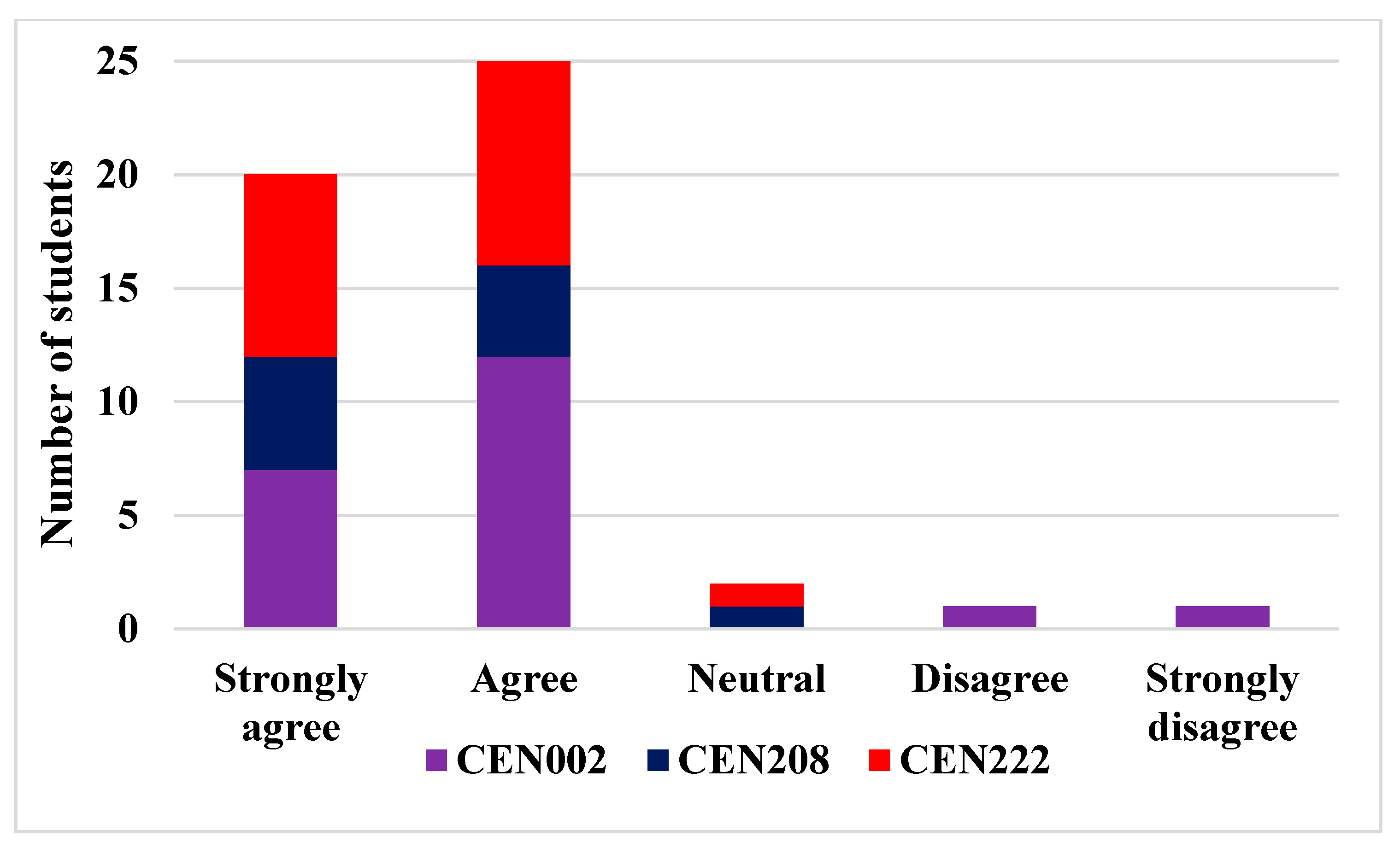
- 92% agreed the handouts improved understanding of and engagement with the core concepts.
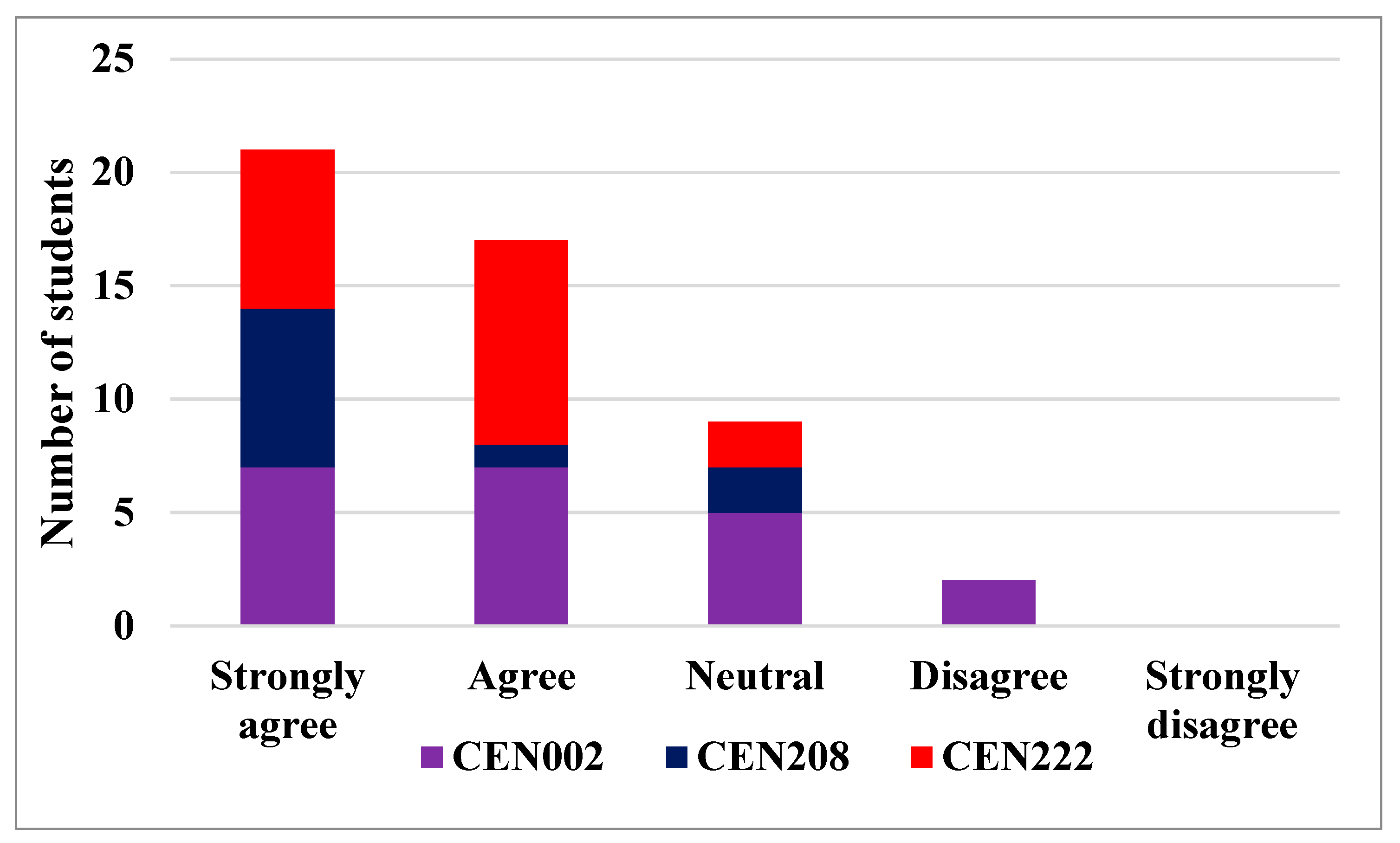
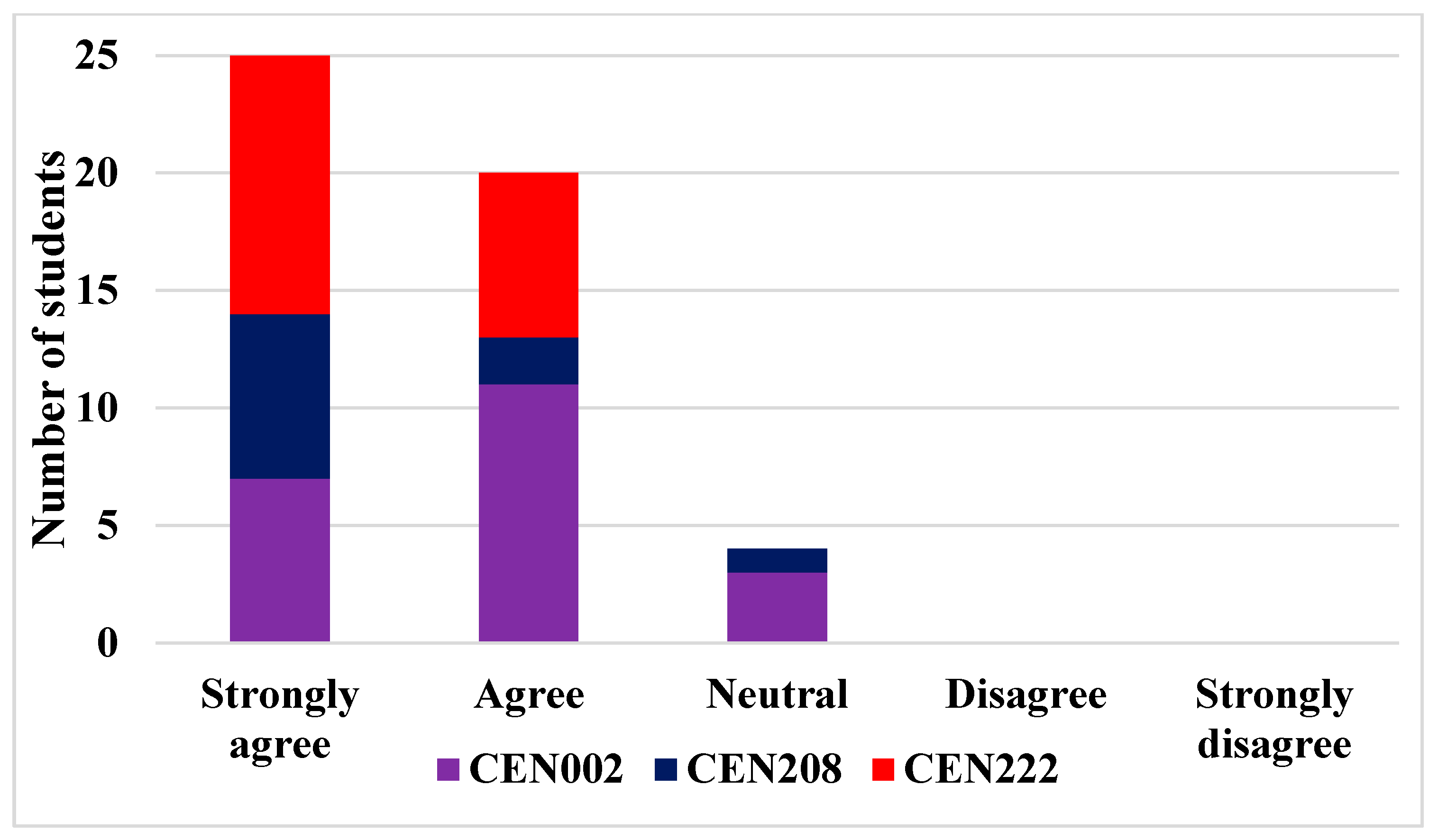
- 78% felt more motivated to participate in class.
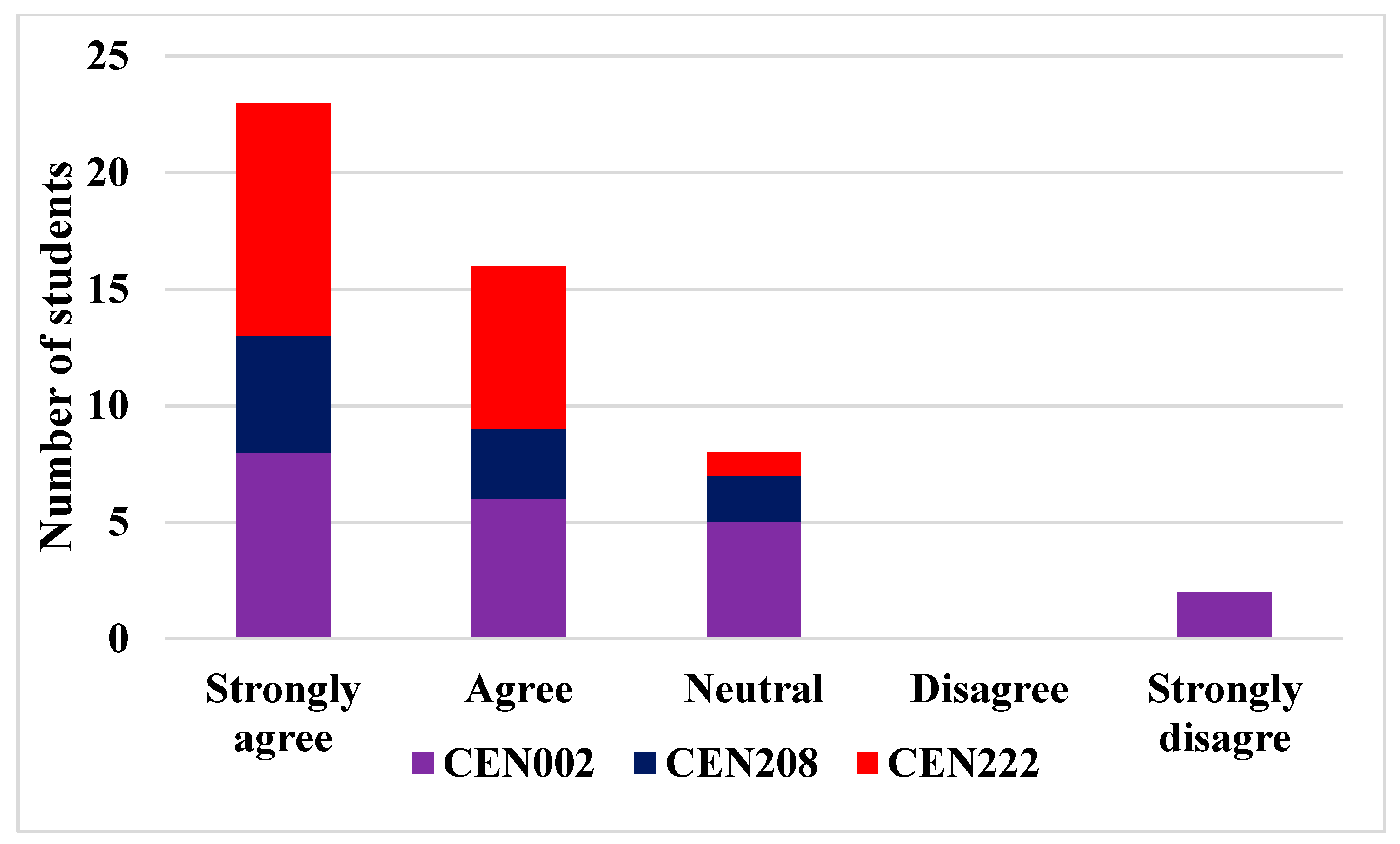
- 84% believed the activities would help them perform better in the exam.
4.2. Qualitative Themes
- Provide handout solutions
- Add background explanations for formulas
- Increase the number of handouts
- Introduce more group coursework
- Better explanation of teaching content and more videos
- Weekly inspection of the logbook
- Emphasised the value of handouts for review
- More tasks and exam-related practice
- Include examples from real construction projects
- Speak more slowly in class
- Encourage more active participation.
- Enhanced motivation through autonomy and relevance
- 2.
- Engagement through collaboration and fun
- 3.
- Improved learning outcomes through scaffolding and feedback
4.3. Triangulated Insights
5. Discussion
5.1. Linking Findings to Self-Determination Theory
5.2. Engagement as the Behavioural Manifestation of Motivation
5.3. Alignment with Constructivism and Learning Outcomes
5.4. Transnational Context and Cultural Consideration
5.5. Implications for Practice
- Design for need satisfaction: Teachers should intentionally design tasks that satisfy autonomy, competence, and relatedness to sustain motivation.
- Balance structure and freedom: Over-structuring can hinder creativity; too little scaffolding can cause frustration. The handout approach achieved a middle ground.
- Use feedback as motivation: Immediate, formative feedback is vital for competence building.
- Encourage reflective dialogue: Integrating short reflections after activities helps consolidate conceptual learning and metacognitive awareness.
5.6. Limitations and Future Research
- The study was confined to three specific modules within the Civil and Architectural Engineering program at a single institution. This contextual specificity means the effectiveness and student perceptions of the Problem-Based Learning (PBL) and interactive intervention may not be directly transferable to all civil engineering curricula or other engineering disciplines. This limitation is regarding the specific engineering discipline. Furthermore, the effectiveness of this method should be investigated in other modules of civil engineering and other science and engineering disciplines. When it comes to the social sciences discipline, due to the different nature of studies, some modifications of intervention should be applied in order to adjust for their needs.
- Due to the nature of the action research design and the enrolment in the selected modules, the study utilised a limited and non-randomised sample of students. This small, specific sample limits the external validity of the quantitative findings (e.g., self-reported motivation and engagement), restricting generalisation to the broader population of transnational engineering students. A total of 49 students participated in the survey. From a mathematical perspective, since the central limit theorem holds true for sample sizes greater than 30, statistical analysis can be applied to this sample (Zhao et al., 2016). Secondly, the survey only included students from the 3rd and 1st year in the Civil and Architectural engineering programme. There is a lack of opinion and experience of students from the 2nd and 4th years.
- While the mixed-methods approach provided some qualitative data, a significant portion of the quantitative data relied on student self-reported perceptions (motivation and engagement). This methodology is susceptible to response bias (e.g., social desirability bias), which may lead to an overestimation of the intervention’s positive effects. To provide more balanced data, the questionnaire should include a more balanced number of closed-ended and open-ended questions.
6. Conclusions
Author Contributions
Funding
Institutional Review Board Statement
Informed Consent Statement
Data Availability Statement
Conflicts of Interest
Appendix A
Appendix B

| Num. | Question |
|---|---|
| 1 | The handouts help me learn during class and enhance my understanding of and engagement with the course concepts. |
| 2 | The problem-solving strategy on the handouts contributes to gaining knowledge. |
| 3 | I feel motivated to participate in the class and discussions with the use of handouts. |
| 4 | The use of handouts improved the learning environment. |
| 5 | The handouts help in preparing exams. |
| 6 | I found the instructional videos useful for enhancing my understanding of the key concepts in civil engineering. |
| 7 | Can you provide some suggestions for improving the learning environment in your civil engineering classes? |
References
- Abualrub, I., Karseth, B., & Stensaker, B. (2013). The various understandings of learning environment in higher education and its quality implications. Quality in Higher Education, 19(1), 90–110. [Google Scholar] [CrossRef]
- Adu, P. (2019). A step-by-step guide to qualitative data coding. Routledge. [Google Scholar]
- Ahern, A. A. (2010). A case study: Problem-based learning for civil engineering students in transportation courses. European Journal of Engineering Education, 35(1), 109–116. [Google Scholar] [CrossRef]
- Azam, R., Farooq, M. U., & Riaz, M. R. (2024). A case study of problem-based learning from a civil engineering structural analysis course. Journal of Civil Engineering Education, 150(3), 05024001. [Google Scholar] [CrossRef]
- Biggs, J. (1996). Enhancing teaching through constructive alignment. Higher Education, 32(3), 347–364. [Google Scholar] [CrossRef]
- Biggs, J., & Tang, C. (2011). Teaching for quality learning at university (4th ed.). McGraw-Hill. [Google Scholar]
- Bloom, B. S. (1956). Cognitive domain. Taxonomy of educational objectives. In Handbook (Vol. 1). David McKay. [Google Scholar]
- Bond, M., & Bedenlier, S. (2019). Facilitating student engagement through educational technology: Towards a conceptual framework. Journal of Interactive Media in Education, 2019(1), 11. [Google Scholar] [CrossRef]
- Braun, V., & Clarke, V. (2006). Using thematic analysis in psychology. Qualitative Research in Psychology, 3(2), 77–101. [Google Scholar] [CrossRef]
- Brookfield, S. D. (1995). Becoming a critically reflective teacher. Jossey-Bass. [Google Scholar]
- Bruner, J. (1996). The culture of education. Harvard University Press. [Google Scholar]
- Bujang, M. A., Omar, E. D., & Baharum, N. A. (2018). A review on sample size determination for Cronbach’s alpha test: A simple guide for researchers. The Malaysian Journal of Medical Sciences: MJMS, 25(6), 85. [Google Scholar] [CrossRef]
- Ce, J., Chunhong, C., Rong, G., & Xiao, Z. (2021, January 18–20). Design of PBL teaching method based on OBE mode. 2021 10th International Conference on Educational and Information Technology (ICEIT) (pp. 116–119), Chengdu, China. [Google Scholar]
- Chan, E., & Rao, N. (2010). Revisiting the Chinese learner. Springer. [Google Scholar]
- Chau, K. W. (2005). Problem-based learning approach in accomplishing innovation and entrepreneurship of civil engineering undergraduates. International Journal of Engineering Education, 21(2), 228–232. [Google Scholar]
- Creswell, J. W., & Plano Clark, V. L. (2018). Designing and conducting mixed methods research (3rd ed.). SAGE. [Google Scholar]
- Deci, E. L., & Ryan, R. M. (1985). Intrinsic motivation and self-determination in human behaviour. Plenum. ISBN 978-0-306-42022-1. [Google Scholar] [CrossRef]
- Deci, E. L., & Ryan, R. M. (2000). The “what” and “why” of goal pursuits: Human needs and the self-determination of behavior. Psychological Inquiry, 11(4), 227–268. [Google Scholar] [CrossRef]
- Du, X., & Naji, K. K. (2021). Civil engineering students’ collective agency and professional identity in a problem-and project-based learning environment: Case from Qatar. Journal of Civil Engineering Education, 147(4), 04021007. [Google Scholar] [CrossRef]
- El-adaway, I., Pierrakos, O., & Truax, D. (2015). Sustainable construction education using problem-based learning and service learning pedagogies. Journal of Professional Issues in Engineering Education and Practice, 141(1), 05014002. [Google Scholar] [CrossRef]
- Ferrer, V., Rahat, R., Pradhananga, P., & Elzomor, M. (2022, March 9–12). Integrating front-end planning and infrastructure sustainability in construction education through problem-based learning. Construction Research Congress 2022 (pp. 49–59), Arlington, VA, USA. [Google Scholar]
- Fetters, M. D., Curry, L. A., & Creswell, J. W. (2013). Achieving integration in mixed methods designs. Health Services Research, 48(6), 2134–2156. [Google Scholar] [CrossRef]
- Forcael, E., González, V., Orozco, F., Opazo, A., Suazo, Á., & Aránguiz, P. (2015). Application of problem-based learning to teaching the critical path method. Journal of Professional Issues in Engineering Education and Practice, 141(3), 04014016. [Google Scholar] [CrossRef]
- Fournier, E. J. (2002). World regional geography and problem-based learning: Using collaborative learning groups in an introductory-level world geography course. The Journal of General Education, 51(4), 293–305. [Google Scholar] [CrossRef]
- Fredricks, J. A., Blumenfeld, P. C., & Paris, A. H. (2004). School engagement: Potential of the concept, state of the evidence. Review of Educational Research, 74(1), 59–109. [Google Scholar] [CrossRef]
- Froehle, K., Dickman, L., Phillips, A. R., Murzi, H., & Paretti, M. (2022). Understanding lifelong learning and skills development: Lessons learned from practicing civil engineers. Journal of Civil Engineering Education, 148(4), 04022007. [Google Scholar] [CrossRef]
- Glick, S., Porter, D., & Smith, C. (2012). Student visualization: Using 3-D models in undergraduate construction management education. International Journal of Construction Education and Research, 8(1), 26–46. [Google Scholar] [CrossRef]
- Hanrahan, M. (1998). The effect of learning environment factors on students’ motivation and learning. International Journal of Science Education, 20(6), 737–753. [Google Scholar] [CrossRef]
- Havlíková, M. (2017). Likert scale versus Q-table measures–a comparison of host community perceptions of a film festival. In Event impact (pp. 86–97). Routledge. [Google Scholar]
- Hayes, J. M. (1986). Civil engineering pedagogy. Journal of Professional Issues in Engineering, 112(3), 173–177. [Google Scholar] [CrossRef]
- Hmelo-Silver, C. E. (2004). Problem-based learning: What and how do students learn? Educational Psychology Review, 16(3), 235–266. [Google Scholar] [CrossRef]
- Jin, L., & Cortazzi, M. (2006). Changing practices in Chinese cultures of learning. Language, Culture and Curriculum, 19(1), 5–20. [Google Scholar] [CrossRef]
- Kahu, E. R. (2013). Framing student engagement in higher education. Studies in Higher Education, 38(5), 758–773. [Google Scholar] [CrossRef]
- Kim, J.-L. (2012). Use of BIM for effective visualization teaching approach in construction education. Journal of Professional Issues in Engineering Education and Practice, 138(3), 214–223. [Google Scholar] [CrossRef]
- Krahenbuhl. (2016). Student-centred education and constructivism: Challenges, concerns, and clarity for teachers. The Clearing House: A Journal of Educational Strategies, Issues and Ideas, 89(3), 97–105. [Google Scholar] [CrossRef]
- Lau, Y. Y., Tang, Y. M., Yiu, N. S., Ho, C. S. W., Kwok, W. Y. Y., & Cheung, K. (2022). Perceptions and challenges of engineering and science transfer students from community college to university in a Chinese educational context. Frontiers in Psychology, 12, 797888. [Google Scholar] [CrossRef]
- Li, J. (2012). Cultural foundations of learning: East and west. Cambridge University Press. [Google Scholar]
- Li, M., & Faghri, A. (2016). Applying problem-oriented and project-based learning in a transportation engineering course. Journal of Professional Issues in Engineering Education and Practice, 142(3), 04016002. [Google Scholar] [CrossRef]
- Littlewood, W. (1999). Defining and developing autonomy in East Asian contexts. Applied Linguistics, 20(1), 71–94. [Google Scholar] [CrossRef]
- Marton, F., & Säljö, R. (1976). On qualitative differences in learning: I—Outcome and process. British Journal of Educational Psychology, 46(1), 4–11. [Google Scholar] [CrossRef]
- McCrum. (2017). Evaluation of creative problem-solving abilities in undergraduate structural engineers through interdisciplinary problem-based learning. European Journal of Engineering Education, 42(6), 684–700. [Google Scholar] [CrossRef]
- McIntyre, C. (2003, March 19–21). Assessing problem-based learning in a construction engineering capstone course. Construction Research Congress: Wind of Change: Integration and Innovation (pp. 1–9), Honolulu, HI, USA. [Google Scholar]
- Prince, M. J. (2004). Does active learning work? A review of the research. Journal of Engineering Education, 93(3), 223–231. [Google Scholar] [CrossRef]
- Quinn, K. A., & Albano, L. D. (2008). Problem-based learning in structural engineering education. Journal of Professional Issues in Engineering Education and Practice, 134(4), 329–334. [Google Scholar] [CrossRef]
- Rienties, B., & Tempelaar, D. (2013). The role of cultural dimensions of international and Dutch students on academic and social integration. International Journal of Intercultural Relations, 37(2), 188–201. [Google Scholar] [CrossRef]
- Rodrigues Da Silva, A. N., Kuri, N. P., & Casale, A. (2012). PBL and B-learning for civil engineering students in a transportation course. Journal of Professional Issues in Engineering Education and Practice, 138(4), 305–313. [Google Scholar] [CrossRef]
- Schmidt, A. (2007, May 21–25). Implementation of an on-line asynchronous tools to facilitate problem-based learning in water resources engineering. World Environmental and Water Resource Congress 2006: Examining the Confluence of Environmental and Water Concerns (pp. 1–7), Omaha, Nebraska. [Google Scholar]
- Simons, A. E., Redden, L., & Collins, W. (2023). Sitework knowledge for entry-level construction professionals: Academic and industry perceptions. International Journal of Construction Education and Research, 19(2), 199–220. [Google Scholar] [CrossRef]
- Song, H. D., & Grabowski, B. L. (2006). Stimulating intrinsic motivation for problem solving using goal-oriented contexts and peer group composition. Educational Technology Research and Development, 54(5), 445–466. [Google Scholar] [CrossRef]
- Steinemann, A. (2003). Implementing sustainable development through problem-based learning: Pedagogy and practice. Journal of Professional Issues in Engineering Education and Practice, 129(4), 216–224. [Google Scholar] [CrossRef]
- Tang, Y. M., Chau, K. Y., Lau, Y. Y., & Ho, G. T. S. (2022). Impact of mobile learning in engineering mathematics under a 4-year undergraduate curriculum. Asia Pacific Journal of Education, 45, 147–163. [Google Scholar] [CrossRef]
- Tran, N. H. N., Amado, C. A. D. E. F., & Santos, S. P. D. (2023). Challenges and success factors of transnational higher education: A systematic review. Studies in Higher Education, 48(1), 113–136. [Google Scholar] [CrossRef]
- Vidic. (2016). Using a problem-based learning approach to incorporate safety engineering into fundamental subjects. Journal of Professional Issues in Engineering Education and Practice, 142(2), 04015013. [Google Scholar] [CrossRef]
- Vygotsky, L. S. (1978). Mind in society: The development of higher psychological processes. Harvard University Press. [Google Scholar]
- Wang, P., Wu, P., Wang, J., Chi, H. L., & Wang, X. (2018). A critical review of the use of virtual reality in construction engineering education and training. International Journal of Environmental Research and Public Health, 15(6), 1204. [Google Scholar] [CrossRef]
- Williams, K., & Pender, G. (2002). Problem-based learning approach to construction management teaching. Journal of Professional Issues in Engineering Education and Practice, 128(1), 19–24. [Google Scholar] [CrossRef]
- Wood, D., Bruner, J. S., & Ross, G. (1976). The role of tutoring in problem solving. Journal of child psychology and psychiatry, 17(2), 89–100. [Google Scholar] [CrossRef]
- Zhang, Y., & Kenny, R. (2021). Examining the effectiveness of active learning strategies in STEM higher education. Education Sciences, 11(7), 345. [Google Scholar] [CrossRef]
- Zhao, X., Hwang, B. G., & Gao, Y. (2016). A fuzzy synthetic evaluation approach for risk assessment: A case of Singapore’s green projects. Journal of Cleaner Production, 115, 203–213. [Google Scholar] [CrossRef]


| Field of Application | Authors |
|---|---|
| Structural analysis course | (Quinn & Albano, 2008; McCrum, 2017; Azam et al., 2024) |
| Capstone Design | (McIntyre, 2003) |
| Construction management | (Williams & Pender, 2002; Forcael et al., 2015) |
| Safety engineering | (Vidic, 2016) |
| Transportation engineering | (Ahern, 2010; Rodrigues Da Silva et al., 2012; M. Li & Faghri, 2016) |
| Sustainable construction | (Steinemann, 2003; El-adaway et al., 2015; Ferrer et al., 2022) |
| Water engineering | (Schmidt, 2007) |
| Construction management | (Forcael et al., 2015; Du & Naji, 2021) |
| RQs | Survey Items |
|---|---|
| RQ1. Did the intervention with handouts achieve the aim of helping students learn during class, understand the concept, and prepare for the exam? | The handouts help me learn during class and enhance my understanding of and engagement with the course concepts. |
| The problem-solving strategy on the handouts contributes to gaining knowledge. | |
| The handouts help in preparing exams. | |
| RQ2. Did the intervention with the handouts motivate students to participate in the class from their perspective? | I feel motivated to participate in the class and discussions with the use of handouts. |
| RQ3. How did intervention with the handouts impact the overall learning environment? | The use of handouts improved the learning environment. |
| RQ4. Did students find tutorial videos useful for better understanding the learning content? | I found the instructional videos useful for enhancing my understanding of the key concepts in civil engineering. |
Disclaimer/Publisher’s Note: The statements, opinions and data contained in all publications are solely those of the individual author(s) and contributor(s) and not of MDPI and/or the editor(s). MDPI and/or the editor(s) disclaim responsibility for any injury to people or property resulting from any ideas, methods, instructions or products referred to in the content. |
© 2026 by the authors. Licensee MDPI, Basel, Switzerland. This article is an open access article distributed under the terms and conditions of the Creative Commons Attribution (CC BY) license.
Share and Cite
Andrić, J.M.; Saeed, N.; Ammari Allahyari, T.M. Improving Students’ Motivation, Engagement and Learning Environment in a Transnational Civil Engineering Program. Educ. Sci. 2026, 16, 61. https://doi.org/10.3390/educsci16010061
Andrić JM, Saeed N, Ammari Allahyari TM. Improving Students’ Motivation, Engagement and Learning Environment in a Transnational Civil Engineering Program. Education Sciences. 2026; 16(1):61. https://doi.org/10.3390/educsci16010061
Chicago/Turabian StyleAndrić, Jelena M., Nauman Saeed, and Theo Mojtaba Ammari Allahyari. 2026. "Improving Students’ Motivation, Engagement and Learning Environment in a Transnational Civil Engineering Program" Education Sciences 16, no. 1: 61. https://doi.org/10.3390/educsci16010061
APA StyleAndrić, J. M., Saeed, N., & Ammari Allahyari, T. M. (2026). Improving Students’ Motivation, Engagement and Learning Environment in a Transnational Civil Engineering Program. Education Sciences, 16(1), 61. https://doi.org/10.3390/educsci16010061