1. Introduction
According to the general definition of design proposed by Edward de Bono, “
Design is the combination of known elements (processes) to act together, thereby creating new value” (
Cempel, 2013, p. 33). This understanding elevates the essence of design to the creation of new values and endows it with an axiological significance. For this reason, the conceptual phase, also referred to as the preliminary stage of the design process, is particularly important in architectural design. This phase is crucial for achieving ambitious design objectives. It is during the conceptual phase that architects undertake actions resulting in key design decisions. These decisions determine the architectural work as a new and valuable creation functionally, formally, and artistically. This raises the question of how creativity can be stimulated during the conceptual phase of architectural design.
The research problem addressed in this study concerns the systematic enhancement of designers’ creative competence during the conceptual phase of architectural design. Conceptual architectural design is the initial phase of the design process in which ideas, spatial arrangements, and functional requirements are explored and synthesized into preliminary design solutions (
Lawson, 2005). Architectural designs, through drawings, models, and technical documentation, present a feasible spatial vision of a building or space that fulfills numerous requirements, including functional, esthetic, structural, environmental, and social ones (
Cross, 2023).
According to numerous scholars in design theory, the creative process is inherently linked to all forms of design activity and, in particular, to conceptual design, which constitutes the most explicitly creative phase of the design process. B. Lawson emphasizes that design is fundamentally a creative problem-solving activity in which conceptual stages are dominated by generative and exploratory thinking (
Lawson, 2005). Similarly, N. Cross argues that conceptual design is the phase in which designers actively engage in creative synthesis, transforming abstract requirements into preliminary spatial and formal ideas (
Cross, 2023).
The creative process is a sequence of mental operations leading to the generation of new and valuable ideas or products (e.g., architectural conceptual designs).
1.1. Phases of the Creative Process (Creative Thinking)
According to psychologists, including G. Wallas, in all fields related to creativity (including architecture) the creative process follows a similar pattern and is relatively structured (
Wallas, 1926).
According to classical psychological theories proposed by Graham Wallas, the creative process occurs in distinct phases. Four main phases can be distinguished:
Preparation phase—familiarization with the problem and initial exploration;
Incubation phase—maturation of ideas;
Illumination phase—insight and recognition of a solution;
Verification phase—realization and implementation of the solution.
1.1.1. Preparation Phase
During the preparation phase, the creator reviews the available data, classifies it, and formulates the design problem(s). In architectural design, this period involves the development of various pre-design analyses. During this stage, information is collected regarding existing design solutions and site-specific conditions. Analyses of available projects (e.g., best practice studies), inventories (e.g., of existing buildings, transportation networks, urban layouts, sunlight exposure), and qualitative research aim to prevent architects from “reinventing already open doors.” Subsequently, design objectives and problems are defined, and routine searches for design solutions begin. If obstacles arise during this work, the creator often transitions to the next phase of the creative process—the incubation phase.
1.1.2. Incubation Phase
Problems that require creative thinking demand a non-standard approach to elements and their recombination into a new arrangement. For the cognitive system, this is difficult to achieve based solely on previous experience.
The incubation phase (unconscious mental work, or so-called “background work”) is a period during which the creator does not think deliberately and consciously about the problem, but search processes continue in the subconscious. This is the period of idea “gestation,” described as “
(…) the maturation of creative ideas. Subconscious, spontaneous cerebration; the problem is processed in the creator’s mind when they are not consciously thinking about it” (
Kotarbiński, 1955).
According to Albert Einstein, “
(…) our thinking mostly occurs without the need for words, and is largely unconscious” (
Einstein, 1975).
During the incubation break, the search for new approaches to the data continues unconsciously. Standard problem-solving mechanisms are usually activated at this stage, and the subconscious evaluates alternative solutions. Unsuccessful attempts to solve a design problem through conventional means often lead to an impasse. In architectural design, the incubation phase provides the architect with the necessary time to resolve an unusual problem or design task subconsciously.
According to K. Lenartowicz, the incubation phase is a period “
(…) often underestimated by clients demanding short deadlines for documentation (…)” (
Lenartowicz, 2007, p. 39). Under the pressure of project schedules and client expectations, this “
(…) essential period for the maturation of an architectural concept” (
Lenartowicz, 2007, p. 39) is often shortened. Recognizing this process, Le Corbusier famously stated: “The concept will come by itself when it is ready.”
1.1.3. Illumination Phase
The next stage of the discovery process is the illumination phase (insight, or the a-ha experience), often referred to as the act of creation. This is the moment when a new solution spontaneously appears in the creator’s consciousness. Through a so-called intuition leap, “
(…) various disproportionate aspects of the problem-solving situation suddenly fit together and yield a solution” (
Lenartowicz, 2007, p. 8). This phenomenon, described by Gestalt psychologists, is called insight, and involves an unexpected, sudden reorganization of the problem situation into a new whole. At this moment, the creator’s perception of the problem changes. Most of this work occurs unconsciously (in the subconscious), usually in a state of non-task motivation (paratelic state) or during the incubation break.
According to associative theories, discovery occurs in the subconscious through bisociation. Koestler describes bisociation as the overlap of one idea or concept with another (
Kaufmann et al., 1975, p. 33). Gordon Dryden notes that a new idea “
is a new combination of old elements. There are no new elements; only new combinations exist” (
Dryden & Vos, 2000, p. 184). “
Whenever we speak of something ‘new,’ we are in fact referring to an innovative arrangement of already existing elements” (
Dryden & Vos, 2000, p. 202).
According to associative theories, creativity is measured by the distance between associated concepts (
Nęcka, 1999, p. 17); the more divergent the concepts, the higher the probability of producing a more original outcome. Many creators report that insight most often occurs in a state of relaxation and well-being. Wolfgang Amadeus Mozart described this phase as follows: “
When I feel well and am in a good mood, or after a good meal when I take a ride or a walk, or at night when I cannot sleep, ideas come into my head as easily as one could wish. I retain the ones I like and hum them. Once I have a theme, other melodies come, combining with the first in accordance with the requirements of composition as a whole: counterpoint, individual instrument parts, and all melodic fragments eventually form the complete work. Then my soul is in the fire of inspiration, and nothing escapes my attention. The work grows; I develop it and understand it more and more clearly, until I have the entire composition in my mind, no matter how long. My mind encompasses it as my eyes take in a beautiful landscape. This does not happen gradually, with each part detailed as later, but my imagination hears it as a whole.” (
Jarociński, 1983).
Current research shows that states of relaxation and well-being are associated with specific brainwave frequencies: alpha and theta waves. Alpha waves oscillate at 8–12 cycles per second and are experienced as a state of simultaneous readiness and relaxation. Theta waves, with a frequency of 4–7 cycles per second, appear in the early stages of sleep when a person begins to feel drowsy and enters a light sleep phase.
According to Terry Wyler Webb, a pioneer of accelerated learning, “
It is precisely in the alpha and theta states that we observe remarkable feats of supermemory and enhanced creative potential…” (
Dryden & Vos, 2000, p. 171).
In the creative process theory proposed by Langley and Jones, illumination (insight) results from atypical recall from long-term memory. According to this theory, creativity involves retrieving unusual, accurate, and effective patterns that allow for better understanding and problem-solving (
Langley & Jones, 1988).
In architectural design, insight is the moment when the architect unexpectedly perceives a solution to previously unsolved design tasks “with the eyes of imagination.” Diverse information in their consciousness unites and organizes, forming a solution to one or several interdisciplinary problems or design tasks simultaneously. According to W. Gordon, solving a problem satisfies the creator’s curiosity, and the accompanying feeling of discovery brings satisfaction and pleasure, confirming a job well done (
Antoszkiewicz, 1982, pp. 244–245).
For the creator (e.g., an architect), illumination is an exhilarating and inspiring moment—the most wonderful part of the creative process. The feeling of fulfillment (a-ha experience) and satisfaction experienced at the moment of perceiving a solution is often accompanied by sudden physiological reactions (e.g., galvanic skin response) and the sensation of elevation. These positive emotions and bodily responses provide the creator with gratification for their effort and drive the next phase of the creative process—the verification phase.
1.1.4. Verification Phase
The verification phase involves the conscious refinement of ideas (development of solution concepts) as well as the evaluation and assessment of the proposed solution. Ultimately, the quality of a solution can be judged after its implementation based on concrete results.
In architectural design, this phase corresponds to the creation of project documentation and its interdisciplinary evaluation. During this period, the architect verifies design solutions against previously established goals and requirements (e.g., compliance with applicable regulations, functional and user requirements, and the planned investment budget). Today, architectural solutions are typically approved by the client, and in participatory design processes, potential users may also be involved.
Phases of the creative process (such as the architectural creative process) may recur and overlap during the simultaneous analysis of multiple design problems. Of course, “
(…) familiarity with the creative process alone is not a sufficient factor for generating appropriate ideas” (
Antoszkiewicz, 1982, p. 243). The creation of original design concepts requires creativity.
1.2. Creativity
According to psychologists, creativity is a characteristic of the person (the creator), whereas creativity in action—or creativity of the product—is a feature of the outcome. Creativity (from the Latin word creatus
, meaning creative) is the ability to produce new and valuable works. “
Valuable refers to outputs that are superior in some respect—esthetic, practical, or scientific—compared to what existed before” (
Szmidt, 2013, pp. 22–23). These can include new ideas, new concepts, new associations, or even novel connections between already existing ideas and concepts. “
(…) a creative person is someone capable of generating ideas that make our world better, more truthful, or more beautiful” (
Szmidt, 2013, pp. 22–23).
Creativity is defined somewhat differently across various fields (
Georgiou et al., 2022). In higher education, Jahnke et al. identify creativity with self-reflective learning, independent learning, curiosity and motivation, producing something, showing multiple perspectives, and striving for original, entirely new ideas (
Jahnke et al., 2017).
In architectural design, creativity is essential in solving open, complex, and ill-defined design problems (
Cross, 2006). Creativity is the ability to develop original and effective solutions to design tasks and problems. It also involves the capacity to translate concepts and ideas from other fields into the language of architecture.
1.2.1. Is Everyone Creative?
In cognitive psychology, creativity is described as a continuous trait possessed by every individual to a greater or lesser extent. However, among psychologists, two contrasting approaches to creativity can be distinguished: elitist and egalitarian.
The elitist approach assumes that only exceptional individuals possess an innate, high level of creativity (
Guilford, 1978). Proponents of this view include Plato, Kant, and Schopenhauer.
In contrast, supporters of the egalitarian approach argue that creativity is not an inborn predisposition but a skill that can be developed. Advocates of this perspective include Aristotle, Graham Wallas, Donald Campbell, Joy P. Guilford, Robert W. Weisberg, and contemporary philosophers such as Simon Blackburn, Dustin Stokes, Margaret Boden, Maria Kronfeldner, Jon Elster, Peter Carruthers, and Edward Nęcka. Psychologist Joy Paul Guilford concluded that “
(…) creativity is not only an innate talent, but also knowledge of methods, procedures, and tools.” According to him, talent can be supported through appropriate training of designers, while creativity can be cultivated through practice and training (
Guilford, 1978). According to E. Nęcka, mental operations performed during the creative process “
(…) although not fundamentally different from non-creative operations, are carried out in a specific manner that makes them creative,” such as deductive reasoning (
Nęcka, 1999, p. 30). He argues that the self-organization of the creative process occurs at two levels:
- I
Control level—strategic selection and management of the design process, including heuristic strategies;
- II
Execution level—mental operations
1.2.2. Criteria of Creativity
According to the definition of creativity, the primary criteria for its evaluation are novelty (originality) and value (cognitive, esthetic, or practical value) of the created products.
According to J.P. Guilford, creativity can be assessed based on the following criteria:
Fluency—the ease of generating ideas (measured by the number of ideas produced);
Flexibility—the readiness to change the direction of thinking (the more diverse ideas belonging to different categories, the higher the score);
Originality—the ability to produce unusual, extraordinary, bizarre, unique, or rare ideas in the population;
Elaboration—accuracy in execution and attention to detail in the creation process.
Conceptual design requires the architect to engage in divergent thinking, i.e., the ability to generate many different, original solutions to a given problem (
Guilford, 1978).
1.2.3. Creativity as a Threat
Creativity is not always a socially valued trait. According to E. Nęcka, creative activity is inherently highly prosocial. Nevertheless, society often underestimates creative individuals. Many people argue that creative activity, due to its unpredictability, can be dangerous and should be restricted “just in case” (
Nęcka, 1999, p. 190). According to E. Nęcka, creative people constitute a group subject to particularly strong social pressure. One form of sanction applied to creative individuals is ostracism, while others include criticism or ridicule. Sanctions against creative people are often disguised as apparent concern. Such social pressure can limit the development and expression of creative abilities.
1.3. Obstacles in the Creative Process
Group pressure restricts the freedom of the creator and thus disrupts the course of the creative process (
Nęcka, 1999, p. 106). Psychologists have also identified many other phenomena that limit creativity.
According to E. Nęcka, repetitiveness in addressing topics or design problems suppresses creativity (
Nęcka, 1999, p. 135). He suggests that the source of this phenomenon may be the educational system, which delivers “informative” knowledge with limited implications.
According to E. Nęcka, repetitiveness in addressing design topics or problems suppresses creativity (
Nęcka, 1999, p. 135). He argues that the source of this phenomenon may lie in an educational system that delivers knowledge in a declarative, minimally implicative manner. However, the essence of creative deductive reasoning lies in going beyond the provided information (
Nęcka, 1999, p. 137).
Another obstacle in the creative process may be a conformist attitude. For conformists, “the need for belonging, recognition, experiencing signs of sympathy, and, ultimately, not causing trouble for anyone may be so strong that it outweighs potential motivations for creativity” (
Nęcka, 1999, p. 134). As a result, such individuals often contribute little of value to group creative processes.
According to H. Altshuller, inventor and methodologist, psychological obstacles appear during every design process. Among them are persistent adherence to a single concept, incorrect formulation of design tasks, reliance on trial-and-error strategies, and the use of technical terminology (
Altszuller, 1972, pp. 252–253). Altshuller argues that these psychological obstacles limit the scope of exploring new design solutions to the familiar problem area, causing mental inertia (
Labuda & Prokopska, 2011, p. 313). He termed this phenomenon the “Inertia Vector” (
Altszuller, 1972, p. 253).
1.4. Creative Attitude
Creative individuals adopt a creative attitude, which is a specific organization of cognitive and emotional structures, processes, and ways of responding to stimuli (
Lenartowicz, 2007, pp. 81–82). “
The creative mind is capable, as Schopenhauer put it, of thinking about something no one has thought of before, while observing what everyone sees” (E. Mayr, M. J. Stein,
Cudowska, 2000). According to E. Nęcka, “
(…) creativity usually manifests itself in some form of observable behavior, involving the production of new and valuable outputs” (
Nęcka, 1999). According to D. Schön, the source of creativity is “reflection-in-action” (
Schön, 2017).
According to J. Koch, “
Creative ideas arise not only from innate creativity, but also require knowledge so that the resulting ideas are meaningful and useful. This combination of natural creativity and knowledge is often referred to as creative competence” (
Koch, 2008, p. 16).
1.5. Know-How in Architectural Design
Architecture is an interdisciplinary field. In the architectural design process, in addition to intuition and creativity, architects draw upon knowledge from multiple disciplines. According to T. Hubinský et al., the education of architects involves “building a bridge” between different fields of knowledge and art, as well as developing the skills required for their practical application (
Hubinský et al., 2022). In architectural design, the ability for holistic, multifaceted thinking is essential.
Design methods employed by architects largely stem from procedural knowledge passed on by academic instructors in a master–student relationship during architectural studies, as well as from acquired design experience. This experience is gained both during architecture studies—particularly through project-based learning—and later in professional practice within multidisciplinary design teams at architectural offices.
In architectural practice, it is difficult to clearly identify the factors that influenced specific design decisions. Researching the course of the creative process is further complicated by the fact that few outstanding architects currently develop their own proprietary design methods. Often this is impossible because most activities in the creative process are carried out intuitively (
Gasidło, 2016, p. 91).
For this reason, the conceptual phase of the architectural design process remains shrouded in an aura of magic and spontaneity.
According to Ch. Alexander, “
(…) we have already taken so many steps away from the unconscious shaping of our own spatial environment that we cannot return to entirely intuitive activity, to the spontaneous application of ‘tacit knowledge’” (
Barełkowski, 2009, p. 78).
Nowadays, many academic teachers of architectural design, as well as architecture students, aim to more consciously stimulate creative processes during conceptual design. For this reason, architectural education increasingly employs methods that foster and stimulate creative thinking, such as brainstorming, design thinking, participatory methods, and many others.
1.6. Research Problem
This article is devoted to research aimed at identifying certain modes of thinking that can be employed in the creative education of future architects. The litmus test for these modes of thinking can be the inventive methods derived from the field of inventics.
Inventics (also referred to as innovation science or heuristics) is the study of creative processes (from Latin inventio—the gift of invention) (
Kaufmann et al., 1975). Its purpose is to seek creative solutions to defined problems and to stimulate creative thinking across various domains (
Proctor, 2010;
Labuda & Prokopska, 2011, p. 313). Inventics encompasses numerous inventive methods. The most popular inventive method is brainstorming, based on associative thinking. Other inventive methods include synectics, the Gordon method, the crashing method, and the incompetence method. There are also multiple typologies of inventive methods, such as algorithmic methods (e.g., TRIZ) and analytical methods (e.g., morphological box).
During conceptual architectural design, the course of the creative process depends on the creative competence of the architect. According to J. Koch, creative competence relies on natural creativity (creativity derived from the current level of creative thinking), the use of creativity techniques, and specific knowledge (especially the understanding of various types of relationships) (
Koch, 2008, p. 17).
The relevance of this topic arises from the increasing competition in creative professions. Currently, we are witnessing the rapid development of technologies aimed at automating design processes. A growing portion of tasks previously performed by architects is now being automated through computer-based, parametric generative methods and artificial intelligence. Generative AI (GenAI) increasingly performs tasks faster, cheaper, and more efficiently than humans, particularly in fields such as graphic design. This trend also affects architecture. Various analyses and simulations of design solutions are now performed automatically by specialized CAD software. With the development of computer-based, parametric generative methods and GenAI, design processes themselves are becoming automated. This will undoubtedly have a growing impact on the profession of architecture and its competitiveness in the design market. The ongoing automation of design work should increase the competitiveness of architects who demonstrate higher creative competence.
According to the “The Future of Jobs Report 2025” prepared by the World Economic Forum (WEF), creative thinking is one of the most important competencies that employers will require, and its significance is expected to grow (
WEF, 2025). Higher education institutions should educate students with these requirements in mind (
Forte-Celaya et al., 2021;
Grigorenko, 2019). The well-known American psychologist R. Keith Sawyer argues that “
(…) in the 21st century, the key task of all schools is to educate for creativity” (
Sawyer, 2006, p. 344).
The aim of this study was to assess the usefulness of selected inventive methods in enhancing students’ creative competence during conceptual architectural design.
The research question is as follows:
How can designers’ creative competence be enhanced during the architectural creative process?
4. Discussion
Literature research shows that psychologists representing the egalitarian approach to creativity agree on the possibility and usefulness of enhancing creative processes in design, including architectural design.
Psychologist Joy Paul Guilford concluded that talent can be supported through appropriate education of designers (
Guilford, 1978). According to him, “
(...) creativity is not only an innate talent but also knowledge of methods, procedures (...)” (
Guilford, 1978). Proponents of the egalitarian approach argue that creativity can be strengthened through specific training and exercises (
Guilford, 1978;
Nęcka, 1999, pp. 111–112). Prof. Edward Nęcka suggests that creators (including architects), in order to develop creativity, “
(...) should practice the full range of strategies and operations” (
Nęcka, 1999, p. 111).
According to Prof. Anders Ericsson from Florida State University, people who achieve outstanding results in their field (including creative work) practice more (quantitative difference) and better (qualitative difference) than their peers. Additionally, they monitor their results to plan and improve the way they practice. The skills and mental representations acquired in this way allow them to generate creative innovations (
Ericsson, 1998).
According to E. Nęcka, the mental operations carried out during the creative process “
(...) although not different in essence from non-creative operations (...) are performed in a specific way that makes them creative,” such as deductive reasoning (
Nęcka, 1999, p. 30).
The literature review indicates that every inventive method originated from practical experience and is based on it. The origin of these methods—their organic nature—significantly influences the possibilities of their assimilation into other creative domains. Most of the inventive methods analyzed in this study did not originate in the field of architecture. Therefore, their implementation into the specific field of architectural design is necessary. Integrating inventive methods into architects’ design practice requires their practical understanding. Attempting to use inventive methods in the design process creates conditions that facilitate understanding their function and assessing their usefulness.
In the course of the didactic experiments, students’ personal experiences (learning by doing) and self-reflections facilitated the acquisition of professional knowledge (explicit and tacit knowing, cognitive and bodily acts, knowledge and experience) (
Kirkman & Brownhill, 2020).
During conceptual architectural design, the course of the creative process depends on the creative competence of the architect. According to J. Koch, creative competence relies on natural creativity (creativity stemming from the current level of creative thinking), the use of creativity techniques, and certain knowledge (especially the understanding of various relationships) (
Koch, 2008, p. 17).
According to Ch. Jones, no strategy or method can replace the talent of designers, but when used skillfully, they can facilitate its expression (
Jones, 1977, p. 11).
Nęcka also states that the self-organization of the creative process occurs on two levels:
Consequently, inventive methods can be used to control the course of the design process. Didactic experiments based on the application of inventive methods can create conditions that positively stimulate the development of both talent and design skills in architecture students.
Therefore, the way students were taught could have had a significant impact on the experimental results. Certainly, after such a brief presentation and training, it is difficult to speak of a deep understanding of the selected inventive methods. Consequently, the results obtained should be considered surprising.
Conceptual design requires architects to engage in divergent thinking, i.e., the ability to generate multiple, different, and original concepts to a given problem (
Guilford, 1978).
According to J.P. Guilford, creativity can be evaluated based on the following criteria:
Fluency—ease of generating ideas (measured by the number of design concepts);
Flexibility—readiness to change the direction of thinking (the more diverse the ideas belonging to different categories, the higher the score);
Originality—ability to produce unusual, extraordinary, bizarre, unique, or rarely encountered ideas (design concepts);
Elaboration—accuracy in execution (attention to detail) and creation.
According to B. Lawson, different criteria for evaluating design solutions are not equally important. He also emphasizes the difficulties in assessing design solutions based on certain criteria, particularly those relying on subjective judgment (
Lawson, 2005, p. 64). One such criterion is originality.
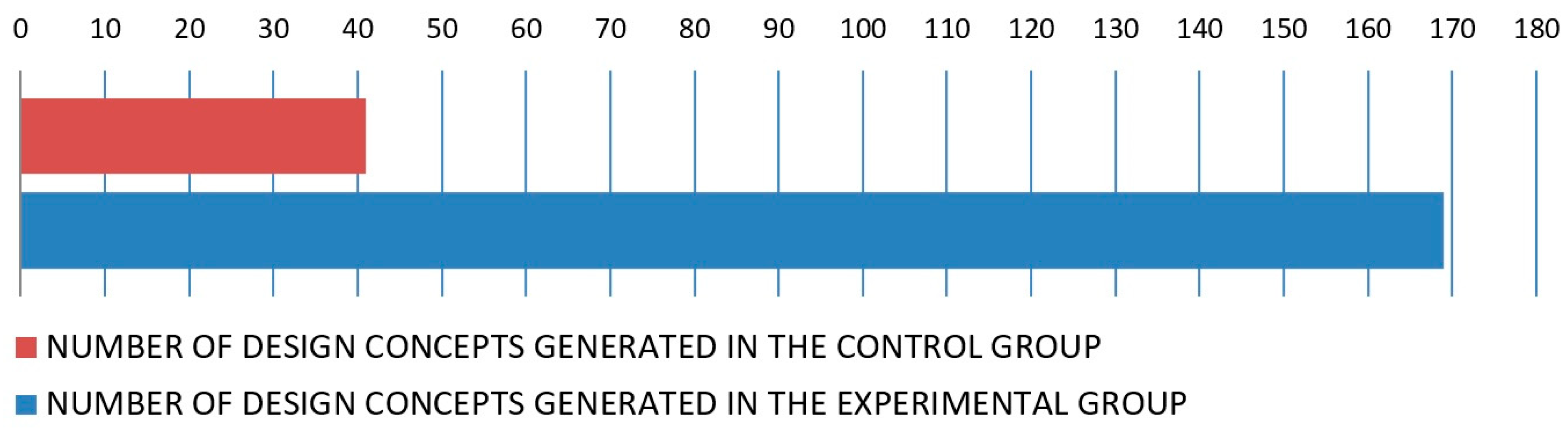
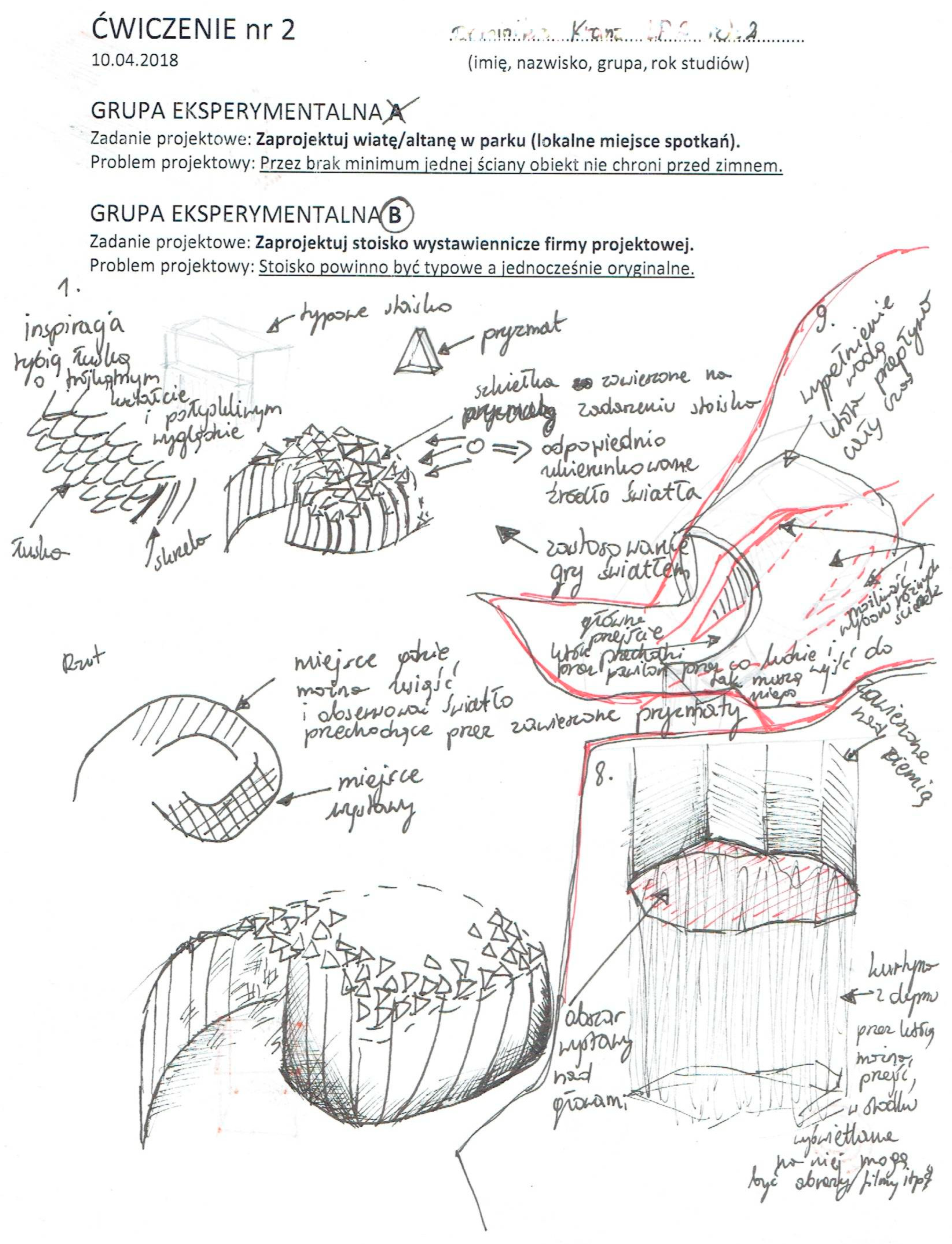
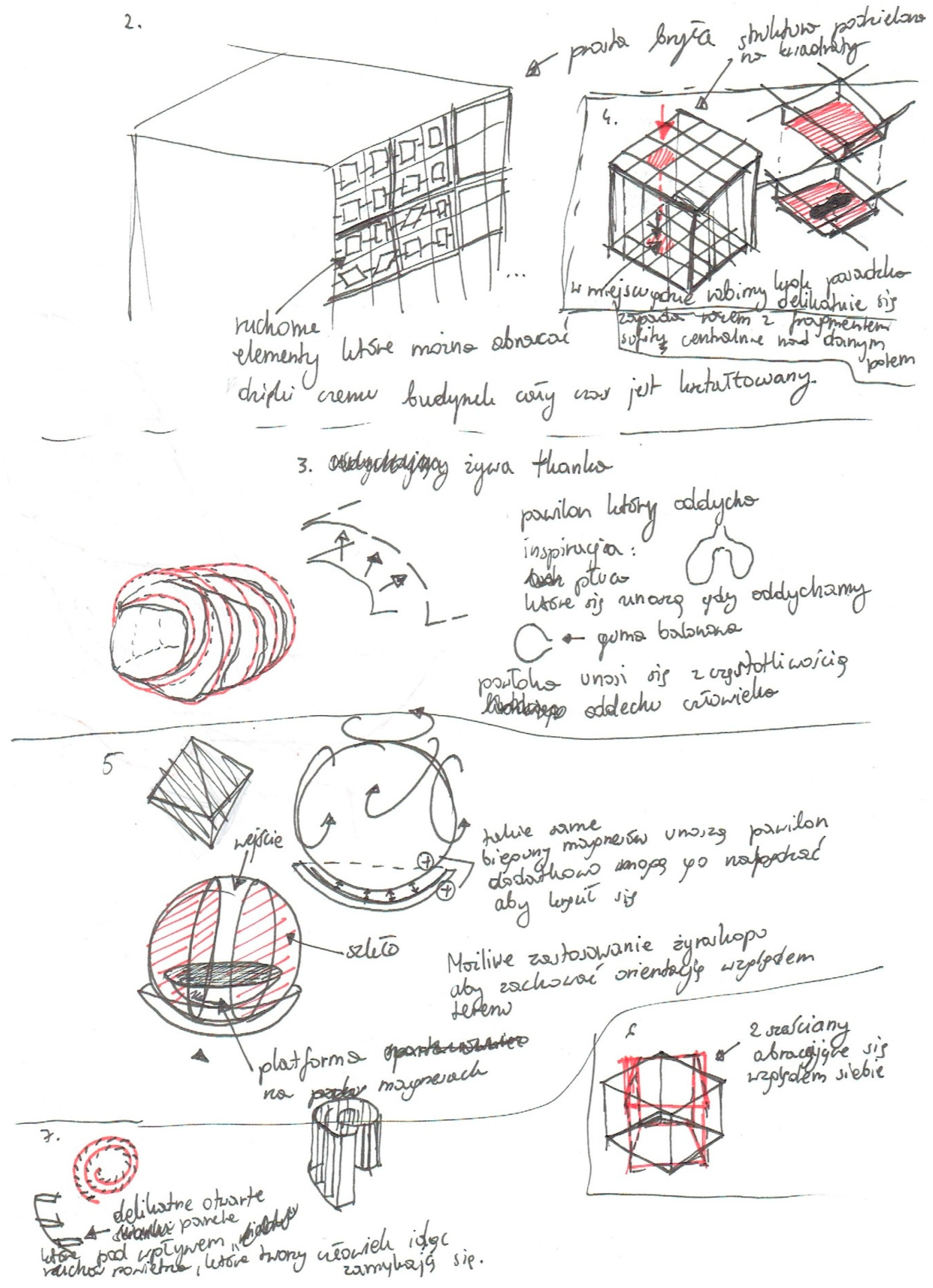
In the experimental study, a statistically very large increase (more than fourfold) in the number of original design concepts was observed compared to the control study, indicating an increase in students’ creative competence in terms of originality (ability to generate unusual design concepts) and flexibility (diversity of design concepts). Some design concepts were very original, and in some cases even surprising (
Figure 4 and
Figure 5).
The design concepts developed by the students in the experimental group were more diverse. The results of the experiment indicate that applying the same inventive method by different individuals may lead to different outcomes (design concepts).
Thus, the results of the study confirm the validity of the egalitarian approach to creativity.
A possible implication of these research results in architecture students’ work is an increase in conscious and planned actions during the early stage of the design process, which until now has proceeded in an intuitive manner (tacit knowledge).
Architecture students and architects may more consciously use inventive methods at specific stages of the design process and for specific purposes, e.g., to broaden the range of potential design concepts.
According to H. Altszuller, designers often have difficulty extending the scope of design searches beyond the familiar problem domain due to the so-called “Vector of Inertia” (
Altszuller, 1972, p. 253). During the experiment, the experimental group produced a larger number of original and diverse design concepts, indicating that participants explored a wider range of design directions.
Inventive methods, particularly Synectics, rely on the well-known psychological effect of priming. This is the tendency of individuals to be influenced by seemingly unrelated, subtle cues. Signals expressed through behavior, words, or images can induce significant changes in behavior (e.g., change in movement speed, decision-making) or assist in idea identification (e.g., identifying the word “water” facilitates the identification of the word “drink”). It is a form of activating associations in the mind that influences thoughts, decisions, and behavior.
In the architectural design process, certain words and images may, for example, guide the search for new design concepts toward unexplored areas (
Topić et al., 2025;
Ahmad, 2017). Currently, participatory design methods are gaining increasing attention among architects (
Cruickshank et al., 2013). Engaging in co-design with future users enables architects to approach design problems from alternative perspectives (
Scott, 2017). Similarly, inventive methods support the re-framing of familiar problems and the exploration of novel solutions.
In this way, inventive methods can be used to overcome creative impasses by broadening the range of design concepts explored. Continuing this line of reasoning, further expansion of the search area will require the knowledge of additional inventive methods.
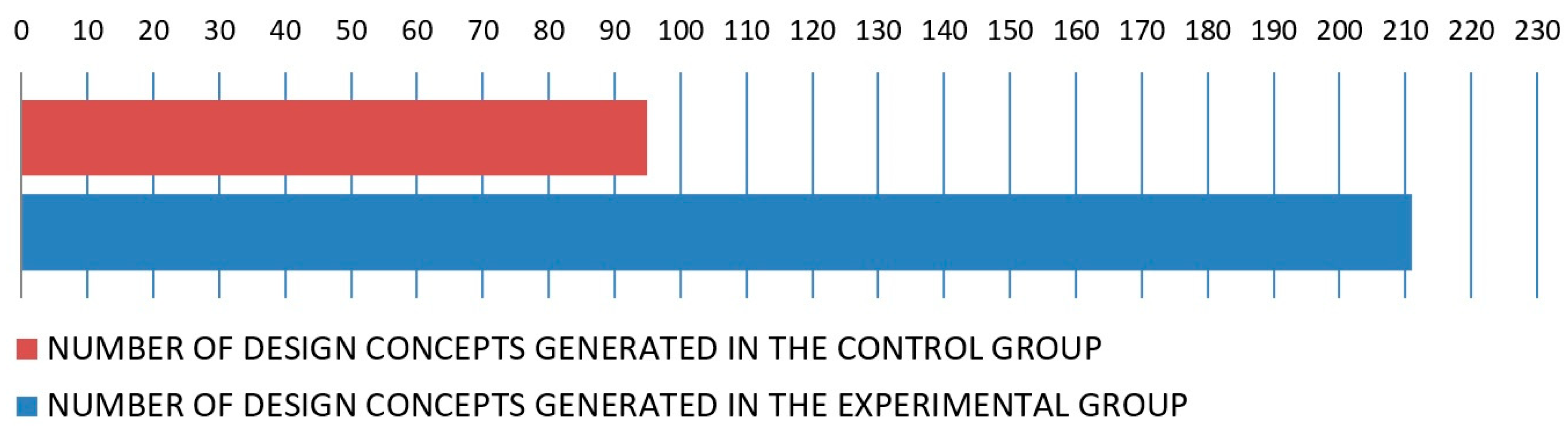
For most architecture students, the analyzed inventive methods proved useful in enhancing creative competence in the architectural design process. During the didactic experiment, architecture students in the experimental group (after learning about the selected inventive methods) proposed 122% more design concepts than students in the control group. Although these design concepts were less elaborated, a significant statistical increase in creative competence regarding fluency (number of design concepts) was observed.
However, it is uncertain whether the observed statistical increase in creative competence among students who learned the selected inventive methods is long-lasting.
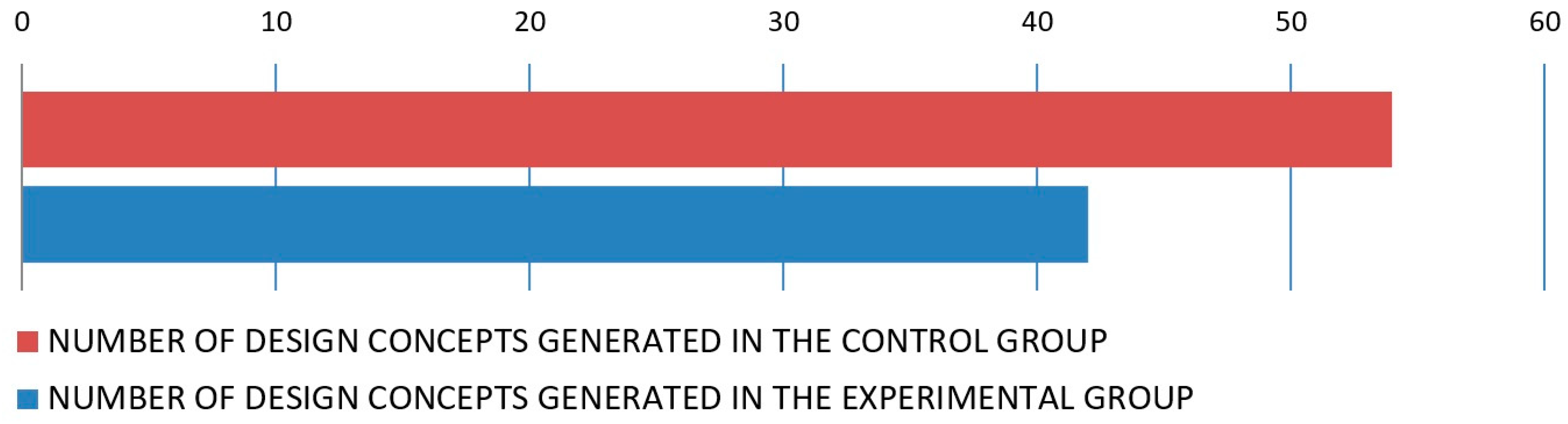
Concepts developed by architecture students in the experimental group were often less elaborated, indicating a decrease in creativity in terms of elaboration (one of the creativity criteria). However, according to Wilford, in the conceptual phase, when developing original design solutions, a lower degree of drawing precision is desirable. In the initial phase of the architectural design process, conceptual sketches should be kept as small as possible in order to convey the essence of the solution (
Iuliano & Serrazanetti, 2015). Small sketches limit the detail and quality of the design concept. In both groups, the time constraints undoubtedly affected the accuracy and level of detail in the developed design concepts. In architectural design, the degree of refinement of a concept generally facilitates the assessment of its feasibility. Typical solutions can be refined very easily and quickly by relying on design experience rather than creativity.
According to N. Cross, creativity is essential when solving open, complex, and incomplete design problems (
Cross, 2006). D. Schön argues that the designer improvises, tests new ideas, and responds to emerging information (
Schön, 2017). In his view, the source of creativity is reflection-in-action (
Schön, 2017). During the design process, design problems and solutions co-evolve (
Cross, 2006).
According to E. Nęcka, creativity can also be strengthened by inducing desired states of attention and awareness (
Nęcka, 1999, pp. 111–112). Most students who participated in the didactic experiment demonstrated a higher level of engagement in design activities compared to their activity during regular design classes. Psychological studies described in the literature on individuals who participated in inventive method training showed higher motivation for innovation and a perceived increase in creativity (
Haines-Gadd, 2015, pp. 266–267). Conversations with architecture students who participated in the didactic experiment and their observations suggest similar conclusions.
Higher levels of motivation for innovation and the perceived increase in creativity are important when undertaking ambitious design challenges. This is also significant in the context of increasing competition in fields related to art and design, including architectural design. Generative artificial intelligence (GenAI) increasingly performs the work of graphic artists faster and cheaper. With the development of computer-based, parametric generative methods and GenAI, design processes are also being automated, which will certainly have an increasing impact on architects’ competitiveness in the design market.
The ongoing automation of design work should increase the competitiveness of architects who demonstrate higher creative competence. Eugene Raudsepp and Pinchas Noy state the following: “
The era of intelligent people is coming to an end. A new era is coming—the era of creative people” (
Kuratko, 2015, p. 106).
In the context of employment, creativity is becoming an increasingly important competency for higher education graduates in the 21st century. Consequently, higher education institutions should educate students with these requirements in mind (
Forte-Celaya et al., 2021;
WEF, 2025;
Georgiou et al., 2022). When introducing new teaching methods aimed at developing creativity, it is essential to verify their effectiveness (
Forte-Celaya et al., 2021).
The results of this study are very promising. However, the results obtained by all students were presented collectively; therefore, differences in their age and experience can be considered confounding variables. The participants’ gender was also not included in this study.
The ability to employ inventive methods in architectural design may provide a competitive advantage for future architects (
Labuda, 2015). Consequently, to enhance the competitiveness of future architects, their education should focus on strengthening creative competence through the analyzed inventive methods.
The article presents the first stage of research on the use of inventive methods in the architectural creative process. The large effect (the substantial differences between the control and experimental group results) indicates that the applied methods have practical significance. In the evaluation of architectural concepts, the use of multiple tools to verify the reliability of conclusions is difficult or even impossible to implement—particularly at this initial stage of the research.
For further verification of the obtained results, the study is planned to be repeated with a larger research group. In the next study, it is recommended to conduct a creativity assessment both before and after the experiment. It is also planned to eliminate the identified confounding variables, such as the participants’ age and experience.
Understanding the processes and mechanisms employed during design certainly requires further interdisciplinary research involving educators, methodologists, psychologists specializing in creativity, and even experts in brain activity research and analysis.