Article

AI as Sub-Symbolic Systems: Understanding the Role of AI in Higher Education Governance
Institute of International and Comparative Education, Beijing Normal University, Beijing 100875, China
*
Author to whom correspondence should be addressed.
Educ. Sci. 2025, 15(7), 866; https://doi.org/10.3390/educsci15070866

Submission received: 27 April 2025 / Revised: 24 June 2025 / Accepted: 4 July 2025 / Published: 6 July 2025
(This article belongs to the Special Issue Higher Education Governance and Leadership in the Digital Era)

Abstract

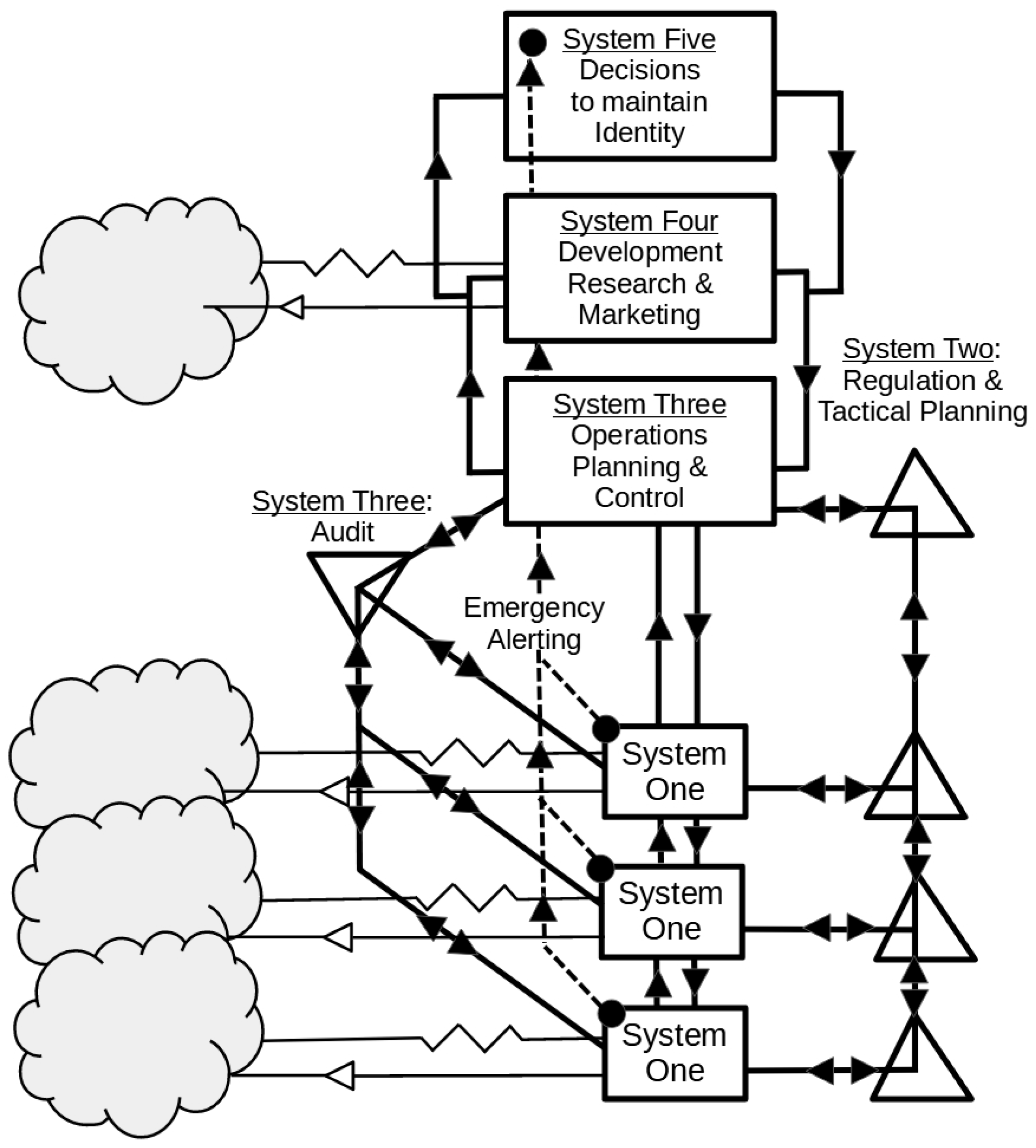
This paper develops the argument that, in the application of AI to improve the system of governance for higher education, machine learning will be more effective in some areas than others. To make that assertion more systematic, a classificatory taxonomy of types of decisions is necessary. This paper draws upon the classification of decision processes as either symbolic or sub-symbolic. Symbolic approaches focus on whole system design and emphasise logical coherence across sub-systems, while sub-symbolic approaches emphasise localised decision making with distributed engagement, at the expense of overall coherence. AI, especially generative AI, is argued to be best suited to working at the sub-symbolic level, although there are exceptions when discriminative AI systems are designed symbolically. The paper then uses Beer’s Viable System Model to identify whether the decisions necessary for viability are best approached symbolically or sub-symbolically. The need for leadership to recognise when a sub-symbolic system is failing and requires symbolic intervention is a specific case where human intervention may be necessary to override the conclusions of an AI system. The paper presents an initial analysis of which types of AI would support which functions of governance best, and explains why ultimate control must always rest with human leaders.
Keywords: nature of AI; symbol manipulation; sub-symbolic approach; decision-making; higher education governance nature of AI; symbol manipulation; sub-symbolic approach; decision-making; higher education governance