

Article

Addressing the Challenges of STEM Mature-Aged Students: Faculty Role in Promoting Sustainability and Well-Being in Higher Education


1
Faculty of Engineering Economics and Management, Riga Technical University, LV-1048 Riga, Latvia
2
Liepaja Academy, Riga Technical University, LV-3401 Liepaja, Latvia
*
Author to whom correspondence should be addressed.
Educ. Sci. 2025, 15(12), 1665; https://doi.org/10.3390/educsci15121665
Submission received: 24 October 2025 / Revised: 22 November 2025 / Accepted: 6 December 2025 / Published: 10 December 2025

Abstract

Growing demand for STEM (Science, Technology, Engineering, and Mathematics) graduates, coupled with the evolution of the education system to accommodate mature-aged students, presents unique challenges for higher education institutions and, in particular, for faculty who directly affect the well-being of these students. At the same time, involvement of mature-aged students into education has great potential in addressing the sustainability concept by promoting lifelong learning, fostering social inclusion, and enhancing workforce adaptability. This paper aims to analyse the specific challenges faced by mature-aged students in STEM programmes and examine the critical role that faculty plays in addressing these challenges by promoting sustainability and well-being. Drawing on existing literature and empirical data, the research examines how faculty in STEM programmes can support mature-aged students by providing tailored support, fostering inclusive learning environments, and promoting well-being initiatives. By integrating student well-being into organisational cultures, this study emphasises the potential for higher education to contribute to Sustainable Development Goal 3: Good Health and Well-being and Sustainable Development Goal 4: Quality Education. The paper concludes with recommendations for faculty on how to develop and implement support structures that better serve mature-aged students, ensuring their success in STEM programmes and promoting an inclusive, sustainable academic environment.

1. Introduction

Due to various factors such as demographic challenges, rapid technological development and evolving labour market demands, the contemporary education paradigm has undergone a significant shift, increasingly recognising the importance of including mature-aged students in higher education.
In higher education, mature-aged students constitute an increasingly significant and heterogeneous demographic group (van Rhijn et al., 2023; Andrade et al., 2024). This group is often defined by age—typically starting at 21 or 24. However, it is also characterised by other factors, such as prior experience in higher education, work experience, and family responsibilities (Gregersen & Nielsen, 2023). Their educational paths are often non-linear, with interruptions from formal studies, and motivational factors such as personal development, potential career advancement, or significant life changes often bring them back to higher education (Jerez, 2024). Thus, the characteristics of mature students vary, influenced by age, stage of life, and the interaction of parallel responsibilities, such as raising children or working alongside studies (Gregersen & Nielsen, 2023).
Despite social isolation, integration difficulties, and the need to balance multiple roles, mature-aged students often exhibit strong resilience, intrinsic motivation, and a growth mindset (Mejía-Manzano et al., 2022; Jones & McConnell, 2023). These characteristics are associated with increased self-efficacy and, in many cases, better academic outcomes than younger students (Jerez, 2024). However, the norms and expectations of higher education institutions are often geared towards traditional students, creating additional barriers for mature students who may perceive themselves as not fitting into the dominant student culture (Gregersen & Nielsen, 2023). Mature student challenges point to the need for higher education institutions to pay additional attention to the distinct well-being needs of adult students.
At the same time, economies increasingly require more STEM graduates, as these individuals play a critical role in driving innovation, economic growth, and competitiveness at both national and global levels (Bacovic et al., 2022; Mouton et al., 2023; Dare et al., 2021). However, Eurostat data indicates a concerning trend of declining academic performance and rising dropout rates in STEM education across the European Union (European Commission, 2025). While various initiatives are being implemented to address these issues, significant challenges remain, including a shortage of skilled STEM professionals and the persistent underrepresentation of certain demographic groups in STEM fields. Therefore, analysing the intersection of mature-aged students and STEM education is increasingly important, given that this demographic constitutes a growing and strategically significant segment of the higher education population. Understanding their unique needs enables universities to develop targeted support systems that enhance the well-being and academic success of these students, thereby contributing to a more inclusive and sustainable higher education environment.
The well-being of mature-aged students is closely linked to the broader goal of sustainability in higher education. Both concepts are strongly interlinked (Lengyel et al., 2019), therefore universities should aim to create environments that promote the well-being of older learners contributing to sustainable education systems that ensure inclusion and quality. In addition, it is acknowledged that higher education institutions are the dominant drivers towards a more sustainable society, with faculty as key players (Rasis et al., 2023).
Zeide and Kalvāne (2023) point out that respondents reported experiencing emotions such as “feeling old,” pressure, discomfort, a sense of being “rusty,” and falling behind. These emotional responses often give rise to more profound psychological states, including fear and diminished self-confidence, which may ultimately contribute to decisions to discontinue studies or refrain from pursuing higher education later in life.
Increasing the number of STEM graduates is one of the national priorities of Latvia, according to the Education Development Guidelines 2021–2027 (Latvijas Vēstnesis, 2021). Considering a demographical challenge such as depopulation and ageing (Dahs et al., 2021), the problem of attraction and maintaining STEM students, including mature-aged, is topical for universities.
The Latvian Sustainable Development Strategy for 2030 gives a sustainability perspective through emphasising that by inclusive education, the well-being of individuals and society as a whole is improved, as everyone is given opportunities to acquire appropriate knowledge, digital skills and professional abilities that promote personal fulfilment and socio-economic resilience (Saeima of the Republic of Latvia, 2010). Therefore, the context in Latvia reveals the topicality of the need of analyse the well-being of mature-aged STEM students and build a support system for them at universities.
Considering the aforementioned, we have formulated the following research question: To what extent does the faculty influence the dimensions of well-being of mature-age STEM students in ways that promote sustainability?
This paper aims to analyse the specific challenges and well-being needs of mature-aged students in STEM programmes to examine how the faculty can influence these dimensions in ways that support sustainability in higher education.
In order to achieve this aim, we have formulated the following tasks:
(1)
Review the challenges and needs of mature-aged STEM students in the context of their well-being;
(2)
Review the role of faculty in supporting the well-being of mature-aged STEM students to promote sustainability;
(3)
Analyse the results of the survey on various well-being dimensions of mature-aged STEM students from the perspective of how the faculty can support the students;
(4)
Provide recommendations to the faculty on how to support the well-being of mature-aged STEM students to promote sustainability.
Within this paper, we provide a scientific literature review to analyse the concepts of mature-aged students, well-being and sustainability in the context of how the faculty can support mature-aged students to promote their well-being. In addition, the survey of 119 mature-aged STEM students was conducted to analyse various dimensions of well-being, as well as 6 semi-structured interviews with mature-aged students to review their experiences.
This study has several limitations that should be acknowledged. First, the survey sample included 119 mature-aged STEM students from Riga Technical University (RTU), representing approximately 10% of the target population. While acceptable for exploratory purposes, the limited response rate and the single-institution, single-country focus significantly constrain the generalisability of the quantitative findings to other higher education contexts or national systems. Additionally, as the survey relied on self-reported measures of well-being, there is a risk of response bias, including social desirability and recall bias. The use of an online survey format may have further influenced response quality, particularly for participants with limited digital skills or lower engagement, potentially skewing results toward more confident or motivated students. Second, although 24 students expressed willingness to participate in follow-up interviews, only 6 were selected, which-while appropriate for achieving thematic depth in qualitative research-may not fully capture the diversity of experiences across all student profiles. Third, the study focuses solely on one Latvian university, RTU, limiting the contextual scope; comparisons with other institutions are not included. Lastly, while the paper aims to address the role of the faculty in promoting sustainability, the perspectives of academic staff themselves were not collected, which could provide a more holistic understanding of institutional support systems. Future research could expand the scope by incorporating longitudinal data, multi-institutional comparisons, and faculty viewpoints.

2. Materials and Methods

2.1. Methodology

This research employed a mixed-methods design, combining quantitative and qualitative approaches to deeply explore the well-being experiences of mature-aged students in higher education within a diversity context. The research methodology was approved by the Decision of the RTU Research Ethics Committee No. 04000-10.1-e/17 on 3 April 2025.
The research started with a state-of-the-art review, with the goal of highlighting the boundaries of contemporary understanding of the concepts studied (mature-aged students, well-being, sustainability) and identify the gap between current research and what is needed. The transparency, completeness and accuracy of the review process are ensured by following the PRISMA 2020 guidelines (Page et al., 2021). Regarding the selection of documents in the literature analysis, the following criteria were analysed:
(1)
Time Frame: The specific time frame for the inclusion of the documents was restricted to the period from 2019 to 2025 to best capture recent developments;
(2)
Topic Relevancy: The documents selected addressed directly the issue of well-being of mature-aged STEM students, and the role of the faculty in supporting their well-being in a holistic manner;
(3)
Quality of Sources: Preference was given to the peer-reviewed articles from high-impact journals and conference proceedings indexed in Web of Science and Scopus;
(4)
Geographical Context: In the analysis, studies were included from diverse regions to provide a global perspective (no exclusion criteria);
(5)
Methodological Rigor: The selection of the documents was based on the methodological soundness of the research design, namely case studies, empirical studies, and theoretical frameworks.
To ensure relevance to the research topic, the following keywords were used in the literature search: “mature-aged students,” “higher education,” “STEM,” “well-being,” and “sustainability.” Thematic domains of the articles were not restricted, as research on well-being of mature-aged students can appear in journals across a wide range of subject areas.
The structural components of well-being identified through the literature review were used in the survey to assess the role of the faculty in supporting various well-being dimensions of mature-aged STEM students.
The structured survey questionnaire was developed based on the theoretical framework and dimensions proposed by Khatri et al. (2024), encompassing academic, financial, physical, psychological resilience, and relational well-being dimensions. The questionnaire was further enriched with literature-based items specifically relevant to mature-aged students, such as assessing the level of skills necessary for academic success (N. Crawford & Emery, 2021).
The questionnaire included Likert-scale items designed to provide quantitative insights into perceptions of the participants of various well-being dimensions. A pilot test of the questionnaire was conducted with representatives from the target group, ensuring clarity and validity of the content and wording, thus enhancing reliability and suitability for the mature-aged student population (Brunner & Ehlers, 2022). The questionnaire was distributed electronically to a selected sample of mature-aged students, 30+ years old, enrolled in STEM programs at RTU.
Regarding the selection of the respondents for the survey and the procedures for conducting the survey, the following rationale was applied:
(1)
Selection Criteria: For the survey, RTU mature-aged STEM students, aged 30+ years, were identified. In total, 1228 students fell within this category.
(2)
Sample Size Justification: While the recommended sample size for a 95% confidence level and ±5% margin of error was 293 respondents by Cochran’s formula (Nanjundeswaraswamy & Divakar, 2021), this study surveyed 119 mature-aged STEM students at RTU, representing approximately 10% of the total target population, where N = 1228. This sample size yields a margin of error of approximately ±8.5%, which is acceptable for exploratory research and allows for meaningful insights into trends and perceptions within this specific student group (Conroy, 2021). Additionally, the sample provides sufficient variability to identify key patterns across well-being dimensions relevant to the research objectives.
(3)
Procedures: The survey was conducted via questionnaire sent through the RTU IT Department from 20 April to 25 May 2025. The response rate was 10%.
For qualitative data collection, semi-structured interviews were conducted to provide a comprehensive understanding of individual student experiences related to their well-being during their studies. The interview questions were developed based on the initial analysis of the questionnaire pilot results and thematic insights from the literature review, focusing on general descriptions of student well-being, perceived institutional support, accessibility, and utilisation of psychological support services, as well as recommendations for improving student well-being (Steel et al., 2024). The semi-structured nature of the interviews allowed flexibility, encouraging respondents to freely express additional insights deemed relevant to their personal experiences. Participants were thoroughly informed about the aim if the research and interview procedures, and informed consent was obtained before recording the interviews.
The selection of respondents for the semi-structured interviews and the procedures for conducting them were guided by the following rationale:
(1)
Selection Criteria: Students who participated in the survey and indicated a willingness to share their experience on various well-being dimensions were selected. In total, 24 students identified their willingness to participate in the semi-structured interviews.
(2)
Sample Size Justification: Of the 24 students who expressed a willingness to participate in follow-up interviews, a purposive sample of 6 were selected to ensure diversity in terms of gender, study level (Bachelor/Master), and study mode (full-time/part-time), with the goal of capturing a broad range of perspectives on well-being dimensions. This approach aligns with established qualitative research practices, where smaller, purposeful selected samples are considered appropriate for exploratory studies focused on depth rather than generalisation (Patton, 2015). Moreover, qualitative research literature suggests that studies aiming to identify core themes can achieve sufficient data saturation with as few as 6 to 12 interviews, depending on the study focus and participant homogeneity (Guest et al., 2006). Given the specific target group of mature-aged STEM students and the exploratory nature of this study, 6 interviews were considered adequate to provide meaningful insights while maintaining a manageable depth of analysis. Nonetheless, future research could benefit from expanding the number of interviewees to further enrich the data and increase representativeness across different profiles of mature-aged students.
(3)
Procedures: The invitation to participation in the interview was sent via email to the selected participants. Before the interview, the interviewees signed the informed consent to participate in a semi-structured interview. The interviews were conducted online using MS Teams and had a duration of up to 1 h. After the interview, the minutes were prepared and harmonised with the interviewees.
Table 1 presents the selection criteria for semi-structured interview participants, capturing a diverse sample of six mature-aged STEM students based on gender, age, study level (Bachelor or Master), previous academic experience, employment status, and funding source. All respondents had prior study experience, with varied occupations—ranging from unemployed to full-time and self-employed—and a mix of public and private funding. This diversity was intended to ensure representation of different life circumstances and study contexts.
To ensure the credibility and comprehensiveness of the findings, data triangulation is implemented by integrating quantitative results from the questionnaire with qualitative insights from the interviews. This methodological triangulation facilitated a holistic understanding of mature-aged students’ well-being, enabling validation and deeper interpretation of the quantitative findings (Brunner & Ehlers, 2022; N. Crawford & Emery, 2021). Table 2 presents the main phases of the research.

2.2. Literature Review

The literature review was conducted with a global perspective, incorporating studies from diverse educational contexts—including the United States, Australia, the United Kingdom, South Africa, and the EU—to highlight both universal challenges and region-specific strategies in supporting mature-aged students in STEM higher education. This broader approach strengthens the international relevance of the study and situates the Latvian case within a comparative global framework.

2.2.1. Challenges and Unique Needs of Mature-Aged Students

Khatri et al. (2024) identified five key dimensions of student well-being (SWB): academic well-being, financial well-being, physical well-being, psychological resilience well-being, and relational well-being. Next, we review all five key dimensions of well-being in detail.
Academic Well-Being
Academic support mechanisms in higher education are often not sufficiently adapted to the realities of mature students. Many universities design their support systems based on the needs of “typical” students, usually younger students, creating a mismatch with the life experiences of mature students, who are often struggling to cope with work, family and other responsibilities outside of their studies (Fischer & Kilpatrick, 2023; Lyu et al., 2025). This mismatch can hinder access to timely academic and psychosocial support, increasing alienation from the educational institution and creating a risk of dropping out.
Research suggests mature students benefit most from targeted, flexible, and proactive support systems, including appropriate academic advising, peer mentoring, and accessible online resources (Fischer & Kilpatrick, 2023; Lyu et al., 2025; Sapir, 2022). Inclusive pedagogical strategies focusing on the cultural and experiential capital of students rather than emphasising deficits are critical to promoting academic competence and achievement (Fischer & Kilpatrick, 2023). Higher education institutions that shift from a deficit-based to a structural approach, recognising and addressing systemic barriers, are more likely to create environments that foster the success of nontraditional students (Lyu et al., 2025).
Self-efficacy, motivation, and the quality of academic relationships are critical to academic success and well-being among adult students. Empirical research suggests that mature students often exhibit higher self-efficacy and intrinsic motivation, which correlate with greater academic persistence and performance (MacDonald, 2018; Mier, 2018). However, these students are also at risk of social isolation and identity threat, especially in online learning environments where opportunities for interaction are limited (Fischer & Kilpatrick, 2023; Sapir, 2022). Individual, culturally sensitive counselling and mentoring can alleviate these problems by promoting a sense of belonging and academic resilience (Mansson & Myers, 2012; Sapir, 2022).
Some studies suggest that having a mentor who shares the same cultural background as the mentee can be especially beneficial for supporting STEM career transitions and outcomes for underrepresented minority students (Nabi et al., 2024), and as such can be a significant contributor to the academic and psychological well-being of students.
As Aarntzen et al. (2023) concluded in their study on the well-being of STEM students during the COVID-19 pandemic, by investing in the academic well-being of students, a resilient and sustainable society is created. It should be noted that the concern of universities for the well-being of students is an important factor of sustainability not only during a crisis, such as the COVID-19 crisis, but also in the period of continued turbulence and uncertainty.
Financial Well-Being
Mature-age students face multiple challenges to their financial well-being, stemming from their challenging living conditions and limited institutional support. Socioeconomic background further influences access to and success in higher education, with students from lower socioeconomic backgrounds at greater risk of dropping out (Dervis et al., 2022). Many students must simultaneously juggle work, family responsibilities, and academic demands, creating financial pressures that threaten their academic resilience and well-being. These students sometimes enter university with negative prior educational experiences, and their decision to return to study carries significant financial, emotional, and relational risks (Crank & Spence, 2024). Research shows that mature students are more likely to report that they will be left without essential resources due to financial hardship and are therefore forced to work, which compromises their academic performance and health (Baglow & Gair, 2019). Financial pressures increase the risk of dropping out of university, especially during unpaid internships (I. W. Li & Jackson, 2024). Many mature students choose higher education for career advancement or to improve their socioeconomic status (Chapin et al., 2024).
Furthermore, mature students perceive higher education as demanding consumers, emphasising value for money and efficient service delivery (Siivonen & Filander, 2020). This perspective reflects the price they pay—the financial investment and daily responsibilities that create expectations and motivation to pursue higher education. However, current educational institutions often fail to meet these needs. As Brunner and Ehlers (2022) argue, financial constraints limit students’ ability to engage with university life fully, and the time pressure of external commitments limits their long-term academic commitment. Despite the flexibility offered by online learning (Veletsianos, 2020), social isolation and lack of support can further undermine financial and emotional resilience (Girmay & Singh, 2019).
Physical Well-Being
Physical well-being is challenged mainly from accessibility barriers and complex life circumstances. Many students grapple with mobility limitations, caregiving responsibilities, or geographical isolation, which can restrict the ability to participate fully in campus-based academic and social activities (Brunner & Ehlers, 2022). Unlike younger peers, mature students often require more flexible learning environments that accommodate physical needs, especially when balancing family, work, and study commitments. Furthermore, these students frequently experience feelings of exclusion, which are closely tied to physical disconnection from the university space and can impact their sense of belonging, a known factor in well-being and retention (N. L. Crawford et al., 2022). Creating physically accessible, inclusive, and responsive educational environments is therefore essential to support the unique needs of mature-aged students and promote their sustained participation and well-being in higher education.
Psychological Resilience Well-Being
Resilience emerges as a critical psychological trait that allows mature students to adapt to academic pressures (Steel et al., 2024). However, the educational environment often exacerbates stressors. Mature students report dissatisfaction with the failures of universities to consider their life experiences, which is further exacerbated by the difficulty of balancing academic, family, and professional responsibilities (I. W. Li & Jackson, 2024).
Activities that promote a growth mindset, enhance inner domain or personal development help mature students reframe challenges as opportunities for growth, counteracting age-related stereotype threats (Jones & McConnell, 2023; Trenaman & Cheong, 2024). Adult learners are more comfortable learning independently, aligning educational goals with personal or professional goals, using voluntary content choices and the opportunity for self-directed learning (Siivonen & Filander, 2020; Templeton, 2021). Effective interventions include structured skills development programs tailored to the preferences of mature learners (Steel et al., 2024). Counselling practices that emphasise holistic support help cope with difficulties and motivation, addressing workload management problems (Stamou et al., 2024; Steel et al., 2024). Positive interactions with faculty strengthen resilience by reinforcing the sense of belonging for the student, although institutional strategies must evolve beyond one-size-fits-all approaches to accommodate the diverse profiles of mature learners (Goodman, 2024; I. W. Li & Jackson, 2024). Research conducted in Latvia and Lithuania reveals that student emotional intelligence plays an important role in their subjective well-being in the university (Petkevičiūtė et al., 2024).
Relational Well-Being
Mature students often feel that their accumulated knowledge is not valued in academic settings, thus affecting their sense of self-worth, despite faculty interactions that aim to promote the relevance of knowledge (Goodman, 2024). Their pursuit of education as an outcome, which contrasts with the relationship needs of younger students, exacerbates feelings of alienation from the university community (Siivonen & Filander, 2020). At the same time, mature students value a more flexible learning path (Andrew et al., 2021). The development of resilience is further hampered by threats to social identity and performance differences compared to traditional, younger students, which are reinforced by stereotypical representations—in photo advertisements and videos—in institutional materials that hinder identification with academic communities (Brunner & Ehlers, 2022). However, several targeted services exist: mentoring programmes and peer networks reduce isolation, allowing adult learners to overcome challenges through shared experiences (Jones & McConnell, 2023), while structured psychosocial support systems help balance family and academic stressors (Steel et al., 2024).

2.3. The Role of Faculty in Supporting the Well-Being of Mature-Aged Students

When thinking about the role of faculty in ensuring the well-being of mature students, we concluded during the research that all five well-being dimensions related to faculty have an impact on student well-being via various aspects.

2.3.1. Faculty as a Person with a Personality: Relational Well-Being

The quality of work of a faculty, including classes, consultations, communication with students, and professional behaviour, significantly impacts student well-being. This prompted the inclusion of a question in the student survey about whether the faculty member listens to and respects the student. The academic mastery of faculty, as well as accessibility provide a solid foundation for building positive and supportive relationships with students (Pham, 2021). The influence of faculty on student well-being is also visible in the study requirements of courses. Excessive workload, inadequate requirements, and the choice of teaching methods unsuitable for adults create stress for students, which directly affects student well-being. A faculty who helps a student navigate the academic environment reduces student stress related to studies. A supportive faculty-student relationship, characterised by trust and open communication, reduces student tension and alleviates psychological symptoms related to academic demands. The well-being of a faculty member also affects the well-being of a student. Therefore, it is important to also take care of the mental health of faculty members in the context of student well-being (Hai et al., 2023; Dehtjare & Uzule, 2023). Faculty need to develop self-reflexivity, empathy and flexibility (Salīte et al., 2024) to adjust their teaching methods.

2.3.2. Study Content: Academic Well-Being, Psychological Well-Being

The development and improvement of study content is an important dimension of teaching that directly influences student well-being. Although study programmes are typically designed to meet formal qualification standards, they are not always adapted to the diverse needs of specific student groups, such as mature-aged learners. In many cases, curricula are developed with the assumption that students transition directly from secondary school or college, overlooking the unique challenges faced by those returning to education after several years. For mature-aged students, this gap can result in increased stress, as they encounter an academic environment that differs significantly from their previous experiences. Research on the expertise reversal effect demonstrates that instructional designs effective for novices can overwhelm more experienced learners if prior knowledge is not properly considered (Kalyuga et al., 2003). Consequently, mature students may experience cognitive overload, leading to higher levels of stress, physical fatigue, and, in some cases, burnout. As Rey and Buchwald (2011) highlight, failure to adapt learning environments to backgrounds of students can negatively affect both motivation and well-being, increasing the risk of academic disengagement and discontinuation of studies.

2.3.3. Additional Networking and Experience: Relational Well-Being, Financial Well-Being, Academic Well-Being

Higher education faculty have the opportunity to provide students with additional networking and development experiences that extend beyond the formal curriculum, such as extracurricular activities, mentoring initiatives, or project-based learning. These opportunities can play an important role in strengthening social integration of students, sense of belonging, and academic engagement, all of which are known to enhance retention and success (Wilcox et al., 2005). However, it is essential that faculty listen to and respect the individual circumstances of students, not only when they express a willingness to participate, but also when they are unable to engage in such activities. This is particularly relevant when participation requires a financial contribution, which can create barriers for students facing economic hardship. Mature-aged students, who often juggle employment, family responsibilities, and financial constraints, may feel excluded or disadvantaged if participation in extracurricular activities depends on additional costs (Naylor et al., 2018). To ensure inclusiveness and support student well-being, faculty should ensure that these opportunities remain voluntary, financially accessible, and sensitive to the diverse circumstances of mature-aged learners.

2.3.4. Inclusion in the Study Environment: Relational Well-Being, Psychological Well-Being

An inclusive study environment is essential for the well-being of mature-aged students, as both faculty and peers significantly shape the sense of belonging for the students—a key predictor of academic success and retention (Wilcox et al., 2005; Strayhorn, 2012). Those who find themselves as the only mature-aged member of a study group may feel socially isolated, undermining their relational well-being, especially when financial constraints or family obligations limit their participation in student life (Naylor et al., 2018). These challenges highlight the responsibility of faculty to tailor learning opportunities and pedagogical methods to acknowledge and accommodate such diversity, ensuring mature-aged students feel respected, included, and equipped to fully engage in the academic environment.

2.4. Relation Between Sustainability and Well-Being of Mature-Aged Students

The achievement of the fourth Sustainable Development Goal, which aims to ensure equal and inclusive educational opportunities for all individuals, makes this study relevant, as engaging mature students in higher education can be particularly challenging. The connection between the well-being of mature students and sustainability ideas in STEM programs is becoming increasingly important as universities strive to create learning environments that promote both personal growth and impact on society while ensuring student well-being. The integration of sustainability ideas not only equips students with the skills to solve complex environmental and social problems but also enhances their sense of belonging (AlAli et al., 2023). For mature students, with their life experiences and desire to make meaningful contributions to society, curricula that integrate sustainability issues may be more motivating because they better see the meaning of their development in a broader context. Providing sustainability ideas in studies promotes socially conscious thinking and engagement in ethical actions aimed at building a better future (H.-C. Li, 2025).
The well-being of mature STEM students often correlates with the presence of supportive academic staff (Aarntzen et al., 2023; Horrocks & Hall, 2024) and opportunities for authentic, hands-on learning experiences (White et al., 2024). Research indicates that when universities incorporate sustainability into their programs—through project-based learning, community engagement, and interdisciplinary collaboration—students experience higher levels of satisfaction, resilience, and self-efficacy (Horrocks & Hall, 2024). These factors are important for mature students, who may face unique challenges, such as balancing studies with work or family responsibilities, adapting to new technologies, or overcoming feelings of isolation. Social support, mentoring, and inclusive educational practices significantly reduce stress and promote persistence, especially when sustainability is positioned as a shared value within the academic community (Horrocks & Hall, 2024).

3. Results

The structured questionnaire was built around five theoretically grounded dimensions of student well-being: academic well-being, financial well-being, physical well-being, psychological resilience, relational well-being (Khatri et al., 2024). Across these dimensions, the instrument contained 30 Likert-type statements (indicators).
Figure 1 presents the self-assessed well-being scores of mature-aged STEM students across five key dimensions. Among these, relational well-being received the highest average rating (Mean = 3.89), followed closely by academic well-being (Mean = 3.73), indicating that students generally feel supported by peers and faculty and experience a positive learning environment. Psychological resilience and well-being showed a moderate rating (Mean = 3.21), whereas financial well-being (Mean = 3.13) and particularly physical well-being (Mean = 2.59) were rated the lowest, reflecting significant challenges in managing financial stress and physical demands.
The figure also reveals the variation in responses across dimensions. The widest range of responses occurred in the domain of financial well-being (from 2.04 to 3.6), highlighting stark disparities in students’ financial situations. In contrast, physical well-being had the narrowest spread (from 2.43 to 2.72), suggesting a more uniformly shared struggle among respondents. These findings underscore the need for targeted institutional and policy-level interventions that not only address academic and relational needs but also more effectively mitigate financial and physical burdens.
For the purposes of this article, we analysed a subset of 11 indicators from the full survey dataset (see Table 3). These were selected based on their direct relevance to the research question: “To what extent does the faculty influence the dimensions of well-being of mature-aged STEM students?” The selection was guided by both theoretical alignment with the five well-being dimensions (academic, relational, financial, psychological, and physical) and empirical considerations—such as response variability and clarity of interpretation. Indicators not directly related to faculty interaction or institutional climate were excluded from the final analysis to maintain analytical focus.
The results suggest that faculty may have a notable influence on various well-being dimensions of mature-aged STEM students, especially relational and academic. Students generally reported positive experiences in terms of supportive relationships with instructors (Mean = 4.01) and feelings of social inclusion within the academic environment (Mean = 3.93), indicating that faculty interactions could play a meaningful role in shaping these aspects of student well-being. Similarly, moderate satisfaction with teaching quality (Mean = 3.65) and perceptions of staff support (Mean = 3.84) point to areas where faculty engagement may contribute positively. While this study relies on descriptive statistics to present exploratory findings, inferential analyses and correlation testing are intentionally not included in this article, as they fall outside its qualitative-comparative and conceptual scope. These avenues will be explored in future research to deepen understanding of causal relationships.
The quantitative data is also illustrated by the interview results. For example, Respondent 3 answered:
“The teachers were divided into two groups—teachers with experience, who understand, are able to assess whether the student is an adult student or a young person. The second group of teachers, who themselves feel insecure, take their first steps. (…). And unfortunately, I am the evil one who will point it out and notice that stumble, then there is (conflict). The teacher understands his mistake, but does not want to admit it and personal resentment begins, which then led to unequal treatment.”
(here and henceforth translation of respondents’ quotes from Latvian)
In turn, Respondent 4 mentioned that:
“It is very pleasant for the teaching staff if there is a student who is interested, and then (…) good relationships naturally developed. (…) A mature person has a different kind of attitude towards a person (instructor), which maybe young people don’t have, because young people always feel like what is she telling me there, what will I do with it, why do I need it?”
Both respondents emphasised the importance of relationships with teaching staff in promoting their well-being. It is noticeable in the answers of the respondents that, in their relationships with teachers, they perceive their mature age as an advantage rather than a disadvantage. At a mature age, students tend to be more demanding of teachers, especially if they have previous study experience. In this context, the importance of adult pedagogy in higher education should definitely be emphasized. A serious attitude towards pedagogy is not only a necessity of general education. The importance of pedagogy (sometimes, in relation to adult education, the term “angragogy” is used) as a science and art in adult education has been emphasized by several researchers in this field since the 20th century to the present day, including Malcolm S. Knowles, Jack Mezirow, Knud Illeris, etc. It is precisely the lack of understanding of adult learning, pedagogical work and methodological skills that is often emphasized as one of the reasons for dropping out of studies in STEM programs.
However, the findings also reveal potential areas for improvement, particularly regarding physical and psychological well-being. The low scores for physical fatigue (Mean = 2.65) and the impact of academic workload on sleep (Mean = 2.54) highlight the need for better workload management. Faculty can support physical well-being by coordinating deadlines, spacing assessments, and offering limited flexible extensions. At the institutional level, predictable timetables, well-being hours, and access to telehealth or ergonomic infrastructure can further reduce physical strain. In terms of psychological resilience, students report a moderate ability to cope with academic stress (Mean = 3.29) yet also acknowledge that academic demands affect their mental well-being (Mean = 2.83), suggesting a need for more supportive and inclusive teaching approaches. Financial well-being remains an area of concern (Mean = 3.37), where faculty influence is often indirect but nonetheless important. Faculty can support financial well-being by adopting open educational resources (OER) to minimise textbook costs, designing coursework that does not require costly materials, and promoting low-cost or no-cost extracurricular academic opportunities. Additionally, institutions can provide structured financial literacy sessions within study programmes, introduce micro-grants for academic-related emergencies, and establish employer co-financing agreements for working students. These measures, though not solely within faculty control, can be strengthened by faculty advocacy and integration into programme-level planning.
Next, we continued to analyse only those indicators that demonstrated statistically significant differences (p ≤ 0.05) across programme levels and age groups.
Regarding programme levels, the results section focuses on three faculty-linked indicators (see Table 4).
We applied Pearson’s chi-square test for independence (χ2) to categorical variables, comparing proportions of high (4–5) and low (0–1) endorsement across groups. These tests help determine whether observed differences in endorsement levels are likely due to chance. The significance level was set at α = 0.05, with p-values < 0.05 considered statistically significant and p < 0.001 interpreted as highly significant.
Effect sizes were not calculated in this exploratory study due to the relatively small sample size in subgroups (e.g., college-level n = 12). Future research with a larger sample will enable the use of effect size metrics such as Cramér’s V or odds ratios to assess the magnitude of observed differences.
Instrument validation included a pilot test of the survey with a small group of mature-aged students to ensure clarity and relevance.
Percentages may not sum to 100% because of rounding. Valid responses per item = 105 (College 12 + Bachelor 51 + Master 42); the full survey contained 119 participants, but 14 provided incomplete answers to these items. The “Other” (n = 2) and Doctoral (n = 0) categories were excluded from the chi-square tests.
Across all programmes, nearly half of the respondents give a high endorsement (≥4), confirming that most mature-age STEM learners perceive the curriculum as up-to-date. Differences are significant: only 2% of Master’s students but a full 25% of college students rate relevance very low (0–1), underscoring a polarised experience in the college cohort.
Inclusion and staff support item shows the strongest program effect (χ2 = 46.2, p < 0.001). Roughly two-thirds to three-quarters of Bachelor and Master students feel well supported (4–5), whereas college respondents split evenly between high and low endorsements. For sustainability initiatives, this suggests that existing faculty practices work well for advanced-degree learners but are not consistently reaching students in short-cycle professional programs.
A majority in every group report positive treatment—feeling listened to and respected-, yet the college subgroup again exhibits a bimodal pattern (50% high vs. 42% low). Respectful communication therefore aligns with academic support, where staff foster inclusion and students also feel heard. Together, these findings reinforce the central role faculty play in shaping the academic and relational well-being of mature-age students, two dimensions that, when nurtured, underpin sustainable engagement and retention in STEM programs.
Next, we continued the analysis by age group. None of the indicators were selected to capture the role of the faculty in supporting student well-being reached statistical significance in this category. However, several other statements did exhibit statistically significant differences across student age groups. While faculty-related items showed no age effect, financial sufficiency (“I have sufficient financial resources to cover study expenses and other basic needs.”) and psychological coping (“I have well-developed strategies for maintaining psychological balance in my studies.”) vary significantly with age (χ2, p ≤ 0.05). For instance, students aged 45–54 are most likely to report both adequate finances (71%) and strong coping strategies (57%). The 35–44 cohort is intermediate, whereas the youngest mature-age group (31–34) reveals a split, almost half feel financially comfortable, yet another 1/5 indicate shortfalls and only 1/4 claim robust coping.
Qualitative data highlight a trend of differences in the dimension of relationship well-being when talking about relationships with fellow students. For instance, Respondent 1 emphasised:
“I really feel the age difference. For the first two years we had a joint (WhatsApp, version 2.22.13.77) group, but now they have separate groups, because I guess it feels more like I am their mother’s age.”
It is understandable that the university cannot directly influence relationships with fellow students, but the relationships of mature-age students with their teachers is an indicator that the university can and should pay attention to. For instance, describing her relationship with her lecturers, Respondent 2 noted:
“I have a normal relationship with my lecturers, but especially with the lecturers at the Banking University, because I am more similar to them in terms of age.”
These quotes illustrate that the age of students matters in the context of their well-being and that universities need to work on equalising the relationship between mature-age students and lecturers.

4. Discussion

Overall, the results indicate that faculty actions can influence multiple well-being aspects of mature-aged students, though further targeted interventions may be needed to address existing challenges.
Based on the literature review, as well as the conducted survey and interviews with mature-aged STEM students, we have summarised the recommendations addressed to faculty members towards improvement of well-being of mature-aged STEM students (see Table 5).
By various areas of responsibilities (faculty as a person with personality, study content, additional networking and experience, inclusion in the study environment), the faculty members can influence mature-aged STEM students’ well-being by building respectful, empathetic and open communication during and outside the classes. In addition, the study content should be adapted to the prior knowledge of mature-aged students, avoiding cognitive overload. Providing accessible, voluntary extracurricular activities can help mature-aged students to balance their personal commitments with academic life. Also, by implementing an inclusive, age-diverse environment that acknowledges the unique needs of mature-aged students, the relational and psychological well-being will be supported.
Since our findings complement earlier programme-level analyses, it is evident that faculty influence plays a critical role in shaping the academic and relational well-being of students. In contrast, age-related differences are more pronounced in financial well-being and psychological resilience, areas that fall partly outside the direct control of faculty yet remain essential for ensuring sustainable engagement in STEM studies. Therefore, further in-depth research is needed to explore how student well-being can be effectively supported, with particular attention to age-related needs and challenges.

5. Conclusions

Based on the research results, we conclude:
The scientific literature review suggests that faculty may influence all five well-being dimensions—academic well-being, financial well-being, physical well-being, psychological resilience, and relational well-being—though the extent and nature of this influence may vary across different contexts and student groups. The results of the survey show that faculty play a significant role in fostering the relational and academic well-being of mature-aged STEM students, particularly through supportive interactions and inclusive teaching practices. While students report generally positive experiences in these areas, the findings also highlight the need for faculty to address existing challenges related to physical strain, psychological resilience, and financial barriers.
The scientific literature review also suggests that promoting sustainability within STEM programmes not only equips mature-aged students with socially relevant skills but also enhances their well-being by fostering a sense of belonging, motivation, and engagement. Supportive academic environments that integrate sustainability ideas through inclusive practices, mentoring, and authentic learning experiences are particularly important for addressing the unique challenges faced by mature-aged students, thereby contributing to both their personal development and broader societal goals.
At the same time, faculty plays a significant role in shaping the academic and relational well-being of mature-aged students, particularly through curriculum relevance, staff support, and respectful communication. These effects are most evident among Bachelor’s and Master’s students, whereas college-level students report more polarised experiences, highlighting a need to strengthen faculty practices in short-cycle programmes.
Age-group analysis shows no significant differences in faculty-related well-being indicators, suggesting consistent faculty influence across age groups. However, clear age-related disparities exist in financial well-being and psychological resilience. Older mature-aged students (45–54) report stronger financial security and coping strategies, while younger students (31–34) face greater challenges in these areas. These results point to the need for targeted support addressing financial and psychological well-being, particularly for younger mature-aged STEM students, to promote sustainable engagement and success.
Based on research results, faculty should reconsider their approach towards mature-aged STEM students, particularly through respectful communication, inclusive study content, and the creation of accessible networking opportunities. By adapting teaching approaches to the needs, life circumstances, and diverse experiences of mature-aged learners, faculty can significantly enhance the academic success of students, relational well-being, and overall integration into the higher education environment.
Qualitative data analysis shows that mature-aged students perceive their age more as an advantage than as a disadvantage in their relationship with teaching staff. At a mature age, students tend to be more demanding, especially if they have previous study experience. In this context, teaching staff must be familiar with and take into account the specificities of adult learning and the importance of pedagogy in higher education.
Building on the current findings, future research should explore longitudinal approaches to better understand how well-being dynamics evolve over time for mature-aged students in STEM. Incorporating faculty perspectives would also offer a more comprehensive view of how teaching practices, institutional culture, and educator support shape student well-being. Comparative studies across multiple institutions and countries could further strengthen the generalisability and policy relevance of the findings.
While this article primarily focuses on faculty-level influences and immediate institutional practices, broader implications for national policy and systemic reform—such as funding models, adult learning frameworks, and regulatory benchmarks—will be explored in subsequent publications. These future analyses aim to extend the current insights by proposing multi-level interventions that align institutional support with national policy strategies to enhance the success and well-being of mature-aged STEM students.

Author Contributions

Conceptualization, I.J. and I.S. (Inga Snebaha); methodology, I.J., I.S. (Inga Snebaha) and L.U.-O.; software, L.B.; validation, L.B. and I.S. (Inga Snebaha); formal analysis, L.B., investigation, I.S. (Inga Snebaha), L.U.-O., I.S. (Irina Strazdiņa) and I.K.; resources, I.J.; data curation, L.B., R.T. and L.S.; writing—I.J., I.S. (Inga Snebaha), L.U.-O.; writing—review and editing, I.J., L.S., L.U.-O. and I.S. (Inga Snebaha); visualization, L.B. and I.S. (Inga Snebaha); supervision, I.J.; project administration, I.J.; funding acquisition, I.J. All authors have read and agreed to the published version of the manuscript.

Funding

The study is conducted with the support of the European Union Recovery and Resilience Mechanism under the Research and Development Grant No RTU-PA-2024/1-0056 “Mature-age students’ experience of well-being in higher education in the context of diversity” within the project No 5.2.1.1.1.i.0/2/24/I/CFLA/003 “Implementation of consolidation and management changes at Riga Technical University, Liepaja University, Rezekne Academy of Technologies and Latvian Maritime Academy and Liepaja Maritime College for excellence in higher education, science and innovation” (CFLA).

Institutional Review Board Statement

The study was conducted in accordance with the Declaration of Helsinki, and approved by the RTU Research Ethics Committee (protocol code: 04000-10.1-e/17; date of approval: 3 April 2025).

Informed Consent Statement

Informed consent was obtained from all subjects involved in the study.

Data Availability Statement

The data presented in this study are available on request from the corresponding author.

Conflicts of Interest

The authors declared no conflict of interest.

References

  1. Aarntzen, L., Nieuwenhuis, M., Endedijk, M. D., van Veelen, R., & Kelders, S. M. (2023). STEM students’ academic well-being at university before and during later stages of the COVID-19 pandemic: A cross-sectional cohort and longitudinal study. Sustainability, 15, 14267. [Google Scholar] [CrossRef]
  2. AlAli, R., Alsoud, K., & Athamneh, F. (2023). Towards a sustainable future: Evaluating the ability of STEM-based teaching in achieving sustainable development goals in learning. Sustainability, 15(16), 12542. [Google Scholar] [CrossRef]
  3. Andrade, C., Fernandes, J. L., & Almeida, L. S. (2024). Mature working student parents navigating multiple roles: A qualitative analysis. Education Sciences, 14(7), 786. [Google Scholar] [CrossRef]
  4. Andrew, L., Robinson, K., Dare, J., & Costello, L. (2021). Widening the lens on capital: Conceptualising the university experiences of non-traditional women nurse students. Higher Education Research & Development, 40(7), 1359–1374. [Google Scholar] [CrossRef]
  5. Bacovic, M., Andrijasevic, Z., & Pejovic, B. (2022). STEM education and growth in Europe. Journal of the Knowledge Economy, 13(3), 2348–2371. [Google Scholar] [CrossRef]
  6. Baglow, L., & Gair, S. (2019). Mature-aged social work students: Challenges, study realities, and experiences of poverty. Australian Social Work, 72(1), 91–104. [Google Scholar] [CrossRef]
  7. Brunner, M., & Ehlers, U.-D. (2022, June 20–22). Building an inclusive academic environment: Challenges and needs of non-traditional students and potentials to address them. Annual Conference of European Distance and E-Learning Network (pp. 158–166), Tallinn, Estonia. [Google Scholar] [CrossRef]
  8. Chapin, L. A., Fabris, M. A., & Oraison, H. (2024). How personal and familial narratives affect the decision making of mature-aged first-in-family students pursuing university. Adult Education Quarterly, 74(2), 152–169. [Google Scholar] [CrossRef]
  9. Conroy, R. M. (2021). The RCSI sample size handbook. Royal College of Surgeons in Ireland. Available online: https://www.beaumontethics.ie/docs/application/samplesize2021.pdf (accessed on 1 October 2025).
  10. Crank, R., & Spence, J. (2024). Self-reported online science learning strategies of non-traditional students studying a university preparation science course. Journal of Adult and Continuing Education, 30(2), 483–501. [Google Scholar] [CrossRef]
  11. Crawford, N., & Emery, S. (2021). “Shining a Light” on mature-aged students in, and from, regional and remote Australia. Student Success, 12(2), 18–27. [Google Scholar] [CrossRef]
  12. Crawford, N. L., Emery, S. G., Allen, P., & Baird, A. (2022). I probably have a closer relationship with my internet provider: Experiences of belonging (or not) among mature-aged regional and remote university students. Journal of University Teaching & Learning Practice, 19(4), 1–21. [Google Scholar] [CrossRef]
  13. Dahs, A., Berzins, A., & Krumins, J. (2021, May 11–14). Challenges of depopulation in Latvia’s rural areas. 2021 International Conference Economic Science for Rural Development (Vol. 11, pp. 535–545), Jelgava, Latvia. [Google Scholar] [CrossRef]
  14. Dare, E. A., Keratithamkul, K., Hiwatig, B. M., & Li, F. (2021). Beyond content: The role of STEM disciplines, real-world problems, 21st century skills, and STEM careers within science teachers’ conceptions of integrated STEM education. Education Sciences, 11(11), 737. [Google Scholar] [CrossRef]
  15. Dehtjare, J., & Uzule, K. (2023). Sustainable higher education management: Career drivers of academic staff. Journal of Teacher Education for Sustainability, 25(2), 89–105. [Google Scholar] [CrossRef]
  16. Dervis, O.-A., Trifan, E., & Jitaru, G. (2022). The socio-economic challenges in access to Romanian higher education: Student perception and funding policy directions. In Higher education in Romania: Overcoming challenges and embracing opportunities. Springer. [Google Scholar] [CrossRef]
  17. European Commission. (2025, March 5). Communication from the commission to the European parliament, the European council, the council, the European economic and social committee and the committee of the regions: The union of skills (COM (2025) 90 final). Available online: https://op.europa.eu/en/publication-detail/-/publication/d9d9adad-c71b-11ee95d9-01aa75ed71a1/language-en (accessed on 1 October 2025).
  18. Fischer, S., & Kilpatrick, S. (2023). Review of support provided by student support services. In D. Kember, R. A. Ellis, S. Fan, & A. Trimble (Eds.), Adapting to online and blended learning in higher education. Springer. [Google Scholar] [CrossRef]
  19. Girmay, M., & Singh, G. K. (2019). Social isolation, loneliness, and mental and emotional well-being among international students in the United States. International Journal of Translational Medical Research and Public Health, 3(2), 1−8. [Google Scholar] [CrossRef]
  20. Goodman, A. E. (2024). Post-traditional students’ perceptions of mattering: The role of faculty and student interaction. The Journal of Continuing Higher Education, 72(1), 17–32. [Google Scholar] [CrossRef]
  21. Gregersen, A. F. M., & Nielsen, K. B. (2023). Not quite the ideal student: Mature students’ experiences of higher education. International Studies in Sociology of Education, 32(1), 76–95. [Google Scholar] [CrossRef]
  22. Guest, G., Bunce, A., & Johnson, L. (2006). How many interviews are enough? An experiment with data saturation and variability. Field Methods, 18(1), 59–82. [Google Scholar] [CrossRef]
  23. Hai, P. T. T., Samsudin, M. A., Huy, N. H. D., Tri, N. Q., & An, N. N. (2023). Exploring the influences of teacher professional identity on teachers’ emotion among Vietnamese secondary school teachers. Journal of Teacher Education for Sustainability, 25(2), 143–164. [Google Scholar] [CrossRef]
  24. Horrocks, P. T., & Hall, N. C. (2024). Social support and motivation in STEM degree students: Gender differences in relations with burnout and academic success. Interdisciplinary Education and Psychology, 4(1), 1. [Google Scholar] [CrossRef]
  25. Jerez, E. (2024). Exploring the contribution of student engagement factors to mature-aged students’ persistence and academic achievement during the first year of university. The Journal of Continuing Higher Education, 72(3), 304–319. [Google Scholar] [CrossRef]
  26. Jones, J., & McConnell, C. (2023). Changing mindsets and becoming gritty: Mature students’ learning experiences in a UK university and beyond. Innovations in Education and Teaching International, 60(6), 883–893. [Google Scholar] [CrossRef]
  27. Kalyuga, S., Ayres, P., Chandler, P., & Sweller, J. (2003). The expertise reversal effect. Educational Psychologist, 38(1), 23–31. [Google Scholar] [CrossRef]
  28. Khatri, P., Duggal, H. K., Lim, W. M., Thomas, A., & Shiva, A. (2024). Student well-being in higher education: Scale development and validation with implications for management education. The International Journal of Management Education, 22(1), 100933. [Google Scholar] [CrossRef]
  29. Latvijas Vēstnesis. (2021). Education development guidelines 2021–2027. Available online: https://likumi.lv/ta/id/324332-par-izglitibas-attistibas-pamatnostadnem-2021-2027-gadam (accessed on 1 October 2025).
  30. Lengyel, A., Kovács, S., Müller, A., Dávid, L., Szőke, S., & Bácsné Bába, É. (2019). Sustainability and subjective well-being: How students weigh dimensions. Sustainability, 11(23), 6627. [Google Scholar] [CrossRef]
  31. Li, H.-C. (2025). STEM education and sustainability: What role can mathematics education play in the era of climate change? Research in Mathematics Education, 27, 291–313. [Google Scholar] [CrossRef]
  32. Li, I. W., & Jackson, D. (2024). Influence of entry pathway and equity group status on retention and the student experience in higher education. Higher Education, 87(5), 1411–1431. [Google Scholar] [CrossRef]
  33. Lyu, H., Nguyen, A., & Dang, C. T. (2025). Aligning support with the needs of mature students in russell group universities: A systematic literature review. The Journal of Continuing Higher Education, 73, 194–207. [Google Scholar] [CrossRef]
  34. MacDonald, K. (2018). A review of the literature: The needs of nontraditional students in postsecondary education. Strategic Enrollment Management Quarterly, 5(3), 159–164. [Google Scholar] [CrossRef]
  35. Mansson, D. H., & Myers, S. A. (2012). Using mentoring enactment theory to explore the doctoral student–advisor mentoring relationship. Communication Education, 61(4), 309–334. [Google Scholar] [CrossRef]
  36. Mejía-Manzano, L. A., Sirkis, G., Rojas, J. C., Gallardo, K., Vázquez-Villegas, P., Camacho-Zuñiga, C., Membrillo-Hernández, J., & Caratozzolo, P. (2022). Embracing thinking diversity in higher education to achieve a lifelong learning culture. Education Sciences, 12(12), 913. [Google Scholar] [CrossRef]
  37. Mier, C. (2018). Adventures in advising: Strategies, solutions, and situations to student problems in the criminology and criminal justice field. International Journal of Progressive Education, 14(3), 21–31. [Google Scholar] [CrossRef]
  38. Mouton, D., Hartmann, F. G., & Ertl, B. (2023). Career profiles of university students: How STEM students distinguish regarding interests, prestige and sextype. Education Sciences, 13(3), 324. [Google Scholar] [CrossRef]
  39. Nabi, G., Walmsley, A., Mir, M., & Osman, S. (2024). The impact of mentoring in higher education on student career development: A systematic review and research agenda. Studies in Higher Education, 50(4), 739–755. [Google Scholar] [CrossRef]
  40. Nanjundeswaraswamy, T. S., & Divakar, S. (2021). Determination of sample size and sampling methods in applied research. Proceedings on Engineering Sciences, 3(1), 25–32. [Google Scholar] [CrossRef]
  41. Naylor, R., Baik, C., & Arkoudis, S. (2018). Identifying attrition risk based on the first-year experience. Higher Education Research & Development, 37(2), 328–342. [Google Scholar] [CrossRef]
  42. Page, M. J., Moher, D., Bossuyt, P. M., Boutron, I., Hoffmann, T. C., Mulrow, C. D., Shamseer, L., Tetzlaff, J. M., Akl, E. A., Brennan, S. E., & Chou, R. (2021). PRISMA 2020 explanation and elaboration: Updated guidance and exemplars for reporting systematic reviews. BMJ, 372, 372:n160. [Google Scholar] [CrossRef]
  43. Patton, M. Q. (2015). Qualitative research & evaluation methods: Integrating theory and practice (4th ed.). Sage Publications. [Google Scholar]
  44. Petkevičiūtė, N., Balčiūnaitienė, A., Ābele, L., & Adamonienė, R. (2024). Students’ emotional intelligence and their attitudes towards creativity interferences: Lithuanian and Latvian case. Proceedings of the Latvia University of Agriculture: Landscape Architecture & Art, 24(24), 105. [Google Scholar]
  45. Pham, D. H. (2021). The professional development of academic staff in higher education institution. Journal of Teacher Education for Sustainability, 23(1), 115–131. [Google Scholar] [CrossRef]
  46. Rasis, R., Paidi, Suhartini, Kuswanto, H., & Hartanti, R. D. (2023). The effect of environmental education open inquiry learning kits on the environmental literacy of pre-service biology teachers. Journal of Teacher Education for Sustainability, 25(1), 40–63. [Google Scholar] [CrossRef]
  47. Rey, G. D., & Buchwald, F. (2011). The expertise reversal effect: Cognitive load and motivational explanations. Journal of Experimental Psychology: Applied, 17(1), 33–48. [Google Scholar] [CrossRef]
  48. Saeima of the Republic of Latvia. (2010). Sustainable development strategy for Latvia until 2030. Available online: https://www.mk.gov.lv/lv/media/15132/download?attachment (accessed on 1 October 2025).
  49. Salīte, I., Briede, L., Ivanova, O., Świtała, E., & Boče, A. (2024). An evolutionary-ecological perspective in teacher education: A transdisciplinary approach in ecopedagogy. Journal of Teacher Education for Sustainability, 26(2), 211–227. [Google Scholar] [CrossRef]
  50. Sapir, P. (2022). The role of student support practitioners in Israeli higher education institutions. Frontiers in Education, 9, 1361410. [Google Scholar]
  51. Siivonen, P., & Filander, K. (2020). ‘Non-traditional’ and ‘traditional’ students at a regional Finnish university: Demanding customers and school pupils in need of support. International Journal of Lifelong Education, 39(3), 247–262. [Google Scholar] [CrossRef]
  52. Stamou, P., Tsoli, K., & Babalis, T. (2024). The role of counseling for non-traditional students in formal higher education: A scoping review. Frontiers in Education, 9, 1361410. [Google Scholar] [CrossRef]
  53. Steel, A., Karunaratne, N., Exintaris, B., James, S., Al-Juhaishi, A., Don, A., Dai, D. W., & Lim, A. (2024). The impact of resilience on academic performance with a focus on mature learners. BMC Medical Education, 24, 1105. [Google Scholar] [CrossRef]
  54. Strayhorn, T. L. (2012). College students’ sense of belonging: A key to educational success for all students. Routledge. [Google Scholar]
  55. Templeton, R. (2021). Factors likely to sustain a mature-age student to completion of their doctorate. Australian Journal of Adult Learning, 61(1), 45–62. [Google Scholar]
  56. Trenaman, M. M., & Cheong, L. S. (2024). Sustainable contemplative practices in pre-service teacher education for sustainability. Journal of Teacher Education for Sustainability, 26(1), 81–94. [Google Scholar] [CrossRef]
  57. van Rhijn, T., Osborne, C., Gores, D., Keresturi, A., Neustifter, R., Muise, A., & Fritz, V. (2023). “You’re a mature student and you’re a tiny, tiny little fish in a big massive pond of students”: A thematic analysis investigating the institutional support needs of partnered mature students in postsecondary study. Education Sciences, 13(11), 1069. [Google Scholar] [CrossRef]
  58. Veletsianos, G. (2020). Learning online: The student experience. Johns Hopkins University Press. [Google Scholar]
  59. White, H. C., Allen, D. M., Buffinton, K., Humphrey, D., Malpiede, M., Miller, R. K., & Volin, J. C. (2024). Cultivating long-term well-being through transformative undergraduate education. PNAS Nexus, 3(9), 372. [Google Scholar] [CrossRef] [PubMed]
  60. Wilcox, P., Winn, S., & Fyvie-Gauld, M. (2005). ‘It was nothing to do with the university, it was just the people’: The role of social support in the first-year experience of higher education. Studies in Higher Education, 30(6), 707–722. [Google Scholar] [CrossRef]
  61. Zeide, I., & Kalvāne, G. (2023). Mature-age student’s opportunities as a matter of social inclusion in the higher education. In L. Daniela (Ed.), Human, technologies and quality of education, 2023. Proceedings of scientific papers = Cilvēks, tehnoloģijas un izglītības kvalitāte, 2023. Rakstu krājums (796p). University of Latvia. [Google Scholar] [CrossRef]
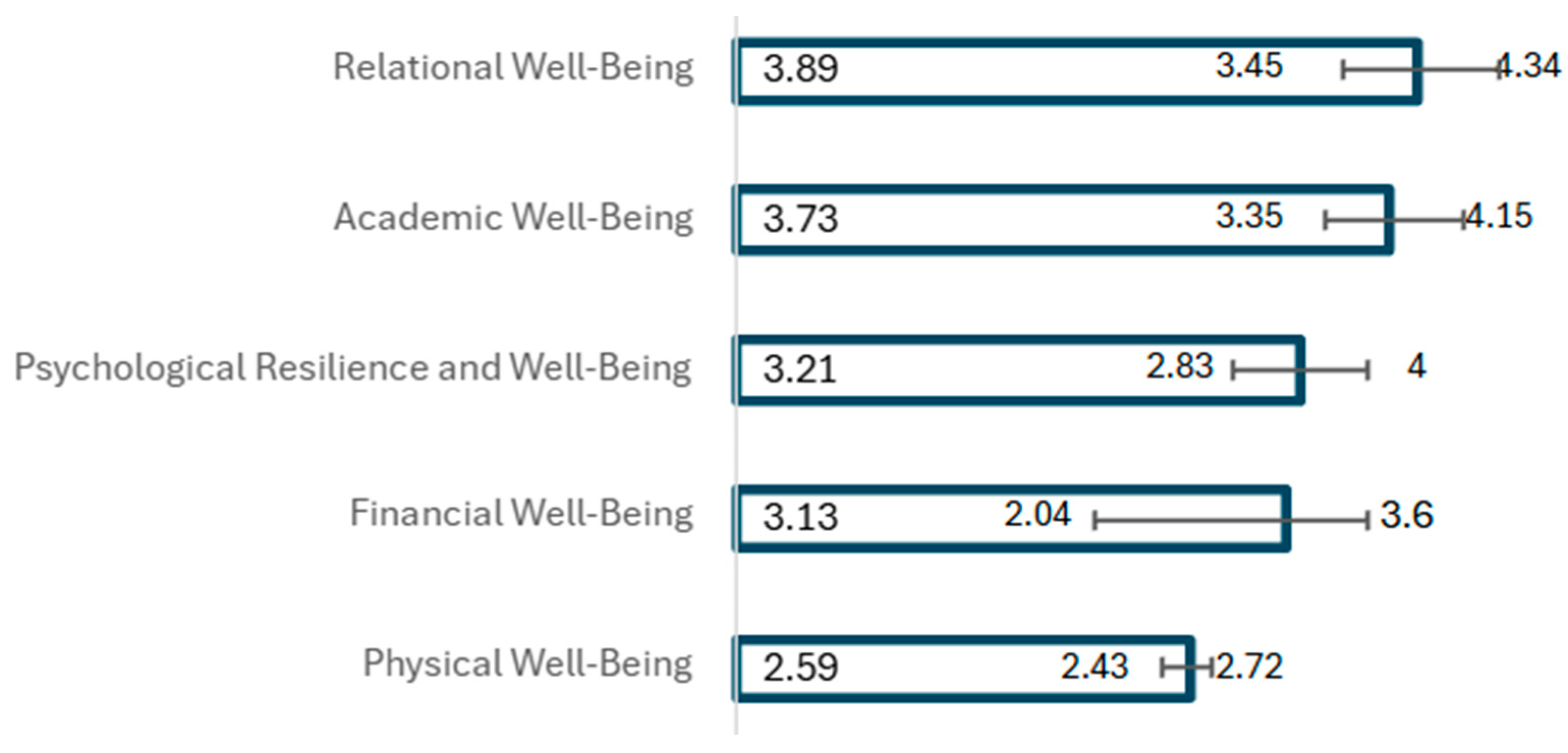
Figure 1. General overview of STEM mature-aged students’ evaluation of well-being dimensions (where 1—strongly disagree and 5—strongly agree) (N = 119, research period: April–May 2025).
Education 15 01665 g001
Table 1. Selection criteria for semi-structured interviews.
Respondent NumberGenderAgeStudy Level (Bachelor, Master)Previous ExperienceOccupation (Full Time, Part-Time, Unemployed, Self-Employed)Funding (Public, Private)
1Female41BachelorYesUnemployedPublic
2Female42BachelorYesUnemployedPrivate
3Male45BachelorYesFull-timePublic
4Female35MasterYesFull-timePublic
5Male33MasterYesPart-timePrivate
6Male43BachelorYesSelf-employedPublic
Table 2. The methodology of the research.
PhaseResearch MethodDescriptionFocus
Phase 1State-of-the-art reviewDefinition of the aim and objectives of scientific literature reviewTo review the scientific articles on the concepts of mature-aged students, well-being and sustainability
Phase 2Criteria for selection and exclusion of sources for the scientific literature reviewUnique articles that are indexed in Scopus and Web of Science; used keywords: “mature-aged students,” “higher education,” “STEM,” “well-being,” and “sustainability”
Phase 3Grouping and analysis of information obtained by the scientific literature reviewAnalysis and interpretation of findings. Definition of well-being dimensions
Phase 4Survey ResearchDefinition of criteria for selection of participants for the surveyRTU mature-aged STEM students (aged 30+ years)
Phase 5Preparation of questions for the survey in taking limitation account the overall aim of the researchLikert scale questions considering five well-being dimensions: academic well-being, financial well-being, physical well-being, psychological resilience and well-being and relational well-being
Phase 6Quantitative analysis of the results of the surveyAnalysis and interpretation of findings
Phase 7Semi-structured interviewsDefinition of criteria for selection of participants for the semi-structured interviewsRTU mature-aged STEM students (aged 30+ years)
Who participated in the survey and expressed their willingness to participate in the interview. A purposive sample of 6 was selected to ensure diversity in gender, study level (Bachelor/Master), and study mode (full-time/part-time), aiming to capture a range of perspectives on well-being dimensions
Phase 8Preparation of questions for the semi-structured interviews taking limitation account the overall aim of the researchQuestions based on the phenomenological interview approach to analyse the various experience of the interviewees
Phase 9Analysis of the results of the semi-structured interviewsAnalysis and interpretation of findings using an inductive reasoning
Phase 10Data triangulationHolistic understanding of mature-aged students’ well-being based on the results of the scientific literature analysis, survey and semi-structured interviewsBased on triangulation results, the recommendations to the faculty are developed on how to support the well-being of mature-aged STEM students to promote sustainability
Source: authors’ created table.
Table 3. Descriptive statistics of indicators related to the possible faculty influence on well-being of STEM mature-aged students.
Well-Being DimensionSurvey Indicator (1 = Strongly Disagree … 5 = Strongly Agree)CodeMeanStdModeMedian
AcademicI am satisfied with the quality and availability of the teaching staff.Q13.65144
The content of the courses is current and meets my needs.Q33.561.0634
I feel included and supported in my academic environment by the University staff.Q53.841.2954
FinancialI can afford additional educational activities (e.g., seminars, courses, materials).Q143.371.3844
PhysicalThe academic load negatively affects sleep quality and energy levels.Q192.541.2912
I often experience physical fatigue or burnout related to my studies.Q202.651.3813
Psychological ResilienceI can effectively deal with the stresses of my studies.Q213.290.9533
Academic requirements significantly affect my psychological well-being.Q242.831.0843
RelationalI have developed positive and supportive relationships with instructorsQ264.011.0654
I generally feel socially included and supported in the academic environment.Q273.931.1344
I feel that I am generally listened to and respected at the University.Q303.71.3254
Source: N = 119, research period: April–May 2025.
Table 4. Faculty-linked well-being indicators by programme level.
Well-Being DimensionSurvey Indicator (1 = Strongly Disagree … 5 = Strongly Agree)Program LevelHigh
Endorsement 4–5n (%)
Low
Endorsement 0–1n (%)
χ2 (df = 10)p
AcademicThe content of the courses is current and meets my needsCollege (n = 12)5 (41.7%)3 (25.0%)19.40.034 *
Bachelor (n = 51)25 (49.0%)5 (9.8%)
Master (n = 42)20 (47.6%)1 (2.4%)
AcademicI feel included and supported in my academic environment by the university staffCollege5 (41.7%)5 (41.7%)46.2<0.001 **
Bachelor36 (70.6%)6 (11.8%)
Master28 (66.7%)5 (11.9%)
RelationalI feel that I am generally listened to and respected at the universityCollege6 (50.0%)5 (41.7%)23.70.008 *
Bachelor29 (56.9%)6 (11.8%)
Master25 (59.5%)6 (14.3%)
Source: N = 119, research period: April–May 2025. * p < 0.05, ** p < 0.001.
Table 5. Faculty recommendations to support well-being of mature-aged STEM students.
Area of Faculty ResponsibilityRelated Well-Being DimensionRecommendations for Faculty
Faculty as a person with a personalityRelational well-beingFoster respectful, empathetic and open communication with mature-aged students
Be accessible outside class hours for academic guidance
Adjust academic requirements to reduce unnecessary stress
Introduce a culture of mutual learning by allowing mature-age students to share their experiences
Study contentAcademic well-being, psychological well-beingAdapt curricula to reflect the needs and prior knowledge of mature-aged students
Avoid overly complex or irrelevant content
Incorporate adult learning principles to minimise cognitive overload
Additional networking and experienceRelational well-being, financial well-being, academic well-beingProvide networking and development activities that strengthen social inclusion
Reduce financial barriers by offering affordable of free opportunities
Respect mature-aged students’ time constraints linked to family or employment
Inclusion in the study environmentRelational well-being, psychological well-beingPromote an inclusive academic environment that values age diversity
Encourage collaboration between students of different age groups
Identify students at risk of isolation and offer targeted support
Source: table created by the authors based on literature review, survey results and interviews.
Disclaimer/Publisher’s Note: The statements, opinions and data contained in all publications are solely those of the individual author(s) and contributor(s) and not of MDPI and/or the editor(s). MDPI and/or the editor(s) disclaim responsibility for any injury to people or property resulting from any ideas, methods, instructions or products referred to in the content.


