


Article

From Outsiders to Insiders: Empowering University Teachers to Foster the Next Generation of Entrepreneurial Graduates

Centre for Engaged Education through Entrepreneurship, Department of Industrial Economics and Technology Management, Faculty of Economics and Management, Norwegian University of Science and Technology (NTNU), 7491 Trondheim, Norway
*
Author to whom correspondence should be addressed.
Educ. Sci. 2025, 15(12), 1643; https://doi.org/10.3390/educsci15121643
Submission received: 30 October 2025 / Revised: 2 December 2025 / Accepted: 4 December 2025 / Published: 6 December 2025

Abstract

Fostering a generation of entrepreneurial graduates from all disciplines capable of addressing complex societal challenges has become a key objective for higher education. Stimulating entrepreneurial competence across disciplines depends critically on university educators, yet many feel like “outsiders” to entrepreneurship, lacking the confidence or pedagogical strategies to integrate entrepreneurial thinking into their teaching. This study explores how a targeted professional development course can empower educators from diverse disciplines to become “entrepreneurial insiders.” Drawing on the experiential learning theory and emotional engagement, the course design employs a three-dimensional pedagogical model—inspiration, immersion, and implementation—to guide participants from emotional engagement to practical application. Using a convergent mixed-methods approach exploiting both quantitative and qualitative data collected via pre- and post-course surveys, we find significant increases in educators’ competence and confidence to implement entrepreneurial elements into their teaching. Qualitative analyses further reveal that the educators’ transformation is sparked by perceptual change, emotional connection, and intentions to apply entrepreneurial pedagogy. Creating a safe learning environment and explicitly communicating supportive behavior are considered as critical success factors for the transformation. The study contributes to entrepreneurship education research by offering a replicable, educator-centered model for training educators to embed entrepreneurship across disciplines.

1. Introduction

In recent years, entrepreneurship education (EE) has evolved beyond its traditional focus on venture creation to embrace a broader and more inclusive objective: fostering entrepreneurial competence among all learners, regardless of their disciplinary background or career aspirations (Baggen et al., 2022; Block et al., 2023; Crișan et al., 2023). This shift reflects a growing understanding that entrepreneurship should be perceived not only as business formation but as a capacity to create value in economic, social, cultural, and scientific domains (Lackéus, 2015, 2018). As such, entrepreneurship is increasingly seen as a mechanism for addressing complex global challenges and driving societal transformation (Hägg & Kurczewska, 2022; Markman et al., 2019). This expanding understanding of entrepreneurship positions it as a central educational strategy for preparing graduates to navigate and contribute meaningfully to an increasingly complex world.
Entrepreneurial competence refers to the ability to recognize opportunities, mobilize resources, and act upon ideas to generate value (Bacigalupo et al., 2016). It includes cognitive, affective, and behavioral components such as creativity, initiative, resilience, problem-solving, and the capacity to navigate uncertainty (Bacigalupo et al., 2016; European Commission, 2014). These competences are widely recognized as essential for personal development, active citizenship, and employability in a rapidly changing world (European Commission, 2014, 2016; Lackéus, 2015). These perspectives highlight entrepreneurial competence as a foundational capacity for learners, extending beyond traditional business contexts.
In line with this broadened understanding, universities globally are increasingly expected to integrate entrepreneurship across disciplines to foster the next generation of entrepreneurial graduates (European Commission, 2014). However, this inclusive vision presents practical challenges. Educators from diverse fields are now tasked with embedding entrepreneurship in their teaching, often without prior training, confidence, or clear guidance (Gracia-Zomeño et al., 2025; Gul et al., 2024; Jin & Roald, 2025; Neergård & Roald, 2025). EE must therefore be tailored to specific disciplinary contexts, aligned with students’ motivations, and framed in pedagogically relevant ways (Blenker et al., 2012; Harmeling, 2011). This approach, often described as embedded entrepreneurship education, integrates entrepreneurial thinking within disciplinary teaching rather than offering entrepreneurship as a stand-alone course (Crișan et al., 2023). However, success in this model depends not only on curricular design but also on educators’ willingness and capacity to adopt new roles and pedagogies (Blenker et al., 2012; Crișan et al., 2023). This underscores that embedded entrepreneurship education succeeds only when educators are equipped and motivated to adapt entrepreneurial principles meaningfully within their own disciplinary settings.
Yet, many educators remain hesitant to take on this role. Entrepreneurship is frequently perceived as commercially driven or misaligned with their academic identity (Neergård & Roald, 2025; Peura & Hytti, 2023). This leads to what has been described as an “outsider position”, where educators are disengaged from entrepreneurship, skeptical of its relevance, and lack pedagogical strategies for implementation (Neergård & Roald, 2025). While embedded entrepreneurship education per definition requires that the entrepreneurship teaching happens from within the discipline (Crișan et al., 2023), we argue that this requires, again, of the educators that they both feel like insiders in their own discipline and that they identify as entrepreneurial insiders. However, moving educators toward an “entrepreneurial insider” position, where they view entrepreneurship as educationally meaningful and adaptable to their disciplinary values (Neergård & Roald, 2025), requires more than new content delivery. It requires educators to foster entrepreneurial competence among their students (European Commission, 2014, 2016), which might imply rethinking their pedagogical practices.
This challenge is reflected in the evolution of EE pedagogy itself. As Hägg and Gabrielsson (2020) show in their systematic review of nearly four decades of EE research, the field has shifted from instructor-led, content-focused models to learner-centered, experiential, and constructivist approaches. These models emphasize real-world engagement, reflection, context-sensitive pedagogies, and the co-creation of knowledge. Crucially, this pedagogical turn also demands a rethinking of educators’ roles, not merely as transmitters of knowledge, but as facilitators of learning experiences embedded in real-world contexts (Hägg & Gabrielsson, 2020). Yet, while the literature increasingly recognizes these shifts, it has paid limited attention to how university educators themselves experience and enact this pedagogical transformation, particularly those outside the traditional entrepreneurship domain.
Recent studies point to the need for professional development initiatives that go beyond methods training to support educators’ identity work and sensemaking. Peura and Hytti (2023), for instance, show how university teachers undergoing EE training engage in reflective processes to negotiate tensions between disciplinary norms and entrepreneurial logics. Their study highlights the importance of creating space for reflection, dialogue, and identity negotiation in faculty development. Importantly, such initiatives must recognize that educators are not neutral adopters of new content, but active agents making sense of EE through the lens of their professional values and academic cultures. Without this critical and reflective component, EE risks being perceived as externally imposed or ideologically misaligned.
Although there is a growing body of frameworks on student-focused entrepreneurship education (e.g., Baggen et al., 2022; Cummins et al., 2021; Lackéus, 2025), comparatively little is known about how to effectively prepare and support educators for embedded EE. This represents a critical gap in the literature. Specifically, we lack evidence-based models of professional development that support educators in developing both the mindset and pedagogical confidence to act as facilitators of entrepreneurial learning within their disciplinary context. As Peura and Hytti (2023) and Hägg and Gabrielsson (2020) suggest, the transformation of EE requires a deeper focus on educators’ internal processes, especially how they interpret, adapt, and embody entrepreneurial pedagogy in diverse academic environments. Without evidence-based approaches to professional development, efforts to broaden entrepreneurship education risk remaining superficial or unevenly distributed across academic fields.
This study addresses this gap by examining how university educators from different disciplines can be supported in adopting entrepreneurial thinking and pedagogy. It focuses on a professional development course developed at a Norwegian university that emphasizes inspiration-driven, experiential learning tailored to diverse disciplinary contexts. While a separate study (Jin & Roald, 2025) provides a comprehensive evaluation of this professional development course’s impact using the Kirkpatrick model, this paper focuses specifically on the pedagogical design and the transformational process that underpins these outcomes. We break open the “black box” of entrepreneurship design and delivery to explore the how and why of educators’ transition from “entrepreneurial outsiders” to “insiders”. Specifically, we explore the following research questions (RQs):
RQ1: How can a pedagogical model be designed and implemented to empower university educators to transition from entrepreneurial outsiders to insiders within their disciplinary teaching practice?
RQ2: In what ways does the pedagogical model facilitate educators’ transformation from entrepreneurial outsiders to insiders?
RQ1 focuses on the design and implementation of the pedagogical model and RQ2 explores how the model facilitates educators’ transformational process. By focusing on the design of the pedagogical model and educator transformation in embedded EE, this study contributes new insights into the design of faculty development programs that enable more inclusive and context-sensitive entrepreneurship education across the university landscape.

2. Materials and Methods

2.1. Course Description

The course Entrepreneurship Education for Better Learning is offered as part of a broader pedagogical competence development program at the Norwegian University of Science and Technology (NTNU). This program is mandatory for all academic staff with teaching responsibilities. It consists of 120 h of compulsory training alongside 80 h allocated to elective modules, each spanning 20 h including pre-course readings and assignments. The course discussed in this paper constitutes one such elective module. It has been developed and delivered by a team of entrepreneurship educators affiliated with Engage, the university’s Centre for Excellence in Education.
A core principle is that the course functions as a model of practice; educators engage with the same active, learner-centered methods they are being encouraged to use with their own students. This direct experience from the learner’s perspective is fundamental to the design, ensuring that educators gain a practical, empathetic understanding of how to effectively facilitate—not just lecture on—the entrepreneurial process in their own classrooms. Building on this principle, the course seeks to foster a shift in educators’ pedagogical mindset by reframing entrepreneurship as an educational approach rather than a narrowly defined economic or commercial domain. It encourages educators to explore entrepreneurship as a flexible, values-aligned, and context-sensitive pedagogical approach. Rather than focusing on teaching entrepreneurship content per se, the course challenges educators to reimagine how entrepreneurial thinking can be embedded in their disciplinary teaching, aligning with the principles of embedded entrepreneurship (Crișan et al., 2023) outlined above.
To ensure accessibility and flexibility, the course is offered in both in-person and online formats and is delivered in both Norwegian and English. The in-person format is conducted over two full days. To mitigate “zoom fatigue” (Queiroz et al., 2023), the online version is extended to three shorter days with longer breaks and space for individual reflection. Variation in learning modes, such as a continuous interplay between theoretical input, individual and group-based reflection, and hands-on activities both in groups and individually ensures engagement and participation. This way, the online format not only accommodates diverse educator schedules and geographic locations, but also maintains pedagogical quality, thus providing both logistical and pedagogical rationales (Cassidy et al., 2016). The course aims to foster dialogue across disciplinary boundaries and reduce barriers to participation through linguistic accessibility, diverse teaching examples, and an emphasis on relevance to varied academic contexts. A more detailed description of the course including activity sequence is available in Jin and Roald (2025).
Between Spring 2022 and Spring 2025, the course was delivered 13 times, with a total of 212 educators participating (see Appendix A Table A1). While most participants are affiliated with the host university, the course is also open to staff from other higher education institutions. To date, four educators from other Norwegian universities and two from the United Kingdom have participated, reflecting a growing interest in cross-institutional professional development.

2.2. Course Design and Pedagogical Model

2.2.1. Theoretical Frameworks

This study draws on a multi-layered theoretical foundation to examine how educators across disciplines adopt entrepreneurial pedagogy. Our framework integrates experiential learning theory, insights from emotional engagement, the instructional design principle of constructive alignment, and micro-learning to explore how professional development can holistically support educator transformation.
Building on this multi-layered foundation, we distinguish between Deweyan conceptions of affect-laden experience and Kolb’s model of experiential learning to clarify the theoretical lenses underpinning our analysis. From a Deweyan perspective, experience is holistic, transactional, and imbued with emotional, ethical, and aesthetic qualities. In professional development contexts, such affect-laden encounters can function as “educative moments” (Dewey, 1938/1997)—pivotal instances of dissonance that unsettle educators’ habitual assumptions and, through reflective inquiry, open up new understandings of entrepreneurship as a meaningful and relevant pedagogical approach. Partly inspired by Dewey, Kolb’s experiential learning theory (Kolb, 1984) formalized a cyclical model of learning, consisting of concrete experience, reflective observation, abstract conceptualization, and active experimentation. Following Kakouris and Morselli’s (2020) call for theoretical precision, we therefore treat Dewey’s conception of affect-laden experience as the broader epistemological grounding for educator transformation, while employing Kolb’s cycle as a distinct pedagogical scaffold for designing specific learning activities. This delineation enables us to draw on the strengths of both theorists without conflating their distinct contributions.
Experiential learning is particularly relevant for educators, who might need to unlearn more traditional transmission-oriented behaviors, in order to adopt facilitative, learner-centered roles. To realize the political vision of entrepreneurial competence for all students (European Commission, 2014, 2016; Potter, 2008), the shift towards embedded entrepreneurship education is not only pedagogical but it also requires professional and personal identity development. As Peura and Hytti (2023) argue, educators integrating entrepreneurial elements into their teaching must navigate tensions between entrepreneurial logics and disciplinary norms. Their engagement involves processes of identity negotiation and sensemaking—dimensions that extend beyond acquiring and applying new teaching strategies. Moreover, aligning EE with disciplinary norms and learning cultures is vital for fostering legitimacy and identification. When entrepreneurship is framed in ways that resonate with disciplinary values and worldviews, educators are more likely to adapt entrepreneurial thinking in pedagogically meaningful and sustainable ways (Peura & Hytti, 2023).
While much of the EE literature focuses on knowledge or methods training, emotional engagement has emerged as a crucial yet underexplored dimension of educator learning. In particular, the concept of entrepreneurial inspiration offers insight into how emotional responses to educational experiences can catalyze new perspectives and intentions. Van Ewijk et al. (2021) define entrepreneurial inspiration as an affective-cognitive state that may precede entrepreneurial action, even among those without prior interest in entrepreneurship. While their framework is grounded in psychological models, it resonates strongly with educational theory. Inspiration can be interpreted as a pedagogical trigger within Kolb’s (1984) experiential learning cycle—particularly in terms of how reflective observation and abstract conceptualization helps making sense of emotional engagement provoked by concrete actions—emotional engagement can prompt learners to reevaluate their identity, purpose, or future action. From a Deweyan perspective, such affect-laden experiences can turn into “educative moments” that disrupt habitual thinking and stimulate growth through reflection and meaning-making (Dewey, 1938/1997). In this sense, inspiration is not merely motivational; it supports internal transformation by linking feeling with inquiry and action. For educators, this process may be key to shifting from an “entrepreneurial outsider” stance to an “entrepreneurial insider” position.
Furthermore, to ensure the pedagogical elements are coherent and effective, the course design incorporates Biggs’ (2003) principle of constructive alignment. This principle emphasizes the importance of creating coherence between intended learning outcomes, teaching and learning activities, and assessment tasks. In the context of our course, this means explicitly aligning the overall goal, i.e., to empower educators to embed entrepreneurial thinking, with the experiential activities and the final implementation task where participants create a concrete plan for their own teaching (see detailed descriptions below).
Finally, cognitive overload has been recognized as a major barrier to learner engagement and persistence in higher education (Kossen & Ooi, 2021). To address this, micro-learning design principles proposed by Research Studios Austria (2005) offer a powerful solution. Micro-learning is characterized by the delivery of content in concise, focused, “bite-sized” units (Gutierrez, 2018; Jomah et al., 2016). The effectiveness of micro-learning has been proved by many studies (Kossen & Ooi, 2021). Rooted in the “less is more” principle (Gutierrez, 2018), micro-learning enables the segmentation of complex content into smaller, scaffolded learning experiences that are easier to absorb and retain. Incorporating micro-learning into EE involves breaking down learning outcomes and instructional content into manageable segments that prioritize practical relevance, clarity, and engagement. When combined with emotionally engaging content, such formats may serve as both entry points and sustaining mechanisms for educators exploring new professional roles.
Taken together, this framework positions educator transformation as a holistic process—driven by experience, reflection, emotional engagement, contextual alignment, and instructional design. It provides the basis for our investigation into how professional development can support educators in becoming entrepreneurial insiders.

2.2.2. Pedagogical Model

Designing an introductory course in entrepreneurship education for university educators presents several pedagogical challenges. Chief among them is the need to distil a broad and complex scholarly field into its most essential elements. With a total duration of only 20 h and a participant group with limited or no prior exposure to entrepreneurship, the course must prioritize conceptual clarity, accessibility, and relevance. Guided by the theoretical framework outlined above, the course is structured around three interwoven pedagogical dimensions: inspiration, immersion, and implementation. These dimensions are not presented in a linear sequence but are integrated throughout the learning process to foster emotional engagement, active participation, and pedagogical reflection. The course design also incorporates micro-learning design principles, with a balanced mixture of short lectures and hands-on activities.
The first dimension, inspiration, seeks to engage participants both emotionally and cognitively. This is achieved through storytelling, peer interaction, individual reflection, the use of physical objects, and talks by experienced entrepreneurship educators. For instance, prior to the course, participants are asked to identify and reflect on an “entrepreneurial object” relevant to their academic discipline. These objects are then shared in the opening session as a way of surfacing disciplinary entry points to entrepreneurial thinking, guided by questions such as “What does entrepreneurship mean in my discipline?”, encouraging the participants to evaluate the relevance and role of entrepreneurship in their own teaching contexts. This is followed by short inspirational talks about core concepts in entrepreneurship, entrepreneurship education, and embedded entrepreneurship education, with a deliberate emphasis on their applicability across a wide range of academic fields. Rather than promoting narrow understandings of entrepreneurship, such as venture creation, start-up culture, or competition-driven processes, the course encourages critical engagement with alternative forms, including social entrepreneurship, intrapreneurship, and public-sector innovation.
Another example of the use of concrete objects is how a physical, laminated representation of what we refer to as the “EntreComp flower” (Bacigalupo et al., 2020, p. 10) has been used in groups for a “spin the bottle” exercise. Here, each participant around the table gets to spin a stick attached to the middle of the flower, and then they must reflect on their own experience regarding the sub competence that is written in the petal that the stick ends up pointing at. This is a tactile, playful and highly experiential way of exploring and exchanging personal experience that can inspire the educators to engage both cognitively and emotionally, which can lead to a deep learning that, next, can inspire the educators to integrate similar elements into their own teaching.
To deepen personal engagement, the course includes a brief training in pitching techniques, guiding participants to develop and deliver an “elevator pitch”. The principle of “serious play” (Schrage, 2000) is followed here, in terms of intentionally using play and playfulness to train skills and enhance learning. By preparing a pitch of an imagined product that combines an animal with an object, such as “snail glasses”, one learns to think outside the box, which is a core innovative skill, while simultaneously training key pitching skills.
The immersion dimension emphasizes experiential learning, in the sense that participants actively engage in entrepreneurial activities that revolve around the core principles of entrepreneurship education. A central activity is an opportunity recognition exercise, in which interdisciplinary teams of educators identify entrepreneurial opportunities related to UN sustainability goals. The educators choose one of the sustainability goals to work with in groups. They are challenged first to narrow down a specific problem within the sustainability area, generate a solution for it and look for opportunities and resources to put the idea into practice, using the business model canvas (Osterwalder & Pigneur, 2010). This actively trains their entrepreneurial competences in terms of thinking creatively in collaboration with others and design a process from idea to product/solution in practice.
The final pedagogical dimension of the pedagogical model is implementation. It is designed to ensure that the knowledge, inspiration, and practical experience gained during the course are translated into actionable teaching strategies. At the outset, educators are introduced to an educational framework which is structured around five pillars: Interact, Challenge, Act, Reflect, and Embrace (uncertainty), which is outlined in Roald et al. (in press). These principles underpin the design of the course and serve as a flexible guide for implementing entrepreneurship education across disciplines. Participants then work individually to create concrete plans and teaching activities that promote entrepreneurial competence among students, and then collaborate in small groups to discuss common challenges and opportunities in implementing entrepreneurial elements into their teaching.
As an underlying factor for all the three dimensions presented above, the focus on creating and maintaining a psychologically safe (Edmondson, 2019) learning environment is crucial. This is based on the assumption that to put oneself at risk and move outside the comfort zone one needs to feel safe that one will not be negatively evaluated or ridiculed by peers and instructors. Being challenged to, for instance, pitch in front of an audience, perhaps for the first time, requires a basic feeling of safety that one will be accepted for who one is, and that the others will show support no matter how the pitching goes. Previous research from online teaching has shown the importance of the instructors in this respect; they facilitate this kind of relationship-building among their students by both explicitly communicating what norms they would like to characterize the learning environment, and by implicitly practicing these norms themselves (Roald et al., 2024). Therefore, the instructors put much energy into ensuring that all the participants present themselves to each other in the beginning of the course, both in terms of professional and personal aspects. Moreover, the instructors make sure to explicitly communicate, for instance before the plenary pitching session, the importance of being aware of both one’s body language and how one gives verbal feedback to one another, to enhance psychological safety, as well as actively modeling supportive behaviors themselves in the plenary session.

2.2.3. Study Design and Data Collection

In this study, we adopted convergent a mixed-methods design (Creswell & Plano-Clark, 2017) using an online pre- and post-course questionnaire. The instrument integrated both closed- and open-ended items to capture measurable changes in participants’ confidence and competence, as well as qualitative accounts of their learning experiences. In a convergent design, quantitative and qualitative data are collected in parallel, analyzed separately, and then integrated during interpretation (Creswell & Plano-Clark, 2017). This design was chosen because the two strands address different but complementary aspects of the research questions. The quantitative data capture measurable changes in participants’ self-reported competence and confidence, whereas the qualitative data provide deeper insight into how educators experienced the course, how their perceptions shifted, and which mechanisms contributed to their learning. The convergent design therefore enabled us to bring together evidence of whether change occurred (quantitative) with evidence explaining how and why this change unfolded (qualitative). Following the analysis of each strand, integration occurred through comparing points of convergence and divergence, and interpreting how the qualitative themes elaborated, explained, or contextualized the quantitative trends.
The dataset includes responses from 212 university educators representing a wide range of academic disciplines who participated in one of the first thirteen iterations of the professional development course. All participants were invited to complete both the pre-course and post-course questionnaires. All the survey items were self-developed to align with the course’s specific learning objectives. This approach was chosen to maximize content validity (Artino et al., 2014).
The pre-course questionnaire gathered demographic and contextual information, including gender, age range, years of professional experience, prior exposure to entrepreneurship or innovation training, and whether participants had taught courses with an entrepreneurship or innovation focus. It included an open-ended question about their personal understanding of entrepreneurship. It also established baseline measures of participants’ confidence and competence in integrating entrepreneurial thinking into their teaching practices. Participants were asked to rate their confidence (“How confident do you feel in integrating entrepreneurial thinking into your teaching practice?”) and competence (“How would you rate your current competence to implement entrepreneurial elements into your teaching?”) on a 5-point Likert scale (1 = low, 5 = high). While single-item measures have limitations, they are considered appropriate for capturing global, unidimensional constructs like self-assessed confidence and competence (Postmes et al., 2013; Wanous et al., 1997) and were chosen for their face validity and brevity in our pre-post design.
The post-course questionnaire repeated these items to assess changes in confidence and competence over the course of the training. In addition, it included two open-ended prompts designed to elicit participants’ reflections on what they learned and how the course contributed to their learning outcomes. Participants were asked to describe: (a) what they learned during the course that they anticipate using in their work, and (b) which aspects of the training contributed most effectively to their learning outcomes. These prompts encouraged respondents to provide concrete examples and personal reflections.
Participants were recruited indirectly through their voluntary enrollment in the Entrepreneurship Education for Better Learning course. The research team did not selectively recruit or invite individuals; instead, all educators who registered for the course were eligible to participate in the study. Participation in the survey was entirely voluntary, and completing the course did not require participation in the research. Because the course is open to educators across faculties, career stages, and disciplinary backgrounds, the resulting sample naturally reflected a diverse demographic and professional profile. All procedures followed institutional ethical guidelines. Ethical approval for this study was obtained from SIKT—The Norwegian Agency for Shared Services in Education and Research (reference number: 535509). Informed consent was obtained from all individuals involved in the study.

2.2.4. Data Analysis

The quantitative data from the pre- and post-course surveys were analyzed using paired-sample t-tests. This statistical test was used to compare the mean scores of participants’ self-reported confidence and competence before and after the training, allowing us to determine if the observed improvements were statistically significant.
Open-ended responses from the post-survey were analyzed using thematic analysis following Braun and Clarke’s (2006) six-phase framework. The process began with repeated reading of the data to ensure familiarity. Prior to coding, all responses underwent a systematic data-cleaning process to ensure analytical rigor and reliability. This involved screening entries for completeness and relevance, removing empty and off-topic responses. Ambiguous or partial entries were retained only when they contained substantive insights pertinent to the research focus. Following this process, 150 responses were identified as sufficiently rich and meaningful for further analysis.
We then generated initial codes inductively, identifying recurrent ideas and meaningful patterns across the dataset. The codes were subsequently collated into candidate themes capturing pedagogical mechanisms, learning experiences, and the nature of change across perceptual, emotional, and behavioral dimensions. These candidate themes were iteratively reviewed, refined, and defined to ensure internal coherence and distinctiveness. For instance, all data relating to shifts in understanding the meaning of entrepreneurship were grouped under the theme “Perceptual Change.” Throughout the analysis, the two authors engaged in reflexive discussions to scrutinize interpretive assumptions, debate the placement of codes, and collaboratively define the essence of each theme. This consensus-building approach enhanced the analytic rigor and trustworthiness of the findings.
Table A1 presents the number of participants per cohort and corresponding response rates. Of the 212 participants, 142 (67.0%) completed the pre-course survey, 175 (82.5%) completed the post-course survey, and 119 (56.1%) completed both, allowing matched pre–post comparison of individual-level change. A unique identifier (INFx) was assigned to each respondent of the post-course survey, and cohort identifiers (Cohort 1–13) were used to track participants across course iterations.

2.2.5. Sample Profiles

Table A2 shows profiles of the participants. This information is based on responses from participants who completed the pre-course survey (N = 142). The demographics of the sample demonstrate a balanced gender distribution, with 50.7% identifying as female, 48.6% as male, and 0.7% choosing to self-define their gender. Participants represented a wide age distribution, with 35.9% aged 30–40, 19.7% aged 41–45, 39.4% over 45, and 4.9% under 30. The group was professionally experienced, with 45.1% reporting more than 15 years of professional practice, 23.9% having 11–15 years, 18.3% with 6–10 years, and 12.7% with less than 5 years of experience. Regarding prior exposure to entrepreneurship or innovation education, 41.5% of participants had received relevant training, while 58.5% had not. Furthermore, only 24.6% had taught or were currently teaching courses with a focus on innovation or entrepreneurship, while 75.4% had not.

3. Results

The following sections present the findings of our mixed-methods analysis, structured to address the two research questions. First, we present the quantitative and qualitative evidence that illuminates the ways in which the pedagogical model facilitates educator transformation (addressing RQ2). We then synthesize these findings to describe how the pedagogical model’s design and implementation enabled this change (addressing RQ1).

3.1. Quantitative Analysis

We first examined whether the mode of course delivery—in-person versus online—had any impact on participant outcomes. Independent-samples t-tests found no significant differences in changes in confidence and competence regarding the integration of entrepreneurship into their teaching practice between participants who completed the course in-person and those who completed it online, t (117) = 0.24, p = 0.813 for competence change, t (117) = 1.22, p = 0.225 for confidence change. Based on these results, data from the two formats were merged for all subsequent analyses.
To evaluate the overall effectiveness of the course, we then examined pre- to post-course changes in participants’ competence and confidence. As shown in Table 1, paired-sample t-tests revealed statistically significant increase in both competence, t (117) = 7.70, p < 0.001, and confidence, t (117) = 6.67, p < 0.001.

3.2. Qualitative Analysis

The qualitative analysis of participants’ reflections provides a deeper understanding of the ways in which the pedagogical model facilitated their transformation (RQ2). The analysis reveals three interrelated dimensions of change: perceptual change, emotional connection, and integration intentions. By interrelatedness, we mean that these dimensions often co-occur within individual responses. For example, a participant may express both a perceptual shift and an emotional response. Similarly, many participants describe an intention to apply new pedagogical approaches as a result of perceptual or emotional shifts. Table 2 summarizes the dimensions, their definitions, and prevalence. Since categories overlap, the sum of percentages exceeded 100%.

3.2.1. Perceptual Change

The most immediate change reported by almost all participants concerned their perception of what entrepreneurship means in higher education—a perceptual change that redefined the meaning and relevance of entrepreneurship in their academic contexts. Prior to the course, the majority of participants associated entrepreneurship primarily with business-oriented activities. Out of 142 educators who completed the pre-course survey, 99 (69.7%) initially associated entrepreneurship with business creation, startup, profit, or product development. This narrow, business-centric view rendered the notion of entrepreneurship less relevant or incompatible with their disciplines. Through participation in the course, however, educators reported developing a broader and more inclusive understanding that connected entrepreneurship with mindset, creativity, innovation, interdisciplinary collaboration, societal value creation, and new approaches of teaching and learning. As one participant (INF3, cohort 12) reflected, “Before the course, I thought entrepreneurship was only about starting companies. Now I see it as an idea of students as intrapreneurs, ideas for ways to engage students and make teaching more interactive. I’ve learned how to connect it to my own field.” Another (INF10, cohort 12) noted, “Thinking about entrepreneurship more as an entrepreneurial mindset and in terms of intrapreneurship makes it easier for me to see it in my own field and connect it to my courses.” These quotes illustrate a cognitive reframing from perceiving entrepreneurship as commercially driven to viewing it as a pedagogically meaningful and relevant concept. This transformation marks a critical step in educators’ movement toward an entrepreneurial insider identity, in which educators begin to see entrepreneurship as integral to their professional role rather than peripheral to it. One participant (INF7, cohort 4) captured this deeper level of integration particularly well: “I realized that entrepreneurship isn’t just about business. I’ve learned that it is an important learning strategy for the future, promoting student engagement, participation, and creativity, which I already teach my students.” This reflection demonstrates a shift from understanding entrepreneurship as something distant from the discipline to internalizing it within existing pedagogical practices. It signals the emergence of identity alignment, where educators recognize entrepreneurial competencies as already embedded in their disciplinary teaching.

3.2.2. Emotional Connection

Alongside the cognitive reframing, participants reported significant emotional shifts that strengthened their confidence and motivation. Experiencing the course as both safe and energizing made a fertile ground for this change, helping educators overcome initial skepticism and hesitation. One participant (INF5, cohort 3) captured this transition vividly: “At first, I felt uncertain and a bit resistant. Entrepreneurship didn’t feel like ‘my thing’. But through the course, I became genuinely inspired and started to believe I could bring this to my students.” This sense of emotional resonance was further reflected in INF8 from Cohort 11, who credited the instructors’ encouraging demeanor and the use of humor in discussions for making it feel safe to explore new ideas: “It was nice that the instructors were very encouraging, and the discussions and jokes made it feel like a safe space to explore ideas.” Another (INF2, cohort 5) explained how this newfound confidence was socially fueled: “The enthusiasm and passion of [facilitator’s name] was contagious. It gave me courage to try new things.” Importantly, this affective engagement was not limited to in-person settings. An educator (INF3, cohort 11) participating in the online format shared: “The course gave us many joyful moments and personal touches. It was a very good online course that was easy to follow and kept me engaged—not an easy task for someone with often-times debilitating ADHD.” The sense of belonging and openness also facilitated peer learning across disciplinary boundaries, which several participants described as “inspiring”, “energizing”, and “eye-opening.” As INF 2 (cohort 9) put it: “The group energy was amazing. The group discussions made it easier for us to think creatively and see how ideas could be translated into our own teaching practice.” Such emotional connection aligns with Van Ewijk et al.’s (2021) notion of entrepreneurial inspiration as an affective-cognitive trigger for reflection and transformation. Such responses suggest that inspiration, affirmation, and social support served as the emotional catalysts for this shift, transforming passive awareness into active engagement. The affective dimension thus complemented cognitive understanding, anchoring entrepreneurial thinking in the positive emotion and self-efficacy that are essential for confidence and ownership.

3.2.3. Integration Intentions

Finally, the most tangible outcome for many participants was an intention to translate learning into pedagogical practice. This shift was evidenced by the specific ways they planned to integrate entrepreneurial approaches into their teaching. These concrete actions included redesigning assignments to foster student initiative, embedding opportunity recognition exercises, pitching, the I-CARE framework, and adopting reflective or collaborative methods inspired by the course. One participant (INF7, cohort 2) explained this translation process:
They [the course facilitators] are impressively good at practicing what they preach. That’s not easy! I have been inspired to incorporate entrepreneurship into my own teaching. There are several useful concepts to take with me: change agents, value creation, looking for opportunities, igniting a spark in the students, getting them to work outside the classroom, and the challenge of tame vs. wicked problems.
Another (INF9, cohort 13) described a concrete pedagogical adaptation: “I will include short reflection sessions after group projects to help students connect theory and action, just as we did during the course.” Similarly, one participant (INF 2, cohort 8) emphasized the influence of both content and pedagogy:
I plan to use most of the information you shared in my teaching practice, and plan to adapt resources you used during sessions in my workshops. Additionally, I got inspired by your teaching styles and approaches to teaching, learning and assessment which you used in this course. Thank you!
These quotes illustrate how educators moved beyond conceptual understanding toward application and experimentation, a clear demonstration of increased pedagogical competence and a willingness to experiment with learner-centered approaches.
However, this pattern was not universal. Approximately half of the participants expressed uncertainty, hesitation, or ambivalence about how to translate their learning into practice. Some reported that while the course was engaging, the relevance of entrepreneurship to their teaching context remained unclear. As one participant (INF6, cohort 13) explained:
I did enjoy the course and talking to the other participants, but I still have significant questions regarding the value of entrepreneurship, that I feel were not properly addressed and that would probably result in me not really implementing much, or perhaps, anything that I learned from the course.
Another participant (INF13, cohort 7) similarly questioned the transferability of the course content to his/her teaching environment:
I think that the course functions very well, but not for my students who study in a large classroom. If we (the teacher) have to act as change agents for a large classroom, I believe we should have proper tools, training, and techniques that have been successfully applied before.
This contrasting perspective highlights that cognitive and emotional transformation do not automatically translate into behavioral change. It underscores the need for continued support, contextual alignment, and disciplinary relevance to sustain implementation.

3.3. Integrating the Two Data Strands

Because the study followed a convergent mixed-methods design, the quantitative and qualitative findings were interpreted jointly to provide a more comprehensive understanding of educator transformation. The quantitative pre–post analyses demonstrated significant increases in both competence and confidence, indicating that the course had a measurable impact on participants. The qualitative findings complement and extend these results by explaining the underlying mechanisms of this change—specifically, perceptual change, emotional connection, and intentions to apply entrepreneurial pedagogy. The two strands converge to show that increases in competence and confidence were not only statistical improvements but were supported by participants’ deeper cognitive and affective shifts, as well as their emerging commitment to pedagogical implementation.

4. Discussion

The findings of this study underscore the transformative potential of well-designed professional development in entrepreneurship education, particularly when grounded in experiential pedagogies. This study complements a previous evaluation of the same professional development course (Jin & Roald, 2025). By shifting the focus from outcomes to process, this paper contributes a deeper theoretical understanding of the pedagogical mechanisms—the interplay of inspiration, immersion, and implementation—that facilitate this transformative journey. The convergent mixed-methods design of this study was instrumental in providing a multi-faceted understanding of the educators’ transformation. The discussion is organized to first synthesize how the model facilitated transformation (RQ2) and then to articulate the principles underlying its design and implementation (RQ1).

4.1. Pathways to Educator Transformation

Our findings demonstrate that the three-dimensional pedagogical model—integrating inspiration, immersion, and implementation—facilitates educator transformation through a synergistic process of cognitive, affective, and behavioral change. The quantitative pre–post analyses demonstrated significant increases in both competence and confidence, indicating that the course had a measurable impact. The qualitative findings complement and extend these results by explaining the underlying mechanisms of this change.
Kolb’s (1984) experiential learning cycle—comprising concrete experience, reflective observation, abstract conceptualization, and active experimentation—was clearly mirrored in the course design and the educators’ experiences. The course’s emphasis on hands-on activities, such as opportunity recognition and co-design exercises, provided concrete experiences that educators could reflect upon and translate into their own teaching. The integration of micro-learning principles further supported this cycle by breaking down complex concepts into digestible, actionable components, enhancing both engagement and retention. The findings demonstrate how the course has sparked inspiration to actively experiment with new ways of teaching, which corresponds to the final stage of Kolb’s (1984) cycle: active experimentation. These actions suggest that participants did more than acquire knowledge about entrepreneurship. They internalized this knowledge through being immersed into entrepreneurial practices, which validates experiential learning as a powerful mechanism for educator transformation.
The perceptual change that the participants experienced is essential to the transformation process from entrepreneurial outsiders to insiders. Through critical reflection and rational discourse—facilitated by peer dialogue and interdisciplinary collaboration—educators redefined entrepreneurship as a mindset and pedagogical approach aligned with their disciplinary values. A psychologically safe learning environment (Edmondson, 2019) was reported as a key to experiment with such new ways of thinking and reasoning around entrepreneurship, in relation to the educators’ own discipline. A supportive and safe learning environment thus seems to be a core pedagogical mechanism to support the transformation from outsider to insider, as it enabled educators to take risks, express uncertainty, and engage deeply with new ideas. This emotional grounding not only enhanced motivation but also anchored the perceptual change necessary for sustained pedagogical transformation. This emotional connection was central to educators’ transformation. As Van Ewijk et al. (2021) suggest, inspiration can act as an affective-cognitive trigger for entrepreneurial action. Participants’ reflections revealed that emotional responses such as curiosity, affirmation, and enthusiasm were critical in overcoming skepticism and fostering self-efficacy.

4.2. The Design and Implementation of the Pedagogical Model

Building on the evidence of how transformation occurs, we can now articulate how the pedagogical model was designed and implemented to empower university educators (RQ1). The model’s efficacy is rooted in its theoretical coherence and its operationalization through specific, replicable design principles.
The course’s design—rooted in disciplinary relevance and pedagogical flexibility—allowed educators to align entrepreneurial learning with their existing teaching frameworks. The application of Biggs’ (2003) constructive alignment ensured that the course’s learning outcomes were directly supported by its teaching activities and the final implementation task, creating a coherent and purposeful learning experience for the educators. This alignment helped legitimize EE within diverse academic contexts, facilitating identification and ownership among participants. This aligns with previous research on educator training showing how educators move from “othering” entrepreneurship to constructing “sameness” via conversations and discussion with non-academic facilitators (Peura & Hytti, 2023). Here, however, it is both the energizing interaction with peers and the inspirational influence of the instructors in a psychologically safe learning environment that seems to spark this transformation.
By inspiring educators to reflect on entrepreneurship in their own disciplines and co-create teaching activities, the course supported meaningful integration rather than superficial adoption. This approach aligns with calls in the literature for entrepreneurship to be embedded, and context-sensitive (Crișan et al., 2023; European Commission, 2014, 2016; Thomassen et al., 2020). Based on our findings and building on the theoretical framework outlined above, we propose a model illustrating the pedagogical pathway that underpins the educators’ transformation from entrepreneurial outsiders to entrepreneurial insiders:
Figure 1 shows how the transformation from entrepreneurial outsider to entrepreneurial insider is enabled by three interrelated pedagogical dimensions: Inspiration, Immersion, and Implementation, and happens through the experiences of perceptual change, emotional connection and integration intention.
Inspiration initiates the transformation by sparking emotional and cognitive engagement. Through storytelling, reflective exercises, and exposure to diverse examples of entrepreneurship, educators begin to reframe their understanding of entrepreneurship—from a narrow, business-oriented concept to a broader, value-driven mindset. This shift opens the door to identification and relevance within their own disciplines. Immersion deepens the transformation by providing experiential learning opportunities. Educators actively participate in entrepreneurial activities such as opportunity recognition and collaborative problem-solving. These experiences spark emotional connection. Feeling psychologically safe (Edmondson, 2019) to experiment with both ideas, perspectives and actions, they are enabled to internalize entrepreneurial principles and explore how they can be applied in their own teaching contexts. Immersion fosters confidence and a sense of ownership over new pedagogical approaches.
Implementation anchors the transformation by translating insights into practice. Educators develop concrete strategies for embedding entrepreneurial competence into their teaching, supported by the implementation focus on the pedagogical design, where educators’ own intentions to implement entrepreneurial elements into their teaching are guided by the I-CARE educational framework. This dimension reinforces self-efficacy and pedagogical alignment, enabling educators to act as facilitators of entrepreneurial learning within their disciplines. Implementation is thus an integrated, intentional part of the educational design; all educators must create a concrete plan for how to integrate entrepreneurial elements into their teaching to receive the course diploma. However, the integration intentions that we see in the educators’ accounts are not forced; on the contrary, they are interwoven with the perceptual change and the emotional connection experienced through course interactions, thus making subsequent implementation a likely and authentic outcome.
On the other hand, the findings also indicate that a 20 h course might not be sufficient: While many show signs of transformation towards becoming entrepreneurial insiders, many remained uncertain, hesitant, or even doubtful about how to apply what they had learned. For these educators, the course sparked curiosity but did not fully resolve questions about relevance, applicability, or feasibility within their own teaching contexts. This suggests that the course can initiate a transformational process, but additional follow-up activities, guidance, and contextual support are often needed to help educators translate cognitive and emotional shifts into concrete changes in practice.
Moreover, the findings indicate that for some educators this transformation may not occur at all. The lack of interest and engagement previously found among educators (Neergård & Roald, 2025) might prevent them from even considering joining a course in entrepreneurship education. For these individuals, even a well-designed intervention may have limited impact without broader institutional incentives or cultural shifts. However, to enhance the likelihood of educating entrepreneurial graduates across disciplines, the pedagogical model described in this study seems like a promising starting point. A short, well-designed course can plant the seeds of transformation and inspire educators who are open to exploring new approaches. However, sustained change requires more than a single exposure. It calls for a longer-term commitment from universities to support and provide opportunities for educators to continue experimenting, reflecting, and integrating entrepreneurship into their practice.

4.3. Study Limitations and Future Research Opportunities

While this study offers valuable insights, several limitations should be considered when interpreting the findings. First, the study is situated within a single, research-intensive university in Norway. The specific national educational context, institutional culture, and the fact that the course was an elective within a mandatory pedagogical development program likely influenced participant motivation and engagement. Consequently, the direct transferability of the findings to higher education contexts with different structures, incentives, and academic traditions may be limited. Second, our outcome measures, such as competence, confidence, and behavioral intentions, rely on self-reported data. While self-reports are valuable for capturing participants’ perceptions and beliefs (Paulhus & Vazire, 2009), they are susceptible to biases, including social desirability (the tendency to provide socially acceptable responses; Paulhus, 1991) and the halo effect (where a positive overall experience inflates specific ratings; Murphy et al., 1993). Although the first author was not involved as a course facilitator, the second author held a dual role as both researcher and facilitator, which may have amplified these biases, despite protocols for confidentiality and anonymous data collection. Third, the study lacks longitudinal data to determine whether the reported intentions and initial implementations translate into sustained, long-term integration of entrepreneurial pedagogy. The enduring nature of this pedagogical transformation remains an open question.
Building on the limitations of this study, several promising avenues for future research emerge. To establish the generalizability of the pedagogical model, future studies should implement and evaluate it across diverse institutional types (e.g., teaching-focused universities, polytechnics) and in different geographical contexts. Such comparative work would be invaluable for distinguishing between the core, universally effective components of the model and those that require cultural or institutional adaptation. To address the reliance on self-reported data, a longitudinal, multi-method research design is recommended. This would triangulate educator self-reports with more objective measures, such as classroom observations and objective student outcome measures. Furthermore, a long-term study tracking educators for several years post-training is crucial to understand the sustainability of the transformation. This would illuminate the critical factors that either sustain or hinder long-term adoption, particularly the role of institutional support systems, peer communities of practice, and departmental incentives. Finally, to address potential evaluator bias, future research designs could involve independent parties in course delivery and data collection. Employing blind assessment procedures for evaluating instructional materials or student outcomes would further strengthen the internal validity of the findings.

5. Conclusions

Our findings highlight the critical role of accessible professional development in expanding the reach and quality of entrepreneurship education across disciplines. This study demonstrates that short, well-designed professional development courses can successfully spark educators’ transformation from “entrepreneurial outsiders” into “entrepreneurial insiders.” The interwoven use of inspiration, immersion, and implementation cultivates not only cognitive understanding but also the emotional and motivational foundations needed for educator transformation. The holistic, learner-centered approach allows educators to contextualize and internalize entrepreneurship education in ways that are relevant to their own teaching environments. The initiative provides a replicable model for equipping university staff with the mindset and tools needed to provide students from all disciplines with entrepreneurial competence. Its focus on professional development for educators as a critical pathway for advancing entrepreneurship education offers fresh insights and practical strategies for the broader field of entrepreneurship education.
The findings of this study carry important implications for the design and dissemination of professional development in entrepreneurship education, particularly within the context of expanding entrepreneurship beyond traditional business domains. First, the demonstrated effectiveness of the course in enhancing educators’ competence, confidence, and pedagogical intention to integrate entrepreneurial elements into their own teaching practice—regardless of participants’ disciplinary background or prior experience—suggests that one can pave the way for meaningfully embedding entrepreneurship across the university curriculum when supported by well-designed educator training.
Second, the lack of significant differences in participant outcomes between those who completed the course in physical versus online formats is especially noteworthy. This finding underscores the robustness and adaptability of the course model across delivery modes, while the findings also underscore the necessity of a psychologically safe learning environment both in online and in-person teaching. It signals a critical opportunity for scaling entrepreneurship education initiatives to a wider audience of educators, including those in remote, under-resourced, or international contexts. Online delivery does not appear to compromise educational impact, on the contrary the pedagogical quality is maintained across modes, making the model highly suitable for institutions seeking flexible, cost-effective, and inclusive approaches to professional development, thus providing both logistic and pedagogical arguments for online teaching (Cassidy et al., 2016).
Third, the study reinforces the value of an educator-centered pedagogy that blends inspiration, immersion, and implementation. This three-dimensional model enables not only the acquisition of content knowledge but also the emotional engagement and contextual reflection necessary for sustainable pedagogical change. The emphasis on entrepreneurial inspiration as a catalyst for internalization and ownership further highlights the need to design educator development programs that connect deeply with participants’ values and disciplinary identities.
From a policy and institutional perspective, these results suggest that short-format, experiential training, when thoughtfully designed, can serve as an effective entry point for building entrepreneurial capacity within academic staff. Such initiatives can contribute to the dissemination of entrepreneurship education by equipping educators across disciplines to cultivate entrepreneurial competence in their students. For higher education institutions aiming to meet strategic goals related to innovation, employability, and societal engagement, investing in educator-focused EE training can be a highly impactful strategy.
Finally, while the findings are promising, they also point to the importance of managing expectations regarding the depth and duration of impact that short courses can achieve. Future research and program development should explore strategies to reinforce and sustain learning outcomes over time, including follow-up support, peer communities of practice, and institutional incentives.

Author Contributions

Conceptualization, F.J. and G.M.R.; methodology, F.J.; formal analysis, F.J. and G.M.R.; data curation, F.J. and G.M.R.; writing—original draft preparation, F.J. and G.M.R.; writing—review and editing, F.J. and G.M.R.; visualization, G.M.R. All authors have read and agreed to the published version of the manuscript.

Funding

This research received no external funding.

Institutional Review Board Statement

Ethical approval for this study was obtained from SIKT—The Norwegian Agency for Shared Services in Education and Research (reference number: 535509), approval date: 1 February 2022.

Informed Consent Statement

Informed consent was obtained from all subjects involved in the study.

Data Availability Statement

The de-personalized data presented in this study are available on request from the corresponding author.

Acknowledgments

During the preparation of this manuscript, the authors used Microsoft 365 Copilot, for the purposes of proof-reading. The authors have reviewed and edited the output and take full responsibility for the content of this publication.

Conflicts of Interest

The authors declare no conflicts of interest.

Appendix A

Table A1. Overview of number of course participants and respondents to surveys.
YearCohort No.Language Format *No. of Participants No. of Respondents to S1 *No. of Respondents to S2 *No. of Respondents to S1 & S2
20221Norwegian30262824
2Norwegian177116
20233Norwegian230150
4Norwegian108106
5English13141211
20246Norwegian20152014
7English1715148
8English, online6644
9English8575
10Norwegian12101110
11English, online16171515
202512Norwegian20151312
13English, online206156
Total 212142 175119
* Notes. (1) The course was offered in a physical format by default, unless indicated as online. (2) S1 = pre-course survey, S2 = post-course survey.
Table A2. Demographics of sampled participants (N = 142).
Participant DescriptorOptionsNumber%
Gender Male 6948.6
female7250.7
Would like to self-define10.7
Age rangeBelow 3074.9
30–405135.9
41–452819.7
Over 455639.4
Years of professional practiceUnder 51812.7
6–102618.3
11–153423.9
Over 156445.1
Prior experience with training in innovation or entrepreneurshipNo 8358.5
Yes 5941.5
Teaching/have taught courses focusing on innovation or entrepreneurshipNo 10775.4
Yes 3524.6

References

  1. Artino, A. R., Jr., La Rochelle, J. S., Dezee, K. J., & Gehlbach, H. (2014). Developing questionnaires for educational research: AMEE Guide No. 87. Medical Teacher, 36(6), 463–474. [Google Scholar] [CrossRef]
  2. Bacigalupo, M., García, L. W., Mansoori, Y., & O’Keeffe, W. (2020). EntreComp playbook: Entrepreneurial learning beyond the classroom. Publications Office of the European Union. Available online: https://speed-you-up.org/sites/default/files/2023-03/jrc120487_entrecomp_playbook.pdf (accessed on 5 March 2024).
  3. Bacigalupo, M., Kampylis, P., Punie, Y., & Van den Brande, G. (2016). EntreComp: The entrepreneurship competence framework. Publications Office of the European Union. Available online: https://eige.europa.eu/resources/lfna27939enn.pdf (accessed on 21 May 2022).
  4. Baggen, Y., Lans, T., & Gulikers, J. (2022). Making entrepreneurship education available to all: Design principles for educational programs stimulating an entrepreneurial mindset. Entrepreneurship Education and Pedagogy, 5, 347–374. [Google Scholar] [CrossRef]
  5. Biggs, J. (2003). Aligning teaching for constructing learning. The Higher Education Academy, 1(4), 1–4. Available online: https://www.researchgate.net/publication/255583992 (accessed on 10 August 2024).
  6. Blenker, P., Frederiksen, S. H., Korsgaard, S., Müller, S., Neergaard, H., & Thrane, C. (2012). Entrepreneurship as everyday practice: Towards a personalized pedagogy of enterprise education. Industry and Higher Education, 26(6), 417–430. [Google Scholar] [CrossRef]
  7. Block, J., Halberstadt, J., Högsdal, N., Kuckertz, A., & Neergaard, H. (2023). Progress in entrepreneurship education and training: New methods, tools, and lessons learned from practice. Springer. [Google Scholar]
  8. Braun, V., & Clarke, V. (2006). Using thematic analysis in psychology. Qualitative Research in Psychology, 3(2), 77–101. [Google Scholar] [CrossRef]
  9. Cassidy, A., Fu, G., Valley, W., Lomas, C., Jovel, E., & Riseman, A. (2016). Flexible learning strategies in first through fourth-year courses. Collected Essays on Learning and Teaching, 9, 83–94. [Google Scholar] [CrossRef][Green Version]
  10. Creswell, J. W., & Plano-Clark, V. L. (2017). Designing and conducting mixed methods research (3rd ed.). SAGE Publications. [Google Scholar][Green Version]
  11. Crișan, E. L., Beleiu, I. N., Salanță, I. I., Bordean, O. N., & Bunduchi, R. (2023). Embedding entrepreneurship education in non-business courses: A systematic review and guidelines for practice. Management Learning, 54(4), 1–23. [Google Scholar] [CrossRef]
  12. Cummins, D., Joseph-Richard, P., & Morgan, M. B. (2021). Integrated, not inserted: A pedagogic framework for embedding entrepreneurship education across disciplines. In Innovation in global entrepreneurship education (pp. 32–51). Edward Elgar Publishing. [Google Scholar]
  13. Dewey, J. (1997). Experience and education. Simon & Schuster. (Original work published 1938). [Google Scholar]
  14. Edmondson, A. (2019). The fearless organization: Creating psychological safety in the workplace for learning, innovation, and growth. Wiley. [Google Scholar]
  15. European Commission. (2014). Entrepreneurship education: A guide for educators. Available online: https://blogs.sch.gr/kglarou/files/2017/08/Guide_Entrepreneurship-Education_2014_EN.pdf (accessed on 15 May 2022).
  16. European Commission. (2016). Entrepreneurship education at school in Europe. Publications Office of the European Union. [Google Scholar]
  17. Gracia-Zomeño, A., García-Toledano, E., García-Perales, R., & Palomares-Ruiz, A. (2025). Teachers’ practices in developing entrepreneurial competence for innovative quality education. European Journal of Investigation in Health, Psychology and Education, 15(6), 104. [Google Scholar] [CrossRef] [PubMed]
  18. Gul, H., Lohdi, I. S., & Khan, S. N. (2024). Entrepreneurial competence in academia: A qualitative study of faculty members’ views in higher education institutions. Kurdish Studies, 12(4), 1860–1867. [Google Scholar] [CrossRef]
  19. Gutierrez, K. (2018). Numbers don’t lie: Why microlearning is better for your learners (and you too). Shift eLearning Blog. Available online: https://www.shiftelearning.com/blog/numbers-dont-lie-why-bite-sizedlearning-is-better-for-your-learners-and-you-too (accessed on 5 October 2024).
  20. Harmeling, S. S. (2011). Re-storying an entrepreneurial identity: Education, experience and self-narrative. Education + Training, 53(8), 741–749. [Google Scholar] [CrossRef]
  21. Hägg, G., & Gabrielsson, J. (2020). A systematic literature review of the evolution of pedagogy in entrepreneurial education research. International Journal of Entrepreneurial Behavior & Research, 26(5), 829–861. [Google Scholar] [CrossRef]
  22. Hägg, G., & Kurczewska, A. (2022). Entrepreneurship education: Scholarly progress and future challenges. Routledge. [Google Scholar]
  23. Jin, F., & Roald, G. M. (2025). Training university educators to foster embedded entrepreneurship education: An evaluation. Cogent Education, 12(1), 2564255. [Google Scholar] [CrossRef]
  24. Jomah, O., Masoud, A. K., Kishore, X. P., & Sagaya, A. (2016). Micro learning: A modernised education system. Broad Research in Artificial Intelligence and Neuroscience, 7(1), 103–110. [Google Scholar]
  25. Kakouris, A., & Morselli, D. (2020). Addressing the pre/post-university pedagogy of entrepreneurship coherent with learning theories. In S. Sawang (Ed.), Contributions to management science-entrepreneurship education (pp. 35–58). Springer. [Google Scholar] [CrossRef]
  26. Kolb, D. A. (1984). Experiential learning: Experience as the source of learning and development. Prentice Hall. [Google Scholar]
  27. Kossen, C., & Ooi, C.-Y. (2021). Trialling micro-learning design to increase engagement in online courses. Asian Association of Open Universities Journal, 16(3), 299–310. [Google Scholar] [CrossRef]
  28. Lackéus, M. (2015). Entrepreneurship in education: What, why, when, how. OECD. Available online: https://www.oecd.org/cfe/leed/BGP_Entrepreneurship-in-Education.pdf (accessed on 12 April 2020).
  29. Lackéus, M. (2018). “What is value?”—A framework for analyzing and facilitating entrepreneurial value creation. Uniped, 41(1–2), 10–28. [Google Scholar] [CrossRef]
  30. Lackéus, M. (2025). From EntreComp to EntreAct: 16 validated design principles for making people more entrepreneurial. In Y. Baggen, & B. Derre (Eds.), Empowering the next generation of entrepreneurial change agents (pp. 199–220). Springer. [Google Scholar] [CrossRef]
  31. Markman, G. D., Waldron, T. L., Gianiodis, P. T., & Espina, M. I. (2019). E pluribus unum: Impact entrepreneurship as a solution to grand challenges. Academy of Management Perspectives, 33(4), 371–382. [Google Scholar] [CrossRef]
  32. Murphy, K. R., Jako, R. A., & Anhalt, R. L. (1993). Nature and consequences of halo error: A critical analysis. Journal of Applied Psychology, 78(2), 218–225. [Google Scholar] [CrossRef]
  33. Neergård, G.-B., & Roald, G. M. (2025). Competent to teach? Educators’ perceptions of entrepreneurship. International Journal of Entrepreneurial Behavior & Research. Advance online publication. [Google Scholar] [CrossRef]
  34. Osterwalder, A., & Pigneur, Y. (2010). Business model generation: A handbook for visionaries, game changers, and challengers. John Wiley & Sons. [Google Scholar]
  35. Paulhus, D. L. (1991). Measurement and control of response bias. In J. P. Robinson, P. R. Shaver, & L. S. Wrightsman (Eds.), Measures of personality and social psychological attitudes (pp. 17–59). Academic Press. [Google Scholar]
  36. Paulhus, D. L., & Vazire, S. (2009). The self-report method. In R. Robins, C. Fraley, & R. Krueger (Eds.), Handbook of research methods in personality psychology (pp. 224–239). Wiley. [Google Scholar]
  37. Peura, K., & Hytti, U. (2023). Identity work of academic teachers in an entrepreneurship training camp: A sensemaking approach. Education + Training, 65(4), 548–564. [Google Scholar] [CrossRef]
  38. Postmes, T., Haslam, S. A., & Jans, L. (2013). A single–item measure of social identification: Reliability, validity, and utility. British Journal of Social Psychology, 52(4), 597–617. [Google Scholar] [CrossRef]
  39. Potter, J. (2008). Entrepreneurship and higher education. OECD Publishing. [Google Scholar]
  40. Queiroz, A. C. M., Lee, A. Y., Luo, M., Fauville, G., Hancock, J. T., & Bailenson, J. N. (2023). Too tired to connect: Understanding the associations between video-conferencing, social connection and well-being through the lens of Zoom fatigue. Computers in Human Behavior, 149, 107968. [Google Scholar] [CrossRef]
  41. Research Studios Austria. (2005). Available online: https://kmeducationhub.de/research-studios-austria/ (accessed on 8 December 2024).
  42. Roald, G. M., Hellesøy Krogstie, C., Landrø, K., & Wallin, P. (2024). Relasjonsbygging i nettbasert veilederutdanning: En kvalitativ studie av veilederes opplevelser. Nordisk Tidsskrift i Veiledningspedagogikk, 9(2), 1–15. [Google Scholar] [CrossRef]
  43. Roald, G. M., Jin, F., Solvoll, S., & Haneberg, D. H. (Eds.). (in press). Reframing entrepreneurship education: Teaching entrepreneurship in different disciplines. Edward Elgar.
  44. Schrage, M. (2000). Serious play: How the world’s best companies simulate to innovate. Harvard Business School Press. [Google Scholar]
  45. Thomassen, M. L., Middleton, K. W., Ramsgaard, M. B., & Neergaard, H. (2020). Conceptualizing context in entrepreneurship education: A literature review. International Journal of Entrepreneurial Behaviour & Research, 26(5), 863–886. [Google Scholar] [CrossRef]
  46. Van Ewijk, A. R., Nabi, G., & Weber, W. (2021). The provenance and effects of entrepreneurial inspiration. International Journal of Entrepreneurial Behavior & Research, 27(7), 1871–1890. [Google Scholar] [CrossRef]
  47. Wanous, J. P., Reichers, A. E., & Hudy, M. J. (1997). Overall job satisfaction: How good are single-item measures? Journal of Applied Psychology, 82(2), 247–252. [Google Scholar] [CrossRef] [PubMed]
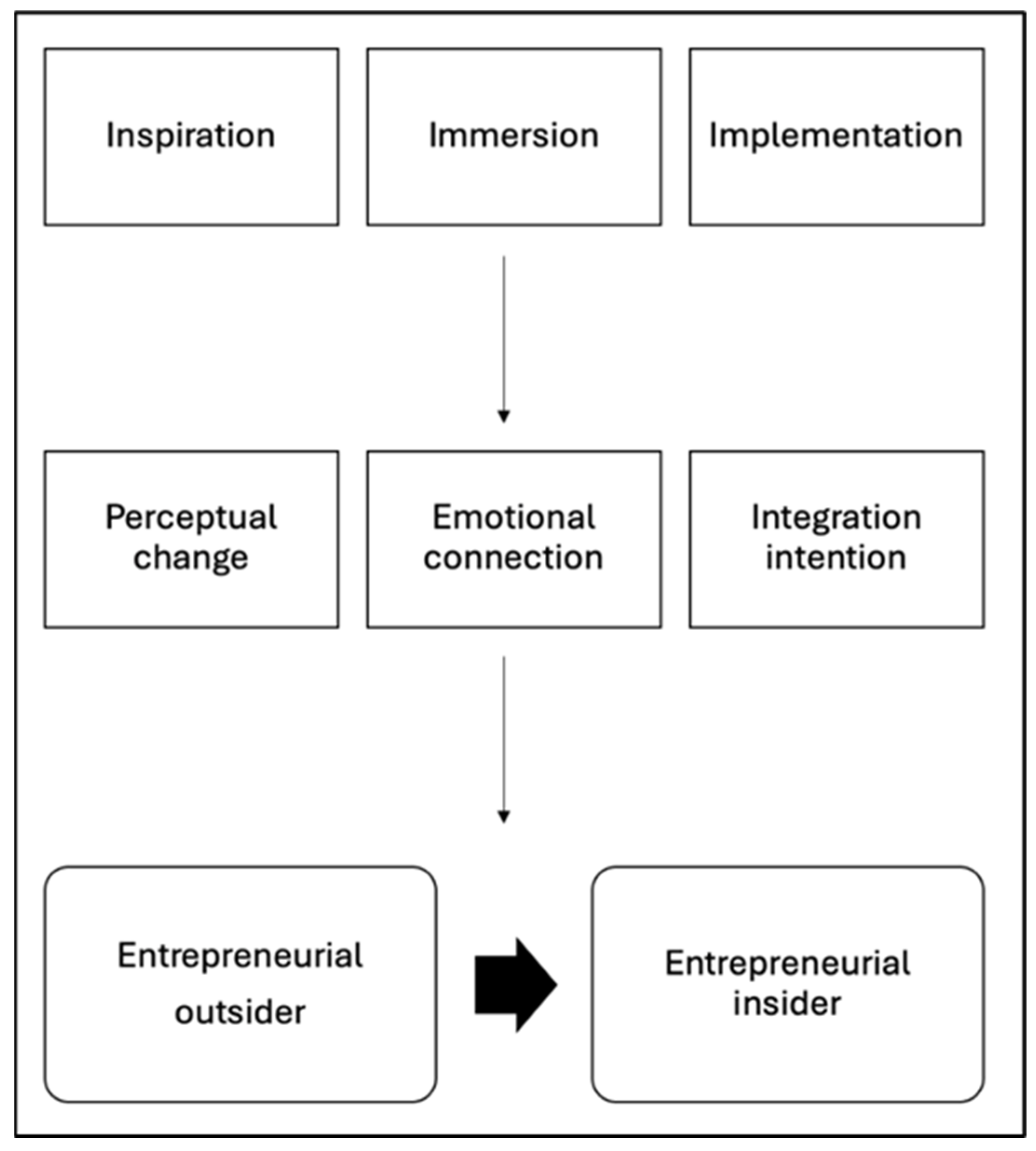
Figure 1. The connection between the pedagogical model, the educators’ experiences and the transformation from entrepreneurial outsider to entrepreneurial insider. Source: the authors.
Education 15 01643 g001
Table 1. t-test results comparing competence and confidence before (T1) and after (T2) the training.
Variable Mean at T1; T2t-Test Result
Competence2.99 (1.31); 3.82 (0.99)t (117) = 7.70, p < 0.001
Confidence3.38 (1.37); 4.09 (0.98)t (117) = 6.67, p < 0.001
Table 2. Summary of the dimensions.
DimensionDefinitionN/Percentage
Perceptual changeShift in understanding the meaning and relevance of entrepreneurship in their academic contexts.41/27.3
Emotional connectionAffective engagement, including feelings of inspiration, confidence, or empowerment.43/28.7
Integration intensions The motivation and commitment to translate new insights and emotions into practice.84/56.0
Disclaimer/Publisher’s Note: The statements, opinions and data contained in all publications are solely those of the individual author(s) and contributor(s) and not of MDPI and/or the editor(s). MDPI and/or the editor(s) disclaim responsibility for any injury to people or property resulting from any ideas, methods, instructions or products referred to in the content.