


Abstract
Higher education institutions face growing pressure to demonstrate excellence and strategic alignment in quality assurance, particularly to meet international accreditation standards. This paper presents a case study of a business faculty that undertook a leadership-driven initiative to develop a comprehensive Quality Manual aimed at continuous improvement and accreditation readiness. The project was structured as a multi-phase, collaborative effort involving broad stakeholder engagement, benchmarking of best practices, and alignment with international accreditation frameworks and the European Standards and Guidelines (ESG), as well as relevant national quality assurance requirements. The resulting Quality Manual provides a unified framework for quality assurance (QA) across all key areas—governance, academic programmes, research, student support, partnerships—linking institutional strategy to daily processes. Key outcomes of the case include clarified roles and procedures, integrated feedback loops, and enhanced readiness for accreditation. The development process highlighted the critical role of educational leadership in fostering a quality culture; by engaging faculty, staff, students, and external partners, the leadership built shared ownership of QA goals. The study is guided by two research questions: (1) How can collaborative and distributed leadership support the development of a strategically aligned Quality Manual at the faculty level? (2) How does the process of designing and implementing a Quality Manual contribute to strengthening internal QA and fostering a quality culture? The study discusses challenges and lessons learned in leading such change, emphasising the importance of stakeholder collaboration, strategic alignment, and change management. The findings contribute theoretically by illustrating how faculty-level leadership operationalizes QA frameworks into concrete institutional tools, and practically by offering a structured model for developing a strategic Quality Manual in higher education.
1. Introduction
In an era of increasing accountability, higher education institutions (HEIs) must ensure that their internal quality assurance (QA) practices align with both strategic objectives and external standards of excellence. Accreditation bodies and stakeholders expect evidence of quality and continuous improvement across all facets of an institution’s operations (ENQA, 2015; Beerkens & Udam, 2017). QA in higher education is a multidimensional concept that extends beyond compliance to encompass academic standards, relevance, accountability, and stakeholder satisfaction (Ryan, 2015). Over the past decades, the global higher education landscape has witnessed a shift from QA as a control mechanism to an integrated process of strategic development and continuous improvement, reinforced by the Bologna Process and the adoption of the European Standards and Guidelines (ESG), which emphasise transparency, stakeholder involvement, and student-centred learning (ENQA, 2015; Seyfried & Pohlenz, 2018). The Bologna Process, launched in 1999, represents a major European reform initiative aimed at harmonising degree structures, increasing transparency and comparability, and strengthening internal and external quality assurance across the European Higher Education Area. Its implementation has required HEIs to introduce systematic QA mechanisms, align learning outcomes with qualifications frameworks, and embed continuous improvement into institutional practice. These principles form the broader regulatory and cultural environment in which this study is situated.
This evolving understanding of QA has also highlighted tensions between diverse stakeholder expectations. Internal actors (faculty, students, administrators) often have priorities different from external stakeholders such as employers, accreditation agencies, or governments (Beerkens & Udam, 2017). Employers and alumni, in particular, are increasingly recognised as essential contributors to curriculum relevance and graduate employability (Mazza & Azzali, 2025). Leadership plays a pivotal role in integrating these diverse perspectives into a coherent system. Lawrence (2025) argues that leaders are central to cultivating a quality culture, particularly in multicultural and international environments, while Seyfried and Pohlenz (2018) point out the limited empirical research on how leadership practices translate QA frameworks into lived institutional routines. Despite a growing body of literature on QA frameworks and leadership, empirical insights into how faculty-level leadership teams operationalize QA frameworks into concrete, strategic tools—particularly Quality Manuals—remain scarce. Most studies focus on national or institutional-level QA structures, leaving a notable gap concerning faculty-level processes where strategic goals, academic practice, and stakeholder involvement directly converge. Understanding how QA standards are translated into usable, context-sensitive instruments at the faculty level is therefore essential for closing the “operationalization gap” between formal policy frameworks and everyday academic practice. Furthermore, little is known about how leadership teams navigate the complexity of aligning institutional requirements, disciplinary expectations, and stakeholder perspectives while simultaneously building a culture of shared responsibility for quality. In particular, there is a scarcity of research illustrating how QA documents evolve from compliance-driven artefacts into developmental, living tools that support strategic decision-making, organisational learning, and long-term quality enhancement. This study contributes to addressing this gap by presenting an in-depth grounded case of a European business faculty that developed its first Quality Manual through a participatory leadership process. The case offers insights into the dynamics, challenges, and enablers of co-creating QA tools in real organisational settings, highlighting how leadership, stakeholder engagement, and iterative reflection shaped the final outcome. By doing so, the study provides a nuanced example of how quality assurance can be reframed from a formal requirement into a collaborative, strategically meaningful process.
Addressing this gap, the present study examines how one European business faculty developed a comprehensive Quality Manual as part of a leadership-driven initiative to formalise and enhance its QA system (Ahmad & Ahmed, 2022; Nadeem, 2023). The initiative aimed to create a “living document” that codifies QA policies and procedures across key domains—governance, academic programmes, research, student services, and external partnerships—thereby serving both as a strategic guide and as an operational handbook. By explicitly linking quality processes to strategic goals and accreditation requirements, the leadership sought to embed a culture of continuous improvement and ensure accreditation readiness. The project was carried out as a collaborative leadership effort, with top management sponsorship and active participation from faculty, staff, and students, alongside consultation with external stakeholders such as alumni, employers, and QA experts. This approach reflects the shift from viewing QA as a compliance exercise to leveraging it as a strategic leadership tool for institutional development.
To guide the study, two research questions were formulated:
- (R1) How can collaborative and distributed leadership support the development of a strategically aligned Quality Manual at the faculty level?
- (R2) How does the process of designing and implementing a Quality Manual contribute to strengthening internal QA practices and fostering a quality culture?
The contribution of the study is twofold. Theoretically, it advances understanding of how leadership practices translate QA frameworks into operational quality instruments at the faculty level—an underexplored area in the current literature. Practically, it provides a structured account of how a Quality Manual can be developed as a strategic tool that integrates stakeholder engagement, accreditation requirements, and continuous improvement mechanisms.
This article is structured as a case study. Following this introduction, we provide a theoretical background on quality assurance frameworks and the role of leadership in quality improvement. We then describe the case context and methodology, detailing how the Quality Manual was developed through a phased project approach and stakeholder engagement. Next, we present the results, including the key content of the Quality Manual and stakeholder responses. We then discuss the findings through the lens of educational leadership, highlighting how collaborative practices and strategic alignment contributed to the outcomes, and we examine the challenges encountered (and opportunities realised) in this leadership-driven QA initiative. The conclusion summarises the lessons learned and implications for higher education leaders seeking to strengthen quality assurance in their institutions.
2. Theoretical Background
2.1. Quality Assurance Standards and Strategic Alignment in HE
Quality assurance in higher education encompasses the policies, systems, and processes through which institutions maintain and enhance the quality of education, research, and services (ENQA, 2015). Over the past decades, QA frameworks have evolved under both internal drivers (pursuit of academic excellence, institutional improvement) and external drivers (regulatory requirements, global competition, accreditation) (EUA, 2010). International standards play a crucial role in shaping these practices. Notably, the ESG (Standards and Guidelines for Quality Assurance in the European Higher Education Area) provides a common framework emphasising student-centred learning, continuous improvement, and stakeholder involvement (ENQA, 2015).
Beyond Europe, QA has increasingly developed as a global phenomenon, marked by rising convergence in principles but persistent regional diversity. In the United States, QA operates as a voluntary, decentralised accreditation system led by independent accrediting bodies recognised by CHEA or the U.S. Department of Education (Council for Higher Education Accreditation, 2020), placing strong emphasis on peer review and learning outcomes. By contrast, many Asian, African, and Middle Eastern systems are governed by centralised national QA agencies (ASEAN Quality Assurance Network, 2016; HAQAA Initiative, 2018; UNESCO & OECD, 2015). Regional harmonisation efforts—including the ASEAN Quality Assurance Framework (AQAF) (ASEAN Quality Assurance Network, 2016) and the African Standards and Guidelines for Quality Assurance in Higher Education (ASG-QA) (HAQAA Initiative, 2018)—aim to strengthen comparability of qualifications and promote mobility across borders. Networks such as INQAAHE (INQAAHE, 2022) and the UNESCO/OECD guidelines for cross-border higher education (UNESCO & OECD, 2015) further support the exchange of best practices and the gradual alignment of standards internationally.
Asamoah et al. (2025) showed that QA is essential for achieving development education goals by supporting accreditation, maintaining academic standards, and driving programme improvement. Their study highlighted that regular evaluations, data-driven decision-making, and collaboration with industry and external stakeholders are critical for aligning programmes with national and international standards. The findings also demonstrated that QA contributes not only to graduate employability and global competitiveness but also to broader societal outcomes such as economic growth, social equity, and sustainable development. At the same time, Asamoah et al. (2025) noted challenges including limited infrastructure, resource constraints, and insufficiently trained staff, underlining the need for transparent quality assurance practices and consistent standards to strengthen long-term excellence and societal impact.
In management education, global accreditation bodies set additional expectations. International accreditation frameworks such as EQUIS (EFMD, 2025), AACSB (AACSB, 2020), and AMBA (AMBA, 2025) are viewed as hallmarks of quality for business schools. These accreditations require evidence of robust internal QA systems and a commitment to ongoing enhancement of quality (QED Accreditation, 2024). As EFMD positions its accreditation as “an international quality assessment framework embracing strategic review, quality improvement and accreditation” (QED Accreditation, 2024), institutions are expected to meet minimum standards and engage in strategic self-reflection and continuous improvement. Likewise, AACSB accreditation emphasises assurance of learning, faculty qualifications, and strategic management of resources under a cycle of regular review and feedback. The overarching goal of such accreditations is not merely one-time certification, but embedding a culture of continuous improvement in the institution (Alfaisal University, 2024). Research has noted that undergoing accreditation can strengthen universities’ internal QA systems and encourage systematic reviews of processes, thereby supporting strategic planning (Şenyapar & Bayındır, 2024).
For institutions operating in international environments, this alignment increasingly includes navigating both national QA expectations and global accreditation frameworks. Many universities blend ESG principles with AACSB, AQAF, ASG-QA, or INQAAHE guidelines, creating hybrid QA models that reflect global standards while remaining sensitive to local needs. Such integration is central to building sustainable QA systems capable of supporting internationalisation, quality enhancement, and long-term institutional development.
A key insight from these frameworks is the importance of strategic alignment; an effective QA system aligns with the institution’s mission and goals at every level. National quality regulations (e.g., a national QA agency’s criteria) must also be integrated. A well-designed QA policy that dovetails institutional strategy with both national and international standards ensures that all stakeholders work toward common objectives and continuous improvement (Terkla et al., 2014). In other words, QA should be an integral part of strategic management, not a standalone bureaucratic exercise (Terkla et al., 2014). Developing a Quality Manual can be a means to document this integration—translating global best practices (ESG, EFMD criteria, etc.) into a local context and practice (Faculty of Economics and Business, 2025a). By doing so, leadership ensures that pursuing accreditation and pursuing the institution’s own strategic excellence become one and the same effort. In this sense, strategic alignment becomes both a governance mechanism and a quality culture driver, ensuring that QA systems remain purposeful, coherent, and responsive to evolving international standards.
2.2. Role of a Quality Manual in Quality Management
Mukhatayev et al. (2024) highlighted that QA in higher education is often weakened by gaps between the quality levels required by national standards and those achieved in practice. These discrepancies point to the need for clearer structuring of responsibilities, more consistent monitoring, and better institutional coordination. Their findings emphasise that transparent documentation, standardised procedures, and sustained stakeholder participation are crucial for strengthening credibility and effectiveness in QA. In this context, the Quality Manual becomes a key instrument because it consolidates institutional policies and procedures, defines responsibilities, and provides clear operational guidance. Leiber and Seyfried (2025) further argue that the complexity of QA requires stakeholders to develop quality literacy—the competence to interpret QA frameworks, understand procedures, and integrate quality practices into their daily work. A Quality Manual supports this by offering a coherent and accessible reference point, reducing ambiguity and aligning expectations across institutional levels.
Recent studies also emphasise that strengthening “quality literacy” contributes to embedding QA within everyday decision-making and supports the development of a shared quality culture across academic and administrative levels (Leiber & Seyfried, 2025). This reinforces the view that the Quality Manual is not only a procedural tool but also a pedagogical instrument that helps stakeholders interpret, internalise, and consistently apply quality expectations.
A Quality Manual is generally understood as a formal document that describes an institution’s entire QA system—its governance structures, academic and administrative processes, and improvement mechanisms (Faculty of Economics and Business, 2025b; Bardakcı, 2024). In higher education, it serves both as an internal guide for maintaining quality and as a public assurance of systematic QA practices (Leiber & Seyfried, 2025). It typically covers key domains: academic programme design and approval, teaching and assessment standards, research quality monitoring, student services, internal audits, and data management. By codifying these elements, a Quality Manual ensures that QA practices are planned, traceable, and aligned with strategic goals (Mukhatayev et al., 2024; Tocto-Cano et al., 2025). If an institution prioritises internationalisation or impactful research, the manual should include QA procedures that support these aims (Makki et al., 2023; Duarte & Vardasca, 2023). Aligning the manual with international accreditation expectations—such as AACSB assurance of learning standards or EQUIS governance requirements—is essential for institutions operating globally (Verschueren et al., 2023; Beerkens & Udam, 2017).
In many internationally oriented institutions, the Quality Manual also serves as a bridge between diverse QA frameworks—national QA regulations, ESG principles, and international accreditation standards—ensuring coherence across requirements. Such integration supports institutions in meeting global expectations while maintaining sensitivity to local contexts, which is increasingly important in cross-border and multi-campus environments.
A further development in recent years is the shift toward “evidence-based” Quality Manuals supported by digital platforms. Studies show that digital QA systems—integrating dashboards, learning analytics, and workflow tools—enhance transparency, reduce administrative load, and enable real-time monitoring of KPIs (OECD, 2021, 2023; INQAAHE, 2022). Such digital alignment strengthens the role of the manual as a dynamic management instrument. Digitalization also enables institutions to track quality indicators more systematically, facilitate data-driven decision-making, and improve the accessibility of QA documentation for all stakeholders. Integrating digital tools into the Quality Manual thus transforms it from a static repository into an interactive, continuously updated quality management resource.
Importantly, a Quality Manual is most effective when treated as a living document rather than a static compliance tool. Its value lies in documenting not only current processes but also how those processes are reviewed and improved over time. This mirrors the logic of continuous improvement embedded in the Plan–Do–Check–Act (PDCA) cycle, which many accreditation bodies emphasise. Recent literature emphasises “institutional learning cycles” that use data to drive improvements in curriculum, student experience, and governance (Eaton, 2021). A robust Quality Manual explicitly describes such cycles—who monitors them, when they occur, and how decisions are made—thus institutionalising iterative enhancement.
This approach reflects a broader shift toward treating QA as a developmental, reflexive, and collaborative process—rather than a mechanism for external compliance. By clarifying roles, timelines, review steps, and responsibilities, the Quality Manual promotes shared ownership of quality and supports the cultivation of a sustainable quality culture.
By assigning responsibilities and clarifying workflows (“who does what, when, and how”), a Quality Manual enhances transparency, accountability, and consistency across institutional practices (Alfaisal University, 2024). Globally, universities increasingly use Quality Manuals to build shared organisational memory, reduce dependence on tacit knowledge, and ensure continuity despite staff turnover—an issue especially relevant post-COVID-19 due to rising staff mobility (UNESCO, 2021).
Furthermore, the global trend toward internationalisation and the rise of transnational education have reinforced the importance of maintaining consistent QA processes across diverse teaching sites and delivery modes. As a result, Quality Manuals are increasingly designed to ensure comparability of standards, support mobility initiatives, and demonstrate alignment with international benchmarks during external evaluations.
2.3. Stakeholder Engagement and Quality Culture
Modern approaches to educational leadership stress that effective QA must involve a wide range of stakeholders (ENQA, 2015; Beerkens & Udam, 2017). According to the European Association for Quality Assurance (ENQA), “all identified and relevant stakeholders that have an interest in the quality of higher education should be systematically involved, especially when (re)designing a QA system” (ENQA, 2015). Stakeholders in higher education QA typically include academic staff, administrative staff, students, alumni, employers/industry partners, and external quality agencies. Each brings a different perspective and vested interest; for instance, students are concerned with learning experience and fairness of assessment, faculty with academic standards and resources, employers with graduate competencies, and so on. Involving these groups in QA processes can lead to a more comprehensive and accepted system (Beerkens & Udam, 2017). However, diversity of perspectives needs alignment through clear purpose and communication (Beerkens & Udam, 2017)—otherwise stakeholder involvement can become fragmented or perfunctory.
Building a quality culture relies on this broad engagement. Quality culture is often described as a set of shared values and commitments to quality within an institution. Leadership plays a pivotal role in nurturing this culture by encouraging collaboration, communication, and shared ownership of outcomes. When stakeholders are consulted in developing QA policies and can see their feedback result in concrete changes, trust in the system increases. This project embraced stakeholder engagement as a core principle; at the design stage, the team consulted faculty members, programme directors, support staff, students, and external advisors to gather input on existing gaps and proposed solutions. This inclusive approach generates useful information (e.g., identifying pain points where processes were unclear or burdensome) and pre-emptively addresses resistance by giving stakeholders a voice. As discussed in the literature, engaging stakeholders builds co-ownership of the QA system (ENQA, 2015; Beerkens & Udam, 2017), which is invaluable for long-term sustainability of quality initiatives. In effect, everyone from top management to students becomes a partner in the quest for quality. A key lesson in QA leadership is that transparency and participation can convert what might be seen as a top-down imposition into a collectively supported improvement effort.
Beyond the European context, stakeholder engagement has become a central pillar of QA reform worldwide. In Asia and Africa, regional frameworks such as the ASEAN Quality Assurance Framework (AQAF) and the African Standards and Guidelines for Quality Assurance (ASG-QA) explicitly require active participation of employers, external partners, and students in programme design and evaluation to strengthen labour-market relevance and accountability. In North America, peer review and shared governance—emphasised by accreditation bodies recognised by CHEA—serve as key mechanisms for distributed quality ownership. These global developments demonstrate that stakeholder engagement is no longer viewed as optional but as an essential component of a credible and sustainable QA system.
Recent studies further highlight how leadership connects stakeholder engagement with sustainable quality culture. Verschueren et al. (2023) found that quality culture in higher education is shaped by the interplay between structural and managerial arrangements and interpersonal dynamics, with leadership, communication, and information acting as the key connectors that enable continuous improvement. Duarte and Vardasca (2023) showed that QA systems are more effective when stakeholder roles are clearly formalised within governance and accreditation processes. Transparency—for example, publishing evaluation results and including external representatives in audits—strengthens quality culture by ensuring that feedback loops are visible and acted upon. Makki et al. (2023) developed a multi-criteria decision-making framework that combines university ranking standards with Balanced Scorecard perspectives to evaluate the quality of faculties. Their findings demonstrated how such tools help identify quality shortcomings, design more accurate performance indicators, and allocate resources strategically, thereby fostering a stronger quality culture. Tocto-Cano et al. (2025) proposed the Maturity Model for Peruvian Universities (MMU-PER), which integrates governance, talent, resources, and results. The model defines five maturity levels and provides practices for each stage, enabling universities to progressively strengthen governance, align strategic vision with practice, and integrate innovation and sustainability.
Complementing these findings, international QA networks such as INQAAHE emphasise that stakeholder engagement is a cornerstone of “quality culture maturity.” Their 2022 International Standards and Guidelines highlight that participatory approaches strengthen institutional learning, enhance the legitimacy of decision-making, and improve responsiveness to societal needs. Similarly, UNESCO and OECD identify inclusiveness, transparency, and collaboration as core attributes of future-oriented quality cultures—particularly as higher education institutions adapt to digital transformation, rapid labour-market change, and globalisation.
2.4. Leadership and Change Management in QA Initiatives
Implementing a comprehensive QA reform like a new Quality Manual is fundamentally a change management endeavour. It requires new documentation and often new behaviours, routines, and attitudes across the institution. Effective leadership is therefore critical to guide this change. The literature on educational change emphasises the need for vision, buy-in, and stepwise implementation. Kotter’s (1996) 8-step model for leading change, for example, underscores establishing a sense of urgency, forming a powerful guiding coalition, creating and communicating a vision, enabling action by removing barriers, generating short-term wins, and anchoring new approaches in the culture. In many institutional contexts, faculty leadership teams act as change champions by clearly communicating the rationale for QA reforms and mobilising academic and administrative staff to support implementation. These teams often form guiding coalitions by involving key individuals in project groups and review committees. Common change management practices—such as securing early “quick wins,” piloting draft procedures, and demonstrating immediate value—can facilitate acceptance and reduce resistance to new QA processes.
Leadership style greatly influences the success of such initiatives. Kasalak et al. (2022) conducted a meta-analysis of 57 empirical studies and found a statistically significant positive relationship between leadership styles and academic staff satisfaction. Transformational, spiritual, and servant leadership enhance motivation, commitment, and productivity among academics, which in turn positively influences teaching, research, and quality culture. Transformational leadership—where leaders inspire and motivate stakeholders around a common vision—can be particularly effective in educational settings to foster commitment to quality (Umar et al., 2025; Ambarwati & Florentinus, 2025). Distributed or collaborative leadership is also pertinent; given the breadth of a QA system, leadership tasks were distributed among faculty committees, administrators, and student representatives, each taking ownership of parts of the QA process.
Across international contexts, research shows that leadership must also be adaptive and context sensitive. In centralised QA systems (e.g., in many Asian or Gulf countries), leaders must navigate strict regulatory frameworks while empowering local teams, whereas in decentralised systems (e.g., the U.S.), leadership focuses more on shared governance and peer review. This highlights that effective QA leadership must balance compliance, participation, and capacity building depending on institutional and national structures.
Recent research further reinforces these insights. Umar et al. (2025) found that a supportive climate for change, combined with transformational leadership and knowledge management, positively affected sustainability performance in Malaysian universities. Ezzeddine et al. (2023) demonstrated that agility, resilience, support, and clarity of vision were critical for shaping employees’ positive perceptions of change in higher education, aligning closely with transformational leadership practices. Harris et al. (2022) emphasised that distributed leadership is influential but context-dependent; it fosters collaboration and innovation when implemented functionally, but risks managerial control when overly structural. Tucaliuc et al. (2025) further distinguished between structural distributed leadership (SDL), which can undermine empowerment and clarity, and functional distributed leadership (FDL), which enhances collaboration, support, and job satisfaction. These findings align with evidence that diverse leadership approaches (transformational, transactional, and distributed) intersect with QA efforts and influence quality outcomes (Nadeem, 2023). Ahmad and Ahmed (2022) showed that strong leadership engagement was key to implementing QA mechanisms in Pakistan, while Nadeem (2023) highlighted the importance of cultural alignment for sustained improvements. Taken together, this literature underlines why the development of a Quality Manual should be understood not merely as a technical exercise, but as a leadership-driven change initiative—a perspective that frames the case study presented in this article.
The role of management also complements leadership in sustaining change. Alzahmi et al. (2025) emphasised that successful organisational change in higher education requires visionary leadership supported by robust management systems, including planning, governance, and resource allocation. Anderson (2025) provided evidence that capacity building, structured action plans, and feedback loops are essential to embed change into daily routines and ensure long-term success.
One famous quote encapsulates the implementation challenge: “Good ideas with no ideas on how to implement them are wasted ideas.” (Fullan, 1993). In practice, effective QA reforms pair conceptual design with concrete implementation planning—including training, communication, and integration into existing workflows—to ensure that new processes become embedded in institutional routines. Additionally, building a quality culture can require addressing underlying attitudes and fears. People may resist QA changes due to perceptions of increased bureaucracy or threats to autonomy. Effective leadership must address these concerns empathetically and demonstrate how the changes ultimately benefit everyone (e.g., less last-minute scrambling during accreditation, more clarity and fairness in processes). Schein’s (2010) work on organisational culture and leadership reminds us that culture change often requires unfreezing old habits, introducing new concepts in a way that people find meaningful, and reinforcing them until they become the new norm. Accordingly, Quality Manuals are most effective when positioned not as rigid rulebooks but as enabling tools that clarify expectations and support shared aspirations for quality.
Finally, broader global trends—such as digital transformation, cross-border education, and increased mobility of students and staff—require leaders to manage QA reforms in increasingly complex environments. Effective QA leadership today, therefore, integrates change management, cultural sensitivity, digital readiness, and stakeholder engagement, ensuring that quality reforms are not only implemented but truly internalised across the institution.
3. Materials and Methods
3.1. Case Context
The study was conducted at the Faculty of Economics and Business (FEB), University of Maribor, a mid-sized European business school with a long-standing academic tradition and a sustained commitment to international standards of quality. Established in 1959 as the School of Commerce, the institution evolved through several developmental stages, becoming the first higher education institution in the city of Maribor and later transforming into a modern Faculty of Economics and Business (FEB) in 1989. Over the decades, FEB has expanded its academic portfolio and currently offers seven first-, second-, and third-cycle degree programmes, enrolling approximately 2500 students and employing around 70 academic and 30 professional staff.
FEB has a long history of investing in international quality assurance and accreditation. It achieved ACBSP accreditation in 2009 (with reaccreditation in 2019), AACSB accreditation in 2018 (with reaccreditation in 2023), and is currently in the final stage of obtaining EFMD Programme Accreditation for its master’s programmes. These accreditations have shaped the faculty’s internal QA expectations and processes, contributing to its strategic ambition to be recognised as an excellent, research-oriented, and globally connected school of economics and business. The faculty’s mission emphasises innovative research and education for sustainable societal development, while its vision highlights international visibility and academic excellence.
Prior to the project, however, FEB lacked a single unified Quality Manual. Although various quality-related processes were in place—ranging from accreditation reports and self-evaluations to committee rules, programme review procedures, and strategic plans—they were dispersed across multiple documents or embedded in practice without formal documentation. Preparation for accreditations often relied on ad hoc consolidation of information, often time-consuming and prone to inconsistencies, making it difficult to ensure coherence, consistency, and long-term institutional learning. In response to this gap, faculty leadership initiated the Quality Manual project in 2024 with the objective of creating a comprehensive, strategically aligned, and user-friendly reference document. The goals were threefold: (1) to consolidate all internal QA processes in one coherent framework aligned with the institutional strategy; (2) to ensure compliance with national and international QA standards, particularly AACSB, ACBSP, EFMD, and ESG; and (3) to enhance stakeholder engagement by creating a document that academics, staff, and students would perceive as meaningful and practically useful.
The research underpinning this article was conceived as an embedded qualitative case study of organisational change within higher education. The complexity of the process—requiring the integration of strategic decision-making, accreditation requirements, governance practices, and the perspectives of multiple internal stakeholders—made the case study methodology particularly suitable. As Yin (2017) and Stake (1995) argue, case studies are appropriate for investigating phenomena that are deeply embedded within their institutional context and cannot be isolated from it. Given that the authors actively participated in leading the project, the inquiry also incorporated elements of participatory action research (Herr & Anderson, 2015), enabling iterative consultation, co-creation, and validation.
3.2. Methodological Approach
The methodological design combined qualitative case study principles with participatory action research elements to ensure depth, authenticity, and stakeholder involvement. The research drew on multiple complementary analytical and consultative methods—including document analysis, benchmarking, semi-structured interviews, focus groups, and gap analysis—to triangulate evidence and strengthen the robustness of findings.
Extensive document analysis was conducted at the outset, covering university and faculty QA policies, past self-evaluations and NAKVIS reports, accreditation documents (AACSB SAR and CIR, ACBSP reports, EFMD draft reports), faculty and university statutes and regulations, strategic documents (institutional strategy, internationalisation strategy, sustainability strategy, WoP strategy), PRME SIP reports, and minutes of key governance bodies, including the Senate, QA Committee, Programme Committees, International Office Committee, and Student Council. This comprehensive review served to map existing QA processes, identify inconsistencies or undocumented practices, and establish a baseline for further analysis.
Benchmarking was carried out using QA manuals and accreditation-aligned frameworks published by peer European and international business schools. Particular attention was given to how these institutions structured their QA documentation, linked their quality processes to ESG and accreditation criteria, and operationalised continuous improvement mechanisms such as annual programme reports or KPI dashboards. These insights informed the development of the Quality Manual’s structure, terminology, and cross-referencing system.
To incorporate stakeholder perspectives, ten semi-structured consultations (each lasting approximately 25–35 min) were held with faculty members (including heads of study programmes), administrative staff responsible for quality and student services, a student representative, and a member of the university’s central quality office. These consultations explored perceptions of quality, gaps in existing processes, and expectations regarding the Quality Manual. In addition, four focus groups (each with 4–8 participants) involving the accreditation working group, professional services staff, senior leadership, and students were conducted to discuss emerging findings and refine the draft manual. All interviews and focus groups were documented through structured project notes, which were subsequently consolidated into a single analytical corpus.
Gap analysis compared the current state of QA processes at FEB with the ideal state as defined by ESG standards, international accreditation requirements, and the faculty’s strategic goals. This analysis highlighted discrepancies in areas such as programme monitoring, feedback loops, documentation of processes, and clarity of responsibilities, and it guided the prioritisation of content to be included in the Quality Manual.
3.3. Phases of the Project
To ensure systematic development, the process was organised into seven phases over approximately seven months. The first phase involved project initiation, definition of scope, and establishment of a steering group composed of the Dean, the QA Committee chair, and the project leads. The second phase focused on document analysis, benchmarking, and stakeholder consultations, resulting in a comprehensive diagnostic report. In the third phase, the manual was drafted collaboratively by academic and professional staff, with a coordinating editor ensuring coherence and alignment with international standards. The fourth phase consisted of an extensive review process, including internal QA Committee review, a faculty-wide workshop with approximately 15 participants, student review, and external expert feedback. Feedback was analysed and integrated into the revised draft.
In the fifth phase, the manual underwent formal approval by the QA Committee and the Faculty Senate, followed by professional formatting. The sixth phase involved planning for implementation, including training, revision of related procedures, and preparing tools needed for rollout. The final phase focused on initial implementation and establishing monitoring checkpoints at 3, 6, and 12 months to ensure continuous improvement and stakeholder engagement.
This phased approach, supported by bi-weekly project meetings and strong leadership backing, facilitated timely completion of the manual while ensuring that the process remained participatory and aligned with institutional strategy and accreditation expectations.
3.4. Data Analysis
The qualitative data collected through document analysis, semi-structured consultations, and focus groups were analysed using an iterative, interpretive process consistent with thematic synthesis approaches in qualitative research (Braun & Clarke, 2021; Nowell et al., 2017). The analysis followed several stages. First, all project notes, consolidated summaries from the consultations, and minutes from focus group discussions were collated into a single analytical corpus. This was necessary because, in line with the participatory and practice-based nature of the project, formal audio recordings and verbatim transcripts were not produced; instead, structured notes were taken during each session by members of the project team and then merged into a uniform dataset to ensure coherence and traceability. This approach aligns with methodological guidance for action-oriented institutional research where data emerge through collaborative processes rather than formal interview scripts (Herr & Anderson, 2015). It also aligned with institutional data protection policies and the participatory nature of the project.
In the second stage, the data were coded inductively. Two members of the project team independently reviewed the corpus, identifying initial categories such as “role ambiguity,” “duplication of processes,” “lack of documentation,” “student feedback cycles,” “data reporting challenges,” and “accreditation expectations.” Through iterative comparison and discussion, these categories were refined into broader themes that captured the central challenges and opportunities that stakeholders associated with the faculty’s existing QA system. The resulting themes informed both the structure and substantive priorities of the Quality Manual. Although formal inter-coder reliability was not calculated, discrepancies between coders were resolved through discussion until consensus was reached.
Alongside thematic analysis, a structured gap analysis was undertaken to systematically compare the current QA practices with the desired state defined by the ESG, national QA regulations, and international accreditation frameworks. Gap analysis is commonly used in quality management to identify discrepancies between actual performance and required standards (ISO, 2015; Terkla et al., 2014). In this study, the gap analysis involved mapping each major QA domain—such as programme review, assurance of learning, stakeholder involvement, and governance processes—against the corresponding criteria from AACSB, ACBSP, EFMD, and NAKVIS standards. This highlighted areas where FEB had existing strengths (for example, established governance committees and clear strategic goals) as well as areas requiring development, including formalising procedures, improving documentation flow, and strengthening feedback loops (“closing the loop”).
The results of these analyses were synthesised to inform the drafting of the Quality Manual. The integration of thematic findings and gap analysis ensured that the manual was grounded both in stakeholder experiences and in compliance with internationally recognised quality frameworks. This combined approach also reflects best practices in higher education quality research, which emphasise the value of triangulating lived perspectives with normative standards to design sustainable QA systems (Leiber & Seyfried, 2025; Duarte & Vardasca, 2023).
3.5. Ensuring Quality: Validity, Reliability, and Trustworthiness
To ensure the trustworthiness of the study, multiple strategies were employed consistent with established qualitative research standards (Lincoln & Guba, 1985; Yin, 2017). Credibility was strengthened through methodological triangulation; the integration of document analysis, benchmarking, thematic synthesis of stakeholder feedback, and gap analysis enabled cross-validation of insights from different data sources. Drafts of the Quality Manual and interim findings were iteratively reviewed by faculty leadership, the QA Committee, and stakeholders who had participated in consultations, thereby serving as a form of member checking that increased accuracy and interpretive fidelity.
Dependability was supported by maintaining a transparent documentation trail that recorded the evolution of the manual, analytical decisions, and project milestones. Although the study did not rely on verbatim transcripts, detailed and structured project notes were consistently taken during all consultations and focus groups and later consolidated into a unified dataset. Such documentation is commonly used in action research contexts and assures replicability of analytical procedures (Coghlan & Brannick, 2014).
Confirmability was addressed through reflexive practices embedded in the project. Given the authors’ professional involvement in the faculty’s quality structures, reflexive discussions were held throughout the analytical stages to identify and mitigate potential biases. In addition, interpretations were validated through presentations to the QA Committee and external expert review, reducing the risk of unilateral researcher influence.
Transferability was enhanced by providing a detailed description of the institutional context, governance structures, accreditation engagements, and QA practices. Such contextualisation enables readers to assess the potential applicability of insights to comparable higher education contexts.
3.6. Researcher Positionality
Both authors were directly involved in FEB’s QA structures during the development of the Quality Manual, making positionality an essential component of methodological transparency. The first author served as the project leader and head of the faculty’s Accreditation Committee, coordinating AACSB and EFMD accreditation processes and contributing to several institutional QA policies. The second author was a member of the project team and participated in methodological design, stakeholder consultations, and the synthesis of quality documentation. These dual roles—as researchers and practitioners—positioned the authors along an insider–outsider continuum, providing deep contextual insight but also requiring conscious management of potential biases.
To mitigate risks associated with insider research (Brannick & Coghlan, 2007; Mercer, 2007), several measures were implemented. First, decision-making during data analysis was guided by triangulation and collective review rather than individual judgement. Second, interpretive steps were regularly discussed within the QA Committee and with external reviewers, ensuring that emerging conclusions reflected consensus rather than personal perspectives. Third, reflexive memos were maintained to document potential assumptions and to ensure that stakeholders’ views were represented accurately, particularly when contrasting perspectives emerged between academic, administrative, and student participants.
The positionality of the authors is thus acknowledged not as a limitation but as a methodological asset that enhances contextual understanding, consistent with broader traditions of action research and organisational ethnography in higher education studies (Herr & Anderson, 2015). At the same time, transparency regarding these roles ensures rigour and ethical integrity in reporting the study.
4. Results
4.1. Stakeholder Analysis Findings
The stakeholder analysis brought together insights from interviews, focus groups and consultations across the development process. The findings revealed a number of recurring themes that shaped both the content of the Quality Manual and the approach to its implementation.
Senior management viewed the initiative as necessary for strengthening strategic alignment and preparing the faculty for international accreditation reviews. While supportive, they also emphasised that formalisation of processes would inevitably expose certain inconsistencies in current practice—an issue noted in previous studies on internal QA system development (Ahmad & Ahmed, 2022; Nadeem, 2023). Their involvement at key milestones helped maintain momentum and legitimacy.
Members of the Quality Assurance Committee responded positively to the prospect of clearer mandates and better coordination across QA activities. They highlighted, however, that sustaining continuous improvement would require additional capacity, particularly in data management and internal monitoring. Concerns about under-resourcing echo findings by Mukhatayev et al. (2024), who warn that QA systems risk becoming symbolic if not adequately supported.
Academic staff primarily sought clarity and predictability. Many expressed that curriculum procedures, course evaluation follow-up and annual review expectations had been unclear or unevenly applied. At the same time, a number of academic staff were concerned that a new manual might introduce additional bureaucracy or constrain academic judgement—a tension observed elsewhere in the literature on quality culture (Leiber & Seyfried, 2025). Iterative consultation rounds were therefore essential to ensure proportionality and usability of procedures.
Administrative staff welcomed the opportunity to streamline workflows. They frequently noted duplication in reporting and inconsistent use of templates across units. Their comments led directly to the redesign of several process maps and reporting timelines. Similar issues are reflected in Bardakcı (2024), who highlights administrative overload as a common internal QA challenge.
Students expressed particular interest in transparency and follow-up actions. For them, the key value of a Quality Manual was ensuring that their feedback—especially through course evaluations—would lead to visible improvements. This aligns with Beerkens and Udam (2017) and ENQA (2015), who note that student trust depends on demonstrable action rather than formal procedures alone.
External stakeholders (alumni and employers) were consulted to a more limited extent, yet their input was highly focused; they emphasised the importance of programme relevance and stronger connections between curriculum design and labour-market expectations. Their preference for concise and targeted engagement informed the decision to institutionalise annual advisory meetings and short thematic surveys.
In contrast to these groups, accreditation bodies did not participate directly in the consultations. However, their standards—particularly ESG, AACSB, ACBSP and EFMD—served as critical external reference points throughout the development process. These frameworks shaped key components of the manual, including governance structures, assurance of learning processes, stakeholder engagement expectations and continuous-improvement mechanisms. As such, accreditation bodies acted as influential indirect stakeholders whose criteria helped ensure that internal QA processes were consistent with internationally recognised benchmarks.
The stakeholder analysis showed broad support for the development of a unified QA system, with most concerns centred on operational feasibility rather than conceptual disagreement. These insights directly informed adjustments to process clarity, documentation flow, and stakeholder-specific communication strategies, as summarised in Table 1.
Table 1.
Stakeholder Mapping.
4.2. Structure and Content of the Quality Manual
The main output of the project was a comprehensive Quality Manual that consolidates existing procedures, introduces new standards where necessary and aligns institutional practices with ESG (ENQA, 2015), AACSB, ACBSP and EFMD requirements. The manual is organised into several sections, each addressing one dimension of the institution’s QA system.
The introductory section explains the purpose of the manual, defines its scope and articulates its alignment with the faculty’s mission, vision and strategic priorities. It also emphasises that the document is a “living manual” subject to continuous review.
A substantial section is devoted to QA governance, detailing roles and responsibilities of leadership, QA committees, programme directors, administrative units and students. By formalising responsibilities, the faculty aimed to improve transparency and coherence, consistent with recommendations in ENQA (2015).
Educational programme QA occupies a major portion of the manual. It sets out procedures for programme design, approval, monitoring, curriculum revision, assessment standards and student feedback processes. Templates for annual programme reports, course evaluation summaries and curriculum change requests are included to ensure consistency (Faculty of Economics and Business, 2025a, 2025b).
Another important component focuses on research and faculty development. It outlines expectations regarding research quality, defines indicators for monitoring research performance and sets out procedures for faculty development activities. These follow established trends in business-school accreditation, where research quality and faculty sufficiency are central criteria (Lin & Chen, 2025; Asamoah et al., 2025).
Stakeholder engagement processes—including student feedback, alumni and employer engagement, and external advisory mechanisms—are documented in a dedicated section. The manual formalises feedback cycles, follow-up procedures and communication responsibilities, reflecting recommendations in Mukhatayev et al. (2024) and Leiber and Seyfried (2025).
Further sections address internationalisation and partnerships, continuous improvement and data management, and compliance with external standards. A cross-reference matrix maps manual sections onto ESG and accreditation criteria (Şenyapar & Bayındır, 2024; Tocto-Cano et al., 2025), making the document highly usable for both internal audits and external reviews.
A summary of the manual’s structure is presented in Table 2, followed by a set of key performance indicators in Table 3.
Table 2.
Structure of the Quality Manual.
Table 3.
Key Performance Indicators (KPIs).
Early indications suggested that staff rapidly began using templates and flowcharts in routine tasks. Programme directors applied the new annual review format in the first reporting cycle, and administrative staff incorporated revised workflows into student-services processes. These initial outcomes indicate early institutional uptake and increasing operational consistency.
4.3. Implementation Action Plan
The development of the manual was complemented by a structured Implementation Action Plan designed to ensure consistent adoption across the faculty. The plan combined communication, process integration, support mechanisms and monitoring activities.
Immediately after approval, the manual was disseminated to staff and students, accompanied by summary guides, visual aids (flowcharts, checklists), and quick-reference sheets. Workshops tailored to academic and administrative audiences introduced key processes through practical examples. These sessions aligned with best practices in implementing QA reforms (ENQA, 2015; Beerkens & Udam, 2017).
To prevent duplication and ensure usability, the manual was integrated into existing routines. Committee terms of reference were updated, annual calendar cycles were adjusted to incorporate QA obligations, and KPI discussions were added to annual planning meetings. This integration approach is consistent with literature emphasising embedding over layering (Alfaisal University, 2024; Ahmad & Ahmed, 2022).
Support structures were established to assist staff in the transition. These included drop-in hours facilitated by the QA Office, peer support from members of the project team, and improvements to digital tools (e.g., survey system updates). Research on organisational change highlights the importance of such accessible support (Schein, 2010; Fullan, 1993; Harris et al., 2022).
Monitoring mechanisms ensured ongoing improvement. Reviews were scheduled at 3, 6 and 12 months, with follow-up actions documented through FAQs, updated templates and staff-feedback reports. An internal audit after the first year examined compliance and identified areas for refinement, such as onboarding of new staff (Javed & Alenezi, 2023; Mazza & Azzali, 2025).
The plan also included provisions for annual updates. The QA Committee assumed responsibility for version control, ensuring the manual evolves in response to strategic changes and updated international standards (Mukhatayev et al., 2024; Lin & Chen, 2025).
Figure 1 presents an integrated framework of the Quality Manual. The figure illustrates how the structure of the manual (content areas), stakeholder roles, and performance indicators interact within the PDCA cycle. These dimensions are mutually reinforcing and converge around quality culture and strategic alignment. This demonstrates that the manual functions not only as a procedural reference but as a strategic tool that supports institutional learning, consistent implementation, and long-term accreditation readiness.
Figure 1.
Integrated framework for the Quality Manual.
5. Discussion
This case study suggests how educational leadership can strengthen quality assurance through a structured and collaborative approach. A central lesson is that quality assurance becomes meaningful when strategically aligned with institutional goals. Rather than treating accreditation as an external checklist, leadership appeared to integrate quality standards into the institution’s strategic vision, which likely contributed to QA processes that supported objectives such as internationalisation and research impact. By embedding QA into strategic planning, leaders shifted it from a peripheral compliance exercise to a core element of institutional development. This is consistent with evidence that accreditation-driven QA can reinforce strategic management (Şenyapar & Bayındır, 2024) and aligns with Schein’s (2010) argument that leadership embeds culture through the priorities it continually reinforces. Another key insight concerns the role of collaborative and distributed leadership. Faculty, administrative staff, students, and external advisors were actively involved in developing the Quality Manual. Such engagement not only improved the manual’s content but also generated ownership and reduced resistance. Faculty, for example, became more supportive when their input was reflected in simplified procedures, which supports earlier findings that participatory leadership builds resilient and innovative outcomes (Bolden et al., 2009). The observed collaborative dynamics in this case align with recent scholarship showing that distributed and transformational leadership strengthen strategic alignment and deepen stakeholder commitment (Verschueren et al., 2023; Ambarwati & Florentinus, 2025).
The project also underscored the importance of applying classic change management principles. Completing the manual within seven months posed time pressures, but urgency was transformed into momentum through clear communication, early wins, and visible leadership support. Quick deliverables such as user-friendly templates signalled immediate benefits, while continuous reinforcement of the project’s vision helped sustain engagement. As Fullan (1993) argued, good ideas require careful implementation, and the evolution of this initiative reflects how leadership attention to process can be as critical as attention to content. Equally important was the gradual emergence of a quality culture. While the manual provided structure, cultural change became visible only when behaviours shifted—faculty increasingly discussed data and improvements, staff suggested enhancements, and students engaged more actively with feedback outcomes. These are modest yet telling signs that quality was starting to be seen as a shared responsibility rather than the task of a single office. Such developments illustrate Schein’s (2010) proposition that culture becomes embedded through repeated enactment of what leaders emphasise and reward. The alignment between documented procedures, daily practices, and leadership communication thus appears to have reinforced the foundations of a sustainable quality culture.
The findings also contribute to broader debates on the generalizability of quality assurance practices. While the study reflects the context of a European faculty, the principles are transferable; strategic alignment, participatory leadership, and structured change management are relevant across diverse higher education systems. This aligns with Javed and Alenezi (2023), who argue that QA systems are sustainable when supported by reliable data infrastructures and KPI monitoring, and with Mazza and Azzali (2025), who highlight both the value and the risks of stakeholder participation. Here, explicitly defining stakeholder roles within the manual appears to have reduced ambiguity and strengthened accountability, which is consistent with these findings. The study also aligns with Mukhatayev et al. (2024), who have shown that gaps between documented standards and actual practices pose challenges; the evidence from this case suggests that a structured manual, paired with systematic engagement, may help mitigate these gaps.
In contrast to many studies that focus on national or institutional frameworks (e.g., Tucaliuc et al., 2025), this case demonstrates that a faculty-level initiative can operationalize accreditation readiness while addressing local needs. By positioning the Quality Manual at the intersection of strategic planning, stakeholder engagement, and measurable outcomes, the findings support claims that QA manuals can function as dynamic rather than static tools for continuous improvement. Embedding the PDCA cycle and KPIs transformed the manual into a mechanism that may foster cultural change and strategic alignment.
Taken together, the case indicates how strong and collaborative leadership can turn the challenge of quality assurance into an opportunity for institutional development. When strategically designed and participatively implemented, quality assurance not only satisfies external requirements but also strengthens organisational culture and fosters long-term improvement. For educational leaders, the case illustrates that QA can evolve from a compliance-driven obligation into a strategic resource for innovation, accountability, and collective growth.
6. Conclusions
Developing a Quality Manual for strategic alignment and accreditation readiness proved to be a transformative initiative for the institution. This paper recounted the journey from recognising a gap—the absence of a cohesive quality framework—to the design and implementation of a comprehensive system embedded in a collaboratively crafted manual. The initiative highlighted several important lessons. Strong leadership and a clear vision were essential; by framing quality assurance as a strategic priority rather than a bureaucratic requirement, leaders created an environment where improvement was embraced as part of the mission. Aligning the manual with institutional goals and international standards positioned the institution to be “accreditation-ready” as part of normal operations, while also ensuring that quality processes actively supported teaching, research, and internationalisation (Fullan, 1993; ENQA, 2015).
Another crucial factor was stakeholder engagement. Faculty, staff, and students contributed to shaping the manual, which led to greater acceptance and a stronger quality culture. What initially emerged as a response to external requirements evolved into a shared institutional practice, reduced confusion, improved understanding of roles, and fostered co-ownership, consistent with research emphasising inclusivity as a foundation for sustainable change (Beerkens & Udam, 2017). Implementing the manual also required careful change management; early wins, training, and feedback loops demonstrated value and built confidence, while mechanisms such as annual reviews and version control ensured that the system remains dynamic. As Fullan (1993) has argued, good ideas require effective implementation—a principle strongly validated by this case. Treating the manual as a living document appears to have enhanced its adaptability in an evolving higher education environment.
Although it was too early to fully assess long-term outcomes, early evidence indicated positive effects. For instance, internal records showed more consistent use of standardised programme-review templates, while external accreditation reviewers informally noted improvements in QA clarity during preliminary consultations. These outcomes signalled that the initiative was bearing fruit and that a shift towards a data-driven, improvement-oriented culture was underway. Beyond compliance, the manual began to function as a tool for collective learning, strategic coherence, and enhanced institutional positioning within the higher education landscape.
Ultimately, this case illustrates how educational leadership can transform a compliance-driven challenge into an opportunity for institutional enhancement. By combining strategic alignment, collaborative engagement, and thoughtful change management, leaders succeeded in embedding quality assurance into the fabric of daily operations. This supports Schein’s (2010) view that leaders shape culture by what they consistently emphasise, measure, and reward. Overall, the example demonstrates that quality assurance, when approached with vision and inclusivity, can become a powerful lever for institutional innovation, resilience, and sustainable cultural change.
Limitations and Future Research
This study has boundaries that must be acknowledged. Conducted within a single institutional context, the findings are closely tied to local organisational and cultural conditions and are best interpreted as context-specific. The evidence primarily covers the design and early implementation of the manual; long-term effects on accreditation outcomes and the sustainability of quality culture remain beyond its scope. These limitations nevertheless open pathways for future research. Comparative studies across faculties and national systems could examine how quality manuals function in diverse governance models and regulatory environments. Longitudinal research could trace whether such manuals sustain use, influence accreditation results, or shape performance indicators such as student outcomes and employability. Future studies might also explore how digital platforms, learning analytics, and AI-supported tools enhance the accessibility, adaptability, and benchmarking potential of quality manuals, especially in multi-campus and transnational settings. Such extensions would deepen understanding of how strategic, participatory approaches to quality assurance can shape the future of higher education.
Author Contributions
Conceptualization, K.Š. and M.R.; methodology, K.Š. and M.R.; investigation, K.Š. and M.R.; writing—original draft preparation, K.Š.; writing—review and editing, M.R.; project administration, K.Š. and M.R. All authors have read and agreed to the published version of the manuscript.
Funding
This research received no external funding.
Institutional Review Board Statement
Not applicable.
Informed Consent Statement
Not applicable.
Data Availability Statement
No new data were created or analysed in this study. Information supporting the case study findings is contained within the article and the Quality Manual document of the Faculty (available from the authors on request).
Conflicts of Interest
The authors declare no conflicts of interest.
References
- AACSB. (2020). 2020 AACSB guiding principles and standards for business accreditation. AACSB International. Available online: https://www.aacsb.edu/-/media/documents/accreditation/2020-aacsb-business-accreditation-standards-june-2023.pdf (accessed on 15 November 2025).
- Ahmad, S., & Ahmed, A. (2022). The role of leadership in effective implementation of quality assurance mechanisms in higher education: An exploratory case study from Pakistan. Quality Assurance in Education, 31(2), 230–246. [Google Scholar] [CrossRef] [Scilit]
- Alfaisal University. (2024). Alfaisal quality assurance manual. Available online: https://qaa.alfaisal.edu/storage/app/media/pdf/Alfaisal-Quality-Assurance-Manual.pdf (accessed on 13 September 2025).
- Alzahmi, R. A., Syed, R. T., Singh, D., Arshi, T. A., & Kutty, S. V. (2025). Organizational change in higher education institutions: Thematic mapping of the literature and future research agenda. Humanities and Social Sciences Communications, 12, 1282. [Google Scholar] [CrossRef] [Scilit]
- AMBA. (2025). Accreditation criteria. Association of MBAs. Available online: https://www.amba-bga.com/amba/business-schools/accreditation (accessed on 15 November 2025).
- Ambarwati, A., & Florentinus, T. S. (2025). Transformational leadership in higher education quality assurance. Advances in Social Science, Education and Humanities Research, 574, 205–207. [Google Scholar]
- Anderson, E. (2025). Preparing improvement teams to manage complex change in a continuous improvement program. Frontiers in Education, 10, 1–20. [Google Scholar] [CrossRef] [Scilit]
- Asamoah, M. K., Ansong, J. D., Mackin, E., & Agyekum, B. (2025). The influence of quality assurance on achieving development education ethical goals. Available online: https://www.researchgate.net/publication/389771742_The_influence_of_Quality_Assurance_on_achieving_development_Education_ethical_goals (accessed on 13 September 2025).
- ASEAN Quality Assurance Network. (2016). ASEAN quality assurance framework (AQAF). ASEAN-QA Network. Available online: https://aqan.org/wp-content/uploads/2019/03/AQAF-FINAL-Printing-22102016.pdf (accessed on 15 November 2025).
- Bardakcı, S. (2024). Unveiling scholarly insights: Quality assurance in open and distance education. International Review of Research in Open and Distributed Learning, 25(4), 19–37. [Google Scholar] [CrossRef] [Scilit]
- Beerkens, M., & Udam, M. (2017). Stakeholders in higher education quality assurance: Richness in diversity? Higher Education Policy, 30(3), 341–359. [Google Scholar] [CrossRef] [Scilit]
- Bolden, R., Petrov, G., & Gosling, J. (2009). Distributed leadership in higher education: Rhetoric and reality. Educational Management Administration & Leadership, 37(2), 257–277. [Google Scholar]
- Brannick, T., & Coghlan, D. (2007). In defense of being “native”: The case for insider academic research. Organizational Research Methods, 10(1), 59–74. [Google Scholar] [CrossRef] [Scilit]
- Braun, V., & Clarke, V. (2021). Thematic analysis: A practical guide. SAGE Publications. [Google Scholar]
- Coghlan, D., & Brannick, T. (2014). Doing action research in your own organization (4th ed.). SAGE Publications. [Google Scholar]
- Council for Higher Education Accreditation. (2020). The future of accreditation: Protecting the public interest, students, and institutions. Available online: https://www.chea.org/talking-points-future-accreditation-serving-public-interest (accessed on 15 November 2025).
- Duarte, N., & Vardasca, R. (2023). Literature review of accreditation systems in higher education. Education Sciences, 13(6), 582. [Google Scholar] [CrossRef] [Scilit]
- Eaton, J. S. (2021). Change and innovation in quality assurance: Accreditation and the opportunity of COVID-19. Change: The Magazine of Higher Learning, 53(1), 50–54. [Google Scholar] [CrossRef] [Scilit]
- EFMD. (2025). EQUIS standards and criteria. EFMD Global. Available online: https://www.efmdglobal.org/wp-content/uploads/EQUIS_Standards_and_Criteria.pdf (accessed on 15 November 2025).
- ENQA. (2015). Standards and guidelines for quality assurance in the European higher education area (ESG). European Association for Quality Assurance in Higher Education. Available online: https://enqa.eu/index.php/esg/ (accessed on 15 September 2025).
- EUA. (2010). Building bridges between Europe and its universities: EUA’s message to the 2010 bologna ministerial meeting. EUA. [Google Scholar]
- Ezzeddine, R., Otaki, F., Darwish, S., & AlGurg, R. (2023). Change management in higher education: A sequential mixed methods study exploring employees’ perception. PLoS ONE, 18(7), 1–21. [Google Scholar] [CrossRef] [Scilit] [PubMed]
- Faculty of Economics and Business, University of Maribor. (2025a). Quality manual (1st ed.). Faculty of Economics and Business. [Google Scholar]
- Faculty of Economics and Business, University of Maribor. (2025b). Quality manual development project proposal and materials. Faculty of Economics and Business. [Google Scholar]
- Fullan, M. (1993). Change forces: Probing the depths of educational reform. Falmer Press. [Google Scholar]
- HAQAA Initiative. (2018). African standards and guidelines for quality assurance in higher education (ASG-QA). African Union Commission and European Union. Available online: https://haqaa.aau.org/wp-content/uploads/2018/12/ASG-QA_Manual_en_09.FINALE-with-License.pdf (accessed on 15 November 2025).
- Harris, A., Jones, M., & Ismail, N. (2022). Distributed leadership: Taking a retrospective and contemporary view of the evidence base. School Leadership & Management, 42(5), 438–456. [Google Scholar] [CrossRef] [Scilit]
- Herr, K., & Anderson, G. L. (2015). The action research dissertation: A guide for students and faculty (2nd ed.). SAGE Publications. [Google Scholar]
- INQAAHE. (2022). International standards and guidelines for quality assurance in tertiary education (ISG). International Network for Quality Assurance Agencies in Higher Education. Available online: https://www.inqaahe.org/wp-content/uploads/2022/11/INQAAHE-International-Standards-and-Guidelines-ISG.pdf (accessed on 15 November 2025).
- ISO. (2015). Quality management systems—Fundamentals and vocabulary (ISO 9000:2015). International Organization for Standardization. Available online: https://www.iso.org/standard/45481.html (accessed on 15 November 2025).
- Javed, Y., & Alenezi, M. A. (2023). Case study on sustainable quality assurance in higher education. Sustainability, 15(10), 8136. [Google Scholar] [CrossRef] [Scilit]
- Kasalak, G., Güneri, B., Ehtiyar, V. R., Apaydin, Ç., & Türker, G. Ö. (2022). The relation between leadership styles in higher education institutions and academic staff’s job satisfaction: A meta-analysis study. Frontiers Psychology, 17(13), 1–16. [Google Scholar] [CrossRef] [Scilit]
- Kotter, J. P. (1996). Leading change. Harvard Business School Press. [Google Scholar]
- Lawrence, S.-A. (2025). The leader’s role in creating a quality assurance culture in a multicultural environment. European Journal of Education and Pedagogy, 6(2), 84–91. [Google Scholar] [CrossRef] [Scilit]
- Leiber, T., & Seyfried, M. (2025). The role of quality literacy in understanding quality in higher education. Quality in Higher Education, 11, 1–16. [Google Scholar] [CrossRef] [Scilit]
- Lin, S. T., & Chen, K. S. (2025). ESG strategies in educational quality management. Sustainability, 17(8), 3723. [Google Scholar] [CrossRef] [Scilit]
- Lincoln, Y. S., & Guba, E. G. (1985). Naturalistic inquiry. SAGE Publications. [Google Scholar]
- Makki, A. A., Alqahtani, A. Y., Abdulaal, R. M. S., & Madbouly, A. I. A. (2023). Novel strategic approach to evaluating higher education quality standards in university colleges using multi-criteria decision-making. Education Sciences, 13(6), 577. [Google Scholar] [CrossRef] [Scilit]
- Mazza, T., & Azzali, S. (2025). Stakeholders’ involvement in economics and management programs quality assurance. Quality Assurance in Education, 33(1), 47–61. [Google Scholar] [CrossRef] [Scilit]
- Mercer, J. (2007). The challenges of insider research in educational institutions: Wielding a double-edged sword and resolving delicate dilemmas. Oxford Review of Education, 33(1), 1–17. [Google Scholar] [CrossRef] [Scilit]
- Mukhatayev, A., Omirbayev, S., Kassenov, K., & Idiyatova, Y. (2024). Quality assurance system of higher education in kazakhstan through stakeholders’ eyes: An empirical study to identify its challenges. Education Sciences, 14(12), 1297. [Google Scholar] [CrossRef] [Scilit]
- Nadeem, M. (2023). Leadership’s role in effective quality assurance implementation in higher education institutions. Education Quarterly Reviews, 6(3), 237–249. [Google Scholar] [CrossRef] [Scilit]
- Nowell, L. S., Norris, J. M., White, D. E., & Moules, N. J. (2017). Thematic analysis: Striving to meet the trustworthiness criteria. International Journal of Qualitative Methods, 16(1), 1–13. [Google Scholar] [CrossRef] [Scilit]
- OECD. (2021). Quality and equity in higher education: Supporting student success and system performance. OECD Publishing. Available online: https://www.oecd.org/en/topics/policy-areas/education-and-skills.html (accessed on 15 November 2025).
- OECD. (2023). Supporting quality teaching in higher education in the digital age. OECD Publishing. Available online: https://oecdedutoday.com/how-oecd-helping-foster-high-quality-digitally-enabled-higher-education/ (accessed on 15 November 2025).
- QED Accreditation. (2024). EFMD accredited—Standards and criteria (2024 updates). Available online: https://qedaccreditation.com/wp-content/uploads/2024/02/QED-Help-Sheet-EFMD-Accredited-Standards-and-Criteria-2024-Updates.pdf (accessed on 13 September 2025).
- Ryan, P. (2015). Quality assurance in higher education: A review of literature. Higher Learning Research Communications, 5(4), 1–12. [Google Scholar] [CrossRef] [Scilit]
- Schein, E. H. (2010). Organizational culture and leadership (4th ed.). Jossey-Bass. [Google Scholar]
- Seyfried, M., & Pohlenz, P. (2018). Assessing quality assurance in higher education: Quality managers’ perceptions of effectiveness. European Journal of Higher Education, 8(3), 258–271. [Google Scholar] [CrossRef] [Scilit]
- Stake, R. E. (1995). The art of case study research. SAGE Publications. [Google Scholar]
- Şenyapar, H. N. D., & Bayındır, R. (2024). Quality assurance in higher education in the 21st century: Strategies and practices for new generation universities. Higher Education Governance & Policy, 5(2), 115–133. [Google Scholar]
- Terkla, D. G., Sharkness, J., Conoscenti, L. M., & Butler, C. (2014). Using data to inform institutional decision making at Tufts university. In M. E. Menon, D. G. Terkla, & P. Gibbs (Eds.), Using data to improve higher education. Global Perspectives On Higher Education. SensePublishers. [Google Scholar]
- Tocto-Cano, E., Paz Collado, S., & López-Gonzales, J. L. (2025). A holistic maturity model for quality assessment and innovation in Peruvian universities. Education Sciences, 15, 142. [Google Scholar] [CrossRef] [Scilit]
- Tucaliuc, M., Ratiu, L., Curseu, P. L., & Muntean, A. F. (2025). The bright and dark sides of distributed leadership in schools: A joint structural and functional perspective on distributed leadership, work performance and job satisfaction. Education Sciences, 15, 481. [Google Scholar] [CrossRef] [Scilit]
- Umar, S. B., Ahmad, J., Mohd Bukhori, M. A. B., Ali, K. A. M., & Hussain, W. M. H. W. (2025). Transforming higher-education-intitutes: Impact of change management on sustainable performance through transformational leadership and knowledge management. Sustainability, 17(6), 2445. [Google Scholar] [CrossRef] [Scilit]
- UNESCO. (2021). Reimagining our futures together: A new social contract for education. UNESCO Publishing. Available online: https://unevoc.unesco.org/pub/futures_of_education_report_eng.pdf (accessed on 15 November 2025).
- UNESCO & OECD. (2015). Guidelines for quality provision in cross-border higher education. UNESCO Publishing. Available online: http://unesdoc.unesco.org/images/0014/001464/146428e.pdf (accessed on 15 November 2025).
- Verschueren, N., Van Dessel, J., Verslyppe, A., Schoensetters, Y., & Baelmans, M. (2023). A maturity matrix model to strengthen the quality cultures in higher education. Education Sciences, 13(2), 123. [Google Scholar] [CrossRef] [Scilit]
- Yin, R. K. (2017). Case study research and applications: Design and methods. SAGE Publications. [Google Scholar]
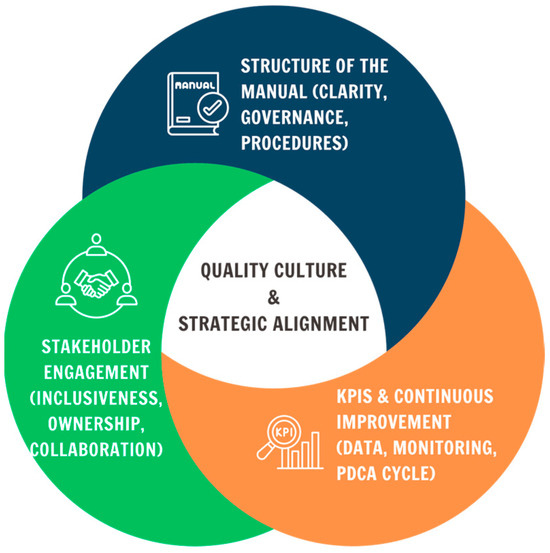
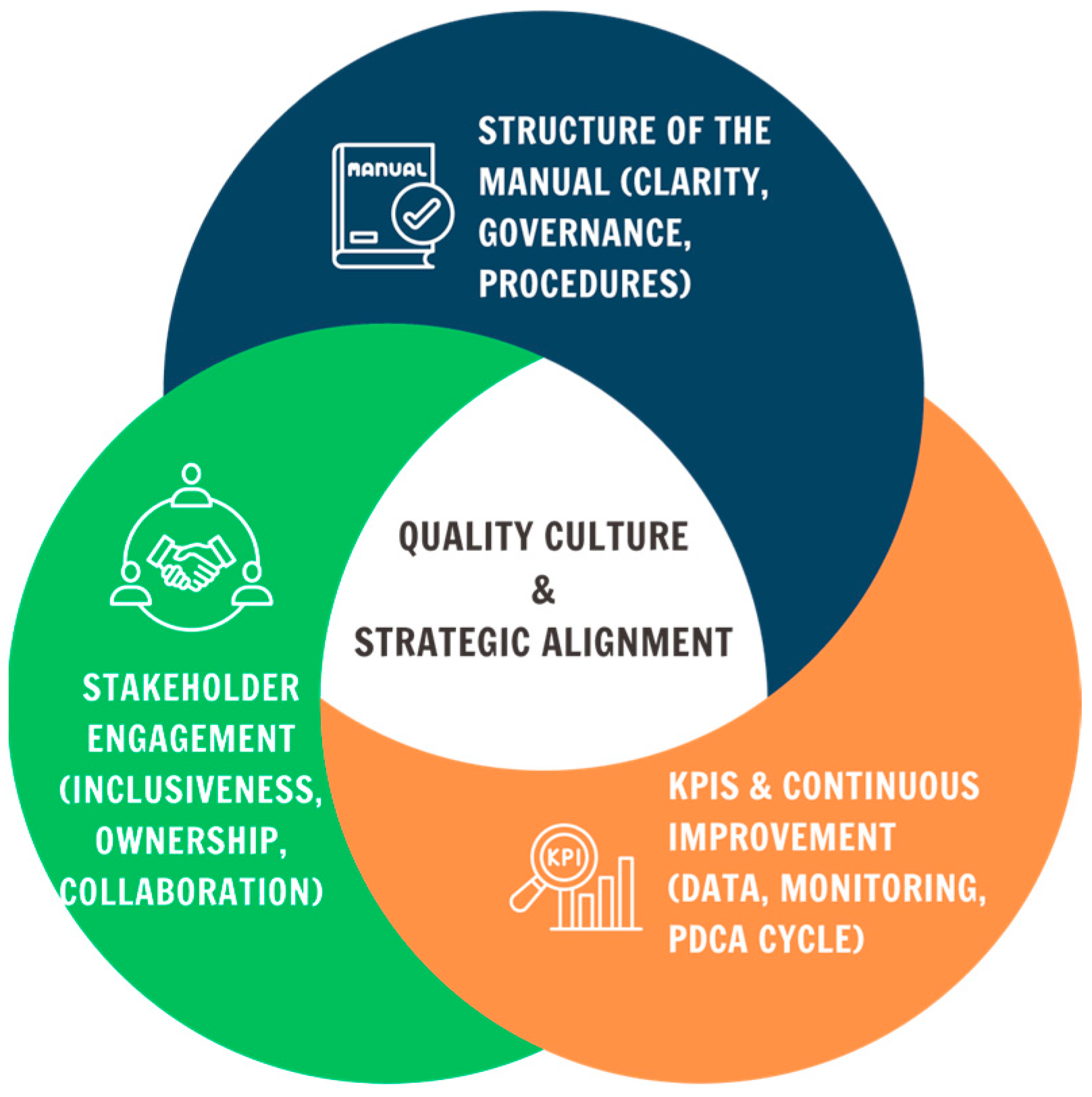

Disclaimer/Publisher’s Note: The statements, opinions and data contained in all publications are solely those of the individual author(s) and contributor(s) and not of MDPI and/or the editor(s). MDPI and/or the editor(s) disclaim responsibility for any injury to people or property resulting from any ideas, methods, instructions or products referred to in the content. |
© 2025 by the authors. Licensee MDPI, Basel, Switzerland. This article is an open access article distributed under the terms and conditions of the Creative Commons Attribution (CC BY) license (https://creativecommons.org/licenses/by/4.0/).