Article

Too Loud to Ignore: Knowledge, Attitudes, and Practices Regarding Hearing Protection in Student Musicians and Ensemble Directors


by
Lucile Donald
and
Ashley G. Flagge
*
Department of Speech Pathology and Audiology, Covey College of Allied Health Professions, University of South Alabama, Mobile, AL 36688, USA
*
Author to whom correspondence should be addressed.
Educ. Sci. 2025, 15(11), 1454; https://doi.org/10.3390/educsci15111454
Submission received: 3 September 2025 / Revised: 22 October 2025 / Accepted: 28 October 2025 / Published: 1 November 2025

Abstract

Musicians are at an elevated risk for noise-induced hearing loss (NIHL) due to repeated exposure to sound levels exceeding occupational safety guidelines. Although many strides have been made in educating music students on the potential dangers of noise exposure and the mitigating effects of hearing protection devices, the current attitudes on this topic among high school and college-level student musicians remain largely unknown. An electronic survey was administered to high school (n = 195) and university (n = 161)-level band students and ensemble directors (n = 15) regarding knowledge of noise/music-induced hearing loss (MIHL), personal practices with HPDs, and types of education received in band programs regarding hearing health. Results revealed that university-level students reported significantly more awareness and use of HPDs compared to high school students, though neither group reported frequent use overall. Findings also suggested that increased knowledge regarding MIHL significantly predicted hearing protection use among student musicians but also indicated that many student musicians reported only minimal exposure to any type of hearing healthcare curriculum. Ensemble directors overall report occasionally mentioning hearing healthcare to students, but generally do not provide HPDs as part of the program to students. Prior research has suggested that behaviors can be changed with consistent education. A standardized music curriculum that includes proper hearing health practices may help reduce reports of MIHL and increase the use of hearing protection among student musicians.

1. Introduction

Noise-induced hearing loss (NIHL) is one of the most common causes of sensorineural hearing loss, affecting approximately 5% of the global population (Natarajan et al., 2023). NIHL results from damage to the auditory structures due to exposure to occupational, environmental, or recreational hazardous noise levels, and has a specific clinical manifestation in diagnostic audiology test results. Typically, NIHL will develop gradually over time and will almost always show a bilateral, sensorineural loss on an audiogram (Neerja, 2021), often with an evident “noise-notch,” or greater degree of loss, occurring between 3000–6000 Hz, which are key frequencies for speech perception. While NIHL tends to be more prevalent in older adults who have experienced long-term exposure to high intensity sound, children and young adults are not immune to the effects. The Centers for Disease Control and Prevention (CDC) estimates 12.5% of children aged 6–19 years experience permanent damage to hearing as a result of excessive noise exposure (CDC, 2019). A 2020 survey of 817 youths aged 12–17 years reported that approximately three out of four students reported exposure to loud sounds during the school day, with nearly half (46.5%) reporting exposure on a routine basis (Eichwald & Scinicariello, 2020).
The National Institute for Occupational Safety and Health (NIOSH) is a federal agency responsible for research and recommendations to prevent occupation-related injury and illness (Occupational Safety and Health, 1970). The Occupational Safety and Health Administration (OSHA) is a regulatory agency that ensures workplaces have healthy, safe, and workable conditions by setting standards, providing educational training, and aiding in outreach (Occupational Safety and Health, 1970). Due to OSHA involvement, occupational noise exposure occurring in workplace settings (e.g., construction sites, machine shops) is regulated (Occupational Safety and Health, 1970). Employers in the workplace are required to “implement a hearing conservation program when noise exposure is at or above 85 decibels averaged over eight working hours, or an 8 h time-weighted average (TWA)” (OSHA, 1998). This level of 85 dBA is termed the “action level,” or the threshold at which precaution needs to be taken. As the intensity of the noise increases, the amount of time an individual can stay in the area before harmful damage occurs decreases (Occupational Safety and Health, 1970). Both close proximity and longer duration of exposure to a high intensity stimulus can contribute to the damaging effects of sound (Occupational Safety and Health, 1970). According to OSHA regulations, noise exposure levels of 90 dBA are allowed for 8 h, with a 5 dB exchange rate (OSHA, 1998). NIOSH has similar regulations that are slightly more stringent, allowing permissible exposure of 85 dBA for 8 h with a 3 dB exchange rate (NIOSH, 1996, 1998). It should be noted that these regulations are in place solely for occupational environments.
However, there are other causes of NIHL outside of occupational environments. The World Health Organization reports that approximately 50% of all young people are at risk of music-induced hearing loss (MIHL) from listening to music in recreational settings (WHO, 1998). Chasin (2014) reports that approximately 80% of musicians have experienced a temporary threshold shift following a performance. Students active in an educational band program, whether it be high school or collegiate level, are more likely to experience symptoms of hearing loss compared to their peers due to the higher levels of hazardous noise exposure (Peters et al., 2005). Evidence suggests that approximately 50% of student musicians in middle school, high school, and college may experience hearing loss (Phillips et al., 2008). A recent meta-analysis of literature regarding hearing loss in college students revealed that while only 19% of college students, in general, were shown to exhibit hearing loss, a startling 85% of college musicians showed hearing loss at 6000 Hz (Kornisch et al., 2024). In addition to hearing loss, other auditory symptoms can manifest due to music exposure, including tinnitus, hyperacusis, diplacusis, and distortion of sound (Laitinen, 2005; Laitinen & Poulsen, 2008).
Prior studies have documented that collegiate musicians, regardless of instrument, are exposed to daily noise doses that exceed both OSHA and NIOSH standards (Miller et al., 2007). Numerous studies have shown the intensity levels of both ensembles and single instruments to reach or exceed the action level set by OSHA (Camp & Horstman, 1992; Chasin, 2006). Chasin (2006) took sound level measurements at the location of musicians’ ears and found peak intensity levels as high as 125 dBA. Washnik et al. (2016) found that a majority of college musicians exceed the daily recommended noise dose either through individual practice or ensemble rehearsals. Rodrigues et al. (2019) found that even in individual practice rooms, sound levels are often above recommended exposure levels, yet student musicians surveyed reported never using hearing protection.
This data suggests the importance of hearing education for student musicians. While both the National Association for Music Education (NAfME) and the National Association of Schools of Music (NASM) have released official statements regarding the importance of hearing loss prevention education in student musicians (National Association of Music Education, 2007; NAMA & PAMA, 2011), there is no official requirement for music programs to teach hearing protection guidelines in their curriculum. It is up to the discretion of the program and director to include. Although the professional organizations have these statements of caution and support, individual musician awareness of hazardous levels and use of preventative care remain topics of research. Multiple studies have shown that providing education and training for student musicians on the dangers of noise exposure and providing hearing protection devices (HPDs) for students can increase compliance among students for wearing hearing protection during rehearsals and performances (Auchter & Le Prell, 2014; Matei et al., 2018).
Prior research has established that even young musicians are at a higher risk for hearing loss due to their hazardous environment compared to non-musician peers. While there has been an increase in hearing health resources, and even curriculum-specific inclusions for music students and educators (Blasco-Magraner et al., 2025); in recent years, it remains largely unknown if student musicians are receiving sufficient education and support to make decisions regarding hearing health, and if that education and support is translating into increased HPD usage. Therefore, the purpose of the present study was to examine and compare the current knowledge, attitudes, and practices of high school and university band students and ensemble directors regarding MIHL and HPD use, and to determine if a relationship exists between hearing health education and hearing health behaviors.

2. Materials and Methods

The following research questions were proposed:
  • Is there a significant difference in knowledge of MIHL between high school and university musicians?
  • Is there a significant difference in frequency of hearing protection use between high school and university musicians?
  • Does knowledge of MIHL significantly predict use of hearing protection in student musicians?
  • Is there a significant difference in use of hearing protection among different instruments?
  • Is there a relationship between the number of years of active musical involvement and use of hearing protection?
  • What percentage of musicians experiencing auditory symptoms resulting from noise exposure, and what specific symptoms are reported?
  • How often do ensemble directors wear HPDs?
  • How often do ensemble directors share information about hearing healthcare, and what types of information are shared with students?
Both high school (n = 195) and university-level (n = 161) band students were recruited to participate. High school students were recruited from four high school marching bands across the southeastern United States. University students were recruited from a single, university-level marching band in the southeastern United States. Students were recruited via contact with the ensemble director. A smaller number of ensemble directors (n = 15) were also recruited by email. The study was approved by the Institutional Review Board at the University of South Alabama (IRB protocol#: 22-346).
Questionnaires were distributed to students and directors through a Qualtrics website link via email from their ensemble director. The high school survey consisted of 10 questions, the college survey consisted of 14 questions, and the survey for directors consisted of 13 questions. Questions included demographic information, such as number of years of musical experience and type of instrument(s) played, and requested information regarding hearing healthcare education, resources offered, and any auditory symptoms experienced by the participant (Appendix A, Appendix B and Appendix C). A brief presentation on the importance of hearing protection as well as accessible resources was provided after the surveys were completed. In order to obtain additional information from the collegiate students, investigators revised the survey that was given to high school student musicians prior to distributing to college students. The survey was revised to include additional questions regarding personal hearing protection use, including type of protection, and additional open-ended questions, including “what does music-induced hearing loss mean to you?” and “Why do you not wear hearing protection?” (for those that reported “never” wearing hearing protection (See Appendix A and Appendix B)).
For data analysis, descriptive statistics were calculated for all measures of interest. Because responses to frequency of use questions were obtained using Likert-scale questions, all quantitative statistical comparisons were conducted using nonparametric Mann–Whitney U analyses. An alpha level was set at 0.05 to determine significance. All statistical analyses were completed using the Statistical Package for the Social Sciences (SPSS, version 27). Because of the small number of directors surveyed, only descriptive statistics are reported for this group.

3. Results

3.1. Student Musicians

Results comparing differences in knowledge of MIHL between high school and university students revealed a significant difference between groups (U = 18,935.5, p < 0.001), with university students reporting significantly more knowledge about MIHL. University students also reported wearing hearing protection significantly more often than high school students (U = 19,784, p < 0.001), although it should be noted that the majority of respondents across both groups (n = 272, 76%) reported “never” wearing hearing protection during rehearsals or performances (61% of college students vs. 89% of high school students, Figure 1).
While the majority (~60%) of university students reported never wearing hearing protection, among those students who reported wearing hearing protection at least occasionally (n = 65, 40%), the majority reported using non-custom silicone devices (e.g., non-custom fit Etymotic or Vibes). It should be noted that the question regarding type of hearing protection was not asked of high school students, so a comparison between groups was unable to be made. For a more detailed description of reported HPD types and use among university students surveyed, see Table 1.
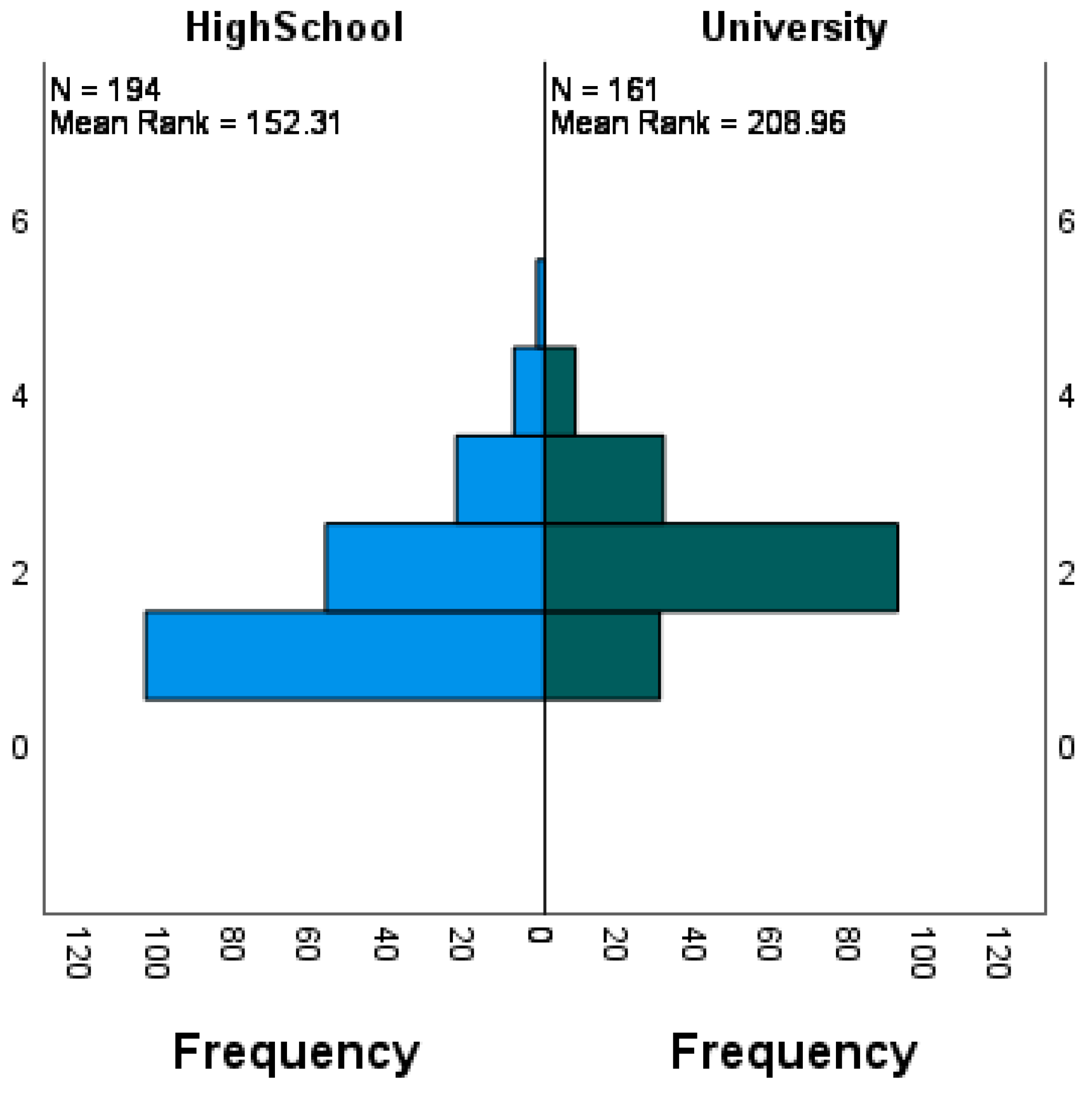
Additional analyses were conducted to examine group differences curricular exposure to the topic of MIHL. Student responses between groups to the question “How often has hearing protection been addressed in your curriculum?” revealed no significant difference between student groups (χ2(1) = 2.403, p = 0.121). However, university students reported most often that the use of hearing protection had been at least addressed in their curriculum, although not regularly, while high school students most often reported that the use of hearing protection had never been addressed (U = 20,601.5, p < 0.001) (Figure 2).
To examine how well knowledge of MIHL predicts use of hearing protection, an ordinal logistic regression analysis was conducted with hearing protection use as the dependent variable and knowledge of MIHL as the independent variable, with years in band as a covariate. Deviance of goodness of fit test indicated that the model was a good fit to the observed data (χ2(61) = 114.741, p = 0.588), but most cells were sparse with zero frequencies observed in 62% of cells. However, the final model significantly predicted the HP use over and above the intercept-only model (χ2(5) = 59.55, p < 0.001), suggesting that knowledge of MIHL significantly predicts the use of hearing protection. Students that reported being “well-versed” in knowledge of MIHL were approximately 10 times (95% CI: 1.084–94.205) more likely to wear hearing protection than students that reported knowing nothing about hearing protection, a statistically significant effect (Wald χ2(1) = 4.123, p = 0.042). However, this result should be interpreted with caution due to a large confidence interval, likely due to a small number of subjects who reported being “well-versed” in MIHL knowledge (n = 3). For every one-year increase in a music program, students were 1.2 (95% CI: 1.15–1.347) times more likely to wear hearing protection (p < 0.001). Further analysis utilizing Spearman’s rho revealed a weak, positive relationship between years of active musical involvement and use of hearing protection (rho = 0.286, p < 0.001). Thus, individuals with more years of experience were more likely to report using hearing protection. Similarly, the relationship between years of active musical involvement and reported knowledge of MIHL showed a weak, positive correlation (rho = 0.21, p < 0.001); hence, increased exposure to a music program was weakly related to increased knowledge of MIHL.
Additional analyses examined differences in hearing protection use among instruments using a nonparametric Kruskal–Wallis test. Results revealed significant differences between use of HP and instrument played (H(9) = 60.384, p < 0.001). Post hoc pairwise comparisons using Bonferroni corrections revealed that percussionists reported wearing hearing protection significantly more often than clarinet, French horn, saxophone, trombone, trumpet, tuba/baritone. It should be noted that the number of respondents for both double reeds (n = 6) and “other” (n = 18) were very low, potentially contributing to the lack of significant differences (Table 2). Double reeds had the lowest use of hearing protection across all instrument types.
The number of music students reporting auditory symptoms was also surveyed, specifically asking what auditory symptoms students were experiencing. Of the total, over half (n = 182, 51.1%) of high school and college musicians reported experiencing at least one auditory symptom. Many of these (23%) reported multiple symptoms. Specifically, almost half (46%) of high school students and over half (57%) of college students reported at least one auditory symptom. Of those that reported at least one symptom, 14% of high school students and 34% of college students reported multiple symptoms. Hearing loss and tinnitus accounted for the majority of symptoms reported (Table 3). Other symptoms reported included ear pain, difficulty understanding speech/loss of clarity, and aural fullness.

3.2. Ensemble Directors

A smaller number of ensemble directors (n = 15) were also surveyed electronically. Demographic information for director respondents can be found in Table 4. Of the 15 directors surveyed, six reported never using HPDs, while 8 reported occasional use and 1 reported “usually” wearing HPDs. Directors were asked how often they talked about hearing healthcare and hearing protection devices with their students. Only three reported never discussing it, while the majority (n = 8) reported discussing it “once or twice.” Only one director reported discussing the topic of hearing healthcare and hearing protection “often” with students.
Directors were also asked if they provided HPDs/earplugs for students. Of the 15 surveyed, only one reported providing earplugs for students, although five additional respondents reported sharing with students where they could buy HPDs independently. Eleven respondents reported not minding if students choose to wear HPDs, and four reported encouraging/recommending to students that they wear HPDs. Thirteen respondents reported that use of hearing protection was moderately important, while one reported that it was extremely important, and one reported that it was only minimally important.
Directors were also asked what types of information they relayed to students. Of those that shared information about hearing health and hearing protection with students, four reported sharing website links and resources, two reported using/hanging posters in their classrooms with information, two reported use of verbal reminders to protect hearing, and two reported having guest speakers attend class to discuss hearing health-related matters.

4. Discussion

The primary aims of this study were to examine and compare both knowledge of MIHL and use of hearing protection devices among high school and university music students, and to examine attitudes and HPD use among a small sample of ensemble directors. Results revealed that university students reported having significantly more knowledge of MIHL and reported significantly higher use of hearing protection compared to high schoolers. However, despite university students reporting higher use of hearing protection, neither group reported high frequency of use, with the vast majority of students in both groups reporting that they “never” use hearing protection.
To analyze these findings more in depth, additional analysis of student responses to the question “How often has hearing protection been addressed in your curriculum?” was conducted. University students reported most often that the use of hearing protection had been at least addressed, although not regularly in their curriculum, while high school students most often reported that the use of hearing protection had never been addressed in the curriculum. It should be noted that these responses are subjective, and although all collegiate data was surveyed from the same ensemble, many students reported different frequencies of occurrence, so results should be interpreted with the understanding that all responses rely on participant perception and memory. It is possible that college-level students have been exposed to education outside of the music curriculum and are more aware and attentive of the potential dangers of excessive noise exposure compared to high school students. It should also be noted that, in examining the director responses, as a general rule, those that taught at the collegiate level tended to report discussing hearing protection more often with students compared to those in elementary and secondary education.
Along this same line, a weak, positive correlation was found between the number of years of active musical involvement and the use of hearing protection. Additionally, ordinal logistic regression showed that knowledge of MIHL significantly predicts use of hearing protection, suggesting that increased education on the dangers of noise exposure leads to increased use of protective measures. However, there are a number of factors that can influence these findings, such as age, auditory symptoms, and experience, which were not fully assessed in our study, so it is possible that there are other contributing factors to the use of HP. While it is likely that the reasons determining the choice to use hearing protection are multifactorial, results suggest that increased time spent in music education is weakly, but significantly related to increased knowledge of MIHL knowledge, and that increased knowledge does predict frequency of use of hearing protection speaking to the importance of MIHL education embedded within the music curriculum. Although statistically significant, the weaker relationship between years of involvement in music programs and use of hearing protection could be related to the low reported levels of discussion of MIHL and hearing protection in the curriculum.
This speaks to a trend that perhaps hearing health is not being addressed as often with younger students. We agree with others (Fitzlaff et al., 2025) that hearing health education should be proactive and implemented earlier in the curriculum to encourage early adoption of positive hearing healthcare practices. In fact, even elementary school music classes could implement a module on “healthy hearing,” showing students how hearing works, and best practices for protecting hearing when exposed to loud sounds. Collaboration with audiology graduate programs and other hearing healthcare providers could be beneficial as available, with these individuals providing in-service training for teachers and possibly curricular materials to assist in development of these modules. Increased, structured education on these topics embedded in the curriculum in the younger years may serve to strengthen this relationship seen in this study.
Also of note, there was a significant difference in hearing protection use between instrument groups of those surveyed, with percussionists reporting use of hearing protection more often than any other instrument. They are closely followed by flutes, double reeds, and those reporting “other” instruments, although it should be noted the number of double reed and “other” instrument respondents was low (Table 1). Examination of the mean rank shows percussionists with the highest rank (2.58), followed by flutes/piccolos (1.96) and low brass (baritone/tuba, 1.81). Prior work by Chasin (2006) has examined sound levels of different instruments and has highlighted the importance of both frequency and proximity of placement near the ear as factors that affect sound. For example, flutists, and especially piccoloists, due the high frequency nature of sound produced by these instruments and the close proximity of the sound to the ear, may be at even higher risk for noise damage than some of their instrument counterparts, even though peak SPL levels are not as high when measured from a similar distance. This may be a factor in the higher report use of hearing protection in this group compared to other wind instruments. Additionally, prior literature has noted that many musicians are hesitant to wear hearing protection due to perceived changes in timbre and pitch, making it difficult for wind instruments to “blend” with the ensemble (Callahan et al., 2011; Chasin, 2009; Killion, 2012; Mendes et al., 2007). This may not be the case with most percussive instruments, who rely more strongly on the rhythm component, which may not be as affected by hearing protection as pitch or timbre.
Indeed, responses to open ended questions in the university student group revealed that many students do not wear hearing protection for some of these same reasons. When asked “Why do you not wear hearing protection?” The majority of responses to this question fell into one of four categories:
(1)
It never occurred to me/I never thought of it.
(2)
I don’t need it.
(3)
I don’t want to.
(4)
I can’t afford it.
Many respondents claimed that they had never considered using hearing protection before, again suggesting a potential lack of exposure and/or education to hearing loss prevention strategies. Others found hearing protection to be unnecessary because they do not see the threat of hazardous noise levels. Other comments related to participants not wanting to wear hearing protection, often due to the fact that it makes it harder to tune, blend into the ensemble, and hear the director. Some reported that they cannot afford hearing protection, especially the custom earplugs. It should be noted that the majority of these thought processes could be amended by providing proper education to band students beginning at the start of their musical career. Additionally, protective devices specific to musicians offer ways to filter certain frequencies rather than block them to assist in sound clarity, tuning, and blending, However, these are often more expensive, and the financial aspect (“I can’t afford it”) is perhaps more difficult to tackle. This may require fundraising and advocacy to increase funding to music programs in the schools to assist in providing hearing protection devices for students.
Another open-ended question, “What does MIHL mean to you?” offered further insight into the university musician mindset. While most students provided a basic definition of hearing loss caused by music, there were several responses that demonstrated the need for future education. Many commented that it was the “risk of being in band” and may not be able to be prevented (“It feels like it’s something that’s unavoidable when you sign up for the programs”). Comments like these reflect the need for further education on prevention.
Importantly, it should be noted that many students reported experiencing auditory symptoms, such as perceived hearing loss and tinnitus. While these auditory consequences could be the result of causes outside of music exposure, the fact that over 50% of high school and college musicians surveyed are reporting auditory symptoms is worthy of note, and is in line with some prior literature suggesting that approximately 50% of middle, high school and college student musicians show some degree of hearing loss (Phillips et al., 2008). Although no non-musician control group was surveyed in this study and hearing was not officially assessed through the use of an objective audiogram, these findings can be loosely compared to the only 17% of children ages 12–19 years (Henderson et al., 2011) or the only 19% of college students (Kornisch et al., 2024) who have features in their hearing test suggestive of noise-induced hearing loss. It is also significant that there was a sharp increase in reports of “difficulty understanding speech/loss of clarity” from high school (3.6%) to college (18%), suggesting potentially additive damage to the inner ear and neural structures over time. It should be noted that the language was changed between the high school and university surveys from “loss of clarity (HS) to “difficulty understanding speech” (university) to provide more specific detail, and it is possible that this change resulted in some of the increased prevalence seen between the groups. It is also possible that the increase in auditory symptom prevalence from high school to college is a contributing factor for the increased use of hearing protection among university students, as students are beginning to see the detrimental and additive effects of noise exposure. This significant increase in symptom reporting from high school to college speaks again to the importance of educating students at a young age as to the potential consequences of high intensity sound exposure, in order to take preventative measures to avoid such auditory symptoms.
Although a small sample, a survey of ensemble directors did offer some interesting insight. While the majority of respondents did report at least mentioning hearing related healthcare “once or twice,” only one director surveyed reported discussing it often. While most reported that hearing protection is of moderate importance, many directors did not report sharing any kind of hearing-related information with students, and for those that did, it was not on any type of regular basis or incorporated into the curriculum in any way. This speaks to college student reports of never having considered or thought about the use of HPDs during rehearsals and performances, as it is possible that these types of discussions are either not occurring at all, or are occurring quite infrequently in band/music classes.
Anecdotally, there seems to be a general thought that the negative stigma surrounding use of hearing protection among musicians is declining in recent years. In comparing use of hearing protection among college students in the present study (n = 161) to the students surveyed by Callahan et al. in 2011, (n = 130), this statement does appear to hold true. In the Callahan et al. (2011) study, 79% of students reported not wearing hearing protection during rehearsal or practice, and 90% reported not wearing hearing protection for performances. While the present study did not differentiate between rehearsal and performance, only 61% of college students reported never wearing hearing protection at all. Although certainly these numbers could be affected by the sample, and there is certainly still room for improvement, as well over half of college students still report never using hearing protection, it is encouraging to see that over the past 10+ years, increasing numbers of college-level musicians are reporting wearing hearing protection devices at least some of the time. This suggests that organizations, schools, and educators are making strides in the right direction.
However, it is important to note that the majority of students in the present study still report not wearing or using hearing protection at all, and many of the directors surveyed reported discussing this topic minimally with students. Increased efforts should be made to help educate not only students but also faculty and staff teaching these students. Specifically, a standardized hearing health curriculum beginning in elementary music programs would educate younger students regarding the potential consequences surrounding noise exposure and the preventative nature of using hearing protection to avoid NIHL and other auditory symptoms, like tinnitus.
While this study does highlight important aspects of incorporating hearing health into music curricula, there are some limitations to note. All of the students involved in this study are localized to a small geographic location in the southeastern United States, which limits generalizability of study findings. While the findings are significant, there could be additional findings within other regional areas based on the music program standards, and future research utilizing a more vast geographic network could be beneficial. Additionally, as with any survey, some of the answers given in the survey may have been over or underinflated. Since there was the potential that students may have felt biased when answering, considering that the survey was inquiring about their program’s education and their own knowledge. Finally, survey questions were modified and expanded between high school and college data collection to obtain additional information; therefore, some questions, as indicated, were only answered by one group, which may have limited generalizability of the findings between groups. Future research should focus on giving matching surveys to both groups and consider including elementary and middle-school aged students as well to compare knowledge and attitudes in even younger students. Additionally, larger numbers of music directors should be surveyed to gain a more comprehensive picture of ensemble director knowledge and attitudes towards hearing healthcare and hearing protection use.

5. Conclusions

The results from this study are encouraging, suggesting that behavior can be changed if students are properly educated. However, there are still a large number of students who do not wear hearing protection or do not appear to take the risk of MIHL seriously. Indeed, in a recent study, Fitzlaff et al. (2025) found that, while many university students reported understanding when and how to protect their hearing, over half still reported rarely or never using any hearing protection, though analysis suggested that protective behavior is related to knowledge about hearing health. Attempts should be made to standardize music education curriculum and include more information on MIHL and personal hearing protection devices. Proactive educational strategies should be implemented to encourage early adoption of hearing protection, beginning even in elementary school music, to make young students aware of the danger of high levels of recreational noise exposure. Supportive measures in the form of financial support for music programs to purchase hearing protection devices for students could also be helpful in encouraging adoption by students. Future studies should focus on implementing hearing conservation programs within the music education curriculum and examining the effects of the additional education. Collaborations between audiology graduate programs and music education programs could be a potentially feasible option for some locations that would serve to benefit both groups. This could be as simple as encouraging music students entering university to obtain a baseline audiogram and obtaining annual follow-up audiograms. Additionally, audiology graduate students could provide in-service sessions to college musicians as well as K-12 music educators and students with topics such as “how we hear,” “how loud sounds damage our hearing,” and “how we can prevent noise damage.”

Author Contributions

Conceptualization, L.D. and A.G.F.; methodology, L.D. and A.G.F.; formal analysis, L.D. and A.G.F.; investigation, L.D.; data curation, L.D. and A.G.F.; writing—original draft preparation, L.D.; writing—review and editing, A.G.F.; visualization, L.D.; supervision, A.G.F.; project administration, L.D. and A.G.F. All authors have read and agreed to the published version of the manuscript.

Funding

This research received no external funding.

Institutional Review Board Statement

The study was conducted in accordance with the Declaration of Helsinki and approved by the Institutional Review Board of the University of South Alabama (protocol 22-346, approved 28 September 2022).

Informed Consent Statement

Informed consent was obtained from all subjects involved in the study through the Qualtrics survey.

Data Availability Statement

Full data can be made available through contact with the corresponding author.

Conflicts of Interest

The authors declare no conflicts of interest.

Appendix A

  • High School Student Survey
  • What instrument do you play?
  • How old are you?
  • What different ensembles have you been involved in? (Concert Band, Drum Corps, Orchestra, Marching Band, etc.)? Please List:
  • How many years have you been involved with ensemble programs?
  • Do you have any hearing loss or disorders? Circle all that apply.
    • Hearing Loss
    • Tinnitus (Ringing in the ears)
    • Hyperacusis (Hearing Sensitivity)
    • Loss of clarity
    • Diplacusis (Same pitch sounds like two different tones in each ear)
    • Ear Pain
  • How much do you know about music-induced hearing loss on a scale of 1–5? (1 = nothing at all and 5 = I consider myself well-versed).
    1  2  3  4  5
  • How often has hearing protection been brought up in ensemble rehearsals?
    Never
    Once or Twice
    Periodically/Sometimes
    Often
    Almost every rehearsal
  • Are there posters or flyers about hearing protection hung up in your rehearsal space?
    Yes
    No
    I don’t know
  • Do you wear hearing protection while you’re rehearsing?
    Never
    Occasionally
    About half the time
    Usually
    Always
  • Do you know where to get hearing protection?
    Yes
    No

Appendix B

  • College Student Survey
  • What is your primary instrument?
    • Flute or Piccolo
    • Clarinet
    • Double Reeds
    • Saxophone
    • Trumpet
    • Trombone
    • French Horn
    • Tuba or Baritone
    • Percussion
    • Other
  • Are you a current University Student?
    Yes
    No
  • In what ensembles have you been involved?
    Concert Band
    Marching Band
    Orchestra
    Chamber Ensemble
    Drum Corps
    Jazz Band
  • Approximately how many years have you been involved in music programs?
  • Do you currently experience any of the following symptoms? Choose all that apply.
    • Hearing Loss
    • Tinnitus (ringing or buzzing in the ear)
    • Difficulty understanding speech
    • Diplacusis (one tone sounds like two different tones in each ear)
    • Ear Pain
    • Aural Fullness (Ears feeling full or stopped up)
    • None
  • What does music-induced hearing loss mean to you?
  • How much do you know about music-induced hearing loss on a scale of 1–5
    (1 = nothing at all and 5 = I consider myself well-versed).
    1  2  3  4  5
  • How often has hearing protection been addressed in your curriculum?
    Never
    It’s been addressed before, but not regularly
    Once a semester
    At least once a week
    Every rehearsal
  • Are there posters, flyers, or other resources about hearing protection in your rehearsal space?
    Yes
    No
    I don’t know
  • Do you wear hearing protection during rehearsals?
    Never
    Occasionally
    About half the time
    Most of the time
    Always
  • Do you wear hearing protection during performances?
    Never
    Occasionally
    About half the time
    Most of the time
    Always
  • If you wear hearing protection, what kind do you wear?
    Foam Earplugs
    Silicone Earplugs with filters (Ex. Etymotic or Vibes)
    Custom Earplugs
    Other
    I don’t wear hearing protection
  • Why do you not use hearing protection? (If your answer is “Never” to #11)
  • Have you ever had your hearing tested?
    Yes
    No

Appendix C

  • Director Survey
  • How long have you been a music director (in any ensemble)?
  • What types of ensembles have you taught in (concert band, marching band, drum corps, orchestra, etc.)? Please list:
  • What age of students have you taught? Mark all that apply.
    Elementary School
    Middle School
    High School
    College
    Adults
  • Were you ever taught about hearing loss in your education?
    Yes
    No
    I don’t remember
  • How often do you talk about hearing protection in your program?
    Never
    Once or Twice
    Periodically/Sometimes
    Often
    Almost every rehearsal
  • Do you have posters of flyers on hearing protection in your rehearsal space?
    Yes
    No
  • Do you provide ear plugs for your musicians?
    Yes
    No
  • Do you share where your musicians can obtain hearing plugs?
    Yes
    No
  • How important is hearing protection to you?
    Extremely important
    Moderately important
    Minimally important
    Not at all important
  • Do you use your own hearing protection in your own rehearsals?
    Never
    Occasionally
    About half the time
    Usually
  • Do you have your students use hearing protection in rehearsals?
    It is required
    It is recommended
    I don’t mind if they wear them
    I don’t want them to wear them
  • What type of information about hearing protection do you make available for your students?
    Posters/flyers
    Website links
    Guest speakers
  • How much do you know about music-induced hearing loss on a scale of 1–5 (1 = nothing at all and 5 = I consider myself well-versed)?
    1  2  3  4  5

References

  1. Auchter, M., & Le Prell, C. G. (2014). Hearing loss prevention education using adopt-a-band: Changes in self-reported earplug use in two high school marching bands. American Journal of Audiology, 23(2), 211–226. [Google Scholar] [CrossRef] [PubMed]
  2. Blasco-Magraner, J. S., Marin-Liebana, P., Hurtado-Soler, A., & Botella-Nicolas, A. M. (2025). The impact of the soundscape on university life: Critical music education as a tool for awareness and transformation. Education Sciences, 15(5), 600. [Google Scholar] [CrossRef]
  3. Callahan, A. J., Lass, N. J., Foster, L. B., Poe, J. R., Steinberg, E. L., & Duffle, K. A. (2011). Collegiate musicians’ noise exposure and attitudes on hearing protection. Hearing Review, 18(6), 36–44. [Google Scholar]
  4. Camp, J. E., & Horstman, S. W. (1992). Musician sound exposure during performance of Wagner’s ring cycle. Medical Problems of Performing Artists, 7(2), 37–39. [Google Scholar]
  5. Centers for Disease Control and Prevention (CDC). (2019). Preventing noise-induced hearing loss. Centers for Disease Control and Prevention. Available online: https://www.cdc.gov/ncbddd/hearingloss/noise.html (accessed on 27 June 2022).
  6. Chasin, M. (2006). How loud is that musical instrument? Hearing Review, 13(3), 26. [Google Scholar]
  7. Chasin, M. (2009). Hearing loss in musicians: Prevention & management. Plural Publishing, Inc. [Google Scholar]
  8. Chasin, M. (2014). Hear the music: Hearing loss prevention for musicians. Musicians Clinics of Canada. [Google Scholar]
  9. Eichwald, J., & Scinicariello, F. (2020). Survey of teen noise exposure and efforts to protect hearing at school-united states. Morbidity and Mortality Weekly Report, 69(48), 1822–1826. [Google Scholar] [CrossRef] [PubMed]
  10. Fitzlaff, M., Jecker, R., Muller, A., Riegert, M., Riemenschnitter, C., Wenhart, T., Bucher, K., Kleinjung, T., Veraguth, D., Hildebrandt, H., & Bachinger, D. (2025). Awareness and attitudes towards ear health in classical music students-advancing education and care for professional ear users. Frontiers in Psychology, 16, 1497674. [Google Scholar] [CrossRef] [PubMed]
  11. Henderson, E., Testa, M., & Hartnick, C. (2011). Prevalence of noise-induced hearing-threshold shifts and hearing loss among US youths. Pediatrics, 127(1), e39–e46. [Google Scholar] [CrossRef] [PubMed]
  12. Killion, M. C. (2012). Factors influencing use of hearing protection by trumpet players. Trends in Amplification, 16(3), 173–178. [Google Scholar] [CrossRef] [PubMed]
  13. Kornisch, M., Barton, A., Park, H., Lowe, R., & Ikuta, T. (2024). Prevalence of hearing loss in college students: A meta-analysis. Frontiers in Neuroscience, 5(17), 1282929. [Google Scholar] [CrossRef] [PubMed]
  14. Laitinen, H. (2005). Factors affecting the use of hearing protectors among classical music players. Noise & Health, 7(26), 21–29. [Google Scholar] [CrossRef]
  15. Laitinen, H., & Poulsen, T. (2008). Questionnaire investigation of musicians’ use of hearing protectors, self reported hearing disorders, and their experience of their working environment. International Journal of Audiology, 47(4), 160–168. [Google Scholar] [CrossRef] [PubMed]
  16. Matei, R., Broad, S., Goldbart, J., & Ginsborg, J. (2018). Health education for musicians. Frontiers in Psychology, 9, 1137. [Google Scholar] [CrossRef] [PubMed]
  17. Mendes, M. H., Morata, T. C., & Marques, J. M. (2007). Acceptance of hearing protection aids in members of an instrumental and voice music band. Brazilian Journal of Otorhinolaryngology, 73(6), 785–792. [Google Scholar] [CrossRef] [PubMed]
  18. Miller, V. L., Stewart, M., & Lehman, M. (2007). Noise exposure levels for student musicians. Medical Problems of Performing Artists, 22(4), 160–165. [Google Scholar] [CrossRef]
  19. Natarajan, N., Batts, S., & Stankovic, K. M. (2023). Noise-induced hearing loss. Journal of Clinical Medicine, 12(6), 2347. [Google Scholar] [CrossRef] [PubMed]
  20. National Association of Music Education. (2007). Health in music education (Position statement). Available online: https://nafme.org/resource/health-in-music-education/ (accessed on 29 June 2022).
  21. National Association of Schools of Music (NAMA) & Performing Arts Medicine Association (PAMA). (2011). Basic information on hearing health. Information and recommendations for administrators and faculty in schools of music. Available online: https://nasm.arts-accredit.org/wp-content/uploads/sites/2/2016/02/1_NASM_PAMA-Admin_and_Faculty_2011Nov.pdf (accessed on 29 June 2022).
  22. National Institute for Occupational Safety and Health (NIOSH). (1996). Criteria for a recommended standard occupational noise exposure, revised criteria. Available online: www.nonoise.org/library/niosh/criteria.htm (accessed on 28 August 2025).
  23. National Institute for Occupational Safety and Health (NIOSH). (1998). Criteria for a recommended standard: Occupational noise exposure—Revised criteria 1998 (Publication No. 98-126). U.S. Department of Health and Human Services (NIOSH).
  24. Neerja, M. (2021). Noise-induced hearing loss clinical presentation: History, physical, causes. disease & conditions. Otolaryngology and Facial Plastic Surgery. Available online: http://emedicine.medscape.com/article/857813-clinical (accessed on 1 July 2022).
  25. Occupational Safety and Health Act of 1970. Public law No. 91-596, 84 Stat. 1590. (1970). Available online: https://www.osha.gov/laws-regs/oshact/toc (accessed on 28 June 2022).
  26. Occupational Safety and Health Administration (OSHA). (1998). Regulations (Standards—29 CFR) Occupational noise exposure—1910.95. Available online: https://www.osha.gov/pls/oshaweb/owadisp.show_document?p_table=standards&p_id=9735 (accessed on 29 June 2022).
  27. Peters, C., Thom, J., McIntyre, E., Winters, M., Teschke, K., & Davies, H. (2005). Noise and hearing loss in musicians. Safety and Health in Arts Production and Entertainment. [Google Scholar]
  28. Phillips, S. L., Shoemaker, J., Mace, S. T., & Hodges, D. A. (2008). Environmental factors in susceptibility to noise-induced hearing loss in student musicians. (Report). Medical Problems of Performing Artists, 23(1), 20–28. [Google Scholar] [CrossRef]
  29. Rodrigues, M. A., Goncalves, S., Neves, P., & Silva, M. V. (2019). Sound exposure of secondary school music students during individual study. Medical Problems of Performing Artists, 34(2), 98–101. [Google Scholar] [CrossRef] [PubMed]
  30. Washnik, N. J., Phillips, S. L., & Teglas, S. (2016). Student’s music exposure: Full-day personal dose measurements. Noise & Health, 18(81), 98–103. [Google Scholar] [CrossRef]
  31. WHO Programme for the Prevention of Deafness and Hearing Impairment. (1998). Prevention of noise-induced hearing loss: Report of an informal consultation held at the World Health Organization, Geneva, 28–30 October 1997. World Health Organization. Available online: https://apps.who.int/iris/handle/10665/65390 (accessed on 29 June 2022).
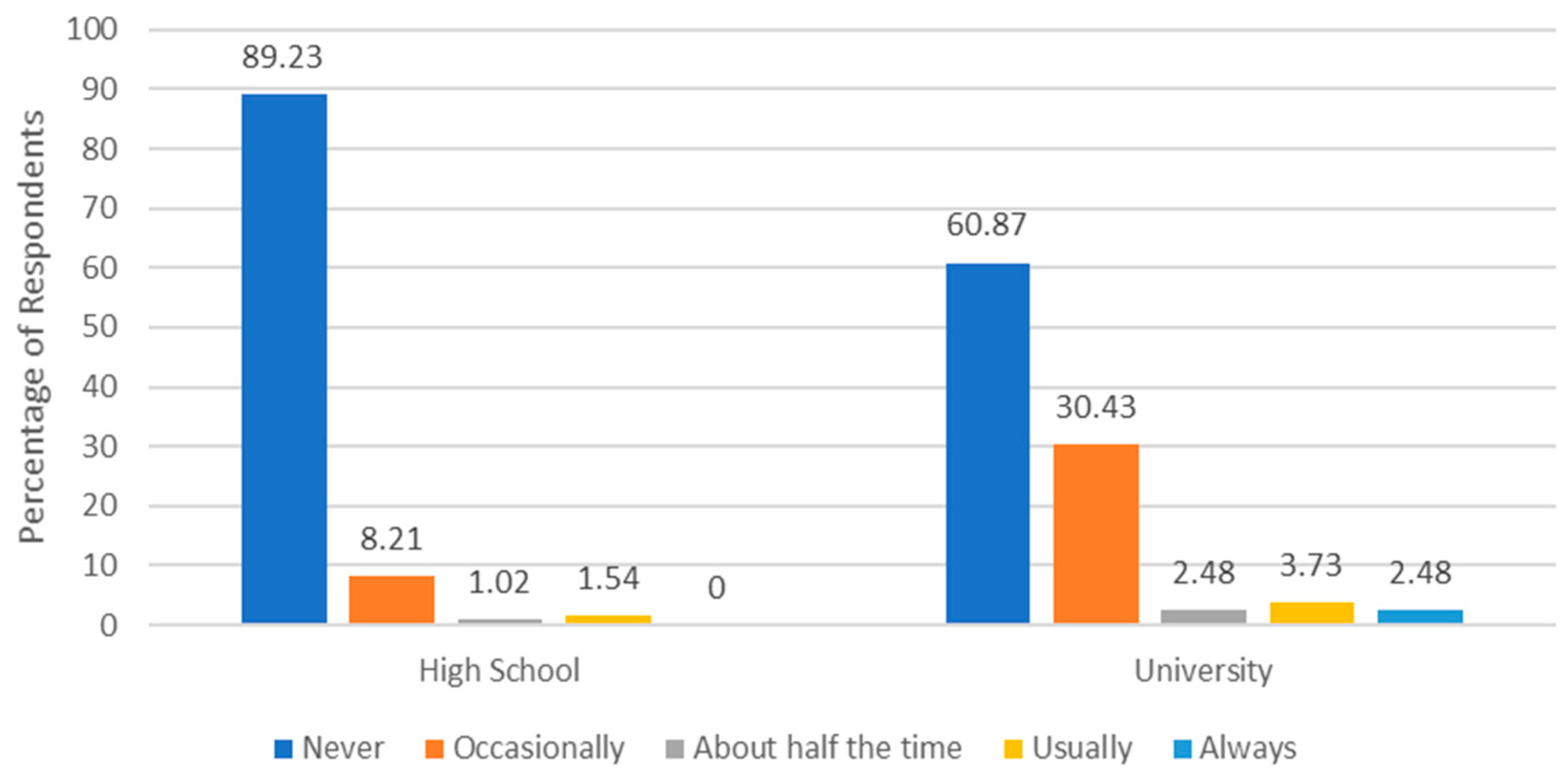
Figure 1. Percentage of high school and university students reporting use of hearing protection during rehearsals and/or performances.
Education 15 01454 g001
Figure 2. Distribution of student responses to the question “How often has hearing protection been addressed in your curriculum?” (1 = “never,” 2 = “it’s been addressed, but not regularly,” 3 = “once a semester,” 4 = “at least once a week,” 5 = “every rehearsal”).
Education 15 01454 g002
Table 1. Type, number, and percentage of HPDs worn by university student musicians among those who reported wearing at least occasionally (n = 65).
TypeNumber of RespondentsPercentage of Respondents
Silicone non-custom5178.5
Foam812.3
Custom-fit23.1
Other46.1
Table 2. Number of respondents from each instrument group that reported wearing hearing protection.
InstrumentNumber of RespondentsPercentage of Respondents
Flute4512.6
Clarinet5214.6
Double Reeds61.7
Saxophone3810.7
Trumpet5916.6
Trombone318.7
French Horn226.2
Baritone/Tuba3911.0
Percussion4612.9
Other185.1
Table 3. Auditory symptoms reported by students surveyed.
Symptom ReportedNumber (Percentage) of High School RespondentsNumber (Percentage) of
University Respondents
Hearing Loss31 (15.9%)31 (19.2%)
Tinnitus54 (27.7%)53 (32.9%)
Loss of Clarity (HS)/
Difficulty Understanding Speech (University)
7 (3.6%)29(18.0%)
Ear Pain/Otalgia23 (11.8%)22 (13.7%)
Aural Fullness/
Ear stopped up *
Not a response option28(17.4%)
Diplacusis2 (1.0%)2 (1.2%)
Hyperacusis **10 (5.12%)Not a response option
* Only university students (n = 161) were asked specifically about aural fullness. ** Only high school students (n = 195) were asked specifically about hyperacusis.
Table 4. Demographic information for ensemble directors surveyed (n = 15).
Number of Years Teaching MusicWhat Age of Students Have You Taught? Do You Use Your Own Hearing Protection in Rehearsals?Were You Taught About Hearing Loss in Your Education?How Often Do You Talk About Hearing Protection in Your Program?
6 MS, HS, AdultsUsuallyYesOften
7 HSNeverNoPeriodically
10 MS, HS, CollegeNeverYesPeriodically
1 ES, MS, HSNeverNoNever
1ES, MS, HS, CollegeNeverYesOnce or Twice
2ES, MS, HSNeverYesOnce or Twice
28ES, MS, HS, AdultsOccasionallyYesOnce or Twice
1ESOccasionallyNoOnce or Twice
4MSOccasionallyYesOnce or Twice
15ES, MS, HS, CollegeOccasionallyNoPeriodically
6MS, HSOccasionallyYesOnce or Twice
2ES, MS, HSOccasionallyNoNever
4MS, HSOccasionallyYesOnce or Twice
16MS, HSOccasionallyNoOnce or Twice
22ES, MS, HS, AdultsNeverNoNever
Disclaimer/Publisher’s Note: The statements, opinions and data contained in all publications are solely those of the individual author(s) and contributor(s) and not of MDPI and/or the editor(s). MDPI and/or the editor(s) disclaim responsibility for any injury to people or property resulting from any ideas, methods, instructions or products referred to in the content.