Effect of the Use of New Technologies on Mental Health in Physical Education Students: A Systematic Review

 ,
,  , and
, and
Abstract
1. Introduction
2. Materials and Methods
3. Results
4. Discussion
5. Conclusions
Author Contributions
Funding
Institutional Review Board Statement
Informed Consent Statement
Data Availability Statement
Conflicts of Interest
References
- Abadi, A. K., Dewi, I. S., Islam, S., Pratama, O. P. A., Kristiono, A. A., & Wijaya, M. B. (2024). Development of interactive learning media in the city of Purwokerto: Cognitive aspects of school basketball. Retos, 58, 891–902. [Google Scholar] [CrossRef]
- Akpen, C. N., Asaolu, S., Atobatele, S., Okagbue, H., & Sampson, S. (2024). Impact of online learning on student’s performance and engagement: A systematic review. Discover Education, 3(1), 17. [Google Scholar] [CrossRef]
- Almodóvar-Fuentes, S., Castellanos, E., Núñez-Lara, E., Arias, A., & Tejera-Muñoz, A. (2023). Cross-sectional study on sleep habits and new technologies among vocational training students. Revista Española de Salud Pública, 97, e202304027. [Google Scholar]
- Arabait-García, J., Prendes, M. P., & Serrano, J. L. (2023). Open educational resources and active methodologies for teaching STEM in primary education. Revista Latinoamericana de Tecnología Educativa, 22(1), 89–106. [Google Scholar] [CrossRef]
- Barboto, C. M., Rómulo, R. A., Cordovilla, C. A., Barba, P. F., Santillán, N. D., & Suárez, L. J. (2025). Impact of augmented reality on teaching and learning natural sciences: A case study. Ciencia Latina Revista Científica Multidisciplinar, 9(1), 1–20. [Google Scholar] [CrossRef]
- Besolí, G., Palomas, N., & Chamarro, A. (2018). Mobile phone use among parents, children and adolescents: Beliefs about its risks and benefits. Aloma, 36(1), 29–39. [Google Scholar] [CrossRef]
- Bofill, J., Pla-Campas, G., & Sebastiani, E. M. (2025). Is artificial intelligence an educational resource in physical education? A systematic review. Apunts. Educación Física y Deportes, 160, 1–9. [Google Scholar] [CrossRef]
- Burnell, K., & Odgers, C. L. (2023). Trajectories of perceived technological impairment and psychological distress in adolescents. Journal of Youth and Adolescence, 52(2), 258–272. [Google Scholar] [CrossRef]
- Caicedo, F. N., Suárez, M. Y., & Mosquera, A. C. (2025). Project-based learning with geospatial technologies: Educational innovation for the development of critical thinking in social studies. Revista Científica Salud y Desarrollo Humano, 6(2), 105–123. [Google Scholar] [CrossRef]
- Carrasco, O. R., Caicedo, J. G., Savedra, O. A., & Ochoa, V. L. (2021). Pedagogical foundations for the teaching learning of physical education in a virtual modality: A current challenge. Ciencia Digital, 5(1), 232–251. [Google Scholar] [CrossRef]
- Castillo-Peláez, J., & Salazar-Ruiz, M. R. (2021). ICT and their use in the subject of physical education in primary education. ESHPA, 5(1), 15–26. [Google Scholar] [CrossRef]
- Castillo-Riquelme, V. F., Lamilla-Cifuentes, Y. E., Araya-Fernández, M. E., & Martínez-Lecaros, B. N. (2023). Emotional (dis)regulation in university students: When addiction to mobile devices takes its toll. Propósitos y Representaciones, 11(2), e1753. [Google Scholar] [CrossRef]
- Castro-Palomino, L., & Coras, E. A. (2024). Digital tools in teacher performance: Systematic review. Horizontes Revista de Ciencias de la Educación, 8(32), 288–299. [Google Scholar] [CrossRef]
- Cece, V., Fargier, P., Roure, C., & Lentillon-Kaestner, V. (2025). Multidisciplinary teaching with an active video game: The effect on learning in mathematics and physical education. Technology, Pedagogy and Education, 34(1), 121–136. [Google Scholar] [CrossRef]
- Céspedes, J. M. (2025). Gamification in higher education: An analysis of its benefits and limitations. I+D Internacional, 4(1), 23–42. [Google Scholar]
- de la Hoz, J. P. (2018). Advantages and disadvantages of adolescent use of ICT: Students’ perspective. Revista Complutense de Educación, 29(2), 491–508. [Google Scholar] [CrossRef]
- Díaz-Barahona, J. (2020). Challenges and opportunities of mobile technology in physical education. Retos, 37, 763–773. [Google Scholar] [CrossRef]
- Díaz-Barahona, J., García, J. M., & Pañego, M. (2020). Knowledge and teaching intent in the use of ICT by physical education teachers. Retos, 38, 497–504. [Google Scholar] [CrossRef]
- Espinosa, J. G., Peña, D. S., Astudillo, J. F., & Coronel, C. J. (2017). Educational multimedia as a teaching resource and its use in the classroom. Revista Científica Sinapsis, 1(10). [Google Scholar] [CrossRef]
- Faruk, M., Ali, M., Susilana, R., Dewi, L., Alias, N., Mahardika, I. M. S. U., Syafi’i, I., Huda, M. S., Wahyudi, A. R., Andriana, L. M., & Pranoto, A. (2025). The interventions of physical education by using augmented reality based mobile learning can significantly improve gross motor skills in elementary school students. Retos, 64, 201–210. [Google Scholar] [CrossRef]
- Fernández-Baños, R., & Baena-Extremera, A. (2018). Innovative digital tools as teaching resources in physical education. EmásF, 52, 79–91. [Google Scholar]
- Fernández-Espínola, C., & Ladrón-Moreno, L. (2016). The use of ICT in physical education today. e-Motion: Revista de Educación, Motricidad e Investigación, 5, 17–30. [Google Scholar] [CrossRef]
- Frömel, K., Skalik, K., Svozil, Z., Groffik, D., & Mitáš, J. A. (2021). Higher step count is associated with the better evaluation of physical education lessons in adolescents. Sustainability, 13(8), 4569. [Google Scholar] [CrossRef]
- Fuentes-Nieto, T., Jiménez-Herranz, B., López-Pastor, V. M., & Fernández-Garcimartín, C. (2023). Use of ICT during COVID-19 lockdown and level of connection among students in physical education. Revista Complutense de Educación, 34(2), 401–414. [Google Scholar] [CrossRef]
- García, I. G., Lemus, N. C., & Morales-Toledo, P. (2015). Flipped classrooms via smartphone: Effects of experimentation in secondary physical education. Prisma Social, 15, 296–352. [Google Scholar]
- García-Soidán, J. L., Boente, B., & Leirós, R. (2020). Do Spanish children prefer electronic devices or physical activity in their free time? Sportis Scientific Journal, 6(2), 347–364. [Google Scholar] [CrossRef]
- Gomes, L., Teixeira, D., Slawinska, M., Davis, P., López-Flores, M., Nyström, M., Silva, M., Palmeira, A., & Pereira, H. (2024). Adolescents’ perspectives on smartphone applications for physical activity promotion: Insights from focus group discussions. Retos, 56, 85–94. [Google Scholar] [CrossRef]
- Gros, B. (2015). Challenges and trends regarding the future of research on learning with digital technologies. Revista de Educación a Distancia, 50(10), 1–13. [Google Scholar] [CrossRef]
- Guaña, J., Arteaga-Alcívar, Y., & Cedeño, M. E. (2023). Advantages and disadvantages of using artificial intelligence tools in education. Revista Tecnología e Inteligencia, 2(2), 6–26. [Google Scholar] [CrossRef]
- Haddaway, N. R., Page, M. J., Pritchard, C. C., & McGuinness, L. A. (2022). PRISMA 2020: An R package and Shiny app for producing PRISMA 2020-compliant flow diagrams, with interactivity for optimised digital transparency and open synthesis. Campbell Systematic Reviews, 18(2), e1230. [Google Scholar] [CrossRef] [PubMed]
- Hermann, A. (2018). Innovation, technologies and education: Digital narratives as teaching strategies. Revista Killkana Social, 2(2), 31–38. [Google Scholar] [CrossRef]
- Herrera, L. P., Consuelo, B., Sumba, D. F., Chulli, J. F., Casanova, H. M., Baque, M. T., & Moran, I. R. (2024). Pedagogical strategies for improving understanding of abstract mathematical concepts in secondary school students. Ciencia Latina Revista Científica Multidisciplinar, 8(4), 8590–8606. [Google Scholar] [CrossRef]
- Hong, Q. N., Fàbregues, S., Bartlett, G., Boardman, F., Cargo, M., Dagenais, P., & Pluye, P. (2018). The mixed methods appraisal tool (MMAT) version 2018 for information professionals and researchers. E-Science Information, 34(4), 285–291. [Google Scholar] [CrossRef]
- Huillca, V., Chalco, R., Challanca, F. O., Chalco, E. G., & Frisancho, W. (2024). Impact of innovative approaches in teaching communication through PBL, interactive technologies, and student motivation. Ciencia Latina Revista Científica Multidisciplinar, 8(5), 6854–6871. [Google Scholar] [CrossRef]
- Jácome, D. C., Barahona, M. C., Merchán, R. P., Velarde-Meléndez, D. E., & Velarde, L. R. (2025). Artificial intelligence-based learning platforms for inclusive education of students with TDH: An approach to adaptive learning. Revista Veritas Difusión Científica, 6(1), 970–989. [Google Scholar] [CrossRef]
- Kucera, C., Gomes, A. L. do V., Ovens, A., & Bennett, B. (2022). Teaching online physical education during social distancing using Google Sites: Pedagogy, strategies, reflections and barriers of a teacher. Movimiento, 28, e28019. [Google Scholar] [CrossRef]
- La Rosa Feijoó, Ó. C. (2021). Information and communication technologies in the learning of secondary school physical education students. Sportis Scientific Journal, 7(3), 386–404. [Google Scholar] [CrossRef]
- Lan, L. T., Huy, D. T. N., Nguyen, T. H., & Hien, D. T. (2022). Sports training for primary and secondary school students: Training solutions in the context of digital transformation. SPORT TK-Revista Euroamericana de Ciencias del Deporte, 11, 1–13. [Google Scholar] [CrossRef]
- Larrañaga, N., Jiménez, E., & Garmendia, M. (2023). Opportunities and perceived needs among primary school teachers for the educational use of ICT. Educar, 59(2), 301–314. [Google Scholar] [CrossRef]
- Li, J., & Wang, R. (2024). Determining the role of innovative teaching practices, sustainable learning, and the adoption of e-learning tools in leveraging academic motivation for students’ mental well-being. BMC Psychology, 12(1), 163. [Google Scholar] [CrossRef]
- Lima, F. (2024). Physical activity and its correlation with academic performance in South American schools. Revista Internacional de Medicina y Ciencias de la Actividad Física y del Deporte, 24(94), 498–514. [Google Scholar]
- López, E. K., & Lizcano, R. N. (2022). Flipped classroom for the development of digital skills in secondary education. Revista Electrónica de Tecnología Educativa, (79), 182–198. [Google Scholar] [CrossRef]
- López-Secanell, I. (2021). Analysis of the use of digital tools in physical education before and during COVID-19. Revista Española de Educación Física y Deportes, 72(431), 81–91. [Google Scholar] [CrossRef]
- Magdaleno, A. R., Manzano, S. S., Martínez, J. L., & López, E. J. (2023). New technologies for physical education and proposal for active homework assignments. Wanceulen SL. [Google Scholar]
- Mateo-Orcajada, A., Abenza-Cano, L., López-Miñarro, P. Á., Meroño, L., Gallardo-Guerrero, A. M., Morales-Belando, M. D. L. T., González-Gálvez, N., Espeso-García, A., Abelleira-Lamela, T., Gómez-Cuesta, N., & García-Velez, A. J. (2025). Analyzing the keys to the design of a mobile application for physical activity for school and out-of-school use from the perspective of adolescents, teachers, coaches, managers, and experts. PLoS ONE, 20(5), e0322074. [Google Scholar] [CrossRef]
- Matheu-Pérez, A., Muñoz-Lara, M., Escobar-Ruiz, N., Arriagada-Guerrero, M., Cortés-Cancino, R., & Dehnhardt, M. (2024). Gender equality in physical education: Perceptions and strategies of teachers in Chile. Retos, 59, 324–334. [Google Scholar] [CrossRef]
- Menescardi, C., Suárez-Guerrero, C., & Lizandra, J. (2021). Training physical education teachers in the use of technological applications. Apunts. Educación Física y Deportes, 144, 33–43. [Google Scholar] [CrossRef]
- Moreno, J. (2022). Teaching strategies in school physical education processes mediated by ICTs during COVID-19 lockdown. Revista Internacional de Pedagogía e Innovación Educativa, 2(1), 73–100. [Google Scholar] [CrossRef]
- Mödinger, M., Woll, A., & Wagner, I. (2024). Motor learning with digital media in physical education—A digitally based methodological teaching concept for implementing visual feedback. German Journal of Exercise and Sport Research, 54(4), 500–509. [Google Scholar] [CrossRef]
- Nuraini, S., Rezaki, R., Marini, A., Sagita, J., Safitri, D., & Attas, S. G. (2023). Games-based interactive multimedia to increase student creativity in physical education course. Global Journal of Information Technology, 13(2), 144–155. [Google Scholar] [CrossRef]
- Omarov, N., Omarov, B., Azhibekova, Z., & Omarov, B. (2024). Applying an augmented reality game-based learning environment in physical education classes to enhance sports motivation. Retos, 60, 269–278. [Google Scholar] [CrossRef]
- Oshanova, N., Kamalova, G., Tekesbayeva, N., Turashova, S., Anuarbekova, G., & Bukanova, A. (2025). Assessing the efficacy of an artificial intelligence-driven real-time exercise monitoring system in computer supported collaborative learning. Retos, 67, 580–596. [Google Scholar] [CrossRef]
- Page, M. J., McKenzie, J. E., Bossuyt, P. M., Boutron, I., Hoffmann, T. C., Mulrow, C. D., Shamseer, L., Tetzlaff, J. M., Akl, E. A., Brennan, S. E., & Chou, R. (2021). PRISMA 2020 statement: An updated guide to publishing systematic reviews. Revista Española de Cardiología, 74(9), 790–809. [Google Scholar] [CrossRef]
- Papastergiou, M., Natsis, P., Vernadakis, N., & Antoniou, P. (2021). Introducing tablets and a mobile fitness application into primary school physical education. Education and Information Technologies, 26(1), 799–816. [Google Scholar] [CrossRef]
- Parris, Z., Cale, L., Harris, J., & Casey, A. (2022). Physical activity for health, COVID-19 and social media: What, where and why? Movimento, 28, e28024. [Google Scholar] [CrossRef]
- Pascuas-Rengifo, Y. S., García-Quintero, J. A., & Mercado-Varela, M. A. (2020). Mobile devices in education: Trends and impact on innovation. Revista Politécnica, 16(31), 97–109. [Google Scholar] [CrossRef]
- Petrušič, T., & Štemberger, V. (2021). Effective physical education distance learning models during the COVID-19 epidemic. Center for Educational Policy Studies Journal, 11, 291–308. [Google Scholar] [CrossRef]
- Pérez-Cabrejos, R. G., Rodríguez-Galán, D. B., Colquepisco, N. T., & Enríquez-Ludeña, R. L. (2021). Consequences of nomophobia in adolescents: A systematic review. Revista Conrado, 17(81), 203–210. [Google Scholar]
- Pérez-Díaz, J. J., Salas-Montoro, J. A., Rodríguez-Gallego, L., & Mateo-March, M. (2023). Impact of new technologies on levels of physical activity and sedentary lifestyles among compulsory secondary education students: Diagnosis and action plan. SPORT TK-Revista Euroamericana de Ciencias del Deporte, 12, 1–13. [Google Scholar] [CrossRef]
- Pluye, P., Robers, E., Cargo, M., Pluye, P., Bartlett, G., Griffiths, F., Boardman, F., Gagnon, M. P., Rousseau, M. C., Robert, E., & O’Cathain, A. (2011). Proposal: A mixed-methods assessment tool for systematic reviews of mixed studies. Mixed Methods Appraisal Tool. Available online: http://mixedmethodsappraisaltoolpublic.pbworks.com (accessed on 14 May 2025).
- Posso, R. J., Ulcuango, M. T., Morales, L. A., Pastaz, G. P., & Jaramillo, L. A. (2023). Revolutionising education: Effective implementation of technology in the classroom. GADE: Revista Científica, 3(1), 33–47. [Google Scholar] [CrossRef]
- Prieto, M. F. (2021). Psychosocial risks of working through digital platforms. Temas Laborales, 156, 167–186. [Google Scholar]
- Quilindo, V. (2023). Teachers’ conceptions of ICT-mediated physical education in times of COVID-19: A case study. Retos, 48, 901–910. [Google Scholar] [CrossRef]
- Rasdiana, R., Mauludin, I., Yahya, A., Putri, D. E., Machrus, M. A., Marbun, M., Marbun, M., Sholikhah, A. M., Sinusi, N. S., Fathonah, S., Salmayda, S., & Pawartani, T. (2024). Mediation of digital literacy in investigating the effect of school culture on teacher performance: Implication for educational policy. Journal of Innovation in Psychology, Education and Didactics, 8(12), 9117. [Google Scholar] [CrossRef]
- Richardson, W. S., Wilson, M. C., Nishikawa, J., & Hayward, R. S. (1995). The well-built clinical question: A key to evidence-based decisions. ACP Journal Club, 123(3). [Google Scholar] [CrossRef]
- Rutkauskaite, R., Koreivaite, M., Karanauskiene, D., & Mieziene, B. (2022). Students’ skills and experiences using information and communication technologies in remote physical education lessons. Sustainability, 14(23), 15949. [Google Scholar] [CrossRef]
- Sanmartín, R. C., Sanmartín, T. C., Sanmartín, M. E., & Angamarca, M. E. (2024). Innovative educational technology: Exploring the influence of ChatGPT on the quality of learning in the area of language and literature. Revista INVECOm Estudios Transdisciplinarios de Comunicación y Sociedad, 4(2), 1–10. [Google Scholar] [CrossRef]
- Santágueda, M., Llopis, M. A., & Esteve, F. M. (2021). A mobile application for working on university service learning: Usability, suitability, and perceptions of usefulness. Revista Electrónica de Tecnología Educativa, (78), 22–37. [Google Scholar] [CrossRef]
- Sánchez-Martínez, C., Martínez-Carrera, S., Alonso-Carnicero, A., & Veiga-Fernández, A. (2024). Geocaching: Socio-educational intervention with mobile devices. Prisma Social, 46, 54–76. [Google Scholar]
- Sepúlveda-Romero, M. E. (2019). Humanising the act of feedback in virtual education. Virtu@lmente, 7(1), 95–115. [Google Scholar] [CrossRef]
- Shuangli, Z., Sheng, T., Yan-Li, Z., Jun, Z., Jie, W., Min, C., Qiang, H., Hui, Z., & Zi-Liang, W. (2025). Examining the spectrum of problematic online behaviors in Chinese adolescents: A network analysis of smartphone, gaming, and social media use. Computers in Human Behavior, 167, 108611. [Google Scholar] [CrossRef]
- Skripkauskaite, S., Fazel, M., & OxWell Study Team. (2022). Time spent gaming, device type, addiction scores, and well-being of adolescent English gamers in the 2021 OxWell Survey: Latent profile analysis. JMIR Pediatrics and Parenting, 5(4), e41480. [Google Scholar] [CrossRef]
- Soto, A., Camerino, O., & Castañer, M. (2020). Teaching innovations in physical education, observation with LINCE PLUS software. Sportis Scientific Journal of School Sport, Physical Education and Psychomotricity, 6(2), 390–406. [Google Scholar] [CrossRef]
- Sotoca-Orgaz, P., Arévalo-Baeza, M., & Navia, J. A. (2025). Playing for a healthy life: Integrating mobile exergames in physical education. Behavioral Sciences, 15(2), 229. [Google Scholar] [CrossRef]
- Talero-Jaramillo, E. A., & Guarnizo-Carballo, N. (2022). The physical education curriculum in e-learning and b-learning modes during lockdown. Apunts Med, 27(1), 57–65. [Google Scholar]
- Ting, T. T., Lee, K. T., Lim, S. M., Lai, C. C., Omar, M. A., Alin, J., & Meri, A. (2023). Assessing the identity of digital technology in education in the age of digital communication. Online Journal of Communication and Media Technologies, 13(4), e202353. [Google Scholar] [CrossRef]
- Toctaguano, B. S., & Eugenio, L. C. (2023). Sleep quality and its relationship with academic stress in high school students. Ciencia Latina Revista Científica Multidisciplinar, 7(1), 1245–1262. [Google Scholar] [CrossRef]
- Tolentino, C., Bravo, E., & Cieza-Mostacero, S. (2023). Revisión sistemática: Gamification in mobile applications for education. Revista Iberoamericana de Sistemas y Tecnologías de Información, 8, 271–282. [Google Scholar]
- Valdez, P. N., Mariano, J., & Cordova, M. S. G. (2023). Using mobile gaming in virtual physical education: Challenges and opportunities. Studies in Technology Enhanced Learning, 7(2), 142–148. [Google Scholar] [CrossRef]
- Valencia, I. Z., Guzmán, R., & Baque, M. E. (2025). Gamification using digital tools in the teaching and learning process of biology. MQR Investigar, 9(1), e422. [Google Scholar] [CrossRef]
- Vieriu, A. M., & Petrea, G. (2025). The impact of artificial intelligence (AI) on students’ academic development. Education Sciences, 15(3), 343. [Google Scholar] [CrossRef]
- Viñals, A., & Cuenca, J. (2016). The role of teachers in the digital age. Revista Interuniversitaria de Formación del Profesorado, 30(2), 103–114. [Google Scholar]
- Vuorre, M., Orben, A., & Przybylski, A. K. (2021). There is no evidence that associations between adolescents’ digital technology engagement and mental health problems have increased. Clinical Psychological Science, 9(5), 823–835. [Google Scholar] [CrossRef]
- Webster, C. A., D’Agostino, E., Urtel, M., McMullen, J., Culp, B., Egan-Loiacono, C. A., & Killian, C. (2021). Physical education in the COVID era: Considerations for online program delivery using the comprehensive school physical activity program framework. Journal of Teaching in Physical Education, 40(2), 327–336. [Google Scholar] [CrossRef]
- Wyant, J. D., Tsuda, E., Keath, A., & Baek, J.-H. (2021). Insights from teachers on the digitization of the physical education knowledge base. Journal of Physical Education and Sport, 21(5), 2687–2696. [Google Scholar]
- Zambrano, L. E., Vélez, J. M., & Zambrano, J. M. (2022). Gamification as a teaching strategy for the development of meaningful learning in early education students. MQR Investigar, 6(4), 24–45. [Google Scholar] [CrossRef]
- Zapata-Agudelo, N., Torres-Rojas, I. S., & Cardozo-Cardona, J. J. (2023). ICT in physical education as a teaching tool in times of pandemic. Revista Digital Actividad Física y Deporte, 10(1), 1–10. [Google Scholar]
- Zermeño, A. I., González-Sánchez, R., & Navarrete, M. A. (2022). Technological practices among young university students and how they affect their personal autonomy. Paakat: Revista de Tecnología y Sociedad, 12(22), e678. [Google Scholar] [CrossRef]
- Zhu, X., & Dragon, L. A. (2016). Physical activity and situational interest in mobile technology integrated physical education: A preliminary study. Acta Gymnica, 46(2), 59–67. [Google Scholar] [CrossRef]



| Inclusion Criteria | Exclusion Criteria |
|---|---|
| Type of document: scientific articles. | Types of documents other than research articles, as well as validation of questionnaires, systematic reviews, narratives and/or meta-analyses. |
| Articles published in the following databases: Web of Science, Scopus, SPORTDiscus and Dialnet. | Duplicate manuscripts and manuscripts without full access to information are excluded. |
| Research carried out in the educational field, exclusively in the subject of PE, and within the stage of Primary Education and/or Secondary Education and Spanish baccalaureate and/or in other countries similar to the Spanish educational system. | Studies that address digital technology outside educational contexts and in early childhood education, university degrees or bachelor’s degrees, and postgraduate studies. |
| Studies that include digital technology in the subject of PE. | Studies that do not include digital technology in the subject of PE. |
| Publication period from January 2020 to April 2025. | Studies that do not fall within the established time period. |
| Search Strategy | WoS | Scopus | Dialnet | SPORTDiscus |
|---|---|---|---|---|
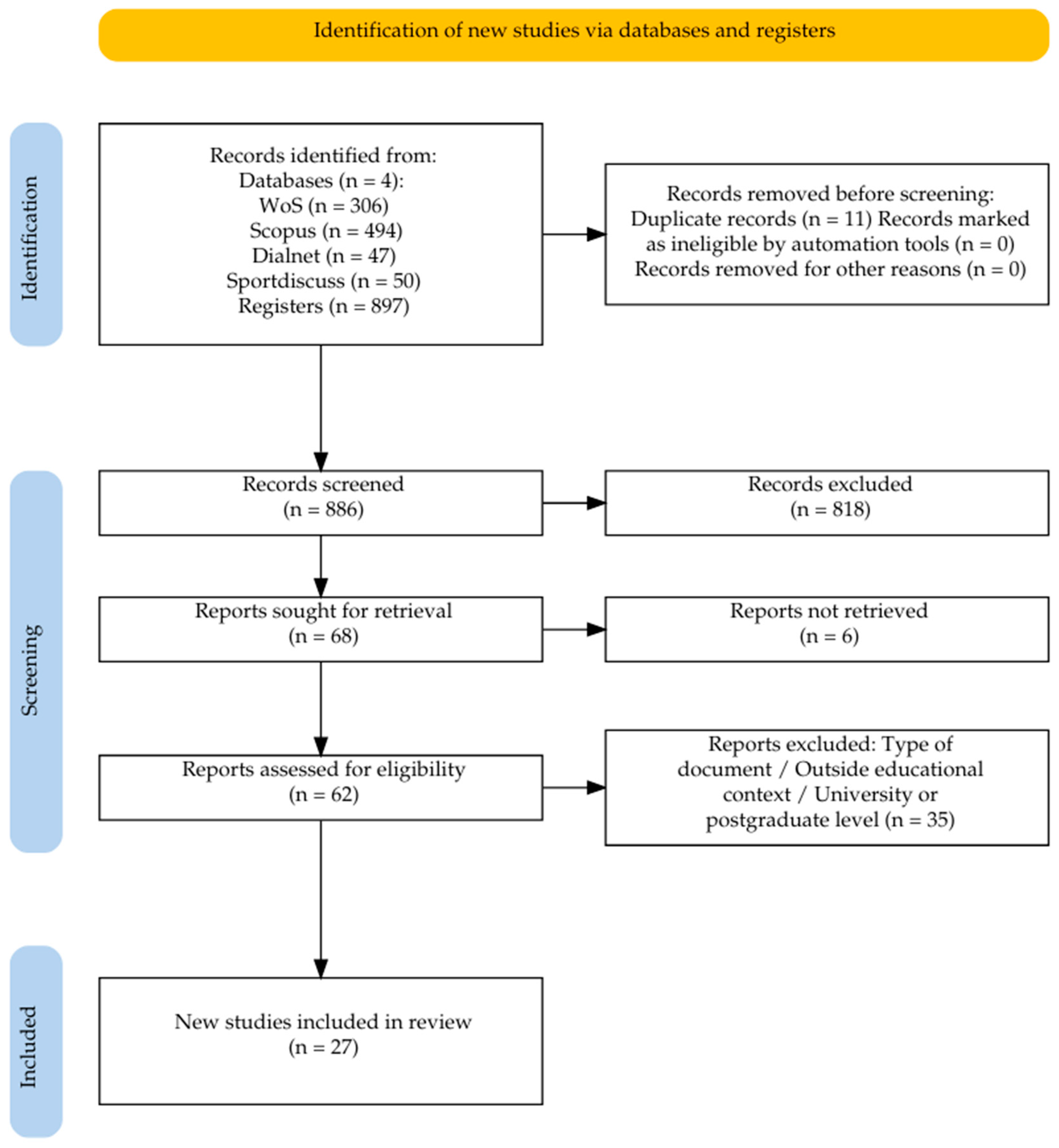
| “Physical Education” AND (“Digitization” OR “Digital Technology”) AND “Mental Health” | n = 306 | n = 494 | n = 47 | n = 50 |
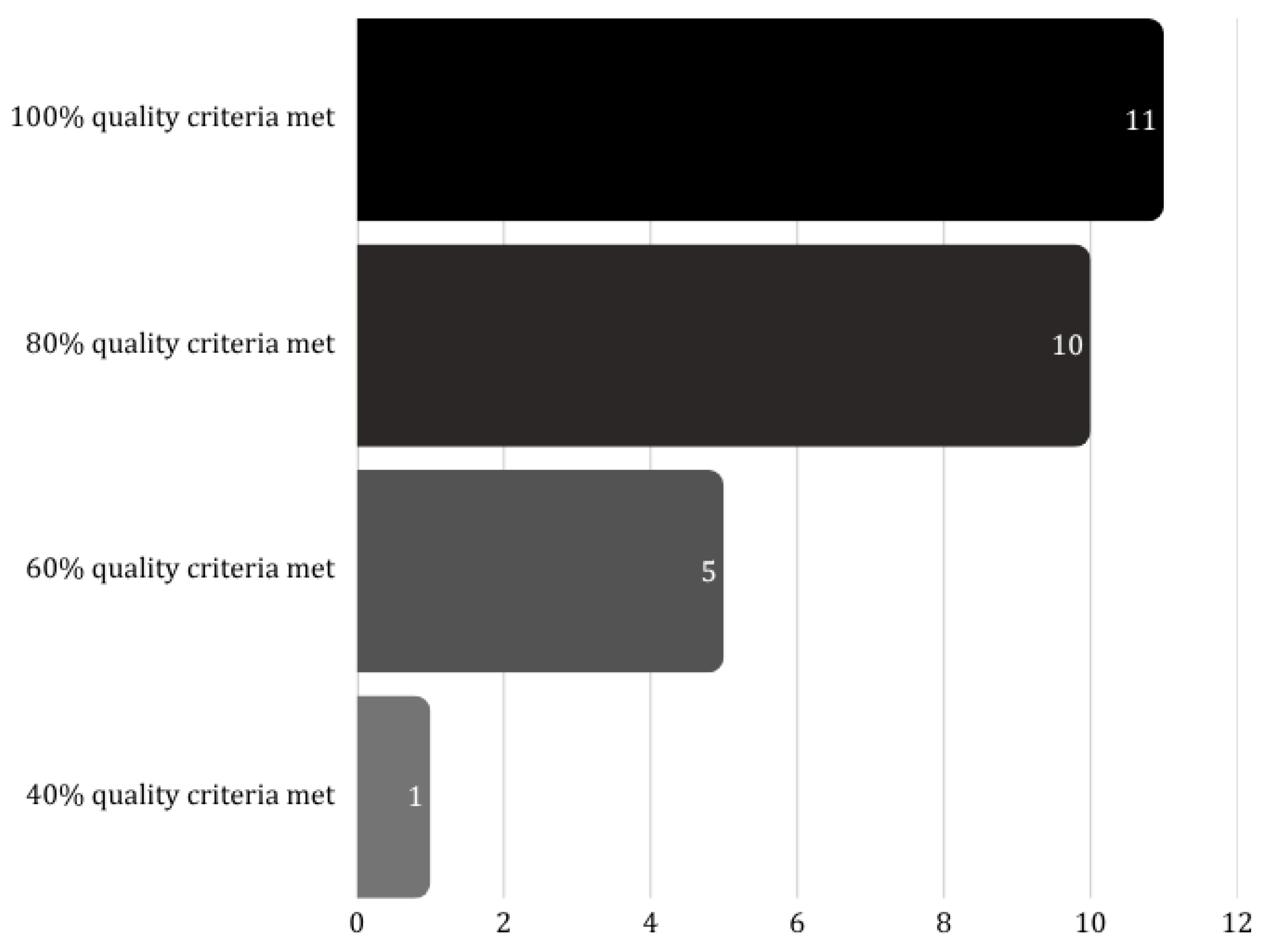
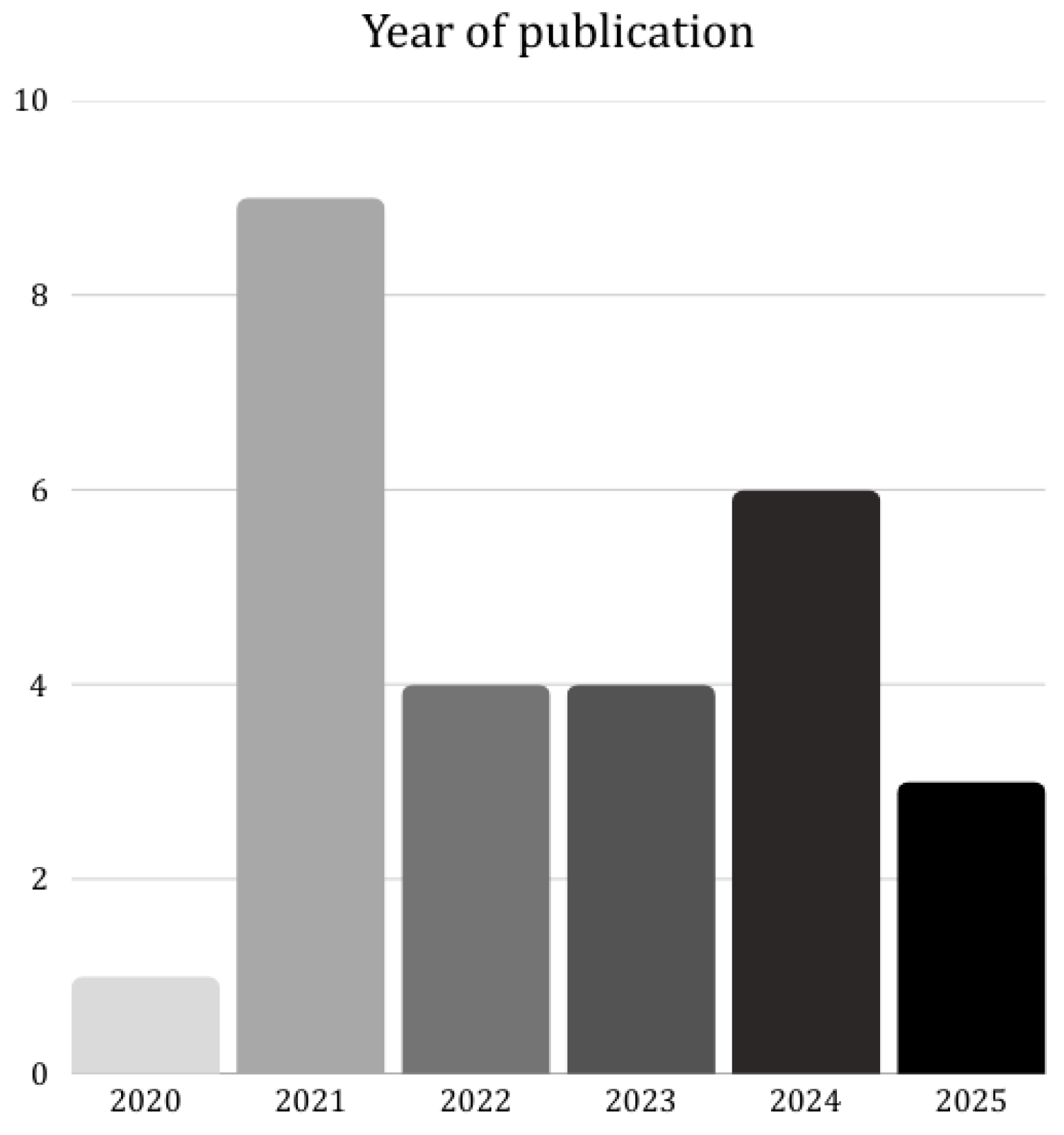
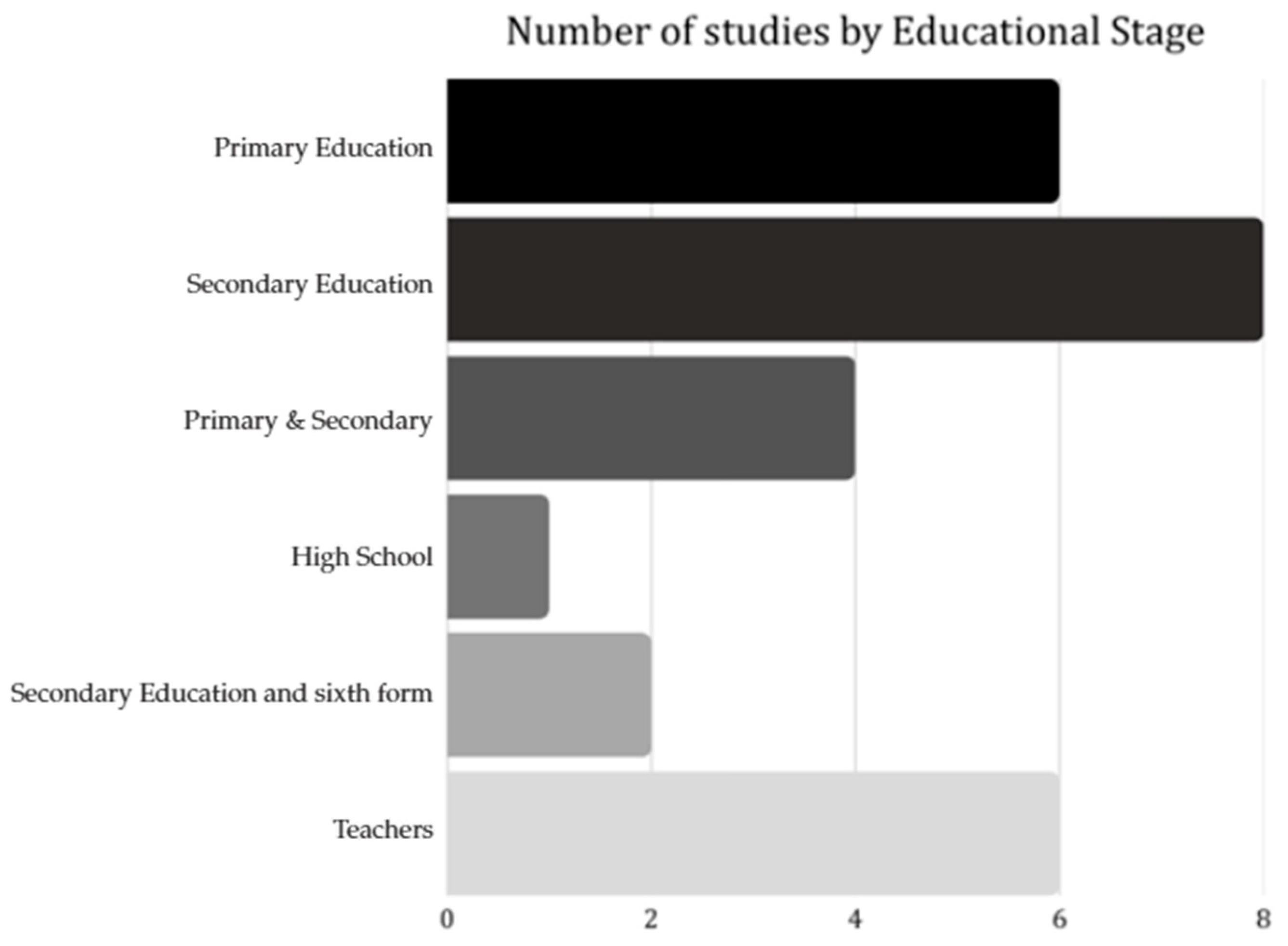
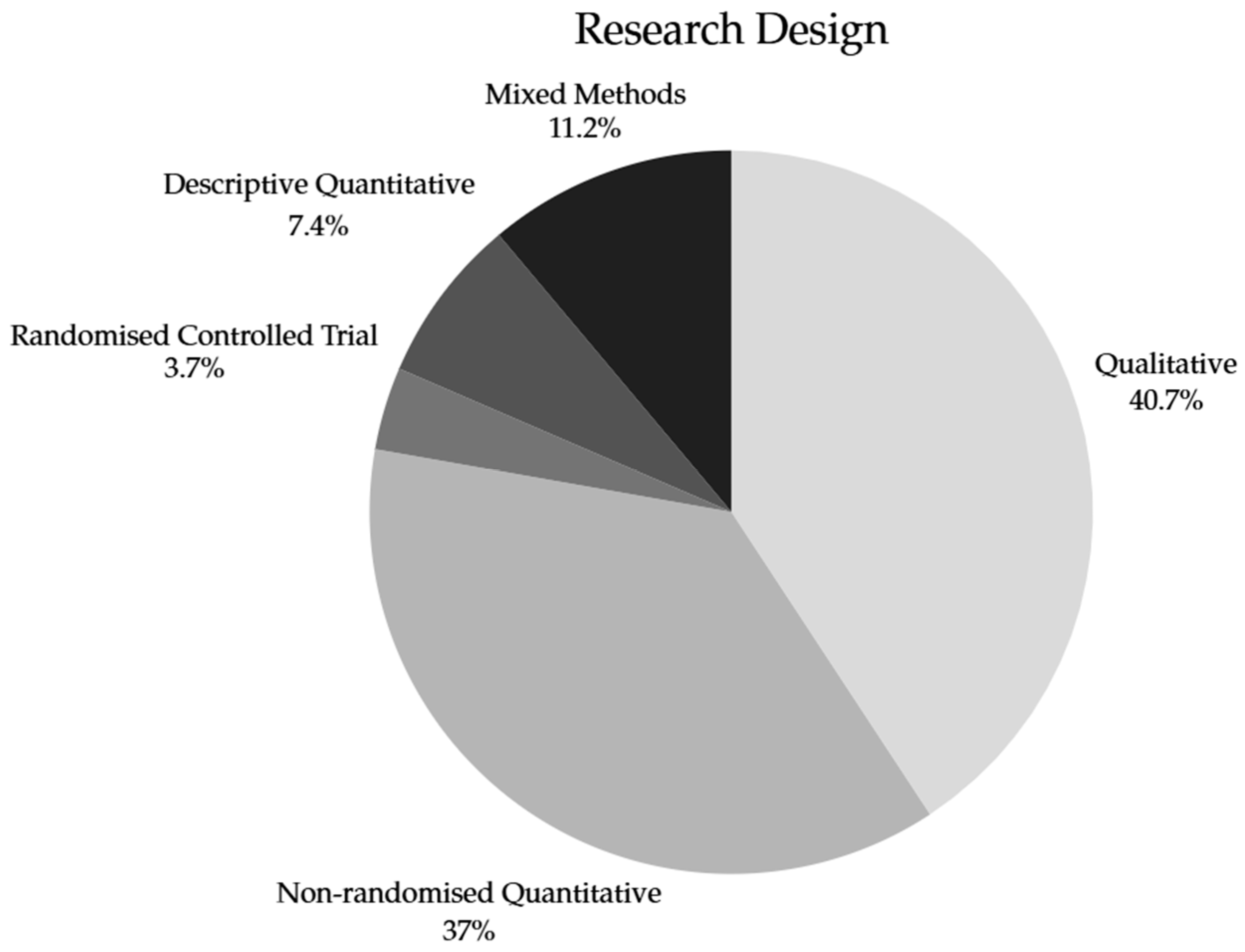
| Author(s) and Year | Title | Population | Main Objective | Design | Digital Tool | Results and Conclusions | Quality |
|---|---|---|---|---|---|---|---|
| Soto et al. (2020) | Didactic innovations in PE, observation with LINCE PLUS v1.1.1 software. | High School students (n = 24) | To propose activities that include the filming of rhythmic activities and to analyse their execution using the LINCE PLUS software as a technological tool, in order to observe possible improvements in practice and to favour self-learning and co-evaluation. | Quantitative non-randomised | Google Classroom, Moodle, LINCE PLUS, smartphones | The study showed an increase in satisfaction with an immersive experience using the new technologies and had a positive effect in creating a motivating environment and enhancing learning in the digital environment. However, it is recommended to optimise the use of the software. | ***** |
| Castillo-Peláez and Salazar-Ruiz (2021) | TICs and their use in the subject of PE in primary education | Primary School Teachers (N = 14) | To reflect on the evolution of digital technology in the field of PE and analyse the resources available to schools. | Mixed Methods | Tablets, digital whiteboards, games such as escape rooms with ICT, Kahoots, Gymkana with tablets, Flipped Classroom with platforms, health monitoring apps, virtual reality or augmented for sports, JCLIC, GEOGEBRA, JUEDULAND, PASAPALABRA with PowerPoints. | The use of digital technologies in the PE classroom is recommended in order to create interactive and dynamic experiences. Furthermore, it is highlighted that they are beneficial and motivating for students. However, the teacher needs to be trained in ICT for teaching. | **** |
| Frömel et al. (2021) | A higher step count is associated with the better evaluation of PE lessons in adolescents | Secondary school students (N = 4092) Average age: 16.27 years old | To evaluate the recording of students’ steps in PE sessions, analyse physical effort and its results, and investigate whether they comply with PE recommendations. | Quantitative non-randomised | Yamax Digiwalker SW-700 Pedometers | A higher number of steps is associated with a positive evaluation towards PE. Therefore, the use of electronic devices in PE functions as an incentive and promotion of physical activity in school settings. | ***** |
| La Rosa Feijoó (2021) | Information and communication technologies in the learning of secondary school PE students. | Secondary students (N = 92) | To analyse the influence of digital technologies on the development of learning in the subject of PE. | Quantitative non-randomised | Technological tools for PE content. | The use of digital technologies in the subject of PE demonstrated a positive and significant impact on student learning. Consequently, teachers are recommended to incorporate ICT as a highly dynamic resource, motivating students and improving their knowledge. | **** |
| López-Secanell (2021) | Analysis of the use of digital tools in PE before and during the COVID-19. | PE Teachers n = 256 | To analyse the digital tools that were used before and during the COVID-19 pandemic. | Cuantitativo descriptivo | Kahoot, Blogs, wikis, Google suite, Skype, Hangouts, Zoom, Google Forms, Dropbox, Google Drive, Moodle, Google Classroom, Word, Excel, PowerPoint, e-mail and social media. | PE teachers increased their use of digital tools during COVID-19, but the need to learn about new digital platforms and their relationship with PE was raised. | **** |
| Papastergiou et al. (2021) | Introducing tablets and a mobile fitness application into primary school PE | Primary school students (N = 145) Ages 10–12 years) | To evaluate the impact on motivation in a Primary School PE class, by incorporating tablets and a mobile application for fitness development. | Randomised controlled trials | Tablets, mobile fitness app ‘Sworkit Kids’. | The implementation of tablets and a mobile fitness application showed a positive effect on students’ intrinsic motivation, increasing their interest and enjoyment towards the subject of PE. | **** |
| Petrušič and Štemberger (2021) | Effective PE Distance Learning Models during the Covid-19 Epidemic | 198 students in Primary and Secondary Education (Average age: 12.5 years) | To identify the PE teaching model that drives physical activity levels during COVID-19. | Quantitative non-randomised | Accelerometers (MMOXX1.07), Zoom platform, multimedia tools | Flipped Classroom/Flipped Learning model was the most effective model for teaching PE with respect to the degree of intensity of physical activity. | ** |
| Talero-Jaramillo and Guarnizo-Carballo (2022) | PE curriculum in e-learning and b-learning modes during confinement | Aimed at primary school teachers and secondary school teachers. | To offer indications on Information and Communication Technologies (ICT), in order to organise, in a didactic way, the curriculum of the subject of PE. | Qualitative | Wearable technology, YouTube, Vimeo, LINCE PLUS programme, Meet, Zoom, Teams, OBS, Tiny Tap educational application, tablets, mobile devices, social networks, Mobile Learning education and gamified applications. | Due to COVID-19, an increase in the use of digital tools within the subject of PE was evidenced. It is for this reason that, in the digital era, teachers are recommended to promote cross-curricular education between motor and technological competences. | *** |
| Webster et al. (2021) | PE in the COVID Era: Considerations for Online Program Delivery Using the Comprehensive School Physical Activity Program Framework | Aimed at Secondary school and sixth form students | To provide and promote a physical activity programme in the school environment through an online PE, addressing challenges such as the digital divide. | Qualitative | Social networking, blogging, video analytics, video games, virtual reality, tablets, smartphones, Microsoft Teams, Blackboard Collaborate, Zoom, Webex, wearables | The study highlighted the need for accessible digital platforms, digital-supported PE programmes, and adequate digital tools training for teachers. However, it highlighted digital inequalities as a current critical factor. | ***** |
| Wyant et al. (2021) | Insights from teachers on the digitization of the PE knowledge base. | Students in PE, Primary and Secondary PE teachers and university lecturers. | To identify what kind of online resources PE teachers use and investigate possible barriers and challenges. | Mixed Methods | Online resources: PE Universe, YouTube, Pinterest, SHAPE América, SPARK, Twitter, Google, Go Noodle, PE Central, Physical Educator, PE-Kansas.com, Facebook, Supportteacher.org | Digital technology is generating transformations in the teaching of PE. Consequently, teachers need to be aware of reliable digital resources and have the competences to offer higher quality in the teaching-learning process. | **** |
| Kucera et al. (2022) | Teaching online PE during social distancing using google sites: pedagogy, strategies, reflections and barriers of a teacher | Primary School Teachers | To examine the experience of digital technology in PE | Qualitative | Google Sites | The study envisaged that the incorporation of digital resources should be consistent and focused on what really works, keeping students active and applying social and dynamic activities. | ***** |
| Parris et al. (2022) | Physical activity for health, COVID-19 and social media: what, where and why? | PE secondary school teachers (N = 26) | To study the use of social networks for teaching PE and physical activity for health by teachers during COVID-19. | Qualitative | Social Media, YouTube, Instagram, Padlet | There is a need for PE teachers to have initial and continuous training in digital media. In addition, the need for governments to reduce technological inequalities was raised. | ***** |
| Rutkauskaite et al. (2022) | Students’ Skills and Experiences Using Information and Communication Technologies in Remote PE Lessons | Secondary school and sixth form students (N = 268) | To identify student experiences between technology resources and PE | Mixed Methods | YouTube, Zoom, MS Teams, Tamo.It, pedometers, sports and exercise apps | Students offered a positive attitude towards the use of ICT in PE. However, specific training on digital skills to enhance learning is recommended. | ***** |
| Lan et al. (2022) | Sports training for primary and secondary school students. Training solutions in the context of digital transformation | Primary and secondary school students | To propose recommendations on physical activity and sport for primary and secondary school students using digital tools. | Qualitative | Digital media | The need to provide different sports programmes to obtain physical and mental health benefits was raised. Likewise, the use of digital technologies was recommended to allow the experience of movements and manipulations through virtual interactions prior to the real context, with the purpose of acquiring physical and social development. | ***** |
| Fuentes-Nieto et al. (2023) | Teachers’ use of ICT during COVID-19 confinement and students’ level of connection in PE. | Primary and secondary school teachers (N = 526) Age: 31–40 and 41–50 years. | To explore the digital tools used by PE teachers, assess what factors have influenced their use and analyse the impact of the digital divide during COVID-19. | Quantitative descriptive | E-mail, OneDrive, Google Drive, Word, PowerPoint, PDF, YouTube, Vimeo, Stream, Office 365, Genial.ly, Classroom, webs, blogs, Twitter, Instagram, TikTok, Genial.ly, ClassDojo | The situation arising from COVID-19 increased the use of ICT in PE. In this line, the use of digital media for formative assessments involved students more. However, the digital divide needs to be addressed. | *** |
| Nuraini et al. (2023) | Games-Based Interactive Multimedia to Increase Student Creativity in PE Course | Primary school students. Age: 9 and 10 years old | To explore whether the game-based interactive multimedia application has an impact on students’ cognitive aspects | Quantitative non-randomised | Interactive multimedia applications based on games. | The multimedia technology proved to be positive in the learning process, significantly enhancing students’ creativity, learning, problem solving and critical thinking. | **** |
| Valdez et al. (2023) | Using Mobile Gaming in Virtual PE: Challenges and Opportunities | Aimed at Secondary school and sixth form students | To explore the incorporation of a mobile game as a PE alternative during COVID-19 and develop soft skills in students. | Qualitative | “Mobile Legends” mobile game | Mobile games are a viable alternative for the development of student engagement, as they help improve critical thinking and communication skills. However, they need to incorporate more physical activity and the PE curriculum needs to be reconfigured to integrate them with innovative activities and assessments. | **** |
| Zapata-Agudelo et al. (2023) | ICT in PE as a teaching tool in times of pandemic. | Secondary school students (N = 94) | To implement pedagogical activities integrating ICT in the subject of PE during COVID-19 and eliminate the perception that PE and ICT are incompatible. | Qualitative | Educational blog, forums, forms, Tablets and smartphones | The use of ICT enhanced learning and understanding of PE content. It also enhanced physical fitness, improved physical and mental health and increased motivation towards physical activity. In this sense, the integration of new technologies in teachers’ teaching is promoted. | ***** |
| Abadi et al. (2024) | Interactive learning media development in Purwokerto city: cognitive aspects of school basketball | Secondary school students (experimental group) n = 36 Secondary school students (control group) n = 36 | To develop an interactive medium for teaching basketball in PE and to evaluate its effectiveness in cognitive terms. | Quantitative non-randomised | Interactive learning media, multimedia, Adobe Flash CS6 v.12.0 software for creation, .exe format for computers and .apk for Android. | Integrating interactive learning media had a great impact, and significantly improved students’ cognitive skills and positive learning outcomes in basketball content. | ***** |
| Gomes et al. (2024) | Adolescents’ Perspectives on Smartphone Applications for Physical Activity Promotion: Insights from Focus Group Discussions | 39 high school students (23 females and 16 males) (Average age: 12.9 ± 1.2 years). | To understand expectations, experiences and perceptions about the use of Physical Activity Apps (PA APPS). | Qualitative | PA APPS for Smartphones, portable devices/wearables, TikTok, videogames such as Pokémon Go | Improvements in convenience and compatibility of PA APPS are needed. There was a demand for initial support and guidance on PA APPS to improve healthy habits. Interest and engagement in physical activity was shown when using PA APPS. PA APPS were required to promote effective interfaces to promote adherence to physical activity. | ***** |
| Matheu-Pérez et al. (2024) | Perceptions of teachers and students about the use of ICTs in PE classes: uses, advantages, and projections | Secondary school students (N = 5) Age: 15 to 18 years PE secondary school teachers (N = 3) Age: 24 to 35 years | To analyse the perception of ICT implementation in PE among students and teachers. | Qualitative | Computers, tablets, loudspeakers, projectors, internet, smartwatches, smartphones, video players, etc. | Students considered that ICT facilitated and motivated learning, although they presented difficulties in monitoring appropriate use, while teachers stated that communication was facilitated, although they presented possible technological failures and inequalities. In this respect, ICT offered a significant role in PE learning. However, teachers need to familiarise themselves with new technologies and institutions need to support their effective use. | ***** |
| Mödinger et al. (2024) | Motor learning with digital media in PE—A digital-based methodological teaching concept for implementing visual feedback | Secondary school students (N = 95) Mean age: ± 15.22 years) | To test whether the implementation of visual feedback through video analysis improves shot put technique in PE students. | Quantitative non-randomised | Digital media, video analysis, Smartphones | Teaching through digital media based on video analysis improved the students’ motor skills with respect to sport technique. | **** |
| Omarov et al. (2024) | Applying an augmented reality game-based learning environment in PE classes to enhance sports motivation | Primary and secondary school students (N = 60) divided into two groups of 30 | To assess the levels of physical activity and motivation by introducing Augmented Reality (AR) in PE classes. | Quantitative non-randomised | AR technology integrated into the online game Subway Surfers | The findings demonstrated an increase in motivation and physical activity levels when AR was implemented as an educational tool, making it effective in the educational context. | *** |
| Sánchez-Martínez et al. (2024) | Geocaching, socio-educational intervention with mobile devices | Primary and secondary school students n = 35 | To analyse the impact of digital technology through a socio-educational intervention related to geolocation and the natural environment. | Qualitative, narrative-descriptive | Smartphones, GPS, Geocaching application | The intervention of the geocaching application had a positive impact, as a result of increased motivation, increased enjoyment and enjoyment, and improved conflict resolution by working cooperatively. In addition, the students demonstrated their satisfaction with the practice, acquiring environmental awareness and meaningful learning about digital technology. | ***** |
| Cece et al. (2025) | Multidisciplinary teaching with an active video game: the effecton learning in mathematics and PE | Primary students (N = 216) Mean age ± 11.06 years | To explore whether the implementation of active video games on motor and mathematical content has an impact on learning and interest in the subjects of PE and Mathematics. | Quantitative non-randomised | Lü® MÖBIL, platform Lü®, applications SphYnX® and Constello® | The study showed a high level of interest, improving the learning of the Cartesian coordinate system and ball throwing technique. In this respect, the incorporation of active video games provides pedagogical benefits and new learning opportunities through play, movement and knowledge. | ***** |
| Mateo-Orcajada et al. (2025) | Analyzing the keys to the design of a mobile application for physical activity for school and out-of-school use from the perspective of adolescents, teachers, coaches, managers, and experts | Secondary school students in four focus groups (n = 38) (average age: 13.74 ± 1.24 years) | To identify key elements to include in a physical activity mobile application and encourage continuity in students’ daily practice. | Qualitative | Mobile physical activity applications (PA APPS). | The study found that the use of PA APPS outside the school environment is desirable. Among the characteristics for the design of PA APPS were: information on healthy recommendations, methodologies such as gamification, quick and easy interfaces, multimedia sections, among others. | ***** |
| Faruk et al. (2025) | The interventions of PE by using augmented reality based mobile learning can significantly improve gross motor skills in elementary school students | Primary School Students (N = 60) | To test whether learning based on Augmented Reality (AR) through an application improves motor skills in primary school students. | Quantitative non-randomised | AR-based mobile application | The use of AR significantly improved students’ gross motor skills. In this sense, mobile AR had a positive impact on the motor component. | **** |
Disclaimer/Publisher’s Note: The statements, opinions and data contained in all publications are solely those of the individual author(s) and contributor(s) and not of MDPI and/or the editor(s). MDPI and/or the editor(s) disclaim responsibility for any injury to people or property resulting from any ideas, methods, instructions or products referred to in the content. |
© 2025 by the authors. Licensee MDPI, Basel, Switzerland. This article is an open access article distributed under the terms and conditions of the Creative Commons Attribution (CC BY) license (https://creativecommons.org/licenses/by/4.0/).
Share and Cite
Rodríguez-Cayetano, A.; Pérez-Muñoz, S.; Neila-Simón, D.; Morales-Campo, P.T. Effect of the Use of New Technologies on Mental Health in Physical Education Students: A Systematic Review. Educ. Sci. 2025, 15, 1282. https://doi.org/10.3390/educsci15101282
Rodríguez-Cayetano A, Pérez-Muñoz S, Neila-Simón D, Morales-Campo PT. Effect of the Use of New Technologies on Mental Health in Physical Education Students: A Systematic Review. Education Sciences. 2025; 15(10):1282. https://doi.org/10.3390/educsci15101282
Chicago/Turabian StyleRodríguez-Cayetano, Alberto, Salvador Pérez-Muñoz, Daniel Neila-Simón, and Paula Teresa Morales-Campo. 2025. "Effect of the Use of New Technologies on Mental Health in Physical Education Students: A Systematic Review" Education Sciences 15, no. 10: 1282. https://doi.org/10.3390/educsci15101282
APA StyleRodríguez-Cayetano, A., Pérez-Muñoz, S., Neila-Simón, D., & Morales-Campo, P. T. (2025). Effect of the Use of New Technologies on Mental Health in Physical Education Students: A Systematic Review. Education Sciences, 15(10), 1282. https://doi.org/10.3390/educsci15101282