Article

Problem Posing and Problem Solving in Primary School: Opportunities for the Development of Different Literacies


Higher School of Education, Polytechnic Institute of Coimbra, 3030-329 Coimbra, Portugal
*
Author to whom correspondence should be addressed.
Educ. Sci. 2024, 14(1), 97; https://doi.org/10.3390/educsci14010097

Submission received: 25 November 2023 / Revised: 5 January 2024 / Accepted: 10 January 2024 / Published: 16 January 2024
(This article belongs to the Section Early Childhood Education)

Abstract

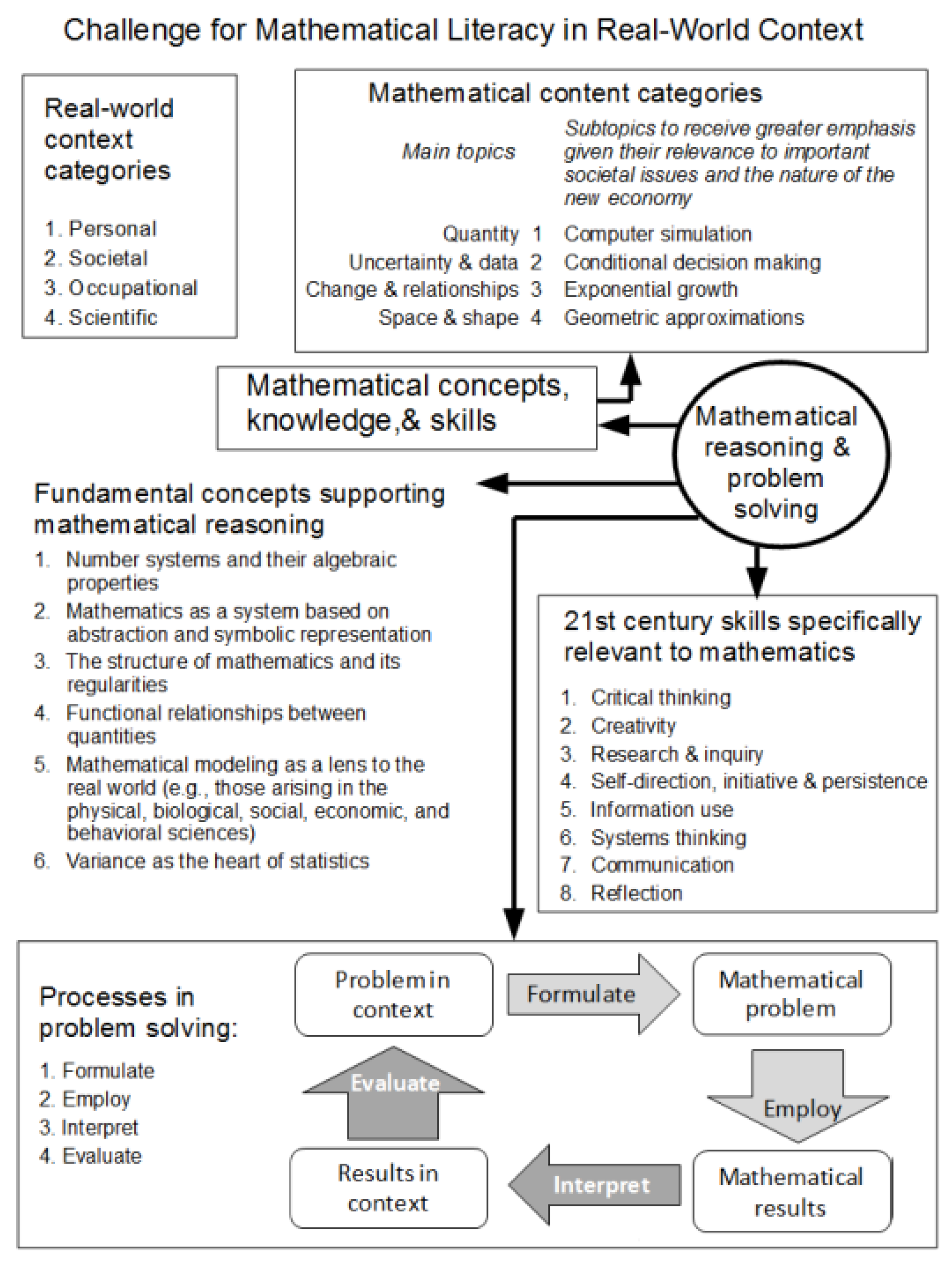
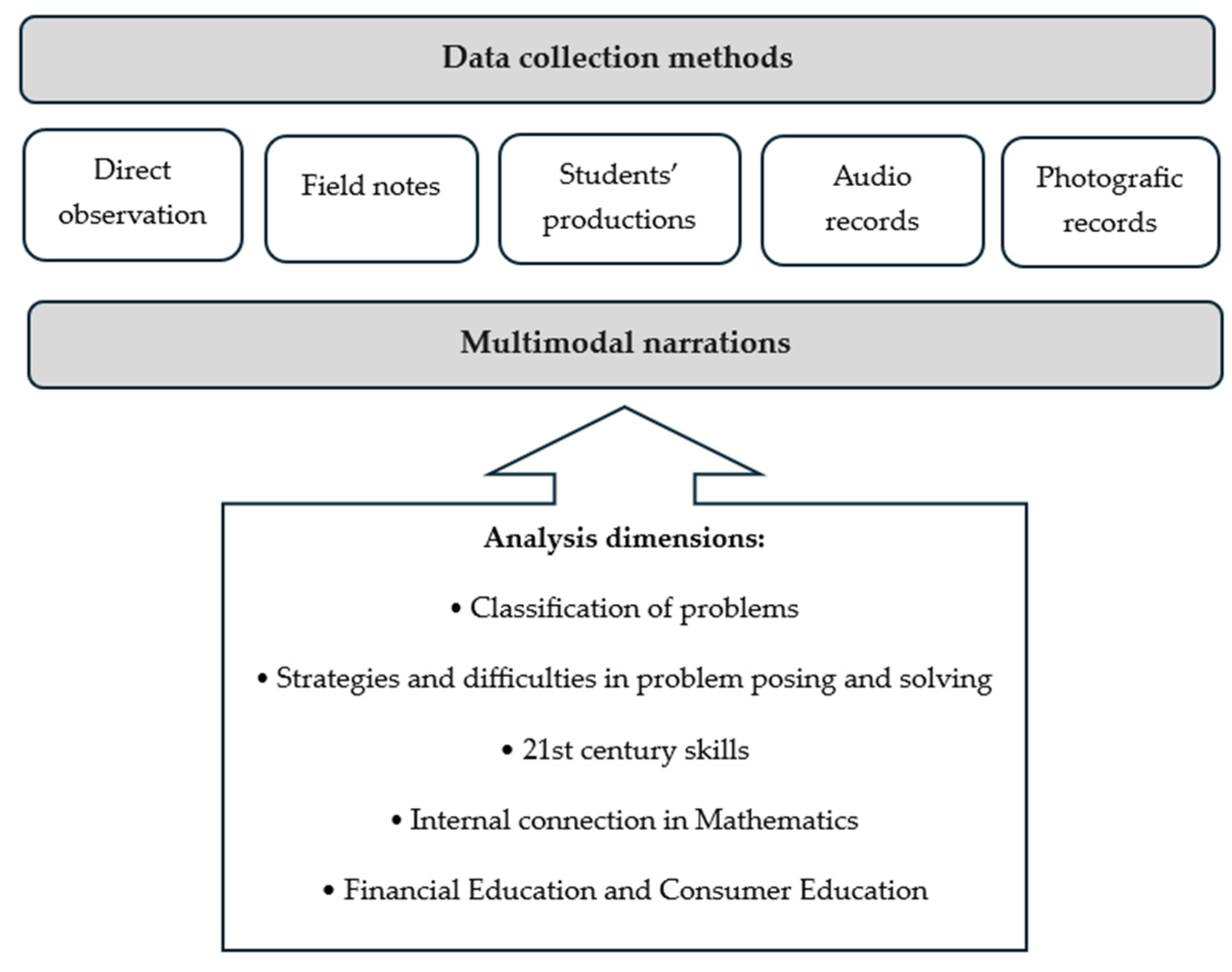
Problem posing and problem solving, involving significant situations for students, encourage effective learning, mathematical reasoning, communication, and connections in/with mathematics, enhancing the emergence of different literacies. Although problem solving is more frequently present in teaching practices, the ability to formulate them must also be developed, since it requires other skills, such as writing a problem statement, establishing connections between reality and mathematical knowledge, and creating and idealizing problematic situations, among others. Financial Literacy and Consumer Literacy promote contexts related to the student’s daily life and are promising in the development of problem posing. These literacies are also relevant to the development of a healthy, balanced, and responsible relationship with money and to raising awareness of the student regarding the importance of their actions in society, the economy, and the environment. This text presents part of a qualitative, descriptive, and interpretive research, developed by a teacher of children in the third year of a Portuguese primary school, involving problem posing and problem solving in Financial and Consumer Education contexts, with the following research question: How does posing and solving problems, in contexts close to the students’ reality, influence the development of different literacies? The results point out the mobilization of different mathematical concepts, in articulation with other areas of knowledge, and the development of skills and knowledge innate to different literacies, namely Mathematical Literacy, Financial Literacy and Consumer Literacy.
Keywords: problem posing and solving; primary school; mathematical literacy; financial literacy; consumer literacy problem posing and solving; primary school; mathematical literacy; financial literacy; consumer literacy