Article

Improving Graduation Rate Estimates Using Regularly Updating Multi-Level Absorbing Markov Chains


by
Shahab Boumi
*,† and
Adan Ernesto Vela
Department of Industrial and Management Systems, University of Central Florida, Orlando, FL 32816, USA
*
Author to whom correspondence should be addressed.
These authors contributed equally to this work.
Educ. Sci. 2020, 10(12), 377; https://doi.org/10.3390/educsci10120377

Submission received: 2 November 2020 / Revised: 4 December 2020 / Accepted: 6 December 2020 / Published: 13 December 2020
(This article belongs to the Special Issue Machine learning in Education)

Abstract

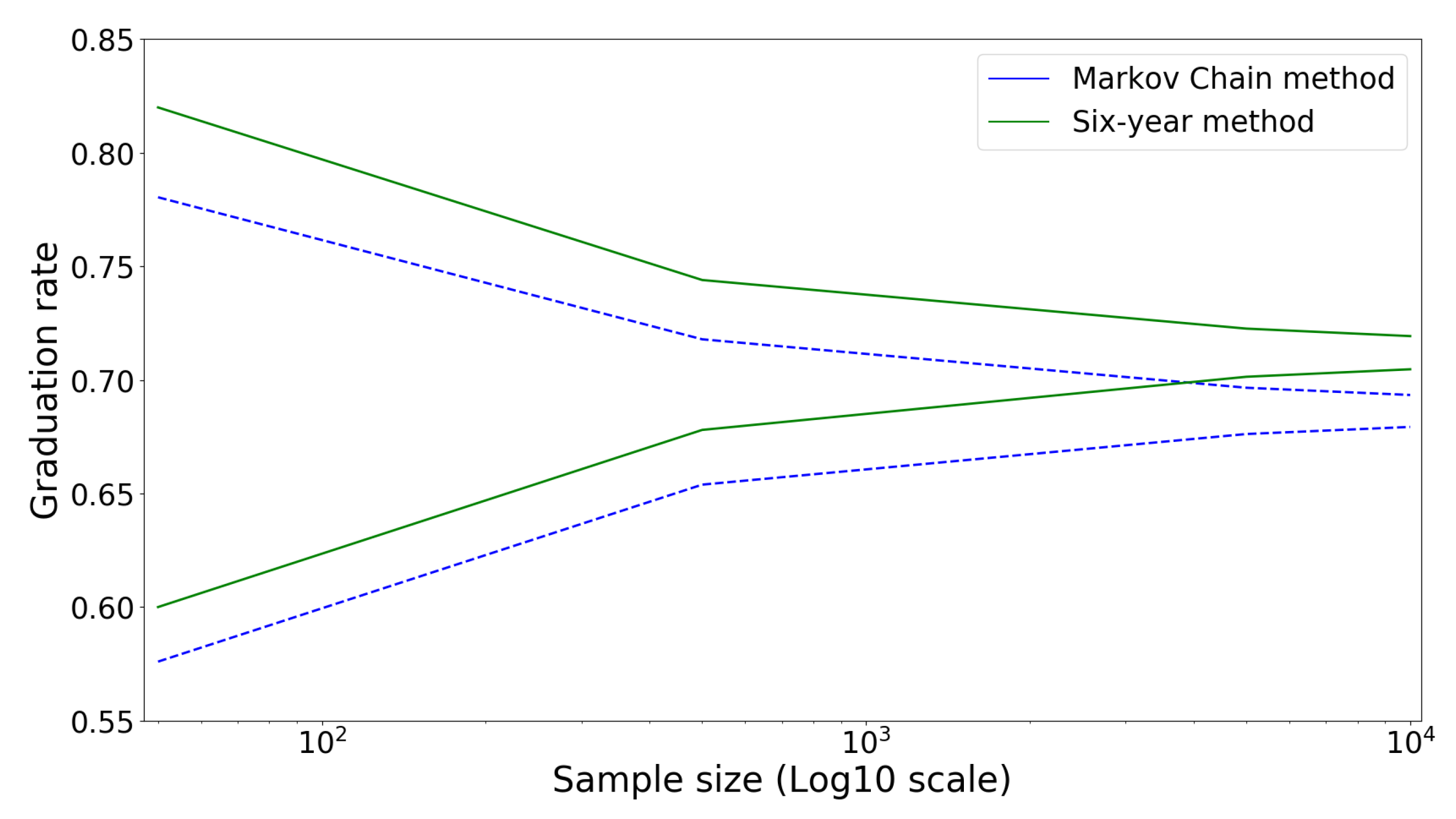
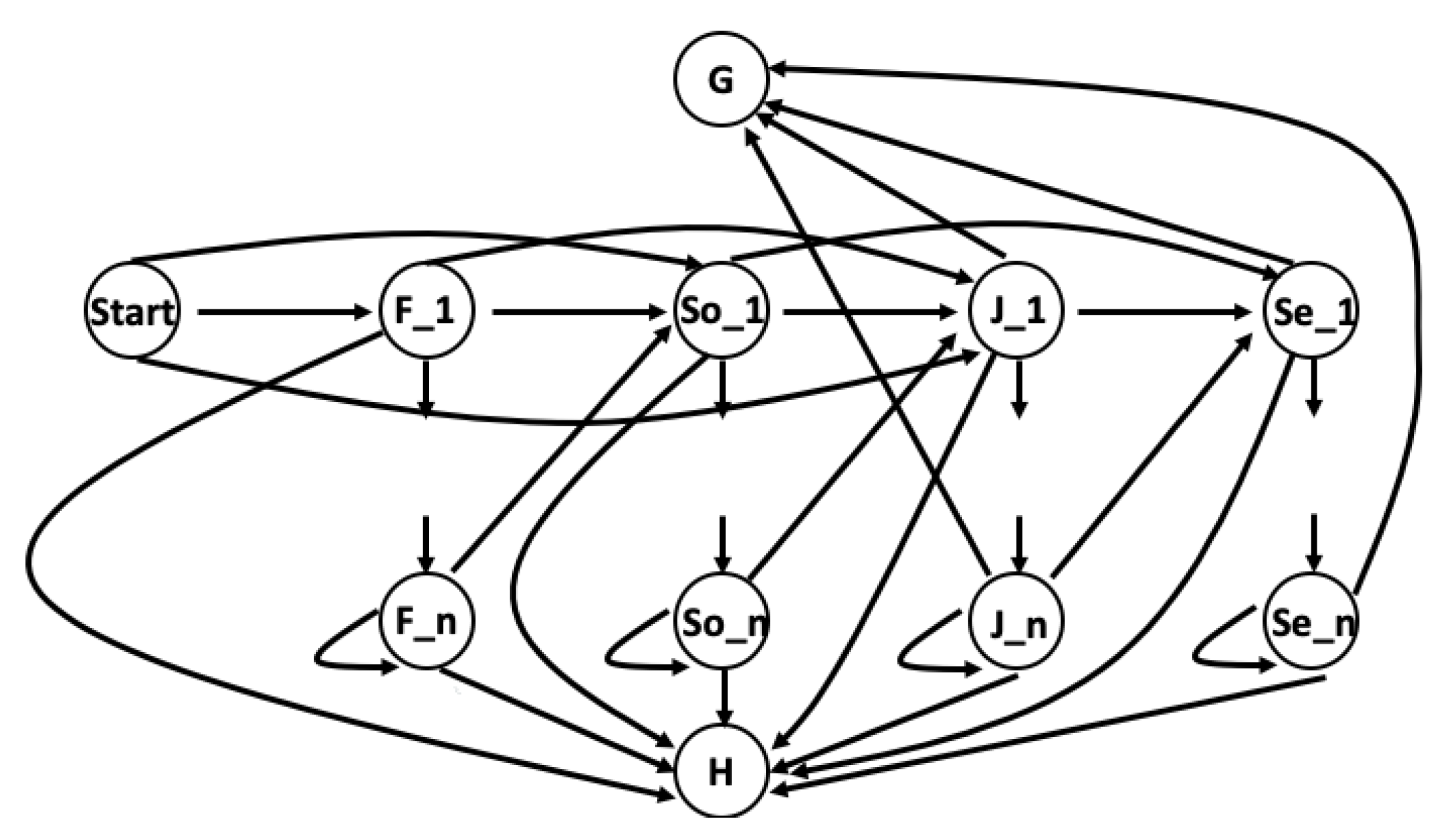
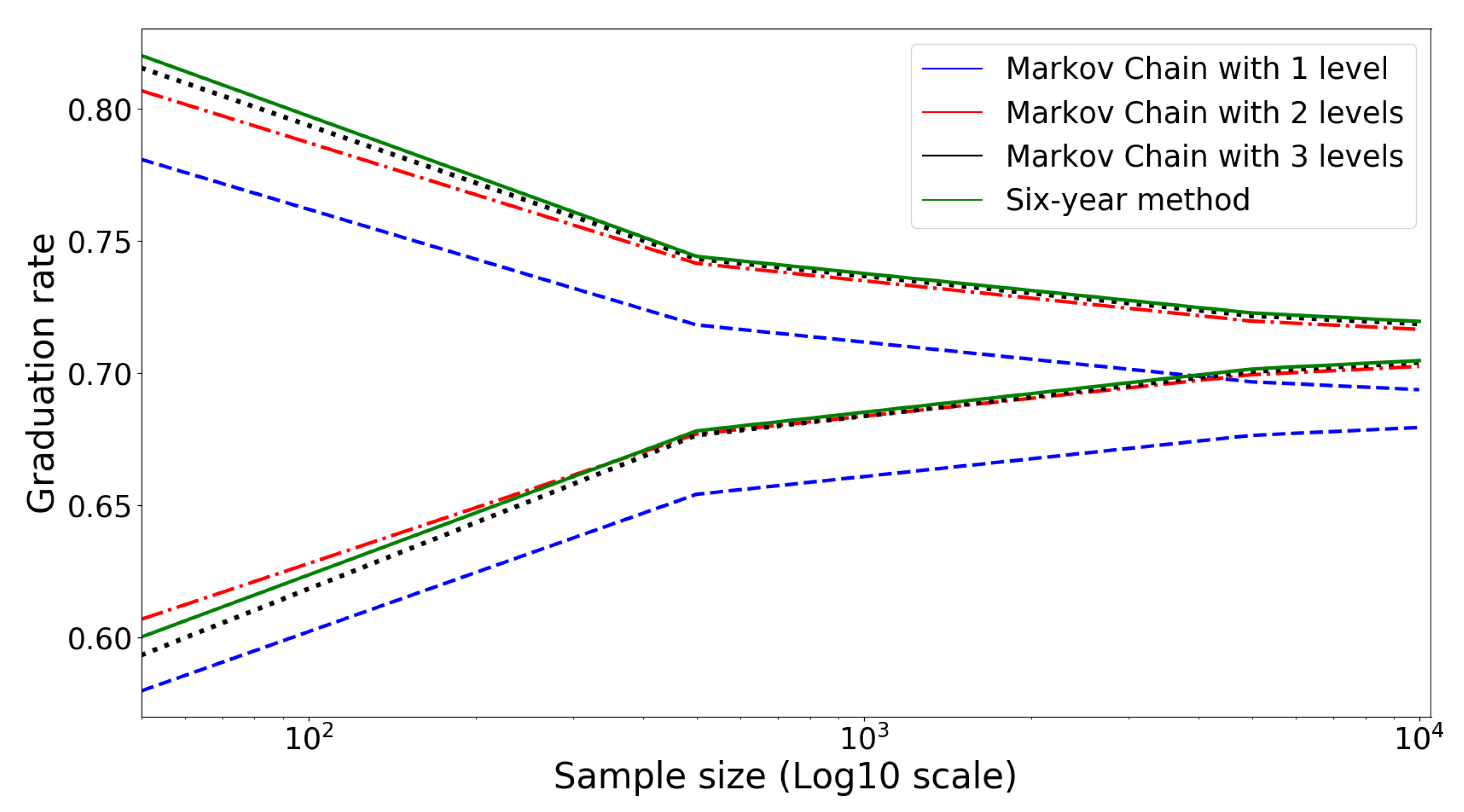
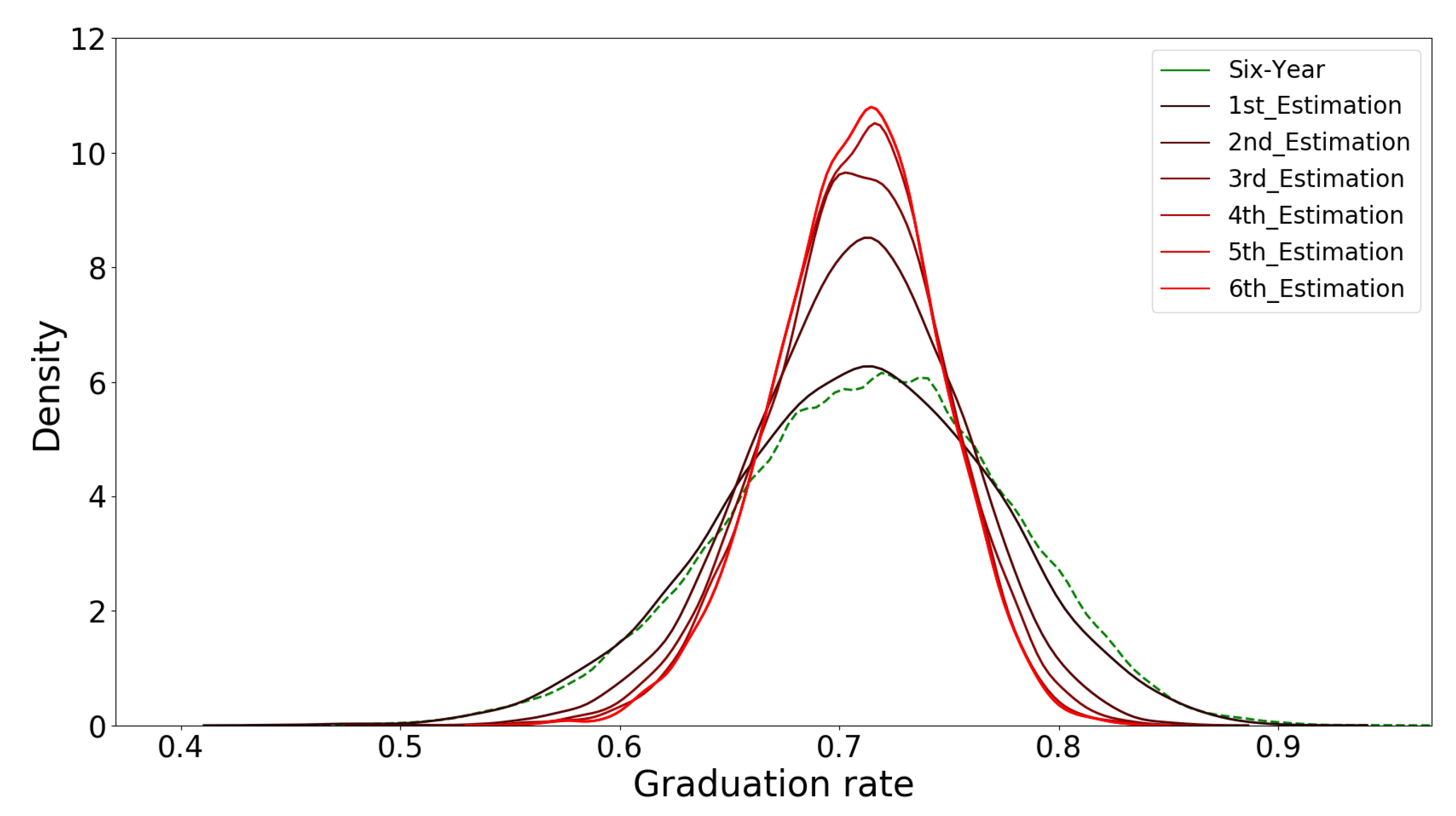
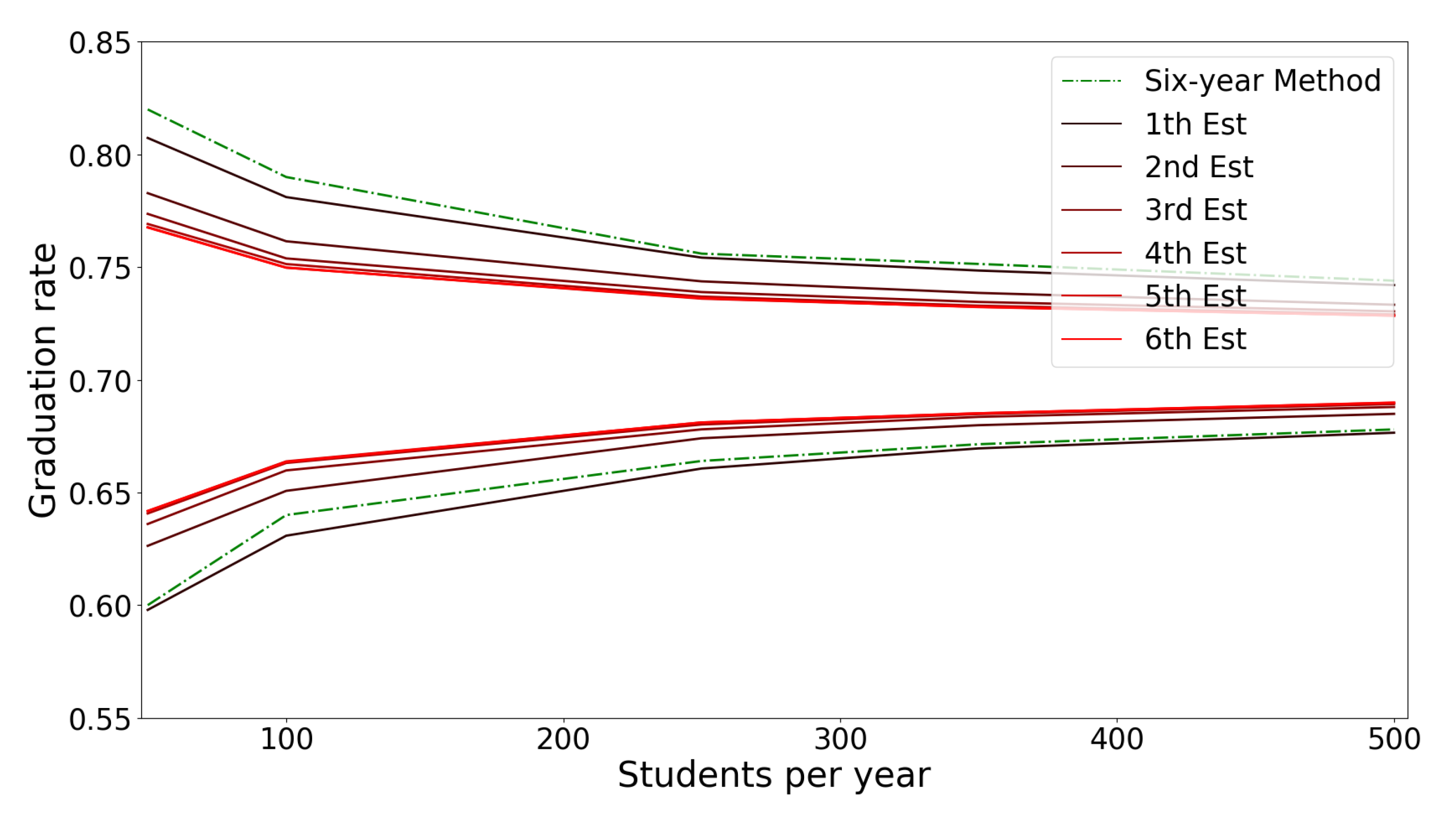
American universities use a procedure based on a rolling six-year graduation rate to calculate statistics regarding their students’ final educational outcomes (graduating or not graduating). As an alternative to the six-year graduation rate method, many studies have applied absorbing Markov chains for estimating graduation rates. In both cases, a frequentist approach is used. For the standard six-year graduation rate method, the frequentist approach corresponds to counting the number of students who finished their program within six years and dividing by the number of students who entered that year. In the case of absorbing Markov chains, the frequentist approach is used to compute the underlying transition matrix, which is then used to estimate the graduation rate. In this paper, we apply a sensitivity analysis to compare the performance of the standard six-year graduation rate method with that of absorbing Markov chains. Through the analysis, we highlight significant limitations with regards to the estimation accuracy of both approaches when applied to small sample sizes or cohorts at a university. Additionally, we note that the Absorbing Markov chain method introduces a significant bias, which leads to an underestimation of the true graduation rate. To overcome both these challenges, we propose and evaluate the use of a regularly updating multi-level absorbing Markov chain (RUML-AMC) in which the transition matrix is updated year to year. We empirically demonstrate that the proposed RUML-AMC approach nearly eliminates estimation bias while reducing the estimation variation by more than 40%, especially for populations with small sample sizes.
Keywords: graduation rate estimation; absorbing Markov chain; higher education graduation rate estimation; absorbing Markov chain; higher education