1. Introduction
In recent years, artificial intelligence has become an important driver of structural economic change, affecting production processes, management decisions, employment patterns and national competitiveness (
Hussain & Ghosh, 2025). For Kazakhstan, this issue is particularly relevant because the country is pursuing digital modernization, economic diversification and higher labor productivity (
Toimbek, 2022). These priorities are reflected in national initiatives such as the Digital Kazakhstan State Programme, which seeks to accelerate digital transformation, strengthen innovation capacity, and promote the adoption of advanced digital technologies, including artificial intelligence, across the national economy (
Government of the Republic of Kazakhstan, 2017;
Denissova et al., 2025).
Although AI is increasingly discussed as a tool for improving enterprise efficiency, reducing costs and supporting data-driven decision-making, its productivity effects remain uneven (
Mathew et al., 2023). They depend on digital infrastructure, human capital, organizational readiness and the quality of institutional support.
Existing studies on Kazakhstan have examined digitalization, innovation policy, automation, sectoral modernization, and human capital development; however, the literature remains fragmented (
Denissova et al., 2025;
Toimbek, 2022). Although previous research has addressed these topics separately, no study has systematically mapped the intellectual structure, collaboration patterns, thematic evolution, and knowledge base of AI-driven productivity research in Kazakhstan using bibliometric methods. Consequently, important questions regarding the evolution of the field, dominant research themes, and emerging scientific directions remain insufficiently explored.
Therefore, the objective of this study is to systematically map the intellectual structure, thematic evolution, collaboration patterns, and emerging research directions of AI-driven productivity research in Kazakhstan using bibliometric analysis.
To achieve this objective, this study addresses the following research questions:
RQ1. How has scientific production on AI-driven productivity in Kazakhstan evolved over time?
RQ2. What are the dominant collaboration networks, thematic clusters, and intellectual structures in this research field?
RQ3. What emerging research directions can be identified for future studies on AI-driven productivity in Kazakhstan’s economy?
Although this study focuses on Kazakhstan, its findings are relevant for many emerging and resource-dependent economies pursuing digital transformation. Kazakhstan represents a useful case because it combines rapid national digitalization initiatives with structural economic diversification and increasing investments in artificial intelligence. Therefore, the bibliometric patterns identified in this study may provide insights into how AI-related productivity research evolves in comparable middle-income economies undergoing technological transition.
The scientific novelty of this study lies in developing an integrated, Kazakhstan-specific map of the knowledge structure connecting artificial intelligence with economic productivity. Unlike previous studies that examine digitalization, artificial intelligence, innovation, or productivity separately, this study integrates performance analysis, co-authorship mapping, keyword co-occurrence, bibliographic coupling, and thematic evolution within a single analytical framework. This combined approach makes it possible to identify not only the growth and composition of the literature but also the structural relationships among technological capabilities, organizational readiness, human capital, institutional conditions, and expected productivity outcomes. This study further contributes by revealing three previously insufficiently documented characteristics of the field: the concentration of knowledge production within a limited number of institutions, the fragmentation of collaboration networks, and the transition from general digitalization research toward sector-specific and human-capital-oriented applications of AI. Based on these findings, this study proposes an analytical framework for understanding AI-driven productivity in emerging economies as the combined outcome of technological, organizational, human-capital, and institutional capacities.
Accordingly, this study makes four original contributions. First, it provides empirical bibliometric evidence on the formation and evolution of AI-driven productivity research in Kazakhstan between 2008 and 2024. Second, it connects the identified bibliometric clusters with technological change theory, endogenous growth theory, the resource-based view, and institutional theory, thereby converting descriptive mapping results into a theoretically interpretable structure. Third, it identifies measurable research and policy gaps concerning sector-specific productivity indicators, interinstitutional collaboration, AI implementation assessment, and the relationship between digital investment and realized productivity gains. Fourth, it develops a research agenda for evaluating AI-driven productivity through sectoral, longitudinal, and comparative studies. These contributions extend the relevance of the study beyond Kazakhstan by offering an analytical basis for examining AI-related productivity research in other emerging and resource-dependent economies.
2. Literature Review
Artificial intelligence is increasingly being considered a factor of productivity growth because it supports automation, data-driven decision-making, forecasting, resource optimization, and new organizational models (
Zong & Guan, 2025;
Yi & Ayangbah, 2024). For Kazakhstan, this issue is especially relevant due to national priorities of digital modernization, economic diversification, and reducing dependence on raw-material sectors (
Toimbek, 2022;
Denissova et al., 2025).
The theoretical basis of AI and productivity research can be linked to the concepts of technological change, innovative development, and digital transformation (
Jones, 2022;
Javaid et al., 2024). According to these approaches, new technologies increase productivity not automatically but through changing organizational processes, accumulating human capital, developing infrastructure, and adapting management practices (
Jones, 2022;
Munawar et al., 2022). Therefore, the effect of AI depends not only on the technology itself but also on the willingness of enterprises, industries and government institutions to use it in real economic processes (
Yi & Ayangbah, 2024;
Ahmad et al., 2025).
Of particular importance is the resource-based approach, according to which the competitive advantages of organizations are formed at the expense of unique resources and competencies. In the context of AI, such resources include data, digital infrastructure, algorithmic solutions, qualified specialists, and the ability of companies to integrate intelligent technologies into business processes. For Kazakhstan, this approach is particularly important, since differences between organizations and sectors of the economy can determine the uneven implementation of AI and differences in productivity gains (
Munawar et al., 2022;
Yi & Ayangbah, 2024;
Ahmad et al., 2025).
Equally important is the institutional perspective. The introduction of AI into the economy depends on the quality of regulation, government digital policy, data protection, the investment climate, the level of trust in technology, and the willingness of the educational system to train specialists for the new technological environment. In the Kazakh context, institutional conditions play a significant role, since digital transformation requires consistency between government programs, business initiatives, scientific research and personnel training (
Toimbek, 2022;
Denissova et al., 2025;
Ahmad et al., 2025).
From the point of view of human capital theory, AI changes not only production processes but also the requirements for employees. Productivity growth in the context of digitalization is impossible without the development of analytical, technical and managerial competencies. Therefore, research on AI in the economy of Kazakhstan inevitably intersects with the topics of education, vocational training, digital literacy and staff retraining. This makes this research field interdisciplinary and explains the need for its systematic mapping (
Munawar et al., 2022;
Javaid et al., 2024;
Yi & Ayangbah, 2024).
In addition, AI-based productivity research is closely related to the concept of the digital economy. In this logic, artificial intelligence is not an isolated technology but part of a broader ecosystem that includes big data, cloud computing, the Internet of Things, automated platforms, and digital services. It is the interaction of these elements that forms new models of value creation, increases the speed of economic transactions, and changes the nature of competition between companies and countries (
Javaid et al., 2024;
Denissova et al., 2025;
Zong & Guan, 2025).
Based on this, the existing literature shows that AI can be considered as a productivity improvement factor, but its impact depends on a combination of technological, organizational, institutional, and personnel conditions (
Yi & Ayangbah, 2024). At the same time, research on Kazakhstan remains fragmented: some of the work is devoted to digitalization, some to innovation policy, some to automation of individual industries, and some to the training of specialists and the development of digital competencies. This makes it difficult to understand holistically how the scientific discussion about AI and productivity in the national economy is shaped (
Yi & Ayangbah, 2024;
Ahmad et al., 2025).
In this regard, bibliometric analysis allows us to move from a fragmentary review of individual publications to a systematic study of the structure of the research field. It provides an opportunity to identify the main thematic clusters, the most frequently used keywords, leading sources, author networks, institutional connections, and directions for further research development. This approach is especially important for the topic of Mapping AI-Driven Productivity Research in Kazakhstan’s Economy, as it helps to determine not only the current state of the scientific literature but also the prospects for further study of the role of artificial intelligence in increasing the productivity of the Kazakh economy.
2.1. The Impact of Artificial Intelligence on Productivity Growth
In the scientific literature, the impact of artificial intelligence on productivity growth is considered through several theoretical directions (
Jones, 2022;
Zong & Guan, 2025). One of them is related to the theories of technological change, according to which new technologies contribute to increased production efficiency by automating operations, speeding up information processing, reducing transaction costs and making more rational use of resources. In this context, AI acts not just as a tool for digitalization but as a factor that can change the way labor is organized, data management, and economic decision-making (
Javaid et al., 2024;
Yi & Ayangbah, 2024).
Close to this approach is the theory of endogenous growth, which emphasizes knowledge, human capital, innovation, and technological accumulation (
Jones, 2022). From this perspective, artificial intelligence can be considered as one of the mechanisms for enhancing innovation activity, since it expands the possibilities of big data analysis, forecasting, modeling production processes, and developing new products (
Jones, 2022). This aspect is especially important for Kazakhstan, since increasing economic productivity is associated not only with the introduction of equipment and digital platforms but also with the development of competencies, research potential and the ability of enterprises to adapt to new technological conditions.
These theories provide the conceptual basis for interpreting bibliometric clusters related to AI, innovation, productivity, and human capital. In a bibliometric study, they can be considered as conceptual foundations around which publications on AI, digital economy, automation, innovation, human capital, and organizational effectiveness are grouped. In other words, the theories of technological development and endogenous growth provide an intellectual framework for analyzing how researchers describe the productive effects of AI in the economy of Kazakhstan.
Empirical studies on the impact of AI on productivity show the ambiguity of the results obtained (
Yi & Ayangbah, 2024;
Zong & Guan, 2025). Some works emphasize the positive impact of AI on the efficiency of companies (
Zong & Guan, 2025), cost reduction, optimization of business processes, and improvement of the quality of management decisions (
Ahmad et al., 2025;
Denissova et al., 2025). Other studies note that the expected productivity gains may be limited due to insufficient digital infrastructure, a shortage of qualified personnel, weak integration of AI into real production processes, or low willingness of organizations to change.
The differences in conclusions are explained not only by the content of the research but also by methodological approaches. Some authors analyze AI at the level of individual enterprises or specific industries, focusing on operational efficiency, process automation, and organizational performance (
Ahmad et al., 2025;
Zong & Guan, 2025). Other studies investigate AI within the broader context of the digital economy, national innovation policy, labor markets, and technological development (
Toimbek, 2022;
Denissova et al., 2025;
Javaid et al., 2024). Different performance indicators, time periods, databases, and analytical methods are used. Therefore, research results may differ in direction, scale, and interpretation of AI’s influence.
It is especially important for Kazakhstan to consider that the effect of artificial intelligence depends on the absorptive capacity—the ability of the economy, industries and organizations to perceive, adapt and effectively use new technologies. If enterprises have insufficient digital skills, limited access to data, weak technological infrastructure, or low organizational readiness, the introduction of AI may not lead to significant productivity gains (
Zulpykhar et al., 2026). On the contrary, with developed human capital, investment support, digital infrastructure, and institutional coordination, AI can become a significant factor in economic efficiency.
From a bibliometric point of view, the ambiguity of the conclusions indicates the existence of several research areas within this field. One area focuses on AI as a driver of productivity growth and enterprise efficiency. The second considers AI through the prism of digital transformation and innovative development. The third is related to the labor market, human capital, and changing professional competencies. The fourth area focuses on the institutional, sectoral and political conditions for the introduction of AI in the economy of Kazakhstan.
Mapping research on AI-driven productivity in Kazakhstan’s economy allows us to identify how the scientific discussion on artificial intelligence and productivity has developed, which thematic clusters have formed, which approaches dominate, and which research gaps remain insufficiently disclosed. Such an analysis is necessary for a deeper understanding of the role of AI in Kazakhstan’s economic modernization and determining the prospects for further research.
2.2. Factors in the Introduction of Artificial Intelligence to Improve Productivity
The implementation of AI for productivity growth depends on technological readiness, organizational flexibility, institutional support, and human capital (
Munawar et al., 2022;
Yi & Ayangbah, 2024). In Kazakhstan, these factors are unevenly developed across sectors, which explains why AI adoption produces different productivity effects in finance, public administration, education, logistics, industry, and services.
Despite the growing interest in artificial intelligence, the existing literature on Kazakhstan remains heterogeneous. Previous studies demonstrate considerable methodological diversity. Macro-level research mainly investigates AI in relation to digital economy development, public policy, innovation systems, and national competitiveness (
Toimbek, 2022;
Denissova et al., 2025). In contrast, micro-level studies focus on enterprise performance, organizational readiness, business process automation, and sector-specific AI implementation (
Ahmad et al., 2025;
Yi & Ayangbah, 2024;
Zong & Guan, 2025). Consequently, different methodological perspectives lead to different conclusions regarding the relative importance of technological infrastructure, investment, managerial readiness, institutional support, and human capital.
From an industry point of view, the introduction of AI in Kazakhstan can have different effects in industry, finance, logistics, education, healthcare, public administration and the service sector. In some sectors, AI is primarily associated with automation and cost reduction, while in others it is associated with data analytics, forecasting, risk management, personalization of services or improving the quality of solutions. Therefore, the literature analysis should consider not only the overall economic impact of AI but also the differences between sectors.
From a bibliometric point of view, these factors can be combined into several key thematic areas: technologically driven productivity, organizational transformation, institutional support for digitalization, human capital and digital competencies, as well as the industry effectiveness of AI implementation. Previous studies have rarely considered how these areas are distributed in the scientific literature, how they are interconnected, and how they have changed over time in the Kazakh context.
Mapping research on AI-driven productivity in Kazakhstan’s economy allows us to identify which factors of AI implementation are most often discussed in the scientific literature, which methodological approaches prevail, and which areas remain insufficiently developed (
Ahmad et al., 2025). This creates the basis for a deeper understanding of how artificial intelligence can contribute to productivity growth and structural modernization of Kazakhstan’s economy.
2.3. Artificial Intelligence and Productivity Development in the Economy of Kazakhstan: A Bibliometric Perspective
From a bibliometric perspective, research on AI and productivity in Kazakhstan remains insufficiently systematized (
Farooq, 2024;
He et al., 2022;
Martins et al., 2024). Existing studies usually focus on separate sectors, technologies, or policy issues but do not show how the field is structured in terms of authors, institutions, countries, keywords, and thematic clusters. Therefore, bibliometric mapping is useful for identifying the intellectual landscape and future research directions.
This is where the bibliometric perspective becomes particularly important. Unlike a traditional literary review, bibliometric analysis has become one of the standard approaches for quantitatively exploring scientific knowledge structures, collaboration networks, thematic evolution, and research trends (
Donthu et al., 2021;
Zupic & Čater, 2015). This makes it possible to more objectively determine how the research area dedicated to artificial intelligence, productivity and economic transformation of Kazakhstan is being formed.
Of value is the analysis of such bibliometric indicators as joint authorship, joint occurrence of keywords, bibliographic coupling and thematic mapping. These methods make it possible to identify the most influential publications, major research clusters, and new areas that are just beginning to take shape. This is especially important for the topic of AI-based productivity, as it is located at the intersection of economics, technology, management, education, innovation policy and the labor market.
The need for this study arises because the literature on artificial intelligence and productivity in Kazakhstan remains fragmented. It covers various aspects of the digital economy but does not provide a holistic view of the development of the scientific field. Bibliometric mapping allows us to bridge this gap and show exactly how the intellectual landscape of research is being built, which areas are leading, and which require further study (
Martins et al., 2024;
He et al., 2022).
Previous bibliometric studies have analyzed AI, knowledge management, e-learning, digital transformation, and construction technologies using science mapping techniques (
Farooq, 2024;
He et al., 2022;
Martins et al., 2024). However, none have examined AI-driven productivity research in Kazakhstan. Consequently, the present study extends the existing bibliometric literature by focusing on a country-specific productivity context.
To solve this problem, this study uses a bibliometric approach to analyzing publications on AI-driven productivity in Kazakhstan’s economy. Through the analysis of co-authorship, keywords, citations and bibliographic links, this work is aimed at identifying leading authors, scientific sources, research clusters and new thematic areas. This approach creates the basis for a deeper understanding of the role of artificial intelligence in increasing the productivity of Kazakhstan’s economy and may be useful for further empirical, theoretical and applied research.
3. Methodology
This study uses a bibliometric approach to analyze how the scientific field related to artificial intelligence, productivity growth and economic transformation of Kazakhstan was formed and developed. Bibliometric analysis makes it possible to consider publications not only as individual scientific papers but also as part of a broader research system that reflects the dynamics of publication activity, thematic connections, author networks, and changes in the scientific agenda.
The methodological framework of this study is based on the principles of bibliometric analysis and science mapping described in the foundational works of
Aria and Cuccurullo (
2017),
Van Eck and Waltman (
2010),
Zupic and Čater (
2015), and
Donthu et al. (
2021). These studies provide the conceptual and methodological basis for constructing bibliometric networks, analyzing scientific productivity, mapping intellectual structures, and identifying thematic evolution within a research field. Building upon these established principles, the present study applies co-authorship analysis, keyword co-occurrence analysis, citation analysis, bibliographic coupling, and thematic mapping to investigate the development of AI-driven productivity research in Kazakhstan’s economy.
The Scopus database was chosen as the main data source because it contains a wide array of peer-reviewed publications and provides structured bibliographic data necessary for quantitative analysis. Scopus is often used in bibliometric research due to the reach of international journals and the availability of metadata about authors, affiliations, keywords, citations and sources of publications. These characteristics make the database suitable for the systematic study of scientific papers on artificial intelligence and productivity in the economy of Kazakhstan.
Scopus was also selected because it provides a stable and well-structured bibliographic database suitable for bibliometric analysis. For bibliometric analysis, it is especially important that information about publications, authors, citations, and keywords is comparable and suitable for subsequent processing. Therefore, the use of Scopus makes it possible to increase the reliability of the sample and ensure the reproducibility of research procedures.
The chosen methodology allows us to move from the usual descriptive literature review to a systematic mapping of the scientific field. Within the framework of this study, bibliometric analysis is used to identify publication trends, the most active authors and organizations, leading sources, key thematic clusters, and areas for further development of research on Mapping AI-Driven Productivity Research in Kazakhstan’s Economy.
3.1. Literature Search Area
At the first stage, the boundaries of bibliographic search were defined, including the selection of a database, the formulation of keywords, the time interval, and the criteria for selecting publications. The search was conducted in the Scopus database in March 2025 and covered publications for the period 2008–2024. Publications from 2025 were not included because indexing for the year was still incomplete at the time of data collection, which could have introduced temporal bias into the bibliometric analysis. This time interval was chosen considering the gradual growth of scientific interest in artificial intelligence, digital transformation and productivity issues in national economies.
To ensure transparency and reproducibility of the study, a search string was created using the logical operators AND and OR. The final search query looked like this:
TITLE-ABS-KEY
(
“artificial intelligence”
OR “machine learning”
OR “AI”
)
AND
TITLE-ABS-KEY
(
“productivity”
OR “economic efficiency”
OR “digital transformation”
)
AND
TITLE-ABS-KEY
(
“Kazakhstan”
)
The search terms were selected based on the objectives of the study, preliminary exploratory searches, and terminology commonly used in previous bibliometric studies on artificial intelligence, productivity, and digital transformation. The combination of AI-related, productivity-related, and country-specific keywords ensured broad coverage while minimizing irrelevant records.
Using the OR operator made it possible to cover various terms related to artificial intelligence, machine learning, automation, and digital technologies. The AND operator provided a selection of publications in which these concepts were considered in connection with productivity, economic efficiency and the Kazakh context.
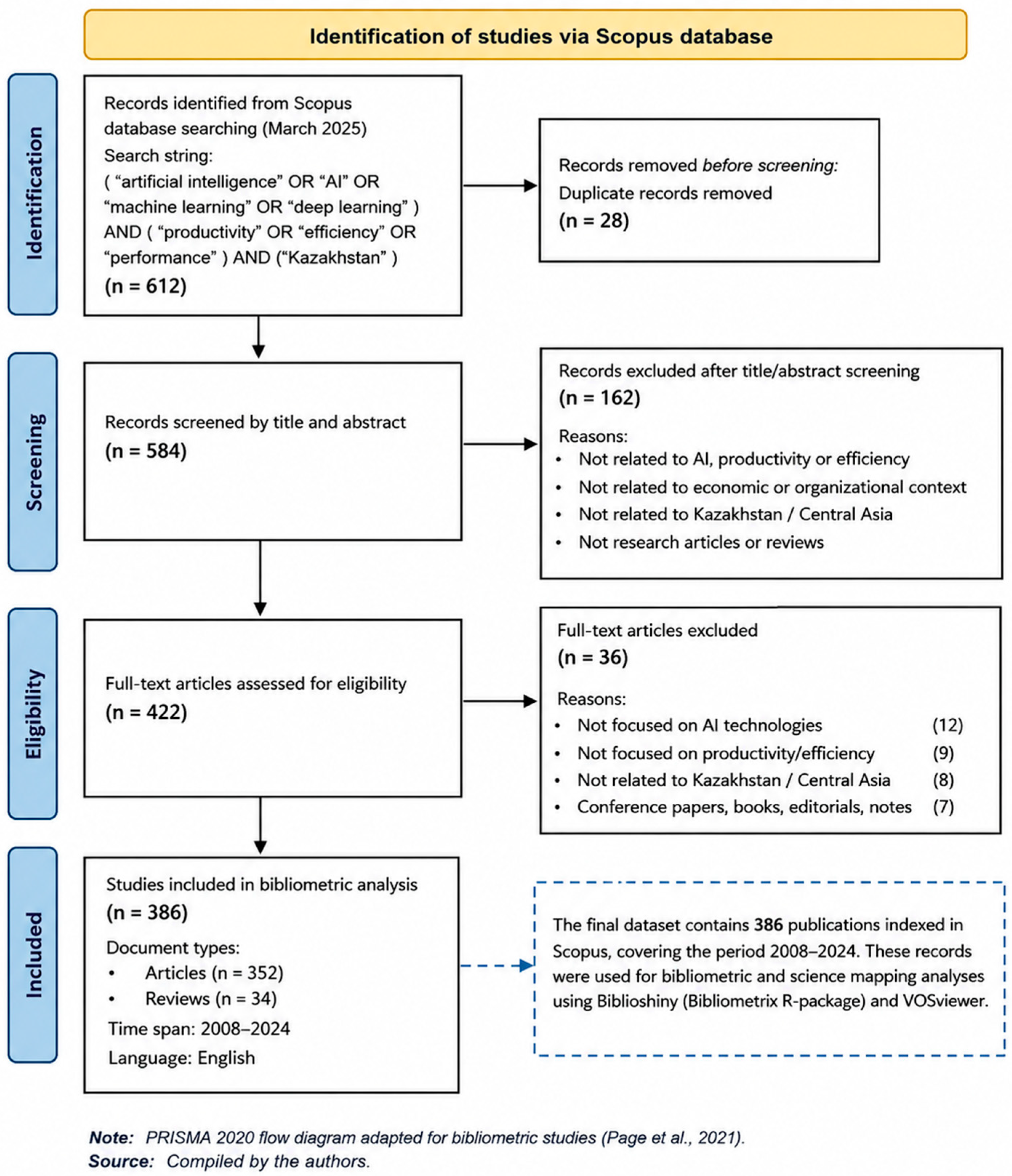
After the initial search, the results were refined using Scopus database filters. The sample included only articles and review articles published in English in peer-reviewed scientific journals. Conference materials, books, book chapters, editorial notes, and non-peer-reviewed publications were excluded to ensure comparability and quality of bibliometric data.
The formed search strategy allowed us to obtain a relevant array of publications on the topic of AI-driven productivity research in Kazakhstan’s economy. The data obtained was used for the subsequent analysis of publication dynamics, leading authors, organizations, sources, country collaboration, keywords and thematic clusters.
3.2. Research Selection: Inclusion and Exclusion Criteria
At the second stage, a structured selection of publications was carried out based on predefined inclusion and exclusion criteria. An initial search in the Scopus database allowed us to obtain the original array of bibliographic records, which were exported in CSV format for subsequent processing and analysis.
The selection procedure included several successive stages. Initially, the search results were refined using the built-in Scopus filters by document type, publication language, and subject area. The sample included only scientific articles and review articles published in English in peer-reviewed journals. This approach allowed us to exclude materials that do not meet the requirements of bibliometric analysis, including editorial notes, books, book chapters, conference materials, and non-peer-reviewed publications.
Subsequently, the titles, annotations, and keywords of the publications were manually analyzed. The works that were not directly related to artificial intelligence, machine learning, automation, digital technologies, productivity, economic efficiency or the Kazakh context were excluded from the array. Particular attention was paid to ensuring that publications truly reflected the link between AI-based technologies and issues of productivity or economic transformation.
In cases where the relevance of a publication was not obvious only by its title or abstract, information about the journal, keywords, subject area, and available elements of the full text were additionally checked. This reduced the risk of erroneous exclusion of potentially significant works and increased the reliability of the final sample.
Publications that meet at least one of the following criteria were excluded from the database:
- (1)
Artificial intelligence, machine learning, automation, or digital technologies were not explicitly considered.
- (2)
The work was not related to productivity, economic efficiency, organizational effectiveness, or digital transformation.
- (3)
The study did not relate to Kazakhstan or the broader context of Central Asia.
- (4)
The publication was not a peer-reviewed article or review.
- (5)
The entry contained incomplete bibliographic data, making subsequent analysis difficult.
After deleting irrelevant and duplicate entries, a final set of publications was generated, which was used for bibliometric analysis. All disputed cases were re-checked using Scopus metadata, including the title, abstract, keywords, subject category, author affiliations, and information about the source of the publication. This multi-step selection procedure improved the consistency, reproducibility, and reliability of the research base.
The final sample included only those publications that corresponded to the subject of AI-driven productivity research in Kazakhstan’s economy and which could be used to analyze publication dynamics, author and institutional networks, keywords, citations and thematic clusters.
3.3. Data Analysis
At the third stage, a bibliometric analysis of the generated database of publications was carried out. The data exported from Scopus in CSV format were analyzed using Biblioshiny, the web interface of the Bibliometrix package (version 4.1.4), and VOSviewer, following the methodological recommendations of
Aria and Cuccurullo (
2017) and
Van Eck and Waltman (
2010). The use of two tools made it possible to combine the visual mapping of scientific networks with a quantitative assessment of publication activity and scientific influence.
The data analysis included two complementary areas: scientific productivity analysis and scientific mapping. The productivity analysis was aimed at identifying the dynamics of publications by year, the most active authors, leading journals, organizations, countries, and the most cited papers. These indicators allowed us to determine how the research area related to artificial intelligence, productivity and economic transformation of Kazakhstan has developed.
Scientific mapping was used to study the internal relationships between publications and identify the structure of the research field. The following analyses were performed: co-authorship analysis, keyword co-occurrence analysis, citation analysis, and bibliographic coupling. Full counting was applied in the co-authorship and keyword co-occurrence analyses. Association strength normalization was used in VOSviewer for constructing bibliometric networks and comparing relationships between nodes. The analysis of co-authorship allowed us to identify cooperation networks between authors, organizations and countries. The common occurrence of keywords was used to identify the main thematic areas related to AI-oriented performance. Citation analysis helped identify the most influential publications and intellectual relationships among studies, while bibliographic coupling was used to group publications based on shared references.
To increase the reliability and reproducibility of the bibliometric analysis, minimum inclusion thresholds were established before constructing the bibliometric networks. Specifically, authors with at least two publications were included in the co-authorship analysis; keywords with a minimum of five occurrences were retained for the keyword co-occurrence analysis; documents sharing at least five common references were included in the bibliographic coupling analysis; and countries with at least two publications were considered in the country collaboration analysis in
Figure 1. These thresholds reduced isolated nodes and random relationships while preserving the principal structure of the bibliometric networks. Association strength normalization implemented in VOSviewer was used to ensure comparability among network elements and to improve the identification of thematic clusters.
The use of VOSviewer was particularly important for visualizing large bibliometric networks, including links between authors, keywords, publications, and countries. Biblioshiny was used to generate descriptive bibliometric indicators and thematic analyses, whereas VOSviewer was employed for science mapping and network visualization in accordance with widely adopted bibliometric procedures (
Aria & Cuccurullo, 2017;
Van Eck & Waltman, 2010). The combined use of these tools increased the reliability of the results, as the visual maps have been supplemented with quantitative indicators.
In general, the chosen analytical strategy allowed us to systematically describe the development of the scientific literature on the topic of Mapping AI-Driven Productivity Research in Kazakhstan’s Economy. It provided an opportunity to identify the leading research areas, the intellectual structure of the field, the main scientific connections, and promising topics related to the use of artificial intelligence to increase productivity in the economy of Kazakhstan.
To visually present the study selection process, a PRISMA flow diagram was prepared, illustrating the identification, screening, eligibility assessment, and inclusion of publications in the bibliometric dataset.
5. Discussion
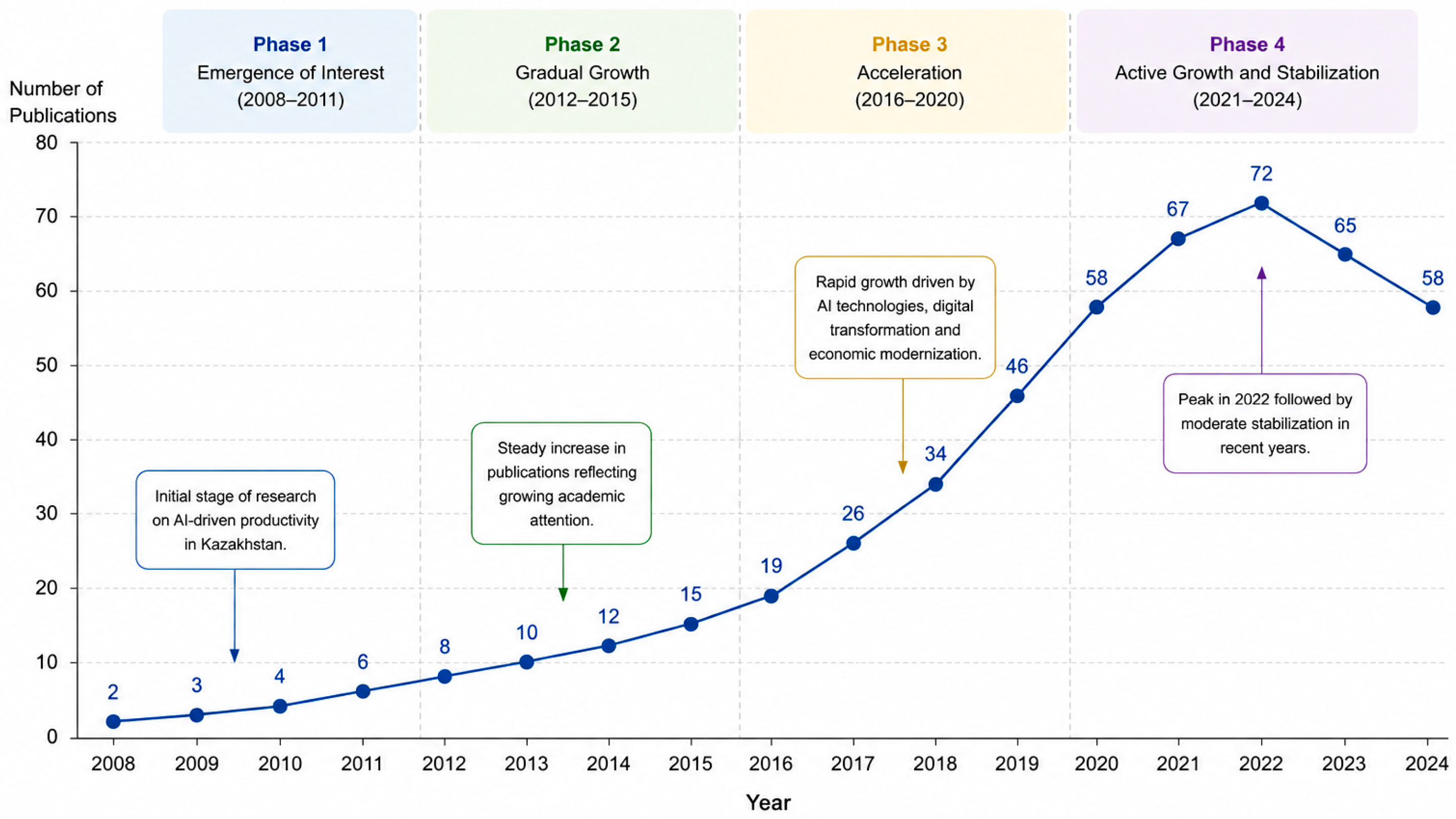
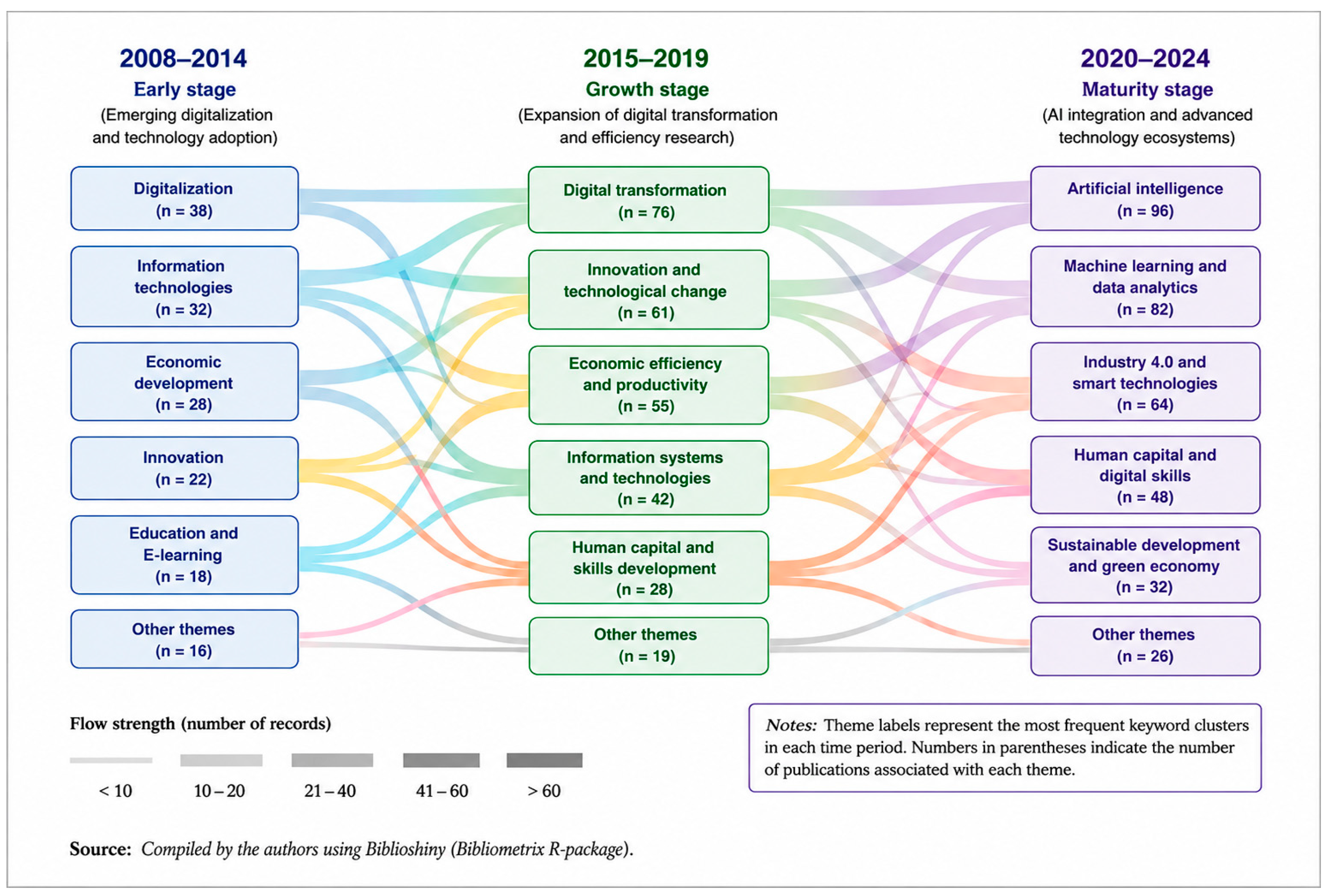
The findings show that research on AI-driven productivity in Kazakhstan is developing as an interdisciplinary field. Publication activity increased especially after 2015 and accelerated after 2020, reflecting wider interest in digitalization, automation, machine learning and economic modernization.
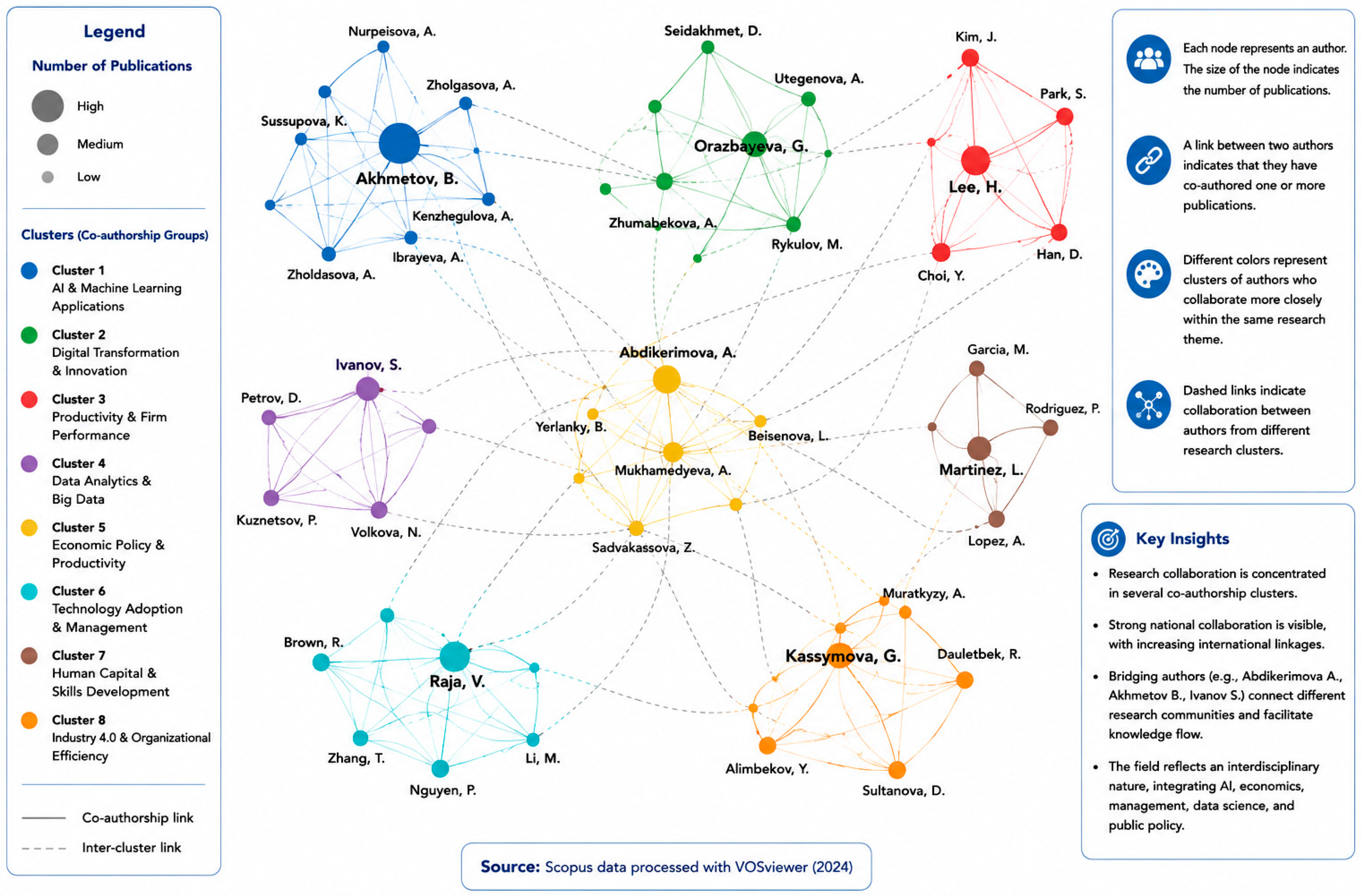
The results also reveal an uneven structure of knowledge production. Kazakhstani universities form the core of the publication network, while foreign partners contribute to international visibility and methodological diversity. However, co-authorship patterns suggest that collaboration remains fragmented and is often limited to small institutional or project-based groups.
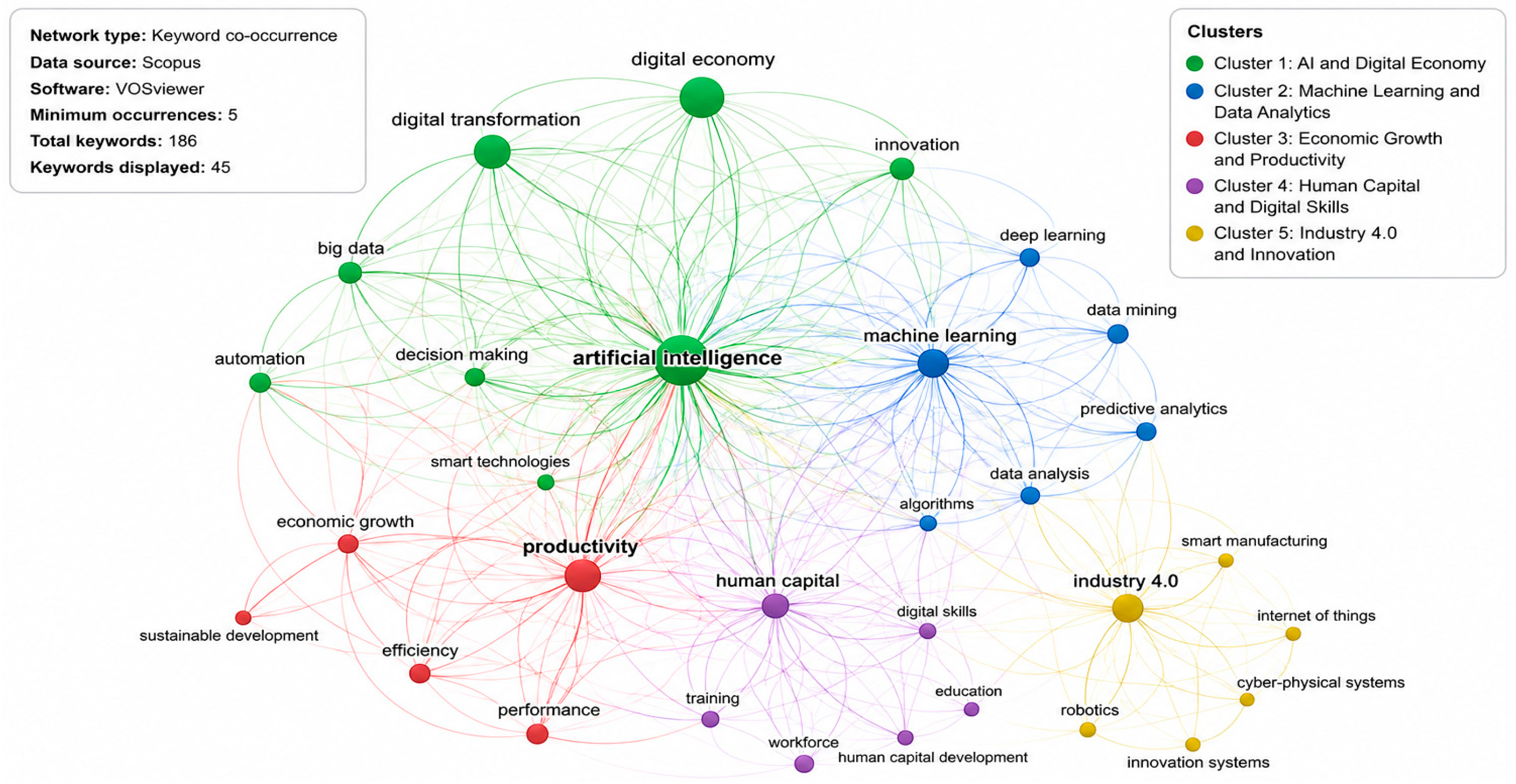
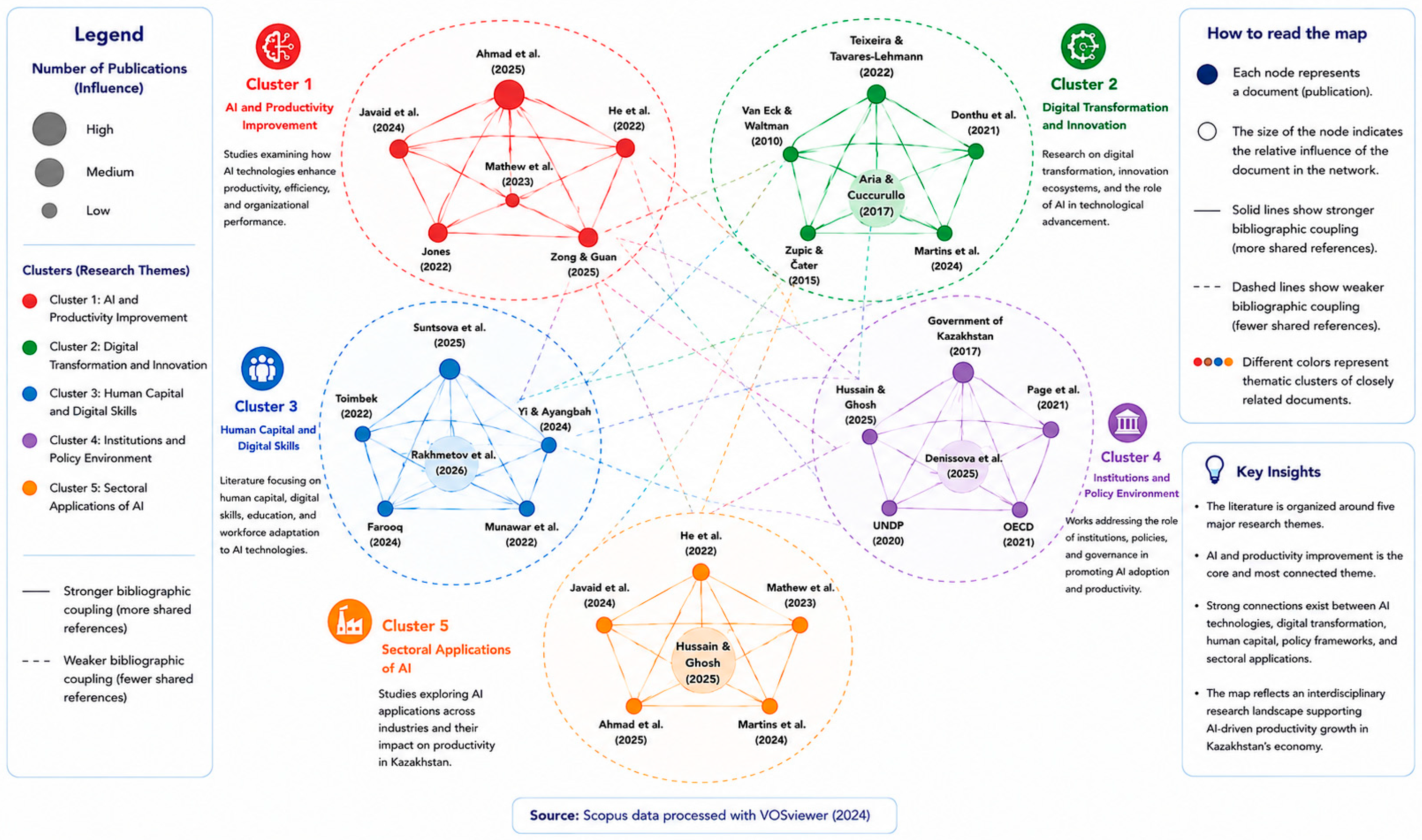
Keyword and bibliographic coupling analyses indicate five major thematic areas: AI and digital economy, machine learning and data analytics, economic growth and efficiency, human capital and digital skills, and Industry 4.0. These clusters show that the field is moving from general discussions of digitalization toward more specific questions about productivity mechanisms, organizational readiness and sectoral applications.
5.1. The Relationship of Bibliometric Results with Theoretical Approaches
The identified bibliometric patterns are consistent with several theoretical perspectives, including technological change, endogenous growth, the resource-based view, and institutional theory. Thematic clusters related to the digital economy, innovation, human capital, institutional environment, and organizational effectiveness reflect the enduring influence of theories of technological change, endogenous growth, resource approach, and institutional theory.
The high representation of terms related to productivity, innovation, and digital transformation indicates the importance of theories of technological development. Within these approaches, AI is seen as a source of increased efficiency, faster data processing, process automation, and the creation of new management models. This is especially important for Kazakhstan, where digital modernization is one of the conditions for increasing the competitiveness of the economy.
Clusters related to human capital, digital skills, and education confirm the relevance of the theory of endogenous growth. According to this logic, the impact of AI on productivity depends not only on the introduction of technology but also on the accumulation of knowledge, the training of specialists and the ability of organizations to use intelligent systems in practice.
The institutional cluster shows that research increasingly links the introduction of AI to government policy, regulation, digital infrastructure, data protection, and innovation support. This corresponds to the institutional theory, according to which technological effects depend on the quality of the regulatory, organizational, and managerial environment.
In addition, the emergence of topics related to sustainable development, industry modernization and responsible use of technology shows the expansion of the research agenda. AI is increasingly viewed not only as a tool for productivity growth but also as a factor of long-term economic sustainability, social adaptation, and structural renewal.
The bibliometric results indicate a gradual transition from a narrow understanding of AI as a technical tool to a more comprehensive approach, in which artificial intelligence is considered as an element of innovative, institutional and socio-economic transformation of Kazakhstan.
5.2. Scientific Novelty and Authors’ Contribution
The scientific novelty of this study is determined not simply by the use of bibliometric methods but by their integrated application to a research domain that has not previously been systematically examined in the context of Kazakhstan. Earlier studies have generally investigated artificial intelligence, digitalization, innovation policy, or economic productivity as separate issues. In contrast, the present study treats AI-driven productivity research as an interconnected knowledge system and examines its development through publication dynamics, collaboration structures, thematic networks, intellectual linkages, and temporal evolution.
The first original contribution is empirical. The analysis identifies a clear transition across three stages of research development. The period 2008–2014 was dominated by general discussions of information technologies, digitalization, and economic modernization. Between 2015 and 2019, the agenda expanded toward innovation, digital transformation, and productivity improvement. During 2020–2024, artificial intelligence, machine learning, Industry 4.0, human capital, digital skills, and sustainable development became central topics. This periodization demonstrates that the field has progressed from technology-oriented descriptions toward a broader examination of the organizational and socio-economic conditions of AI adoption.
The second contribution is structural. The combination of co-authorship analysis, keyword co-occurrence, and bibliographic coupling reveals an important imbalance: thematic diversification has developed faster than institutional integration. Although the research agenda has become increasingly interdisciplinary, knowledge production remains concentrated within a limited number of universities, while collaboration is divided among relatively small and weakly connected groups. Thus, the principal limitation of the field is not merely a low publication volume but a mismatch between its expanding thematic scope and its fragmented collaborative structure.
The third contribution is theoretical. Based on the convergence of the five thematic clusters, this study proposes that AI-driven productivity research in Kazakhstan can be interpreted through four interdependent dimensions: technological capability, organizational absorptive capacity, human-capital readiness, and institutional support. Technological capability includes AI, machine learning, big data, automation, and Industry 4.0 infrastructure. Organizational absorptive capacity concerns the ability of enterprises and public institutions to integrate these technologies into operational and managerial processes. Human-capital readiness encompasses digital skills, education, and workforce adaptation, while institutional support includes regulation, investment, public policy, and research collaboration. Productivity gains are therefore interpreted as a potential outcome of alignment among these four dimensions rather than as an automatic result of AI adoption.
The fourth contribution is methodological and policy-oriented. This study identifies underdeveloped areas that should be distinguished from well-established topics in future research. These include sector-specific productivity measurement, evaluation of realized rather than expected AI effects, longitudinal analysis of technology adoption, and assessment of cooperation among universities, industry, and government. This analytical distinction converts the bibliometric results into a research agenda that can support comparative studies of Kazakhstan and other emerging economies. However, the proposed framework is derived from bibliometric evidence and should be empirically tested in future sectoral and organization-level studies.
5.3. Thematic Conclusions
The results show that research on artificial intelligence and productivity in the economy of Kazakhstan is becoming more thematically diverse. While early work was more often focused on general digitalization and the introduction of information technology, modern research covers a broader range of issues: automation, machine learning, big data, digital competencies, innovation policy, organizational efficiency and sustainable development.
From a bibliometric point of view, this means that the research field is gradually moving from separate disparate topics to an interconnected interdisciplinary structure. Keywords related to artificial intelligence, productivity, human capital, digital economy and Industry 4.0 form several stable clusters that complement each other and reflect different aspects of economic transformation.
Of particular importance is the fact that AI is increasingly being viewed not only as a technological solution but also as a factor in broader socio-economic changes. Its impact is associated with the development of the labor market, personnel training, increased competitiveness of enterprises, modernization of industries and the formation of a new digital infrastructure.
5.4. Practical Conclusions
The results of this study are of practical importance for scientists, universities, government agencies and organizations involved in the digital modernization of the economy of Kazakhstan. The revealed concentration of publications in individual universities and research centers shows that the scientific potential in the field of AI-oriented productivity is still unevenly distributed. This indicates the need to expand the research infrastructure, support inter-university projects and develop sustainable scientific networks within the country.
For government agencies, mapping results can be useful in determining the priorities of digital policy. Based on the bibliometric evidence, future national AI monitoring may include five measurable indicators: (1) annual publications on AI-driven productivity; (2) international co-authorship rate; (3) institutional collaboration index; (4) proportion of research devoted to sector-specific AI implementation; and (5) publication growth related to human capital and Industry 4.0. These indicators provide an objective framework for evaluating the evolution of Kazakhstan’s AI research ecosystem while also demonstrating that productivity improvements require not only technological investments but also the development of human capital, an appropriate regulatory framework, digital infrastructure, and stronger collaboration between business, universities, and government institutions.
For businesses, the practical significance of this research lies in identifying areas where AI is most often associated with increased efficiency: process automation, data analysis, forecasting, resource optimization, and improving the quality of management decisions. This can help companies better understand which areas of AI implementation have the greatest potential to increase productivity. Based on the identified thematic clusters, future implementation efforts may prioritize machine learning-based predictive analytics, intelligent manufacturing technologies, AI-supported decision support systems, and digital productivity monitoring platforms, as these represent the fastest-growing research directions identified by the bibliometric analysis.
In addition, the identification of leading authors, organizations, and thematic clusters can be used to find research partners, develop joint projects, and form expert groups on AI, digital economy, and productivity. In general, the results of this study emphasize that the introduction of AI should be considered not only as a technological task but also as a complex process of organizational, personnel and institutional transformation of the economy of Kazakhstan.
For industry stakeholders, the identified thematic structure highlights sectors where scientific attention remains limited, including manufacturing productivity assessment, AI performance measurement, and sector-specific implementation models. These research gaps indicate opportunities for future collaborative projects between universities, government agencies, and industrial enterprises.
5.5. Limitations and Directions of Future Research
This study has several limitations. Firstly, the analysis was based only on the Scopus database, which could have led to the exclusion of individual publications listed in other international or regional indexes. Even though Scopus has wide coverage and structured bibliographic data, future research may expand the sample to include Web of Science, Google Scholar, and national scientific databases. Despite the careful screening procedure, some retrieved publications may discuss artificial intelligence or digital transformation only indirectly rather than focusing specifically on AI-driven productivity in Kazakhstan. This represents an inherent limitation of keyword-based bibliometric searches.
Secondly, limiting the search to English-language publications could reduce the representation of works published in Russian and Kazakh. This is especially important for the topic of Kazakhstan’s economy, since part of the research on digitalization, artificial intelligence, productivity and innovation policy is published in national journals and conference proceedings. Therefore, future works should consider multilingual sources to better reflect local scientific contributions.
Thirdly, the results of the analysis could depend on the quality and consistency of the keywords indicated by the authors of the publications. Different authors may use terms that are similar in meaning but different, such as artificial intelligence, machine learning, digital technologies, automation, or intelligent systems. Despite the preliminary cleaning and unification of the data, it is impossible to eliminate such differences in the bibliometric analysis.
In addition, thematic clusters and collaboration networks should be interpreted with caution. They reflect the structure of the publication body, but they do not always fully convey the content of research, the quality of methodology, or the practical impact of the results. Therefore, it is advisable to supplement bibliometric analysis with a systematic literature review, expert analysis, and industry case studies.
In future studies, it is recommended to expand the source base, include publications in Kazakh and Russian, compare Kazakhstan with other Central Asian countries, and study industry differences in AI implementation in more depth. Promising areas are the impact of AI on the labor market, digital competencies, enterprise productivity, public administration, industrial automation, sustainable development and institutional conditions for the digital transformation of the economy of Kazakhstan. Future studies may evaluate AI implementation using sector-specific indicators such as labor productivity growth, process automation rate, operational cost reduction, innovation output, and digital technology adoption intensity.
6. Conclusions
In this study, a bibliometric analysis of scientific papers on the topic of AI-driven productivity research in Kazakhstan’s economy was conducted. Through the analysis of scientific productivity and scientific mapping, a systematic picture of how the research domain, productivity and economic transformation of Kazakhstan is developing was presented.
The results show an increase in the number of publications, an expansion of the thematic coverage and a gradual strengthening of international scientific cooperation. Research on this topic is moving from a general consideration of digitalization to a more comprehensive analysis of AI as a factor in increasing productivity, organizational efficiency, innovative development, human capital, and institutional modernization.
This study identified key authors, organizations, countries, sources, and thematic clusters. At the same time, it was found that this field is simultaneously characterized by concentration and fragmentation: the bulk of publications are concentrated in individual universities and research groups, while the thematic structure is becoming more diverse and interdisciplinary.
An analysis of keywords, co-authorship and bibliographic coupling has shown that AI-oriented productivity research in Kazakhstan is being formed as an interconnected knowledge system. It includes the digital economy, machine learning, automation, human capital, the labor market, government policy, sustainable development, and industry-wide adoption of intelligent technologies.
The thematic evolution analysis further confirmed the increasing interdisciplinarity and diversification of AI-driven productivity research in Kazakhstan, demonstrating a gradual transition from general digitalization studies to more specialized investigations of artificial intelligence, machine learning, Industry 4.0, human capital, and sustainable development.
The analysis further indicates that AI-related productivity research remains unevenly distributed across thematic domains. Research concerning policy evaluation, sector-specific productivity metrics, AI implementation assessment, and monitoring frameworks is substantially less represented than studies focusing on digitalization and technological adoption. These underdeveloped areas represent priority directions for future scientific investigation.
The practical significance of this research lies in the fact that its results can be useful for scientists, universities, government agencies and businesses. For researchers, the work indicates promising areas for further analysis. For policymakers, it highlights the need to consider AI not only as a technological tool but also as a factor in the structural transformation of the economy. For companies, the results show which areas of AI implementation are associated with increased efficiency and competitiveness.
The principal scientific contribution of this study is the identification of a structural mismatch within Kazakhstan’s AI-productivity research ecosystem: thematic diversification and technological specialization are advancing more rapidly than institutional collaboration, sector-specific productivity measurement, and empirical evaluation of AI outcomes. By integrating bibliometric evidence with technological change theory, endogenous growth theory, the resource-based view, and institutional theory, this study proposes a four-dimensional framework linking technological capability, organizational absorptive capacity, human-capital readiness, and institutional support. This framework represents an analytical contribution rather than an empirically validated causal model and should therefore be tested through longitudinal, sectoral, and organization-level research. The findings provide a foundation for comparative investigation of AI-driven productivity in other emerging and resource-dependent economies.