Article

Synergistic and Threshold Role of Institutional Quality in the Sensitivity of Citizens’ Happiness to Natural Resource Rents in Resource-Rich African Countries

by
Clement Olalekan Olaniyi
Department of Economics, University of South Africa, Pretoria 0003, South Africa
Economies 2026, 14(5), 170; https://doi.org/10.3390/economies14050170
Submission received: 14 February 2026 / Revised: 19 April 2026 / Accepted: 23 April 2026 / Published: 10 May 2026

Abstract

This study examines how institutional quality (INST) affects the contribution of natural resource endowments (NREs) to citizens’ happiness and life satisfaction. It also identifies the INST threshold above which NREs enhance citizens’ life satisfaction and happiness. Consistent with challenges of low happiness levels, weak institutions, and the pervasive resource curse in Africa’s resource-rich economies, we analyse a dataset of these economies from 2012 to 2022. This study employs a robust standard-error Driscoll–Kraay nonparametric covariance matrix, dynamic common correlated effects, fully modified least squares, the method-of-moments quantile regression, and a dynamic panel threshold estimator. The findings suggest that natural resource endowment is a curse that lowers life satisfaction. Meanwhile, threshold analysis indicates that most resource-rich African countries fall short of the institutional development required to transform this curse into a blessing by encouraging the efficient allocation of resource earnings to initiatives that increase people’s happiness. Most of Africa’s resource-rich economies operate below this threshold. This study concludes that in Africa’s resource-rich countries, institutions are vital to incentivise the effective distribution of the proceeds from these resources to initiatives that enhance citizens’ happiness.

1. Introduction

1.1. Background, Motivation and Theoretical Foundation

This study explores how a nation’s natural resource endowments (NREs) can affect its citizens’ subjective well-being (happiness), acting as either a blessing or a curse, in line with UN Sustainable Development Goal 3, which emphasises the importance of healthy living and improving well-being for all ages. The novelty of this research lies in its examination of how the quality of institutions influences the impact of natural resource income on citizens’ happiness and life satisfaction in these nations. This study argues that NREs do not automatically lead to improved life satisfaction and happiness for citizens of resource-rich countries. Many of these countries suffer from weak institutional frameworks that foster corrupt practices, opportunism, bottlenecks, red tape, and rent-seeking behaviours in the management, allocation, and distribution of resource wealth. Consequently, effectively channelling resource wealth into initiatives that enhance mental health, emotional well-being, psychological wellness, self-reported perceptions of life quality, intangible aspects of living standards, and overall happiness presents significant challenges in resource-rich countries. In a novel way, this study also identifies the threshold of INST above which institutional structures can control opportunism, corruption, and rent-seeking in the management of NREs. This guarantees a fair and equitable allocation of resource incomes to initiatives that improve happiness and life satisfaction.
In addition to traditional quantitative metrics such as economic growth (Olaniyi & Odhiambo, 2025a), the happiness index assesses citizens’ subjective well-being by considering qualitative aspects of economic development. It is increasingly becoming an important indicator of development that accounts for broader facets of well-being (Shin, 1980). This metric is commonly used in economics to analyse people’s subjective well-being, as it evaluates emotional experiences, feelings about their lives, self-reported life satisfaction, and overall happiness. Thus, it determines the extent of individuals’ happiness. It considers subjective factors that impact overall well-being, which, in turn, influence the qualitative aspects of economic development, as well as non-material components and internal factors of human nature, such as emotional experiences, education, mental health, and environmental quality. Several factors identified in the extant literature have been identified as determinants of people’s subjective well-being (Fambeu et al., 2022). A strand of recent literature examines the contribution of natural resource abundance to citizens’ happiness or subjective well-being. This aspect of global research explores how the resource curse—the phenomenon that highlights the underperformance of resource-rich countries across several macroeconomic and socioeconomic fundamentals relative to resource-scarce countries—affects citizens’ subjective well-being (Ali et al., 2020; Slesman, 2024; Omri & Kahia, 2024).
Scholars have continued to investigate how the abundance of natural resources affects subjective well-being indicators, such as happiness (Vaskovskyi, 2024). Several studies consistently indicate that NREs themselves do not threaten citizens’ happiness; instead, the manner in which they are used determines whether they become a blessing or a curse (Lotfalipour et al., 2022; Ali et al., 2020). Responsible management and equitable distribution of NRW can enhance overall life satisfaction and promote sustainable development. Conversely, mismanagement can lead to social unrest, increased inequality, and reduced citizen happiness. Thus, the challenge is to effectively harness these resources to ensure they positively impact the lives of all individuals. The quality of allocations and distributions of natural resource earnings determines whether they support or undermine happiness-enhancing initiatives; NREs may either increase or decrease citizens’ overall happiness. On the positive side, sustained flows of resource income can be a blessing and serve as leverage for resource-rich economies to invest heavily in welfare-enhancing initiatives and public goods such as healthcare, education, human capital development, social amenities and infrastructure, environmental quality, and other factors that can improve living standards, life perception, mental health, psychological wellness, and overall citizens’ happiness and subjective well-being (Slesman, 2022). If this theoretical viewpoint holds, it implies that NREs translate to gains in happiness (Ali et al., 2020), a phenomenon referred to as ‘resource blessing’.
On the contrary, a strand of literature has examined the implications of the resource curse for citizens’ happiness, life satisfaction, and subjective well-being. This class of studies explains various mechanisms through which the curse of resource endowments can diminish citizens’ subjective well-being and degrade the quality of life., a strand of literature has examined the implications of the resource curse for citizens’ happiness, life satisfaction, and subjective well-being. This class of studies explains various mechanisms through which the curse of resource endowments can diminish citizens’ subjective well-being and degrade the quality of life. One, uncertainties brought on by unpredictable swings in the price of natural resources lower incomes, impair citizens’ purchasing power, degrade the standard of living, and ultimately lower people’s subjective well-being, happiness, or life satisfaction (Ali et al., 2020). Two, the extraction of natural resources is associated with environmental risks and the release of pollutants that endanger human life and degrade subjective well-being (Almustafa et al., 2025; Slesman, 2022, 2024). Three, inefficient institutions and poor governance create systemic loopholes that morph into sharp practices, opportunistic tendencies, and rent-seeking activities in the distribution and management of NRW. Thus, NREs promote social unrest, conflicts, and political instability (Mignamissi & Kuete, 2021). This phenomenon breeds complacency and dampens the pursuit of forward-looking innovation that could aid diversification, ultimately diminishing the citizenry’s life satisfaction and subjective well-being. These underlying reasons may explain why economies with abundant natural resources develop more slowly than those that are resource-scarce. Thus, the endowment of natural resources may reduce citizens’ subjective and intangible life satisfaction or happiness. The abundance of natural resources may be a curse rather than a blessing, making people’s happiness or life satisfaction worse off.

1.2. Research Gap

The existing research on the impact of the resource curse on citizens’ happiness is still in its early stages, and the findings are inconclusive. Most studies suggest that NREs reduce citizens’ subjective well-being or happiness (Fadillah, 2025; Lotfalipour et al., 2022; Ali et al., 2020), whereas a few studies indicate that NRW has a happiness-enhancing effect. Additionally, some scholars argue that resource income has an insignificant impact on people’s happiness (Fadillah & Pieńkowski, 2024). Beyond the inconclusiveness of current studies, this research effort makes unique contributions to advancing the knowledge base. Despite the significant role of INST in shaping NREs’ impact on citizens’ happiness, existing research has yet to examine INST as a crucial moderator. Previous studies (Mignamissi & Kuete, 2021; Ali et al., 2020) often assume, without explicit justification, that NRW directly translates into happiness gains or losses for citizens in resource-rich countries. This perspective contrasts with our argument that INST acts as a transmission channel through which NRW leads to improvements in citizens’ happiness. Hence, this study provides the first attempt to examine the moderating role of INST in influencing the contribution of NRW to the improvement or decline of citizens’ happiness or subjective well-being in resource-rich economies.
This study argues that strong and efficient institutions can ensure the effective distribution and allocation of NRW to initiatives that enhance the psychological well-being, mental health, life satisfaction, living standards, subjective well-being, and overall happiness of people in resource-rich nations. This approach mitigates the “resource curse,” a potential adverse effect of NREs on citizens’ life satisfaction. Conversely, ineffective institutions promote corruption, rent-seeking, and poor management of NRW, exacerbating the negative impacts of resource wealth by fostering increased corruption, greater inequality, and ultimately lower levels of citizen life satisfaction and happiness. In line with this perspective, the study posits that INST significantly modifies how NRW influences citizens’ happiness in resource-rich economies, a facet that remains unexplored in the existing literature.
The only closely related study is by Omri and Kahia (2024), which examines the role of INST in modifying the sensitivity of objective well-being to changes in NRW. Our study differs from theirs in several ways. First, their research focuses solely on objective human well-being, neglecting intangible and internal factors such as individuals’ evaluations and perceptions of life, psychological well-being, emotional state, mental health, subjective well-being, and general happiness. Omri and Kahia (2024) conspicuously neglect psychological well-being and individual life satisfaction among citizens. Thus, the happiness and life satisfaction of citizens were not the focus of their study. An individual’s perception of their life is a more realistic measure of happiness and life satisfaction because it reflects how they feel about their own experiences. This oversight indicates that earlier studies on the role of INST in this relationship fail to address the intangible factors that influence individuals’ life satisfaction, self-evaluations, and perceptions of their lives and existence. Consequently, a subjective well-being perspective offers a more holistic and personalised understanding of well-being (Voukelatou et al., 2021). This approach allows individuals to prioritise their experiences and values and to consider how these relate to the outcomes in their lives. Second, the happiness or subjective well-being metric addresses pragmatic issues related to citizens’ perceptions of life, satisfaction, mental health, psychological wellness, emotional state, and overall happiness. As a result, it provides estimates and policy perspectives that are more focused on individual citizens than the objective well-being metric, which tends to overlook personal perceptions and evaluations of life satisfaction. It implies that our study is distinctive because it addresses how INST and NRW interact to determine people’s subjective well-being, life satisfaction, and happiness in resource-rich countries. Third, this study advances the existing literature on Africa by being the first to examine how INST influences citizens’ happiness responses to changes in NRW in resource-rich countries. Fourth, in global discourse, this study represents the inaugural panel analysis investigating the moderating role of INST in the relationship between NRW and citizens’ happiness.
Five, this study argues that there may be an institutional quality (INST) threshold in the relationship between NRW and citizens’ happiness. We posit that when INST falls below this threshold, it may be insufficient to prevent sharp practices in the management of resource wealth and to facilitate its effective distribution to projects and initiatives that enhance life satisfaction and happiness. Consequently, INST below the threshold might negatively impact or fail to stimulate NRW in ways that improve citizens’ life satisfaction. In contrast, when INST exceeds this threshold, it may be strong enough to curtail rent-seeking and opportunistic behaviour in the management and allocation of natural resource income toward initiatives and policy actions that promote citizens’ happiness and life satisfaction. Therefore, institutions that surpass this point can address existing loopholes, mitigate sharp practices, and ensure the distribution of resource wealth to initiatives that enhance citizens’ well-being. This objective is particularly relevant given the poor quality of institutions in Africa’s resource-rich economies. Moreover, it is significant given the prevalence and deep entrenchment of the resource curse in these countries, alongside weak institutional frameworks. Notably, this study is the first to employ the dynamic panel threshold developed by Seo et al. (2019) to identify the institutional quality threshold in the nexus between NRW and citizens’ happiness. This approach is advantageous as it accounts for dynamism, nonlinearities, persistence, and endogeneity in panel threshold analysis.

1.3. African Context and Stylised Facts

This research effort examines resource-rich countries in Africa, highlighting the complex challenges posed by weak institutions, low levels of citizen happiness and life satisfaction, and the resource curse in these nations. This study concludes that in African nations rich in abundant natural resources, institutions play a crucial role in promoting and incentivising the effective distribution of natural resource proceeds. We provide comprehensive factual statistics and essential information on the rationale for utilising datasets from resource-rich African (RRA) countries (RRAC). The existing literature abounds with evidence indicating that Africans’ subjective well-being and happiness are lower than those in other regions and continents worldwide (Fambeu et al., 2022). The 2020 World Happiness Report shows that Africans are among the least happy people worldwide (Helliwell et al., 2021). The global ranking shows that 8 African countries rank among the 10 lowest in the world (Stéphane & Noumba, 2024). This underscores the severity of low life satisfaction and happiness on the African continent compared to other regions across the globe (Fambeu, 2023).
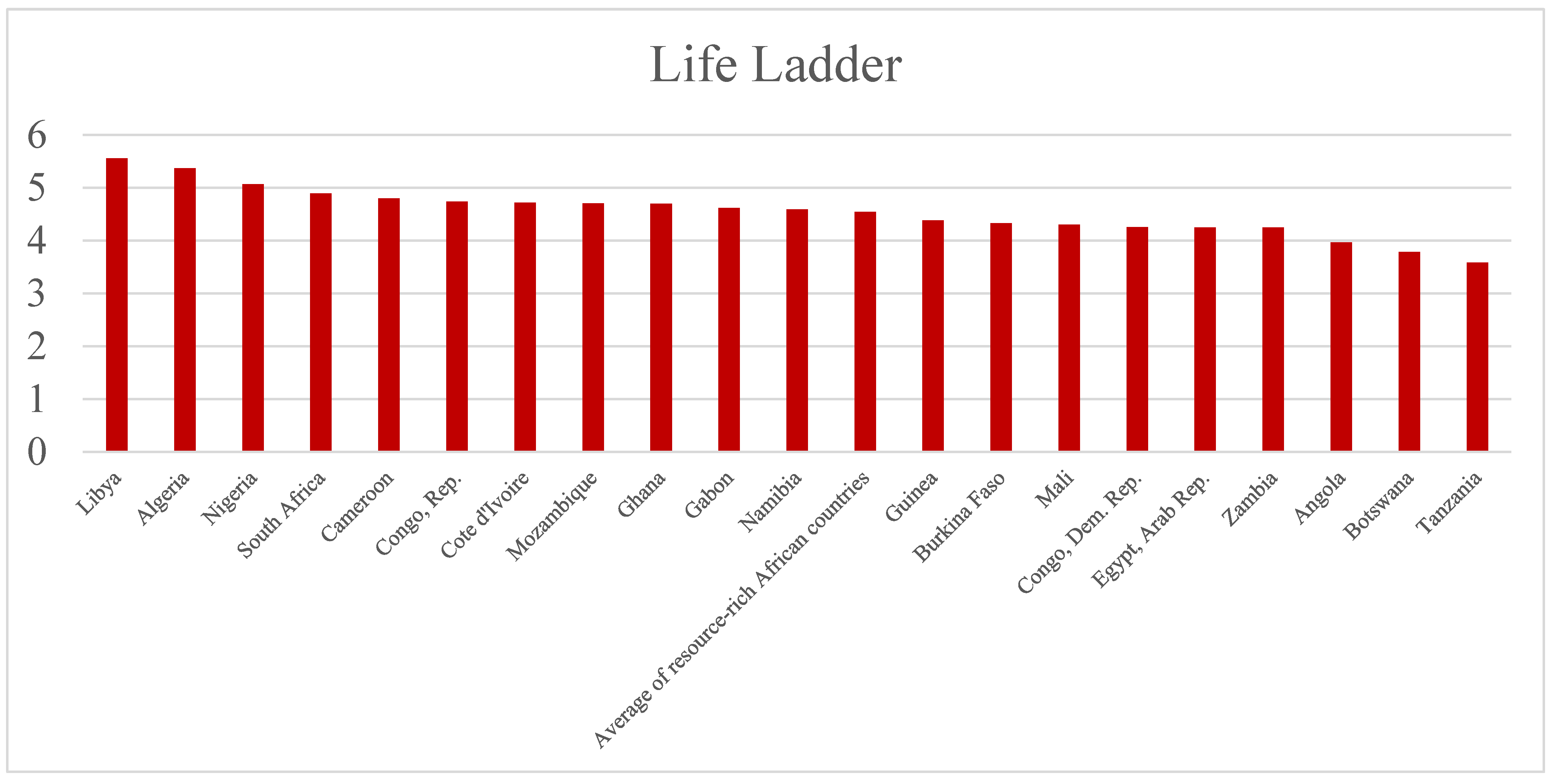
Similarly, the 2023 World Happiness Report reveals that no African nation makes the top 20 happiest economies (Wirajing et al., 2023), and 15 of the 20 saddest nations in the world are in Africa (Ketu, 2023). The record also shows that 23 out of the 42 lowest-ranked cities in the happiness index are in African countries. These facts and statistics highlight the low levels of subjective well-being and life satisfaction among African citizens and necessitate an investigation into the fundamentals that determine happiness in Africa. According to data from the 2024 World Happiness Report, Figure 1 reveals that the average life ladder score, a measure of happiness or subjective well-being, for citizens of African countries is 4.54 on a scale of 0 to 10 (where citizens with the worst possible life score 0, and those with the highest life satisfaction score 10). Figure 1 also highlights the country-specific performances of African economies with resource endowments. The information reveals that only Libya (5.56), Algeria (5.37), and Nigeria (5.07) perform marginally above the average value of 5 on a scale of 0 to 10. The remaining 17 resource-rich countries have an average life ladder index that falls below the study period average (5) for 2012 to 2022. It remains unclear whether the NRW of these countries improves or diminishes their citizens’ subjective well-being and life satisfaction. Hence, we study 20 African countries rich in resource wealth to determine whether their NREs translate into greater happiness or constitute a curse that diminishes the life satisfaction and well-being of their citizens. The existing literature demonstrates that research on Africa has not focused exclusively on economies with abundant natural resources; thus, this study is unique in this regard.
Moreover, research indicates that many African countries with abundant natural resources are subject to the resource curse (Olaniyi & Odhiambo, 2025a, 2025b, 2025c, 2025d; Sala-i-Martin & Subramanian, 2013; Abdulahi et al., 2019; Ajide et al., 2023), which hampers their socioeconomic development. This phenomenon not only undermines fundamental economic performance but can also lead to decreased life satisfaction and a decline in citizens’ subjective well-being. The steady income from natural resources can foster complacency among politicians, technocrats, policymakers, and other stakeholders, leading them to overlook proactive initiatives that could improve their citizens’ lives. They often perceive resource earnings as “manna” from heaven, viewing them as free money (Olaniyi & Odhiambo, 2025b, 2025c; Sala-i-Martin & Subramanian, 2013). This misguided perspective leads to a failure to invest in resource wealth in welfare-enhancing programmes that could boost citizens’ happiness.
Additionally, many RRA countries grapple with poor management of resource wealth, rent-seeking behaviours, and opportunistic practices (Olaniyi & Odhiambo, 2025b, 2025c, 2025d). Improving citizens’ happiness, subjective well-being, and life satisfaction presents an intriguing challenge in Africa (Amoaning et al., 2024). This issue raises critical questions about whether these countries are effectively using their resource income to finance initiatives and programmes that could enhance life satisfaction, happiness, and overall subjective well-being. The inadequate institutional development in these countries may explain why NRW does not translate into efficient allocation and distribution, thereby failing to improve citizens’ life satisfaction and happiness.
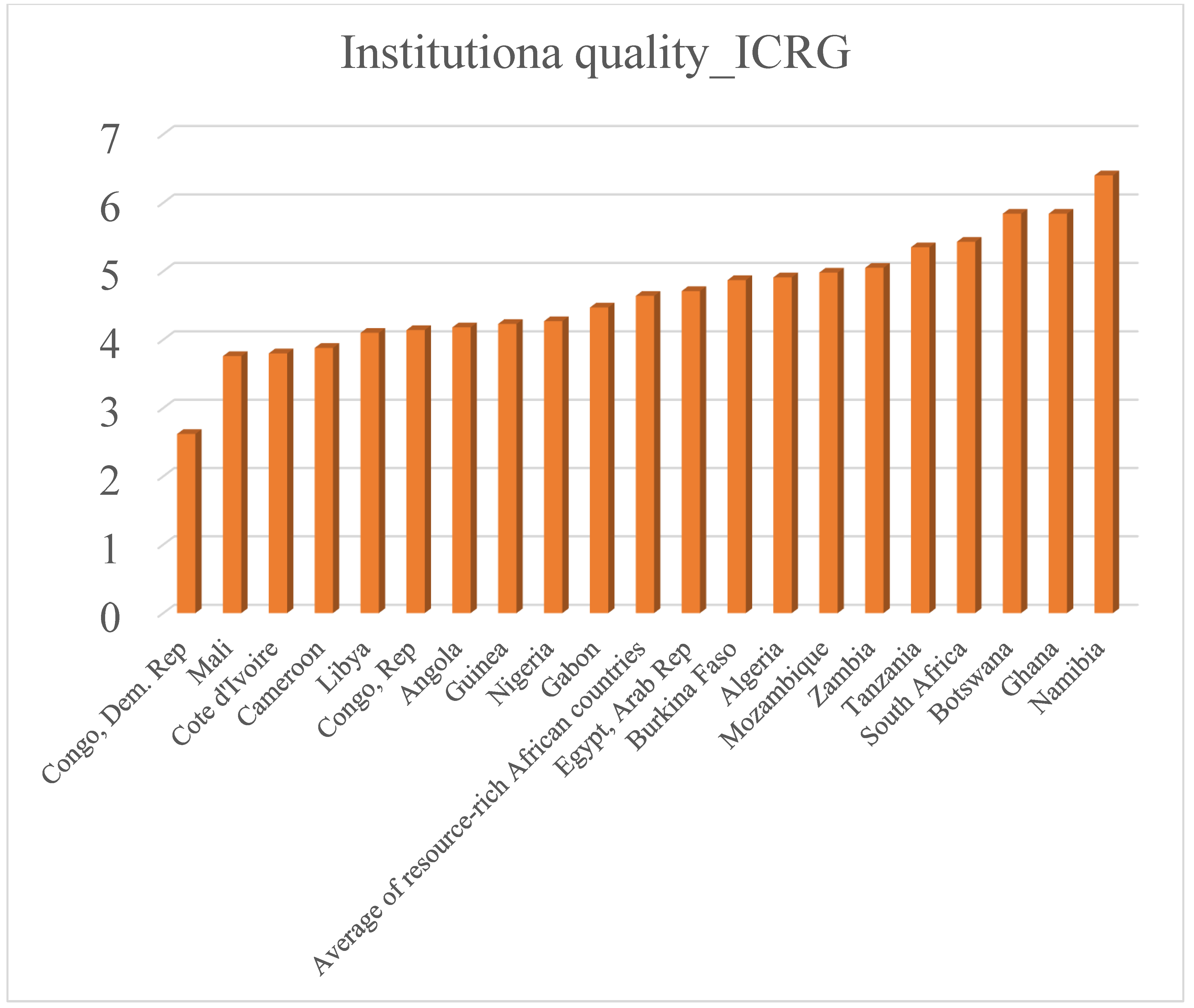
International Country Risk Guide (ICRG) data on corruption control in RRA countries reveal high levels of unregulated corruption. Unchecked corruption can undermine the potential benefits of NRW, ultimately negatively affecting citizens’ life satisfaction and happiness. Furthermore, African economies with resource endowments are characterised by weak institutions. The effectiveness of institutional measures may not be robust enough to prevent opportunistic behaviours, rent-seeking, political manoeuvring, and other exploitative practices that can obstruct the flow of resource income to initiatives promoting citizens’ happiness. The average value of five institutional metrics (bureaucratic quality, democratic accountability, government stability, law and order, and corruption control) for RRA countries is 4.64 on a scale of 0 to 10, indicating that these countries, on average, perform below the average level. The subpar performance in institutional quality (INST) has the potential to undermine the efficient distribution of resource wealth to initiatives and programmes aimed at enhancing subjective well-being and life satisfaction. The effectiveness of INST in curbing rent-seeking, corrupt practices, and opportunism in the management of NRW is only 46.6%. This inefficiency may hamper the allocation and distribution of NRW to initiatives that aim to improve citizens’ life satisfaction and happiness in resource-rich African economies. The INST data from the ICRG reveal significant inconsistencies and inadequacies in the institutional development of these countries. Figure 2 shows that 14 of the 20 sampled RRA countries score below the average value of 5 out of a maximum of 10.
In contrast, the remaining six countries—Namibia, Ghana, Botswana, South Africa, Tanzania, and Zambia—slightly exceed this average. Overall, none of the resource-rich countries demonstrates strong INST during the study period. Almost all the countries exhibit oscillatory trends in their institutional development. This startling fact highlights potential issues with INST’s effectiveness in allocating and distributing NRW efficiently toward happiness-enhancing initiatives in these countries.

1.4. Contributions of the Study

In summary, this study offers new perspectives on the global discourse in several significant ways. First, it distinguishes itself by examining how INST shapes NRW’s impact on citizens’ happiness. Examining how institutions shape the contribution of natural resource wealth to citizens’ happiness provides new insights into the resource curse theory in resource wealth-happiness literature. Second, this study employs fully modified least squares, the Driscoll–Kraay nonparametric covariance matrix estimator, and the method-of-moments quantile regression. These methods address key econometric challenges, including cross-sectional dependence, serial correlation, endogeneity, distributional effects, and heterogeneous impacts across quantiles. As a result, our estimations and analyses offer significant advantages by mitigating statistical and econometric pitfalls, leading to better-informed policy directions. These processes enhance our understanding of how the interaction between NRW and INST can serve as practical tools to improve citizens’ life satisfaction in naturally endowed countries in Africa. Third, this study represents a pioneering effort to determine the threshold of INST beyond which institutions significantly catalyse NRW, thereby enhancing citizens’ happiness and life satisfaction. It innovatively employs a dynamic panel threshold approach that effectively addresses issues of endogeneity, persistence, and dynamism in threshold analysis. Fourth, this study is the first to investigate the interactive roles of INST and NRW in shaping citizens’ happiness or subjective well-being in RRA countries.
The remaining aspects of the study are structured as follows: Section 2 reviews the theoretical and empirical literature. Section 3 provides descriptions of the data and outlines the methodological procedures. Section 4 discusses issues related to the presentation of empirical estimates and findings. Section 5 summarises the study, presents the conclusions, and discusses the practical policy implications of the results, while the final section addresses the limitations and offers suggestions for future research.

2. Literature Review

2.1. The Study’s Theoretical Perspective

This study draws on the resource curse theory as its theoretical foundation. The resource curse is a multidimensional syndrome because it affects multifaceted aspects of human life and socioeconomic fundamentals (Lotfalipour et al., 2022). The theory stresses that resource-rich economies perform worse than resource-scarce countries in socioeconomic and macroeconomic fundamentals (Fadillah & Pieńkowski, 2024; Slesman, 2024). This phenomenon may have severe implications for how resource wealth affects citizens’ subjective well-being and happiness, as this study emphasises. Ideally, earnings from NREs should be used to leverage funding for projects and programmes that improve the happiness and quality of life of people living in naturally endowed countries in Africa. Although it is not as prevalent in the literature, resource wealth is a boon that promotes welfare and improves citizens’ subjective well-being (Ali et al., 2020). Contrarily, political stakeholders, technocrats, and policymakers in most resource-rich economies become complacent due to the steady flow of resource earnings (Olaniyi & Odhiambo, 2025b, 2025c). The consistent flow of revenue from natural resource endowments breeds corruption tendencies in technocrats and politicians. This syndrome undermines their ability to invest in critical initiatives to improve the welfare and subjective well-being of their citizens. Conceptually, this theoretical exposition highlights that natural resource rents can either enhance or impede citizens’ happiness. Thus, happiness is a conceptual function of natural resource rents in an economy with resource endowments.
Natural resource wealth can cause welfare losses and turn into a curse, thereby eroding citizens’ happiness. Hence, the government and stakeholders fail to allocate resource income to projects and life-enhancing supports that improve human welfare and life satisfaction. Inadequate corruption control and weak institutions in many resource-rich economies foster rent-seeking, shrewd tactics, and opportunism in the administration of resource income. Because of this situation, NRW is perceived by stakeholders as manna from heaven and free money (Sala-i-Martin & Subramanian, 2013). These signals suggest that NREs often lead to rent-seeking and increased corruption (Noumba et al., 2022). Consequently, this hinders the ability to convert resource wealth into initiatives that enhance welfare and improve citizens’ happiness in resource-rich economies. By implication, institutional efficiency and inefficiency may improve or impair citizens’ levels of happiness and life satisfaction, as they tend to erode or increase public trust. It suggests that institutional quality has a theoretical explanation for citizens’ happiness in resource-rich countries. Based on these theoretical positions, this study hypothesises that:
H1. 
Natural resource endowments reduce citizens’ happiness in the resource-rich countries.
H2. 
Poor institutional quality deteriorates citizens’ happiness in resource-rich countries.
Weak institutional frameworks and excessive dependence on resource wealth can exacerbate corruption and foster unwarranted complacency among political leaders and technocrats (Fadillah, 2025). This phenomenon increases the resource curse. This syndrome could make them less interested in using earnings from natural resources to finance infrastructure and life-improving initiatives that raise the subjective well-being, or degree of happiness, of the populace. The availability of robust and effective mechanisms for controlling corruption is essential for the effective management and allocation of natural resource income into welfare-improving projects that could enhance the well-being of people in resource-rich nations. Thus, there is a high likelihood that resource-rich economies with weak institutions and high levels of unregulated corruption will underperform in leveraging resource earnings to improve their citizens’ subjective well-being or happiness (Fadillah, 2025; Ali et al., 2020). These highlighted conceptual and theoretical explanations indicate that the levels of institutional development may influence how natural resource rents contribute to citizens’ happiness and their subjective well-being. Therefore, in resource-rich economies, using resource wealth to raise the subjective well-being and happiness of the populace poses a significant challenge. This work stands apart from existing research by providing a first attempt to examine how institutional quality alters the responsiveness of citizens’ happiness to shifts in natural resource rents (NRRs), using the case of resource-rich African countries. It also determines, if any, a threshold of institutional quality beyond which institutional quality becomes potent in taming corrupt practices and rent-seeking activities in the administration of resource wealth and in stimulating the efficient allocation of resource income to initiatives that promote citizens’ happiness. Hence, this study builds on the conceptualisation that institutional quality may need to persistently exceed a specific threshold before institutions become potent enough to curb the resource curse and allocate resource rents to citizens’ happiness. Following these theoretical expositions, this study raises the following hypotheses to put the study in the right perspective:
H3. 
Institutional quality moderates the contribution of natural resource wealth to enhance or impede the happiness and life satisfaction of citizens in resource-rich countries.
H4. 
Institutional quality threshold in the relationship between natural resource wealth and citizens’ happiness.

2.2. Updates on Empirical Studies

Recent research continues to spark debates in the knowledge space over whether NREs are a blessing or a curse for the citizens’ happiness or life satisfaction. The empirical findings are still controversial and ambiguous despite the literature’s infancy. Overall, some researchers have found that NREs lower the public’s subjective well-being (Ali et al., 2020; Mignamissi & Kuete, 2021). The curses associated with resource abundance often breed opportunism, corruption, complacency, and various forms of manipulation. These factors often hinder investments in projects that enhance happiness, such as infrastructure, social services, high-quality education, healthcare, human capital development, and other initiatives that improve citizens’ subjective well-being and living standards. Contributing to this argument, Mignamissi and Kuete (2021) find that total NRRs reduce citizens’ subjective well-being in their analysis of 149 countries, using both nonparametric and parametric approaches. The finding suggests that resource endowments constitute a curse that lowers citizens’ happiness. Meanwhile, the study highlights that different types of NREs have varying impacts on citizens’ life satisfaction. Natural gas and oil rents diminish people’s happiness, while coal, mineral, and forest rents are not significant factors influencing citizens’ subjective well-being.
In a recent study, Lotfalipour et al. (2022) examined a dataset of 24 fuel-exporting economies from 2007 to 2020 using panel quantile regression. The study’s findings demonstrate that the welfare curse exists in these countries. Similarly, Fadillah (2025) establishes that NRRs reduce citizens’ happiness. This research contradicts Slesman’s (2022) findings, which used the system generalised method of moments (GMM) to analyse 112 resource-rich economies from 2006 to 2019 and found that resource abundance is an insignificant determinant of residents’ happiness. Opaleye and Nwachukwu (2019) also find that resource endowments are insignificant in driving happiness across four oil-producing African countries during 1995–2015, using fixed- and random-effects models. Fadillah and Pieńkowski (2024) equally detect an insignificant contribution of NREs to citizens’ subjective well-being in the analysis of 35 lower-middle-income countries. The existing and emerging studies on the role of NREs in citizens’ happiness in resource-rich economies are far from conclusive, as the findings remain mixed.
Another notable effort by Slesman (2024) found that oil rents neither bless nor curse the subjective well-being and happiness of citizens of 31 net-oil-exporting countries over the period 2006–2019. These research outputs also align with the findings of Fenton Villar (2022) in a study of 18 Latin American countries. Conversely, Vaskovskyi (2024) finds that in a panel analysis of 143 economies from 2012 to 2019, an abundance of natural resources hinders social progress. The empirical results of existing studies have remained inconsistent. For example, Manasseh et al. (2019) analysed Nigerian data from 1981 to 2015 using an error-correction mechanism (ECM). They found that oil revenue makes an insignificant contribution to the impetus needed to improve Nigerians’ human welfare and life satisfaction. Evidence in favour of the resource curse hypothesis was found in a panel analysis of oil-rich countries by Ali et al. (2020), examining the relationship between oil rents and happiness. This study found that oil wealth is negatively and significantly associated with citizens’ subjective well-being in resource-rich economies. It implies that these countries are unable to translate their resource abundance into gains in happiness and life satisfaction for their citizens.
In a country-specific analysis of Saudi Arabia’s data from 1990 to 2021, Omri and Kahia (2024) find strong, positive effects of NRW on human well-being. These findings suggest that the country’s resource endowments lead to better funding for initiatives that enhance citizens’ well-being. The study also establishes the moderating role of INST in shaping the impact of NRW on citizens’ well-being, with INST increasing NRW’s impact on gains and losses. In an empirical analysis of 29 African countries using the system GMM, Tobit regression, and panel-corrected standard error estimator over the period 2007–2018, Ketu’s (2023) study similarly concludes that NRRs are a blessing rather than a curse to the subjective well-being of African citizens, a point that the resource curse theory highlights. Meanwhile, Elmassah and Hassanein (2022), in the case of the United Arab Emirates from 1990 to 2019, analyse the role of NRRs in driving the citizens’ well-being using an ARDL estimator and find that human well-being reduces as resource wealth increases. This aligns with the proposition of the resource curse thesis. These findings align with the research outcomes of Amoaning et al. (2024). The study employs a system GMM and reports that an increase in resource wealth is associated with a decline in human welfare in its analysis of 32 African countries spanning 2004 to 2019. These findings suggest that resource income in resource-rich African countries contributes to a deterioration in their citizens’ welfare. This phenomenon may arise from the neglect of productive activities in the distribution of earnings from NREs and the diversion of resource wealth away from initiatives that could enhance the life satisfaction of the populace in these countries. Aside from studies examining the direct role of NRRs in happiness, there are also studies examining the direct impact of INST on happiness. The findings of such studies are mixed and inconclusive.
Ketu’s (2023) results regarding African countries establish a negative impact of governance on happiness. This study aligns with Ali et al. (2020), which affirms a negative impact on citizens’ life satisfaction and happiness. These studies validate that INST creates loopholes and inefficiencies that divert resources from initiatives that enhance the subjective well-being and life satisfaction of the populace. It also supports the idea that weak institutions make life more difficult for people. It also creates inefficiencies and rent-seeking in regulatory frameworks that worsen citizens’ lives. Along the same lines, Arvin and Lew (2014) argue and establish that corruption reduces life satisfaction and happiness. However, they contradict the findings of Li and An (2020) and Omri and Kahia (2024), which find that institutions have a positive impact on happiness. These studies find that efficient, well-coordinated institutions are crucial to ensuring that more resources are channelled into initiatives and policies that aim to make life more meaningful for the populace.

2.3. An Overview of the Literature’s Gaps

Critical evaluations of the existing literature on how natural resource earnings influence citizens’ subjective well-being reveal fascinating insights that highlight gaps in our understanding of the subject. One, there is only one empirical study that examines how INST affects the sensitivity of objective well-being to shifts in natural resource income in Saudi Arabia, a resource-rich economy. However, this study overlooks individual citizens’ subjective well-being. From a policy perspective, subjective well-being is of greater significance, as it encompasses citizens’ self-evaluations and personal perspectives on life satisfaction and happiness. It relates to self-esteem, mental health, psychological well-being, emotional state, living standards, and individual perceptions of happiness. Thus, examining how INST affects NRW’s contribution to citizens’ happiness is more pragmatic for robust policy perspectives.
Two, this study provides a distinctive perspective to existing African literature by presenting the first empirical research on how INST influences and moderates the responsiveness of citizens’ happiness to shifts in NRW in resource-rich African economies. Three, in contrast to existing research, we examine how the INST transmission channel affects the impacts of NRW on citizens’ happiness and life satisfaction in resource-rich African economies using robust mean-based and moment-based estimators. In particular, it uses the method of moments quantile regression, the Driscoll–Kraay nonparametric covariance matrix, and fully modified least squares. Cross-sectional dependence, endogeneity, serial correlation, distributional effects, and heterogeneous impacts across quantiles are among the statistical and economic problems these estimators address. Fourth, this study is the inaugural panel analysis of resource-rich countries that examines how INST affects NRW’s impact on citizen happiness. The analysis focuses on a case study of 20 African countries rich in natural resources.

3. Methodological Procedure, Data Source, and Descriptions

3.1. Data Description and Sources

This study uses annual data from 20 resource-abundant African economies spanning 2012 to 2022. The specific focus on the relationship between natural resource endowments (NREs) and citizens’ happiness informs the selection of these countries. At the same time, data availability serves as the rationale for the scope and duration. We exclude certain resource-rich countries in Africa due to insufficient data on key variables, such as the life ladder and institutional quality (INST). Meanwhile, our sample captures all the essential features of resource-wealthy economies in Africa. Also, all the sub-regions of Africa (West Africa, Southern Africa, East Africa, and Central Africa) are well represented in the dataset (see Table A1 in Appendix A for the list of the countries sampled). Thus, the dataset and sample size are sufficient to represent Africa’s resource-rich economies. We obtain data on natural resource rents (as a percentage of GDP), the consumer price index (a measure of inflation), and GDP per capita (constant 2015 US dollars) from the World Bank’s World Development Indicators database. Data on broad-based financial development are obtained from the International Monetary Fund (IMF) financial statistics database, which covers three key dimensions of financial institutions and markets: depth, accessibility, and efficiency.
Additionally, the measurement of happiness and life satisfaction used in this study is the Cantril ladder score (alternatively called the life ladder), which gauges self-reported happiness and life satisfaction. We obtain this data from Our World in Data (https://ourworldindata.org/happiness-and-life-satisfaction) (accessed on 12 December 2025). The dataset is also available in the World Happiness Report and the Gallup World Poll surveys. The index ranges from 0 to 10, with 10 at the top of the ladder representing the best possible life and zero at the bottom of the ladder representing the worst possible life. This happiness index is consistent and is the most popular indicator of the average level of subjective well-being of each person in an economy. It is self-reported and an evaluation of an individual’s level of happiness and life satisfaction. Unlike the prevalent objective measure, which neglects how individuals visualise, feel, and evaluate their life experiences and satisfaction, the life ladder measures life satisfaction on a scale from 0 (the worst possible life outcome) to 10 (the best possible life outcome). The happiness index covers subjective aspects of well-being, such as psychological well-being, emotional states, and each citizen’s mental health.
We utilise two dimensions of INST. Data on democratic accountability (1), bureaucratic quality (2), government stability (3), law and order (4), and corruption control (5) are sourced from the International Country Risk Guide (ICRG). While indicators 1, 2, and 5 are measured on a scale of 0–6, indicators 2 and 3 use scales of 0–4 and 0–12, respectively. Recent studies have demonstrated that these institutional measures combine to influence the overall development of an economy’s institutions (Olaniyi & Odhiambo, 2025a, 2025d). There is high interconnectivity and strong interdependence among them (Olaniyi & Odhiambo, 2025c). Consequently, analysing each measure independently may not yield accurate insights into how institutions collectively regulate NRW’s contribution to citizens’ life satisfaction and happiness in resource-rich African economies (Olaniyi et al., 2025; Olaniyi & Adedokun, 2022; Olaniyi & Odhiambo, 2025c). In addition, these metrics of institutional quality are closely related to one another (Olaniyi & Adedokun, 2022). Separating them or treating them individually may not produce the overall effects of institutional development in an economy (Gazdar & Cherif, 2015). Hence, to ensure uniform interpretation and comparison consistent with existing research (Demetriades & Hook Law, 2006; Law et al., 2013; Law et al., 2018; Aluko & Ibrahim, 2020; Tang et al., 2020), we rescale these metrics to a 0–10 scale and average the five indicators to create an overall INST index. A value close to 10 indicates strong institutions, whereas a value near 0 reflects weak INST (Demetriades & Hook Law, 2006). Following the existing research (Olaniyi & Odhiambo, 2025c; Olaniyi & Adedokun, 2022), we provide information and explanations on the rescaling processes of INST measures as follows:
(a)
Democratic accountability, corruption control, and law and order are on ordinal scales of 0–6. We rescale these metrics into 0–10 by using x 6 × 10 . x is the country’s score from a maximum of 6.
(b)
Government stability is ab initio on an ordinal scale of 0–12. It is rescaled to 0–10 using x 12 × 10 . x represents the country’s score.
(c)
Bureaucratic quality is originally on an ordinal scale of 0–4. It is normalised using x 4 × 10 . x is the country’s score
(d)
After rescaling the five metrics of institutional quality, this study, following existing studies (Aluko & Ibrahim, 2020; Olaniyi & Oladeji, 2021; Olaniyi & Odhiambo, 2025c), computes the overall index using the following formula.
i n s t = 1 g i = 1 g i n s t j , t
In this context, j represents each institution’s measure, t denotes the time series index, g indicates the number of INST metrics, and i n s t refers to the overall INST index.
We use five democracy indices from the latest V-DEM (varieties of democracy) database as alternative measures of institutions for a robustness check. These five measures are electoral democracy, liberalism, deliberation, egalitarianism, and participation. These INST metrics range from 0 to 1. A democracy or institution is considered poor if its score is closer to zero and strong if its score is closer to one. Thus, we examine the effect of overall democracy on citizens’ happiness and life satisfaction by averaging five metrics to compute the overall democracy index.

3.2. Modelling Procedure and Estimators

This study adopts the modelling procedures used in previous research regarding the impact of NRW on subjective well-being (Mignamissi & Kuete, 2021; Ali et al., 2020). Meanwhile, we augment the existing models by incorporating relevant variables to account for the study’s novelty. The happiness and life satisfaction model is specified as follows:
L i f e _ l a d d e r i t = ϑ 0 + ϑ 1 n r r i t + ϑ 2 i n s t i t + ϑ 3 f d i t + ϑ 4 i n f i t + ϑ 5 l r g d p p i t + μ i t  
where L i f e _ l a d d e r ,   i n s t ,   f d ,   n r r ,   i n f ,   a n d   l r g d p p   are life ladder (a metric of citizens’ happiness and life satisfaction), institutional quality, financial development, natural resource rents, inflation rate, and real GDP per capita, respectively. t   a n d   i are the study’s timeframe and cross-sectional units, respectively. ϑ 0 is the intercept or shift parameter. The remaining coefficients, ϑ 1 , , ϑ 5 , are the parameters that explain the effects of each variable on citizens’ happiness and life satisfaction in resource-rich economies. μ is the stochastic error term. The choice of control variables aligns with the positions of existing studies on the determinants of happiness or subjective well-being as follows: financial development, fd (Omri & Kahia, 2024; Pham et al., 2018); inflation, inf (Blanchflower et al., 2014; Abounoori & Eskandari, 2014); and real income, rgdpp (Arvin & Lew, 2014; Mignamissi & Kuete, 2021; Easterlin, 2001; Omri & Kahia, 2024; Ketu, 2023).
Only the direct and individual effects of INST and the abundance of natural resources on citizens’ happiness and life satisfaction are considered in Equation (1). However, this approach overlooks a key aspect of the study’s originality by failing to clarify how institutions influence the contributions of resource endowments to citizens’ happiness and life satisfaction. To address this, we introduce the interaction term between INST and NRW into Equation (1). This method helps validate or refute the moderating role that institutions play in determining how sensitive citizens’ happiness is to changes in resource income in resource-rich African economies. Therefore, we respecify Equation (1) as follows:
L i f e _ l a d d e r i t = ϑ 0 + ϑ 1 n r r i t + ϑ 2 i n s t i t + γ i n s t i t * n r r i t + ϑ 3 f d i t + ϑ 4 i n f i t + ϑ 5 l r g d p p i t + μ i t
Building on the moderating influence of institutions as described in Equation (2), this study examines the marginal effect of resource endowments on citizens’ happiness, given the quality of institutions. Thus, we take the first partial derivative of Equation (2) with respect to n r r , leading to Equation (3).
L i f e _ l a d d e r i t n r r i t = ϑ 1 + γ i n s t i t *  
Equation (3) provides all the possible explanations of how institutions modify the contributions of resource endowments to diminish or enhance citizens’ happiness. These interpretations depend on the statistical properties and signs of the two coefficients. Consistent with existing studies (Olaniyi & Odhiambo, 2025a, 2025c; Gazdar & Cherif, 2015), there are four potential interpretations to consider:
(a)
If ϑ 1 > 0 and γ > 0 ; this suggests that natural resource income plays a role in funding initiatives that enhance citizens’ happiness and life satisfaction. Additionally, institutional structures encourage and incentivise the efficient distribution of these resource earnings to improve citizens’ lives.
(b)
If ϑ 1 > 0 and γ < 0 ; The results suggest that resource earnings are directed towards significantly enhancing the subjective well-being of citizens. However, institutions may undermine these positive effects and impede progress by creating systemic loopholes that facilitate fraudulent practices and rent-seeking activities in resource income administration.
(c)
If ϑ 1 < 0 and γ > 0 ; this suggests that NREs have negative impacts that reduce citizens’ life satisfaction. However, effective institutional architectures offer strategic support to improve the allocation, distribution, and management of resource income, thereby mitigating these adverse effects.
(d)
If ϑ 1 < 0 and γ < 0 ; These findings suggest that NREs hurt citizens’ happiness. Weak institutions exacerbate crowding-out effects by fostering manipulative practices and rent-seeking in the administration of resource income.
Also, the study’s second goal is to identify the threshold of institutional quality at which it becomes sufficiently compelling to curb sharp practices and rent-seeking activities. This threshold is crucial for guaranteeing the efficient distribution of NRW and for promoting policy actions and initiatives that enhance citizens’ life satisfaction and happiness. Hence, this study adopts a dynamic panel threshold recently developed by Seo and Shin (2016) and further extended by Seo et al. (2019). Unlike the static method, this approach is more advantageous because it addresses dynamism, persistence, and nonlinearity in determining the threshold. It also provides information on the behaviour of variables before and after, splitting results into lower- and upper-regime paradigm shifts, to explain how institutions influence NRW’s contribution to citizens’ happiness and life satisfaction. We present the threshold model as follows:
L i f e _ l a d d e r i t = 1 , y i t δ 1 1 i n s t i t ϑ + 1 , y i t δ 2 1 i n s t i t > ϑ + ε i t      ε i t = φ i + ω i t      i = 1 , , n ;   t = 1 , , T  
where y i t defines the lag of the dependent variable and other control variables at time, t , for each cross-sectional unit, i . i n s t is the threshold variable. 1 . is the functional annotation that demarcates regimes, lower and upper, while δ 1 and δ 2 are coefficients for upper and lower regimes, respectively. The institutional quality threshold is defined by ϑ . The country-specific time-invariant and time-variant stochastic error terms are defined as φ i   a n d   ω , respectively.

3.3. Preliminary Analyses and Justification for the Estimators

To provide a solid interface for robust empirical analyses and interpretations of findings, this study conducts a series of preliminary analyses to guide the selection of appropriate estimators for addressing econometric pitfalls. The primary preliminary analyses include tests for multicollinearity, cross-sectional dependence, slope homogeneity, second-generation panel unit roots, Westerlund cointegration, descriptive statistics, and others. Following these preliminary analyses, we employ both moment-based and mean-based regressions to address the various econometric issues that may compromise the validity of the study’s estimates and policy outcomes.
One, we use a fully modified ordinary least squares (FMOLS) estimator to address serial correlation and potential endogeneity concerns in the models. This estimator is robust and efficient in handling small-sample issues and endogeneity, particularly in the context of long-run relationships and nonstationary processes. Consequently, it produces more reliable estimates and policy recommendations compared to variants of the generalised method of moments estimator (Bashir et al., 2024; Phillips & Hansen, 1990). However, FMOLS cannot address issues related to cross-sectional dependence (Anser et al., 2021; Dong et al., 2017). Therefore, we consider an alternative estimator to address this concern.
Two, this study addresses issues related to cross-sectional dependence by employing the robust standard error Driscoll and Kraay nonparametric covariance matrix estimator and mean group variant of dynamic common correlated effects regression. These two estimators are practical in the presence of cross-sectional dependence, spatial correlation, heterogeneity, heteroskedasticity, and autocorrelation. This capability is critical, as resource-rich economies in Africa share similar climate conditions and geographical characteristics (Espoir & Sunge, 2021). Consequently, shocks may spread across countries due to common factors influencing actions and reactions. Three, recent developments in research and econometrics have emphasised the importance of accounting for the flexibility of estimates, nonlinear impacts, and heterogeneous and distributional effects across quantiles to support varying policies from one quantile to another. To address these issues, this study employs the method of moments-quantile regressions developed by Machado and Silva (2019). This method effectively handles both normal and nonnormal errors, as well as outliers in the data distributions. Our three-dimensional estimators are robust, providing efficient and reliable estimates for practical policy recommendations. It is important to note that we do not specify the models for these estimators. While these models are significant, they are not the focus of our empirical investigations. Thus, presenting them is equivalent to mere statistical and econometric exercises.
Aside from the efficiency of FMOLS to perform well in the case of a relatively small sample size, the dynamic common correlated effect estimator is also an appropriate panel data technique that is efficient in yielding reliable estimates when the sample is relatively small, as is the case in this study, because it uses recursive de-meaning and Jackknife to correct for small sample bias in analysing panel data estimation (Chudik & Pesaran, 2015). Several studies have validated this argument through empirical analyses of panel datasets (Ditzen, 2018; Liu et al., 2022; Syed et al., 2022; Chen et al., 2023; Omay et al., 2024). Also, the dynamic panel threshold adopted in this study follows the underlying assumption of the generalised method of moments (GMM), and the approach produces effective threshold estimates when N (cross-sectional units) exceeds T (time scope). Hence, this study identifies the limitations of small samples in panel analysis, but the estimators adopted in our analysis are efficient and robust to address these limitations head-on.
To ensure that our findings and results follow unified, structured, and coherent econometric strategies, we link and interpret them to drive consistency and coherence. The estimates from all these estimators are compared in all cases to ensure robustness and to identify more practical policy alternatives for optimising natural resource rents and their interaction with institutional quality to enhance citizens’ happiness. Our empirical strategies and estimators tend to yield efficient and reliable findings and policy options.

4. Empirical Findings and Discussion

4.1. Descriptive Statistics and Multicollinearity Tests

We present and explain descriptive, factual evidence for all variables in the study to highlight their characteristics, thereby further guiding the choice of estimators. Table 1 displays the descriptive statistics for these variables. A comparison of standard deviation coefficients and mean values reveals that the average values of happiness and life satisfaction metrics ( L i f e _ l a d d e r ) , the two measures of institutions ( i n s t _ I C R G   a n d   i n s t _ D e m o ) , and real GDP per capita ( l g d p p ) closely represent the actual dataset. In contrast, the actual data for other variables diverges from their mean values. This finding underscores the need to account for heterogeneity and outliers in empirical estimates. Except for L i f e _ l a d d e r and i n s t _ I C R G , which exhibit a negative skew, the data distribution follows a positively skewed path. Three variables— n r r ,   f d ,   a n d   i n f —are leptokurtic, indicating a high probability of outliers, as suggested by their kurtosis coefficients.
In contrast, the other variables are platykurtic, showing a low probability of outliers in the data distribution. These findings underscore the importance of accounting for heterogeneous and distributional effects, which the method-of-moments quantile regression addresses. Except L i f e _ l a d d e r and i n s _ I C R G , which follow the path of normality, Jarque–Bera statistics show that data distributions are nonnormal. This result validates the selection of fully modified ordinary least squares as an estimator to capture serial correlation. The coefficients in the correlation matrix presented in Table 2 indicate that multicollinearity is not a threat to the study’s models and regression analyses. Additionally, the findings from the variance inflation factor (VIF) further confirm that there is no evidence of severe multicollinearity in either regression model (see Table 3). Both the tolerance (greater than 0.1) and VIF (less than 5) coefficients meet conventional benchmarks and threshold values (Studenmund, 2011; Olaniyi & Odhiambo, 2025c).

4.2. Cross-Sectional Dependence and Slope Homogeneity Tests

We use four cross-sectional dependence (CD) tests, and their results in Table 4 confirm strong interdependence and spatial dependence among the sampled countries. This finding implies that there are common factors that may influence people’s levels of happiness and life satisfaction, as well as the factors that contribute to these aspects. Shocks to one of these countries may spread to others. These findings support our initial decision to address CD and heteroskedasticity by employing the robust standard error method based on the Driscoll–Kraay nonparametric covariance matrix regression. Consequently, this approach has enhanced the validity and reliability of the estimates in our panel analyses. Similarly, slope heterogeneity is present in the sampled resource-rich African economies, as indicated by Pesaran and Yamagata’s (2008) slope homogeneity test results shown in Table 5. Therefore, it validates the use of the quantile regression approach, which captures the heterogeneous and distributional effects of INST and NREs, as well as their interactions, on the happiness and life satisfaction of citizens in Africa’s resource-abundant economies.

4.3. Cointegration and Panel Unit Root Tests

Following confirmation of cross-sectional dependence (CD) in the panel dataset, we examine the stationarity of the variables using the CIPS (cross-sectionally augmented IPS) and CADF (cross-sectionally augmented DF) tests. Table 6 (intercept only) and Table 7 (intercept and trend) show that while some variables attain stationarity at integration of order one, the majority are stationary at integration of order zero. These findings highlight mixed orders of integration. All variables attain stationarity in first differences, suggesting divergence in their short-run behavioural dynamics. Therefore, it is necessary to investigate cointegration to determine whether there is evidence of long-run convergence. Results from Westerlund’s (2008) variant of the cointegration test provide strong evidence of a long-run relationship in both models (see Table 8). These results indicate that variables are bound to experience long-run convergence in a sequence of short-run distortions and disequilibria. These findings support our decision to adopt both long- and short-run estimators to provide more robust estimates and policy recommendations for society, practices, and scholarship.

4.4. The Role of Institutional Quality in the Natural Resource Endowments-Citizens’ Happiness Nexus

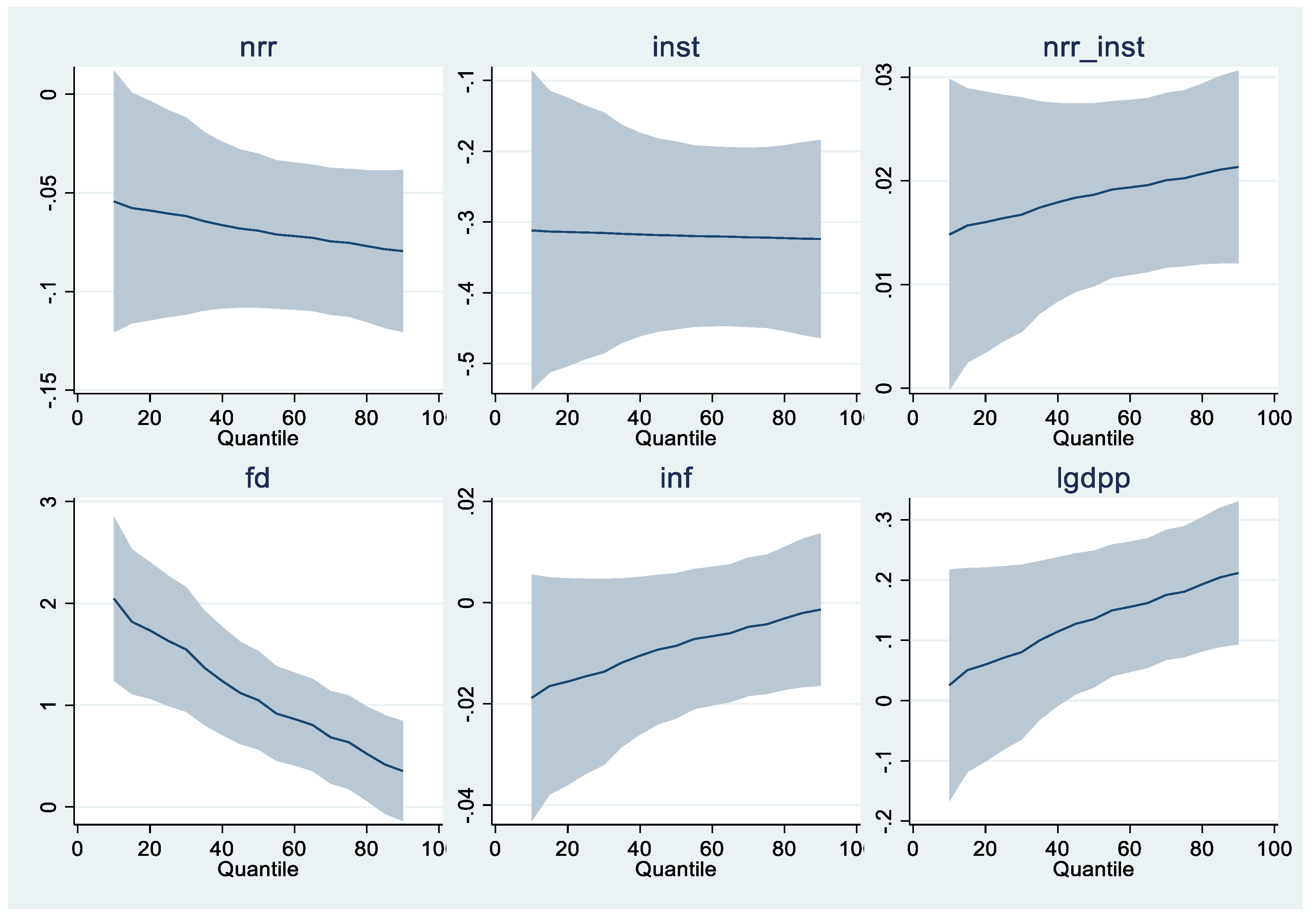
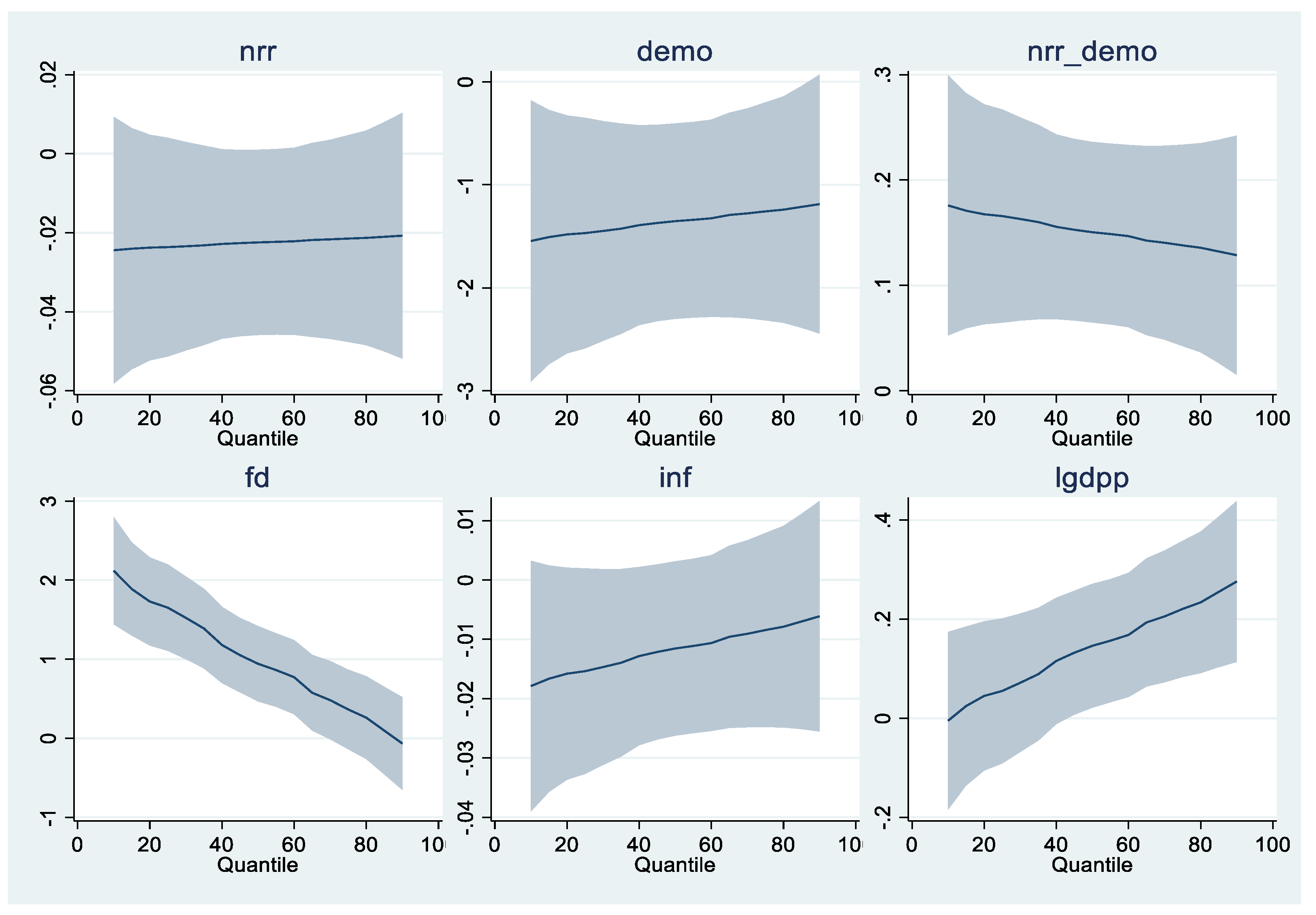
After completing several preliminary analyses, we shift our attention to the study’s primary objective: to explore how the quality of institutions affects the contribution of resource wealth to the happiness and life satisfaction of citizens in Africa’s resource-abundant economies. Table 9 and Table 10 summarise the empirical results, divided into two phases for each category. The first phase includes mean-based regressions using the robust standard-error Driscoll–Kraay regression, the mean-group variant of the dynamic common correlated effect (DCCEMG), and the fully modified ordinary least squares estimator. The second phase provides results of the moment-quantile regression method. Table 9 provides detailed findings based on ICRG institutional quality measures, while Table 10 presents results based on democracy institutional metrics. The study also presents graphical illustrations of the method-of-moments quantile regression in Figure 3 and Figure 4. This study’s main institutional quality metrics are from ICRG; the V-DEM (varieties of democracy) institutional measures serve as a robustness check. The lagged life ladder, a metric of happiness, has a significant negative coefficient (see Table 9 and Table 10). The statistical significance of this coefficient suggests a pattern and persistence in the citizens’ happiness and life satisfaction over time. Thus, previous happiness behaviour affects its current patterns. It suggests a behavioural trend in people’s happiness. The negative sign indicates that the citizens’ prior low levels of life satisfaction and happiness negatively affected their current subjective well-being. This finding is not surprising, as there has been a persistent record of low happiness and life satisfaction among citizens of these countries. This finding serves as a signal to governments and stakeholders to pursue deliberate, sustained policy actions and sustainable initiatives to enhance citizens’ life satisfaction and happiness. It takes time and persistence to improve citizens’ life satisfaction and overall fulfilment.
The coefficients for natural resource endowments (NREs) are negative and predominantly significant across all regression variants (see Table 9 and Table 10). These research outcomes indicate that resource wealth diminishes citizens’ life satisfaction and happiness in resource-rich African economies. These findings confirm the resource curse hypothesis: resource rents are associated with a dip in citizens’ happiness and life satisfaction. It supports the claim that resource endowments erode the welfare of the populace in Africa’s resource-rich countries. Hence, it establishes that the abundance of natural resource rents leads to a loss of happiness. The implications of these results are multifaceted and have several dimensions of interpretation in the situational context of RRA countries. Firstly, it implies that natural resource earnings in these countries are significantly spent on initiatives that reduce citizens’ subjective well-being, psychological and emotional well-being, mental health, and overall life satisfaction. This highlights irresponsible management and inefficient allocation of resource income, thereby distorting citizens’ perceptions of quality of life. Secondly, it suggests that the extraction of natural resources may be causing environmental disasters and posing a risk to citizens’ lives by releasing pollutants that diminish life satisfaction and threaten their overall mental health and psychological well-being. Thirdly, this finding suggests that NREs can act as a curse and an impediment, negatively affecting the life satisfaction and happiness of citizens in Africa’s resource-rich economies. Consequently, the direct benefits of natural resource earnings do not necessarily lead to increased happiness or enhanced subjective well-being for citizens. Natural resource earnings directly reduce citizens’ happiness. In RRA countries, these findings may suggest that resource wealth alone is insufficient to yield happiness gains for citizens; additional factors must accompany it. Ongoing earnings from resource endowments have contributed to a decline in citizens’ happiness across the continent. Our findings align with the research of Mignamissi and Kuete (2021), Fadillah (2025), Slesman (2024), and Ali et al. (2020). However, they contradict Ketu’s (2023) findings, which show that resource income enhances citizens’ life satisfaction and happiness. Additionally, our results are inconsistent with those of Fadillah and Pieńkowski (2024), which indicate that NRRs play an insignificant role in driving citizens’ subjective well-being.
Similarly, the coefficients for institutional quality are consistently negative and significant in nearly all regression analyses, except for the highest upper quantile of the model, where democracy is used as a measure of institutions. In this instance, the coefficient remains negative but is insignificant only in the last quantile of the citizens’ happiness model (see Table 9). These findings reveal inherent dysfunctions and deficiencies in institutional architectures, which adversely affect citizens’ happiness and life satisfaction. Existing institutions—measured by bureaucratic quality, control of corruption, law and order, democratic accountability, government stability, and other democratic dimensions—create burdens that negatively impact citizens’ subjective well-being, including psychological and emotional wellness, mental health, life satisfaction, and overall happiness. In resource-rich African economies, institutional structures and democracy contribute to the deterioration of intangible well-being and distortion in citizens’ life perceptions. This adverse effect suggests that institutions in these countries lead to unhappiness among citizens by promoting corruption, oppression, dissatisfaction, unfairness, inequality, and a loss of self-worth. These internal factors erode citizens’ confidence in governance and contribute to declines in overall life satisfaction. This finding contradicts the theoretical proposition, but it is not entirely unexpected given the prevalence of weak institutions and large-scale corruption in resource-rich countries in Africa, which can disincentivise and diminish citizens’ life satisfaction and happiness. These research outputs align with the propositions of the resource curse theory, which support the prevalence of weak institutions in resource-rich countries, leading to the mismanagement of resources and inefficiencies that drain citizens’ happiness and erode public trust in government policies and initiatives. Thus, life satisfaction dips as the resource curse worsens. These findings align with Ketu’s (2023) results regarding African countries, which demonstrate a negative impact of governance on happiness. They also support the negative impact reported by Ali et al. (2020). However, they contradict the findings of Li and An’s (2020) study, which found that institutions have a positive impact on happiness. After analysing the individual effects of NRW and INST on citizens’ happiness and life satisfaction, we shift our attention to how institutional quality modifies the relationship between resource wealth and citizens’ happiness.
The interaction effects of NRW and INST on people’s happiness and life satisfaction are significant and positive across all models and estimator types (both mean-based and moment-based regression). These findings offer deep insights and interpretations because the two macroeconomic variables—resource wealth and institutions—individually have direct adverse effects on citizens’ happiness and life satisfaction. In contrast, their interaction enhances the subjective well-being of the populace. These findings highlight the need to create sustainable, strategic synergy between institutional frameworks and NRW management. Only then can efforts to enhance citizens’ life satisfaction through the efficient allocation and distribution of resource earnings produce meaningful and beneficial outcomes in resource-rich economies in Africa. It suggests that while NREs negatively impact citizens’ happiness and overall life satisfaction, the institutional structures in RRA countries mitigate these adverse effects. By curbing rent-seeking and fraudulent practices in resource management, these institutions create incentives and frameworks that effectively manage, allocate, and distribute resource income toward initiatives that enhance happiness. This institutional quality channel facilitates transforming a resource curse into a resource blessing in these countries (Asiamah et al., 2022). The findings indicate that NREs’ ability to translate into a resource blessing and increased happiness for citizens depends on the effectiveness of existing institutional frameworks.
Africa’s economies, rich in NREs, must consciously design institutional measures to detect sharp practices, corrupt tactics, and rent-seeking activities to curtail institutional inefficiencies and structural flaws inherent in the administration of resource wealth and its distribution to initiatives that can improve life satisfaction, self-life perception, mental health, psychological wellness, emotional feelings, and the quality of life of their citizens. Governments and stakeholders should make conscious efforts to ensure complementarities between institutional development and the effective channelisation of resource wealth into initiatives and actionable policy instruments to improve the subjective well-being of the citizenry. More resource wealth allocation to enhance citizens’ happiness without a corresponding improvement in well-performing, efficient institutions may not yield the expected results. From a policy standpoint, natural resource endowments in African economies will constitute a drain on citizens’ happiness and result in welfare losses without the necessary and efficient institutions to coordinate and manage resource income for happiness-enhancing initiatives. Resource wealth in African countries without efficient institutions constitutes a curse to happiness; these countries need to improve the quality of their institutions to turn resource wealth into a blessing for citizens’ life satisfaction and happiness.
These results have validated our scholarly claim that institutional quality matters in how NRW contributes to citizens’ happiness and life satisfaction. The fact that institutional quality still drives NRW to improve citizens’ happiness despite its direct adverse impact on life satisfaction may indicate that, in Africa’s resource-rich economies, there is a threshold of institutional quality in this nexus. Beyond this threshold, institutions become potent to effectively curb rent-seeking behaviours and manipulative practices in the allocation and distribution of NRW. This process ensures that NRW is directed toward initiatives and projects that enhance life satisfaction and happiness. Operating above the threshold fosters efficient management of resource income, thereby supporting initiatives to enhance citizens’ happiness. Consequently, this study identifies a threshold value for institutional quality in relation to NRW and citizen satisfaction, intended to inform policymakers and governments in these nations. This fresh viewpoint and discovery have added a new level of depth to existing knowledge and to emerging African literature on the three pillars of citizens’ happiness, institutional quality, and natural resource endowments (NREs).
From a policy standpoint, these findings highlight that the life satisfaction and happiness benefits associated with NREs in RRA countries depend on the level and quality of existing institutions. The effects of NREs on citizens’ happiness are adverse unless accompanied by corresponding improvements in institutional quality. Thus, it is not NRW itself that is crucial for citizens’ happiness; rather, it is the combination of NREs with institutionally driven, efficient allocation and distribution of that wealth to initiatives that enhance citizens’ happiness and life satisfaction. Also, based on the findings, this study suggests a thorough pruning of institutional frameworks to identify built-in deficiencies and flaws. These efforts will help eliminate inherent loopholes and shortcomings in the institutional architecture and regulatory systems that administer, allocate, and distribute NRW. Such measures would facilitate the channelling of resource earnings into welfare initiatives, thereby enhancing happiness and improving life satisfaction for citizens in African economies rich in natural resources. Following the analysis and interpretation of the study’s primary variables, we turn to the control variables, which also influence citizens’ happiness and life satisfaction.
The model, using democracy as an institutional quality metric, shows that financial development significantly enhances citizens’ life satisfaction in African countries with abundant natural resources. Meanwhile, the results differ in the upper quantiles. This finding suggests that advancements in the financial sector contribute to the happiness of the populations in these nations. It implies that financial markets and institutions provide essential services, credit facilities, and technical expertise, enabling citizens to pursue investment opportunities and entrepreneurial ventures. These resources lead to higher incomes, allowing individuals to access necessities that improve their life satisfaction, including better perceptions of life, improved self-worth, better mental health, psychological and emotional well-being, a sense of security, and overall happiness. These results align with the study’s outcomes of Omri and Kahia (2024). Similarly, the coefficients of real GDP per capita indicate that income positively influences citizens’ happiness. This finding suggests that higher income provides citizens with more resources, better opportunities, and greater means to meet their needs. As a result, their quality of life and living standards improve, leading to increased satisfaction and a more positive outlook on life.
In contrast, inflation consistently negatively impacts happiness across all regressions. However, it is an insignificant factor influencing life satisfaction. There is no clear evidence that inflation erodes citizens’ purchasing power in RRA countries. Therefore, inflation does not pose a serious threat to the happiness and life satisfaction of these citizens.

4.5. Institutional Quality Threshold in the Relationship Between Citizens’ Happiness and Natural Resource Wealth

After analysing and interpreting how the quality of institutions moderates the contribution of NRW to citizens’ happiness and life satisfaction in Africa’s resource-rich economies, we will shift our focus to identify and discuss the threshold of institutional quality in this relationship. Table 11 and Table 12 present the results of the threshold analyses. Table 11 presents the threshold analysis using the International Country Risk Guide (ICRG) data as a proxy for institutional quality. In contrast, Table 12 presents the threshold analysis using the democracy index as a metric of institutional quality. We first establish the presence of linearities or nonlinearities to highlight evidence of a probable threshold. The bootstrapped p-values from the linearity tests in both cases affirm nonlinearity, indicating the existence of an institutional quality threshold. The threshold estimate for the ICRG institutional quality is 5.174 on an ordinal scale of 0 to 10, while the threshold estimate for the democracy index is 0.419 on an ordinal scale of 0 to 1.
This finding indicates that 5.17 is the level of institutional quality that must be attained in Africa’s resource-abundant economies before institutions become potent enough to correct institutional flaws by preventing sharp practices, rent-seeking, and manipulative tendencies in the management of resource income. This finding implies that institutions with a quality below 5.17 constitute a drag, leaking out the happiness- and life-satisfaction-enhancing benefits of resource wealth. Institutional quality levels below 5.17 may be too weak. It may give rent grabbers and seekers room to circumvent regulatory structures and engage in unethical practices to swindle and divert resource income away from initiatives and policy actions that could enhance citizens’ happiness and life satisfaction. This explains the situation in Africa’s resource-abundant economies, where the average institutional quality is 4.64 on an ordinal scale of 0 to 10. This average value falls short of the computed threshold value (5.17). These findings reveal that the quality of institutional frameworks in these economies is too poor and unable to facilitate the efficient management of resource wealth and guarantee its effective distribution, thereby hindering improvements in citizens’ life satisfaction and happiness. It appears that the existing institutional frameworks allow for corrupt practices and opportunistic behaviours that disadvantage citizens by lowering their happiness and overall subjective well-being. These findings may explain why institutional quality has a direct negative impact on citizens’ life satisfaction and happiness in these countries.
According to Figure 2, only five nations—Namibia, Ghana, Botswana, South Africa, and Tanzania—have average institutional quality performance above the threshold. The remaining 15 countries have average values that are below the threshold of 5.17. Also, four of the five countries consistently exceed the threshold value, while Tanzania appears inconsistent around it. This indicates that institutional development in Tanzania may be unable to facilitate efficient management and distribution of resource wealth to foster higher levels of happiness and life satisfaction for citizens. These findings have significant implications for these economies. It demonstrates that institutional frameworks have inherent defects that could erode public confidence in the government and its regulatory structures. It is also self-evident that institutions in most of these countries are below the threshold required to support the efficient and effective management and distribution of resource wealth to policy actions, projects, and initiatives that may enhance citizens’ life satisfaction and happiness. It implies that institutional quality must persistently exceed the threshold of 5.17 before it becomes a significant factor that can stimulate resource income to enhance citizens’ happiness and life satisfaction.
The threshold value for the democracy index is 0.419 on an ordinal scale from 0 to 1 (see Table 12). In contrast, the average for resource-wealthy economies in Africa is only 0.327 (see Table 1). These findings indicate that the current quality of institutions in these countries falls short of the level needed to curb corrupt practices and manipulative tendencies in administration, thereby ensuring the efficient distribution of resource income to support initiatives and policy actions that can enhance citizens’ life satisfaction and happiness. This result further underscores the inherent inadequacies and flaws in the regulatory frameworks governing the allocation of resource wealth to programmes and projects that could improve citizens’ subjective well-being and self-fulfilment. The average performance shows that only five countries (South Africa, Ghana, Botswana, Burkina Faso, and Namibia) exceed the estimated threshold, while the remaining 15 countries fall short. Notably, the economies that surpass the threshold tend to exhibit inconsistent institutional development.
A critical review of these two sources of institutional quality metrics (ICRG and V-DEM) indicates that Africa’s resource-wealthy economies generally possess weak institutional frameworks that do not ensure the efficient channelling of resource wealth to projects and initiatives aimed at enhancing citizens’ life satisfaction and happiness. These weak institutional architectures may explain the adverse direct effects of institutional quality on citizens’ happiness and overall life satisfaction. Consequently, governments and stakeholders in these countries must develop mechanisms and stringent measures to detect, prevent, rectify, and penalise institutional failures that divert resource wealth away from initiatives and projects that could improve citizens’ happiness. This policy suggestion is necessary because, as the study’s findings indicate, institutional quality stimulates the NRW to enhance citizens’ happiness.
These findings imply that harnessing natural resource wealth to finance initiatives that can improve citizens’ happiness and life satisfaction depends on the availability of efficient, well-performing institutions. Institutional development must persistently exceed the established threshold in resource-rich African countries before it can turn the resource curse associated with resource endowments into a blessing that improves citizens’ happiness. Thus, continuous improvement in institutional quality should be a top priority for the government and stakeholders, as it is a sine qua non for these economies to translate their natural resource endowments into greater happiness for their citizens. Hence, these countries must develop regulatory frameworks and institutional structures to guide the administration of natural resource wealth beyond the established threshold as prerequisites for resource wealth to enhance citizens’ life satisfaction. Similarly, a critical evaluation of these findings indicates weak institutions below the threshold, which aid sharp practices and cause these countries to misallocate resource wealth to happiness-impeding initiatives, culminating in deteriorating life satisfaction.


5. Study’s Conclusions, Summary, and Policy Implications

Researchers have recently begun examining how endowments of natural resources, which are viewed as either a boon or a bane in resource-rich economies, affect the happiness and life satisfaction of their citizens. Existing research outcomes remain inconclusive. Overall, some studies find that resource wealth has a diminishing effect, leading to a decline in happiness and life satisfaction. In contrast, others find an increasing effect, leading to greater happiness for citizens. The last group of scholars finds that natural endowments play an insignificant role in driving citizens’ happiness and life satisfaction. Aside from the inconclusiveness of existing research, previous studies assume that NREs automatically translate to gains or losses in happiness without considering the moderating role of institutional quality. This study argues that institutional quality plays a crucial role in how citizens’ happiness and life satisfaction respond to changes in NREs. Efficient and well-functioning institutions mitigate opportunistic behaviour and corruption in the allocation and management of resource income, facilitating its effective distribution to initiatives that enhance citizens’ life satisfaction in resource-rich countries.
In contrast, weak institutions enable exploitative practices and opportunism in the management of resource earnings. These sharp practices distort the perspectives of political leaders and technocrats regarding the financing of happiness-enhancing programmes. Consequently, these manipulative behaviours lead to a decline in citizens’ subjective well-being.
Therefore, this study contributes to the existing body of knowledge by examining the moderating role of institutional quality in influencing the relationship between NREs and citizens’ happiness. It also contributes to existing research by identifying a threshold of institutional quality above which resource wealth enhances citizens’ life satisfaction and happiness. This threshold is analysed using a dynamic panel threshold framework, which is the first of its kind in the literature. This approach considers factors such as dynamism, persistence, nonlinearity, and endogeneity in analysing the institutional quality threshold in the relationship between NRW and citizens’ happiness. Given the three-dimensional challenges of low life satisfaction and happiness, weak institutions, and the resource curse in resource-rich African (RRA) countries, this study focuses on these nations from 2012 to 2022. To achieve the study’s objective, we employ the fully modified ordinary least squares estimator, a robust standard-error Driscoll–Kraay nonparametric covariance matrix, the method-of-moments quantile regression, and a dynamic panel threshold. These estimators address econometric pitfalls such as endogeneity, cross-sectional dependency, and the flexibility of estimates and policies, as well as heterogeneous effects and distributional impacts across quantiles. The findings provide strong evidence that both INST and NREs serve as direct impediments that diminish citizens’ happiness and life satisfaction in RRA countries. These findings suggest that earnings from natural resources in these countries are often allocated to activities that compromise citizens’ subjective well-being and happiness.
Additionally, the results indicate that the extraction, distribution, and utilisation of natural resources, along with the associated income, constitute a curse that worsens citizens’ quality of life. Furthermore, the institutional frameworks in these countries exhibit inherent deficiencies and dysfunctions that place direct burdens on citizens’ emotional and psychological well-being, ultimately impairing their overall happiness and life satisfaction. Meanwhile, the interaction effects show that, despite the two macroeconomic variables’ direct, separate adverse effects, institutional quality in these nations complements NREs, boosting them and improving the happiness and life satisfaction of their citizens. According to these findings, institutions transform the adverse effects of NREs on citizens’ happiness into positive ones. These findings validate the essence of institutions’ moderating functions in converting resource wealth into increases in citizens’ happiness. Resource wealth without institutions is a curse that diminishes citizens’ subjective well-being; it suggests that NREs need the support of effective, well-functioning institutions to enhance citizens’ life satisfaction in Africa’s resource-rich countries. We identify an INST threshold of 5.17 on a scale of 10, beyond which NREs contribute to increased happiness. However, the majority of Africa’s resource-rich economies operate below this threshold.
Following these findings, the study’s outcomes provide evidence for the following practical implications and policy recommendations to enhance the existing knowledge as follows:

5.1. Practical Implications

The practical implications of the study’s findings are highlighted as follows: One, natural resource wealth makes the happiness and life satisfaction of citizens of resource-rich African countries worse off. The implication is that resource wealth is channelled to initiatives that impede and deteriorate the subjective well-being of the populace. This situation harms people’s psychological, emotional, and mental well-being, as well as their life satisfaction. Two, it also implies that the extraction of natural resources pollutes the environment and endangers ecosystems, which may have deteriorated the quality of life and happiness of ordinary people in resource-rich African countries. Three, it may suggest that persistent flows of resource incomes create complacency in stakeholders, technocrats, and politicians. This situation breeds corruption and deepens rent-seeking in the administration of resource wealth, leading to neglect of investment in initiatives such as social amenities, social empowerment programmes, actionable policies, education, and other measures that could enhance life satisfaction. These syndromes make the citizens’ happiness a victim of the resource curse. Fourth, institutional inefficiencies in resource-rich African countries breed distrust, cause citizens to lose interest in governance institutions, and lead to a deterioration in happiness and life satisfaction. Fifth, the findings reveal that institutional flaws and failures lead to the mismanagement of resources in the economy, and these social vices undermine citizens’ self-worth and perceptions of life, leaving them without a sense of belonging in their own countries. Sixth, the findings imply that there should be practical, synergistic chemistry between institutional architectures and resource wealth to ensure the effective channelisation of resource incomes into initiatives and actionable policies that enhance the life satisfaction and happiness of citizens in resource-rich African countries. Each produces an adverse effect on the populace’s happiness, and their combined effects spur an improvement in life satisfaction.

5.2. Policy Implications

First, governments and stakeholders should assess and address factors in NREs that reduce citizens’ happiness and life satisfaction. These include: (a) The government should set policy rules and design institutional safeguards to ensure the extraction of natural resources does not endanger citizens’ happiness and quality of life through the environmental damage that follows the extraction. (b) RRA countries must avoid using their NRW to finance initiatives and activities that erode people’s life satisfaction and happiness. Instead, these countries should allocate a greater share of natural resource earnings to projects and policy actions that enhance their citizens’ happiness. Governments should invest their resource wealth in social amenities, empowerment programmes, and other capacity-building initiatives that will improve people’s lives and enhance their quality of life. Second, governments and stakeholders must establish mechanisms to identify, address, and correct institutional deficiencies and dysfunctions that undermine citizens’ happiness and life satisfaction in RRA countries. There should be aggressive anti-corruption campaigns and strategies to forestall opportunistic inclinations and compel political officeholders and technocrats to manage resource wealth efficiently in the interest of citizens’ happiness. Third, governments, parastatals, and agencies in RRA countries should develop strategies to address the challenges posed by the resource curse and its negative impact on citizens’ life satisfaction and happiness. Fourth, stakeholders must diligently strengthen all institutional and regulatory frameworks that oversee the management, distribution, and allocation of NRW to fund projects and initiatives that improve citizens’ subjective well-being or happiness in resource-rich African nations. This policy recommendation is important because NREs without strong institutions lead to lower population happiness. In contrast, effective institutions help transform resource income into gains in happiness and improve life satisfaction for the people in Africa’s resource-rich nations.
Five, there should be concerted efforts and actionable steps to create sustainable, strategic synergies between institutional frameworks and NRW management to enhance citizens’ happiness in resource-rich African economies. As a result, fighting the resource curse and pursuing institutional development should be complementary, working in tandem to improve citizens’ life satisfaction and happiness in these countries. There must be serious, deliberate, and comprehensive moves by all institutional architectures and regulatory agencies to team up on actionable policies that unravel irregularities and institutional flaws. These moves will drive complementarities and synergies between institutions and the administration of resource wealth, thereby enhancing citizens’ happiness in African countries. Six, Africa’s resource-rich economies must prioritise institutional development beyond the estimated threshold. This policy suggestion is essential because the capacity of natural resource income to improve citizens’ life satisfaction and happiness relies on consistently maintaining institutional quality above the estimated threshold. Increasing resource income without a corresponding improvement in institutional development exacerbates the resource curse phenomenon and diminishes citizens’ happiness. Inherent institutional inefficiencies, deep corruption, and opportunistic tendencies thrive when institutional quality falls below the threshold required to ensure transparency and accountability in the administration and distribution of resource wealth for the pursuit of happiness. Institutional quality above the threshold is potent enough to tame negative manipulation and social vices, and this institutional level channels resources into initiatives that promote citizens’ happiness and life satisfaction.

6. Study’s Limitations and Suggestions for Future Research

This study offers a fresh perspective by examining how institutions shape the contribution of natural resource wealth to citizens’ happiness and life satisfaction in resource-rich economies. Meanwhile, the study encounters some limitations that subsequent research can address to keep the research cycle moving. The highlights are as follows: One, the policy relevance of this study is confined to African countries abundant in natural resources, as we focus on these specific cases. Therefore, to enhance the global significance of our research and findings, future studies should explore cases from other continents. Additionally, we excluded a few RRA countries due to insufficient data on key variables. Therefore, we recommend that future research include the remaining countries in this category. Two, this study does not account for the country-specific peculiarities and idiosyncrasies of resource-rich countries in Africa because of its panel analysis approach, despite these countries differing in their institutional development, citizens’ happiness and life satisfaction, and resource curse syndrome. Future research should address this issue to enrich the literature in the area.

Funding

This research receives no funding.

Institutional Review Board Statement

Not applicable.

Informed Consent Statement

Not applicable.

Data Availability Statement

Data will be available upon request from the corresponding author.

Acknowledgments

The authors appreciate the journal’s anonymous referees and the editorial team for their constructive comments on improving this paper.

Conflicts of Interest

There are no competing interests in the study.

Appendix A

Table A1. List of Africa’s Resource-Rich Countries Studied.
AlgeriaAngolaBotswana
Burkina FasoCameroonCongo Republic
Cote d’IvoireDemocratic Republic of CongoEgypt
GabonGhanaGuinea
LibyaMaliMozambique
NamibiaNigeriaSouth Africa
TanzaniaZambia

References

  1. Abdulahi, M. E., Shu, Y., & Khan, M. A. (2019). Resource rents, economic growth, and the role of institutional quality: A panel threshold analysis. Resources Policy, 61, 293–303. [Google Scholar] [CrossRef]
  2. Abounoori, E., & Eskandari, J. (2014). Comparison of the effects of unemployment and inflation on happiness. Asian Journal of Research in Business Economics and Management, 4(2), 348–359. [Google Scholar]
  3. Ajide, K. B., Ibrahim, R. L., Mohammed, A., & Al-Faryan, M. A. S. (2023). Infectious diseases and health outcomes’ implications of natural resource curse in Africa. Resources Policy, 81, 103394. [Google Scholar] [CrossRef]
  4. Ali, S., Murshed, S. M., & Papyrakis, E. (2020). Happiness and the resource curse. Journal of Happiness Studies, 21(2), 437–464. [Google Scholar] [CrossRef]
  5. Almustafa, H., Alipur, A., Faizulayev, A., Galariotis, E., & Pillai, R. (2025). Societal happiness and corporate cash holdings: The contingency role of climate policies. Journal of Environmental Management, 395, 127722. [Google Scholar] [CrossRef] [PubMed]
  6. Aluko, O. A., & Ibrahim, M. (2020). Institutions and the financial development–economic growth nexus in Sub-Saharan Africa. Economic Notes, 49(3), e12163. [Google Scholar] [CrossRef]
  7. Amoaning, F., Obeng, C. K., & Cantah, W. G. (2024). Impact of natural resource rents on well-being in Sub-Saharan Africa: The role of human capital. Research in Globalization, 8, 100203. [Google Scholar] [CrossRef]
  8. Anser, M. K., Syed, Q. R., & Apergis, N. (2021). Does geopolitical risk escalate CO2 emissions? Evidence from the BRICS countries. Environmental Science and Pollution Research, 28(35), 48011–48021. [Google Scholar] [CrossRef] [PubMed]
  9. Arvin, M., & Lew, B. (2014). Does income matter in the happiness-corruption relationship? Journal of Economic Studies, 41(3), 469–490. [Google Scholar] [CrossRef]
  10. Asiamah, O., Agyei, S. K., Bossman, A., Agyei, E. A., Asucam, J., & Arku-Asare, M. (2022). Natural resource dependence and institutional quality: Evidence from Sub-Saharan Africa. Resources Policy, 79, 102967. [Google Scholar] [CrossRef]
  11. Bashir, M. F., Shahbaz, M., Ma, B., & Alam, K. (2024). Evaluating the roles of energy innovation, fossil fuel costs and environmental compliance towards energy transition in advanced industrial economies. Journal of Environmental Management, 351, 119709. [Google Scholar] [CrossRef]
  12. Blanchflower, D. G., Bell, D. N., Montagnoli, A., & Moro, M. (2014). The happiness trade-off between unemployment and inflation. Journal of Money, Credit and Banking, 46(S2), 117–141. [Google Scholar] [CrossRef]
  13. Chen, Y. S., Chen, Z., Ali, S., Ullah, M. I., & Anser, M. K. (2023). Dynamic common correlated effects of financial inclusion on foreign direct investment: Evidence from East-Asia and Pacific countries. Borsa Istanbul Review, 23(3), 541–549. [Google Scholar] [CrossRef]
  14. Chudik, A., & Pesaran, M. H. (2015). Common correlated effects estimation of heterogeneous dynamic panel data models with weakly exogenous regressors. Journal of Econometrics, 188(2), 393–420. [Google Scholar] [CrossRef]
  15. Demetriades, P., & Hook Law, S. (2006). Finance, institutions and economic development. International Journal of Finance & Economics, 11(3), 245–260. [Google Scholar] [CrossRef]
  16. Ditzen, J. (2018). Estimating long-run effects in models with cross-sectional dependence using xtdcce2: Three ways to estimate long-run coefficients. The Stata Journal, 3, 585–617. [Google Scholar] [CrossRef]
  17. Dong, K., Sun, R., & Hochman, G. (2017). Do natural gas and renewable energy consumption lead to less CO2 emissions? Empirical evidence from a panel of BRICS countries. Energy, 141, 1466–1478. [Google Scholar] [CrossRef]
  18. Easterlin, R. A. (2001). Income and happiness: Towards a unified theory. The Economic Journal, 111(473), 465–484. [Google Scholar] [CrossRef]
  19. Elmassah, S., & Hassanein, E. A. (2022). Can the resource curse for well-being be morphed into a blessing? Investigating the moderating role of environmental quality, governance, and human capital. Sustainability, 14(22), 15053. [Google Scholar] [CrossRef]
  20. Espoir, D. K., & Sunge, R. (2021). CO2 emissions and economic development in Africa: Evidence from a dynamic spatial panel model. Journal of Environmental Management, 300, 113617. [Google Scholar] [CrossRef]
  21. Fadillah, M. I. (2025). Resource wealth and happiness: Evaluating the ‘resource curse’ vs. ‘resource-based development’ theories. Return: Study of Management, Economic and Business, 4(1), 58–64. [Google Scholar] [CrossRef]
  22. Fadillah, M. I., & Pieńkowski, D. (2024). The relationship between natural resource abundance and happiness for lower-middle-income countries. In BIO web of conferences (Vol. 123, p. 03009). EDP Sciences. [Google Scholar] [CrossRef]
  23. Fambeu, A. H. (2023). Do information and communication technologies (ICTs) make Africans happy? Canadian Journal of Development Studies/Revue Canadienne D’études du Développement, 44(4), 629–644. [Google Scholar] [CrossRef]
  24. Fambeu, A. H., Mbondo, G. D., & Yomi, P. T. (2022). Bigger or better? The effect of public spending on happiness in Africa. African Development Review, 34(4), 487–499. [Google Scholar] [CrossRef]
  25. Fenton Villar, P. (2022). Is there a mineral-induced ‘Economic Euphoria’?: Evidence from Latin America. Journal of Happiness Studies, 23(4), 1403–1430. [Google Scholar] [CrossRef]
  26. Gazdar, K., & Cherif, M. (2015). Institutions and the finance–growth nexus: Empirical evidence from MENA countries. Borsa Istanbul Review, 15(3), 137–160. [Google Scholar] [CrossRef]
  27. Helliwell, J. F., Layard, R., Sachs, J. D., & Neve, J. E. D. (2021). World happiness report 2021. Sustainable Development Solutions Network. [Google Scholar]
  28. Ketu, I. (2023). Infrastructure development and subjective well-being in Africa: Linkages and pathways. Global Social Welfare, 1–20. [Google Scholar] [CrossRef]
  29. Law, S. H., Azman-Saini, W. N. W., & Ibrahim, M. H. (2013). Institutional quality thresholds and the finance–growth nexus. Journal of Banking & Finance, 37(12), 5373–5381. [Google Scholar] [CrossRef]
  30. Law, S. H., Kutan, A. M., & Naseem, N. A. M. (2018). The role of institutions in finance curse: Evidence from international data. Journal of Comparative Economics, 46(1), 174–191. [Google Scholar] [CrossRef]
  31. Li, Q., & An, L. (2020). Corruption takes away happiness: Evidence from a cross-national study. Journal of Happiness Studies, 21, 485–504. [Google Scholar] [CrossRef]
  32. Liu, Z., Pang, P., Fang, W., Ali, S., & Anser, M. K. (2022). Dynamic common correlated effects of pandemic uncertainty on environmental quality: Fresh insights from East Asia and Pacific countries. Air Quality, Atmosphere & Health, 15(8), 1395–1411. [Google Scholar] [CrossRef]
  33. Lotfalipour, M. R., Ali, S., & Salehnia, N. (2022). Natural resources: A curse on welfare? Resources Policy, 79, 103056. [Google Scholar] [CrossRef]
  34. Machado, J. A., & Silva, J. S. (2019). Quantiles via moments. Journal of Econometrics, 213(1), 145–173. [Google Scholar] [CrossRef]
  35. Manasseh, C. O., Abada, F. C., Ogbuabor, J. E., Okoro, O. E., Egele, A. E., & Ozuzu, K. C. (2019). Oil price fluctuation, oil revenue and well-being in Nigeria. International Journal of Energy Economics and Policy, 9(1), 346–355. [Google Scholar] [CrossRef]
  36. Mignamissi, D., & Kuete, Y. F. M. (2021). Resource rents and happiness on a global perspective: The resource curse revisited. Resources Policy, 71, 101994. [Google Scholar] [CrossRef]
  37. Noumba, I., Noula, A. G., & Nguea, S. M. (2022). Do globalisation and resource rents matter for human well-being? Evidence from African countries. International Economics, 170, 49–65. [Google Scholar] [CrossRef]
  38. Olaniyi, C. O., & Adedokun, A. (2022). Finance-institution-growth trilogy: Time-series insights from South Africa. International Journal of Emerging Markets, 17(1), 120–144. [Google Scholar] [CrossRef]
  39. Olaniyi, C. O., Al-Faryan, M. A. S., & Ogbaro, E. O. (2025). Do institutional quality and its threshold matter in the sensitivity of the renewable energy transition to financial development? New empirical perspectives. International Journal of Finance & Economics, 30(1), 5–43. [Google Scholar] [CrossRef]
  40. Olaniyi, C. O., & Odhiambo, N. M. (2025a). Does economic complexity provide antidotal pathways to evade the resource curse syndrome? A novel role for institutions. Sustainable Development, 33(2), 3118–3142. [Google Scholar] [CrossRef]
  41. Olaniyi, C. O., & Odhiambo, N. M. (2025b). Exploring novelties in the causal relationship between economic complexity and natural resource rent: Empirical insights from Nigeria and South Africa. Journal of Open Innovation: Technology, Market, and Complexity, 11(1), 100483. [Google Scholar] [CrossRef]
  42. Olaniyi, C. O., & Odhiambo, N. M. (2025c). Finding explanations for weak economic complexity in resource-rich African countries: Exploring the role of natural resource endowment and institutional quality. Resources Policy, 101, 105455. [Google Scholar] [CrossRef]
  43. Olaniyi, C. O., & Odhiambo, N. M. (2025d). Modelling asymmetric and nonlinear features in the natural resource wealth-economic complexity nexus: Empirical insights from Nigeria. Mineral Economics, 38, 177–201. [Google Scholar] [CrossRef]
  44. Olaniyi, C. O., & Oladeji, S. I. (2021). Moderating the effect of institutional quality on the finance–growth nexus: Insights from West African countries. Economic Change and Restructuring, 54(1), 43–74. [Google Scholar] [CrossRef]
  45. Omay, T., Akdi, Y., Emirmahmutoglu, F., & Eryılmaz, M. (2024). The refinement of a common correlated effect estimator in panel unit root testing: An extensive simulation study. Mathematics, 12(22), 3458. [Google Scholar] [CrossRef]
  46. Omri, A., & Kahia, M. (2024). Natural resources abundance and human well-being: The role of institutional quality. Social Indicators Research, 173(3), 607–644. [Google Scholar] [CrossRef]
  47. Opaleye, S. S., & Nwachukwu, C. E. (2019). Does oil rent increase happiness? A partial efficiency analysis of selected African countries. Trends Economics and Management, 13(34), 97–111. [Google Scholar] [CrossRef]
  48. Pesaran, M. H., & Yamagata, T. (2008). Testing slope homogeneity in large panels. Journal of Econometrics, 142(1), 50–93. [Google Scholar] [CrossRef]
  49. Pham, T., Talavera, O., & Zhang, M. (2018). Self-employment, financial development, and well-being: Evidence from China, Russia, and Ukraine. Journal of Comparative Economics, 46(3), 754–769. [Google Scholar] [CrossRef]
  50. Phillips, P. C., & Hansen, B. E. (1990). Statistical inference in instrumental variables regression with I (1) processes. The Review of Economic Studies, 57(1), 99–125. [Google Scholar] [CrossRef]
  51. Sala-i-Martin, X., & Subramanian, A. (2013). Addressing the natural resource curse: An illustration from Nigeria. Journal of African Economies, 22(4), 570–615. [Google Scholar] [CrossRef]
  52. Seo, M. H., Kim, S., & Kim, Y. J. (2019). Estimation of dynamic panel threshold model using Stata. The Stata Journal, 19(3), 685–697. [Google Scholar] [CrossRef]
  53. Seo, M. H., & Shin, Y. (2016). Dynamic panels with threshold effect and endogeneity. Journal of Econometrics, 195(2), 169–186. [Google Scholar] [CrossRef]
  54. Shin, D. C. (1980). Does rapid economic growth improve the human lot? Some empirical evidence. Social Indicators Research, 8(2), 199–221. [Google Scholar] [CrossRef]
  55. Slesman, L. (2022). The elusive curse of natural resources on happiness. Resources Policy, 79, 103112. [Google Scholar] [CrossRef]
  56. Slesman, L. (2024). Oil dependency and happiness in net oil-exporting countries: Is it a curse or blessing? Middle East Development Journal, 16(1), 1–26. [Google Scholar] [CrossRef]
  57. Stéphane, M. N., & Noumba, I. (2024). Does being globalised matter for happiness in African countries? Journal of Happiness Studies, 25(3), 27. [Google Scholar] [CrossRef]
  58. Studenmund, A. H. (2011). Using econometrics: A practical guide (pp. 440–447). Pearson Education. [Google Scholar]
  59. Syed, A. A., Kamal, M. A., & Ullah, A. (2022). Do shadow economy, institutional regulatory framework, government stability, and corruption affect non-performing banking loans in emerging market economies: A dynamic common correlated effect (DCCE) approach. International Social Science Journal, 72(246), 979–997. [Google Scholar] [CrossRef]
  60. Tang, C. F., Salman, A., & Abosedra, S. (2020). Dynamic interaction of tourism, finance, and institutions in explaining growth in Asia’s little dragon economies. International Journal of Tourism Research, 22(1), 15–25. [Google Scholar] [CrossRef]
  61. Vaskovskyi, A. (2024). Natural resources and quality of life: International evidence. The Singapore Economic Review, 69(01), 169–182. [Google Scholar] [CrossRef]
  62. Voukelatou, V., Gabrielli, L., Miliou, I., Cresci, S., Sharma, R., Tesconi, M., & Pappalardo, L. (2021). Measuring objective and subjective well-being: Dimensions and data sources. International Journal of Data Science and Analytics, 11(4), 279–309. [Google Scholar] [CrossRef]
  63. Westerlund, J. (2008). Panel cointegration tests of the Fisher effect. Journal of Applied Econometrics, 23(2), 193–233. [Google Scholar] [CrossRef]
  64. Wirajing, M. A. K., Nchofoung, T. N., & Nanfosso, R. T. (2023). Revisiting the inequality-well-being nexus: The case of developing countries. Global Social Welfare, 1–14. [Google Scholar] [CrossRef]
Figure 1. Average performances of resource-rich African countries in the citizens’ happiness index (life ladder index) over the period 2012–2022.
Economies 14 00170 g001
Figure 2. Average institutional quality index of resource-rich African countries (2012–2022). Note: ICRG: International Country Risk Guide.
Economies 14 00170 g002
Figure 3. Graphical presentation of quantile regression with ICRG institutional quality in Table 9. Note: nrr: natural resource rents; inst_ICRG: institutional quality from International Country Risk Guide; fd: financial development; inf: inflation rate; lgdppp: logarithm of real gross domestic product per capita.
Economies 14 00170 g003
Figure 4. Graphical presentation of quantile regression with V-DEM institutional quality in Table 10. Note: nrr: natural resource rents; inst_demo: institutional quality from Varieties of Democracy; fd: financial development; inf: inflation rate; lgdppp: logarithm of real gross domestic product per capita.
Economies 14 00170 g004
Table 1. Descriptive statistics.
Life-LaddernrrInst-ICRGInst-Demofdinflgdpp
Mean4.54312.6994.6410.3270.2146.7417.606
Median4.5979.5154.5830.3010.1364.7677.612
Maximum6.35561.0356.5830.6290.73231.2569.493
Minimum2.9030.6562.3960.0980.029−3.2336.042
Standard Deviation0.64810.8440.8900.1470.1746.3860.895
Skewness−0.0991.579−0.0570.4551.5961.5780.030
Kurtosis2.3515.9352.8671.9974.4595.7441.772
Jarque-Bera4.217170.3590.28116.824112.927160.27913.856
Probability0.1210.0000.8690.0000.0000.0000.001
Observations220220220220220220220
Note: nrr: natural resource rents; inst-ICRG: institutional quality from International Country Risk Guide; inst-Demo: institutional quality from Variety of Democracy; fd: financial development; inf: Inflation rate; lgdppp: logarithm of real gross domestic product per capita.
Table 2. Correlation matrix.
Life-LaddernrrInst-ICRGInst-Demofdinflgdpp
Life-ladder1.000
nrr0.2061.000
inst-ICRG−0.059−0.4081.000
inst-Demo−0.023−0.4660.6331.000
fd0.239−0.2410.5350.3301.000
inf−0.0780.0200.134−0.0820.0001.000
lgdpp0.2810.0880.3500.1640.5530.0821.000
Note: nrr: natural resource rents; inst-ICRG: institutional quality from International Country Risk Guide; inst-Demo: institutional quality from Variety of Democracy; fd: financial devel-opment; inf: inflation rate; lgdppp: logarithm of real gross domestic product per capita.
Table 3. Variance inflation factor (VIF).
Model with ICRG Data on Institutional QualityModel with V-DEM Data on Institutional Quality
VariableVIF V I F Tolerance R 2 VariableVIF V I F Tolerance R 2
fd1.8601.3640.5370.463fd1.6801.2960.5950.405
inst1.6901.3000.5930.407lgdpp1.6001.2650.6270.373
lgdpp1.6201.2730.6160.384nrr1.4201.1920.7060.294
nrr1.3401.1580.7450.255demo1.3901.1790.7170.283
inf1.0401.0200.9640.036inf1.0201.0100.9810.019
Mean VIF1.510 Mean VIF1.420
Note: nrr: natural resource rents; inst-ICRG: institutional quality from International Country Risk Guide; inst-Demo: institutional quality from Variety of Democracy (V-DEM); fd: financial development; inf: inflation rate; lgdppp: logarithm of real gross domestic product per capita.
Table 4. CD Tests in the series.
Life-LaddernrrInst-ICRGInst-Demofdinflgdpp
Breusch-Pagan LM351.474 ***698.658 ***622.124 ***733.460 ***448.301 ***358.697 ***998.365 ***
Pesaran scaled LM8.283 ***26.094 ***22.168 ***27.879 ***13.251 ***8.654 ***41.468 ***
Bias-corrected scaled LM7.283 ***25.094 ***21.168 ***26.879 ***12.251 ***7.654 ***40.468 ***
Pesaran CD2.063 **19.983 ***0.7336.645 ***6.624 ***10.765 ***7.125 ***
** and *** are 5% and 1% levels of significance. Note: nrr: natural resource rents; inst-ICRG: institutional quality from International Country Risk Guide; inst-Demo: institutional quality from Variety of Democracy (V-DEM); fd: financial development; inf: inflation rate; lgdpp: logarithm of real gross domestic product per capita.
Table 5. Slope homogeneity test (Pesaran & Yamagata, 2008).
Models ~ ~ a d j
L i f e l a d d e r = f ( n r r ,   i n s t I C R G , n r r i n s t I C R G ,   f d   i n f ,   l g d p p )−8.367 ***−7.048 ***
L i f e l a d d e r , = f ( n r r ,   i n s t D e m o ,   n r r i n s t D e m o ,   f d ,   i n f ,   l g d p p ) −8.367 ***−7.048 ***
*** implies 1 percent level of significance. Note: nrr: natural resource rents; inst-ICRG: in-stitutional quality from International Country Risk Guide; inst-Demo: institutional quality from Variety of Democracy (V-DEM); fd: financial development; inf: inflation rate; lgdppp: logarithm of real gross domestic product per capita.
Table 6. Panel unit root tests (constant alone).
VariablesCADF TestCIPS Test
LevelΔLevelΔ
Life-ladder−2.613 ***-−2.613 ***-
nrr−2.248 **-−2.673 ***-
inst-ICRG−2.073 **-−3.634 **-
inst-Demo−2.050 *−2.616 ***−2.756 ***-
fd−1.969−2.855 ***−2.284 **-
inf−2.193 **-−2.193 *−3.145 ***
lgdpp−5.303 ***-−2.132 *−3.585 ***
*, **, and *** are 10%, 5%, and 1% levels of significance, respectively. Note: nrr: natural resource rents; inst-ICRG: institutional quality from International Country Risk Guide; inst-Demo: institutional quality from Variety of Democracy; fd: financial development; inf: inflation rate; lgdpp: logarithm of real gross domestic product per capita. Δ denotes first difference.
Table 7. Panel unit root tests (constant and trend).
VariablesCADF TestCIPS Test
LevelΔLevelΔ
Life-ladder−2.977 ***-−2.977 **-
nrr−2.329−3.407 ***−2.329−3.407 ***
Inst-ICRG−1.312−2.152 **−1.312−3.152 **
Inst-Demo−2.807 **-−2.222−3.667 ***
fd−3.009 ***-−2.968 **-
inf−1.419−2.985 **−2.269−3.596 ***
lgdpp−0.634−3.633 ***−0.634−3.633 ***
** and *** are 5%, and 1% levels of significance, respectively. Note: nrr: natural resource rents; inst-ICRG: institutional quality from International Country Risk Guide; inst-Demo: institutional quality from Variety of Democracy; fd: financial development; inf: inflation rate; lgdpp: logarithm of real gross domestic product per capita. Δ denotes first difference.
Table 8. Westerlund Cointegration Test.
Models
Model with ICRG Data on institutional quality Statisticsp-values
L i f e l a d d e r = f ( n r r ,   i n s t I C R G ,   n r r i n s t I C R G ,   f d ,   i n f , l g d p p )
Variance ratio7.457 ***0.000
Model with V-DEM Data on institutional quality
L i f e l a d d e r = f ( n r r ,   i n s t D e m o ,   n r r i n s t D e m o ,   f d ,   i n f ,   l g d p p )
Variance ratio9.042 ***0.000
*** represents 1 percent level of significance. Note: nrr: natural resource rents; inst-ICRG: institutional quality from International Country Risk Guide; inst-Demo: institutional quality from Variety of Democracy; fd: financial development; inf: inflation rate; lgdpp: logarithm of real gross domestic product per capita; V-DEM: Variety of Democracy.
Table 9. The moderating role of institutional quality in the nexus between natural resource rents and citizens’ happiness (model with overall institutional quality from ICRG).
Dependent Variable: Happiness (Life Ladder)
Mean-Based Estimators Quantiles
VariablesDCCEMG EstimatesFMOLS EstimatesDriscoll-Kraay EstimatesLocationScaleQ10thQ25thQ50thQ75thQ95th
Life-ladder (−1)−0.345 ***
(0.000)
[0.048]
nrr−0.040 **−0.095 ***−0.068 ***−0.068 ***−0.008−0.054−0.060 ***−0.069 ***−0.075 ***−0.082 ***
(0.039)(0.003)(0.003)(0.001)(0.497)(0.108)(0.024)(0.001)(0.000)(0.000)
[0.019][0.031][0.015][0.020][0.012][0.034][0.027][0.020][0.019][0.023]
inst−0.145 **−0.389 ***−0.318 **−0.318 ***−0.004−0.312 ***−0.315 ***−0.319 ***−0.322 ***−0.325 ***
(0.028)(0.000)(0.018)(0.000)(0.924)(0.007)(0.001)(0.000)(0.000)(0.000)
[0.065][0.106][0.113][0.070][0.041][0.115][0.091][0.068][0.065][0.077]
nrr*inst0.011 **0.025 ***0.018 *0.018 ***0.0020.015 **0.016 ***0.019 ***0.020 ***0.022 ***
(0.020)(0.001)(0.097)(0.000)(0.438)(0.053)(0.007)(0.000)(0.000)(0.000)
[0.004][0.007][0.010][0.005][0.003][0.008][0.006][0.005][0.004][0.005]
fd1.318 ***1.025 **1.125 ***1.125 ***−0.549 ***2.046 ***1.633 ***1.049 ***0.636 ***0.193
(0.000)(0.018)(0.003)(0.000)(0.000)(0.000)(0.000)(0.000)(0.007)(0.492)
[0.230][0.432][0.296][0.247][0.145][0.412][0.326][0.246][0.234][0.281]
inf−0.008−0.014 *−0.009−0.0090.006−0.019−0.015−0.009−0.0040.0003
(0.108)(0.091)(0.364)(0.215)(0.200)(0.130)(0.139)(0.244)(0.543)(0.973)
[0.005][0.009][0.010][0.008][0.004][0.012][0.010][0.007][0.007][0.008]
lgdpp0.060 ***0.153 **0.127 ***0.127 **0.060 *0.0260.0710.135 **0.181 ***0.229 ***
(0.001)(0.045)(0.008)(0.032)(0.083)(0.795)(0.361)(0.019)(0.001)(0.001)
[0.017][0.076][0.039][0.059][0.035][0.098][0.078][0.058][0.056][0.066]
constant1.704 ***4.918 ***4.731 ***4.731 ***0.1024.560 ***4.637 ***4.745 ***4.821 ***4.903 ***
(0.000)(0.000)(0.000)(0.000)(0.709)(0.000)(0.000)(0.000)(0.000)(0.000)
[0.477][0.663][0.396][0.463][0.272][0.765][0.606][0.450][0.433][0.514]
***, **, and * represent 1, 5, and 10 percent significant levels, respectively. Mean group variant of dynamic common correlated effects is coined as DCCEMG; FMOLS: fully modified least squares; nrr: natural resource rents; inst-ICRG: institutional quality from International Country Risk Guide; fd: financial development; inf: inflation rate; lgdpp: logarithm of real gross domestic product per capita. Values in () and [] are probability values and standard error of the coefficients, respectively.
Table 10. The moderating role of institutional quality in the nexus between natural resource rents and citizens’ happiness (model with overall democracy index).
Dependent Variable: Happiness (Life Ladder)
Mean-Based Estimators Quantiles
VariablesDCCEMG EstimatesFMOLS EstimatesDiscroll-Kraay EstimatesLocationScaleQ10thQ25thQ50thQ75thQ95th
−0.323 ***
(0.000)
[0.059]
nrr−0.004 **−0.035 **−0.023 ***−0.023 *0.001−0.024−0.024 *−0.022 *−0.021−0.020
(0.026)(0.017)(0.000)(0.060)(0.872)(0.156)(0.094)(0.061)(0.108)(0.239)
[0.002][0.015][0.003][0.012][0.007][0.017][0.014][0.012][0.013][0.017]
demo−0.454 ***−1.753 ***−1.364 ***−1.364 ***0.113−1.546 **−1.469 ***−1.353 ***−1.258 **−1.154
(0.009)(0.006)(0.000)(0.005)(0.698)(0.026)(0.010)(0.005)(0.020)(0.100)
[0.174][0.641][0.177][0.485][0.292][0.696][0.571][0.484][0.540][0.701]
nrr*demo0.035 ***0.213 ***0.152 ***0.152 ***−0.0150.176 ***0.166 ***0.150 ***0.138 ***0.124 ***
(0.003)(0.000)(0.000)(0.001)(0.571)(0.005)(0.001)(0.001)(0.005)(0.050)
[0.011][0.055][0.018][0.044][0.026][0.063][0.052][0.044][0.049][0.063]
fd0.251 **0.984 **1.012 **1.012 ***−0.693 ***2.118 ***1.651 ***0.942 ***0.364−0.273
(0.034)(0.019)(0.021)(0.000)(0.000)(0.000)(0.000)(0.000)(0.156)(0.401)
[0.120][0.418][0.369][0.231][0.139][0.346][0.279][0.243][0.256][0.325]
inf−0.008−0.018 **−0.012−0.0120.004−0.018 *−0.015 *−0.012−0.008−0.005
(0.109)(0.031)(0.180)(0.111)(0.409)(0.097)(0.082)(0.123)(0.312)(0.644)
[0.005][0.009][0.008][0.007][0.005][0.011][0.009][0.007][0.008][0.011]
lgdpp0.062 **0.166 **0.137 **0.137 **0.089 **−0.0050.0550.146 **0.221 ***0.303 ***
(0.034)(0.031)(0.023)(0.029)(0.019)(0.957)(0.461)(0.022)(0.002)(0.001)
[0.030][0.077][0.051][0.063][0.038][0.091][0.075][0.064][0.070][0.090]
constant1.072 **3.487 ***3.576 ***3.576 ***−0.0823.707 ***3.652 ***3.568 ***3.499 ***3.424 ***
(0.005)(0.000)(0.000)(0.000)(0.744)(0.000)(0.000)(0.000)(0.000)(0.000)
[0.376][0.528][0.250][0.416][0.251][0.598][0.598][0.415][0.463][0.602]
***, **, and * represent 1, 5, and 10 percent significant levels, respectively. Mean group variant of dynamic common correlated effects is coined as DCCEMG; FMOLS: fully modified least squares; nrr: natural resource rents; inst-Demo: institutional quality from Variety of Democracy; fd: financial development; inf: inflation rate; lgdpp: logarithm of real gross domestic product per capita. Values in () and [] are probability values and standard error of the coefficients, respectively.
Table 11. Threshold Analysis of Institutional Quality in the Nexus Between Natural Resource Rent and Citizen Happiness.
Estimates from the Model with Institutional Quality from ICRG Data
Dependent Variable: Life-ladder (Subjective well-being or happiness)
Threshold Variable: inst (Institutional quality)
Threshold value of institution5.174 *** (0.000) [0.674]
Linearity test (Bootstrapped p-value)0.000 ***
Constant14.959 ** (0.045) [7.396]
Lower regime  i n s t < θ
Lagged Life-ladder−0.600 ** (0.012) [0.239]
nrr0.374 *** (0.006) [0.136]
inst3.441 *** (0.000) [0.983]
nrr*inst−0.091 ** (0.011) [0.036]
Upper regime  i n s t > θ
Lagged Life-ladder2.071 *** (0.003) [0.698]
nrr3.515 *** (0.001) [1.068]
inst4.632 *** (0.000) [1.201]
nrr*inst0.654 *** (0.001) [0.199]
*** and ** indicate significance levels of 1 percent and 5 percent, respectively. Values in () and [] are probability values and standard error, respectively. One thousand iterations were performed to calculate the coefficients and bootstrapped p-values. Note: Control variables have been incorporated into the analysis, however, the results associated with these variables are not reported, as they do not constitute the primary focus of the threshold analysis. Note: nrr: natural resource rents; inst-ICRG: institutional quality from International Country Risk Guide.
Table 12. Threshold Analysis of Institutional Quality in the Nexus Between Natural Resource Rent and Citizen Happiness.
Estimates from the Model with Institutional Quality Data from V-DEM (Varieties of Democracy)
Dependent Variable: Life-ladder (Subjective well-being or happiness)
Threshold Variable: inst (Institutional quality)
Threshold value of institution0.419 *** (0.002) [0.136]
Linearity test (Bootstrapped p-value)0.000 ***
Constant10.858 ** (0.030) [5.003]
Lower regime  i n s t < θ
Lagged Life_ladder−0.307 ** (0.042) [0.151]
nrr−0.033 *** (0.000) [0.010]
demo−19.475 ** (0.025) [8.689]
nrr*demo−0.345 ** (0.051) [0.177]
Upper regime  i n s t > θ
Lagged Life_ladder−0.738 ** (0.006) [0.269]
nrr2.536 ** (0.035) [1.289]
demo16.490 *** (0.004) [5.729]
nrr*demo4.942 ** (0.038) [2.382]
*** and ** indicate significance levels of 1 percent and 5 percent, respectively. Values in () and [] are probability values and standard error, respectively. One thousand iterations were performed to calculate the coefficients and bootstrapped p-values. Note: Control variables have been incorporated into the analysis, however, the results associated with these variables are not reported as they do not constitute the primary focus of the threshold analysis. Note: nrr: natural resource rents; inst-Demo: institutional quality from Variety of Democracy.
Disclaimer/Publisher’s Note: The statements, opinions and data contained in all publications are solely those of the individual author(s) and contributor(s) and not of MDPI and/or the editor(s). MDPI and/or the editor(s) disclaim responsibility for any injury to people or property resulting from any ideas, methods, instructions or products referred to in the content.