1. Introduction
Economic convergence remains one of the most debated and policy-relevant topics in contemporary European economics. The process is central not only to theoretical models of long-term growth but also to the political and institutional architecture of the European Union (EU). Since the seminal neoclassical growth model of
Solow (
1956), the expectation has been that poorer economies should grow faster than richer ones, gradually closing income gaps. Subsequent theoretical extensions and empirical contributions confirmed the relevance of this mechanism, particularly within integrated economic areas, where factor mobility and institutional harmonization support catch-up dynamics (
Barro & Sala-i-Martin, 1992,
1997;
Islam, 1995;
Mankiw et al., 1992).
However, the wave of EU enlargements after 2004 introduced pronounced structural and institutional heterogeneities that fundamentally reshaped the landscape of economic convergence in Europe. Earlier survey evidence on transition economies already highlighted substantial differences in growth trajectories and reform outcomes, even prior to EU accession (
Campos & Coricelli, 2002). More recent empirical studies document an increasingly complex and non-uniform convergence process in the post-enlargement period. While a number of contributions confirm relatively strong β- and σ-convergence among Central and Eastern European new member states—largely driven by rapid structural adjustment and integration-related reforms (
Rapacki & Próchniak, 2009;
Próchniak & Witkowski, 2013b,
2013a)—other strands of the literature emphasize persistent divergence in institutional quality, governance capacity and structural competitiveness, particularly when comparing EU Core, EU New and Western Balkan economies (
Berggren et al., 2012;
Vojinović et al., 2009;
Vojinović & Oplotnik, 2008).
A growing body of research argues that institutional quality has become a decisive factor shaping long-term growth trajectories across Europe. As macroeconomic convergence slowed following the global financial crisis and the Eurozone crisis, cross-country differences in institutional frameworks increasingly translated into divergent growth outcomes. Foundational institutional theories emphasize that secure property rights, effective governance, and credible policy frameworks are central to sustained economic performance (
North, 1990;
Rodrik et al., 2004). Empirical evidence further suggests that, even prior to the global financial crisis, institutional and structural weaknesses constrained real convergence between EU member states and candidate countries, while strong economic interdependence between the European Union and the Western Balkans coexisted with persistent institutional asymmetries that limited the region’s convergence capacity (
Bartlett & Prica, 2016;
Kutan & Yigit, 2004). Complementary national-level evidence emphasizes that macroeconomic policy credibility and institutional stability represent key preconditions for sustainable growth and convergence in transition economies (
Obućinski et al., 2025).
Institutional divergence has increasingly been recognized as a primary constraint on sustained growth in emerging European economies. Empirical evidence indicates that improvements in governance quality, regulatory effectiveness, and the rule of law significantly raise potential growth and accelerate convergence processes (
Gómez-Puig & Sosvilla-Rivero, 2022;
Radulović, 2020). However, systematic empirical analyses of institutional convergence between the European Union and the Western Balkans remain relatively limited. Existing evidence indicates that persistent institutional heterogeneity and structural weaknesses continue to constrain the region’s convergence capacity, raising the question of whether the Western Balkans are converging toward EU income levels or following a distinct development trajectory.
Given this context, the question of how and why convergence occurs has become more prominent than the question of whether convergence exists. Contemporary research increasingly examines interaction effects between initial income levels, institutional quality, and structural characteristics, suggesting that convergence processes are inherently conditional and heterogeneous (
Aiyar et al., 2018;
IMF, 2023). Yet, despite strong theoretical arguments linking institutions and growth, a relatively small number of empirical studies integrate economic and institutional convergence within a unified panel framework covering the post-2004 EU enlargement period.
This paper contributes to the literature by providing a comprehensive analysis of economic and institutional convergence across three major European groups—EU Core, EU New, and the Western Balkans—over the period 2004–2023. Using an integrated dataset combining World Bank governance indicators, key macroeconomic variables, and a composite institutional index, the study applies a multi-layered empirical strategy encompassing absolute and conditional β-convergence, institutional interaction models, and σ-convergence analysis. This approach allows for a simultaneous assessment of whether convergence occurs, which mechanisms drive it, how institutional quality shapes growth dynamics, and whether convergence patterns differ systematically across regional groups.
The results yield several key findings. First, Europe exhibits slow but statistically significant absolute β-convergence. Second, conditional convergence is substantially stronger, indicating that structural characteristics and institutional quality play an increasingly important role in shaping long-term growth trajectories. Third, institutional quality emerges as an important determinant of growth differences across countries, primarily influencing steady-state outcomes rather than significantly accelerating the speed of β-convergence, particularly among EU New and Cohesion Economies. At the aggregate level, σ-convergence is observed through a gradual reduction in income dispersion across European economies. This trend is primarily associated with partial alignment among middle-income countries, rather than uniformly strong convergence within any single group. In contrast, the Western Balkans display weaker and more heterogeneous convergence patterns, suggesting that persistent institutional gaps continue to constrain growth.
This study provides an empirical contribution to the literature in several ways. First, it provides an integrated analysis of economic and institutional convergence across three major European groups using a unified dataset and a consistent empirical framework. While the empirical approach follows a standard panel convergence methodology, the contribution lies in the comparative perspective across heterogeneous European regions. Second, institutional quality is measured using a PCA-based composite index, capturing multiple dimensions of governance in a single framework. Third, the paper jointly examines economic and institutional convergence, offering a more comprehensive perspective on European integration dynamics. Finally, the study highlights the distinction between growth determinants and convergence mechanisms, showing that institutions shape growth outcomes without necessarily accelerating convergence speed.
While the empirical approach follows a standard panel convergence framework, the contribution lies in the integrated and comparative analysis across heterogeneous European regions rather than in methodological innovation.
2. Literature Review
The empirical and theoretical foundations of economic convergence trace back to classical growth models and have evolved substantially over the past five decades. The starting framework is the neoclassical Solow–Swan model, in which diminishing returns to capital imply that poorer economies grow faster than richer ones, thereby generating absolute β-convergence (
Solow, 1956;
Swan, 1956). Subsequent extensions by
Mankiw et al. (
1992) introduced human capital, leading to conditional convergence, where countries converge toward different steady-state equilibria depending on structural characteristics such as savings rates, education levels and population growth.
Empirical research in the 1990s and early 2000s provided substantial support for the hypothesis of conditional convergence across broad samples of countries. Early panel data studies demonstrated that accounting for unobserved heterogeneity and country-specific effects significantly strengthens convergence estimates, highlighting the importance of structural and institutional differences across economies (
Islam, 1995). Complementary cross-sectional analyses further confirmed that convergence is conditional on factors such as human capital accumulation, investment behavior, and demographic dynamics (
Barro & Sala-i-Martin, 2004). Within the European context, empirical findings have been more nuanced. Several studies documented relatively strong convergence among EU member states during periods of deepening integration, particularly prior to and shortly after major enlargement rounds, while also emphasizing substantial regional heterogeneity in growth paths (
Fingleton & López-Bazo, 2006). This evidence suggests that although economic integration has fostered convergence within the European Union, the process has remained uneven across countries and regions.
The literature focusing on convergence in the Western Balkans remains relatively limited compared to studies on EU member states, but existing evidence consistently points to slow and uneven convergence toward EU income levels. Early empirical contributions emphasize that, despite strong economic interdependence with the European Union, productivity gaps and structural differences have constrained real convergence in candidate and accession economies (
Kutan & Yigit, 2009). Region-specific analyses further confirm that income convergence in the Western Balkans has been highly heterogeneous during the EU accession process, with outcomes strongly dependent on macroeconomic stability, structural reforms, and institutional progress (
Gockov & Antovska, 2019;
Stanišić, 2016). More recent comparative studies reinforce these findings by highlighting the central role of governance quality and institutional effectiveness in shaping long-term growth and convergence trajectories, indicating that persistent institutional gaps remain a key factor differentiating Western Balkan economies from EU member states (
Gómez-Puig & Sosvilla-Rivero, 2022;
Radulović, 2020).
A growing body of research emphasizes the role of institutions as a critical driver of economic performance and convergence. Governance quality influences investment decisions, structural transformation, productivity growth, and innovation capacity by shaping incentives, reducing transaction costs, and enhancing policy credibility (
Acemoglu & Robinson, 2012;
North, 1990). Empirical studies increasingly integrate institutional variables—most notably the Worldwide Governance Indicators—into growth and convergence models, providing robust evidence that stronger institutional environments support faster catch-up processes and more stable growth trajectories, particularly in less developed and late-integrating economies (
Campos & Coricelli, 2002;
Gómez-Puig & Sosvilla-Rivero, 2022;
Radulović, 2020). Methodologically, a prominent approach in recent empirical work involves constructing composite institutional indices using Principal Component Analysis (PCA), which allows multiple governance dimensions to be summarized into a single factor capturing the dominant institutional component relevant for convergence dynamics (
Próchniak & Witkowski, 2013a,
2013b).
More recent contributions further challenge the traditional core–periphery interpretation of European convergence by emphasizing the emergence of a “multi-speed Europe” characterized by persistent heterogeneity in both economic and institutional performance. Instead of a uniform convergence process, empirical evidence increasingly points to differentiated trajectories across country groups, with convergence occurring within clusters rather than across the entire European space (
European Commission, 2022;
OECD, 2020;
Phillips & Sul, 2007). In this context, institutional dynamics are not strictly monotonic. Recent empirical evidence based on governance indicators suggests that institutional quality may experience periods of stagnation or decline, particularly in countries undergoing structural and policy adjustments, contributing to increased heterogeneity within country groups (
EBRD, 2024;
Kaufmann & Kraay, 2024). This perspective is particularly relevant for interpreting the observed dispersion patterns within the EU New and Cohesion Economies, where increasing institutional heterogeneity suggests that convergence processes may be accompanied by periods of institutional divergence rather than uniform improvement.
At the same time, recent empirical research highlights that institutional quality does not necessarily accelerate convergence directly, but rather conditions the stability and resilience of growth processes. Evidence from European panel analyses suggests that institutional factors shape the effectiveness of economic adjustment and may influence convergence indirectly through structural channels such as investment, human capital, and policy credibility (
Lalić & Trifunović, 2026a;
Lalić & Trifunović, 2026b). This interaction is particularly emphasized in the context of European Monetary Union (EMU), where institutional quality plays a crucial role in shaping the effectiveness of macroeconomic adjustment mechanisms and the transmission of common monetary policy. Empirical studies suggest that countries with stronger institutional frameworks exhibit more stable convergence paths, while weaker institutional environments may limit the benefits of integration and contribute to asymmetric adjustment dynamics within the euro area (
Begg et al., 2015;
European Commission, 2022). In this sense, economic and institutional convergence should not be viewed as independent processes, but rather as mutually reinforcing dimensions of European integration. This perspective aligns with findings that convergence in Europe is increasingly characterized by heterogeneous, path-dependent dynamics, reinforcing the need to analyze economic and institutional convergence jointly within a unified empirical framework.
In addition to β-convergence, an important strand of the empirical literature examines σ-convergence, defined as a reduction in income dispersion across economies over time. Early empirical studies documented declining dispersion and evidence of σ-convergence within the European Union, particularly prior to the global financial crisis, while also identifying emerging core-periphery patterns and regional heterogeneity (
Ezcurra et al., 2007). Subsequent developments, however, indicate that convergence dynamics have become increasingly fragile and sensitive to structural asymmetries and macroeconomic shocks.
More recent empirical research emphasizes that convergence processes in Europe have become increasingly heterogeneous, with productivity gaps, institutional asymmetries, and crisis episodes playing a central role in shaping post-crisis growth trajectories. Evidence suggests that repeated global and regional crises have intensified divergence tendencies, particularly within the euro area, raising concerns about the long-term sustainability of convergence mechanisms (
Borović et al., 2024;
Glawe & Wagner, 2021b;
Šiljak, 2025). At the same time, new empirical contributions highlight the existence of multiple steady-state equilibria and persistent divergence paths driven by institutional and productivity differences across EU member states (
Glawe & Wagner, 2021a).
Closely related to these developments, the recent empirical literature emphasizes the central role of institutions in shaping convergence and divergence patterns across Europe. New evidence highlights a strong productivity–institution nexus, suggesting that differences in institutional quality significantly condition productivity growth and long-term convergence outcomes among EU member states (
Borović et al., 2024). Empirical analyses further suggest that institutional convergence within the euro area remains incomplete, with persistent cross-country differences in governance quality, regulatory effectiveness, and institutional performance (
Beyaert et al., 2019;
Pérez-Moreno et al., 2020). Broader comparative studies confirm that institutional convergence across Europe is neither automatic nor uniform, reinforcing the view that institutions constitute a key mechanism through which structural heterogeneity translates into divergent growth trajectories (
Radicic et al., 2023;
Schönfelder & Wagner, 2019).
In parallel, the literature increasingly examines the role of European integration policies in shaping convergence outcomes in the Western Balkans. Empirical evidence suggests that while EU integration has facilitated trade integration and macroeconomic stabilization, its impact on income and institutional convergence remains highly conditional on domestic reform capacity and institutional adaptation (
Gockov & Antovska, 2019;
Stanišić, 2016;
Uvalic, 2019).
Despite the breadth of existing research, several gaps remain. First, relatively few studies provide a unified empirical comparison of EU Core, EU New, and Western Balkan economies over the entire post-2004 enlargement period. Second, although institutions are widely recognized as central to growth and convergence processes, existing research rarely models the interaction between institutional quality and initial income levels within a panel framework. Third, long-horizon σ-convergence analyses that explicitly integrate institutional variables across these three regional blocs remain scarce.
This study addresses these gaps by integrating a PCA-based institutional index into both β- and σ-convergence frameworks and estimating a set of comparable panel models for EU Core, EU New, and Western Balkan economies over the period 2004–2023.
3. Data and Variables
The empirical analysis relies on an unbalanced panel dataset consisting of 32 European economies observed over the period 2004–2023. The sample is structured into three regionally coherent groups that reflect the historical stages of European integration and institutional development. The EU Core group includes Austria, Belgium, Denmark, Finland, France, Germany, Ireland, Italy, Luxembourg, the Netherlands and Sweden, which represent advanced, early-integrated EU economies with stable institutional frameworks. The EU New group comprises Poland, the Czech Republic, the Slovak Republic, Slovenia, Hungary, Romania, Bulgaria, Croatia, Lithuania, Latvia, Estonia, Cyprus, Malta, Portugal, Spain and Greece, reflecting post-2004 EU members from Central and Eastern Europe together with Southern EU economies characterized by later institutional consolidation. The Western Balkans group consists of Serbia, Montenegro, North Macedonia, Albania and Bosnia and Herzegovina, representing non-EU members or accession candidates with more heterogeneous institutional structures and incomplete convergence trajectories. This grouping follows the classification used in the accompanying documentation and is consistent with the comparative regional literature.
For clarity, the terms “EU Core,” “EU New and Cohesion Economies,” and “Western Balkans” are used consistently throughout the empirical analysis, while references to “core–periphery” dynamics are limited to the broader theoretical literature.
All macroeconomic variables were obtained from the World Bank’s publicly accessible World Development Indicators (WDI) and include real GDP per capita, GDP growth, foreign direct investment inflows (as a percentage of GDP) and tertiary education attainment. Institutional variables were sourced from the Worldwide Governance Indicators (WGI), which report annual assessments for six dimensions of governance. These databases were chosen over Eurostat or AMECO in order to maintain consistency across the entire sample, including Western Balkan economies for which EU statistical coverage is incomplete.
The primary dependent variable is the annual growth rate of real GDP per capita, which is used in all β-convergence specifications. Log GDP per capita is employed in σ-convergence analysis and for additional descriptive and graphical diagnostics. The central explanatory variable in the β-convergence framework is the lagged logarithm of real GDP per capita, which captures the standard convergence mechanism whereby economies with lower initial income tend to grow faster than wealthier ones.
Institutional quality is summarized through a Principal Component Analysis (PCA) performed on the six WGI dimensions: Voice and Accountability, Political Stability, Government Effectiveness, Regulatory Quality, Rule of Law and Control of Corruption. The first principal component (PC1), which explains approximately 90 percent of the total variance across these indicators and has uniformly positive loadings, is used as the composite institutional index. This component is interpreted as capturing the dominant common institutional factor relevant for economic performance. The interaction between institutional quality and initial income is constructed to assess whether institutions modify the speed of convergence, thereby allowing the coefficient on initial GDP per capita to vary with institutional conditions.
Additional structural controls typically included in the empirical growth literature—foreign direct investment inflows and tertiary education attainment—are incorporated in robustness specifications to reflect differences in long-term steady-state growth paths. Although trade openness was initially considered, it was excluded from the final dataset to align the empirical specification strictly with the variables actually used in the estimation.
Dummy variables identifying EU Core, EU New and Western Balkan economies are included to evaluate regional heterogeneity in convergence dynamics and to facilitate subgroup analysis. For σ-convergence, the cross-sectional standard deviation of log GDP per capita is calculated for the entire sample as well as for each regional subgroup in order to assess whether income dispersion declines or increases over time.
This data structure enables a consistent comparison of growth dynamics, institutional patterns and convergence trajectories across the three major European regional blocs over a twenty-year period.
4. Methodology
4.1. Empirical Framework
The empirical analysis follows established approaches in the growth-convergence literature and is structured around three complementary models: absolute β-convergence, conditional β-convergence, and institutional β-convergence through interaction effects. This layered strategy enables a detailed examination of income dynamics across heterogeneous European economies and allows the identification of channels through which institutions influence long-term growth. The panel covers 32 countries from the EU Core, EU New, and Western Balkan groups during 2004–2023.
4.2. Absolute β-Convergence
The starting point of the empirical analysis is the standard absolute convergence equation:
where:
is the real GDP per capita growth rate;
is the lagged level of income;
captures the convergence coefficient;
i denotes country;
t denotes time.
A negative estimate of β is interpreted as evidence that initially poorer economies tend to grow faster than richer ones. This specification forms the baseline against which subsequent extensions are evaluated. The model is estimated using fixed-effects (FE), random-effects (RE), and pooled OLS procedures, with the choice between FE and RE guided by the Hausman test.
To interpret the magnitude of convergence, the speed of convergence is computed as
and the corresponding half-life of convergence as
These parameters provide an intuitive measure of how quickly income gaps diminish over time, offering a clearer sense of economic significance beyond coefficient sign and statistical significance.
4.3. Conditional β-Convergence
The absolute model is extended to account for structural heterogeneity across countries:
where:
The conditioning set includes:
- (i)
a composite PCA-based Institutional Index;
- (ii)
FDI inflows;
- (iii)
tertiary education attainment.
These controls are widely recognized in the empirical growth literature as key determinants of long-term development paths. Incorporating them enables the model to capture differences in steady-state positions across countries, thereby providing a more realistic representation of convergence patterns. Given the presence of unobserved country-specific characteristics, the fixed-effects estimator with robust (clustered) standard errors is used as the primary specification.
The reduction in the number of observations in the conditional model is primarily driven by data availability constraints for additional control variables, particularly FDI and tertiary education. The model is therefore estimated on a restricted sample where all variables are jointly observed.
To ensure comparability, additional robustness checks were performed on alternative samples (see
Appendix A), confirming that the main results are not driven by sample selection effects.
4.4. Institutional β-Convergence: Interaction Model
To examine the role of institutions in shaping convergence dynamics, the model includes an interaction between institutional quality and initial income:
where:
The interaction model allows the convergence coefficient to vary with institutional quality. A negative value of θ would suggest that stronger institutions enhance the speed at which lower-income economies catch up, consistent with recent findings on the central role of governance in shaping growth prospects. This formulation is particularly relevant for heterogeneous regions such as Europe, where institutional disparities are pronounced.
Institutional convergence is assessed using sigma-convergence measures, focusing on the evolution of cross-country dispersion in the institutional index over time. This approach allows for the identification of convergence or divergence patterns without imposing parametric assumptions on the convergence process.
4.5. Construction of the Institutional Index (PCA)
Institutional quality is operationalized using a principal component analysis (PCA) applied to six Worldwide Governance Indicators: Voice and Accountability, Political Stability, Government Effectiveness, Regulatory Quality, Rule of Law, and Control of Corruption. PCA reduces the dimensionality of these highly correlated indicators and extracts a latent institutional factor.
The first principal component (PC1), which explains approximately 90% of the total variance, is used as the Institutional Index. All loadings are positive and of substantial magnitude, indicating that PC1 successfully captures the common institutional structure underlying the six governance variables. This approach is consistent with contemporary empirical studies investigating institutional determinants of growth.
4.6. Estimation Procedures and Diagnostic Tests
All baseline models are estimated using fixed-effects (FE) panel estimators, which control for unobserved, time-invariant country-specific heterogeneity. A two-way fixed effects specification is employed to additionally control for common time shocks affecting all countries simultaneously, including major macroeconomic events such as the global financial crisis, the euro-area crisis, and the COVID-19 pandemic. Heteroskedasticity-robust standard errors clustered at the country level are employed throughout.
To ensure robustness, additional specifications employ Driscoll–Kraay standard errors, which address cross-sectional dependence, serial correlation, and heteroskedasticity. The validity of the empirical strategy is further supported through diagnostic tests, including:
Variance inflation factors (VIFs) for multicollinearity;
Breusch–Pagan tests for heteroskedasticity;
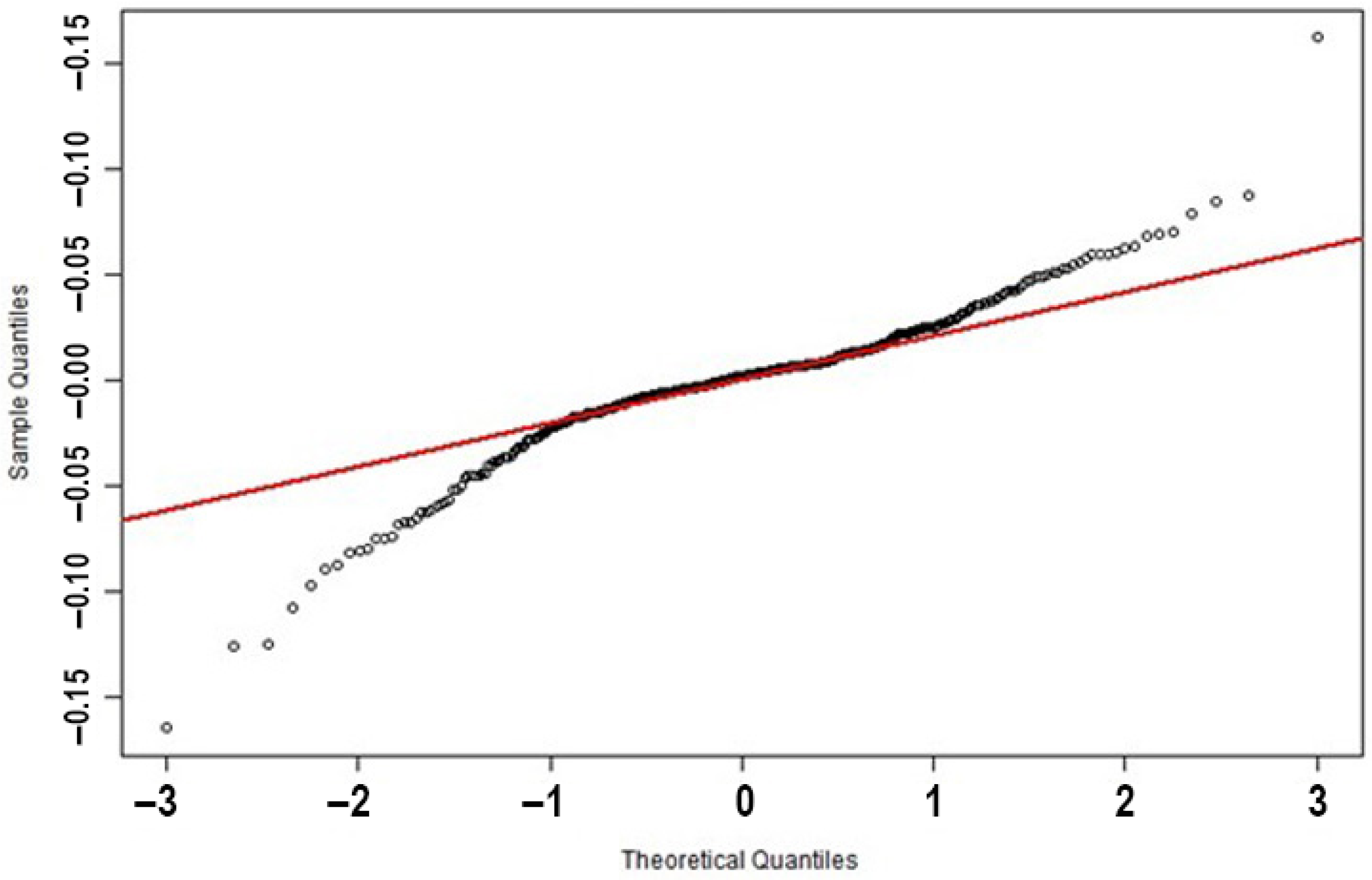
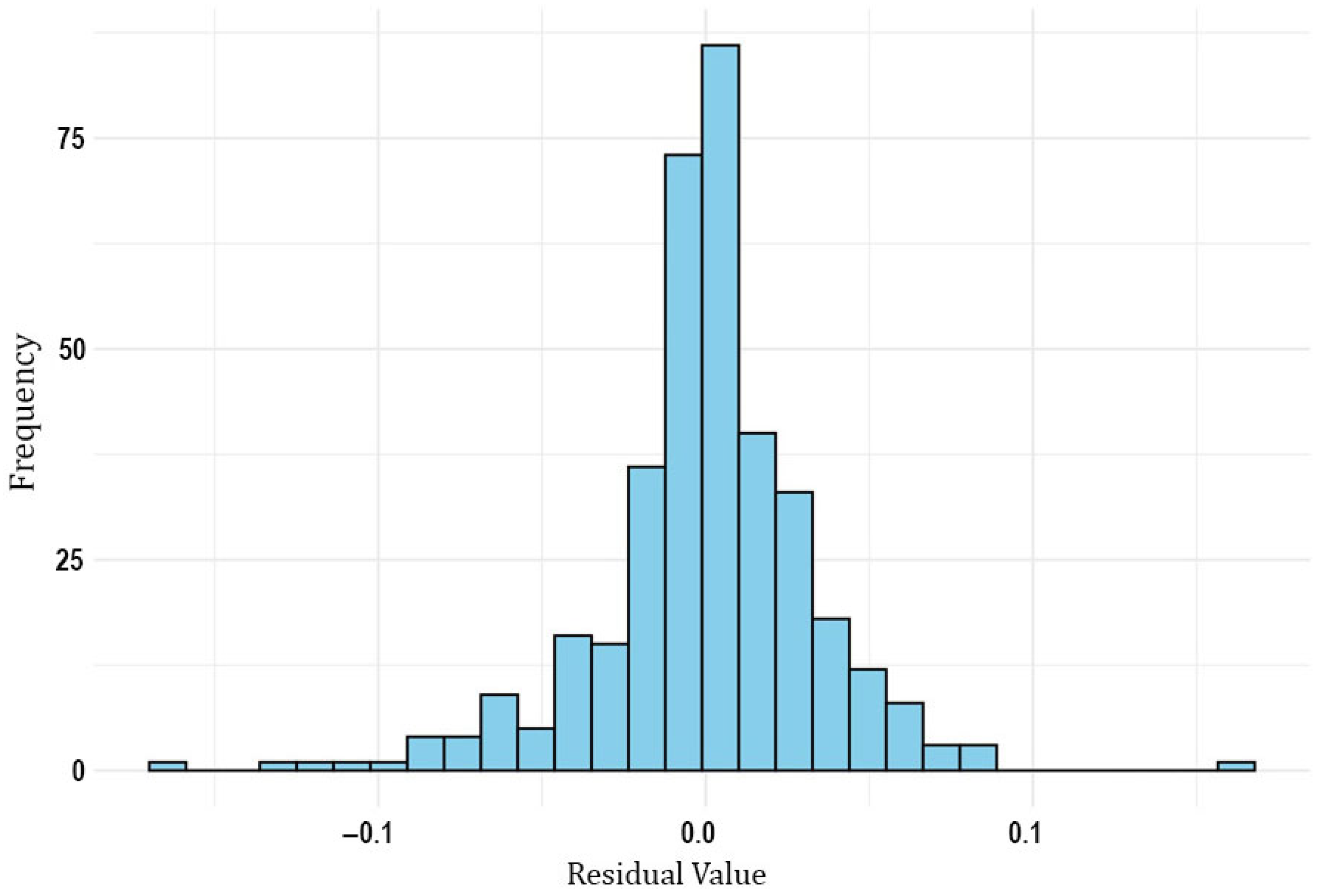
Visual inspection of residual distributions.
4.7. Regional Heterogeneity
Given the substantial structural differences across European country groups, the analysis incorporates dummy variables for EU Core, EU New, and Western Balkan economies. These variables are used in supplementary robustness checks and subgroup analyses, allowing the identification of heterogeneous convergence patterns at the regional level.
4.8. σ-Convergence
σ-convergence is assessed by examining the time evolution of the cross-sectional dispersion of log GDP per capita. A declining dispersion indicates σ-convergence, while an increasing dispersion suggests divergence. Group-specific dispersion patterns are evaluated to determine whether particular European regions converge more rapidly than others.
To further assess the robustness of the empirical specification, additional models including alternative control variables and interaction terms were estimated. These extensions incorporate variables such as foreign direct investment and human capital indicators, as well as interaction effects between initial income and institutional quality. The results, reported in the robustness analysis (see
Table A1,
Table A2,
Table A3,
Table A4,
Table A5 and
Table A6), confirm the stability of the main findings and do not alter the core conclusions regarding conditional convergence and the role of institutions.
The baseline specification is intentionally kept parsimonious in the main analysis to ensure comparability with standard convergence frameworks and to avoid overfitting, while extended models are used as robustness checks to validate the consistency of the results.
A potential limitation of the empirical framework relates to endogeneity and reverse causality between institutional quality and economic growth. While fixed-effects estimation controls for time-invariant unobserved heterogeneity, it does not fully address dynamic feedback effects. Therefore, the results should be interpreted as conditional associations rather than causal relationships.
5. Results
5.1. Descriptive Patterns and Preliminary Diagnostics
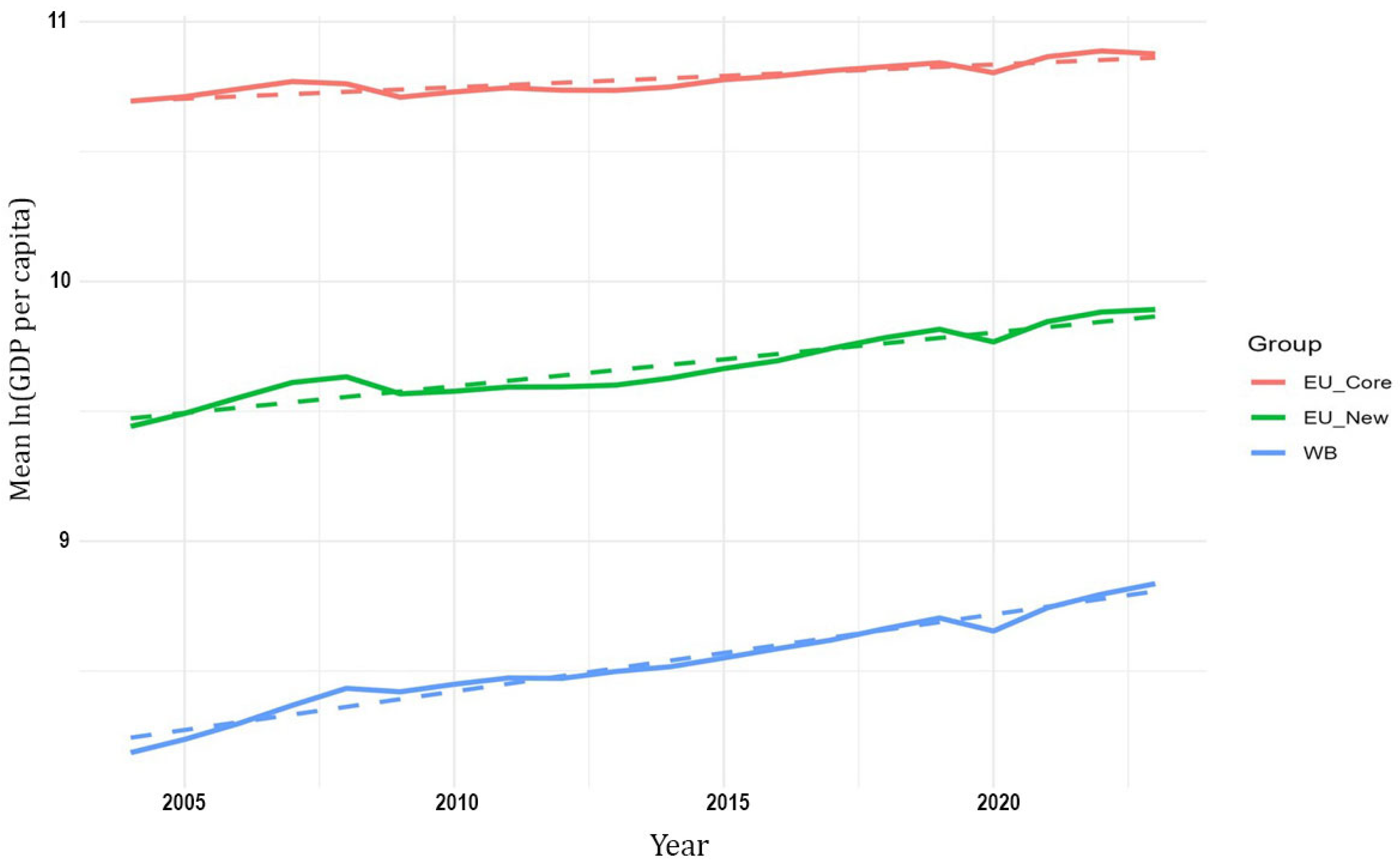
The initial descriptive assessment reveals substantial heterogeneity in income levels and institutional quality across the three regional groups. EU Core economies consistently exhibit higher income levels and low dispersion, while EU New and Cohesion Economies display pronounced catch-up dynamics following EU accession. Western Balkan economies remain the lowest-income group and show greater volatility over time. Institutional indicators follow a similar pattern: the Core group scores highest across all WGI dimensions, the New Member States demonstrate steady institutional improvement, and the Western Balkans show slower and more uneven progress. Summary statistics and correlation matrices (
Appendix A Table A7 and
Table A8) confirm strong correlations among institutional variables, supporting the use of PCA for dimensionality reduction.
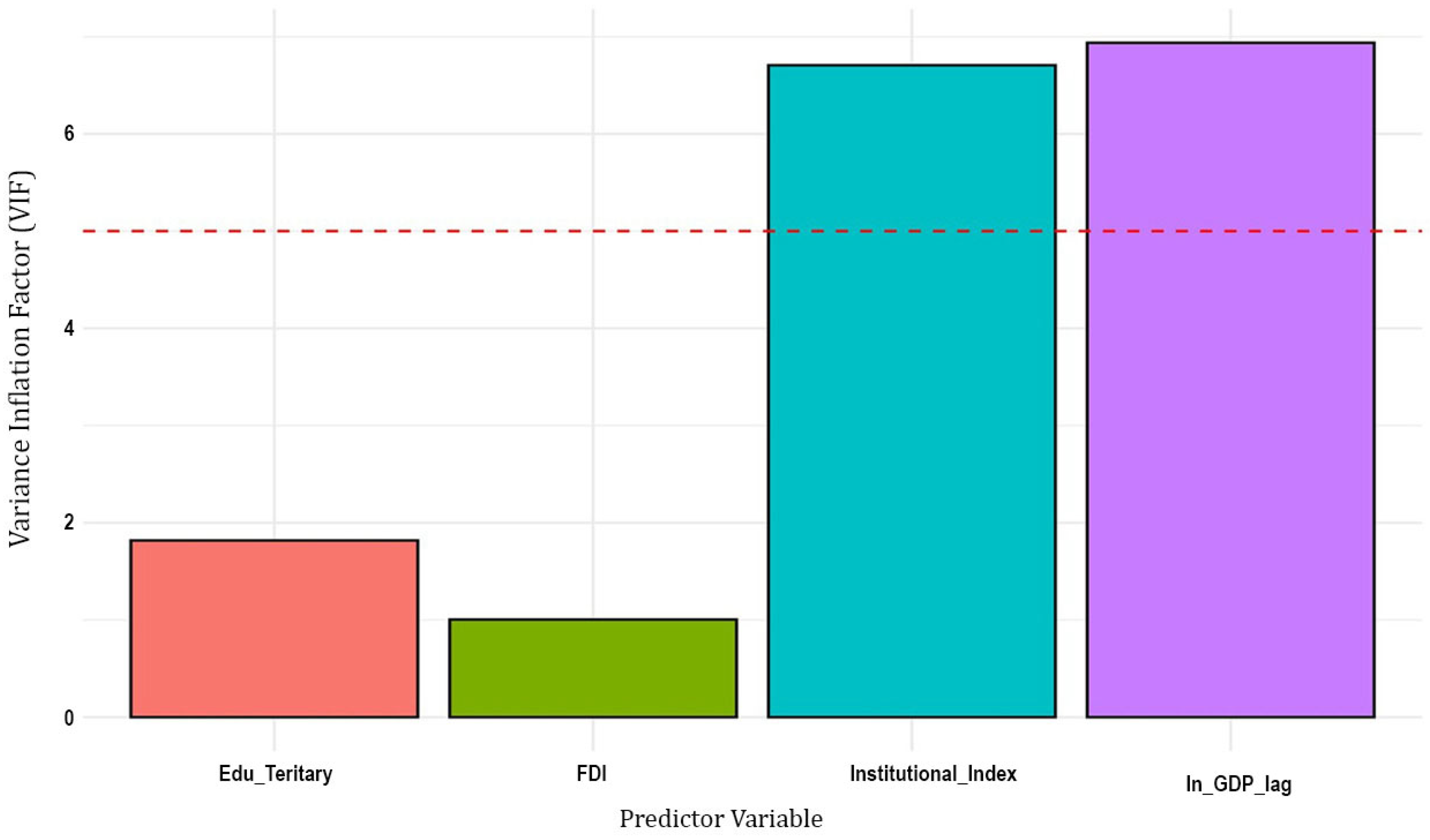
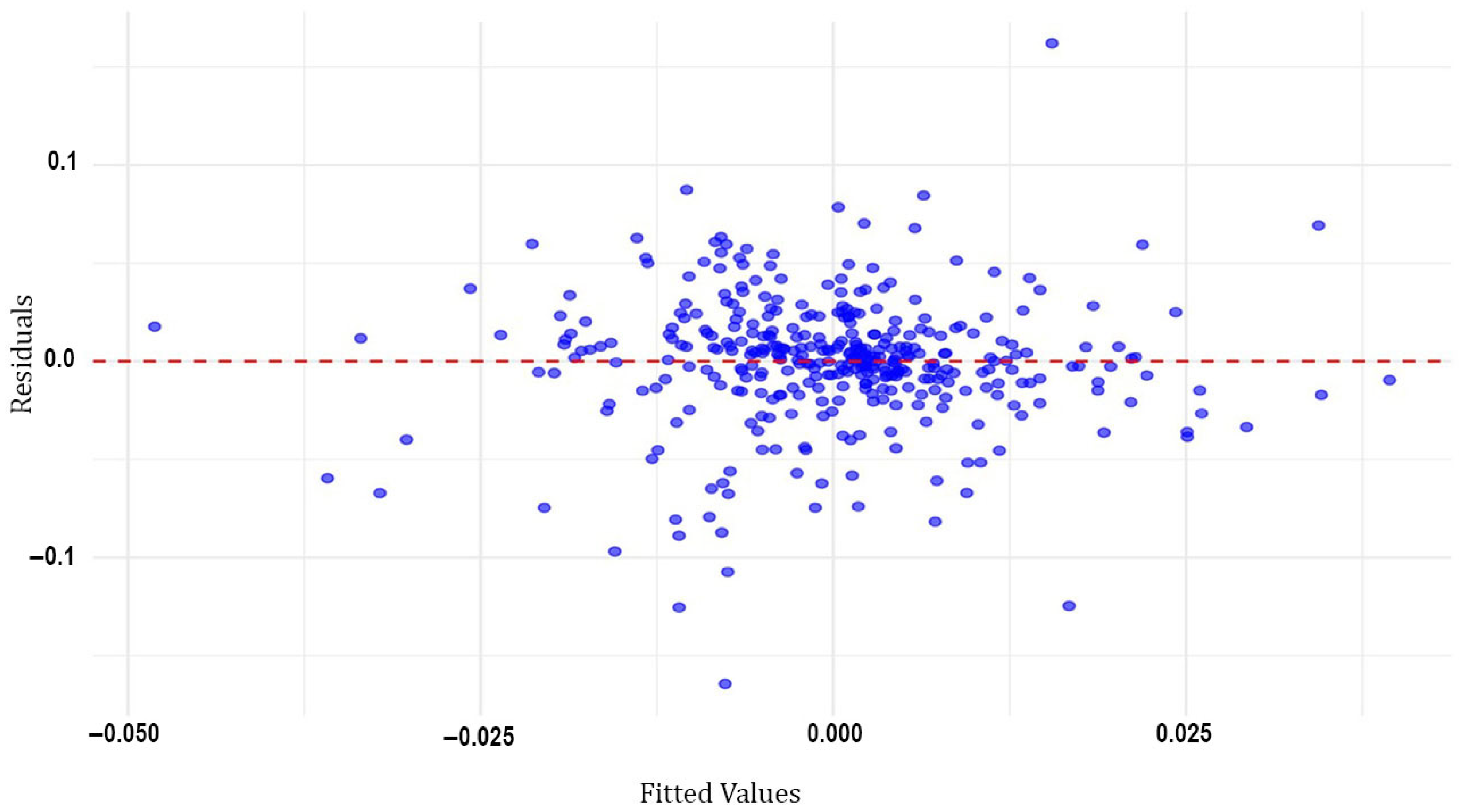
Before estimating the β-convergence models, standard diagnostic procedures were performed. Stationarity tests indicate that the growth series is stationary, while log GDP per capita behaves as a trend-stationary process, which is consistent with conventional convergence modeling. Variance inflation factors reveal no problematic multicollinearity in either the conditional or interaction specifications. Evidence of heteroskedasticity across models justifies the use of robust or cluster-robust standard errors.
5.2. Absolute β-Convergence
Table 1 presents the results of the absolute β-convergence model estimated using pooled OLS, random effects (RE), and fixed effects (FE) for the 2004–2023 period. Across all specifications, the coefficient on initial income is negative and statistically significant, indicating the presence of unconditional convergence among European economies.
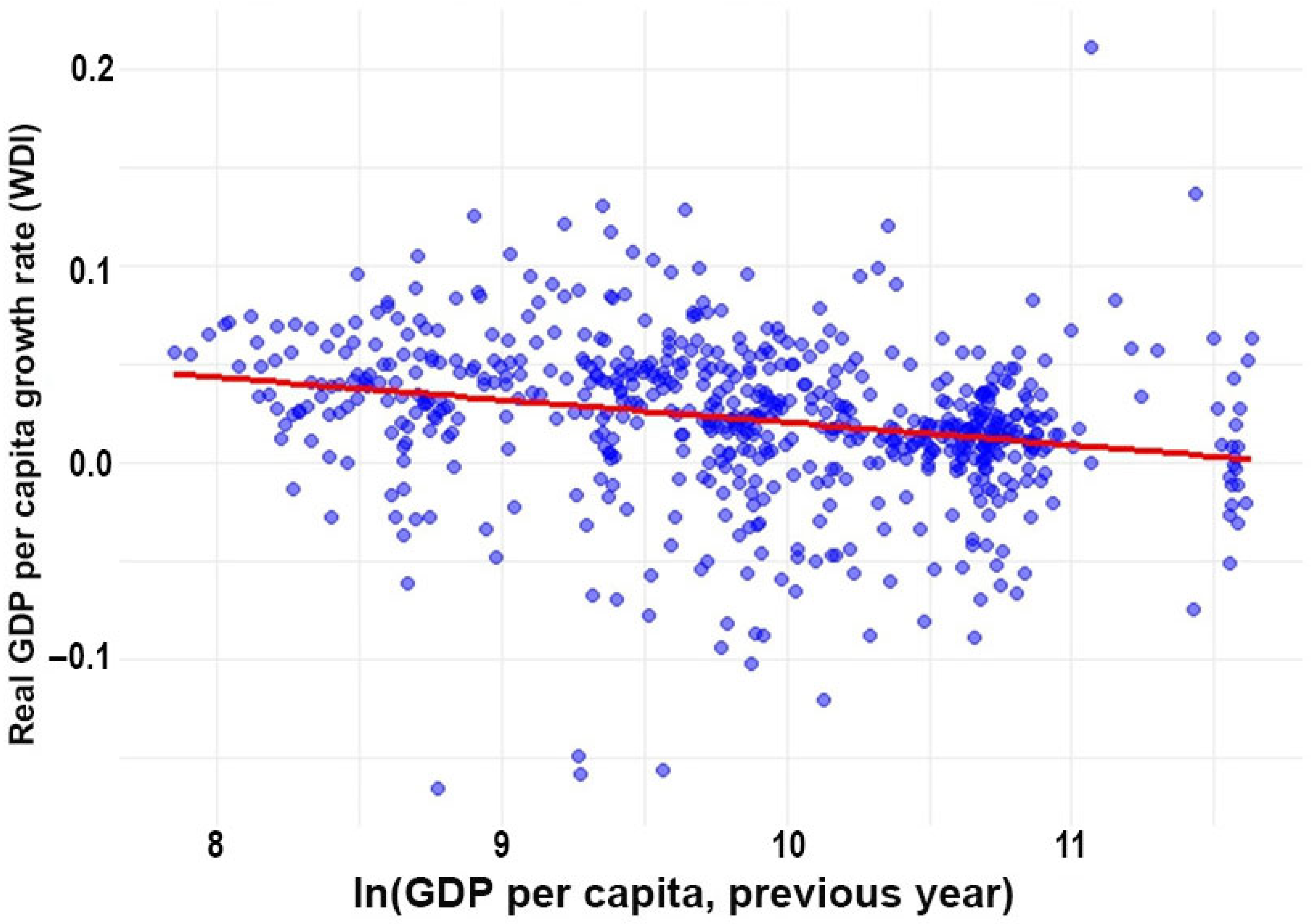
The fixed-effects estimator yields a β value of approximately −0.011, implying an annual convergence speed of about 1.15 percent. This corresponds to a half-life of roughly 60 years, suggesting that income differences narrow gradually but consistently over time. These dynamics are illustrated in
Figure 1, which plots the negative association between initial log income and subsequent growth rates.
A Hausman test confirms that the FE estimator is preferred over RE (p < 0.001), indicating correlation between country-specific effects and initial income.
5.3. Conditional β-Convergence
The introduction of structural controls provides further insight into the mechanisms driving income convergence in Europe. Unlike the absolute specification—where all economies are assumed to converge toward a common steady state—the conditional β-convergence model allows countries to converge toward group—specific long-run equilibria determined by their institutional development, human capital, and openness to foreign capital.
The reduction in the number of observations in the conditional model is primarily driven by data availability constraints for additional control variables, particularly FDI and tertiary education. The model is therefore estimated on a restricted sample where all variables are jointly observed.
Table 2 reports the results of the conditional β-convergence model estimated using fixed effects. When the institutional index, tertiary education, and FDI inflows are included, the coefficient on initial income becomes statistically insignificant (β ≈ 0.001,
p = 0.83). This suggests that the unconditional negative association between income level and subsequent growth largely reflects underlying structural differences between countries rather than a universal equalizing mechanism. In other words, once institutional quality and structural characteristics are controlled for, initial income loses its explanatory power, indicating that convergence is conditional rather than automatic.
Among the conditioning variables, the institutional index emerges as one of the most significant drivers of growth (γ ≈ −0.011; p ≈ 0.02). The estimated coefficient on the institutional index is negative and statistically significant. Rather than interpreting this result as a direct causal effect of institutions on short-term growth, it should be understood as an empirical association reflecting structural differences across countries. Economies with stronger institutional frameworks tend to exhibit more stable and mature growth patterns, which may be associated with lower short-run growth rates compared to less developed, catching-up economies.
This finding suggests that institutional quality primarily influences long-run development paths and cross-country growth differentials, rather than directly increasing short-term growth rates. Accordingly, the results should not be interpreted as evidence that stronger institutions reduce growth, but rather that they are associated with different stages of economic development and more stable growth trajectories.
FDI inflows have a strongly significant and positive effect on growth (γ ≈ 0.00010;
p < 0.001), confirming that foreign capital plays a robust role in supporting productivity improvements and technological diffusion—particularly in middle-income Eastern European economies. This result is consistent with the empirical literature showing that the growth impact of FDI is strongest in countries with adequate institutional capacity to absorb foreign investment. This interpretation is consistent with the empirical literature highlighting the role of institutional quality and regulatory frameworks in shaping productivity and long-term growth performance (
Égert, 2016).
Tertiary education contributes positively to growth (γ ≈ 0.00045), but its significance is only marginal (p ≈ 0.06), indicating that human capital formation enhances long-run productivity, although its effects are slower to materialize compared to FDI. This is expected, as improvements in the educational structure typically affect growth with a longer lag.
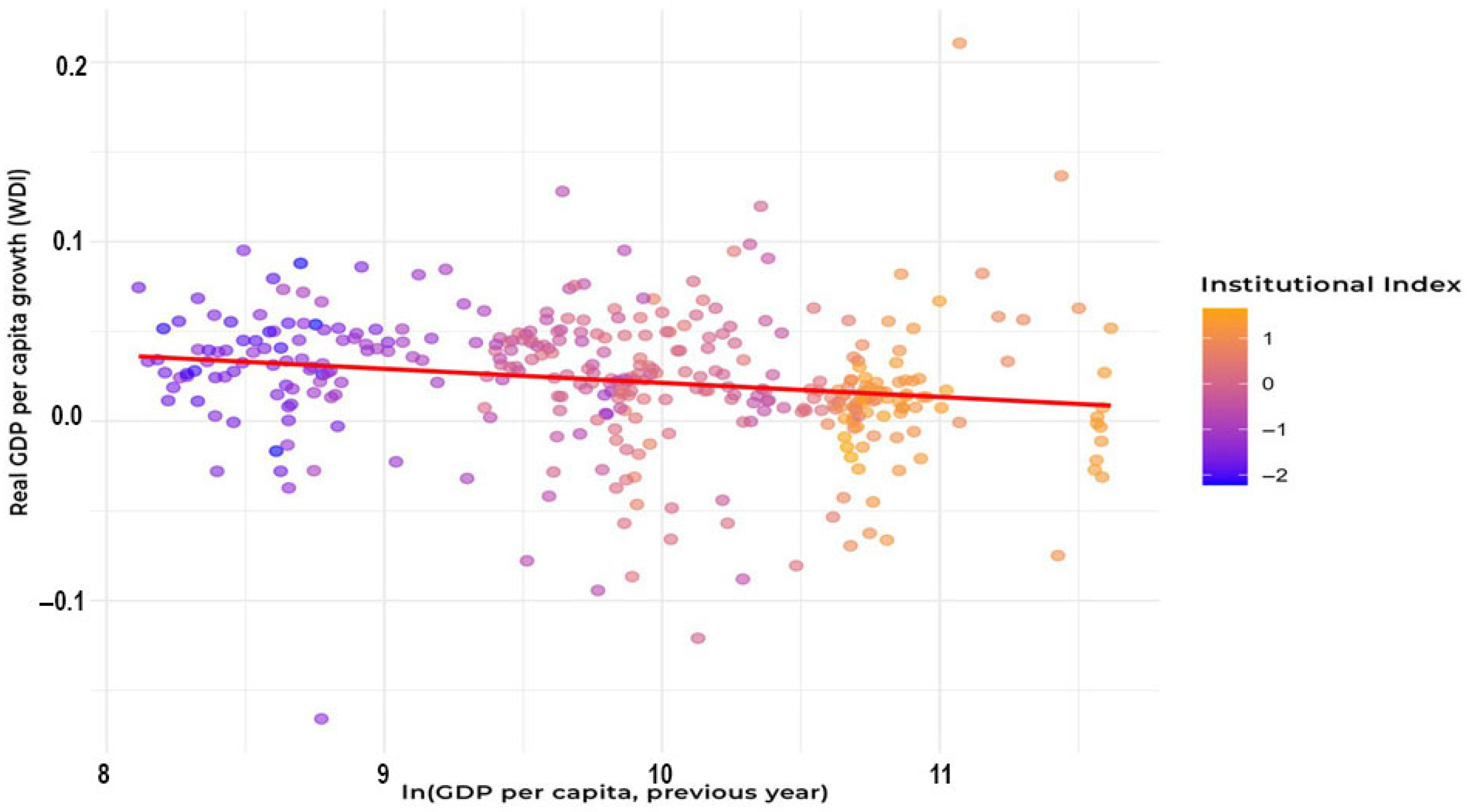
These dynamics are illustrated in
Figure 2, which plots the conditional convergence relationship while coloring observations according to institutional quality. The visual pattern shows that countries with stronger institutions (orange shades) cluster around higher steady-state income levels, whereas those with weaker institutions (blue and purple) remain further from the convergence path. Notably, the downward slope of the fitted line is much flatter than in the absolute model, emphasizing that most of the convergence mechanism operates through structural characteristics rather than initial income alone.
Overall, the results demonstrate that convergence across European economies is conditional: the speed and direction of convergence depend heavily on institutional development, openness to investment, and human capital. Once these factors are taken into account, the simple gap between rich and poor economies becomes insufficient to explain growth dynamics, underscoring the central role of structural transformation in the European convergence process.
Additional robustness tests confirm the stability of the main results. The inclusion of alternative specifications, including extended models with additional controls and interaction terms, does not substantially alter the estimated convergence dynamics. Similarly, interaction models indicate that institutional quality affects growth primarily through level effects rather than significantly modifying the speed of convergence.
While interaction effects are statistically significant in extended specifications, their economic magnitude remains limited, supporting the interpretation that institutional quality primarily operates through direct effects rather than fundamentally altering convergence speeds (see
Appendix A for full robustness results).
These results highlight an important distinction between growth determinants and convergence mechanisms. While institutional quality significantly explains cross-country differences in growth performance, the empirical evidence does not support the interpretation that institutions systematically alter the speed of β-convergence.
To enhance transparency, the main robustness findings can be summarized as follows. Across alternative specifications, including two-way fixed effects, interaction models, and winsorized samples (
Table A1,
Table A2 and
Table A3), the core results remain stable in both sign and magnitude. In particular, the coefficient on initial income retains its expected sign, while the institutional index consistently emerges as a significant determinant of growth differences. Although some interaction effects become statistically significant in extended specifications, their magnitude remains limited, reinforcing the interpretation that institutions primarily affect growth levels rather than convergence speed.
5.4. Institutional β-Convergence (Interaction Effects)
The interaction model is estimated using a fixed-effects specification to examine whether institutional quality modifies the β-convergence mechanism. The results, presented in
Table 3, show that the coefficient on initial income remains negative and marginally significant, whereas the interaction term is statistically insignificant. This indicates that institutional quality does not systematically alter the marginal effect of initial income on subsequent growth during the 2004–2023 period.
The insignificant interaction term suggests that institutions influence growth primarily through their direct effect, rather than through enhancing or dampening the β-convergence mechanism. Countries with stronger institutional frameworks may achieve higher and more stable growth levels, but this does not translate into faster catch-up relative to richer economies once initial income is accounted for. This finding is consistent with empirical evidence in medium-sized macro panels, where interaction effects often lack statistical precision due to structural heterogeneity and limited within-country variation.
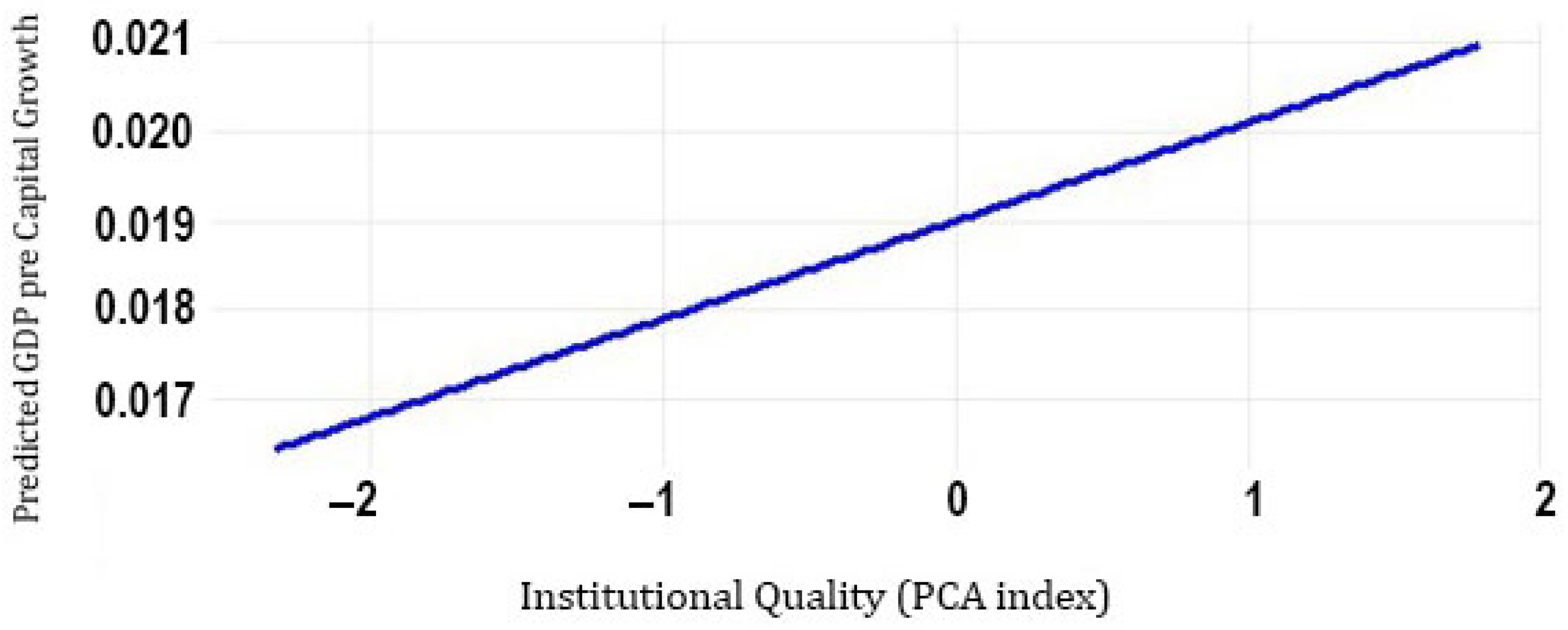
Figure 3 visualizes the marginal effects across the distribution of institutional quality. The predicted growth curve is relatively flat, indicating minimal variation in the marginal effect of initial income across different institutional environments. Although the shape of the curve implies slightly more favorable dynamics for institutionally advanced countries, the differences are not large enough to reach conventional significance thresholds. Although
Figure 3 visually suggests a positive slope, the effect size is extremely small (less than 0.5 percentage points across the entire institutional distribution), indicating that the convergence dynamics are essentially flat.
Overall, the results highlight that institutional quality is an important determinant of growth in Europe, but its role manifests through direct channels rather than through moderating the speed of income convergence. These findings complement the conditional β-convergence results and reinforce the central argument that structural transformation—rather than initial income alone—shapes growth trajectories across European economies.
Unlike economic convergence, which is evaluated using formal β-convergence models, institutional convergence is analyzed using dispersion-based (sigma) measures and distributional analysis. This distinction reflects the different methodological approaches required to capture institutional dynamics.
5.5. Regional Heterogeneity: EU Core, EU New, and Western Balkans
5.5.1. Country Grouping and Conceptual Basis
To account for structural and institutional heterogeneity across Europe, the sample is partitioned into three regional groups: EU Core, EU New and Cohesion Economies, and the Western Balkans. This grouping is widely applied in convergence research and reflects long-standing differences in governance quality, economic integration, and macroeconomic stability.
EU Core (11 countries):
Austria (AUT), Belgium (BEL), Denmark (DNK), Finland (FIN), France (FRA), Germany (DEU), Ireland (IRL), Luxembourg (LUX), Netherlands (NLD), Sweden (SWE), and Italy (ITA).
These economies exhibit persistently high institutional quality, strong regulatory frameworks, and advanced economic structures. Their institutional maturity limits further rapid convergence and places them near long-run steady-state income levels.
EU New and Cohesion Economies (16 countries):
Bulgaria (BGR), Croatia (HRV), Cyprus (CYP), Czechia (CZE), Estonia (EST), Hungary (HUN), Latvia (LVA), Lithuania (LTU), Malta (MLT), Poland (POL), Romania (ROU), Slovakia (SVK), Slovenia (SVN), Greece (GRC), Portugal (PRT), and Spain (ESP).
These nations underwent significant institutional and structural transformations following EU accession, including reforms in governance, regulatory alignment, and capital market integration. Their trajectories are characterized by rapid catch-up and strong institutional improvements.
Western Balkans (5 countries):
Albania (ALB), Bosnia and Herzegovina (BIH), Montenegro (MNE), North Macedonia (MKD), and Serbia (SRB).
These economies exhibit lower institutional capacity, weaker regulatory performance, and incomplete integration into EU economic frameworks. Structural constraints and institutional volatility continue to hinder sustained long-term convergence.
This classification allows for a more nuanced identification of region-specific convergence dynamics and provides the basis for interpreting heterogeneous β estimates.
5.5.2. Institutional Profiles Across Groups
Substantial cross-group differences in institutional development are evident throughout the 2004–2023 period.
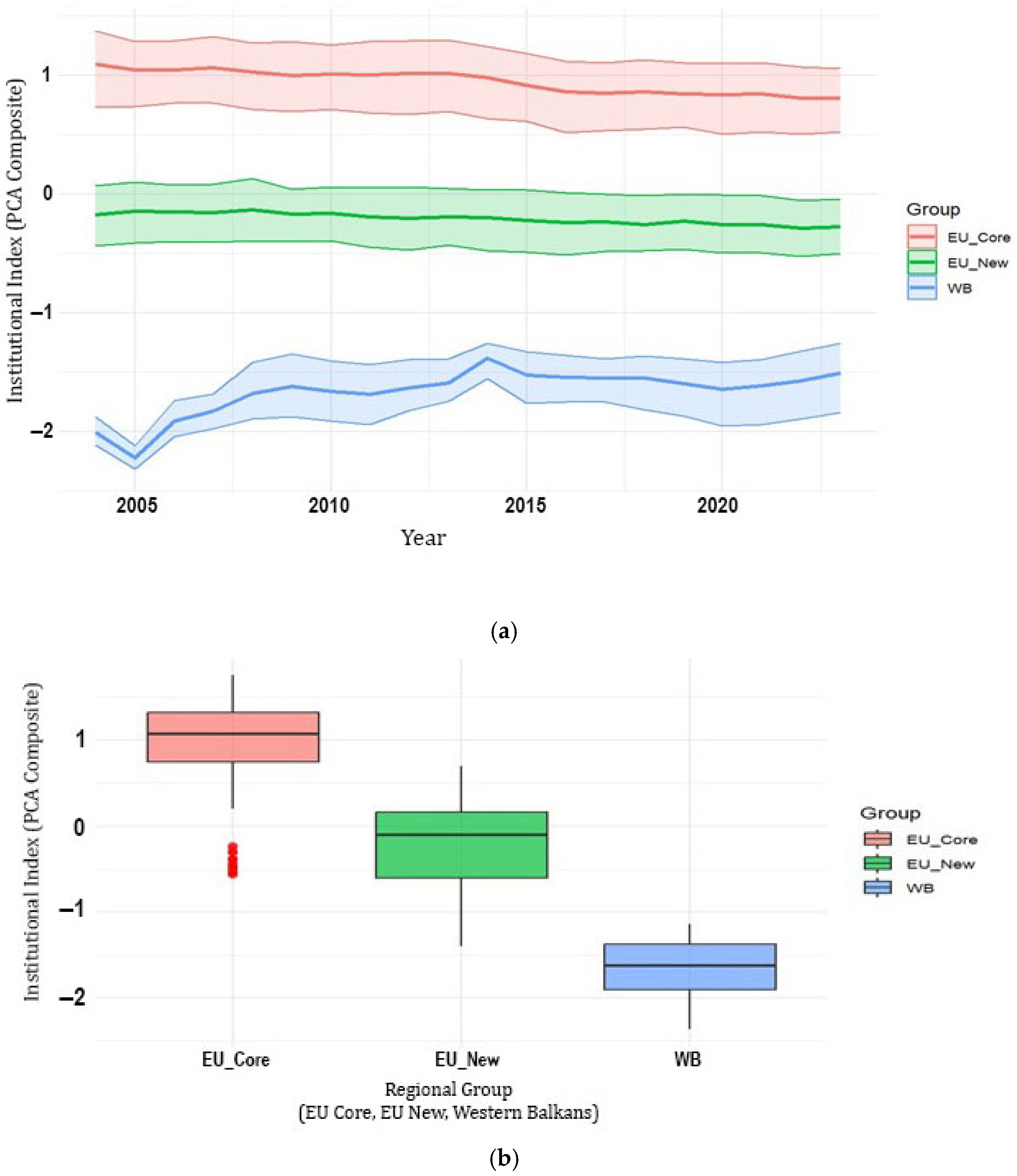
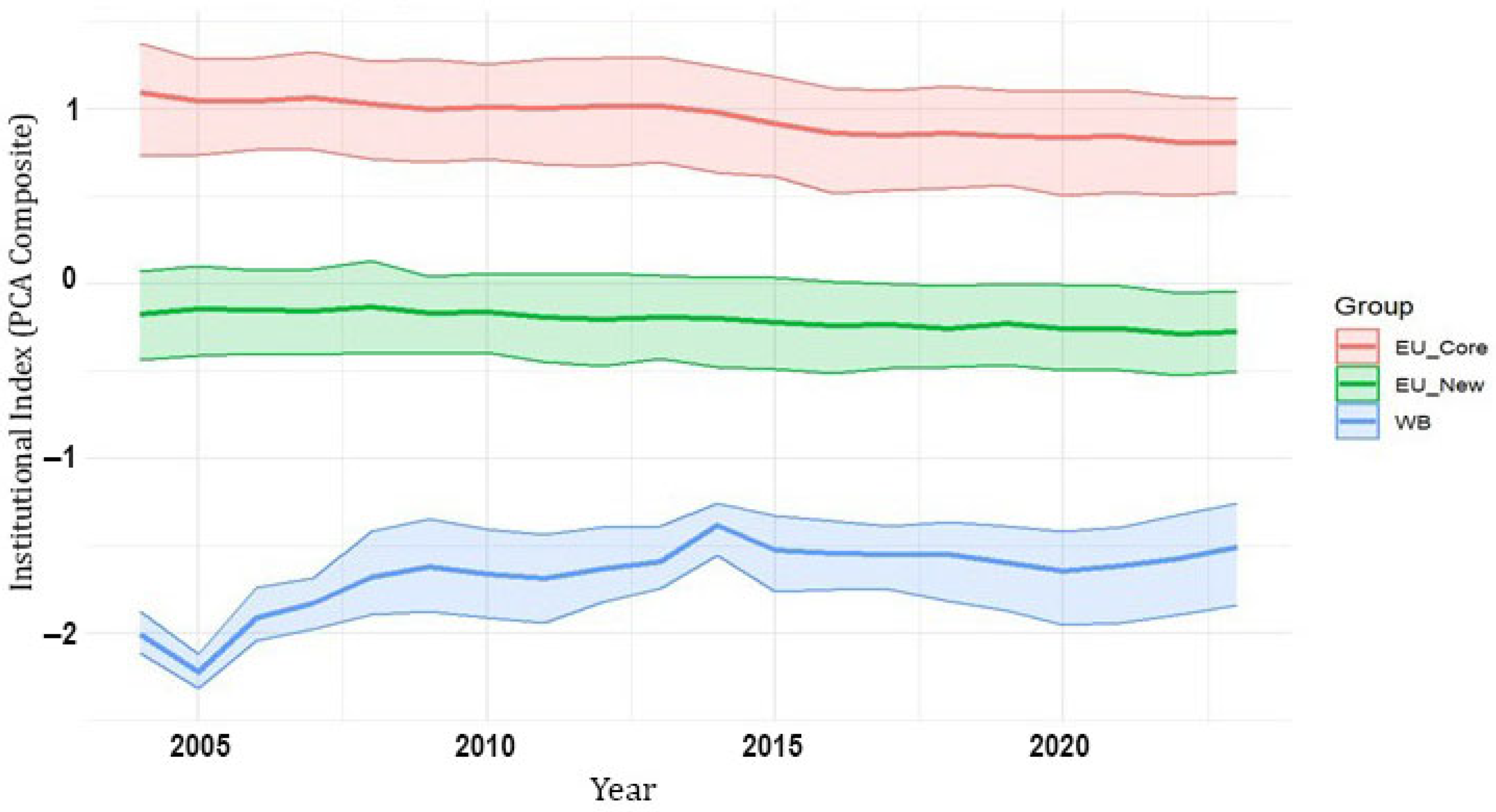
Figure 4a illustrates the evolution of institutional quality across the three regional groups.
The EU Core maintains the highest institutional levels throughout the period, although a mild downward trend is observed, which does not materially affect their relative position. The EU New and Cohesion Economies exhibit relatively stable institutional dynamics, with slight fluctuations over time rather than a clear upward trajectory, suggesting that convergence toward the EU Core has slowed and partially plateaued.
In contrast, the Western Balkans display a gradual upward trend, suggesting incremental institutional strengthening from a lower starting point. Despite these gains, the gap relative to both EU groups remains substantial.
This figure illustrates average institutional scores over time for EU Core, EU New, and Western Balkan economies, highlighting persistent institutional stratification.
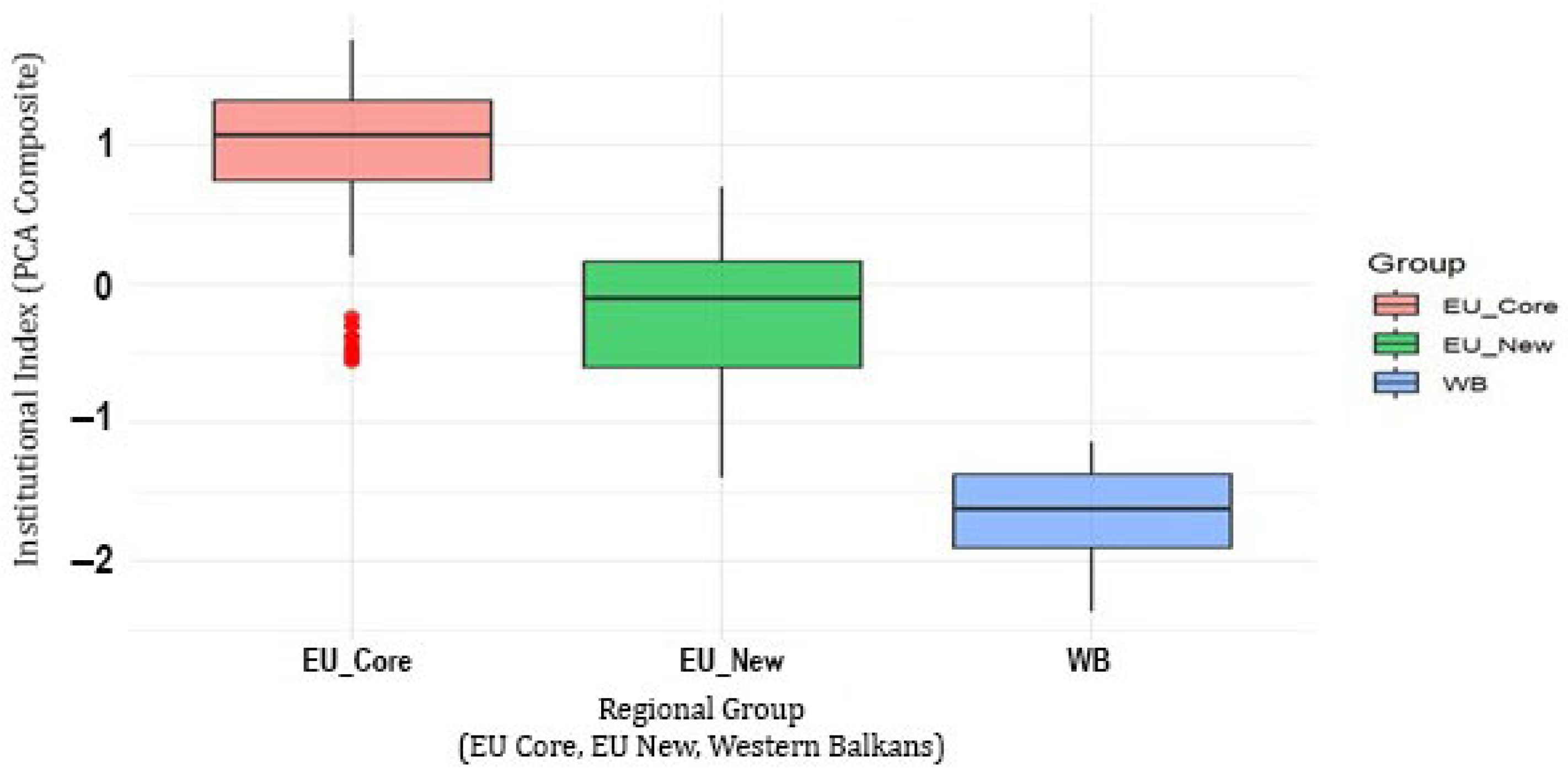
Figure 4b presents the distribution of institutional scores using boxplots. EU Core economies cluster tightly around high institutional values, indicating strong homogeneity. In contrast, EU New and Cohesion Economies exhibit a wider dispersion of institutional outcomes, reflecting substantial heterogeneity within the group, which includes both highly advanced and structurally weaker economies. The Western Balkans show consistently lower median values, but a comparatively narrower spread than the EU New group. This suggests that while institutional levels remain lower, variability across Western Balkan countries is somewhat more limited.
This pattern highlights that institutional convergence within the EU New group is incomplete and uneven, despite overall progress since accession.
The figure compares institutional score distributions, emphasizing the contrast between mature Core institutions and the structurally weaker Western Balkans.
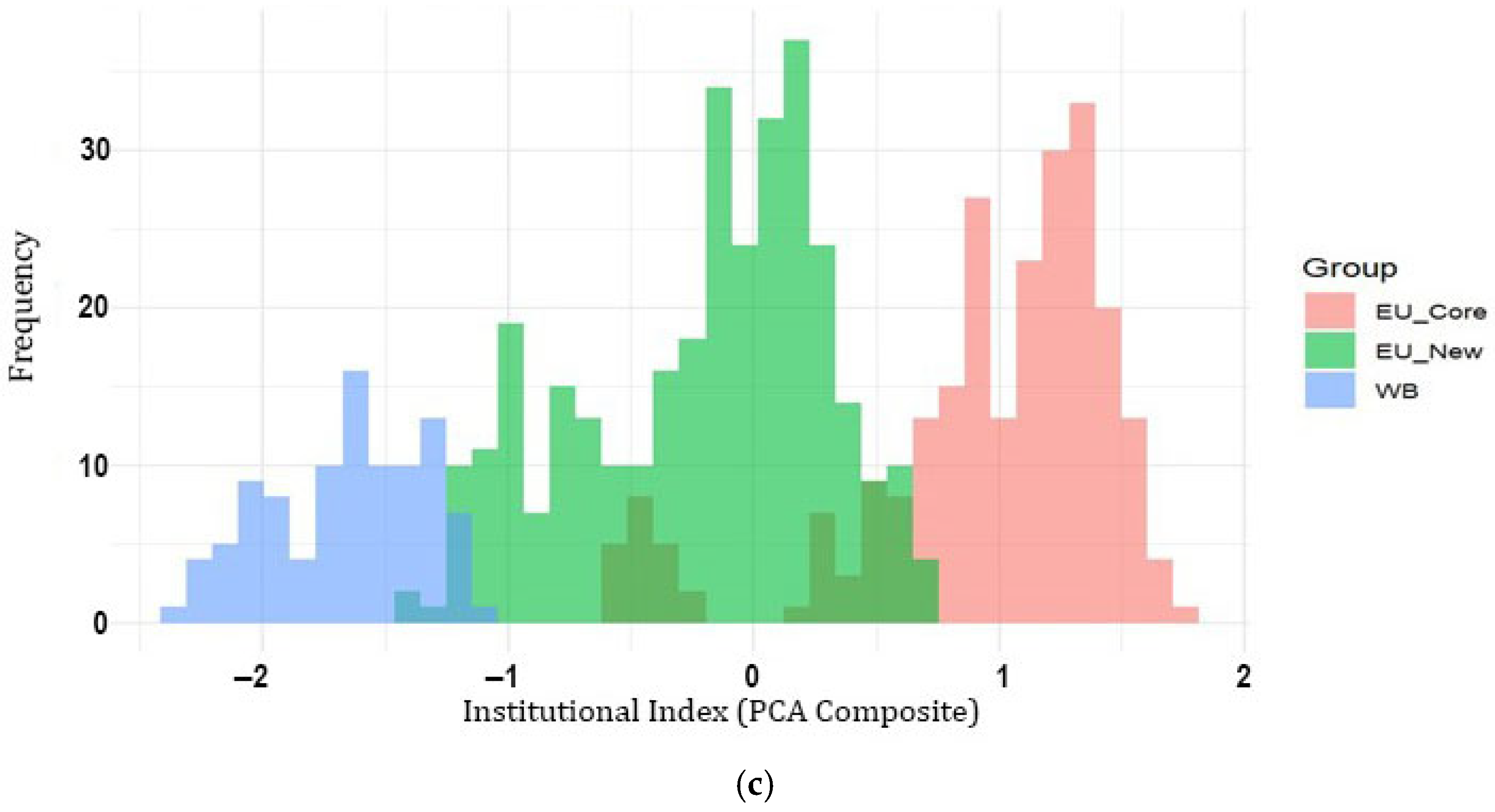
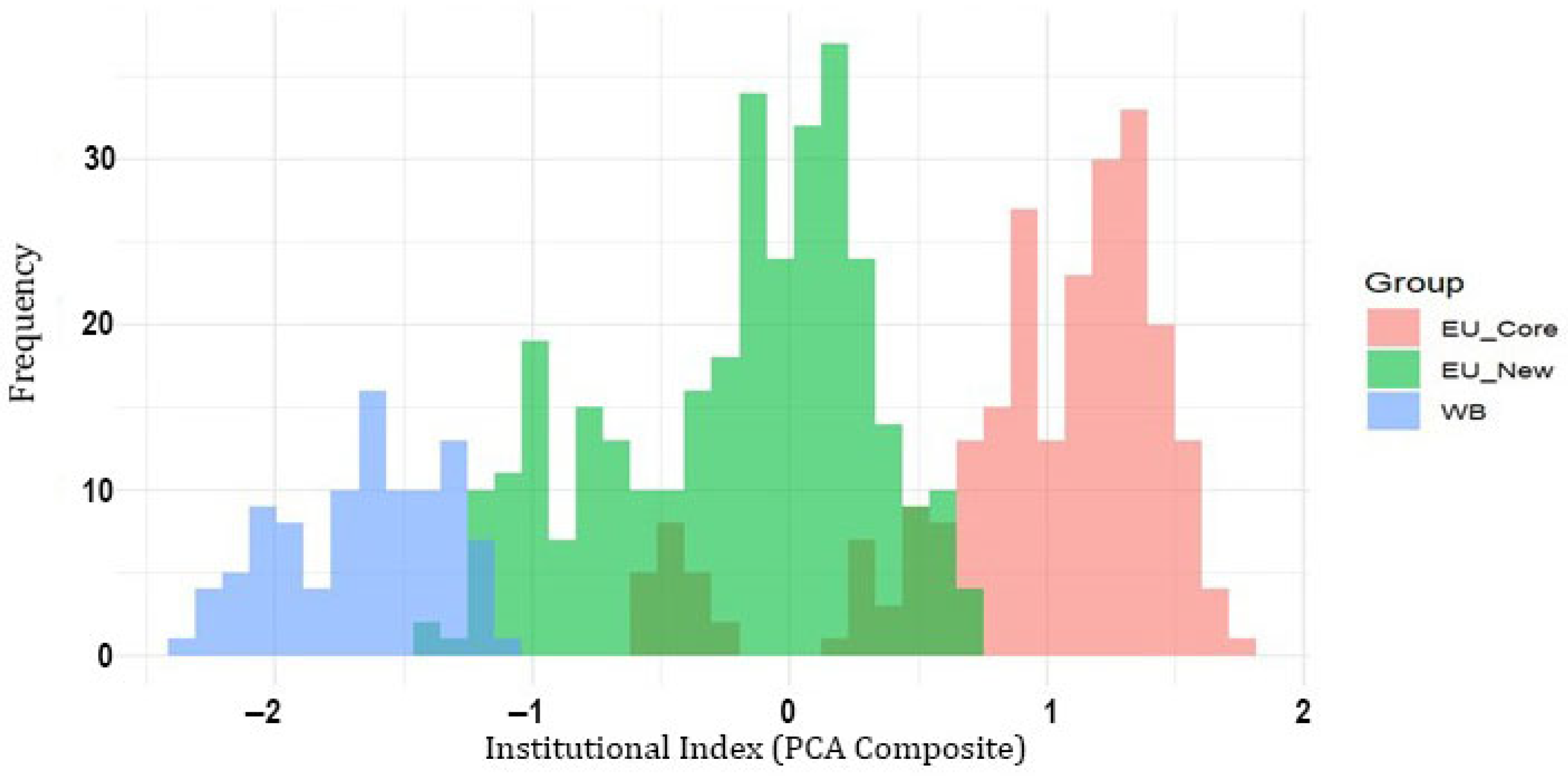
Figure 4c (histogram) further underscores the tri-modal pattern of institutional development across the full sample. The three clusters correspond directly to the regional classification, demonstrating that institutional differences are systematic rather than incidental.
The histogram reveals three distinct institutional clusters, corresponding to the Core, New Member States, and Western Balkans.
Together, these institutional profiles justify the use of region-specific β-convergence models and provide a structural foundation for interpreting asymmetric growth dynamics.
5.5.3. Regional β-Convergence Estimates
Estimating β-convergence separately for each group reveals substantial asymmetries in growth behavior (
Table 4). All subgroup estimations are primarily conducted using fixed-effects models to ensure consistency with the main empirical specification. These fixed-effects results constitute the primary evidence for regional convergence dynamics, while pooled estimates are reported only for supplementary comparison.
Among EU Core economies, the β coefficient is statistically insignificant. This outcome aligns with theoretical expectations for high-income, institutionally mature economies operating near long-run steady states, where income dispersion is minimal and the scope for convergence is limited.
In contrast, EU New and Cohesion Economies do not exhibit consistently robust β-convergence in the fixed-effects specification, suggesting that catch-up processes are uneven and not uniformly driven by initial income differences. However, pooled estimates indicate a negative and statistically significant coefficient, reflecting cross-country convergence patterns that should be interpreted with caution.
The Western Balkan region shows a negative and significant β coefficient (β ≈ −0.0154; p < 0.01), but with a weaker magnitude than in the New Member States. Persistent institutional constraints, macroeconomic volatility, and slower reform progress appear to reduce the effectiveness and stability of the convergence mechanism.
For comparative purposes,
Table 4 reports pooled OLS estimates within each subgroup, which provide an additional perspective on cross-country convergence patterns. These results should be interpreted as supplementary to the fixed-effects estimations presented in the main analysis. Given the limited number of countries and the focus on cross-country convergence dynamics within relatively homogeneous clubs, pooled specifications are commonly employed in the convergence literature.
5.5.4. Interpretation and Implications
The regional comparison demonstrates that income convergence in Europe proceeds at multiple speeds and is closely aligned with institutional readiness and integration depth. Within the EU Core, convergence is largely exhausted, reflecting the proximity to steady-state development and limited income dispersion. EU New and Cohesion Economies exhibit partial and heterogeneous convergence patterns, with evidence of convergence in pooled specifications but weaker and less consistent results in fixed-effects estimations. The Western Balkan economies exhibit weaker and more volatile convergence patterns, constrained by insufficient institutional capacity and incomplete economic integration.
These findings reinforce the central argument that institutional quality and structural transformation, rather than initial income alone, shape the long-run growth trajectories of European economies.
5.6. σ-Convergence
To complement the β-convergence analysis, this section examines the evolution of cross-sectional income dispersion across European economies. σ-convergence occurs when the standard deviation of log GDP per capita declines over time, indicating a reduction in income inequality among countries.
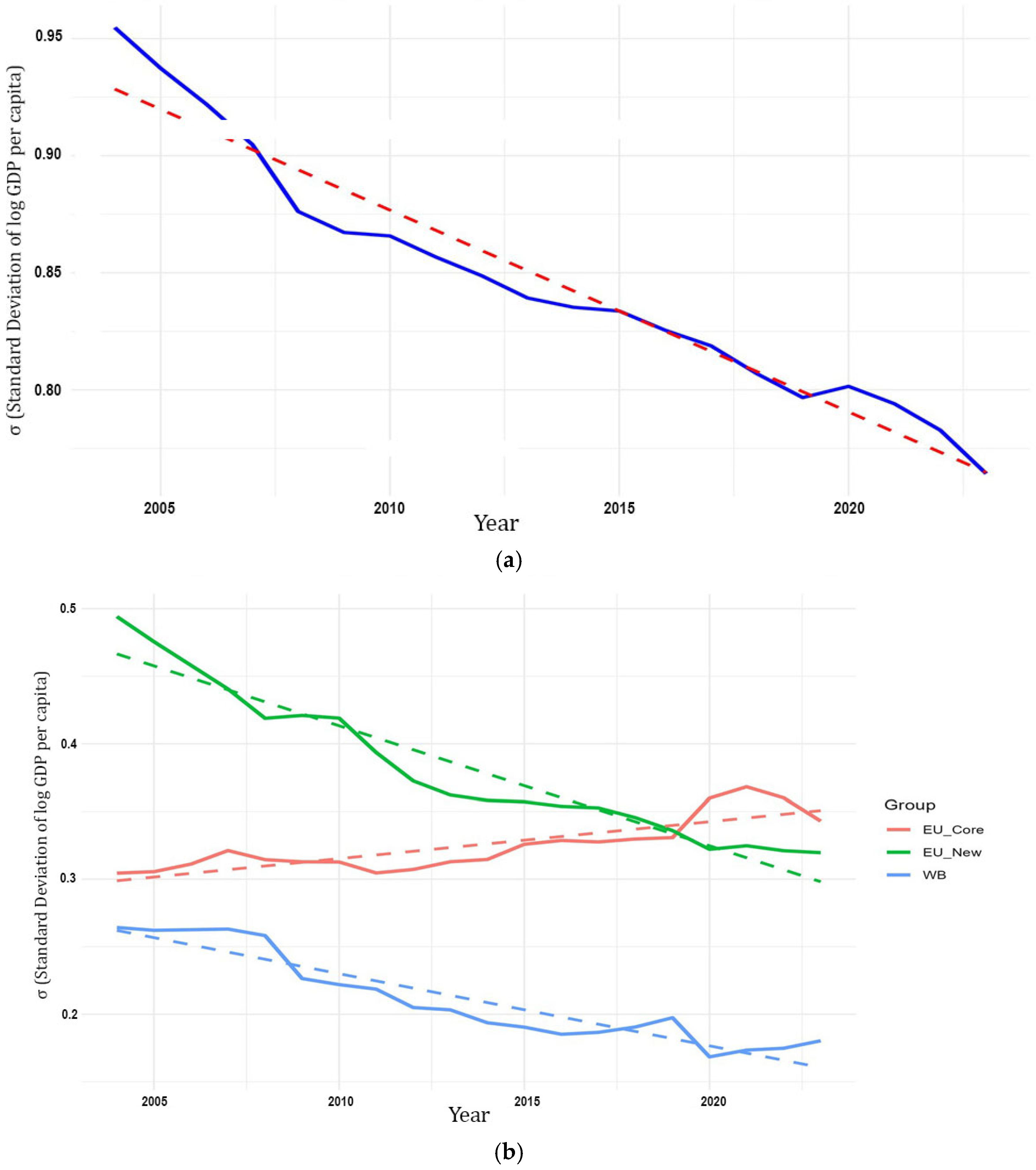
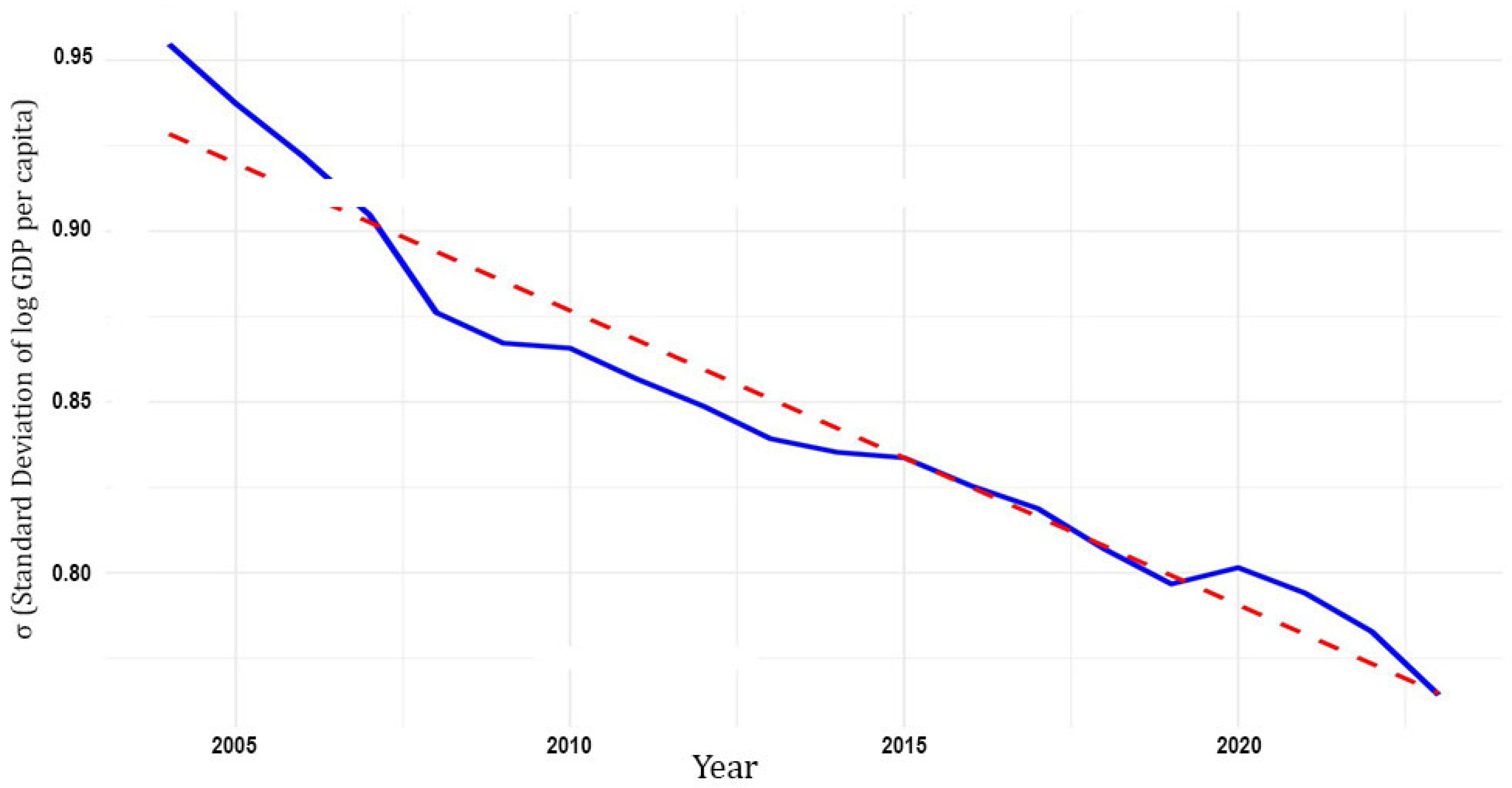
Figure 5a presents the overall dispersion trend for the full EU + Western Balkans sample over 2004–2023. The results show a clear downward trajectory in the pre-crisis period, followed by a gradual stabilization after 2009 and a renewed decline in the most recent years. Although the reduction in dispersion is not perfectly monotonic, the long-run pattern is consistent with the presence of moderate σ-convergence at the continental level.
Standard deviation of log GDP per capita for the full sample, illustrating the long-term trend in income dispersion.
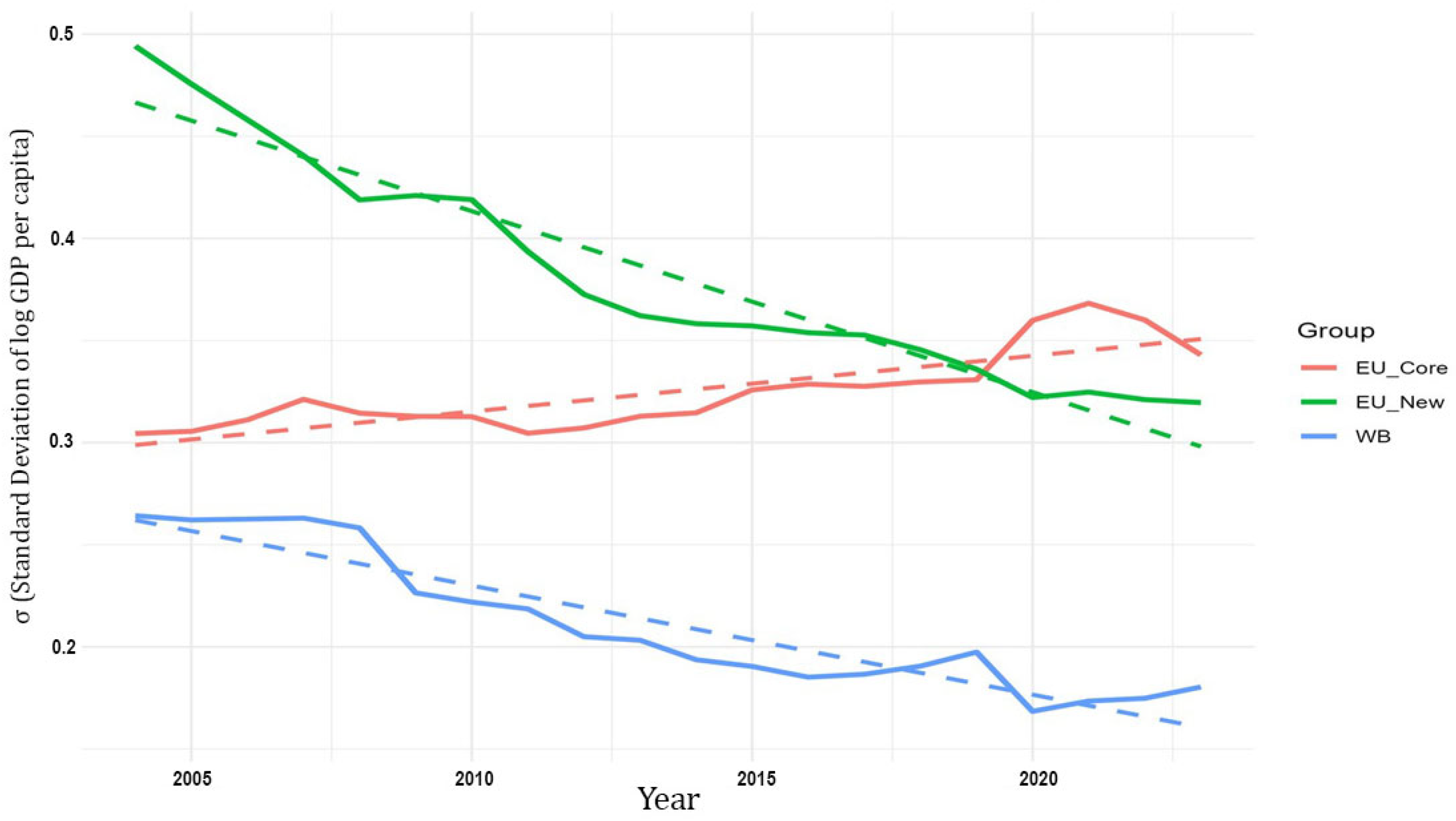
Figure 5b reveals three distinct σ-convergence patterns across European regions. The EU New and Cohesion Economies exhibit a gradual reduction in within-group dispersion, indicating σ-convergence in institutional outcomes. However, this convergence primarily reflects decreasing heterogeneity rather than uniform institutional improvement, as average institutional levels remain relatively stable over time.
In contrast, the EU Core shows a mild upward trend in dispersion, indicating weak σ-divergence. Given their already high-income levels, this pattern likely reflects asymmetric post-crisis adjustments rather than structural divergence.
The Western Balkans display a gradual downward trend with moderate fluctuations, suggesting weak but present σ-convergence rather than divergence. The reduction in dispersion aligns with incremental institutional improvements documented in earlier sections, although volatility remains higher than in EU groups.
Evolution of within-group income dispersion, highlighting heterogeneous convergence dynamics across regions.
Taken together, these findings suggest that σ-convergence remains uneven and incomplete across regions: more evident among EU New economies, limited within the EU Core, and weak and statistically fragile in the Western Balkans. This reinforces the conclusion that European convergence is multi-speed and closely tied to institutional capacity and integration depth.
Overall, these findings suggest that convergence patterns remain incomplete and heterogeneous across European regions, rather than uniform and systematic.
To provide a more formal assessment of σ-convergence, a linear time trend regression of cross-sectional dispersion was estimated. The results indicate a statistically significant negative trend in the full sample, confirming the presence of moderate σ-convergence at the European level. However, subgroup analysis reveals heterogeneous patterns, with weaker or insignificant trends in the Western Balkans and more stable dynamics in EU Core economies.
5.7. Robustness Checks
To provide a clearer assessment of model adequacy, each diagnostic procedure is interpreted not only as a statistical test, but also in terms of its implications for the validity of the convergence framework. The robustness analysis therefore evaluates (i) model specification, (ii) error structure, and (iii) stability of estimated coefficients across alternative assumptions.
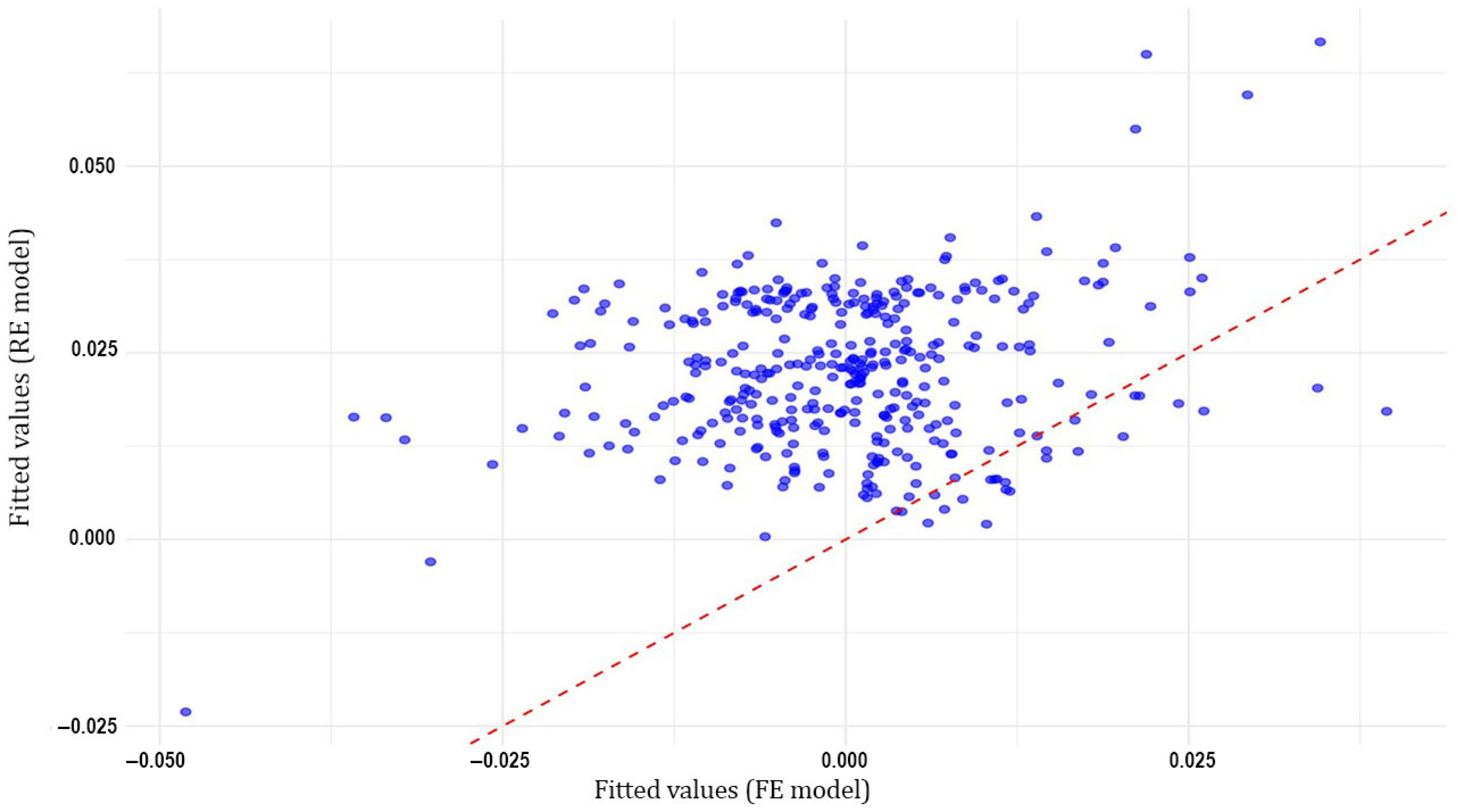
All core convergence results are based on fixed-effects estimations, with alternative pooled and random-effects specifications used solely for robustness and comparison. A comprehensive set of robustness procedures was conducted to validate the reliability of the convergence estimates and assess model specification, error structure, and estimator stability. The diagnostic results jointly confirm that the empirical findings are methodologically robust.
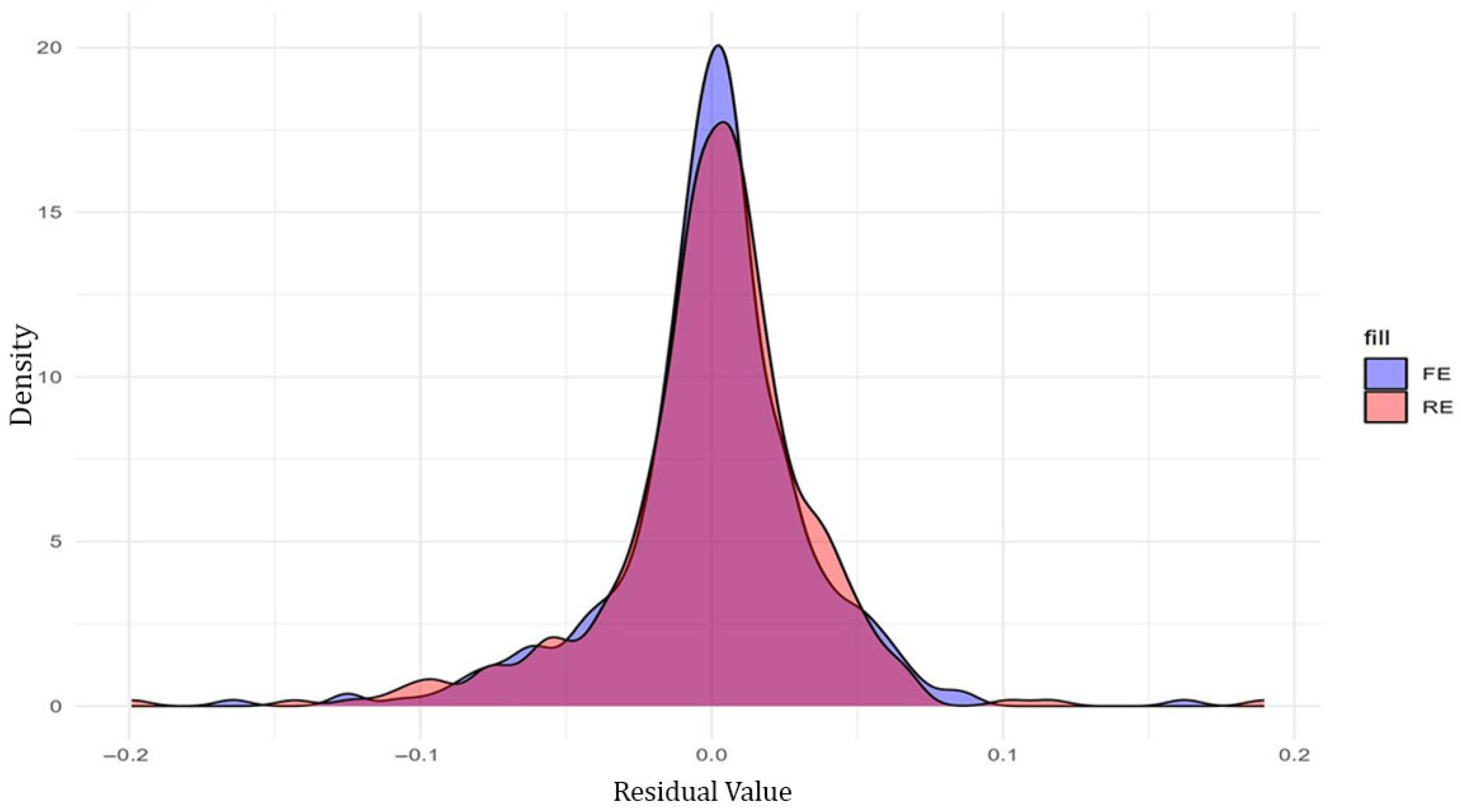
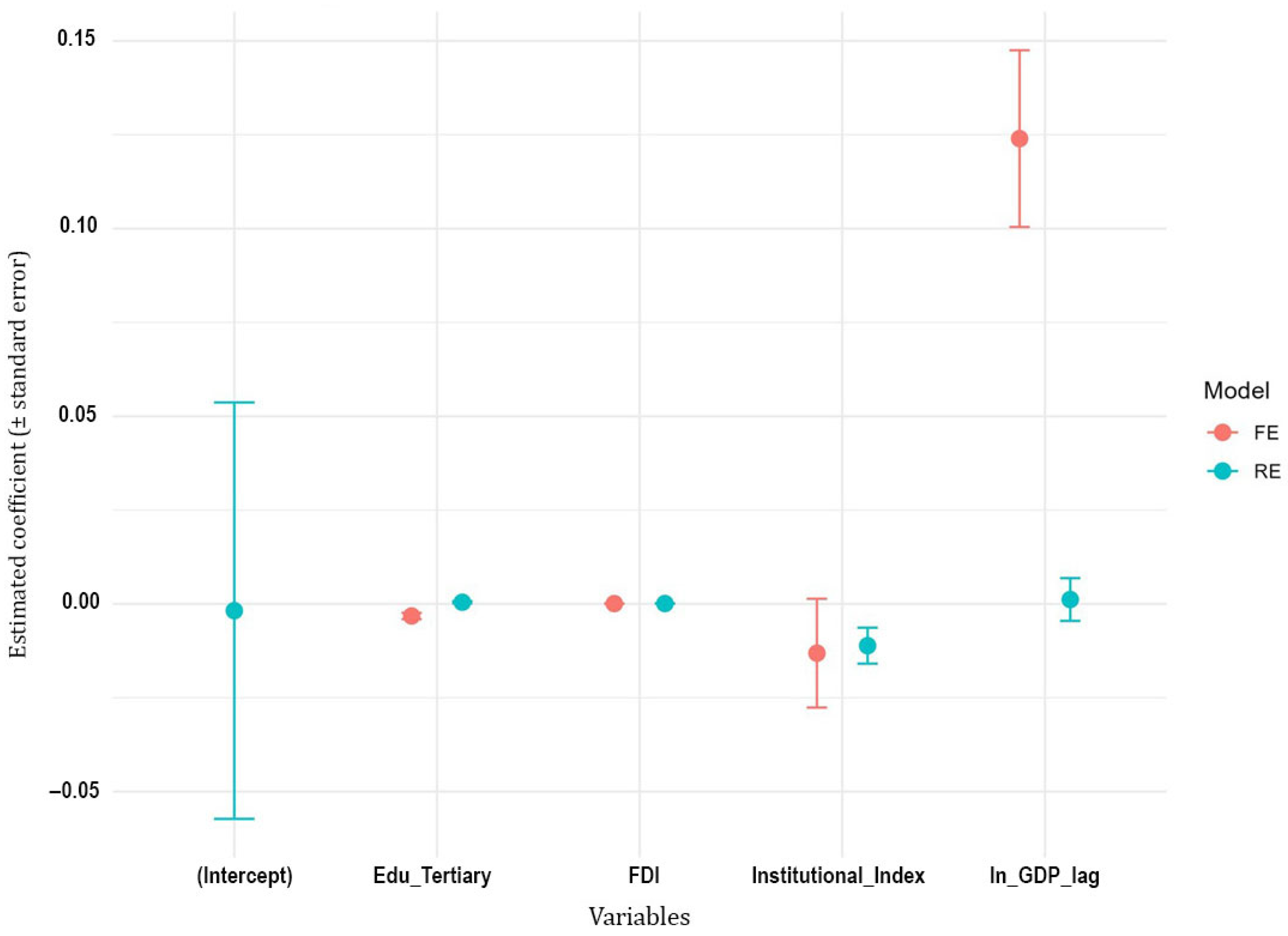
The robustness analysis confirms the validity of the empirical framework. Diagnostic tests indicate the presence of heteroskedasticity and cross-sectional dependence, justifying the use of robust and Driscoll–Kraay standard errors. Multicollinearity tests show no evidence of problematic correlations among regressors. Residual diagnostics suggest no structural violations that would undermine the reliability of the estimated models.
The results of the robustness and specification diagnostics, summarized in
Table 5, confirm the adequacy of the fixed-effects framework and the stability of the estimated convergence coefficients across alternative assumptions.
For brevity, detailed diagnostic plots and additional specification tests are reported in
Appendix B.
Overall, the robustness checks confirm that the main results are not sensitive to alternative specifications or violations of classical assumptions. In particular, the consistency of β-coefficients across different estimators and error corrections indicates that the observed convergence patterns are structurally stable rather than model-specific artifacts. This strengthens the credibility of the empirical findings and supports the interpretation of convergence as a conditional and institutionally driven process.
5.8. Summary
All robustness tests—including FE/RE comparison, heteroskedasticity diagnostics, VIF analysis, residual distributions, stationarity tests, and Driscoll–Kraay corrections—affirm the credibility of the empirical framework. The results consistently support conditional β-convergence and indicate that institutional factors contribute to shaping income dynamics across European regions, although their effects are not uniformly significant across all model specifications. A concise summary of the most relevant robustness results is provided in the main text, while detailed outputs are reported in
Appendix A and
Appendix B for full transparency.
6. Discussion
The empirical evidence presented in this study offers a detailed perspective on income dynamics and institutional heterogeneity across European economies over the 2004–2023 period. Three principal findings emerge. First, the presence of absolute β-convergence confirms the neoclassical prediction that lower-income economies tend to grow faster than higher-income ones when structural differences are ignored. However, the relatively low convergence speed and long implied half-life indicate that such convergence is slow and insufficient to close income gaps in the absence of deeper structural transformation.
Second, once institutional quality, human capital, and foreign investment inflows are introduced into the conditional framework, the β-coefficient loses statistical significance. A key distinction emerging from the empirical results is between the role of institutions as determinants of growth levels and their role in shaping convergence speed. The findings indicate that institutional quality primarily affects long-run growth outcomes and cross-country differences in income levels, while its impact on the speed of β-convergence remains limited and statistically insignificant in most specifications. This result suggests that unconditional convergence masks substantial cross-country heterogeneity. Institutional capacity, regulatory effectiveness, and educational attainment—not initial income—represent an important structural determinant of long-run growth trajectories, primarily through their influence on cross-country growth differences rather than through changes in convergence speed. These findings are consistent with the endogenous growth literature, particularly
Acemoglu and Robinson (
2012) and
Rodrik (
2007), who emphasize the centrality of institutions in shaping steady-state outcomes.
Third, the interaction model shows that institutional quality does not significantly moderate the marginal effect of initial income on growth. Although theoretically institutions may enhance the speed of convergence, limited within-country variation in institutional indicators reduces the statistical precision of interaction estimates. Consequently, the influence of institutions is realized primarily through direct effects on growth rather than through alterations in the β-convergence mechanism. This aligns with prior empirical work on medium-sized macro panels, where interaction effects often appear weak or insignificant due to structural persistence in institutional outcomes.
The regional decomposition provides additional insights into heterogeneous convergence dynamics. EU New and Cohesion Economies do not exhibit statistically significant β-convergence, suggesting that catch-up processes are uneven and not uniformly driven by initial income differences. However, a gradual reduction in within-group dispersion indicates the presence of σ-convergence. This pattern reflects decreasing heterogeneity across countries rather than a uniform improvement in institutional quality, as institutional trajectories remain relatively stable with only modest fluctuations over time. EU Core economies, by contrast, show almost no convergence, as they operate close to their steady-state income levels with limited institutional volatility. The Western Balkans present the weakest results: β-estimates suggest slow and unstable catch-up, while σ-convergence remains weak and accompanied by substantial volatility. Institutional performance remains substantially below EU standards, indicating persistent structural constraints on long-term convergence.
Robustness procedures further strengthen the reliability of the findings. The Hausman test validates the use of fixed effects; heteroskedasticity is detected and corrected through robust and Driscoll–Kraay standard errors; multicollinearity is ruled out through VIF diagnostics; and residual analyses confirm the absence of major distributional anomalies. Stationarity tests validate the empirical model by confirming that growth rates are stationary, while income series follow expected non-stationary behavior. Across all robustness checks, the main convergence results remain stable in sign and magnitude.
Collectively, the evidence demonstrates that European convergence is multidimensional, institutionally anchored, and regionally asymmetric. The diminishing role of initial income relative to institutional capacity underscores the importance of governance quality, regulatory stability, and human capital formation in enabling long-term catch-up across heterogeneous European economies.
The results should be interpreted with caution, as institutional variables may be endogenous to economic performance. Future research should explore the use of instrumental variable approaches or dynamic panel estimators to better identify causal relationships.
7. Conclusions
This study examines economic and institutional convergence across 32 European economies, including EU Core, EU New and Cohesion Economies, and Western Balkan countries, over the period 2004–2023. The results reveal that convergence in Europe is neither uniform nor automatic but depends critically on institutional readiness and structural characteristics.
Three key conclusions emerge.
This study contributes to the literature by providing an integrated analysis of economic and institutional convergence across heterogeneous European regions, combining EU Core, EU New and Cohesion Economies, and Western Balkan economies within a unified empirical framework. By employing a PCA-based institutional index and jointly examining β-convergence and σ-convergence dynamics, the paper offers a more comprehensive perspective on the role of institutions in shaping growth outcomes. Importantly, the findings highlight the distinction between growth determinants and convergence mechanisms, showing that institutions influence growth differentials without systematically accelerating convergence speed. The contribution of this study should therefore be interpreted primarily in terms of comparative empirical insights rather than methodological innovation.
First, the existence of unconditional β-convergence confirms that poorer economies grow faster on average; however, the effect is modest, and convergence remains slow. Once structural factors are introduced, the β-coefficient becomes insignificant, demonstrating that institutional and structural disparities—not income levels—explain the bulk of growth differences.
Second, institutional quality is shown to be an important structural determinant of long-run growth differences across countries. While institutions do not significantly alter the β-convergence mechanism through interaction effects, the results indicate that they contribute to shaping growth outcomes across economies. Effective governance, regulatory stability, rule of law, and control of corruption are associated with more stable and predictable growth patterns, although their effects are not uniformly significant across all model specifications. This suggests that institutions operate primarily as conditioning factors influencing growth dynamics rather than as direct drivers of convergence speed, and their role should be interpreted in the context of cross-country heterogeneity rather than uniform effects.
Third, the regional analysis reveals highly asymmetric convergence trajectories. EU New and Cohesion Economies do not exhibit uniformly strong β-convergence, suggesting that catch-up processes are heterogeneous and uneven across countries. EU Core economies remain at or near their steady-state levels, while the Western Balkans face persistent institutional deficits and structural constraints that hinder meaningful convergence.
These findings carry important policy implications. For Western Balkan countries, accelerating convergence will require comprehensive institutional reforms—particularly in regulatory quality, government effectiveness, and legal frameworks. Continued EU integration may serve as a key catalyst for institutional upgrading. For EU New and Cohesion Economies, maintaining institutional progress is critical to avoiding convergence stagnation. Core economies face the challenge of sustaining growth through productivity-enhancing innovations and continued institutional excellence.
In particular, the findings highlight the risks associated with institutional backsliding in parts of the European Union. Periods of stagnation or deterioration in governance quality may weaken the effectiveness of economic convergence mechanisms by reducing policy credibility, discouraging investment, and increasing macroeconomic volatility. This suggests that maintaining institutional stability is not only a political objective but also a key economic requirement for sustaining convergence within the EU.
From a policy perspective, this implies that EU cohesion and enlargement strategies should place greater emphasis not only on institutional reforms but also on the preservation of governance quality over time. Strengthening monitoring mechanisms, enhancing institutional accountability, and supporting reform continuity are essential to prevent divergence driven by institutional weakening.
Future research should explore potential nonlinearities in convergence processes, evaluate the impact of economic crises on convergence paths, and apply dynamic panel estimators to better capture long-run adjustment mechanisms.
Nevertheless, the results of this study suggest that institutional capacity represents a key structural factor shaping economic trajectories across Europe, primarily through its influence on growth differentials rather than through direct effects on convergence speed. This distinction contributes to a more nuanced understanding of the role of institutions in the European convergence process.