
Trajectories, Fairness, and Convergence: Global Development in a Multidimensional Econo-Environmental Capability Space




Abstract
1. Introduction
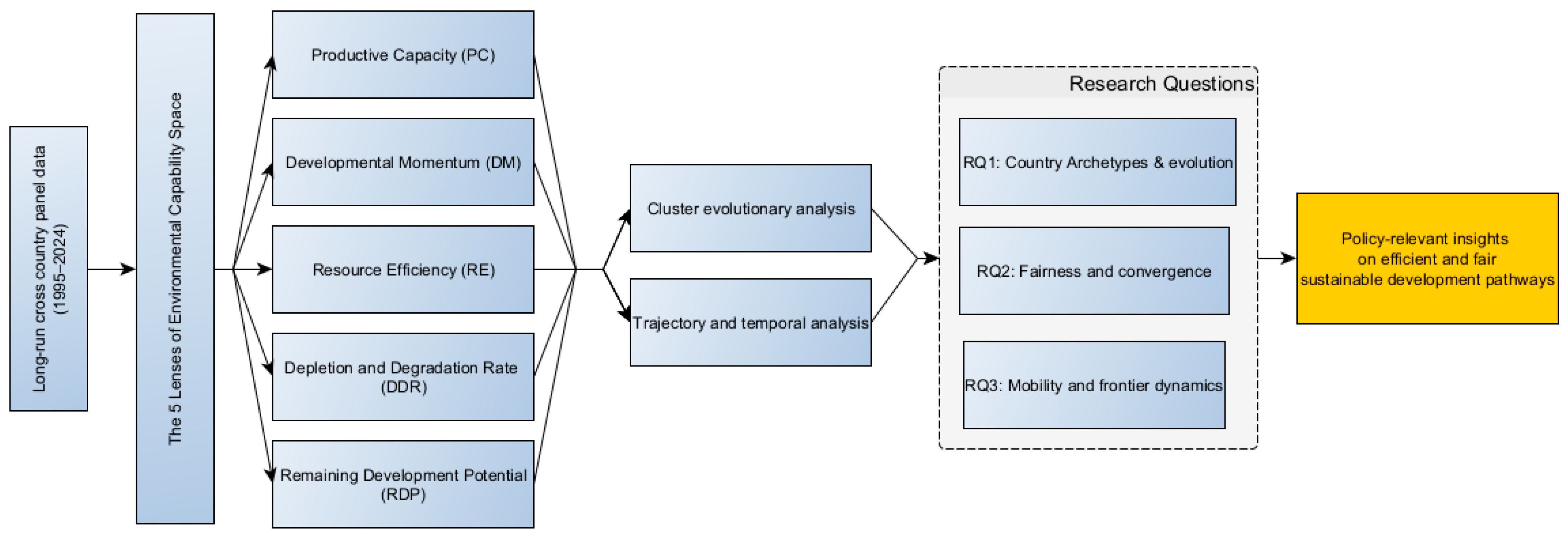
- RQ1: How can countries be characterized by a set of stable archetypes in the five-lens environmental capability framework over 1995–2024, and how do these archetypes behave and exhibit persistence over time?
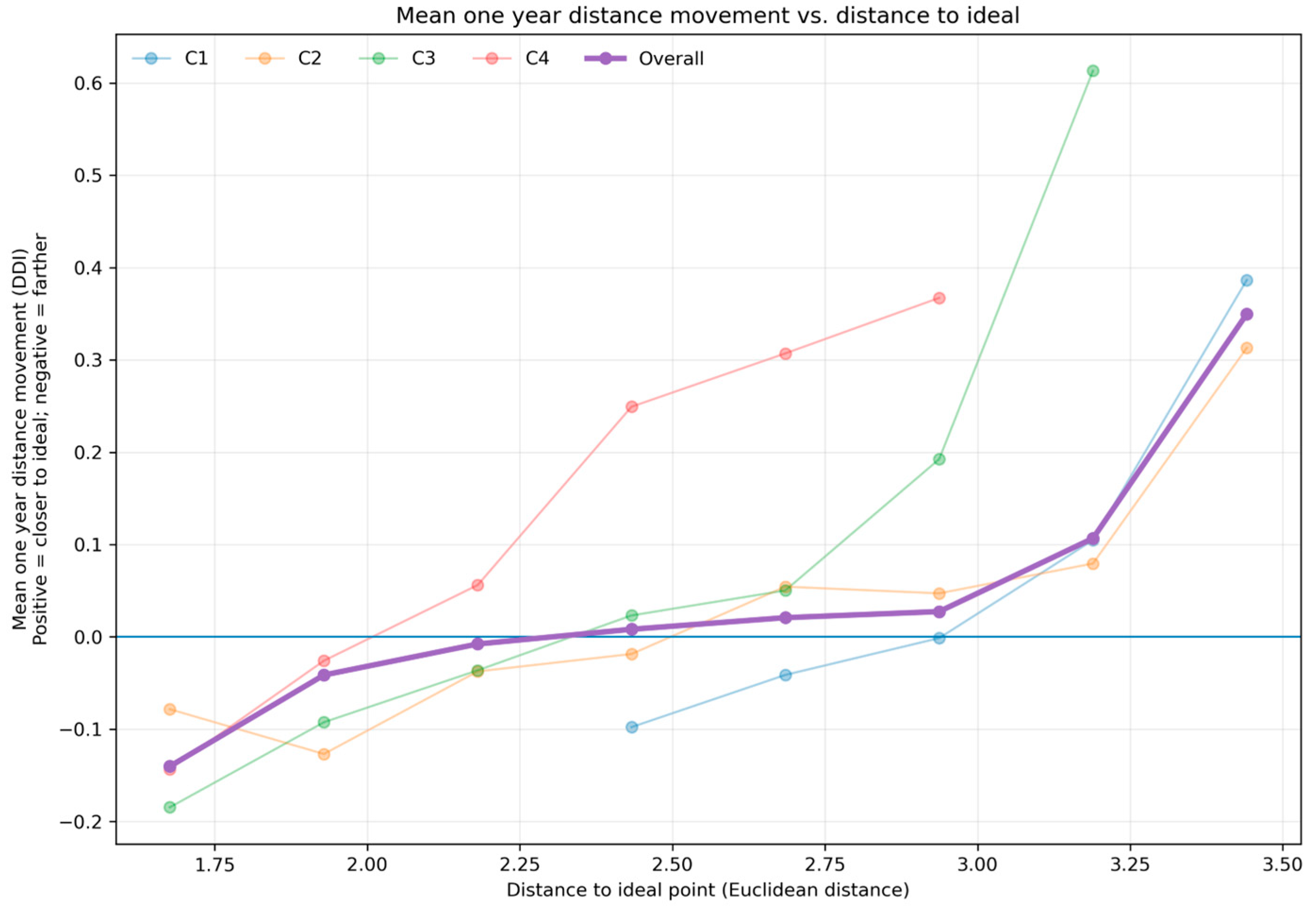
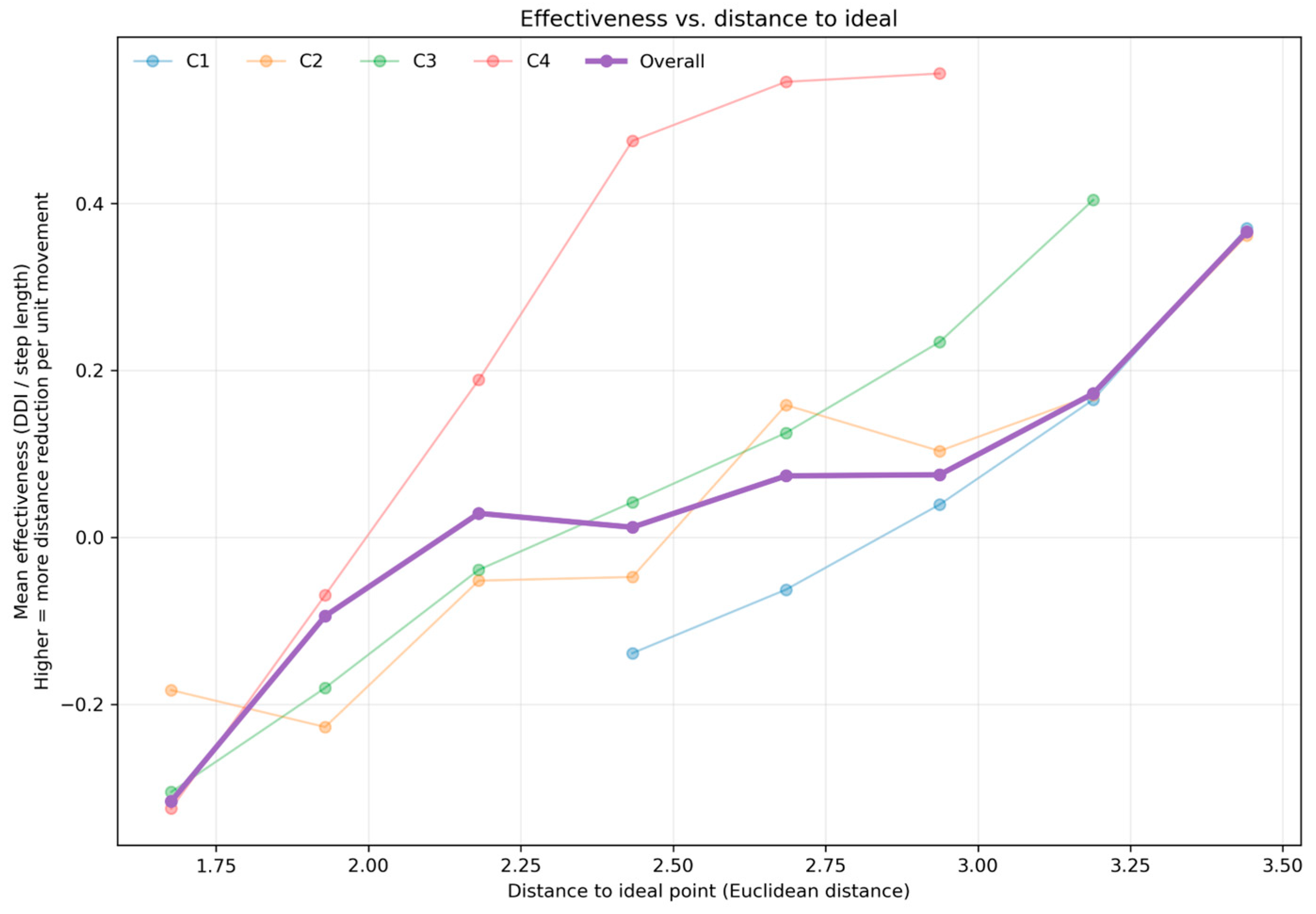
- RQ2: Is cross-sectional inequality in capability small and declining, and how is fairness related to a deceleration near the frontier as the distance to the ideal state becomes smaller?
- RQ3: How do starting distance, archetype membership, and regional context shape transition probabilities, permanence, and reversals, and do these mechanisms produce tempered club convergence?
2. Literature Review
3. General Research Framework
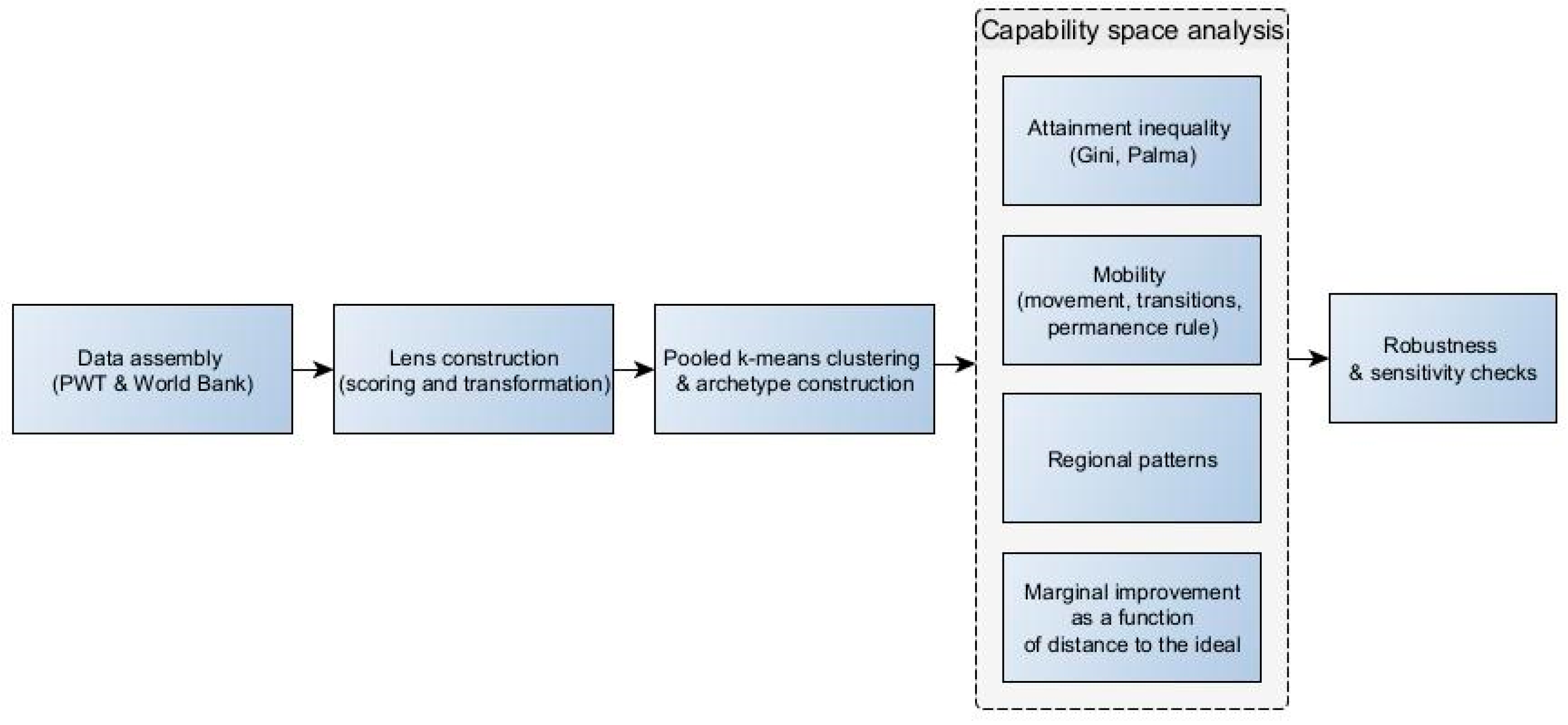
3.1. Analytical Flow
3.2. The 5-Dimensional Environmental Lenses
- Productive capacity (PC)
- Developmental momentum (DM)
- Resource efficiency (RE)
- Resource depletion and degradation ratio (DDR)
- Remaining Development potential (RDP)
4. Methodology
4.1. Data and Preprocessing
4.2. Mathematical Specification of the Five Lenses
4.2.1. Productive Capacity
4.2.2. Development Momentum
4.2.3. Resource Efficiency
4.2.4. Degradation and Depletion Ratio
4.2.5. Remaining Development Potential
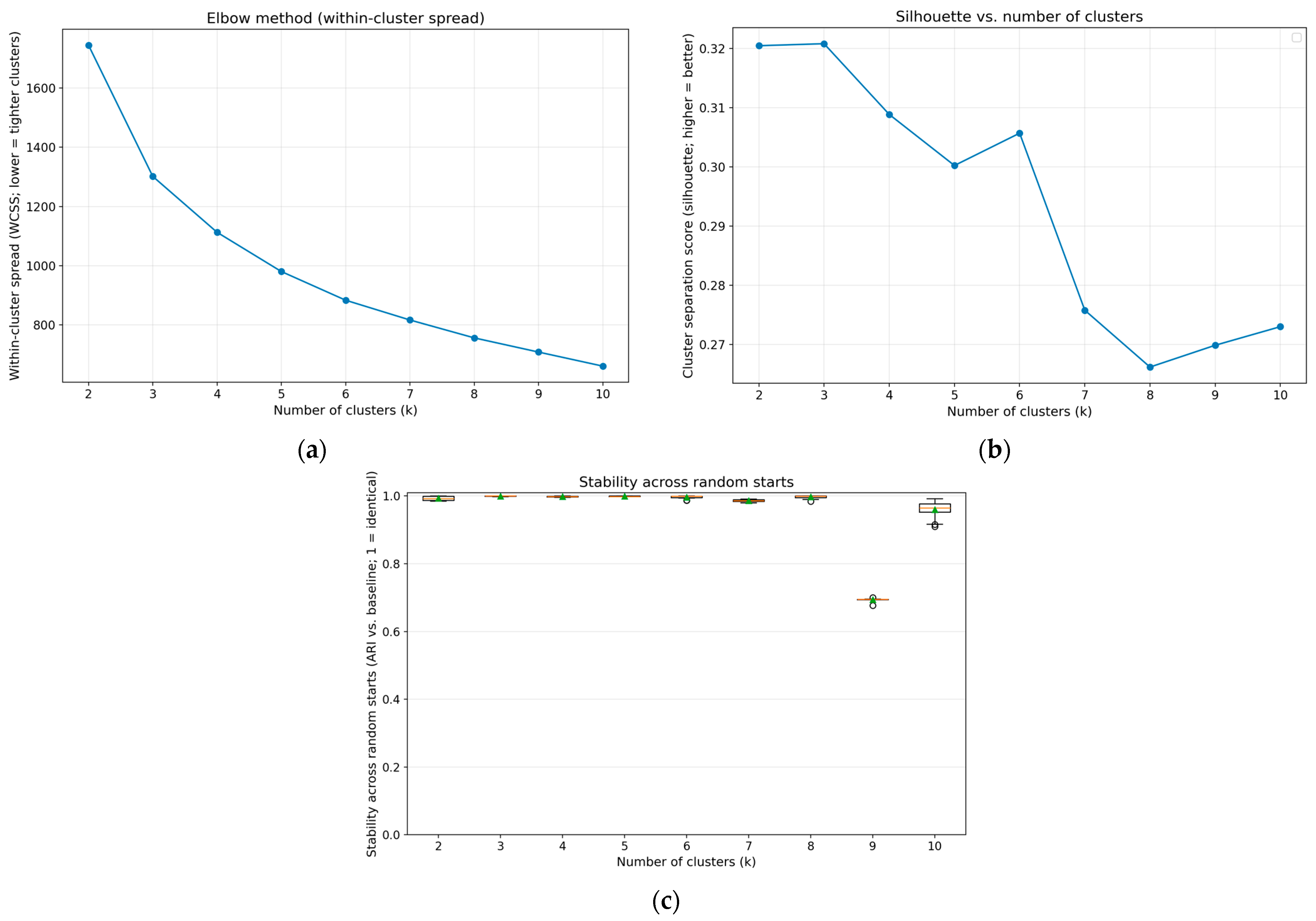
4.3. Archetype Construction and Clustering Procedure
4.4. Fairness Analysis
4.5. Temporal Analysis
4.6. Dynamic Distance Improvement (DDI) Analysis
4.7. Sensitivity Analysis
4.8. Generative AI Usage
5. Results and Discussion
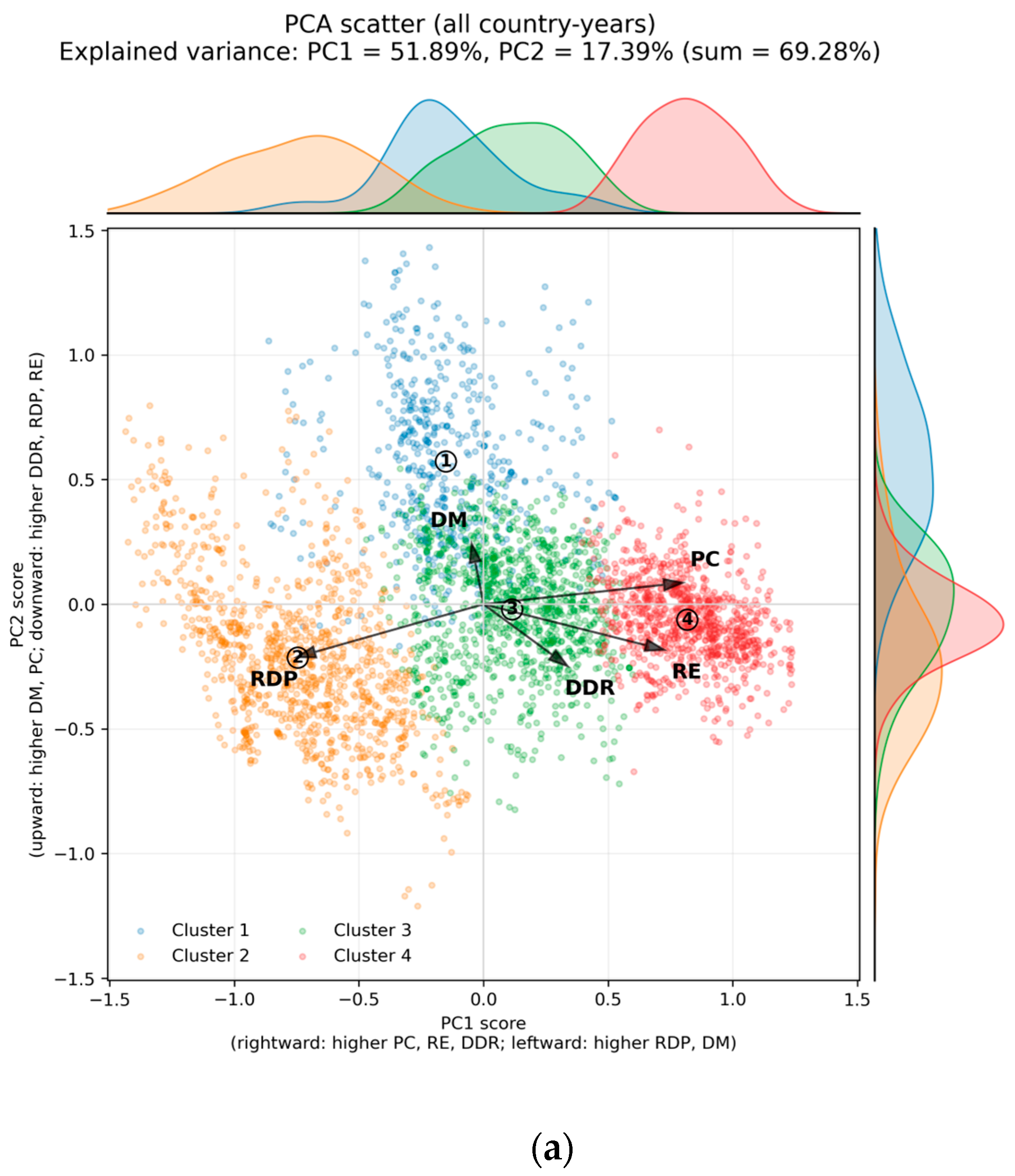
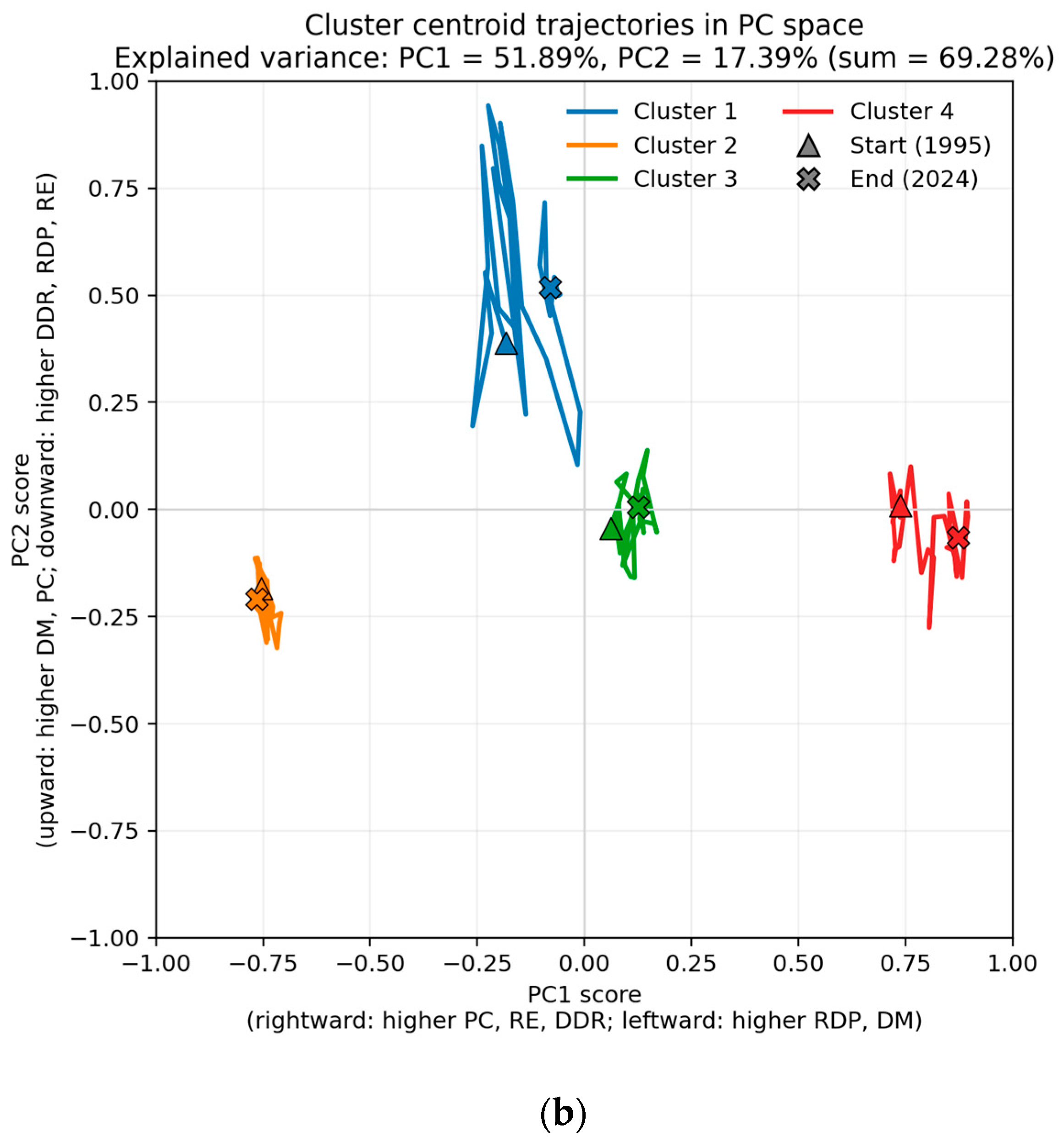
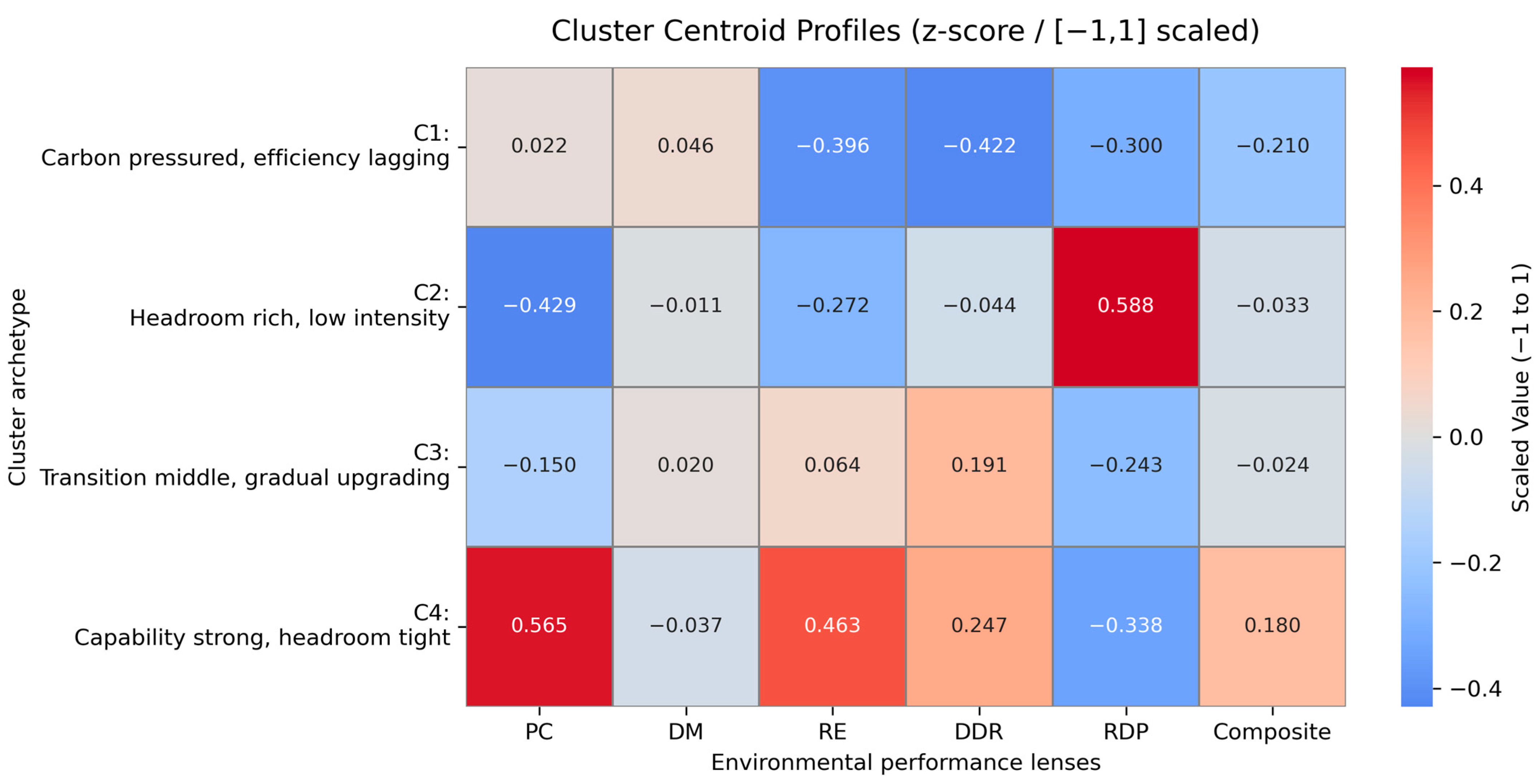
5.1. Cluster Formation and Archetypes
- Cluster 1—Carbon pressured, efficiency lagging
- Cluster 2—Headroom rich, low intensity
- Cluster 3—Transition middle, gradual upgrading
- Cluster 4—Capability strong, headroom tight
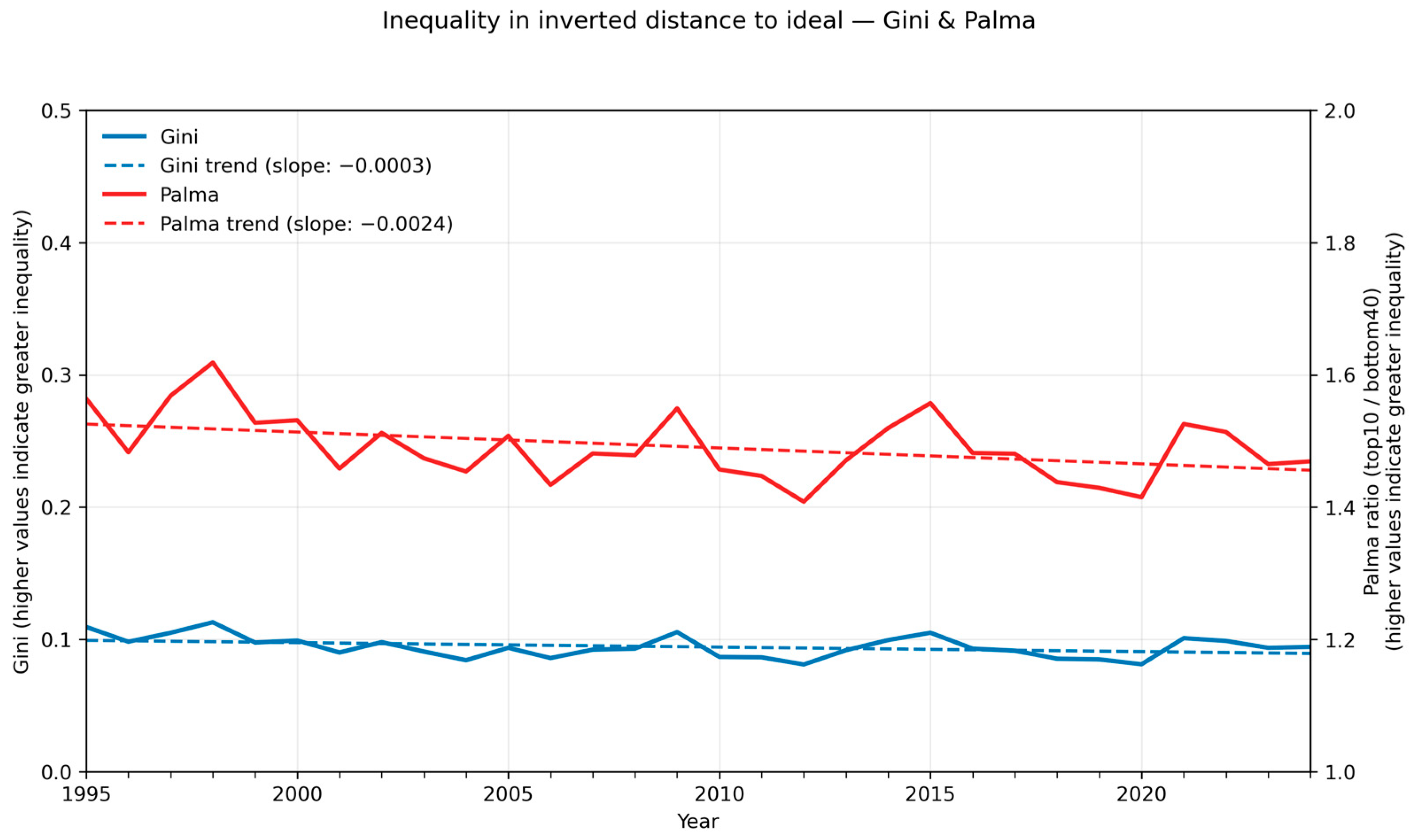
5.2. Five-Dimensional Gini and Palma Ratio
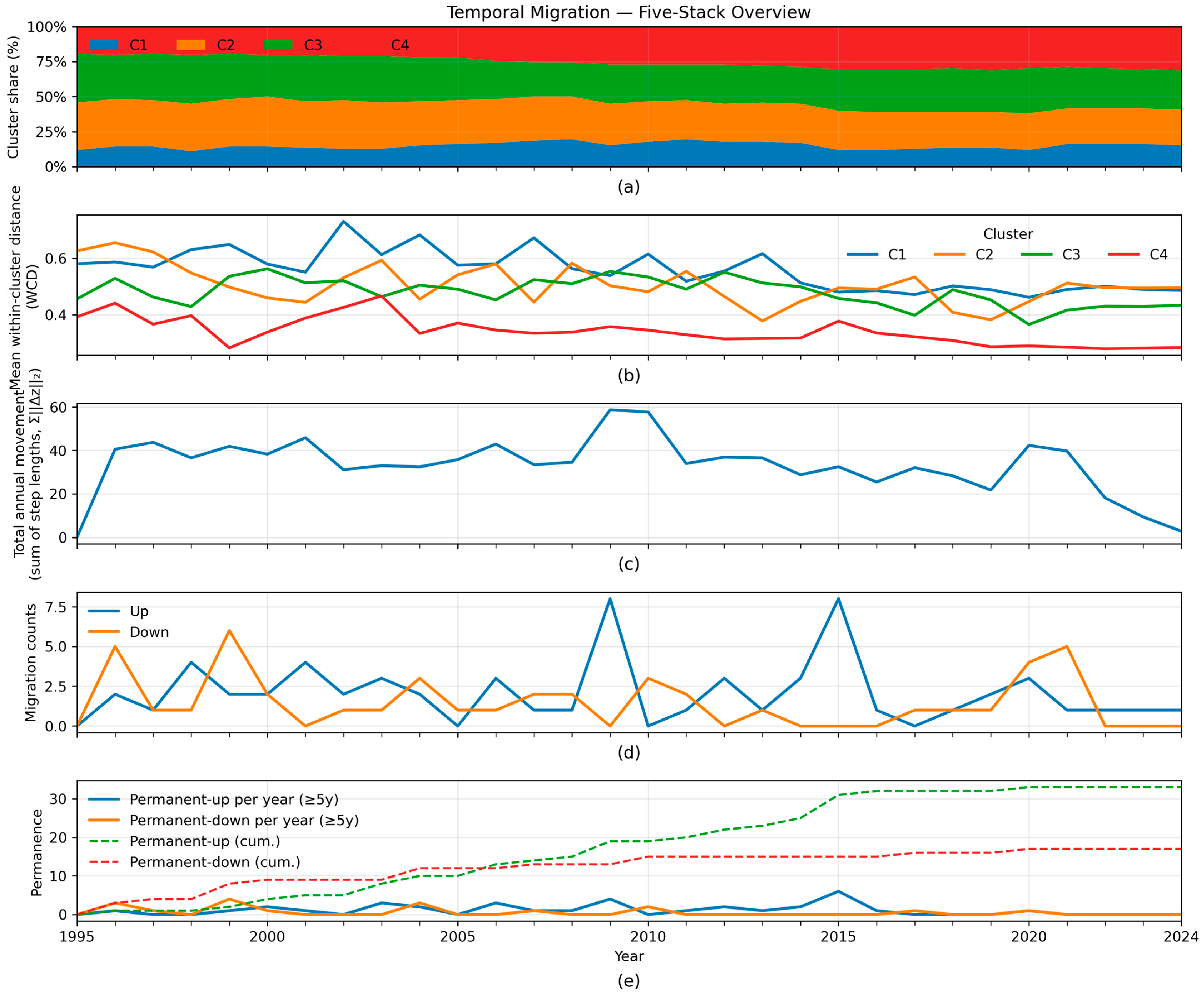
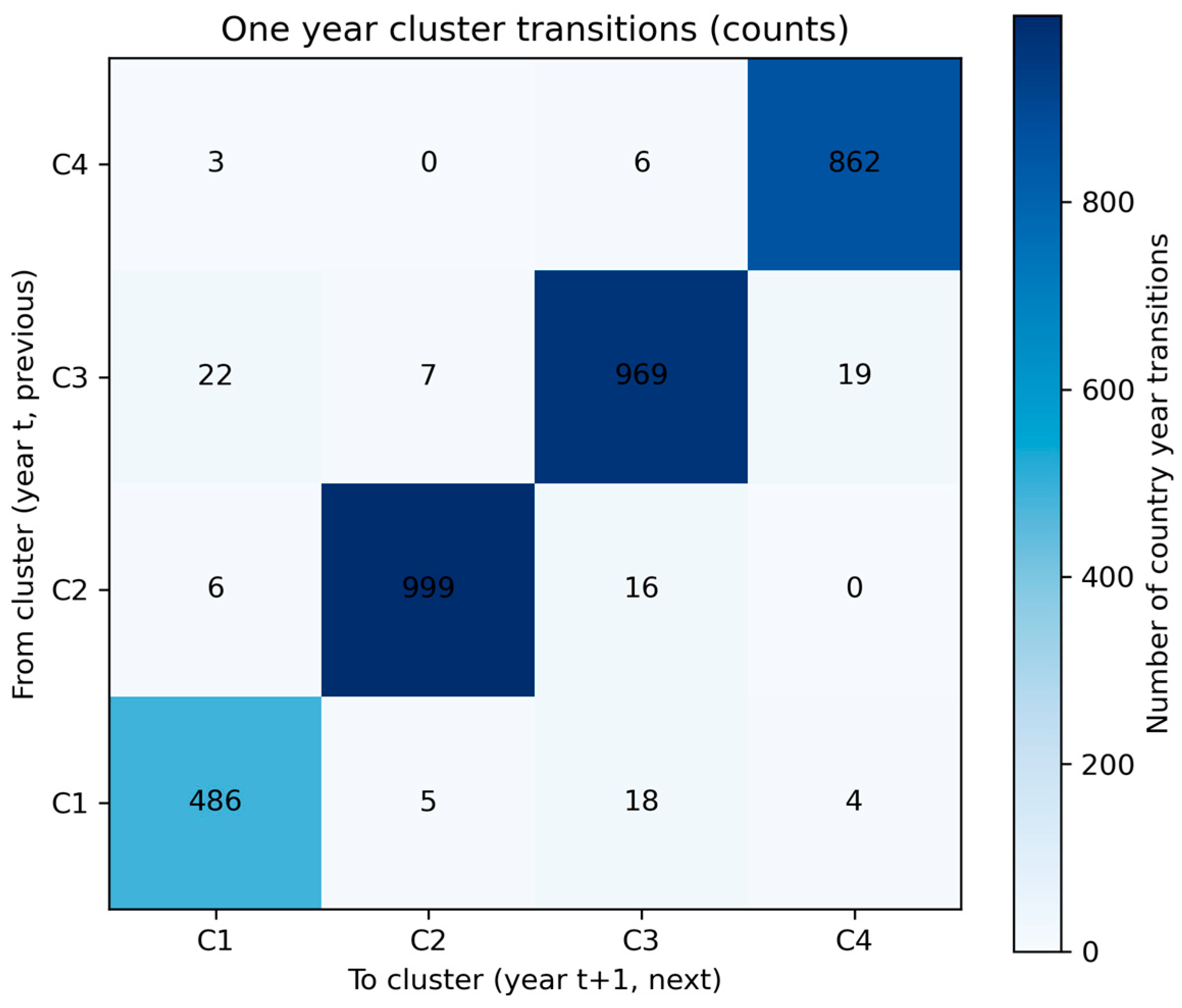
5.3. Cluster Dynamics and Temporal Analysis
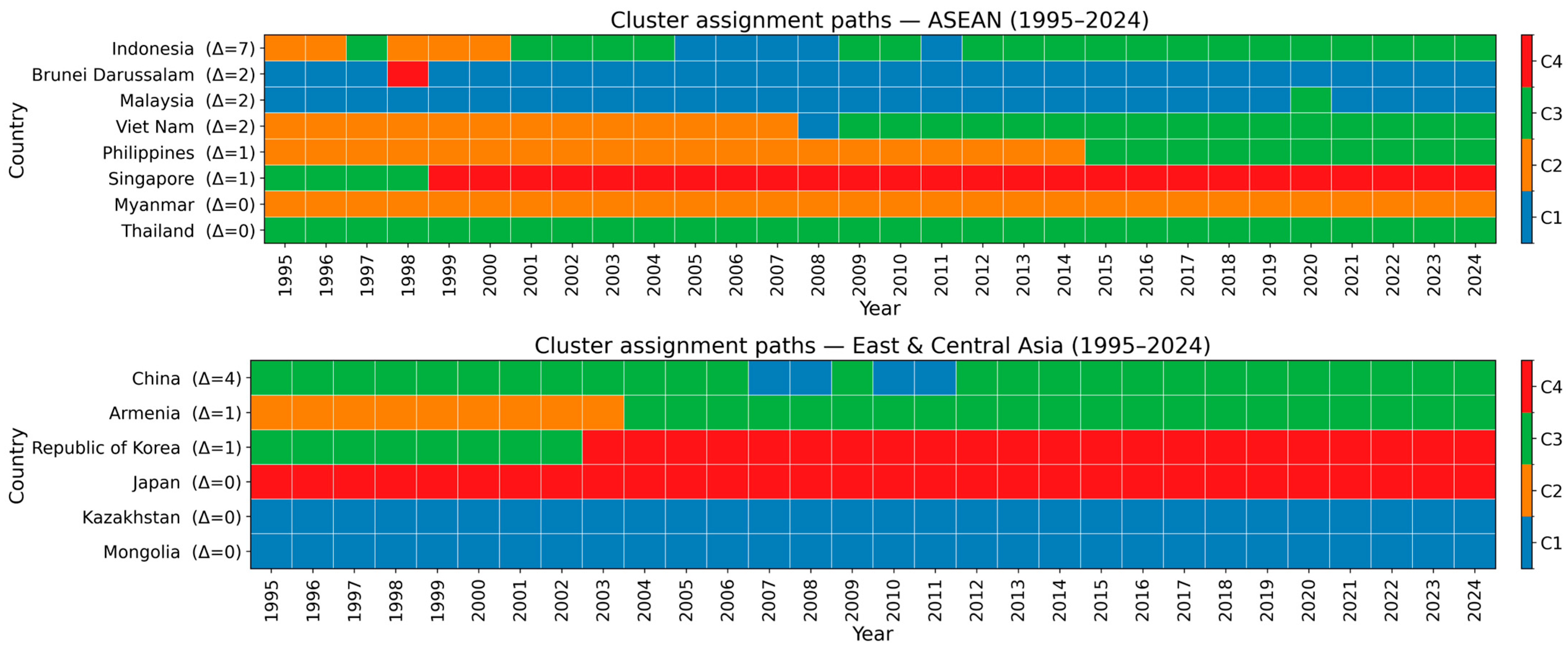
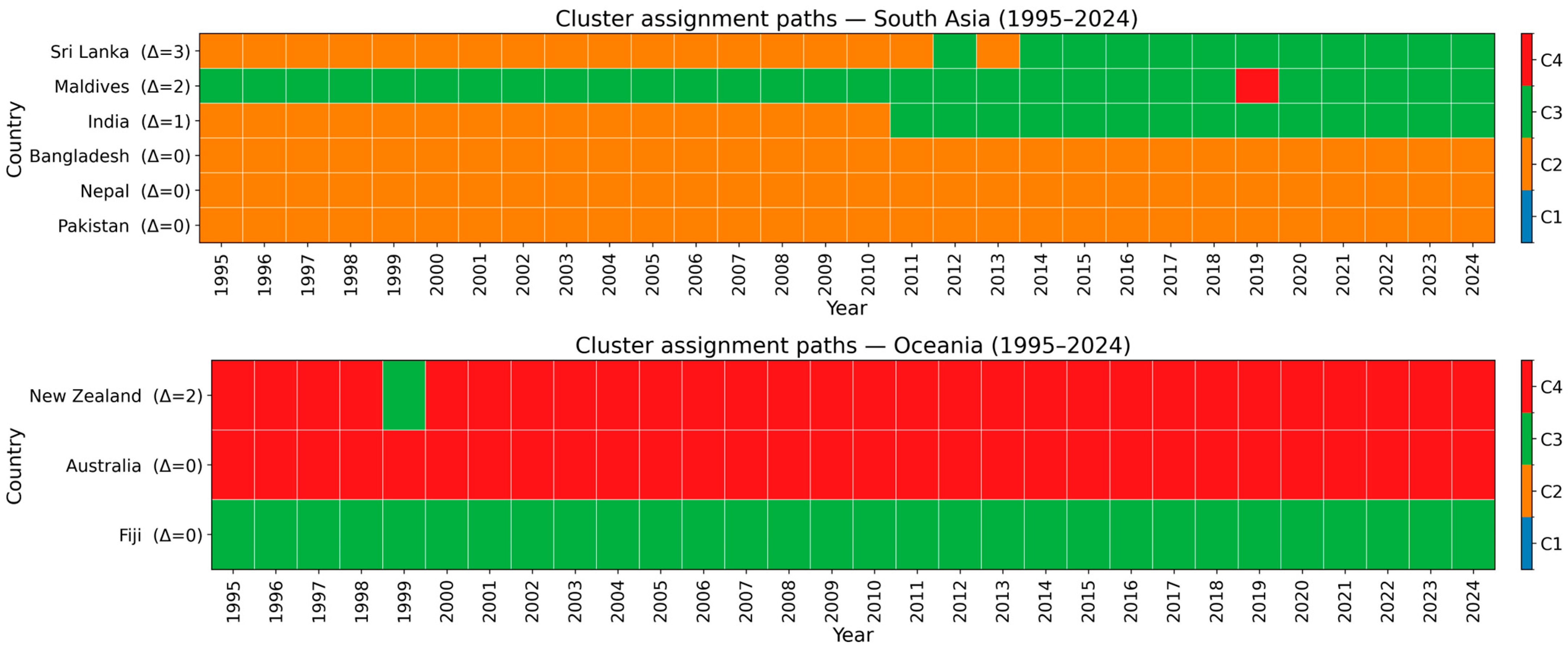
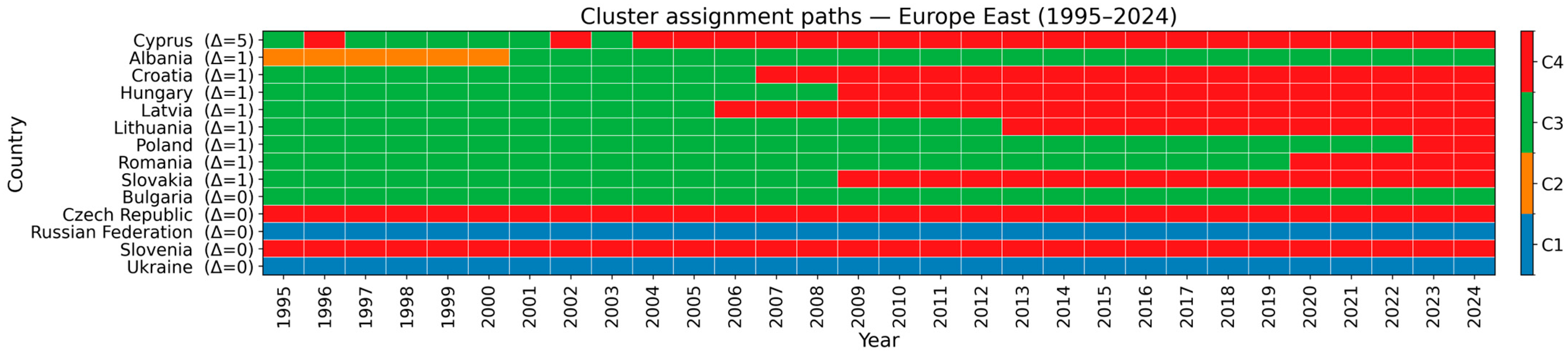
5.4. Dynamics Evolution of Countries and Region
5.5. Frontier Slowdown in the Environmental Capability Space
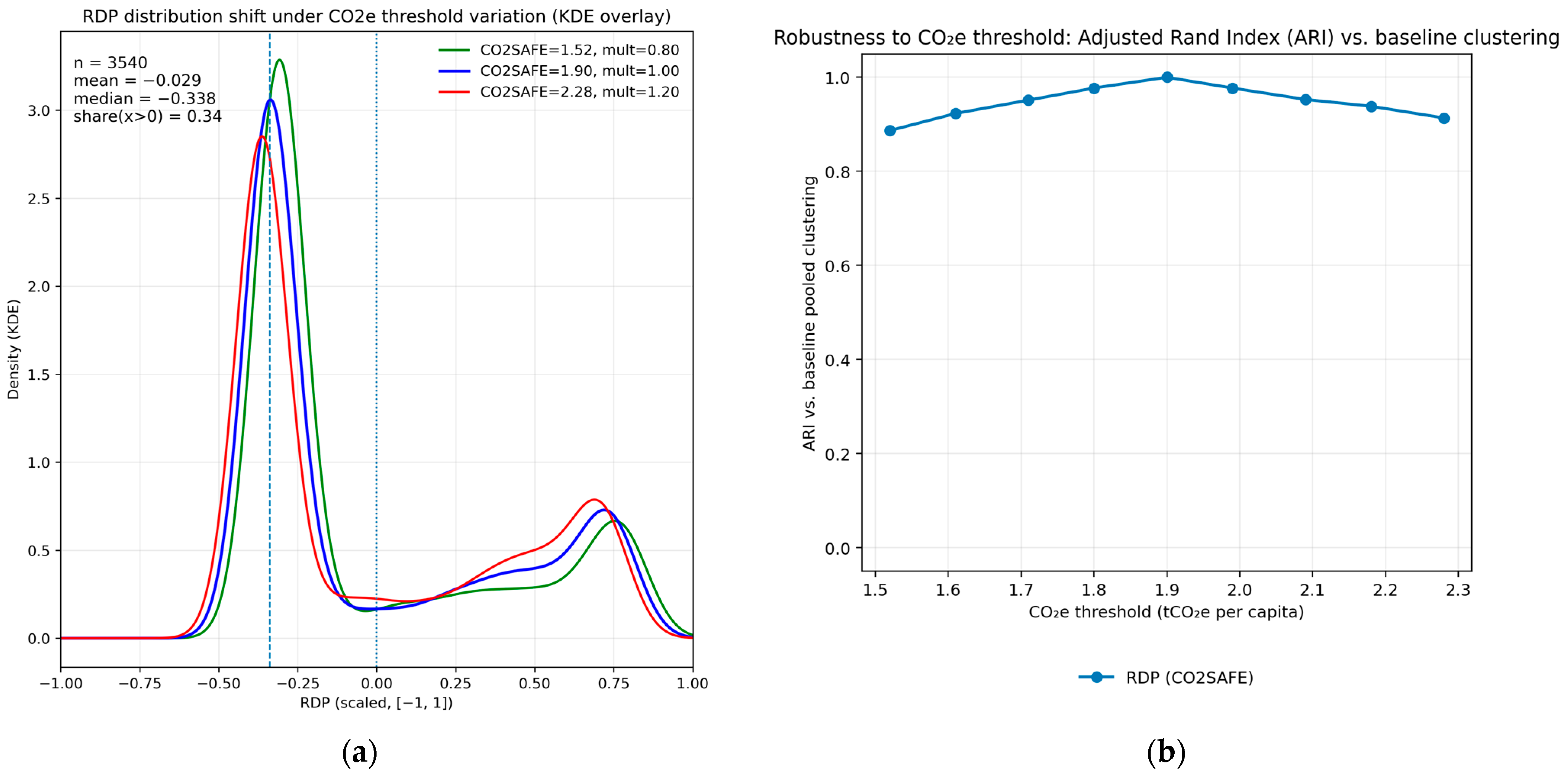
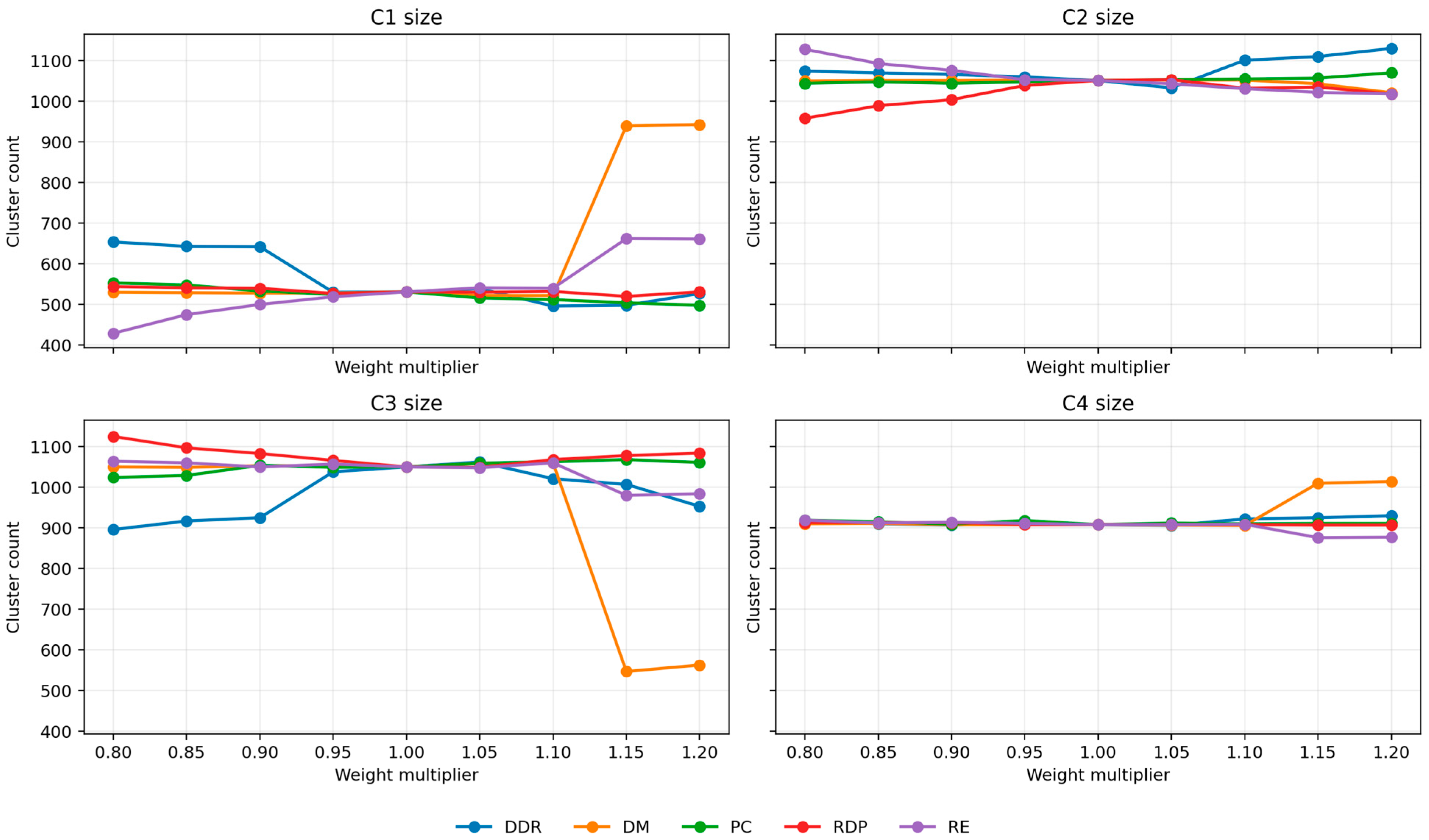
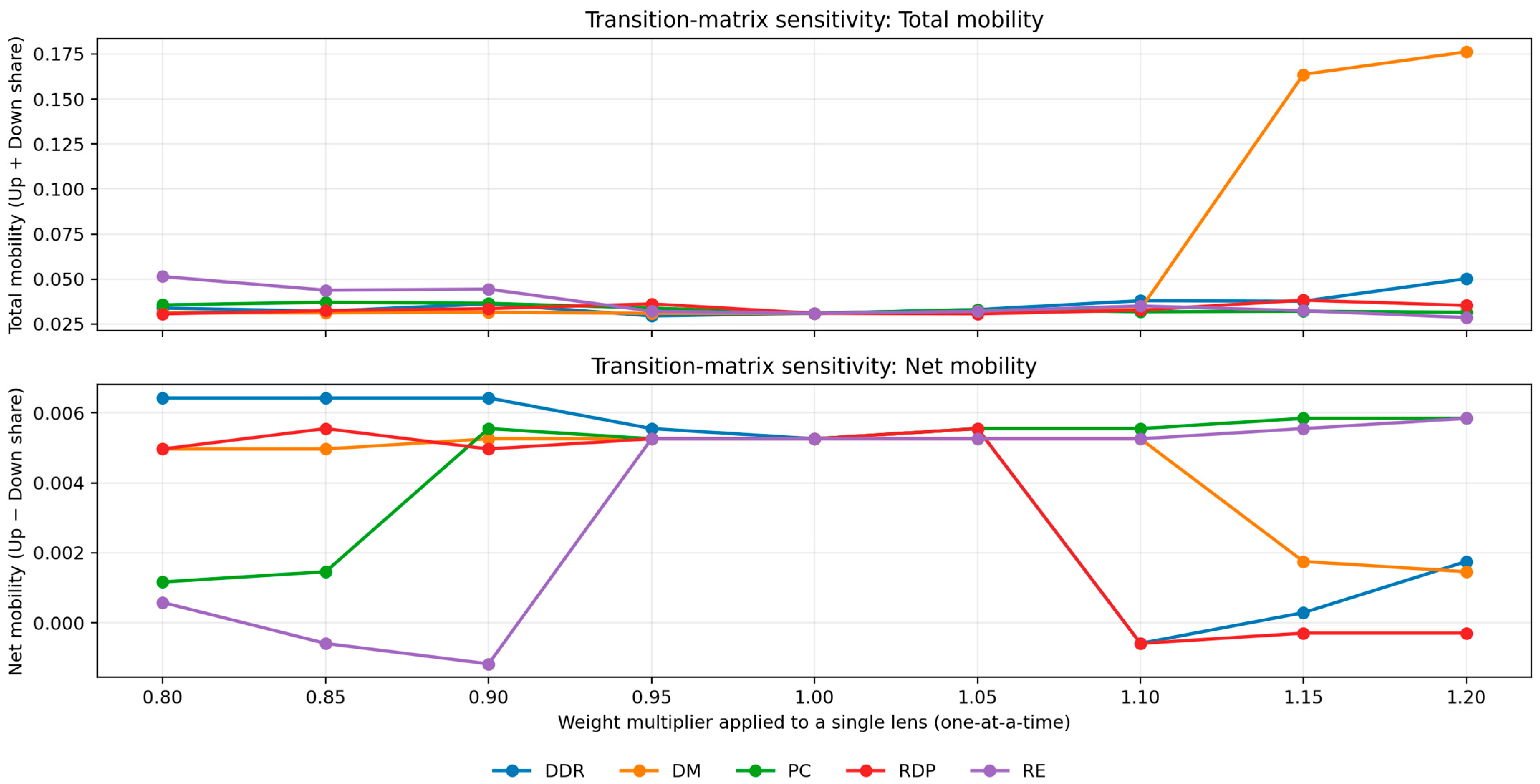
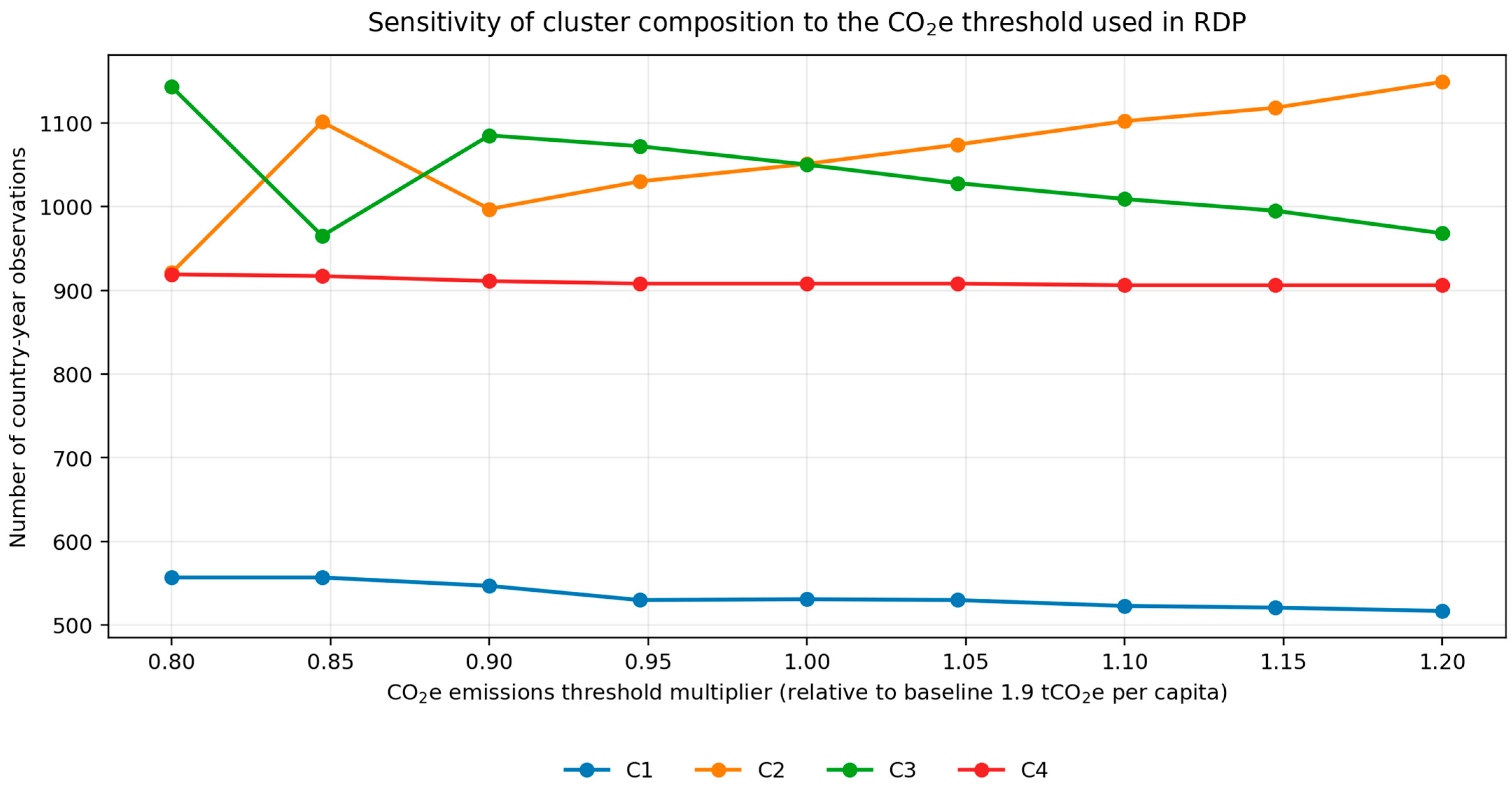
5.6. Robustness and Sensitivity Checks
6. Conclusions and Policy Implication
Author Contributions
Funding
Data Availability Statement
Conflicts of Interest
Abbreviations
| ARI | Adjusted Rand index |
| ASEAN | Association of Southeast Asian Nations |
| DDI | Distance to ideal improvement |
| DDR | Degradation and depletion ratio lens |
| DM | Developmental momentum lens |
| EF | Ecological Footprint |
| EPI | Environmental Performance Index |
| ESI | Environmental Sustainability Index |
| GHG | Greenhouse gases |
| HDI | Human Development Index |
| KDE | Kernel density estimate |
| LAC | Latin America and the Caribbean |
| MENA | Middle East and North Africa |
| PC | Productive capacity lens |
| PCA | Principal component analysis |
| RDP | Remaining development potential |
| RE | Resource efficiency lens |
| SDG | Sustainable Development Goals |
| SSA | Sub-Saharan Africa |
| WGI | Worldwide Governance Indicators |
| WCD | Within cluster distance |
| PWT | Penn World Table |
| WDI | World Development Indicators |
| EU | European Union |
Appendix A


References
- Agusdinata, D. B., Aggarwal, R., & Ding, X. (2020). Economic growth, inequality, and environment nexus: Using data mining techniques to unravel archetypes of development trajectories. Environment, Development and Sustainability, 23, 6234–6258. [Google Scholar] [CrossRef]
- Alotaiq, A. (2024). Global low carbon transitions in the power sector: A machine learning clustering approach using archetypes. Journal of Economy and Technology, 2, 95–127. [Google Scholar] [CrossRef]
- Amann, M., Klimont, Z., & Wagner, F. (2013). Regional and global emissions of air pollutants: Recent trends and future scenarios. Annual Review of Environment and Resources, 38, 31–55. [Google Scholar] [CrossRef]
- Arogundade, S., Hassan, A., Akpa, E., & Biyase, M. (2023). Closer together or farther apart: Are there club convergence in ecological footprint? Environmental Science and Pollution Research, 30, 15293–15310. [Google Scholar] [CrossRef]
- Basu, S., Ogawa, T., & Ishihara, K. N. (2022). The methods and factors of decoupling energy usage and economic growth. In Waste-to-energy approaches towards zero waste (pp. 269–313). Elsevier. [Google Scholar] [CrossRef]
- Berndt, E. R., & Wood, D. O. (1975). Technology, prices, and the derived demand for energy. Review of Economics and Statistics, 57, 259–268. [Google Scholar] [CrossRef]
- Bluszcz, A. (2016). A comparative analysis of selected synthetic indicators of sustainability. Procedia Social and Behavioral Sciences, 220, 40–50. [Google Scholar] [CrossRef]
- Chancel, L. (2022). Global carbon inequality over 1990–2019. Nature Sustainability, 5, 931–938. [Google Scholar] [CrossRef]
- Chu, L. K., & Hoang, D. P. (2022). The shadow economy–environmental quality nexus in OECD countries: Empirical evidence from panel quantile regression. Environmental Science and Pollution Research, 29, 65233–65258. [Google Scholar] [CrossRef] [PubMed]
- Dosi, G., & Nelson, R. R. (2010). Technical change and industrial dynamics as evolutionary processes. In B. H. Hall, & N. Rosenberg (Eds.), Handbook of the economics of innovation (Vol. 1, pp. 51–127). Elsevier. [Google Scholar] [CrossRef]
- Eisenack, K., Villamayor-Tomas, S., Epstein, G., Kimmich, C., Magliocca, N., Manuel-Navarrete, D., Oberlack, C., Roggero, M., & Sietz, D. (2019). Design and quality criteria for archetype analysis. Ecology and Society, 24(3), 6. [Google Scholar] [CrossRef]
- Ekins, P. (1993). “Limits to growth” and “sustainable development”: Grappling with ecological realities. Ecological Economics, 8, 269–288. [Google Scholar] [CrossRef]
- Eleftheriou, K., Nijkamp, P., & Polemis, M. L. (2024). Club convergence of sustainable development: Fresh evidence from developing and developed countries. Economic Change and Restructuring, 57, 32. [Google Scholar] [CrossRef]
- Emir, F., Balcilar, M., & Shahbaz, M. (2019). Inequality in carbon intensity in EU-28: Analysis based on club convergence. Environmental Science and Pollution Research, 26, 3308–3319. [Google Scholar] [CrossRef] [PubMed]
- Erdogan, S., & Okumus, I. (2021). Stochastic and club convergence of ecological footprint: An empirical analysis for different income group of countries. Ecological Indicators, 121, 107123. [Google Scholar] [CrossRef]
- Esty, D. C., Levy, M., Srebotnjak, T., & de Sherbinin, A. (2005). Environmental sustainability index: Benchmarking national environmental stewardship. Yale Center for Environmental Law and Policy. [Google Scholar]
- Everitt, B. S., Landau, S., Leese, M., & Stahl, D. (2011). Cluster analysis (5th ed.). John Wiley & Sons, Ltd. [Google Scholar] [CrossRef]
- Feenstra, R. C., Inklaar, R., & Timmer, M. P. (2015). The next generation of the Penn World Table. American Economic Review, 105, 3150–3182. [Google Scholar] [CrossRef]
- Gilli, M., Mazzanti, M., & Nicolli, F. (2013). Sustainability and competitiveness in evolutionary perspectives: Environmental innovations, structural change and economic dynamics in the EU. The Journal of Socio-Economics, 45, 204–215. [Google Scholar] [CrossRef]
- Gini, C. (1912). Variabilità e mutabilità: Contributo allo studio delle distribuzioni e delle relazioni statistiche. Tipografia di Paolo Cuppini. [Google Scholar]
- Gómez, M., & Rodríguez, J. C. (2024). Analysis of the convergence of environmental sustainability and its main determinants: The case of the Americas (1990–2022). Sustainability, 16, 6819. [Google Scholar] [CrossRef]
- Haberl, H., Wiedenhofer, D., Virág, D., Kalt, G., Plank, B., Brockway, P., & Creutzig, F. (2020). A systematic review of the evidence on decoupling of GDP, resource use and GHG emissions. Environmental Research Letters, 15, 063002. [Google Scholar] [CrossRef]
- Haider, S., & Akram, V. (2019). Club convergence analysis of ecological and carbon footprint: Evidence from a cross-country analysis. Carbon Management, 10, 451–463. [Google Scholar] [CrossRef]
- Halvorsen, R., & Smith, T. R. (1984). On measuring natural resource scarcity. Journal of Political Economy, 92(5), 954–964. [Google Scholar] [CrossRef]
- Hansen, U. E., Nygaard, I., Romijn, H., Wieczorek, A., Kamp, L. M., & Klerkx, L. (2018). Sustainability transitions in developing countries: Stocktaking, new contributions and a research agenda. Environmental Science & Policy, 84, 198–203. [Google Scholar] [CrossRef]
- Haque, M. S. (2000). Environmental discourse and sustainable development: Linkages and limitations. Ethics and the Environment, 5, 3–21. [Google Scholar] [CrossRef]
- Hsu, A., Esty, D. C., Levy, M. A., & de Sherbinin, A. (2016). 2016 Environmental performance index. Yale Center for Environmental Law and Policy. [Google Scholar]
- Intergovernmental Panel on Climate Change (IPCC). (2022). Global warming of 1.5 °C: IPCC special report on impacts of global warming of 1.5 °C above pre-industrial levels in context of strengthening response to climate change, sustainable development, and efforts to eradicate poverty. Cambridge University Press. [Google Scholar]
- Jackson, T. (2009). Prosperity without growth: Economics for a finite planet. Earthscan. [Google Scholar]
- Kaufman, L., & Rousseeuw, P. J. (1990). Finding groups in data: An introduction to cluster analysis. Wiley. [Google Scholar]
- Kaya, Y. (1990). Impact of carbon dioxide emission control on GNP growth: Interpretation of proposed scenarios. IPCC Energy and Industry Subgroup, Response Strategies Working Group. [Google Scholar]
- Krautkraemer, J. A. (1998). Nonrenewable resource scarcity. Journal of Economic Literature, 36, 2065–2107. [Google Scholar]
- Küppers, M., Metzger, M., Huber, M., & Paulus, S. (2019, June 23–27). Archetypes of country energy systems. 2019 IEEE Milan PowerTech (PowerTech) (pp. 1–6), Milan, Italy. [Google Scholar]
- Ma, F., Wang, H., Tzachor, A., Hidalgo, C. A., Schandl, H., Zhang, Y., Zhang, J., Chen, W.-Q., Zhao, Y., Zhu, Y.-G., & Fu, B. (2025). The disparities and development trajectories of nations in achieving the sustainable development goals. Nature Communications, 16, 1107. [Google Scholar] [CrossRef] [PubMed]
- MacQueen, J. (1967). Some methods for classification and analysis of multivariate observations. In Proceedings of the fifth Berkeley symposium on mathematical statistics and probability, Berkeley, CA, USA, 21 June–18 July 1965 and 27 December 1965–7 January 1966 (Vol. 1, pp. 281–297). University of California Press. [Google Scholar]
- Markard, J., Raven, R., & Truffer, B. (2012). Sustainability transitions: An emerging field of research and its prospects. Research Policy, 41, 955–967. [Google Scholar] [CrossRef]
- Moallemi, E. A., Hosseini, S. H., Eker, S., Gao, L., Bertone, E., Szetey, K., & Bryan, B. A. (2022). Eight archetypes of SDG synergies and trade-offs. Earth’s Future, 10, e2021EF002621. [Google Scholar] [CrossRef]
- OECD. (2002). Indicators to measure decoupling of environmental pressure from economic growth. OECD Publishing. [Google Scholar]
- OECD. (2011). Towards green growth. OECD Publishing. [Google Scholar]
- Osorio, L. A. R., Lobato, M. O., & del Castillo, X. Á. (2005). Debates on sustainable development: Towards a holistic view of reality. Environment, Development and Sustainability, 7, 501–518. [Google Scholar] [CrossRef]
- Palma, J. G. (2011). Homogeneous middles vs. heterogeneous tails, and the end of the “inverted U”: It is all about the share of the rich. Development and Change, 42(1), 87–153. [Google Scholar] [CrossRef]
- Panopoulou, E., & Pantelidis, T. (2009). Club convergence in carbon dioxide emissions. Environmental and Resource Economics, 44, 47–70. [Google Scholar] [CrossRef]
- Partelow, S., Nagel, B., Gentry, R., Gephart, J., & Rocha, J. (2025). Archetypes of aquaculture development across 150 countries. Aquaculture, 595, 741484. [Google Scholar] [CrossRef]
- Pedde, S., Kok, K., Hölscher, K., Oberlack, C., Harrison, P. A., & Leemans, R. (2019). Archetyping shared socioeconomic pathways across scales: An application to central Asia and European case studies. Ecology and Society, 24(4), 30. [Google Scholar] [CrossRef]
- Peters, G. P., Minx, J. C., Weber, C. L., & Edenhofer, O. (2011). Growth in emission transfers via international trade from 1990 to 2008. Proceedings of the National Academy of Sciences, 108, 8903–8908. [Google Scholar] [CrossRef] [PubMed]
- Redclift, M. (2005). Sustainable development (1987–2005): An oxymoron comes of age. Sustainable Development, 13, 212–227. [Google Scholar] [CrossRef]
- Renou-Maissant, P., Abdesselam, R., & Bonnet, J. (2022). Trajectories for energy transition in EU-28 countries over the period 2000–2019: A multidimensional approach. Environmental Modeling & Assessment, 27, 525–551. [Google Scholar] [CrossRef]
- Rockström, J., Steffen, W., Noone, K., Persson, Å., Chapin, F. S., Lambin, E., & Foley, J. A. (2009). A safe operating space for humanity. Nature, 461, 472–475. [Google Scholar] [CrossRef] [PubMed]
- Romer, P. M. (1990). Endogenous technological change. Journal of Political Economy, 98, S71–S102. [Google Scholar] [CrossRef]
- Ruggerio, C. A. (2021). Sustainability and sustainable development: A review of principles and definitions. Science of the Total Environment, 786, 147481. [Google Scholar] [CrossRef]
- Sen, A. (1999). Development as freedom. Oxford University Press. [Google Scholar]
- Siche, R., Agostinho, F., Ortega, E., & Romeiro, A. (2008). Sustainability of nations by indices: Comparative study between environmental sustainability index, ecological footprint and the emergy performance indices. Ecological Economics, 66, 628–637. [Google Scholar] [CrossRef]
- Sietz, D., Frey, U., Roggero, M., Gong, Y., Magliocca, N. R., Rong, T., Janssen, P., & Václavík, T. (2019). Archetype analysis in sustainability research: Methods and applications. Ecology and Society, 24(3), 34. [Google Scholar] [CrossRef]
- Sneddon, C., Howarth, R. B., & Norgaard, R. B. (2006). Sustainable development in a post-Brundtland world. Ecological Economics, 57, 253–268. [Google Scholar] [CrossRef]
- Solow, R. M. (1956). A contribution to the theory of economic growth. Quarterly Journal of Economics, 70, 65–94. [Google Scholar] [CrossRef]
- Stefani, G., Biggeri, M., & Ferrone, L. (2022). Sustainable transitions narratives: An analysis of the literature through topic modelling. Sustainability, 14, 2085. [Google Scholar] [CrossRef]
- Steffen, W., Richardson, K., Rockström, J., Cornell, S. E., Fetzer, I., Bennett, E. M., & Sörlin, S. (2015). Planetary boundaries: Guiding human development on a changing planet. Science, 347, 1259855. [Google Scholar] [CrossRef] [PubMed]
- Stern, D. I., Common, M. S., & Barbier, E. B. (1996). Economic growth and environmental degradation: The environmental Kuznets curve and sustainable development. World Development, 24(7), 1151–1160. [Google Scholar] [CrossRef]
- Terluin, I. J. (2003). Differences in economic development in rural regions of advanced countries: An overview and critical analysis of theories. Journal of Rural Studies, 19, 327–344. [Google Scholar] [CrossRef]
- Ulucak, R., & Apergis, N. (2018). Does convergence really matter for the environment? An application based on club convergence and on the ecological footprint concept for the EU countries. Environmental Science and Policy, 80, 21–27. [Google Scholar] [CrossRef]
- Wackernagel, M., & Rees, W. (1996). Our ecological footprint: Reducing human impact on the earth. New Society Publisher. [Google Scholar]
- World Bank. (2025). World development indicators. Data set, world bank databank. Available online: https://databank.worldbank.org/data/download/WDI_EXCEL.zip (accessed on 30 July 2025).
- World Commission on Environment and Development (WCED). (1987). Our common future. Oxford University Press. [Google Scholar]



| Reference | Method | Scope | Timeframe | Focus | Relevance |
|---|---|---|---|---|---|
| Agusdinata et al. (2020) | CART classification (country archetypes) | Global | 1980 to 2014 | CO2 per capita trajectory (slope); GDP growth trend | Supports multi-path emissions archetypes beyond EKC; intensity focus (RQ1, RQ3) |
| Alotaiq (2024) | k-means clustering | Global | 2015 to 2020 | Renewables share; electrification; GDP growth; HDI; governance (WGI); | Motivates archetype-specific transition routes; not region-generic (RQ3) |
| Moallemi et al. (2022) | Systems archetype analysis (causal-loop) | Global | — | SDG interaction patterns; feedbacks; policy levers | Alerts to trade-offs and rebound; monitor reversals (RQ3) |
| Eisenack et al. (2019) | Archetype analysis framework (conceptual) | Global | — | Conceptual framework | Advocates transferable, scale-aware archetypes with validity domains (RQ1) |
| Küppers et al. (2019) | k-means clustering | Global (140 countries) | 2015 to 2015 | 49 socioeconomic, climatic, and energy indicators | Suggests tentative clubs; requires dynamic tracking for persistence (RQ3) |
| Partelow et al. (2025) | Hierarchical clustering | Global (150 countries) | 2015 to 2019 | 42 indicators across social, economic, governance, environmental, and production | Notes risk constraints on mobility and reversal risk (RQ3) |
| Pedde et al. (2019) | Scenario archetypes (SSP/worldviews) | Global and subnational | — | SSP narratives; STEEP indicators; worldview coding | Emphasizes context dependence; global families fragment locally (RQ3) |
| Sietz et al. (2019) | Methodological synthesis of archetype analysis | Global | — | Sustainability systems | Prioritizes temporal stability validation over static snapshots (RQ1) |
| Hansen et al. (2018) | Special issue introduction | Global (developing-country focus) | — | Country sustainability transitions | Highlights durability factors; nurture niches and value-chain links (RQ3) |
| Eleftheriou et al. (2024) | Phillips–Sul club convergence | Global (137 countries) | 1990 to 2019 | SDI inputs: CO2 per capita; material footprint; HDI components | Shows club-specific convergence; paths differ by development stage (RQ3) |
| Erdogan and Okumus (2021) | Phillips–Sul club convergence | Global (89 countries) | 1961 to 2016 | Ecological footprint per capita | Documents multiple steady states; aggregate convergence misleads (RQ3) |
| Arogundade et al. (2023) | Phillips–Sul club convergence | Global (189 countries) | 1990 to 2017 | Ecological footprint per capita | Regional clubs shaped by starting pressure and resources (RQ3) |
| Haider and Akram (2019) | Phillips–Sul club convergence | Global (77 countries) | 1961 to 2014 | Ecological footprint per capita; carbon footprint per capita | Two steady states; design policy by club (RQ3) |
| Emir et al. (2019) | Phillips–Sul club convergence | EU (country level) | 1990 to 2016 | CO2 intensity (kg CO2 per kg oil-equivalent energy) | EU shows multiple clubs; differentiate targets (RQ3) |
| Panopoulou and Pantelidis (2009) | Phillips–Sul club convergence with club identification | Global 128 countries) | 1960 to 2003 | CO2 emissions per capita | Early convergence splits into two clubs; track permanence and reversals (RQ3) |
| Gómez and Rodríguez (2024) | Phillips–Sul club convergence | Americas (7 countries) | 1990 to 2022 | Energy consumption per capita; CO2 per capita; Ecological footprint per capita; energy intensity; load capacity factor | Indicator-specific clubs; region- and indicator-tailored pathways (RQ3) |
| Ulucak and Apergis (2018) | Phillips–Sul club convergence | EU (country level; 20) | 1961 to 2013 | Ecological footprint per capita | EU convergence rejected; persistent multiple clubs require differentiation (RQ3) |
| Ma et al. (2025) | Product-space network analysis (“SDG space”) | Global (country level; 166) | 2000 to 2022 | 96 SDG indicators | Polarized specialization; use distance-aware targeting and monitor reversals (RQ3) |
| Amann et al. (2013) | Global emission inventories and scenario review | Global | 1990 to 2010 | SO2; NOx; BC; OC; NH3 (inventories) | Decoupling uneven; structure and controls govern permanence or reversals (RQ3) |
| Gilli et al. (2013) | Shift-share decomposition (sectoral) | EU (DE, FR, IT, NL, SE; sector level) | 2000 to 2008 | Eco-innovation adoption; productivity; CO2/VA; SOx/VA; energy intensity | Sectoral mix and eco-innovation drive decoupling durability (RQ3) |
| Renou-Maissant et al. (2022) | PCA + hierarchical clustering | EU-28 | 2000 to 2019 | GHG per capita; primary energy intensity; renewables share | Multi-speed transitions; policy mix and innovation systems shape movement (RQ3) |
| Stefani et al. (2022) | Structural Topic Modeling (STM) | Global literature corpus | 2010 to 2020 | Topic tokens; year/journal covariates | Field branches across domains; transitions mediated by governance contexts (RQ3) |
| Bluszcz (2016) | Comparative analysis of synthetic indicators | Poland vs. Czech Republic | 2006 to 2014 | SSI (21 indicators); EPI components; EF components | Indices disagree; favor capability panels and dynamic tracking (RQ1, RQ2) |
| Ekins (1993) | Conceptual synthesis (limits-to-growth vs. sustainable development) | Global | — | Conceptual synthesis contrasting limits to growth and sustainable development | Limits and externalities justify frontier-aware assessment (RQ2) |
| Halvorsen and Smith (1984) | Duality-based estimation of scarcity rents | Canada | 1956 to 1974 | Shadow price of ore in situ; processed ore price; factor prices | Track stock scarcity and efficiency, not output alone (RQ2) |
| Krautkraemer (1998) | Theoretical and empirical review of resource scarcity | Global | — | Resource price; in-situ value (user cost); extraction cost; exploration and capital dynamics | Expect frontier slowdowns; measure rents and capacity (RQ2) |
| Siche et al. (2008) | Comparative analysis of national sustainability indices | Global | — | EF components; ESI variables; emergy indices | Indices disagree; triangulate measures (RQ1, RQ2) |
| Stern et al. (1996) | EKC critical review with simulations | Global (country level) | 1960 to 1990 | Income per capita; SO2 per capita; suspended particulates; deforestation | Rely on distance-to-target and policy or technology shifts (RQ2, RQ3) |
| Dimensional Lens | Indicator Data |
|---|---|
| Productive Capacity (PC) | Main Data (PWT, 1995–2019):
|
| Developmental Momentum (DM) | Main Data:
|
| Resource Efficiency (RE) | GDP per unit of energy use— (PPP $/kgoe, energy productivity) GDP per unit of GHG emissions— (PPP $ per tCO2e, carbon productivity) |
| Depletion and Degradation Ratio (DDR) | Mineral depletion— (% of GNI, income-equivalent loss from mineral extraction) Energy depletion— (% of GNI, loss from fossil fuel extraction) Forest depletion— (% of GNI, net forest rent losses) |
| Remaining Development Potential (RDP) | CO2 emissions per capita— (tCO2e/person, carbon pressure) |
| Notes: Unless otherwise stated, indicators were sourced from WDI (2024 release). | |
| Region | Dominant Archetype | Typical Mobility Pathways | Oscillation or Reversal Tendency | Permanence Tendency |
|---|---|---|---|---|
| ASEAN | C2–C3 mix with C3 rising (plus persistent C1 and a C4 anchor) | C2 → C3 and C1 → C3 | Low | Medium |
| East and Central Asia | Bifurcated profile (C4 anchors + C1 persistence + C3 middle) | C2 → C3 (Armenia) and C3 → C4 (Korea); localized C3 → C1 dips (China) | Low | High |
| South Asia | C2 dominant with selective C3 upgrading | C2 → C3 (India, Sri Lanka) | Very low | High |
| Oceania | C4 Dominant | Stable C3 and C4 | Very low | Very High |
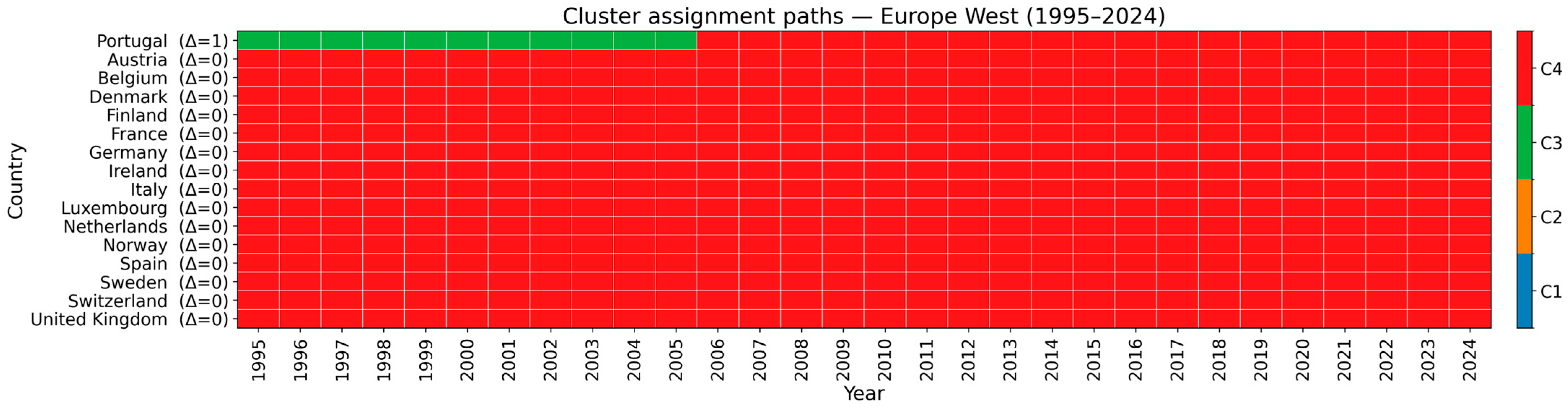
| Europe West | C4 dominant | Mostly stable C4; | Very low | Very high |
| Europe East | C3 with sustained upgrading into C4 plus a persistent C1 cases | Limited: C3 → C4 | Low | High |
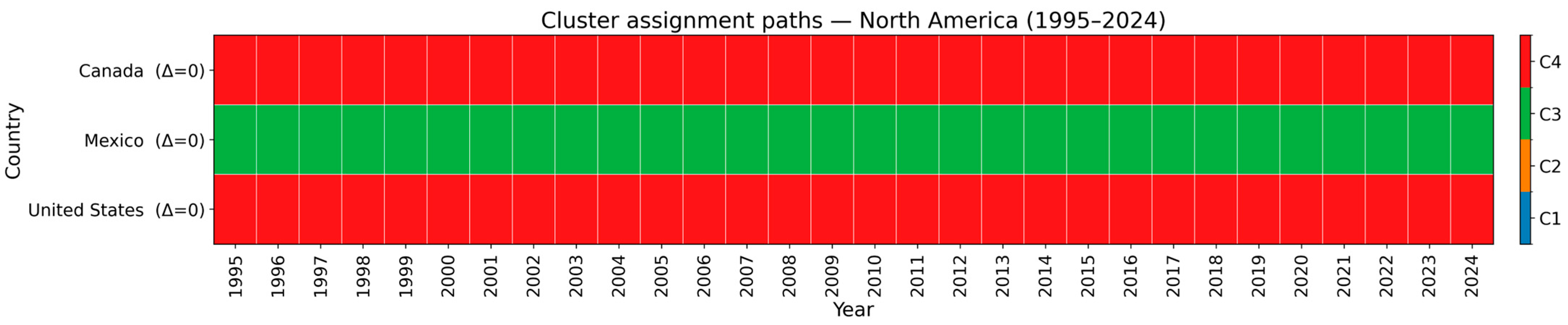
| North America | C4 anchored with a stable C3 member | No mobility observed | Very low | Very high |
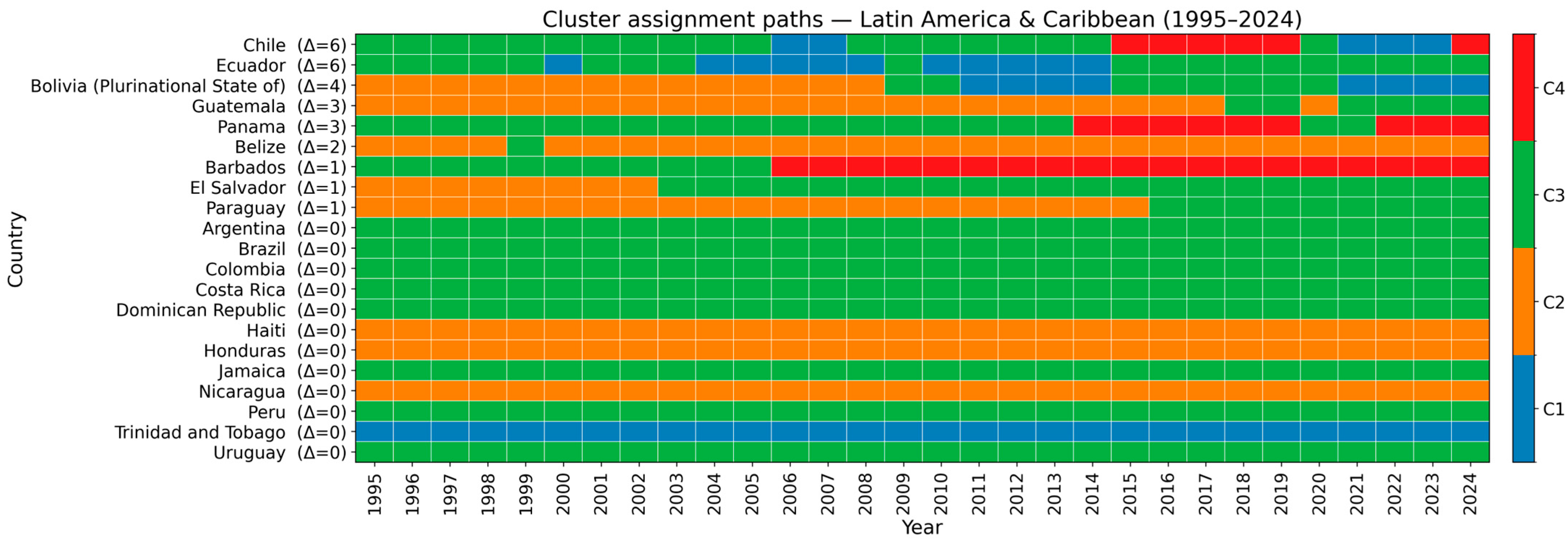
| Latin America and Caribbean | C2 and C3 dominant | C2 → C3 and C3 → C4 | Medium | Medium |
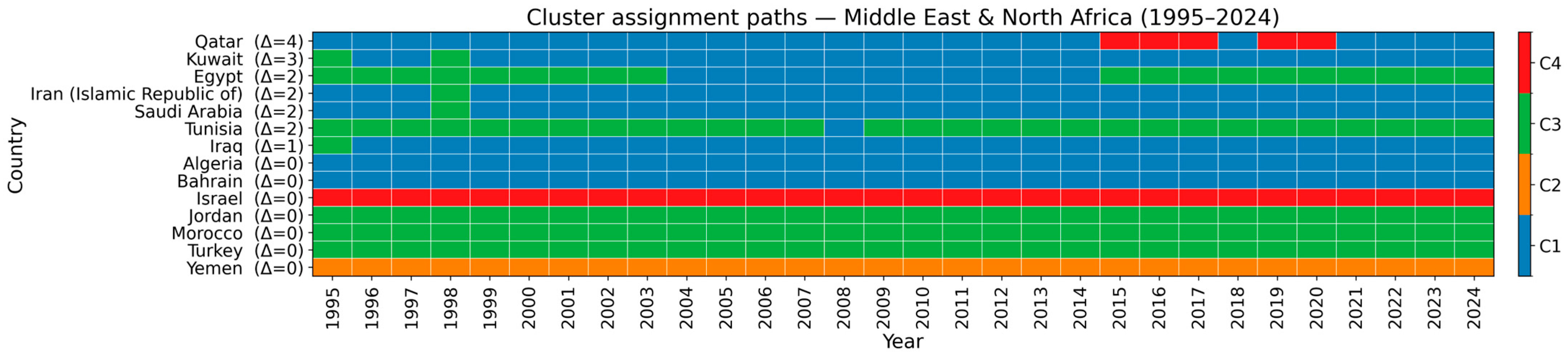
| Middle East and North Africa | C1 and C3 dominant | C1 → C3 and C3 → C4 (limited) | Low | Medium |
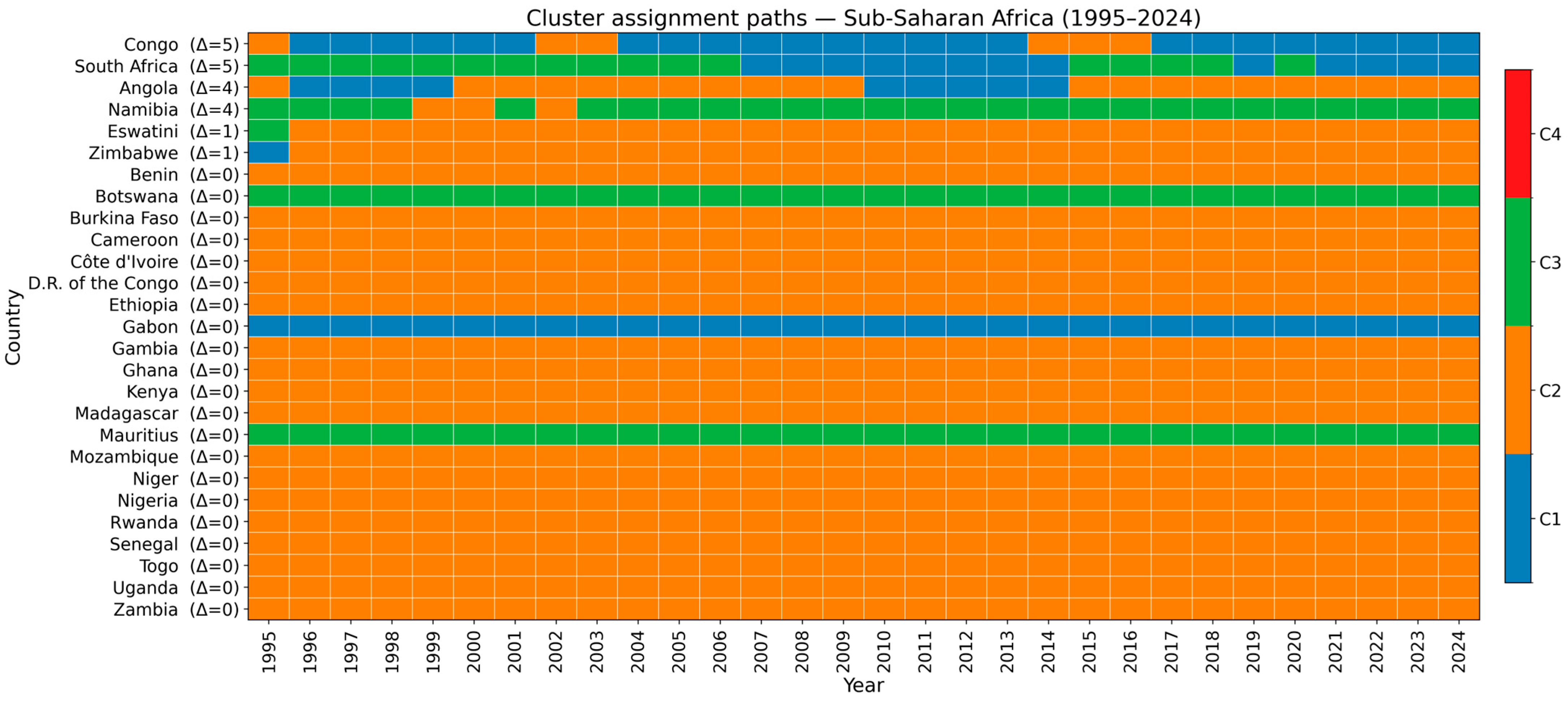
| Sub-Saharan Africa | C2 dominant with sparse C3 and localized C1 outliers | Mostly stable C2; rare C2 → C3 upgrades | low | High |
Disclaimer/Publisher’s Note: The statements, opinions and data contained in all publications are solely those of the individual author(s) and contributor(s) and not of MDPI and/or the editor(s). MDPI and/or the editor(s) disclaim responsibility for any injury to people or property resulting from any ideas, methods, instructions or products referred to in the content. |
© 2026 by the authors. Licensee MDPI, Basel, Switzerland. This article is an open access article distributed under the terms and conditions of the Creative Commons Attribution (CC BY) license.
Share and Cite
Imaduddin, M.H.; Basu, S.; Okumura, H. Trajectories, Fairness, and Convergence: Global Development in a Multidimensional Econo-Environmental Capability Space. Economies 2026, 14, 16. https://doi.org/10.3390/economies14010016
Imaduddin MH, Basu S, Okumura H. Trajectories, Fairness, and Convergence: Global Development in a Multidimensional Econo-Environmental Capability Space. Economies. 2026; 14(1):16. https://doi.org/10.3390/economies14010016
Chicago/Turabian StyleImaduddin, Muhammad Hasan, Soumya Basu, and Hideyuki Okumura. 2026. "Trajectories, Fairness, and Convergence: Global Development in a Multidimensional Econo-Environmental Capability Space" Economies 14, no. 1: 16. https://doi.org/10.3390/economies14010016
APA StyleImaduddin, M. H., Basu, S., & Okumura, H. (2026). Trajectories, Fairness, and Convergence: Global Development in a Multidimensional Econo-Environmental Capability Space. Economies, 14(1), 16. https://doi.org/10.3390/economies14010016