1. Introduction
East Sumba is a regency on Sumba Island, East Nusa Tenggara Province, Indonesia. In 2020, East Sumba Regency was classified as a disadvantaged region under Presidential Regulation No. 63 of 2020. Four years later, in 2024, it was successfully ranked as a developing region based on a decrease in the poverty rate, one of the critical indicators. According to data from the
Central Statistics Agency of East Sumba (
2025), the poverty rates for 2020, 2021, 2022, and 2023 were 29.65%, 29.68%, 28.22%, and 28.08%, respectively. Beyond these socioeconomic shifts, archipelagic destinations have unique opportunities to develop a strong identity and become resilient in the face of future crises (
Figueroa & Rotarou, 2021). East Sumba Island, with its unique cultural heritage, has high potential for development as a tourist destination to boost its economy and reduce poverty. This potential is further highlighted by the regency’s growing tourist appeal, as evident in the increase in foreign and domestic tourists from 2021 to 2023. The number of international tourist visits from 2021 to 2023 was 87 (2021), 813 (2022), and 2121 (2023). Meanwhile, the number of domestic tourist visits was 18,489 (2021), 34,083 (2022), and 50,635 (2023).
The management of island-based tourism potential faces several obstacles, including inadequate infrastructure, limited human resource capacity, weak planning, low local community participation, and a lack of collaboration (
Nashrullah et al., 2025). Island tourism plays a vital role in maritime economic development (
Mo & Qi, 2023), thereby requiring strategies to enhance competitiveness by empowering local communities. Developing sustainable ecotourism service systems is essential for islands that are more vulnerable and easily affected (
Hsiao et al., 2021). The key component of marine ecotourism service systems is management capacity for mitigation, with ecological diversity serving as a core resource. Local communities work with stakeholders to build ecotourism systems that support conservation sustainability and increase tourist satisfaction (
Hsiao et al., 2021). Management of the island focuses on personalized, nature-based experiences to promote sustainable tourism that benefits the local community economy (
Figueroa & Rotarou, 2021). Sustainable tourism management requires an inclusive approach to institutional strengthening and community empowerment. Strengthening community empowerment involves investing in human resource capacity-building, participatory planning, and collaboration among tourism stakeholders to support long-term community welfare (
Nashrullah et al., 2025). Efforts to promote sustainable island tourism often focus on cultural enhancement to attract visitors (
Ge, 2020).
Managing island tourism through local community empowerment is a concept of pro-poor tourism (PPT) (
Yang et al., 2021). PPT has developed since the early 2000s as a concept of sustainable tourism development through local community empowerment. Sustainable island tourism management can drive economic and social transformation (
Cao et al., 2021). PPT can reduce poverty (
Çolak et al., 2023) and have an impact on the environment and society through cooperation between various stakeholders (
Wen et al., 2021). The implementation of PPT without involving the business sector has led to ineffectiveness, stagnation, and the failure of tourism businesses. CSR programs are one form of collaboration to realize PPT, which can harmonize cultural preservation and economic interests to realize sustainable tourism through various innovative initiatives (
Wu et al., 2023). The PPT program is implemented through a social innovation approach and the strengthening of traditions to encourage the transformation of community power structures (
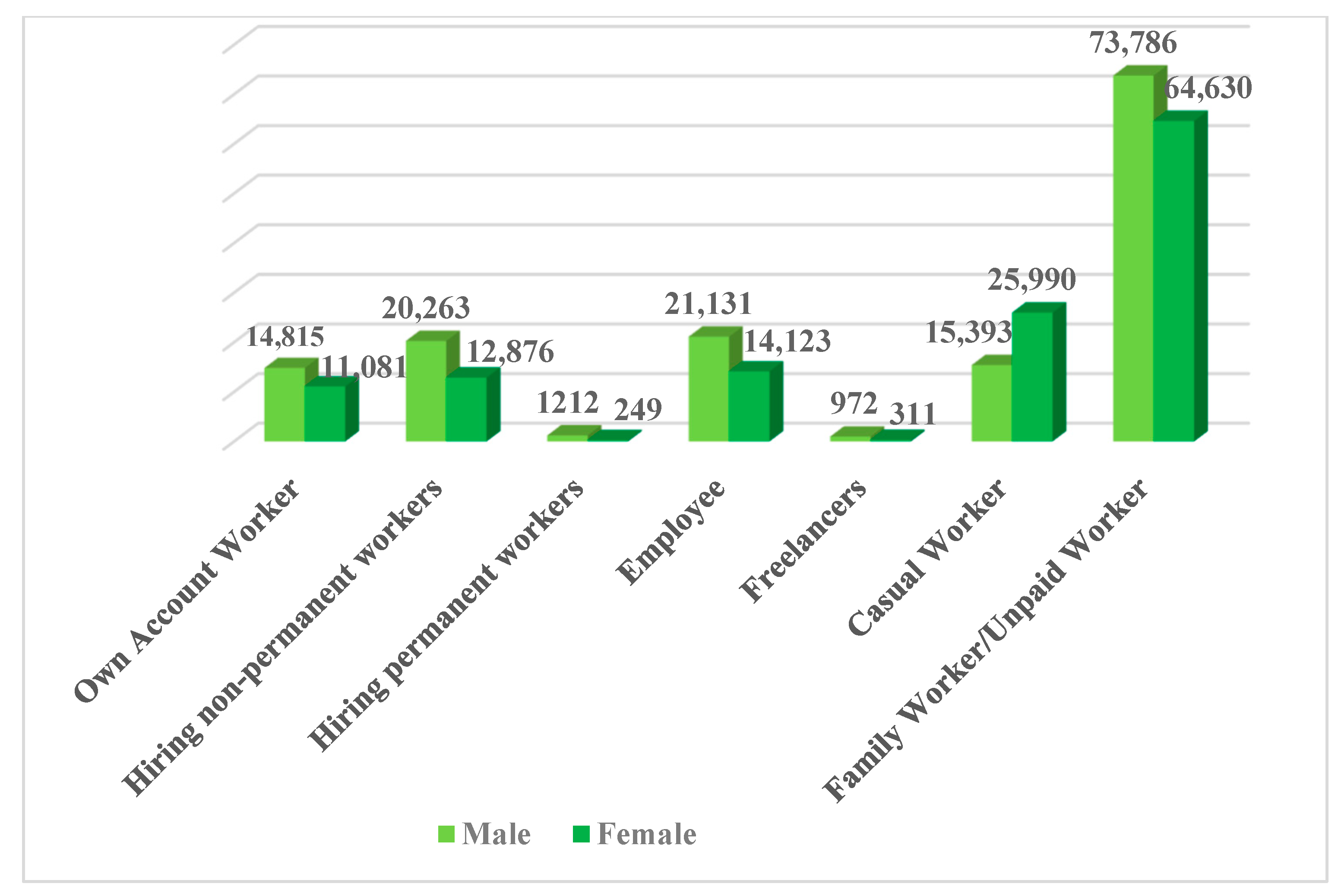
Hazenberg et al., 2025). Based on East Sumba statistics for 2024, women’s empowerment remains comparatively limited. The majority of women in East Sumba are homemakers without income-generating activities (family workers or unpaid laborers), totaling 64,630, due to restricted opportunities for active participation in industrial sectors (
Central Statistics Agency of East Sumba, 2025). This data demonstrates that most women remain unproductive and unable to contribute to the family’s economic reinforcement. Productive-age population statistics are presented in
Figure 1.
Women’s empowerment in East Sumba remains relatively limited due to two main factors: patriarchal norms and educational levels. In some aspects of social life in East Sumba, men still serve as the primary decision-makers in families and communities across various areas of life. Meanwhile, women are seen as holding subordinate roles and are more vulnerable to different forms of violence. Educational attainment in East Sumba is mainly at the primary school level. In 2022 and 2023, it was reported that over 98% of individuals had completed primary education (
Central Statistics Agency of East Sumba, 2025). Women’s empowerment in East Sumba aims to improve family welfare, thereby helping to lower the persistently high stunting rate, which averaged 15% from 2021 to 2024 (
Central Statistics Agency of East Nusa Tenggara Province, 2025). This rate exceeds the government target of below 14%. Women’s empowerment through pro-poor tourism management grounded in archipelagic traits is a strategic option for boosting family economics and overall societal conditions.
Sustainable tourism promotes equitable tourism by empowering women in many domains (
Jamal & Higham, 2021). Eco-feminist paradigms for eco-cultural justice (
Camargo et al., 2016) and feminist epistemological views (
Eger et al., 2022) also support women’s empowerment. Women’s empowerment is key to successful tourism development and to long-term poverty reduction. Examples include Balinese women in indigenous communities. They actively participate in tourism, supporting family resilience while still fulfilling family duties (
Adnyani & Purnamawati, 2024). Gender inequality has become a global concern, acting as a barrier to women’s empowerment in tourism development. Women are more likely to have insecure jobs, earn less, and have fewer career opportunities (
Nanthini & Nair, 2020). Gender inequality began with physical differences; however, it evolved due to social, historical, and cultural factors (
Jule, 2014), such as patriarchal restrictions for Arab women (
Zuhur, 2003) and Confucian traditions in China (
Hao et al., 2021). Gender inequalities block truly sustainable human development, and understanding gender in local contexts is needed. Achieving gender equality helps business development, service quality, and customer satisfaction (
Wan & Chan, 2018). Women’s empowerment can help reduce vulnerability and boost resilience and sustainability in the face of global climate and pandemic crises (
Kalisch & Cole, 2023).
Sustainable tourism management through the concept of empowerment involves two systems as key indicators; namely, the human system and the ecosystem (
Ko, 2005). Human system indicators include politics, economics, socio-culture, and production structures, while ecosystem indicators include environmental impact, ecosystem quality, biodiversity, and environmental policy and management. The presence of women within the human system plays an essential role in realizing sustainable tourism. The tourism industry offers opportunities for women to take on roles within organizational hierarchies (
Vujko et al., 2024), contribute innovative ideas or frameworks (
McCall & Mearns, 2021), and participate in tourism development planning (
Rahmawati & Darwis, 2023). Women’s active involvement in tourism-related organizations mainly remains limited to women’s groups, such as Family Empowerment and Welfare (
Wirdawati et al., 2024).
The achievement of sustainable tourism is shown through economic impacts, especially the creation of entrepreneurial opportunities and the growth of local community economies. Women’s empowerment is realized through active involvement in various tourism businesses (
McCall & Mearns, 2021), opening doors to start independent businesses (
Wardhani & Susilowati, 2021), which in turn leads to increased income (
I. Idris et al., 2023;
Vukovic et al., 2023), thus supporting household economic independence (
Borović et al., 2022). From a social perspective, sustainable tourism creates opportunities for women to participate socially through various tourism industries (
Rahmawati & Darwis, 2023). Active involvement in tourism boosts women’s self-confidence (
Hao et al., 2021), promotes gender equality (
Ghimire et al., 2024), raises awareness of the importance of self-development and future generations (
Pécot et al., 2024), and fosters increased pride (
Rasoolimanesh et al., 2017). Sustainable tourism promotes optimal tourist satisfaction through strengthening service and product quality standards. Tourist experiences are shaped by complex interactions that can encourage tourists to revisit destinations. Sustainable tourism can include products created from environmentally sustainable raw materials, promote environmental and cultural conservation through infrastructure development (
El-Manhaly & Taha, 2024), and build on adequate skills and knowledge from local communities (
Pécot et al., 2024).
Tourism management produces both positive and negative effects (
Butler et al., 2022). The positive aspects of tourism businesses include raising awareness of the importance of protecting the environment and culture. On the other hand, long-term adverse effects can consist of conflicts among local communities (
Simpson, 2008), increased waste, and traffic congestion (
Pearce & Chen, 2012). Sustainable tourism should create healthy ecosystems, including sufficient water resources, suitable land for tourism activities, and clean air (
Yin et al., 2022), as well as the adoption of tourism mitigation strategies (
Afifa & Nugroho, 2022). Sustainable tourism is closely linked to tourism diversification (
O’Halloran, 2020), which includes traditional cultural uniqueness, handcrafted crafts and culinary arts, and natural attractions found on islands (
Mrđa & Carić, 2019). Sustainable tourism involves establishing strong institutions that operate efficiently, uphold development programs and policies regulating tourism growth, and foster effective collaboration with various stakeholders (
Kapera, 2018).
The Global Sustainable Tourism Development Council (GSTC) states that sustainable tourism applies four pillars: environmental, economic, social, cultural, and management. Implementing these four pillars benefits local communities and improves destination quality (
Borland & Lindgreen, 2013). The conceptualization of sustainable tourism through four pillars is realized through stakeholder synchronization and training programs (
Hizmi & Junaid, 2023), which are key to successful sustainable development (
Junaid et al., 2022). Tourism environment, as the foundation of sustainable tourism development, encompasses the natural, economic, and social and cultural environments (
Ge, 2020). Sustainable tourism development influences environmental conservation, economic development, and social progress (
Hernández-Cuevas et al., 2024).
This research examines women’s empowerment in island-based CBT located in East Sumba Regency, East Nusa Tenggara. Archipelago tourism has characteristics distinct from those of urban or rural tourism and is more vulnerable to environmental degradation. The findings offer an overview of current conditions related to women’s empowerment through CBT management, which influences family economic improvement. CBT, as a model of sustainable tourism, plays a crucial role for both impoverished and non-impoverished households and helps reduce poverty by empowering communities through tourism enterprises (
Thomas, 2025). The study provides strategic recommendations for reducing poverty through women’s empowerment in tourism businesses, supporting household economic growth and independence. The implications include reconceptualizing women’s empowerment in light of the study’s findings. The research adds new insights by focusing on women’s empowerment in island-based tourism areas to help reduce poverty and promote sustainable tourism goals.
Previous research has examined women’s empowerment in CBT (
McCall & Mearns, 2021;
P. A. Idris & Rahmawati, 2021;
El-Manhaly & Taha, 2024), pro-poor tourism (
Yang et al., 2021), and archipelago-based tourism (
Lewis-Cameron & Brown-Williams, 2022;
Figueroa & Rotarou, 2021;
Hsiao et al., 2021) in fragmented approaches. This research integrates three tourism management variables, which are assessed using a sustainable tourism methodology—first, women’s empowerment as SDG 5: Gender Equality. Second, archipelagic regions are key components of marine tourism, serving as primary attractions in Indonesia, as an archipelagic nation; island tourism offers unique potential but also involves fragile and easily compromised characteristics, which require effective and efficient management strategies. Third, pro-poor tourism as SDG 1: No Poverty. Strategies for poverty alleviation are a strategic concern in eastern Indonesian regions, including East Nusa Tenggara.
3. Results
3.1. General Overview of CBT in East Sumba
The research utilizes eight CBTs, including Mondu, Lambanapu, Malumbi, Prailiu, Watuhadang, Rindi, Kaliuda, and Lainjanji. Mondu Village is located in Kanatang District and covers 90.45 km2. The tourism potential of Mondu Village includes savanna landscapes, Mangejing ritual culture, Padadita traditional village, Tanggedu waterfall, Kapihak Beach, and a creative economy through weaving, lontar leaf handicrafts, and statue carving. The population of Mondu Village is 1596, primarily engaged in farming, livestock breeding, and fishing. Lambanapu Village is situated in Kambera District, covering 795 hectares, with a population of 3191. The area is mainly rice fields and agricultural land, so most residents work in farming. Its tourism attractions include the Kambaniru River, the Lambanapu archeological site, the cultural house, weaving, the Tanau and Seribu hills, the Ori Angu Dance Studio, and the Li Luri Studio. Both Mondu and Lambanapu villages are vulnerable to flood disasters. Malumbi Village, located in East Wewewa District, spans 11.2 km2 with 2467 residents, mostly farmers and artisans. Its tourism potential includes the Kambaniru River and Dam, herbal hills, weaving, betel nut processing sites, and bamboo crafts. Prailiu Village is in Kahaungu Eti District, covering 51 hectares and home to 7874 residents who work as farmers and artisans. Attractions include Prailiu Village, Hamayang (Traditional Ritual), Parunggara tour (Guest Welcome), Hambu marata (bride welcomed in the village of origin), Puru la kamaidu (harvest ceremony), Palupang Djara (Horse Racing), megalithic stones, mangrove tourism, Batu Payung Beach, traditional dance, ikat weaving crafts, and specialty foods like Manggulu, kaparak, instant ginger beverages, and moringa biscuits. Watuhadang Village, in Umalulu District, covers 1020 hectares and has 2954 residents engaged in farming, livestock breeding, and weaving. Its tourism potential includes traditional villages, megalithic graves, traditional houses, pahikung weaving, savanna hills, and the kendingan dance. Watuhadang is relatively safe from natural disasters. Rindi Village, in Rindi District, covers 57 km2 and has 1702 residents, mainly farmers, livestock breeders, and fishermen. Its attractions consist of noble graves, the tarik bati tradition, the Praiyawang traditional village, and stone carving crafts. The town faces risks from floods and storms. Kaliuda Village, in Pahunga Lodu District, spans 110 hectares and is home to 4238 residents engaged in farming, fishing, livestock breeding, and artisan work. Its tourism appeals include ancestral culture on woven fabrics and Priau customs, Marapu traditional funeral rituals, megalithic graves, weaving crafts, seaweed farming, the Nalu and Kanggoa Rivers, the Priau traditional village, Tandening savanna grassland (the longest savanna), and traditional dance. Kaliuda is vulnerable to natural hazards, including floods, tsunamis, and earthquakes. Lainjanji Village, in Wulla Waijilu District, covers 97.2 km2 with 1500 residents, who mainly work as farmers, plantation workers, and fishermen. The area’s attractions include coastal flows and savanna grasslands. The tourism potential consists of the Lainjanji River, Woranu River, Praibakal River, Watuparunu Beach, hot springs, ikat weaving, and seaweed farming.
The selection of these eight CBTs was based on regional characteristics and potential, specifically traditional cultural assets, weaving crafts, and natural resources from the archipelago. Villages known for weaving have significant potential to empower women because most weaving artisans are women. These eight CBTs pose challenges to women’s empowerment in tourism management, potentially affecting their families’ economic independence. Based on data collected through observation, interviews, and documentation, the assessments of 32 indicators are shown in
Table 2.
Table 2 shows the results of sustainable tourism measurements using human systems and ecosystems, covering eight subsystems. The rating value presents measurement results for 32 weighted indicators. The score is calculated by multiplying the weighted value by the rating value. In
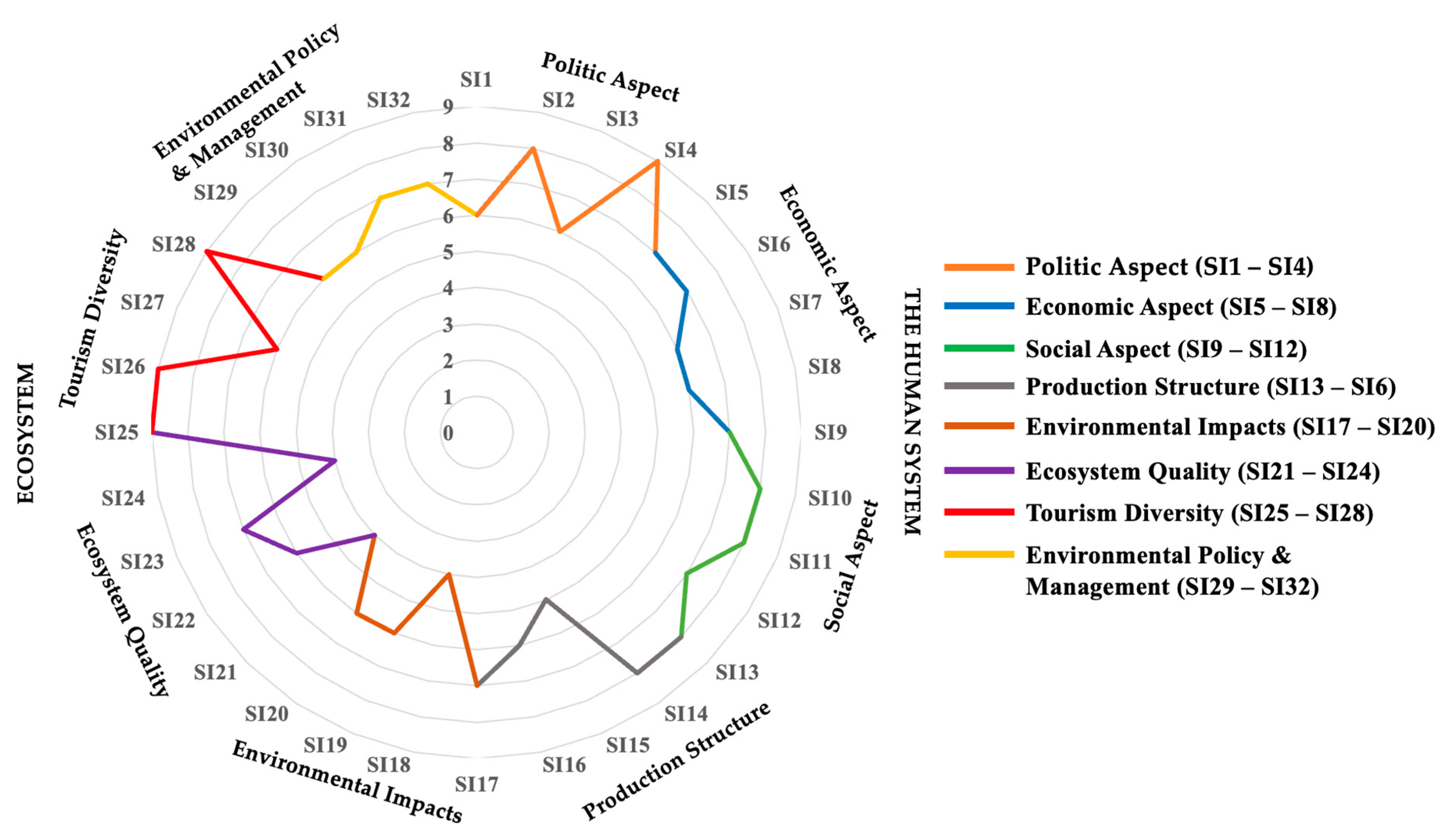
Table 2, column 1 lists a rating of 6 for the sustainable indicator (SII). The score of 0.5 is the product of the weighted value and the rating value. The total indicator score for the human system is the X-coordinate value. The total score for the ecosystem indicator is the Y-coordinate value, representing the sustainable condition in the Barometer graph. The rating value also shows the sustainable condition for each indicator, as presented in the AMOEBA visualization.
3.2. Quadrant of Sustainability Levels
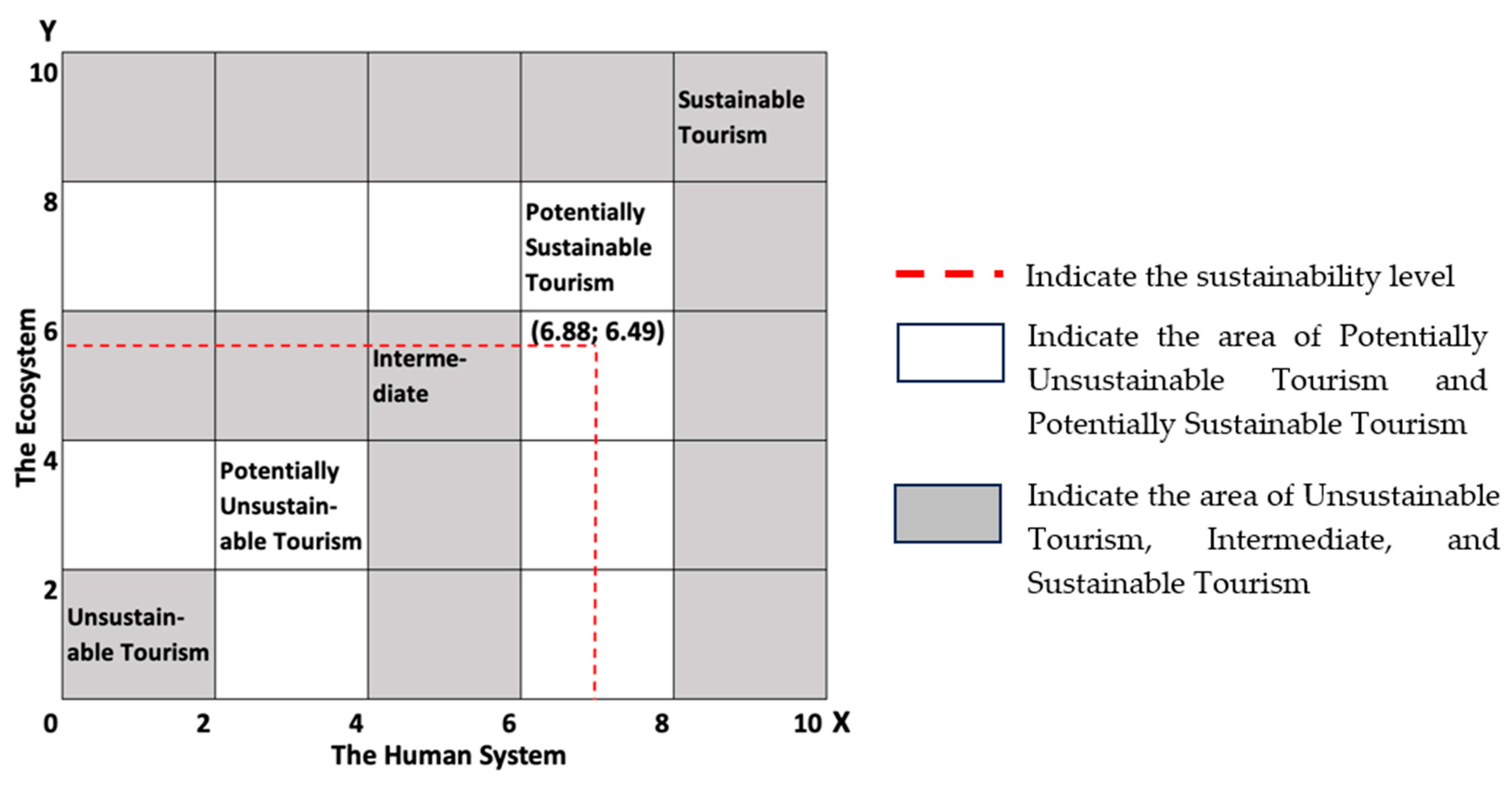
Based on scoring values in
Table 2, the axis value (X; Y) is (6.88; 6.49), which is in the potentially sustainable quadrant, as shown in
Figure 2. This quadrant highlights opportunities for sustainable CBT in East Sumba, emphasizing the balance between the Human System and Ecosystem with tourism pentahelix involvement.
3.3. Sustainability Indicators Value
Based on
Table 2, the AMOEBA diagram in
Figure 3 illustrates the level of tourism sustainability in East Sumba.
The AMOEBA figure indicates potentially sustainable tourism development on East Sumba Island by its broad coverage. The extent of pseudopodia reflects the magnitude of indicator values: the wider the reach, the higher the value.
4. Discussion
4.1. Sustainability Level of the Human System in East Sumba Tourism
The human system in sustainable tourism comprises political, economic, social, and production dimensions.
Table 2 shows that the average human system assessment is 7, indicating potentially sustainable conditions. However, the women’s empowerment indicator in local infrastructure management (SI15) shows relatively low scores of 5. Women’s involvement can be improved by making homestay management a central accommodation for CBT. Most CBTs have not provided homestays due to limited staff knowledge and skills, instead renting parts of residents’ rooms for tourists. Existing homestays operate independently from residents’ houses, resulting in little interaction between tourists and hosts (
Wijayanti & Dewi, 2023). Women’s empowerment has reached relatively optimal levels in several tourist destinations, such as Bali, Banyuwangi, Bantan, and Yogyakarta, where women play key roles as business managers, tourism promoters, and preservationists (
Sirad et al., 2025).
The political aspect is assessed through women’s participation in institutions directly and indirectly linked to the tourism industry. As seen in
Table 2, the highest rating indicator is 9, indicating that women in East Sumba run an organizational forum through community-based groups focused on family empowerment, specifically the Family Welfare Movement (S14) (
Wirdawati et al., 2024). However, women’s involvement in tourism-related organizations remains limited, especially in Tourism Awareness Groups and Tourism Village Management bodies. The hierarchy within tourism organizations remains male-dominated, limiting women’s roles in planning. Although women have opportunities to share their ideas and opinions verbally and in writing about tourism development (
McCall & Mearns, 2021), the management process from planning to oversight is mainly carried out by men. Women’s active participation in East Sumba’s tourism growth primarily focuses on tourism business activities, particularly in culinary services, the creative economy, and cultural preservation.
The dimensional indicator measurements shown in
Table 2 indicate that while women’s empowerment in the tourism industry has reached a sustainable level, its positive impact on economic growth remains limited. This limited impact is partly due to the lack of coordinated and comprehensive support. As a result, women’s empowerment efforts remain scattered and do not effectively drive long-term economic development or sustainability. For example, although weaving is a common form of women’s empowerment in East Sumba’s CBT, the lack of integration across the production and marketing phases limits weavers’ ability to increase their income and contribute to broader economic resilience.
Tourism development in East Sumba aims to drive economic growth and improve families’ financial independence by empowering women. Women’s participation is expected to stimulate tourism growth across the region. As of 2024, 64,630 women in East Sumba are housewives without income—51.94% of the female population and 25.29% of the total population. Women’s involvement primarily remains in small-scale operations, with limited roles in starting independent enterprises, which is the main barrier to strengthening the family economy (
Borović et al., 2022).
Culinary attractions in East Sumba remain limited in both quantity and quality. The variety of cuisine offered lacks diversity and is presented simply with insufficient representation. Residents produce cuisine in relatively small amounts due to limited market access. Specialty dishes are not consistently available and are often only made upon request or during tourist visits. East Sumba’s specialty dishes include Manggolu (made from kepok bananas and peanuts) and Kaparak (made from corn, rice, and sago). Other culinary options include Woba (seaweed) from Kaliuda Village, lobster from Lainjanji Village, and instant ginger beverages and moringa biscuits from Prailiu Village. Women’s empowerment in culinary management can be improved through increased training in culinary skills, packaging, and marketing strategies.
Women’s active participation in the creative economy and cultural preservation sectors is clear through handicrafts and traditional dances that attract tourists. East Sumba’s notable handicrafts include ikat-woven textiles and pahikung, which vary from village to village. Women play key roles as artisans and keepers of weaving history and cultural traditions. East Sumba includes several weaving artisan communities, such as Karaja Sumba, Praiyawang, Pau, Prailiu, Kanatang, and Kaliuda. East Sumba features various unique traditional dances with significant historical importance, often performed during traditional ceremonies and to welcome distinguished guests. These dances, as part of tourism attractions, are curated to offer compelling experiences for visitors. Some of the preserved dances in East Sumba include Hogor Watang from Kaliuda village, Tebe and Dho’a dances from Lainjanji village, Ori Angum Dance Studio and Li Luri Dance Studio from Lambanapu village, and Kendingan Dance from Watuhadang village.
Integrated tourism package development can serve as a strategy to enhance family livelihoods by empowering women in East Sumba. Tourism packages are designed around various potentials in an integrated, thematic approach, encompassing cultural assets, natural resources, the creative economy, culinary offerings, and other potentials, all managed through women’s empowerment. Integrated tourism packages offer substantial opportunities for women to participate actively in tourism enterprises, from planning to monitoring. Women have opportunities to develop thematic tourism packages related to weaving, integrated with other tourism potentials, thereby enabling woven fabric products to achieve higher economic value. Tourists demonstrate willingness to pay premium prices for tourism packages because they not only acquire woven fabrics as handicraft products but also gain historical and cultural experiences with considerable educational value. Thematic tourism packages stimulate economic acceleration by engaging resources in both quantity and quality, including women. Women serving as weaving artisans fulfill dual roles: producing woven fabric, packaging, and presenting products to tourists.
Women in East Sumba recognize that their empowerment in the tourism industry generates substantial social impacts, such as increased gender equality, confidence, and skills. Survey assessment scores of 7 and 8 in
Table 2 reflect these outcomes. Through empowerment, women gain wider access to operational and leadership roles within tourism management, leading to greater representation and influence in decision-making. Their active involvement also raises awareness and promotes the development of new knowledge, benefiting both individuals and the community. As women take on greater responsibility in tourism, they help foster a more inclusive and equitable industry, enabling broader participation and social progress.
The production structure dimension, which encompasses both services and high-quality products, is a key element supporting the sustainability of the tourism area. Service elements are closely connected to human resource capacity as the leading actors in tourism management (
Wirdawati et al., 2024). Success in CBT management heavily depends on local human resource capacity since it operates by, from, and for the community. In
Table 2, ratings for indicators related to women’s involvement in local infrastructure management and to skills and knowledge in the tourism sector remain relatively low. This is supported by East Sumba Regency data from 2024, showing that community education is primarily at the primary school level, accounting for over 98%. Improving human resource capacity is a critical, urgent step toward sustainable tourism. The quality of tourism products depends on effective management systems supported by sufficient infrastructure (
El-Manhaly & Taha, 2024). In East Sumba, local infrastructure in tourism areas is still limited in both availability and accessibility. Restroom facilities, which are essential amenities for tourists, are scarce and often in poor condition. Increased involvement from various stakeholders is needed to accelerate the development of tourism infrastructure and enhance human resource capacity. Stakeholder programs related to infrastructure development include CSR efforts from Sarana Multi Infrastruktur (SMI) in partnership with Universitas Bina Sarana Informatika (UBSI). SMI has helped build restrooms, food courts, UV curing equipment for weaving, and water wells in Watuhadang village. At the same time, UBSI has provided training and support to boost human resource capacity.
According to
Table 2, women’s empowerment receives high ratings in the processing of environmentally sustainable raw materials and in conservation efforts. Women actively participate in cultural conservation by maintaining weaving traditions and preserving traditional dances (
Butler et al., 2022). The use of naturally sourced coloring materials for dyeing threads to be woven into fabrics, such as Morinda citrifolia roots, indigo leaves, tree bark, and clay, further demonstrates engagement with sustainable practices.
4.2. Sustainability Ecosystem Level in Tourism Development in East Sumba Tourism
The second system in sustainable tourism comprises the ecosystem, consisting of four dimensions: Environmental Impacts, Ecosystem Quality, Biodiversity, and Environmental Policy and Management. Based on
Table 2 data, the average rating value is 6.43, which overall falls within the potentially sustainable category. However, three indicators are considered less sustainable: long-term congestion potential (S118), adequate water availability (SI21), and tourism mitigation implementation (S124).
Tourism management in East Sumba generates both positive and negative consequences. Generally, tourism activities in East Sumba can foster local community awareness of the importance of environmental and cultural preservation as primary products of the tourism industry. Meanwhile, negative impacts of tourism activities include potential congestion from increased tourist flows, challenges in waste management, and conflicts among local communities (
Butler et al., 2022). Waste issues in East Sumba are already becoming apparent, despite tourist visitation flows not yet being substantial. Plastic waste problems are increasingly exacerbating environmental pollution on land and at sea, as adequate waste management systems remain absent. From an institutional perspective, tourism management potentially triggers conflicts within local communities. The primary factors driving internal conflicts include dysfunctional institutions, a lack of transparency, and unclear programming.
The Ecosystem Quality dimension encompasses water resources, land, clean air, and tourism mitigation (
Yin et al., 2022). East Sumba is a tourist area with extensive land and clean air, thanks to low pollution levels. In certain areas, water availability remains a fundamental challenge due to hilly terrain and the risk of drought. Natural springs constitute one water source for meeting community needs. Drought is the primary disaster threat to the East Sumba region, while other threats include floods, earthquakes, and tornadoes. Disaster issues in any area significantly influence tourist interest, necessitating robust mitigation as security assurance for tourists. Tourism mitigation in the East Sumba region has not yet been implemented optimally.
The Tourism Diversity dimension constitutes the primary attraction for tourists, including cultural uniqueness, handicrafts, culinary offerings, and natural beauty. The East Sumba region offers diverse and unique cultural tourism attractions, including traditional dances and customary ceremonies, which are still preserved by local communities (
Afifa & Nugroho, 2022). One customary ceremony that continues is the death ritual according to Marapu beliefs. This ceremony aims to escort the deceased’s soul to the afterlife, where the body can be preserved for years because families must prepare substantial costs for the burial procession. East Sumba offers weaving crafts that access international markets. Woven textiles are created by predominantly female craftspeople and feature various motifs that each possess its own philosophical significance. The culinary offerings remain severely limited, though some areas offer various fish preparations made from fishery products from the archipelagic region. East Sumba is an archipelagic region with significant marine natural resources, including beaches and fisheries. Beach potential attracts tourists with several characteristics, including sea-oriented interests and family travel patterns. The attractions offered by beach potential include striking natural scenery, exotic wildlife, and culture (
Hall & Page, 2009), as well as atmospheric freedom, peaceful environments, and local cuisine (
Sharpley, 2012).
Sustainable tourism cannot be realized without the Environmental Policy and Management dimension, as an aspect ensuring system functionality. The Environmental Policy and Management dimension includes healthy institutions, development programs, policies, and cooperation with various parties (
Kapera, 2018). The Environmental Policy and Management dimension is potentially sustainable with average values of 6 and 7. The institutions managing tourism in East Sumba remain suboptimal, as evidenced by weak administration, ineffective management, and a lack of work programs. Tourism awareness group organizations and CBT managers, as organizations with distinct functions and roles, are often perceived as identical. This incorrect perspective regarding these organizations potentially triggers conflicts in tourism management. Tourism management remains incidental, lacking short-term, medium-term, and long-term planning, which can lead to unsustainable tourism. The government plays an important role in realizing sustainable tourism through policies that serve as references and protection in tourism management. The East Sumba district government, in general, and the Tourism Office, specifically, must issue policies for tourism management and conduct regular training and assistance programs. The government represents one of the pentahelix elements that collaborate to support tourism management in East Sumba. Other pentahelix elements include academia, business, community, and media. The role of each pentahelix element in East Sumba tourism development includes: government as the policymaker and facilitator; academia supporting human resource capacity building; business supporting infrastructure development acceleration and capital provision; community supporting management systems; and media supporting publication as components of promotion and marketing. The government’s role as policymaker is crucial to ensuring legal protection in island-based CBT management, which is vulnerable to degradation, and to optimizing women’s empowerment.
4.3. The Harmonization Between the Human System and the Ecosystem of Sustainable Tourism Development in East Sumba
The Barometer Figure shows the potentially sustainable quadrant, indicating that CBT in East Sumba offers opportunities for sustainable tourism development through efforts to balance the Human System and Ecosystem, facilitated by tourism pentahelix involvement. Collaboration with various parties can accelerate the optimization of sustainable indicators with low ratings. The potentially sustainable condition can decline to the intermediate quadrant or even to unsustainable status if strategic improvement efforts involving various stakeholders are absent. Women as resources become a strategic alternative for realizing sustainable tourism through optimal empowerment. Several aspects that remain unbalanced in sustainable tourism optimization are as follows: (1) Despite gender equality efforts, women in East Sumba have not yet received opportunities to hold management positions, have not received operational roles, and cannot manage businesses independently; (2). Despite efforts to realize ideal institutions, tourism institutions, such as tourism awareness groups and tourism village managers, have not yet implemented administrative procedures, lack transparency, and have no work programs; (3) Despite efforts to build quality ecosystems, mitigation systems are not yet sufficiently robust and water availability is inadequate; (4) Despite waste management efforts, plastic elements are still utilized in food and beverage packaging; (5). Despite efforts to increase tourist attractions, culinary processing using local raw materials remains minimal.
Based on the AMOEBA diagram, small pseudopodia are reaching with a rating value of 4, signifying a less sustainable status, namely indicators for long-term activities impacting density and congestion (SI18), adequate water sources (SI2), and tourism mitigation (SI24). Limited human resources and capital in tourism management are among the obstacles to securing adequate water supplies and mitigation systems. Therefore, it is crucial for all stakeholders to actively collaborate and take decisive steps to accelerate sustainable tourism management.
Pseudopodia with extensive reach maintain a rating value of 9, indicating that women are developing institutions such as the Family Welfare Movement (SI4), possess unique traditional cultural potential (SI25), have distinctive craft potential (SI26), and exhibit archipelago-based natural beauty potential (SI28). Women in Sumba have ample opportunity to play an active role in women’s organizations; namely, as administrators in organizations for family empowerment and welfare. Sumba women play an important role as preservers of Sumba’s cultural heritage, as weavers of traditional fabrics. For the most part, women use weaving to generate income and improve their families’ economic situation. The AMOEBA diagram is a tool for assessing the sustainability of community indicators by measuring their relative strengths and weaknesses. Based on this diagram, small pseudopodia reached a ranking value of 4, indicating a less sustainable status, namely indicators of long-term activities that affect density and congestion (SI18), adequate water sources (SI2), and tourism mitigation (SI24). Pseudopodia with a wide reach maintain a rating of 9, indicating that women are developing institutions such as the Family Welfare Movement (SI4), have unique traditional cultural potential (SI25), have distinctive craft potential (SI26), and demonstrate the potential for archipelago-based natural beauty (SI28).
4.4. Sustainable Tourism in East Sumba Archipelago Through Women’s Empowerment
Women’s empowerment in realizing tourism in East Sumba is achieved through active participation in CBT management, from planning to monitoring. Women’s involvement in CBT management in East Sumba remains limited and has not had a significant impact on families’ or society’s economic development. Optimization of women’s empowerment is expected to reduce the still-elevated stunting rates on East Sumba Island. CBT represents a tourism development pattern that emphasizes local community empowerment to improve their economies through tourism business management (
Steinicke & Neuburger, 2012). Empowering East Sumba communities, especially women, is fundamental to evaluating the achievements of tourism development. The most crucial empowerment component is empowered human resources, effectively managed to achieve development objectives (
Abdullah et al., 2022). Women’s empowerment becomes a strategic issue in East Sumba because it supports long-term, significant relationships with poverty alleviation and the reduction in stunting rates. This assertion aligns with
Adnyani and Purnamawati’s (
2024) research, which states that women’s roles in indigenous communities in managing Balinese cultural tourism impact family economic resilience. Women in Bali fulfill dual roles by actively participating in various tourism businesses without abandoning family responsibilities.
Women’s empowerment in the East Nusa Tenggara region faces various obstacles, including limited capital, unequal employment opportunities, and social gender stereotypes. However, there are significant opportunities for women to increase their participation in the tourism industry, potentially improving their welfare. Implementing inclusive tourism in the East Nusa Tenggara region can generate economic benefits for local communities.
4.5. Pro-Poor Tourism (PPT) Concept in East Sumba Archipelago
East Sumba, as an archipelagic region, possesses tourism potential that could serve as an economic driver. Island potential packaged as tourism packages in CBT management can improve family economic independence. Sustainable tourism plays a role in poverty alleviation by emphasizing several factors, including environmental factors (
Neto, 2003), social factors, and political factors (
Hall & Page, 2009). PPT can serve as an effective poverty alleviation tool and supports tentative steps to realize its potential. PPT implementation using sustainable development approaches, through stakeholder involvement in corporate social responsibility, significantly impacts poverty alleviation (
Diego et al., 2016).
Low PPT implementation in the business sector hinders tourism from fulfilling its role effectively, leading to stagnation and failure. Business sector involvement through CSR programs provides internal and external company benefits that impact economic, socio-cultural, and environmental aspects. Internal benefits include building reputation and business sustainability through improved company image and customer loyalty. External benefits include sustainable development as corporate social responsibility toward broader society (
Diego et al., 2016). CSR’s role in tourism development on East Sumba Island remains relatively modest. One CSR entity involved in tourism management on East Sumba Island, SMI, is an Indonesian State-Owned Enterprise operating in infrastructure financing. SMI’s CSR program supports sustainable tourism development in Watuhadang Village by enhancing the quality of creative economy products in the weaving and culinary sectors, improving restroom facilities, and increasing water availability through borehole construction. PT SMI constructed UV-curing equipment for weaving craftspeople to accelerate drying during the production of woven fabrics. UV Curing availability significantly helps craftspeople improve product quality and quantity. Food court construction enables the optimization of women’s empowerment in the culinary sector, from raw material processing and planning to product marketing. Meanwhile, borehole construction promotes ecosystem quality by ensuring adequate water availability to support tourism activities. Access to clean water is a key issue in the East Sumba region, which is highly vulnerable to drought disasters.
CSR programs that can contribute positively to poverty alleviation possess several characteristics: suitability for impoverished rural areas; labor-intensive approaches; empowerment of women and communities representing economically disadvantaged populations; and encouragement of tourism activities that create business opportunities (
Spenceley & Meyer, 2012). CSR describes a multifaceted concept encompassing four categories of community expectations (
Carroll, 2017): (1) economic expectations (i.e., companies should be profitable), (2) legal expectations (i.e., companies should operate within legal boundaries), (3) ethical expectations (i.e., business operations should meet specific ethical standards not required by law), and (4) philanthropic or discretionary expectations (i.e., companies should voluntarily contribute to addressing social needs, including poverty alleviation). CSR activities are voluntary, so companies bear consequences for their ethical or philanthropic responsibilities (
Inoue & Lee, 2011). CSR maintains a substantial role in poverty alleviation through ‘pro-poor CSR’ programs. Pro-poor CSR encompasses several key initiatives, including poverty reduction, fostering relationships with local suppliers and informal sectors, promoting sustainable tourism practices, and preserving the natural environment of economically disadvantaged communities. Companies can collaborate with secondary stakeholders such as NGOs, government institutions, and international organizations (
Smith & Ong, 2015).
5. Conclusions
Women represent a significant potential resource in East Sumba, given their considerable numbers and their status as unpaid family workers. Women’s empowerment in East Sumba becomes a strategic issue due to cultural traditions and persistently strong patriarchal perspectives (
Swari, 2023). Women play crucial roles in achieving family economic independence and reducing stunting rates through their involvement in tourism businesses. Tourism empowerment is measured through sustainable tourism approaches that encompass two inseparable systems: the human system and the ecosystem. The human system encompasses four key dimensions: political, economic, social, and production structure.
In contrast, the ecosystem comprises Environmental Impacts, Ecosystem Quality, Biodiversity, and Environmental Policy and Management. Each dimension contains four indicators, resulting in 32 indicators for measuring tourism sustainability levels in East Sumba. Based on scoring results for 32 indicators, tourism in East Sumba falls within the potentially sustainable category, with opportunities for sustainability through adjustments and strengthening several indicators. This research provides strategic recommendations to advance sustainable tourism, focusing on inclusive tourism through women’s empowerment, the creation of thematic, integrated archipelago-based tourism packages, the establishment of healthy CBT institutions, and the strengthening of Pentahelix cooperation.
The theoretical implication of this research is to enrich references on women’s empowerment in island tourism areas. The references offer concepts of inclusive and pro-poor tourism management. Island tourism areas have unique and vulnerable characteristics, so this study is expected to provide strategic references. In practical terms, this study provides an overview of the sustainability of tourism developed in the Sumba Island tourism area through women’s empowerment. The existing conditions serve as a reference for relevant stakeholders to formulate plans for Sumba women’s participation in supporting sustainable tourism management.
This study offers several recommendations for women’s empowerment in CBT across the archipelago. The implication of this research is to provide a broader understanding for various stakeholders, especially women, thereby increasing their involvement in the tourism industry. The active participation of women in the tourism business specifically increases family economic independence and, more generally, influences the financial movement of local communities in East Sumba Regency. Family economic independence in the short- and medium-term can significantly reduce stunting rates.
This research has limitations in geographic coverage, making it difficult for researchers to reach all tourist villages in East Sumba Regency. East Sumba Regency has 14 tourist villages that are relatively far apart, and internet access is limited, which poses an obstacle to data collection. Researchers need time and effort to obtain representative data. The research involved only two systems—namely, the Human System and the Ecosystem, each comprising eight dimensions and 32 indicators. Future research is expected to reach 14 tourist villages in East Sumba Regency. The research dimension can be enriched by including other under-researched areas, such as sociopreneurship and investment in CBT development.