1. Introduction
The introduction of intelligent monitoring systems in agriculture, environmental control, and climate change assessment is increasing the demand for Earth observation (EO) data and integrated unmanned aerial vehicle systems (UAV/UAS) [
1,
2,
3,
4,
5]. Recent studies have demonstrated that UAV-based monitoring increasingly relies on deep learning approaches, including YOLO-based detection, image segmentation, optoelectronic surveillance, and sensor-fusion models, for rapid recognition and classification of objects in agricultural and environmental observation tasks [
6,
7,
8,
9].
In modern agricultural monitoring systems, UAVs act as a mobile segment of Earth observation systems, providing rapid data acquisition and integration with satellite observations. Modern satellite and unmanned platforms generate large volumes of data with high spatial and temporal resolution, which requires the organization of high-speed and reliable communication channels for data transmission to ground stations [
10,
11,
12,
13].
WRC-27 is considering several frequency bands in the C-band and X-band as candidates for International Mobile Telecommunications (IMT) identification, which could enable the deployment of 5G networks in these bands. Among them is the 8025–8400 MHz band [
14,
15].
This band has historically been used for Earth observation satellite downlink transmissions. Its importance has significantly increased in recent years due to the rapid development of CubeSats and the growing demand for Earth observation services. These systems rely on the ability to rapidly transmit large volumes of data, making stable and high-performance operation in the 8025–8400 MHz band critically important [
16,
17,
18].
Earth observation receiving infrastructure today includes a wide variety of station types, including governmental mission control centers, commercial Ground Station as a Service (GSaaS) providers, university-operated CubeSat receiving stations and dedicated Earth observation gateways supporting large satellite constellations. Although these systems differ operationally, they all rely on reliable reception within the 8025–8400 MHz band and therefore require adequate protection from harmful interference.
Within the framework of the World Radiocommunication Conference WRC-27, the possibility of identifying the 8025–8400 MHz band for International Mobile Telecommunications (IMT) systems is under consideration, which could potentially allow the deployment of 5G networks in this band.
In parallel with the present research, compatibility studies for the 8025–8400 MHz band are being conducted within the framework of the ongoing ITU-R WRC-27 study cycle under Working Party 5D. These studies employ the standardized ITU-R sharing methodology and representative technical characteristics agreed within the study process. Since the ITU-R studies are still ongoing and are primarily documented through working documents prepared for the regulatory process, there remains a need for a detailed peer-reviewed publication describing the adopted modeling methodology, simulation assumptions and representative compatibility results. The present paper addresses this need by providing a comprehensive description of the simulation framework and interference assessment methodology used for evaluating coexistence between IMT systems and Earth observation downlinks.
The deployment of 5G systems in this frequency range may generate harmful interference that could significantly reduce the throughput of satellite communication links, directly affecting the efficiency and performance of Earth observation missions. Electromagnetic compatibility issues have previously been extensively studied for the C-band and Fixed Satellite Service (FSS) bands [
18,
19,
20,
21,
22], as well as for Mobile Satellite Service feeder links and radio astronomy bands. The results of these studies indicate that spectrum sharing between IMT systems and satellite services is associated with significant risks of harmful interference [
23,
24,
25,
26,
27].
In addition, ground receiving stations are widely deployed in various environments, including urban and suburban areas, and may also be mobile. As a result, large-scale deployment of 5G systems in this band could seriously limit the operability of these receiving stations in many regions, ultimately threatening the effectiveness of Earth observation activities [
28,
29,
30].
Although compatibility studies between IMT and satellite services have been widely performed in other frequency bands, publicly available peer-reviewed literature describing compatibility assessment for Earth observation downlinks in the 8025–8400 MHz band remains very limited. Furthermore, existing publications generally focus on regulatory study outcomes rather than providing a comprehensive description of the simulation methodology. The present work therefore aims to provide a detailed peer-reviewed presentation of the modeling framework, assumptions and compatibility results for this important Earth observation band.
This study evaluates the coexistence feasibility of 5G systems and Earth observation services operating in the 8025–8400 MHz band. Due to the dynamic operational characteristics of both systems, static analysis methods are not applicable. For example, 5G networks employ beamforming and dynamic power control, while ground stations continuously adjust antenna pointing directions to track satellites.
To address this problem, a hybrid methodology combining Monte Carlo simulation and deterministic modeling is used. The behavior of the 5G network is modeled using the Monte Carlo method to account for its stochastic nature, while the operation of ground stations is represented using a deterministic model based on the Keplerian motion of tracked satellites [
31,
32,
33,
34].
This combined approach enables the derivation of statistically robust results, including the identification of geographic areas around Earth stations where harmful interference is likely to occur if 5G systems are deployed.
The coexistence between IMT systems and satellite services has been extensively studied in several frequency bands, particularly in the context of C-band deployments and Fixed Satellite Service (FSS) [
35,
36,
37]. These studies typically employ Monte Carlo-based interference analysis and assume static or simplified system behavior. However, no publicly available studies have specifically addressed coexistence in the 8025–8400 MHz band, as this spectrum has only recently been considered for IMT identification within the ITU-R WRC-27 study cycle. Consequently, existing literature does not capture the unique characteristics of this band, nor the combined dynamics of advanced 5G features such as beamforming and power control together with continuously tracking Earth stations. This gap motivates the present study. Related sharing and electromagnetic compatibility studies have also been reported for the 6700–7075 MHz MSS feeder-link band. In addition, a similar interference scenario involving radio astronomy stations has been studied in the adjacent 6650–6675.2 MHz band. The main contributions of this work are summarized as follows:
- -
Development of a hybrid compatibility assessment framework combining deterministic satellite orbital propagation with Monte Carlo simulation of IMT deployments;
- -
Implementation of dynamic Earth station antenna tracking together with standardized IMT beamforming models;
- -
Evaluation of aggregate interference under representative urban, suburban and rural deployment scenarios using ITU-R propagation models;
- -
Determination of separation distances required to satisfy long-term and short-term Earth observation protection criteria.
2. Materials and Methods
There are many different Earth observation systems with different orbital characteristics. For this study we have considered an example Earth observation satellite with sun-synchronous orbit presented in
Table 1. The complete satellite link budget parameters, including antenna gain, polarization, and receiver noise temperature, are summarized in
Table 1, these characteristics were provided by working party 7B of ITU-R during the WRC-27 study cycle.The satellite position is propagated deterministically using Keplerian orbital mechanics (two-body problem) at 1 s intervals; higher-order perturbations such as J2 and atmospheric drag have a negligible effect on the interference geometry over the 10-day simulation window used to sample all visible elevation and azimuth angles. All Monte Carlo simulations were implemented in MATLAB version R2024a.
Variable coding and modulation technique is used in the link, for which performance objectives are the following: minimum BER is 10
−7, minimum margin in the link for the maximum slant distance is 3 dB, and minimum data rate for the smallest Earth station with 46 dBi gain (3 m) is 800 Mbit/s (8PSK 8/9, alpha—0.25, minimum C/N 14.9 dB). Any additional margin of more than 3 dB is used to increase data rate by switching to 16APSK 8/9, 32APSK 8/9 and ultimately 64 APSK 5/6. Ground station antenna patterns follow the reference patterns of Rec. ITU-R S.465-5 [
19].
The selected sun-synchronous orbit with an altitude of 510 km was chosen as a representative example of a modern Earth observation mission. This orbital configuration is widely employed for optical Earth observation satellites because of its favorable illumination conditions and regular revisit characteristics. The objective of the study is not to analyze every possible orbital configuration but rather to evaluate coexistence under a realistic and representative operational scenario. Extension of the analysis to additional orbital classes will be considered in future work.
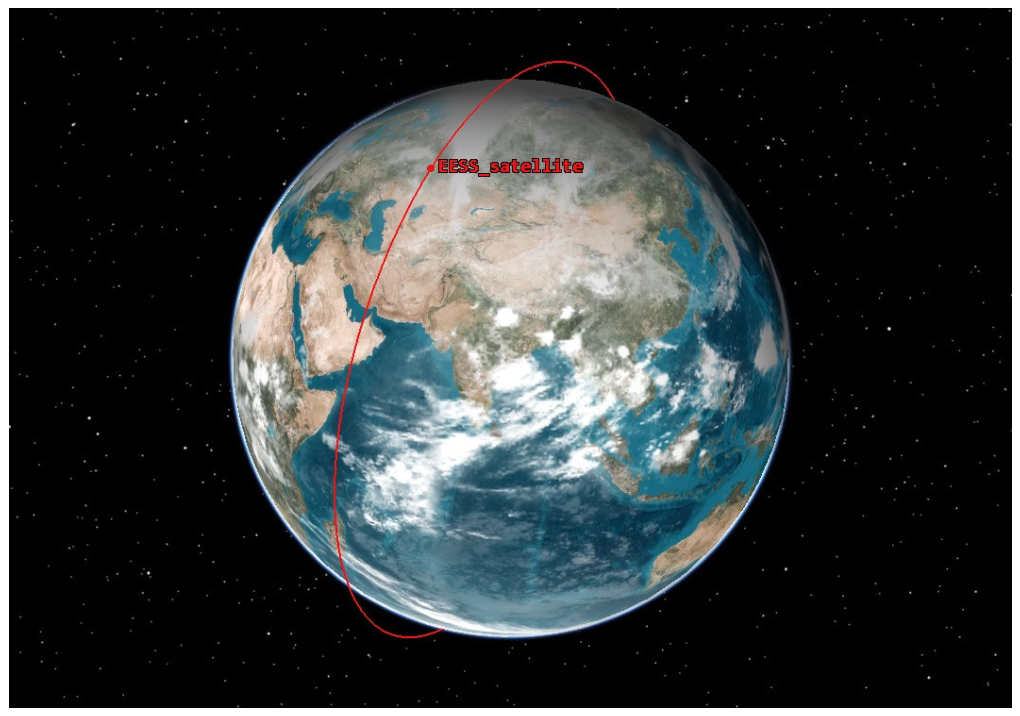
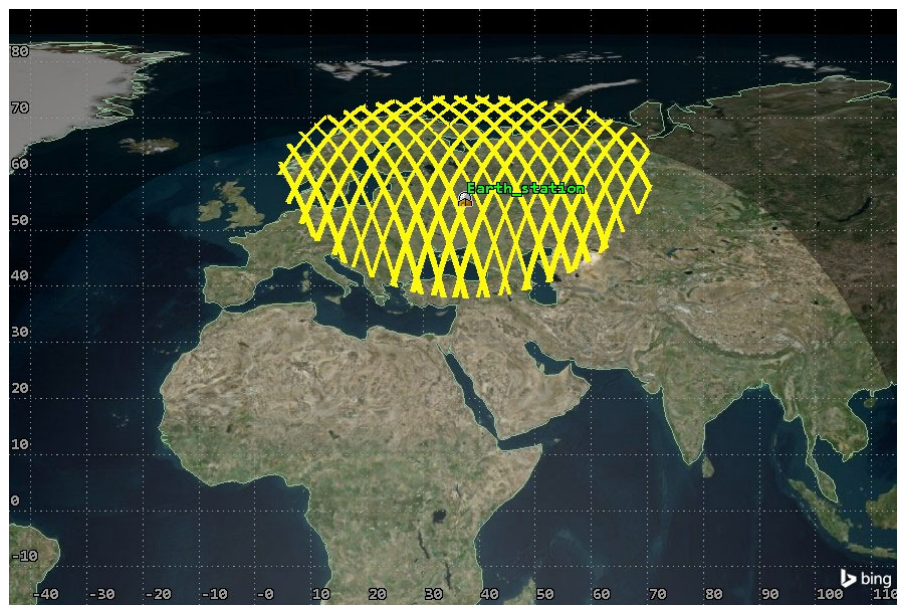
Figure 1 shows the simulation of the studies in accordance with the presented above orbital characteristics.
The protection criteria for Earth observation (space-to-Earth) were considered according to the information from WP 7B. In the band 8025–8400 MHz, the interfering signal power of −150 dBW per 10 MHz is to be exceeded for no more than 20% of the time; and the interfering signal power of −133 dBW per 10 MHz is to be exceeded for no more than 0.005% of the time [
20].
Technical and operational characteristics of IMT systems operating in the frequency band 7125–8400 MHz.
IMT technology-related parameters and deployment-related parameters in 7125–8400 MHz frequency band are defined in Annex 4.2 of Document 5D/413.
Table 2 and
Table 3 present parameters of IMT-2020 that were considered in the study. It should be noted that the study also considered Rural case even though, for the 7.125–8.4 GHz range, contiguous coverage is not expected in this frequency range in rural areas, and any such base stations that may exist in small numbers will be isolated installations at specific locations; therefore, the rural deployment environment may or may not be included in the sharing and compatibility studies.
Although widespread contiguous IMT deployment in rural areas is not currently anticipated for this frequency range according to ongoing ITU-R studies, isolated rural base stations may nevertheless be deployed in practice. For this reason, a representative rural deployment scenario was included to evaluate a conservative compatibility case and to assess the influence of low deployment density on aggregate interference.
The extended version of the AAS array antenna model supports vertical sub-array geometries with fixed sub-array down-tilt. The angular attenuation of an individual antenna element is modeled as a function of azimuth angle and elevation angle .
The attenuation is limited by a maximum attenuation level
, combining both azimuth and elevation dependencies [
21]:
The actual element gain is obtained by adding the maximum directional gain
to the normalized attenuation pattern:
Each sub-array element is excited with a phase shift that depends on its position and the electrical down-tilt angle. The excitation coefficient for the
m-th element is given by
where
is the number of elements in the sub-array.
The radiation pattern of the sub-array is obtained by coherently summing the contributions of all sub-array elements:
where the phase term
is defined as
For the full planar array, excitation weights depend on both vertical and horizontal element indices. The excitation coefficient for the element at position (
m, n) is
where
M and
N denote the number of rows and columns, respectively.
The overall array radiation pattern is obtained by combining the sub-array pattern with the array factor:
where the phase term is
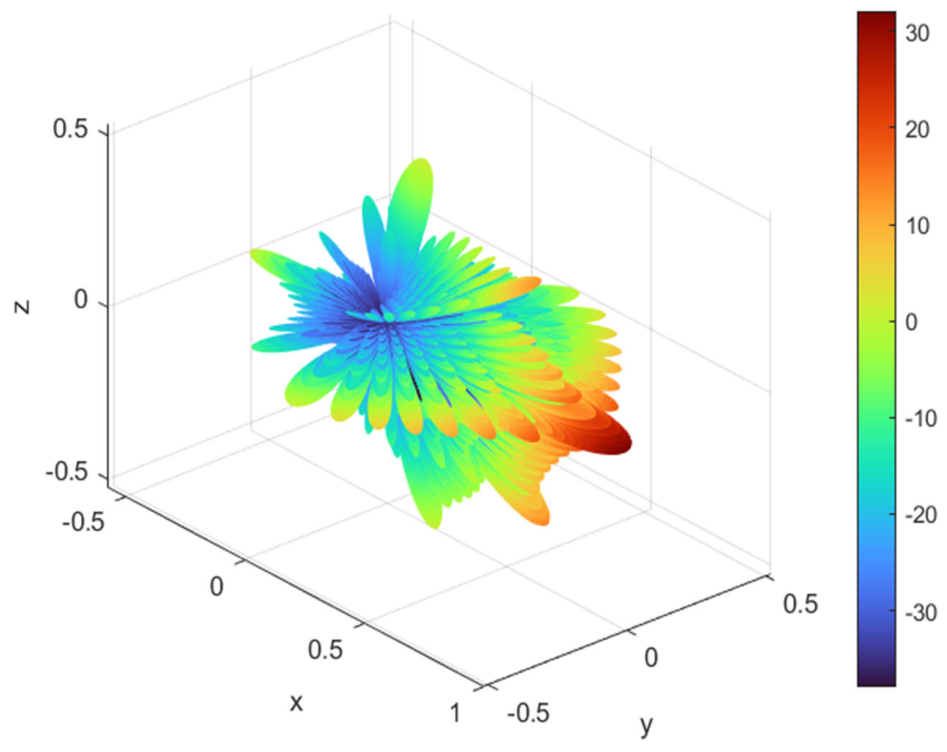
Figure 2 below presents 3D view of the composite AAS pattern of the 5G base station. Where the colorbar represents gain in dBi.
Given that element output power equals 22 dBm from table above, taking into account dual polarization of the BS the output power can be found using the following expression below:
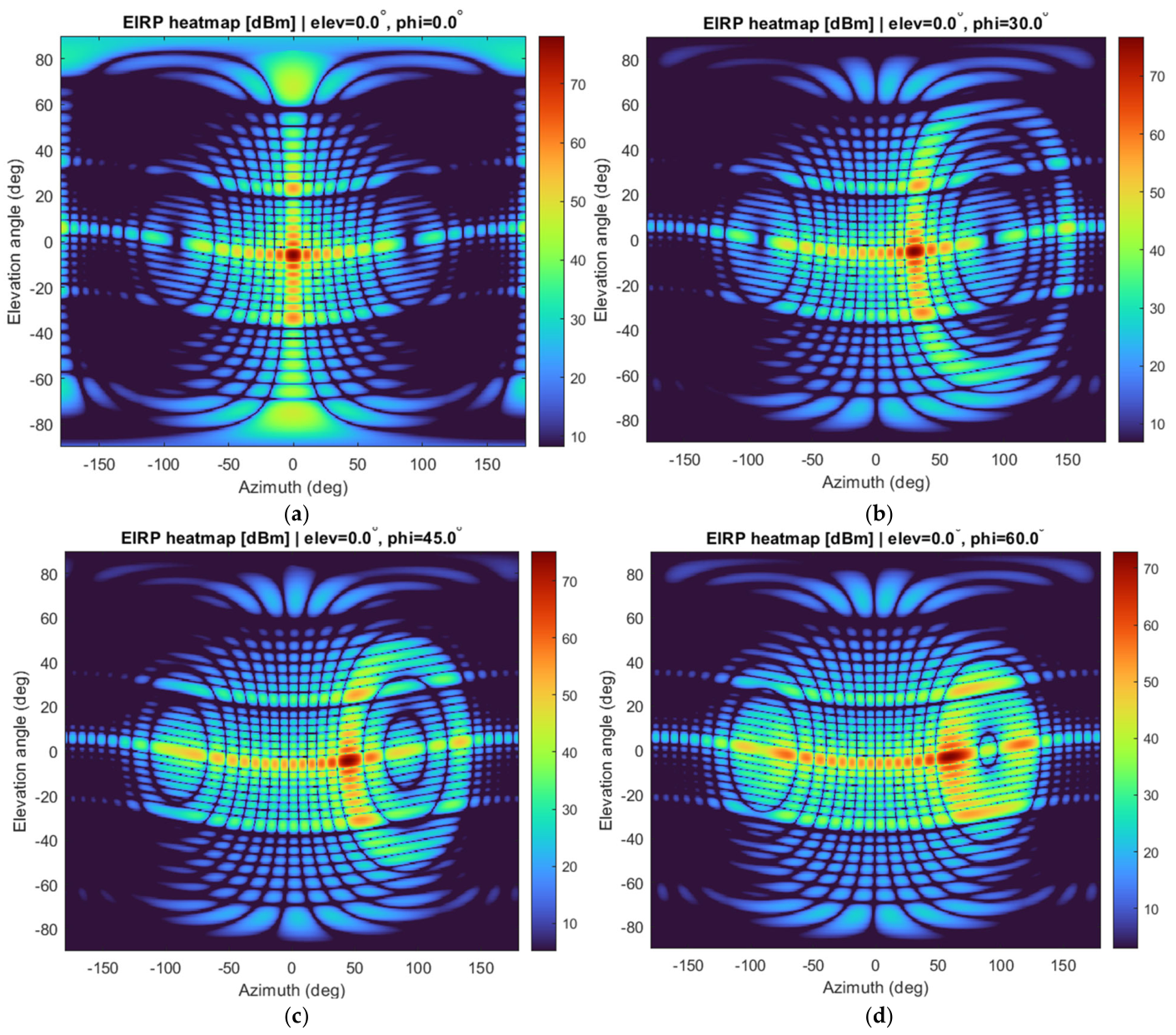
Figure 3 presents total EIRP heatmap for different electrical scan angles.
Propagation Models Used in the Study
Propagation loss between 5G and Earth observation stations was calculated using the ITU-R propagation models. To calculate general losses Recommendation ITU-R P.452-18 has been used that includes atmospheric losses, diffraction losses, etc. The percentage of time that was set in this model was dependent on the Earth station protection criteria: 20% for long-term and 0.005% for short-term interference [
22].
Some of the 5G BS that are located in urban environment may have clutter losses to the buildings that surround them; to address these losses, the statistical model based on Recommendation ITU-R P.2108-1 has been used [
38], and the percentage of locations was random at each simulation step. The clutter was applied for Urban 5G and was not applied for Suburban and Rural BS.
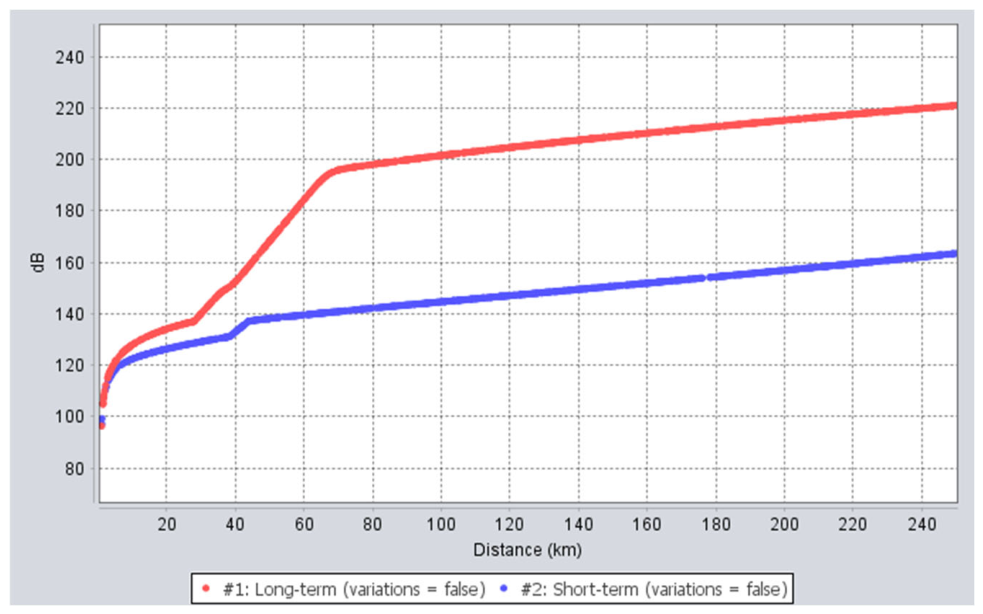
Figure 4 presents propagation losses of Recommendation ITU-R P.452-18 for 20% percentage of time (long-term) and 0.005% percentage of time (short-term).
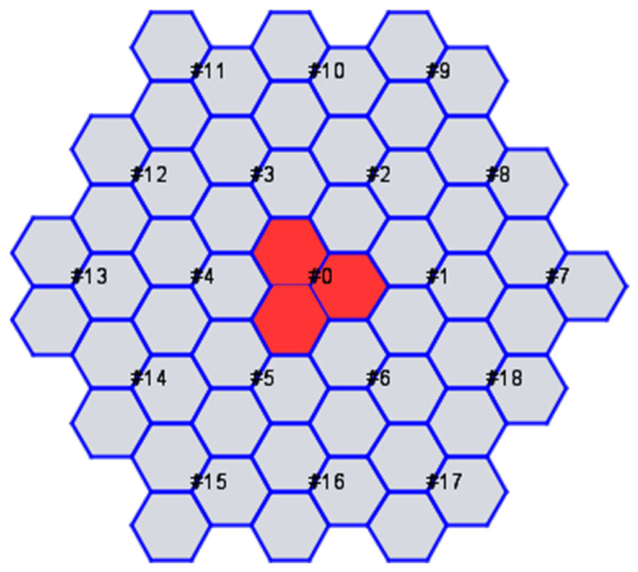
This study employed a Monte Carlo simulation approach to evaluate the aggregate interference from International Mobile Telecommunications (IMT) base stations (BSs) and user equipment (UEs) to an Earth Exploration Satellite Service Earth station operating in the 8.025–8.4 GHz band. For the number of independent Monte Carlo snapshots (N = 10,000 per separation distance per scenario), convergence was verified by confirming that CDF curves changed by less than 0.5 dB between N = 5000 and N = 10,000. A network topology consisting of 19 tri-sector IMT sites (57 sectors in total) was generated. For each simulation snapshot, three IMT UEs per sector were randomly distributed within the coverage area.
The selected deployment density, network loading factor and traffic assumptions follow the representative parameters currently adopted within the ITU-R compatibility study framework. The objective of the study was to evaluate compatibility under standardized reference deployment conditions rather than to investigate the sensitivity of interference to different traffic loading scenarios. Sensitivity analysis for alternative loading factors may be considered in future studies.
The IMT network was assumed to be fully synchronized. For the Rural case the single station (1 tri-sector BS) was considered. Given that there is fully TDD synchronization only the interference from BS is required since the interference from UEs will be significantly lower. The topology of the interfering IMT network is presented in
Figure 5 below:
In the simulation, the Earth station dynamically tracked a non-geostationary satellite throughout its orbital motion. The satellite’s position was recalculated at 1 s intervals in each simulation snapshot to accurately capture the temporal and spatial variations in the interference geometry. The total simulation duration was set to 10 consecutive days, providing sufficient temporal coverage to traverse the complete range of elevation angles that the satellite could exhibit when visible from the Earth station site.
Figure 6 illustrates the simulated orbital trajectory of the satellite relative to the Earth station during this 10-day period. The Earth station had the coordinates 37.6151° and latitude 55.7569°.
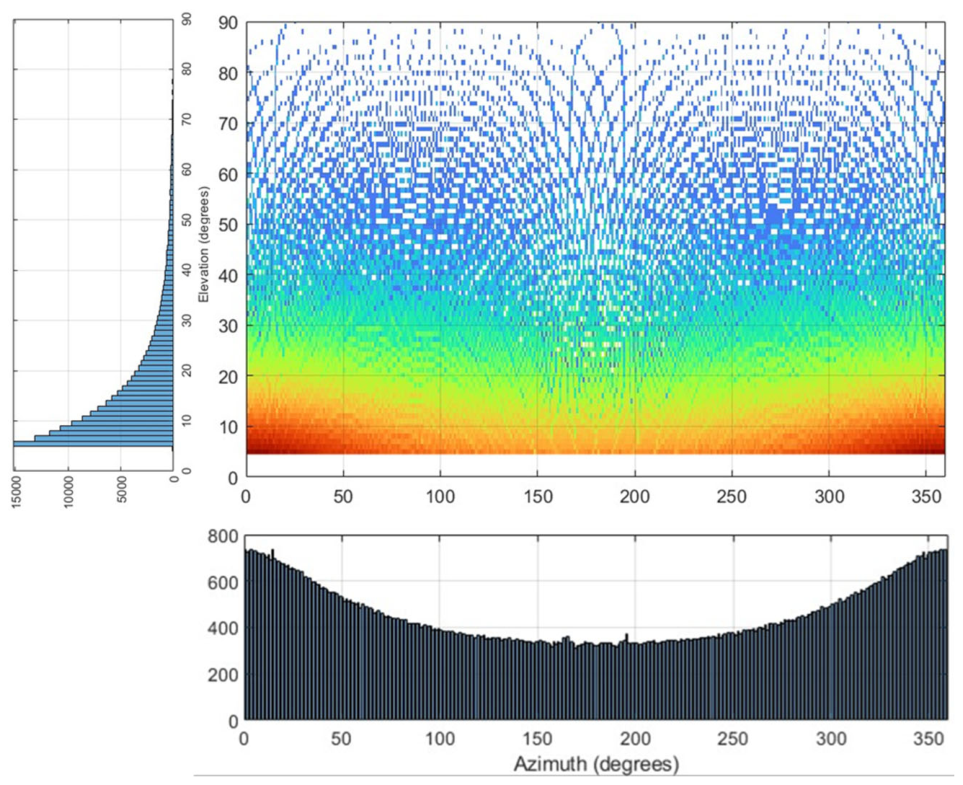
All azimuth and elevation angles were collected from the simulation resulting total data set which was used to simulate the Earth station dynamic change in the direction of the antenna.
Figure 7 presents distribution of elevation and azimuth angles for the simulated Earth station:
The total interference power received as the Earth station (in watts) was expressed as
where IBS, k is the contribution of k-th IMT transmitting BS, calculated as follows:
where
: transmitted power of the k-th IMT BS (watts);
: linear antenna gain of the transmitter in the direction of ES;
: linear antenna gain of the ES in the direction of interfering BS;
: linear propagation loss between the transmitter and Earth station;
: linear propagation loss in clutter (applied for urban deployment);
: other losses in interference path (e.g., polarization losses, feeder losses, etc.).
3. Results
The simulation results show that the coexistence problem in 8.025–8.400 GHz is dominated by geometry and deployment density rather than by extreme modeling assumptions. Even with partial loading (20% BS activity) and realistic beamforming patterns, the aggregate interference from IMT base stations exceeds the long-term protection criterion at separation distances of the order of several tens of kilometers and the short-term criterion at distances up to several hundred kilometers, depending on the deployment scenario.
A key outcome is the strong influence of clutter on the urban case. When statistical clutter losses from Recommendation ITU-R P.2108-1 are applied to all urban base stations, the required separation distances are significantly reduced compared with suburban and rural scenarios, where clutter is weaker or absent. This illustrates that apparent “better” coexistence in dense urban areas is largely a by-product of environmental shielding and should not be interpreted as an inherent compatibility of IMT with Earth observation in this band.
The suburban and rural scenarios highlight the underlying challenge more clearly. In these environments, lower base-station densities and reduced clutter do not compensate for the long interference ranges in X-band, so both long-term and short-term criteria drive separation distances that reach tens to hundreds of kilometers. For systems such as global multi-satellite constellations, which require widely distributed ground stations, these distances are incompatible with realistic siting of gateways near population centers and data users.
From a service perspective, the calculated separation distances must be interpreted in the context of rapid growth in Earth observation capacity. Increasing numbers of governmental, commercial and “ground-station-as-a-service” networks are being deployed to serve applications ranging from agriculture and biodiversity monitoring to disaster management, greenhouse gas assessment and security-related missions. As new missions are added, the possibility to place additional Earth stations far away from any present or future IMT deployment diminishes, which makes large static exclusion zones around each station increasingly impractical.
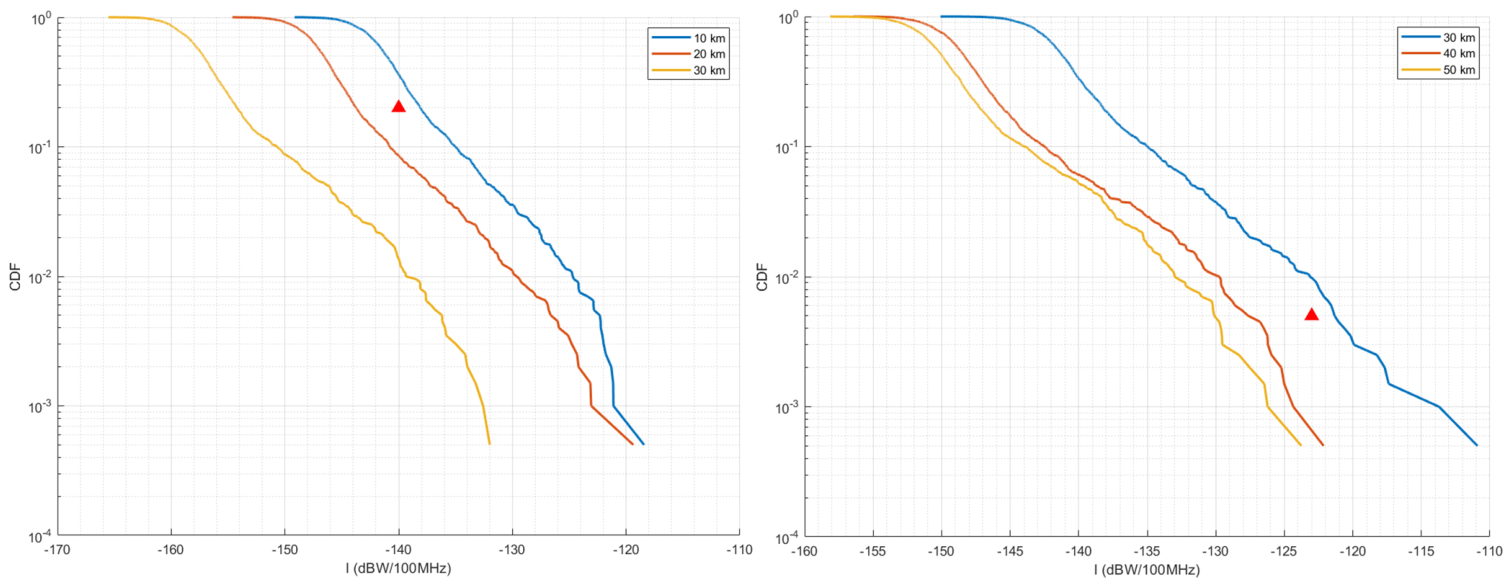
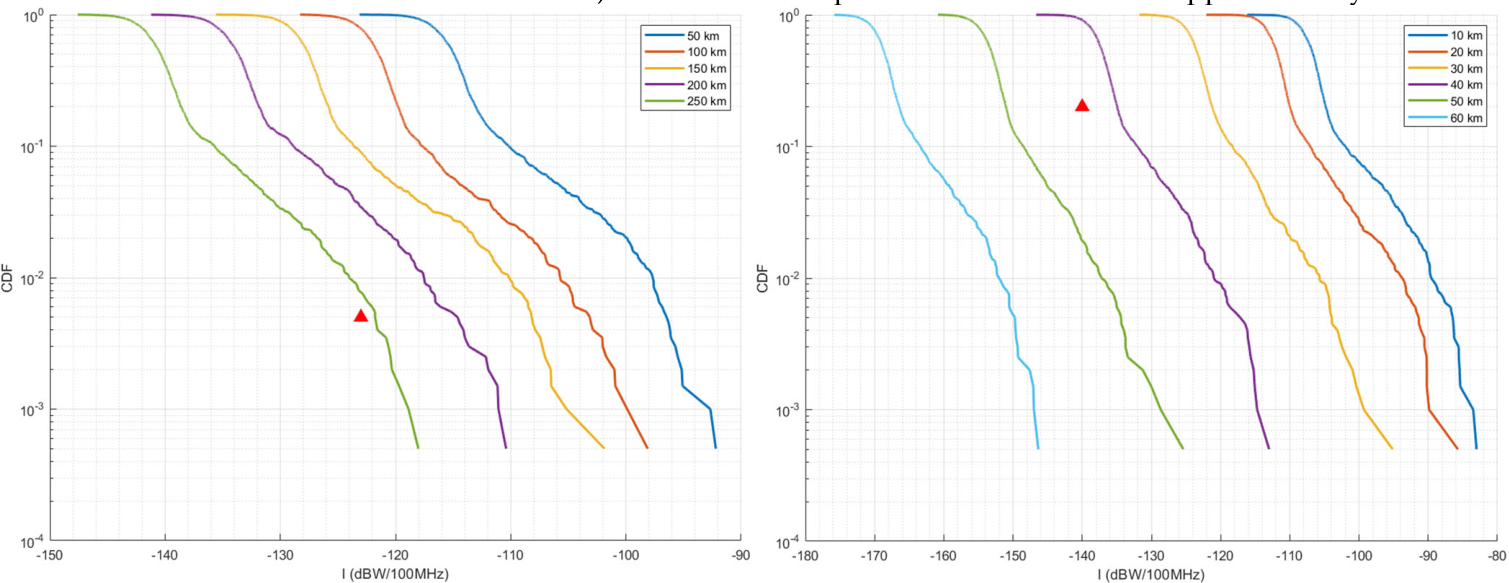
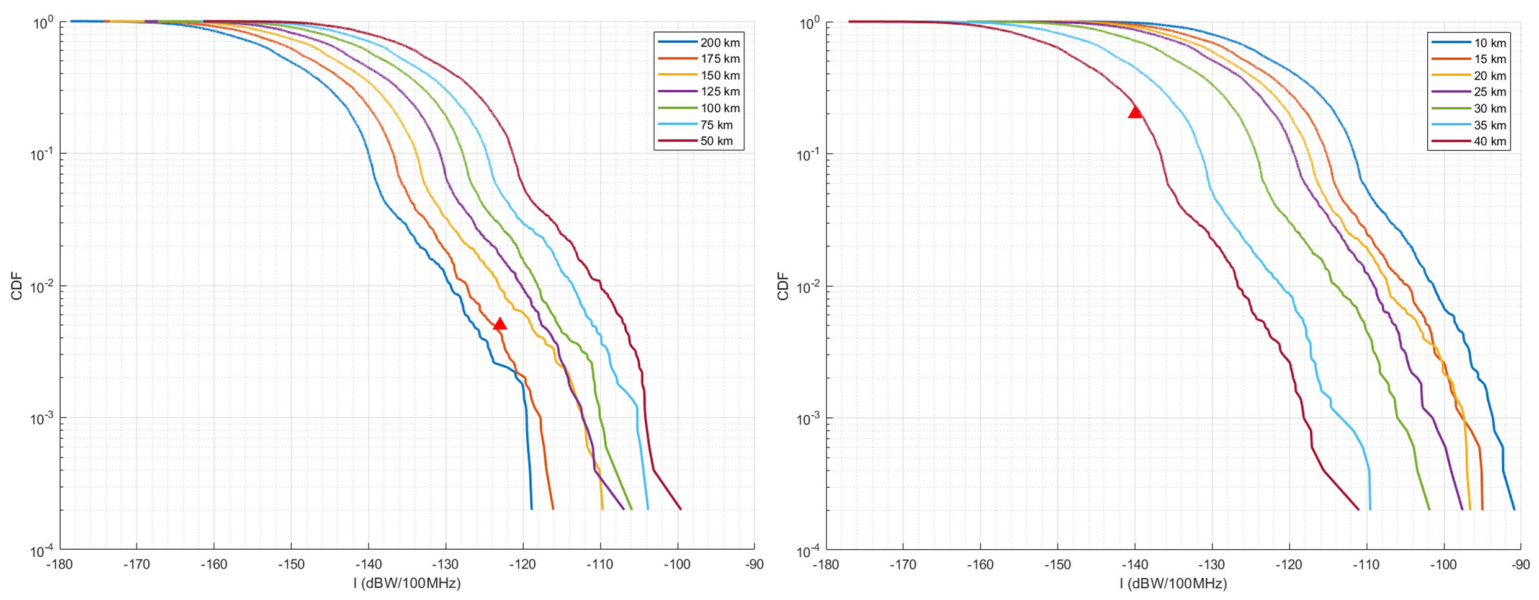
The outcomes of the simulation are presented as CDF curves of the aggregate interference power at the input of the Earth station receiver. These results were obtained for a range of isolation (separation) distances and evaluated under both long-term and short-term interference conditions, as defined in Recommendation ITU-R SA.1027-6. Separate analyses were conducted for urban, suburban, and rural IMT deployment scenarios to reflect the variation in network density, antenna heights, and clutter environments.
Figure 8 illustrates the CDF results for the urban deployment scenario. As observed from the plots, the short-term interference criterion (corresponding to 0.005% of the time) is exceeded at isolation distances of approximately 33 km and below, indicating that at shorter separations, transient interference peaks can surpass the acceptable protection level for the Earth station. In contrast, the long-term interference criterion (corresponding to 20% of the time) is exceeded at separation distances below approximately 12 km.
It is important to emphasize that the urban deployment scenario inherently includes clutter loss effects in accordance with Recommendation ITU-R P.2108-1, applied to 100% of base stations. The presence of buildings and other physical obstructions introduces significant attenuation, which effectively reduces the aggregate interference power received at the Earth station. This environmental shielding results in a more favorable interference profile for urban areas compared with suburban or rural deployments, where clutter effects are weaker or absent.
Figure 9 illustrates the CDF results for the suburban deployment scenario. As observed from the plots, the short-term interference criterion (corresponding to 0.005% of the time) is exceeded at isolation distances of approximately 250 km and below, indicating that at shorter separations, transient interference peaks can surpass the acceptable protection level for the Earth station. In contrast, the long-term interference criterion (corresponding to 20% of the time) is exceeded at separation distances below approximately 45 km.
Figure 10 illustrates the CDF results for the rural deployment scenario. As observed from the plots, the short-term interference criterion (corresponding to 0.005% of the time) is exceeded at isolation distances of approximately 175 km and below, indicating that at shorter separations, transient interference peaks can surpass the acceptable protection level for the Earth station. In contrast, the long-term interference criterion (corresponding to 20% of the time) is exceeded at separation distances below approximately 40 km.
4. Discussion
A key outcome is the strong influence of clutter on the urban case. When statistical clutter losses from Recommendation ITU-R P.2108-1 are applied to all urban base stations, the required separation distances are significantly reduced compared with suburban and rural scenarios, where clutter is weaker or absent. This illustrates that apparent “better” coexistence in dense urban areas is largely a by-product of environmental shielding and should not be interpreted as an inherent compatibility of IMT with EESS in this band.
Table 4 summarizes the obtained results showing the required separation distances to meet the long-term and short-term protection criteria for Earth stations, depending on types of IMT deployment.
Although the simulation results indicate that coexistence under general IMT deployment conditions is not technically feasible, several mitigation measures could in principle reduce the required separation distances and are discussed here for completeness. (a) Geographic exclusion zones around EESS stations: static coordination zones based on the separation distances derived in
Table 4 could protect individual stations, but given the global distribution of Earth stations and their continued growth, implementing and maintaining such zones at national and international level would be operationally complex and would increasingly constrain IMT network planning. (b) Frequency channel separation within the 375 MHz band: assigning IMT to only part of the 8025–8400 MHz sub-band could reduce spectral overlap with specific EESS downlink channels; however, EESS systems typically use the full band for high-rate downlinks, limiting the effectiveness of this measure. (c) Reduced BS transmit power near EESS stations: power limits applied to IMT base stations within a defined radius of an Earth station could reduce interference levels; based on the CDF results, achieving compliance with the long-term criterion at 5 km separation would require reductions in the order of 20–30 dB, which would severely degrade IMT coverage. (d) Coordination between IMT operators and EESS station operators through national regulatory mechanisms: bilateral coordination agreements could provide case-by-case protection, but cannot substitute for a general regulatory framework given the number of stations and operators involved.
This study has several limitations that should be noted. The simulation uses a single representative sun-synchronous orbit at 510 km altitude. While this case provides a high pass frequency and a wide range of elevation angles—making it a representative geometry for a single-orbit analysis—common EESS orbit types such as 600–700 km inclined constellations and medium-LEO EESS systems are not modeled. Extending the analysis to these orbit types may lead to even higher separation distances that would be required, which will make mitigation techniques even more difficult to implement.
5. Conclusions
Growing demand for Earth observation data in the context of agriculture, ecosystem biodiversity and gas emissions monitoring in support of meeting Sustainable Development Goals, as well as disaster management and early warning, as well as civil protection and security applications results in rapid increase in Earth observation satellite missions, including international projects and commercial multi-satellite constellations, which consequently leads to rapid increase in Earth station deployment all over the world, including deployment of new networks of commercial companies, using Ground Station as a Service. As it becomes more difficult to serve this demand with the existing networks of Ground Station and to coordinate at the same time new satellite systems using the same or nearby locations for their ground segment, new deployment scenarios with higher diversity of locations and a much higher number of Earth stations are expected to grow in proportion. Therefore, given the high density and global distribution of Earth stations operating in this band, achieving such large separation distances in practical IMT deployments would be operationally unfeasible.
This study has quantified the separation distances required to protect Earth observation (space-to-Earth) Earth stations from aggregate interference produced by IMT systems operating in the 8.025–8.400 GHz band. For representative urban, suburban and rural deployments, the results indicate that meeting the long-term interference criterion requires separation distances on the order of 15–45 km, while satisfying the short-term criterion may demand distances up to approximately 260 km, depending on the scenario.
These values are obtained under favorable assumptions for IMT, including partial network loading and, in the urban case, statistically modeled clutter losses that substantially reduce received interference. In less cluttered suburban and rural environments, where many Earth stations are located, the required distances become even more constraining, reflecting the absence of significant environmental shielding. Given the current and projected density of Earth stations worldwide, and the need to locate them close to existing infrastructure and data users, implementing such large separation distances on a systematic basis appears operationally unrealistic.
The findings therefore suggest that large-scale IMT deployment in the 8.025–8.400 GHz band would pose a serious risk to the continuity and growth of Earth observation downlink infrastructure. The results of this study clearly indicate that large-scale deployment of IMT/5G systems in the 8.025–8.400 GHz band is not technically or operationally feasible if reliable Earth observation downlinks are to be preserved. The required separation distances of tens of kilometers for long-term interference and up to hundreds of kilometers for short-term interference are fundamentally incompatible with the current and future density and geographic distribution of Earth stations. Implementing IMT in this band under such conditions would inevitably jeopardize the continuity of Earth observation operations, leading to frequent harmful interference, reduced data throughput and increased risk of service outages for missions supporting climate monitoring, agriculture, disaster management and security-related applications. Consequently, the 8.025–8.400 GHz band should not be opened for IMT/5G deployment in any general manner and must remain robustly protected for Earth observation (space-to-Earth) use.



 ,
,