1. Introduction
Digital transformation fundamentally changes the way in which tourism and hospitality are organized, managed, and developed, while IoT and AI are becoming the central drivers of these changes. The existing studies point out that digital technologies are no longer just an operational support, but also the key strategic resource which shapes productivity, competition, and innovation [
1,
2,
3]. Nonetheless, even though the research scope of digital change in the travel industry is rapidly growing, the understanding of its implications on work and employment remains limited and fragmented.
The existing literature predominantly focuses on the technological potentials, technology acceptance, and innovations in providing services. The research on robotics and AI in tourism underlines the effects of automatization, contactless travel, and the improvement of user experience, especially in the context of crises, such as pandemics [
4,
5]. Along with this, the studies on adopting technology study the cognitive and psychological determinants of accepting digital solutions, most often from the perspective of management or users [
6]. Although these approaches contributed to the understanding of technological processes, this technology is mainly viewed as a neutral tool, while its effects on work dynamics and human resources are marginalized.
Critical reviews and bibliometric analyses additionally confirm this imbalance in the literature. Although there is a growing number of works on AI, digital innovations, and technology-driven services in tourism, many studies remain concentrated on the market, consumer, and organizational outcomes, while employees’ work and skill development are treated as side phenomena [
7,
8,
9]. Even the most recent concept frameworks which map future research directions, including generative artificial intelligence, rarely integrate the employees’ perspective and their everyday work practices into the analysis of digital transformations.
Such an approach ignores the fact that tourism and hospitality still represent one of the most labor-intensive industries at the global level, characterized by chronic labor shortages, high employee turnover and long-term problems related to the attractiveness of employment and employee retention. According to the reports of the World Travel & Tourism Council [
10], even after the pandemic period, the tourism sector faces significant labor force instability and difficulties in attracting and retaining qualified employees. At the same time, the OECD report Artificial Intelligence and Tourism [
11] points out that digital transformation is increasingly reshaping labor market demands, particularly through the growing importance of adaptive, digital, and socio-emotional competencies in service-related activities. In this context, AI and IoT technologies have the potential to both alleviate and deepen existing challenges in the field of work and employment, depending on how the technologies are implemented and experienced in the work environment. Contemporary research indicates that digital technologies do not directly affect the replacement of employees, but indirectly shape the work experience through changes in the organization of work, the development of competencies and the perception of career opportunities [
12,
13]. However, the existing literature still does not offer enough integrative empirical models that systematically explain how AI and IoT technologies affect work processes, skill development and employees’ decisions to stay or enter the tourism industry.
As a response to these shortcomings, this paper aims to overcome the fragmentation of the existing literature using a multiphase and participatory research design. Combining the qualitative insights of experts in the industry, the quantitative testing of a conceptual model on a large sample of employees, and an integrative synthesis of the outcomes, the paper systematically evaluates the role of AI and IoT technologies in shaping work and employment in tourism and hospitality. A special aim of the research is to shed more light on the identification of skill development as the key indirect mechanism between technology and job attractiveness, along with the distinction between advantages and disadvantages of technology depending on the method of implementation.
3. Methodology
This study uses a participative, multiphase, and multimethod research design in order to investigate the roles of AI and IoT technologies in work improvement and attracting employees in the travel industry. The research is conceptualized as qualitatively dominant and explorative, with the aim to view the phenomenon from the perspective of key actors in the industry and academic community. Instead of focusing on the technical aspects of technology implementation, the research is directed toward the perceptions, experiences, skill development, and expectations of employees and decision makers. The research design comprises three interconnected studies. Study 1 has an explorative role and is used for the identification of key problems, themes, and mechanisms through a participatory online workshop with experts (
Table 1). The findings of Study 1 were used for the development of a conceptual model and operationalization of constructs in Study 2, which has a quantitative character and whose aim is to empirically test the correlations between technology, work, skills, and job attractiveness. Study 3 has a synthetic role and uses focus groups for the integration of qualitative and quantitative findings into a unified conceptual model. Such a research design enables deep understanding of a complex phenomenon by combining explorative, confirming, and integrative methods.
The study was conducted in compliance with the ethic principles of social sciences. All the participants, in all the phases of research, gave their informed consent before their participation. Involvement was optional, and the respondents could choose to withdraw from the research at any stage without penalty. Anonymity and confidentiality of data were completely guaranteed, and the acquired data were utilized strictly for research justifications. The research was carried out in accordance with the relevant institutional and professional ethic guidelines.
3.1. Study 1: Participatory Online Workshop—IoT and AI in Work Improvement and Attracting Employees in the Travel Industry
3.1.1. Methodology Approach and Research Design
Study 1 was carried out as qualitative participatory research in the form of an online workshop with the aim to perceive, from the perspective of the relevant actors, the actual challenges and potentials for the application of AI and IoT technologies in the travel industry. Such a research method was chosen in order to enable the active participation of experts who are directly involved in operative management, human resources, digital transformation, and education in this field. The focus of the research was on their understanding of the ways in which AI and IoT technologies are currently used or planned in practice, as well as on their impact on employees’ everyday work, skill development, and job attractiveness in the sector.
The workshop was held in March 2025 via the Zoom platform and it lasted for about 90 min. The online format enabled the participation of experts from various organizations and professional contexts, along with maintaining the interactive and reflexive character of the discussion. Since Study 1 was explorative and participatory in character, the aim was not the generalization of the findings, but the identification of key mechanisms and constructs relevant for further quantitative operationalization.
3.1.2. Sample and Participants
Study 1 included ten participants in total, selected by purposive sampling method, where the key criterion was the level of relevant professional experience, and not the number of participants. The sample was formed in a way to comprise different perspectives within the sector of tourism and hospitality, including operation, management, technology, and academic level. The participants were operative managers in hospitality, HR managers in travel industry organizations, and experts in digital transformation and smart tourism. In addition, academic professionals in the travel industry (travel agents, hospitality experts, destination managers) and information technologies were also consulted. The work experience of the participants ranged from 5 to 25 years, while all of them had direct experience with introducing, testing, or planning the application of AI and IoT technologies in practice. Such a sample structure enabled the rich exchange of experiences and perceiving the phenomenon from various complementary angles (
Table 2).
3.1.3. Workshop Procedure and Flow
The workshop was moderated by the researcher, who first informed the respondents regarding the research aims, ethical principles, as well as discussion rules. Special emphasis was put on open opinion exchange, equal participation of all the present participants, and reflection based on personal professional experience.
The discussion was organized around four interconnected thematic wholes. First, the participants discussed the current and planned implementation of AI and IoT technologies by providing specific examples from practice, such as smart rooms, energy management systems, predictive tools for workforce planning, the automatization of administrative processes, and chatbot solutions for communication with guests. In the second part, the focus was on the impact of these technologies on employees’ everyday work, including the changes in work tasks, work organization, workload, and stress level. The third thematic whole was related to the skills and competences which are becoming very important in the digitally intensive work environment. Finally, the participants discussed work and job attractiveness, referring to the way in which AI and IoT could contribute to the improvement of the industry’s image and to attracting young generations of employees. The workshop was audio recorded with the permission of all the contributors, and the recordings were then entirely transcribed for the needs of the analysis.
3.1.4. Data Analysis
Data analysis was conducted using inductive thematic coding. After the workshop, the audio recordings were transcribed in their entirety and prepared for qualitative analysis. The coding process was carried out by two researchers with experience in qualitative research in the field of tourism and hospitality, using the approach of open coding and gradual development of categories. In the first phase of the analysis, initial codes were identified that related to the implementation of AI and IoT technologies, changes in work, skill development and the perception of job attractiveness. Special attention was focused on statements related to the automation of work, organization of work processes, technological support, technological stress, digital and socio-emotional competencies, as well as the perception of the future of work in the tourism industry. A total of 47 initial codes were identified. In the second phase, conceptually similar codes were grouped into broader thematic units that reflected key dimensions of technological impact on work and employment in the tourism industry. Through multiple cycles of comparison, discussion and revision of the codes, five central themes were formed that related to: the implementation of AI and IoT technologies, the transformation of work processes, the development of digital and socio-emotional skills, issues of supervision and technological stress, as well as the attractiveness of employment in the tourism industry.
In order to increase analytical reliability, both researchers independently reviewed the codes and thematic structure, after which possible differences were reconciled through joint discussion until consensus was reached. The final thematic framework was further compared with the original transcripts to ensure consistency between the participant statements and interpreted themes. During the analysis, no new thematic categories were observed after the initial coding cycle, which indicates the achievement of conceptual saturation. Bearing in mind the expert character of the sample and the clearly defined research focus, the number of participants was assessed as adequate for achieving the goals of Study 1 (
Table 3). Additional details regarding the coding phases, thematic development process, and analytical validation procedure are presented in
Appendix D.
3.2. Study 2: Quantitative Testing of the Model of AI and IoT Impact on Work, Skills and Job Attractiveness
3.2.1. Development of the Conceptual Model and Hypotheses
Study 2 was conducted as quantitative research with the aim of empirically testing the conceptual model developed on the basis of the exploratory findings of Study 1. The qualitative findings of the participatory online workshop showed that the participants do not view AI and IoT technologies exclusively as a technical means of automation, but primarily through their impact on the daily work of employees, work organization, skill development and perceptions of work in the tourism industry. During the discussions, two opposing dimensions of technological implementation were singled out. On the one hand, participants described AI and IoT technologies as supporting work, increasing efficiency, facilitating operational tasks and improving the professional development of employees. On the other hand, problems related to technological stress, a feeling of surveillance, digital pressure and reduction in employee autonomy were emphasized. At the same time, the findings of Study 1 showed that the participants consider the development of digital and socio-emotional skills as a key mechanism through which technology shapes the experience of employees and the perception of the attractiveness of work in tourism and hospitality. Participants repeatedly emphasized that AI and IoT technologies in themselves do not directly affect the decision of employees to stay or enter the tourism industry, but that their effect depends on the way the technology is implemented and the possibility of developing new competencies. These recurring patterns were the basis for the development of the conceptual model and the operationalization of the constructs in the quantitative phase of the research.
Based on the qualitative findings of Study 1, the constructs TECH_SUPPORT, TECH_STRESS, SKILL_DEV, JOB_ATTR and STAY_INTENT were defined. The TECH_SUPPORT construct was developed to capture the perception of AI and IoT technologies as work support and efficiency improvement, while TECH_STRESS was operationalized with the aim of measuring the negative aspects of digitization, including the feeling of pressure, surveillance and digital burden. The SKILL_DEV construct was introduced on the basis of the participants’ repeated statements about the importance of developing digital, adaptive and socio-emotional competencies in the modern tourist environment. JOB_ATTR referred to the perception of the attractiveness of working in the tourism industry, while STAY_INTENT was operationalized as the intention of employees to stay in the tourism and hotel sector. The proposed model starts from the assumption that the perception of AI and IoT technologies as work support positively affects the development of employees’ skills, which further shapes the attractiveness of employment and the intention to stay in the industry. At the same time, the model includes the negative dimension of digitization through the construct of technological stress, which can reduce the positive effects of technological implementation on the perception of work and employment. Based on the integrated conceptual model defined in this way, hypotheses H1–H4 were formulated, which aimed to empirically verify the relationships identified during the qualitative phase of the research.
3.2.2. Variables and the Origin of Measurement Instruments
The variables in Study 2 were measured using existing validated scales from the relevant literature, which were adapted to the context of tourism and hotel management based on the findings of Study 1. The adaptation process included the terminological adaptation of the items to the specifics of work in the tourism industry, while retaining the original meaning of the constructs and the theoretical dimensions of the instruments used. The construct of perception of technology support (TECH_SUPPORT) was operationalized based on research in the field of technology acceptance and perceived usefulness of technology [
39,
40]. The construct of technological stress (TECH_STRESS) was adapted from the literature on the technostress concept and the digital workload of employees [
41]. The skill development construct (SKILL_DEV) is based on research on competencies in the digital work environment and the development of employees’ socio-emotional and adaptive abilities [
12,
28]. Job attractiveness (JOB_ATTR) was operationalized using items from the literature on the employer attractiveness concept [
42], while the intention to stay in the industry (STAY_INTENT) was measured by items developed on the basis of research on organizational commitment, employee retention and intention to stay in the sector [
43]. Before the main data collection, the questionnaire was reviewed by three experts in the field of tourism, digital transformation and research methodology with the aim of assessing the clarity of the questions, content validity and adaptation to the tourist context. Based on their suggestions, minor linguistic and terminological corrections were made in order to ensure the comprehensibility and contextual relevance of the instruments. After that, a pilot study was conducted on a sample of 30 employees in the tourism and hotel industry in order to check the comprehensibility of the questions, the functionality of the questionnaire and the preliminary reliability of the instruments. All the measurement items used in the study are presented in
Appendix B.
The final questionnaire contained a total of 24 measurement items distributed in five constructs: TECH_SUPPORT (5 items), TECH_STRESS (5 items), SKILL_DEV (6 items), JOB_ATTR (5 items) and STAY_INTENT (3 items). All the items were measured using a seven-point Likert scale, ranging from 1—“completely disagree” to 7—“completely agree”. Based on the identified research gap, theoretical framework and qualitative findings of Study 1, hypotheses H1–H4 were formulated, which represented the basis for empirical testing of the conceptual model. Based on the identified gap and the findings from previous studies on the digital transformation of work, the following hypotheses were formulated:
H1. Perceived support of AI/IoT technology positively affects employees’ skill development.
H2. Employees’ skill development positively affects job attractiveness in the travel industry.
H3. Job attractiveness positively affects employees’ intention to stay in the industry.
H4. Technostress negatively affects job attractiveness.
3.2.3. Sample and Collecting Data
The Study 2 data were gathered by online survey from June to August 2025. The questionnaire was dispersed throughout professional networks, industry associations, and educational institutions connected with the sector of tourism and hospitality. The sample comprised respondents from the Republic of Serbia, employed, or those who recently worked in the travel industry. The basic demographic and social characteristics of the sample, including gender, sector, and work position, are presented in
Appendix A. The final sample comprised 512 respondents who were employed or recently worked in the travel industry at the time of the research.
The sample comprised employees from various work positions, including operative roles and management, as well as participants from various segments of the industry. Such a sample structure enabled an analytical overview of the perception of technology in different contexts and it was especially relevant for performing the multi-group analysis.
Although the qualitative and participatory phases of the research included experts from various international contexts, including Serbia, Kazakhstan and Turkey, the quantitative phase of the research was conducted exclusively in the Republic of Serbia. This research approach resulted from the different goals of the individual phases of the research. While Studies 1 and 3 had an exploratory and conceptual character, with the aim of identifying key patterns of the digital transformation of work in tourism and developing an integrated conceptual framework, Study 2 was aimed at focused empirical testing of the developed model within a specific institutional and market context. The international experts involved in the qualitative phases were not used for the sake of statistical representativeness of different countries, but with the aim of providing a broader professional perspective and validating the conceptual relationships identified during the research.
3.2.4. Preliminary Data Processing
Before performing the main analyses, the data were submitted to preliminary processing and quality checking using SPSS 26.00 software. The analysis comprised the checking of descriptive statistics, data distribution, and potential missing values. The results showed that there were no systematic missing values in the key variables used in the research, while partially missing responses were recorded exclusively in the demographic question, which were not used in further analytical procedures. Thus, no data imputation was necessary. Additionally, the checking of extreme values and response patterns was carried out, where the responses with indications of low quality were excluded from further analysis. This action provided an analytically reliable sample, without jeopardizing the statistical strength of the model.
3.3. Study 3: Focus Groups for the Development of the Integrated Conceptual Model of AI and IoT Influence on Engagement in the Travel Industry
3.3.1. Aim and Methodological Approach
Study 3’s goal is the progress of the integrated conceptual model which explains how AI and IoT technologies affect work processes, skill development, and job attractiveness in the travel industry. Starting from the qualitative findings from Study 1 and statistically confirmed correlations from Study 2, Study 3 had a synthesis role in the entire research design. Its purpose is to unite the previous findings into a coherent theoretical framework which would enable profounder consideration of the instruments of technology effects on work and employment, with simultaneous practical relevance for management, HR strategies, and education. The structure of the conceptual model confirms and theoretically explains the statistically significant correlations identified in Study 2, especially the role of skill development as a key indirect mechanism between technology and employment outcomes.
Study 3 was carried out as participatory qualitative research using focus groups with elements of participatory model building. This approach enables knowledge not to be used exclusively for discussion, but also for active correlation construction between the key concepts, which increases the analytical depth and validity of the results. Focus groups were chosen based on the previous empirical findings. The credibility of the results was additionally ensured through the participatory model building process and member-check validation, within which the participants confirmed that the developed model adequately reflected their experience and attitudes.
3.3.2. Sample and Participants
Study 3 included the participation of two focus groups involving 14 participants (7 participants in each group). The sample was formed using the method of purposive sampling, where the selection criterion was the combination of academic and practical experience in tourism-related areas. The participant structure comprised academic professionals from tourism, hospitality, and information systems fields; practitioners from tourism and hospitality organizations with experience in AI and IoT technology implementation; as well as experts in digital transformation and smart tourism. All the participants had at least ten years of relevant professional experience, which enabled reaching a high level of expertise and reflection during the process of participatory model building.
Focus group sessions were carried out in September 2025 via the MS Teams online platform, and each session lasted for approximately 100 min. The sessions were moderated by the researcher, with minimal intervention into the discussion content, in order to encourage autonomous interaction and participatory meaning reach among the participants. At the beginning of each focus group session, the participants were presented with the summarized findings from Study 1 and Study 2, including the key thematic patterns, empirically confirmed correlations between constructs and statistically tested conceptual model from Study 2. These findings were used as an input framework for further discussion and participatory model building.
The participants then worked with the cards prepared in advance which represented the key dimensions of work (e.g., autonomy, workload, quality of service), skills identified in Studies 1 and 2 (digital, socio-emotional, and transferable), as well as the effects of AI and IoT technologies (work support, automatization, supervision, and stress). During the sessions, the participants grouped the cards together into logical wholes, defined the correlations between the identified elements, and visually mapped the effect flow between technology, work, skills, and employment. The researcher’s role was limited to the facilitation of the process, without intervention into the content and structure of the defined correlations. After the end of focus group sessions, the participants could overview the preliminary conceptual model within the process of member-check validation.
3.3.3. Data Analysis
The analysis contained three steps. First, the audio recordings of the focus group sessions were transcribed and analyzed using the inductive thematic coding method, with the focus on the patterns in the way the participants explained the correlations between AI and IoT technologies, work, and skill development. The second phase was the analysis of visual materials created during the process of participatory mapping and card grouping, which were integrated into a unified structure. In the third phase, a preliminary conceptual model was developed and then it was sent back to the participants for validation using a member-check procedure, which confirmed the validity and understandability of the proposed framework. Additional details regarding the participatory synthesis procedure and integrated conceptual model development process are presented in
Appendix E.
4. Results
4.1. Study 1 Findings
The analysis of data obtained in the participatory online workshop pointed to several key thematic IoT and AI patterns. In their discussions, the participants consistently expressed that these technologies were primarily used in practice for the optimization of operation processes, and not for the direct replacement of employees. The technologies were perceived as work support, especially in the context of the automatization of routine and administrative tasks, which enabled employees to dedicate more time to interaction with guests and to the quality of service. In terms of the impact on everyday work, the results point to the ambivalent role of technology. However, the participants said that AI and IoT could contribute to a reduction in operation workload and stress, especially when used for shift planning, resource management, and logistics improvement. On the other hand, in situations when systems were introduced without adequate training, clear communication, or with the exclusion of employees, the technologies were connected with increased stress, a feeling of control, and reduced autonomy at work. The results further pointed to the changes in the structure of necessary skills. The participants identified the growing importance of digital literacy and the ability to work with technological systems, but at the same time, emphasized that the implementation of AI and IoT technologies did not diminish the importance of human skills. On the contrary, technology increases the need for socio-emotional competences, which keep their key importance for work with guests and team cooperation.
Special attention was given to the ethic aspects of technology implementation. The participants pointed to the existing concern regarding supervision, privacy, and potential loss of autonomy among employees. These fears primarily appeared in contexts where technology was perceived as a control tool, rather than work support. The results showed that AI and IoT technologies have the potential to contribute to the increase in job attractiveness in the travel industry, especially for young generations, but only under certain conditions. The participants emphasized that the positive effect of technology on the image of industry depended on the way it was introduced and communicated, as well as on whether it was clearly positioned as a means for work improvement and employees’ development, and not as a control mechanism or a replacement of workforce. Based on the identified themes, a preliminary conceptual framework was developed which pointed out that AI and IoT technologies did not affect the attraction of and keeping employees directly, but indirectly, through changes in work processes and the development of new skills (
Table 4). This framework served as a basis for the operationalization of the constructs and development of the questionnaire in Study 2, as well as for the integration of findings in Study 3.
4.2. Study 2 Findings
4.2.1. Descriptive Statistics
The results indicated that the mean values of all the constructs are above the middle of the scale. The highest mean values are recorded for perceived technology support (M = 5.12, SD = 1.08) and skill development (M = 5.03, SD = 0.97), while technostress had a lower mean value (M = 4.21, SD = 1.26). Job attractiveness (M = 4.89, SD = 1.11) and intention to stay in the industry (M = 4.63, SD = 1.29) showed moderate mean values, with relatively moderate response variability (
Table 5).
4.2.2. Measurement Model Assessment
Measurement model assessment (MMA) was carried out using the PLS-SEM approach. In accordance with the recommendations for variance-based structural modeling, the assessment of the measurement model was focused on the internal consistency of the constructs, convergent validity, and discriminant validity, and not on covariance-based indices of model fitting. The Cronbach alpha coefficient, composite reliability (CR) and the average variance extracted (AVE) are presented in
Table 6 (
Appendix C).
Discriminant construct validity was checked using HTMT criteria. All the HTMT values were below the recommended threshold of 0.85, which confirmed that the constructs were empirically separated (
Table 7).
4.2.3. Structural Model Testing
After the measurement model validation, the structural model was tested using the Partial Least Squares Structural Equation Modeling (PLS-SEM) approach in SmartPLS 4 software. The significance of structural correlations was assessed using the bootstrapping procedure with 5000 repeated samples. The evaluation of the structural model comprised the path coefficient analysis (β), t-value, and
p-value, as well as the explained endogenous construct variances (R
2) (
Table 8).
The results show that the model explains 29% of skill development variance, 64% of job attractiveness variance, and 35% of intention to stay in the industry variance. The effect size (f2) analysis shows that perceived technology support has a strong effect on skill development (f2 = 0.41), while skill development has a medium-strong effect on job attractiveness (f2 = 0.29). The negative impact of technostress on job attractiveness shows small to medium effect (f2 = 0.18), while the correlation between job attractiveness and intention to stay in the industry shows strong effect (f2 = 0.53). Predictive model relevance was assessed using Q2 values obtained through a blindfolding procedure. Positive Q2 values for all the endogenous variables (SKILL_DEV: Q2 = 0.18; JOB_ATTR: Q2 = 0.41; STAY_INTENT: Q2 = 0.22) point to the satisfactory ability of the model to predict the observed outcomes. The check of predictor collinearity showed that all the VIF values were below the recommended threshold (VIF = 1.31–1.67), which excluded the possibility of multicollinearity problems in the structural model. Additionally, the results of the PLSpredict analysis point to the adequate predictive ability of the model, taking into consideration that RMSE and MAE values for most of the indicators were lower in the PLS-SEM model in comparison with the reference linear model (RMSE_PLS = 0.62–0.89; RMSE_LM = 0.67–0.95), while Q2_predict values were positive (Q2_predict = 0.11–0.36).
4.2.4. Multi-Group Analysis (MGA)
For the purpose of an additional check of structural model stability, multi-group analysis (MGA) was carried out for the operative employees (N = 268) and management representatives (N = 244). The analysis was done in SmartPLS software using the PLS-MGA procedure. The MGA results show that three out of four structural paths are statistically significantly different between groups. The impact of perceived technology support on skill development (TECH_SUPPORT → SKILL_DEV) was stronger with operative employees (β = 0.58) in comparison with the management (β = 0.47;
p = 0.041). Similarly, the correlation between skill development and job attractiveness (SKILL_DEV → JOB_ATTR) was more pronounced with operative employees (β = 0.51) than with management (β = 0.39;
p = 0.032). Also, the negative effect of technostress on job attractiveness (TECH_STRESS → JOB_ATTR) was significantly stronger with operative employees (β = −0.37) than with management (β = −0.26;
p = 0.045) (
Table 9).
The path difference between job attractiveness and intention to stay in the industry (JOB_ATTR → STAY_INTENT) was not statistically significant (
p = 0.067). The explained variance of endogenous construct was consistently higher with operative employees in comparison with management, including skill development (R
2 = 0.34 vs. 0.26), job attractiveness (R
2 = 0.67 vs. 0.58), and intention to stay in the industry (R
2 = 0.41 vs. 0.32) (
Table 10). The outcomes demonstrate that the model has a better explanatory power with operative staff. This is in conformity with the qualitative results from Study 1.
4.3. Study 3 Findings
Study 3 focused on the participatory synthesis of the qualitative and quantitative findings related to the impact of AI and IoT technologies on work and employment in the tourism industry. Through participatory modeling activities, the participants identified key relationships between technology implementation, changes in work processes, competency development and employment perception.
The results showed that the participants do not perceive AI and IoT technologies as direct determinants of employees’ decisions to stay or enter the tourism industry. Instead, the participants emphasized that the impact of digital transformation is achieved through changes in the organization of work, daily work experience and requirements for the development of new competencies. Technologies that were perceived as work support were associated with greater operational efficiency, greater employee autonomy, a reduction in routine tasks and improvement of service quality. The participants additionally emphasized that such organizational changes contribute to the development of digital and socio-emotional competencies that are becoming increasingly important in technology-intensive service environments. The results also pointed to the dual nature of digital transformation in tourism and hospitality. While the supportive implementation of AI and IoT technologies was associated with a more positive perception of work and employment, the participants simultaneously identified technological stress, increased digital pressure and technological surveillance as significant negative aspects of the digitalized work environment. In situations where technologies were dominantly perceived as instruments of control and surveillance, the participants expressed a lower level of autonomy and a less positive perception of employment attractiveness, regardless of potential operational benefits.
5. Discussion
This study provides an empirically established and integrative understanding of the role of AI and IoT technologies in work-shaping and employment in the travel industry. The findings confirm that digital transformation does not affect employment decisions directly, but indirectly, through changes in work processes and employees’ skill development. Such a finding complements the existing literature which perceived digital technologies primarily from the perspective of efficiency, innovation, and user experience, with limited observation of their implications on the workforce (Cheng et al., 2023 [
14]; Park et al., 2023 [
7]; Knani et al., 2022 [
8]). This paper also shows that AI and IoT technologies have the potential to contribute to the sustainable development of the workforce in the travel industry, but only if they are implemented as employees’ work support, and not as a control mechanism. Through a multiphase and participatory research design, the study empirically confirms that skill development is the key direct mechanism between technology and job attractiveness, and thus it overcomes the fragmentation of the existing research.
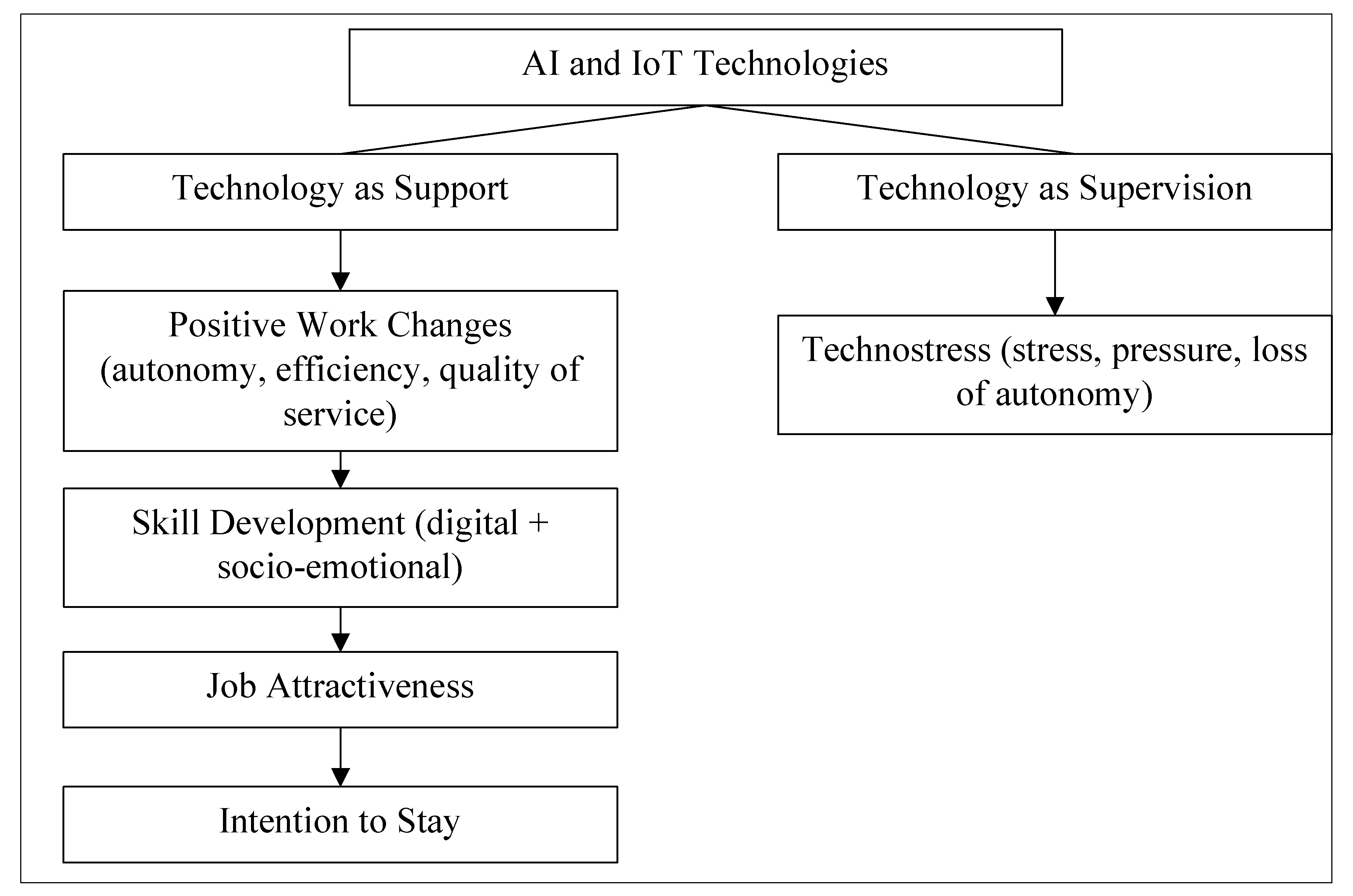
Based on the findings of all three studies, an integrated conceptual model was developed that systematically explains the role of AI and IoT technologies in shaping work and employment in the tourism industry. The model starts from the assumption that technologies in themselves do not directly affect employment decisions, but that their influence occurs indirectly, through changes in work organization, employee experience and requirements for the development of new competencies. According to research findings, AI and IoT technologies can be implemented through two dominant organizational dimensions: technology as work support and technology as a monitoring mechanism. When employees perceive technology as a work support, it contributes to positive changes in work processes, including greater autonomy, operational efficiency and improvement of service quality. Such changes further encourage the development of digital and socio-emotional skills, which are recognized in the model as a central mediating mechanism between technology implementation and employment outcomes. The development of these competencies positively affects the perception of the attractiveness of employment and the long-term sustainability of a career in the tourism industry, which consequently increases the intention of employees to stay in the sector. On the other hand, when technologies are dominantly perceived as mechanisms of control and supervision, the development of technological stress, a feeling of pressure and reduced autonomy of employees occurs. In such conditions, the positive effects of digital transformation can be reduced or completely neutralized. The developed framework therefore confirms that the method of implementation of AI and IoT technologies is a key condition that determines whether the digital transformation will have positive or negative consequences for work and employment in tourism and hospitality (
Figure 1).
Table 11 shows the definitions and key elements of the integrated conceptual model shown in the figure. The integrated conceptual model presented in
Figure 1 responds to recent calls in the literature for more human-centered and integrative approaches to digital transformation in the travel industry [
2,
18].
The integrated conceptual model represents the final synthesis of the multiphase research design. While Study 1 enabled the identification of key themes and mechanisms from the experts’ perspective, and Study 2 empirically tested the relationships between the main constructs on a large sample of respondents, Study 3 integrated these findings into a unified conceptual model. In this way, the study provides a systematic and coherent understanding of the role of AI and IoT technologies in shaping work and employment in the travel industry.
The integrated conceptual model presented in
Figure 1 synthesizes the central relationships identified throughout the multiphase research design and provides a coherent explanation of the mechanisms linking digital transformation, skill development, and employment-related outcomes in tourism and hospitality.
More specifically, the structural model results from Study 2 demonstrated that perceived technological support had a strong and statistically significant effect on skill development (β = 0.54;
p < 0.001), while skill development significantly influenced job attractiveness (β = 0.47;
p < 0.001). These findings indicate that AI and IoT technologies shape employees’ work experience primarily through their contribution to the development of digital, adaptive, and socio-emotional competencies, rather than through direct technological effects on employment decisions. Such results are consistent with previous studies emphasizing that digital transformation in service industries increasingly shifts the focus toward transferable and human-centered competencies required in technology-intensive work environments [
12,
25].
The Study 2 outcomes additionally indicate that employees perceive AI and IoT technologies positively when they contribute to professional development and facilitate everyday work processes rather than functioning exclusively as automatization tools. The findings suggest that digital transformation in tourism increasingly shifts the importance toward adaptive, cognitive, and socio-emotional competencies, which become central for work in technology-intensive service environments [
35,
42]. Furthermore, significant correlations were confirmed between skill development, job attractiveness, and intention to stay in the industry. These findings broaden the existing literature on employer attractiveness in tourism, which rarely integrates technology-related competencies and employment outcomes within the same analytical framework [
33]. The results indicate that employees are more likely to perceive tourism careers positively when digital technologies are associated with opportunities for learning, professional growth, and transferable competencies.
At the same time, technostress showed a significantly negative impact on job attractiveness, confirming the findings of previous studies which warn about the risks of increased supervision, loss of autonomy, and psychological pressure in digitalized work environments [
20,
27]. This result additionally emphasizes that the positive effects of AI and IoT technologies are not automatic, but depend strongly on organizational implementation strategies and employees’ perceptions of technological change. Multi-group analysis additionally deepens the understanding of these correlations, showing that the effects of technology are more pronounced among operative employees than among management representatives. This finding is consistent with qualitative insights from Study 1 and suggests that operative employees are more directly exposed to both the positive and negative consequences of digital work transformation. Consequently, digital transformation in tourism should not be approached as a homogeneous organizational process, but rather as a differentiated experience shaped by specific work roles and professional responsibilities.
6. Conclusions
This research contributes to a better understanding of the role of AI and IoT technologies in shaping work processes, competency development and employment outcomes in the tourism industry. The results of the research showed that digital transformation does not directly affect employees’ decisions about staying in the industry, but indirectly, through changes in the organization of work and the development of employees’ digital and socio-emotional competencies.
The application of a multiphase and participatory research approach enabled the connection of qualitative and quantitative findings into a unique integrated conceptual model that explains the positive and negative dimensions of digital transformation in the tourism and hotel industry. Research has shown that AI and IoT technologies can contribute to greater attractiveness of employment and the intention of employees to stay in the industry when implemented to support work, professional development and the improvement of service quality. At the same time, the results confirm that technological stress, the feeling of surveillance and reduced autonomy of employees can reduce the positive effects of digitization when technologies are dominantly perceived as mechanisms of control. The research indicates that the method of organizational implementation of AI and IoT technologies is a key condition for achieving a sustainable and human-centric digital transformation in the tourism and hotel industry. The developed conceptual model additionally represents the basis for future comparative and longitudinal research on the relationship between technology, work and employment in service industries.
6.1. Theoretical Implications
The theoretical contribution of the research is reflected in the development of an integrated conceptual model that links AI and IoT technologies, work organization, skill development and employment outcomes into a single analytical framework. Unlike the dominant part of the existing literature on digital transformation in tourism, which is primarily focused on operational efficiency, process automation and user experience, this research shifts the focus to employees and their professional capacities in a digitally transformed work environment [
3,
14]. The results show that AI and IoT technologies do not directly affect the attractiveness of employment or the intention to stay employed in the tourism industry, but that their influence works indirectly, through the development of digital and socio-emotional competencies of employees. In this way, the research expands the existing theoretical considerations on the digital transformation of work in service activities and indicates that technological implementation by itself is not enough to improve the perception of work if it is not accompanied by the development of competencies and adaptation of organizational processes.
An additional theoretical contribution refers to the simultaneous inclusion of positive and negative dimensions of digitization within the same model. While previous research on AI and IoT technologies in tourism mainly presents them through the prism of innovation, efficiency and smart systems, the findings of this research show that employees also develop perceptions of technological stress, digital pressure and reduced autonomy in parallel. By introducing the TECH_STRESS construct, the model enables a more complex understanding of the relationship between technology and work in the tourism industry and shows that the effects of digitization are not exclusively positive, but depend on the way technology is implemented and the organizational context in which it is applied. A special contribution of the research also refers to the methodological aspect of the work. By combining the participative qualitative phase, quantitative model testing and the final integrative synthesis, a multiphase mixed-methods approach was developed, which enables connecting the experiences of employees with empirical verification of the relationship between constructs. In this way, the research goes beyond simplified technology-oriented approaches and contributes to the development of an interdisciplinary framework for the study of the digital transformation of work in tourism and hospitality.
6.2. Practical Implications
The research findings have significant practical implications for management, human resource management and digital transformation planning in the tourism industry. The results show that employees positively evaluate AI and IoT technologies when they perceive them as work support, reduction in operational burden and opportunity for professional development. This indicates that organizations should not introduce digital technologies solely with the aim of increasing efficiency and automating processes, but through strategies that simultaneously include employee development, continuous training and a clear explanation of the benefits that technology can have for the daily work of employees.
The findings specifically indicate that the development of digital and socio-emotional competencies is a central mechanism through which technology affects the perception of employment attractiveness. In a practical sense, this means that organizations that invest in employee training, development of adaptive competencies and involvement of employees in digital transformation processes can increase the perception of professional development and long-term career stability in the tourism sector. This is particularly significant in the context of the pronounced problem of labor turnover and the lack of employees in the tourism and hotel industry after the pandemic period. At the same time, the results indicate that inadequate implementation of AI and IoT systems can lead to an increase in technological stress, the feeling of surveillance and digital workload of employees. Therefore, managers and HR departments should pay more attention to the way technology is introduced, the degree of employee autonomy and the balance between digital supervision and professional support. Organizations that implement digitization without involving employees and without developing competencies can produce the opposite effect and further worsen the perception of work in the tourism industry. At the level of educational institutions and public policies, the results indicate the need for the systematic inclusion of digital, adaptive and socio-emotional competencies in education and professional development programs in the field of tourism and hotel management. In addition to technical knowledge, future employees will increasingly need to develop the ability to adapt, communicate, solve problems and work in technology-intensive service environments. The research results can also be useful to policy makers and tourism organizations when creating digital transformation strategies that simultaneously support technological development and workforce sustainability in the tourism industry.
6.3. Study Limitations and Proposals for Future Research
Although the research provides significant insights into the role of AI and IoT technologies in shaping work and employment in the tourism industry, several important limitations should be pointed out. One of the key limitations relates to the geographic structure of the multiphase research design. Although the qualitative and participatory phases of the research included experts from various international contexts, including Serbia, Kazakhstan and Turkey, the quantitative testing of the conceptual model was conducted exclusively on a sample of employees from the Republic of Serbia. Therefore, the empirical relationships confirmed within the framework of the structural model primarily reflect the specificities of the Serbian tourist and hotel labor market.
Serbia represents a transitional tourism context that is characterized by an uneven level of digital transformation, limited technological infrastructure in certain segments of the industry, a pronounced problem of labor shortages and different levels of organizational digital maturity among tourism organizations. Such characteristics may differ significantly from more technologically developed and institutionally differently organized tourism systems, which is why the research results cannot be fully generalized to all the international contexts represented in the qualitative phases of the research.
At the same time, the international experts included in Studies 1 and 3 did not have the function of statistical representativeness of different countries, but were included with the aim of providing a broader professional perspective and developing an integrated conceptual model of digital transformation of work in tourism and hospitality. In this way, the international participatory component of the research was used primarily for conceptual validation and identification of common patterns of digital transformation, while the empirical testing of the model was deliberately focused on one national context. An additional limitation of the research refers to the fact that the analysis is predominantly based on employee perceptions, while objective indicators of organizational performance, productivity and business outcomes were not included in the model. Also, although a multiphase mixed-methods design was applied, the quantitative phase of the research has a cross-sectional character, which is why it is not possible to monitor changes in the perceptions of employees over a long period of time or to determine the long-term effects of digital transformation on work and employment in the tourism industry.
Future research should include international comparative samples and longitudinal research designs to examine the stability of the identified relationships in different socio-economic, institutional and technological contexts. Also, it is recommended to include additional moderating and organizational factors, such as organizational culture, level of digital maturity or type of implemented technology. A particularly significant direction of future research relates to a more detailed examination of the role of generative artificial intelligence and advanced automated systems in shaping new professional identities, competencies and career paths in the tourism and hotel industry.




 ,
,