1. Introduction
The extrinsic accelerated aging caused by partial discharges (PD) is likely the major cause of premature breakdown of electrical insulation systems and, on the whole, of MV and HV electrical asset components [
1,
2,
3,
4,
5,
6]. Its implications in aviation and aerospace can be cumbersome due to the need for component packaging with minimum volume and weight and higher voltage (thus, electric field, which can be the cause of PD inception) [
7,
8,
9,
10]. This framework is further complicated by the broad use of power electronics, subjecting insulation systems to repetitive voltage impulses.
Therefore, predicting, for a certain insulation system, the level of electrical field and voltage at which PD can incept (PDIE and PDIV, respectively) is a must to generate design procedures that allow the aim of PD-free design, complying with life and reliability specifications, to be achieved [
11].
There are few tools, however, available for estimating the PDIE and PDIV of an insulation system during the design stage. One of these tools, used for decades, is the Paschen law. Its advantages are simplicity and explicit dependence on pressure, which allows PDIV prediction to be carried out. The size of defects that can potentially be able to generate PD must be known, and the model can provide the PDIV across pressure levels, ranging from below to above standard atmospheric pressure (SAP) [
12,
13].
The disadvantages are that this law, derived from experiments involving gas discharges between metallic electrodes at a uniform field, has never been fully validated for PD in micrometric defects (cavities) embedded in insulation and, especially, for PD occurring on the insulation surface. This is not a minor aspect, since electron injection from metals or the insulating material surface, defect type and size, contribution of space charge and insulation surface trapping characteristics can all, in principle, affect PD inception in such a way that the results could be substantially different from those predicted by the Paschen law [
14]. In spite of this, various specifications and standards, even in aerospace (e.g., [
15]), refer to the Paschen law to infer design actions due to potential discharge issues.
The Paschen law, however, is still widely used and investigated in scientific research works. For example, in [
16], the Paschen law has been applied and validated, but without, likely, understanding under which conditions it can be accurate enough to be used as a modern and accurate insulation design tool. Indeed, most papers, having the purpose of validating the use of the Paschen law for insulation PD inception prediction, use test objects where the discharge conditions are close to those where the law is approximately valid, that is, a uniform field, corona (or gas) discharges and, often, at least one metallic electrode. However, this does not occur often in real insulation systems used, for example, for aviation and aerospace applications. Even though numerical simulations/fluid models based on plasma physics [
17,
18,
19] attempt to provide a comprehensive description of the breakdown mechanisms in micro-gaps with protrusions [
20,
21], they are computationally intensive and require a large number of input parameters, which may limit their applicability in practical engineering applications. Additionally, they do not address the real problem that electrical asset component manufacturers have to face: how can we design an insulation system that is free of partial discharges at the nominal voltage and variable pressure, referring to both internal (e.g., in defects of functional gas gaps) and surface PD? This translates, practically, into the capability to estimate the partial discharge inception voltage, PDIV, based on insulation system design and materials and, possibly, including defects that are known to be likely to occur due to the manufacturing process.
Recent models, such as that proposed by Niemeyer [
22], establish credible and verifiable foundations for PD inception modeling. Yet the Niemeyer model remains inherently complex, typically implicit with respect to defect geometry and pressure, largely limited to internal discharges and provides the partial discharge inception field, PDIE, rather than the voltage. More recently, a deterministic approach has been proposed in which the partial discharge inception electric field is described by a simple analytical expression with explicit pressure dependence and known parameter values [
23,
24]. By matching the local electric field at the defect location with the PDIE model, the partial discharge inception voltage can be estimated. This model is, therefore, highly valuable for insulation system design and diagnostics in real-time practical applications, owing to its low computational cost, ease of implementation and ability to provide reasonably accurate estimates of PDIV. Additionally, this model can support any design evaluation regarding insulation size/power/voltage scaling up and down, without resorting to the manufacturing and testing of relevant and expensive prototypes.
Considering the above-mentioned aspects, this paper has the purpose of validating and comparing estimates of the partial discharge inception voltage for internal and surface PD in simple insulation systems, with varying defect type and size, as well as varying pressure (from 3 to 0.05 bar). The Paschen law and the recently developed discharge model, which is able to provide accurate PDIV estimates [
23], are compared. Validation is carried out by resorting to an innovative PD measurement technique, which, besides being fully automatic, can assist in identifying the type of defect that is generating discharges (i.e., surface, internal or corona PD) [
24] as an output.
2. Partial Discharge Modeling: Paschen Law and New Model
A well-known, approximate, expression for the Paschen law, which is simple but valid in a limited range of distances and pressures, is as follows:
with
= discharge voltage,
p = pressure,
d = distance between electrodes, and
pd < 300 kPa.mm. It stems from the general Paschen law, devised from experimental values of gas discharges between flat metallic electrodes (quasi-uniform electric field,
E):
where parameters
A,
B, and
γ come from the Townsend ionization law. Estimates of these parameters for various gases are available in the literature [
12,
13].
The Paschen law would be valid for distances from micron to mm or cm (for tens of cm to above other mechanisms are involved and other laws can hold [
25]). Focusing on defect sizes of pertinence to electrical insulation systems, we may have to deal with tens of μm to mm for internal defects and mm to cm for insulation surface/interfaces. The Paschen law minimum is in the range of a few μm at SAP, but this is an example of a limitation to the validity of the Paschen law for describing PD inception in insulation systems. Indeed, it is shown in [
26] that PDs would not incept in cavities of a height lower than about 10 μm, which does not mean that they cannot discharge but means that the mechanism will be not PD (streamers or avalanches). Thus, the Paschen law seems to be more suited for a general mechanism of gas breakdown, besides having been validated by gas discharge tests with flat metallic electrodes.
A new general, deterministic, model has been proposed recently, based on Niemeyer and other works dealing with discharge physics [
22,
27,
28]. It allows the PDIE for both internal and surface discharges [
23,
24] to be estimated with good accuracy:
where
is the pressure,
is the distance between the high voltage electrode and the ground electrode for surface discharges or the height of the defect for gas (internal) discharges.
refers to the critical reduced electric field, while
Kcr,
, and
β are the parameters that correspond to the physics of the ionization process [
23,
24]).
is a scale factor. Model parameter values have been calculated/validated, resorting to extensive testing on different materials and gases [
23,
24,
29].
For gas discharges (not involving insulation surface or interfaces), [
22] provides
= 2,
= 25.2 V.Pa
−1.m
−1 and
= 4.15 × 10
−4 Pa.m.V
−2. From Meek’s theory,
has two possible values: 9 and 20, where the former yields
= 5.8 Pa
1/2.m
1/2, while the latter yields
= 8.6 Pa
1/2.m
1/2. Based on the recent work in [
11,
23,
24,
29], which deal with both internal and surface discharges, considering different insulating materials and system configurations, the values in
Table 1 have proved to be effective. It is noteworthy that the parameter values in
Table 1 differ from internal to surface discharges. The value of
can still be equal to 2, indicating that it is predominantly governed by the gas and is largely unaffected by surface properties. For surface discharges,
is suggested in [
25]. The
= 8 V Pa
−1 m
−1 is lower than that for discharges in air, highlighting the contribution of surface insulation in the electron generation process (through ion impact); hence, a lower field is sufficient for streamer initiation [
25]. Furthermore, the parameter
7.6 × 10
−3 Pa.m.V
−2 is higher than the case of air discharges, indicating an increased effective ionization coefficient [
22] and highlighting the easier electron generation along the surface than in air [
25]. Experiments have shown the substantial invariance of the model parameter values when changing the gas from air to CO
2 [
29].
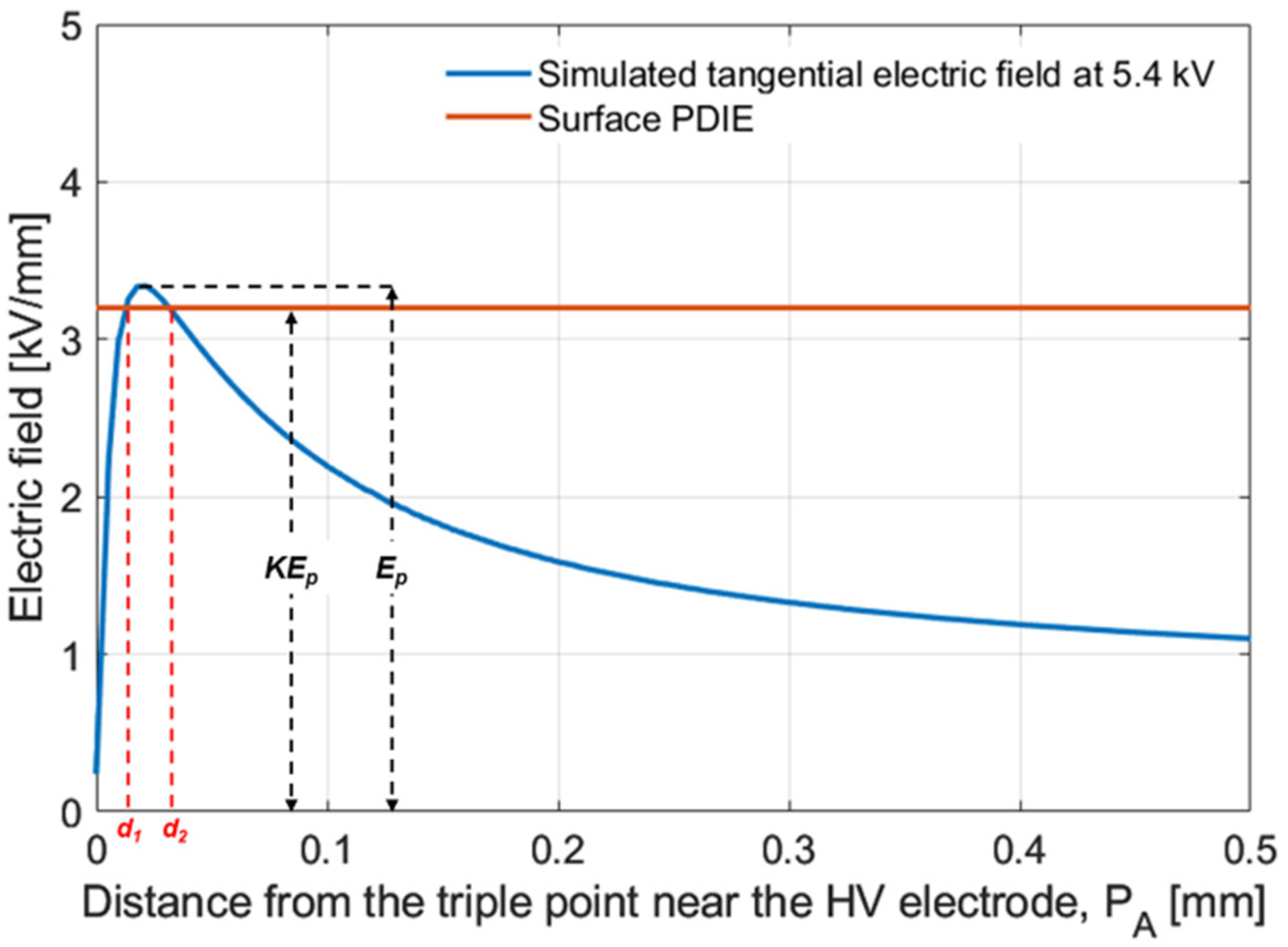
if the electrical field is uniform; otherwise., , decreasing as the field divergence at increases. Values of typically occur for insulation surface sub-systems, where the field divergency at triple points (electrodes or impurities) may be large.
An expression for
which works in the case of surface discharges, obtained based on the electric field gradient at the triple point, and, thus, on the effective streamer length, is given by [
23,
24] as follows:
where
and
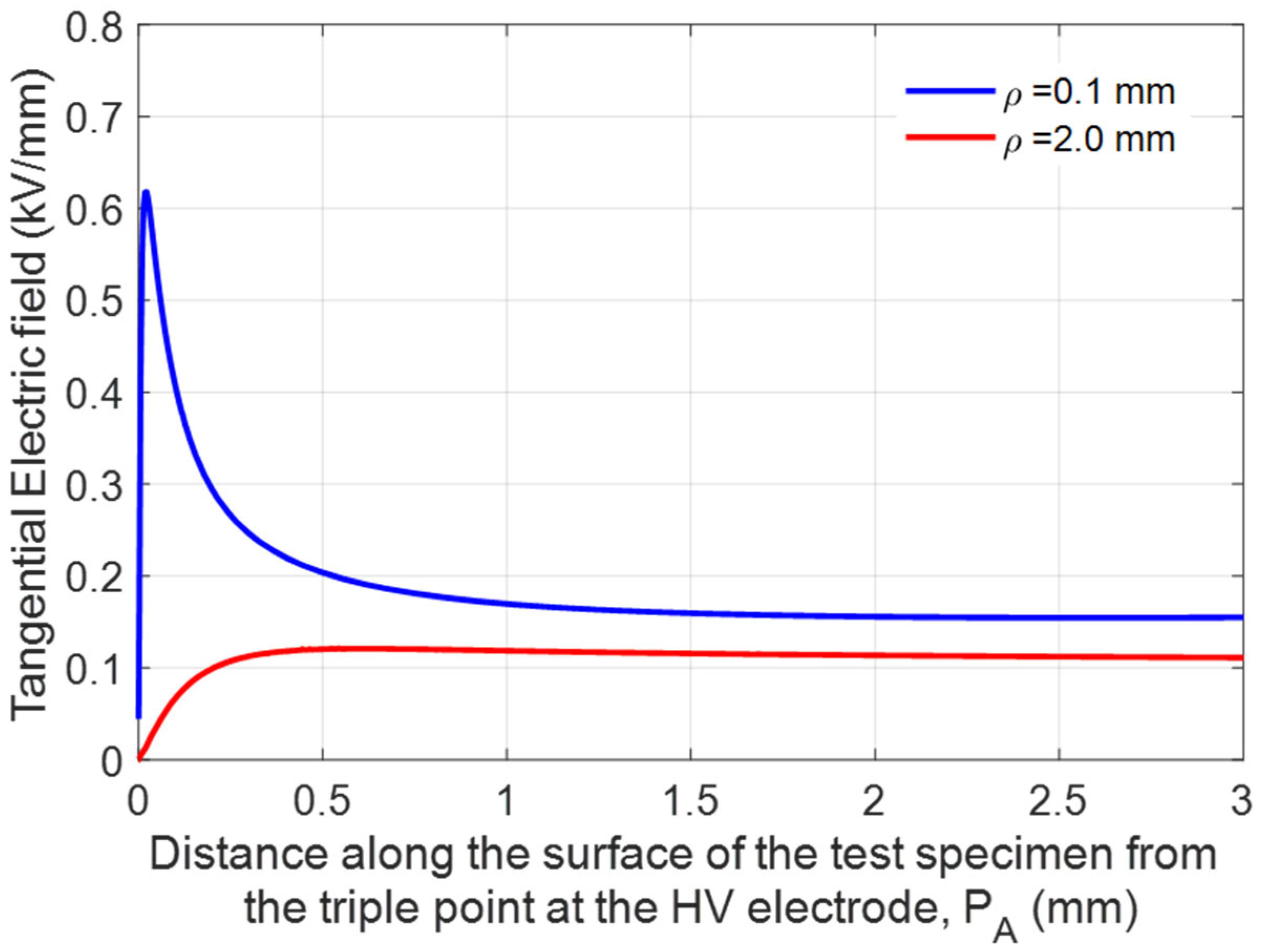
is the peak value of the tangential electric field, as shown in
Figure 1.
Calculation of the electric field distribution at the defect (or triple point) location is also the way the PDIV can be estimated from the PDIE of Equation (3): the supply voltage value at which the product
matches the inception field value provided by Equation (3) is the PDIV. The value
has been determined empirically through extensive experiments performed on insulation systems with artificially developed defects of known geometry and location [
11,
14,
29]. The PDIV estimate thus obtained can be then compared for any type of insulation system and defect with that provided by the Paschen law, Equation (2).
3. Model Validation
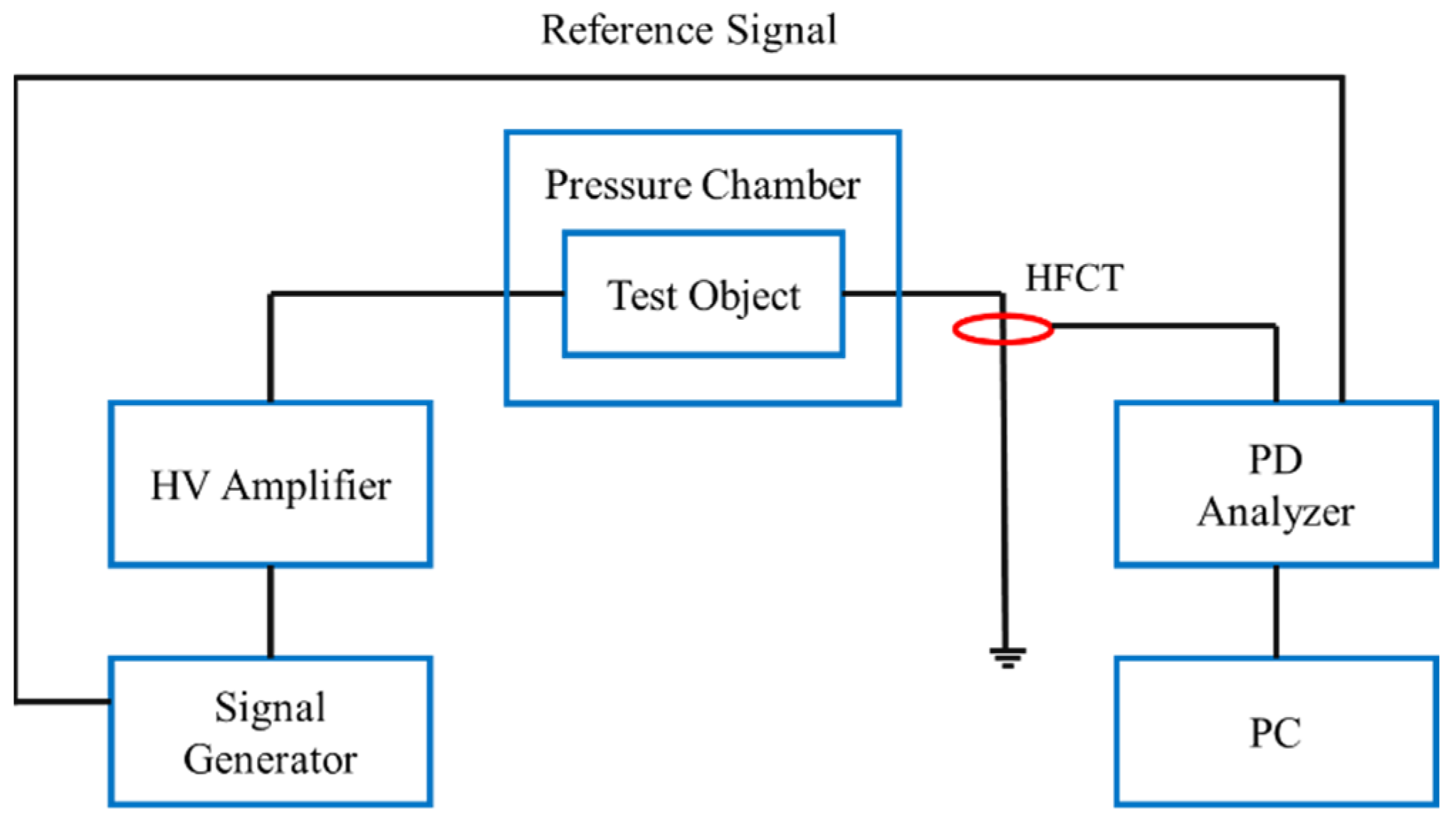
PD testing was performed on simple insulation system geometries to validate those PDIV estimates provided by models (2) and (3). The test circuit was typical for PD detection, as shown in
Figure 2. A 60 Hz sinusoidal AC voltage was applied and increased in steps of 50 V until PD inception (i.e., repetitive occurrence of PD according to IEC 60270 [
30]). An innovative PD detection system, endowed with an innovative software (that follows the Separation, Recognition and Identification (SRI) algorithm [
31]) which is able to acquire and analyze PD pulses (after noise rejection) automatically, as well as provide the likelihood of PD type (i.e., surface, internal and corona), was used to measure the PDIV using a high-frequency current transformer, HFCT, (Rugged monitoring, Quebec, Canada; Model: HSENS-H, 0.1-25 MHz bandwidth) as the PD sensor [
11,
31].
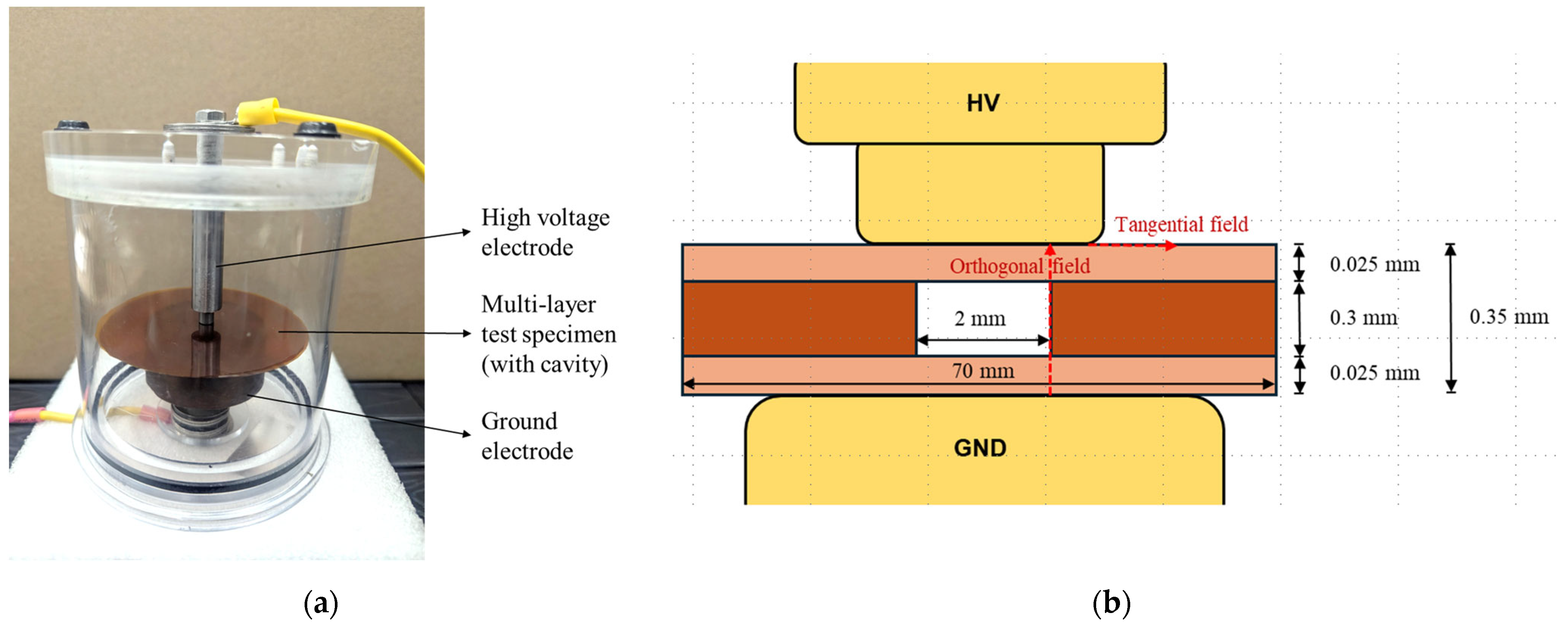
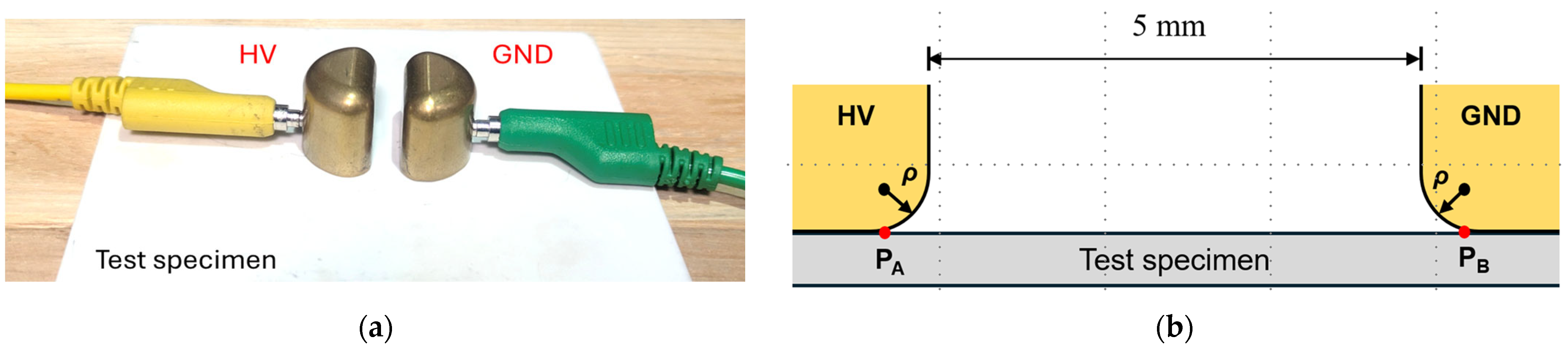
Figure 3 and
Figure 4 display the test objects used to compare and validate the models. Three layers of flat specimens of polymeric materials were used to generate internal PD in a cylindrical cavity carved in the middle layer,
Figure 3. Two cavity heights were considered. Surface discharges were generated by two electrodes placed on the surface of one polymeric flat specimen at a variable distance (creepage). The electrode shape was designed in order to generate, at the triple point P
A, surface discharges at lower voltage than gas discharges,
Figure 4 [
29].
PD tests were performed in chambers able to reduce the pressure down to 0.01 bar and increase it up to 10 bar, endowed with bushings to reach up to 40 kV, temperature and humidity control.
Figure 5 and
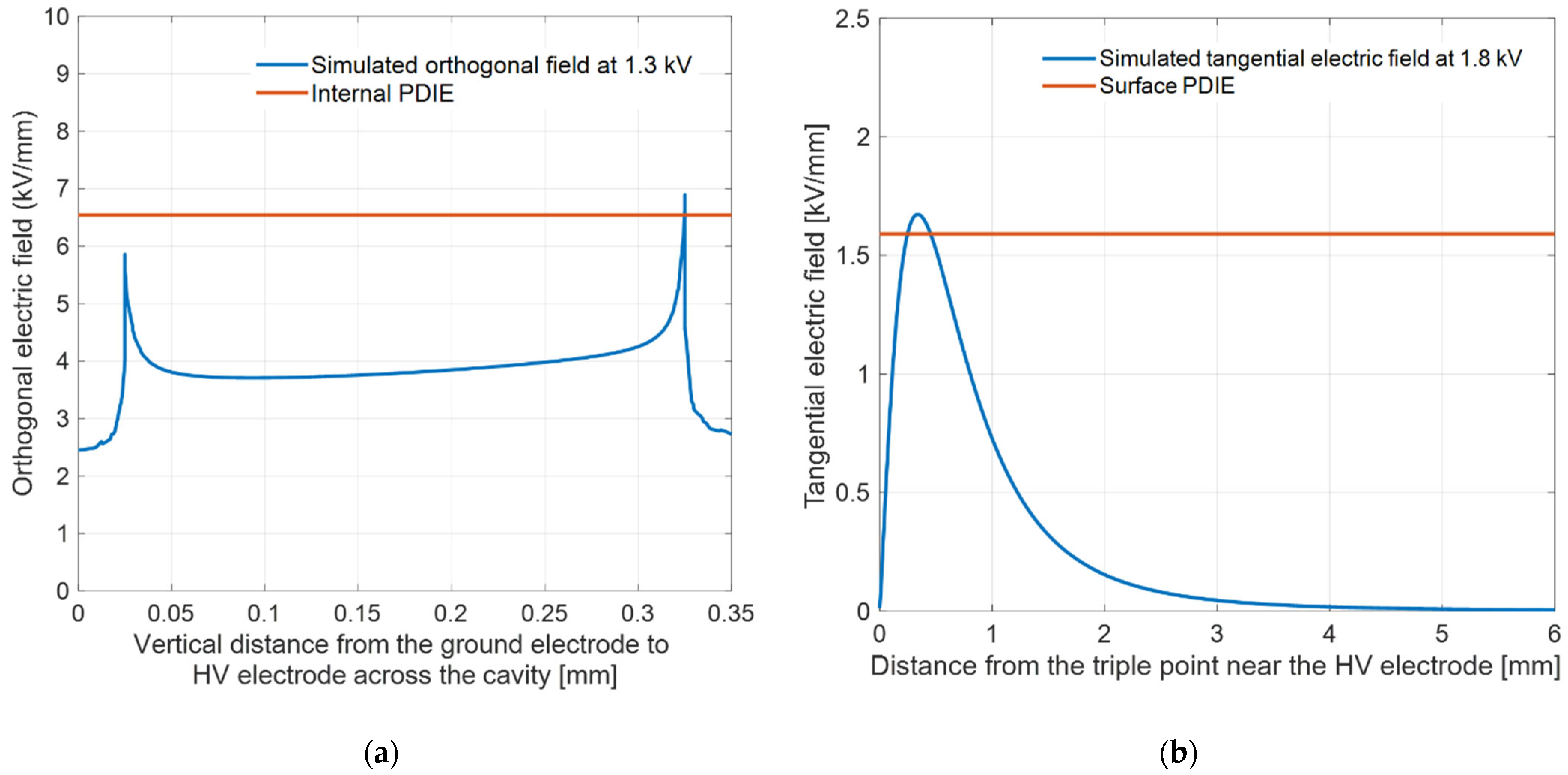
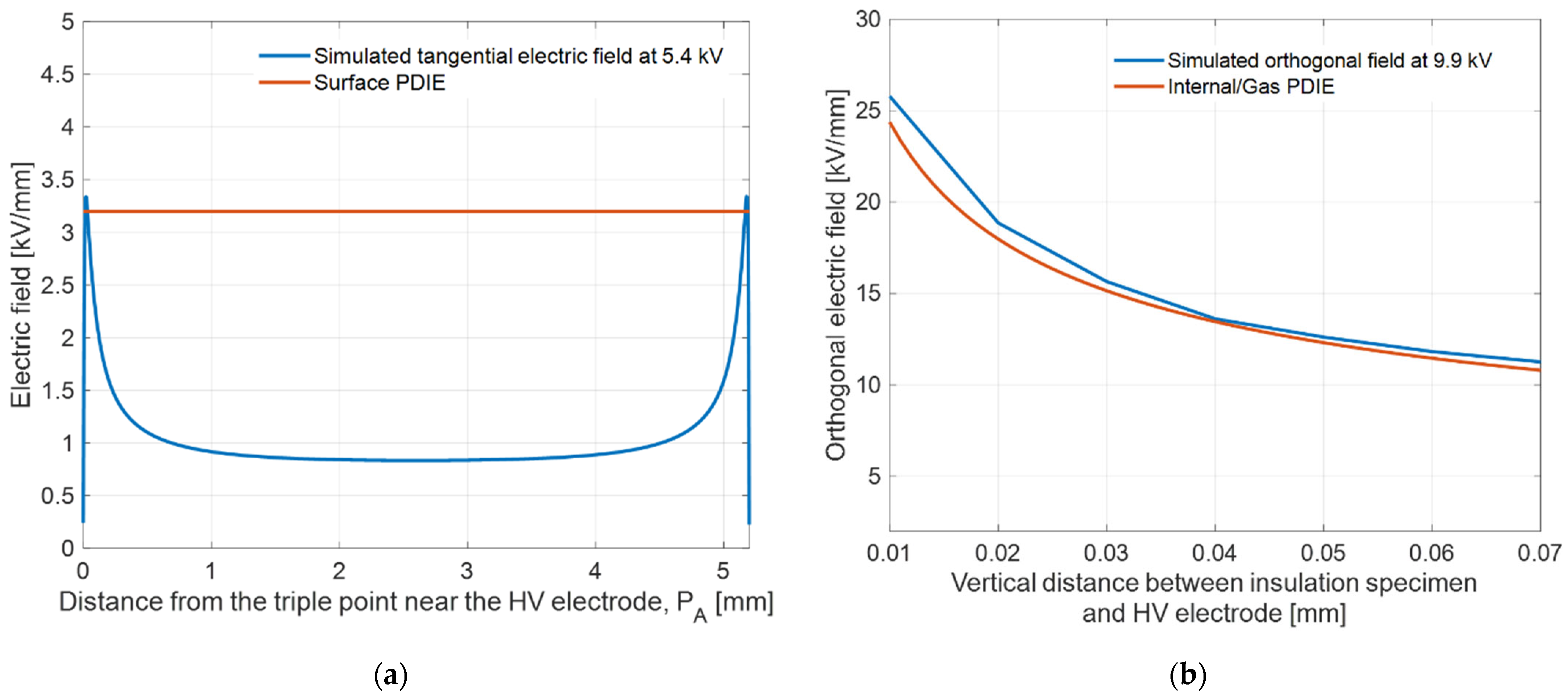
Figure 6 display the electrical field profile and model (3) plot at the PDIV value, that is, the voltage level at 95% of the peak value of the field profile intercepts the PDIE estimate provided by the model. The electric field distribution was simulated by COMSOL 6.3 and the mesh used in the present study for simulation was refined and optimized to accurately represent the simulated field profile. Indeed, the mesh was smaller near the cavity boundary (in the case of an internal test object,
Figure 3) and electrodes (for a surface test object as in
Figure 4). A minimum mesh element size of 1 µm was adopted to prevent interface spikes and ensure numerical stability.
As shown in
Figure 5, due to the different parameter values of model (3) for the gas and surface discharges (as in
Table 1), the internal PDIV for the test object depicted in
Figure 3, that is, PDIV
internal = 1.3 kV, is lower than that of PDIV
surface = 1.8 kV, as wanted. Similarly, for the surface test object (as in
Figure 4),
Figure 6 highlights that the PDIV
surface = 5.4 kV is significantly lower than that of PDIV
internal = 9.9 kV. This confirms the capability of the test objects displayed in
Figure 3 and
Figure 4 to generate internal and surface defects, respectively.
Notably, the electric field is not uniform inside the internal defect (
Figure 3), since the cavity has a lower relative permittivity value than that of the surrounding insulation specimen. This leads to the electric field intensification at the interface of the cavity and insulation specimen, as shown in
Figure 5a, which might be effective in surface charge conduction (being effective, e.g., in recombination or depletion of the space charge accumulated by a previous PD pulse), but it would not influence the discharge mechanism inside the cavity.
4. Experimental Results and Discussion
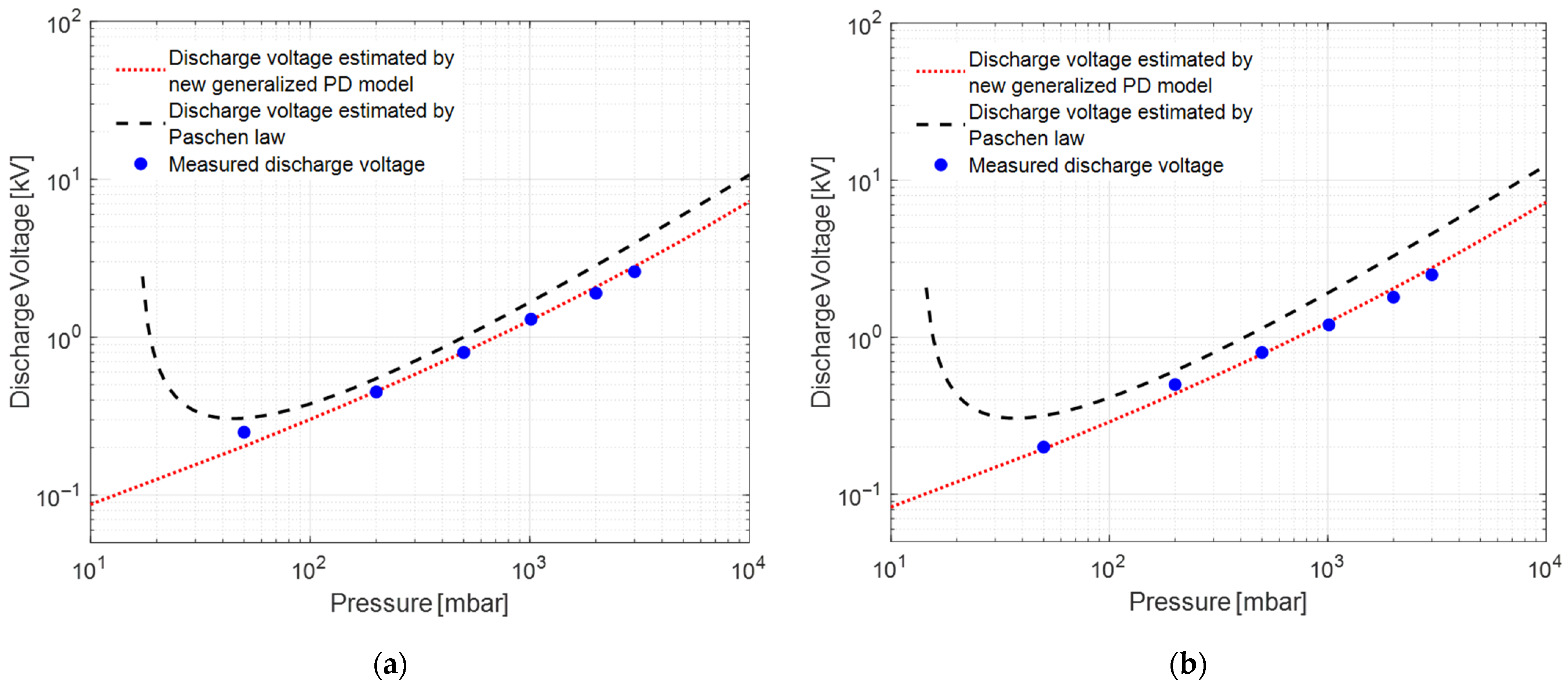
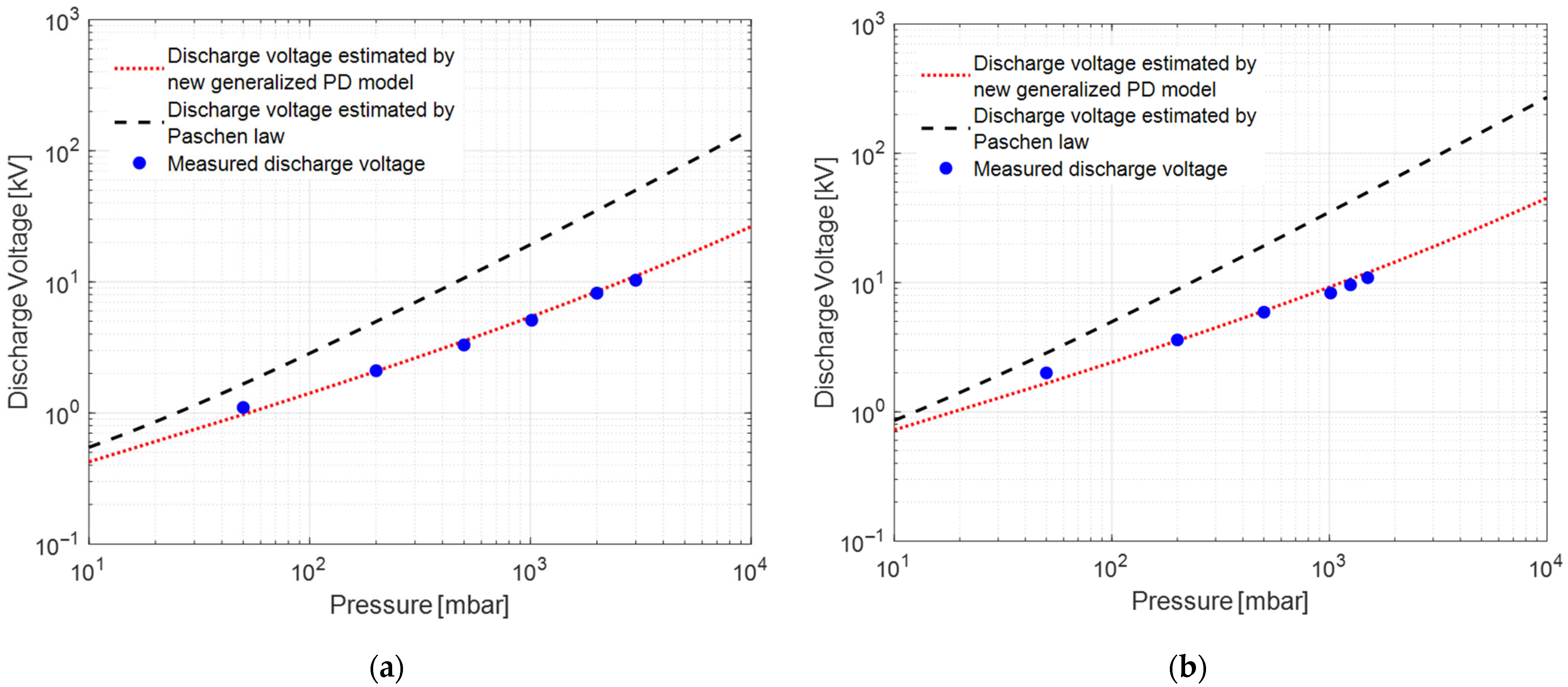
The estimated PDIV values for the two test objects in
Figure 3 and
Figure 4, at different pressures and for a cavity height (
Figure 3) of 300 μm and creepage distance of 5 mm (
Figure 4), using models (2) and (3), are reported in
Table 2 and
Table 3, together with the mean measured PDIV values.
Figure 7b and
Figure 8a depict the model plots for these experimental conditions, referring to the Paschen law and the model (3), and for internal or surface discharges, respectively.
Figure 7a and
Figure 8b correspond to a cavity height and creepage distance of 250 µm and 10 mm, respectively. For the test configuration presented in
Figure 3,
(almost a unform field in the internal cavity), whereas for the test object depicted in
Figure 4, with a creepage distance of 5 mm and 10 mm, the
value is estimated as 0.004 and 0.002, respectively.
The general comment, based on
Figure 7 and
Figure 8 and
Table 2 and
Table 3, is that depending on the pressure, the Paschen law can provide estimates that can be remarkably approximated, while the new model generally provides very good fitting to the experimental results, for both internal and surface PDs, at any pressure in the test range. As an example, for internal PD estimates from the Paschen law as larger than the experimental values depending on the pressure, from 80 to 20% (maximum and minimum deviation). Only at 0.2 bar are the Paschen estimates quite close to the measurements. Likewise, for surface PD, the deviation goes from 370 to 55%, where the minimum value corresponds to 0.05 bar.
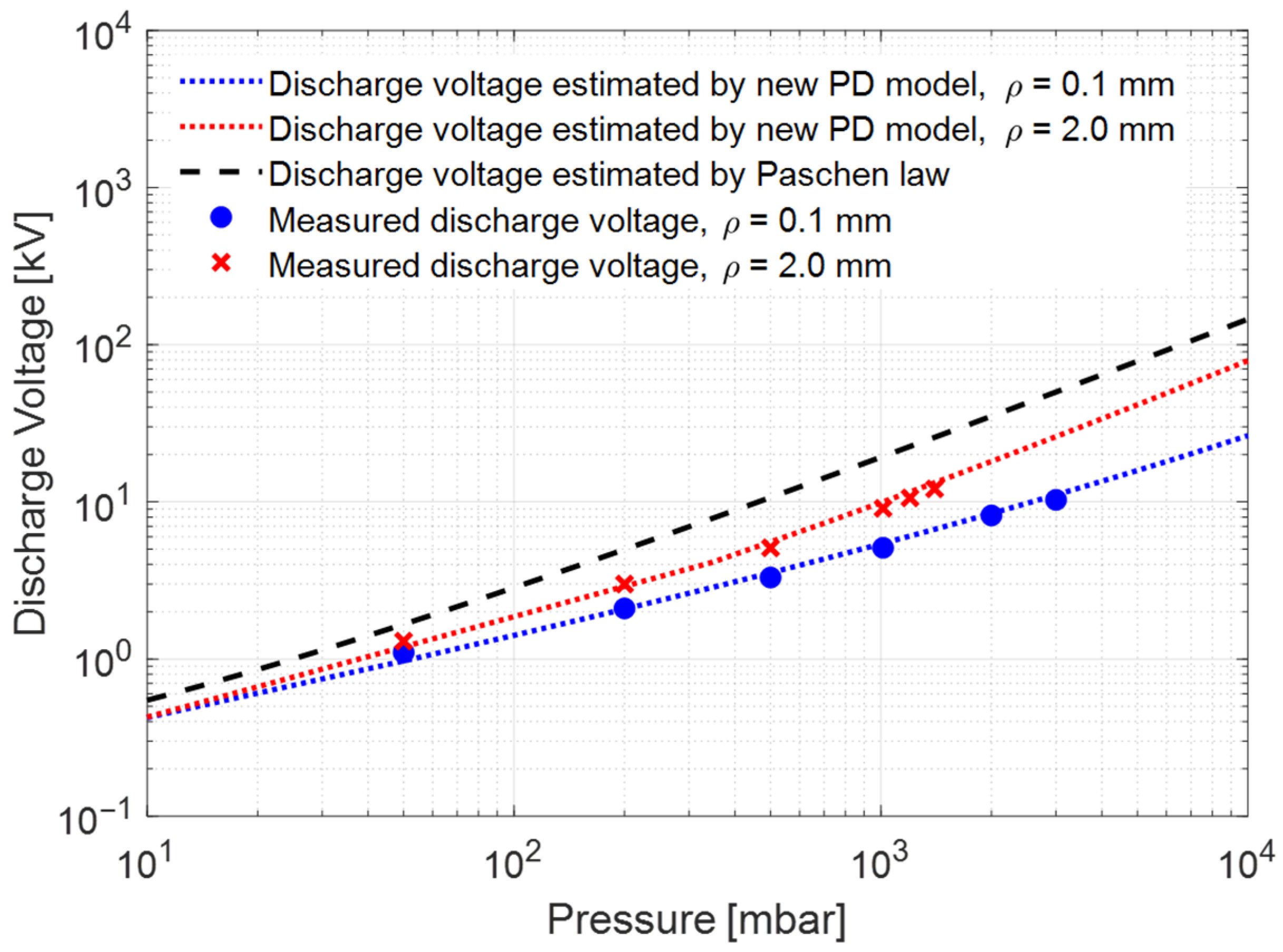
Focusing on the PDIV behavior under variable pressure levels for surface discharges, using the test object of
Figure 4, electrodes with different curvature radius (
ρ = 0.1, 2 mm) were considered. The extent of the electric field profile divergency on the insulation surface, thus
, varies with the electrode contour radius: see
Figure 9. The distance between the electrodes (creepage distance) was constant at 5 mm. As displayed in
Figure 9, the tangential electric field gradient from the triple point, P
A, decreases with the increasing curvature radius of the electrodes.
Figure 10 shows that, interestingly, when the field divergency at the triple point decreases, that is, the field distribution becomes more uniform at the triple point (i.e., as the curvature radius increases), the measured PDIV values tend to approach the Paschen estimates. On the other hand, the PDIV estimates from model (3) are in good agreement with the measured values irrespective of the curvature radius. The difference for surface discharges between the Paschen law and new model remains significantly large for any surface field distribution, highlighting that the Paschen model cannot, in general, provide accurate estimates of the surface discharge PDIV. Therefore, it can be speculated that while the new model can be a solid, consistent tool for designing PD-free insulation systems in a specified range of pressures, the use of the Paschen law could often provide an inaccurate PDIV forecast, generally overestimated, which may result in a dramatic and unexpected reduction of system life/reliability. Indeed, if, for example, an insulation system surface is designed as PD-free, for a creepage distance of 5 mm and triple point curvature radius ρ = 0.1 mm, at 100 mbar, under a supply voltage of 3 kV, while its real PDIV is 1.2 kV (
Figure 8a), the insulation system life would be much shorter than that specified, most likely months rather than tens of years.
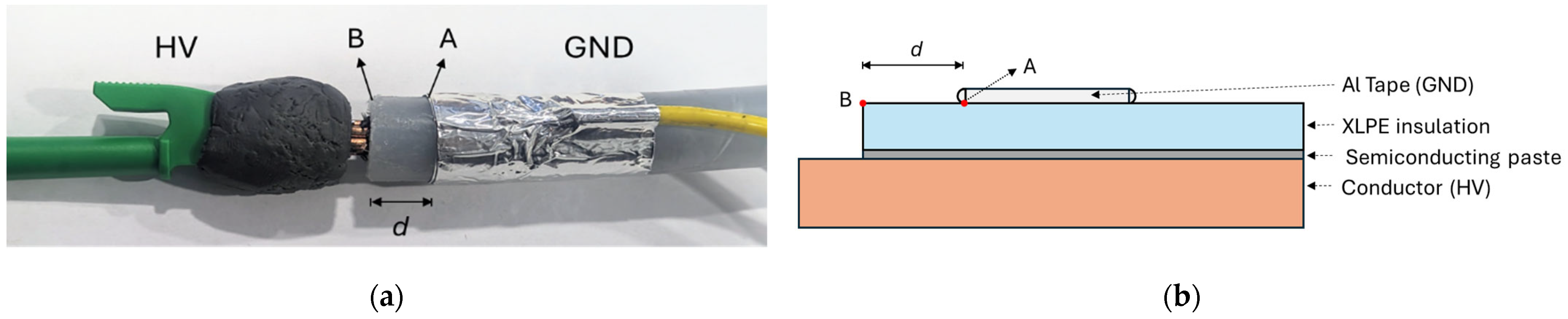
A further validation with a practical insulation system was carried out on an MV cable where a surface artificial defect was created (by taping aluminum foil [
8]),
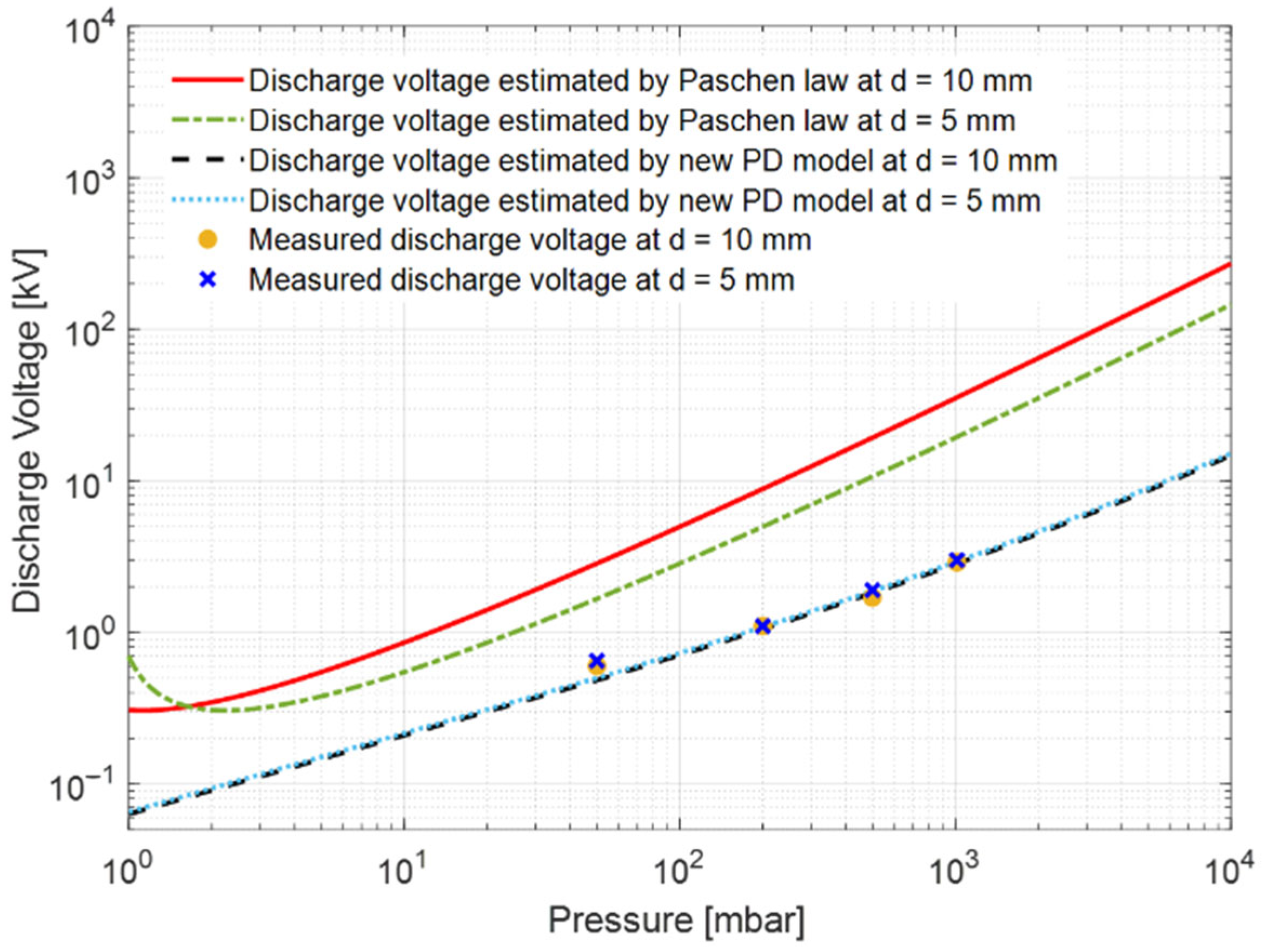
Figure 11, with two creepage distances, that is, 5 and 10 mm (the curvature radius of the tape at the triple point is 0.06 mm). The results are summarized in
Figure 12. As can be seen, it is once more highlighted that while model (3) fits well the experimental mean PDIV values, the Paschen law provides wrong predictions, with overestimates almost larger than 1 order of magnitude.
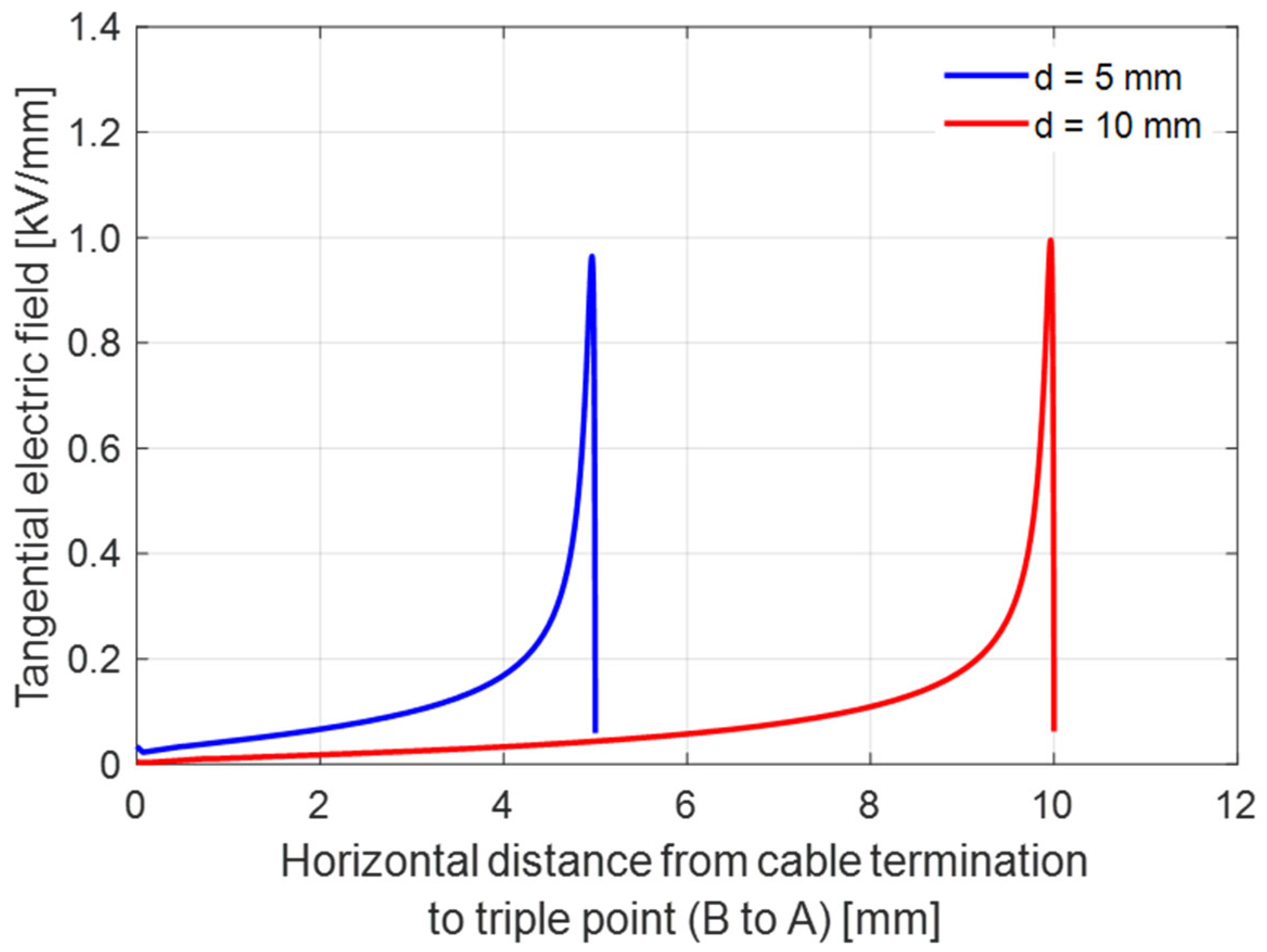
Going into more detail, it is interesting, certainly surprising, to observe from
Figure 12 that the PDIV (at constant pressure) does not change significantly with the distance,
d (creepage). As seen in the electric field profiles in
Figure 13, the peak value of the electric field does not vary noticeably with
d. On the other hand, the PDIE (calculated from model (3)) has small changes with creepage since, in spite of the increasing
d,
keeps a very low value (thus the product
in the denominator of model (3) is almost constant). In summary, since the peak value of the electric field does not vary greatly with
d and the PDIE is almost constant, increasing the creepage distance does not actually increase the PDIV, which is in contrast with the output provided by the Paschen law. This result highlights once more that the concept of creepage and clearance, as used to design surface insulation, may not guarantee the achievement of a specified life when significant electric field gradients occur on the insulation surface. This may be exacerbated when power electronic components are designed, where the distances between metallic parts are minimal, the field gradient is maximum, and the type of voltage waveform is impulsive with an extremely fast rise time.
5. Conclusions
A perhaps surprising outcome of this research work is that the Paschen law could not be effective and, perhaps, should not be used in estimating the PDIV of insulation systems at variable pressure. This could be a significant limitation in the development and manufacturing of insulation systems, particularly in aviation and aerospace applications. The often largely overestimated PDIV values provided by the Paschen law, especially in the case of surface discharges (but also with internal defects discharges driven by non-uniform field distribution) can be misleading in insulation system design, with a potentially large impact on the insulation life and reliability. If, for example, the real PDIV at 0.1 SAP of an aviation component (cable, motor) is 10 kV/mm and the prediction provided by the Paschen law would be 20 kV/mm, designing the insulation system at, for example, 15 kV/mm would severely increase the risk of PD inception and, consequently, accelerate extrinsic (partial discharge) aging and premature insulation failure.
The good news is that the newly proposed model for PDIE and PDIV estimates used in this paper, whose derivation is detailed elsewhere, fits very well with the experimental results in a broad range of pressure (from SAP to 50 mbar). Therefore, it can be successfully used to design insulation systems from SAP to higher and lower pressure levels.
The new PD model parameter values are independent of the type of solid insulation, but they depend on the gas involved in defects (within cavities or along insulation surfaces). Their variation with the environmental gas involved in defects (inside cavities or on insulation surfaces) does not seem to be significant when referring to air and CO2. Having, therefore, a model that is fully exploited as a function of the pressure and a procedure (the “three leg” approach) that correlates the partial discharge inception field, as estimated by the model, with the electrical field distribution, as calculated using, for example, a commonly available software, would allow PDIV estimates at the design stage to be achieved for any insulation system configuration and electrical asset component power, voltage and operating pressure range.