1. Introduction
Masonry bricks and blocks are among the most widely used construction materials worldwide due to their structural reliability, durability, and adaptability to a broad range of architectural and environmental conditions [
1]. Traditional ceramic masonry units, such as fired clay bricks and concrete-based blocks, have played a fundamental role in the development of the built environment for centuries [
2]. However, the production of these materials is associated with high energy consumption, intensive use of virgin raw materials, and significant greenhouse gas emissions, which increasingly conflict with global sustainability objectives and low-carbon construction strategies [
3].
The construction sector currently faces the dual challenge of reducing environmental impact while maintaining or enhancing the mechanical, thermal, and durability performance of building materials [
4]. Fired clay brick manufacturing relies on high-temperature firing processes, whereas concrete masonry units depend heavily on Portland cement, both of which contribute substantially to global CO
2 emissions [
5]. These constraints have driven growing interest in alternative ceramic and refractory composite materials that enable more sustainable processing routes, improved resource efficiency, and extended service life without compromising functional performance [
6].
In response to these challenges, novel ceramic and refractory composites have emerged as promising candidates for masonry applications [
7]. These materials include ceramics incorporating industrial by-products, agricultural residues, recycled ceramic waste, hybrid ceramic–polymer systems, and lightweight or porous ceramic architectures [
8]. Such systems allow partial or total substitution of natural raw materials while offering opportunities for microstructural engineering. Main microstructural parameters—such as porosity, pore connectivity, phase composition, and interfacial bonding—play a decisive role in governing compressive strength, elastic modulus, cracking behavior, thermal conductivity, acoustic attenuation, and environmental resistance [
9].
Alongside compositional innovation, advances in processing technologies have significantly expanded the design space of ceramic masonry materials [
10]. Low-temperature and no-fired ceramic systems, alkali-activated and geopolymer-based materials, and alternative sintering strategies have demonstrated strong potential for reducing energy demand and carbon footprint relative to conventional fired ceramics [
11]. At the same time, additive manufacturing and digital fabrication techniques have enabled unprecedented control over geometry and internal architecture, facilitating the development of lightweight, multifunctional masonry units with tailored mechanical and thermal performance [
12].
Despite the rapid expansion of research in this area, existing studies remain highly fragmented, often focusing on isolated material classes, individual waste streams, or specific performance metrics [
13]. As a result, a comprehensive understanding of how composition, processing route, microstructure, and performance interact in ceramic masonry systems is still lacking [
14].
In addition, the performance stability of waste-derived ceramic materials remains insufficiently understood, particularly due to the variability in composition and processing conditions associated with industrial and agricultural residues.
Similarly, the long-term durability and environmental resistance of alkali-activated and geopolymer-based masonry materials are still underexplored, especially under realistic service conditions involving moisture, thermal cycling, and chemical exposure.
In particular, there is limited consolidation of knowledge regarding the balance between mechanical reliability, thermal and acoustic functionality, long-term durability, and sustainability indicators [
15].
Furthermore, there is a lack of integrated comparative frameworks capable of simultaneously linking composition, processing routes, microstructure, and multi-functional performance across different ceramic systems.
This fragmentation complicates the systematic comparison of materials and hinders the translation of laboratory-scale advances into practical construction solutions [
16].
In this context, the present study provides several novel contributions. First, it proposes an integrated analytical framework based on established relationships from ceramic science to enable consistent interpretation and comparison of heterogeneous data reported in the literature. Second, it introduces a unified classification of ceramic and refractory masonry materials considering feedstock origin, processing route, and target performance. Third, it performs a multi-criteria assessment that simultaneously addresses mechanical, thermal, acoustic, durability, and sustainability-related properties. By combining systematic review methodology with analytical interpretation, this work offers a comprehensive and structured perspective that advances beyond conventional descriptive reviews and supports informed material selection and future research development.
Based on the identified research gaps, the present study is structured around the following research questions:
What ceramic and refractory materials are being developed for masonry bricks and blocks, and how can they be classified by composition and processing route?
How do composition and microstructure affect the mechanical performance of ceramic masonry materials?
How does porosity-driven microstructural design influence the thermal and acoustic performance of ceramic bricks and blocks?
How do traditional and novel ceramic masonry materials compare in terms of durability and resistance to environmental degradation?
What research trends, emerging technologies, and sustainability strategies are shaping the development of ceramic masonry materials?
To address these questions, the objective of this study is to conduct a systematic review following the PRISMA 2020 (Preferred Reporting Items for Systematic Reviews and Meta-Analyses) methodology [
17], which provides a standardized framework for ensuring transparency, reproducibility, and methodological rigor through the structured processes of identification, screening, eligibility, and the inclusion of scientific studies. This approach was adopted to enable a consistent and reliable selection of the relevant literature on ceramic and refractory composites used in masonry bricks and blocks. This review evaluates material classes, processing routes, mechanical performance, thermal and acoustic properties, durability, and sustainability implications, with the aim of supporting the selection and development of durable, energy-efficient, and environmentally responsible ceramic masonry materials for contemporary construction applications.
The rest of this paper is organized as follows:
Section 1,
Introduction, presents the general and specific background of ceramic and refractory masonry materials, the environmental and performance-related challenges associated with conventional bricks and blocks, and the motivation for evaluating novel ceramic composites under sustainability and circular economy perspectives.
Section 2,
Materials and Methods, details the PRISMA 2020-based systematic review protocol, including the literature search strategy, inclusion and exclusion criteria, study selection process, data extraction procedures, and quality assessment of the selected publications.
Section 3,
Results, synthesizes the main findings regarding the classification of ceramic materials for masonry applications, as well as their mechanical, thermal, acoustic, and durability performance, complemented by bibliometric insights into current research trends.
Section 4 provides a
Discussion that critically analyzes and compares the results in the context of sustainability-driven construction practices and emerging technologies, while identifying limitations, relationships between microstructure and performance, and main research gaps requiring further investigation. Finally,
Section 5,
Conclusions, summarizes the main insights of the study, highlights its methodological and scientific contributions, and provides recommendations for future research and the development of durable, energy-efficient, and sustainable ceramic masonry materials.
2. Materials and Methods
This systematic review adopts a structured methodological approach that combines qualitative literature synthesis with quantitative analytical interpretation. In addition to the bibliographic selection and screening process, a comparative analytical framework is employed to enable consistent interpretation of material properties reported across heterogeneous studies.
Due to the wide variability in raw materials, processing routes, specimen geometries, and testing methodologies used in ceramic masonry research, direct comparison of reported results is often challenging [
18]. To address this issue, the present review integrates well-established analytical relationships from ceramic science and construction materials engineering as a unifying methodological tool. These relationships are not introduced as new models but are used to normalize, contextualize, and interpret experimental data reported in the literature.
To ensure consistency in the interpretation of experimental results reported across diverse material systems, the present study incorporates an analytical perspective grounded in widely accepted relationships from ceramic science and construction materials engineering. This perspective supports the comparative assessment of mechanical, thermal, durability, and sustainability-related properties prior to trend analysis and systematic evaluation of the selected literature.
By combining analytical interpretation with structured literature analysis, the adopted methodology enables the identification of performance patterns and trade-offs across traditional and emerging ceramic masonry materials, while maintaining methodological rigor and coherence throughout the review process.
Similarly, this systematic review was conducted following the PRISMA 2020 guidelines. The review protocol was retrospectively registered in the Open Science Framework (OSF) to ensure transparency and reproducibility of the review process:
https://osf.io/cb2hy/ (accessed on 8 April 2026).
2.1. Study Selection and Exclusion Criteria
To ensure transparency, methodological rigor, and reproducibility, this systematic review followed a clearly defined selection protocol aligned with the PRISMA 2020 guidelines, which establish standardized procedures for the identification, screening, eligibility assessment, and inclusion of scientific studies in systematic reviews [
17].
The literature search was conducted in the Scopus database: TITLE-ABS-KEY ((“masonry brick*” OR “masonry block*” OR masonry) AND (ceramic* OR refractory OR geopolymer* OR “waste-derived ceramic*” OR porous OR lightweight) AND (sustainab* OR “circular economy” OR CO2 OR energy)) AND PUBYEAR > 2017 AND PUBYEAR < 2026 AND PUBYEAR > 2017 AND PUBYEAR < 2026 AND (LIMIT-TO (DOCTYPE, “ar”)) AND (LIMIT-TO (SUBJAREA, “ENER”) OR LIMIT-TO (SUBJAREA, “ENVI”) OR LIMIT-TO (SUBJAREA, “MATE”) OR LIMIT-TO (SUBJAREA, “ENGI”)) AND (LIMIT-TO (LANGUAGE, “English”)).
The search was limited to publications published between 2018 and 2025 and classified within the subject areas of Engineering, Materials Science, Environmental Science, and Energy. Only peer-reviewed research articles were considered.
This time range was selected to capture recent developments in sustainable ceramic masonry materials, particularly in response to increasing emphasis on circular economy strategies, decarbonization policies, and energy efficiency in the construction sector [
1,
5].
In addition, this period reflects the growing influence of environmental regulations and sustainability targets aimed at reducing CO
2 emissions and energy consumption in brick and construction material production [
19].
Although systematic reviews are increasingly common, the absence of strict selection criteria may lead to interpretative bias or weak conclusions. To avoid these limitations and maintain thematic coherence, explicit inclusion and exclusion criteria were established in accordance with the objectives of the present study, which focuses on sustainable ceramic and refractory materials applied to masonry bricks and blocks.
The studies were considered eligible when they met the following defined inclusion criteria: First, the articles had to include keywords related to masonry bricks or blocks; ceramic, refractory, or geopolymeric materials; and waste-derived ceramics, porous materials, or lightweight materials, as well as concepts associated with sustainability, such as the circular economy, CO2 emissions, or energy consumption. This previously delimited scope ensured alignment with the objectives of the review and was implemented through the search equation in Scopus. To maintain disciplinary coherence with research in sustainable construction and ceramic materials, only studies classified within the subject areas of Engineering, Materials Science, Environmental Science, and Energy were included. Regarding document type, the review was restricted exclusively to peer-reviewed research articles, prioritizing original scientific contributions presenting detailed methodological descriptions. Finally, only studies published in English were included to ensure linguistic consistency and homogeneity in the comparative analysis.
The exclusion criteria comprised research not directly related to ceramic or refractory materials for masonry, as well as studies focused on biomedical, electronic, or other non-structural ceramic applications. Document types other than research articles, such as conference proceedings and editorials, were excluded in order to maintain methodological consistency. Finally, articles that did not present an explicit link to sustainability, circular economy principles, CO
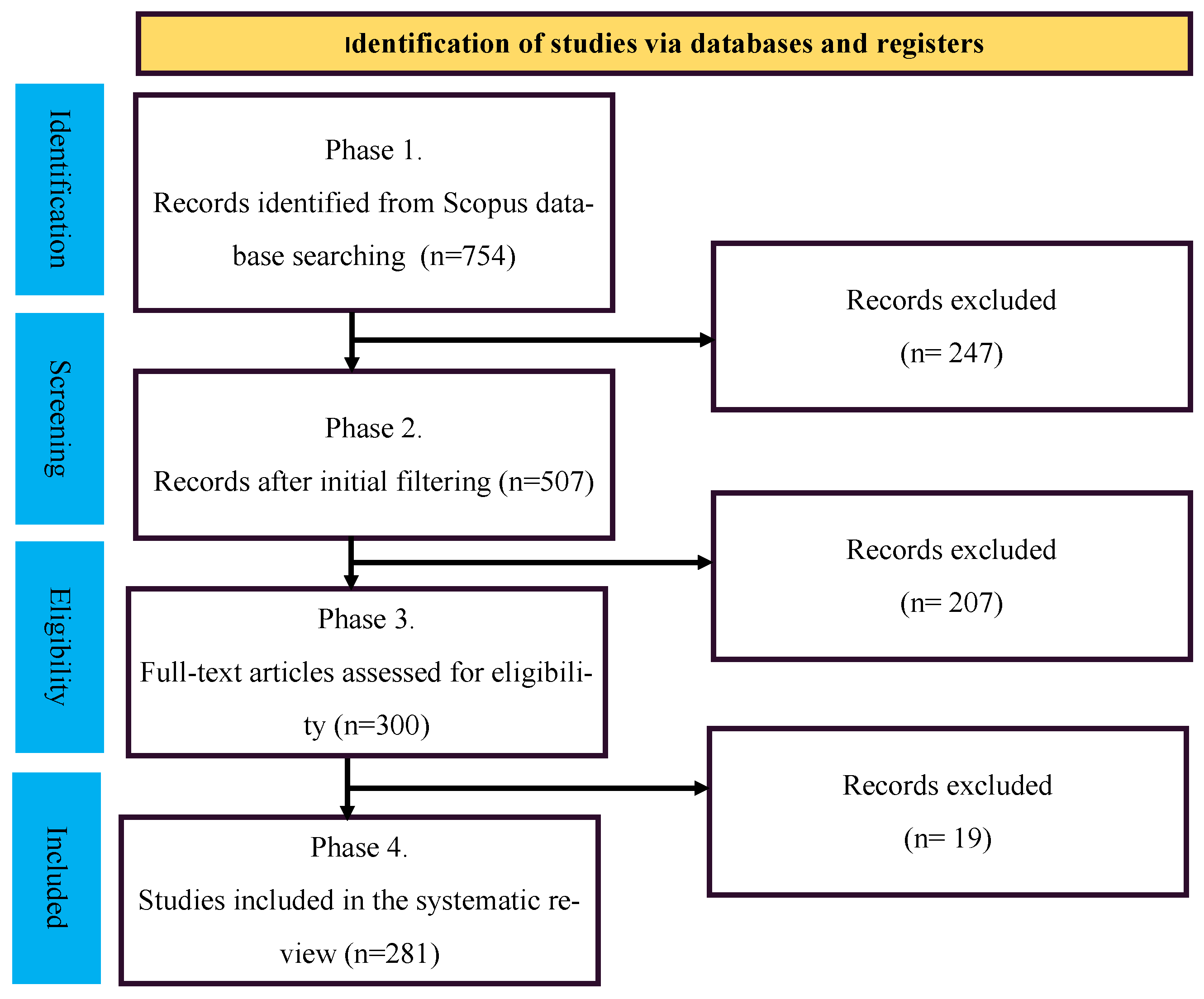
2 emission reduction, or energy efficiency in masonry materials were excluded from the final selection. The complete study selection process is illustrated in
Figure 1, which presents the PRISMA flow diagram detailing the identification, screening, eligibility, and inclusion phases.
The study selection process was developed progressively following the PRISMA phases. In the Identification phase, the search yielded 754 records, broadly covering research on sustainable ceramic and refractory materials, with no additional restrictions applied beyond the search equation. Subsequently, during the Screening phase, a preliminary filtering was conducted based on title, abstract, subject area, document type, publication year, and language, which led to the exclusion of 247 records due to lack of direct relevance to masonry materials, non-ceramic applications, or because they did not correspond to peer-reviewed research articles. Thus, 507 studies advanced to the next stage.
In the Eligibility phase, full-text review allowed the evaluation of methodological coherence and alignment with sustainability criteria, resulting in the exclusion of 207 studies. Finally, in the Inclusion phase, 19 additional studies were discarded after a final verification of quality and thematic relevance, leaving 281 studies in the systematic review. Overall, the procedure demonstrates a structured and transparent refinement that ensures a solid, coherent, and methodologically reproducible body of literature. In summary, the implemented selection strategy not only complies with PRISMA guidelines but also establishes a robust methodological framework that supports the scientific reliability of the entire review.
The progressive refinement of the literature, based on explicit, measurable, and thematically aligned criteria, transformed an initially broad universe into a highly specialized set of studies with direct relevance, analytical depth, and a clear sustainability focus. This process minimizes bias risks, strengthens internal consistency, and ensures that the derived conclusions are based on rigorously validated evidence. Consequently, the review not only provides a structured view of the state of the art but also constitutes a methodologically robust and reproducible reference for future research on sustainable ceramic and refractory materials applied to.
Likewise, although the number of selected studies may appear limited compared to broader bibliometric analyses, it reflects a highly specific and targeted research scope focused on sustainable ceramic and refractory materials for masonry applications.
The PRISMA-based filtering process prioritizes relevance, methodological consistency, and the availability of quantitative performance data, ensuring a coherent and comparable dataset rather than maximizing the number of publications.
Therefore, the selected dataset is considered adequate to support both bibliometric analysis and comparative evaluation within the defined research scope.
2.2. Quality Assessment of Selected Studies
To ensure the reliability, consistency, and scientific rigor of the systematic review, a qualitative assessment of the selected studies was conducted.
Each study included after the PRISMA screening process was evaluated based on the following criteria: (i) the methodological clarity and completeness of the experimental or analytical approach; (ii) direct relevance to ceramic and refractory materials used in masonry applications; (iii) the availability of quantitative data related to mechanical, thermal, acoustic, durability, or sustainability performance; and (iv) consistency with sustainability-related aspects, including energy consumption, CO2 emissions, or circular economy considerations.
Studies that did not meet these criteria were excluded during the eligibility and final inclusion stages of the review process.
This assessment procedure strengthens the internal validity and reliability of the review by ensuring that only methodologically robust and thematically relevant studies were considered in the analysis.
2.3. Analysis of Research Trends
In addition to the systematic selection of the literature following the PRISMA 2020 guidelines, a bibliometric analysis was conducted to identify the conceptual structure of the field and emerging research trends in sustainable ceramic and refractory materials for masonry applications. The analysis was carried out through a keyword co-occurrence mapping generated using VOSviewer software, (version 1.6.20) based on the final set of studies included after the PRISMA screening process.
VOSviewer was used to analyze the frequency and co-occurrence of keywords within the selected publications, enabling the construction of network maps that identify relationships between research topics and the formation of thematic clusters.
This method allows the visualization of the conceptual structure of the research field based on the strength of keyword associations and has been widely applied in bibliometric studies [
20].
The software was used to construct and visualize co-occurrence networks based on keyword frequency and linkage strength.
Bibliographic data, including titles, abstracts, and author keywords, were extracted from the final set of PRISMA-selected studies and used as input for the bibliometric analysis.
Keyword normalization was performed to merge equivalent terms (e.g., singular and plural forms, as well as closely related concepts) in order to ensure consistency in the co-occurrence network.
A minimum occurrence threshold was defined to exclude low-frequency terms and improve the readability and interpretability of the resulting visualization generated using VOSviewer.
In this study, a minimum occurrence threshold of 5 was selected to balance network clarity and representativeness of the most relevant terms.
The resulting clusters were interpreted based on co-occurrence relationships and linkage strength, allowing the identification of dominant thematic areas and emerging research trends within the field.
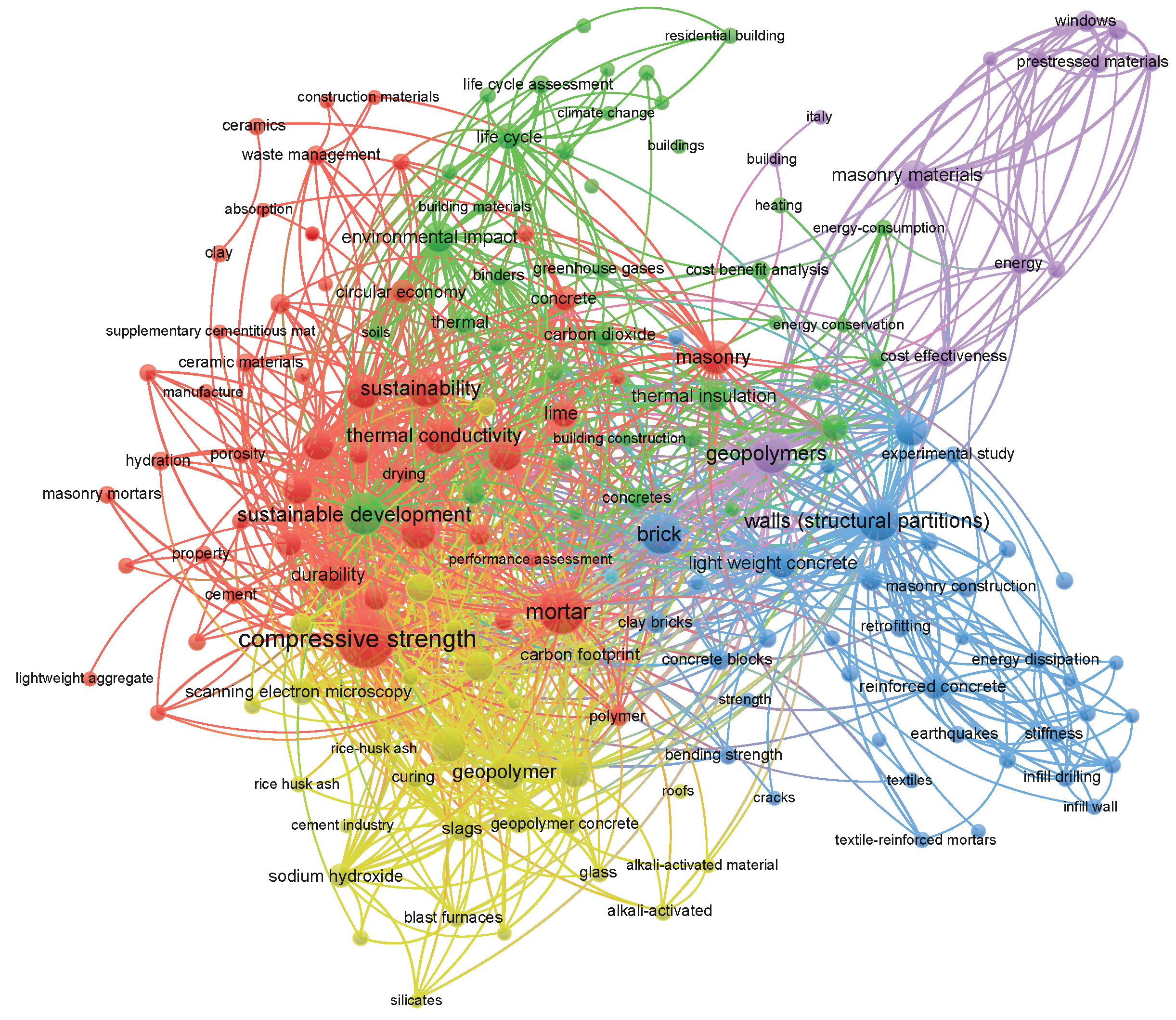
In this way, the bibliometric network of
Figure 2 reveals several interconnected thematic trends that define the current research landscape. The most prominent trend is dominated by terms associated with sustainable development, environmental impact, circular economy, and thermal conductivity. This indicates that environmental performance and resource efficiency have become the primary drivers of innovation in ceramic materials for masonry. The strong linkage between sustainability-related concepts and material performance parameters highlights the transition from approaches focused exclusively on structural capacity toward the development of multifunctional and eco-efficient materials.
Another relevant trend is centered on geopolymers and alkali-activated materials, reflecting the growing interest in unfired or low-temperature processed systems, often derived from industrial by-products. This research line shows a close relationship with studies aimed at optimizing mechanical performance, evidencing the search for a balance between enhanced sustainability and adequate mechanical properties for structural applications.
However, despite the growing research interest in geopolymer and alkali-activated systems, their large-scale industrial implementation remains limited due to challenges associated with scalability, process control, and economic feasibility [
21].
Additionally, the bibliometric network of
Figure 2 reveals significant interest in research integrating ceramic and composite materials within the field of structural and seismic resilience, where reinforced concrete-based materials and innovative reinforcement solutions emerge as a growing line of investigation applied to walls and masonry systems.
In a complementary manner, material innovation is increasingly evaluated using integrated sustainability metrics rather than isolated laboratory properties. This is evidenced by the presence of studies related to life cycle assessment, energy consumption, and cost-effectiveness, reinforcing a holistic approach to material performance evaluation.
Finally, keywords associated with microstructure and durability, such as porosity, shrinkage, hydration, and property durability, establish direct links between functional performance and processing routes, supporting the analytical framework adopted in this review for the normalization and comparative interpretation of properties.
Overall, the bibliometric results confirm a clear transition in masonry ceramics research from traditional dense fired systems toward waste-derived materials, porous systems, and alkali-activated materials, strongly aligned with circular economy principles and decarbonization strategies. The network also highlights the interdisciplinary convergence of materials science, environmental engineering, and structural engineering, which justifies the integrated analytical approach adopted in this systematic review.
2.4. Analytical Framework for Property Comparison
Given the heterogeneity of ceramic and refractory materials reported in the literature for masonry bricks and blocks, a unified analytical framework was adopted to support the systematic comparison of mechanical, thermal, durability, and sustainability-related properties. Rather than proposing new constitutive or predictive models, this review employs well-established analytical relationships widely used in ceramic science and construction materials research to interpret and normalize data reported across different studies.
The selected relationships describe the influence of microstructural parameters, particularly porosity and density, on main functional properties, including compressive strength, elastic modulus, thermal conductivity, and water absorption. These equations provide a consistent basis for discussing performance trends among traditional fired ceramics, waste-derived ceramic systems, geopolymer-based materials, and advanced ceramic composites reported in the literature.
Nevertheless, the use of these analytical relationships allows the normalization of heterogeneous experimental data reported across different studies, enabling consistent comparison between material systems with varying compositions, processing routes, and testing methodologies.
It is important to note that these relationships are employed as interpretative tools to support trend analysis rather than as predictive models, given the variability and complexity inherent to ceramic and refractory materials.
Furthermore, the parameters involved in these relationships (e.g., porosity, density, and microstructural features) may vary significantly depending on the material type, including conventional fired ceramics, waste-derived systems, and alkali-activated or geopolymer-based materials.
Therefore, the equations are used in a qualitative and comparative manner to identify general performance trends and trade-offs across different ceramic masonry materials.
2.4.1. Porosity and Bulk Density Relationships
Porosity is a primary microstructural parameter governing the mechanical, thermal, and durability performance of ceramic masonry materials [
22]. For comparative purposes, total porosity is commonly estimated from density measurements using Equation (
1):
where
P is the total porosity (–),
is the bulk density of the ceramic material (kg/m
3), and
is the true density of the solid phase (kg/m
3). This formulation is widely applied to fired clay bricks, alkali-activated ceramics, and porous ceramic composites, enabling direct comparison of microstructural characteristics reported across different studies.
Porosity values derived from this relationship are correlated throughout this review with mechanical strength, elastic modulus, thermal conductivity, and moisture-related properties.
2.4.2. Normalization of Mechanical Properties
To enable comparison of mechanical performance across studies employing different specimen geometries, testing configurations, and standards [
23], compressive strength values are interpreted using Equation (
2);
where
is the compressive strength (MPa),
is the maximum applied load at failure (N), and
A is the loaded cross-sectional area (mm
2). When available, strength data obtained in accordance with recognized standards (e.g., ASTM C62, ASTM C90, EN 771) are prioritized [
24].
For materials incorporating recycled aggregates, industrial residues, or pore-forming agents, reported strength values are analyzed relative to corresponding reference materials to assess the influence of compositional and microstructural modifications on load-bearing capacity.
2.4.3. Strength–Porosity Relationships
The reduction in mechanical strength with increasing porosity is a fundamental characteristic of ceramic materials [
25]. Some studies describing ceramic masonry units interpret this behavior using exponential relationships of the Ryshkewitch–Duckworth type (Equation (
3)):
where
is the effective mechanical strength,
is the strength of the fully dense material,
P is the total porosity, and
b is a material-dependent constant related to pore morphology and connectivity.
Although the specific parameters vary among material systems, this relationship provides a robust conceptual framework for comparing the mechanical performance of dense fired ceramics, lightweight porous bricks, and waste-derived ceramic composites. In this review, such relationships are used qualitatively to support the interpretation of experimental trends rather than for predictive modeling.
2.4.4. Elastic Modulus Reduction with Porosity
The elastic modulus of ceramic masonry materials is also strongly affected by porosity and microstructural architecture [
26]. A commonly employed empirical relationship describing this effect is expressed as shown in Equation (
4):
where
E is the effective elastic modulus of the porous ceramic,
is the elastic modulus of the dense material,
P is the total porosity, and
n is an exponent dependent on pore shape, size distribution, and connectivity.
This formulation is particularly useful for interpreting stiffness reductions in lightweight bricks, ceramics incorporating agricultural residues, and alkali-activated ceramic systems, highlighting the trade-off between reduced stiffness and improved thermal or acoustic performance [
27].
2.5. Sustainability and Performance Indicators
In addition to mechanical performance, the sustainability of ceramic masonry materials is closely linked to their thermal behavior, moisture transport properties, and environmental impact associated with material processing [
28]. To facilitate comparison among different material systems, simplified performance indicators commonly reported in the literature are adopted and discussed in this review.
2.5.1. Thermal Conductivity and Porosity
The effective thermal conductivity of porous ceramic materials is strongly influenced by the volume fraction of pores and the thermal properties of the constituent phases [
29]. A simplified mixture-based relationship frequently used for comparative analysis is given by Equation (
5):
where
is the effective thermal conductivity of the ceramic material (W/m·K),
is the thermal conductivity of the solid phase,
is the thermal conductivity of the pore phase (typically air), and
P is the total porosity.
While this expression does not explicitly account for complex pore morphology or anisotropy, it provides a consistent reference framework for comparing thermal insulation performance across traditional fired bricks, lightweight ceramics, and waste-derived porous systems.
2.5.2. Water Absorption as a Durability Indicator
Water absorption is widely used as an indicator of durability and moisture susceptibility in masonry materials [
30]. It is commonly defined as Equation (
6):
where
is the water absorption (%),
is the mass of the saturated specimen, and
is the mass of the dry specimen.
Higher water absorption values are generally associated with increased open porosity and enhanced moisture transport, which may negatively affect freeze–thaw resistance and long-term durability [
31]. In this systematic review, water absorption data are analyzed in conjunction with porosity and pore connectivity to assess environmental resistance trends.
2.5.3. Simplified Carbon Footprint Normalization
To support sustainability-oriented comparison among ceramic masonry materials, a simplified carbon footprint performance indicator is introduced based on normalized mechanical efficiency [
32] (Equation (
7)):
where
is the normalized carbon footprint indicator (kg CO
2-eq/MPa),
represents the greenhouse gas emissions associated with material production (kg CO
2-eq), and
is the compressive strength (MPa).
This indicator enables qualitative comparison of environmental impact relative to structural performance, highlighting trade-offs between mechanical capacity and carbon emissions. Although full life cycle assessment methodologies vary among studies, this simplified metric provides a coherent basis for discussing sustainability trends in ceramic masonry research.
The analytical relationships presented in this section do not constitute new models proposed in this work. Instead, they represent widely accepted formulations used in ceramic and construction materials research and are employed here to support the systematic interpretation and comparison of heterogeneous experimental data reported across the reviewed literature.
3. Results
3.1. Classification of Ceramic Materials for Masonry Bricks and Blocks
This section describes the main types of ceramic materials employed in masonry bricks and blocks, distinguishing between traditional ceramic systems and alternative materials based on industrial residues or advanced ceramic composites. Conventional masonry units, such as fired clay bricks and concrete-based blocks, represent well-established ceramic or ceramic-like systems characterized by adequate mechanical strength, durability, and widespread availability [
33]. However, their production is often associated with high energy consumption and significant environmental impact [
1].
From an industrial perspective, the transition from conventional ceramic production systems to alternative materials may require significant adaptation of existing manufacturing infrastructure, including modifications in raw material handling, mixing processes, and thermal or curing conditions [
34].
These requirements may represent technical and economic barriers for traditional manufacturers, particularly in terms of equipment retrofitting, process optimization, and cost-related constraints [
35].
In contrast, alternative ceramic materials have gained increasing attention due to their potential to enhance sustainability while maintaining satisfactory structural performance [
36]. These systems commonly incorporate industrial by-products, agricultural residues, recycled materials, or hybrid ceramic composites, enabling partial or total replacement of natural raw materials [
37]. From a materials engineering perspective, such approaches allow for tailoring the chemical composition and microstructure, particularly through controlled porosity and phase distribution, which directly influence mechanical and thermal properties [
38].
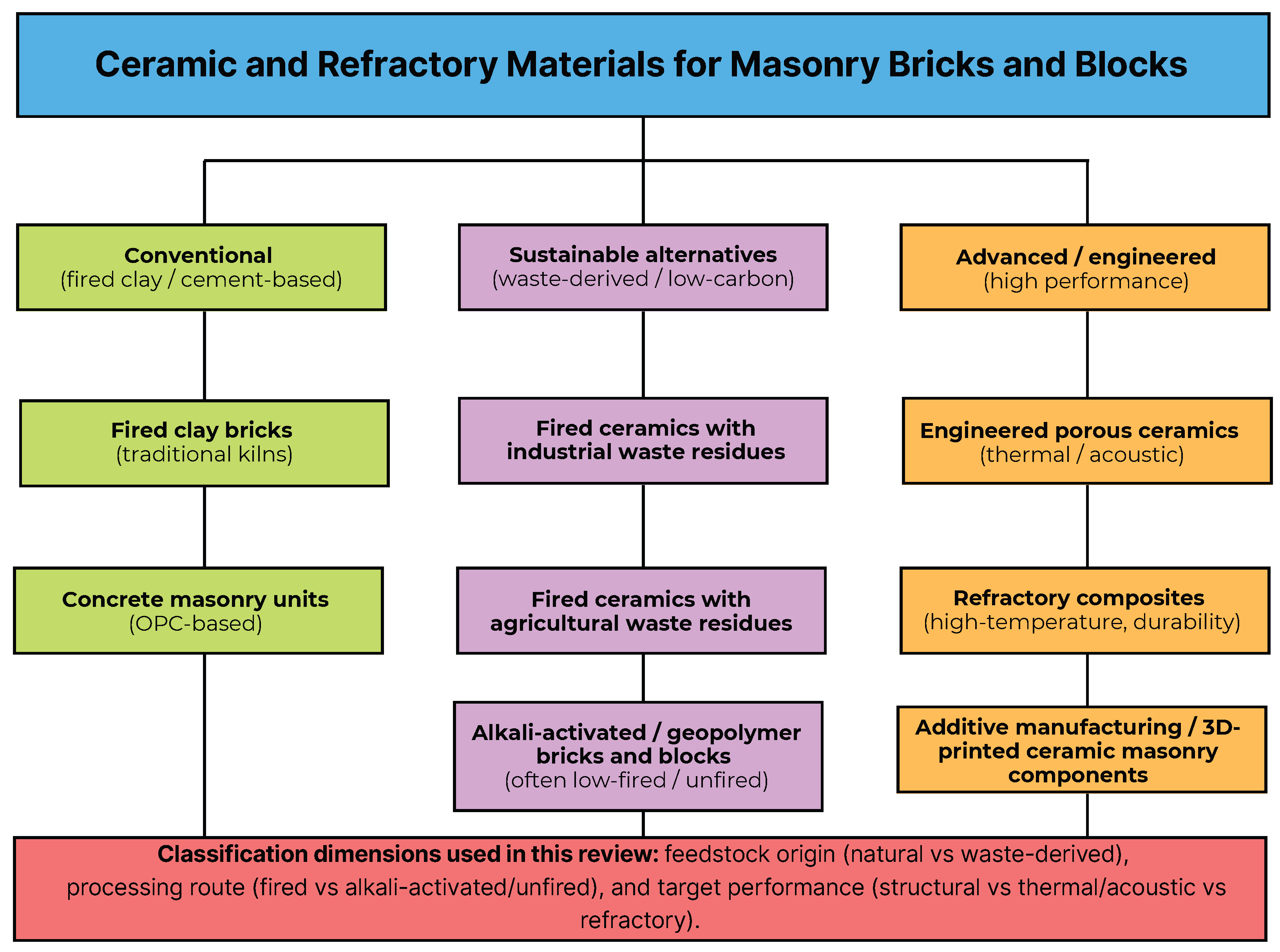
To provide a clear overview of the material families addressed in this review,
Figure 3 summarizes a conceptual classification of ceramic and refractory systems for masonry bricks and blocks according to feedstock origin, processing route, and target performance.
Figure 3 highlights three dominant families: conventional materials (fired clay and cement-based units), sustainable alternatives (waste-derived fired ceramics and alkali-activated systems), and advanced/engineered ceramics targeting specialized thermal, acoustic, or refractory performance. This classification supports the systematic comparison of reported properties across heterogeneous studies and facilitates the identification of trade-offs between structural performance and sustainability objectives.
Likewise,
Table 1 summarizes the main categories of ceramic materials used in masonry bricks and blocks, highlighting variations in composition, main properties, and typical applications. Special emphasis is placed on the balance between structural performance and sustainability, as well as on the emerging role of waste-derived and composite ceramic systems in low-carbon construction practices [
39,
40,
41,
42].
3.2. Mechanical Properties
This subsection compares the mechanical performance of masonry bricks and ceramic composite materials, with particular emphasis on compressive strength, elastic modulus, and cracking behavior. These parameters are critical for assessing the load-bearing capacity and structural reliability of ceramic masonry systems under service conditions [
47,
48,
49].
Conventional fired clay bricks and concrete-based masonry units generally exhibit compressive strength values sufficient for structural applications; however, their mechanical response is typically characterized by brittle fracture and limited energy absorption capacity [
48]. In contrast, ceramic composites incorporating recycled ceramic aggregates, industrial by-products, or alternative binder matrices often display modified mechanical behavior as a result of changes in microstructure, phase composition, and interfacial bonding [
50].
The incorporation of recycled ceramic aggregates and waste-derived constituents can lead to a reduction in compressive strength due to increased porosity; nevertheless, optimized formulations frequently achieve values that comply with or exceed relevant masonry standards [
51,
52]. Moreover, the presence of alternative matrices and hybrid phases has been shown to influence the elastic modulus and crack propagation mechanisms, in some cases promoting enhanced ductility and delayed crack initiation [
53].
The variability in compressive strength and elastic modulus observed across different material systems can be attributed to main microstructural parameters such as porosity, pore size distribution, and interfacial bonding [
54]. Higher porosity levels generally lead to reduced mechanical strength due to increased stress concentration and reduced effective load-bearing area. In contrast, improved particle packing and stronger interfacial bonding between phases contribute to enhanced mechanical performance [
55].
Additionally, differences in processing conditions and the incorporation of heterogeneous waste-derived materials introduce variability in phase composition and microstructural uniformity, which further influence mechanical behavior across studies [
56].
Table 2 summarizes representative mechanical properties reported for traditional and alternative ceramic masonry materials, illustrating the influence of material composition and processing route on load-bearing capacity and relative ductility. These results highlight the potential of ceramic composite bricks to balance mechanical performance and sustainability, particularly when recycled aggregates and engineered matrices are employed [
39,
40,
43,
46,
57].
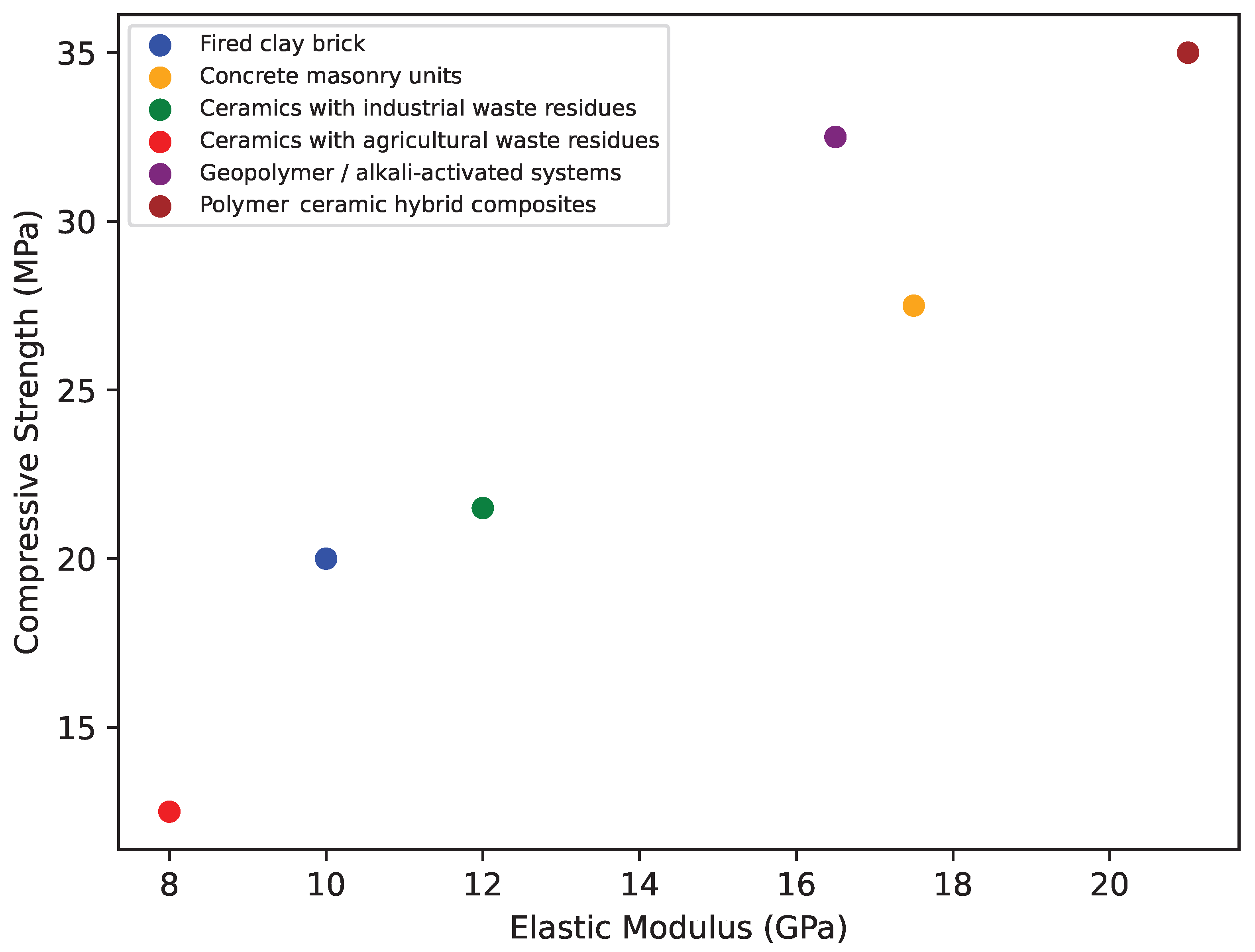
To further illustrate the relationship between mechanical parameters in ceramic masonry materials,
Figure 4 presents a comparative relationship between compressive strength and elastic modulus for representative material systems.
The data presented in
Figure 4 are derived from the ranges reported in
Table 2. For each material, a representative value was obtained by calculating the midpoint of the reported range for both compressive strength and elastic modulus. These midpoint values were used to define a single data point per material, ensuring consistency in the comparison across different material systems. Each point is associated with the corresponding literature references indicated in the
Figure 4.
This approach provides a simplified but consistent representation of the mechanical performance of the different materials, allowing direct comparison while maintaining traceability to the original literature sources summarized in
Table 2.
Figure 4 shows a general positive correlation between elastic modulus and compressive strength, reflecting the intrinsic relationship between stiffness and load-bearing capacity in ceramic materials. Conventional masonry units exhibit moderate values of both parameters, while sustainable alternatives such as waste-derived and geopolymer-based systems demonstrate comparable mechanical performance with variations linked to microstructural characteristics. Advanced and engineered materials tend to achieve higher stiffness and strength, highlighting the influence of composition and microstructural optimization on mechanical behavior.
3.3. Thermal and Acoustic Properties
This subsection summarizes the thermal and acoustic performance of different ceramic materials used in masonry bricks and blocks, highlighting the critical role of porosity and microstructural design. Thermal conductivity and sound attenuation are key functional properties for energy-efficient and acoustically comfortable buildings, particularly in the context of sustainable construction [
69].
Traditional fired clay bricks and dense concrete masonry units typically exhibit moderate-to-high thermal conductivity, which can limit their insulating performance in building envelopes [
70]. In contrast, ceramic materials engineered with increased porosity, lightweight aggregates, or waste-derived pore-forming agents generally show significantly reduced thermal conductivity [
71]. The presence of closed and interconnected pore networks disrupts heat transfer pathways, thereby enhancing thermal insulation [
72].
Acoustic performance is also strongly influenced by microstructural features [
73]. Porous ceramic materials, especially those with open porosity and tortuous pore structures, are effective in dissipating acoustic energy through viscous and thermal losses [
74]. As a result, such materials demonstrate improved sound absorption and noise attenuation compared to dense ceramics [
75].
Table 3 presents representative values of thermal conductivity, insulating capacity, and acoustic attenuation reported for traditional, alternative, and advanced ceramic masonry materials. Particular attention is given to porous ceramics specifically designed for thermal insulation and sound absorption, which offer multifunctional performance advantages for modern masonry systems [
39,
41,
44].
In this way, the differences in thermal conductivity reported across ceramic masonry materials are strongly influenced by porosity, pore connectivity, and the intrinsic thermal properties of the constituent phases [
41]. Materials with higher closed porosity typically exhibit lower thermal conductivity due to the insulating effect of entrapped air, whereas interconnected pore networks may facilitate heat transfer [
44].
Furthermore, the incorporation of industrial and agricultural residues can modify thermal performance by introducing secondary phases with distinct thermal properties, contributing to the variability observed across studies [
63,
64,
65,
79].
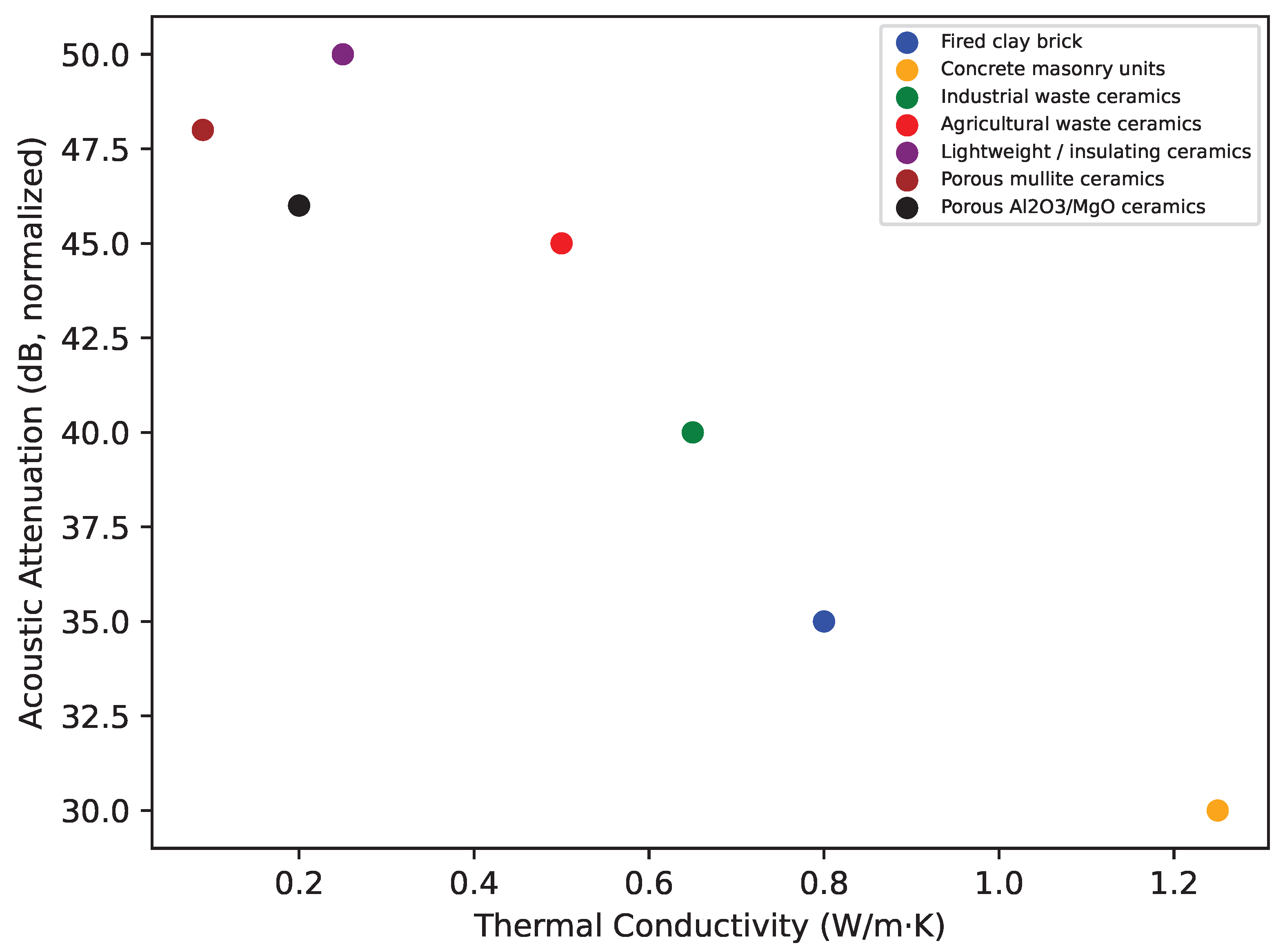
The relationship between thermal conductivity and acoustic attenuation is illustrated in
Figure 5, providing insight into the role of porosity-driven microstructural design in enhancing both thermal insulation and acoustic performance of ceramic masonry materials.
The data presented in
Figure 5 are derived from the ranges reported in
Table 3. For each material, representative values were obtained by calculating the midpoint of the reported ranges for thermal conductivity and acoustic attenuation when expressed in decibels. In cases where acoustic performance was reported using absorption coefficients, representative values were normalized to enable comparative visualization across different material systems.
As shown in
Figure 5, materials with lower thermal conductivity, typically associated with higher porosity, tend to exhibit improved acoustic performance due to enhanced energy dissipation within porous microstructures. Conversely, dense conventional materials display higher thermal conductivity and lower acoustic attenuation, highlighting the trade-off between structural density and multifunctional performance in masonry applications.
3.4. Durability and Environmental Resistance
This subsection examines the durability-related parameters that govern the long-term performance of masonry bricks and ceramic materials under service conditions. Main aspects include water absorption, resistance to moisture–drying cycles, thermal stability, and chemical resistance [
85]. These factors are particularly relevant for ceramic masonry systems exposed to variable climatic conditions, aggressive environments, and repeated thermal or hygric loading [
86].
Traditional fired clay bricks generally exhibit moderate water absorption and satisfactory durability in temperate climates; however, their long-term performance can be compromised by repeated moisture ingress and salt crystallization, which may lead to microcracking and surface degradation [
87]. Concrete-based masonry units typically show lower water absorption but may be susceptible to chemical attack and carbonation, especially in environments with elevated humidity or pollutant concentrations [
88].
Likewise, variations in durability-related properties are primarily associated with differences in pore structure, pore connectivity, and phase stability [
89]. Materials with higher open porosity tend to exhibit increased water absorption and moisture transport, which may reduce resistance to environmental degradation. Conversely, optimized microstructures with controlled porosity and stable phases can enhance long-term durability under service conditions [
90].
Alternative ceramic materials incorporating industrial or agricultural residues often display a wider range of durability behaviors, largely governed by porosity, pore connectivity, and phase composition [
91]. Increased open porosity can enhance moisture transport and water uptake, potentially reducing freeze–thaw resistance and increasing susceptibility to environmental degradation [
92]. Nevertheless, optimized formulations with controlled pore structures and stable ceramic phases have demonstrated adequate resistance to humidity–drying cycles and thermal exposure [
93].
Advanced and engineered ceramic systems, including dense oxide ceramics and tailored composite materials, generally exhibit superior chemical stability and thermal resistance [
94]. These materials can withstand aggressive environments and elevated temperatures with minimal degradation, making them suitable for demanding applications where long-term durability is critical [
95].
Table 4 summarizes representative durability and environmental resistance parameters reported for traditional and modern ceramic masonry materials, highlighting differences in water absorption, resistance to freeze–thaw cycles, moisture transport, and chemical attack. The comparison illustrates how both historical and contemporary ceramic systems respond to environmental stressors, providing insight into the design of durable and sustainable masonry materials [
39,
40,
85,
96].
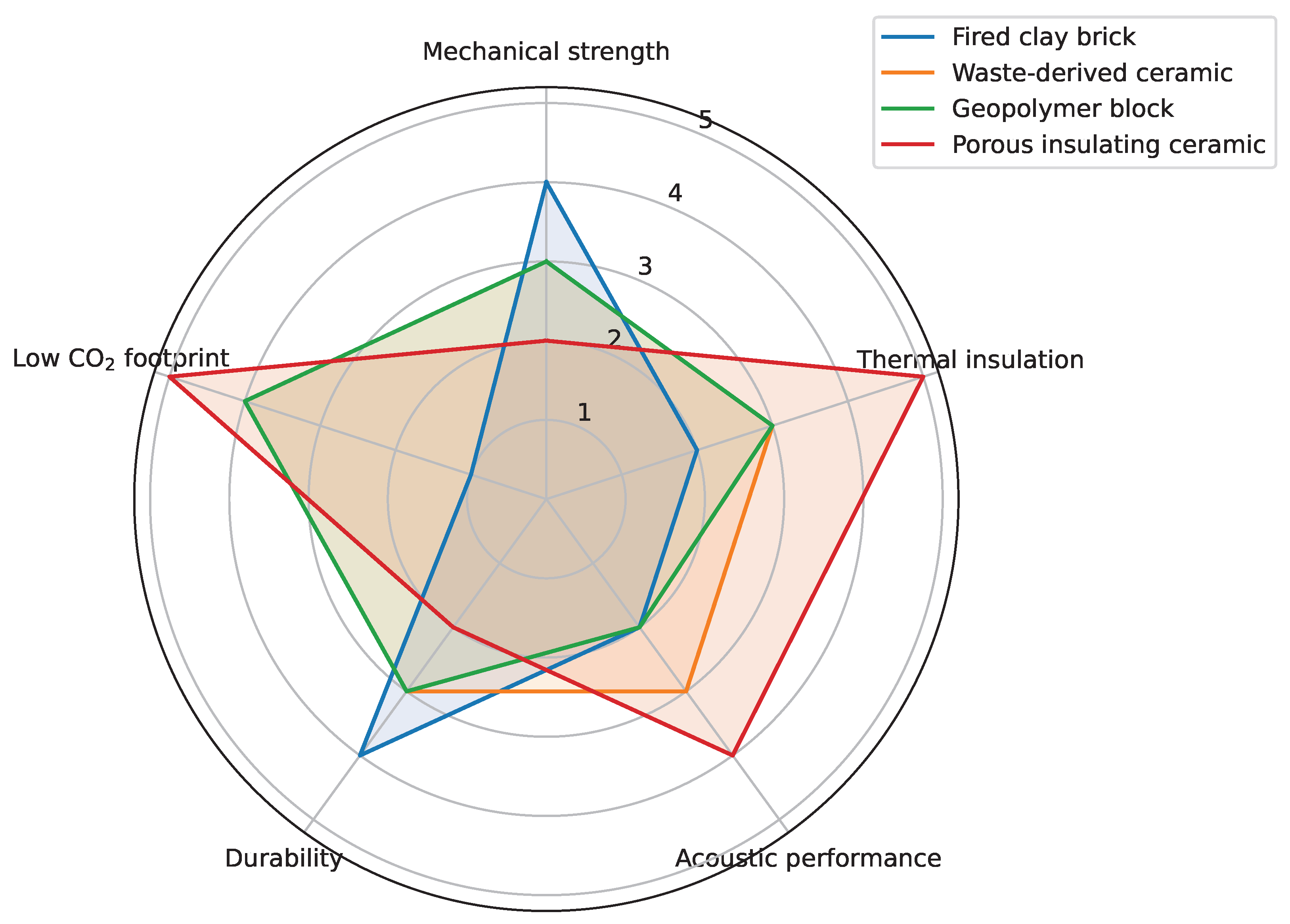
Figure 6 presents a qualitative comparative assessment of multifunctional performance based on the analysis of the literature selected through the PRISMA-based methodology. The scoring scale (1–5) represents normalized relative performance levels derived from reported trends in mechanical strength, thermal insulation, durability, acoustic behavior, and CO
2 footprint.
The assigned values do not correspond to direct experimental measurements but rather to a comparative interpretation of ranges and tendencies reported across multiple studies. Each material system was evaluated considering its overall performance profile, including mechanical properties, functional efficiency, environmental impact, and technological maturity.
This approach enables a holistic comparison across heterogeneous datasets and is intended to illustrate general performance trade-offs rather than to establish precise quantitative relationships.
The normalization criteria were defined to ensure consistent comparison across different material classes, where a score of 1 represents the lowest relative performance and 5 the highest within the range of values reported in the literature.
Figure 6 illustrates that no single ceramic system simultaneously maximizes all performance criteria. Traditional fired ceramics provide balanced mechanical strength and durability, while waste-derived and geopolymer-based materials exhibit improved sustainability indicators with competitive functional performance. Highly porous ceramics excel in thermal and acoustic behavior but display reduced mechanical capacity, emphasizing the need for application-specific material selection.
3.5. Bibliometric Analysis
In order to complement the experimental findings discussed in the previous subsections, a bibliometric analysis was conducted to examine the evolution of scientific research related to structural ceramic materials, waste-derived ceramics, and processing technologies for masonry applications. Bibliometric approaches provide a quantitative perspective on research activity, enabling the identification of publication trends, dominant thematic areas, and emerging topics within a given field [
101].
The analysis focuses on the peer-reviewed literature published over the last decade, a period characterized by a marked increase in interest in sustainable construction materials and circular economy strategies. Particular attention is given to the growing body of research addressing the incorporation of industrial and agricultural residues into ceramic masonry products, as well as to advances in low-energy processing routes and microstructural design.
Rather than emphasizing citation metrics alone, this bibliometric assessment aims to synthesize the main research directions and application domains that currently shape the field of ceramic and refractory masonry materials. The resulting thematic classification, summarized in
Table 5, highlights the convergence of materials science, civil engineering, and sustainability-driven research, and provides context for the trends discussed in subsequent sections [
40,
102,
103,
104].
To further refine the bibliometric insights discussed above, a focused analysis was carried out to identify the main research lines that currently drive scientific activity in the field of ceramic masonry materials. Unlike the broader thematic classification presented previously, this analysis emphasizes specific research directions characterized by high publication intensity, rapid growth, or emerging technological relevance.
However, it is important to note that the prominence of these research trends does not necessarily reflect their level of implementation in the construction market, as many emerging materials and technologies remain at the laboratory or pilot scale.
These research lines reflect the consolidation of sustainability-driven approaches, the increasing importance of microstructure–property relationships, and the exploration of advanced processing technologies aimed at reducing energy consumption and enhancing performance [
105].
Table 6 summarizes the principal research lines identified in the literature, highlighting their main focus areas, scientific relevance, and current state of development.
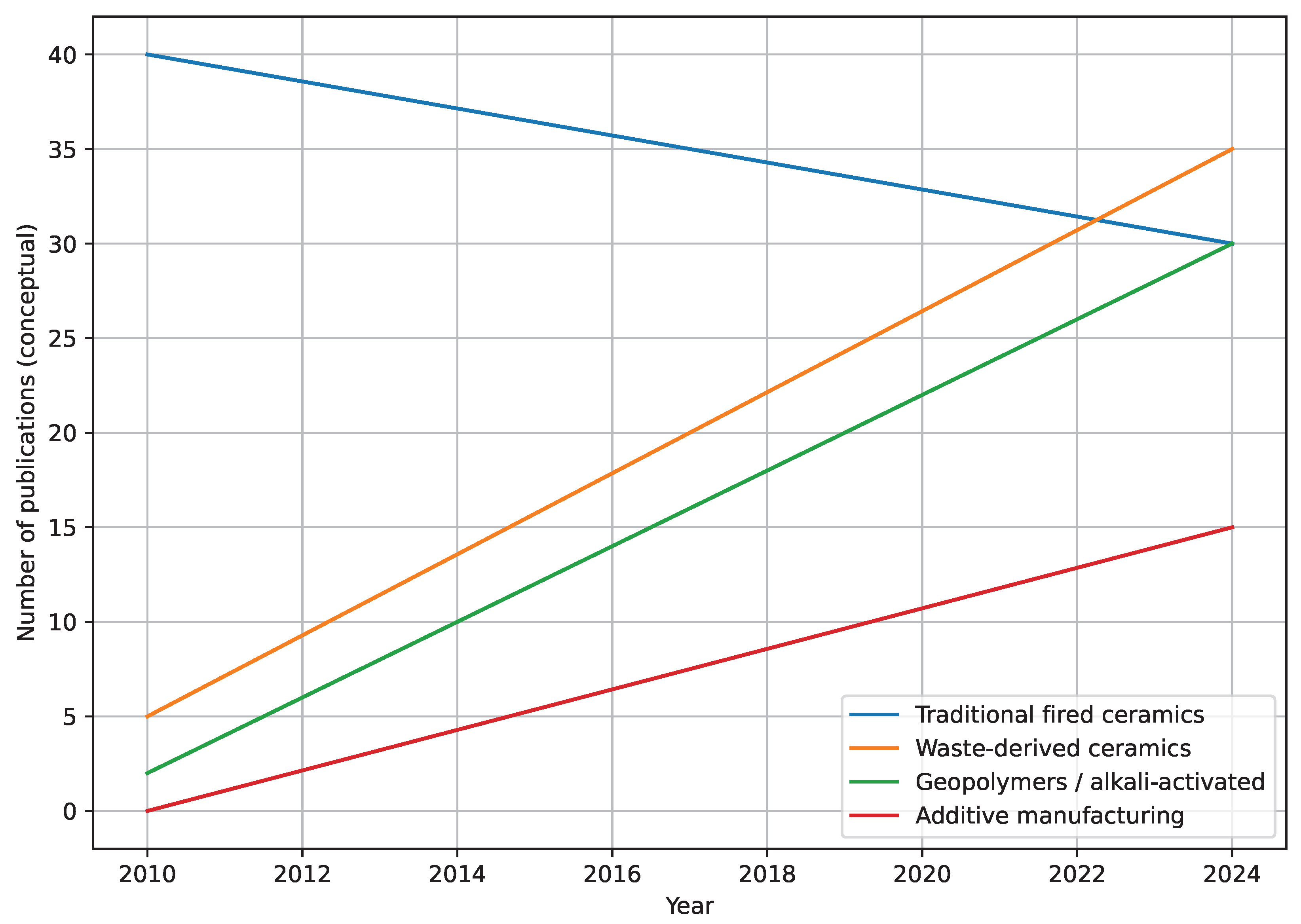
To complement the thematic bibliometric analysis,
Figure 7 illustrates the temporal evolution of research activity related to different ceramic masonry material categories.
The trends presented in
Figure 7 are based on the bibliometric analysis of the PRISMA-selected dataset, reflecting the relative evolution of research activity across different material categories.
The values shown do not correspond to exact publication counts per year but rather to a normalized and conceptual representation of the observed trends, derived from the distribution of publications within the analyzed dataset.
This approach allows the visualization of the comparative growth of different research areas, while avoiding misleading interpretations associated with heterogeneous data sources and classification criteria.
Figure 7 reveals a marked shift in research focus over the last decade, characterized by declining emphasis on conventional fired ceramics and rapid growth in studies addressing waste-derived materials, alkali-activated systems, and additive manufacturing approaches. This evolution reflects increasing sustainability demands and the search for low-carbon alternatives in masonry construction.
3.6. Emerging Technologies and Trends
In recent years, the development of ceramic masonry materials has increasingly shifted toward innovative technologies aimed at improving performance while reducing environmental impact [
106,
107,
108,
109,
110,
111]. Beyond conventional material optimization, emerging approaches focus on rethinking both processing routes and material design in order to support circular economy principles and low-carbon construction strategies [
105].
Among the most relevant emerging technologies are additive manufacturing techniques, particularly three-dimensional (3D) printing of ceramic and cementitious materials, which enable unprecedented control over geometry, internal architecture, and material distribution [
112,
113]. These capabilities allow for the fabrication of lightweight and multifunctional masonry units with tailored thermal, mechanical, and acoustic properties. In parallel, no-fired or low-temperature ceramic systems have gained attention as promising alternatives to traditional high-temperature firing processes, offering substantial reductions in energy consumption and CO
2 emissions [
114,
115].
Recent studies have demonstrated that geopolymer-based masonry units can achieve compressive strength values typically ranging from 10 to 40 MPa, while significantly reducing CO
2 emissions compared to conventional fired clay bricks [
33,
116].
Similarly, additively manufactured ceramic and cementitious components have shown the ability to optimize internal geometries, reduce material consumption, and improve thermal performance through controlled porosity and tailored architectures [
117].
Experimental and pilot-scale studies further indicate that these technologies can be implemented in structural and non-structural masonry elements, demonstrating their practical feasibility beyond laboratory-scale development [
118].
Alkali-activated ceramics and geopolymer-based systems represent another rapidly growing research area, as they facilitate the valorization of industrial by-products and wastes while achieving competitive mechanical and durability performance [
119,
120,
121]. In this way, when combined with advanced processing strategies and digital design tools, these technologies provide viable pathways for closing material loops and extending the service life of ceramic masonry products.
Table 7 summarizes the main emerging technologies and trends in ceramic masonry materials, highlighting their key benefits, current challenges, and their potential contribution to circular economy implementation and carbon footprint reduction in the construction sector [
39,
40,
41,
42,
44,
103].
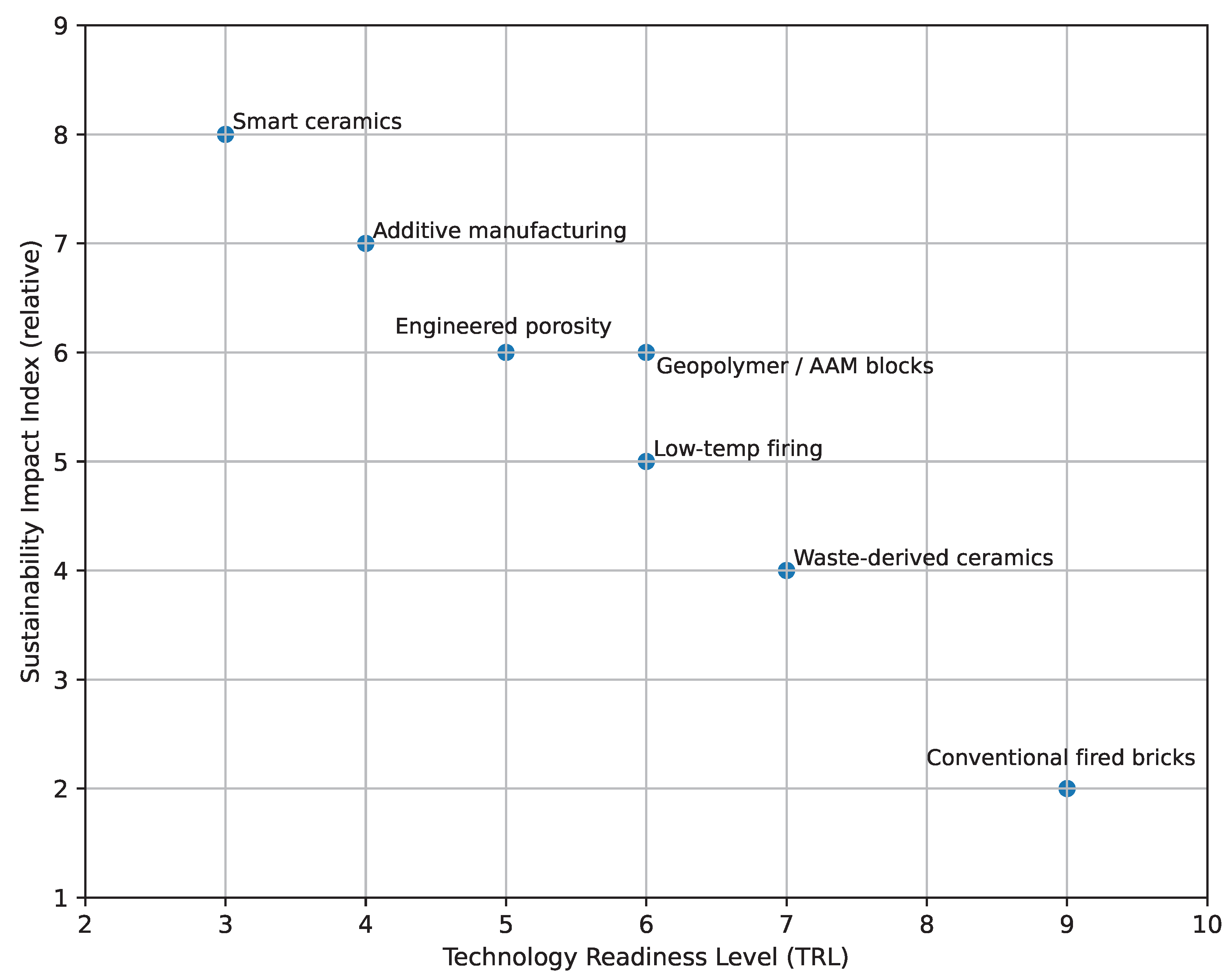
Figure 8 presents a qualitative comparative positioning of emerging ceramic masonry technologies based on their relative technology readiness level (TRL) and sustainability impact, derived from the analysis of the literature selected through the PRISMA-based methodology.
The TRL positioning is based on the level of technological development reported in the literature, considering factors such as laboratory validation, pilot-scale implementation, and industrial adoption. The sustainability impact is assessed qualitatively based on reported reductions in energy consumption, CO2 emissions, resource efficiency, and potential for circular economy integration.
The values shown do not represent direct quantitative measurements but rather a normalized and comparative interpretation of trends reported across multiple studies. This representation is intended to illustrate relative positioning and trade-offs between technological maturity and sustainability potential, rather than to provide exact numerical values.
As illustrated in
Figure 8, conventional fired bricks exhibit high technological maturity but limited sustainability gains. In contrast, waste-derived ceramics and low-temperature firing strategies occupy an intermediate position, combining moderate readiness with improved environmental performance. Alkali-activated systems and engineered porosity approaches show higher sustainability potential but remain at mid-level maturity. Additive manufacturing and smart ceramic systems represent long-term pathways with significant sustainability impact, although their current technological readiness remains limited due to scalability and regulatory challenges.
3.7. Smart and Self-Sensing Masonry Materials for Structural Health Monitoring
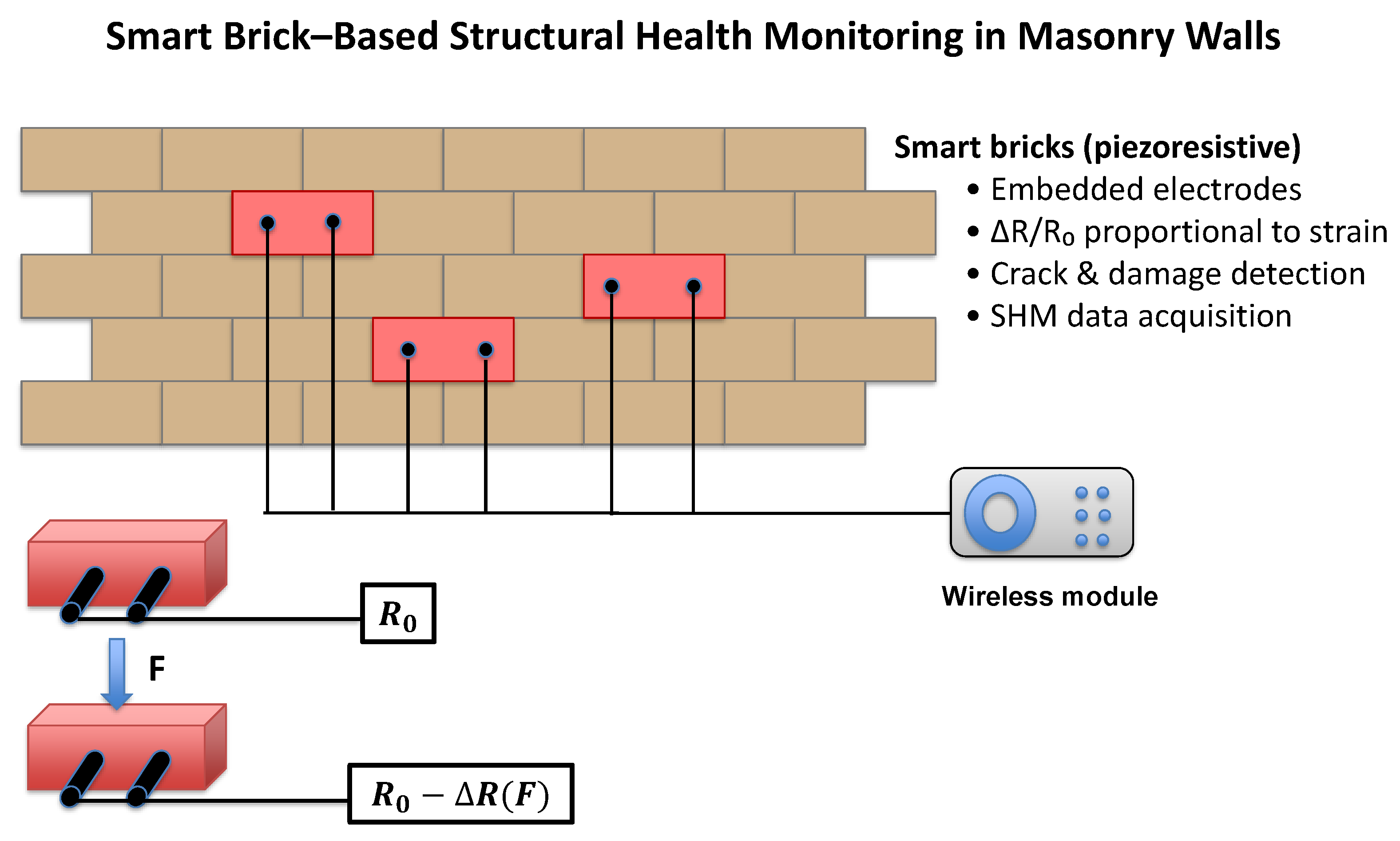
Recent developments in self-sensing masonry materials, commonly referred to as smart bricks, exploit piezoresistive behavior to convert mechanical strain into measurable electrical signals for localized structural health monitoring (SHM). These materials have been successfully integrated into concrete blocks and mortar joints using conductive fillers such as carbon-black nanoparticles and carbon fibers, enabling real-time stress and damage detection even after exposure to high temperatures and rehydration treatments [
131]. Smart bricks fabricated from piezoresistive clay with embedded electrodes exhibit linear and repeatable variations in electrical resistance proportional to applied strain, allowing effective detection of crack initiation and propagation in masonry walls [
132].
Figure 9 schematically illustrates the integration of piezoresistive smart bricks within a masonry wall and the corresponding electromechanical sensing mechanism, highlighting the relationship between applied mechanical loading and the resulting electrical response used for structural health monitoring.
Advances in self-sensing cementitious composites further emphasize the role of nano- and functional fillers, including carbon nanotubes and other conductive nanomaterials, in enhancing strain sensitivity, electrical conductivity, and long-term durability for SHM applications [
133]. From an implementation perspective, practical challenges related to instrumentation cost have been addressed through the development of low-cost electrometers specifically designed for self-sensing masonry materials, facilitating their deployment in real-world monitoring scenarios [
134]. In parallel, sustainable strategies incorporating recycled waste materials into self-sensing concretes have demonstrated promising performance, offering environmentally friendly smart construction solutions without compromising sensing capability [
135].
Smart bricks are typically fabricated by incorporating conductive carbon-based nanofillers, such as carbon nanofibers (CNFs) and multi-walled carbon nanotubes (MWCNTs), into clay matrices, enabling the correlation of volumetric strain with variations in electrical resistance for strain-sensing applications. CNFs have demonstrated superior thermal stability during high-temperature firing processes compared to other carbon-based fillers, such as graphene nanoplatelets, which are more susceptible to oxidation. This enhanced thermal resistance results in improved strain sensitivity and more stable electromechanical responses after firing [
136].
Experimental investigations on cementitious composites further indicate that CNFs combined with recycled milled carbon fibers can optimize self-sensing performance under mechanical loading, whereas MWCNTs retain residual piezoresistive behavior even after exposure to temperatures as high as 400 °C [
137]. In addition, the morphology and surface characteristics of carbon black nanoparticles play a significant role in governing the piezoresistive response. Fillers with lower structural complexity and higher electrical resistivity have been shown to improve gauge factor and stress sensitivity, although this enhancement may be accompanied by a reduction in compressive strength [
138]. Hybrid filler systems combining carbon black and CNFs have been reported to simultaneously enhance mechanical strength and sensing stability by promoting the formation of more effective and continuous conductive networks within the matrix [
139].
Smart bricks exhibit strong mechanical and architectural compatibility with conventional masonry units, maintaining stiffness, durability, and load-transfer characteristics comparable to those of traditional bricks. This intrinsic compatibility allows smart bricks to be seamlessly integrated at critical locations within masonry walls without altering either structural behavior or aesthetic appearance, making them particularly suitable for historic or architecturally sensitive structures [
140]. Experimental investigations on full-scale masonry walls instrumented with smart bricks and subjected to in-plane shear loading have demonstrated that these sensing elements can effectively monitor strain evolution and detect crack initiation and propagation while preserving the overall mechanical integrity of the wall [
141]. Piezoresistive clay bricks with embedded electrodes further exhibit linear and repeatable electromechanical responses under compressive loading conditions comparable to those of standard masonry units, confirming their structural compatibility and reliability [
142]. In addition, smart bricks fabricated by doping clay matrices with conductive stainless steel microfibers have been shown to retain their sensing capabilities without compromising mechanical performance during seismic events and foundation settlements [
143]. Overall, smart bricks provide a durable and non-invasive sensing solution that can be directly integrated into load-bearing masonry elements, enabling effective structural health monitoring without sacrificing structural performance.
Some investigations conducted on standalone smart bricks, as well as on masonry walls, have demonstrated that these sensing elements provide reliable strain measurements under various loading conditions, including compressive and in-plane shear loads. When embedded within masonry assemblies, the electrical response of smart bricks is influenced by surrounding mortar layers and adjacent bricks, which can lead to current dispersion effects; however, a clear piezoresistive response proportional to applied strain is still preserved [
132].
Investigations performed on real-scale masonry walls instrumented with smart bricks have shown that the measured strain values are comparable to those obtained using conventional sensors and numerical simulations, thereby confirming the effectiveness of smart bricks for strain monitoring and crack detection in masonry structures [
144]. To further enhance signal reliability under real-world conditions, advanced data processing techniques—such as nonlinear cointegration theory combined with neural network models—have been developed to mitigate the influence of environmental factors, including temperature and humidity fluctuations, on the electrical response of smart bricks [
145]. Moreover, networks of smart bricks enable detailed reconstruction of strain fields and accurate damage identification within masonry walls, outperforming traditional strain gauges in terms of spatial resolution and sensitivity [
146].
Smart and self-sensing masonry materials represent an important advancement in the development of intelligent construction systems. By integrating sensing functionality directly into structural units, this approach offers a pathway toward distributed, durable, and mechanically compatible monitoring solutions for masonry structures, complementing existing structural health monitoring strategies.
3.8. Future Research Directions
The rapid evolution of ceramic masonry materials driven by sustainability requirements, energy efficiency targets, and advanced manufacturing technologies has opened multiple pathways for future research [
77,
106]. Although significant progress has been achieved in the development of alternative raw materials, optimized microstructures, and low-carbon processing routes, several scientific and technological challenges remain to be addressed before widespread industrial adoption can be realized [
21,
147].
Future research should prioritize the systematic optimization of ceramic systems that incorporate industrial and agricultural residues, paying particular attention to long-term durability, variability in waste composition, and standardization of performance assessment. Although waste-derived ceramics have demonstrated promising mechanical and thermal properties, their scalability and consistency under real service conditions require further investigation [
109,
148,
149].
Another important research direction involves the development of multifunctional ceramic composites capable of simultaneously providing structural integrity, thermal insulation, and acoustic attenuation [
150]. Polymer–ceramic hybrids, nanostructured ceramics, and porous ceramic systems offer attractive opportunities in this regard; however, issues related to cost, recyclability, and health and safety considerations must be carefully evaluated [
151].
Low-carbon technologies such as geopolymer-based and no-fired ceramic systems represent a critical area for future exploration, particularly in the context of global decarbonization strategies [
152]. Research efforts should focus on improving mechanical performance, controlling curing and aging processes, and establishing reliable durability benchmarks that enable comparison with conventional fired ceramics [
153].
Advanced processing technologies, including additive manufacturing and emerging sintering techniques, are also expected to play an increasingly important role in the future of ceramic masonry materials [
154]. These approaches offer unprecedented design flexibility and energy savings, yet challenges related to process control, defect mitigation, and industrial scalability must be overcome [
155].
Table 8 summarizes the materials and technologies that exhibit the greatest potential to guide future research and innovation. By linking material performance with sustainability implications, this overview provides a strategic framework for directing future investigations toward the development of durable, energy-efficient, and circular ceramic masonry systems.
Likewise, The qualitative descriptors used in
Table 8 (e.g., High, Very high) are based on a comparative synthesis of the literature selected through the PRISMA-based methodology. These categories reflect relative potential levels derived from reported trends in performance, sustainability impact, and technological relevance across multiple studies.
In this context, “Very high” indicates material systems that consistently demonstrate superior performance and broader multifunctional capabilities across several criteria, including mechanical behavior, durability, and environmental impact, while “High” refers to materials with strong but more specialized or condition-dependent performance.
It should be noted that these descriptors do not correspond to fixed quantitative thresholds but rather to normalized qualitative categories intended to facilitate comparison across heterogeneous datasets.
On the other hand, it is important to note that the reported performance values exhibit significant variability across studies due to differences in raw material composition, processing routes, specimen geometry, and testing methodologies.
This data dispersion reflects the inherent heterogeneity of ceramic and refractory materials, particularly in systems incorporating industrial and agricultural residues, where composition and processing conditions may vary significantly.
Therefore, the trends identified in this review should be interpreted as generalized patterns rather than absolute performance benchmarks, and should be considered within the context of the specific conditions under which the data were obtained.
4. Discussion
The results presented in this review highlight a clear evolution in ceramic and refractory materials for masonry bricks and blocks, shifting from conventional fired clay systems toward lightweight, engineered, and low-impact alternatives. This transition is driven by increasing demands for improved thermal efficiency, reduced environmental impact, and the integration of circular economy principles within the construction sector.
Traditional ceramic masonry units rely primarily on dense microstructures and high-temperature firing to achieve adequate mechanical strength and durability. However, many of the alternative materials reviewed introduce controlled porosity through waste-derived additives, pore-forming agents, or modified processing routes. This microstructural strategy enables enhanced thermal insulation and acoustic attenuation, albeit often at the expense of compressive strength. As demonstrated in the Results section, the optimal balance between mechanical performance and functional efficiency is therefore strongly application-dependent.
Ceramics incorporating industrial byproducts (e.g., fly ash, slag, red mud, glass waste) and agricultural residues (e.g., rice husk ash, sawdust, bagasse ash) consistently exhibit reduced bulk density and thermal conductivity compared with conventional fired bricks. Beyond their environmental benefits, these materials enable targeted microstructural design that improves functional performance while partially offsetting the environmental burden associated with raw material extraction and high-temperature processing.
A further emerging trend identified in this review is the increasing development of unfired, alkali-activated, and geopolymer-based ceramic systems. These materials challenge the traditional paradigm of ceramic production by significantly reducing firing temperatures or eliminating thermal treatment altogether. While issues related to long-term durability, moisture sensitivity, and large-scale manufacturability remain under investigation, the reviewed studies indicate promising thermo-mechanical behavior, particularly for non-load-bearing masonry applications.
Compared with the existing literature, this review extends beyond isolated assessments of mechanical or thermal properties by integrating sustainability indicators—such as CO2 reduction potential, waste utilization rate, and processing energy demand—into a unified analytical framework. This holistic approach enables meaningful comparison across diverse material classes and supports informed decision-making in the design of sustainable masonry systems.
4.1. Evolution and Multidisciplinary Consolidation of Materials Research
In order to identify the thematic evolution and the behavior of scientific production in the field of study, an analysis was conducted using the Scopus database methodology for the period 2018–2025.
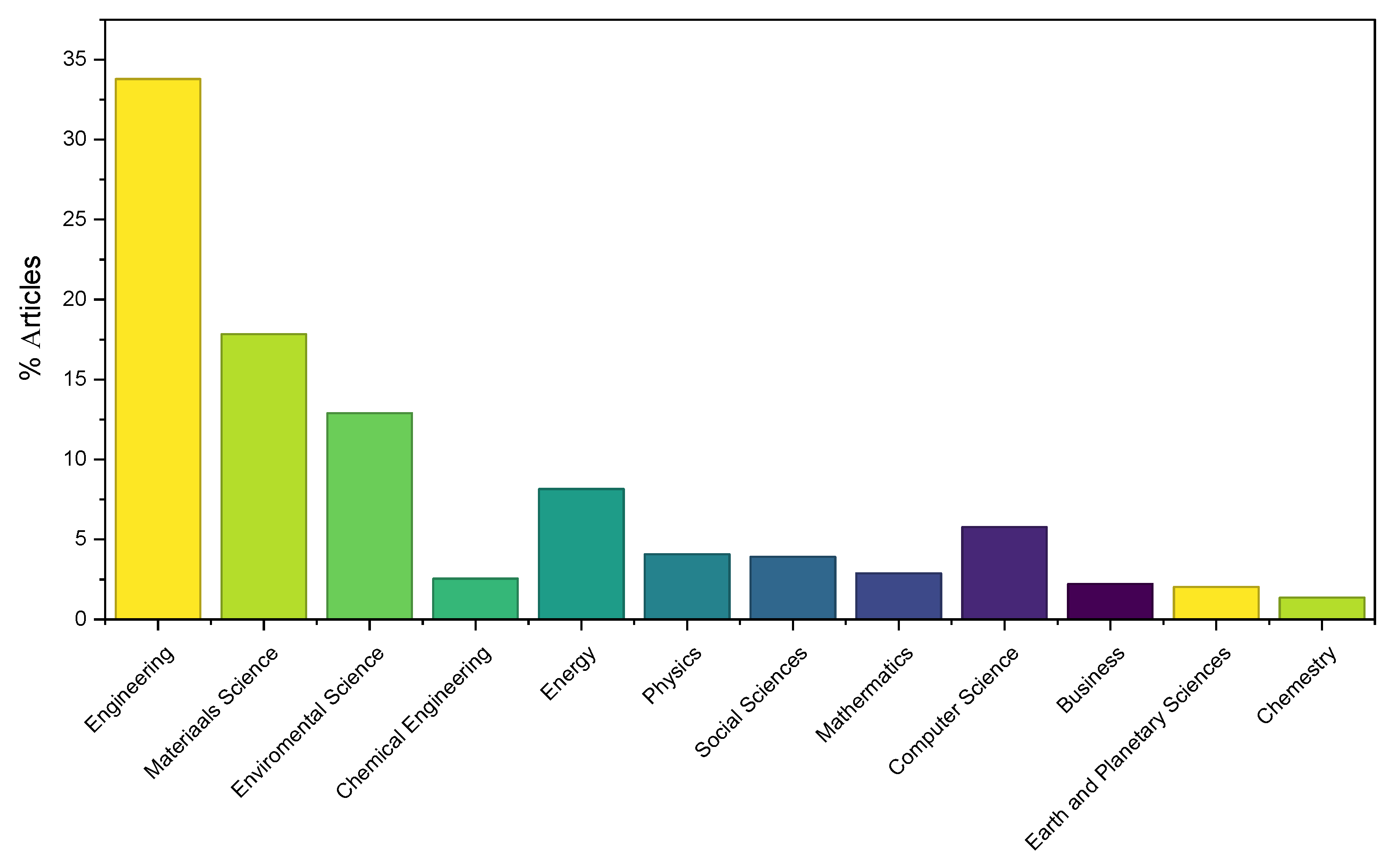
Figure 10 shows the distribution of articles according to the main subject area. This distribution highlights the dominant role of Engineering and Materials Science in driving material design and technological development in the field. This predominance indicates that research is strongly oriented toward the design, optimization, and application of materials with a technological and industrial focus, which is consistent with current demands for sustainability, resource efficiency, and the development of advanced technologies.
The significant presence of Environmental Sciences reinforces the transition toward more sustainable approaches, where materials are designed not only for their functional properties but also for their environmental impact and their contribution to circular economy models. Likewise, the participation of fields such as Physics and Chemistry suggests that a large portion of the studies maintain a fundamental component, focused on the structural, electronic, and vibrational understanding of materials.
A particularly relevant aspect is the emergence of Computer Science, which, although not among the dominant areas, ranks as one of the top emerging topics (fifth in relevance). This highlights the growing incorporation of computational modeling, simulations, artificial intelligence, and data analysis in the development and characterization of new materials, marking a clear transition toward digitally assisted materials science.
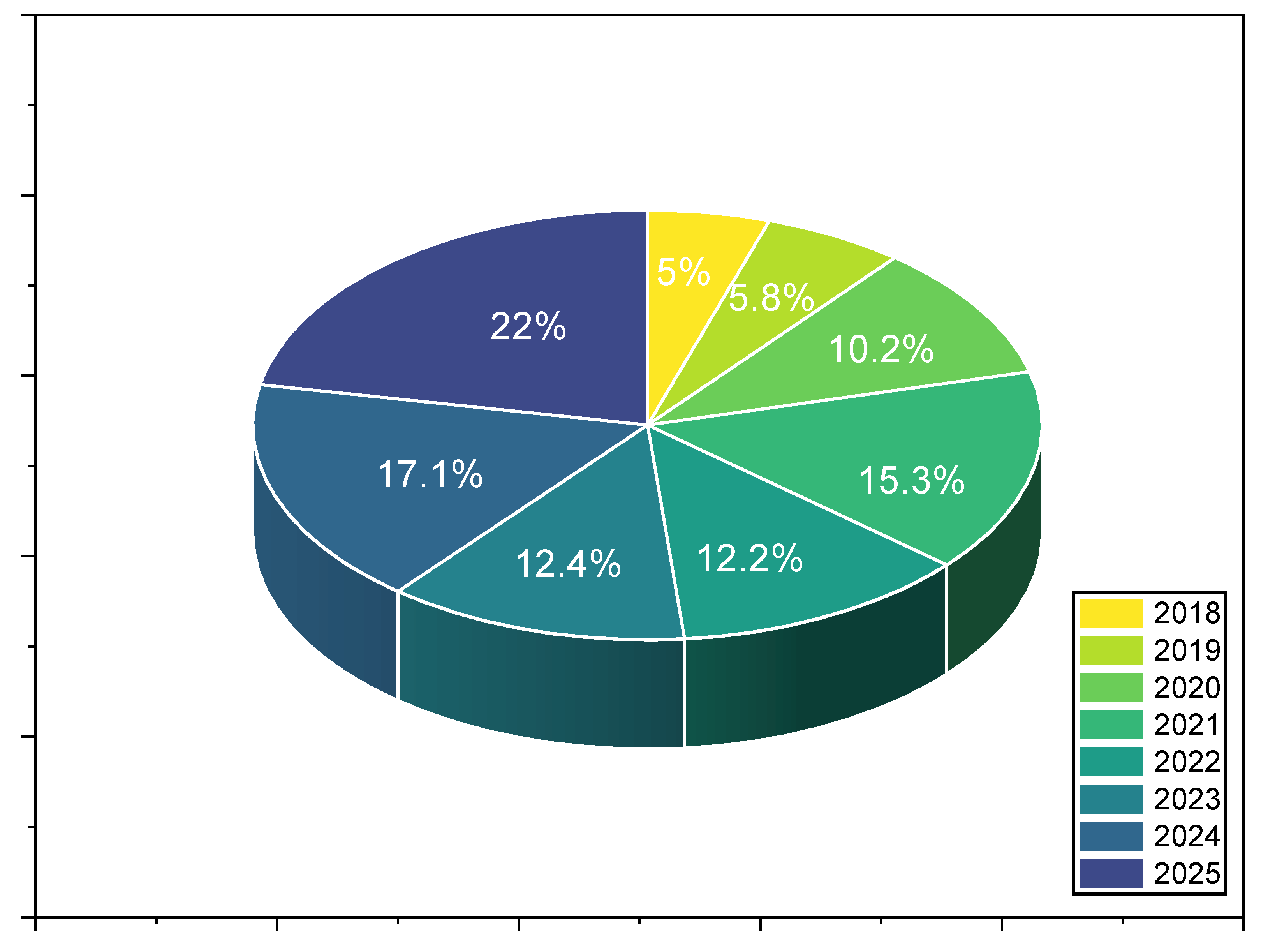
Figure 11 presents the percentage of publications per year. A notable growth can be observed between 2019, 2020, and 2021, where one of the largest increases in scientific production is concentrated. This behavior may be interpreted as a consolidation phase of interest in these research lines, driven by the global need to develop more efficient and sustainable materials with energy and environmental applications.
From 2021 to 2025, growth continues, although in a more stable manner, with an approximate 8% increase in scientific production. This pattern suggests that the field has entered a stage of scientific maturity, where research shifts from being emerging to becoming a consolidated and continuously developing area. In bibliometric terms, such stabilization after rapid growth typically indicates that the scientific community has established clear research lines, collaboration networks, and solid methodological frameworks.
Moreover, the maintenance of high production levels after 2021 indicates that the interest was not circumstantial but rather responds to structural trends, such as the energy transition, the sustainability of industrial processes, and the digitalization of materials research.
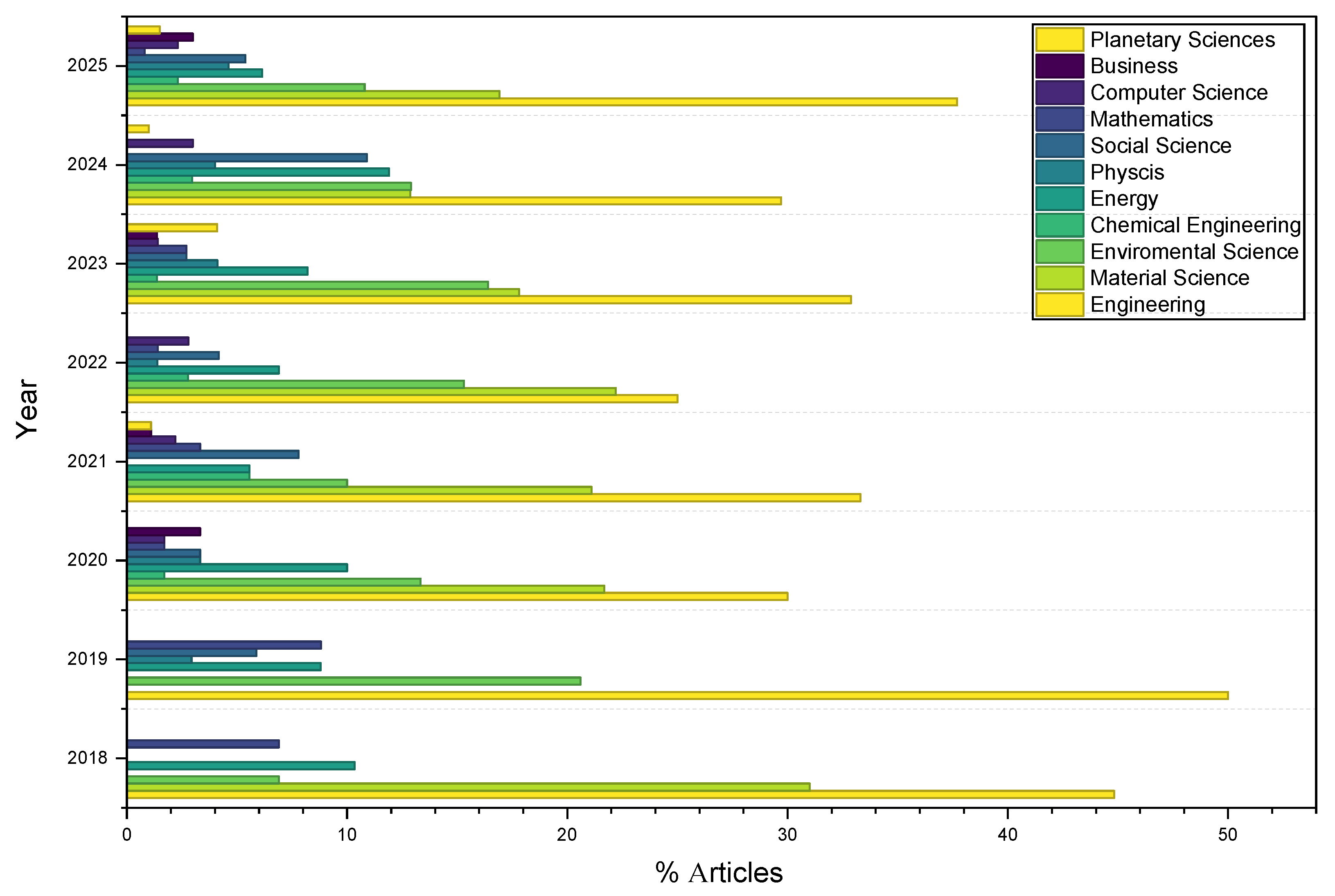
Figure 12 complements this analysis by showing the breakdown ofion emerges over time. From 2018 to 2025, contributions from Environmental Sciences, Energy, Social Sciences and Computer Science progressively increase, reflecting a growing process of multidisciplinarity.
This behavior indicates that research has evolved from a predominantly technical approach toward a more integrated vision, where environmental, social, energy-related, and computational aspects are incorporated. The inclusion of areas such as Social Sciences suggests that studies are beginning to consider not only the technical feasibility of materials but also their socioeconomic impact, regulation, and technological acceptance.
Overall, the results show that the field has progressed from a stage of rapid growth to one of consolidation, with thematic expansion reflecting the increasingly complex and multidisciplinary nature of materials research. The integration of computational tools and the focus on sustainability position this field as a strategic axis for scientific and technological development in the coming years.
4.2. Comparison with State-of-the-Art Reviews on Ceramic Masonry Materials
Table 9 compares the scope and contributions of this review with representative state-of-the-art review articles addressing ceramic and refractory materials for masonry applications. Earlier reviews have generally focused on individual aspects such as mechanical performance, thermal behavior, or waste incorporation strategies. More recent contributions increasingly acknowledge sustainability concerns; however, they often lack an integrated perspective linking material classification, property–microstructure relationships, and environmental performance.
In contrast, the present review simultaneously addresses conventional, waste-derived, lightweight, and emerging low-carbon ceramic systems within a systematic analytical framework. By explicitly considering thermo-mechanical performance, microstructural design, and sustainability metrics, this work provides a comprehensive overview of current research directions and identifies critical trade-offs relevant to practical masonry applications.
The comparison summarized in
Table 9 also reveals that the increasing breadth of topics covered in recent reviews has not always been accompanied by a corresponding integration of analytical depth. In several cases, sustainability considerations are addressed qualitatively or treated as secondary outcomes, rather than being systematically linked to processing routes, microstructural features, and resulting material performance.
By consolidating these dimensions within a single comparative framework, the present review enables a more nuanced interpretation of performance trade-offs among ceramic masonry materials. This perspective not only clarifies the relative advantages and limitations of emerging low-carbon solutions but also highlights the need for future studies to adopt harmonized assessment methodologies that simultaneously address mechanical reliability, functional efficiency, and environmental impact.
4.3. Contribution and Research Gaps
The comparative analysis presented in
Table 9 indicates that, although previous reviews have provided valuable insights into specific ceramic material families or isolated performance attributes, few studies have adopted a fully integrated perspective encompassing material classification, processing routes, functional properties, and sustainability indicators.
The present review addresses these limitations by explicitly linking microstructural design strategies with thermo-mechanical performance while simultaneously assessing their implications for environmental impact and resource efficiency. In doing so, it highlights the potential of waste-derived and low-temperature ceramic systems to reconcile structural performance requirements with decarbonization objectives.
Nevertheless, several critical challenges remain. Long-term durability under realistic service conditions, the lack of standardized sustainability assessment methodologies, and the limited scalability of alternative ceramic technologies continue to constrain widespread industrial implementation. These aspects represent priority areas for future research and technological development.
In this context, the main contribution of this work lies in the development of an integrated analytical framework that enables consistent comparison across heterogeneous ceramic masonry systems.
Unlike previous review studies, this work adopts a multi-criteria approach that simultaneously considers mechanical, thermal, durability, and sustainability-related properties, providing a more comprehensive evaluation of material performance.
Furthermore, this study establishes explicit relationships between composition, processing routes, microstructural characteristics, and resulting performance, offering a structured basis for material selection and future research development.
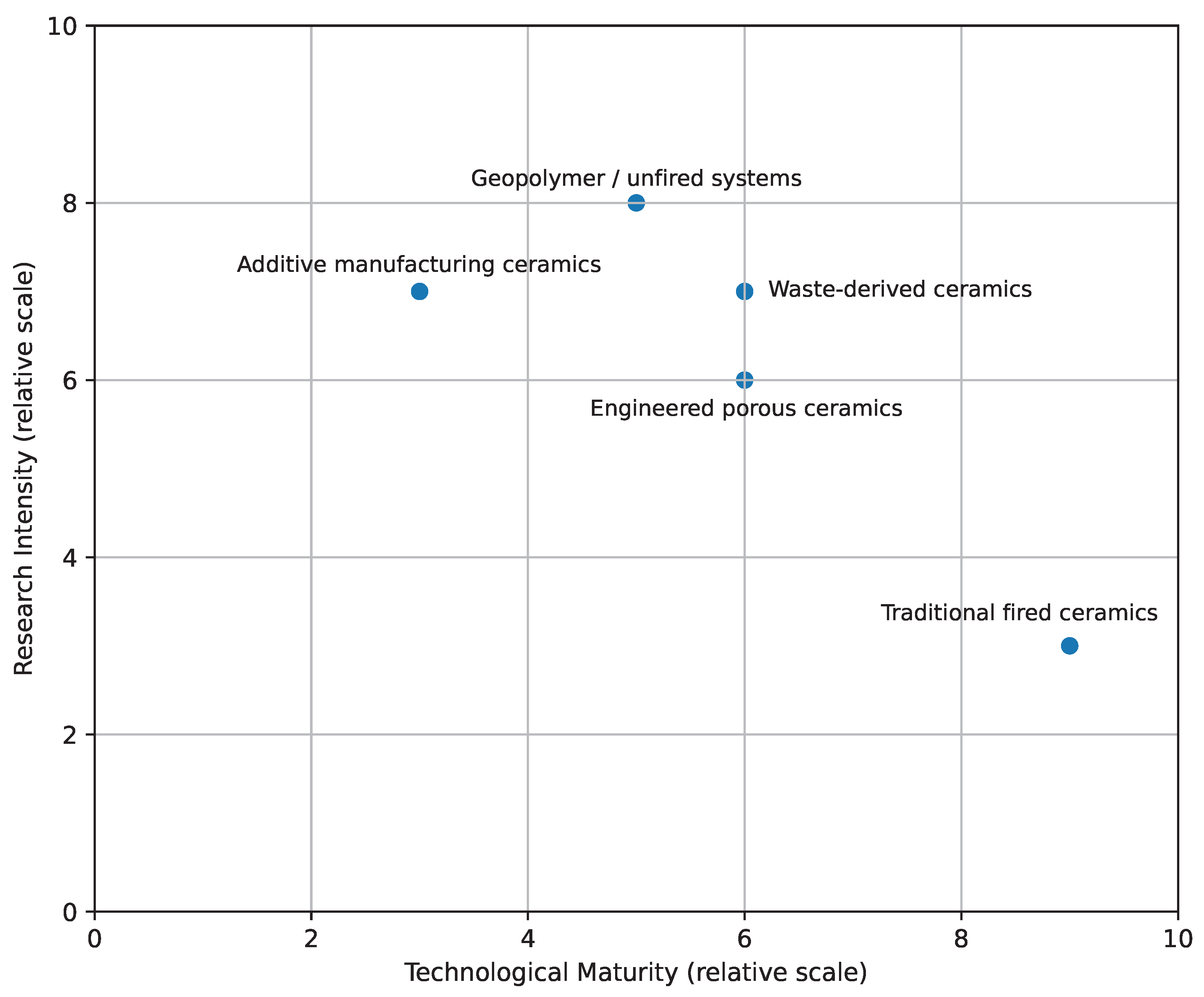
Figure 13 presents a conceptual positioning of ceramic masonry material systems based on their relative technological maturity and research intensity, derived from the analysis of the literature selected through the PRISMA-based methodology.
Technological maturity is assessed qualitatively considering the level of development and implementation reported in the literature, including laboratory validation, pilot-scale studies, and industrial application. Research intensity is evaluated based on the volume of publications, research activity, and emerging trends identified through the bibliometric analysis.
The positioning shown in the figure does not represent direct quantitative measurements but rather a normalized and comparative interpretation of trends reported across multiple studies. This representation is intended to highlight relative positioning and identify research gaps and mismatches between scientific development and technological implementation.
Overall, the analysis underscores the transitional stage currently characterizing ceramic masonry research. While conventional fired systems remain technologically mature and widely implemented, emerging low-carbon alternatives—including waste-derived, alkali-activated, and engineered porous ceramics—are progressively reshaping the performance–sustainability landscape. However, the observed imbalance between research intensity and technological maturity for several advanced systems emphasizes the need for coordinated efforts in durability validation, methodological harmonization, and scale-up strategies.
Bridging these gaps will require not only continued material innovation but also integrated evaluation frameworks capable of simultaneously addressing mechanical reliability, functional efficiency, and environmental performance. By clarifying existing knowledge boundaries and identifying priority research directions, this review contributes to accelerating the transition toward sustainable ceramic masonry materials aligned with circular economy and low-carbon construction goals.
Despite the comprehensive scope of this review, several limitations should be acknowledged. The literature search was restricted to the Scopus database, which may have excluded relevant studies indexed in other scientific repositories. In addition, variability in experimental methodologies, raw material composition, and testing conditions across studies introduces uncertainty in direct comparisons.
Furthermore, many emerging ceramic technologies, particularly geopolymer-based and additively manufactured systems, are still under development, and their long-term performance under real service conditions remains insufficiently validated at the field scale.
These limitations may affect the generalizability of the results and highlight the need for more standardized and comparable datasets. Future studies should address these aspects by incorporating multi-database search strategies, developing standardized testing protocols, and conducting large-scale experimental and field validation studies.
A critical aspect highlighted in this review is the gap between laboratory-scale developments and large-scale industrial production. While many emerging ceramic materials demonstrate promising performance under controlled experimental conditions, their practical implementation remains limited.
This reinforces the well-recognized gap between academic research and industrial implementation, where many technologies remain at the laboratory stage and fail to reach large-scale production due to economic and technical constraints.
In particular, advanced processing technologies such as additive manufacturing and flash sintering face significant challenges related to high production costs, process control complexity, and scalability constraints, which hinder their widespread industrial adoption.
Therefore, bridging the gap between academic research and industrial application requires not only material optimization but also the development of scalable, cost-effective, and industry-compatible production strategies.
Likewise, future research should focus on the development of standardized methodologies for evaluating ceramic masonry materials, enabling more reliable and comparable performance assessments across different studies.
In addition, long-term durability studies under realistic environmental and loading conditions are required to validate the performance of emerging materials, particularly under conditions of moisture exposure, thermal cycling, and chemical degradation.
Further efforts should be directed toward scaling up sustainable ceramic technologies and assessing their economic feasibility and environmental impact in real construction applications.
4.4. Circular Economy Perspective for Novel Ceramic and Refractory Composites
The transition toward sustainable construction materials requires moving beyond incremental performance improvements and adopting a systemic life-cycle perspective [
19]. In the context of masonry bricks and blocks, novel ceramic and refractory composites must be evaluated not only in terms of mechanical, thermal, and durability performance but also according to their capacity to contribute to circular economy strategies [
157]. This involves reducing raw material extraction, minimizing energy-intensive processing, extending service life, and enabling end-of-life recovery and reintegration [
158].
Figure 14 presents a circular economy framework tailored to novel ceramic and refractory composites for masonry applications. The framework integrates key life-cycle stages—including raw material sourcing, composite design, processing routes, manufacturing optimization, service performance, durability assessment, and end-of-life management—within a sustainability-driven perspective [
159].
At the material design stage, the incorporation of industrial by-products and agricultural residues enables partial substitution of virgin clay resources, promoting waste valorization and resource efficiency [
160]. Processing innovations—such as optimized firing cycles, low-temperature curing, or alkali activation—contribute to energy savings and CO
2 emission reductions [
161]. During the service phase, enhanced thermal insulation, acoustic performance, and long-term durability reduce operational energy demand and maintenance requirements, further improving life-cycle sustainability [
162].
End-of-life strategies represent a critical component of circularity. Crushed ceramic waste can be reused as aggregates or secondary raw materials in new composite formulations, closing material loops and reducing landfill disposal [
163]. However, effective implementation of these strategies requires improved standardization, durability validation under real service conditions, and scalable industrial processes [
164].
Overall, adopting a circular economy framework provides a structured basis for evaluating novel ceramic and refractory composites beyond isolated performance metrics. By integrating composition, processing, functional behavior, durability, and recyclability, this perspective supports the development of masonry materials aligned with low-carbon construction goals and long-term resource sustainability [
165].
5. Conclusions
This systematic review has examined recent advances in ceramic and refractory materials for masonry bricks and blocks, with a particular focus on mechanical, thermal, durability, and sustainability performance. The analysis highlights that the integration of industrial and agricultural residues into ceramic systems represents the most significant and consistent trend toward achieving sustainability and circularity in masonry materials. Waste-derived ceramics enable the reduction in raw material consumption and CO2 emissions while maintaining functional performance suitable for structural and non-structural applications.
Emerging technologies such as additive manufacturing, geopolymer-based and no-fired ceramic systems, and the incorporation of nanostructured additives offer new opportunities to tailor material properties and further reduce environmental impact. These approaches provide enhanced control over microstructure, multifunctional performance, and processing efficiency, positioning them as key enablers for the next generation of low-carbon ceramic masonry materials.
Despite the promising results reported in the literature, several challenges must be addressed to facilitate widespread adoption. In particular, advances in standardization, large-scale industrial validation, and comprehensive life cycle assessment studies are essential to ensure performance reliability, comparability, and regulatory acceptance. Addressing these aspects will be critical for consolidating the role of advanced ceramic and refractory masonry materials in sustainable construction practices.
Overall, the findings of this review provide a structured framework for understanding current developments and future opportunities in ceramic masonry materials, supporting the transition toward energy-efficient, durable, and circular construction systems.
From an industrial implementation perspective, the transition toward sustainable ceramic masonry materials presents significant challenges. Existing production facilities are typically optimized for conventional fired clay or cement-based systems, and the adoption of alternative materials—such as waste-derived ceramics or geopolymer-based systems—may require substantial modifications to processing lines, raw material handling systems, curing technologies, and quality control procedures.
These modifications may involve additional capital investment, operational adjustments, and technical training, which can limit the willingness of established manufacturers to adopt new material systems. Furthermore, economic feasibility, market acceptance, and regulatory compliance play a critical role in determining the scalability and commercialization potential of these technologies.
Therefore, future research should not only focus on material performance optimization but also on developing industry-compatible solutions that minimize required infrastructure changes, reduce production costs, and facilitate integration into existing manufacturing processes.




 ,
,