1. Introduction
Ultra-low-power devices for energy harvesting are essential for providing long-term power to low-power electronic systems. These devices convert small amounts of energy captured from various environmental sources into useful electrical energy. As electric vehicles primarily rely on a main battery to power the drive system, energy harvested from other sources could power accessories such as air conditioning, interior lights, and the radio. Ultra-low-power energy harvesting devices primarily function through transducers that convert specific types of environmental energy into electrical energy. These devices also have energy management circuits that regulate and store harvested energy to ensure efficient use in powering the intended device.
Different studies have addressed the evaluation and comparison of energy harvesting technologies. For instance, Citroni et al. [
1] focused on analyzing the importance of reducing power consumption and increasing energy efficiency to improve the autonomy and longevity of sensor devices. Furthermore, they analyzed advances, challenges, and future directions in designing ultra-low-power devices, efficient energy storage, energy management units, wireless communication protocols, and energy harvesting techniques. A key element of the study by Citroni et al. [
1] is that it focused on the importance of minimizing power consumption and maximizing energy efficiency in an eco-friendly manner to improve the autonomy and longevity of sensor nodes in real-world scenarios. Note that energy harvesting technologies (EHTs) can contribute to eliminating the costs and practical issues associated with replacing or recharging batteries [
2]. These technologies can extend the operational autonomy of electronic devices, such as IoT devices, wireless sensors, medical devices, consumer electronics, smart locks, wearables, smartphones, and low-power devices.
Therefore, this study focuses on evaluating the applicability of EHT to IoT-based seed germination systems. A structured analysis framework based on the Simple Additive Weighting (SAW) method [
3,
4] was used to select fifteen useful devices for the aforementioned project. The devices considered in the case study were manufactured by eight industry leaders. The novelty of this study is that it applies a competitive profile matrix within a flexible multicriteria evaluation framework using a comprehensive set of competitive technology factors (CTFs), additive scoring, and a weighting approach. The advantages of the framework used are that it can generate prioritized lists of suitable energy harvesters while accounting for technical, economic, and environmental trade-offs. Additionally, it ensures that device rankings depend on the scope and objectives of the specific project addressed. That is, if these change, then the CTF selection, classification, and weighting adjust accordingly. Therefore, the relevance of this study lies in the adaptability, replicability, and audibility of the proposed framework, which supports the selection of informed technology for autonomous, IoT-based germination systems and other technological projects. In this way, the framework used is a tool that helps identify the pros and cons of incorporating technology into different types of projects and can be adapted to various contexts.
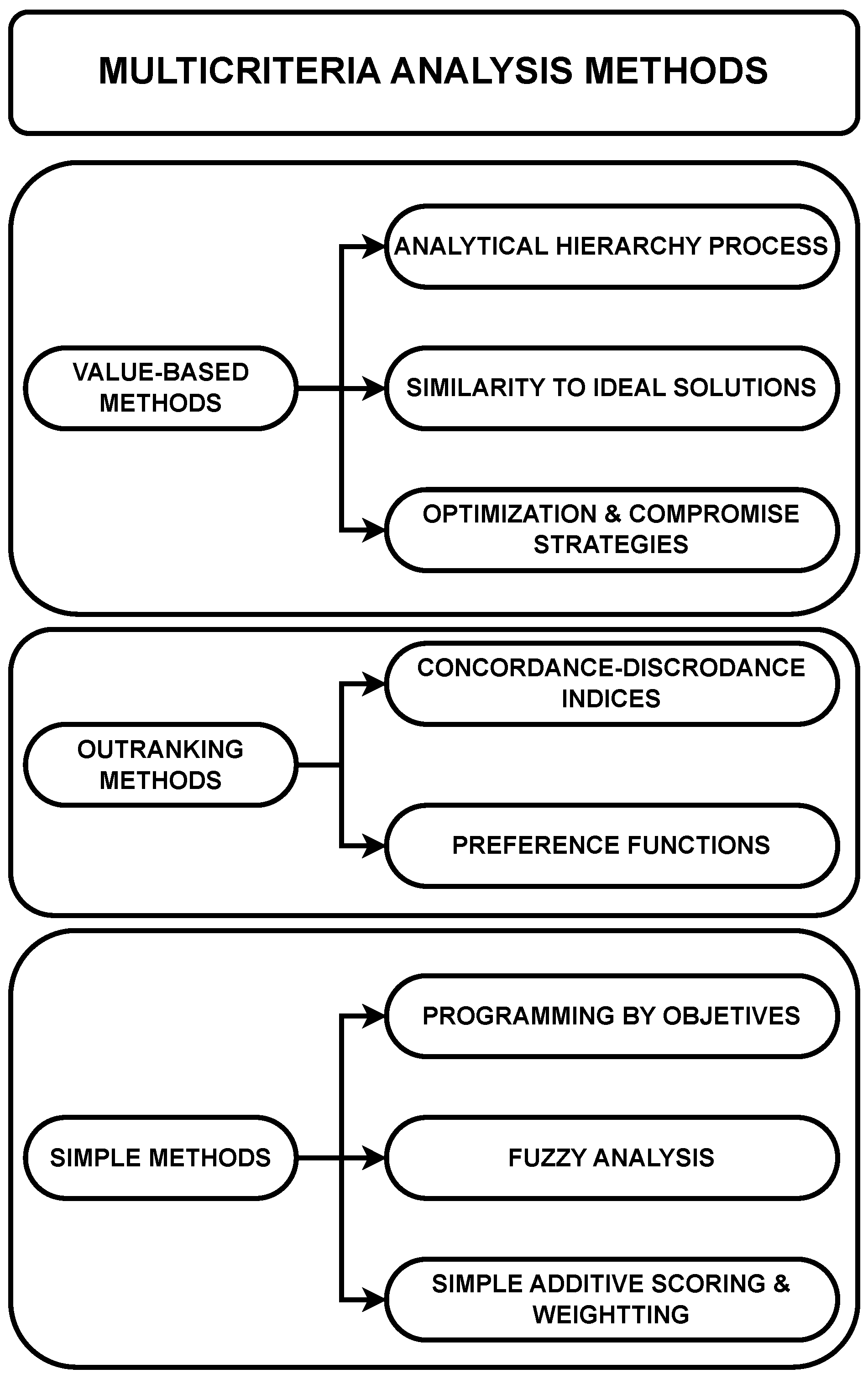
There are many multicriteria analysis methods. Each method has its own strengths and weaknesses and is suited to different types of problems and data. Many schemes use multicriteria analysis, each with its own strengths and weaknesses. This makes them more or less suitable for certain types of problems and data. Despite this diversity, these schemes are grouped into three basic categories: value-based, outranking, and simple methods. Value-based methods construct a function that represents the preferences of decision-makers regarding various criteria. Three sub-classes are defined in this category. The first subclass consists of strategies based on the analytical hierarchy process. This process organizes and analyzes complex decisions in a structured way, considering mathematics and psychology, as well as pairwise comparisons to determine relative weights and scores. The second subclass includes strategies based on the technique of ranked preference by similarity to the ideal solution. In this technique, alternatives are ranked according to how close they are to an ideal solution (the best) or a negative ideal solution (the worst). The third subclass is based on optimization and compromise strategies that focus on assessing and selecting a set of alternatives with conflicting criteria. The goal is to find an ideal compromise. In contrast, outranking methods determine which alternative is better by comparing pairs based on a set of preference criteria and thresholds. There are two main approaches in this category. One approach establishes an outranking relationship based on indices of concordance (agreement) and discordance (disagreement). This approach delegates the decision-making process of eliminating and selecting alternatives to achieve the best possible outcome. The other approach uses preference functions to establish a partial or complete ranking of alternatives. Finally, for simple multicriteria analysis methods, three basic approaches have been developed. The first is to program by objectives, aiming to minimize deviations from conflicting desired objectives. The second approach is fuzzy analysis, which uses fuzzy set theory to address uncertainty and imprecision in criteria and preferences. The third approach is the simple additive scoring and weighting method.
Figure 1 shows a general diagram that describes the previous ideas.
In general, a multicriteria decision-making approach should be used when optimal decision-making is not feasible. This approach enables the establishment of decision criteria based on economic factors to promote innovation, profitability, competitiveness, and environmental sustainability [
5]. Although there are several methods with specific variants, a methodology of this type generally includes six aspects: (i) structuring the decision problem, (ii) specifying the analysis criteria, (iii) developing a strategy to measure the performance or quality of the alternatives, (iv) scoring the alternatives and weighting the criteria to rank the alternatives, (v) performing sensitivity and robustness analyzes of the results, and (vi) reviewing, justifying, and documenting the results.
These multicriteria decision-making approaches have been used to evaluate and select mobile phones [
6], industrial suppliers [
7], software engineering practices [
8], transportation based on the idea of shared mobility [
9], IoT applications [
10], sites for renewable energy systems [
11,
12], on-demand energy technology [
13], nanomaterials for energy harvesting systems [
14,
15], and alternative materials based on nanogenerators as wearable devices [
16]. It has also been applied to the management of electrical and electronic waste in the supply chain [
17]. However, applications of this approach in ultra-low-power devices for energy harvesting have not been identified. In 2016, Sojan and Kullkami [
18] discussed energy harvesting or energy scavenging as an efficient approach to meet the energy needs of portable electronics. They compared various ambient sources in a simple (non systematic) manner for harvesting energy and provided insight into some applications. In 2022, Effatpanah et al. [
19] conducted a comparative analysis in China by describing and implementing five multicriteria decision-making methods in the field of energy technology selection, such as technique for order of preference by similarity to the ideal solution (TOPSIS, 1981) [
20,
21], elimination et choix traduisant la realité (ELECTRE, 1966-French) [
22,
23,
24], viekriterijumsko kompromisno rangiranje (VIKOR, 1973-Slovenian) [
25,
26,
27], and complex proportional assessment (COPRAS, 1994) [
28,
29]. The decision problem consisted of four clean energy options, including solar photovoltaic, wind, nuclear, and biomass, which have been evaluated based on twelve fundamental and important criteria for ranking clean energy options. According to the study by Hezer et al. [
29], a comparative multicriteria analysis using TOPSIS, VIKOR, and COPRAS revealed that COPRAS provided the best results for assessing regional safety against SARS-CoV-2, while VIKOR was the least effective.
A review of the last ten years revealed few studies showing the technological evaluation and comparison of ultra-low-energy harvesting devices based on a multi-criteria analysis methodology. For example, Avallone et al. [
30] provided an overview of electronic IoT solutions for energy harvesting and offered an in-depth analysis of current technologies, trends, and emerging paradigms, considering solar, vibration, and thermal technologies. In addition, they evaluated the efficiency, scalability, and applicability of these technologies to indoor IoT applications without utilizing a multi-criteria methodology. In 2024, Bhatt et al. (2024) [
31] conducted a comprehensive evaluation and comparative analysis of these technologies, considering non-conventional and conceptual approaches. They considered various factors, including energy sources, energy availability, conversion mechanisms, required infrastructure, and production costs. They also provided information on production rates, application areas, and aspects related to overall energy efficiency, potential limitations, and commercial viability. On the other hand, Sarker et al. [
32], also in 2024, conducted a review analysis of micro-energy harvesting systems for ultra-low-power IoT sensors. However, they did not conduct a technological comparison based on a multicriteria analysis. Instead, they utilized an analysis method based on VOSviewer software, version 1.6.20, in which they investigated the research gaps, challenges, and recommendations in this field.
Consequently, this paper is organized as follows.
Section 2 presents a concise overview of key concepts related to multicriteria decision making, competitive profile matrices, critical success factors, and competitive technology factors. Additionally, it provides an overview of fundamental concepts related to ultra-low-power devices in the context of energy harvesting techniques and IoT.
Section 3 describes the methodology used to identify the critical technological factors for the success of energy harvesting systems when applied to electric vehicles. Then,
Section 4 demonstrates how the methodology should be applied to a specific case study that considers ultra-low-power devices for energy harvesting from two manufacturers. It includes context, competing technologies, technological competitive factors, and a competitive profile matrix. Thus, based on the competitive profile matrix of the systems considered, a technological comparison is made.
Section 5 presents a discussion of the structured and replicable framework utilized for selecting ultra-low-power energy harvesting devices for IoT applications, and it presents a comparison of the proposed framework against the methodologies presented in
Section 1. Additionally, it presents a comparison between this study and related studies. Finally,
Section 6 is devoted to the conclusions.
2. Technologies, Applications, and Multicriteria Analysis
This section covers four topics. First, it provides a concise overview of prominent companies that are developing energy harvesting technology. Second, it examines the most notable ultra-low-power energy harvesters currently available on the market. Third, it offers an extensive overview of the primary applications of ultra-low-power energy devices. Finally, it presents a comprehensive description of the multicriteria analysis used to compare these devices and determine the most suitable option for IoT applications.
2.1. Leading Companies
Several companies are at the forefront of developing ultra-low-power ICs and energy harvesting solutions. These were selected according to their market presence, as well as the availability of their ultra-low-power energy harvesting ICs, technical documentation, and relevance to IoT and autonomous systems. A search of the top energy harvesting circuit manufacturers reveals that the following companies can be considered market leaders.
Texas Instruments, Dallas, TX, USA is another company at the forefront of this technology, offering products such as the TPS62200 and TPS62201 devices. Texas Instruments is renowned for its ultra-low-power microcontrollers (MSP430 family) and power management ICs for energy harvesting. Examples include the BQ25504 and BQ25570 devices.
Analog Devices, Wilmington, MA, USA offers a wide range of ultra-low-power energy harvesting devices and power management solutions. These products convert energy from vibration (piezoelectric), photovoltaic, and thermal sources into regulated electrical power. The company also offers boost converters, ultra-low quiescent current linear regulators, and components for stand-alone systems. Examples include the ADP5090 and LTC3330 devices.
STMicroelectronics, Plan-les-Ouates, Geneva, Switzerland offers low-power management devices for IoT applications, wearables, and remote sensing, including ultra-low-energy harvesters and battery chargers, solar energy harvesters optimized for outdoor conditions, ultra-low-power microcontrollers, development tools and evaluation tools, as well as solutions geared primarily towards harvesting energy from photovoltaic, thermoelectric, and RF energy.
Microchip Technology Inc., Chandler, AZ, USA is a leading provider of microcontrollers and semiconductor solutions. The company has a strong market presence in energy harvesting systems and offers ultra-low-power microcontrollers (XLP family) and power management devices designed for energy harvesting. Instead of selling energy harvesting devices as standalone units, Microchip Technology Inc. provides a complete set of components, development kits, and solutions for the implementation of energy harvesting systems.
Silicon Labs, Austin, TX, USA is actively developing and promoting energy harvesting solutions for the IoT, with a focus on battery-free or extremely long-life devices. The company offers microcontrollers (XLP family) and power management devices designed for energy harvesting. However, Silicon Labs specializes in low-power wireless system-on-a-chip (SoC) solutions for battery-powered and battery-less IoT devices, such as the EFR32BG22 series. These solutions support Bluetooth LE and Zigbee Green Power standards.
Electronic Portable Energy Autonomous Systems (e-peas), Louvain-la-Neuve, Wallonia, Belgium is a company that focuses on ultra-low-power semiconductor technology for energy harvesting and processing solutions. This company provides high-efficiency environmental energy managers for energy harvesting that utilize diverse energy sources, including photovoltaic, thermal, radio frequency, and vibration. Its primary focus is on enabling devices to be energy autonomous, essentially giving them “infinite battery life” by harvesting ambient energy efficiently and significantly reducing power consumption. The ambient energy manager (AEM) family of power management integrated circuits (PMICs) is its core product line for energy harvesting.
EnOcean GmbH, Oberhaching, Bayern, Germany is a leading provider of wireless energy harvesting technology. The company offers self-powered, maintenance-free wireless sensors and switches for building automation and IoT. These products draw energy from their surroundings, eliminating the need for batteries and wires. This company produces the ECO200 kinetic energy harvester, which can be combined with wireless switch modules.
Cymbet Corporation, New Brighton, MN, USA develops thin-film and solid-state batteries (EnerChips) and related energy harvesting technology. This company combines these batteries with power management solutions to create “embedded energy” systems for low-power applications such as wireless sensors, medical devices, RFID systems, and industrial controls. However, discussions on forums suggest that its products may be discontinued or have limited availability.
These electronic boards enable the future of ubiquitous, self-sufficient electronic devices that require minimal or no maintenance, significantly reducing their environmental impact and expanding their deployment possibilities.
2.2. Ultra-Low-Power Devices and Energy Harvesting
One of the biggest issues in IoT environments is ensuring that wireless devices are energy self-sufficient. According to Loubet et al. [
33], one solution is to harvest ambient energy and transfer it wirelessly. A study by Sedighiani et al. [
34] shows that this approach enables the design and implementation of battery-free wireless devices with sustainable, self-sufficient energy supplies. Battery-free systems solve the technical and environmental problems caused by traditional batteries, which have limited lifespans and must be frequently replaced. Furthermore, these technologies must be based on devices that comply with standard communication protocols, are energy efficient, are designed according to cybersecurity criteria, and contain wireless sensor nodes [
35]. These nodes are used indoors to control processes and collect data. However, since these devices typically rely on batteries, they are neither sustainable nor practical in the long term. To promote sustainability and extend their lifespan, battery-less sensor nodes must be developed and deployed. These ultra-low-power devices use the energy harvested from ambient sources to convert it into useful electrical energy.
Hence, when energy harvesting is considered, ultra-low-power devices are a relevant technology that enables low-power electronic systems to be energy self-sufficient for long periods with minimal demand on traditional batteries. A wide variety of devices convert small amounts of energy from various environmental sources into useful electrical energy. It should be emphasized that achieving ultra-low power in energy harvesting systems requires careful design of the following:
Energy management units: These devices harvest, convert, store, and supply energy. They include maximum power point tracking, which optimizes power extraction from the energy harvester. This is especially important for variable energy sources, such as solar or vibrational energy. The topic also includes voltage regulation, which provides stable output voltages to the load. This is often achieved using low-dropout regulators or DC–DC converters (buck/boost). The category includes energy storage management through storage devices such as supercapacitors and thin-film batteries, as well as cold-start circuits. Cold-start circuits are essential for starting operations from a fully depleted state with very low input power.
Low-Power microcontrollers: These devices process data and control system operations while consuming minimal power.
Efficient rectifiers: They convert the alternating current (AC) output of some harvesters to direct current (DC) using active rectifiers.
Sensors: They consume the minimum possible amount of energy during sensing and data acquisition.
Communication protocols: They should be based on low-energy wireless communication standards, such as Bluetooth low energy (BLE) or long-range wide area network (LoRaWAN).
Despite significant progress in developing ultra-low-power devices [
34,
36], challenges remain. For instance, surrounding energy sources tend to be intermittent and low-powered, necessitating ultra-low-power energy storage devices. Additionally, electronic devices must be able to start up with no stored charge and with minimal energy harvested. This would maximize the overall efficiency of energy harvesting and delivery by reducing losses in power conversion and management. Continued research is also required on novel transducer materials to reduce the cost of device deployment and mass production. Other challenges include developing compact energy harvesting systems on chips (SoCs) with sensing and communication capabilities that consume low power; utilizing advanced control systems and artificial intelligence to optimize power management and adaptive voltage scaling in energy harvesting systems; combining multiple energy harvesting sources to overcome the intermittency of a single source and ensure a more reliable power supply; and employing wireless sensors to monitor machinery, detect vibrations, and track assets in industrial environments.
Accordingly, ultra-low-energy harvesters can be defined as devices that capture energy from the environment and convert it into small amounts of useful electrical energy. These devices enable the manufacture of battery-free electronic appliances that require minimal maintenance. A comprehensive literature review reveals the following advantages of using them:
Autonomous operation of electronic devices. The devices can operate continuously over extended periods through energy harvesting from the environment. This eliminates the need for frequent battery replacement, reducing operational inconvenience, safety risks, and costs.
Low power consumption. This feature stems from its design, which is intended to operate at extremely low power levels while drawing minimal energy from the environment.
Eco-friendly solution. It reduces dependence on disposable batteries, avoids environmental pollution, and utilizes energy more efficiently, thereby reducing a significant source of waste.
In addition, energy harvesters can be classified according to the source of energy from which they extract energy. The most prevalent sources encompass photovoltaic, thermoelectric, piezoelectric, radio frequency (RF), and kinetic mechanisms. Photovoltaic or solar devices are engineered to transform light energy from both internal and external sources into electrical energy through the application of solar cells. These devices are utilized in a variety of applications, including calculators, clocks, and wireless sensor modules. Thermoelectric devices harness temperature gradients, facilitated by the Seebeck effect, to generate electricity. These devices are utilized in environments with heat sources, such as industrial systems, motors, or even body heat for biomedical devices. Piezoelectric devices are capable of harvesting the energy potential inherent in certain materials and thus producing electricity under mechanical stress. These devices find application in a variety of fields that demand precise monitoring of movement, including industrial machinery, aircraft wings, and human motion. RF energy harvesters are capable of converting signals from Wi-Fi, cellular networks, and dedicated transmitters into useful energy. These technologies find application in a variety of professional settings, including battery-free wireless sensors and radio frequency identification (RFID) systems. Finally, kinetic devices refer to devices that obtain energy from fluid flow, such as blood flow in pacemakers or wind flow in heating, ventilation, and air conditioning ducts.
2.3. Applications of Ultra-Low-Power Energy Harvesters
The development of ultra-low-energy technology has led to a number of innovative applications, particularly in the field of IoT and Internet of Vehicles (IoV) environments, as well as in smart homes, smart cities, industrial automation, agriculture, and personal devices such as smartwatches, fitness trackers, advanced medical sensors, human body-powered systems, and machinery-powered systems. However, it should be noted that these technologies provide a reliable, long-term power supply for any application, eliminating the need for invasive battery replacement procedures.
The ultra-low-energy technologies are utilized in wireless sensor networks for industrial monitoring, building automation, smart grids, remote monitoring, and agriculture. However, this technology is also used in biomedical implants, including pacemakers, neural implants, ingestible cameras, prostheses, and neuro-modulation devices. In addition, these technologies can power remote sensing in difficult-to-reach or hazardous environments. These technologies could be especially useful for laptops, tablets, and smartphones whose batteries are not designed to provide consistent, continuous power to support their extensive daily use. This forces users to recharge their devices once or twice a day. The widespread use of smartphones and dependence on them has created a need for standard chargers, which can lead to practical and financial drawbacks. To improve the daily charging experience, new energy harvesting technologies are emerging that can supply electrical power to low-energy devices by obtaining useful energy from the environment [
37,
38,
39,
40,
41].
An innovative application of ultra-low-energy technologies can be found in mobile wireless-powered IoT, where a static hybrid access point (HAP) coordinates wireless energy transfer to mobile IoT nodes, and mobile IoT nodes transmit data to the HAP or static IoT nodes [
42]. For further insights into energy harvesting innovations, the study by Ullah et al. [
43] is a valuable resource. In the analysis of different types of energy harvesting techniques, this study considers electrochemical, kinetic, capacitive, inductive, piezoelectric, and moisture-based methods. In their study, Ullah et al. [
43] provide a thorough examination of the scientific evolution and functional mechanisms of each technology, as well as their applications and output characteristics.
In the field of wearable electronics, its applicability encompasses two primary domains: extending battery life and enabling battery-free operation of fitness bands, smartwatches, and other wearable devices. This technology also finds applications in smart homes and building automation systems, particularly in wireless switches, environmental sensors, and other smart devices that require minimal maintenance. In the Industrial Internet of Things (IIoT) or the Internet of Vehicles (IoV), this technology enables the use of self-powered sensors for predictive maintenance, asset tracking, and beacons powered by ambient light or motion, as well as process optimization in harsh or remote industrial environments. Finally, in the consumer electronics sector, this technology has been successfully implemented in remote controls, toys, and calculators.
The ultra-low-energy harvesting systems market is driven by the increasing demand for IoT devices. The need for energy-efficient and sustainable solutions, significant advancements in ultra-low-power microcontrollers and integrated circuits for energy management, the increasing adoption of this technology in sectors such as building and home automation, the growth of consumer electronics, industrial technology, and smart transportation, and the increasing development of IoV are additional factors to be considered.
Future trends for ultra-low-power energy harvesters include the incorporation of artificial intelligence and machine learning, the development of hybrid systems that combine multiple energy harvesting options in a single device, and the miniaturization of devices to make them viable for biomedical applications. In addition, a key point to highlight is that new materials are being developed with features that can support innovative and efficient energy conversion. Finally, it should be noted that these devices support a new paradigm that aims to eliminate the need for batteries in the development of sustainable, energy-autonomous electronic systems. This new paradigm has significant implications for the growth of IoT systems.
2.4. Decision-Making Based on Multiple Criteria
Multicriteria decision-making (MCDM) aims to determine the best alternative by considering multiple criteria in a selection process. According to Taherdoost and Madanchian [
44], the process can be viewed as selecting the best or most preferred alternative from a set of alternatives. MCDM is a comprehensive framework that encompasses techniques and tools that facilitate decision-making by simultaneously assessing multidimensional criteria. The following three components are fundamental to MCDM.
Alternatives. A set of alternatives should be proposed and analyzed.
Performance score. A numerical scale should be used to rate the performance of each alternative.
Criteria. It is used to evaluate and compare the different alternatives and to choose the best one to solve the problem.
The study by Dean [
45] and Taherdoost and Madanchian [
44] shows that MCDM can be applied using formal or simplified methods.
Formal methods include multi-objective programming methods such as linear programming and objective programming, which solve complex systems of equations involving an infinite or semi-infinite number of variables, constraints, and objectives.
Simplified methods include popular techniques that consider practical reasons for solving complex systems of equations without requiring extensive knowledge.
Simplified methods have less strict rules than
formal methods, making them quite flexible and easy to adapt to different types of problems.
2.4.1. Competitive Profile Matrix
MCDM is a tool for creating a technological strategic plan that uses simple additive weighting methods. One of these methods is based on the competitive profile matrix (CPM), which is a graphical representation of the most important features of a product or service, providing a description of the competitive overview. The CPM was first introduced in 1986 by David [
46] and is an analytical tool that provides an objective approach to evaluating and selecting alternative strategies in both small and large organizations. A CPM can be defined as a strategic planning analysis instrument that assists companies in evaluating the strengths and weaknesses of their products or services, or themselves, in relation to those of their industry competitors. The implementation of a CPM facilitates the formulation of competitive strategies aimed at ensuring the viability, social impact, and technical feasibility of products or services. In essence, a CPM is a tool designed to facilitate the development and implementation of a strategic plan that aims to enhance a company’s technological competitive factors within the market. It ensures the achievement of company objectives and allows companies to take advantage of the best practices identified by market leaders to surpass their competitors in specific areas. Consequently, a CPM serves as a valuable mechanism for quality management systems grounded in ISO 9001:2015 [
47].
2.4.2. Competitive Technology Factors
In general, key competitive factors (KCFs) include competitors, technological factors, environmental factors, SWOT (strengths, weaknesses, opportunities, and threats) analysis, competitive advantages, strategic analysis, and external factors. They are considered important tools for developing strategic information systems oriented toward maintaining long-term policies in an organization to differentiate itself from its competitors or to develop strategies to achieve a long-term competitive advantage over them. However, competitive technological factors (CTFs) are relevant in the context of this work; they can be understood as product attributes that customers value and that organizations can use to compete successfully in their target markets. They are used to identify the technological superiority of a product, service, or organization over its competitors. Due to their importance, CTFs can be used in a CPM with different weights based on their significance and valuation by customers. In this way, technologies with better scores on their critical success factors could be selected. In this context, CTFs should be used to select the best electronic board on the market dedicated to ultra-low-power devices for energy harvesting, considering their physical, technical, and performance conditions when used in energy harvesting control systems to identify, design, and implement technological strategies related to energy harvesting in low-power consumption systems.
3. Multicriteria Analysis Methodology
The methodology used is based on the simple additive weighting (SAW) [
3,
4] and consists of the following steps: (i) Definition of the case context, (ii) Identifying competing technologies, (iii) Definition of CTFs, (iv) Weighting CTFs, (v) Scoring CTFs, (vi) Building the CPM, and (vii) Analyzing the scores of competing technologies. The usefulness of the methodology becomes evident when the competitive advantages are quantified based on the technological competitive factors that depend on the case study to be addressed. This methodology focuses on a soft qualitative analysis of a competitive comparison and evaluation of different ultra-low-power devices for energy harvesting. The seven steps of the methodology are described below.
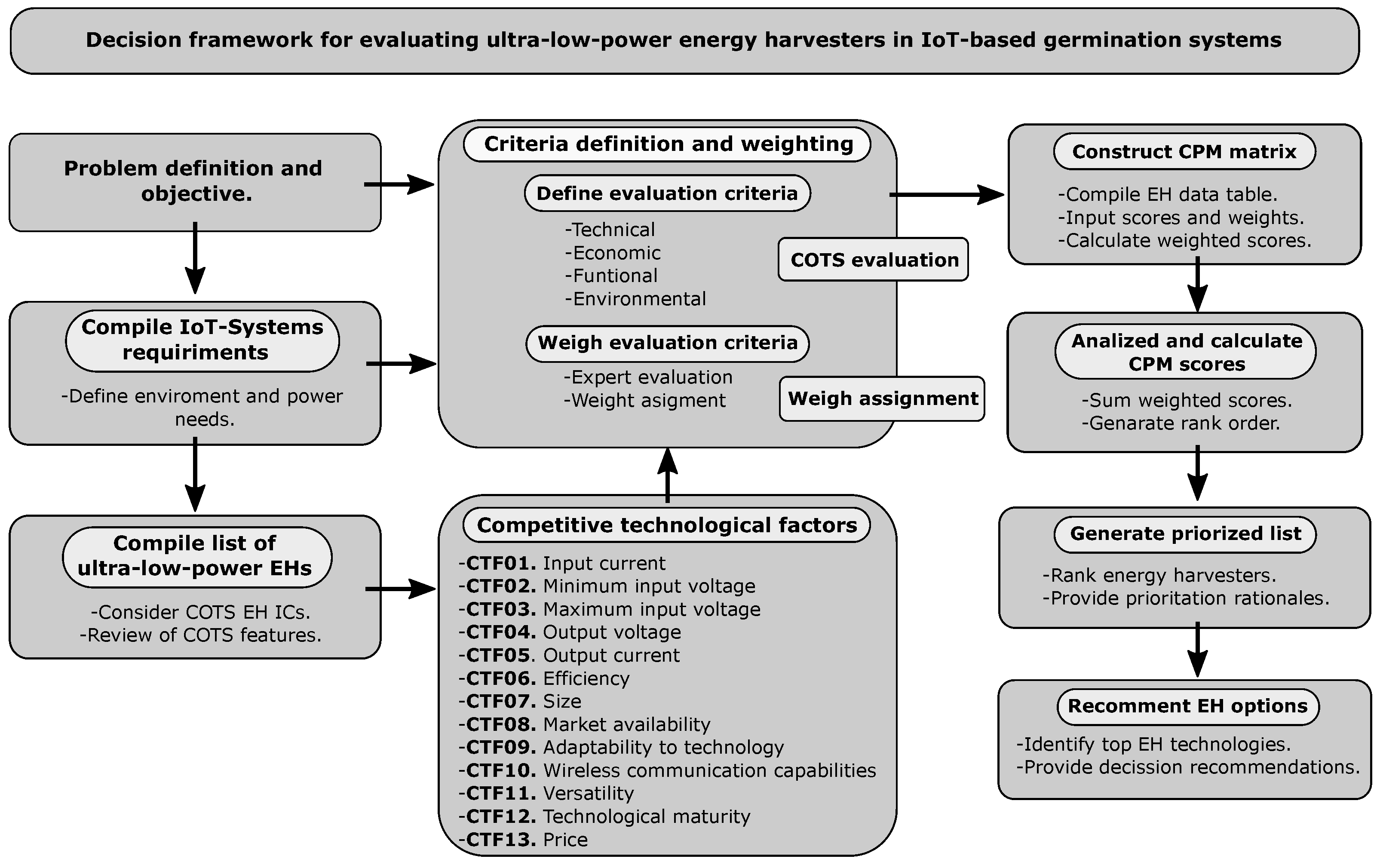
According to
Figure 2, the framework used considers the nature of the problem, IoT system requirements, commercial off-the-shelf (COTS) products related to energy harvesting technologies, decision criteria, device competitive profiles, device classification and ranking, a prioritized list of technological alternatives, and final options.
3.1. Defining the Case Context
This step allows those involved to develop a shared understanding of the technologies being compared. It entails defining the scope, purpose, mission, vision, objectives, and financing of the technologies in question within the context of the specific project. Depending on the case study, this step establishes the context of the comparison, defines its purpose, and outlines the selection strategies.
3.2. Identifying the Competing Technologies
According to Winchester and Salji [
48], the literature and patent review is essential for creating a technological summary. Also, according to Hiebl [
49], to select the outstanding works that should be included in the sample for analysis, the databases used and the coverage period should be specified. In addition, in this study, it is considered that technologies should be analyzed using the PEST method (political, economic, social, and technological) [
50,
51,
52] and by considering Maslow’s hierarchy concerning the needs and motivations of technology users [
53,
54].
3.3. Defining CTFs
The CTFs should describe the features of competing technologies and explain how they relate to the technical features that users would appreciate. Similar to the studies by Poston [
55] and Yan et al. [
56], the framework used in this study employs a hierarchical pyramid with five levels of CFTs according to the expectations of users regarding competing technologies.
Life cycle. This means that users expect technology to have a long useful life and that incremental updates and improvements can be considered appropriate.
Technical issues and infrastructure. This means that users expect manufacturers to guarantee the required technological functionality of a product and the availability of the necessary infrastructure for its implementation. Satisfaction with this aspect depends on the performance and features of the technology under consideration, as well as the supplies required for its implementation.
Legal, political, and regulatory compliance. In this regard, users expect the technology under consideration to comply with national or international standards and laws for operation in a particular country or region.
Sociocultural considerations. This aspect relates to the actions taken by the manufacturer to increase awareness and change user culture regarding the benefits that their product can bring when implemented in a specific application. This aspect is related to social impact (e.g., sustainability).
Environmental and ecological aspects. These aspects are called meta-needs. It should be noted that the more users’ growth needs are met, the more positive emotions they may experience. In this case, user satisfaction is a relatively non-binding process in the long term, as their growth needs change over time with new facilities and products. In this case, it is important to remember that it is a dynamic process with constant feedback.
3.4. Weighting CTFs
Based on the judgment of a technology expert, a hierarchy or weight should be used to prioritize the CTFs, considering their marketing and technical importance. In any case, the priority assignments should be explained, bearing in mind that each weight should be in the range (0, 1) and the sum of all CTF weights should be one.
3.5. Rating CTFs
Each CTF for each competing technology must be evaluated by assigning a specific qualification, which should be rated on a scale of 0 to 10. A CTF rating of 0 indicates that the technology does not contribute to the CTF. On the other hand, a CTF rating of 10 indicates that the technology excels in the aspect considered by the CTF.
3.6. Building CPM
A CPM must include the calculated CTF ratings for all competing technologies. This tool identifies the main strengths and weaknesses of each technology analyzed. A rating must be assigned to each CTF for each technology. This rating is calculated by multiplying the weight of the CTF by the value assigned to it. Note that the value of each CTF comes from the technology-expert-assigned value, as well as the recommendations and assessments of those responsible for the involved areas. To obtain a score for each competing technology, calculate the sum of the ratings for all CTFs. Note also that the rating for each CTF allows for a quantitative analysis of the impact of 13 CTFs on the evaluated technologies.
3.7. Analyzing the Scores of the Competing Technologies
Competitive technologies should be analyzed according to their significance and importance in the context of the selected CTFs. The score for each technology should reflect its strengths and weaknesses. The final score is the sum of the individual scores. The technology that receives the highest total score is considered the strongest relative to its competitors.
4. Results of the Multicriteria Analysis
Since this study is purely theoretical and does not involve an experimental plan, an action plan has been developed to show how the proposed set of actions for the case study aligns with the methodology described in
Section 3. This facilitates the connection between the results and the conclusions. Therefore, the action plan considers seven steps: (i) case study, (ii) competing technologies, (iii) competitive technology factors, (iv) CTF weights, (v) CTF rates, (vi) CPM estimation, and (vii) score analysis of competing technologies. A case study has been prepared that focuses on the application of ultra-low-power devices in an IoT context. The challenge is to select the best device for a real-world IoT application from among the various options offered by different manufacturers.
4.1. Case Study
For the purposes of this study, it is assumed that STEP ONE of the methodology involves a plausible and realistic use case. In the IoT context, this use case integrates ultra-low-energy harvesting principles with wireless sensor networks to facilitate the monitoring and control of the processes in a small-scale, intelligent, autonomous seed germination system. Furthermore, this use case proposes an innovative approach to conventional methods of monitoring seed germination in vertical nurseries, which currently rely on manual monitoring or wired sensor systems. Manual monitoring is laborious, vulnerable to human error, and data are provided intermittently. Wired monitoring systems, on the other hand, are costly to install and maintain, restricting flexibility in designing and implementing intelligent, autonomous germination systems. To ensure optimal germination rates, seedling health, and yield, it is essential to maintain ideal conditions for temperature, humidity, soil moisture, and light exposure at the individual seed tray level within an autonomous, intelligent germination system. In accordance with these operational requirements, the system design must be energy-efficient, even in scenarios involving the use of small, battery-powered sensors. If implemented in medium- or large-scale systems consisting of multiple trays or individual germination units, these sensors could entail significant operating costs and a serious environmental issue due to the handling and disposal of discarded batteries.
Consequently, given the focus of numerous research projects on the study or development of low-cost IoT-based seed germination systems for precision agriculture in small-scale production, the solution proposed in the use case specifies a smart, small-scale, and energy-autonomous seed germination system that must be implemented using energy harvesting systems. Therefore, it is assumed that the system incorporates ultra-low-power, self-sufficient microsensor nodes for real-time hyper-local monitoring of process conditions.
In this case, the germination system should be designed according to the principles of ultra-low-power consumer electronics. The design should also consider critical environmental factors that affect optimal seed germination and early seedling growth. Using ultra-low-power consumer electronics in seed germination systems focuses on the following aspects:
Precise monitoring should be based on low-power, accurate sensors that measure the critical process parameters in real time, such as soil moisture, temperature, humidity, light intensity, and even pH.
Automated control should be based on ultra-low-power microcontrollers, such as the STM32L series or certain ARM Cortex-M0+ variants. These microcontrollers are key to activating actuators based on sensor data and ensuring that optimal germination conditions are maintained automatically.
Wireless connectivity should utilize low-power protocols such as LoRaWAN, Zigbee, and Bluetooth Low Energy (BLE). These protocols enable remote monitoring and control, improving operational efficiency and safety.
Energy efficiency. The design of ultra-low-power electronics is typically focused on achieving minimal power consumption, a practice that can contribute to the extension of battery life. This effect is further enhanced by the incorporation of energy harvesting devices.
Small-scale precision agriculture. Due to its characteristics, this technology can be applied in small-scale crops, vertical farms, or research environments where precise control over the conditions of each plant is a requirement.
The conceptualized germination system offers several key benefits, including increased germination rates due to precise monitoring and dynamic adjustment of environmental parameters at the micro level. This system also reduces the waste of water and energy resources, shortens germination times, increases seedling vigor, minimizes labor costs, and enhances environmental sustainability by reducing hazardous waste and the carbon footprint associated with the manufacture and disposal of sensors and self-powered batteries. In addition, it facilitates better process understanding through sufficient data, contributing to improved agricultural and germination practices.
This case study illustrates how the integration of ultra-low-energy harvesting into smart sensor networks can enhance a specific agricultural process, such as seed germination, by enabling localized, autonomous, and data-driven environmental control. This ultimately leads to significant improvements in process efficiency, yield, and sustainability.
4.2. Competing Technologies
Considering STEP TWO of the methodology and to demonstrate its application, fifteen ultra-low-power devices were selected from five manufacturers: Texas Instruments, Linear Technology, which has been part of Analog Devices since 2017, STMicroelectronics, Silicon Labs, and EnOcean GmbH. No energy harvesters were found from Microchip Technology Inc., e-peas, or Cymbet Corporation. Six devices were selected from Texas Instruments: BQ25505, BQ25504 (2011), TPS6273x, TPS62736, BQ25570, and BQ25504 (2023). Two devices were selected from Linear Technology: LTC3588-2 and LTC3588EMSE-1. Three devices were selected from STMicroelectronics: SPV1050, SPV1040, and ST25DV-I2C. Two devices were selected from Silicon Labs: EFR32BG22E and EFR32BG27. Two devices were selected from EnOcean GmbH: ECO206 and ECT310.
From Texas Instruments, the BQ25505 is an ultra-low-power boost converter that features an integrated charger and a maximum power point tracking (MPPT) algorithm. This device harvests energy from solar cells, thermoelectric transducers, and piezoelectric transducers. There are two variants of the BQ25504: one produced in 2011 and one in 2023. They are labeled BQ25504 (2011) and BQ25504 (2023), respectively. Like the BQ25505, the BQ25504 is an ultra-low-power step-up converter and battery charger. While the two variants are similar, the 2023 version is more efficient and has different packaging. TPS6273x refers to a family of ultra-low-power step-down converters. The “x” relates to the output voltage. These devices are used in applications that demand high efficiency and low current. For example, they are used in battery-powered wireless sensors, smart meters, and other Internet of Things (IoT) devices. Lastly, the BQ25570 combines a boost charger, a buck converter for regulated output, and an MPPT algorithm. This makes it ideal for systems that need to simultaneously charge a battery and provide a regulated voltage to a load from a low-power source. Texas Instruments offers energy harvesting solutions, including the BQ25505, BQ25504, and BQ25570. The company also offers DC–DC conversion solutions, such as the TPS6273x family. These devices are essential for building low-power, extended-life systems, especially those powered by ambient energy or small batteries.
From Analog Devices, the LTC3588-2 is a nanopower energy harvesting solution designed for high-impedance energy sources, such as piezoelectric, solar, and magnetic transducers. The LTC3588EMSE-1 is a nanopower energy harvesting power supply. It is a package variant of the LTC3588-1 and is part of the LTC3588 family. Although the LTC3588EMSE-1 shares many features with the LTC3588-2, it has different output voltage options and UVLO thresholds. From STMicroelectronics, the SPV1050 is an ultra-low-power and high-efficiency power manager that can harvest energy from both photovoltaic (solar) cells and thermoelectric generators (TEGs). It supports various battery chemistries, including Li-ion, Li-polymer, NiMH, and NiCd batteries, as well as supercapacitors, with CC-CV charge profiles. It also has dual independent low-dropout regulators that power companion integrated circuits such as microcontrollers, sensors, and RF transceivers. The SPV1040 is an outdoor-optimized solar energy harvester that offers higher output power (up to 3W) with an embedded maximum power point tracking (MPPT) feature. Finally, the ST25DV-I2C series consists of near field communication (NFC) tags that harvest energy from an external RF field to supply very low-power applications. From Silicon Labs, the EFR32xG22E family of wireless system-on-a-chip (SoC) devices—including the EFR32BG22E, EFR32MG22E, and EFR32FG22E—is a key component of energy harvesting strategies due to their ultra-low-power consumption design. These SoCs enable devices to operate using harvested energy and are designed for ultra-low-power consumption. The EFR32BG22E is optimized for Bluetooth Low Energy (BLE) applications, and the EFR32BG27 Series 2 BLE SoC offers an ultra-small WLCSP package and an integrated DC–DC boost converter that enables operation at voltages as low as 0.8 volts. This makes it suitable for single-cell alkaline batteries and 1.5-volt button cell batteries. From EnOcean GmbH, the ECO260 is an electromechanical energy converter that generates power from mechanical motion. The ECT310 is a DC-to-DC converter designed for thermoelectric applications. It is used with Peltier elements to harness temperature differences.
In addition, the following criteria were considered for each CTF: input current, minimum and maximum output voltage, output current, efficiency, size, market availability, customization, adaptability, wireless communication capability, versatility, technological maturity, and price. As part of the competitiveness analysis, each CTF was assigned a description and a weight between 0 and 1 based on its importance to the evaluated technology. For this reason, a CPM was constructed in which each CTF was rated from 0 to 10. Finally, all CTFs were hierarchically ranked based on their ratings. This ranking determined which devices were more technologically viable in the energy harvesting of ultra-low power.
4.3. Definition of Competitive Technology Factors
Building on the ideas mentioned above, STEP THREE of the methodology involves considering the product specifications that are most valued by users or consumers. The following is an example of a set of 13 critical success factors for ultra-low-power devices for energy harvesting.
CTF01. Input current, . It determines how much energy a device can harvest. It affects the performance, autonomy, cost-effectiveness, adaptability, and potential of a device to innovate and contribute to sustainability. Devices with higher , offering better functionality and capacity conditions, are more attractive to the market.
CTF02. Minimum input voltage, . In an energy harvesting system, this refers to the minimum voltage necessary for effective operation. This threshold can vary depending on the technology used for harvesting energy and the specific components of the system. For instance, the minimum input voltage in vibration-based systems can range from millivolts (mV) to several volts (V).
CTF03. Maximum input voltage, . It refers to the maximum voltage that the system can handle without sustaining damage or experiencing performance degradation. This value is used as a reference to ensure that the system operates safely and efficiently.
CTF04. Output voltage, . It refers to the difference in electrical potential of a device, such as a battery, power supply, or circuit component, when supplying power to a load. Measured in volts (V), it indicates the availability of electrical power. In practical terms, this CTF determines how effectively a device can power other components, and its value varies depending on the specific device design and connected load.
CTF05. Output current, . It describes the current from a device to a load. Measured in amperes (A), it defines the power available to the connected components. The CTF may vary depending on the load resistance and output voltage.
CTF06: Efficiency, . It can be considered a quality feature in any energy transducer, given that energy conversion can occur from kinetic or vibrational energy to electrical energy.
CTF07: Size. It refers to the physical dimensions and form factor of the device, including length, width, height, and total volume. It is important to consider some constraints, such as heat dissipation, electrical characteristics, mounting type, and cost.
CTF08. Market availability. It concerns how easily and widely the product can be found and purchased by consumers in a given market. There are several key aspects to this CTF, such as inventory levels, distribution channels, market demand, regulatory factors, and seasonal variations.
CTF09. Adaptability to technology. Customizable technology includes products or systems that can be tailored to meet the specific preferences or needs of users. This may involve adjusting features, settings, or components to create a more personalized experience. On the other hand, adaptive technology refers to systems that can adjust their performance or functionality based on user interactions or environmental conditions. Together, customizable and adaptive technologies enhance the user’s experience by enabling personalization and responsiveness, making it more effective and easier to use.
CTF10. Wireless communication capabilities. It is determined by several factors, such as bandwidth, signal strength, multiplexing, transmission speed, and interference. In general, it is essential to enable seamless connectivity and functionality in current electronic devices, affecting everything from Internet access to device interoperability.
CTF11. Versatility. It refers to the ability to capture energy from various sources and convert it into usable electrical energy.
CTF12. Technological maturity. The term refers to the degree of advancement, complexity, and dependability of the technology used to harvest and transform energy from diverse sources into useful electrical energy. It indicates that technology is well-developed, reliable, and ready for widespread use, which is a significant factor in its adoption across various applications.
CTF13. Price. It is important to consider the economic competitiveness of the devices under evaluation because it influences consumer decisions and the overall market landscape. Generally, lower costs encourage the adoption of applications such as IoT devices, wearables, and remote sensors.
4.4. CTF Weights
Before weights are assigned to the thirteen CTFs, the specifications of ultra-low-power devices for energy harvesting should be reviewed and analyzed.
Table 1 shows the parameter description for each device for which the weights have been defined. Note that the description of each parameter is based on the data-sheet provided by the manufacturer, where
M indicates the manufacturer, TI is Texas Instruments, LT is Linear Technology from the company Analog Devices, STM is STMicroelectronics, SL is Silicon Labs, EO is EnOcean GmbH, and NR is “Not reported”.
The CTF09 for all devices considered corresponds to several arguments regarding why each device can be considered a customizable and adaptive technology to create a more personalized experience for technological users.
For
STEP FOUR,
Table 2 shows the weights assigned to each CTF (Factor A). Note that each of the weights given to the CTFs is based on the importance of the competitive factor in ultra-low-power devices for energy harvesting. The weighting is subjective, according to the interests of each user. Some users will prefer to assign more importance or weight to technical aspects; others will prefer to give more importance to aspects of versatility, usability, or size. For this exercise, priority has been given to the technical-electronic elements of the evaluated cards. It should be noted that the sum of the weight values for each CTF is equal to 1.
Table 2 shows that the most important CTF is efficiency, which is assigned the highest weighted value of 0.20. In contrast, the CTF with less relevance has the lowest weighted value of 0.02. For the present case study, to facilitate the multiple analyses of the performance of all devices, the Pareto principle (80/20) was applied. That is, CTFs with the highest weight, whose sum is equal to or close to 80%, were considered the most important and defined the best performance of the devices. In this case, technical performance characteristics were prioritized. The six most important technological competitive factors of the ten ultra-low-power electronic cards for energy harvesting, which account for 80% of the importance of all technological features, are efficiency (0.2), output voltage (0.15), output current (0.15), input current (0.1), minimum input voltage (0.1), and minimum output voltage (0.1). The remaining seven competitive technological factors account for 20% of all desirable features in the ten electronic boards evaluated, namely size (0.05), versatility (0.04), technology adaptability (0.03), market availability (0.02), wireless communication capability (0.02), technology maturity (0.02), and price (0.02). The above is reflected in
Table 2.
4.5. CTF Rates
In
STEP FIVE, each CTF should be rated for each competing technology (Factor B). Consequently, it should be noted in
Table 3 and
Table 4 that a numerical rating was assigned to each CTF for each device considered. The assigned level ranges from 0 to 10, where 0 is the lowest level, indicating that the device does not meet the CTF attribute at all. A rating of 10 means that the technology is fully compliant with the CTF attribute. Intermediate ratings indicate performance levels of poor, fair, or good for each CTF attribute.
4.6. CPM Estimation
In order to assess the competitiveness of each of the technologies evaluated,
STEP SIX makes it possible to develop the CPM (see
Table 5). The first column lists each of the CTFs. The headings of the subsequent columns indicate the names of the technologies to be evaluated. Cell values are the result of the multiplication of the weighted value (0.00 to 1.00) of the CTF (Factor A) and the score obtained for compliance with the attribute of each CTF (0 to 10, Factor B) of each evaluated device. In the end, the total sum of the scores obtained by each device is recorded for each of the CTFs. The devices with the highest totals are the best rated for weighting and scoring all CTFs. This quantitative approach not only highlights the relative performance of each technology but also facilitates informed decision making by clearly illustrating which technologies excel at certain capabilities and which may fail. By analyzing these ratings, stakeholders can prioritize the technologies that best fit their strategic goals and resource allocations.
Table 5 and
Table 6 show the CPM derived from the ratings assigned to each CTF and the weights assigned to each ultra-low-power device for energy harvesting.
4.7. Score Analysis of Competing Technologies
According to the CPM obtained in
Table 5 and
Table 6, and based on
STEP SEVEN, the ranking reveals the following: The top five e-cards were SPV1050 (8.71), LTC3588-2 (7.59), BQ25570 (7.52), BQ25504 (7.27), and PSV1040 (7.17). However, a closer look at the weighted CTF scores reveals that while SPV1050 has the highest score (8.71), it is not necessarily the device with the best current and voltage performance. Note that the next four devices have better current and voltage performance but lower scores in the lower-weight CTFs. The specialist technician in charge must select the best device among the five devices according to the project interests and the most important benefits of the CTFs.
5. Discussion and Comparison with Other Methodologies
5.1. Discussion
This study provides a structured and replicable framework for selecting ultra-low-power energy harvesting devices for IoT-based applications, specifically targeting autonomous seed germination systems. The findings underscore several key insights:
Effectiveness of MCA. The proposed methodology, based on a competitive profile matrix (CPM) and weighted critical technological factors (CTFs), proved effective in comparing fifteen devices from five leading manufacturers. By prioritizing efficiency, output voltage/current, and input parameters, the analysis identified STMicroelectronics’ SPV1050 as the top-performing device (score: 8.71), followed by the LTC3588-2 and BQ25570. This shows that MCA can provide transparent and quantitative decision-making in contexts where technical, economic, and environmental priorities conflict.
Practical Implications for IoT and Smart Agriculture. The case study illustrates the feasibility of integrating energy harvesting into small-scale autonomous germination systems. Such systems reduce the need for disposable batteries, minimize maintenance costs, and improve sustainability. The approach aligns with global trends toward energy-autonomous IoT devices, offering benefits such as improved resource efficiency, a reduced carbon footprint, and improved operational reliability.
Trade-offs and Context Sensitivity. Although SPV1050 achieved the highest overall score, the analysis revealed that other devices excel in specific technical attributes (e.g., current and voltage performance). This highlights the importance of context-specific weighting of CTFs. For projects focusing on cost, size, or wireless communication, the rankings could shift significantly. Thus, the adaptability of the framework is a major strength, allowing for the recalibration of priorities for different applications.
Limitations and Future Directions. The study focused on a single use case under controlled assumptions. Industrial-scale deployment would require additional considerations, including real-world energy variability, integration with hybrid harvesting systems, and long-term reliability testing. Future research should explore dynamic weighting strategies, incorporate lifecycle assessments, and evaluate emerging technologies such as AI-driven energy management and multi-source harvesters.
Contribution to Sustainable Electronics. By demonstrating a systematic approach to technology selection, this work supports strategic planning for sustainable IoT solutions. The methodology can be extended to other domains—such as biomedical devices, smart homes, and industrial IoT—where energy autonomy is critical.
This study demonstrates the efficacy of a structured MCA framework for selecting ultra-low-energy harvesting devices tailored to IoT-based applications, specifically for autonomous seed germination systems. In this study, a CPM and weighted critical technological factors (CTFs) were utilized to evaluate fifteen devices from five leading manufacturers. The analysis placed significant emphasis on efficiency, output voltage/current, and input parameters, identifying the SPV1050 (STMicroelectronics) as the best-performing device (score: 8.71), followed by the LTC3588-2 and BQ25570. These results indicate that MCA provides a transparent and replicable approach to decision-making in contexts where technical, economic, and environmental priorities conflict.
The findings of this study carry substantial implications for the design and deployment of sustainable IoT systems. Integrating energy harvesting into small-scale germination systems has been demonstrated to reduce reliance on disposable batteries, minimize maintenance costs, and enhance environmental sustainability. This approach is consistent with global trends toward energy-autonomous IoT devices, offering benefits such as improved resource efficiency, reduced carbon footprint, and improved operational reliability.
From an industry perspective, the proposed framework enables manufacturers and system integrators to make informed decisions when selecting energy harvesting solutions. By prioritizing ultra-low-power devices with high efficiency and adaptability, companies can achieve operational cost reductions, minimize hazardous waste, and adhere to sustainability regulations. The ability to ensure long-term, maintenance-free operation of IoT nodes is particularly valuable for remote or inaccessible environments, such as precision agriculture, industrial automation, and smart cities. Furthermore, the methodology fosters scalability and strategic planning by providing a replicable and auditable decision-making instrument that can be adapted to evolving project objectives.
Despite its strengths, this study has limitations. The analysis was conducted under a series of controlled assumptions for a single use case. However, industrial-scale implementation would require additional considerations, including the variability of real-world energy sources, integration with hybrid harvesting systems, and long-term reliability testing. Future research efforts should explore dynamic weighting strategies, life cycle assessments, and integration with AI-driven energy management for predictive optimization. Furthermore, a device with multiple integrated energy sources can offer alternative power options when the supply is intermittent, thereby increasing the reliability of the system.
In summary, this work provides a systematic approach to technology selection. This approach can be applied to other fields, including biomedicine, smart homes, and the industrial Internet of Things (IoT). The proposed framework integrates technical evaluations with practical implications. It establishes a basis for decision-making in seed germination systems by ensuring that the selected technology is economical, technically feasible, and environmentally friendly.
5.2. Comparison
This section provides a structured comparison of the framework used in this study with the TOPSIS, ELECTRE, VIKOR, and COPRAS methods.
Table 7 highlights the features, advantages, and disadvantages of all the methods. It should be noted that the frameworks considered are widely used in MCDM analysis and are particularly relevant to technology selection problems. It should be noted that the framework used in this study is a variant of the simple additive weighting (SAW) method. Like TOPSIS, it is one of the most commonly used approaches for aggregating performance in MCDM [
3,
4].
Although the framework used has low conflict handling, it is a simple method that assumes that, for evaluating each alternative, a total score is calculated by adding the normalized values of each criterion, which are weighted according to their importance. Despite its simplicity, the framework used provides reliable results, especially when combined with other approaches. It also improves accuracy when more criteria are included.
On the other hand,
Table 8 provides a summary comparison of the framework employed in this study with the MCDM methods typically used for selecting technologies. The aspects considered are the following: compensatory factors; conflict handling; complexity; and typical use.
Table 9 summarizes the user-friendliness, simplicity of implementation, speed of obtaining results, required knowledge, and necessary informatics tools for each method considered. Note that the framework resulted in the best option as an MCDM method once again for selecting technologies.
On the other hand,
Table 10 shows a comparison between this study and the studies by Avallone et al. [
30], Bhatt et al. [
31], and Sarker et al. [
32]. Note in
Table 10 that this study uses a framework based on a variant of the SAW method that employs CPM at the device level. This framework generates a ranked list of outstanding devices within the context of the considered seed-germination system. In contrast, the study by Avallone et al. [
30] provides a thematic review at the system level, covering sources, circuits, storage, and protocols, but does not include an MCDM-type analysis. Meanwhile, the study by Bhatt et al. [
31] compares non-conventional EH with conceptual EH, including rectennas. It considers cost and feasibility but not device granularity. Finally, the study by Sarker et al. [
32] uses VOSviewer to provide a bibliometric overview of MEH and identify trends and opportunities.





 ,
,