

The Evolution of Mechatronics Engineering and Its Relationship with Industry 3.0, 4.0, and 5.0


 , ,
, ,  , and
, and
Abstract
1. Introduction
2. Materials and Methods
2.1. Summary of the Industrial Revolutions
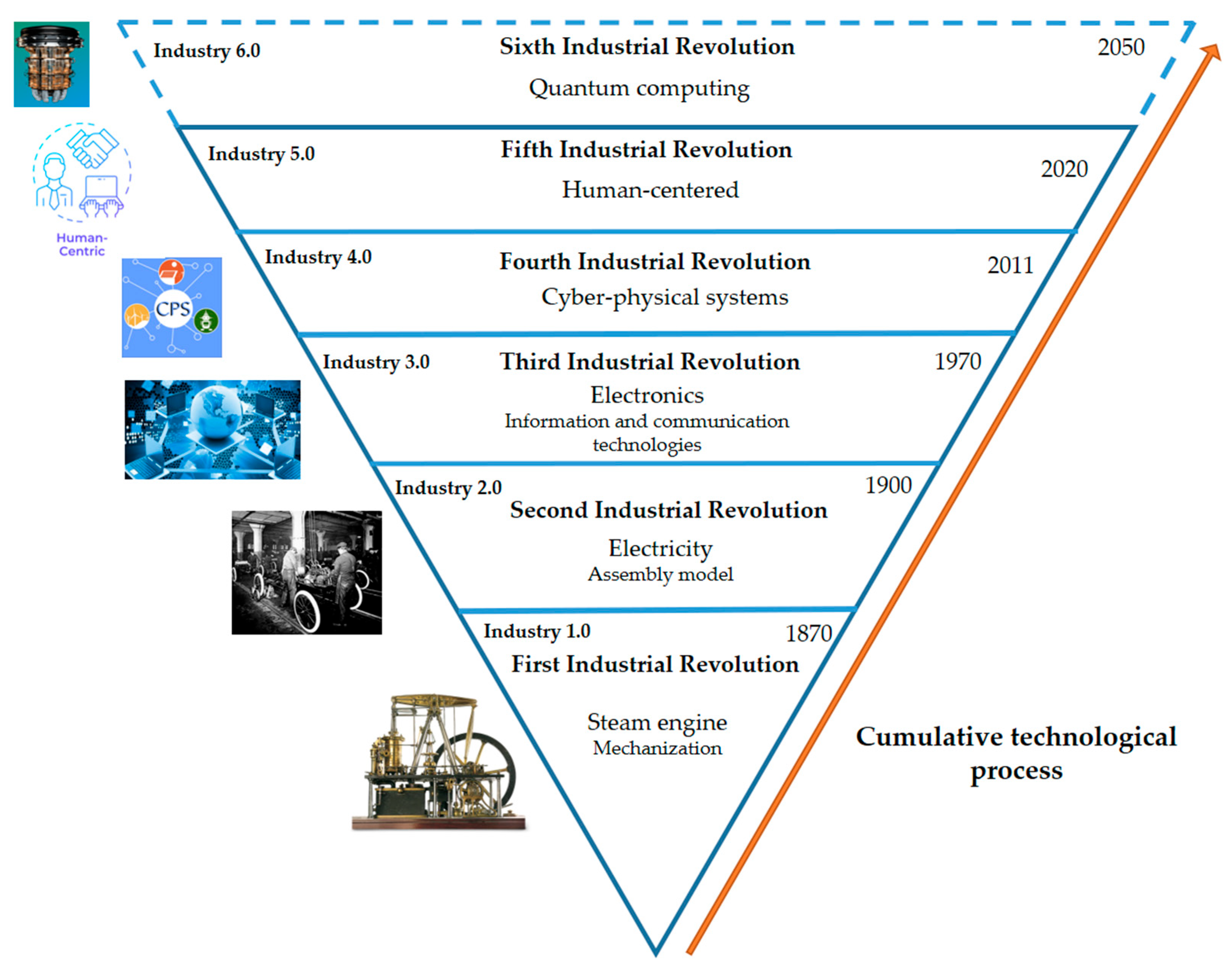
History of Industrial Revolutions
2.2. Industrial Revolutions and Mechatronics Engineering
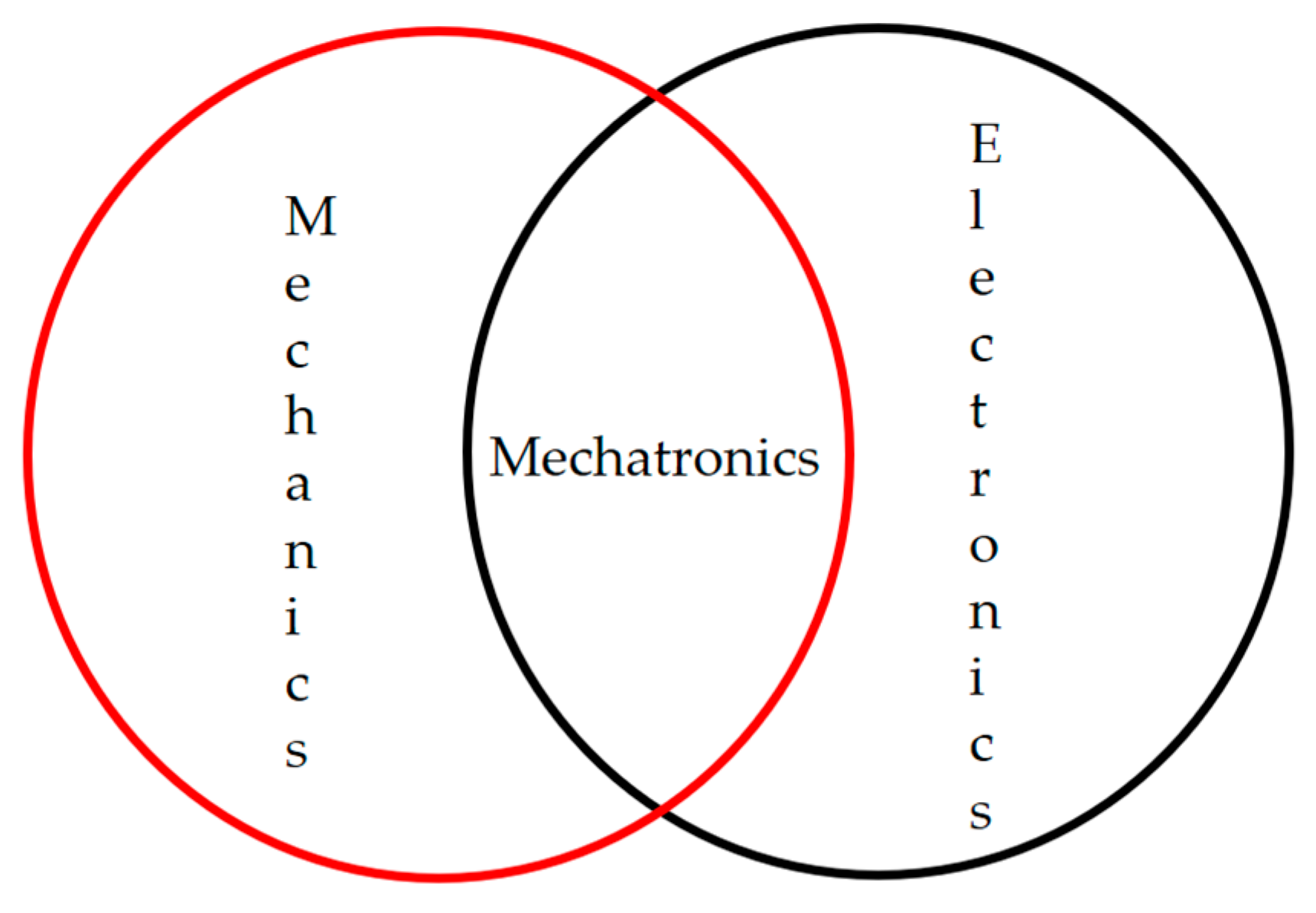
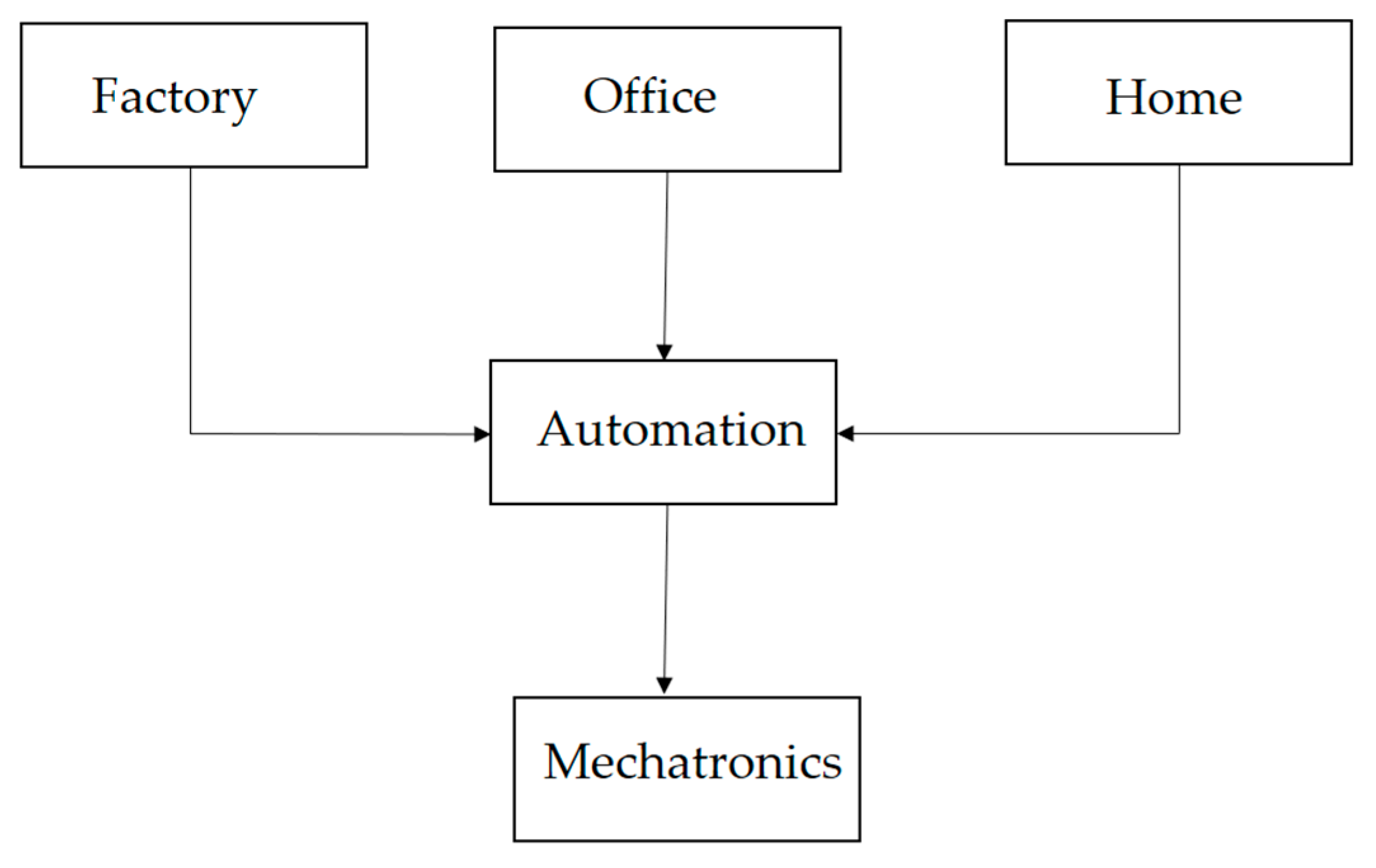
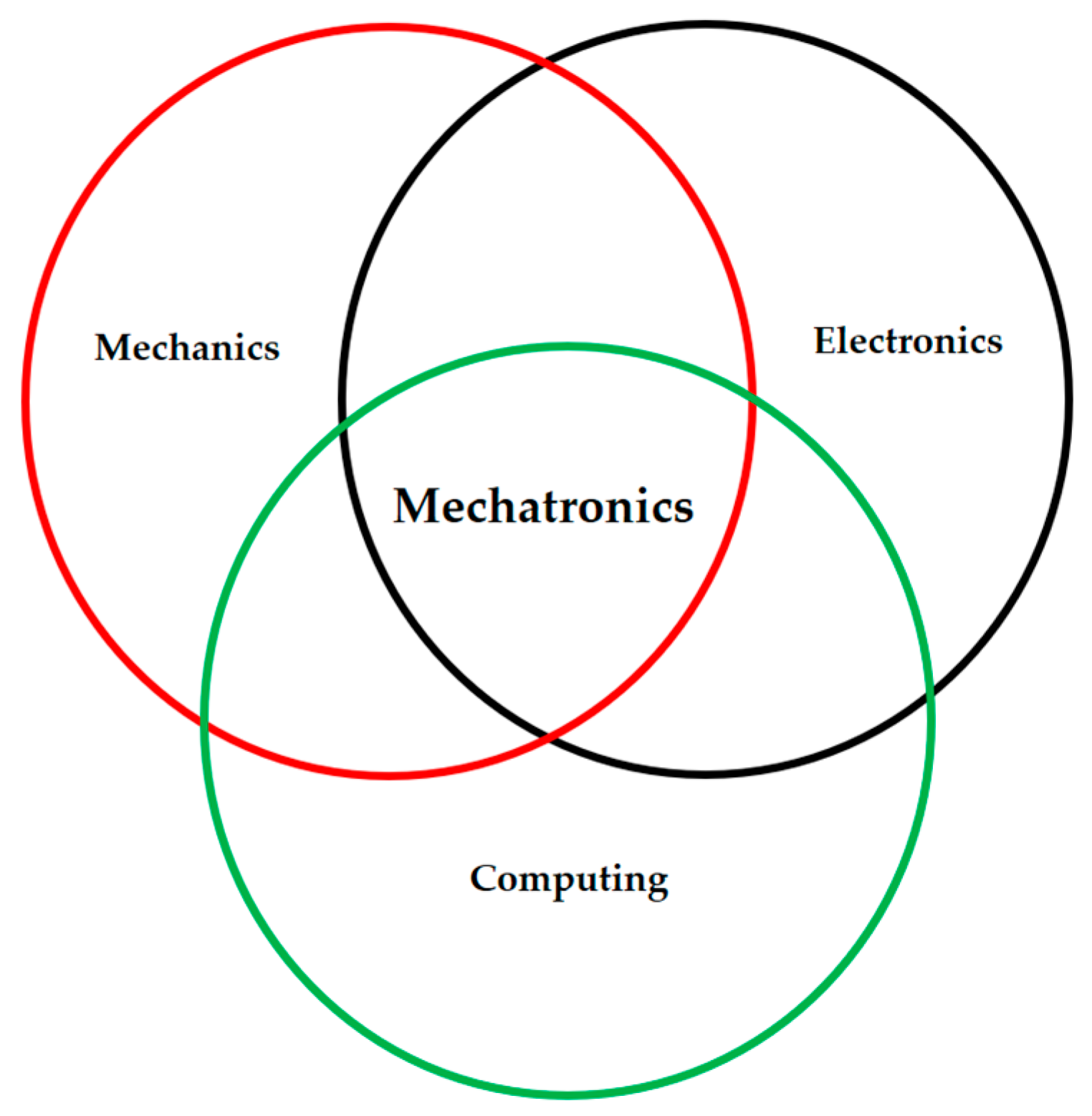
2.2.1. Mechatronics and Industry 3.0
- (1)
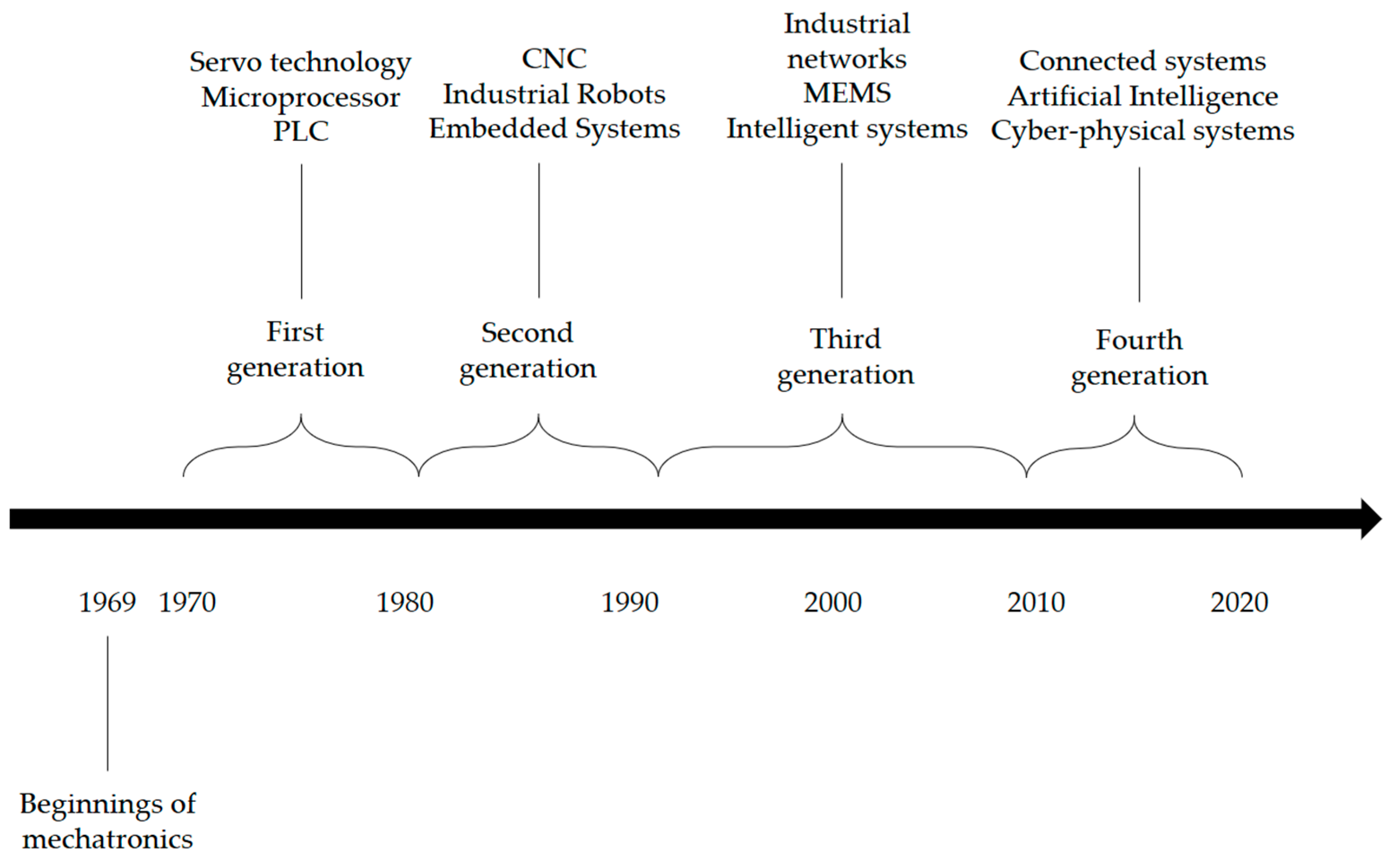
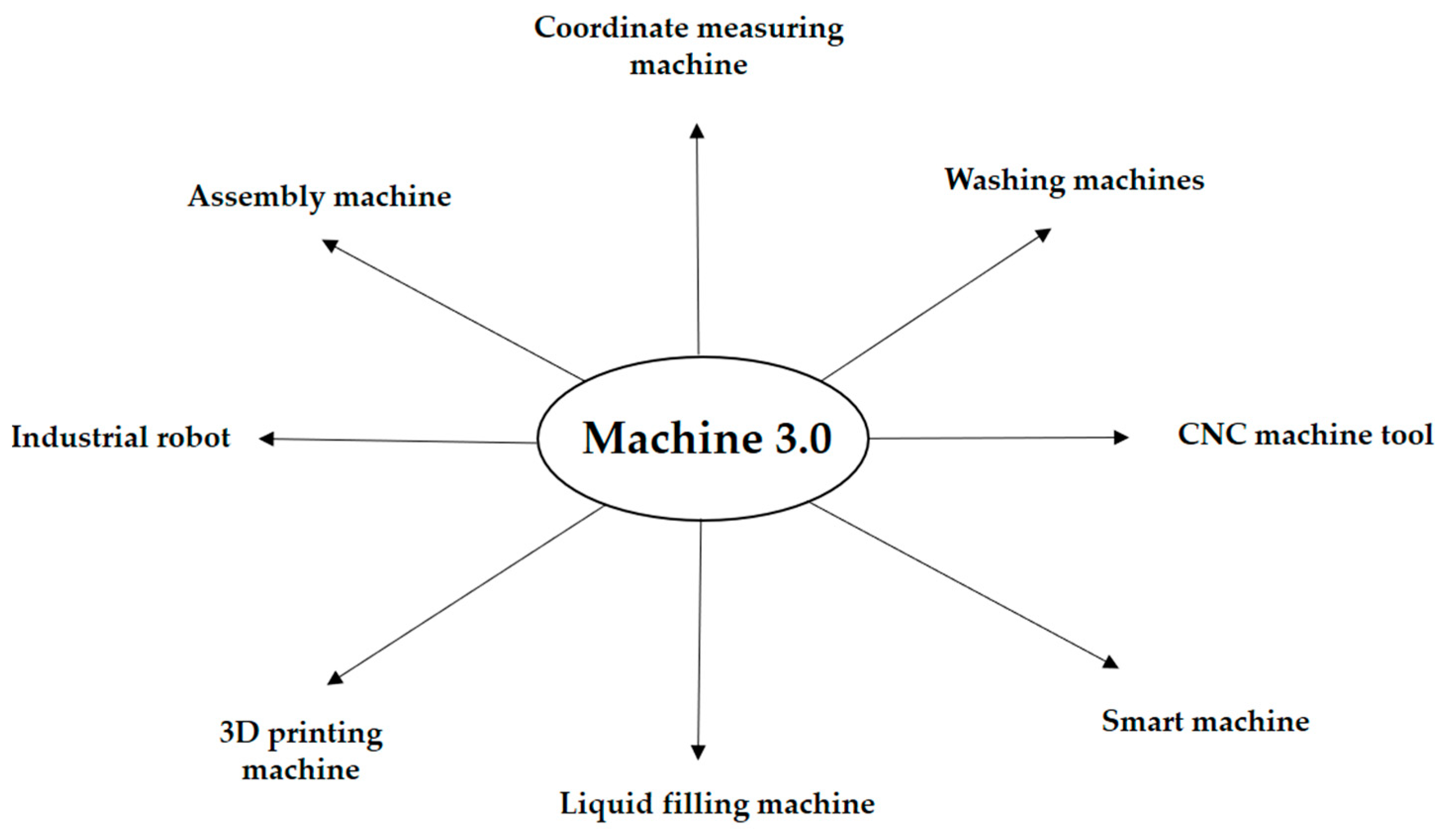
- First generation (1970–1980): The beginning of mechatronics with little integration between mechanics and control (development of electromechanical systems: basic robotic manipulators, automatic doors, washing machines, CNC machine prototypes, etc. [37,38]). PLC, sequential control, and the beginning of the digitization of production processes were the basis for mechatronic integration.
- (2)
- Second generation (1980–1990): Strengthening the integration of mechanics, computing, and electronics (microprocessor applications and use of digital information processing units, development of MEMS, rapid prototypes, embedded systems, etc. [39]). Advances in control and electronics enabled the development of stronger mechatronic integration, allowing the incorporation of industrial robots, consolidated CNC machines, and flexible manufacturing cells into production lines.
- (3)
- Third generation (1990–2010): Formalization of the concept of mechatronics, integrating mechanics, electronics, control, and digitization (recognition of mechatronics as an engineering discipline, development of nanotechnology and biotechnology, development of intelligent systems, etc. [43,44]). Mechatronic integration was strengthened by the incorporation of industrial networks, the evolution of CAD/CAM techniques, and distributed control applications.
- (4)
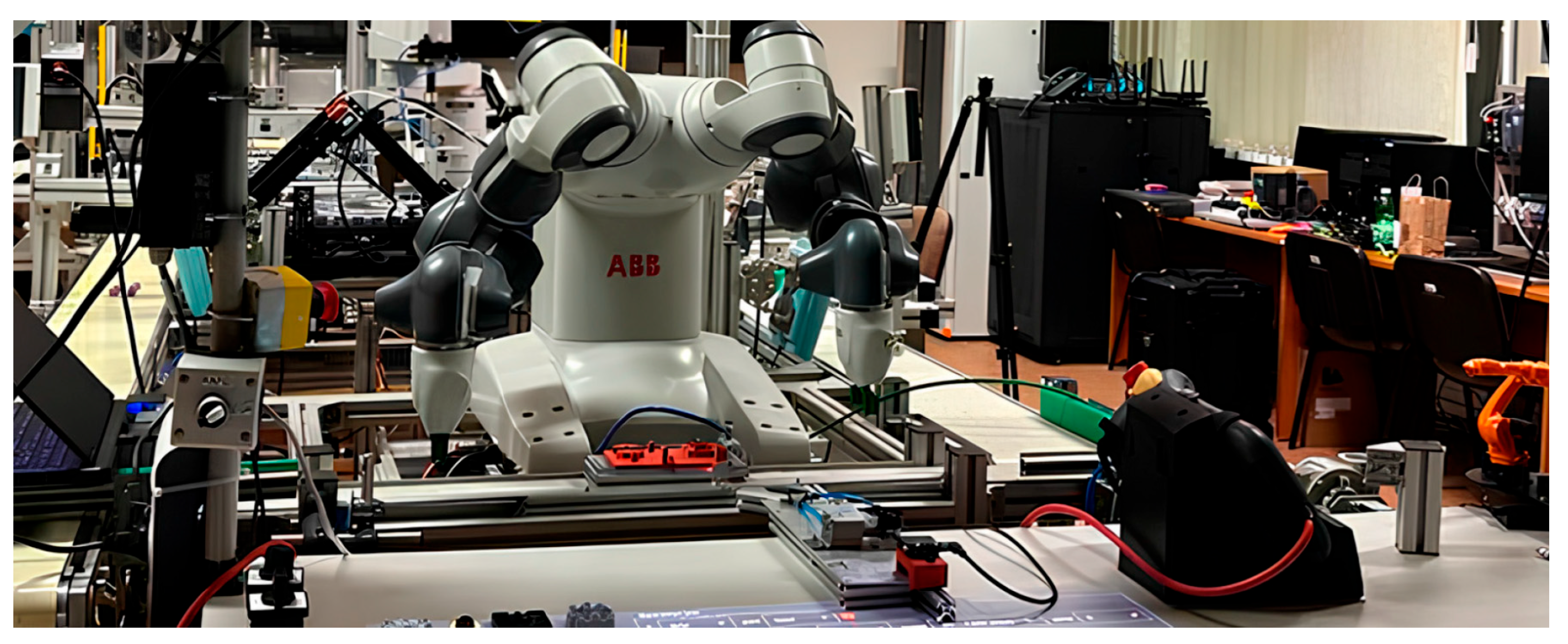
- Fourth generation (2010–2020): Intelligent, connected, resilient, and eco-mechatronics (development of cyber-physical systems, digital twins, cobots, etc.). In this generation, mechatronic integration was characterized by the convergence of computational intelligence, digital connectivity, and cyber-physical systems.
2.2.2. Mechatronics and Industry 4.0
2.2.3. Mechatronics and Industry 5.0
2.2.4. Conclusions on the Evolution of Mechatronics
2.3. Mechatronics and Machines 3.0, 4.0, and 5.0
2.3.1. Mechatronics and Machines 3.0
- (1)
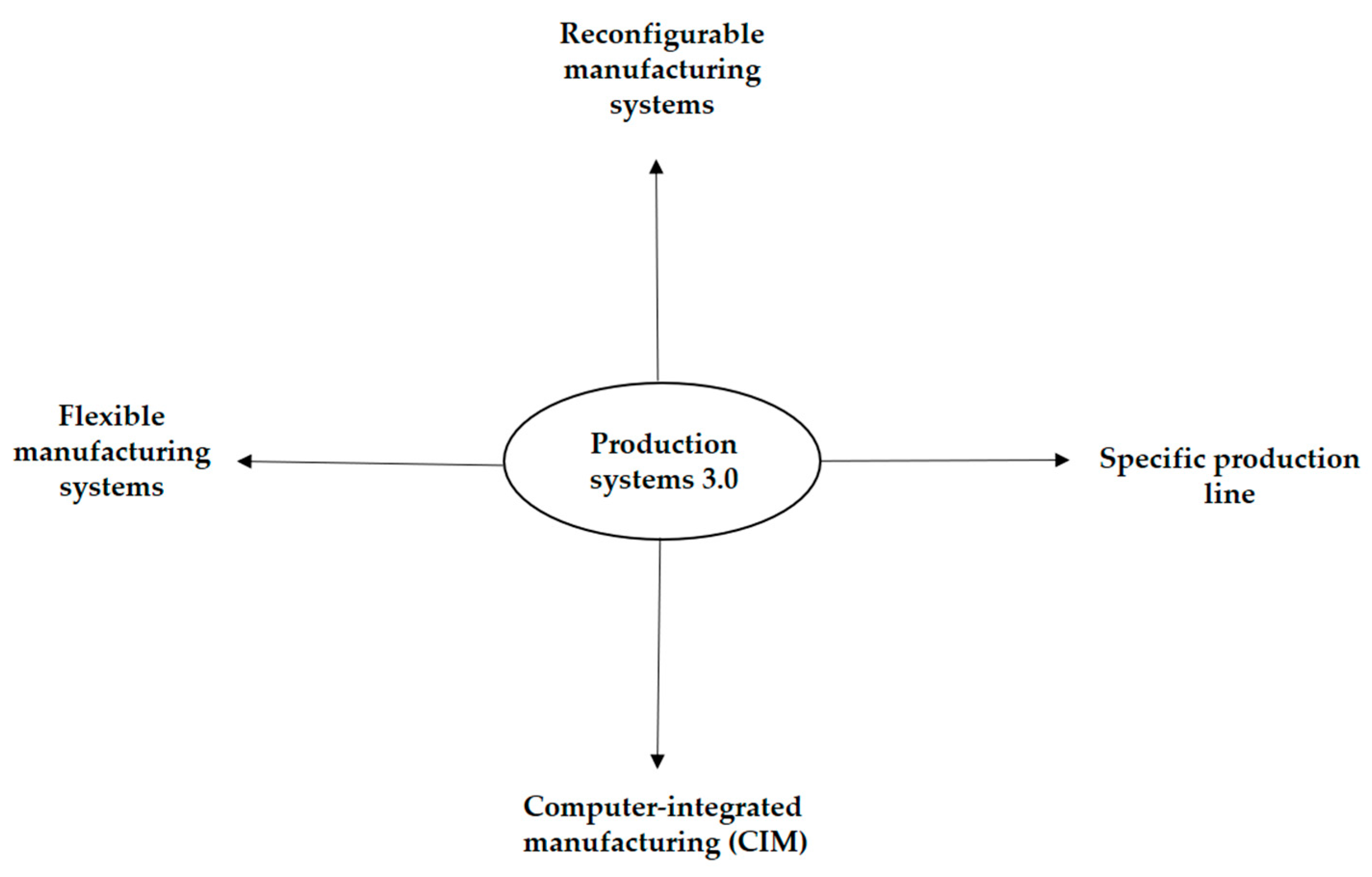
- Mass production gave way to flexible production.
- (2)
- Companies began digitizing their processes with the help of computers (computerization of industry).
- (3)
- Production systems adopted programmable automation.
- (4)
- Mechanical and analog electronic technology gave way to digital electronics.
- (5)
- Companies began to use renewable energies and developed energy efficiency programs.
- (6)
- Industry began the process of decentralization.
- (7)
- Globalization and the development of large corporations began.


2.3.2. Mechatronics and Machines 4.0
- (1)
- Production processes have moved from moderate digitization to high digitization (total digitization of the value chain).
- (2)
- Factories with advanced conventional automation have been transformed into smart factories.
- (3)
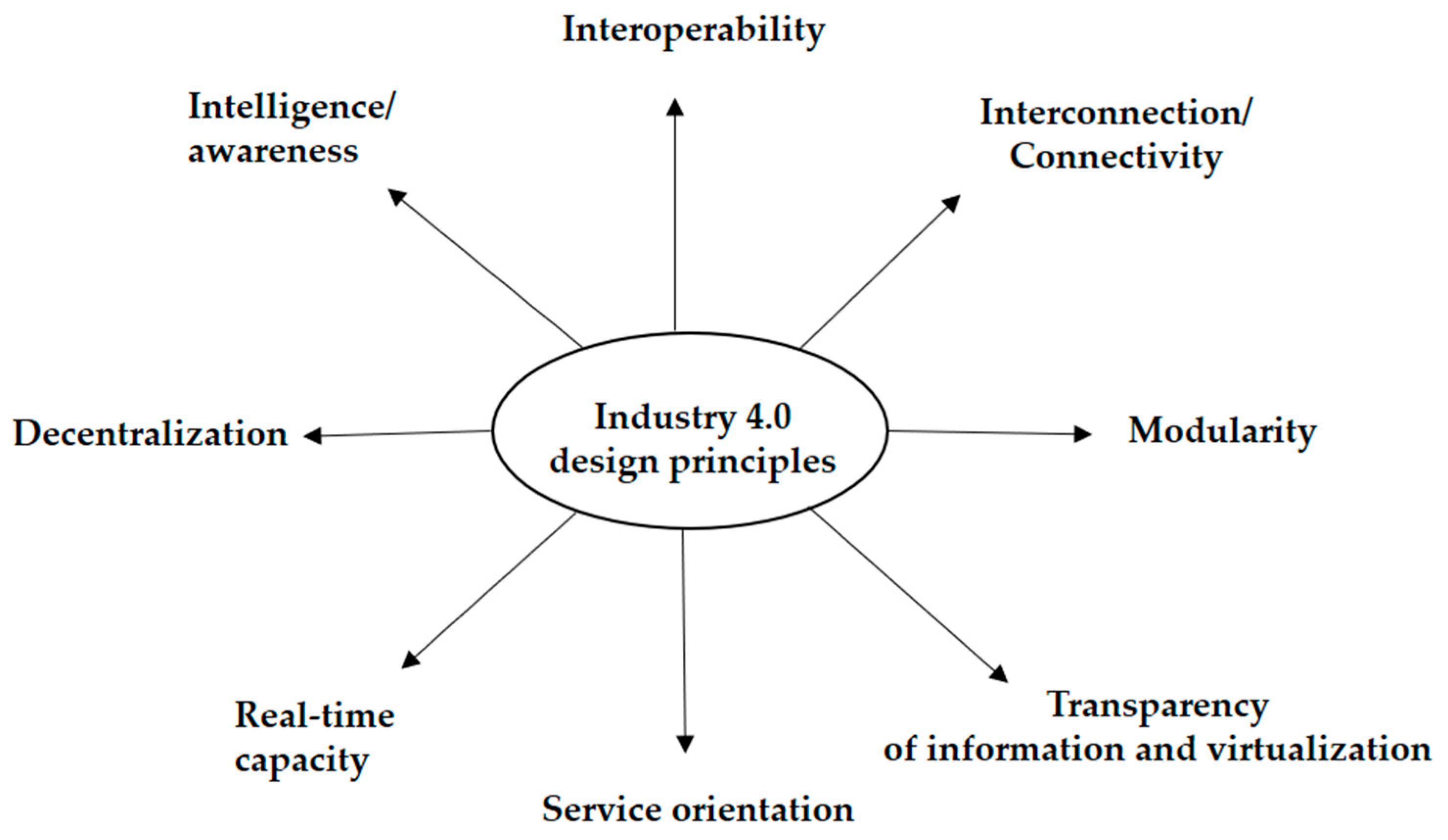
- Manufacturing systems are fully integrated (horizontally and vertically), and operations are carried out in real time.
- (4)
- Artificial Intelligence focuses on improving and increasing the efficiency of machines and production systems.
- (5)
- Production systems went from conventional automation to smart, optimized automation.
- (6)
- Production is customized.
- (7)
- Traditional connectivity gives way to hyperconnectivity (interconnectivity and interoperability in production systems).
- (8)
- Production is optimized and highly energy efficient.


2.3.3. Mechatronics and 5.0 Machines
- (1)
- Artificial Intelligence is oriented towards humans and human–machine synergy.
- (2)
- Production systems are hyperconnected (they have high connectivity and real-time communication).
- (3)
- Production systems are hyperpersonalized.
- (4)
- Cognitive systems are integrated into production systems.
- (5)
- Automation is intelligent and has the ability to make decisions autonomously.
- (6)
- Manufacturing systems are highly digitized.
- (7)
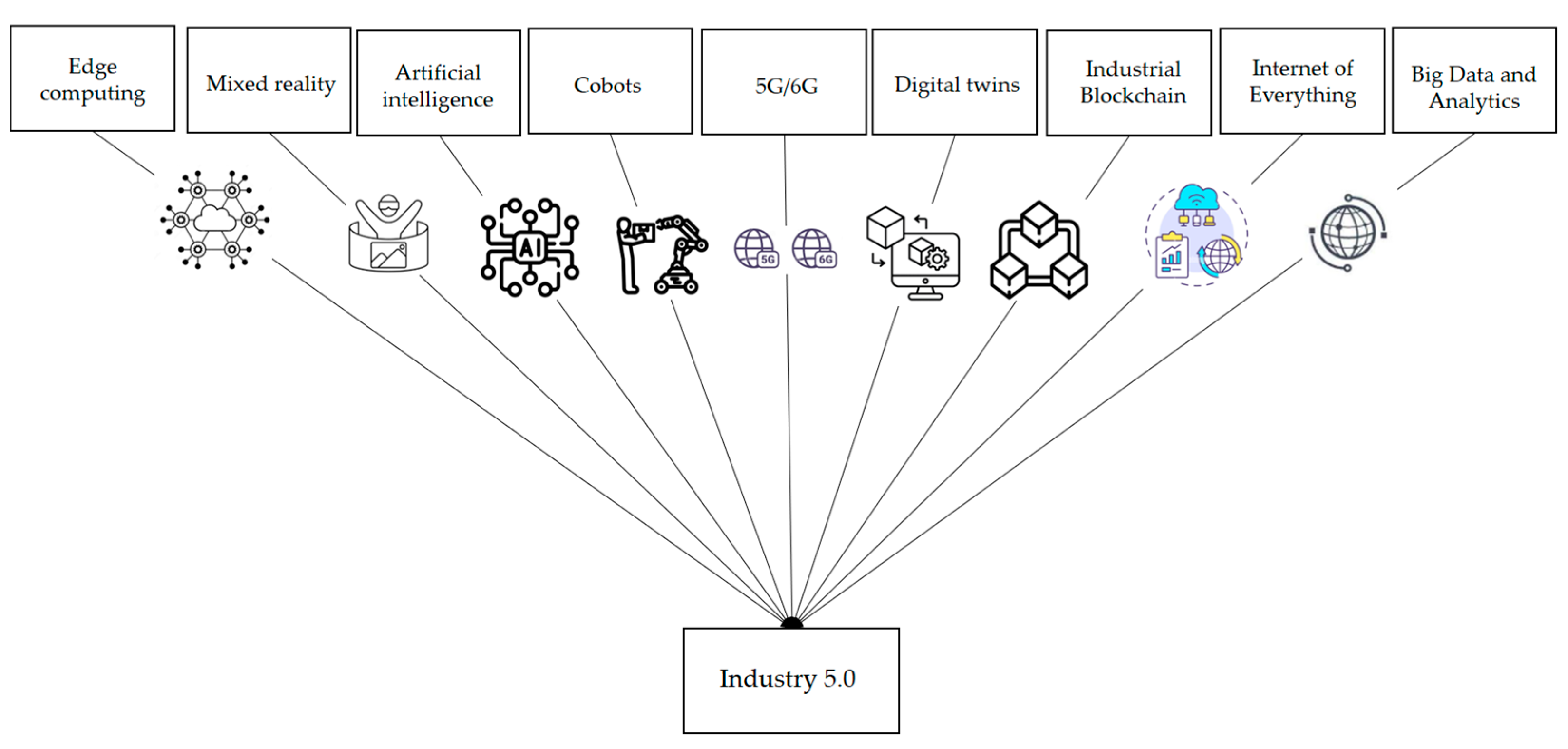
- They inherit technical characteristics from Industry 4.0 (enabling technologies such as IIoT, cobots, augmented reality, etc.).
- (8)
- Manufacturing becomes resilient.
- (9)
- Sustainable practices in manufacturing processes are mandatory.
2.4. Mechatronics and Technological Transitions
2.4.1. Mechatronics and Industry 3.5
2.4.2. Mechatronics and Industry 4.5
3. Results
3.1. Industrial Revolutions
3.2. Industrial Revolutions and Mechatronics
3.2.1. The Third Industrial Revolution and Mechatronics
3.2.2. The Fourth Industrial Revolution and Mechatronics
3.2.3. The Fifth Industrial Revolution and Mechatronics
3.2.4. Roadmap for Mechatronics
3.3. Classification of Machines
3.3.1. Machines 3.0
3.3.2. Machines 4.0
3.3.3. Machines 5.0
3.3.4. Machines 3.5 and 4.5
4. Discussion
4.1. Industrial Paradigms
4.2. Mechatronics Engineering and Industries 3.0, 4.0, and 5.0
4.3. Classification of Technology
5. Conclusions
- •
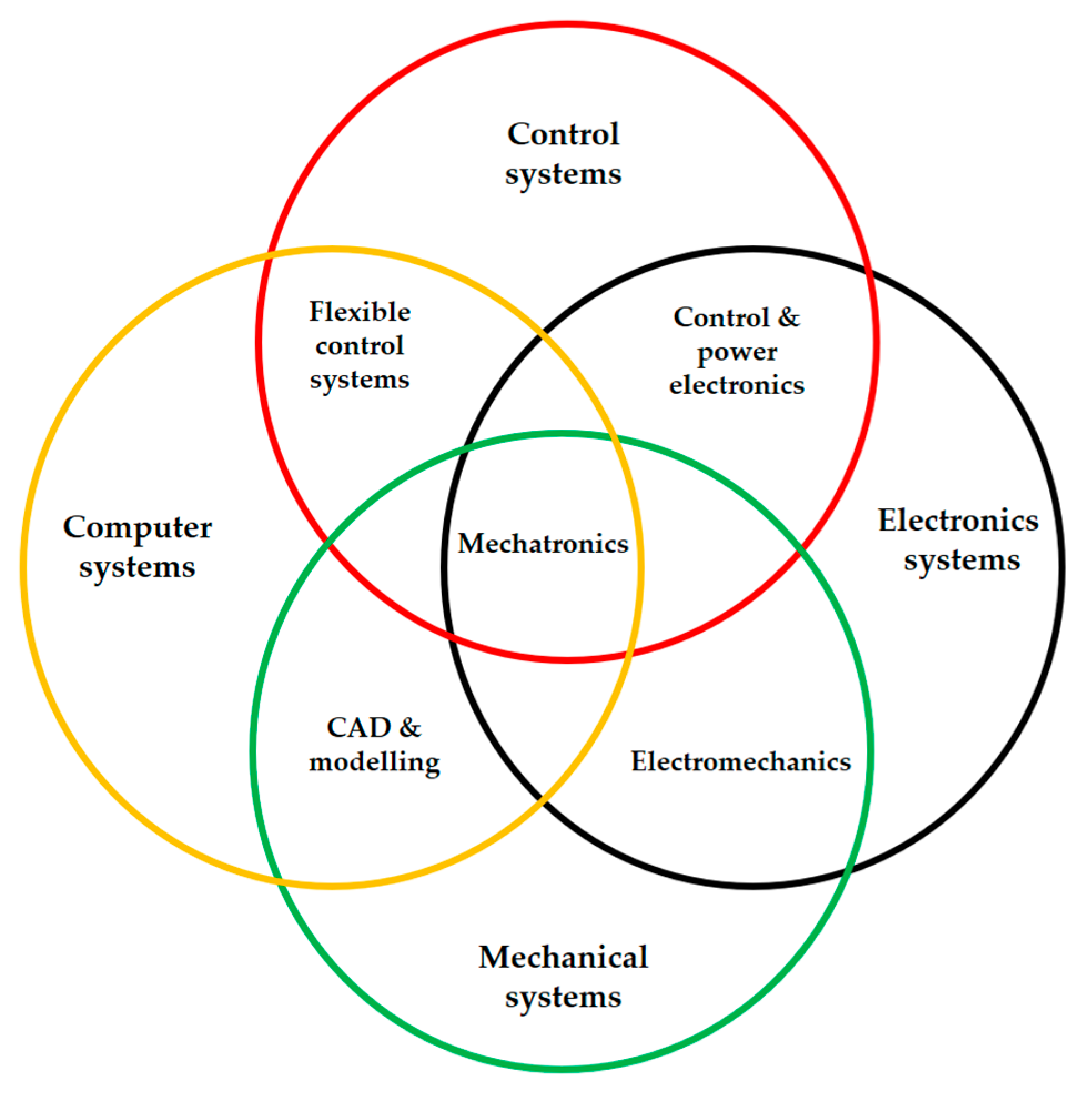
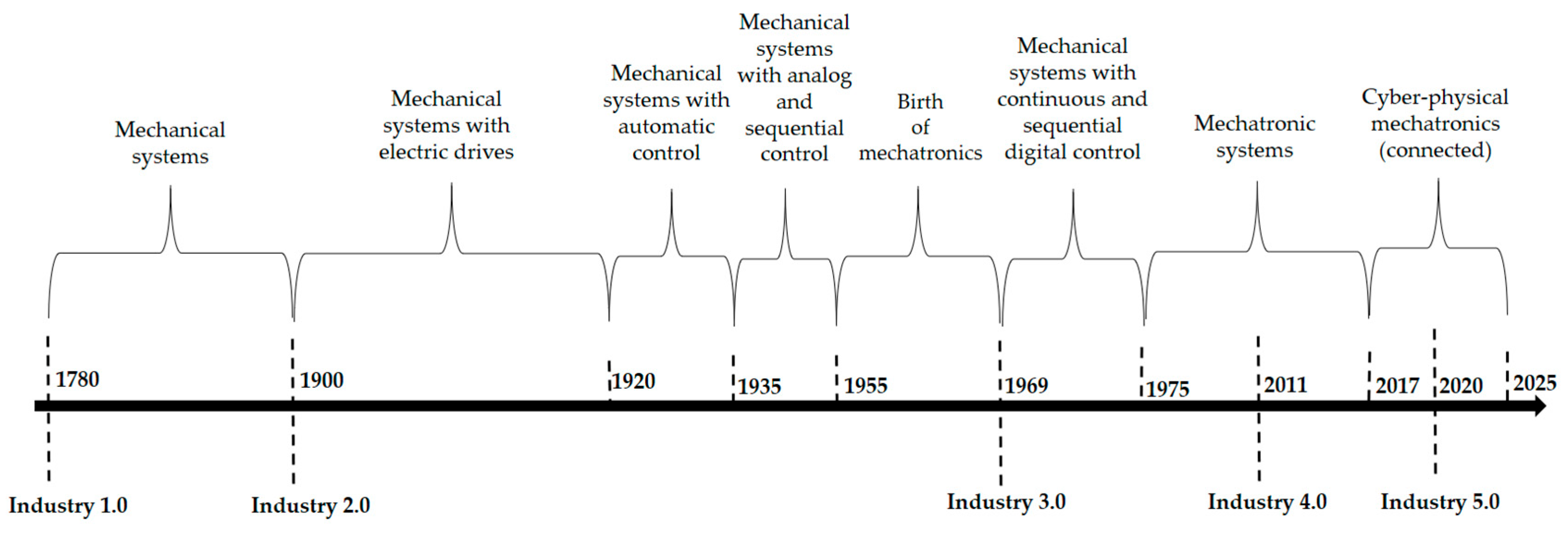
- The journey taken through the evolution of mechatronics was essential to understanding the contributions of this field of engineering to Industries 3.0, 4.0, and 5.0. Mechatronics has been linked to much technological development from 1970 to the present, making it an essential field of knowledge for the development of industries.
- •
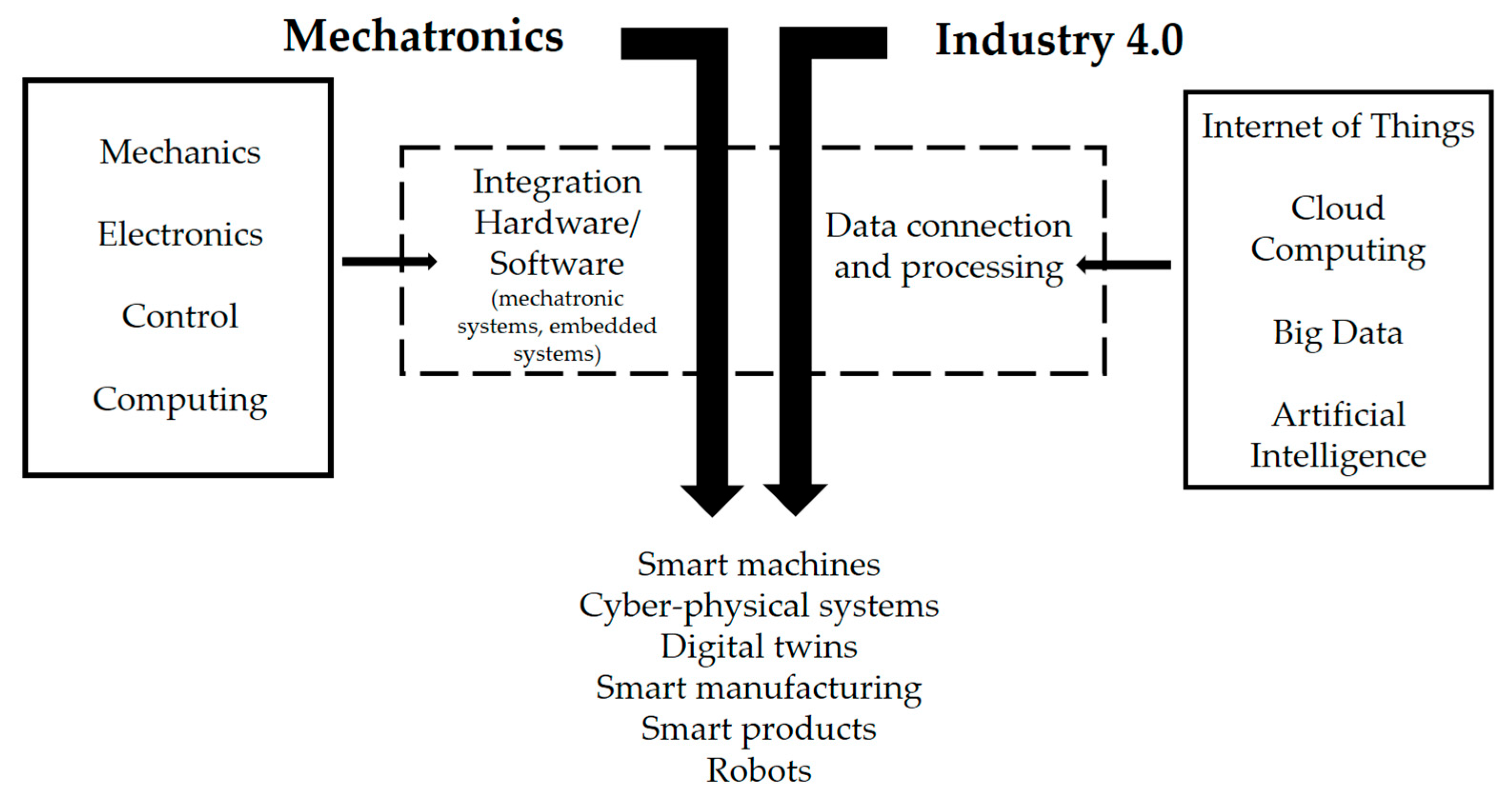
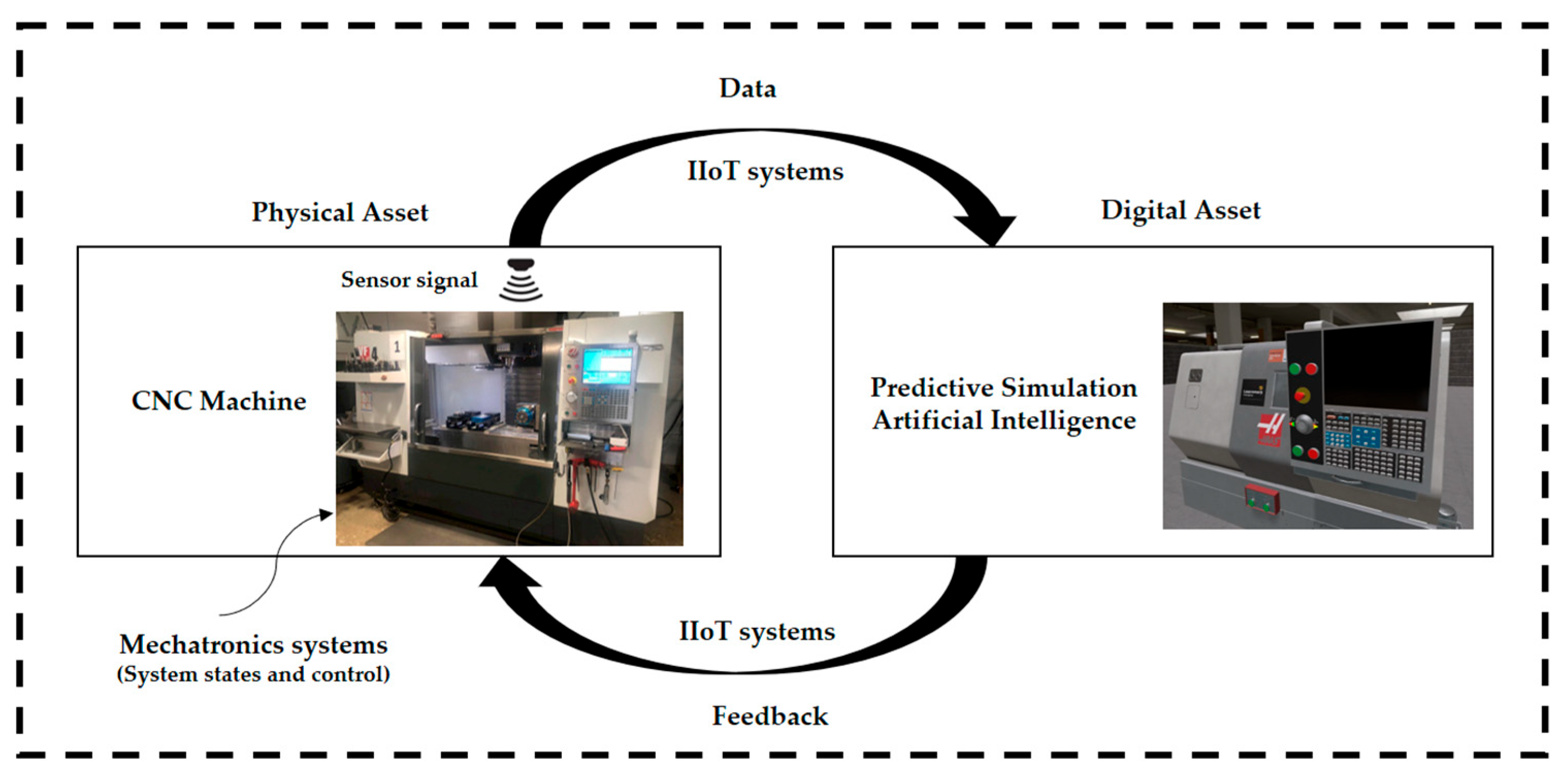
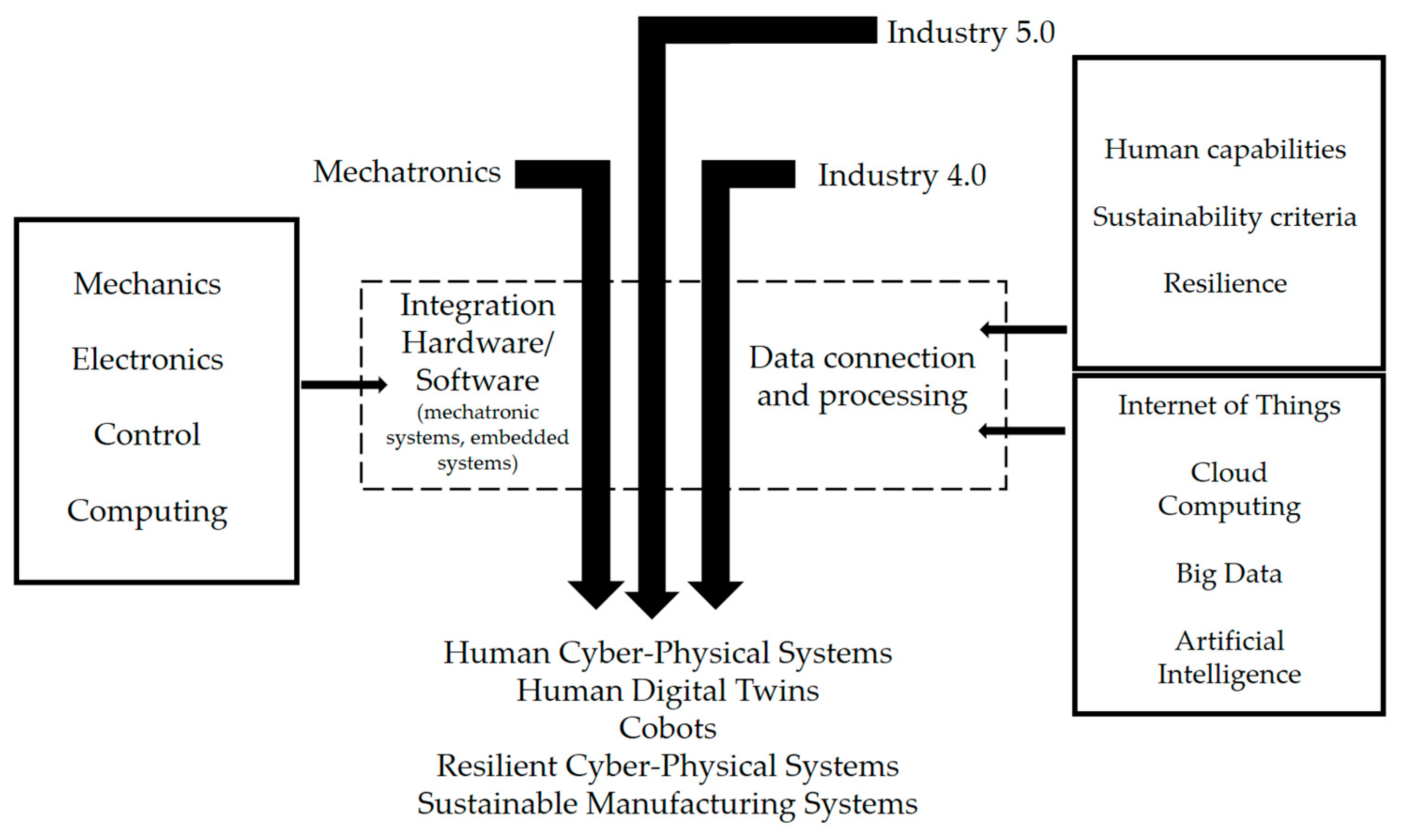
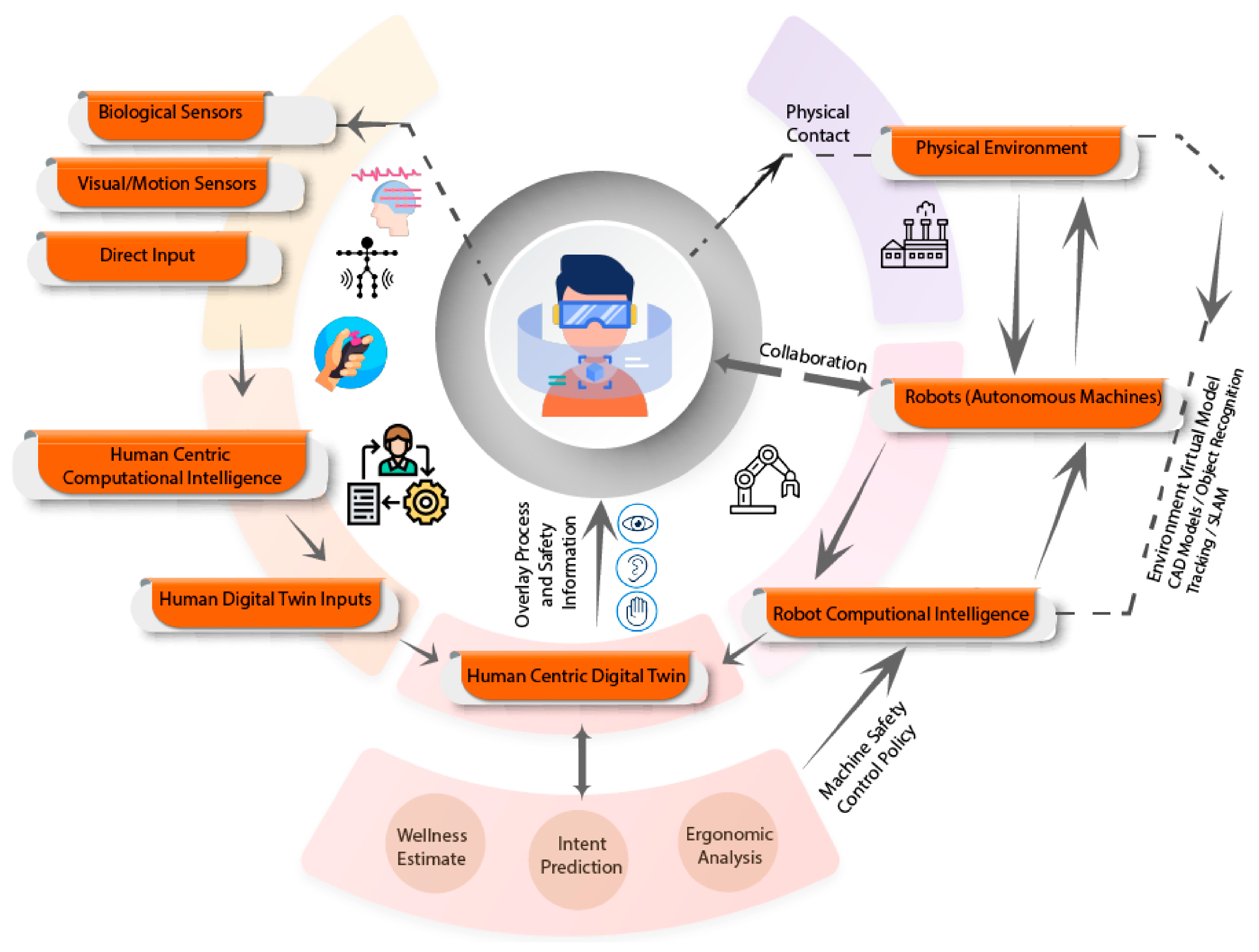
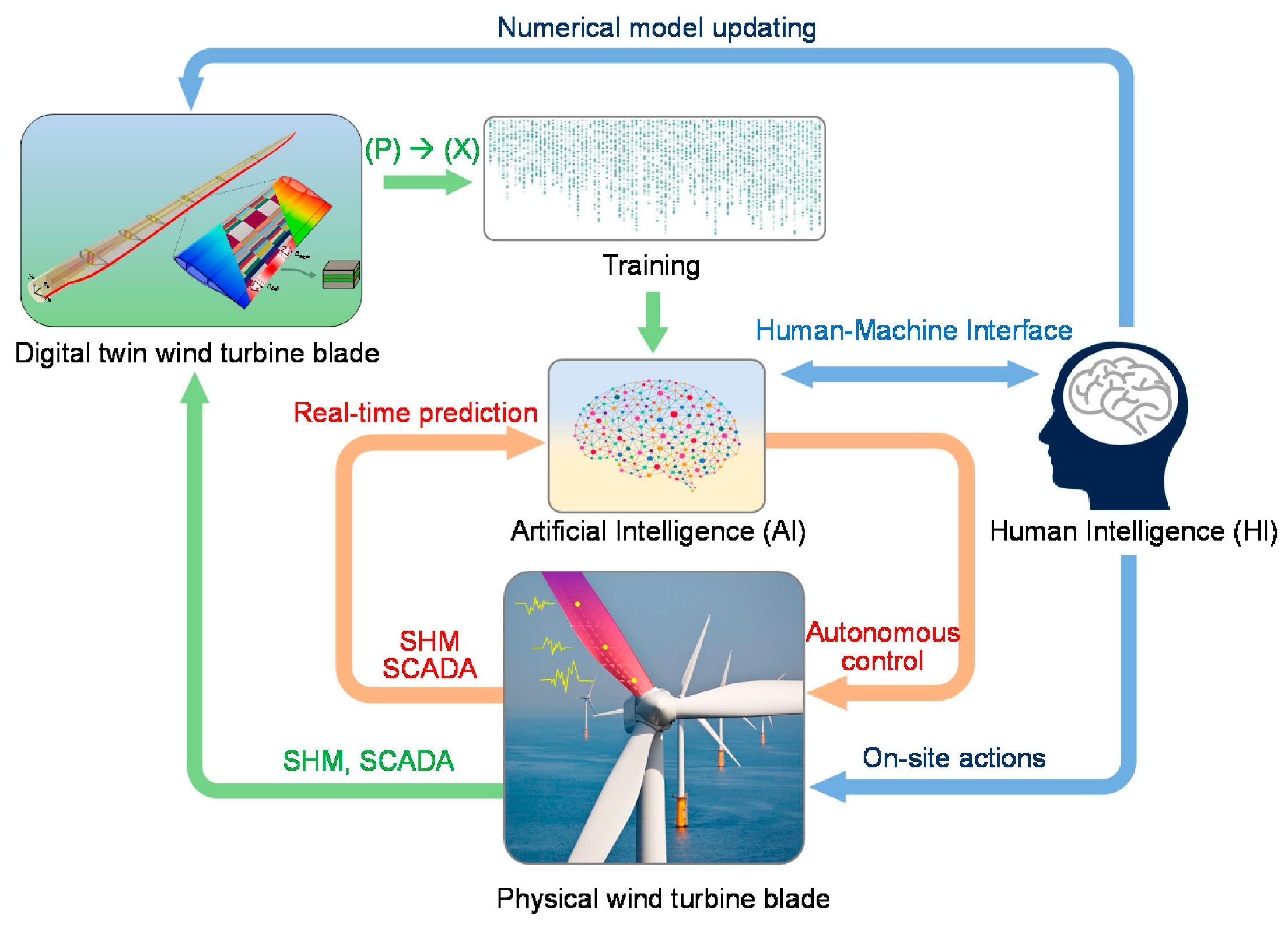
- Mechatronics provides hardware/software integration and its integrative methodology for the development of Industry 4.0 and 5.0 technologies. Cyber-physical systems, human digital twins, and cobots are examples of modern technologies based on mechatronics.
- •
- Mechatronics accompanied Industry 3.0 for 30 years and, at the same time, evolved from its conception, which integrated mechanics and electronics, to the sophisticated applications that are currently being developed under its current disciplinary approach. Mechatronics has established itself as one of the disciplinary pillars of Industries 4.0 and 5.0.
- •
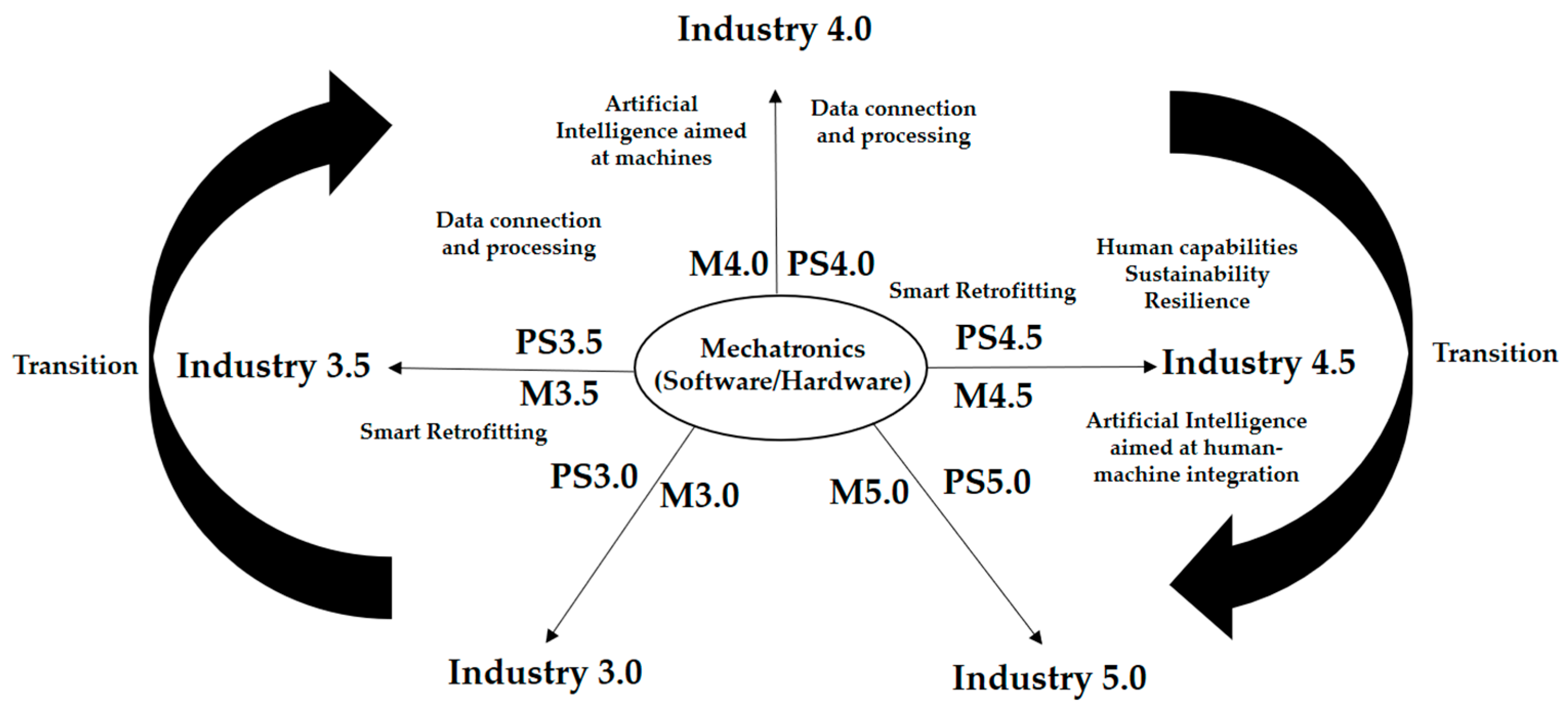
- Currently, the industry is influenced by three active industrial revolutions and two transitions. This situation made it necessary to propose a classification of machines and production systems based on the premises of each industrial paradigm in order to understand the technical, operational, and design characteristics of industrial production technology. Machines 3.0, 4.0, and 5.0 were defined to identify the machinery related to each premise of each industrial revolution, and mechatronics is related to each of the classified machines and production systems.
- •
- Various companies around the world are migrating from one industrial revolution to another. Industries 3.5 and 4.5 represent the transitions from Industry 3.0 to Industry 4.0 and from Industry 4.0 to Industry 5.0. One of the techniques used to carry out these transitions is Smart Retrofitting. In this way, a 3.5 machine is a 3.0 machine that has been reconditioned to perform Industry 4.0 tasks.
Author Contributions
Funding
Institutional Review Board Statement
Informed Consent Statement
Data Availability Statement
Acknowledgments
Conflicts of Interest
Abbreviations
| PS4.0 | Production System 4.0 |
| AI | Artificial Intelligence |
| M3.0 | Machine 3.0 |
| IIoT | Industrial Internet of Things |
References
- Elnadi, M.; Abdallah, Y.O. Industry 4.0: Critical investigations and synthesis of key findings. Manag. Rev. Q. 2024, 74, 711–744. [Google Scholar] [CrossRef]
- Soori, M.; Arezoo, B.; Dastres, R. Virtual manufacturing in industry 4.0: A review. Data Sci. Manag. 2024, 7, 47–63. [Google Scholar] [CrossRef]
- Bongomin, O.; Ocen, G.G.; Ngyanyi, E.O.; Musinguzi, A.; Omara, T. Exponential Disruptive Technologies and the Required Skills of Industry 4.0. J. Eng. 2020, 2020, 4280156. [Google Scholar] [CrossRef]
- Stankovski, S.; Ostojic, G.; Zhang, X.; Baranovski, I.; Tegeltija, S.; Horvat, S. Mechatronics, Identification Technology, Industry 4.0 and Education. In Proceedings of the IEEE 2019 18th International Symposium INFOTEH-JAHORINA (INFOTEH), Sarajevo, Bosnia, 20–22 March 2019; pp. 1–4. [Google Scholar] [CrossRef]
- Samanta, B. Introduction to Mechatronics: An Integrated Approach; Springer Nature: Cham, Switzerland, 2023. [Google Scholar] [CrossRef]
- Kuru, K.; Yetgin, H. Transformation to advanced mechatronics systems within new industrial revolution: A novel framework in automation of everything (AoE). IEEE Access 2019, 7, 41395–41415. [Google Scholar] [CrossRef]
- Rahman, M.; Rahman, M.M.; Sohel, M.R.; Farhan, A.; Huq, E.; Mahbub, F. Conclusion and Future Trends of Mechatronics. In Mechatronics; Rahman, M.M., Mahbub, F., Tasnim, R., Saleheen, R.U., Eds.; Emerging Trends in Mechatronics; Springer: Singapore, 2024. [Google Scholar] [CrossRef]
- George, A.S.; George, A.H. Industrial revolution 5.0: The transformation of the modern manufacturing process to enable man and machine to work hand in hand. J. Seybold Rep. 2020, 15, 1525–68128. [Google Scholar]
- Dhakal, S.P. Fifth industrial revolution and the future of education and employment. Qual. Quant. 2025, 1–19. [Google Scholar] [CrossRef]
- Nasir, V.; Hosseini, A.; Binfield, L.; Hasani, N.; Ghotb, S.; Diederichs, V.; O Fox, G.; McCann, A.J.; Riggio, M.; Chandler, K.; et al. Human-centric Industry 5.0 manufacturing: A multi-level framework from design to consumption within Society 5.0. Int. J. Sustain. Eng. 2025, 18, 2551000. [Google Scholar] [CrossRef]
- Ryalat, M.; Franco, E.; Elmoaqet, H.; Almtireen, N.; Al-Refai, G. The Integration of Advanced Mechatronic Systems into Industry 4.0 for Smart Manufacturing. Sustainability 2024, 16, 8504. [Google Scholar] [CrossRef]
- De Oliveira, L.P.R.; Da Silva, M.M.; Sas, P.; Van Brussel, H.; Desmet, W. Concurrent mechatronic design approach for active control of cavity noise. J. Sound. Vib. 2008, 314, 507–525. [Google Scholar] [CrossRef]
- Chen, C.; Tzu, H.; Hong, G. A Conceptual Framework for “Industry 3.5” to Empower Intelligent Manufacturing and Case Studies. Procedia Manuf. 2017, 11, 2009–2017. [Google Scholar] [CrossRef]
- Xu, X.; Lu, Y.; Vogel-Heuser, B.; Wang, L. Industry 4.0 and Industry 5.0—Inception, conception and perception. J. Manuf. Syst. 2021, 61, 530–535. [Google Scholar] [CrossRef]
- Junlapeeya, P.; Lorga, T.; Santiprasitkul, S.; Tonkuriman, A. A Descriptive Qualitative Study of Older Persons and Family Experiences with Extreme Weather Conditions in Northern Thailand. Int. J. Environ. Res. Public Health 2023, 20, 6167. [Google Scholar] [CrossRef] [PubMed]
- Hamad, M.; Jawad, K. The Fourth Industrial Revolution: A Historical and Conceptual Review. J. Econom. Adm. Sci 2024, 30, 154–172. [Google Scholar] [CrossRef]
- Malik, A.; Sharma, S.; Batra, I.; Sharma, C.; Kaswan, M.S.; Garza-Reyes, J.A. Industrial revolution and environmental sustainability: An analytical interpretation of research constituents in Industry 4.0. Int. J. Lean Six Sigma 2024, 15, 22–49. [Google Scholar] [CrossRef]
- Musarat, M.A.; Irfan, M.; Alaloul, W.S.; Maqsoom, A.; Ghufran, M. A Review on the Way Forward in Construction through Industrial Revolution 5.0. Sustainability 2023, 15, 13862. [Google Scholar] [CrossRef]
- Wimmer, M.A.; Viale Pereira, G.; Ronzhyn, A.; Spitzer, V. Transforming Government by Leveraging Disruptive Technologies. JeDEM—Ejournal Edemocracy Open Gov. 2020, 12, 87–113. [Google Scholar] [CrossRef]
- López, E.J.; Leyva, P.A.L.; López, A.A.; Estrella, F.J.O.; Vázquez, J.J.D.; Velázquez, B.L.; Molina, V.M.M. Mechanics 4.0 and Mechanical Engineering Education. Machines 2024, 12, 320. [Google Scholar] [CrossRef]
- Ziatdinov, R.; Atteraya, M.S.; Nabiyev, R. The Fifth Industrial Revolution as a Transformative Step towards Society 5.0. Societies 2024, 14, 19. [Google Scholar] [CrossRef]
- Mhlanga, D. Stakeholder Capitalism, the Fourth Industrial Revolution (4IR), and Sustainable Development: Issues to Be Resolved. Sustainability 2022, 14, 3902. [Google Scholar] [CrossRef]
- Islam, M.M.; Hossain, I.; Martin, M.H.H. The role of iot and artificial intelligence in advancing nanotechnology: A brief review. Control Syst. Optim. Lett. 2024, 2, 204–210. [Google Scholar] [CrossRef]
- Efthymiou, O.K.; Ponis, S.T. Industry 4.0 Technologies and Their Impact in Contemporary Logistics: A Systematic Literature Review. Sustainability 2021, 13, 11643. [Google Scholar] [CrossRef]
- Lee, E.A. The Past, Present and Future of Cyber-Physical Systems: A Focus on Models. Sensors 2015, 15, 4837–4869. [Google Scholar] [CrossRef] [PubMed]
- Grabowska, S.; Saniuk, S.; Gajdzik, B. Industry 5.0: Improving humanization and sustainability of Industry 4.0. Scientometrics 2022, 127, 3117–3144. [Google Scholar] [CrossRef] [PubMed]
- Yadav, R.; Arora, S.; Dhull, S. A path way to Industrial Revolution 6.0. Int. J. Mech. Eng. 2022, 7, 1452–1459. [Google Scholar]
- Chourasia, S.; Tyagi, A.; Pandey, S.M.; Walia, R.S.; Murtaza, Q. Sustainability of Industry 6.0 in global perspective: Benefits and challenges. Mapan 2020, 37, 443–452. [Google Scholar] [CrossRef]
- Mohajan, H. The First Industrial Revolution: Creation of a New Global Human Era. Int. J. Soc. Sci. 2019, 5, 377–387. [Google Scholar]
- Mokyr, J.; Strotz, R.H. The second industrial revolution, 1870–1914. Stor. Dell’economia Mond. 1998, 21945, 219–245. [Google Scholar]
- Nnodim, T.C.; Arowolo, M.O.; Agboola, B.D.; Ogundokun, R.O.; Abiodun, M.K. Future trends in mechatronics. Int. J. Robot Autom. 2021, 1, 24. [Google Scholar] [CrossRef]
- Pannaga, N.; Ganesh, N.; Gupta, R. Mechatronics—An introduction to mechatronics. Int. J. Eng. 2013, 2, 128–134. [Google Scholar]
- Hunt, V.D. Introduction to Mechatronics. In Mechatronics: Japan’s Newest Threat; Springer: Boston, MA, USA, 1988. [Google Scholar] [CrossRef]
- Harashima, F.; Tomizuka, M.; Fukuda, T. Mechatronics—What is ist, why and how? An editorial. IEEE/ASME Trans. Mechatron. 1996, 1, 1–4. [Google Scholar] [CrossRef]
- Isermann, R. Mechatronic systems: Concepts and applications. Trans. Inst. Meas. Control 2000, 22, 29–55. [Google Scholar] [CrossRef]
- Shimoga, G.; Kim, T.-H.; Kim, S.-Y. An Intermetallic NiTi-Based Shape Memory Coil spring for Actuator Technologies. Metals 2021, 11, 1212. [Google Scholar] [CrossRef]
- Milecki, A. 45 Years of Mechatronics—History and Future. In Progress in Automation, Robotics and Measuring Techniques. ICA 2015; Szewczyk, R., Zieliński, C., Kaliczyńska, M., Eds.; Advances in Intelligent Systems and Computing; Springer: Cham, Switzerland, 2015; Volume 350. [Google Scholar] [CrossRef]
- Bradley, D.; Dawson, D.; Burd, D.; Loader, A. Mechatronics Electronics in Products and Processes; Chapman & Hall: London, UK, 1991. [Google Scholar]
- Hou, Y.; Li, Q.; Zhang, C.; Lu, G.; Ye, Z.; Chen, Y.; Wang, L.; Cao, D. The state-of-the-art review on applications of intrusive sensing, image processing techniques, and machine learning methods in pavement monitoring and analysis. Engineering 2021, 7, 845–856. [Google Scholar] [CrossRef]
- Friedrich, C.R.; Fang, J.; Warrington, R.O. Micromechatronics and the miniaturization of structures, devices, and systems. IEEE Trans. Compon. Packag. Manuf. Technol. Part C 1997, 20, 31–38. [Google Scholar] [CrossRef]
- Habib, M.K. Mechatronics Engineering the Evolution, the Needs and the Challenges. In Proceedings of the IEEE IECON 2006—32nd Annual Conference on IEEE Industrial Electronics, Paris, France, 6–10 November 2006; pp. 4510–4515. [Google Scholar] [CrossRef]
- Zaeh, M.; Gao, R. Mechatronics. In CIRP Encyclopedia of Production Engineering; Laperrière, L., Reinhart, G., Eds.; Springer: Berlin/Heidelberg, Germany, 2014. [Google Scholar] [CrossRef]
- Habib, M.K. Mechatronics—A unifying interdisciplinary and intelligent engineering science paradigm. IEEE Ind. Electron. Mag. 2007, 1, 12–24. [Google Scholar] [CrossRef]
- Tomizuka, M. Mechatronics: From the 20th to 21st century. Control Eng. Pract. 2022, 10, 877–886. [Google Scholar] [CrossRef]
- Winner, R.I.; Pennel, J.P.; Bertrand, H.E.; Slusarczuk, M.M.G. The Role of Concurrent Engineering in Weapons System Acquisition; IDA Report R-388; Institute of Defense Analysis: Alexandra, VA, USA, 1988. [Google Scholar]
- Morales-Cruz, C.; Ceccarelli, M.; Portilla-Flores, E.A. An Innovative Optimization Design Procedure for Mechatronic Systems with a Multi-Criteria Formulation. Appl. Sci. 2021, 11, 8900. [Google Scholar] [CrossRef]
- Mamilla, V.R.; Rao, C.S.; Rao, G.L.N.; Venkatesh, V. Integration of mechanical and electronic systems in mechanical engineering. In Proceedings of the International Conference on Multi Body Dynamics 2011, Vijayawada, India, 24–26 February 2011; pp. 493–501. [Google Scholar]
- Isermann, R. Mechatronic Systems—A Short Introduction. In Springer Handbook of Automation; Nof, S., Ed.; Springer Handbooks; Springer: Berlin/Heidelberg, Germany, 2009. [Google Scholar] [CrossRef]
- Shibu, K.V. Introduction to Emdedded Systems; Mc Graw Hilll Education: New Delhi, India, 2009. [Google Scholar]
- Khatri, A.R. Implementation, verification and validation of an OpenRISC-1200 Soft-core Processor on FPGA. Int. J. Adv. Comput. Sci. Appl. 2019, 10, 480–487. [Google Scholar] [CrossRef]
- Liagkou, V.; Stylios, C.; Pappa, L.; Petunin, A. Challenges and Opportunities in Industry 4.0 for Mechatronics, Artificial Intelligence and Cybernetics. Electronics 2021, 10, 2001. [Google Scholar] [CrossRef]
- Hernandez, G.M.; Habib, L.; Garcia, F.A.; Montemayor, F. Industry 4.0 and Engineering Education: An Analysis of Nine Technological Pillars Inclusion in Higher Educational Curriculum. In Best Practices in Manufacturing Processes, 1st ed.; García, J., Rivera, L., González, R., Leal, G., Chong, M., Eds.; Springer: Cham, Switzerland, 2019; pp. 525–543. [Google Scholar]
- Farhan, A.; Barua, P.; Saleheen, R.U.; Tasnim, R.; Rahman, M.M.; Rahman, M. Introduction to Mechatronics. In Mechatronics, 1st ed.; Rahman, M.M., Mahbub, F., Tasnim, R., Saleheen, R.U., Eds.; Emerging Trends in Mechatronics; Springer: Singapore, 2024; pp. 1–19. [Google Scholar] [CrossRef]
- Ugarte, B.S.D.; Artiba, A.; Pellerin, R. Manufacturing execution system—A literature review. Prod. Plan. Control 2009, 20, 525–539. [Google Scholar] [CrossRef]
- Sadik, A.R.; Urban, B. Combining Adaptive Holonic Control and ISA-95 Architectures to Self-Organize the Interaction in a Worker-Industrial Robot Cooperative Workcell. Future Internet 2017, 9, 35. [Google Scholar] [CrossRef]
- Ryalat, M.; ElMoaqet, H.; AlFaouri, M. Design of a Smart Factory Based on Cyber-Physical Systems and Internet of Things towards Industry 4.0. Appl. Sci. 2023, 13, 2156. [Google Scholar] [CrossRef]
- Ragavan, S.K.V.; Shanmugavel, M. Engineering cyber-physical systems—Mechatronics wine in new bottles? In Proceedings of the 2016 IEEE International Conference on Computational Intelligence and Computing Research (ICCIC), Chennai, India, 15–17 December 2016; pp. 1–5. [Google Scholar]
- Neema, S.; Simko, G.; Levendovszky, T.; Porter, J.; Agrawal, A.; Sztipanovits, J. Formalization of software models for cyber-physical systems. In Proceedings of the 2nd FME Workshop on Formal Methods in Software Engineering, Hyderabad, India, 3 June 2014; pp. 45–51. [Google Scholar]
- Guerineau, B.; Bricogne, M.; Durupt, A.; Rivest, L. Mechatronics vs. cyber physical systems: Towards a conceptual framework for a suitable design methodology. In Proceedings of the Mechatronics (MECATRONICS)/17th International Conference on Research and Education in Mechatronics (REM), Compiegne, France, 15–17 June 2016; pp. 314–320. [Google Scholar]
- Escobar, L.; Carvajal, N.; Naranjo, J.; Ibarra, A.; Villacís, C.; Zambrano, M.; Galárraga, F. Design and implementation of complex systems using Mechatronics and Cyber-Physical Systems approaches. In Proceedings of the 2017 IEEE International Conference on Mechatronics and Automation (ICMA), Takamatsu, Japan, 6–9 August 2017; pp. 147–154. [Google Scholar]
- Liu, Y.; Peng, Y.; Wang, B.; Yao, S.; Liu, Z. Review on cyber-physical systems. IEEE/CAA J. Autom. Sin. 2017, 4, 27–40. [Google Scholar] [CrossRef]
- Saleheen, R.U.S.; Farhan, A.; Ramesha, N.Z.; Tasnim, R.; Erin, M.T.U.R.; Shahria, S. Emerging Applications of Mechatronics. In Mechatronics, 1st ed.; Rahman, M.M., Mahbub, F., Tasnim, R., Saleheen, R.U., Eds.; Springer: Singapore, 2024; pp. 143–160. [Google Scholar] [CrossRef]
- Lou, S.; Hu, Z.; Zhang, Y.; Feng, Y.; Zhou, M.; Lv, C. Human-cyber-physical system for Industry 5.0: A review from a human-centric perspective. IEEE Trans. Autom. Sci. Eng. 2024, 22, 494–511. [Google Scholar] [CrossRef]
- Zeb, S.; Mahmood, A.; Khowaja, S.A.; Dev, K.; Hassan, S.A.; Gidlund, M.; Bellavista, P. Towards defining industry 5.0 vision with intelligent and softwarized wireless network architectures and services: A survey. J. Netw. Comput. Appl. 2024, 223, 103796. [Google Scholar] [CrossRef]
- Oláh, J.; Aburumman, N.; Popp, J.; Khan, M.A.; Haddad, H.; Kitukutha, N. Impact of industry 4.0 on environmental sustainability. Sustainability 2020, 12, 4674. [Google Scholar] [CrossRef]
- Pizoń, J.; Gola, A. Human–Machine Relationship—Perspective and Future Roadmap for Industry 5.0 Solutions. Machines 2023, 11, 203. [Google Scholar] [CrossRef]
- Maddikunta, P.K.R.; Pham, Q.V.; Prabadevi, B.; Deepa, N.; Dev, K.; Gadekallu, T.R.; Ruby, R.; Liyanage, M. Industry 5.0: A survey on enabling technologies and potential applications. J. Ind. Inf. Integr. 2022, 26, 100257. [Google Scholar] [CrossRef]
- Habib, M.K. Mechatronics in industry 4.0 and 5.0: Advancing synergy, innovations, sustainability, and challenges. Mechatron. Tech. 2025, 2, 20–21. [Google Scholar] [CrossRef]
- Rahman, M.M.; Khatun, F.; Jahan, I.; Devnath, R.; Bhuiyan, M.A.A. Cobotics: The Evolving Roles and Prospects of Next-Generation Collaborative Robots in Industry 5.0. J. Robot. 2024, 2024, 2918089. [Google Scholar] [CrossRef]
- Parrott, A.; Warshaw, L. Industry 4.0 and the Digital Twin: Manufacturing Meets Its Match; Deloitte University Press: New York, NY, USA, 2017; pp. 1–17. [Google Scholar]
- Menon, D.; Anand, B.; Chowdhary, C.L. Digital Twin: Exploring the Intersection of Virtual and Physical Worlds. IEEE Access 2023, 11, 75152. [Google Scholar] [CrossRef]
- Rosen, R.; Fischer, J.; Boschert, S. Next generation digital twin: An ecosystem for mechatronic systems? IFAC-PapersOnLine 2019, 52, 265–270. [Google Scholar] [CrossRef]
- Wang, B.; Zhou, H.; Yang, G.; Li, X.; Yang, H. Human digital twin (HDT) driven human-cyber-physical systems: Key technologies and applications. Chin. J. Mech. Eng. 2022, 35, 11. [Google Scholar] [CrossRef]
- Salvi, A.; Spagnoletti, P.; Noori, N.S. Cyber-resilience of Critical Cyber Infrastructures: Integrating digital twins in the electric power ecosystem. Comput. Secur. 2022, 112, 102507. [Google Scholar] [CrossRef]
- Haque, M.A.; Shetty, S.; Gold, K.; Krishnappa, B. Realizing Cyber-Physical Systems Resilience Frameworks and Security Practices. In Security in Cyber-Physical Systems. Studies in Systems, Decision and Control, 1st ed.; Awad, A.I., Furnell, S., Paprzycki, M., Sharma, S.K., Eds.; Springer: Cham, Switzerland, 2021; pp. 1–37. [Google Scholar] [CrossRef]
- Nguyen, V.T.; Ngo, V.T.; Tuan, L.A.; Phan, D.H.; Tan, P.X. Resilient consensus control for networked robotic manipulators under actuator faults and deception attacks. ISA Trans. 2025, 159, 22–31. [Google Scholar] [CrossRef]
- Kaplinsky, R. Technological Revolution’ and the International Division of Labour in Manufacturing: A Place for the Third World? Eur. J. Dev. Res. 1989, 1, 5–37. [Google Scholar] [CrossRef]
- Zhang, C.; Yang, J. Third Technological Revolution. In A History of Mechanical Engineering, 1st ed.; Springer: Singapore, 2020; pp. 299–349. [Google Scholar] [CrossRef]
- Nitzan, R. Programmable industrial automation. IEEE Trans. Comput. 1976, 100, 1259–1270. [Google Scholar] [CrossRef]
- Taalbi, J. Origins and Pathways of Innovation in the Third Industrial Revolution. Ind. Corp. Change 2019, 28, 1125–1148. [Google Scholar]
- Altenpohl, D.G. Informatization of industry and society: The third industrial revolution. Int. J. Technol. Manag. 1986, 1, 327–340. [Google Scholar]
- Al, M.A.; Guo, G.; Bi, C. Hard Disk Drive: Mechatronics and Control; CRC Press: Boca Raton, FL, USA, 2017. [Google Scholar]
- Roberts, G. Intelligent mechatronics. Control Eng. Pract. 1998, 9, 257–264. [Google Scholar] [CrossRef]
- Dashchenko, A.I. Reconfigurable Manufacturing Systems and Transformable Factories; Springer: Berlin/Heidelberg, Germany, 2006. [Google Scholar]
- Butt, J. A Conceptual Framework to Support Digital Transformation in Manufacturing Using an Integrated Business Process Management Approach. Designs 2020, 4, 17. [Google Scholar] [CrossRef]
- Cañas, H.; Mula, J.; Díaz-Madroñero, M.; Campuzano-Bolarín, F. Implementing industry 4.0 principles. Comput. Ind. Eng. 2021, 158, 107379. [Google Scholar] [CrossRef]
- Zafar, M.H.; Langås, E.F.; Sanfilippo, F. Exploring the synergies between collaborative robotics, digital twins, augmentation, and industry 5.0 for smart manufacturing: A state-of-the-art review. Robot. Comput.-Integr. Manuf. 2024, 89, 102769. [Google Scholar] [CrossRef]
- Yamaguchi, K.; Inaba, K. Intelligent and Collaborative Robots. In Springer Handbook of Automation; Nof, S.Y., Ed.; Springer Handbooks; Springer: Cham, Switzerland, 2023. [Google Scholar] [CrossRef]
- Zhang, X.; Gong, W.; Xiang, H.; Chen, Y.; Li, D.; Wang, Y. Cloud-Based AGV Control System. In Cloud Computing, Smart Grid and Innovative Frontiers in Telecommunications. CloudComp SmartGift 2019; Zhang, X., Liu, G., Qiu, M., Xiang, W., Huang, T., Eds.; Lecture Notes of the Institute for Computer Sciences, Social Informatics and Telecommunications Engineering; Springer: Cham, Switzerland, 2020; Volume 322. [Google Scholar] [CrossRef]
- Sayeed, A.; Verma, C.; Kumar, N.; Koul, N.; Illés, Z. Approaches and Challenges in Internet of Robotic Things. Future Internet 2022, 14, 265. [Google Scholar] [CrossRef]
- Iranshahi, K.; Brun, J.; Arnold, T.; Sergi, T.; Müller, U.C. Digital Twins: Recent Advances and Future Directions in Engineering Fields. Intell. Syst. Appl. 2025, 26, 200516. [Google Scholar] [CrossRef]
- Farhadi, A.; Lee, S.K.H.; Hinchy, E.P.; O’Dowd, N.P.; McCarthy, C.T. The Development of a Digital Twin Framework for an Industrial Robotic Drilling Process. Sensors 2022, 22, 7232. [Google Scholar] [CrossRef]
- Bergert, M.; Kiefer, J. Mechatronic data models in production engineering. IFAC Proc. Vol. 2010, 43, 60–65. [Google Scholar] [CrossRef]
- Alguliyev, R.; Imamverdiyev, Y.; Sukhostat, L. Cyber-physical systems and their security issues. Comput. Ind. 2018, 100, 212–223. [Google Scholar] [CrossRef]
- Zizic, M.C.; Mladineo, M.; Gjeldum, N.; Celent, L. From Industry 4.0 towards Industry 5.0: A Review and Analysis of Paradigm Shift for the People, Organization and Technology. Energies 2022, 15, 5221. [Google Scholar] [CrossRef]
- Taesi, C.; Aggogeri, F.; Pellegrini, N. COBOT Applications—Recent Advances and Challenges. Robotics 2023, 12, 79. [Google Scholar] [CrossRef]
- Sokolov, O.; Andrusyshyn, V.; Iakovets, A.; Ivanov, V. Intelligent Human–Robot Interaction Assistant for Collaborative Robots. Electronics 2025, 14, 1160. [Google Scholar] [CrossRef]
- Okegbile, S.D.; Cai, J.; Niyato, D.; Yi, C. Human digital twin for personalized healthcare: Vision, architecture and future directions. IEEE Netw. 2022, 37, 262–269. [Google Scholar] [CrossRef]
- Asad, U.; Khan, M.; Khalid, A.; Lughmani, W.A. Human-Centric Digital Twins in Industry: A Comprehensive Review of Enabling Technologies and Implementation Strategies. Sensors 2023, 23, 3938. [Google Scholar] [CrossRef] [PubMed]
- Bousdekis, A.; Apostolou, D.; Mentzas, G. A human cyber physical system framework for operator 4.0–artificial intelligence symbiosis. Manuf. Lett. 2020, 25, 10–15. [Google Scholar] [CrossRef]
- Chen, X.; Eder, M.A.; Shihavuddin, A.; Zheng, D. A Human-Cyber-Physical System Toward Intelligent Wind Turbine Operation and Maintenance. Sustainability 2021, 13, 561. [Google Scholar] [CrossRef]
- Ozkan-Ozen, Y.D.; Kazancoglu, Y.; Mangla, S.K. Synchronized barriers for circular supply chains in industry 3.5/industry 4.0 transition for sustainable resource management. Resour. Conserv. Recycl. 2020, 161, 104986. [Google Scholar] [CrossRef]
- Jimenez, E.; Luna, G.; Lucero, B.; Ochoa, F.J.; Muñoz, F.; Delfin, J.J.; Cuenca, F. General guidance for the realization of smart retrofitting in legacy systems for Industry 4.0. In Proceedings of the 3rd IFSA Winter Conference on Automation, Robotics & Communications for Industry 4.0/5.0 (ARCI’ 2023), Chamonix-Mont-Blanc, France, 22–24 February 2023; pp. 132–137. [Google Scholar]
- Adamenko, D. Synthesis of the Holistic Smart Retrofit Process of Machines and Plants. In Advances in Design, Simulation and Manufacturing VIII. DSMIE 2025; Ivanov, V., Silva, F.J.G., Trojanowska, J., Pinto, A.M.G., Eds.; Lecture Notes in Mechanical Engineering; Springer: Cham, Switzerland, 2025. [Google Scholar] [CrossRef]
- Pietrangeli, I.; Mazzuto, G.; Ciarapica, F.E.; Bevilacqua, M. Smart Retrofit: An Innovative and Sustainable Solution. Machines 2023, 11, 523. [Google Scholar] [CrossRef]
- Jiménez, E.; López, A.A.; Lucero, B.; García, L.A.; Corral, A.; Rivera, J.O. Mechatronics and its education in the context of Industries 4.0 and 5.0. In Smart Manufacturing, Mechatronics, and Technological Elements of Industry 4.0, 1st ed.; Center for Engineering and Industrial Development (CIDESI): Querétaro, Mexico, 2025; pp. 244–260. [Google Scholar]
- Gomaa, A.H. Transforming Manufacturing from Industry 4.0 to Industry 6.0: A Comprehensive Review, Gap Analysis, and Strategic Framework. Interdiscip. Syst. Glob. Manag. 2025, 1, 29–51. [Google Scholar]
- Verma, A.; Prasad, V.K.; Kumari, A.; Bhattacharya, P.; Srivastava, G.; Fang, K.; Wang, W.; Gadekallu, T.R. Industry 6.0: Vision, technical landscape, and opportunities. Alex. Eng. J. 2025, 130, 139–174. [Google Scholar] [CrossRef]
- Vijay, A.J.; William, B.N.J.; Haruna, A.A.; Prasad, D.D. Exploring the synergy of IIoT, AI, and data analytics in Industry 6.0. In Industry 6.0; CRC Press: Boca Raton, FL, USA, 2024; pp. 1–36. [Google Scholar]
- Majeed, H.; Iftikhar, T. Industry 6.0 and the Rise of Intelligent Automation in Manufacturing. In Intelligent Manufacturing in Industry 6.0; Springer: Cham, Switzerland, 2026. [Google Scholar] [CrossRef]
- Kumar, S. A review on new marketing management theory 6.0: A new paradigm in consumer engagement. Arab. J. Bus. Manag. Rev. 2025, 14, 1–5. [Google Scholar] [CrossRef]
- Pineda, V.G.; Valencia-Arias, A.; Giraldo, F.E.L.; Zapata-Ochoa, E.A. Integrating artificial intelligence and quantum computing: A systematic literature review of features and applications. Int. J. Cogn. Comput. Eng. 2025, 7, 26–39. [Google Scholar] [CrossRef]
- Hasanshahi, B.; Cao, L.; Song, K.-Y.; Zhang, W. Design of Soft Robots: A Review of Methods and Future Opportunities for Research. Machines 2024, 12, 527. [Google Scholar] [CrossRef]
- Mao, Z.; Suzuki, S.; Nabae, H.; Miyagawa, S.; Suzumori, K.; Maeda, S. Machine learning-enhanced soft robotic system inspired by rectal functions to investigate fecal incontinence. Bio-Des. Manuf. 2025, 8, 482–494. [Google Scholar] [CrossRef]
- Wang, Z.; Zhang, M.; Chen, H.; Li, J.; Li, G.; Zhao, J.; Yao, L.; Zhang, J.; Chu, F. A generalized fault diagnosis framework for rotating machinery based on phase entropy. Reliab. Eng. Syst. Saf. 2025, 256, 110745. [Google Scholar] [CrossRef]


Disclaimer/Publisher’s Note: The statements, opinions and data contained in all publications are solely those of the individual author(s) and contributor(s) and not of MDPI and/or the editor(s). MDPI and/or the editor(s) disclaim responsibility for any injury to people or property resulting from any ideas, methods, instructions or products referred to in the content. |
© 2026 by the authors. Licensee MDPI, Basel, Switzerland. This article is an open access article distributed under the terms and conditions of the Creative Commons Attribution (CC BY) license.
Share and Cite
López, E.J.; Ruiz, J.E.P.; Chávez, O.L.; Muñoz, F.; Velásquez, L.A.G.; Lugo, J.G.C. The Evolution of Mechatronics Engineering and Its Relationship with Industry 3.0, 4.0, and 5.0. Technologies 2026, 14, 81. https://doi.org/10.3390/technologies14020081
López EJ, Ruiz JEP, Chávez OL, Muñoz F, Velásquez LAG, Lugo JGC. The Evolution of Mechatronics Engineering and Its Relationship with Industry 3.0, 4.0, and 5.0. Technologies. 2026; 14(2):81. https://doi.org/10.3390/technologies14020081
Chicago/Turabian StyleLópez, Eusebio Jiménez, Juan Enrique Palomares Ruiz, Omar López Chávez, Flavio Muñoz, Luis Andrés García Velásquez, and José Guadalupe Castro Lugo. 2026. "The Evolution of Mechatronics Engineering and Its Relationship with Industry 3.0, 4.0, and 5.0" Technologies 14, no. 2: 81. https://doi.org/10.3390/technologies14020081
APA StyleLópez, E. J., Ruiz, J. E. P., Chávez, O. L., Muñoz, F., Velásquez, L. A. G., & Lugo, J. G. C. (2026). The Evolution of Mechatronics Engineering and Its Relationship with Industry 3.0, 4.0, and 5.0. Technologies, 14(2), 81. https://doi.org/10.3390/technologies14020081