


Abstract
Due to changing weather conditions, productivity needs to be enhanced and resources must be used more efficiently in agriculture. Precision agriculture relies on systems that can gather real-time environmental data to address these issues. However, the high cost of commercial weather stations often limits their adoption in rural areas. This study introduces a low-cost weather station designed for precision agriculture applications. The system consists of three main modules. The first module is the weather station, which gathers data on temperature, relative humidity, barometric pressure, solar radiation, wind speed and direction, and precipitation. It then transmits this data via LoRa communication to the local console module. This console receives the data, displays it on a screen, and sends it through Wi-Fi to the cloud server module. The cloud server presents the information via an interactive interface and is responsible for storing, processing, and analyzing the data records collected. The system was installed in the municipality of Ojocaliente, Zacatecas, Mexico, where performance and validation tests were conducted over a one-month period using sensors and reference measurements to evaluate the accuracy and stability of the data. The results showed high operational reliability and a strong correlation between the recorded values and the reference data. This confirms that the proposed solution provides a scalable, low-cost, and reliable alternative for environmental monitoring in precision agriculture.
1. Introduction
In a global context where agricultural systems are confronting growing challenges due to climate change, resource scarcity, and the demand for higher productivity, traditional farming practices are reaching clear limits regarding efficiency and sustainability [1,2]. Specifically, the need to monitor essential environmental variables in real-time and adapt farming operations based on data transforms how we manage water, soil, solar radiation, and other inputs [3,4].
Precision agriculture depends on local, real-time measurements of essential meteorological variables, including temperature, humidity, pressure, solar radiation, wind, and rainfall. These measurements help to optimize irrigation, fertilization, and crop management based on specific environmental conditions [5,6]. Accurate evapotranspiration estimates and soil water balance rely on dependable on-site radiation data [7]. Additionally, microclimatic variability within small areas can result in errors if sensors are not positioned close to the crops [8].
Climate monitoring is crucial for agriculture; however, conventional commercial weather stations encounter several limitations that make them less suitable for rural or small-scale settings. Their high acquisition and maintenance costs and the need for electrical infrastructure, periodic calibration, and specialized personnel hinder their implementation in local agricultural projects or on low-budget farms [9,10]. Additionally, the sparse distribution and remote locations of many official stations diminish the representativeness of the data for specific crops, thereby limiting their effectiveness in precision agriculture [11].
Advancements in the Internet of Things (IoT) and low-power embedded systems have led to more affordable environmental and agricultural monitoring solutions. Integrating digital sensors, microcontrollers, and wireless communication modules allows for the creation of autonomous data acquisition networks that are cost-effective and require minimal maintenance [12,13]. Technologies such as Long Range (LoRa) facilitate information transmission in long-range, low-power agricultural networks [14]; Wireless Fidelity (Wi-Fi) is used in local monitoring systems to connect sensors to servers or web applications [15]; and Narrowband Internet of Things (NB-IoT) is applied in innovative agriculture projects for remote crop monitoring [16]. These technologies have driven the development of modular and energy-efficient weather stations in rural areas.
Despite the advancements in developing IoT-based agricultural systems, several technical and operational challenges hinder their widespread adoption. These challenges include limited energy autonomy, unreliable communication in rural areas, and the inconsistent accuracy of low-cost sensors, which environmental conditions can influence [17,18]. Additionally, the durability of electronic components exposed to solar radiation, humidity, and dust, along with the absence of standardized protocols and calibration, poses significant challenges to maintaining the long-term stability of agricultural stations [19].
One of the challenges in designing smart agricultural stations is accurately measuring solar radiation, which is essential for calculating evapotranspiration, energy balance, and photosynthetic productivity [20,21]. Although direct measurement techniques—such as pyranometers or thermopile radiometers—are effective, they require highly sensitive equipment, frequent calibrations, and specific installation conditions. This adds to their overall cost and maintenance requirements [22]. Alternatively, some have turned to indirect methods correlating solar radiation with other meteorological variables like air temperature or cloud cover. However, these indirect approaches often lead to significant errors, particularly under varying radiation and humidity conditions [23].
In our previous work [24], solar radiation was estimated using low-cost light sensors by applying machine learning algorithms, achieving accuracy comparable to professional instruments. This finding highlighted the potential of artificial intelligence techniques to enhance the calibration and performance of affordable sensors. However, that study focused only on measuring solar radiation, so there remains a need to integrate and evaluate other essential meteorological variables, such as temperature, humidity, pressure, wind, and precipitation, within a complete autonomous system which is capable of functioning effectively in real-world field conditions.
This work presents the design, implementation, and validation of a low-cost weather station utilizing IoT technologies for environmental and agricultural monitoring. The system incorporates low-power sensors to measure temperature, relative humidity, barometric pressure, solar radiation, wind speed and direction, and rainfall. Data is transmitted via LoRa communication to a receiving unit equipped with Wi-Fi, which sends the information to a cloud server. The weather station is powered by solar panels and lithium-ion batteries, featuring an automatic charge management system for efficient energy use.
The main contribution of this study is the system-level experimental validation of a comprehensive, low-cost IoT weather monitoring architecture that integrates hardware, firmware, and wireless communication into a self-sufficient and autonomous platform. The proposed system combines low-power environmental sensing, LoRa wireless communication, and solar energy management in a single embedded architecture, and is validated under real field conditions to assess performance, reliability, and operational stability. Unlike many existing solutions that focus primarily on system design, this work provides quantitative evidence demonstrating that an integrated low-cost architecture can achieve measurement performance and communication reliability suitable for practical precision agriculture and local climate monitoring applications.
This paper is organized as follows: Section 2 presents the related works and recent developments on low-cost IoT-based weather stations. Section 3 describes the design of the proposed system, including the hardware architecture, sensor modules, and energy management subsystem. The experimental setup and validation results are discussed in Section 4, followed by an analysis of system performance, limitations, and potential improvements in Section 5. Finally, Section 6 summarizes the main findings and presents the conclusions of this work.
2. Related Work
This section reviews recent research on the design and implementation of IoT-based weather stations, focusing specifically on applications in precision agriculture, energy sustainability, and field experimental validation. Articles published between 2020 and 2025 were analyzed, considering factors such as the type of microcontroller or platform employed, the power source (solar, hybrid, or electric), communication technologies such as LoRa, Wi-Fi, General Packet Radio Service (GPRS), and Bluetooth Low Energy (BLE), and the reported accuracy and reliability obtained during experimental testing.
Additionally, aspects of the design’s autonomy, cost, reproducibility, and scalability were considered, as these are key criteria for implementing meteorological solutions in real-world agricultural environments. Table 1 summarizes the most relevant characteristics of the analyzed works, highlighting their main contributions. This comparison identified current technological trends and gaps in the integration of autonomous, modular, and low-cost systems, which served as the basis for the development of the weather station proposed in the present study.
Table 1.
Summary of related works on IoT-based weather station designs.
The review indicates that recent developments predominantly feature Arduino, ESP32, and Raspberry Pi platforms, along with Wi-Fi and LoRa connectivity. Many of these projects also utilize solar or hybrid power systems designed for autonomy. Most proposals center on agricultural and environmental applications, with field validations confirming their practical viability. These findings underscore the trend toward modular, sustainable, and low-cost weather stations, supporting this work’s approach.
Comparative analysis of the systems presented in Table 1 shows that most proposals are based on commercial evaluation boards, such as Arduino, NodeMCU, ESP8266, ESP32, and Raspberry Pi, or on commercial workstations such as the Campbell CR1000. Although these platforms facilitate rapid prototyping, their capabilities are often underutilized, increasing the cost of the final system and limiting their adoption in low-budget applications. Furthermore, solutions that depend on Wi-Fi connectivity, particularly those based on ESP8266 or ESP32, exhibit high power consumption in long-term standalone applications. These limitations motivated the design of a proprietary, embedded, and modular hardware architecture to optimize power consumption and reduce costs.
The comparative analysis highlights the need for systems that offer greater operational flexibility and adaptability across various deployment scenarios. Weather stations must operate autonomously with independent sensing modules, enabling them to store data locally and synchronize it with cloud platforms when an internet connection is available. This approach would enhance the system’s resilience against communication failures and allow it to function effectively in areas with limited infrastructure.
3. Design of the Weather Station System
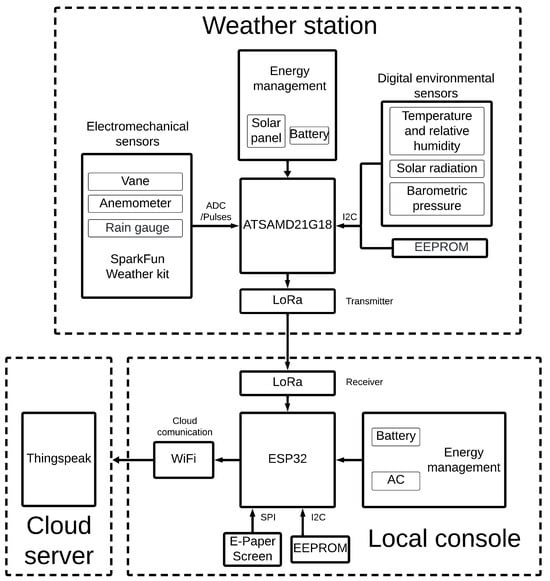
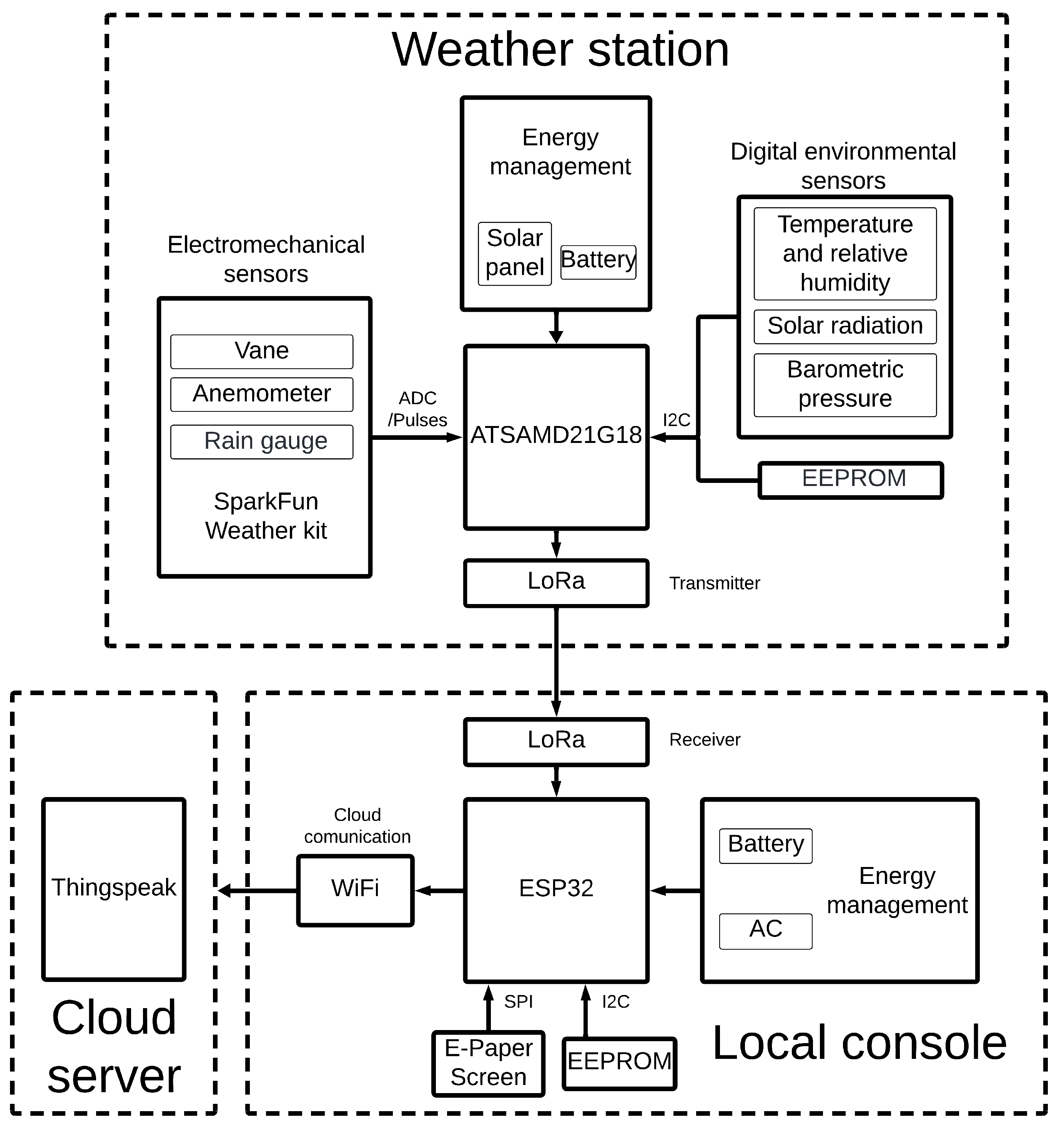
This section outlines the general architecture of the weather station, which was established considering the analysis presented in the Related Work section and the identified operational requirements. This architecture comprises three main modules: the meteorological station, the local console, and the cloud server. Figure 1 illustrates the interactions between these modules.
Figure 1.
Overall system architecture showing the interaction between the weather station, local console, and cloud server.
The weather station module is the node responsible for data collection. It integrates digital and analog sensors to measure temperature, relative humidity, barometric pressure, solar radiation, wind speed and direction, and rainfall. An ATSAMD21G18 microcontroller processes this information and transmits it wirelessly through a LoRa link to a local console module. Additionally, the node is equipped with an autonomous power system that relies on solar energy and includes a rechargeable battery, ensuring continuous operation even under harsh environmental conditions.
The local console module receives data packets from the weather station via a LoRa link, processes them, and temporarily stores them. It is built using an ESP32 microcontroller with Wi-Fi connectivity, which allows it to send the data to the cloud. Additionally, it features an e-Paper display that visualizes the recorded meteorological variables in real time. The module includes an external Electrically Erasable Programmable Read-Only Memory (EEPROM) memory that enables local data storage for several months to ensure data preservation in case of a connection loss to the server. Designed to operate with a low-power power supply, it can function independently, acting as an intermediary between the weather station and the cloud platform.
The cloud service module is built on the ThingSpeak platform, where data is stored, processed, and displayed through graphs and monitoring dashboards. This setup enables users to access information from any internet-connected device.
3.1. Meteorological Station Module
The meteorological station module comprises various subsystems, including the microcontroller unit, sensing elements, power management stage, communication interface, and Printed Circuit Board (PCB) layout.
3.1.1. Microcontroller Unit (ATSAMD21G18)
The core of the weather station is the Microchip ATSAMD21G18A microcontroller [43], selected for its low power consumption, high integration, and versatile peripheral configuration. This 32-bit ARM Cortex-M0+ device manufactured by Microchip Technology Inc., Chandler, AZ, USA., operates up to 48 MHz and includes 256 KB of Flash and 32 KB of SRAM, making it suitable for standalone IoT applications. It integrates a 12-bit ADC and multiple communication interfaces (I2C, SPI, and UART) that enable efficient sensor interfacing. Its compatibility with development environments such as Arduino IDE, MPLAB X, and Atmel Studio ensures flexible and reliable firmware implementation.
Table 2 presents a summary of the main specifications of the ATSAMD21G18A microcontroller.
Table 2.
Main specifications of the ATSAMD21G18A microcontroller.
3.1.2. Digital Environmental Sensors
The digital sensors integrated into the weather station measure temperature, Relative Humidity (RH), barometric pressure, and solar radiation via the I2C communication protocol.
- Temperature and relative humidity (SHT31)
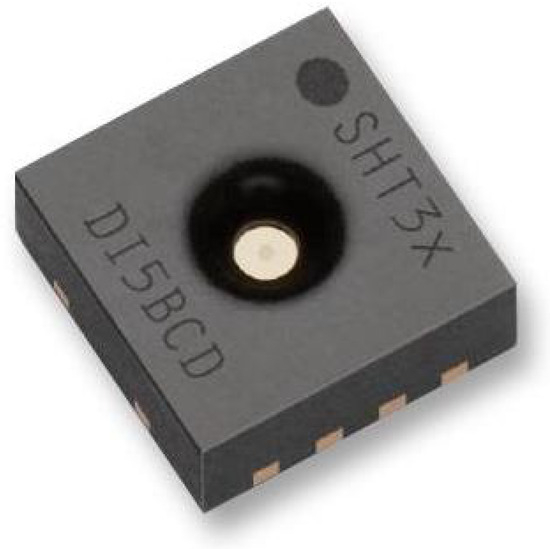
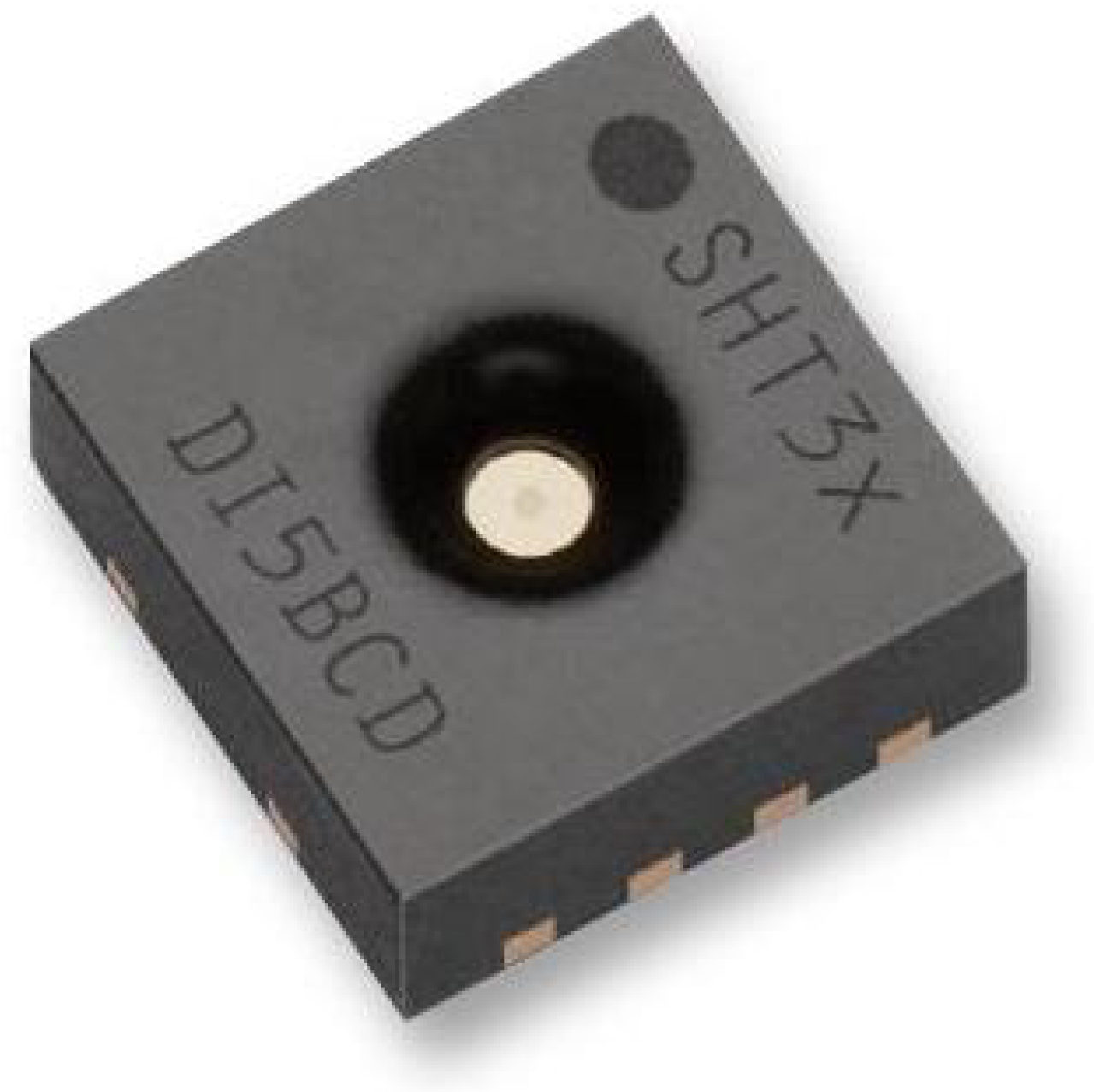
The SHT31 digital sensor from Sensirion [44] was implemented in the meteorological station to measure air temperature and RH (see Figure 2). This integrates the sensing element, signal conditioning, ADC converter, and I2C interface into a single package, simplifying communication with the microcontroller and reducing the need for external components. Table 3 summarizes the main technical characteristics of this device.
Figure 2.
SHT31 digital temperature and RH sensor.
Table 3.
Main characteristics of the SHT31 digital temperature and humidity sensor.
The device features internal thermal compensation and comes in a compact Surface Mount Device (SMD) package protected with a Polytetrafluoroethylene (PTFE) coating. This coating provides it with resistance to moisture, dust, and condensation. Due to its stability, low cost, compact size, and low power consumption, the SHT31 is a reliable and efficient solution for environmental data collection in autonomous weather stations.
- Barometric pressure (BMP390)
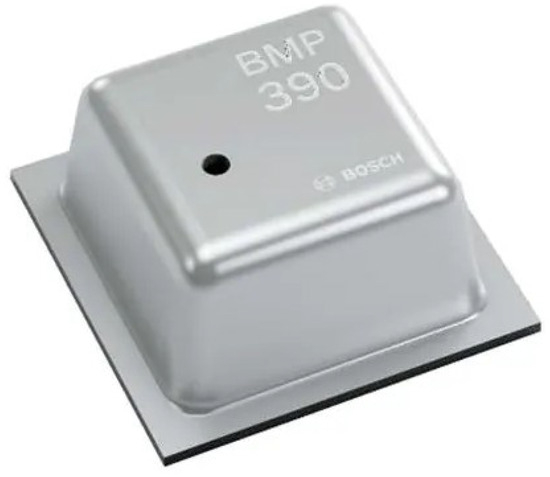
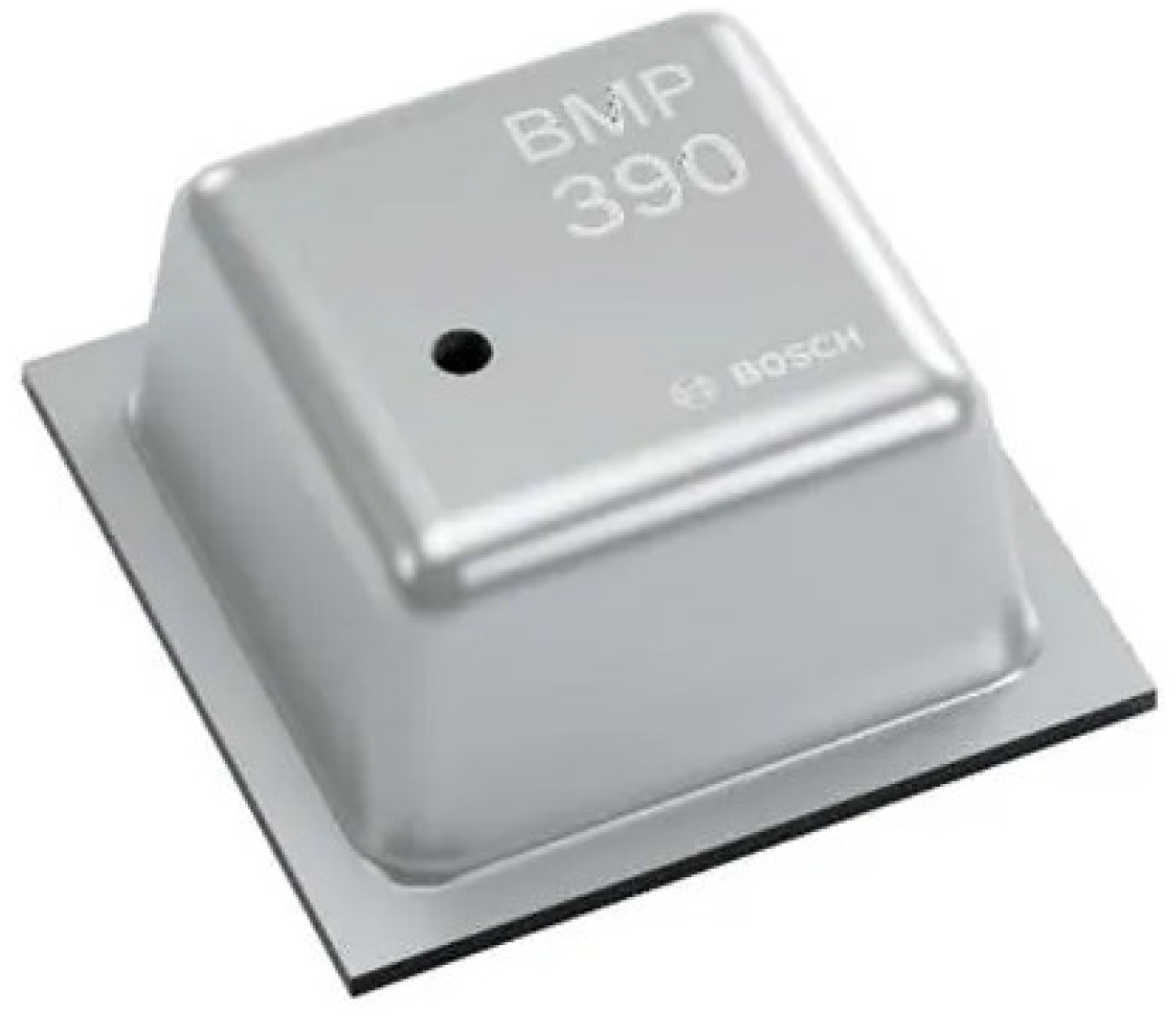
The Bosch Sensortec BMP390 [45] was chosen as the barometric pressure sensor due to its high accuracy, low power consumption, and advanced features suitable for precision meteorological applications (see Figure 3). This device provides an optimal balance of performance, stability, and efficiency. Table 4 summarizes the key features of this sensor.
Figure 3.
BMP390 digital barometric pressure sensor.
Table 4.
Main characteristics of the BMP390 digital barometric pressure sensor.
- Solar radiation (BH1750)
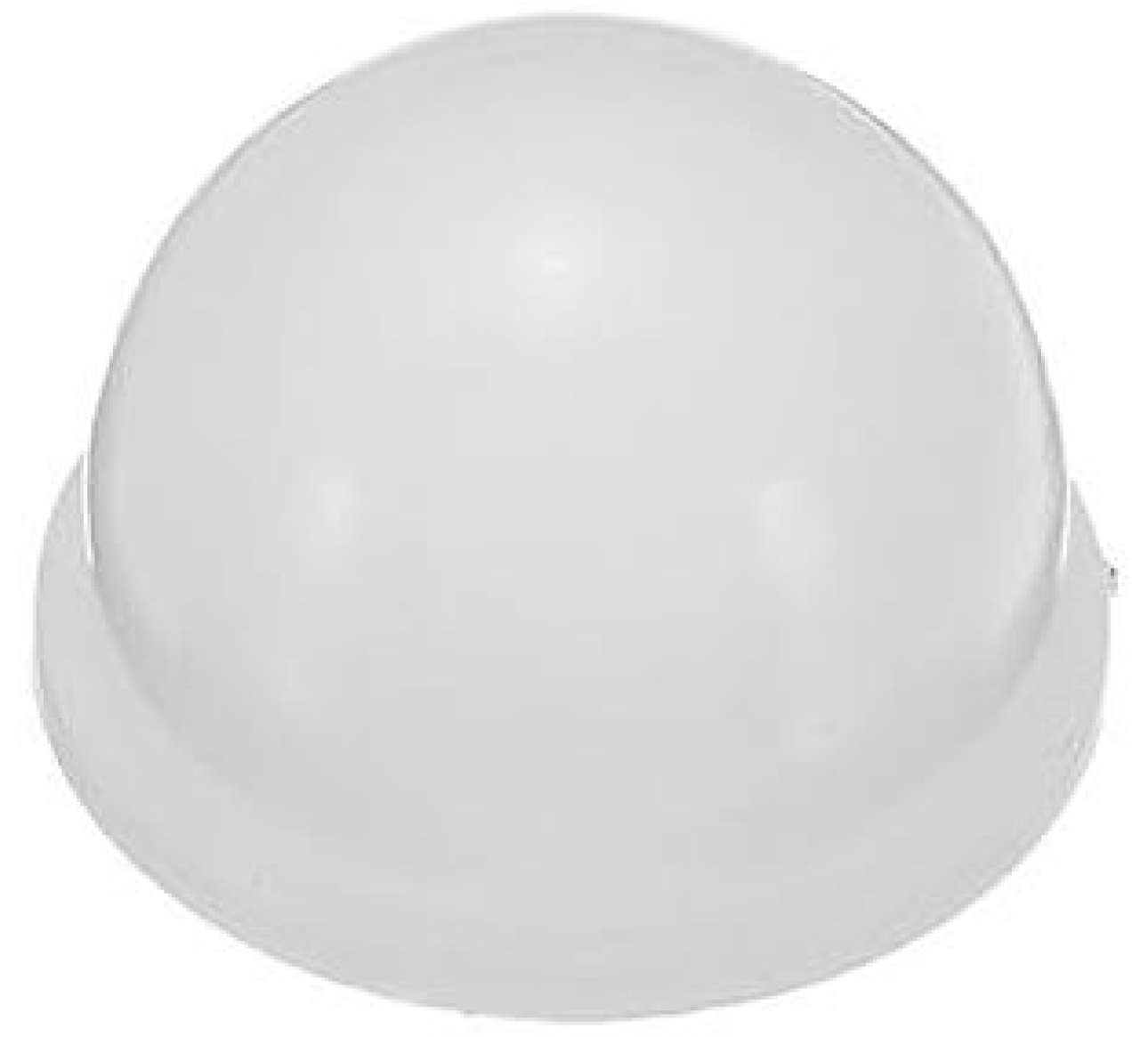
The BH1750 digital light sensor [46] was chosen for estimating solar radiation due to its low cost, low power consumption, as well as its performance demonstrated in our previous work [24]. This study indicated that when properly calibrated, illuminance-based sensors can achieve performance comparable to that of pyranometers while significantly lowering instrumentation costs. Based on this finding, a white light diffuser was installed to prevent the sensor from becoming saturated under direct sunlight, as shown in Figure 4. This component reduces the intensity of incoming light, keeping the readings within the sensor’s dynamic range and ensuring stable irradiance measurements in outdoor conditions. The main technical characteristics of the BH1750 digital light sensor are summarized in Table 5.
Figure 4.
White light diffuser used with the BH1750 sensor to prevent saturation under direct sunlight.
Table 5.
Main characteristics of the BH1750 digital light sensor.
3.1.3. Electromechanical Sensors
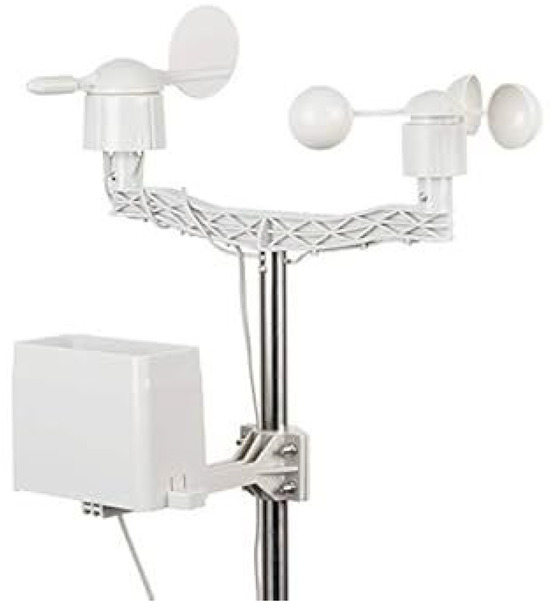
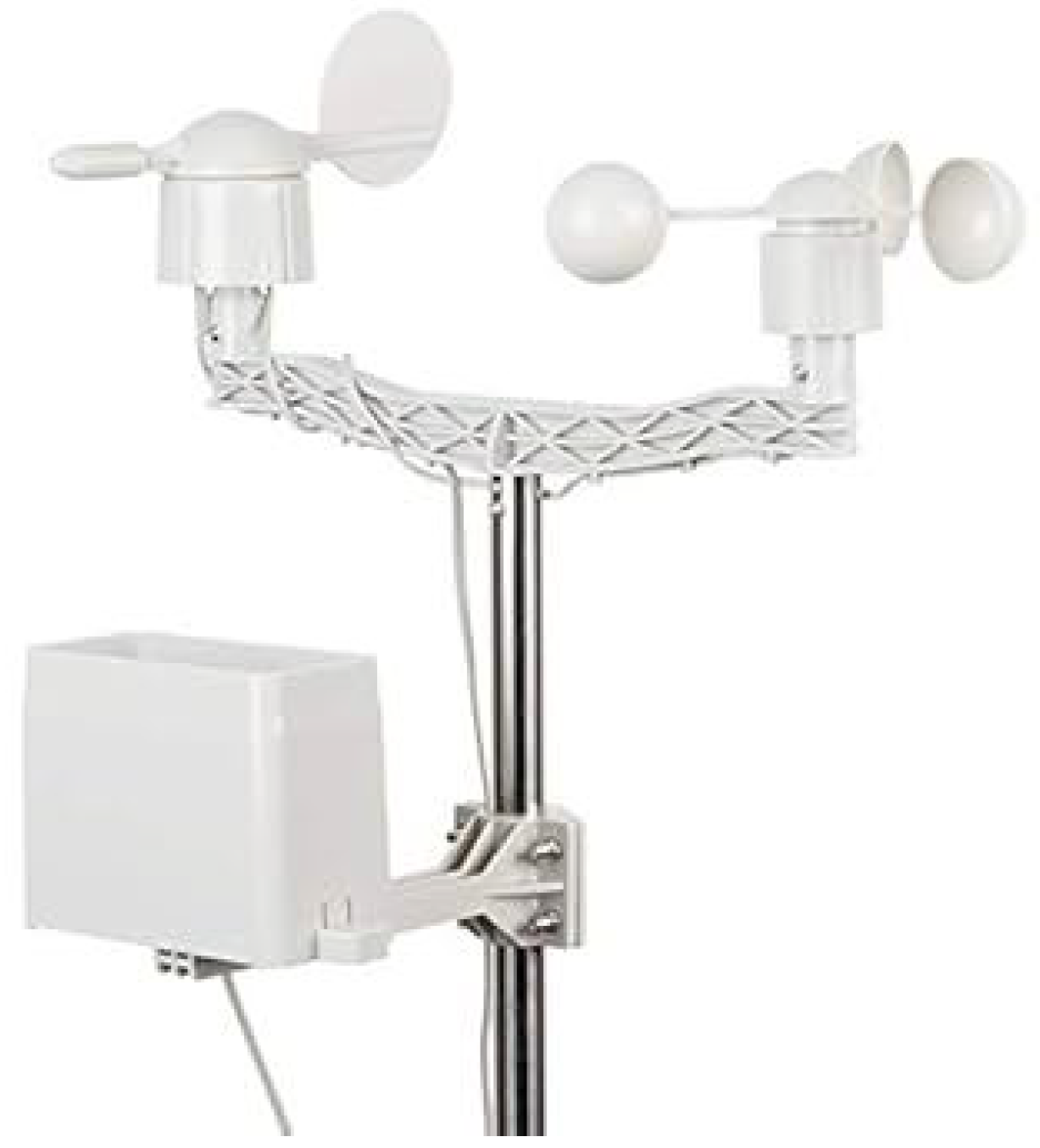
To measure mechanical meteorological variables such as wind speed, wind direction, and precipitation, the SparkFun Weather Meter Kit (model SEN-15901) [47] was used. This kit integrates multiple sensors into a single package, providing a reliable and cost-effective solution for environmental monitoring applications (see Figure 5).
Figure 5.
SparkFun Weather Meter Kit model SEN-15901.
The kit includes an anemometer for measuring wind speed, a wind vane for determining wind direction, and a tipping bucket rain gauge for measuring precipitation. Each sensor is equipped with RJ11 connectors, facilitating installation and allowing for considerable connection distances between the sensors and the control unit.
- Wind speed (anemometer)
The anemometer measures wind speed by generating electrical pulses using a reed switch. Each complete rotation of the sensor cups briefly closes the switch, creating a digital pulse detected by the microcontroller. By counting these pulses within a specific time interval, it is possible to estimate the rotation frequency, which directly correlates to wind speed.
According to the manufacturer’s specifications, a pulse frequency of one per second corresponds to a wind speed of 2.4 km/h (1.492 mph). Thus, converting pulse frequency to wind speed is done using Equation (1):
where is the wind speed expressed in kilometers per hour (km/h), and represents the pulse frequency generated by the anemometer, measured in Hertz (Hz).This relationship provides a reliable and cost-effective measurement suitable for embedded environmental monitoring systems with lower energy consumption.
- Wind direction (anemometer)
The weather vane features an internal resistive divider that selects one of sixteen discrete resistors as the pointer aligns with the cardinal and intercardinal directions in 22.5° increments. The weather vane creates a voltage divider by connecting an external pull-up resistor to Vcc. The output from this divider is measured through an analog channel of the microcontroller. The resulting voltage corresponds to one of sixteen nominal levels, each representing a specific wind direction.
Direction determination is achieved by comparing the measured voltage value against predefined ranges linked to each nominal position. This approach effectively identifies the predominant direction while providing good angular resolution and stability. Equation (2): represents the output voltage of the resistive divider:
where is the output voltage of the wind vane voltage divider, is the supply voltage applied to the divider, represents the pull-up resistance, and represents the resistance selected by the vane according to the wind direction.
The digital value read by the microcontroller’s ADC can be expressed as Equation (3):
where is the digital output code produced by the converter, is the input voltage applied to the ADC, is the ADC reference voltage, and N is the ADC resolution expressed in bits.
Based on the obtained value, the system assigns the corresponding address within the sixteen possible positions while applying tolerance or hysteresis bands to avoid fluctuations caused by electrical noise or minor mechanical oscillations.
- Rainfall (rain gauge)
The rain gauge functions similarly to the anemometer, utilizing a reed switch that activates each time a tipping bucket collects a specific amount of rainwater. Each bucket tip corresponds to approximately 0.011 inches (0.2794 mm) of precipitation.
The calculation ratio of accumulated precipitation is expressed as Equation (4):
where is the accumulated precipitation expressed in millimeters (mm), represents the total number of pulses recorded and = 0.2794 mm/pulse is the rain gauge resolution specified by the manufacturer.
3.1.4. Energy Management on the Weather Station
A power management system was established to control power generation, storage, and distribution, ensuring the weather station can operate continuously and autonomously in outdoor environments. This system comprises three main components: a solar manager and charger, a lithium-ion battery for energy storage, and a solar panel for energy collection.
- Battery charger and power manager
The power management stage employs the Adafruit Universal USB/DC/Solar charger based on the Texas Instruments bq24074 IC [48], which integrates battery charging and distribution in a single module. This device supports power input from USB (5–10 V) or solar panels (6–10 V), providing automatic switching between external and battery sources. This device regulates input current to maximize energy harvesting under variable irradiance and allows configurable charge rates of 500, 1000, or 1500 mA. Its 4.4 V regulated output ensures stable and reliable power delivery to the weather station electronics.
- Battery
An 18650 lithium-ion cell [49] was selected as the backup energy source owing to its high capacity, reliability, and wide availability. With capacities between 1800 and 3500 mAh and a nominal voltage of 3.7 V (4.2 V maximum), it is fully compatible with the bq24074 charger. Because the cell lacks integrated protection, an external Battery Management System (BMS) was incorporated to prevent overcharge, over-discharge, and short circuits while monitoring temperature during charge and discharge cycles.
- Solar panel
The bq24074 module operates efficiently with solar panels rated between 6.5 V and 10.5 V; however, panels in the 6–7.5 V range are preferred to minimize thermal losses since excess voltage is dissipated as heat. For this reason, the Voltaic Systems P126 (Adafruit 5366) panel [50,51] was selected. This 2 W monocrystalline ETFE-coated panel, designed for outdoor durability, integrates twelve 22.7% SunPower cells, delivering 8.51 V open-circuit voltage, 7.28 V at the maximum power point, and a peak current of 330 mA.
3.1.5. External Data Storage (EEPROM)
To ensure data preservation in the event of LoRa communication failures, an external AT24CM01 EEPROM [52] was incorporated. This device provides non-volatile storage with a capacity of 1 Mbit (128 kB). It features an I2C interface, enabling the meteorological records generated by the station to be saved without the risk of data loss. Its low power consumption and high durability, surpassing one million write cycles, allow the stored data to be retained for several months until the wireless connection is restored. The main technical specifications of the device are presented in Table 6.
Table 6.
Technical specifications of the AT24CM01 EEPROM memory.
3.1.6. LoRa Communication (Transmitter)
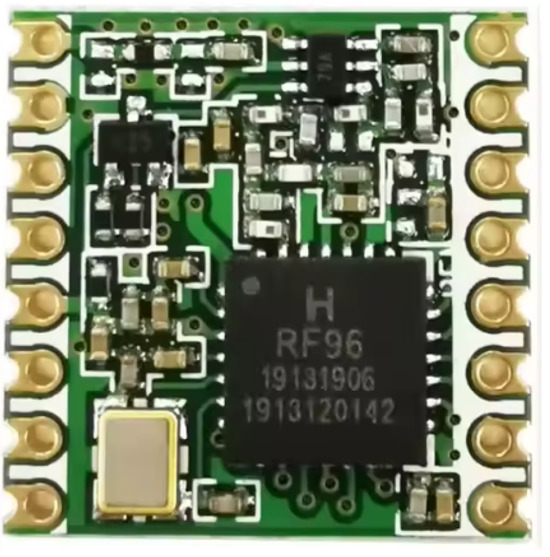
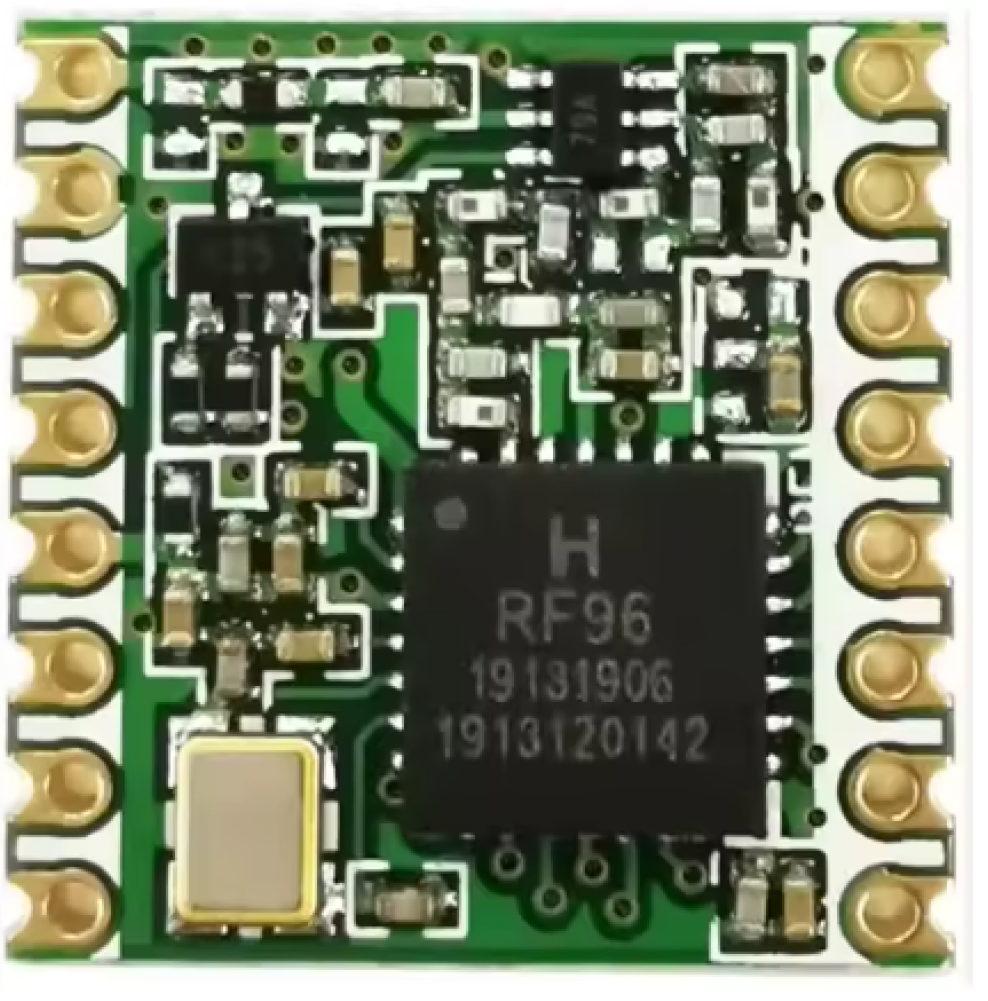
The RFM95W (see Figure 6) radio frequency transceiver module [53] was utilized for wireless data transmission between the weather station and the local console. This module operates at 915 MHz, which falls within the Industrial, Scientific, and Medical (ISM) band authorized for unrestricted use in Mexico. Based on the Semtech SX1276 integrated circuit, the RFM95W employs LoRa modulation and is specifically designed for long-range, low-power communication applications. These are essential features for IoT systems deployed in rural or hard-to-reach environments. Table 7 presents the main technical specifications of the RFM95W.
Figure 6.
LoRa RFM95W module.
Table 7.
Technical specifications of the RFM95W transceiver module.
3.1.7. Weather Station PCB Design
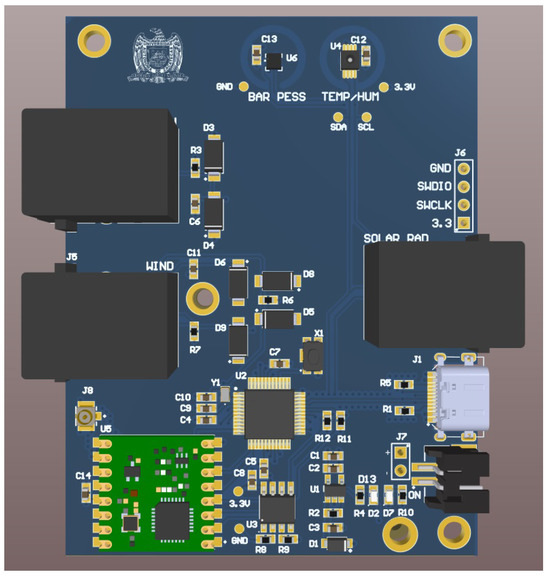
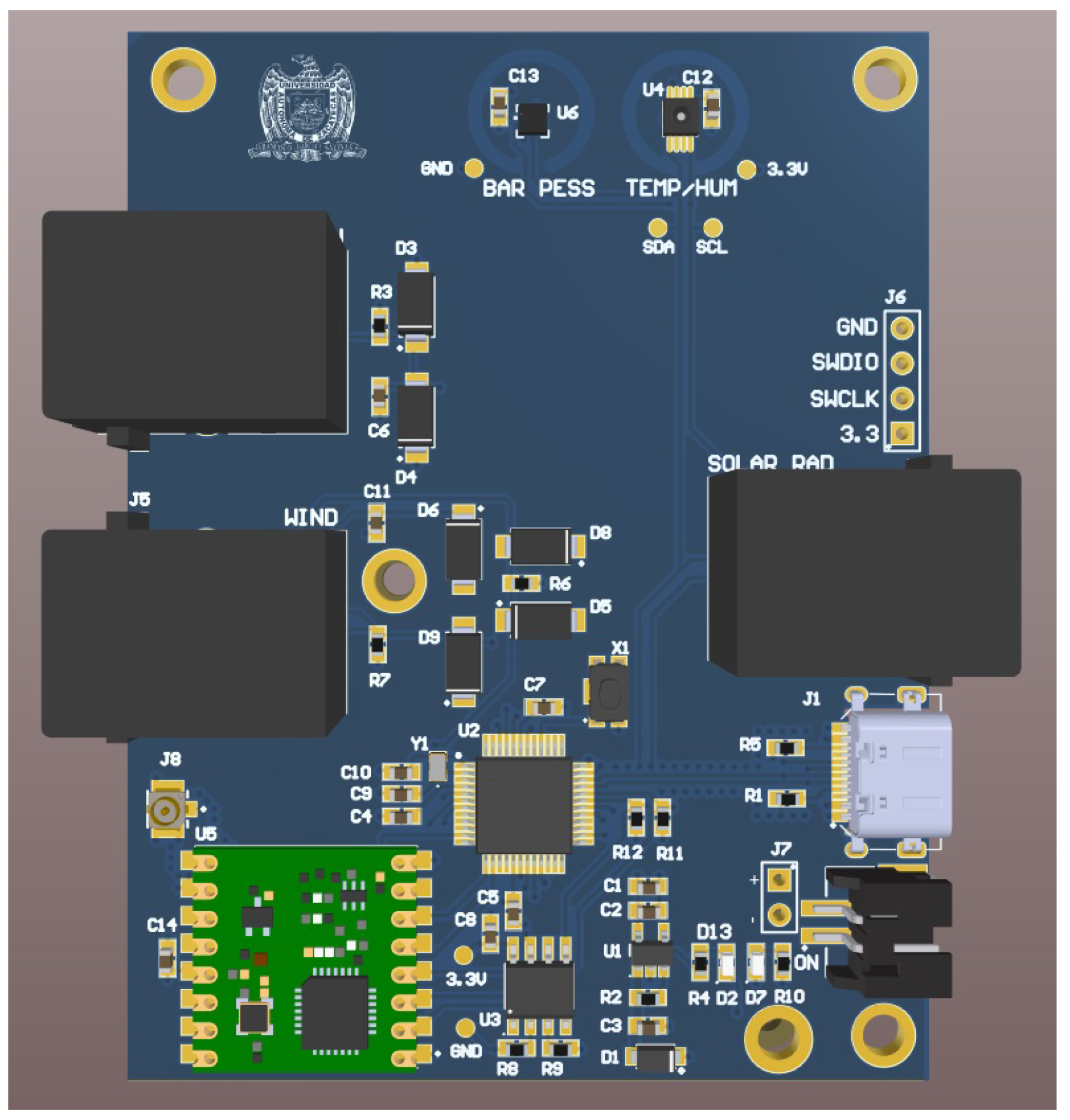
The weather station PCB was designed to integrate all the electronic components required for acquiring, processing, and wirelessly transmitting environmental data. The main elements integrated into the PCB are described below:
- ATSAMD21G18A Microcontroller: central processing unit responsible for data acquisition, peripheral control, and communication management.
- SHT31 and BMP390 Digital Sensors: temperature, relative humidity, and barometric pressure measurement.
- Three RJ11 connectors: interface for the electromechanical sensors of the Weather Meter Kit and the BH1750 light sensor used for solar radiation estimation.
- RFM95W Module: LoRa transceiver with an Ultra Miniature Coaxial (U.FL) connector for an external antenna, optimized for long-range communication.
- USB-C Port: used for microcontroller programming and power supply during development.
- Power Terminals: Direct connection to the bq24074 power manager and the backup battery.
- Voltage Regulators: Convert 5.0 V to 3.3 V to stably power the digital modules.
- AT24CM01 EEPROM Memory Pads: External storage of weather data with an I2C interface.
- Indicator LEDs: Visual monitoring of system status and operating stages.
The final PCB design, showing the top component layout, is presented in Figure 7.
Figure 7.
Top view of the weather station PCB layout.
3.2. Local Console Module
The local console module includes several subsystems: the microcontroller unit, LoRa communication interface, e-Paper display, local data storage, power supply system, and Wi-Fi communication interface.
3.2.1. Microcontroller Unit (ESP32-WROOM-32)
For the data visualization and cloud platform link phase, a microcontroller was needed that fulfilled several specific requirements: internet connectivity, an SPI interface for communication with the LoRa module, adequate memory to manage the e-Paper display controller, and the ability to integrate all these functions onto a single chip, thus eliminating the need for additional external modules.
After evaluating various options, the ESP32-WROOM-32 from Espressif Systems [54] was chosen. This System on Chip (SoC) natively includes Wi-Fi connectivity, removing the need for external communication modules. This microcontroller was chosen as an efficient all-in-one solution for receiving data from the LoRa module, displaying information on the e-Paper screen, and transmitting weather data to a cloud platform via Wi-Fi. This choice eliminates the need for additional hardware while maintaining a compact and cost-effective design.
Table 8 presents a summary of the main specifications of the ESP32-WROOM-32 microcontroller.
Table 8.
Main specifications of the ESP32-WROOM-32 microcontroller.
3.2.2. LoRa Communication (Receiver)
The local console module utilizes the same RFM95W transceiver as the weather station module (see Section 3.1.6), operating at 915 MHz within the ISM band. In this scenario, the device functions as a LoRa receiver, which is responsible for establishing the wireless link with the weather station and receiving the transmitted data packets. The ESP32 microcontroller then processes this information for local display and transmits it to the cloud, ensuring reliable long-range communication between the two modules.
3.2.3. Data Storage (EEPROM)
The local console utilizes the AT24CM01 EEPROM memory device, as described in Section 3.1.5, to temporarily store weather information when sending data to the cloud via Wi-Fi is not possible. This backup ensures that local records are preserved and enables synchronization with the online platform once connectivity is restored.
3.2.4. Energy Management on the Local Console
The local console module has two power supply options: a battery and an Alternating Current (AC) source.
- Battery charger
The console is designed to operate autonomously using a lithium-ion battery that includes a charge management module similar to the one found in the weather station (see Section 3.1.4). This system effectively regulates battery charging and discharging, safeguarding it against issues like overcurrent, overload, and deep discharge. This feature is particularly beneficial in rural areas or during temporary power outages, as it ensures continuous data recording and transmission.
- AC Source
The local console is intended for installation where electrical power is typically accessible, such as greenhouses, laboratories, or monitoring centers. It can be powered by an AC source that provides a regulated 5 V Direct Current (DC) output. This setup is more practical and stable for extended operations, as the module includes a local display using an e-Paper screen and Wi-Fi connectivity features that require higher power consumption than the field node.
3.2.5. e-Paper Screen
A display was required to visualize local meteorological data that met two key criteria: extremely low power consumption and optimal readability in ambient light. After evaluating various display technologies, an e-Paper display was chosen because it only consumes power during the image refresh process, allowing the content to remain visible indefinitely without the need for continuous power.
The Waveshare 7.5-inch e-Paper (B) E-Ink Raw Display, 800 × 480, Red/Black/White, SPI, Without PCB model [55] was specifically selected for its appropriate size, which is ideal for displaying multiple meteorological variables. It also offers sufficient resolution for clear graphics and text, plus the capability to show three colors. This feature enables critical information, such as alerts or out-of-range values, to be visually highlighted.
3.2.6. Wi-Fi Communication
The ESP32 manages the Wi-Fi communication for the local console module. It features an IEEE 802.11 b/g/n Wi-Fi transceiver in the 2.4 GHz band. In this application, the ESP32 functions in Station Mode (STA), enabling it to connect to an existing wireless access point using the Service Set Identifier (SSID) and password previously configured and stored in the microcontroller’s non-volatile memory.
Once the network connection is established, the microcontroller obtains an Internet Protocol (IP) address via Dynamic Host Configuration Protocol (DHCP) and can transmit data over Wi-Fi to the corresponding server or device. This connection setup allows the module to operate within infrastructures that offer Internet access or within private local networks, providing a reliable wireless communication channel with low power consumption without additional external modules.
3.2.7. Local Console PCB Design
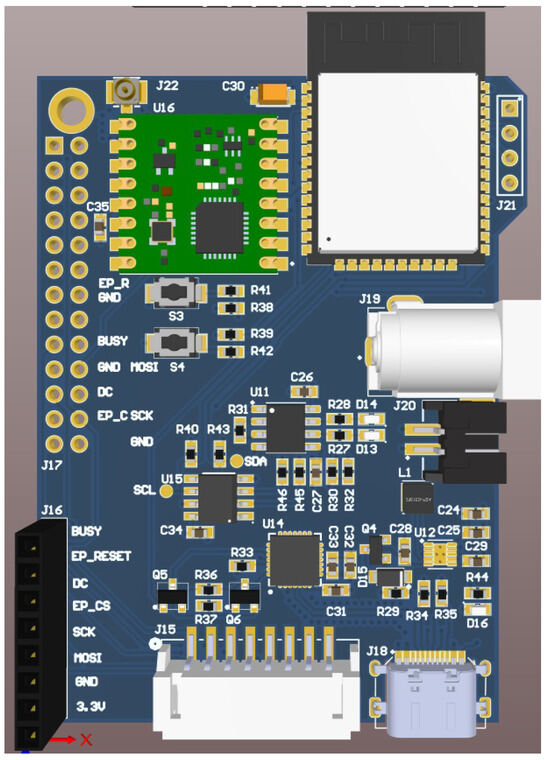
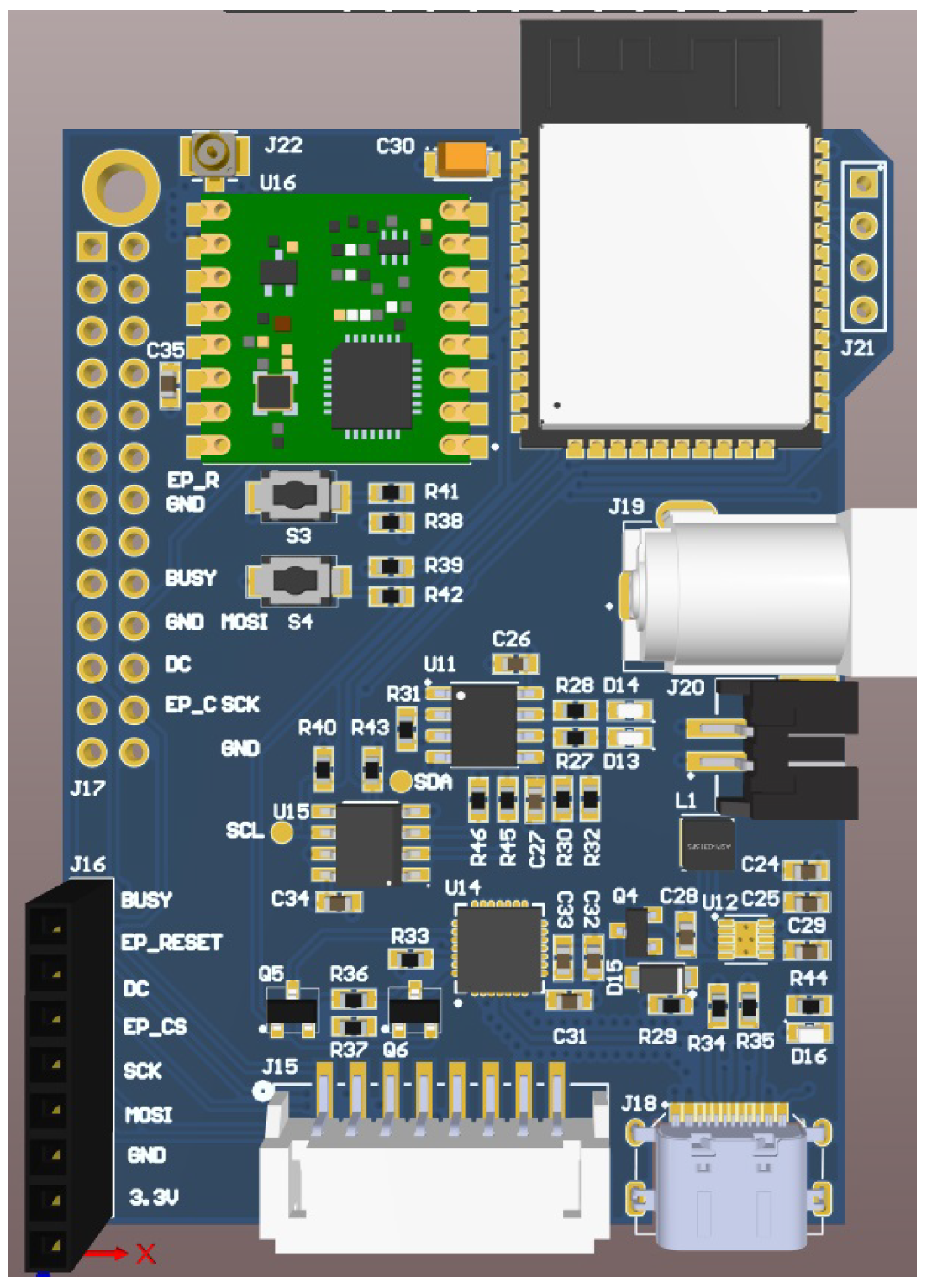
The PCB of the local console (see Figure 8) includes the following main elements:
Figure 8.
Top view of the PCB layout of the local console module.
- ESP32-WROOM-32 microcontroller with integrated Wi-Fi connectivity.
- A 9-pin FPC connector for the 7.5″ e-Paper display.
- RFM95W transceiver module with a U.FL connector for an external antenna.
- Power connector for a rechargeable battery.
- USB-C port for firmware programming and power supply during development and testing.
- RESET and BOOT buttons for control and firmware loading.
- 5 V to 3.3 V voltage regulator to provide a stable power supply for the logic circuits.
3.3. Cloud Server
The ThingSpeak [56] platform received, stored, and displayed meteorological data transmitted from the local console. Its architecture is based on the concept of channels, each of which can store up to eight independent data fields. Connected devices can send information to these channels using standard Hypertext Transfer Protocol Representational State Transfer (HTTP REST) or Message Queuing Telemetry Transport (MQTT) communication protocols.
The ESP32 microcontroller in the local console module acts as an MQTT client, establishing a connection to the ThingSpeak MQTT broker. To achieve this, an MQTT device was configured through the MQTT Devices section of the platform, which provides essential credentials: Client ID, Username, and Password. These credentials are crucial for establishing an authenticated connection with the server and ensuring the integrity of the communication.
For the weather station, a private channel was created in ThingSpeak to store the meteorological variables collected by the sensors, as summarized in Table 9.
Table 9.
Data fields configured in the ThingSpeak channel for the weather station.
4. Results
This section presents the results obtained from the proposed meteorological monitoring system’s fabrication, integration, and field implementation. The results are organized into three parts: the meteorological station’s implementation and assembly, system testing and the sensors’ validation.
4.1. Implementation and Assembly
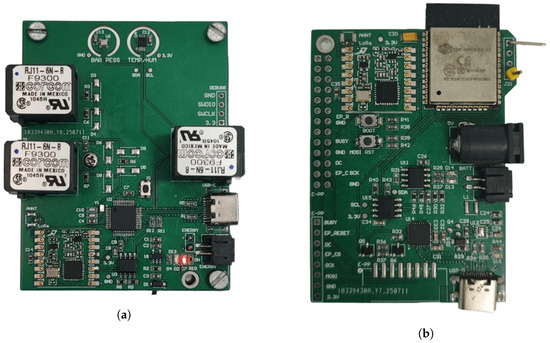
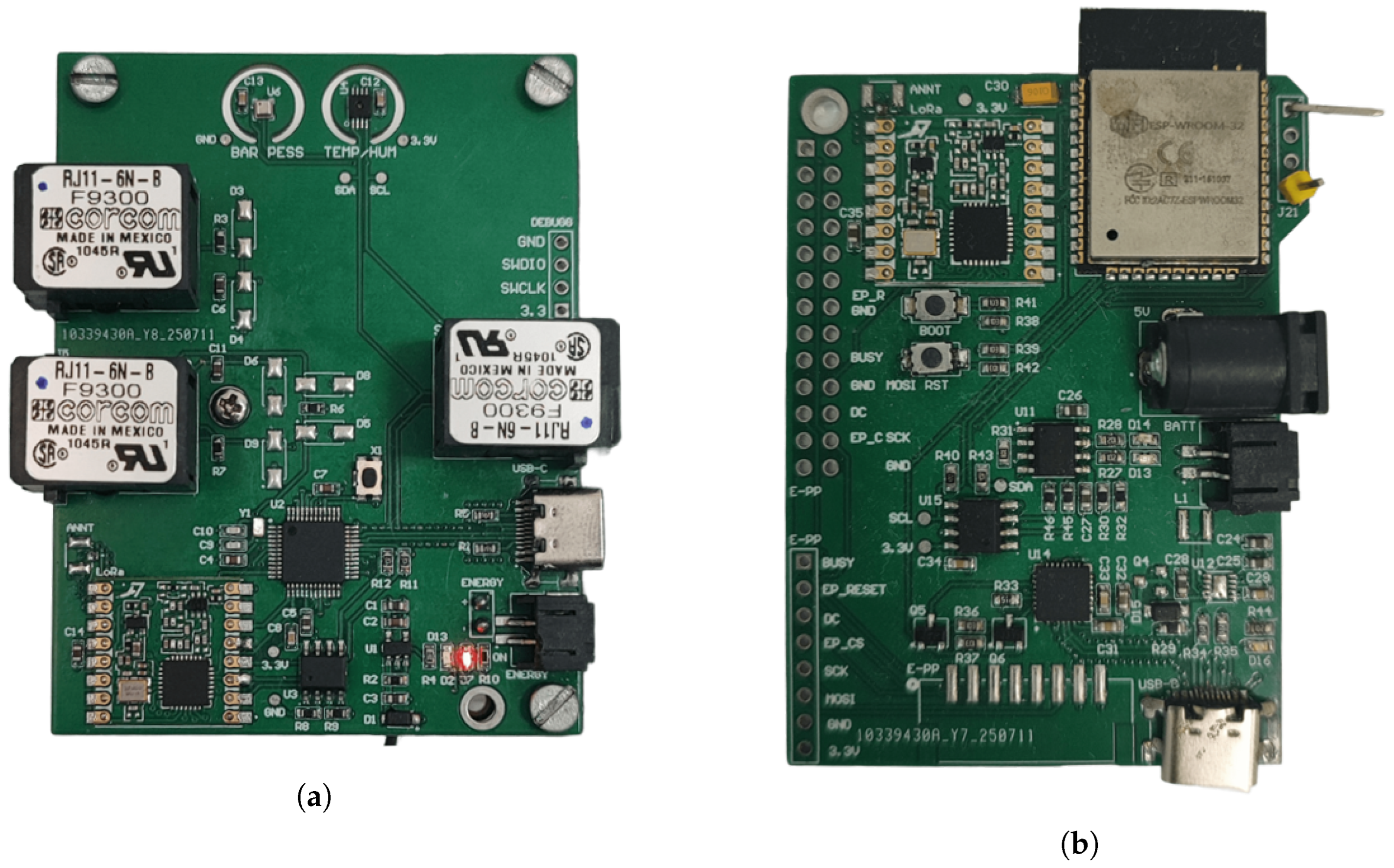
After the electronic design was completed, the weather station and the local console PCBs were fabricated and assembled. Figure 9 shows the completed boards constituting the system’s central control and communication units.
Figure 9.
Fabricated PCBs. (a) weather station, (b) local console.
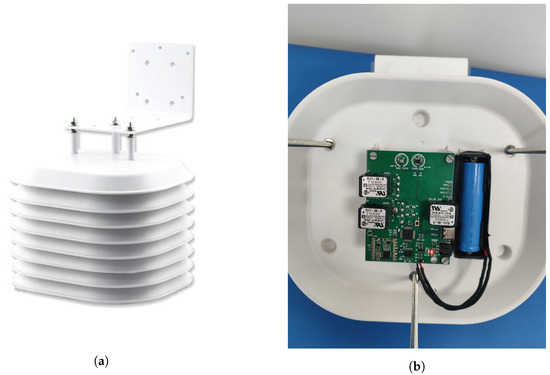
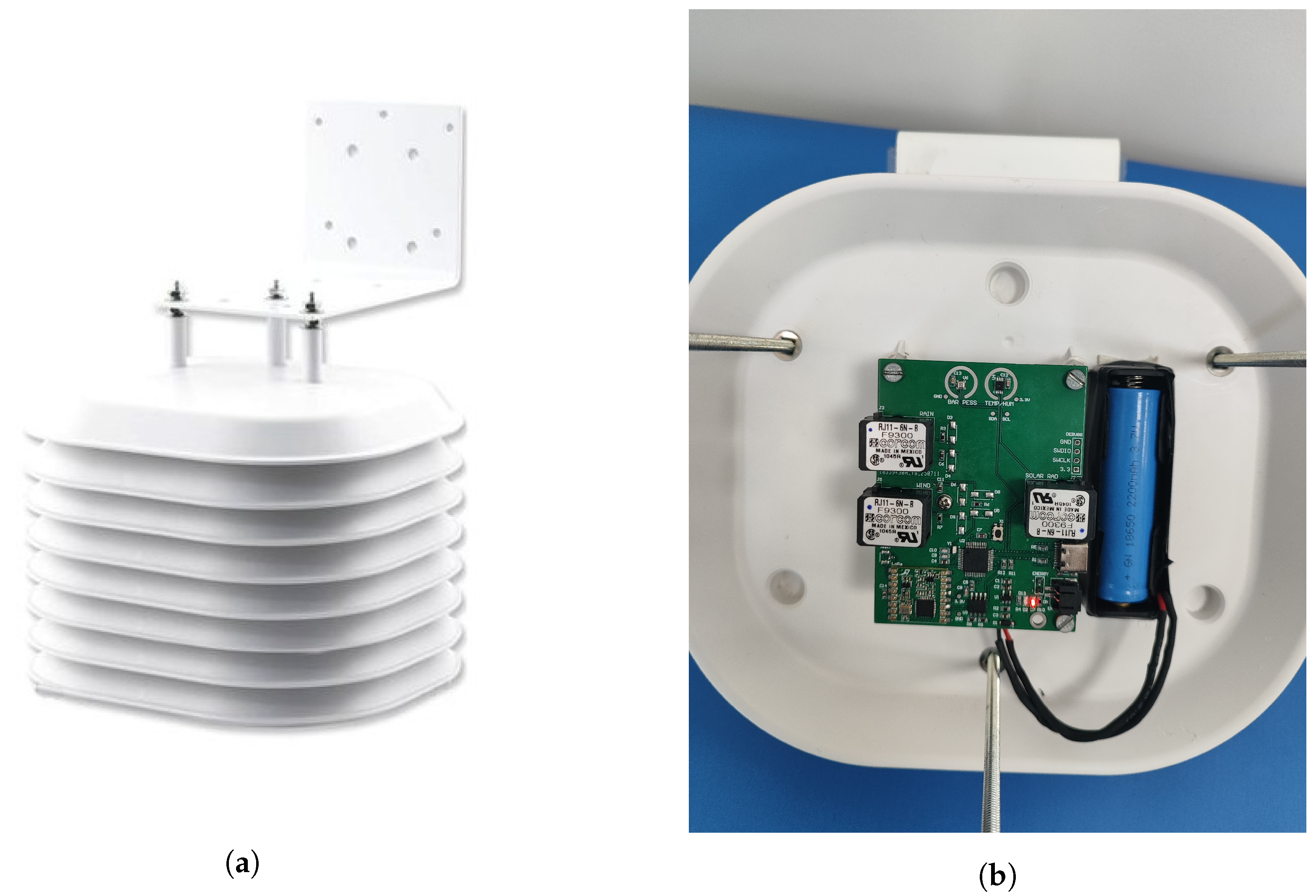
To ensure the reliable operation of the weather station outdoors and to protect the electronic components from harsh environmental conditions, a Davis 7714 solar radiation shield was employed. This passive shield consists of multiple stacked discs that protect against direct precipitation, including rain, hail, and snow. At the same time, it allows for natural air ventilation through the spaces between the discs, which helps reduce solar radiation heating. This thoughtful design enables the temperature, humidity, and barometric pressure sensors to take accurate measurements of the environment without direct exposure to radiation or moisture. Figure 10 illustrates the internal layout of the components within the solar radiation shield.
Figure 10.
Assembling the station module into the solar radiation shield. (a) Davis 7714 Solar Radiation Shield, (b) Interior view of the radiation shield showing the PCB.
The weather station’s PCB, the 18650 rechargeable battery, and the bq24074 charge controller were installed inside the shield. The SHT31 temperature and humidity sensor and the BMP390 barometric pressure sensor were strategically placed near the vents, ensuring proper air circulation and accurate readings under various weather conditions.
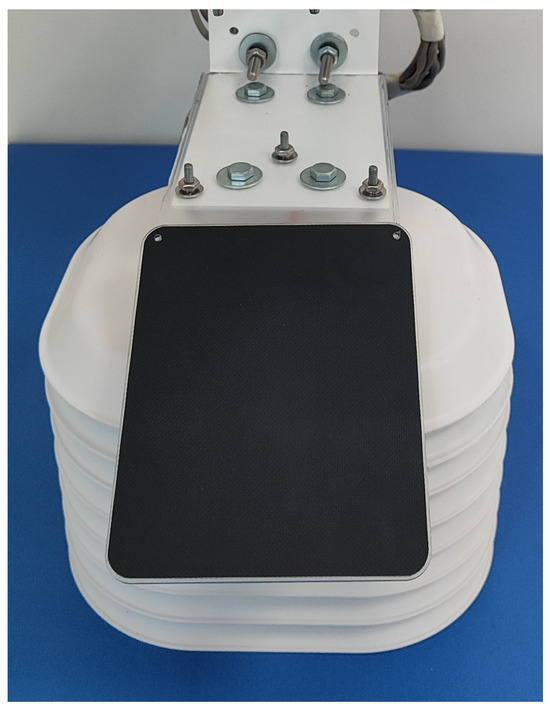
As part of the field implementation process, the Voltaic P126 solar panel was integrated into the system to provide power and maintain the charge of the 18650 lithium-ion battery, utilizing the bq24074 energy management module. The solar panel was mounted on a solar radiation shield using a custom-designed transparent acrylic structure, which was secured with stainless steel hardware to the metal support of the shield. Figure 11 illustrates the final assembled installation.
Figure 11.
Voltaic P126 solar panel mounted on top of the solar radiation shield.
During assembly, the panel’s orientation was checked to ensure it received direct and consistent exposure to solar radiation, without any obstruction from the sensors or the mounting mast. This setup maximized energy collection efficiency, ensuring a stable charging voltage even under medium irradiance conditions (200–400 W/m2).
The panel’s wiring was connected to the bq24074 module via a sealed, weatherproof connector, which channels power into the shield that houses the main PCB. Tests conducted over a continuous one-month period confirmed the charging system’s stable performance, with no interruptions in the microcontroller’s power supply or voltage drops during nighttime cycles.
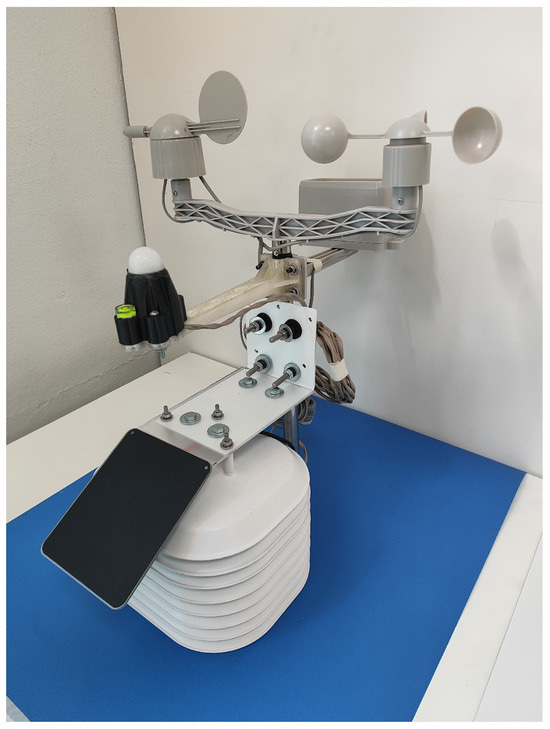
The SparkFun Weather Meter Kit sensors, including the anemometer, wind vane, and rain gauge, were integrated in the final assembly stage. These components were mounted on the aluminum mast in the kit, following the manufacturer’s guidelines to ensure proper field operation:
- The anemometer was mounted at the top of the mast to ensure unobstructed airflow exposure and minimize turbulence caused by nearby structures.
- The wind vane was positioned just below the anemometer, allowing for a full 360° rotation and enabling accurate measurement of wind direction.
- The rain gauge was installed at the base of the assembly and carefully leveled with a spirit level to ensure consistent precipitation collection.
- The BH1750 sensor, which measures solar radiation, was mounted on an extended side support arm. This separation from the main body of the solar radiation shield prevents shadows and interference from other system elements.
All sensors were connected via RJ11 cables to the corresponding ports on the weather station PCB inside the radiation shield. Figure 12 shows the integration of SparkFun Weather Meter Kit into the weather station.
Figure 12.
Integrating the SparkFun Weather Meter Kit into the weather station mast.
During integration testing, the individual responses of each mechanical sensor were verified under controlled conditions. The anemometer accurately responded to varying airflow intensities, the wind vane consistently detected angular positions, and the rain gauge recorded reliable pulses during simulated rainfall events.
4.2. System Testing
Before starting the individual sensor validation, functional tests were conducted on the system to ensure proper module operation under real-world outdoor conditions.
The weather station was installed in Ojocaliente, a municipality in the state of Zacatecas, Mexico, located at geographic coordinates 22°33′40″ N latitude and 102°14′44″ W longitude, at an altitude of 2043 m above sea level. The local console module was positioned approximately 100 m away from the station. This distance was chosen to maintain a stable LoRa communication link and to reflect realistic deployment conditions in small- and medium-scale agricultural environments.
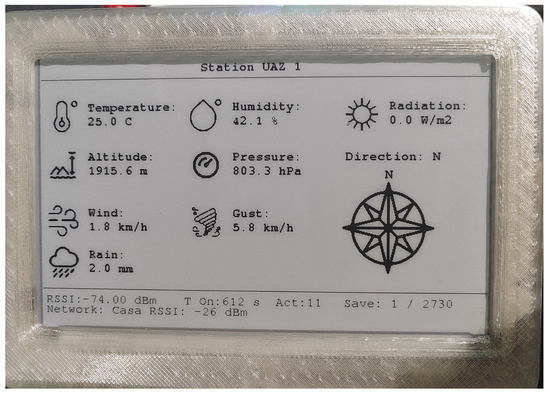
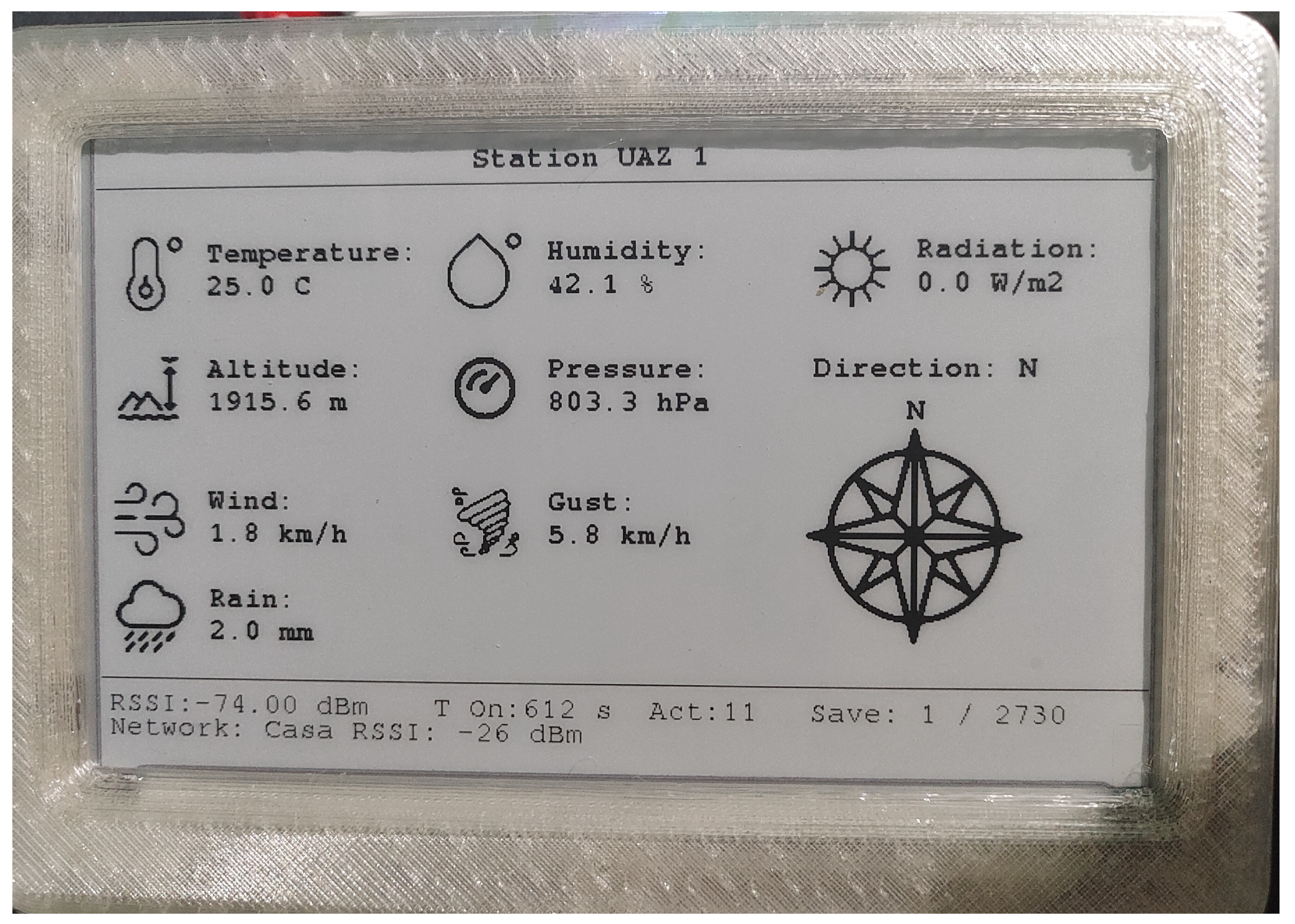
The console featured a 7.5-inch e-Paper display that provided real-time meteorological information from the station. This included data on temperature, relative humidity, barometric pressure, solar radiation, wind speed and direction, and accumulated precipitation (see Figure 13). In addition to these meteorological variables, the e-Paper display also displayed complementary system information, such as the SSID of the configured Wi-Fi network, the Received Signal Strength Indicator (RSSI) of the connection, the total system power-up time, and the number of records stored in EEPROM memory. These indicators allowed for verification of the wireless connectivity and the overall operational status of the station during field testing.
Figure 13.
e-Paper display of the local console showing real-time meteorological and system information.
Throughout the test period, data was transmitted every 30 s while simultaneously being stored in EEPROM memory as a backup in case of connectivity interruptions. The system operated continuously for one month, demonstrating effective interaction between the solar power, LoRa and Wi-Fi communication, and local display subsystems, all without interruptions or unscheduled restarts.
4.3. Sensor Validation
A comparative evaluation was conducted to verify the accuracy of the sensors integrated into the developed station. Temperature and humidity were compared with a Davis Vantage Pro2 reference station [57], while barometric pressure was verified according to the calibration and compensation procedure specified by the sensor manufacturer. Wind speed and direction were validated according to datasheet specifications, and the rain sensor was tested by pouring a known water volume into the tipping bucket. Solar radiation validation followed our previous work [24], where the conversion factor between illuminance and irradiance was established and validated.
A dataset was compiled from measurements taken over one month, resulting in 8928 synchronized records. The developed station collects data every 30 s, while the Davis records data every 5 min. The timestamps from the Davis station served as a reference to standardize both databases.
To quantitatively assess the degree of fit between the measurements of both systems, three statistical metrics widely used in the validation of environmental sensors were employed: the Coefficient of Determination (R2), the Root Mean Square Error (RMSE), and the Mean Absolute Error (MAE). These metrics, allow for the analysis of the correlation, dispersion, and average accuracy of the recorded data, providing an objective estimate of the sensors’ performance compared to the reference station.
4.3.1. Temperature and Humidity
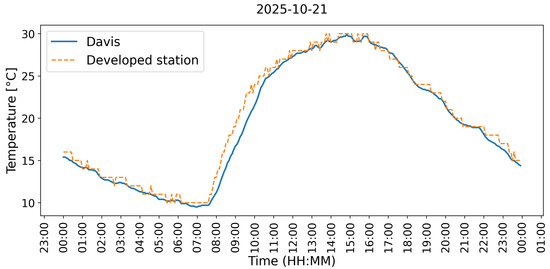
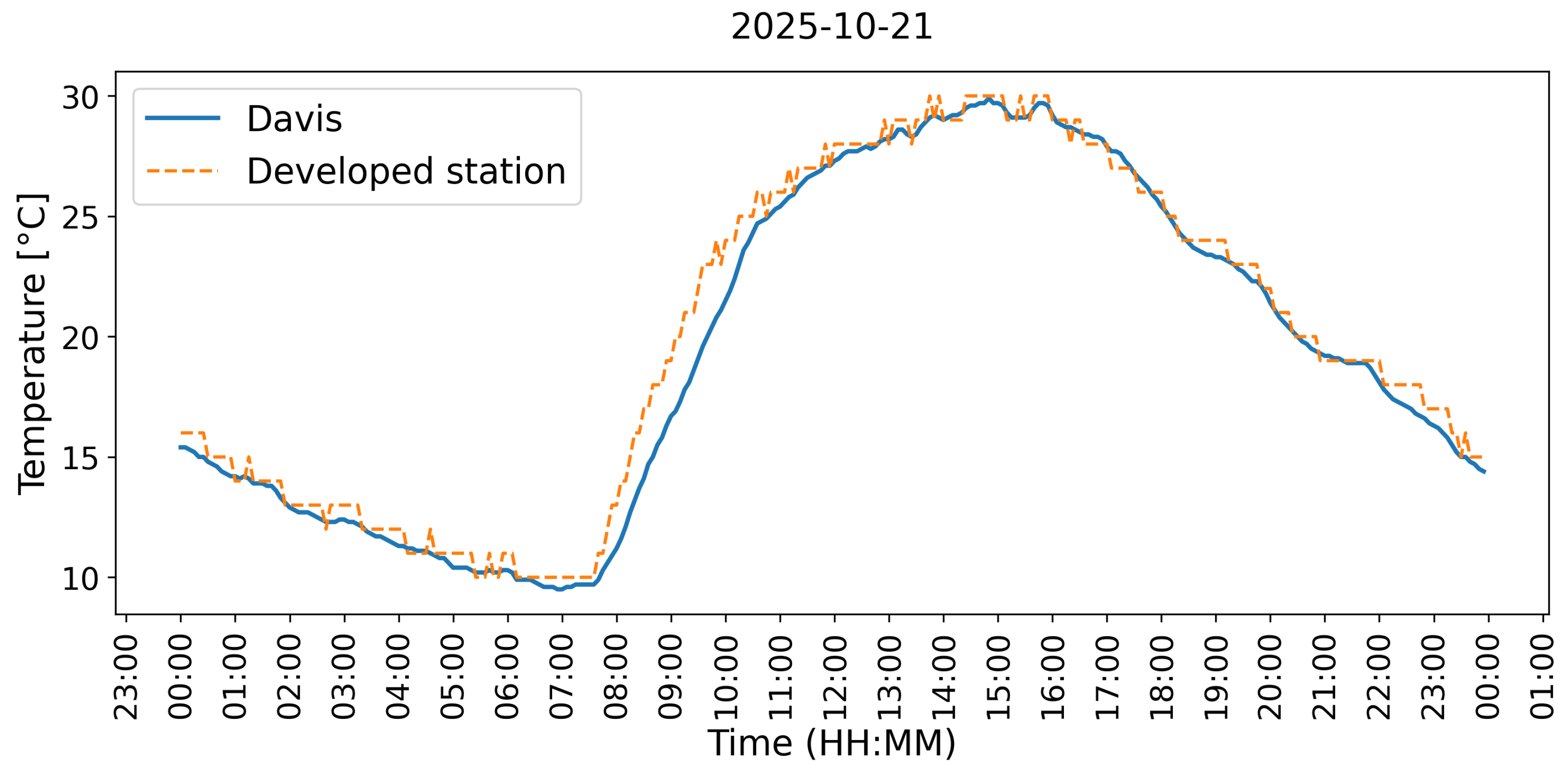
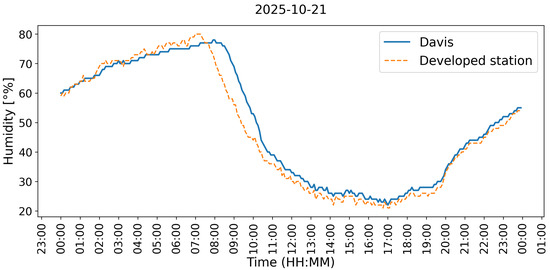
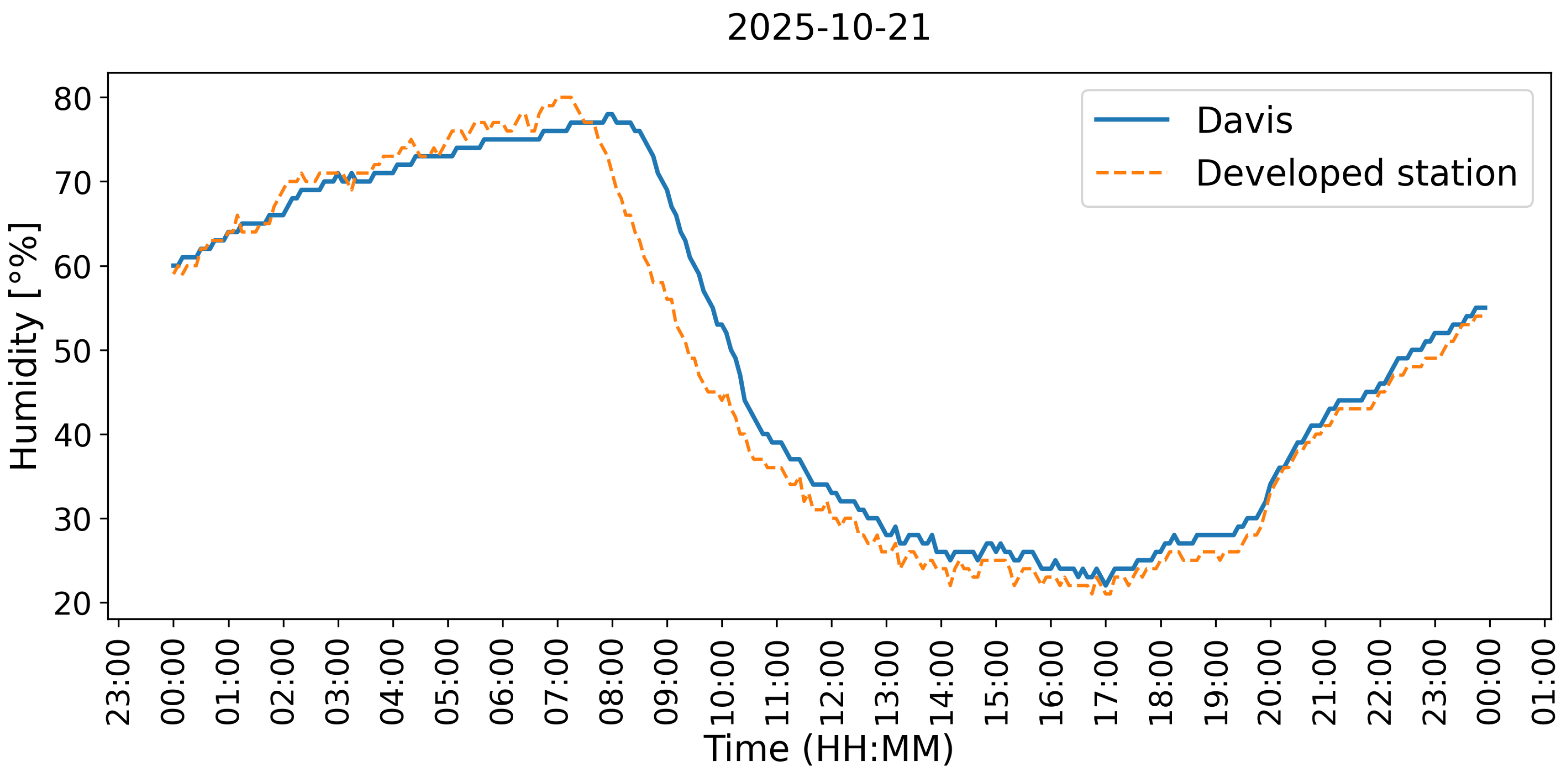
For the variables of temperature and RH the statistical metrics of R2, RMSE, MAE were applied, the results of which are summarized in Table 10. These metrics allowed for evaluating the correlation and average error of the measurements concerning the reference station. Likewise, Figure 14 and Figure 15 present 24 h extracts of each variable, used to analyze the trend and stability of the measurements over a representative period.
Table 10.
Statistical metrics obtained for temperature and humidity.
Figure 14.
Comparison of temperature measurements over a 24 h period.
Figure 15.
Comparison of humidity measurements over a 24 h period.
4.3.2. Pressure and Altitude
Barometric pressure was measured using the BMP390 sensor integrated into the developed weather station, for which the manufacturer [45] provides a compensation algorithm and a data structure containing the calibration coefficients, along with a temperature variable used during pressure compensation. Over the one-month monitoring period, the pressure recorded by the weather station remained relatively stable, fluctuating between 797 hPa and 803 hPa in 24 h cycles. These variations can mainly be attributed to ambient temperature and humidity changes. Additionally, altitude was estimated from the pressure data using the standard hypsometric equation, resulting in an average altitude of 1946 m. For contextual comparison under real operating conditions, the measured pressure values were compared with readings from the barometer embedded in an Apple iPhone, which was used as an indicative comparison.
4.3.3. Rainfall Measurement
During the one-month validation period, no natural rainfall events were recorded. Consequently, a controlled test was conducted to verify the accuracy and stability of the measurement system. A known volume of water was poured onto the rain gauge to simulate different levels of accumulated precipitation. Each tilt of the mechanism generated corresponding electrical pulses, which were then recorded and compared to the expected theoretical values. The results showed a precise correlation between the number of pulses and the volume of water poured, confirming the sensor’s calibration, linearity, and proper functioning under controlled conditions.
4.3.4. Wind Speed and Direction
The anemometer was validated according to the manufacturer’s specifications from SparkFun Electronics and the guidelines established by the World Meteorological Organization (WMO). According to the datasheet, the sensor generates one pulse for each cup revolution, corresponding to a wind speed of 2.4 km/h per pulse. An integration period of 30 s was chosen to ensure stable and representative measurements, which falls within the WMO’s recommended range of 10 to 60 s. Wind speed was calculated using the relationship detailed in the Equation (1) in Section 3.1.3.
The validation results, summarized in Table 11, indicate a strong consistency between the measured and expected values, confirming that the sensor is calibrated correctly and performs accurately under controlled conditions.
Table 11.
Summary of anemometer validation results.
Wind direction was measured using the SparkFun Weather Meter Kit wind vane, which operates on a resistive voltage divider with eight discrete positions corresponding to the cardinal and intercardinal directions. Validation was conducted by comparing the readings simultaneously with the Davis weather station. This comparison showed complete agreement between the two devices, confirming the proper calibration and functionality of the direction sensor.
4.3.5. Solar Radiation
The validation of solar radiation was conducted based on our previous study [24] that established the relationship between illuminance and irradiance using the BH1750 sensor. This study utilized linear and polynomial regression models to analyze the data. The results showed that the linear model had an R2 value of 0.9450, a RMSE of 57.92, and a MAE of 36.19. In contrast, the second-order polynomial model provided a better fit with an R2 of 0.9496, an RMSE of 55.45, and an MAE of 32.33. These findings demonstrated a strong correlation between the measured illuminance and the estimated solar radiation, validating the model’s accuracy. This supports using the BH1750 sensor as a cost-effective alternative for estimating irradiance in meteorological systems.
5. Discussion
The developed weather station provides a comprehensive, cost-effective alternative to commercially available solutions. While commercial stations offer a wide variety of sensors and high accuracy, their prices increase significantly as additional modules are added for measuring variables such as solar radiation, barometric pressure, or precipitation. In contrast, the proposed station integrates all these measurements natively. It maintains an approximate cost of USD 500, including the USD 150 Davis radiation shield and the external solar power subsystem for autonomous operation. This is a fraction of the price of commercial equipment with similar features, which typically starts at USD 1500 and can increase substantially depending on the sensor configuration. Most of these systems are not standalone, as they require external power sources or additional infrastructure for continuous operation.
The validation results for temperature and relative humidity variables demonstrated a high level of agreement with data from the Davis reference station. For temperature, R2 = 0.9566, along with low errors (RMSE = 1.4348 °C and MAE = 1.0680 °C), indicates excellent correlation and accuracy in the measurements obtained with the SHT31 sensor. The average variation compared to the commercial station was approximately 1 °C. Relative humidity also showed a strong correlation (R2 = 0.9324) with moderate errors (RMSE = 4.7532% and MAE = 3.7800%), values that are considered suitable for environmental and agricultural monitoring applications. The observed differences can be attributed to microclimatic variations and the inherent dynamics of humidity in the air, which exhibit greater fluctuations than temperature.
The BMP390 sensor demonstrated stable performance in measuring barometric pressure, closely aligning with the readings from a reference barometer. During the validation period, it recorded average pressures around 800 hPa. Using the hypsometric equation, this data was used to calculate the altitude, resulting in an approximate elevation of 1946 m above sea level. This value is in close agreement with the actual altitude of the installation site in Ojocaliente, Zacatecas, which is approximately 2043 m based on GPS data obtained from Google Maps. It is important to note that the latter estimate relies on GPS data, which can fluctuate due to variations in receiver accuracy and atmospheric conditions. Therefore, the indirect measurement based on atmospheric pressure provides a more reliable and consistent alternative for estimating altitude in autonomous meteorological systems.
The electromechanical sensors in the SparkFun Weather Meter kit, including the anemometer, wind vane, and rain gauge, performed as expected during controlled tests. The anemometer responded linearly to airflow, consistent with the manufacturer’s specifications. The wind vane accurately indicated the directions aligned with those recorded by the reference station. Additionally, the rain gauge demonstrated a response proportional to the volume of water poured into it, with no significant deviations from the expected value due to the bucket’s tipping mechanism.
The experimental results demonstrate that the proposed low-cost IoT architecture achieves consistent system-level performance by integrating environmental sensing, wireless communication, and energy management into an autonomous platform validated under real-world field conditions. To date, the system has been evaluated over approximately one month of operational testing, during which adequate accuracy and operational stability were observed for applications in local climate monitoring and precision agriculture. Nevertheless, more extended evaluation periods spanning different seasons of the year are required to fully characterize long-term behavior and variability, thereby further strengthening the robustness and generalization capabilities of the implemented algorithms.
6. Conclusions and Future Work
This work presents an affordable IoT weather station for environmental and agricultural monitoring. The station includes sensors measuring temperature, humidity, pressure, solar radiation, wind speed, and precipitation, along with a local console with an e-Paper display. The system demonstrated consistent data acquisition and transmission performance. It was validated for accuracy against a commercial weather station, confirming its initial potential as an accessible and scalable solution for climate monitoring in rural areas.
The results obtained during the validation period demonstrated the system’s operational stability and the consistency of the measurements in relation to reference values for both thermal and atmospheric variables. Additionally, the implemented architecture allowed for verification of the wireless link’s efficiency and highlighted the usefulness of the local console for field monitoring. This supports the proposal as a low-cost support tool for meteorological and agricultural studies, demonstrating the feasibility of an integrated and autonomous IoT architecture validated at the system level under real field conditions.
Future work will focus on extending the validation period in order to evaluate long-term and seasonal performance under varying environmental conditions, as well as facilitating long-term data storage and applying machine learning algorithms for predicting climatological variables and detecting anomalies. A mobile application for real-time data visualization and remote system management is also planned. Future developments will include integrating air-quality sensors to analyze the impact of industrial growth on environmental conditions and implementing a distributed network of meteorological stations across various geographic locations.
Author Contributions
Conceptualization, U.E.A.-R. and H.A.G.-O.; methodology, H.A.G.-O. and L.O.S.-S.; software, U.E.A.-R., F.G.-V. and S.C.-T.; validation, F.G.-V. and S.C.-T.; formal analysis, L.F.L.-V. and L.O.S.-S. and F.G.-V.; investigation, U.E.A.-R. and J.A.N.-P.; resources, L.F.L.-V., J.A.N.-P. and M.d.R.M.-B.; data curation, U.E.A.-R., E.L.-N. and J.A.N.-P.; writing—original draft preparation, U.E.A.-R., F.G.-V. and S.C.-T.; writing—review and editing, H.A.G.-O. and M.d.R.M.-B.; visualization, J.A.N.-P., L.O.S.-S. and M.d.R.M.-B.; supervision, H.A.G.-O. and L.F.L.-V.; project administration, E.L.-N.,H.A.G.-O. and L.F.L.-V.; funding acquisition, E.L.-N. All authors have read and agreed to the published version of the manuscript.
Funding
This research received no external funding.
Institutional Review Board Statement
Not applicable.
Informed Consent Statement
Not applicable.
Data Availability Statement
Data supporting the reported results can be found at https://github.com/fabianngv29/weather-station-data-validation-UAZ (accessed on 14 November 2025).
Acknowledgments
The authors want to thank the Mexican Secretariat of Science, Humanities, Technology and Innovation (SECIHTI by its initials in Spanish) for its support to the National Laboratory of Embedded Systems, Advanced Electronics Design and Micro Systems (LN-SEDEAM by its initials in Spanish), project numbers 282357, 293384, 299061, 314841, 315947, and 321128 and scholarship numbers 1301325 and 1012274.
Conflicts of Interest
The authors declare no conflicts of interest.
Abbreviations
The following abbreviations are used in this manuscript:
| AC | Alternating Current |
| ADC | Analog-to-Digital Converter |
| AES | Advanced Encryption Standard |
| BLE | Bluetooth Low Energy |
| BMS | Battery Management System |
| DAC | Digital-to-Analog Converter |
| DC | Direct Current |
| DHCP | Dynamic Host Configuration Protocol |
| EEPROM | Electrically Erasable Programmable Read-Only Memory |
| ETFE | Ethylene Tetrafluoroethylene |
| GPIO | General-Purpose Input/Output |
| GPRS | General Packet Radio Service |
| HTTP | Hypertext Transfer Protocol |
| I2C | Inter-Integrated Circuit |
| IoT | Internet of Things |
| IP | Internet Protocol |
| ISM | Industrial, Scientific, and Medical |
| Li-Ion | Lithium-Ion |
| LoRa | Long Range |
| LPWAN | Low-Power Wide-Area Network |
| MAE | Mean Absolute Error |
| MQTT | Message Queuing Telemetry Transport |
| NB-IoT | Narrowband Internet of Things |
| PCB | Printed Circuit Board |
| PTFE | Polytetrafluoroethylene |
| RAM | Random Access Memory |
| RH | Relative Humidity |
| RMSE | Root Mean Square Error |
| RSSI | Received Signal Strength Indicator |
| SPI | Serial Peripheral Interface |
| SRAM | Static Random-Access Memory |
| SSID | Service Set Identifier |
| STA | Station Mode |
| UART | Universal Asynchronous Receiver–Transmitter |
| USB | Universal Serial Bus |
| U.FL | Ultra Miniature Coaxial Connector |
| Wi-Fi | Wireless Fidelity |
References
- Soussi, A.; Zero, E.; Sacile, R.; Trinchero, D.; Fossa, M. Smart Sensors and Smart Data for Precision Agriculture: A Review. Sensors 2024, 24, 2647. [Google Scholar] [CrossRef] [Scilit]
- Duguma, A.L.; Bai, X. How the internet of things technology improves agricultural efficiency. Artif. Intell. Rev. 2024, 58, 63. [Google Scholar] [CrossRef] [Scilit]
- Rajak, P.; Ganguly, A.; Adhikary, S.; Bhattacharya, S. Internet of Things and smart sensors in agriculture: Scopes and challenges. J. Agric. Food Res. 2023, 14, 100776. [Google Scholar] [CrossRef] [Scilit]
- Miller, T.; Mikiciuk, G.; Durlik, I.; Mikiciuk, M.; Łobodzińska, A.; Śnieg, M. The IoT and AI in Agriculture: The Time Is Now—A Systematic Review of Smart Sensing Technologies. Sensors 2025, 25, 3583. [Google Scholar] [CrossRef] [Scilit]
- Musa, P.; Sugeru, H.; Wibowo, E.P. Wireless sensor networks for precision agriculture: A review of npk sensor implementations. Sensors 2023, 24, 51. [Google Scholar] [CrossRef] [Scilit]
- Truter, K.J.; Glas, H.; Delport, M.; Meyer, F.H.; Swanepoel, P.A. Adoption of precision agriculture practices in South African field crop production systems: A national survey. S. Afr. J. Plant Soil 2025, 42, 13–23. [Google Scholar] [CrossRef] [Scilit]
- Wanniarachchi, S.; Sarukkalige, R. A review on evapotranspiration estimation in agricultural water management: Past, present, and future. Hydrology 2022, 9, 123. [Google Scholar] [CrossRef] [Scilit]
- Zanchi, M.; Zapperi, S.; La Porta, C.A. Harnessing deep learning to forecast local microclimate using global climate data. Sci. Rep. 2023, 13, 21062. [Google Scholar] [CrossRef] [Scilit] [PubMed]
- Zennaro, M.; Pietrosemoli, E.; Soltobaev, A.; Sultanovand, T.; Moldobekov, B. From mountains to data: Low-cost weather stations in Kyrgyzstan’s challenging terrain. Front. Commun. Netw. 2025, 6, 1505375. [Google Scholar] [CrossRef] [Scilit]
- Kalaany, C.M.A.; Kimaita, H.N.; Abdelmoneim, A.A.; Khadra, R.; Derardja, B.; Dragonetti, G. The Potential of Low-Cost IoT-Enabled Agrometeorological Stations: A Systematic Review. Sensors 2025, 25, 6020. [Google Scholar] [CrossRef] [Scilit] [PubMed]
- Selvam, A.P.; Al-Humairi, S.N.S. Environmental impact evaluation using smart real-time weather monitoring systems: A systematic review. Innov. Infrastruct. Solut. 2025, 10, 13. [Google Scholar] [CrossRef] [Scilit]
- Morchid, A.; Et-taibi, B.; Oughannou, Z.; El Alami, R.; Qjidaa, H.; Jamil, M.O.; Boufounas, E.M.; Abid, M.R. IoT-enabled smart agriculture for improving water management: A smart irrigation control using embedded systems and Server-Sent Events. Sci. Afr. 2025, 27, e02527. [Google Scholar] [CrossRef] [Scilit]
- Nikhilesh, K.S.; Raaghavendra, Y.H.; Soothanan, P.M.; Resmi, R. Low-cost IoT based weather monitoring system for smart community. In Proceedings of the 2020 Fourth International Conference on Inventive Systems and Control (ICISC), Coimbatore, India, 8–10 January 2020; pp. 482–486. [Google Scholar]
- Guzmán, E.F.R.; Chochos, E.D.M.; Malliquinga, M.D.C.; Egas, P.F.B.; Guachi, R.M.T. Lora network-based system for monitoring the agricultural sector in andean areas: Case study ecuador. Sensors 2022, 22, 6743. [Google Scholar]
- Mini, A.; Anuradha, M.S.; Asha, G.S.R.; Rekha, J.S.S.; Kamble, S.; Kulkarni, M. IoT based smart agriculture monitoring system. Int. Res. J. Eng. Technol. 2023, 10, 1442–1448. [Google Scholar]
- Wang, C. Research on the design of an Internet of Things intelligent irrigation system based on NB-IOT wireless communication. In Proceedings of the International Conference on Computer Application and Information Security (ICCAIS 2024), Wuhan, China, 25 April 2025; p. 135623A. [Google Scholar]
- Pincheira, M.; Vecchio, M.; Giaffreda, R.; Kanhere, S.S. Cost-effective IoT devices as trustworthy data sources for a blockchain-based water management system in precision agriculture. Comput. Electron. Agric. 2021, 180, 105889. [Google Scholar] [CrossRef] [Scilit]
- Morais, R.; Mendes, J.; Silva, R.; Silva, N.; Sousa, J.J.; Peres, E. A versatile, low-power and low-cost IoT device for field data gathering in precision agriculture practices. Agriculture 2021, 11, 619. [Google Scholar] [CrossRef] [Scilit]
- Andreadis, A.; Giambene, G.; Zambon, R. Low-power IoT environmental monitoring and smart agriculture for unconnected rural areas. In Proceedings of the 2022 20th Mediterranean Communication and Computer Networking Conference (MedComNet) (ICISC), Pafos, Cyprus, 1–3 June 2022; pp. 31–38. [Google Scholar]
- Yang, Y.; Guo, X.; Liu, G.; Liu, W.; Xue, J.; Ming, B.; Xie, R.; Keru, W.; Hou, P.; Li, S. Solar radiation effects on dry matter accumulations and transfer in maize. Front. Plant Sci. 2021, 12, 727134. [Google Scholar] [CrossRef] [Scilit]
- Raja, P.; Sona, F.; Surendran, U.; Srinivas, C.V.; Kannan, K.; Madhu, M.; Mahesh, P.; Annepu, S.K.; Ahmed, M.; Chandrasekar, K.; et al. Performance evaluation of different empirical models for reference evapotranspiration estimation over Udhagamandalm, The Nilgiris, India. Sci. Rep. 2024, 14, 12429. [Google Scholar] [CrossRef] [Scilit] [PubMed]
- Dantas, E.C.S.; Segundo, J.T.D.; Catunda, S.Y.C.; Belfort, D.R.; Freire, R.C.S.; Silva Júnior, P.F.D. Architecture of an Electrical Equivalence Pyranometer with Temperature Difference Analog Control. Sensors 2022, 22, 8137. [Google Scholar] [CrossRef] [Scilit]
- Ghazouani, N.; Bawadekji, A.; El-Bary, A.A.; Elewa, M.M.; Becheikh, N.; Alassaf, Y.; Hassan, G.E. Performance evaluation of temperature-based global solar radiation models—case study: Arar city, KSA. Sustainability 2021, 14, 35. [Google Scholar] [CrossRef] [Scilit]
- Nava-Pintor, J.A.; Alcalá-Rodríguez, U.E.; Guerrero-Osuna, H.A.; Mata-Romero, M.E.; Lopez-Neri, E.; García-Vázquez, F.; Solís-Sánchez, L.O.; Carrasco-Navarro, R.; Luque-Vega, L.F. Development and Evaluation of Solar Radiation Sensor Using Cost-Effective Light Sensors and Machine Learning Techniques. Technologies 2025, 13, 182. [Google Scholar] [CrossRef] [Scilit]
- Soy, H.; Dılay, Y. A conceptual design of LoRa based weather monitoring system for smart farming. Avrupa Bilim Teknol. Derg. 2021, 28, 906–910. [Google Scholar] [CrossRef] [Scilit]
- Priambodo, A.S.; Nugroho, A.P. Design & implementation of solar powered automatic weather station based on esp32 and gprs module. J. Phys. Conf. Ser. 2021, 1737, 012009. [Google Scholar]
- Faid, A.; Sadik, M.; Sabir, E. An Agile AI and IoT-Augmented Smart Farming: A Cost-Effective Cognitive Weather Station. Agriculture 2022, 12, 35. [Google Scholar] [CrossRef] [Scilit]
- Mohapatra, D.; Subudhi, B. Development of a Cost-Effective IoT-Based Weather Monitoring System. IEEE Consum. Electron. Mag. 2022, 11, 81–86. [Google Scholar] [CrossRef] [Scilit]
- Rocha, J.V.; Magalhães, R.R.; de Carvalho, L.G.; Diotto, A.V.; Barbosa, B.H.G. Development of a Low-Cost Weather Station and Real-Time Monitoring for Automated Irrigation Management. Acta Sci. Technol. 2022, 44, e59244. [Google Scholar] [CrossRef] [Scilit]
- Singh, D.K.; Sobti, R.; Jain, A.; Malik, P.K.; Le, D.N. LoRa-Based Intelligent Soil and Weather Condition Monitoring with Internet of Things for Precision Agriculture in Smart Cities. IET Commun. 2022, 16, 604–618. [Google Scholar] [CrossRef] [Scilit]
- Botero-Valencia, J.S.; Mejia-Herrera, M.; Pearce, J.M. Low-Cost Climate Station for Smart Agriculture Applications with Photovoltaic Energy and Wireless Communication. HardwareX 2022, 11, e00296. [Google Scholar] [CrossRef] [Scilit] [PubMed]
- Pourbafrani, M.; Ghadamian, H.; Moghadasi, M.; Mardani, M. Design, Fabrication, and Experimental Study of a Low-Cost and Accurate Weather Station Using a Microcontroller System. J. Renew. Energy Environ. 2023, 10, 35–43. [Google Scholar]
- Bella, H.K.D.; Khan, M.; Naidu, M.S.; Jayanth, D.S.; Khan, Y. Developing a Sustainable IoT-Based Smart Weather Station for Real-Time Weather Monitoring and Forecasting. E3S Web Conf. 2023, 430, 01092. [Google Scholar] [CrossRef] [Scilit]
- Rivera, A.; Ponce, P.; Mata, O.; Molina, A.; Meier, A. Local Weather Station Design and Development for Cost-Effective Environmental Monitoring and Real-Time Data Sharing. Sensors 2023, 23, 9060. [Google Scholar] [CrossRef] [Scilit] [PubMed]
- Bernardes, G.F.; Ishibashi, R.; Ivo, A.A.; Rosset, V.; Kimura, B.Y. Prototyping Low-Cost Automatic Weather Stations for Natural Disaster Monitoring. Digit. Commun. Netw. 2023, 9, 941–956. [Google Scholar] [CrossRef] [Scilit]
- Albuali, A.; Srinivasagan, R.; Aljughaiman, A.; Alderazi, F. Scalable Lightweight IoT-Based Smart Weather Measurement System. Sensors 2023, 23, 5569. [Google Scholar] [CrossRef] [Scilit]
- Ibraheem, F.N.; Abdulrazzaq, S.N.; Fathi, I.A.; Ali, Q. High-Resolution and Secure IoT-Based Weather Station Design. Int. J. Saf. Secur. Eng. 2024, 14, 249–258. [Google Scholar] [CrossRef] [Scilit]
- Ting, Y.T.; Chan, K.Y. Optimising Performances of LoRa-Based IoT-Enabled Wireless Sensor Network for Smart Agriculture. J. Agric. Food Res. 2024, 16, 101093. [Google Scholar] [CrossRef] [Scilit]
- Bonilla, J.; Carballo, J.A.; Abad-Alcaraz, V.; Castilla, M.; Álvarez, J.D.; Fernandez-Reche, J. A Real-Time and Modular Weather Station Software Architecture Based on Microservices. Environ. Model. Softw. 2025, 186, 106337. [Google Scholar] [CrossRef] [Scilit]
- Mokhtarzadeh, H.; Gorjian, S.; Minaei, S. Design, Development, and Evaluation of a Low-Cost Smart Solar-Powered Weather Station for Use in Agricultural Environments. Results Eng. 2025, 26, 104848. [Google Scholar] [CrossRef] [Scilit]
- Desai, P.; Patil, G.; Londhe, T.; Sonune, T.; Narkhede, M.; Shevade, N. IoT-Based Smart Weather Station Using ESP32 for Real-Time Environmental Monitoring. Int. J. Adv. Res. Sci. Commun. Technol. 2025, 4, 491–501. [Google Scholar] [CrossRef] [Scilit]
- da Silva, T.A.; Serrano, A.L.; Figueiredo, E.R.; Rocha Filho, G.P.; de Mendonça, F.L.; Meneguette, R.I.; Gonçalves, V.P. New Model for Weather Stations Integrated to Intelligent Meteorological Forecasts in Brasília. Sensors 2025, 25, 3432. [Google Scholar] [CrossRef] [Scilit]
- Microchip Technology Inc. ATSAMD21G18A—ARM® Cortex®-M0+ Based Microcontroller Datasheet, Revision C-03/23; Microchip Technology Inc.: Chandler, AZ, USA, 2023. Available online: https://ww1.microchip.com/downloads/aemDocuments/documents/MCU32/ProductDocuments/DataSheets/SAM-D21-DA1-Family-Data-Sheet-DS40001882.pdf (accessed on 26 October 2025).
- Sensirion AG. SHT3x—Humidity and Temperature Sensor Datasheet, Version 1.2; Sensirion AG: Staefa, Switzerland, 2022. Available online: https://sensirion.com/media/documents/213E6A3B/63A5A569/Datasheet_SHT3x_DIS.pdf (accessed on 26 October 2025).
- Bosch Sensortec GmbH. BMP390—Digital Pressure Sensor Datasheet, Revision 1.3; Bosch Sensortec GmbH: Reutlingen, Germany, 2021. Available online: https://www.bosch-sensortec.com/products/environmental-sensors/pressure-sensors/bmp390/ (accessed on 26 October 2025).
- ROHM Semiconductor. BH1750FVI—Digital Light Sensor IC Datasheet, Revision A; ROHM Co., Ltd.: Kyoto, Japan, 2016. Available online: https://www.mouser.com/datasheet/2/348/bh1750fvi-e-186247.pdf (accessed on 26 October 2025).
- SparkFun Electronics. Weather Meter Kit SEN-15901—Product Documentation and Hookup Guide; SparkFun Electronics: Niwot, CO, USA, 2020; Available online: https://learn.sparkfun.com/tutorials/weather-meter-hookup-guide (accessed on 26 October 2025).
- Adafruit Industries. Adafruit Universal USB/DC/Solar Lithium Ion/Polymer Charger—bq24074, Product ID 4755; Adafruit Industries: New York, NY, USA, 2023. Available online: https://www.adafruit.com/product/4755 (accessed on 26 October 2025).
- Panasonic Corporation. NCR18650B—Lithium-Ion Rechargeable Battery Datasheet; Panasonic Corporation: Osaka, Japan, 2020; Available online: https://baterie18650.pl/wp-content/uploads/2023/12/panasonic_ncr18650b.pdf (accessed on 26 October 2025).
- Voltaic Systems. P126 6V ETFE Solar Panel—Technical Specifications and Product Sheet; Voltaic Systems: Brooklyn, NY, USA, 2023; Available online: https://voltaicsystems.com/p126/ (accessed on 27 October 2025).
- Adafruit Industries. Voltaic Systems 6V 2W ETFE Solar Panel—Adafruit 5366; Adafruit Industries: New York, NY, USA, 2023; Available online: https://www.adafruit.com/product/5366 (accessed on 27 October 2025).
- Microchip Technology Inc. AT24CM01—1-Mbit I2C-Compatible Serial EEPROM Datasheet, DS20006023C; Microchip Technology Inc.: Chandler, AZ, USA,, 2022. Available online: https://ww1.microchip.com/downloads/en/DeviceDoc/20006023C.pdf (accessed on 27 October 2025).
- HopeRF Microelectronics Co., Ltd. RFM95W—LoRa Transceiver Module Datasheet; HopeRF Microelectronics Co., Ltd.: Shenzhen, China, 2020; Available online: https://cdn.sparkfun.com/assets/6/5/c/d/c/RFM95CW_Specification_EN_V1.1__1_.pdf (accessed on 26 October 2025).
- Espressif Systems. ESP32-WROOM-32: Wi-Fi + Bluetooth Module Datasheet, Version 3.9; Espressif Systems: Shanghai, China, 2023. Available online: https://www.espressif.com/sites/default/files/documentation/esp32-wroom-32_datasheet_en.pdf (accessed on 27 October 2025).
- Waveshare Electronics. 7.5-Inch e-Paper (B) E-Ink Raw Display, 800 × 480, Red/Black/White, SPI, Without PCB—Product Datasheet and Wiki, Version 1.3; Waveshare Electronics: Shenzhen, China, 2023. Available online: https://www.waveshare.com/epaper (accessed on 27 October 2025).
- MathWorks. ThingSpeak™ IoT Analytics Platform—User Guide and API Documentation; MathWorks Inc.: Natick, MA, USA, 2025; Available online: https://thingspeak.mathworks.com/docs (accessed on 28 October 2025).
- Davis Instruments Corporation. Vantage Pro2 Weather Station Specifications, Version 2.0; Davis Instruments Corporation: Hayward, CA, USA, 2023. Available online: https://www.davisinstruments.com/pages/vantage-pro2 (accessed on 14 November 2025).

Disclaimer/Publisher’s Note: The statements, opinions and data contained in all publications are solely those of the individual author(s) and contributor(s) and not of MDPI and/or the editor(s). MDPI and/or the editor(s) disclaim responsibility for any injury to people or property resulting from any ideas, methods, instructions or products referred to in the content. |
© 2026 by the authors. Licensee MDPI, Basel, Switzerland. This article is an open access article distributed under the terms and conditions of the Creative Commons Attribution (CC BY) license.