
Implementation and Clinical Impact of a Structured Clinical Pharmacy Service for Hospitalized Ileostomy Patients: A Retrospective Observational Study Using the RE-AIM Framework

Abstract
1. Introduction
2. Materials and Methods
2.1. Study Design and Framework
2.2. Setting and Intervention
2.3. Study Population and Eligibility

2.4. Data Collection
2.5. DRP and SDRP Identification and Classification
2.6. RE-AIM Evaluation Framework
- Reach: Proportion and representativeness of eligible ileostomy patients who received the clinical pharmacy service.
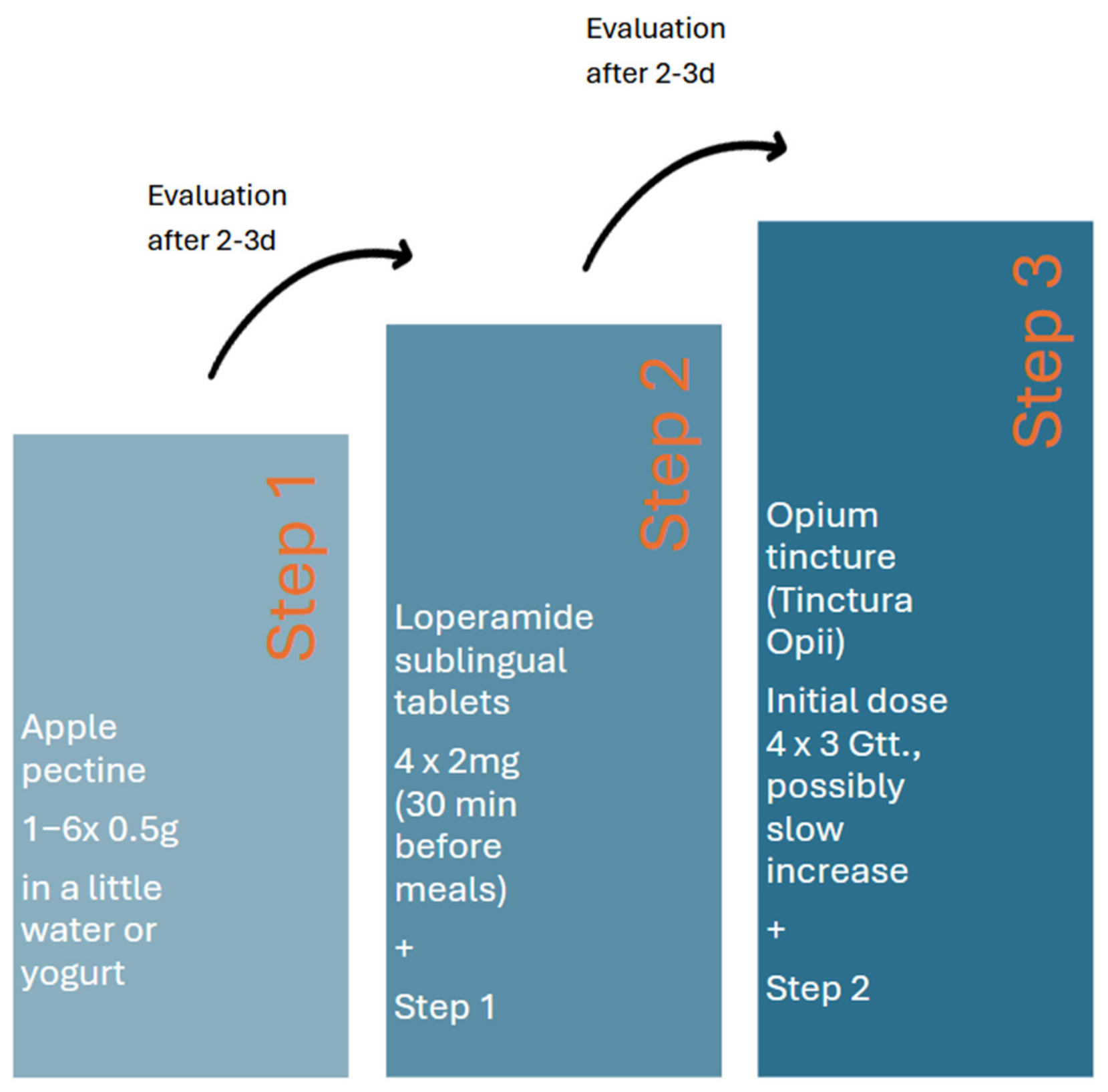
- Effectiveness: Identification and resolution of DRPs/SDRPs, acceptance rate of pharmaceutical interventions, and clinical outcomes (e.g., reduction in stoma output in HOS).
- Adoption: Proportion of hospital wards and clinical teams that used the clinical pharmacy service for ileostomy patients.
- Implementation: Fidelity to the SOP, consistency and intensity of service delivery and barriers/facilitators to implementation.
- Maintenance: Sustained service delivery over the 30-month study period and integration of the service into routine institutional practice.
2.7. Data Analysis
2.8. Quality Assurance and Bias Control
3. Results
3.1. Reach
3.1.1. Target Population and Service Coverage
3.1.2. Medication Characteristics
3.2. Effectiveness
3.2.1. DRPs/SDRPs
3.2.2. HOS
3.3. Adoption
3.4. Implementation
3.5. Maintenance
- DRP/SDRP identification rates;
- Intervention acceptance rates;
- Clinical outcome achievement (e.g., HOS resolution);
- Service coverage across clinical departments.
4. Discussion
4.1. Interpretation of Main Findings
4.2. Implementation Rate Differences
4.3. Role of HOS
4.4. Pharmaceutical Intervention Patterns
- Monitoring both clinical parameters and laboratory values is essential to the early detection of fluid and electrolyte imbalances, changes in kidney function, and potential alterations or reductions in medication effectiveness [47]. It is critical to assessing the therapeutic impact of medications in patients with an ileostomy. Frequent monitoring helps guide necessary adjustments to optimize drug therapy and prevent complications related to absorption and efficacy.
- Changing the dosage form is particularly relevant for ileostomy patients; it is important to choose dosage forms that ensure rapid release of the active ingredient [55,56]. The prevalence of sustained-release (7.1%) and enteric-coated (10.2%) formulations among oral medications underscores absorption challenges in shortened bowel transit, where these may pass unabsorbed via stoma, compromising efficacy and necessitating dosage form changes [7].
- Therapeutic reorganization often concerned antimotility or antisecretory agents, which are key elements of HOS management and essential to stabilizing stoma output [52].
4.5. Adoption, Implementation, and Maintenance (RE-AIM Perspective)
4.6. Strengths and Implications for Practice
4.7. Limitations
4.8. Future Directions
5. Conclusions
Supplementary Materials
Author Contributions
Funding
Institutional Review Board Statement
Informed Consent Statement
Data Availability Statement
Acknowledgments
Conflicts of Interest
Abbreviations
| GI | Gastrointestinal |
| HOS | High-output syndrome |
| DRP | Drug-related problem |
| SDRP | Stoma-specific drug-related problem |
| SOP | Standard operating procedure |
| tmax | Time to maximum plasma concentration |
| RE-AIM | Reach, Effectiveness, Adoption, Implementation, Maintenance |
| PCNE | Pharmaceutical Care Network Europe |
| ATC | Anatomical Therapeutic Chemical classification system |
| Ph. Eur. | European Pharmacopoeia |
| i.v. | Intravenous |
| s.c. | Subcutaneous |
| TTS | Transdermal therapeutic system |
References
- Hasait, N.; Wiench, A.; Baehr, M.; Langebrake, C. Der Ileostomapatient Und Seine Arzneimitteltherapie. Arzneimittelresorptionsprobleme Bei Ileostomapatienten. Was Tun. Krankenhauspharmazie 2015, 36, 229–248. [Google Scholar]
- Severijnen, R.; Bayat, N.; Bakker, H.; Tolboom, J.; Bongaerts, G. Enteral Drug Absorption in Patients with Short Small Bowel. Clin. Pharmacokinet. 2004, 43, 951–962. [Google Scholar] [CrossRef] [Scilit]
- Zanni, G.R.; Wick, J.Y. Ostomy Care and the Consultant Pharmacist. Consult Pharm. 2006, 21, 262–274. [Google Scholar] [CrossRef] [Scilit]
- Santamaría, M.M.; Villafranca, J.J.A.; Abilés, J.; López, A.F.; Rodas, L.V.; Goitia, B.T.; Navarro, P.U. Systematic Review of Drug Bioavailability Following Gastrointestinal Surgery. Eur. J. Clin. Pharmacol. 2018, 74, 1531–1545. [Google Scholar] [CrossRef] [Scilit]
- Sood, S.; Tanner, F.; Testro, A. Prescribing for a Patient with Reduced Intestinal Length. Aust. Prescr. 2013, 36, 136–138. [Google Scholar] [CrossRef] [Scilit]
- Hehenberger, S. Metabolische Komplikationen Bei Ileostoma. Coloproctology 2025, 47, 144–149. [Google Scholar] [CrossRef] [Scilit]
- van der Linde, A. Arzneistoffresorption Bei Stomapatienten. Krankenhauspharmazie 2020, 41, 121–135. [Google Scholar]
- Berger, V.; Reeh, M.; Scherer, M.; Härterich, S.; Möller, S.; Wansing, E.-M.A.; Van Der Linde, A.; Langebrake, C. Enhancing Drug Therapy in Ostomy Patients: Best Practice Recommendations for Medication Management. PLoS ONE 2024, 19, e0305047. [Google Scholar] [CrossRef] [Scilit] [PubMed]
- Westerlund, T.; Gelin, U.; Pettersson, E.; Skärlund, F.; Wågström, K.; Ringbom, C. A Retrospective Analysis of Drug-Related Problems Documented in a National Database. Int. J. Clin. Pharm. 2013, 35, 202–209. [Google Scholar] [CrossRef] [Scilit] [PubMed]
- PCNE Association PCNE Classification for Drug-Related Problems V9.1. Available online: https://pcne.org/wp-content/uploads/2026/01/PCNE_classification_V9-1-en-2026.pdf (accessed on 2 April 2026).
- Urbańczyk, K.; Guntschnig, S.; Antoniadis, V.; Falamic, S.; Kovacevic, T.; Kurczewska-Michalak, M.; Miljković, B.; Olearova, A.; Sviestina, I.; Szucs, A.; et al. Recommendations for Wider Adoption of Clinical Pharmacy in Central and Eastern Europe in Order to Optimise Pharmacotherapy and Improve Patient Outcomes. Front. Pharmacol. 2023, 14, 1244151. [Google Scholar] [CrossRef] [Scilit]
- Moura, L.; Steurbaut, S.; Salvesen Blix, H.; Addison, B.; Rabus, S.; Mota-Filipe, H.; Alves da Costa, F. On behalf of ESCP Education Committee A Cross-Sectional Survey to Map Clinical Pharmacy Education and Practice in Europe. Int. J. Clin. Pharm. 2022, 44, 118–126. [Google Scholar] [CrossRef] [Scilit] [PubMed]
- Deibl, S.; Mueller, D.; Kirchdorfer, K.; Stemer, G.; Hoppel, M.; Weidmann, A.E. Self-Reported Clinical Pharmacy Service Provision in Austria: An Analysis of Both the Community and Hospital Pharmacy Sector—A National Study. Int. J. Clin. Pharm. 2020, 42, 1050–1060. [Google Scholar] [CrossRef] [Scilit] [PubMed]
- Dreischulte, T.; van den Bemt, B.; Steurbaut, S. The European Society of Clinical Pharmacy European Society of Clinical Pharmacy Definition of the Term Clinical Pharmacy and Its Relationship to Pharmaceutical Care: A Position Paper. Int. J. Clin. Pharm. 2022, 44, 837–842. [Google Scholar] [CrossRef] [Scilit]
- Rose, O.; Derendorf, H.; Erzkamp, S.; Fujita, K.; Hartl, A.; Hoti, K.; Krass, I.; Obarcanin, E.; Saevels, J.; Srimongkon, P.; et al. Development of Clinical Pharmacy Services in Australia, Austria, Belgium, Bosnia-Herzegovina, Canada, Germany, Japan, Kosovo, Switzerland, the Netherlands, Thailand, USA and Correlation with Educational Standards, Level of Research, and Implemen. Int. J. Clin. Pharmacol. Ther. 2018, 56, 518–530. [Google Scholar] [CrossRef] [Scilit]
- Moura Gomes, L.A.; Gomes Costa, A.M.; Steurbaut, S.M.R.; Mota Filipe, H.D.; Leite, S.N.; Alves Da Costa Azevedo E Silva, F.D.P.C. A Qualitative Study to Explore Global Trends in Clinical Pharmacy Practice. Eval. Clin. Pract. 2025, 31, e70104. [Google Scholar] [CrossRef] [Scilit]
- Schulz, C.; Fischer, A.; Vogt, W.; Leichenberg, K.; Warnke, U.; Liekweg, A.; Georgi, U.; Langebrake, C.; Hoppe-Tichy, T.; Dörje, F.; et al. Clinical Pharmacy Services in Germany: A National Survey. Eur. J. Hosp. Pharm. 2021, 28, 301–305. [Google Scholar] [CrossRef] [Scilit]
- Glasgow, R.E.; Vogt, T.M.; Boles, S.M. Evaluating the Public Health Impact of Health Promotion Interventions: The RE-AIM Framework. Am. J. Public Health 1999, 89, 1322–1327. [Google Scholar] [CrossRef] [Scilit]
- Breathett, K.; Lewsey, S.; Brownell, N.K.; Enright, K.; Evangelista, L.S.; Ibrahim, N.E.; Iturrizaga, J.; Matlock, D.D.; Ogunniyi, M.O.; Sterling, M.R.; et al. Implementation Science to Achieve Equity in Heart Failure Care: A Scientific Statement From the American Heart Association. Circulation 2024, 149, e1143–e1163. [Google Scholar] [CrossRef] [Scilit]
- Harden, S.M.; Smith, M.L.; Ory, M.G.; Smith-Ray, R.L.; Estabrooks, P.A.; Glasgow, R.E. RE-AIM in Clinical, Community, and Corporate Settings: Perspectives, Strategies, and Recommendations to Enhance Public Health Impact. Front. Public Health 2018, 6, 71. [Google Scholar] [CrossRef] [Scilit] [PubMed]
- Planas, L.G. Intervention Design, Implementation, and Evaluation. Am. J. Health-Syst. Pharm. 2008, 65, 1854–1863. [Google Scholar] [CrossRef] [Scilit]
- Kwan, B.M.; McGinnes, H.L.; Ory, M.G.; Estabrooks, P.A.; Waxmonsky, J.A.; Glasgow, R.E. RE-AIM in the Real World: Use of the RE-AIM Framework for Program Planning and Evaluation in Clinical and Community Settings. Front. Public Health 2019, 7, 345. [Google Scholar] [CrossRef] [Scilit]
- Imfeld-Isenegger, T.L.; Soares, I.B.; Makovec, U.N.; Horvat, N.; Kos, M.; Van Mil, F.; Costa, F.A.; Hersberger, K.E. Community Pharmacist-Led Medication Review Procedures across Europe: Characterization, Implementation and Remuneration. Res. Soc. Adm. Pharm. 2020, 16, 1057–1066. [Google Scholar] [CrossRef] [Scilit]
- Hehenberger, S.; Bielitz-Holzer, S.; Virgolini, A.; Lagoja, I. Optimising Drug Therapy and Patient Safety in Patients with Ileostomy: Development and Evaluation of a Structured Medication Analysis Approach. Eur. J. Hosp. Pharm. 2026. Epub ahead of print. [Google Scholar] [CrossRef] [Scilit] [PubMed]
- Hehenberger, S. Das High-Output-Syndrom. Krankenhauspharmazie 2024, 45, 1–7. [Google Scholar]
- Gamston, C.E.; Westrick, S.C.; Zmajevac, M.; Qian, J.; Peden, G.; Hagan, D.; Lloyd, K.B. The Use of RE-AIM to Evaluate a Pharmacist-Led Transitions of Care Service for Multivisit Patients at a Regional Hospital. Pharmacy 2025, 13, 99. [Google Scholar] [CrossRef] [Scilit] [PubMed]
- Bewick, V.; Cheek, L.; Ball, J. Statistics Review 10: Further Nonparametric Methods. Crit. Care 2004, 8, 196. [Google Scholar] [CrossRef] [Scilit]
- Nahm, F.S. Nonparametric Statistical Tests for the Continuous Data: The Basic Concept and the Practical Use. Korean J. Anesthesiol. 2016, 69, 8. [Google Scholar] [CrossRef] [Scilit]
- Manghani, K. Quality Assurance: Importance of Systems and Standard Operating Procedures. Perspect. Clin. Res. 2011, 2, 34–37. [Google Scholar] [CrossRef] [Scilit]
- European Directorate for the Quality of Medicines Guidelines on Medication Review. Available online: https://sfus.rs/wp-content/uploads/2024/12/EDQM_MR-guidelines-on-medication-review.pdf (accessed on 18 May 2026).
- Harris, I.M.; Phillips, B.; Boyce, E.; Griesbach, S.; Hope, C.; Sanoski, C.; Sokos, D.; Wargo, K. Clinical Pharmacy Should Adopt a Consistent Process of Direct Patient Care. Pharmacotherapy 2014, 34, e133–e148. [Google Scholar] [CrossRef] [Scilit]
- Seaton, T.L. Dissemination and Implementation Sciences in Pharmacy: A Call to Action for Professional Organizations. Res. Soc. Adm. Pharm. 2017, 13, 902–904. [Google Scholar] [CrossRef] [Scilit]
- Kuo, G.M.; Trinkley, K.E.; Rabin, B. Research and Scholarly Methods: Implementation Science Studies. J. Am. Coll. Clin. Pharm. 2022, 5, 995–1004. [Google Scholar] [CrossRef] [Scilit]
- Remane, Y.; Stolz, M.A.; Heinitz, K.; Hoffmeister, A.; Mehdorn, M.; Niebisch, S.; Lincke, K.; Huke, A.; Seehofer, D.; Bertsche, T. Drug Dissolution Problems in Ostomy Patients: A Chart Review and Patient Interview Analysis. Int. J. Colorectal Dis. 2025, 40, 113. [Google Scholar] [CrossRef] [Scilit]
- Ng, D.H.L.; Pither, C.A.R.; Wootton, S.A.; Stroud, M.A. The ‘Not so Short-bowel Syndrome’: Potential Health Problems in Patients with an Ileostomy. Colorectal Dis. 2013, 15, 1154–1161. [Google Scholar] [CrossRef] [Scilit]
- Zaal, R.J.; Den Haak, E.W.; Andrinopoulou, E.R.; Van Gelder, T.; Vulto, A.G.; Van Den Bemt, P.M.L.A. Physicians’ Acceptance of Pharmacists’ Interventions in Daily Hospital Practice. Int. J. Clin. Pharm. 2020, 42, 141–149. [Google Scholar] [CrossRef] [Scilit]
- Stemer, G.; Laml-Wallner, G.; Kuegler, I.; Poelzleitner, P.; Messner, S.; Steininger, S.; Dolinar, E.; Zehetmayer, S. Comprehensive Evaluation of Clinical Pharmacists’ Interventions in a Large Austrian Tertiary Care Hospital. Eur. J. Hosp. Pharm. 2012, 19, 529–534. [Google Scholar] [CrossRef] [Scilit]
- Durand, A.; Gillibert, A.; Membre, S.; Mondet, L.; Lenglet, A.; Mary, A. Acceptance Factors for In-Hospital Pharmacist Interventions in Daily Practice: A Retrospective Study. Front. Pharmacol. 2022, 13, 811289. [Google Scholar] [CrossRef] [Scilit]
- Dalton, K.; Fleming, A.; O’Mahony, D.; Byrne, S. Factors Affecting Physician Implementation of Hospital Pharmacists’ Medication Appropriateness Recommendations in Older Adults. Br. J. Clin. Pharmacol. 2022, 88, 628–654. [Google Scholar] [CrossRef] [Scilit] [PubMed]
- Bouzeid, M.; Clarenne, J.; Mongaret, C.; Pluchart, H.; Chanoine, S.; Vermorel, C.; SFPC VIP–Act-IP© group; Bedouch, P.; Bourdelin, M.; Charpiat, B.; et al. Using National Data to Describe Characteristics and Determine Acceptance Factors of Pharmacists’ Interventions: A Six-Year Longitudinal Study. Int. J. Clin. Pharm. 2023, 45, 430–441. [Google Scholar] [CrossRef] [Scilit]
- Lombardi, N.; Wei, L.; Ghaleb, M.; Pasut, E.; Leschiutta, S.; Rossi, P.; Troncon, M.G. Evaluation of the Implementation of a Clinical Pharmacy Service on an Acute Internal Medicine Ward in Italy. BMC Health Serv. Res. 2018, 18, 259. [Google Scholar] [CrossRef] [Scilit] [PubMed]
- Jehle, E.C. High-output-Stoma: Definition, Prävention und Therapie. Coloproctology 2019, 41, 344–348. [Google Scholar] [CrossRef] [Scilit]
- Bridges, M.; Nasser, R.; Parrish, C.R. High Output Ileostomies: The Stakes Are Higher than the Output. Pract. Gastroenterol. 2019, XLIII, 20–33. [Google Scholar]
- Lederhuber, H.; Massey, L.H.; Kantola, V.E.; Siddiqui, M.R.S.; Sayers, A.E.; McDermott, F.D.; Daniels, I.R.; Smart, N.J. Clinical Management of High-Output Stoma: A Systematic Literature Review and Meta-Analysis. Tech Coloproctol. 2023, 27, 1139–1154. [Google Scholar] [CrossRef] [Scilit]
- Tsujinaka, S.; Suzuki, H.; Miura, T.; Sato, Y.; Shibata, C. Obstructive and Secretory Complications of Diverting Ileostomy. World J. Gastroenterol. 2022, 28, 6732–6742. [Google Scholar] [CrossRef] [Scilit]
- Parrish, C.R.; Wall, E. The Clinician’s Toolkit for the Adult Short Bowel Patient Part I: Nutrition and Hydration Therapy. Pract. Gastroenterol. 2022, 46, 32–38 and 40. [Google Scholar]
- Oke, S.M.; Nightingale, J.M.; Gabe, S.M. Mistakes in Short Bowel and How to Avoid Them. UEG Educ. 2019, 18, 7–11. [Google Scholar]
- Pironi, L.; Cuerda, C.; Jeppesen, P.B.; Joly, F.; Jonkers, C.; Krznarić, Ž.; Lal, S.; Lamprecht, G.; Lichota, M.; Mundi, M.S.; et al. ESPEN Guideline on Chronic Intestinal Failure in Adults—Update 2023. Clin. Nutr. 2023, 42, 1940–2021. [Google Scholar] [CrossRef] [Scilit]
- Nightingale, J.M.D. How to Manage a High-Output Stoma. Frontline Gastroenterol. 2022, 13, 140–151. [Google Scholar] [CrossRef] [Scilit]
- Sobocki, J.; Zaczek, Z.; Jurczak, P.; Lachowicz, K.; Kunecki, M.; Groszek, P.; Majewska, K.; Panczyk, M.; Forbes, A. Restricted v. Unrestricted Oral Intake in High Output End-Jejunostomy Patients Referred to Reconstructive Surgery. Br. J. Nutr. 2021, 125, 1125–1131. [Google Scholar] [CrossRef] [Scilit]
- Rowe, K.M.; Schiller, L.R. Ileostomy Diarrhea: Pathophysiology and Management. Bayl. Univ. Med. Cent. Proc. 2020, 33, 218–226. [Google Scholar] [CrossRef] [Scilit]
- Ambe, P.C. Stomakomplikationen. In Chirurgie des Intestinalen Stomas; Iesalnieks, I., Ed.; Springer Berlin Heidelberg: Berlin/Heidelberg, Germany, 2020; pp. 33–48. [Google Scholar]
- Mountford, C.G.; Manas, D.M.; Thompson, N.P. A Practical Approach to the Management of High-Output Stoma. Frontline Gastroenterol. 2014, 5, 203–207. [Google Scholar] [CrossRef] [Scilit]
- Registered Nurses’ Association of Ontario Supporting Adults Who Anticipate or Live with an Ostomy, 2nd ed. Available online: https://rnao.ca/bpg/guidelines/ostomy (accessed on 2 April 2026).
- Moore, S. Medication Absorption for Patients with an Ileostomy. Br. J. Nurs. 2015, 24, S12–S15. [Google Scholar] [CrossRef] [Scilit]
- Azuz, S.; Poulsen, J.L.; Vinter-Jensen, L.; Olesen, A.E. Drug Absorption from Oral Formulations in Patients with Short Bowel Syndrome: A Comprehensive Update of the Literature. Expert Opin. Drug Metab. Toxicol. 2023, 19, 577–600. [Google Scholar] [CrossRef] [Scilit]
- Fujita, K.; Halvorsen, K.H.; Sato, N.; Jazbar, J.; Modamio, P.; Waltering, I.; De Wulf, I.; Westerlund, T.; Chen, T.F.; Teichert, M. Pharmaceutical Care Network Europe Definition of Quality Indicators for Pharmaceutical Care: A Systematic Literature Review and International Consensus Development. Int. J. Clin. Pharm. 2024, 46, 70–79. [Google Scholar] [CrossRef] [Scilit]

| RE-AIM Dimension | Definition | Operationalization in This Study | Key Findings |
|---|---|---|---|
| Reach | Proportion and representativeness of the target population receiving the intervention | Inclusion of all eligible adult inpatients with new or pre-existing ileostomy over 30 months | 62/62 eligible patients received the service (100% coverage); median age: 65.5 years (25–96); 74.2% hyperpolypharmacy (≥10 medications); broad distribution across 11 departments |
| Effectiveness | Impact of the intervention on relevant clinical and process outcomes | Identification and resolution of DRPs and SDRPs; intervention acceptance rates; HOS management outcomes | 324 DRPs identified (median: 4/patient); 62.3% classified as SDRPs; overall DRP implementation rate: 63.9%; SDRP implementation rate: 92.0% (p < 0.001 vs. DRPs); 100% HOS output reduction to <1000 mL/day when full escalation applied |
| Adoption | Uptake of the intervention at organizational and team levels | Number and diversity of departments using the service; engagement of multidisciplinary teams; SOP integration | Service delivered across 11 departments; high interprofessional acceptance; formal institutional SOP mandating pharmacist involvement |
| Implementation | Fidelity, consistency, and intensity of service delivery; barriers and facilitators | Adherence to predefined workflow (level 3 medication review + structured SDRP analysis); documentation quality; intervention types | 100% of patients received level 3 medication analysis and structured SDRP assessment; standardized workflow consistently applied; most frequent SDRP interventions: monitoring (35.6%), dosage form change (24.8%), and drug initiation (18.3%) |
| Maintenance | Sustainability and integration into routine practice over time | Duration of continuous service delivery; institutional anchoring; establishment of quality indicators | Continuous operation over 30 months; formalized through binding SOP; defined quality indicators (SDRP detection rate, intervention acceptance, and HOS outcome achievement); integrated into routine care pathways |
| Characteristics of the Included Patients n = 62 | Value |
|---|---|
| Gender | |
| Male [n (%)] | 34 (54.8) |
| Female [n (%)] | 28 (45.2) |
| Age, years [median (range)] | 65.5 (25–96) |
| Number of medications [median (range)] | 11 (3–22) |
| Polypharmacy ≥5 medications [n (%)] | 15 (24.2) |
| Hyperpolypharmacy ≥10 medications [n (%)] | 46 (74.2) |
| Indication for ileostomy | n (%) |
| Inflammatory bowel disease | 3 (4.8) |
| Oncological indication | 24 (38.7) |
| Other (ileus, protective ileostomy, etc.) | 35 (56.5) |
| Ward distribution | n (%) |
| Department of General, Visceral, and Tumor Surgery | 28 (45.2) |
| Center for Oncology and Hematology with Palliative Care | 9 (14.5) |
| Medical Department with Nephrology and Dialysis | 5 (8.1) |
| Medical Department with Gastroenterology, Hepatology, Endoscopy | 7 (11.3) |
| Medical Department with Endocrinology, Rheumatology, and Acute Geriatrics | 3 (4.8) |
| Department of Anesthesia, Intensive Care, and Pain Medicine | 4 (6.5) |
| Neurology Department | 1 (1.6) |
| Urology Department | 1 (1.6) |
| Trauma Surgery Department | 1 (1.6) |
| General Psychiatry Department | 1 (1.6) |
| Medical Department with Pneumology | 2 (3.2) |
| Prescribed Medications by Dosage Form, n = 482 | n (%) |
|---|---|
| i.v. and s.c. | 113 (23.4) |
| TTS | 12 (2.5) |
| Oral | |
| Tablets | 59 (12.2) |
| Film-coated tablets | 104 (21.5) |
| Sustained-release tablets/capsules | 34 (7.1) |
| Dragées/sugar-coated tablets | 2 (0.4) |
| Granules/effervescent tablets | 24 (5.0) |
| Enteric-coated forms | 49 (10.2) |
| Hard capsules | 9 (1.9) |
| Solutions, suspensions, drops | 44 (9.1) |
| Chewable, sublingual, or orally disintegrating tablets | 11 (2.3) |
| Other forms (inhalers, eye/ear drops, dermatological preparations, etc.) | 21 (4.4) |
| Substances with Most Frequent Pharmaceutical Interventions (ATC), n = 202 | n (%) |
| Pantoprazole (A02BC02) | 36 (17.8) |
| Trazodone (N06AX05) | 12 (5.9) |
| Metamizole (N02BB02) | 8 (4.0) |
| Loperamide (A07DA03) | 8 (4.0) |
| Acetylsalicylic acid (B01AC06) | 8 (4.0) |
| Hydromorphone (N02AA03) | 6 (3.0) |
| Amlodipine (C08CA01) | 5 (2.5) |
| Rosuvastatin (C10AA07) | 5 (2.5) |
| Sertraline (N06AB06) | 4 (2.0) |
| Potassium (A12BA01) | 3 (1.5) |
| Description of Intervention, n = 202 | n (%) |
|---|---|
| Prescription of a drug | 37 (18.3) |
| Monitoring (e.g., laboratory or clinical follow-up) | 72 (35.6) |
| Change of dosage form | 50 (24.8) |
| Discontinuation of a drug | 18 (8.9) |
| Change of route of administration | 0 (0.0) |
| Change of active ingredient | 4 (2.0) |
| Modification of dosage form | 14 (6.9) |
| Dose adjustment or change in dosing interval | 2 (1.0) |
| Optimization of administration (e.g., time of application) | 2 (1.0) |
| Organizational and administrative support (e.g., adaptation to institutional drug list and logistics) | 1 (0.5) |
| Information (for doctors, nursing staff, or patients) | 2 (1.0) |
| Category | Barriers | Facilitators |
|---|---|---|
| Time and Resources | High time demand for comprehensive medication analysis; limited staffing capacity; lack of dedicated funding | Standardized workflow reducing redundant efforts; integration into existing care processes |
| Interprofessional Collaboration | Coordination effort across multiple disciplines; variable engagement across wards | Strong multidisciplinary team structures; high acceptance of recommendations (92% for SDRPs) |
| Infrastructure | Fragmented documentation (electronic and paper-based); delayed data retrieval | Multiple data sources enabling comprehensive assessment; institutional SOP providing clear framework |
| Knowledge and Training | Knowledge gaps regarding stoma-specific pharmacotherapy; need for ongoing staff and patient education | High clinical relevance of interventions reinforcing learning; predefined algorithms reducing uncertainty |
| Sustainability | Single-pharmacist dependence; resource constraints limiting expansion | Institutionalization through binding SOP; established quality indicators for monitoring |
Disclaimer/Publisher’s Note: The statements, opinions and data contained in all publications are solely those of the individual author(s) and contributor(s) and not of MDPI and/or the editor(s). MDPI and/or the editor(s) disclaim responsibility for any injury to people or property resulting from any ideas, methods, instructions or products referred to in the content. |
© 2026 by the authors. Licensee MDPI, Basel, Switzerland. This article is an open access article distributed under the terms and conditions of the Creative Commons Attribution (CC BY) license.
Share and Cite
Hehenberger, S.; Lagoja, I. Implementation and Clinical Impact of a Structured Clinical Pharmacy Service for Hospitalized Ileostomy Patients: A Retrospective Observational Study Using the RE-AIM Framework. Pharmacy 2026, 14, 78. https://doi.org/10.3390/pharmacy14030078
Hehenberger S, Lagoja I. Implementation and Clinical Impact of a Structured Clinical Pharmacy Service for Hospitalized Ileostomy Patients: A Retrospective Observational Study Using the RE-AIM Framework. Pharmacy. 2026; 14(3):78. https://doi.org/10.3390/pharmacy14030078
Chicago/Turabian StyleHehenberger, Stefanie, and Irene Lagoja. 2026. "Implementation and Clinical Impact of a Structured Clinical Pharmacy Service for Hospitalized Ileostomy Patients: A Retrospective Observational Study Using the RE-AIM Framework" Pharmacy 14, no. 3: 78. https://doi.org/10.3390/pharmacy14030078
APA StyleHehenberger, S., & Lagoja, I. (2026). Implementation and Clinical Impact of a Structured Clinical Pharmacy Service for Hospitalized Ileostomy Patients: A Retrospective Observational Study Using the RE-AIM Framework. Pharmacy, 14(3), 78. https://doi.org/10.3390/pharmacy14030078