

Recognizing and Mitigating the Effects of Medication on Heat-Related Illness in Older Adults: A Scoping Review

 ,
,  ,
,
Abstract
1. Introduction
2. Materials and Methods
2.1. Inclusion Criteria
2.2. Search Strategy
2.3. Screening
2.4. Data Extraction
2.5. Analysis
3. Results
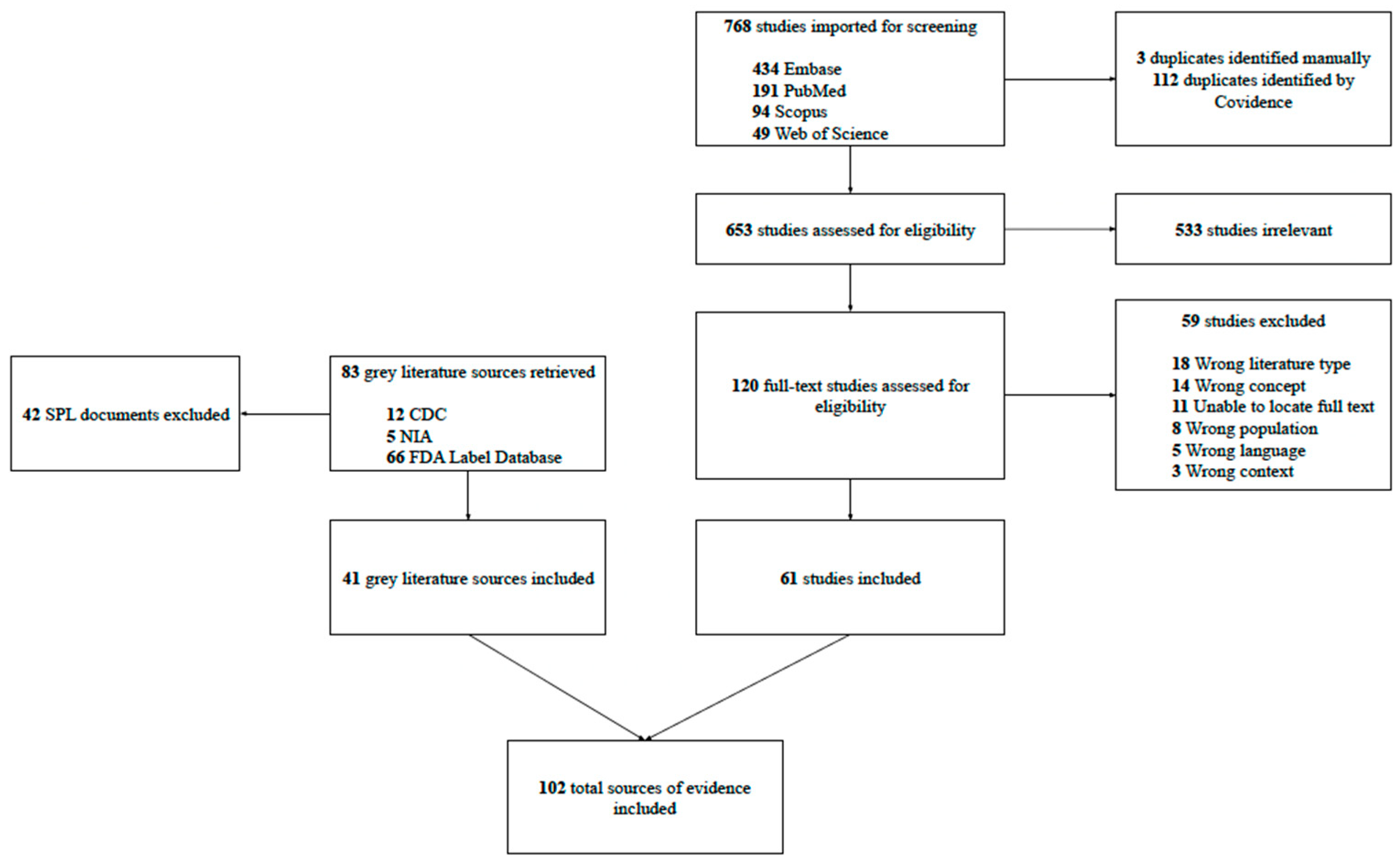
3.1. Search Results
3.2. What Evidence Exists for Heat Sensitivity in Older Adults?
3.3. Which Drug Classes Appear to Possess the Highest Risk of Thermoregulatory Impairment, Electrolyte Abnormalities, and Dehydration for Older Adults During Heat Waves?
3.4. What Strategies Have Already Been Implemented to Mitigate the Impact of Heat-Related Illness in Older Adults?
4. Discussion
5. Conclusions
Supplementary Materials
Author Contributions
Funding
Institutional Review Board Statement
Informed Consent Statement
Data Availability Statement
Acknowledgments
Conflicts of Interest
References
- Adhanom Ghebreyesus, T. Responding to the Climate Change Health Crisis. Presented at: International Court of Justice. 13 December 2024. Available online: https://www.who.int/news-room/speeches/item/who-director-general-s-statement-at-the-international-court-of-justice---responding-to-the-climate-change-health-crisis---13-december-2024 (accessed on 27 February 2026).
- Tigre, M.A.; Carrillo Bañuelos, J.A. The ICJ’s Advisory Opinion on Climate Change: What Happens Now? Columbia Climate School Sabin Center for Climate Change Law. 29 March 2023. Available online: https://blogs.law.columbia.edu/climatechange/2023/03/29/the-icjs-advisory-opinion-on-climate-change-what-happens-now/ (accessed on 27 February 2026).
- Copernicus Climate Change Service. Copernicus: 2024 Is the First Year to Exceed 1.5 °C Above Pre-Industrial Level, Copernicus. Copernicus.eu. 10 January 2025. Available online: https://climate.copernicus.eu/copernicus-2024-first-year-exceed-15degc-above-pre-industrial-level (accessed on 27 February 2026).
- United Nations. 1.5 °C: What It Means and Why It Matters. United Nations. 2024. Available online: https://www.un.org/en/climatechange/science/climate-issues/degrees-matter (accessed on 27 February 2026).
- Climate & Health Program Diploma in Climate Medicine. University of Colorado Anschutz Medical Campus. 2025. Available online: https://medschool.cuanschutz.edu/climateandhealth/diploma-in-climate-medicine (accessed on 27 February 2026).
- U.S. Environmental Protec tion Agency (U.S. EPA). Climate Change Indicators: Heat Waves. United States Environmental Protection Agency. 4 February 2021. Available online: https://www.epa.gov/climate-indicators/climate-change-indicators-heat-waves (accessed on 27 February 2026).
- Cleveland Clinic. Heatstroke: What Is It, Symptoms, Causes, Treatment & Recovery. Cleveland Clinic. 13 September 2021. Available online: https://my.clevelandclinic.org/health/diseases/21812-heatstroke (accessed on 27 February 2026).
- Taylor, K.; Tripathi, A.K. Adult Dehydration. National Library of Medicine. 5 March 2025. Available online: https://pubmed.ncbi.nlm.nih.gov/32310416 (accessed on 26 May 2025).
- U.S. Centers for Disease Control and Prevention (U.S. CDC). Infants and Children and Heat. Heat Health. 17 July 2024. Available online: https://www.cdc.gov/heat-health/risk-factors/infants-and-children.html (accessed on 27 February 2026).
- Xu, Z.; Yi, W.; Bach, A.; Tong, S.; Ebi, K.L.; Su, H.; Cheng, J.; Rutherford, S. Multimorbidity and emergency hospitalisations during hot weather. eBioMedicine 2024, 104, 105148. [Google Scholar] [CrossRef] [PubMed]
- Balmain, B.N.; Sabapathy, S.; Louis, M.; Morris, N.R. Aging and Thermoregulatory Control: The Clinical Implications of Exercising under Heat Stress in Older Individuals. BioMed Res. Int. 2018, 2018, 8306154. [Google Scholar] [CrossRef] [PubMed]
- Westaway, K.; Frank, O.; Husband, A.; McClure, A.; Shute, R.; Edwards, S.; Curtis, J.; Rowett, D. Medicines can affect thermoregulation and accentuate the risk of dehydration and heat-related illness during hot weather. J. Clin. Pharm. Ther. 2015, 40, 363–367. [Google Scholar] [CrossRef]
- Hospers, L.; Dillon, G.A.; McLachlan, A.J.; Alexander, L.M.; Kenney, W.L.; Capon, A.; Ebi, K.L.; Ashworth, E.; Jay, O.; Mavros, Y. The effect of prescription and over-the-counter medications on core temperature in adults during heat stress: A systematic review and meta-analysis. eClinicalMedicine 2024, 77, 102886. [Google Scholar] [CrossRef]
- U.S. Centers for Disease Control and Prevention (U.S. CDC). Heat and Older Adults (Aged 65+). Heat Health. 2024. Available online: https://www.cdc.gov/heat-health/risk-factors/heat-and-older-adults-aged-65.html (accessed on 27 February 2026).
- Kirzinger, A.; Lopes, L.; Wu, B.; Brodie, M. KFF Health Tracking Poll—February 2019: Prescription Drugs. The Henry J. Kaiser Family Foundation. 15 March 2019. Available online: https://www.kff.org/health-costs/poll-finding/kff-health-tracking-poll-february-2019-prescription-drugs/ (accessed on 27 February 2026).
- Peters, M.D.J.; Marnie, C.; Tricco, A.C.; Pollock, D.; Munn, Z.; Alexander, L.; McInerney, P.; Godfrey, C.M.; Khalil, H. Updated methodological guidance for the conduct of scoping reviews. JBI Évid. Synth. 2020, 18, 2119–2126. [Google Scholar] [CrossRef]
- Tricco, A.C.; Lillie, E.; Zarin, W.; O’Brien, K.K.; Colquhoun, H.; Levac, D.; Moher, D.; Peters, M.D.J.; Horsley, T.; Weeks, L.; et al. PRISMA Extension for Scoping Reviews (PRISMA-ScR): Checklist and Explanation. Ann. Intern. Med. 2018, 169, 467–473. [Google Scholar] [CrossRef]
- Beggs, P.J.; Vaneckova, P. Admission to hospital for effects of heat and light: NSW, 1993–1994 to 2003-04. NSW Public Health Bull. 2008, 19, 132–137. [Google Scholar] [CrossRef] [PubMed]
- Davido, A.; Patzak, A.; Dart, T.; Sadier, M.P.; Méraud, P.; Masmoudi, R.; Sembach, N.; Cao, T.H. Risk factors for heat related death during the August 2003 heat wave in Paris, France, in patients evaluated at the emergency department of the Hopital Europeen Georges Pompidou. Emerg. Med. J. 2006, 23, 515–518. [Google Scholar] [CrossRef]
- Josseran, L.; Caillère, N.; Brun-Ney, D.; Rottner, J.; Filleul, L.; Brucker, G.; Astagneau, P. Syndromic surveillance and heat wave morbidity: A pilot study based on emergency departments in France. BMC Med. Inform. Decis. Mak. 2009, 9, 14. [Google Scholar] [CrossRef]
- Pillai, S.K.; Noe, R.S.; Murphy, M.W.; Vaidyanathan, A.; Young, R.; Kieszak, S.; Freymann, G.; Smith, W.; Drenzek, C.; Lewis, L.; et al. Heat Illness: Predictors of Hospital Admissions Among Emergency Department Visits—Georgia, 2002–2008. J. Commun. Health 2013, 39, 90–98. [Google Scholar] [CrossRef]
- Bongers, K.S.; Salahudeen, M.S.; Peterson, G.M. Drug-associated hyperthermia: A longitudinal analysis of hospital presentations. J. Clin. Pharm. Ther. 2020, 45, 477–487. [Google Scholar] [CrossRef]
- Hausfater, P.; Megarbane, B.; Dautheville, S.; Patzak, A.; Andronikof, M.; Santin, A.; André, S.; Korchia, L.; Terbaoui, N.; Kierzek, G.; et al. Prognostic factors in non-exertional heatstroke. Intensiv. Care Med. 2010, 36, 272–280. [Google Scholar] [CrossRef] [PubMed]
- Herbst, J.; Gilbert, J.D.; Byard, R.W. Urinary Incontinence, Hyperthermia, and Sudden Death. J. Forensic Sci. 2011, 56, 1062–1063. [Google Scholar] [CrossRef]
- Mooney, E.; Smith, M.D.; Henderson, E.J. An unwell patient with Parkinson’s disease: Hyperpyrexia syndrome in a heatwave. JRSM Open 2022, 13, 20542704221086162. [Google Scholar] [CrossRef]
- Noyes, E.M.; Rajput, A.H.M.; Bocking, S.R. Effect of Levodopa on Heat Hypersensitivity and Complex Motor Parkinsonism. Clin. Neuropharmacol. 2024, 47, 29–32. [Google Scholar] [CrossRef]
- Christenson, M.L.; Geiger, S.D.; Anderson, H.A. Heat-related fatalities in Wisconsin during the summer of 2012. Wis. Med. J. 2013, 112, 219–223. [Google Scholar]
- Layton, J.B.; Li, W.; Yuan, J.; Gilman, J.P.; Horton, D.B.; Setoguchi, S. Heatwaves, medications, and heat-related hospitalization in older Medicare beneficiaries with chronic conditions. PLoS ONE 2020, 15, e0243665. [Google Scholar] [CrossRef]
- Huang, J.J.; Sharda, N.; Bin Riaz, I.; Alpert, J.S. Summer Syncope Syndrome. Am. J. Med. 2014, 127, 787–790. [Google Scholar] [CrossRef]
- Huang, J.J.; Desai, C.; Singh, N.; Sharda, N.; Fernandes, A.; Bin Riaz, I.; Alpert, J.S. Summer Syncope Syndrome Redux. Am. J. Med. 2015, 128, 1140–1143. [Google Scholar] [CrossRef]
- Martin-Latry, K.; Goumy, M.-P.; Latry, P.; Gabinski, C.; Bégaud, B.; Faure, I.; Verdoux, H. Psychotropic drugs use and risk of heat-related hospitalisation. Eur. Psychiatry 2007, 22, 335–338. [Google Scholar] [CrossRef] [PubMed]
- Hall, C.; Ha, S.; Yen, I.H.; Goldman-Mellor, S. Risk factors for hyperthermia mortality among emergency department patients. Ann. Epidemiol. 2021, 64, 90–95. [Google Scholar] [CrossRef]
- Misset, B.; De Jonghe, B.; Bastuji-Garin, S.; Gattolliat, O.; Boughrara, E.; Annane, D.; Hausfater, P.; Garrouste-Orgeas, M.; Carlet, J. Mortality of patients with heatstroke admitted to intensive care units during the 2003 heat wave in France: A national multiple-center risk-factor study. Crit. Care Med. 2006, 34, 1087–1092. [Google Scholar] [CrossRef] [PubMed]
- Khalaj, B.; Lloyd, G.; Sheppeard, V.; Dear, K. The health impacts of heat waves in five regions of New South Wales, Australia: A case-only analysis. Int. Arch. Occup. Environ. Health 2010, 83, 833–842. [Google Scholar] [CrossRef]
- Aydin-Ghormoz, H.; Adeyeye, T.; Muscatiello, N.; Nayak, S.; Savadatti, S.; Insaf, T.Z. Identifying Risk Factors for Hospitalization with Behavioral Health Disorders and Concurrent Temperature-Related Illness in New York State. Int. J. Environ. Res. Public Health 2022, 19, 16411. [Google Scholar] [CrossRef] [PubMed]
- Kalisch Ellett, L.M.; Pratt, N.L.; Le Blanc, V.T.; Westaway, K.; Roughead, E.E. Increased risk of hospital admission for dehydration or heat-related illness after initiation of medicines: A sequence symmetry analysis. J. Clin. Pharm. Ther. 2016, 41, 503–507. [Google Scholar] [CrossRef] [PubMed]
- Hausfater, P.; Mégarbane, B.; Fabricatore, L.; Dautheville, S.; Patzak, A.; Andronikof, M.; Santin, A.; Kierzek, G.; Doumenc, B.; Leroy, C.; et al. Serum sodium abnormalities during nonexertional heatstroke: Incidence and prognostic values. Am. J. Emerg. Med. 2012, 30, 741–748. [Google Scholar] [CrossRef]
- Chow, K.M.; Szeto, C.C.; Kwan, B.C.-H.; Li, P.K.-T. Influence of climate on the incidence of thiazide-induced hyponatraemia. Int. J. Clin. Pract. 2007, 61, 449–452. [Google Scholar] [CrossRef]
- Sasaki, N.; Aoki, Y. Seasonal variation in the prevalence of profound hyponatremia (<125 mmol/L) in patients on admission to an acute hospital in Japan. Proc. Singap. Health 2019, 28, 211–213. [Google Scholar] [CrossRef]
- Sailer, C.O.; Winzeler, B.; Nigro, N.; Bernasconi, L.; Mueller, B.; Christ-Crain, M. Influence of Outdoor Temperature and Relative Humidity on Incidence and Etiology of Hyponatremia. J. Clin. Endocrinol. Metab. 2019, 104, 1304–1312. [Google Scholar] [CrossRef]
- Pfortmueller, C.A.; Funk, G.-C.; Leichtle, A.B.; Fiedler, G.M.; Schwarz, C.; Exadaktylos, A.K.; Lindner, G. Electrolyte Disorders and In-Hospital Mortality during Prolonged Heat Periods: A Cross-Sectional Analysis. PLoS ONE 2014, 9, e92150. [Google Scholar] [CrossRef]
- Tsiagka, D.; Georgianos, P.I.; Pikilidou, M.I.; Vaios, V.; Roumeliotis, S.; Syrganis, C.; Mavromatidis, K.; Metallidis, S.; Liakopoulos, V.; Zebekakis, P.E. Prevalence, recurrence and seasonal variation of hyperkalemia among patients on hemodialysis. Int. Urol. Nephrol. 2022, 54, 2327–2334. [Google Scholar] [CrossRef] [PubMed]
- Barski, L.; Bartal, C.; Sagy, I.; Jotkowitz, A.; Nevzorov, R.; Zeller, L.; Dizengof, V.; Rogachev, B. Seasonal influence on the renal function in hospitalized elderly patients. Eur. Geriatr. Med. 2015, 6, 232–236. [Google Scholar] [CrossRef]
- Jönsson, A.K.; Lövborg, H.; Lohr, W.; Ekman, B.; Rocklöv, J. Increased Risk of Drug-Induced Hyponatremia during High Temperatures. Int. J. Environ. Res. Public Health 2017, 14, 827. [Google Scholar] [CrossRef]
- Ramírez, E.; Rodríguez, A.; Queiruga, J.; García, I.; Díaz, L.; Martínez, L.; Muñoz, R.; Muñoz, M.; Tong, H.Y.; Martínez, J.C.; et al. Severe Hyponatremia Is Often Drug Induced: 10-Year Results of a Prospective Pharmacovigilance Program. Clin. Pharmacol. Ther. 2019, 106, 1362–1379. [Google Scholar] [CrossRef] [PubMed]
- Michenot, F.; Sommet, A.; Bagheri, H.; Lapeyre-Mestre, M.; Montastruc, J.L. Adverse drug reactions in patients older than 70 years during the heat wave occurred in France in summer 2003: A study from the French PharmacoVigilance Database. Pharmacoepidemiol. Drug Saf. 2006, 15, 735–740. [Google Scholar] [CrossRef] [PubMed]
- Sommet, A.; Durrieu, G.; Lapeyre-Mestre, M.; Montastruc, J. The Association of French PharmacoVigilance Centres A comparative study of adverse drug reactions during two heat waves that occurred in France in 2003 and 2006. Pharmacoepidemiol. Drug Saf. 2012, 21, 285–288. [Google Scholar] [CrossRef]
- Garssen, J.; Harmsen, C.; De Beer, J. The effect of the summer 2003 heat wave on mortality in the Netherlands. Eurosurveillance 2005, 10, 13–14. [Google Scholar] [CrossRef]
- Johnson, H.; Kovats, S.; McGregor, G.; Stedman, J.; Gibbs, M.; Walton, H. The impact of the 2003 heat wave on daily mortality in England and Wales and the use of rapid weekly mortality estimates. Eurosurveillance 2005, 10, 15–16. [Google Scholar] [CrossRef]
- Michelozzi, P.; de Donato, F.; Bisanti, L.; Russo, A.; Cadum, E.; DeMaria, M.; D’Ovidio, M.; Costa, G.; Perucci, C.A. The impact of the summer 2003 heat waves on mortality in four Italian cities. Eurosurveillance 2005, 10, 161–165. [Google Scholar] [CrossRef]
- Simón, F.; Lopez-Abente, G.; Ballester, E.; Martínez, F. Mortality in Spain during the heat waves of summer 2003. Eurosurveillance 2005, 10, 156–161. [Google Scholar] [CrossRef]
- Pirard, P.; Vandentorren, S.; Pascal, M.; Laaidi, K.; Le Tertre, A.; Cassadou, S.; Ledrans, M. Summary of the mortality impact assessment of the 2003 heat wave in France. Eurosurveillance 2005, 10, 7–8. [Google Scholar] [CrossRef]
- Schifano, P.; Cappai, G.; De Sario, M.; Michelozzi, P.; Marino, C.; Bargagli, A.M.; Perucci, C.A. Susceptibility to heat wave-related mortality: A follow-up study of a cohort of elderly in Rome. Environ. Health 2009, 8, 50. [Google Scholar] [CrossRef]
- Calkins, M.M.; Isaksen, T.B.; Stubbs, B.A.; Yost, M.G.; Fenske, R.A. Impacts of extreme heat on emergency medical service calls in King County, Washington, 2007–2012: Relative risk and time series analyses of basic and advanced life support. Environ. Health 2016, 15, 13. [Google Scholar] [CrossRef] [PubMed]
- Chan, E.Y.Y.; Goggins, W.B.; Kim, J.J.; Griffiths, S.; Ma, T.K.W. Help-Seeking Behavior during Elevated Temperature in Chinese Population. J. Urban Health 2011, 88, 637–650. [Google Scholar] [CrossRef] [PubMed][Green Version]
- Turner, L.R.; Connell, D.; Tong, S. The Effect of Heat Waves on Ambulance Attendances in Brisbane, Australia. Prehospital Disaster Med. 2013, 28, 482–487. [Google Scholar] [CrossRef]
- Sung, T.-I.; Wu, P.-C.; Lung, S.-C.; Lin, C.-Y.; Chen, M.-J.; Su, H.-J. Relationship between heat index and mortality of 6 major cities in Taiwan. Sci. Total Environ. 2013, 442, 275–281. [Google Scholar] [CrossRef]
- Schulte, F.; Röösli, M.; Ragettli, M.S. Heat-related cardiovascular morbidity and mortality in Switzerland: A clinical perspective. Swiss Med. Wkly. 2021, 151, w30013. [Google Scholar] [CrossRef]
- Hajat, S.; Haines, A.; Sarran, C.; Sharma, A.; Bates, C.; Fleming, L.E. The effect of ambient temperature on type-2-diabetes: Case-crossover analysis of 4+ million GP consultations across England. Environ. Health 2017, 16, 73. [Google Scholar] [CrossRef]
- Kolb, S.; Radon, K.; Valois, M.-F.; Héguy, L.; Goldberg, M.S. The Short-Term Influence of Weather on Daily Mortality in Congestive Heart Failure. Arch. Environ. Occup. Health 2007, 62, 169–176. [Google Scholar] [CrossRef]
- Zhang, Y.; Nitschke, M.; Bi, P. Risk factors for direct heat-related hospitalization during the 2009 Adelaide heatwave: A case crossover study. Sci. Total Environ. 2013, 442, 1–5. [Google Scholar] [CrossRef]
- Laverdière, É.; Généreux, M.; Gaudreau, P.; Morais, J.A.; Shatenstein, B.; Payette, H. Prevalence of risk and protective factors associated with heat-related outcomes in Southern Quebec: A secondary analysis of the NuAge study. Can. J. Public Health 2015, 106, e315–e321. [Google Scholar] [CrossRef]
- Pathak, A.; Lapeyre-Mestre, M.; Montastruc, J.; Senard, J. Heat-related morbidity in patients with orthostatic hypotension and primary autonomic failure. Mov. Disord. 2005, 20, 1213–1219. [Google Scholar] [CrossRef]
- Leach, O.K.; Fisher, K.G.; Cottle, R.M.; Kenney, W.L. No effect of stage 1 hypertension or hypertensive medication on critical environmental limits (PSU HEAT Project). Am. J. Physiol. Circ. Physiol. 2025, 329, H395–H400. [Google Scholar] [CrossRef]
- Fisher, K.G.; Leach, O.K.; Cottle, R.M.; Alexander, L.M.; Kenney, W.L. Low-dose ASA therapy does not alter core or skin temperature during hot-dry or warm-humid heat stress (PSU HEAT project). Physiol. Rep. 2025, 13, e70375. [Google Scholar] [CrossRef]
- Coppes, T.; Hazen, A.C.M.; Zwart, D.L.M.; Koster, E.S.; van Gelder, T.; Bouvy, M.L. Characteristics and preventability of medication-related admissions for acute kidney injury and dehydration in elderly patients. Eur. J. Clin. Pharmacol. 2024, 80, 1355–1362. [Google Scholar] [CrossRef]
- Sagy, I.; Vodonos, A.; Novack, V.; Rogachev, B.; Haviv, Y.S.; Barski, L. The Combined Effect of High Ambient Temperature and Antihypertensive Treatment on Renal Function in Hospitalized Elderly Patients. PLoS ONE 2016, 11, e0168504. [Google Scholar] [CrossRef]
- Wong, A.Y.S.; Iwagami, M.; Taniguchi, Y.; Kawamura, C.; Suzuki, A.; Douglas, I.J.; Bhaskaran, K.; Sugiyama, T.; Kuroda, N.; Nitsch, D.; et al. The role of psychotropics on the associations between extreme temperature and heat-related outcomes among people with mental health conditions: Population-based study. Psychol. Med. 2024, 54, 4658–4664. [Google Scholar] [CrossRef]
- Rej, S.; AlAqeel, B.; Segal, M.; Low, N.C.; Mucsi, I.; Holcroft, C.; Looper, K. Is environmental temperature related to renal symptoms, serum lithium levels, and other laboratory test results in current lithium users? Hum. Psychopharmacol. Clin. Exp. 2014, 29, 392–396. [Google Scholar] [CrossRef]
- Nordon, C.; Martin-Latry, K.; de Roquefeuil, L.; Latry, P.; Bégaud, B.; Falissard, B.; Rouillon, F.; Verdoux, H. Risk of Death Related to Psychotropic Drug Use in Older People During the European 2003 Heatwave: A Population-Based Case–Control Study. Am. J. Geriatr. Psychiatry 2009, 17, 1059–1067. [Google Scholar] [CrossRef]
- English, T.; Larkin, M.; Hernandez, A.V.; Hutton, J.; Currie, J. Heat Illness Requiring Emergency Care for People Experiencing Homelessness: A Case Study Series. Int. J. Environ. Res. Public Health 2022, 19, 16565. [Google Scholar] [CrossRef]
- Matsumoto, K.; Goto, F.; Maezawa, M.; Nakao, S.; Miyasaka, K.; Hirofuji, S.; Shiota, K.; Ichihara, N.; Yamashita, M.; Nokura, Y.; et al. A retrospective study of seasonal variation in sodium-glucose co-transporter 2 inhibitor-related adverse events using the Japanese adverse drug event report database. Sci. Rep. 2024, 14, 30072. [Google Scholar] [CrossRef]
- U.S. Centers for Disease Control and Prevention (U.S. CDC). People at Increased Risk for Heat-Related Illness. Heat Health. 26 June 2024. Available online: https://www.cdc.gov/heat-health/risk-factors/ (accessed on 27 February 2026).
- U.S. Centers for Disease Control and Prevention (U.S. CDC). Protect Yourself from the Dangers of Extreme Heat. Climate and Health. 25 June 2024. Available online: https://www.cdc.gov/climate-health/php/resources/protect-yourself-from-the-dangers-of-extreme-heat.html (accessed on 27 February 2026).
- U.S. Environmental Protection Agency (U.S. EPA). Climate Change and Extreme Heat: What You Can Do to Prepare. 2016. Available online: https://www.epa.gov/sites/default/files/2016-10/documents/extreme-heat-guidebook.pdf (accessed on 27 February 2026).
- U.S. Centers for Disease Control and Prevention (U.S. CDC). Heat & Health Tracker. ephtracking.cdc.gov. Available online: https://ephtracking.cdc.gov/Applications/heatTracker/ (accessed on 27 February 2026).
- U.S. Centers for Disease Control and Prevention (U.S. CDC). How to Use the HeatRisk Tool and Air Quality Index. Heat Health. 9 July 2024. Available online: https://www.cdc.gov/heat-health/hcp/clinical-guidance/how-to-use-the-heatrisk-tool-and-air-quality-index.html (accessed on 27 February 2026).
- U.S. Centers for Disease Control and Prevention (U.S. CDC). CHILL’D-Out: A Heat and Health Risk Factor Screening Questionnaire. Heat Health. 5 July 2024. Available online: https://www.cdc.gov/heat-health/hcp/clinical-guidance/chill-d-out-screening-questionnaire.html (accessed on 27 February 2026).
- U.S. Centers for Disease Control and Prevention (U.S. CDC). Quick Start Guide for Clinicians on Heat and Health. Heat Health. 5 July 2024. Available online: https://www.cdc.gov/heat-health/hcp/clinical-guidance/quick-start-guide-for-clinicians.html (accessed on 27 February 2026).
- U.S. Centers for Disease Control and Prevention (U.S. CDC). Clinical Overview of Heat. Heat Health. 18 July 2024. Available online: https://www.cdc.gov/heat-health/hcp/clinical-overview/ (accessed on 27 February 2026).
- U.S. Centers for Disease Control and Prevention (U.S. CDC). Heat and Medications—Guidance for Clinicians. Heat Health. 27 June 2024. Available online: https://www.cdc.gov/heat-health/hcp/clinical-guidance/heat-and-medications-guidance-for-clinicians.html (accessed on 27 February 2026).
- Impacts of Extreme Weather Conditions and Disasters on Older Adult Health. National Institute on Aging. 26 March 2024. Available online: https://www.nia.nih.gov/research/dbsr/workshops/impacts-extreme-weather-conditions-and-disasters-older-adult-health (accessed on 27 February 2026).
- Calvin, K. Advice for older adults on staying safe in hot weather. National Institute on Aging. 13 July 2017. Available online: https://www.nia.nih.gov/news/advice-older-adults-staying-safe-hot-weather (accessed on 27 February 2026).
- Calvin, K. Heat-related health dangers for older adults soar during the summer. National Institute on Aging. 27 June 2018. Available online: https://www.nia.nih.gov/news/heat-related-health-dangers-older-adults-soar-during-summer (accessed on 27 February 2026).
- National Institute on Aging. Hot Weather Safety for Older Adults. National Institute on Aging. 2 September 2022. Available online: https://www.nia.nih.gov/health/safety/hot-weather-safety-older-adults (accessed on 27 February 2026).
- National Institute on Aging. Staying Safe in Hot Weather. National Institute on Aging. 5 June 2023. Available online: https://www.nia.nih.gov/health/safety/staying-safe-hot-weather (accessed on 27 February 2026).
- U.S. Centers for Disease Control and Prevention (U.S. CDC). Extreme Heat Adaptation. Place and Health—Geospatial Research, Analysis, and Services Program (GRASP). 12 September 2024. Available online: https://www.atsdr.cdc.gov/place-health/share/extreme-heat-adaptation.html (accessed on 27 February 2026).
- Abbinett, J.; Schramm, P.J.; Widerynski, S. Heat Response Plans: Summary of Evidence and Strategies for Collaboration and Implementation. National Center for Environmental Health (U.S.). Division of Environmental Hazards and Health Effects. Climate and Health Program. 2020. Available online: https://stacks.cdc.gov/view/cdc/93705 (accessed on 27 February 2026).
- Aripiprazole Tablet. Prescribing Information. NuCare Pharmaceuticals, Inc. 2023. Available online: https://nctr-crs.fda.gov/fdalabel/services/spl/set-ids/3726d102-dd9f-645e-e063-6294a90aeb9e/spl-doc?hl=heat (accessed on 1 July 2025).
- Secuado (Asenapine Film, Extended Release). Prescribing Information. Noven Therapeutics, LLC. 2025. Available online: https://nctr-crs.fda.gov/fdalabel/services/spl/set-ids/685eaf44-5944-4f38-afba-0a4fc0b3462b/spl-doc?hl=heat (accessed on 1 July 2025).
- Rexulti (Brexpiprazole Tablet). Prescribing Information. Otsuka America Pharmaceutical, Inc. 2025. Available online: https://nctr-crs.fda.gov/fdalabel/services/spl/set-ids/2d301358-6291-4ec1-bd87-37b4ad9bd850/spl-doc?hl=heat (accessed on 1 July 2025).
- Vraylar (Cariprazine Capsule, Gelatin Coated). Prescribing Information. Allergan, Inc. 2024. Available online: https://nctr-crs.fda.gov/fdalabel/services/spl/set-ids/4b5f7c65-aa2d-452a-b3db-bc85c06ff12f/spl-doc?hl=heat (accessed on 1 July 2025).
- Dicyclomine Hydrochloride Tablet. Prescribing Information. Solaris Pharma Corporation. 2025. Available online: https://nctr-crs.fda.gov/fdalabel/services/spl/set-ids/d46259e6-5eca-4356-bc18-815104c925cc/spl-doc?hl=heat (accessed on 1 July 2025).
- Jardiance (Empagliflozin Tablet, Film Coated). Prescribing Information. Aphena Pharma Solutions. 2017. Available online: https://nctr-crs.fda.gov/fdalabel/services/spl/set-ids/8b6261f6-4bdc-462e-8af1-4064664c62f3/spl-doc?hl=heat (accessed on 1 July 2025).
- Glycopyrrolate Tablet. Prescribing Information. Quagen Pharmaceuticals LLC. 2025. Available online: https://nctr-crs.fda.gov/fdalabel/services/spl/set-ids/a456eaea-4cd6-4344-8fc6-6f6a3ce0f2c6/spl-doc?hl=heat (accessed on 1 July 2025).
- Qbrexza (Glycopyrronium Cloth). Prescribing Information. Journey Medical Corporation. 2023. Available online: https://nctr-crs.fda.gov/fdalabel/services/spl/set-ids/5b372650-e56e-47a5-93e2-c0c292017059/spl-doc?hl=heat (accessed on 1 July 2025).
- Fanapt (Iloperidone Tablet). Prescribing Information. Vanda Pharmaceuticals Inc. 2025. Available online: https://nctr-crs.fda.gov/fdalabel/services/spl/set-ids/33f60b40-3fca-11de-8f56-0002a5d5c51b/spl-doc?hl=heat (accessed on 1 July 2025).
- Caplyta (Lumateperone Capsule). Prescribing Information. Intra-Cellular Therapies, Inc. 2023. Available online: https://nctr-crs.fda.gov/fdalabel/services/spl/set-ids/db730b06-6351-47fd-8183-e61e61bbead5/spl-doc?hl=heat (accessed on 1 July 2025).
- Lurasidone Hydrochloride Tablet. Prescribing Information. Aurobindo Pharma. 2023. Available online: https://nctr-crs.fda.gov/fdalabel/services/spl/set-ids/296811cf-cba8-16c2-e063-6294a90acfa6/spl-doc?hl=heat (accessed on 1 July 2025).
- Olanzapine Tablet, Film Coated. Prescribing Information. RemedyRepack Inc. 2025. Available online: https://nctr-crs.fda.gov/fdalabel/services/spl/set-ids/1705bab2-a2f8-4534-b1fc-eb309cd2696b/spl-doc?hl=heat (accessed on 1 July 2025).
- Olanzapine and Fluoxetine Capsule. Prescribing Information. Teva Pharmaceuticals USA, Inc. 2025. Available online: https://nctr-crs.fda.gov/fdalabel/services/spl/set-ids/3c28cf18-01a3-468a-ab3e-8aa82f918251/spl-doc?hl=heat (accessed on 1 July 2025).
- Lybalvi (Olanzapine and Samidorphan l-Malate Tablet, Film Coated). Prescribing Information. Alkermes, Inc. 2025. Available online: https://nctr-crs.fda.gov/fdalabel/services/spl/set-ids/32ffddd1-4e2b-45d9-9b36-bb730167ec80/spl-doc?hl=heat (accessed on 1 July 2025).
- Paliperidone Tablet, Extended Release. Prescribing Information. Major Pharmaceuticals. 2025. Available online: https://nctr-crs.fda.gov/fdalabel/services/spl/set-ids/528a962a-4924-4c48-93ce-6ab1f019e52c/spl-doc?hl=heat (accessed on 1 July 2025).
- Phentermine and Topiramate Capsule, Extended Release. Prescribing Information. Prasco Laboratories. 2025. Available online: https://nctr-crs.fda.gov/fdalabel/services/spl/set-ids/876bd763-13fa-481e-b579-c2fc44dbf3c2/spl-doc?hl=heat (accessed on 1 July 2025).
- Prochlorperazine Maleate Tablet. Prescribing Information. STAT RX USA LLC. 2009. Available online: https://nctr-crs.fda.gov/fdalabel/services/spl/set-ids/6ffb0f6f-6620-4d62-b15a-87703c607d3b/spl-doc?hl=heat (accessed on 1 July 2025).
- Seroquel XR (Quetiapine Tablet, Extended Release). Quetiapine Tablet, Extended Release). Prescribing Information. H2-Pharma, LLC. 2025. Available online: https://nctr-crs.fda.gov/fdalabel/services/spl/set-ids/ab959a35-d0ba-4f18-8f2e-6619d88b16e3/spl-doc?hl=heat (accessed on 1 July 2025).
- Perseris (Risperidone for Extended-Release Injectable Suspension). Prescribing Information. Indivior Inc. 2025. Available online: https://nctr-crs.fda.gov/fdalabel/services/spl/set-ids/a4f21b1a-5691-4b14-a56d-651962d06f39/spl-doc?hl=heat (accessed on 1 July 2025).
- Scopolamine Transdermal System Patch, Extended Release. Prescribing Information. Padagis Israel Pharmaceuticals Ltd. 2025. Available online: https://nctr-crs.fda.gov/fdalabel/services/spl/set-ids/cb93bfad-3e37-4a27-92f6-f21703ae7bdf/spl-doc?hl=heat (accessed on 1 July 2025).
- Sofdra (Sofpironium Bromide Gel). Prescribing Information. Botanix SB Inc. 2024. Available online: https://nctr-crs.fda.gov/fdalabel/services/spl/set-ids/78f86f4f-658c-468b-bd54-49182ddcc7ac/spl-doc?hl=heat (accessed on 1 July 2025).
- Topiramate Tablet, Film Coated. Prescribing Information. Quallent Pharmaceuticals Health LLC. 2025. Available online: https://nctr-crs.fda.gov/fdalabel/services/spl/set-ids/9dae6824-6913-42de-b98a-cdcb0d3b4a46/spl-doc?hl=heat (accessed on 1 July 2025).
- Ziprasidone Capsule. Prescribing Information. NorthStar Rx LLC. 2025. Available online: https://nctr-crs.fda.gov/fdalabel/services/spl/set-ids/0071a228-21cc-56a6-dcc9-a7a6ceea758c/spl-doc?hl=heat (accessed on 1 July 2025).
- Zonisamide Suspension. Prescribing Information. Azurity Pharmaceuticals, Inc. 2023. Available online: https://nctr-crs.fda.gov/fdalabel/services/spl/set-ids/ac16fa15-32e9-4f92-8bc6-d8d41ae002c6/spl-doc?hl=heat (accessed on 1 July 2025).
- Cramer, M.N.; Hieda, M.; Huang, M.; Moralez, G.; Crandall, C.G. Dietary Nitrate Supplementation Does Not Influence Thermoregulatory or Cardiovascular Strain in Older Individuals During Severe Ambient Heat Stress. Exp. Physiol. 2020, 105, 1730–1741. [Google Scholar] [CrossRef]
- Greaney, J.L.; Stanhewicz, A.E.; Kenney, W.L. Chronic statin therapy is associated with enhanced cutaneous vascular responsiveness to sympathetic outflow during passive heat stress. J. Physiol. 2019, 597, 4743–4755. [Google Scholar] [CrossRef]
- Nam, Y.H.; Bilker, W.B.; Leonard, C.E.; Bell, M.L.; Hennessy, S. Outdoor temperature and survival benefit of empiric potassium in users of furosemide in US Medicaid enrollees: A cohort study. BMJ Open 2019, 9, e023809. [Google Scholar] [CrossRef]
- Morris, N.B.; Chaseling, G.K.; English, T.; Gruss, F.; Bin Maideen, M.F.; Capon, A.; Jay, O. Electric fan use for cooling during hot weather: A biophysical modelling study. Lancet Planet. Health 2021, 5, e368–e377. [Google Scholar] [CrossRef]
- Kunst, A.E.; Britstra, R. Implementation evaluation of the Dutch national heat plan among long-term care institutions in Amsterdam: A cross-sectional study. BMC Health Serv. Res. 2013, 13, 135. [Google Scholar] [CrossRef]
- Nassar, A.A.; Childs, R.D.; Boyle, M.E.; Jameson, K.A.; Fowke, M.; Waters, K.R.; Hovan, M.J.; Cook, C.B. Diabetes in the Desert: What Do Patients Know about the Heat? J. Diabetes Sci. Technol. 2010, 4, 1156–1163. [Google Scholar] [CrossRef]
- De Bono, A.; Giuliani, G.; Kluser, S.; Peduzzi, P. Impacts of Summer 2003 Heat Wave in Europe (Environmental Alert Bulletin). United Nations Environment Programme. 2004. Available online: https://www.unisdr.org/files/1145_ewheatwave.en.pdf (accessed on 27 February 2026).
- Khow, K.S.F.; Lau, S.Y.; Li, J.Y.; Yong, T.Y. Diuretic-Associated Electrolyte Disorders in the Elderly: Risk Factors, Impact, Management and Prevention. Curr. Drug Saf. 2014, 9, 2–15. [Google Scholar] [CrossRef]
- Peng, S.; Xu, R.; Wei, K.; Liu, N.; Lv, Y.; Lin, Y. Association between kidney function and biological age: A China Health and Retirement Longitudinal Study. Front. Public Health 2023, 11, 1259074. [Google Scholar] [CrossRef]
- Kirby, N.V.; Tetzlaff, E.J.; Kidd, S.A.; Brown, E.E.; Bezgrebelna, M.; Yoon, L.; Henderson, S.B.; Kenny, G.P. Susceptibility of persons with schizophrenia to extreme heat: A critical review of physiological, behavioural, and social factors. Sci. Total Environ. 2025, 995, 179965. [Google Scholar] [CrossRef]
- Mallen, E.; Joseph, H.A.; McLaughlin, M.; English, D.Q.; Olmedo, C.; Roach, M.; Tirdea, C.; Vargo, J.; Wolff, M.; York, E. Overcoming Barriers to Successful Climate and Health Adaptation Practice: Notes from the Field. Int. J. Environ. Res. Public Health 2022, 19, 7169. [Google Scholar] [CrossRef]
- Dwyer, I.J.; Barry, S.J.E.; Megiddo, I.; White, C.J. Evaluations of heat action plans for reducing the health impacts of extreme heat: Methodological developments (2012–2021) and remaining challenges. Int. J. Biometeorol. 2022, 66, 1915–1927. [Google Scholar] [CrossRef]
- Pew Research Center. Internet/Broadband Fact Sheet. Pew Research Center: Internet, Science & Tech. 13 November 2024. Available online: https://www.pewresearch.org/internet/fact-sheet/internet-broadband/ (accessed on 27 February 2026).
- Fryar, C.D.; Kit, B.; Carroll, M.D. Hypertension Prevalence, Awareness, Treatment, and Control Among Adults Age 18 and Older: United States, August 2021–August 2023. National Center for Health Statistics. 2024. Available online: https://stacks.cdc.gov/view/cdc/164016 (accessed on 27 February 2026).
- Americares Center for Climate, Health, and the Global Environment at Harvard T.H. Chan School of Public Health. Climate Resilience for Frontline Clinics Toolkit. Americares. 2024. Available online: https://www.americares.org/what-we-do/community-health/climate-resilient-health-clinics/ (accessed on 23 April 2026).
- Wiskel, T.; Miles, T.T.; Fonteyn, M.; Stevens, K.; Heberlein, C.; Matthews-Trigg, N.; Dresser, C.; Bernstein, A. Frontline clinic perspectives on climate change, human health, and resilience: A national cross-sectional survey. BMC Prim. Care 2024, 25, 399. [Google Scholar] [CrossRef]
- International Pharmaceutical Federation (FIP). FIP Statement of Policy: Environmental Sustainability Within Pharmacy; International Pharmaceutical Federation: The Hague, The Netherlands, 2023; Available online: https://www.fip.org/file/5618 (accessed on 27 February 2026).
- DiPiro, J.T.; Couldry, R.; Dopp, A.L.; Kraus, T.; Vest, T.A.; Chou, J.; Watanabe, J.H.; Fretland, K.; Fabian, T.J.; Gosser, R.; et al. ASHP and ASHP Foundation Pharmacy Forecast 2026: Strategic Planning Guidance for Pharmacy Departments in Hospitals and Health Systems. Am. J. Health Pharm. 2026, 83, 71–101. [Google Scholar] [CrossRef]
- DiPiro, J.T.; Hoffman, J.M.; Schweitzer, P.; Chisholm-Burns, M.A.; Nesbit, T.W.; Fabian, T.J.; Cunningham, F.E.; Barrett, A.; Fine, M.J.; Tichy, E.; et al. ASHP and ASHP Foundation Pharmacy Forecast 2024: Strategic Planning Guidance for Pharmacy Departments in Hospitals and Health Systems. Am. J. Health Pharm. 2024, 81, 5–36. [Google Scholar] [CrossRef]
- PoshtMashhadi, A.; Maghsoodi, A.I.; Wood, L.C. The impact of extreme temperatures on emergency department visits: A systematic review of heatwaves, cold waves, and daily temperature variations. Sci. Total Environ. 2025, 970, 178869. [Google Scholar] [CrossRef]
- Population Reference Bureau. Countries with the Oldest Populations in the World. Population Reference Bureau. 23 March 2020. Available online: https://www.prb.org/resources/countries-with-the-oldest-populations-in-the-world/ (accessed on 27 February 2026).


| Therapeutic Effect | Drug (s) | Results | Study Type | Study Author & Year |
|---|---|---|---|---|
| Cardiovascular | Hyperthermia-Related Conditions | |||
| Diuretics | Furosemide was among the most common drugs in patients with primary hyperthermia | Cohort | Bongers 2020 [22] | |
| Diuretics | No association between heat-related GP consultations and diuretics in patients with diabetes | Case-crossover | Hajat 2017 [59] | |
| Diuretics | Chronic treatment with diuretics was one independent prognostic factor found in non-exertional heatstroke | Cohort | Hausfater 2010 [23] | |
| Diuretics | Diuretic use was associated with mortality among heatstroke ICU patients in univariate analysis, but not in multivariate analysis | Retrospective risk-factor | Misset 2006 [33] | |
| Diuretics, cardiotropes | No significant association between heat-related death and diuretics or cardiotropes in ED patients | Retrospective observational | Davido 2006 [19] | |
| Anticoagulants, nitrates, diuretics, beta blockers, calcium channel blockers, ACE inhibitors, ARBs | Increased relative risk of hospital admission for heat-related illness or dehydration upon initiation of anticoagulants, nitrates, diuretics, beta blockers, calcium channel blockers, ACEI, and ARBs; risk was highest for ACEI in combination with a diuretic | Sequence symmetry analysis | Kalisch 2016 [36] | |
| ACE inhibitors, ARBs, loop diuretics | ACE inhibitors, ARBs, and loop diuretics were associated with increased risk of heat-related hospitalization in the summer months among older Medicare beneficiaries with chronic conditions; no significant synergistic effects were found | Case series | Layton 2020 [28] | |
| Antihypertensives, general | Syncope cases were more frequent in the summer months among those taking antihypertensives; antihypertensive medications may excessively lower blood pressure in hot and dry climates, leading to more frequent syncopal episodes and dehydration | Case-control | Huang 2014 [29] | |
| Antihypertensives, general | Syncope cases were more frequent in the summer months among those taking antihypertensive medications, but no specific drug class had a greater association; significant increase in cases of syncope secondary to dehydration during the summer months (40.5%) vs. winter months (29%) in patients taking antihypertensives | Case-control extension of [29] | Huang 2015 [30] | |
| Antihypertensives, general | Antihypertensive medication did not affect critical environmental limits among study subjects in warm-humid or hot-dry conditions | Randomized, double-blind, placebo-controlled crossover | Leach 2025 [64] | |
| Aspirin | Low-dose aspirin did not alter core or skin temperatures among study subjects in warm-humid or hot-dry conditions; it did reduce skin blood flow responses to heat stress | Randomized, double-blind, placebo-controlled crossover | Fisher 2025 [65] | |
| Dehydration or Electrolyte Imbalances | ||||
| Thiazide diuretics, ACE inhibitors, ARBs | Thiazide diuretics, ACE inhibitors, and ARBs were more associated with biochemical parameters of impaired renal function in the summer than in the winter in elderly patients | Cohort | Barski 2015 [43] | |
| Diuretics, ACE inhibitors, ARBs | 40% of acute kidney injury (AKI) and dehydration admissions in elderly patients were considered possibly preventable if pharmacotherapy of high-risk medications had been timely and adequately adjusted (including diuretics, ACE inhibitors, and ARBs) | Case series | Coppes 2024 [66] | |
| Diuretics, ACE inhibitors, ARBs | ADRs reported during summer 2003 in France were most commonly metabolic or neuropsychiatric; diuretics, ACE inhibitors, and ARBs were among the most common drugs | Retrospective observational | Michenot 2006 [46] | |
| Hydrochlorothiazide, plus other cardiovascular drugs (and nervous system drugs) | Significant association between drug-induced severe hyponatremia and high environmental temperature during 10-year pharmacovigilance program; hydrochlorothiazide, other cardiovascular drugs, and nervous system drugs were the most frequent culprits | Prospective evaluation | Ramírez 2019 [45] | |
| Thiazide diuretics, ACE inhibitors, ARBs | Higher daily temperature was associated with impaired renal function in older adults treated with thiazides, ACE inhibitors, or ARBs | Cohort | Sagy 2016 [67] | |
| Diuretics | Significant increase in diuretic-induced hyponatremia with increase in temperature (4% per degree Celsius) in ED patients | Cross-sectional cohort | Sailer 2019 [40] | |
| Diuretics | No statistically significant association between diuretics and profound hyponatremia in warmer months among patients admitted for profound hyponatremia | Cross-sectional | Sasaki 2019 [39] | |
| Beta blockers, ACE inhibitors, ARBs (and insulin) | No significant association between hyperkalemia and beta blockers, ACE inhibitors, or ARBs (or insulin) among hemodialysis patients | Retrospective observational | Tsigaka 2022 [42] | |
| General or Unspecified Outcome | ||||
| Cardiovascular drugs, general | Use of cardiovascular medication was the most prevalent risk factor found among healthy older adults in Quebec | Cross-sectional | Laverdière 2015 [62] | |
| Diuretics, ACE inhibitors | Significantly more ADRs were heat-related in 2003 and 2006 (summers with heat waves) than in the reference period; diuretics and ACE inhibitors were among the most frequently involved drugs | Retrospective observational | Sommet 2012 [47] | |
| Psychotropic | Hyperthermia-Related Conditions | |||
| Antipsychotics | Antipsychotics were associated with increased risk of heat-related hospitalization in the summer months among older Medicare beneficiaries with chronic conditions; no significant synergistic effects were found | Case series | Layton 2020 [28] | |
| Antipsychotics, anxiolytics | Antipsychotics and anxiolytics were associated with ED admission for heatstroke or hyperthermia | Matched case-control | Martin-Latry 2007 [31] | |
| Antipsychotics, antidepressants | No association between heat-related GP consultations and antipsychotics or antidepressants in patients with diabetes | Case-crossover | Hajat 2017 [59] | |
| Antipsychotics, antidepressants, anxiolytics | Increased relative risk of hospital admission for heat-related illness or dehydration upon initiation of antipsychotics, antidepressants, and anxiolytics | Sequence symmetry analysis | Kalisch 2016 [36] | |
| Psychotropics, general | Survivors were less often on psychotropic medications than non-survivors in ED patients evaluated for heat-related pathologies | Retrospective observational | Davido 2006 [19] | |
| Psychotropics, general | No significant association between psychotropic medication use and heat-related illness among people with mental illness; 40–60% increased risk for this population regardless of medications | Self-controlled case series | Wong 2024 [68] | |
| Dehydration or Electrolyte Imbalances | ||||
| Antidepressants | ADRs reported during summer 2003 in France were most commonly metabolic or neuropsychiatric; antidepressants were among the most common drugs | Retrospective observational | Michenot 2006 [46] | |
| Lithium | No significant association between renal parameters or other laboratory tests with environmental temperature in lithium users | Cross-sectional | Rej 2014 [69] | |
| General or Unspecified Outcome | ||||
| Antidepressants, antipsychotics, benzodiazepines, non-benzodiazepine anxiolytics/hypnotics | Significant dose-response relationship between the number of psychotropic drugs and risk of mortality in older adults; antidepressants, Selective Serotonin Reuptake Inhibitors (SSRIs) only, and antipsychotics (“other” only) were associated with a 20% and 40% increased risk of death before heatwave; antidepressants and antipsychotics (all) were associated with a 70% and 110% increased risk of death during heat wave; anxiolytics/hypnotics were associated with a decreased risk before heatwave, but during heatwave, benzodiazepines had no association and non-benzodiazepine anxiolytics/hypnotics were associated with increased risk | Case-control | Nordon 2009 [70] | |
| Antidepressants | Significantly more ADRs were heat-related in 2003 and 2006 (summers with heat waves) than in the reference period; serotonin antidepressants were among the most frequently involved drugs | Retrospective observational | Sommet 2012 [47] | |
| Anticholinergic | Hyperthermia-Related Conditions | |||
| Benzatropine | Use of benzatropine (plus amisulpride, amlodipine + olmesartan, or aclidinium) may have impaired thermoregulation of patient with multiple comorbidities experiencing homelessness, leading to heatstroke | Case series | English 2022 [71] | |
| Oxybutynin | Use of oxybutynin may have exacerbated effects of extreme heat and strenuous exercise in elderly patient, leading to fatal heatstroke | Case report | Herbst 2011 [24] | |
| Anticholinergics, general | No association between heat-related GP consultations and anticholinergics in patients with diabetes | Case-crossover | Hajat 2017 [59] | |
| Anticholinergics, general | Increased relative risk of hospital admission for heat-related illness or dehydration upon initiation of anticholinergics | Sequence symmetry analysis | Kalisch 2016 [36] | |
| Anticholinergics, general | Anticholinergics were associated with increased risk of heat-related hospitalization in the summer months among older Medicare beneficiaries with chronic conditions; no significant synergistic effects were found | Case series | Layton 2020 [28] | |
| Anticholinergics, general | Anticholinergics were associated with ED admission for heatstroke or hyperthermia | Matched case-control | Martin-Latry 2007 [31] | |
| Other | Hyperthermia-Related Conditions | |||
| Antiepileptics, levothyroxine | Antiepileptics were among the most common drugs in patients with primary hyperthermia; high rate of levothyroxine use in study population compared to national average | Cohort | Bongers 2020 [22] | |
| Antiepileptics, NSAIDs, anti-Parkinson’s agents, hypnotics, antihistamines | Increased relative risk of hospital admission for heat-related illness or dehydration upon initiation of NSAIDs; no significant association for antiepileptics, anti-Parkinson’s agents, hypnotics, and antihistamines | Sequence symmetry analysis | Kalisch 2016 [36] | |
| Dehydration or Electrolyte Imbalances | ||||
| NSAIDs, metformin | 40% of AKI and dehydration admissions in elderly patients were considered possibly preventable if pharmacotherapy of high-risk medications had been timely and adequately adjusted (including NSAIDs and metformin) | Case series | Coppes 2024 [66] | |
| Sodium-glucose co-transporter 2 (SGLT2) inhibitors | Higher incidence of dehydration-related ADRs during the summer months | Retrospective observational | Matsumoto 2024 [72] | |
| General or Unspecified Outcome | ||||
| Proton pump inhibitors (PPIs) | Significantly more ADRs were heat-related in 2003 and 2006 (summers with heat waves) than in the reference period; among the most frequently involved medications | Retrospective observational | Sommet 2012 [47] | |
| Not Specified | Hyperthermia-Related Conditions | |||
| Among hospital admissions for the effects of heat and light, 2.4% of external causes were “drug-related” | Retrospective observational | Beggs 2008 [18] | ||
| Dehydration or Electrolyte Imbalances | ||||
| Odds ratio for drug-induced hyponatremia increased with increasing temperature during summer months among ADR reports; the change in sodium per 1 degree Celsius was estimated to be −0.37 mmol/L | Case-crossover | Jönsson 2017 [44] | ||
| Generic Drug Name (Class) | Warnings and Precautions | Patient Counseling Information |
|---|---|---|
| Aripiprazole tablet (atypical antipsychotic) [89] | Body Temperature Regulation: Disruption of the body’s ability to reduce core body temperature has been attributed to antipsychotic agents. Appropriate care is advised when prescribing aripiprazole for patients who will be experiencing conditions that may contribute to an elevation in core body temperature (e.g., exercising strenuously, exposure to extreme heat, receiving concomitant medication with anticholinergic activity, or being subject to dehydration). | Heat Exposure and Dehydration: Patients should be advised regarding appropriate care in avoiding overheating and dehydration. |
| Asenapine transdermal film (atypical antipsychotic) [90] | Body Temperature Regulation: Atypical antipsychotics may disrupt the body’s ability to reduce core body temperature. Strenuous exercise, exposure to extreme heat, dehydration, and anticholinergic medications may contribute to an elevation in core body temperature; use asenapine with caution in patients who may experience these conditions. | Heat Exposure and Dehydration: Counsel patients regarding appropriate care in avoiding overheating and dehydration. |
| Brexipiprazole tablet (atypical antipsychotic) [91] | Body Temperature Dysregulation: Atypical antipsychotics may disrupt the body’s ability to reduce core body temperature. Strenuous exercise, exposure to extreme heat, dehydration, and anticholinergic medications may contribute to an elevation in core body temperature; use brexipiprazole with caution in patients who may experience these conditions. | Heat Exposure and Dehydration: Counsel patients regarding appropriate care in avoiding overheating and dehydration. |
| Cariprazine capsule (atypical antipsychotic) [92] | Body Temperature Dysregulation: Atypical antipsychotics may disrupt the body’s ability to reduce core body temperature. Strenuous exercise, exposure to extreme heat, dehydration, and anticholinergic medications may contribute to an elevation in core body temperature; use cariprazine with caution in patients who may experience these conditions. | Heat Exposure and Dehydration: Educate patients regarding appropriate care in avoiding overheating and dehydration. |
| Dicyclomine hydrochloride tablet (anticholinergic) [93] | Peripheral and Central Nervous System: […] In the presence of high environmental temperature, heat prostration can occur with drug use (fever and heat stroke due to decreased sweating). | Peripheral and Central Nervous system: […] In the presence of a high environmental temperature, heat prostration can occur with dicyclomine hydrochloride use (fever and heat stroke due to decreased sweating). If symptoms occur, the drug should be discontinued and a physician contacted. |
| Empagliflozin film-coated tablet (SGLT2 inhibitor) [94] | AKI and Impairment in Renal Function: […] Consider temporarily discontinuing empagliflozin in any setting of reduced oral intake (such as acute illness or fasting) or fluid losses (such as gastrointestinal illness or excessive heat exposure); monitor patients for signs and symptoms of acute kidney injury. If acute kidney injury occurs, discontinue empagliflozin promptly and institute treatment. | AKI: Inform patients that acute kidney injury has been reported during use of empagliflozin. Advise patients to seek medical advice immediately if they have reduced oral intake (such as due to acute illness or fasting) or increased fluid losses (such as due to vomiting, diarrhea, or excessive heat exposure), as it may be appropriate to temporarily discontinue empagliflozin use in those settings. |
| Glycopyrrolate tablet (anticholinergic) [95] | Heat Prostration at High Environmental Temperatures: In the presence of a high environmental temperature, heat prostration resulting in fever and heatstroke can occur with the use of glycopyrrolate tablets due to decreased sweating, particularly in geriatric patients [see Adverse Reactions (6)]. Advise patients to avoid exposure to hot or very warm environmental temperatures when taking glycopyrrolate tablets. Glycopyrrolate tablets are not recommended in geriatric patients. | Heat Prostration at High Environmental Temperatures: Inform patients that Glycopyrrolate tablets can reduce sweating, leading to the possibility of heat exhaustion or heat stroke. Advise patients to avoid exposure to hot or very warm environmental temperatures. |
| Increased Risk of Anticholinergic Adverse Reactions in Geriatric Patients: Geriatric patients 65 years of age and older are at increased risk of anticholinergic adverse reactions that may lead to complications of urinary retention, bowel obstruction, heat prostration, arrhythmias, delirium, and falls or fractures. Glycopyrrolate tablet 1 mg and glycopyrrolate tablet 2 mg are not recommended in geriatric patients and may be contraindicated in some geriatric patients with underlying medical conditions. | ||
| Glycopyrronium cloth (anticholinergic) [96] | Control of Body Temperature: In the presence of high ambient temperature, heat illness (hyperpyrexia and heat stroke due to decreased sweating) can occur with the use of anticholinergic drugs such as glycopyrronium. Advise patients using glycopyrronium to watch for generalized lack of sweating when in hot or very warm environmental temperatures and to avoid use if not sweating under these conditions. | Control of Body Temperature (Risk of Overheating or Heat Illness): In the presence of high ambient temperature, heat illness due to decreased sweating can occur with the use of anticholinergic drugs such as glycopyrronium. Advise patients using glycopyrronium to watch for generalized lack of sweating when in hot or very warm environmental temperatures and to avoid use if not sweating under these conditions. |
| Iloperidone tablet (atypical antipsychotic) [97] | Body Temperature Regulation: Atypical antipsychotics may disrupt the body’s ability to reduce core body temperature. Strenuous exercise, exposure to extreme heat, dehydration, and anticholinergic medications may contribute to an elevation in core body temperature; use iloperidone with caution in patients who may experience these conditions. | Heat Exposure and Dehydration: Educate patients regarding appropriate care in avoiding overheating and dehydration |
| Lumateperone capsule (atypical antipsychotic) [98] | Body Temperature Dysregulation: Atypical antipsychotics may disrupt the body’s ability to reduce core body temperature. Strenuous exercise, exposure to extreme heat, dehydration, and anticholinergic medications may contribute to an elevation in core body temperature; use lumateperone with caution in patients who may experience these conditions. | Heat Exposure and Dehydration: Educate patients regarding appropriate care in avoiding overheating and dehydration. |
| Lurasidone HCl tablet (atypical antipsychotic) [99] | Body Temperature Dysregulation: Disruption of the body’s ability to reduce core body temperature has been attributed to antipsychotic agents. Appropriate care is advised when prescribing lurasidone hydrochloride for patients who will be experiencing conditions that may contribute to an elevation in core body temperature, e.g., exercising strenuously, exposure to extreme heat, receiving concomitant medication with anticholinergic activity, or being subject to dehydration. | Heat Exposure and Dehydration: Educate patients regarding appropriate care in avoiding overheating and dehydration. |
| Olanzapine tablet (atypical antipsychotic) [100] | Body Temperature Regulation: Disruption of the body’s ability to reduce core body temperature has been attributed to antipsychotic agents. Appropriate care is advised when prescribing olanzapine for patients who will be experiencing conditions that may contribute to an elevation in core body temperature, e.g., exercising strenuously, exposure to extreme heat, receiving concomitant medication with anticholinergic activity, or being subject to dehydration. | Body Temperature Regulation: Patients should be advised regarding appropriate care in avoiding overheating and dehydration. Patients should be advised to call their doctor right away if they become severely ill and have some or all of these symptoms of dehydration: sweating too much or not at all, dry mouth, feeling very hot, feeling thirsty, not able to produce urine. |
| Olanzapine and fluoxetine capsule (atypical antipsychotic and SSRI) [101] | Body Temperature Regulation: Disruption of the body’s ability to reduce core body temperature has been attributed to antipsychotic agents. Appropriate care is advised when prescribing olanzapine and fluoxetine capsules for patients who will be experiencing conditions that may contribute to an elevation in core body temperature, e.g., exercising strenuously, exposure to extreme heat, receiving concomitant medication with anticholinergic activity, or being subject to dehydration. | Body Temperature Regulation: Patients should be advised regarding appropriate care in avoiding overheating and dehydration. Patients should be advised to call their doctor right away if they become severely ill and have some or all of these symptoms of dehydration: sweating too much or not at all, dry mouth, feeling very hot, feeling thirsty, not able to produce urine. |
| Olanzapine and samidorphan L-malate tablet (atypical antipsychotic and opioid antagonist) [102] | Body Temperature Dysregulation: Atypical antipsychotics may disrupt the body’s ability to reduce core body temperature. Strenuous exercise, exposure to extreme heat, dehydration, and anticholinergic medications may contribute to an elevation in core body temperature; use olanzapine/samidorphan with caution in patients who may experience these conditions. | Body Temperature Dysregulation: Educate patients regarding appropriate care in avoiding overheating and dehydration. |
| Paliperidone tablet (atypical antipsychotic) [103] | Body Temperature Dysregulation: Disruption of the body’s ability to reduce core body temperature has been attributed to antipsychotic agents. Appropriate care is advised when prescribing paliperidone to patients who will be experiencing conditions that may contribute to an elevation in core body temperature, e.g., exercising strenuously, exposure to extreme heat, receiving concomitant medication with anticholinergic activity, or being subject to dehydration. | Heat Exposure and Dehydration: Counsel patients on the importance of avoiding overheating and dehydration. |
| Phentermine and topiramate capsule (anorexiant) [104] | Oligohidrosis and Hyperthermia: Oligohidrosis (decreased sweating), infrequently resulting in hospitalization, has been reported in association with the use of topiramate. Decreased sweating and an elevation in body temperature above normal characterized these cases. Some of the cases have been reported with topiramate after exposure to elevated environmental temperatures. | Oligohidrosis and Hyperthermia: Inform patients that oligohidrosis (decreased sweating) has been reported in association with the use of topiramate, particularly in pediatric patients. Advise patients to monitor for decreased sweating and increased body temperature during physical activity, especially in hot weather. |
| The majority of the reports associated with topiramate have been in pediatric patients. Advise all patients and caregivers to monitor for decreased sweating and increased body temperature during physical activity, especially in hot weather. Patients on concomitant medications that predispose them to heat-related disorders may be at increased risk. | ||
| Prochlorperazine maleate tablet (anti-emetic/ antipsychotic) [105] | Because phenothiazines may interfere with thermoregulatory mechanisms, use with caution in persons who will be exposed to extreme heat. | N/A |
| Quetapine tablet (atypical antipsychotic) [106] | Body Temperature Regulation: Disruption of the body’s ability to reduce core body temperature has been attributed to antipsychotic agents. Appropriate care is advised when prescribing quetiapine for patients who will be experiencing conditions that may contribute to an elevation in core body temperature, e.g., exercising strenuously, exposure to extreme heat, receiving concomitant medication with anticholinergic activity, or being subject to dehydration. | Heat Exposure and Dehydration: Patients should be advised regarding appropriate care in avoiding overheating and dehydration |
| Risperidone subcutaneous (atypical antipsychotic) [107] | Body Temperature Regulation: Atypical antipsychotics may disrupt the body’s ability to reduce core body temperature. Both hyperthermia and hypothermia have been reported in association with oral risperidone use. Strenuous exercise, exposure to extreme heat, dehydration, and anticholinergic medications may contribute to an elevation in core body temperature; use risperidone with caution in patients who may experience these conditions. | Heat Exposure and Dehydration: Educate patients regarding appropriate care in avoiding overheating and dehydration. |
| Scopolamine patch (anticholinergic) [108] | Hyperthermia: Serious adverse reactions of hyperthermia have been reported postmarketing in adult and pediatric patients receiving transdermal scopolamine, including fatal cases. Anticholinergic agents, including scopolamine, can increase core body temperature and reduce sweating, which may cause further increases in body temperature. Hyperthermia may be exacerbated by exposure to external heat sources or high environmental temperature. Pediatric and geriatric patients may be more susceptible to these anticholinergic effects on thermoregulation. Advise patients if body temperature increases or they are not sweating in warm environmental conditions to remove the transdermal system and contact their healthcare provider. Symptoms may persist following removal of the used transdermal system as there may be continued systemic absorption of scopolamine through the skin. Scopolamine transdermal system is not approved for use in pediatric patients. | Hyperthermia: Inform patients that scopolamine transdermal system can increase body temperature and reduce sweating, which may result in hyperthermia and be exacerbated by exposure to external heat sources or high environmental temperature. Geriatric patients may be more susceptible to these effects. Advise patients if body temperature increases or if they are not sweating in warm environmental conditions to remove the transdermal system and contact their healthcare provider. Symptoms may persist after removal of the transdermal system. |
| Sofironium bromide gel (anticholinergic) [109] | Control of Body Temperature: In the presence of high ambient temperature, heat illness (hyperpyrexia and heat stroke due to decreased sweating) can occur with the use of anticholinergic drugs, including sofironium. Watch for generalized lack of sweating when in hot or very warm environmental temperatures and avoid using sofironium if not sweating under these conditions. | Control of Body Temperature: Advise patients that in the presence of high ambient temperature, heat illness due to decreased sweating can occur with the use of sofironium. Advise patients to watch for generalized lack of sweating when in hot or very warm environmental temperatures and avoid using sofironium if not sweating under these conditions. |
| Topiramate tablet (anticonvulsant) [110] | Oligohidrosis and Hyperthermia: Oligohidrosis (decreased sweating), infrequently resulting in hospitalization, has been reported in association with the use of topiramate. Decreased sweating and an elevation in body temperature above normal characterized these cases. Some of the cases have been reported with topiramate after exposure to elevated environmental temperatures. | Oligohidrosis and Hyperthermia: Closely monitor topiramate-treated patients, especially pediatric patients, for evidence of decreased sweating and increased body temperature, especially in hot weather. Counsel patients to contact their healthcare professionals immediately if they develop a high or persistent fever or show decreased sweating. |
| The majority of the reports associated with topiramate have been in pediatric patients. Advise all patients and caregivers to monitor for decreased sweating and increased body temperature during physical activity, especially in hot weather. Patients on concomitant medications that predispose them to heat-related disorders may be at increased risk. | ||
| Ziprasidone capsule (atypical antipsychotic) [111] | Body Temperature Regulation: Although not reported with ziprasidone in premarketing trials, disruption of the body’s ability to reduce core body temperature has been attributed to antipsychotic agents. Appropriate care is advised when prescribing ziprasidone for patients who will be experiencing conditions that may contribute to an elevation in core body temperature, e.g., exercising strenuously, exposure to extreme heat, receiving concomitant medication with anticholinergic activity, or being subject to dehydration. | N/A |
| Zonisamide suspension (anticonvulsant) [112] | Oligohidrosis and Hyperthermia in Pediatric Patients: […] Pediatric patients appear to be at an increased risk for zonisamide-associated oligohidrosis and hyperthermia. Patients, especially pediatric patients, treated with zonisamide should be monitored closely for evidence of decreased sweating and increased body temperature, especially in warm or hot weather. Caution should be used when zonisamide is prescribed with other drugs that predispose patients to heat-related disorders; these drugs include, but are not limited to, carbonic anhydrase inhibitors and drugs with anticholinergic activity. | Oligohidrosis and Hyperthermia in Pediatric Patients: Patients should contact their physician immediately if a child has been taking zonisamide and is not sweating as usual, with or without a fever. |
Disclaimer/Publisher’s Note: The statements, opinions and data contained in all publications are solely those of the individual author(s) and contributor(s) and not of MDPI and/or the editor(s). MDPI and/or the editor(s) disclaim responsibility for any injury to people or property resulting from any ideas, methods, instructions or products referred to in the content. |
© 2026 by the authors. Licensee MDPI, Basel, Switzerland. This article is an open access article distributed under the terms and conditions of the Creative Commons Attribution (CC BY) license.
Share and Cite
Tews, L.M.; Abazia, D.T.; Blackburn, H.; Carmody, K.; Bridgeman, M.B. Recognizing and Mitigating the Effects of Medication on Heat-Related Illness in Older Adults: A Scoping Review. Pharmacy 2026, 14, 74. https://doi.org/10.3390/pharmacy14030074
Tews LM, Abazia DT, Blackburn H, Carmody K, Bridgeman MB. Recognizing and Mitigating the Effects of Medication on Heat-Related Illness in Older Adults: A Scoping Review. Pharmacy. 2026; 14(3):74. https://doi.org/10.3390/pharmacy14030074
Chicago/Turabian StyleTews, Lily M., Daniel T. Abazia, Hayley Blackburn, Kiri Carmody, and Mary Barna Bridgeman. 2026. "Recognizing and Mitigating the Effects of Medication on Heat-Related Illness in Older Adults: A Scoping Review" Pharmacy 14, no. 3: 74. https://doi.org/10.3390/pharmacy14030074
APA StyleTews, L. M., Abazia, D. T., Blackburn, H., Carmody, K., & Bridgeman, M. B. (2026). Recognizing and Mitigating the Effects of Medication on Heat-Related Illness in Older Adults: A Scoping Review. Pharmacy, 14(3), 74. https://doi.org/10.3390/pharmacy14030074