
Prevalence and Association of Polypharmacy and Potentially Inappropriate Medications Among Older Adults with Type 2 Diabetes Mellitus: A Systematic Review and Meta-Analysis


Abstract
1. Introduction
2. Materials and Methods
2.1. Study Design and Reporting Guideline
2.2. Protocol Registration
2.3. PICO Framework
- Population (P): Older adults (≥65 years) with T2DM.
- Intervention (I): Polypharmacy (5 or more medications) and PIM based on validated explicit criteria, specifically the AGS Beers Criteria or the STOPP/START criteria.
- C: Non-polypharmacy.
- O: Prevalence and co-occurrence of polypharmacy and PIM among older adults with T2DM.
2.4. Eligibility Criteria
- Inclusion criteria:
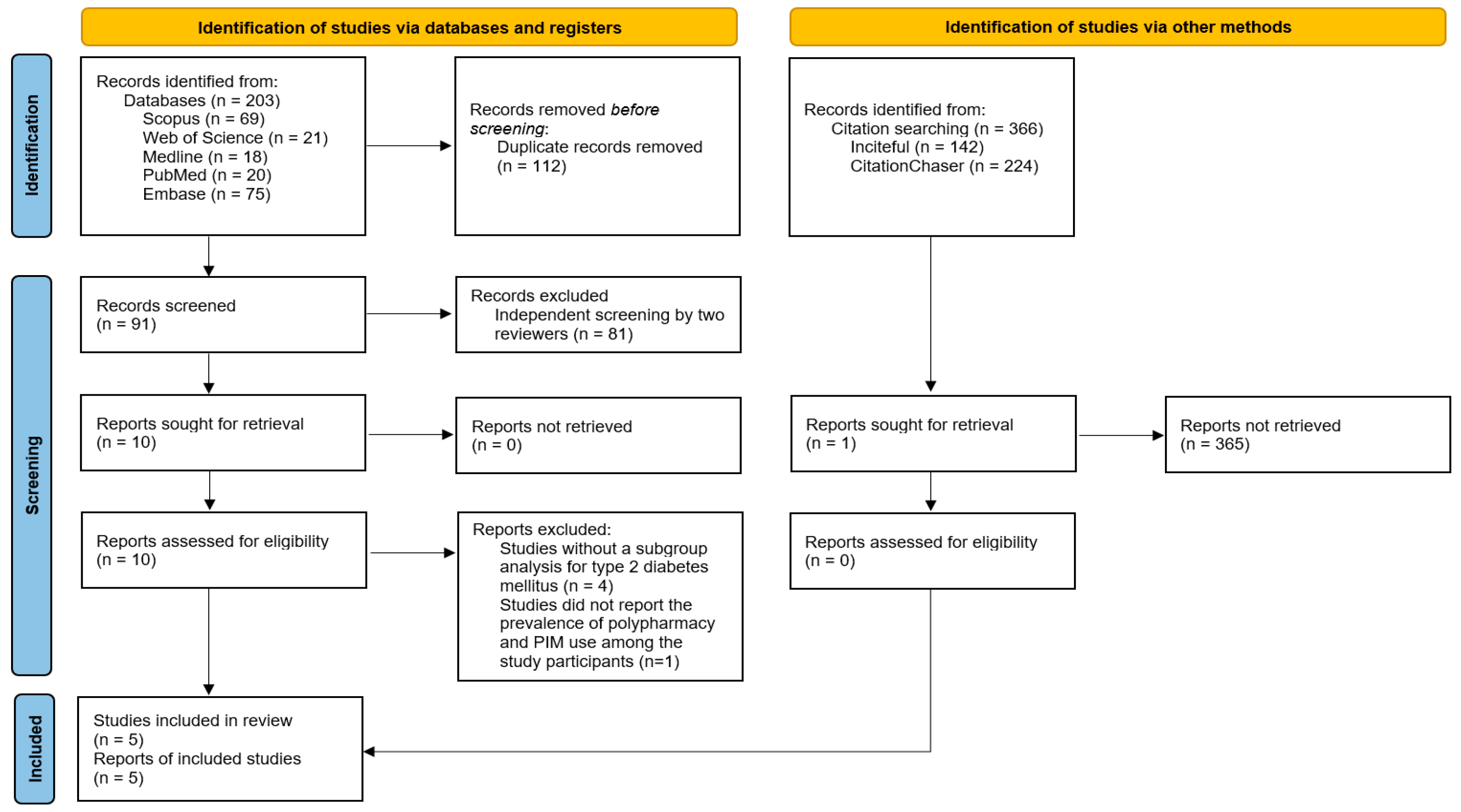
- Studies reporting both the prevalence of polypharmacy and the prevalence of PIMs among older adults (≥65 years) with T2DM in any healthcare setting. We selected ≥65 years because it is the most used operational definition of “older adults” in geriatric and medication-safety research, including widely applied tools such as the Beers Criteria and the STOPP/START criteria, and is the most frequently reported age cut-off in the eligible literature. This enhances comparability across included studies and supports consistency in evidence synthesis [26,27].
- Studies assessing the prevalence of PIMs using validated explicit criteria, specifically the AGS Beers Criteria or the STOPP/START criteria.
- Studies including mixed populations (e.g., T2DM and other chronic conditions) will be included only if data for the T2DM subgroup are reported separately.
- English language studies.
- Exclusion criteria:
- Studies not targeting older adults with T2DM.
- Mixed population studies were excluded if T2DM-specific estimates could not be reliably extracted.
- Studies assess polypharmacy or PIMs separately among older adults with T2DM.
- Studies assessing PIMs using non-validated tools.
- Studies focusing on type 1 diabetes, gestational diabetes, or prediabetes.
- Studies focusing on pediatric or adolescent patients.
- Studies where polypharmacy or PIMs are not clearly defined or measured.
- Reviews, editorials, conference, book, case report, and case series.
- Non-English-language studies.
2.5. Information Sources and Search Strategies
2.6. Studies Screening Selection Process
2.7. Data Extraction
2.8. Risk of Bias Assessment
2.9. Data Synthesis and Statistical Analysis
3. Results
3.1. Study Selection
3.2. Characteristics of Included Studies
3.3. Risk of Bias
3.4. Definitions and Prevalence of Polypharmacy
3.5. PIMs
3.5.1. Prevalence of PIMs and Assessment Criteria
3.5.2. PIM Burden
3.5.3. Patterns of Common PIM Classes, Including Antidiabetic Medication-Related PIMs
3.6. Narrative Summary of the Co-Occurrence of PIMs Among Those with Polypharmacy
4. Discussion
4.1. Strengths and Limitations
4.2. Future Research
5. Conclusions
Supplementary Materials
Author Contributions
Funding
Institutional Review Board Statement
Informed Consent Statement
Data Availability Statement
Acknowledgments
Conflicts of Interest
Abbreviations
| AGS | American Geriatrics Society |
| CI | Confidence Interval |
| JBI | Joanna Briggs Institute |
| OR | Odds Ratio |
| PIM | Potential Inappropriate Medication |
| PPIs | Proton Pump Inhibitors |
| STOPP/ START | Screening Tool of Older Persons’ Potentially Prescriptions/Screening Tool to Alert to Right Treatment criteria |
| T2DM | Type 2 Diabetes Mellitus |
References
- International Diabetes Federation. IDF Diabetes Atlas 2025. Available online: https://diabetesatlas.org/resources/idf-diabetes-atlas-2025/ (accessed on 17 June 2025).
- Akın, S.; Bölük, C. Prevalence of comorbidities in patients with type–2 diabetes mellitus. Prim. Care Diabetes 2020, 14, 431–434. [Google Scholar] [CrossRef] [Scilit]
- Gregg, E.W.; Pratt, A.; Owens, A.; Barron, E.; Dunbar-Rees, R.; Slade, E.T.; Hafezparast, N.; Bakhai, C.; Chappell, P.; Cornelius, V.; et al. The burden of diabetes-associated multiple long-term conditions on years of life spent and lost. Nat. Med. 2024, 30, 2830–2837. [Google Scholar] [CrossRef] [Scilit]
- Alberti, K.G.M.M.; Zimmet, P.; Shaw, J. Metabolic syndrome—A new world-wide definition. A consensus statement from the International Diabetes Federation. Diabet. Med. 2006, 23, 469–480. [Google Scholar] [CrossRef] [Scilit] [PubMed]
- AL-Musawe, L.; Martins, A.P.; Raposo, J.F.; Torre, C. The association between polypharmacy and adverse health consequences in elderly type 2 diabetes mellitus patients; a systematic review and meta-analysis. Diabetes Res. Clin. Pract. 2019, 155, 107804. [Google Scholar] [CrossRef] [Scilit] [PubMed]
- American Diabetes Association Professional Practice Committee. 4. Comprehensive medical evaluation and assessment of comorbidities: Standards of Care in Diabetes—2025. Diabetes Care 2025, 48, S59–S85. [Google Scholar] [CrossRef] [Scilit]
- Mangoni, A.A.; Jackson, S.H.D. Age-related changes in pharmacokinetics and pharmacodynamics: Basic principles and practical applications. Br. J. Clin. Pharmacol. 2004, 57, 6–14. [Google Scholar] [CrossRef] [Scilit]
- Doherty, A.S.; Shahid, F.; Moriarty, F.; Boland, F.; Clyne, B.; Dreischulte, T.; Fahey, T.; Kennelly, S.P.; Wallace, E. Prescribing cascades in community-dwelling adults: A systematic review. Pharmacol. Res. Perspect. 2022, 10, e01008. [Google Scholar] [CrossRef] [Scilit]
- Dreischulte, T.; Shahid, F.; Muth, C.; Schmiedl, S.; Haefeli, W.E. Prescribing cascades: How to detect them, prevent them, and use them appropriately. Dtsch. Arztebl. Int. 2022, 119, 745–752. [Google Scholar] [CrossRef] [Scilit] [PubMed]
- Khunti, K.; Chudasama, Y.V.; Gregg, E.W.; Kamkuemah, M.; Misra, S.; Suls, J.; Venkateshmurthy, N.S.; Valabhji, J. Diabetes and multiple long-term conditions: A review of our current global health challenge. Diabetes Care 2023, 46, 2092–2101. [Google Scholar] [CrossRef] [Scilit]
- American Diabetes Association Professional Practice Committee. 13. Older adults: Standards of Care in Diabetes—2025. Diabetes Care 2025, 48, S266–S282. [Google Scholar] [CrossRef] [Scilit]
- Masnoon, N.; Shakib, S.; Kalisch-Ellett, L.; Caughey, G.E. What is polypharmacy? A systematic review of definitions. BMC Geriatr. 2017, 17, 230. [Google Scholar] [CrossRef] [Scilit] [PubMed]
- Maher, R.L.; Hanlon, J.; Hajjar, E.R. Clinical consequences of polypharmacy in elderly. Expert Opin. Drug Saf. 2014, 13, 57–65. [Google Scholar] [CrossRef] [Scilit] [PubMed]
- Khezrian, M.; McNeil, C.J.; Murray, A.D.; Myint, P.K. An overview of prevalence, determinants and health outcomes of polypharmacy. Ther. Adv. Drug Saf. 2020, 11, 2042098620933741. [Google Scholar] [CrossRef] [Scilit]
- Cadogan, C.A.; Ryan, C.; Hughes, C.M. Appropriate polypharmacy and medicine safety: When many is not too many. Drug Saf. 2016, 39, 109–116. [Google Scholar] [CrossRef] [Scilit] [PubMed]
- Muth, C.; Blom, J.W.; Smith, S.M.; Johnell, K.; Gonzalez-Gonzalez, A.I.; Nguyen, T.S.; Brueckle, M.-S.; Cesari, M.; Tinetti, M.E.; Valderas, J.M. Evidence supporting the best clinical management of patients with multimorbidity and polypharmacy: A systematic guideline review and expert consensus. J. Intern. Med. 2019, 285, 272–288. [Google Scholar] [CrossRef] [Scilit]
- Remelli, F.; Ceresini, M.G.; Trevisan, C.; Noale, M.; Volpato, S. Prevalence and impact of polypharmacy in older patients with type 2 diabetes. Aging Clin. Exp. Res. 2022, 34, 1969–1983. [Google Scholar] [CrossRef] [Scilit]
- Satapathy, P.; Gaidhane, A.M.; Vadia, N.; Menon, S.V.; Chennakesavulu, K.; Panigrahi, R.; Shabil, M.; Singh, M.; Sah, S.; Lingamaiah, D.; et al. Prevalence of polypharmacy among older adults with diabetes: A systematic review and meta-analysis. Aging Clin. Exp. Res. 2025, 37, 335. [Google Scholar] [CrossRef] [Scilit]
- Beers, M.H. Explicit criteria for determining potentially inappropriate medication use by the elderly: An update. Arch. Intern. Med. 1997, 157, 1531. [Google Scholar] [CrossRef] [Scilit]
- O’Connor, M.N.; Gallagher, P.; O’Mahony, D. Inappropriate prescribing: Criteria, detection and prevention. Drugs Aging 2012, 29, 437–452. [Google Scholar] [CrossRef] [Scilit]
- Kaufmann, C.P.; Tremp, R.; Hersberger, K.E.; Lampert, M.L. Inappropriate prescribing: A systematic overview of published assessment tools. Eur. J. Clin. Pharmacol. 2014, 70, 1–11. [Google Scholar] [CrossRef] [Scilit]
- Curtin, D.; Gallagher, P.F.; O’Mahony, D. Explicit criteria as clinical tools to minimize inappropriate medication use and its consequences. Ther. Adv. Drug Saf. 2019, 10, 2042098619829431. [Google Scholar] [CrossRef] [Scilit]
- Saeed, Z.I.; Ostrominski, J.W.; Aroda, V.R. Polypharmacy in type 2 diabetes: Appropriate or cause for concern? Diabetes Care 2024, 47, 2104–2106. [Google Scholar] [CrossRef] [Scilit]
- Page, M.J.; Moher, D.; Bossuyt, P.M.; Boutron, I.; Hoffmann, T.C.; Mulrow, C.D.; Shamseer, L.; Tetzlaff, J.M.; Akl, E.A.; Brennan, S.E.; et al. PRISMA 2020 explanation and elaboration: Updated guidance and exemplars for reporting systematic reviews. BMJ 2021, 372, n160. [Google Scholar] [CrossRef]
- Santos, C.M.D.C.; Pimenta, C.A.D.M.; Nobre, M.R.C. The PICO strategy for the research question construction and evidence search. Rev. Lat.-Am. Enferm. 2007, 15, 508–511. [Google Scholar] [CrossRef] [Scilit] [PubMed]
- American Geriatrics Society Beers Criteria. American Geriatrics Society 2023 updated AGS Beers Criteria® for potentially inappropriate medication use in older adults. J. Am. Geriatr. Soc. 2023, 71, 2052–2081. [Google Scholar] [CrossRef] [Scilit]
- O’Mahony, D.; Cherubini, A.; Guiteras, A.R.; Denkinger, M.; Beuscart, J.-B.; Onder, G.; Gudmundsson, A.; Cruz-Jentoft, A.J.; Knol, W.; Bahat, G.; et al. STOPP/START criteria for potentially inappropriate prescribing in older people: Version 3. Eur. Geriatr. Med. 2023, 14, 625–632. [Google Scholar] [CrossRef] [Scilit]
- Ouzzani, M.; Hammady, H.; Fedorowicz, Z.; Elmagarmid, A. Rayyan—A web and mobile app for systematic reviews. Syst. Rev. 2016, 5, 210. [Google Scholar] [CrossRef] [Scilit] [PubMed]
- Munn, Z.; Moola, S.; Lisy, K.; Riitano, D.; Tufanaru, C. Methodological guidance for systematic reviews of observational epidemiological studies reporting prevalence and cumulative incidence data. Int. J. Evid. Based Healthc. 2015, 13, 147–153. [Google Scholar] [CrossRef] [Scilit] [PubMed]
- Higgins, J.P.T.; Thompson, S.G. Quantifying heterogeneity in a meta-analysis. Stat. Med. 2002, 21, 1539–1558. [Google Scholar] [CrossRef] [Scilit]
- Aromataris, E.; Lockwood, C.; Porritt, K.; Pilla, B.; Jordan, Z. (Eds.) JBI Manual for Evidence Synthesis; JBI: Adelaide, Australia, 2024; Available online: https://synthesismanual.jbi.global (accessed on 13 November 2025).
- Salh, H.J.H.; Aziz, T.A.; Mahwi, T.O.; Hussen, N.H.; Aziz, D.F. The relation between polypharmacy, potentially inappropriate medications, organ function, and quality of life in elderly patients with type 2 diabetes. Hosp. Pharm. 2025, 60, 561–570. [Google Scholar] [CrossRef] [Scilit]
- Faquetti, M.L.; Frey, G.; Stämpfli, D.; Weiler, S.; Burden, A.M. Prevalence of potentially inappropriate medications among newly treated patients with type 2 diabetes in UK primary care. Br. J. Clin. Pharmacol. 2024, 90, 1376–1394. [Google Scholar] [CrossRef] [Scilit]
- AL-Musawe, L.; Torre, C.; Guerreiro, J.P.; Rodrigues, A.T.; Raposo, J.F.; Mota-Filipe, H.; Martins, A.P. Drug-drug interactions and inappropriate medicines impact on glycemic control and kidney function in older adults with diabetes-attending specialty care institution. Eur. J. Clin. Pharmacol. 2021, 77, 1397–1407. [Google Scholar] [CrossRef] [Scilit]
- AL-Musawe, L.; Torre, C.; Guerreiro, J.P.; Rodrigues, A.T.; Raposo, J.F.; Mota-Filipe, H.; Martins, A.P. Polypharmacy, potentially serious clinically relevant drug-drug interactions, and inappropriate medicines in elderly people with type 2 diabetes and their impact on quality of life. Pharmacol. Res. Perspect. 2020, 8, e00621. [Google Scholar] [CrossRef] [Scilit]
- Sharma, R.; Chhabra, M.; Vidyasagar, K.; Rashid, M.; Fialova, D.; Bhagavathula, A.S. Potentially inappropriate medication use in older hospitalized patients with type 2 diabetes: A cross-sectional study. Pharmacy 2020, 8, 219. [Google Scholar] [CrossRef] [Scilit]
- Al Khaja, K.A.J.; Ahmed Isa, H.; Veeramuthu, S.; Sequeira, R.P. Potentially inappropriate prescribing in older adults with hypertension or diabetes mellitus and hypertension in a primary care setting in Bahrain. Med. Princ. Pract. 2018, 27, 241–249. [Google Scholar] [CrossRef] [Scilit]
- Oktora, M.P.; Alfian, S.D.; Bos, H.J.; Schuiling-Veninga, C.C.M.; Taxis, K.; Hak, E.; Denig, P. Trends in polypharmacy and potentially inappropriate medication (PIM) in older and middle-aged people treated for diabetes. Br. J. Clin. Pharmacol. 2021, 87, 2807–2817. [Google Scholar] [CrossRef] [Scilit]
- Milushewa, P.; Kosanova, K.; Nikolov, P. Prevalence of potentially inappropriate medications among elderly patients with diabetes—Study based on STOPP/START criteria. Pharmacia 2023, 70, 817–823. [Google Scholar] [CrossRef] [Scilit]
- Formiga, F.; Vidal, X.; Agustí, A.; Chivite, D.; Rosón, B.; Barbé, J.; López-Soto, A.; Torres, O.H.; Fernández-Moyano, A.; García, J.; et al. Inappropriate prescribing in elderly people with diabetes admitted to hospital. Diabet. Med. 2016, 33, 655–662. [Google Scholar] [CrossRef] [Scilit]
- Atak Tel, B.M.; Aktas, G.; Bilgin, S.; Baltaci, S.B.; Taslamacioglu Duman, T. Control level of type 2 diabetes mellitus in the elderly is associated with polypharmacy, accompanied comorbidities, and various increased risks according to the Beers criteria. Diagnostics 2023, 13, 3433. [Google Scholar] [CrossRef] [Scilit]
- Ayalew, M.B.; Spark, M.J.; Quirk, F.; Dieberg, G. Potentially inappropriate prescribing for adults living with diabetes mellitus: A scoping review. Int. J. Clin. Pharm. 2022, 44, 860–872. [Google Scholar] [CrossRef] [Scilit]
- Gagnon, M.-E.; Sirois, C.; Simard, M.; Roux, B.; Plante, C. Potentially inappropriate medications in older individuals with diabetes: A population-based study in Quebec, Canada. Prim. Care Diabetes 2020, 14, 529–537. [Google Scholar] [CrossRef] [Scilit]
- Lu, L.; Yao, K.; Chen, J.; Yang, Y.; Wang, K.; Zheng, J.; Guo, P.; Cai, Y.; Zhang, Q. Prevalence of potentially inappropriate medications and association with comorbidities in older adults with diabetes in an outpatient visitation setting. Front. Public Health 2022, 10, 995948. [Google Scholar] [CrossRef] [Scilit]
- Delara, M.; Murray, L.; Jafari, B.; Bahji, A.; Goodarzi, Z.; Kirkham, J.; Chowdhury, M.; Seitz, D.P. Prevalence and factors associated with polypharmacy: A systematic review and meta-analysis. BMC Geriatr. 2022, 22, 601. [Google Scholar] [CrossRef] [Scilit]
- Tian, F.; Chen, Z.; Zeng, Y.; Feng, Q.; Chen, X. Prevalence of use of potentially inappropriate medications among older adults worldwide: A systematic review and meta-analysis. JAMA Netw. Open 2023, 6, e2326910. [Google Scholar] [CrossRef] [Scilit]
- American Diabetes Association Professional Practice Committee. 10. Cardiovascular disease and risk management: Standards of Care in Diabetes—2025. Diabetes Care 2025, 48, S207–S238. [Google Scholar] [CrossRef] [Scilit] [PubMed]
- Bell, D.S.H. Combine and conquer: With type 2 diabetes polypharmacy is essential not only to achieve glycemic control but also to treat the comorbidities and stabilize or slow the advancement of diabetic nephropathy. J. Diabetes Res. 2022, 2022, 7787732. [Google Scholar] [CrossRef] [Scilit] [PubMed]
- Jarab, A.S.; Alqudah, S.G.; Mukattash, T.L.; Shattat, G.; Al-Qirim, T. Randomized controlled trial of clinical pharmacy management of patients with type 2 diabetes in an outpatient diabetes clinic in Jordan. J. Manag. Care Pharm. 2012, 18, 516–526. [Google Scholar] [CrossRef] [Scilit]
- Schindler, E.; Hohmann, C.; Culmsee, C. Medication review by community pharmacists for type 2 diabetes patients in routine care: Results of the DIATHEM-study. Front. Pharmacol. 2020, 11, 1176. [Google Scholar] [CrossRef] [Scilit]
- Hickman, E.; Gillies, C.; Khunti, K.; Seidu, S. Deprescribing, polypharmacy and prescribing cascades in older people with type 2 diabetes: A focused review. J. Indian. Inst. Sci. 2023, 103, 191–204. [Google Scholar] [CrossRef] [Scilit]
- Middleton, T.L.; Wong, J.; Molyneaux, L.; Brooks, B.A.; Yue, D.K.; Twigg, S.M.; Wu, T. Cardiac effects of sulfonylurea-related hypoglycemia. Diabetes Care 2017, 40, 663–670. [Google Scholar] [CrossRef] [Scilit]
- Kaze, A.D.; Yuyun, M.F.; Erqou, S.; Fonarow, G.C.; Echouffo-Tcheugui, J.B. Severe hypoglycemia and incidence of QT interval prolongation among adults with type 2 diabetes. J. Clin. Endocrinol. Metab. 2022, 107, e2743–e2750. [Google Scholar] [CrossRef] [Scilit]
- Reeve, E.; Shakib, S.; Hendrix, I.; Roberts, M.S.; Wiese, M.D. Review of deprescribing processes and development of an evidence-based, patient-centered deprescribing process. Br. J. Clin. Pharmacol. 2014, 78, 738–747. [Google Scholar] [CrossRef] [Scilit]
- Scott, I.A.; Hilmer, S.N.; Reeve, E.; Potter, K.; Le Couteur, D.; Rigby, D.; Gnjidic, D.; Del Mar, C.B.; Roughead, E.E.; Page, A.; et al. Reducing inappropriate polypharmacy: The process of deprescribing. JAMA Intern. Med. 2015, 175, 827–834. [Google Scholar] [CrossRef] [Scilit] [PubMed]
- Aubert, C.E.; Lega, I.C.; Bourron, O.; Train, A.J.; Kullgren, J.T. When and how to deintensify type 2 diabetes care. BMJ 2021, 375, e066061. [Google Scholar] [CrossRef] [Scilit] [PubMed]
- Farrell, B.; Black, C.; Thompson, W.; McCarthy, L.; Rojas-Fernandez, C.; Lochnan, H.; Shamji, S.; Upshur, R.; Bouchard, M.; Welch, V. Deprescribing antihyperglycemic agents in older persons: Evidence-based clinical practice guideline. Can. Fam. Physician 2017, 63, 832–843. [Google Scholar] [PubMed]
- Seidu, S.; Kunutsor, S.K.; Topsever, P.; Hambling, C.E.; Cos, F.X.; Khunti, K. Deintensification in older patients with type 2 diabetes: A systematic review of approaches, rates and outcomes. Diabetes Obes. Metab. 2019, 21, 1668–1679. [Google Scholar] [CrossRef] [Scilit]



| Study (Authors, Year) | Country | Study Design | Study Setting | Data Source; Study Period | Total Sample Size | Sample Size (T2DM ≥65) | Participants’ Ages | Male (%) | Female (%) | Medications Received by Included Patients | Captured Comorbidities | Polypharmacy Definition | Polypharmacy Prevalence (%) ‡ | PIM Prevalence (%) ‡ | PIM Tool Used/ Version or Year | PIM Burden | Top Three Most Reported PIM Classes | Antidiabetic Medication-Related PIMs | Proportion of Patients with PIMs Among Those with Polypharmacy (%) | Risk of Bias |
|---|---|---|---|---|---|---|---|---|---|---|---|---|---|---|---|---|---|---|---|---|
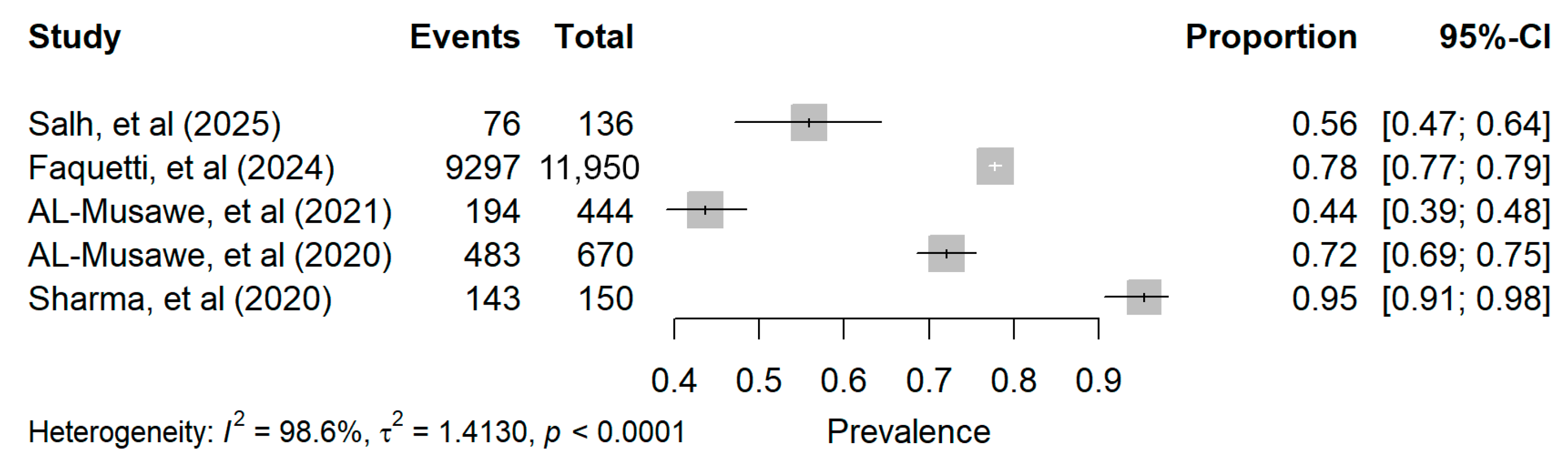
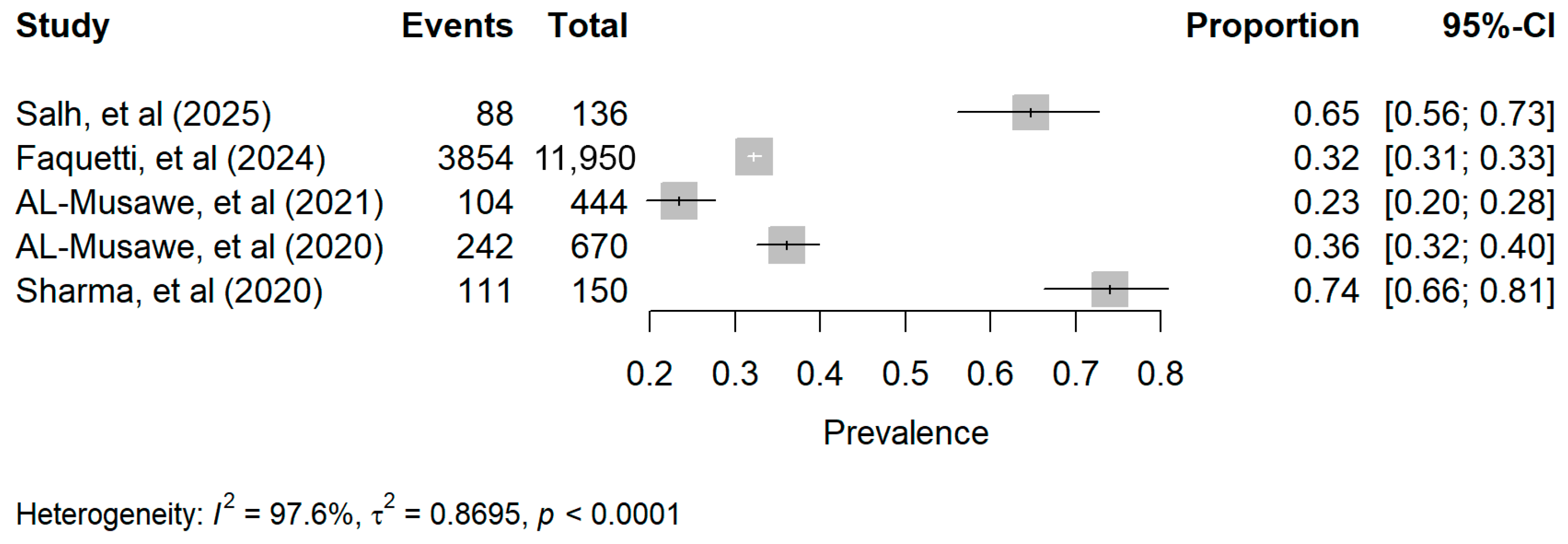
| Salh et al. 2025 [32] | Iraq | Prospective, cross-sectional | Diabetes and endocrine disease center | Single center; 1 July to 1 September 2023 | 136 | 136 | 65 or more | 34.6 * | 65.4 * | Oral hypoglycemic agents, insulin, hypertensive agents, lipid-lowering agents, and antiplatelet agents, Proton Pump inhibitors (PPIs), other drugs; specific drug name was not reported | Hypertension, dyslipidemia, others | The use of 5 or more medicines | 55.88 | 64.7 | STOPP, V3 | 48.52% had one PIM, 13.97% had two PIMs, 1.47% had three PIMs, 0.75% had four PIMs | Long-acting sulfonylureas followed by PPIs for uncomplicated peptic ulcer disease at full therapeutic dosage for >8 weeks, then angiotensin-converting enzyme inhibitors or angiotensin receptor blockers in patients with hyperkalemia | Long-acting sulfonylureas; the specific drug name was not reported | 73.7 | High |
| Faquetti et al. 2024 [33] | United Kingdom | Retrospective, cohort | Primary care | Population-based primary care electronic medical database; 2016–2019 | 28,604 | 11,950 | Middle-aged, 45–64, and older adults, aged 65 or more | 55.7 * | 44.2 * | Biguanides (metformin), sulfonylureas, dipeptidyl peptidase 4 inhibitors, sodium-glucose co-transporter inhibitors, thiazolidinediones, others; specific drug name was not reported | Hypertension, coronary heart disease, heart failure, cerebrovascular disease, chronic kidney disease, chronic liver disease, chronic obstructive pulmonary disease, asthma, sleep disorders, depression, alzheimer/dementia, hypothyroidism, osteoarthritis, osteoporosis | The prescription of ≥5 different drug compounds | 77.8 | 32.25 * | AGS Beers, 2015 | 22% * had one PIM, 6.1%* had two PIMs, and approximately 4% * had three or more PIMs. | PPIs for >8 weeks followed by anticholinergic antidepressants as monotherapy or in combination, then antipsychotics, benzodiazepines, non-benzodiazepines, benzodiazepine receptor agonist hypnotics, tricyclic antidepressants, and selective serotonin reuptake inhibitors in patients with history of falls or fractures | Long-acting sulfonylureas (glyburide) | 39.6 | Low |
| AL-Musawe et al. 2021 [34] | Portugal | Cross-sectional | Database of the Portuguese diabetes association | Diabetes institution in Portugal | 444 | 444 | 65 or more | 55.85 * | 44.14 * | Insulin, metformin, sulfonylureas, glucagon-like peptide-1 receptor agonist, dipeptidyl peptidase-4 inhibitor, sodium-glucose cotransporter-2 inhibitors; specific drug name was not reported | Hypertension, chronic kidney disease, dyslipidemia, and infections | The use of 5 or more medicines | 43.6 | 23.4 | STOPP, V2 | 76.9% had one PIM, 19.27% had two PIMs, 3.8% had more than two PIMs | Angiotensin-converting enzyme inhibitors or angiotensin receptor blockers in patients with hyperkalemia, followed by benzodiazepines, then long-acting sulfonylureas | Long-acting sulfonylureas; the specific drug name was not reported | 74 | Low |
| AL-Musawe et al. 2020 [35] | Portugal | Prospective, cross-sectional | All healthcare settings | Nationwide pharmacy-based cohort | 1328 | 670 | 65 or more | 50.45 | 49.55 | Gliptins, insulin, glucagon-like peptide 1 receptor agonists, or sodium- glucose transport protein 2, renin- angiotensin system medicines, beta-blocking agents, diuretics, calcium channel blockers, lipid-lowering medicines, anti-thrombotic, acid-related disorders medicines, psycholeptics, psychoanaleptics; specific drug name was not reported | Hypertension, renal failure, heart failure, dyslipidemia, thyroid gland, respiratory system, digestive system, musculoskeletal system, prostate hyperplasia, neoplasms, depression, hyperuricemia, other | The use of 5 or more medicines | 72.09 | 36.11 | STOPP, V2 | 72.72% had one PIM, 20.24% had two PIMs, and 7.02% had more than two PIMs | Benzodiazepines followed by long-acting sulfonylureas (glibenclamide or glimepiride), then higher dose of iron supplements | Long-acting sulfonylureas (glibenclamide or glimepiride) | 45.34 | Low |
| Sharma et al. 2020 [36] | India | Prospective, cross-sectional | Tertiary hospital | Single center (hospitalized patients); August 2019 to January 2020 | 150 | 150 | 65 or more | 54.7 | 45.3 | Not reported | Hypertension, cerebrovascular accident, kidney disease, acute febrile illness, liver disease, myocardial infarction, dilated cardiomyopathy, coronary artery disease, left ventricular dysfunction, congestive heart failure, acute coronary syndrome, anemia, respiratory disease, psychiatric disorder, upper gastrointestinal bleeding, meningitis, urinary tract infection, hepatorenal syndrome, metabolic encephalopathy, benign prostate hyperplasia, obstructive uropathy, vertigo, others | The operational definitions of polypharmacy and hyper-polypharmacy were not explicitly stated in the study’s Methods section. The number of medications mentioned in the study’s Results section was grouped into two categories: 5–9 medications and ≥10 medications | 54 (5–9 medications) category 41.3 (≥10 medications) category § The overall prevalence of polypharmacy 95.33 | 74 | AGS Beers, 2019 | 38.7% had one PIM, 24.7% had two PIMs, and 10.7% had three or more PIMs | PPIs (omeprazole, pantoprazole, rabeprazole) followed by human insulin according to random blood sugar, then long-acting sulfonylureas (glimepiride) | Human insulin according to random blood sugar, followed by long-acting sulfonylureas (glimepiride) | 36.7 (5–9 medications) category 35.3 (≥10 medications) category Only this study reports the association between polypharmacy and PIMs as an odds ratio (OR): OR 2.82 (95% CI 0.58–13.52). For (5–9 medications) category OR 7.85 (95% CI 1.49–41.10) For (≥10 medications) category | High |
Disclaimer/Publisher’s Note: The statements, opinions and data contained in all publications are solely those of the individual author(s) and contributor(s) and not of MDPI and/or the editor(s). MDPI and/or the editor(s) disclaim responsibility for any injury to people or property resulting from any ideas, methods, instructions or products referred to in the content. |
© 2026 by the authors. Licensee MDPI, Basel, Switzerland. This article is an open access article distributed under the terms and conditions of the Creative Commons Attribution (CC BY) license.
Share and Cite
Aljaizani, R.A.; Althumairi, A.A.; Alamer, K.A.; Ahmad, S. Prevalence and Association of Polypharmacy and Potentially Inappropriate Medications Among Older Adults with Type 2 Diabetes Mellitus: A Systematic Review and Meta-Analysis. Pharmacy 2026, 14, 65. https://doi.org/10.3390/pharmacy14030065
Aljaizani RA, Althumairi AA, Alamer KA, Ahmad S. Prevalence and Association of Polypharmacy and Potentially Inappropriate Medications Among Older Adults with Type 2 Diabetes Mellitus: A Systematic Review and Meta-Analysis. Pharmacy. 2026; 14(3):65. https://doi.org/10.3390/pharmacy14030065
Chicago/Turabian StyleAljaizani, Raniah A., Arwa A. Althumairi, Khalid A. Alamer, and Shakil Ahmad. 2026. "Prevalence and Association of Polypharmacy and Potentially Inappropriate Medications Among Older Adults with Type 2 Diabetes Mellitus: A Systematic Review and Meta-Analysis" Pharmacy 14, no. 3: 65. https://doi.org/10.3390/pharmacy14030065
APA StyleAljaizani, R. A., Althumairi, A. A., Alamer, K. A., & Ahmad, S. (2026). Prevalence and Association of Polypharmacy and Potentially Inappropriate Medications Among Older Adults with Type 2 Diabetes Mellitus: A Systematic Review and Meta-Analysis. Pharmacy, 14(3), 65. https://doi.org/10.3390/pharmacy14030065