5.1.2. Non-Lateral Contexts
The analysis for
pet–pat revealed a significant effect of
step (β = −1.09, SE = 0.10,
z = −11.00,
p < 0.001) and
group (Type II Wald χ
2 (2) = 42.14,
p < 0.001), as well as a significant interaction between
step and
group (Type II Wald χ
2 (2) = 6.80,
p = 0.033), indicating that the effect of
step varied by cohort. In other words, the cohorts responded differently to the continuum. A summary of the model results, including coefficients and their significance tests, can be viewed in
Table A4 (
Appendix C).
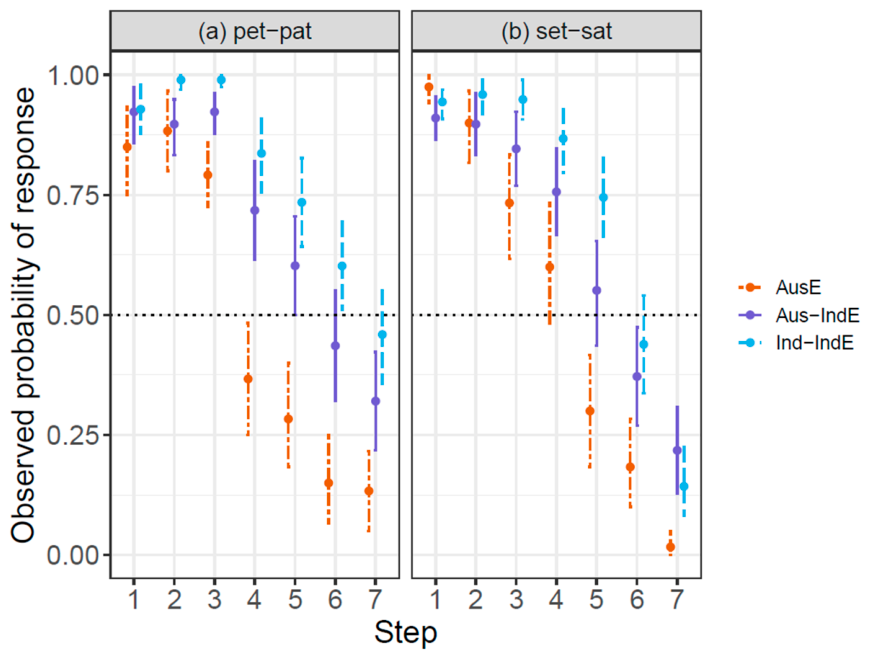
As illustrated in
Figure 1a, at every step, both IndE groups (blue and purple trajectories) have more
dress responses than the AusE group (red trajectory), indicative of a greater perceptual bias towards
dress for the two IndE groups (relative to AusE speakers), although this effect is much weaker for the Aus-IndE group (purple is lower than blue). Further, the AusE group demonstrates the earliest crossover, which occurs close to the acoustic midpoint at Step 4. This earlier shift for the AusE listeners is also relatively abrupt, as evidenced by the responses to stimuli in Steps 1–3, which largely remain in the upper quartile, being followed by a sharp fall between Steps 3 and 4. This creates a curve which resembles more closely the classic s-curve of categorical perception. In contrast, for the two IndE listener groups, the category crossover occurs later and more gradually. For baseline Ind-IndE listeners, the crossover does not occur until Step 7, and even then, it barely goes lower than 0.50, suggesting no clear, unambiguous perception of the
trap vowel. For the Aus-IndE listeners, the crossover occurs a little earlier, at Step 6. This suggests a stronger overall bias towards perceiving
pet (i.e., the
dress vowel) among the IndE groups and a less categorical response to step changes in the continuum.
Despite the general trend of a later crossover for IndE listeners overall, as well as a higher relative bias towards the
dress vowel, the results indicate clear differences in the categorization behavior between the Ind-IndE and Aus-IndE listener groups (significant effect of
step and
group interaction for Aus-IndE listeners: β = 0.31, SE = 0.12,
z = 2.60,
p = 0.009; OR = 1.36, 95% CI [1.08, 1.72]). Firstly, at all steps except Step 1, the Aus-IndE group shows a weaker response bias towards perceiving
dress, relative to the Ind-IndE group (the purple trajectory is lower than the blue trajectory). Secondly, a substantial proportion of responses (approximately 45%) for the Ind-IndE group remained as
pet even at Step 7, indicating that this step is almost entirely ambiguous for them, compared to approximately 31% of responses at Step 7 for Aus-IndE listeners. Further, pairwise comparisons of
pet responses show a sharper decrease across steps for Aus-IndE listeners than for Ind-IndE listeners, starting at step = 3.875 (Aus-IndE:
z = 2.614,
p = 0.009; Ind-IndE:
z = 1.800,
p = 0.070). In other words, although both Indian groups pattern distinctly from AusE listeners, the Aus-IndE listeners’ behavior resembles more closely that of AusE listeners, particularly in their propensity to categorize the
trap vowel in this context. This pattern suggests a modest degree of perceptual accommodation among Aus-IndE to D2 for the non-lateral context, likely due to exposure to the ambient variety.
Figure 1b illustrates the probability of responses along the continuum for the
set–sat pair. As with
pet–pat, regression modeling results revealed significant main effects of
step (β = −1.37, SE = 0.12,
z = −11.424,
p < 0.001) and
group (Type II Wald χ
2 (2) = 15.79,
p < 0.001), and a significant interaction between
step and
group (Type II Wald χ
2 (2) = 23.97,
p < 0.001). A summary of the model results for
set–sat, including coefficients and their significance tests, can be viewed in
Table A5 (
Appendix C). As depicted in
Figure 1b, at
almost every step (Steps 3–7), both IndE listener groups (blue and purple trajectories) have more
dress responses than the AusE group (red trajectory), indicating that both IndE listener groups have a bias towards hearing
dress for this lexical pair (similarly to
pet–pat, albeit not quite as consistently). However, compared to the AusE group, the Aus-IndE listeners displayed less perceptual bias towards
set overall (β = 0.62, SE = 0.13,
p < 0.001; OR = 1.85, 95% CI [1.43, 2.39], before or after the acoustic midpoint (i.e., in Steps 5 and 6) than Ind-IndE listeners (β = 0.33, SE = 0.14,
p = 0.017; OR = 1.39, 95% CI [1.06, 1.82]). In other words, as with
pet–pat, their behavior showed some accommodation towards that of the AusE group.
With regard to crossover, the AusE listeners again exhibited an earlier crossover than the two IndE listener groups, with the majority of AusE listeners categorizing the stimuli as sat by Step 5, i.e., a little later than they did for pet–pat. By Step 7, AusE listeners almost unanimously categorized the stimuli as sat, which also mirrors the almost unanimous categorization of the Step 1 stimulus as set. The more closely unanimous perception of the endpoints of the continuum for set–sat are possibly an artifact of the onset fricative in this pair which (compared with the voiceless stop closure internal for the pet–pat pair) could play a critical role in providing early acoustic evidence (through coarticulatory spectral cues). In contrast, while some responses from Aus-IndE listeners were recorded at Step 5, more generally, both IndE cohorts showed a relatively high probability of set responses than sat responses at Step 5 and still showed many set responses even by Step 7. This is particularly true for the Aus-IndE listeners, with approximately 22% set responses at Step 7, suggesting a tendency to perceive the more open vowel stimulus as set. This pattern suggests a potential adaptation in their perceptual responses as a result of exposure to Australian English in their new sociolinguistic environment.
In summary, for the non-lateral context, both Indian groups show a distinct perceptual response from that of AusE listeners, with a greater bias towards hearing DRESS at all points of the continuum from Step 3 onwards, and a clear reluctance to perceive TRAP until the very end of the continuum. The response curves show greater perceptual ambiguity for the Indian listeners, especially towards the TRAP end of the continuum, as evidenced by a less steep response curve. However, at almost all points, the Aus-IndE response curve is somewhat closer to the AusE response curve, suggesting that a degree of perceptual accommodation has occurred, with a mapping of acoustic stimuli to perceptual categories that have shifted to some extent towards that of AusE mapping.
5.1.3. Pre-Lateral Contexts
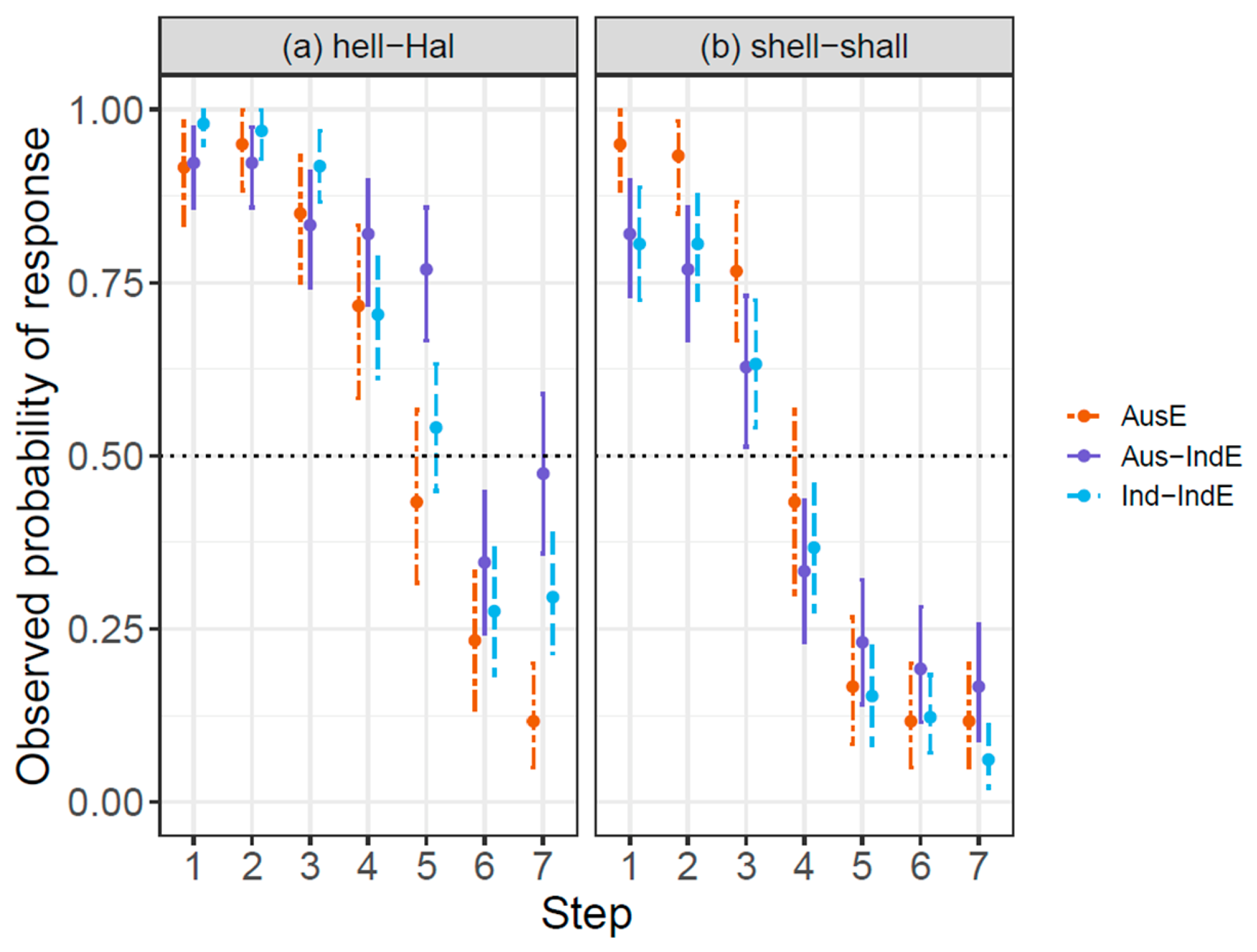
Figure 2a illustrates the probability of responses to stimuli along the seven-step continuum for the
hell–Hal pair. All three groups show a dominant percept of the
dress vowel for Steps 1–4, but a weaker and more inconsistent percept of the
trap vowel for Steps 6–7. A generalized linear mixed-effects model revealed a significant main effect of
step (β = −1.07, SE = 0.10,
z = −10.762,
p < 0.001), indicating that listeners’ categorization responses changed systematically across the acoustic continuum. A significant main effect of
group also emerged (Type II Wald χ
2 (2) = 7.127,
p = 0.028), suggesting overall differences in perceptual patterns across the three groups. A significant
step *
group interaction (Type II Wald χ
2 (2) = 20.05,
p < 0.001) showed that the effect of acoustic variation along the continuum differed across the cohorts. However, the patterns are more nuanced for this word pair. A summary of the model results for
hell–Hal, including coefficients and their significance tests, can be viewed in
Table A6 (
Appendix C).
As shown in
Figure 2a, and unlike the non-lateral context where both IndE groups showed more
dress responses than the AusE group, for the lexical pair
hell–Hal, only the Ind-IndE group shows (marginally) more
dress responses than the AusE group. Indeed, with this lexical pair, Aus-IndE listeners exhibit similar patterns to the AusE group, at least for Steps 1–3, with both showing a slightly lower rate of
hell (i.e.,
dress) responses compared with the Ind-IndE listener group, particularly at Steps 2 and 3. From Step 4 onwards, however, the behavior of the Aus-IndE group patterns even less closely with AusE than that of the Ind-IndE group. The latter reaches the perceptual crossover threshold around Step 5, although IndE listeners continue to be less certain in categorizing stimuli as
Hal. The Aus-IndE group finally identifies the stimulus at Step 6 mostly as
Hal, following a very sharp shift in responses after Step 5. However, by Step 7, this trend reverses, and the Aus-IndE group appears to be answering at random, with the rate of
hell responses increasing (to approximately 46%, up from approximately 38% at Step 6). In comparison with the AusE group, the significant
step *
group interaction for their cohort further highlights their distinct perceptual trajectory across the continuum (β = 0.43, SE = 0.12,
z = 3.636,
p < 0.001). In other words, the Aus-IndE group responds more variably and with greater uncertainty to the
trap end of the stimuli continuum than does the Ind-IndE group (β = 0.03, SE = 0.12,
z = 0.277,
p = 0.782), suggesting anything but accommodation towards Australian English, and diverging quite markedly from the findings in the non-lateral context. With regard to a possible lexical effect, the item ‘Hal’, a given name for males in Australia (albeit less commonly for younger people), may not be familiar to IndE listeners, but this does not provide an explanation for why there is greater uncertainty for Aus-IndE listeners than for Ind-IndE listeners.
A less variable, but somewhat similar, picture emerges for another pre-lateral pair
shell–shall. Unlike
hell–Hal, this pair is lexically balanced, as the words at the two ends of the continuum are familiar and frequent in both Australian English and Indian English. As such, it arguably provides a clearer illustration of lexical perception based more purely on acoustic differences, without the confound of large discrepancies in lexical frequency. As illustrated in
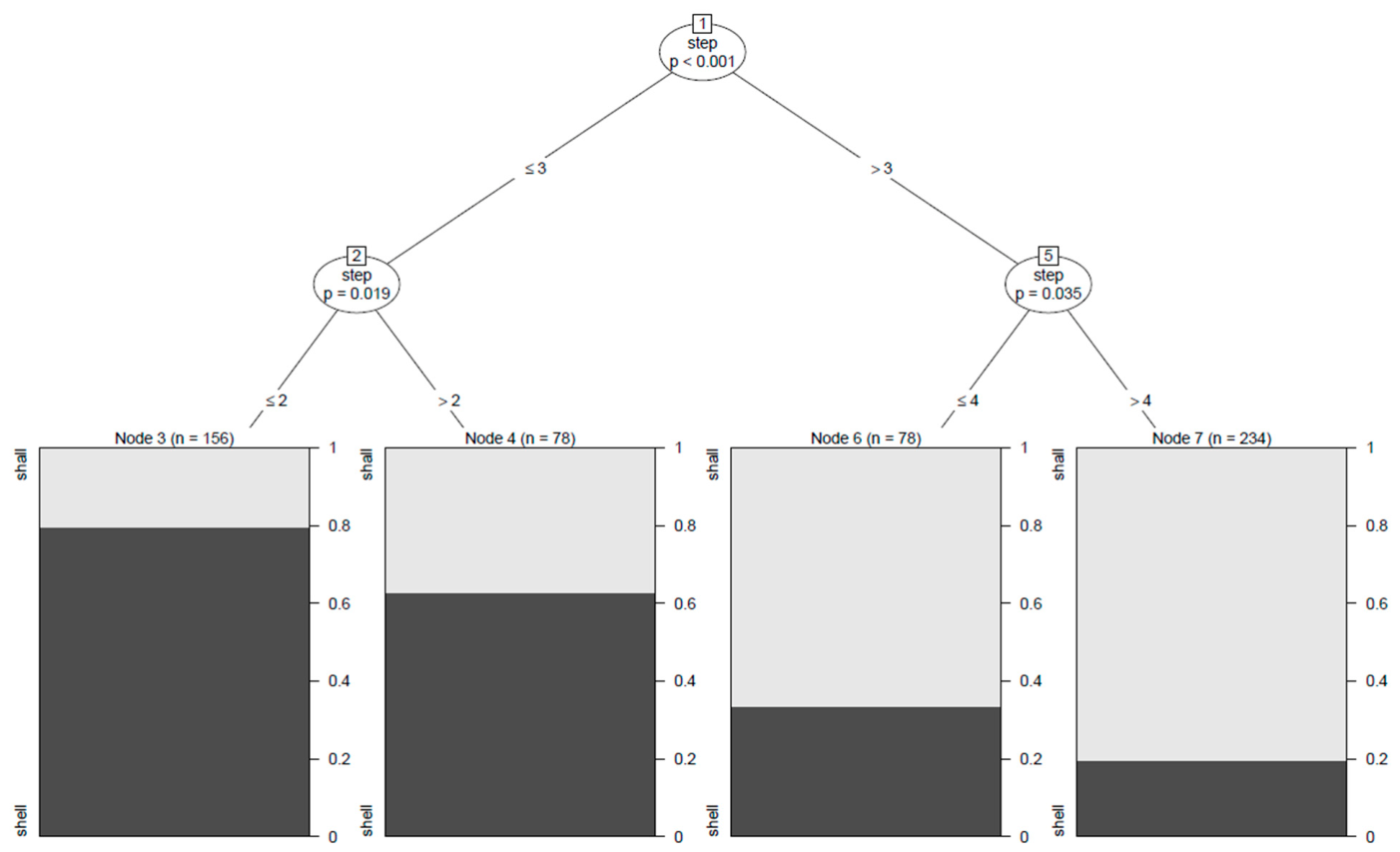
Figure 2b, responses cluster more tightly across the groups than those for
hell–Hal, with the crossover threshold occurring around Step 4 for the three groups. Indeed, logistic regression results revealed a significant main effect of
step (β = −1.37, SE = 0.12,
z = −10.999,
p < 0.001), indicating systematic variation in vowel response across the continuum.
As
Figure 2b clearly shows, the slight bias towards a
trap response in the AusE group (relative to both IndE groups) that was observed throughout the 7-step continua for the non-lateral context (i.e.,
pet–pat and
set–sat), as well as in Steps 5–7 for the pre-lateral
hell–Hal context, is clearly
not present for
shell–shall. On the contrary, the AusE group shows a higher preference (relative to the IndE groups) towards
dress for Steps 1–4. Indeed, while there was no main effect of
group (Type II Wald χ
2 (2) = 2.36,
p = 0.3), the interaction between
step and
group was significant (Type II Wald χ
2 (2) = 14.978,
p < 0.0001), pointing to group-specific perceptual boundaries for the two IndE cohorts relative to the AusE cohort (Aus-IndE: β = 0.53, SE = 0.14,
z = 3.808,
p < 0.001; Ind-IndE: (β = 0.32, SE = 0.14,
z = 2.292,
p < 0.02). Both IndE-speaking groups show less certainty in selecting
shell responses at Steps 1–3. For instance, the probability of hearing
shell at Step 1 was 94% for AusE listeners, compared to 80–81% for Ind-IndE and Aus-IndE listeners. A summary of the model results for
shell–shall, including coefficients and their significance tests, can be viewed in
Table A7 (
Appendix C).
One possible explanation is that the two IndE groups anticipated a phonetically higher
dress vowel than the stimuli heard in the lateral context, and that is due to differences in the lateral between D1 and D2. Even though the AusE speaker who provided the recordings for the stimuli was not a ‘merger’ herself, she is likely to show allophonic variation pre-laterally (where the lateral is dark); it is precisely such a conditioned variation that is likely to have motivated and led to the
trap–dress merger in speakers for whom the merger has been documented. The fact that the two IndE groups did not appear to anticipate this, and therefore did not account for it in their perception, would suggest that coarticulatory effects on a pre-lateral vowel in IndE (where the lateral is light;
Wells, 1982;
Gargesh, 2006;
Shaktawat, 2024) differ from those in AusE (where the lateral is dark). This effect may not have been evident for
hell–Hal due to a possible negative bias against selecting
Hal. In other words, perceptual response behavior appears to be mediated by an interplay of lexical effects, L1 acoustic mapping, and knowledge of subtle, sub-phonemic cues that may span several segments.
The high lexicality and the availability of acoustic cues into the coda of this pair should, arguably, promote good conditions for greater certainty in the perceptual response. Overall, all three groups show a high likelihood (over 75% of responses) of selecting shall by Steps 5–7 and a fairly robust s-curve in the identification response. However, when viewed over the whole trajectory, there is a notable difference in behavior between the two IndE groups. The similarity in response patterns observed between Ind-IndE and Aus-IndE cohorts at Steps 1–4 shifts at Step 5, with the perceptual behavior of the two IndE cohorts beginning to diverge. Aus-IndE listeners show reduced certainty in identifying shall at Steps 5–7 (approximately 81–84%) in comparison to Ind-IndE listeners, whose likelihood of selecting shall responses is 94% (Step 7), which is even higher than that of the AusE cohort.
After initial similarities, this divergence of the Aus-IndE group from the Ind-IndE group in the later steps is somewhat odd, especially given the unexpected direction. Our expectations are that exposure to the Australian English variety will lead to a subtle recalibration of perceptual boundaries for this vowel contrast regardless of phonetic context, i.e., whether it be in the pre-lateral or non-lateral environment. However, unlike in the non-lateral context where perceptual responses are more similar to that of AusE speakers, in the pre-lateral context, such exposure has led to a notable divergence from AusE responses. In the lexical pairs considered so far, Aus-IndE responses show the least confidence in identifying trap at the trap end of the continuum in the pre-lateral context. Somewhat paradoxically, this pushes the pattern of their responses even further away from that of the AusE group than that of the Ind-IndE group.
We see traces, albeit weaker, of this apparent anomaly for the
pell–pal pair as well (see a summary of the model results in
Table A8 (
Appendix C)). Firstly, as with all lexical pairs, the analysis revealed a significant main effect of
step (β = −1.41, SE = 0.13,
z = −11.071,
p < 0.001), strongly indicating clear sensitivity to the acoustic continuum (OR = 0.24, 95% CI [0.19, 0.31]), as evident in
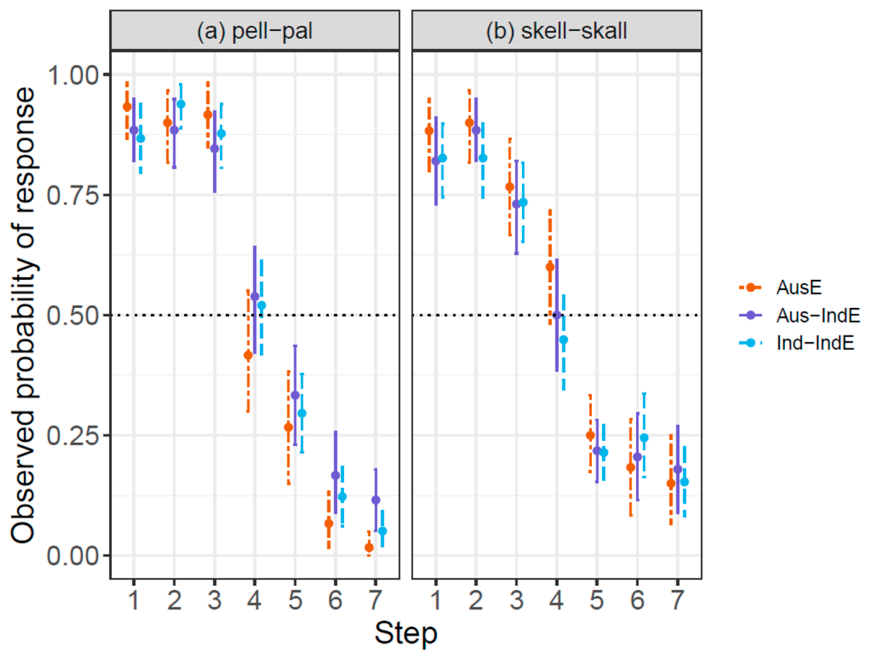
Figure 3a. However, as already illustrated for
hell–Hal and
shell–shall, the pre-lateral context is distinct from the non-lateral context. Firstly, the apparent slight bias towards
trap for the AusE listeners (relative to the IndE groups), observed in the non-lateral context
throughout the continuum, is not evident here in the pre-lateral context. Secondly, and as illustrated in
Figure 3a, responses across the three cohorts were tightly clustered—particularly at Steps 1–3 and 6–7—with a sharp decline from
pell to
pal occurring between Steps 3 and 4.
Although more tightly clustered than for the non-lateral context, the response patterns in the figure show a lower probability of selecting pell at Steps 4–7 for AusE listeners in comparison with both IndE listener groups, i.e., an earlier perception of trap in the continuum. This is particularly so when compared with the Aus-IndE group, which shows a lesser propensity to perceive trap. Indeed, this was shown to be statistically significant in that the interaction between step and group further revealed differences for the Aus-IndE group (β = 0.48, SE = 0.14, z = 3.304, p < 0.001), indicating that the Aus-IndE listeners’ point of categorization across the continuum of steps was distinct from that of the AusE group. In particular, as with Hell–Hal and shell–shall, Aus-IndE responses show the least confidence in identifying trap at the trap end of the continuum in the pre-lateral context, pushing Aus-IndE responses even further away from AusE responses than those of Ind-IndE listeners.
These results suggest that while listeners across cohorts broadly followed a similar response pattern along the acoustic continuum, there were group-specific differences in the precise location of category boundaries, that is, in which step the perception shifts, particularly for the Aus-IndE group. What is perhaps surprising, however, is that the divergent response behavior of the Aus-IndE group when compared with the Ind-IndE group is not uniformly a movement towards the behavior of the AusE group. It would appear that the pre-lateral context in particular presents a more ‘difficult’ set of contrasts, perceptually, for the Aus-IndE group.
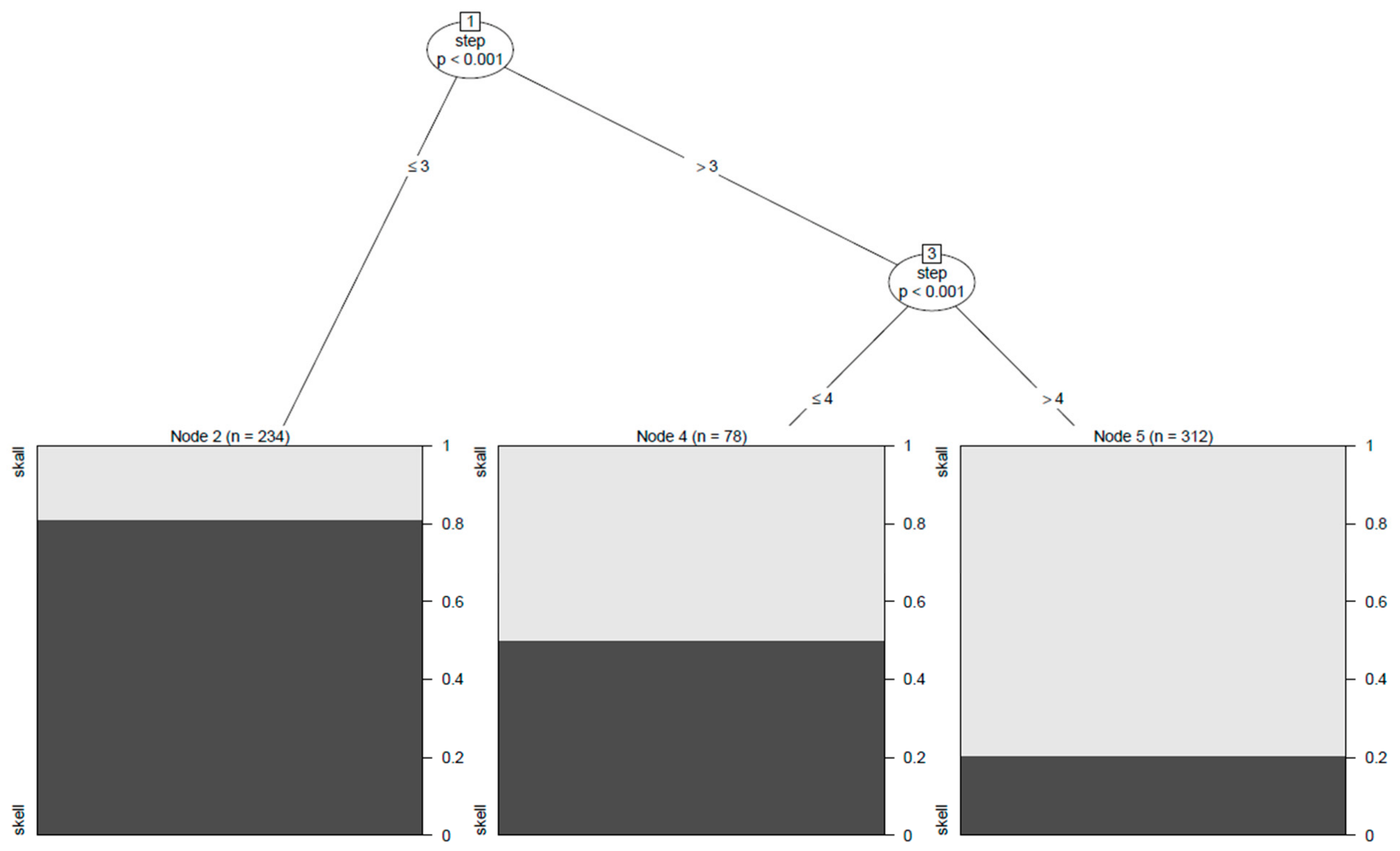
Figure 3b shows the results for one of the pairs of nonce words,
skell–skall, i.e., in a paradigm where there can be no lexicality bias. Once again, we see that the apparent slight bias towards
trap in AusE listeners (relative to the IndE groups), observed in the non-lateral context, is not evident here either. Regression analyses revealed a significant main effect of
step (
skell–skall: β = −0.89, SE = 0.04,
z = −20.525,
p < 0.001) but, unlike with the lexical pairs, no main effect of
group (
skell–skall: Type II Wald χ
2 (2) = 0.82,
p = 0.7), with the final (best fit) model excluding a
step * group interaction. For all three cohorts, there is a relatively steep identification curve, with a perceptual threshold for all three falling at Step 4 (no pairwise group contrasts were significant at Step 4) and—unlike any of the lexical pair paradigms—notably tight clustering of responses at both
dress and
trap ends of the continuum. A summary of the model results for
skell–skall, including coefficients and their significance tests, can be viewed in
Table A9 (
Appendix C).