
Article

Challenging Misconceptions About Studying Moroccan Arabic: Beliefs of L2 Multidialectal Learners Beginning a Year-Long Study Abroad in Morocco
Department of Languages, Cultures & Applied Linguistics, Carnegie Mellon University, 5000 Forbes Avenue, Pittsburgh, PA 15213, USA
*
Author to whom correspondence should be addressed.
Languages 2026, 11(1), 4; https://doi.org/10.3390/languages11010004

Submission received: 16 May 2025 / Revised: 11 December 2025 / Accepted: 12 December 2025 / Published: 26 December 2025
(This article belongs to the Special Issue Second Language Acquisition and Sociolinguistic Studies)

Abstract

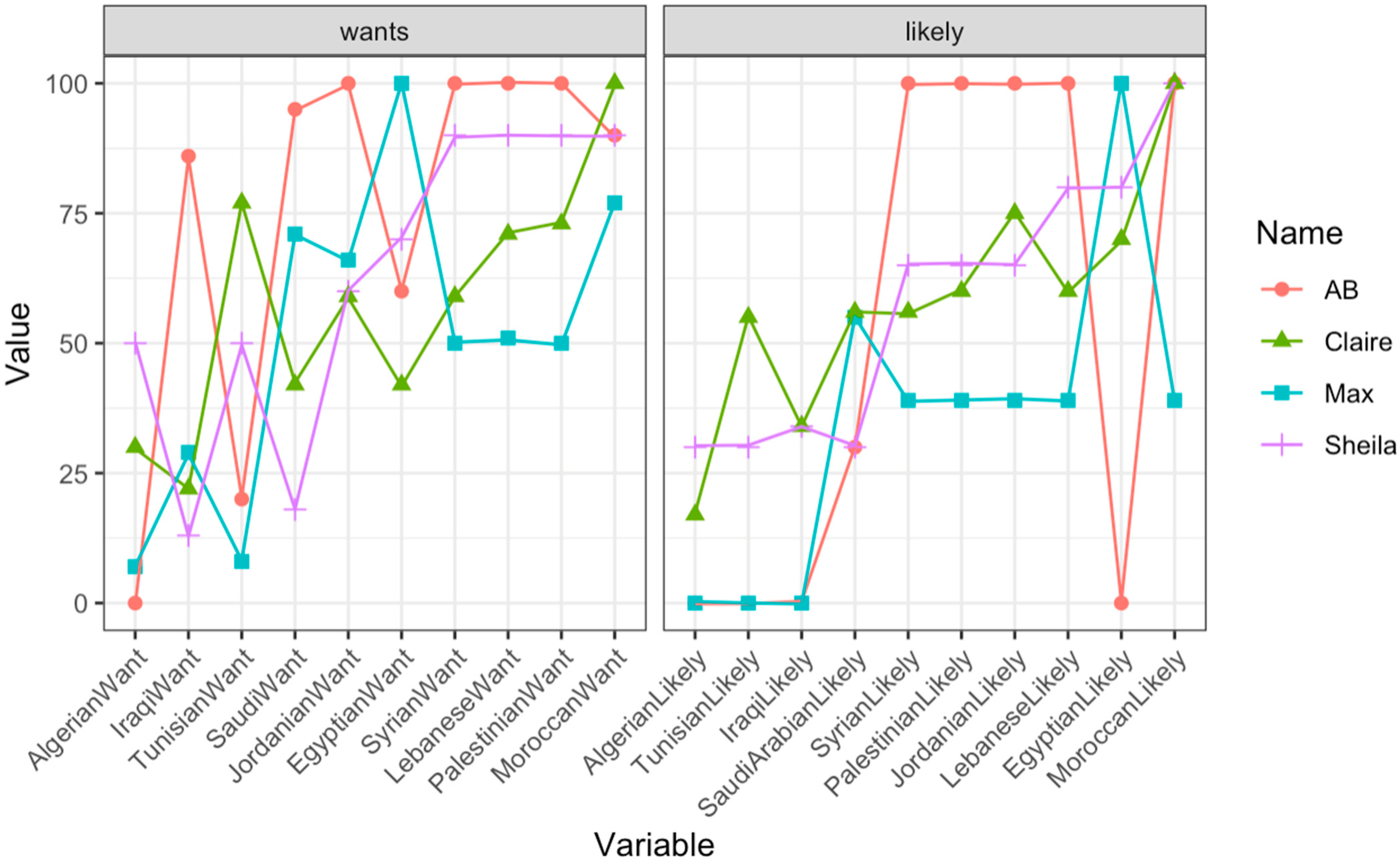
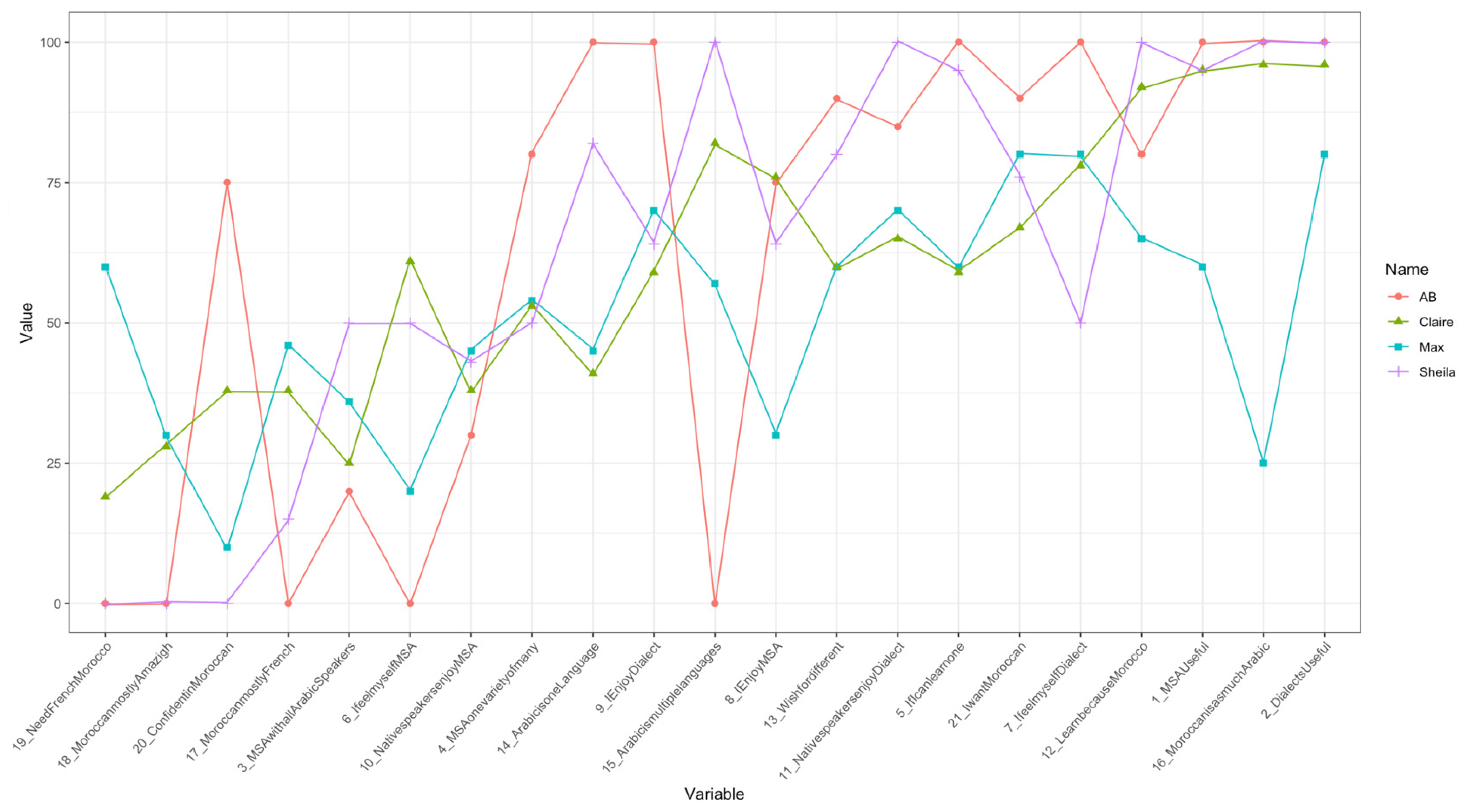
Morocco has recently been cited by the Institute of International Education as a leading destination for Arabic study abroad. However, research has shown that ideologies of language purism and unintelligibility position Eastern varieties of Arabic as more prestigious than Western. Yet, how these beliefs affect learners studying abroad remains an understudied topic, with few studies specifically investigating learners going to Morocco. This study utilizes language learning questionnaires and one-on-one interviews to explore learner beliefs about varieties of Arabic, with particular focus on Moroccan Arabic. Specifically, it looks at four advanced L2 Arabic learners who just started their one-year-long study abroad sojourn in Morocco. Findings show that due to negative stereotypes and misconceptions from native speakers, instructors, and colleagues, learners reported not wanting to learn Darija, the Moroccan variety of Arabic, before studying abroad. However, due to the immediate need of studying and living in Morocco, participants gained interest in Darija and started challenging stereotypes and misconceptions related to this variety of Arabic. These findings highlight the impact of standard language ideology and prestige on learners’ beliefs about what language varieties to study, and how these beliefs may change once learners prepare to and go abroad. Findings from this study support pedagogical and research suggestions to prepare learners for the sociolinguistic realities of the Arabic-speaking world, including critical awareness of ideologies and developing agency in dialect choice.
Keywords: language beliefs; L2 Arabic; study abroad; L2 Arabic sociolinguistics language beliefs; L2 Arabic; study abroad; L2 Arabic sociolinguistics