
Article

Integrated Power and Propulsion System Optimization for a Planetary-Hopping Robot
by
Himangshu Kalita
,
Alvaro Diaz-Flores
and
Jekan Thangavelautham
*
Space and Terrestrial Robotic Exploration (SpaceTREx) Laboratory, Aerospace and Mechanical Engineering Department, University of Arizona, Tucson, AZ 85721, USA
*
Author to whom correspondence should be addressed.
Aerospace 2022, 9(8), 457; https://doi.org/10.3390/aerospace9080457

Submission received: 12 April 2022 / Revised: 4 July 2022 / Accepted: 10 August 2022 / Published: 19 August 2022

Abstract

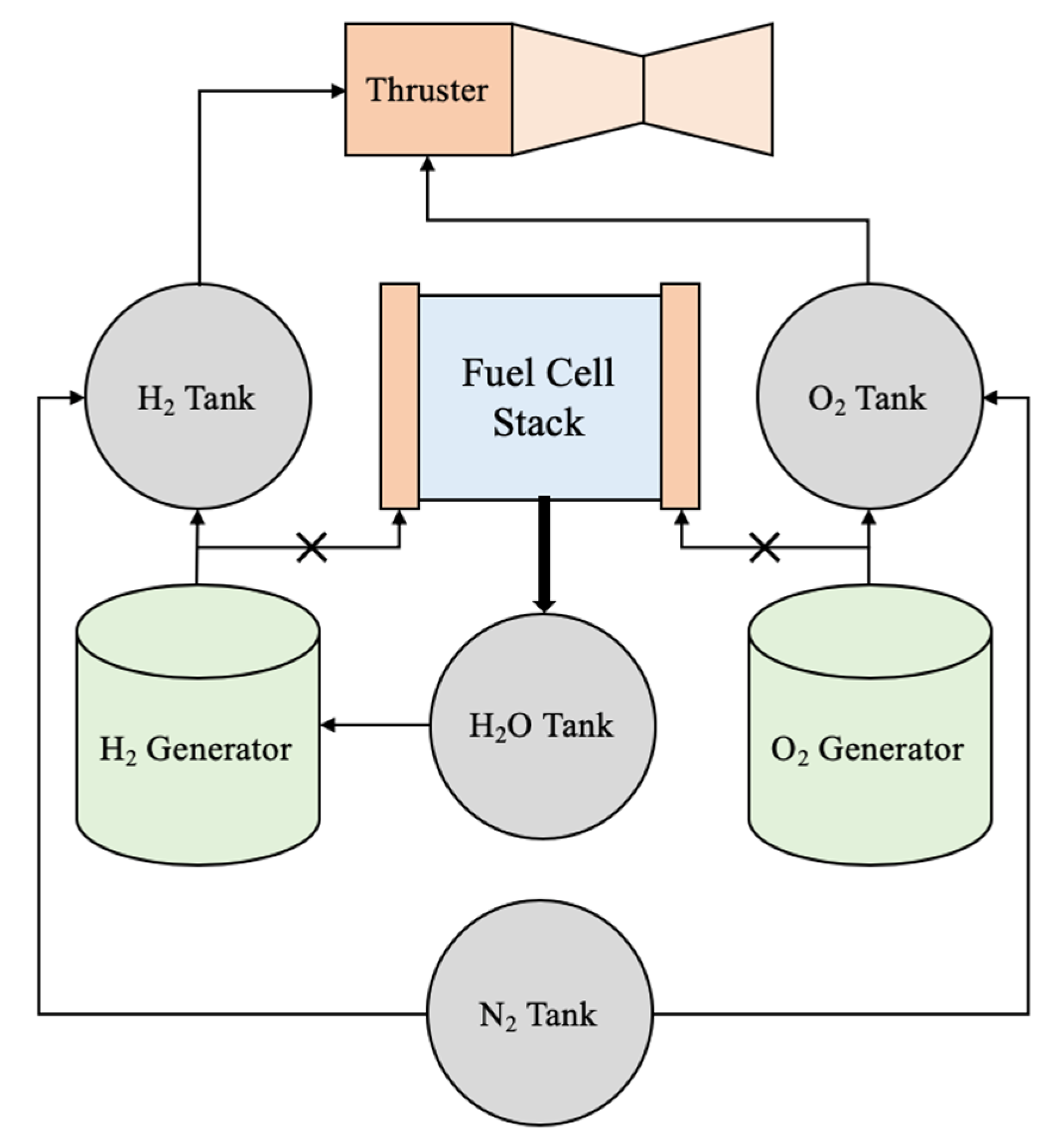
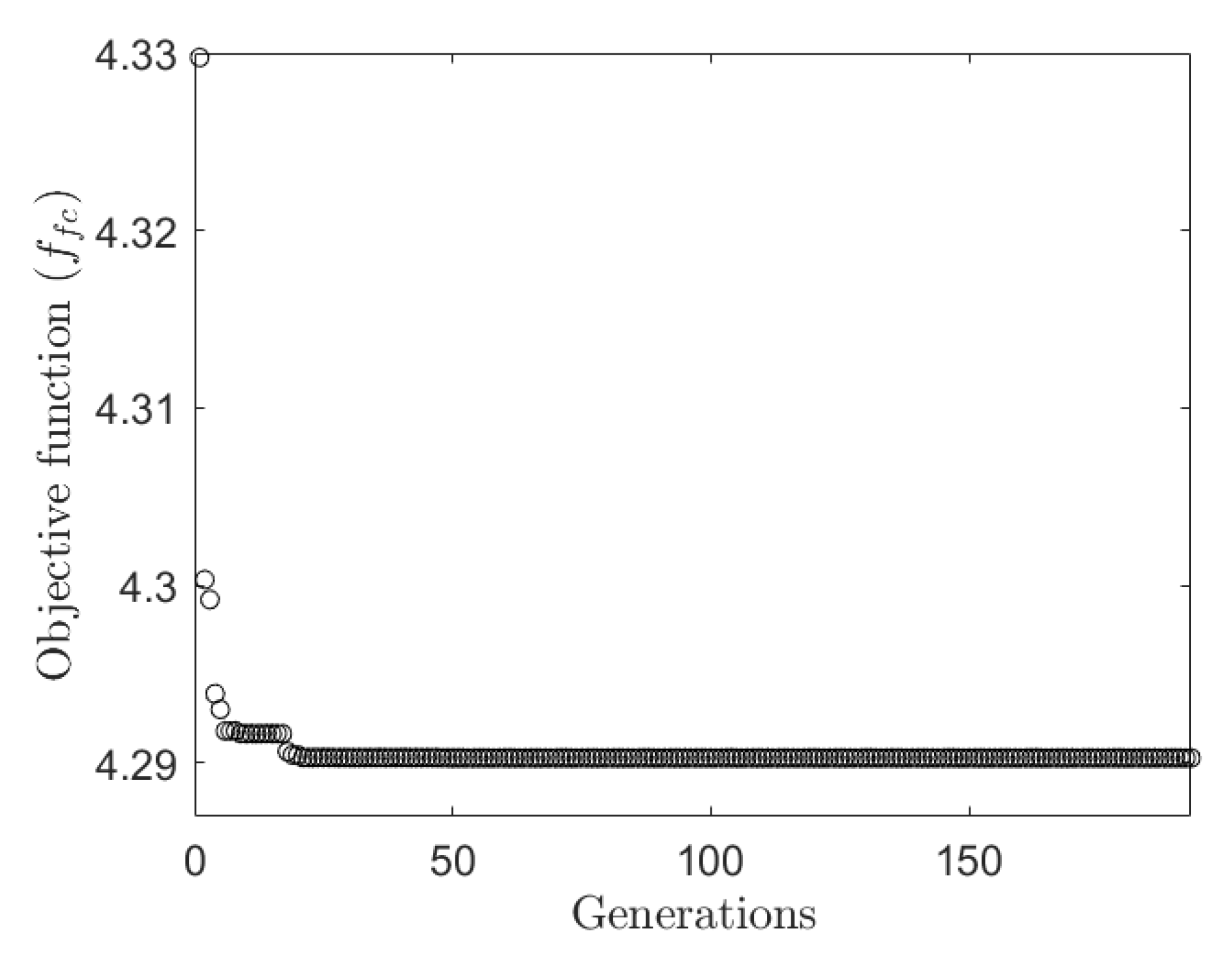
Missions targeting the extreme and rugged environments on the moon and Mars have rich potential for a high science return, although several risks exist in performing these exploration missions. The current generation of robots is unable to access these high-priority targets. We propose using teams of small hopping and rolling robots called SphereX that are several kilograms in mass and can be carried by a large rover or lander and tactically deployed for exploring these extreme environments. Considering that the importance of minimizing the mass and volume of these robot platforms translates into significant mission-cost savings, we focus on the optimization of an integrated power and propulsion system for SphereX. Hydrogen is used as fuel for its high energy, and it is stored in the form of lithium hydride and oxygen in the form of lithium perchlorate. The system design undergoes optimization using Genetic Algorithms integrated with gradient-based search techniques to find optimal solutions for a mission. Our power and propulsion system, as we show in this paper, is enabling, because the robots can travel long distances to perform science exploration by accessing targets not possible with conventional systems. Our work includes finding the optimal mass and volume of SphereX, such that it can meet end-to-end mission requirements.
Keywords: design; planetary exploration; power and propulsion; robotics design; planetary exploration; power and propulsion; robotics