Article

Simplified Model for Forward-Flight Transitions of a Bio-Inspired Unmanned Aerial Vehicle

by
Ernesto Sanchez-Laulhe
1,*,
Ramon Fernandez-Feria
1 and
Anibal Ollero
2
1
Fluid Mechanics Group, University of Malaga, Dr Ortiz Ramos S/N, 29071 Malaga, Spain
2
GRVC Robotics Laboratory, University of Seville, Camino de los Descubrimientos S/N, 41092 Seville, Spain
*
Author to whom correspondence should be addressed.
Aerospace 2022, 9(10), 617; https://doi.org/10.3390/aerospace9100617

Submission received: 14 September 2022 / Revised: 28 September 2022 / Accepted: 14 October 2022 / Published: 18 October 2022
(This article belongs to the Special Issue Aerodynamics Design)

Abstract

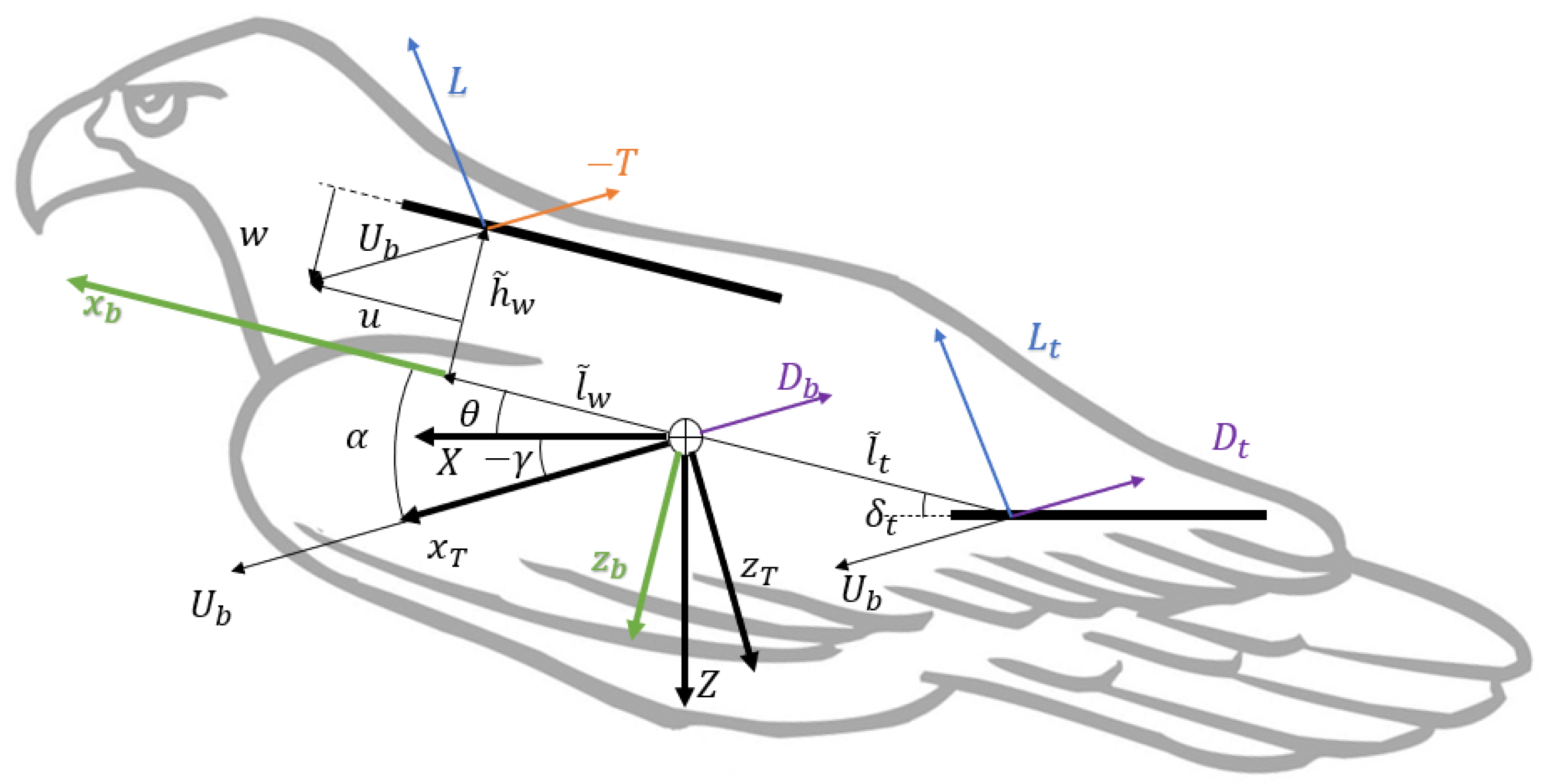
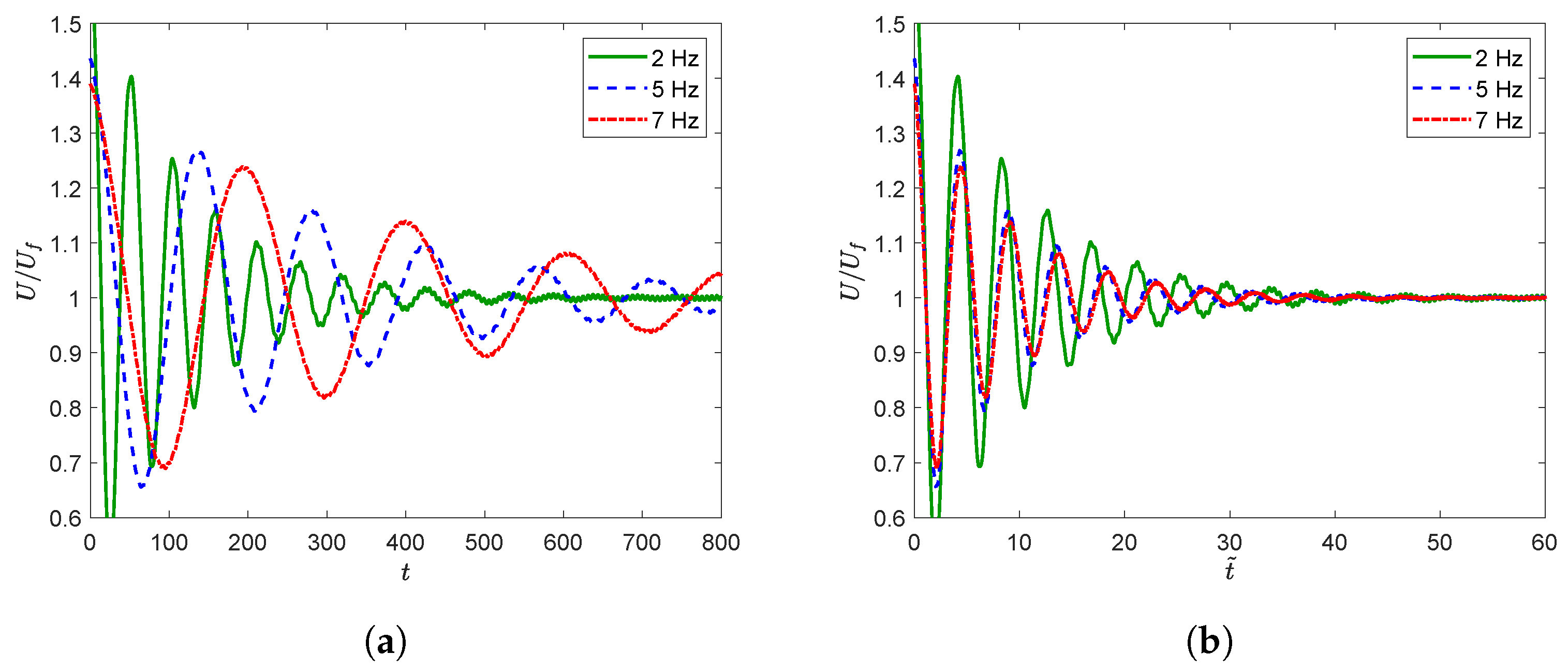
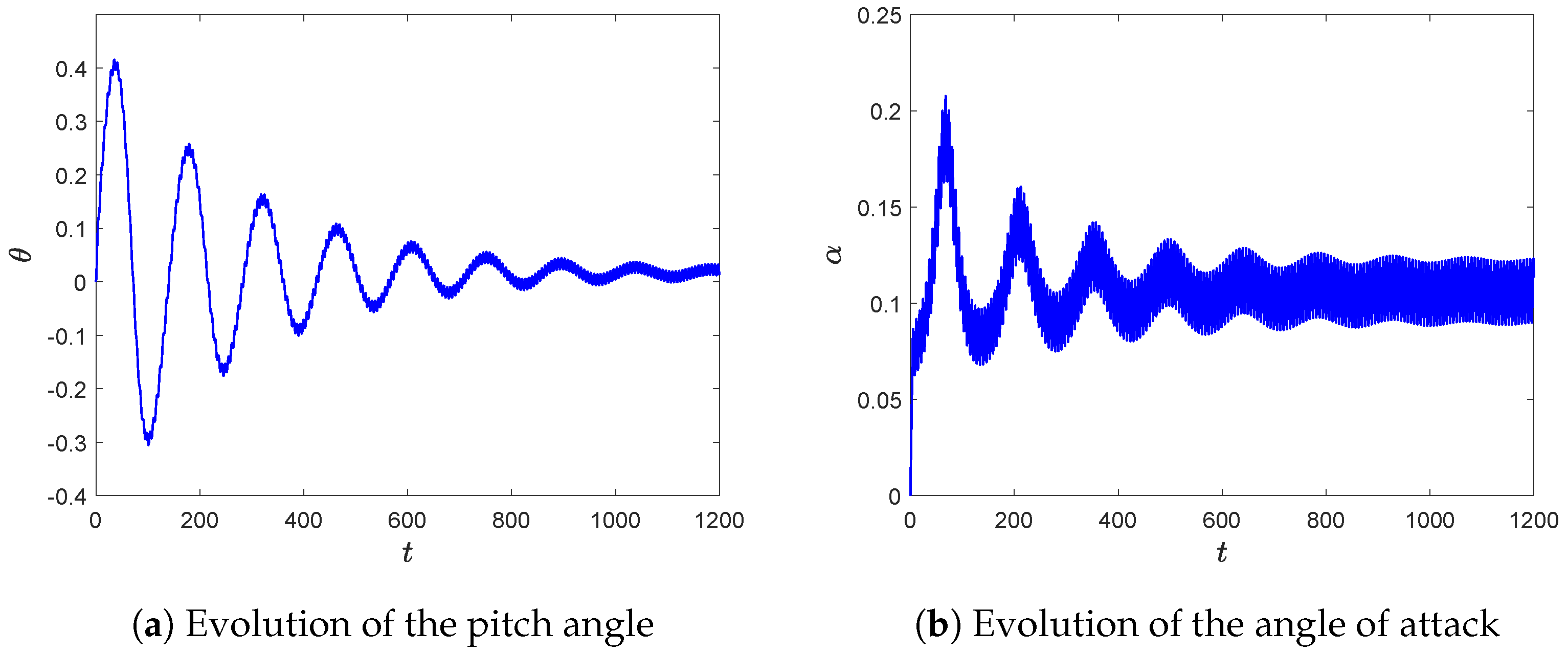
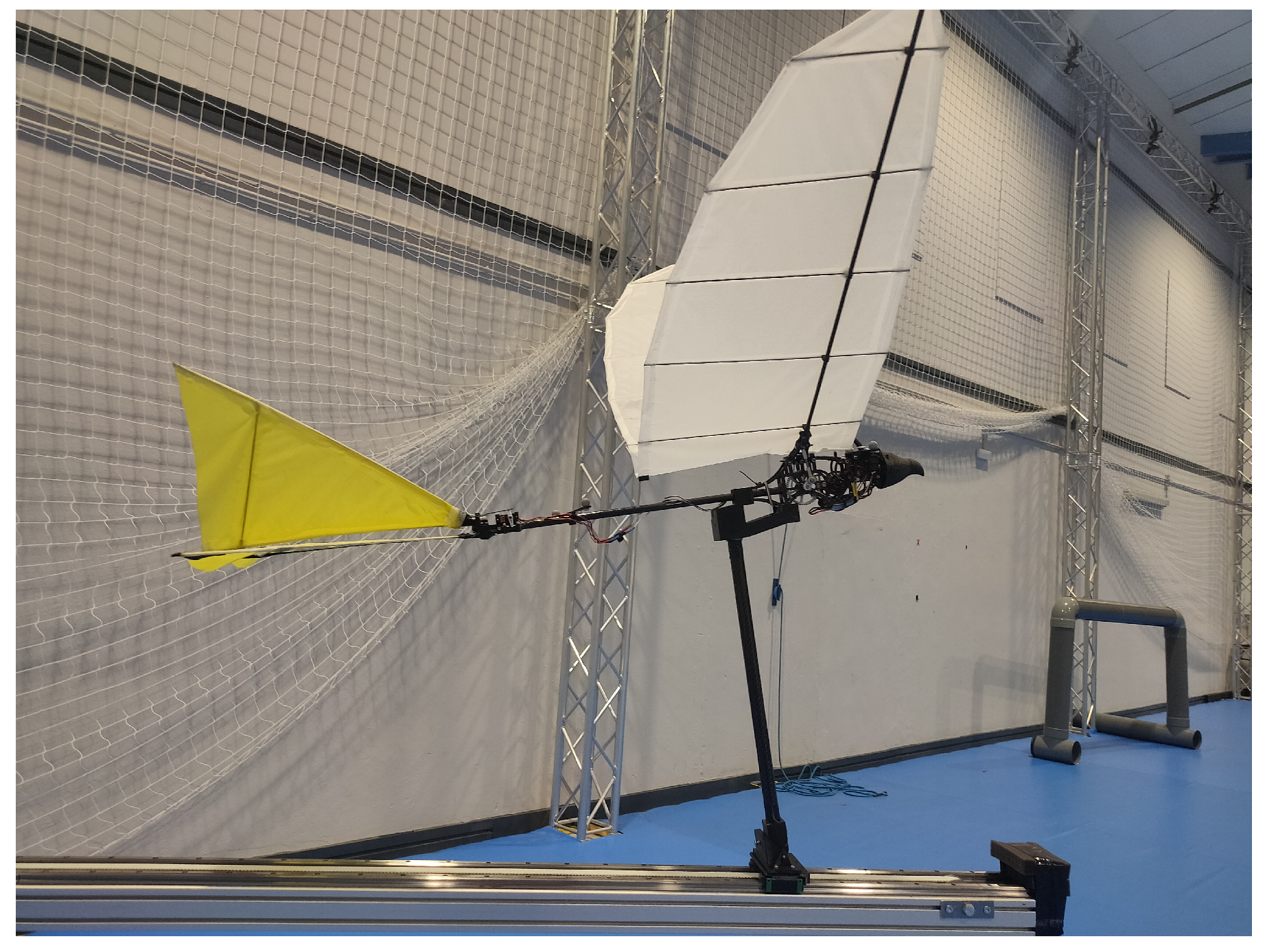
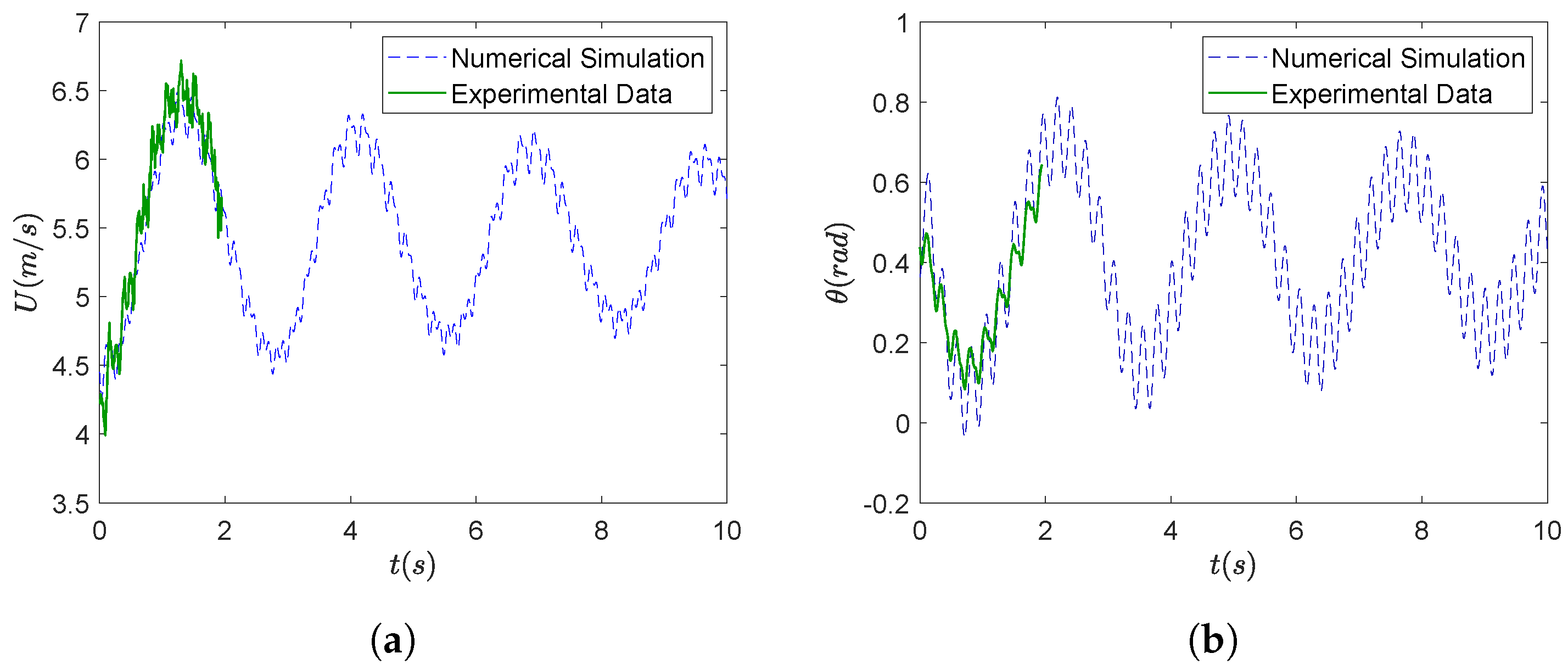
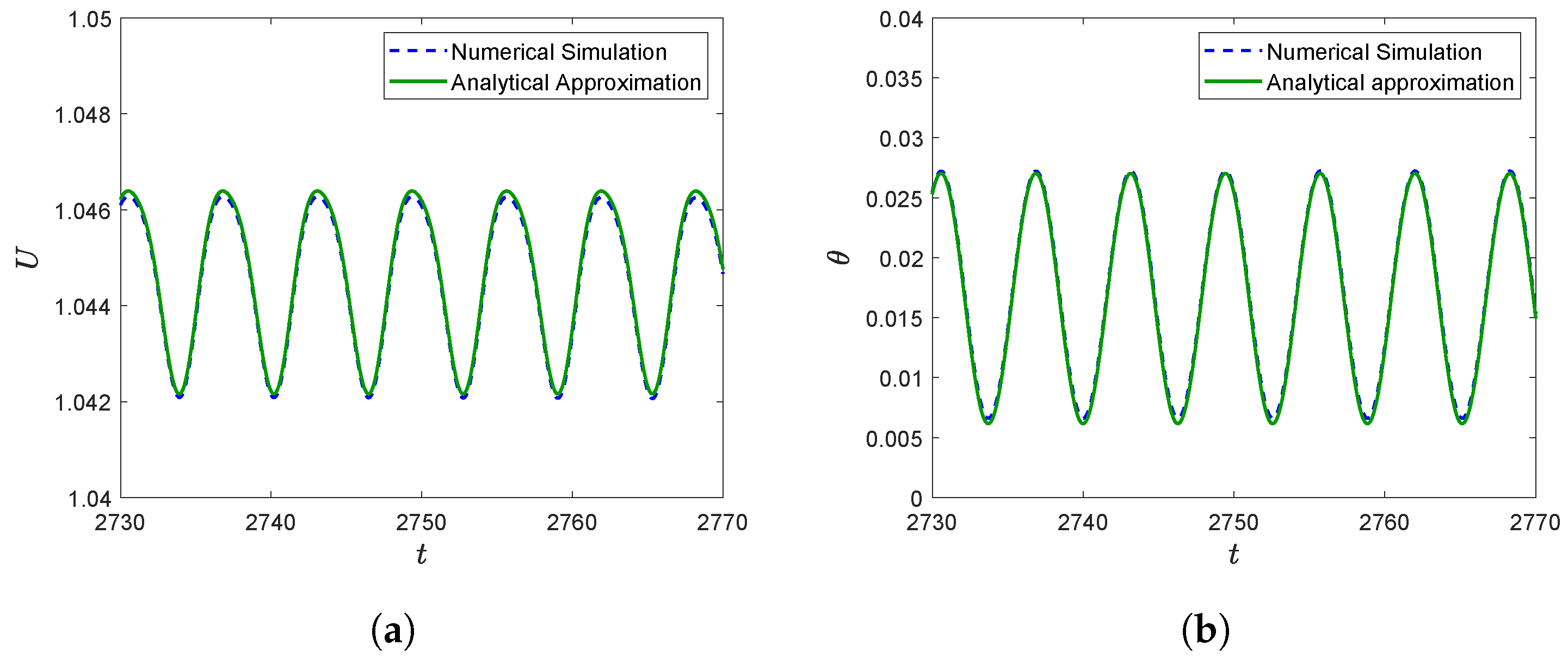
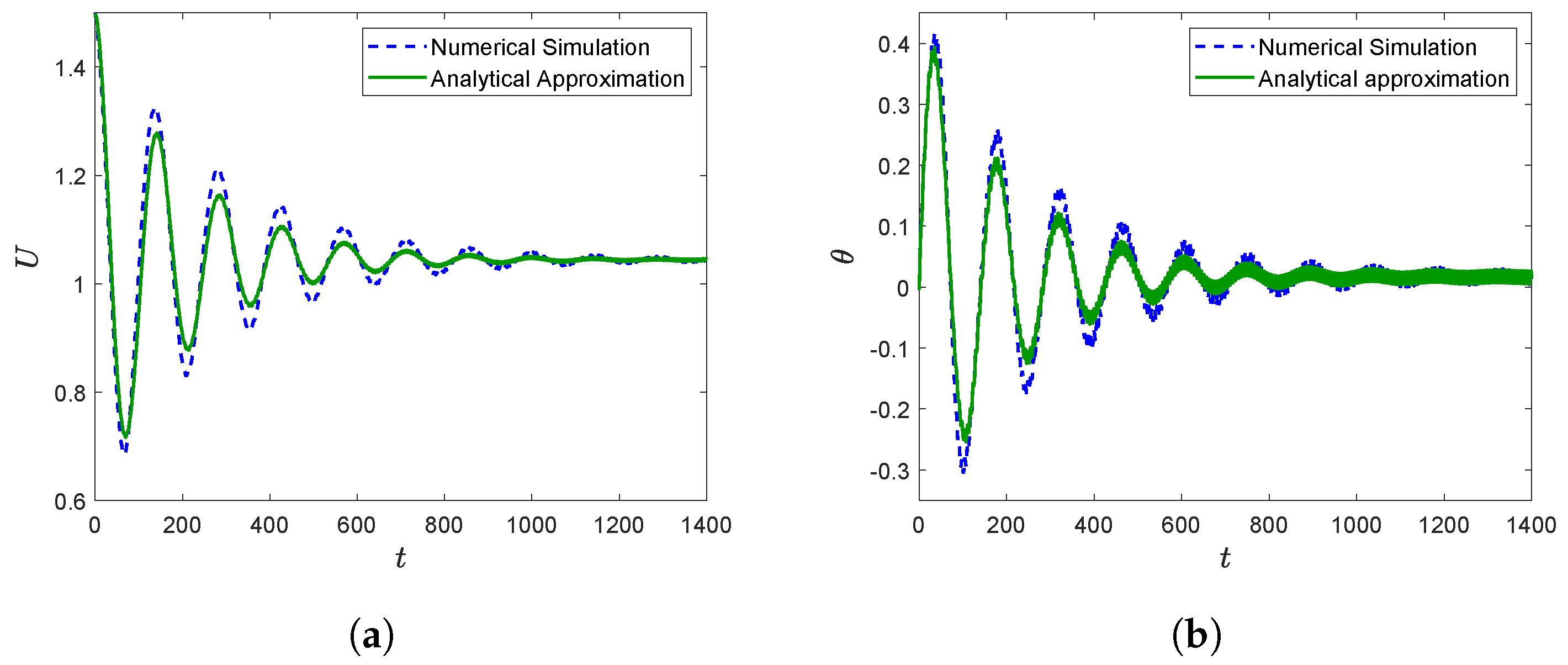
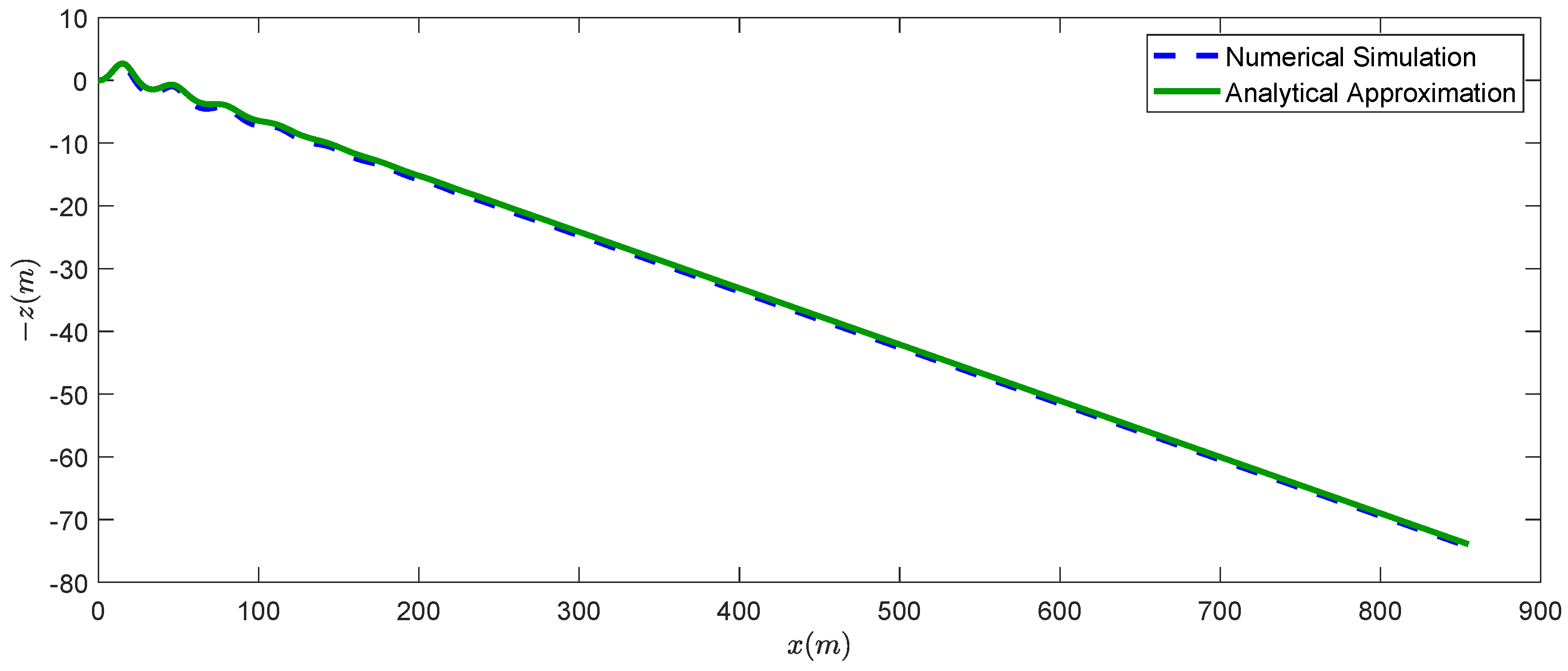
A new forward-flight model for bird-like ornithopters is presented. The flight dynamics model uses results from potential, unsteady aerodynamics to characterize the forces generated by the flapping wings, including the effects of the dynamic variables on the aerodynamic formulation. Numerical results of the model, which are validated with flapping flight experimental data of an ornithopter prototype, show that state variables such as the pitch angle and the angle of attack oscillate with the flapping frequency, while their mean values converge towards steady-state values. The theoretical analysis of the system shows a clear separation of timescales between flapping oscillations and transient convergence towards the final forward-flight state, which is used to substantially simplify both the interpretation and the solution of the dynamic equations. Particularly, the asymptotic separation into three timescales allows for dividing the problem into a much simpler set of linear equations. The theoretical approximation, which fits the numerical results, provides a direct look into the influence of the design and control parameters using fewer computational resources. Therefore, this model provides a useful tool for the design, navigation and trajectory planning and control of flapping wing UAVs.
Keywords: unsteady aerodynamics; flight dynamics model; bio-inspired UAV; perturbation method; ornithopter unsteady aerodynamics; flight dynamics model; bio-inspired UAV; perturbation method; ornithopter