
Article

Nonlinear Model Predictive Control for Unmanned Aerial Vehicles †
Department of Mechanical & Aerospace Engineering, University of Texas at Arlington, Arlington, TX 76019,USA
*
Author to whom correspondence should be addressed.
This paper is an extended version of our paper published in the Proceedings of the AIAA Atmospheric Flight Mechanics Conference, AIAA Aviation Forum, Dallas, TX, USA, 22–25 June 2015; Kamesh Subbarao, Carlos Tule and Pengkai Ru, Nonlinear Model Predictive Control Applied to Trajectory Tracking for Unmanned Aerial Vehicles, No. AIAA 2015-2857.
These authors contributed equally to this work.
Aerospace 2017, 4(2), 31; https://doi.org/10.3390/aerospace4020031

Submission received: 26 April 2017 / Revised: 7 June 2017 / Accepted: 12 June 2017 / Published: 17 June 2017
(This article belongs to the Collection Unmanned Aerial Systems)

Abstract

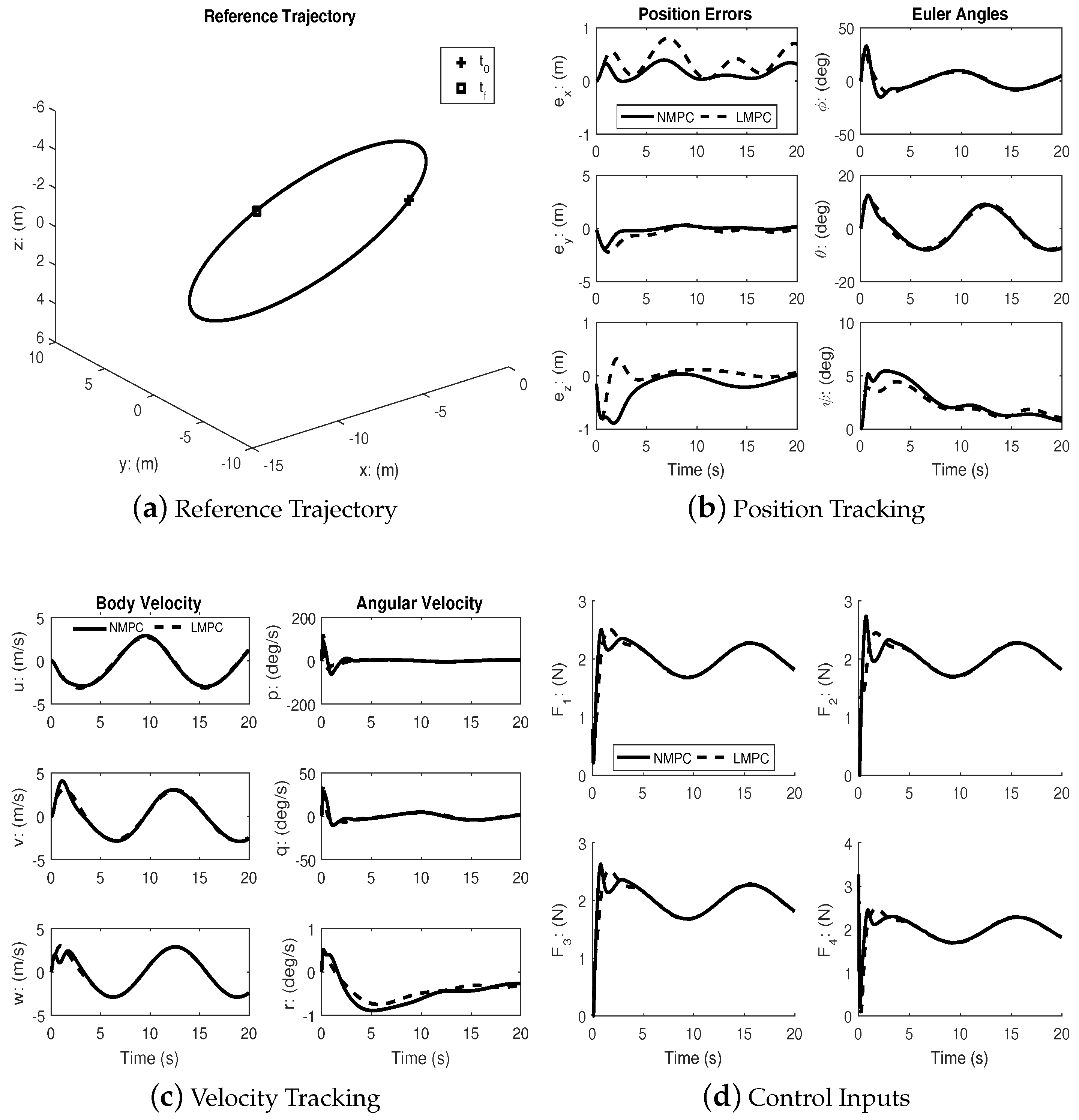
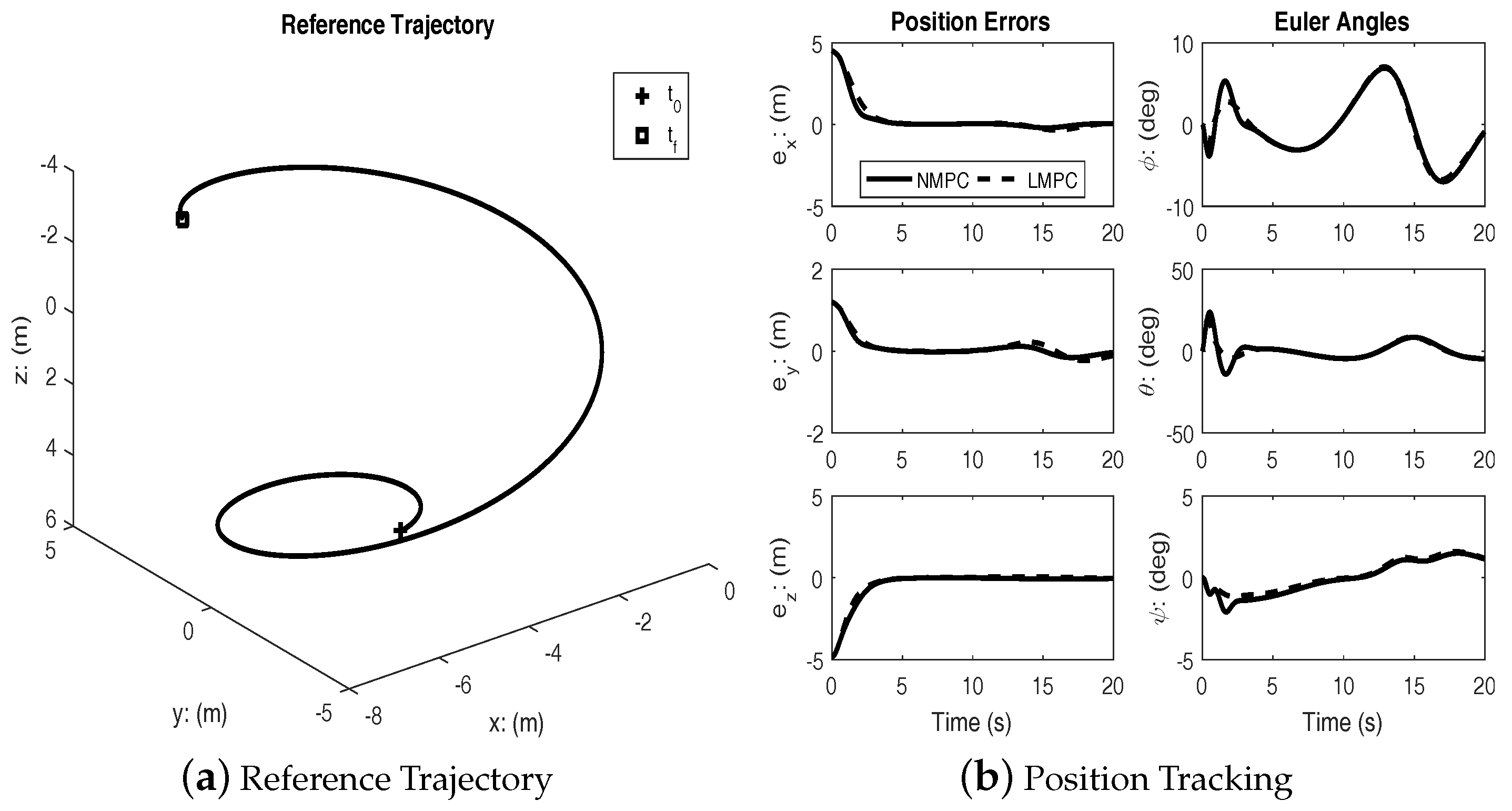
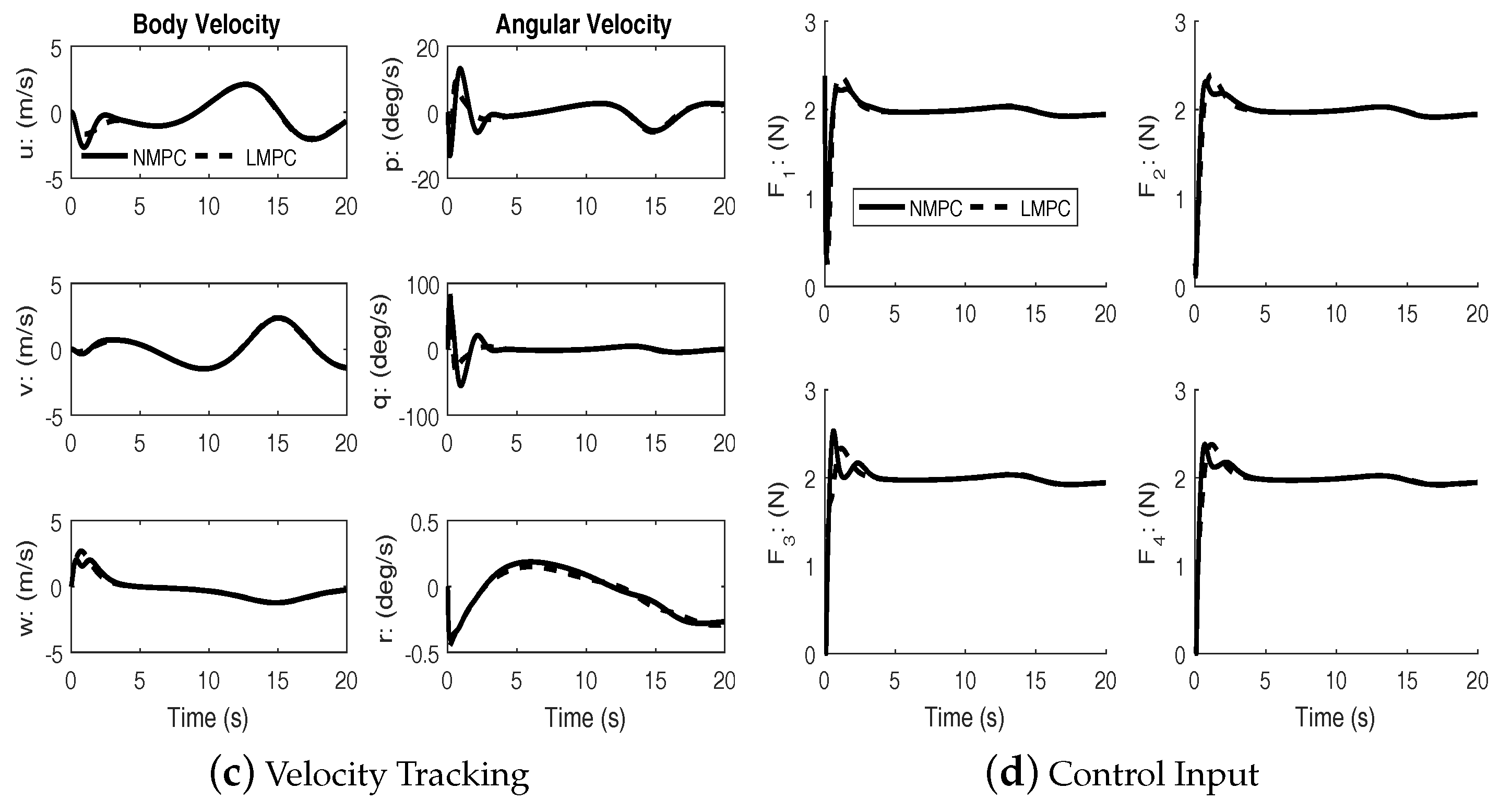
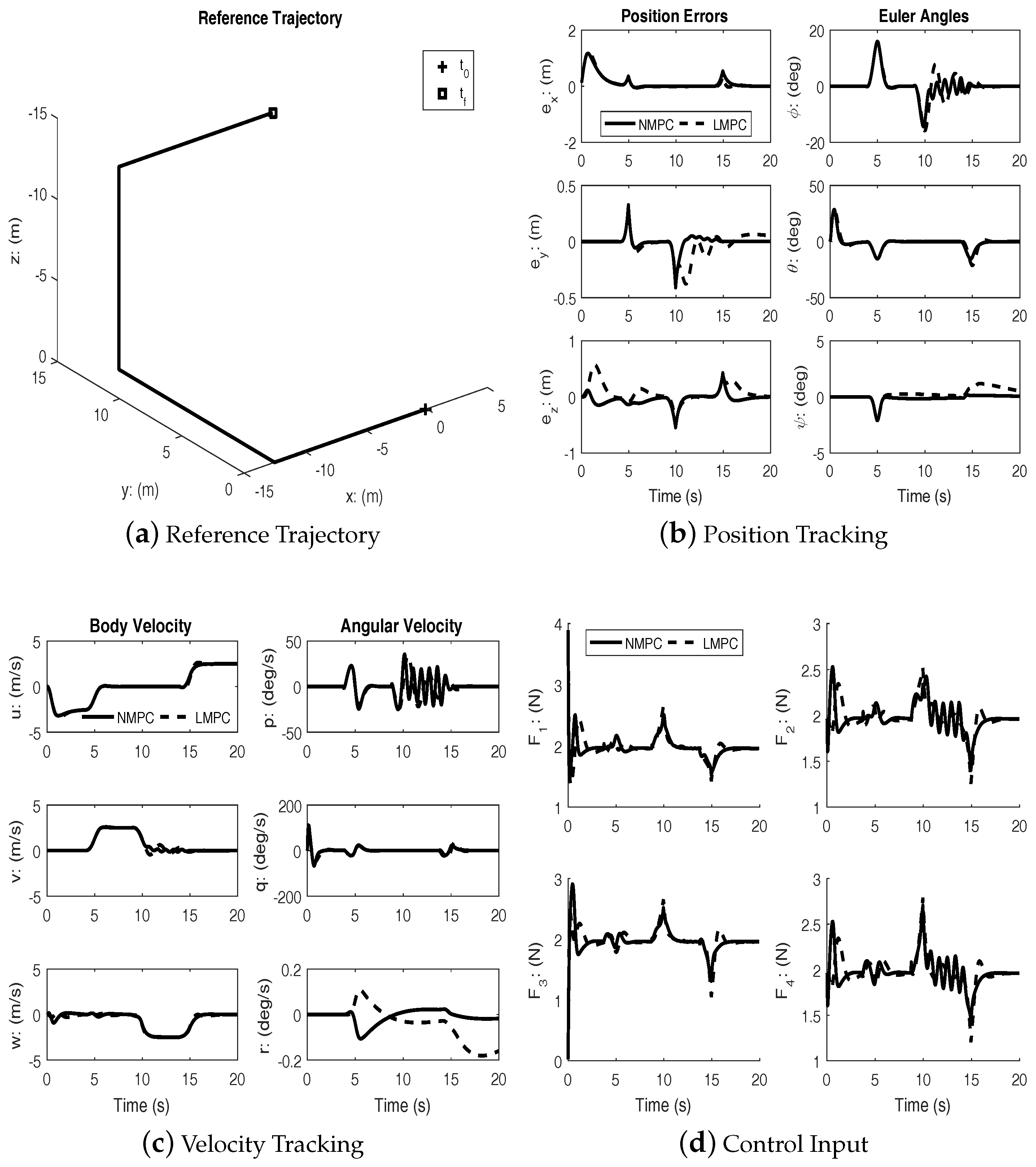
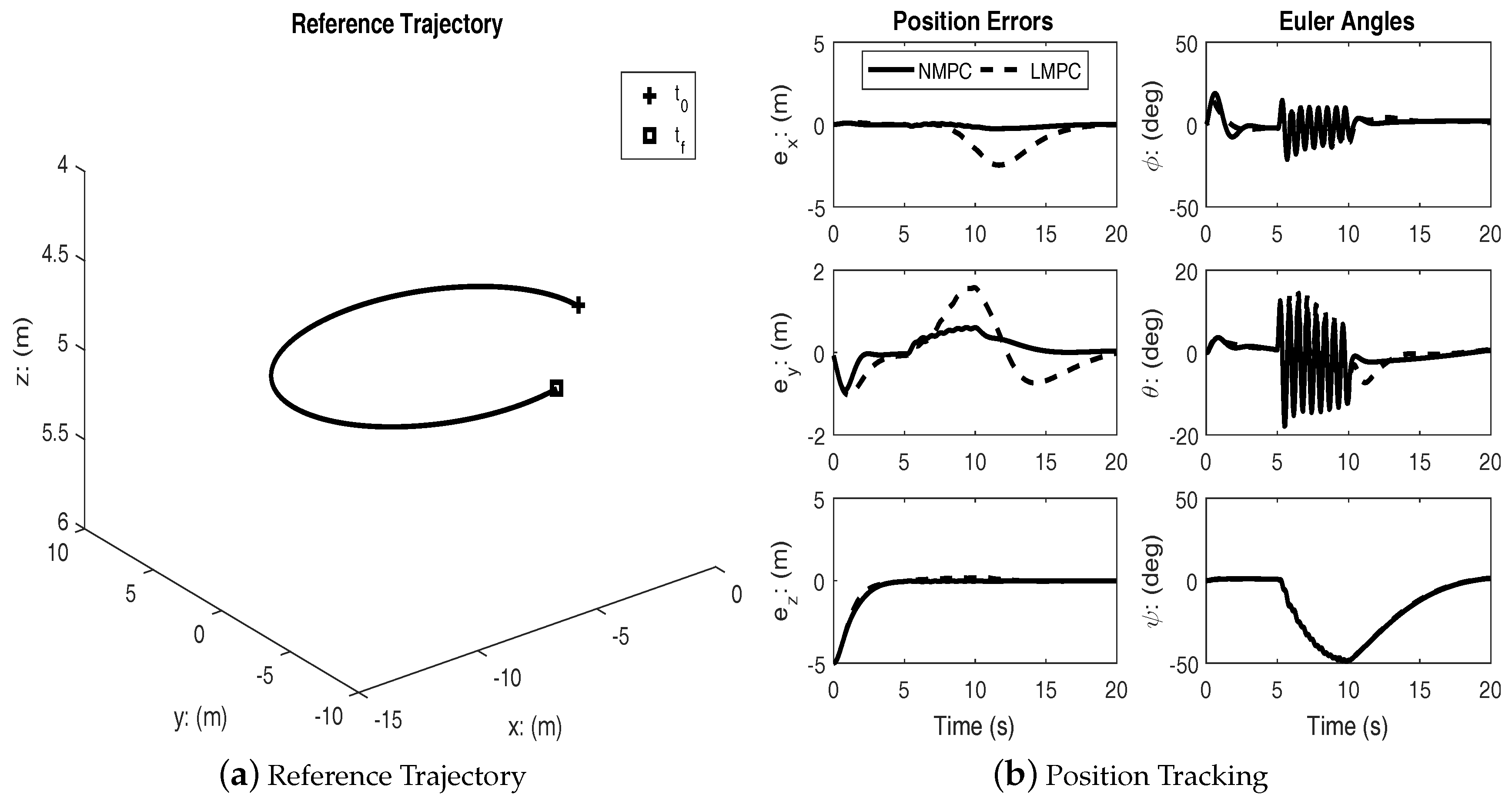
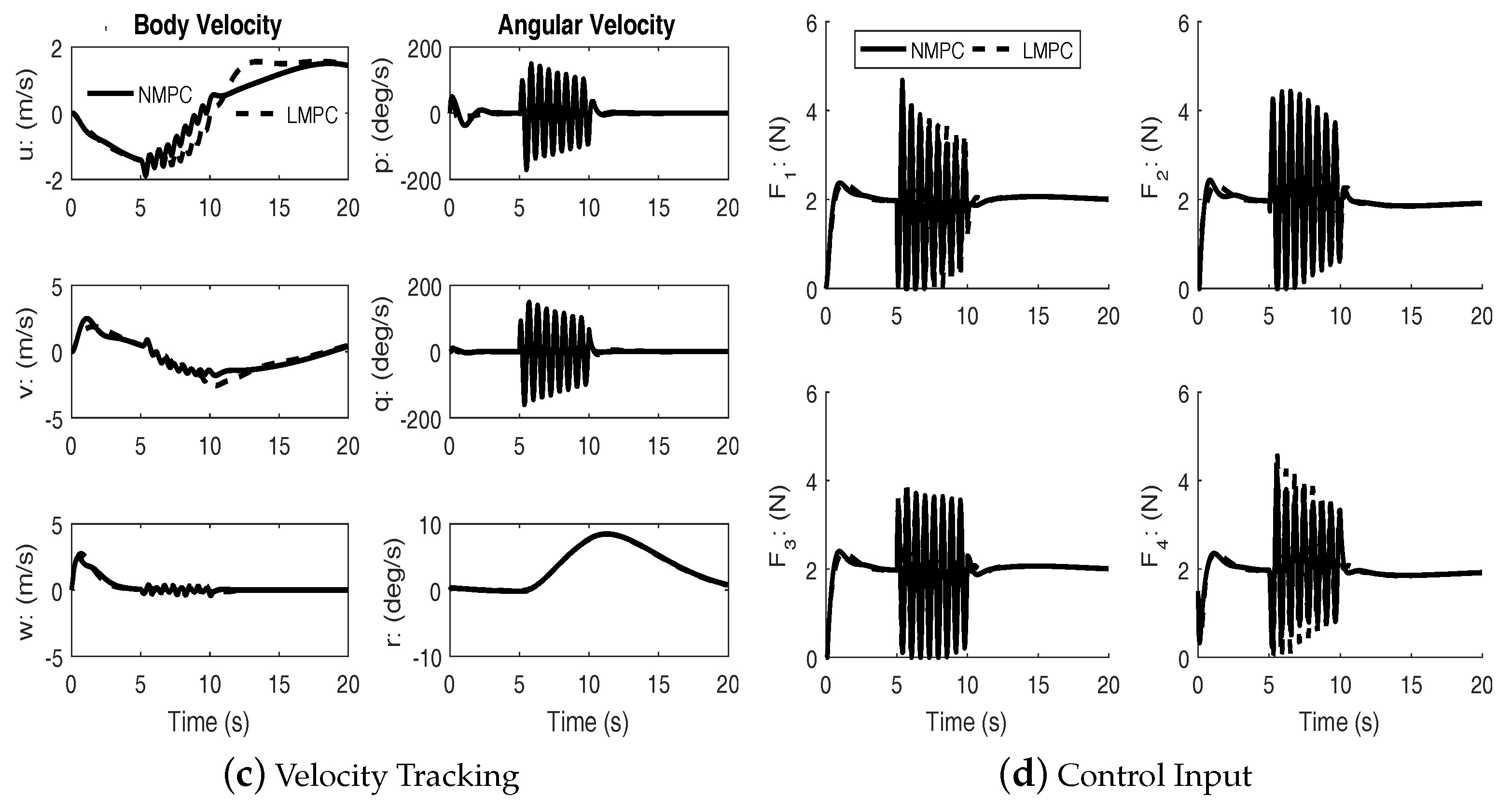
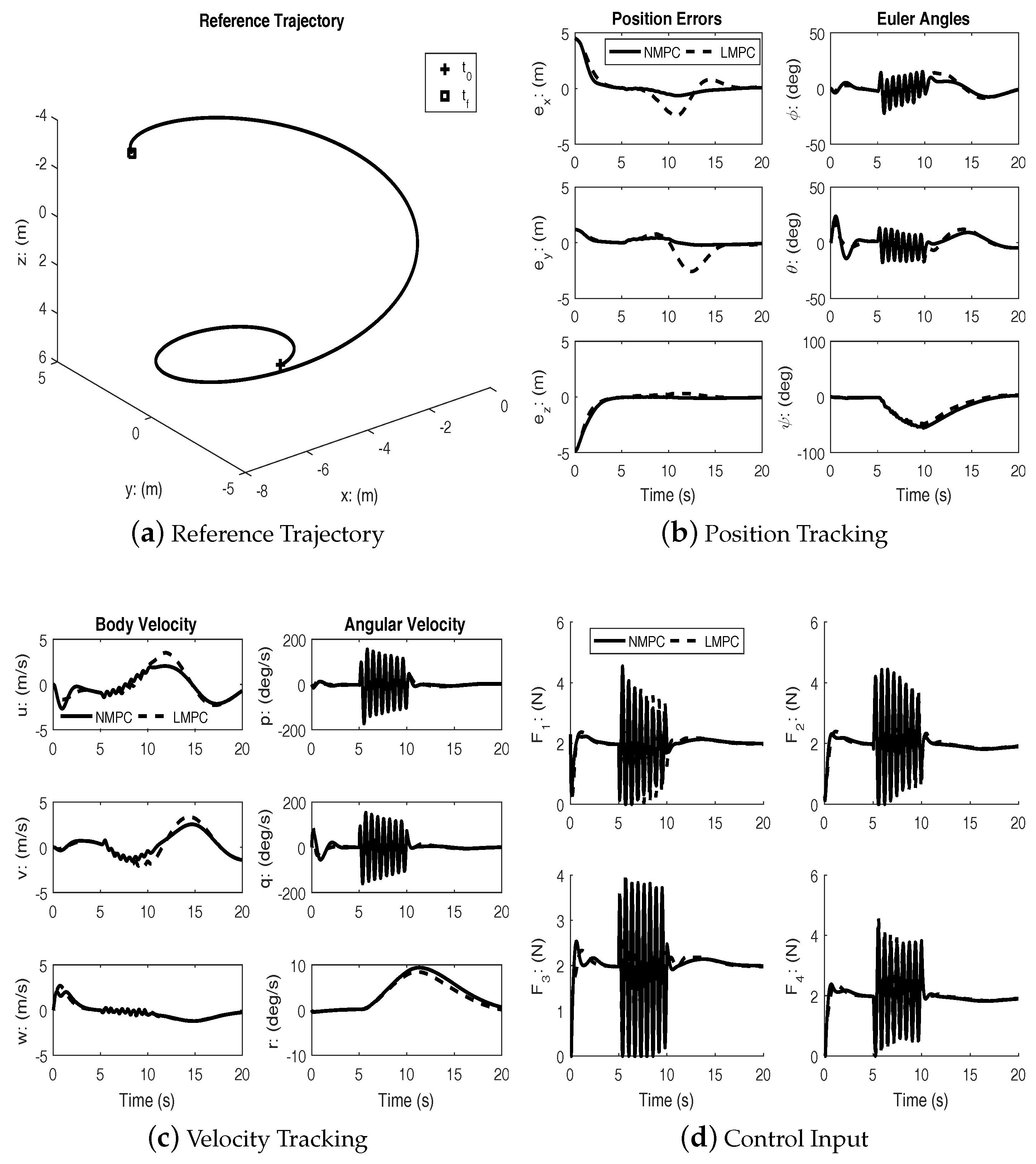
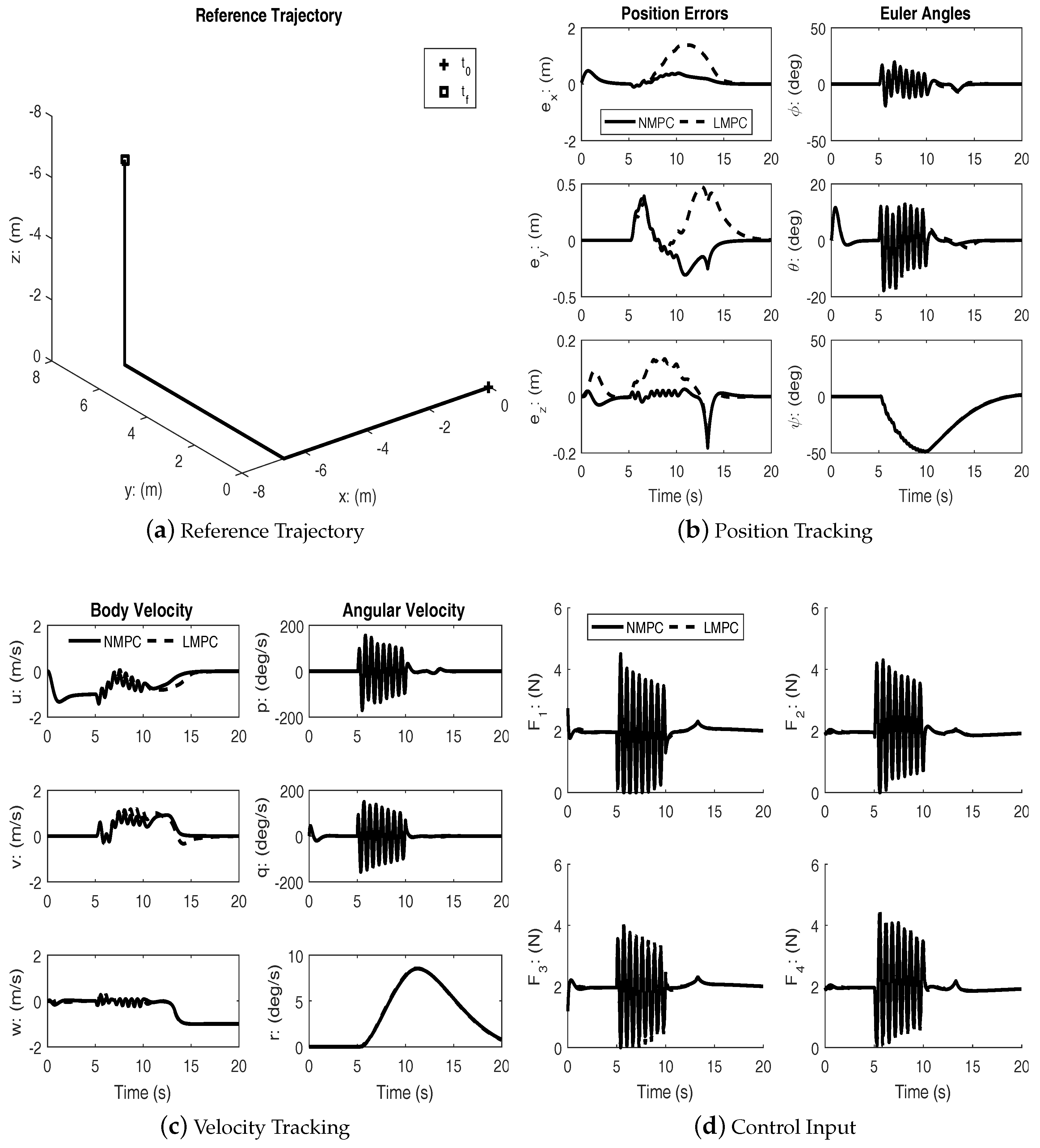
This paper discusses the derivation and implementation of a nonlinear model predictive control law for tracking reference trajectories and constrained control of a quadrotor platform. The approach uses the state-dependent coefficient form to capture the system nonlinearities into a pseudo-linear system matrix. The state-dependent coefficient form is derived following a rigorous analysis of aerial vehicle dynamics that systematically accounts for the peculiarities of such systems. The same state-dependent coefficient form is exploited for obtaining a nonlinear equivalent of the model predictive control. The nonlinear model predictive control law is derived by first transforming the continuous system into a sampled-data form and and then using a sequential quadratic programming solver while accounting for input, output and state constraints. The boundedness of the tracking errors using the sampled-data implementation is shown explicitly. The performance of the nonlinear controller is illustrated through representative simulations showing the tracking of several aggressive reference trajectories with and without disturbances.
Keywords: nonlinear; model predictive control; constraints; trajectory tracking; stability nonlinear; model predictive control; constraints; trajectory tracking; stability
Graphical Abstract