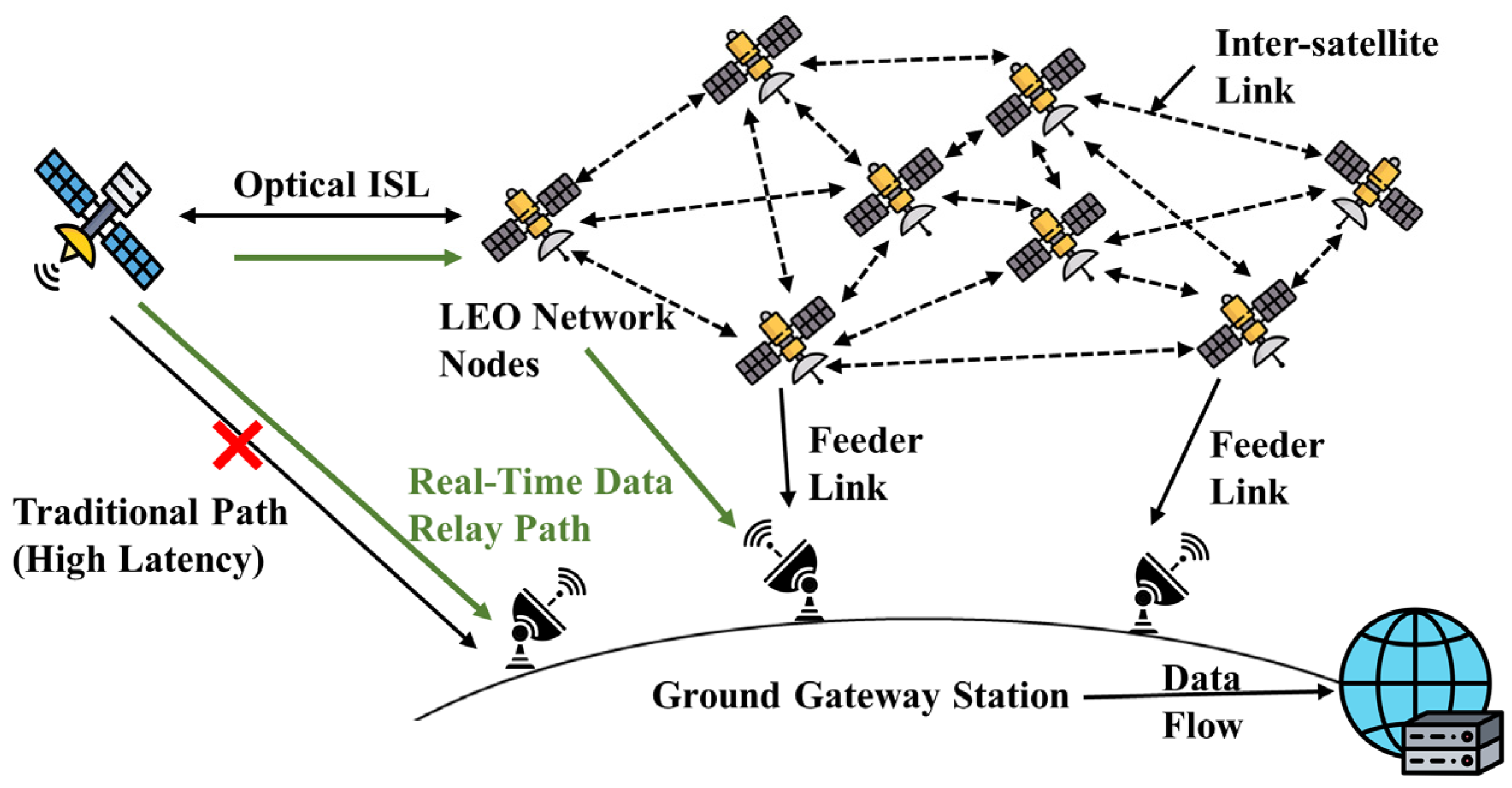
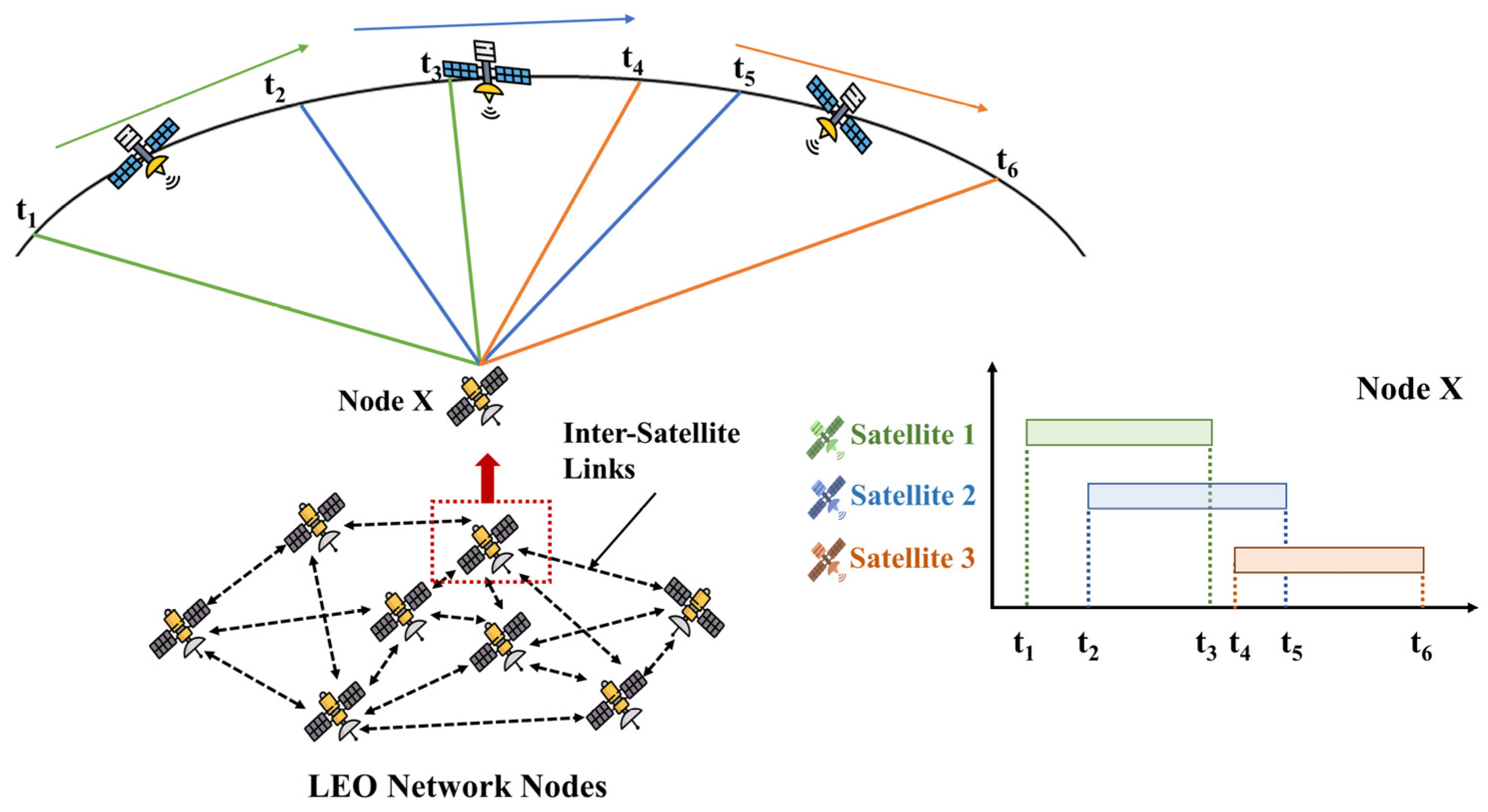
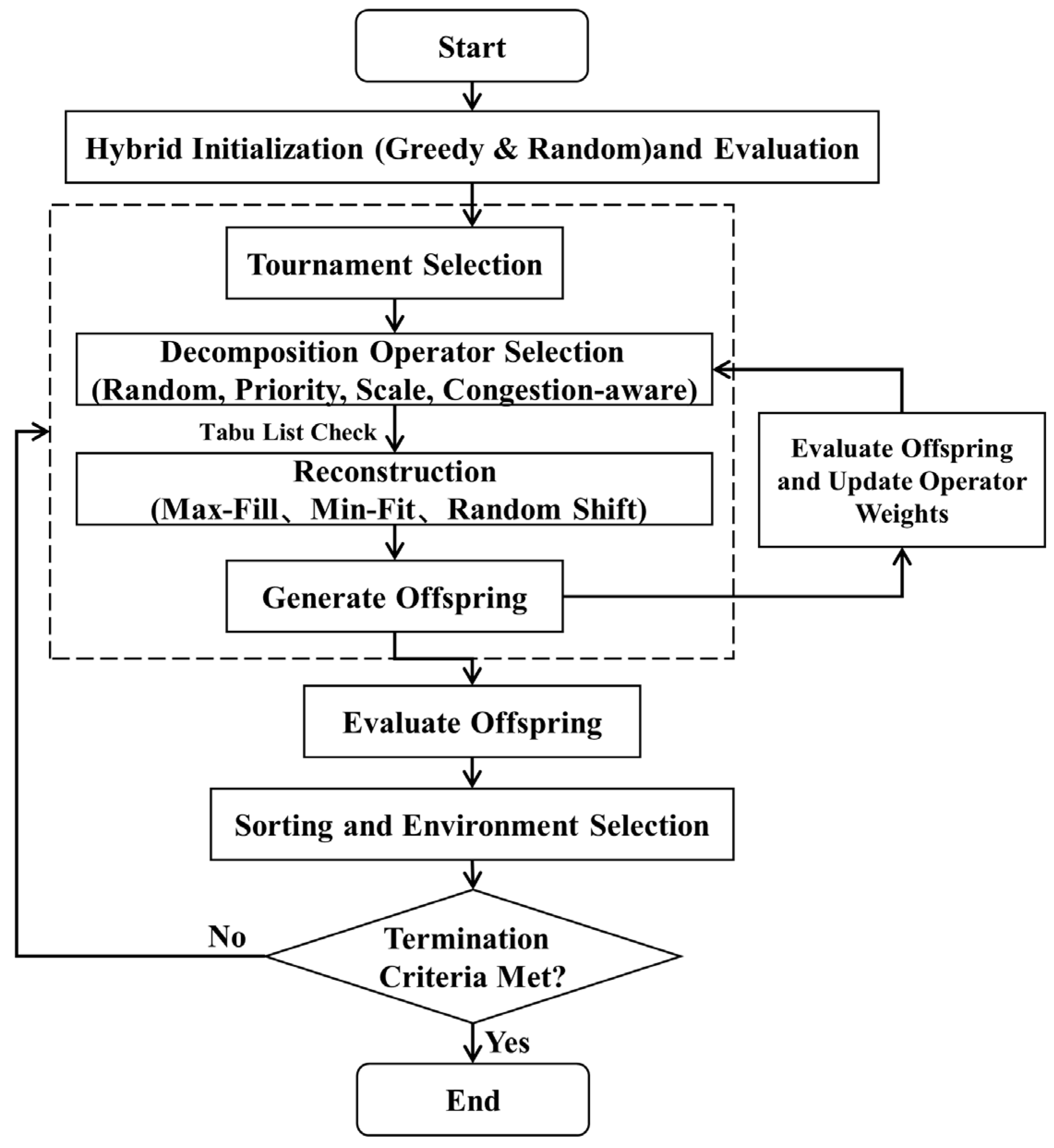
In the previous chapters of this paper, we have provided a detailed exposition of the relevant theoretical foundations. In this section, we apply this method to a typical data transmission scheduling scenario involving the integration of remote sensing satellites into LEO mobile communication constellations, conduct simulation experiments, and analyze the results.
4.1. Experimental Parameter Configuration
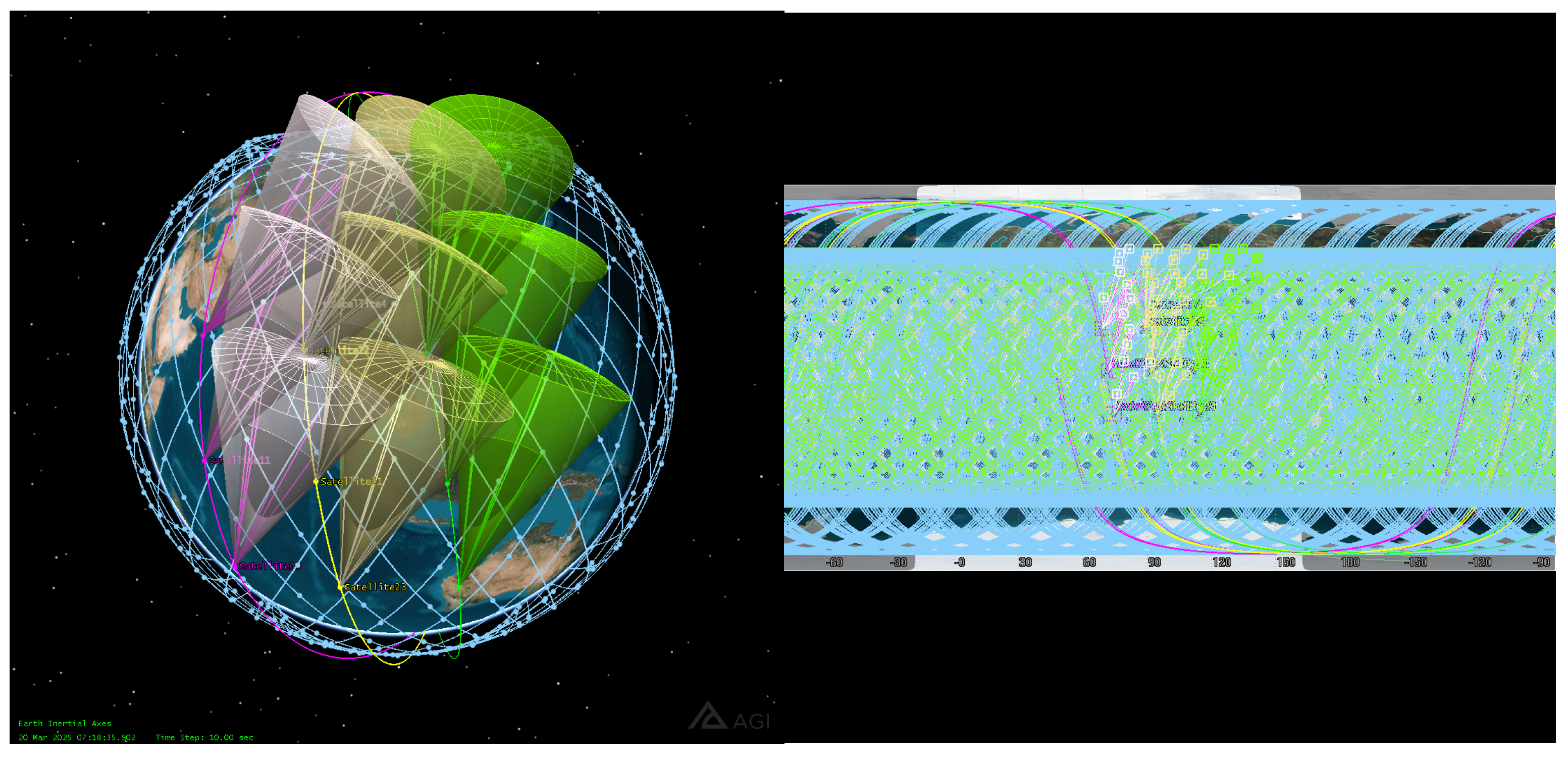
To objectively evaluate the performance of the scheduling method proposed in this paper, the interface between STK 11 and MATLAB R2018a was first configured through the STK/Connect module, enabling MATLAB-based programming and control of the STK 11 simulation environment. As shown in
Figure 5, a high-fidelity satellite network simulation scenario was established in STK 11. The access-window data predicted by STK were then exported and used to generate the experimental test cases.
In the STK 11 simulation scenario, a LEO communication constellation consisting of 600 communication nodes was constructed. Specifically, 30 circular LEO orbital planes were configured at an altitude of 500 km and an inclination of 60°, with 20 communication nodes uniformly distributed in each orbital plane. The LEO communication constellation is shown in blue in
Figure 5.
To validate the effectiveness of the proposed method, remote sensing satellites were configured in near sun-synchronous orbits with an altitude of 700 km and an inclination of 97.8°. The corresponding orbital and sensor parameters are listed in
Table 2. In
Figure 5, the remote sensing satellite groups and their corresponding sensor coverage cones are shown in pink, yellow, and green, respectively. The planning horizon for all scenarios was set to a 24-h interval from 04:00:00 on 20 March 2025 to 04:00:00 on 21 March 2025.
To further demonstrate the complexity of the simulated scenario, we analyzed the full set of raw visible windows before scheduling optimization.
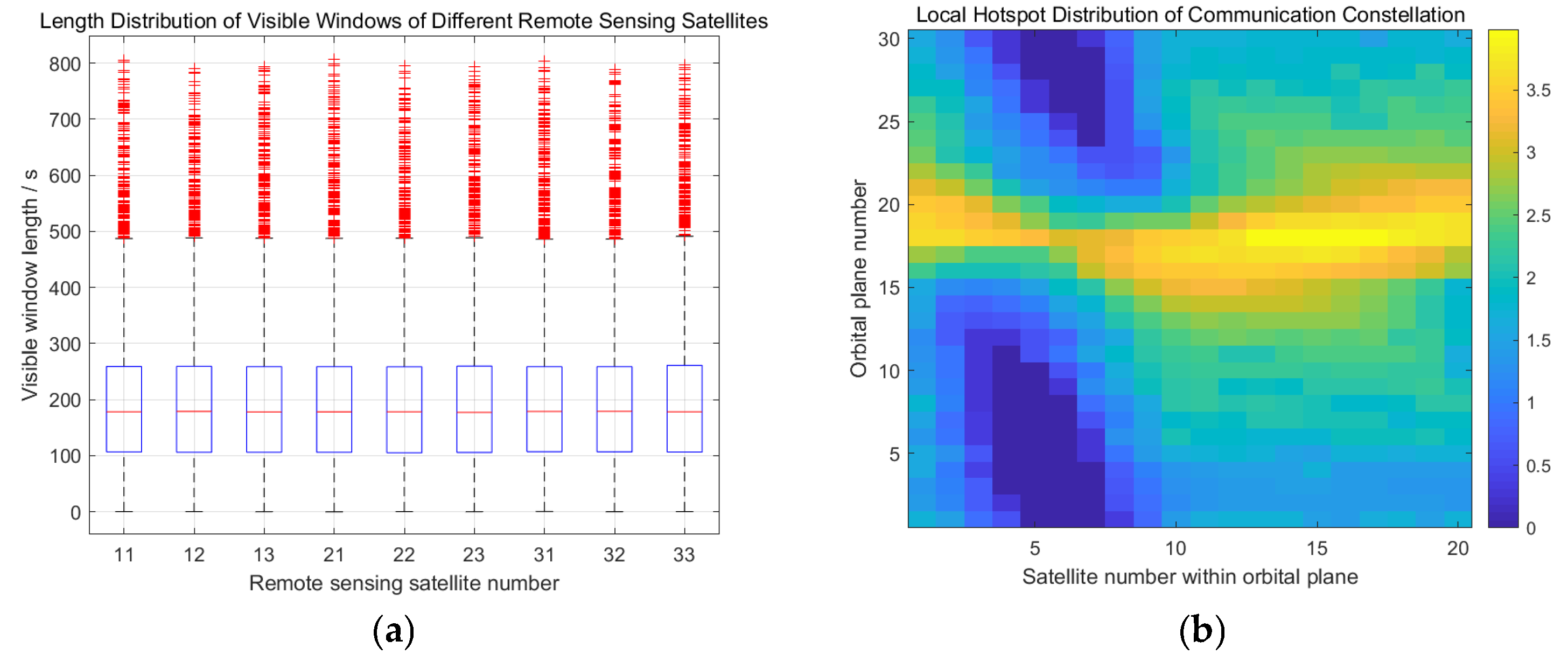
Figure 6a shows the visible-window length distribution of different remote sensing satellites. The results indicate that the available visible windows are highly fragmented: most windows are concentrated in relatively short-duration ranges, while only a limited number of long-duration windows are available. This fragmentation directly increases the difficulty of constructing continuous and efficient transmission schedules after deducting the PAT overhead.
Figure 6b further presents the spatial distribution of communication-node hotspots in the LEO communication constellation. In this heatmap, the horizontal axis represents the satellite index within each orbital plane, and the vertical axis represents the orbital-plane index. Therefore, each pixel corresponds to one LEO communication node. The color indicates the hotspot score of the corresponding node, with brighter colors indicating stronger potential resource competition.
The hotspot score is derived from visible-window overlap statistics. Specifically, for each communication node, we first identify all visible windows associated with different remote sensing satellites. If two visible windows from different remote sensing satellites overlap in time and correspond to the same communication node, they are counted as a competing window pair. Based on this definition, the hotspot score is calculated by jointly considering the number of overlapping visible-window pairs, the total overlap duration, the number of conflict windows, and the maximum number of remote sensing satellites concurrently visible at that node. Each component is normalized before aggregation.
As shown in
Table 3 and
Figure 6b, the resource competition is not uniformly distributed over the communication constellation. Several orbital-plane and satellite-index regions exhibit significantly higher hotspot scores, indicating that multiple remote sensing satellites tend to compete for the same communication nodes within overlapping time intervals. These local hotspots demonstrate the spatial concentration of access conflicts and further support the need for a scheduling method capable of balancing transmission benefit, link-establishment overhead, and node-level load distribution.
In the experimental task sequence, test instances with different task scales were generated based on the STK-predicted access-window data. For each remote sensing satellite, high-quality candidate communication-node windows were selected, and task time blocks with a duration of at least 15 consecutive minutes were constructed. Urgent tasks were required to be transmitted within their corresponding time blocks, whereas routine tasks were allowed to be transmitted within one hour after the start time of the corresponding block. The maximum transmissible data capacity
of each time block was calculated as the product of the block duration and the average transmission rate of the covered access windows. The specific task-generation parameters are shown in
Table 4.
Building on previous studies, this paper conducts a detailed performance evaluation and access-feasibility analysis for 600 LEO communication nodes. Considering the orbital evolution of remote sensing satellites during high-speed operation and the geometric constraints imposed by payload fields of view, a set of high-quality candidate communication nodes was identified for each remote sensing satellite. The results of this preprocessing stage provide a high-quality spatiotemporal resource pool for subsequent resource allocation, allowing the proposed algorithm to focus on time-slot mutual exclusion and conflict resolution in highly dynamic heterogeneous scheduling environments.
Unlike rapid reacquisition within an isomorphic constellation that only demands minor adjustments of the fine-pointing mechanism for the same target or adjacent nodes [
34], this study addresses multi-satellite concurrent conflicts in highly dynamic heterogeneous networks. In this scenario, resolving scheduling conflicts typically requires the laser terminal to switch from one communication node to a new one. This cross-target switching necessitates large-angle mechanical rotation of the coarse-pointing mechanism [
32], thereby requiring the introduction of a physical guard time
[
8], followed by a complete
for the new target.
Existing studies have shown that the establishment of laser inter-satellite links may involve setup delays on the order of tens of seconds, and a representative value of approximately 30 s has been reported for laser link establishment [
8,
34]. Therefore,
s is adopted in this study as a conservative per-link setup time for establishing a new cross-target laser link, rather than as the rapid reacquisition time for the same target. Because the previous PAT state cannot be directly reused after switching to a different communication node, the new link is modeled as requiring a complete PAT process. In addition,
s is introduced as an engineering protection interval to account for coarse-pointing rotation, terminal settling, and safety margins before the next link establishment. These two parameters are used to model the non-negligible physical overhead caused by dynamic laser link establishment and switching in the simulated heterogeneous LEO-LEO scheduling scenario.
The key system parameters are shown in
Table 5, and all experiments were simulated and validated using the MATLAB R2018a platform.
4.2. Analysis of Experimental Results
To comprehensively evaluate the convergence, diversity, and robustness of the obtained Pareto solution sets, this paper introduces the hypervolume (HV) metric. Since the proposed scheduling model is formulated as a three-objective minimization problem, the HV is calculated in the three-dimensional objective space composed of , , and , where denotes the negative priority-weighted transmission utility, denotes the transmission slicing cost, and denotes the node load imbalance. A larger HV value indicates that the obtained non-dominated solution set dominates a larger region with respect to the reference point and therefore reflects better overall Pareto quality.
For all algorithms, a unified global reference point is adopted to ensure fair comparison. According to the minimization form of the objectives and the task-size bounds, the reference point is set as (0, , 1), where is the number of access tasks. The first component corresponds to the no-transmission upper bound of the negative utility objective, while the second and third components provide conservative bounds for the slicing cost and load imbalance.
To reduce the influence of randomness in evolutionary optimization, each stochastic algorithm was independently executed 20 times with different random seeds under the same task scenario and parameter settings. The comparative algorithms include the proposed AMOREA, the slicing-enabled NSGA-II baseline, and the MOEA/D baseline. In addition, the deterministic Greedy algorithm was included as a heuristic baseline.
Table 6 reports the mean and standard deviation of the final HV values for all compared algorithms, as well as the objective extrema obtained over the repeated trials.
The results show that AMOREA achieves the highest mean HV value among all compared algorithms, reaching 8484.6 ± 152.94. In contrast, the mean HV values of NSGA-II, MOEA/D, and Greedy are 7126.6 ± 153.62, 7217.4 ± 330.27, and 5063.8 ± 0, respectively. Therefore, AMOREA improves the mean HV by approximately 19.1% over NSGA-II, 17.6% over MOEA/D, and 67.6% over Greedy. These results demonstrate that AMOREA obtains a better overall Pareto solution set in terms of convergence and diversity.
The HV standard deviation further reflects the robustness of the algorithms across independent trials. AMOREA exhibits a relatively small deviation compared with its mean HV value, indicating stable optimization performance under different random seeds. MOEA/D shows a larger HV deviation, suggesting that its decomposition-based search is more sensitive to stochastic initialization and evolutionary variation in this scheduling scenario. Greedy has zero deviation because it is deterministic under the same input scenario.
It should be noted that the reported , , and values are used as auxiliary indicators of the best objective extrema obtained by each algorithm over repeated trials. Since these extrema may correspond to different solutions within the Pareto set, they should not be interpreted as a single scheduling solution that simultaneously achieves all three objective values. Instead, the HV metric is used as the primary indicator for comparing the overall multi-objective optimization performance.
AMOREA obtains a set of non-dominated scheduling solutions rather than a single absolute optimum. Each solution on the Pareto front represents a different trade-off among priority-weighted transmission benefit, slicing cost, and communication-node load balance. Therefore, the final scheduling plan reported in this paper is selected as a representative compromise solution from the non-dominated solution set.
To select this representative solution, a preference-based composite-score criterion is used as a post-processing decision rule. For each non-dominated solution
, its objective vector is denoted as
, where the three objectives are expressed in minimization form. To avoid the influence of different numerical ranges, each objective is first normalized within the final non-dominated set using min–max normalization.
where
and
denote the minimum and maximum values of the
th objective among the final non-dominated solutions, respectively, and
is a small positive constant used to avoid division by zero. The composite score of solution
is then calculated as:
The larger weight assigned to the first objective reflects the primary preference for higher priority-weighted data return, because
is formulated as the negative transmission utility in the minimization model, while the second and third objectives are used to penalize excessive slicing and communication-node load imbalance. Finally, the non-dominated solution with the smallest composite score is selected as the final representative scheduling solution:
where
denotes the final non-dominated solution set. This criterion is used only to select one representative scheduling plan for reporting and visualization, while the optimization process itself remains Pareto-based.
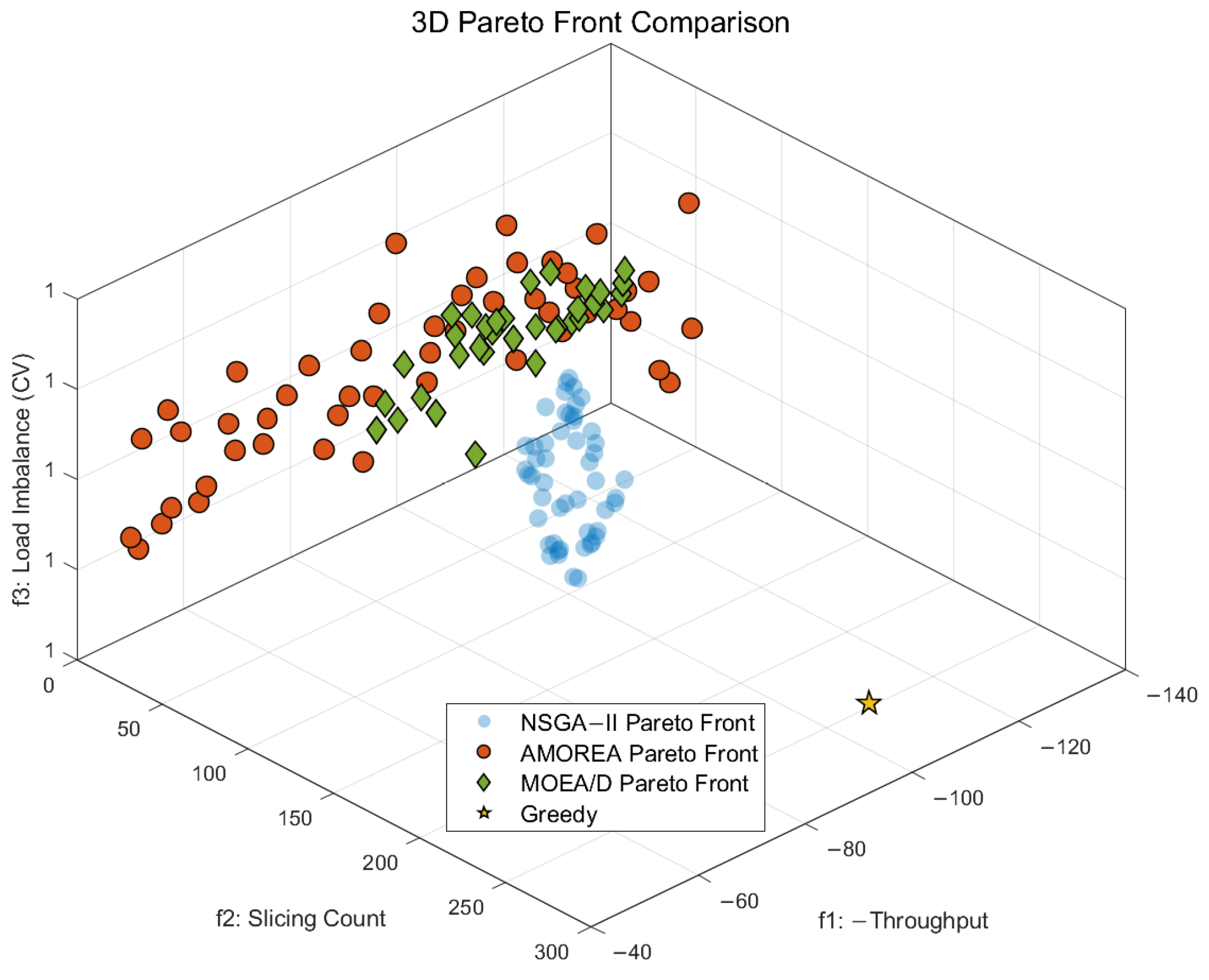
Figure 7 illustrates the solution-set distributions of AMOREA, NSGA-II, MOEA/D, and Greedy in the three-objective optimization space. AMOREA generates a more widely distributed and continuous Pareto front than the baseline algorithms. Compared with NSGA-II and MOEA/D, its solutions extend further toward the region with higher transmission benefit and fewer slices, indicating that the adaptive decomposition–reconstruction mechanism can more effectively aggregate fragmented visible windows and reduce unnecessary link establishment operations.
In contrast, the NSGA-II solutions are concentrated in a relatively limited region, reflecting weaker exploration capability in the expanded dense-access scenario. MOEA/D achieves a certain degree of Pareto distribution but provides fewer competitive solutions in the high-throughput and low-slicing region. Greedy produces only a single deterministic solution; although it may show relatively low load imbalance, it suffers from poorer transmission utility and a much larger slicing count. These results further illustrate the advantage of AMOREA in balancing transmission benefit, link-establishment cost, and node-load distribution.
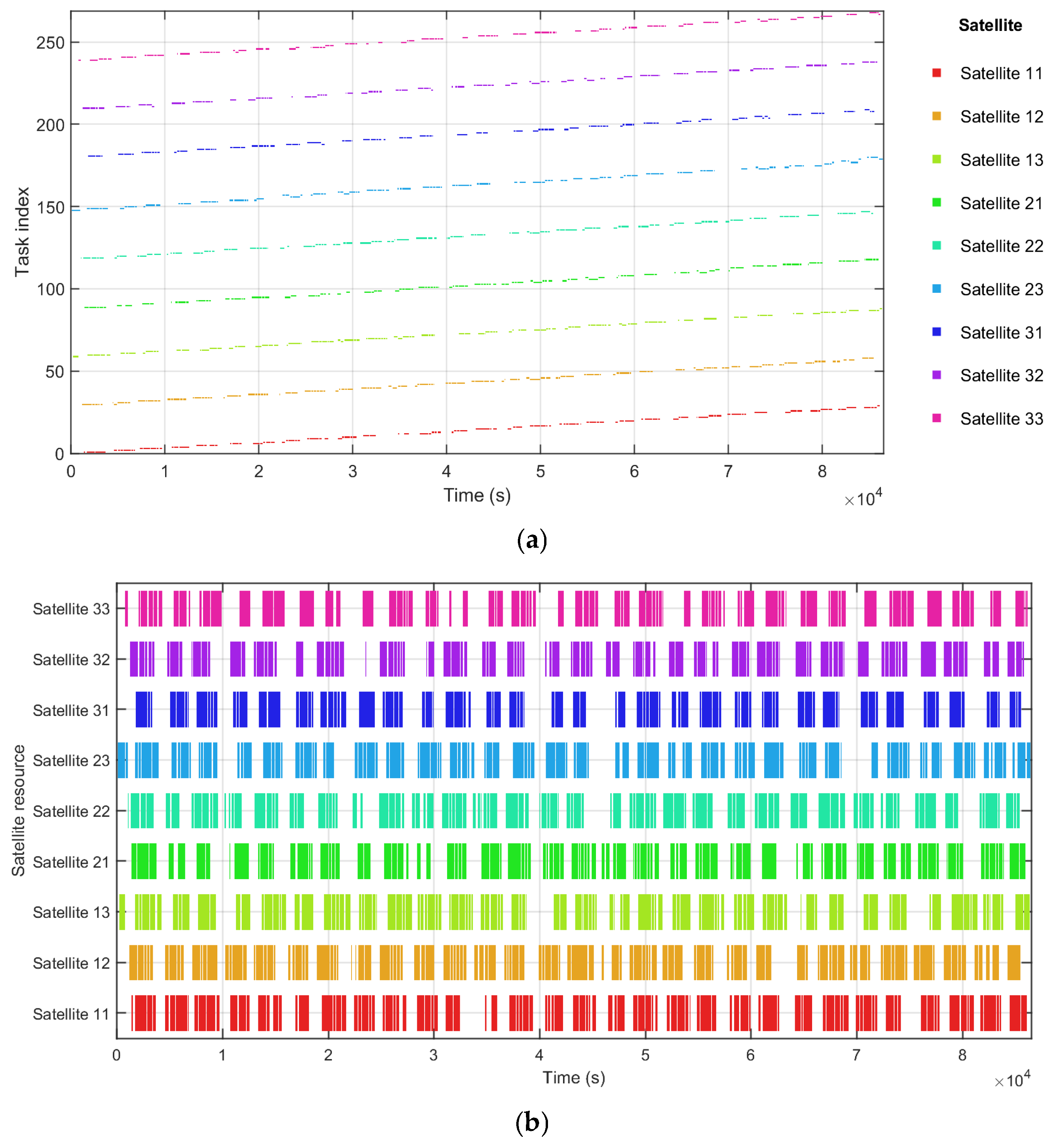
Figure 8 presents a representative collaborative scheduling result generated by AMOREA in the multi-satellite access scenario.
Figure 8a shows the task-level scheduling distribution over the 24-h planning horizon. The horizontal axis denotes time, and the vertical axis denotes the task index. Different colors correspond to different remote sensing satellites. The scheduled task slices are distributed throughout the entire planning period rather than being concentrated in a few short intervals, indicating that AMOREA can exploit temporally scattered visible windows under highly dynamic access conditions.
Figure 8b presents the scheduling result from the satellite-resource perspective. Each horizontal lane corresponds to one remote sensing satellite resource, including Satellites 11–13, Satellites 21–23, and Satellites 31–33. The colored bars indicate the time intervals occupied by scheduled transmission slices. The dense but separated occupation patterns show that AMOREA can coordinate multiple satellite resources while satisfying satellite-side exclusivity, link-establishment overhead, and switching protection constraints.
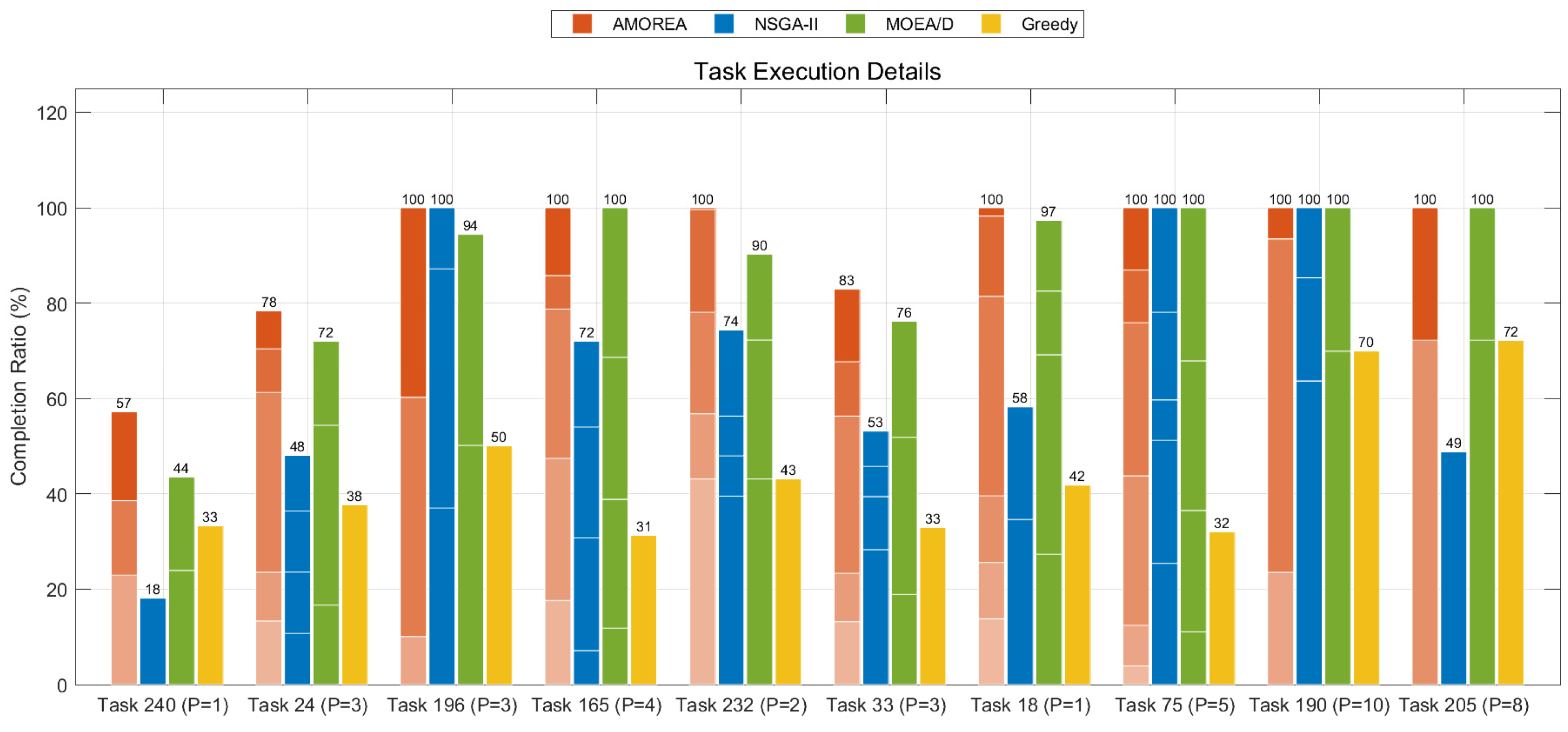
Figure 9 shows the completion ratios and slicing details of ten randomly selected tasks from the global task pool under different algorithms. These tasks cover different priority levels and provide an intuitive task-level comparison of the scheduling behaviours of the algorithms.
AMOREA achieves relatively high and stable completion ratios across the sampled tasks. Among the ten tasks, AMOREA completes seven tasks at 100%, including high-priority tasks with priorities 8 and 10. For the remaining tasks, it still maintains relatively high completion ratios, indicating that the adaptive reconstruction mechanism can effectively allocate fragmented visible-window resources under strict link-establishment and resource-exclusivity constraints.
MOEA/D also obtains competitive results for several tasks and reaches full completion in some cases, but its performance is less stable across the sampled tasks. NSGA-II shows larger fluctuations: it achieves full completion for some tasks but performs much worse for others. Greedy generally obtains lower completion ratios because it lacks a global multi-objective search mechanism and tends to make locally optimal window-selection decisions.
The tasks shown in
Figure 9 are randomly selected examples rather than specially chosen best-case results. Therefore, this figure provides an intuitive illustration of task-level scheduling behaviour, while the overall multi-objective performance is primarily evaluated using the statistical HV results in
Table 6.
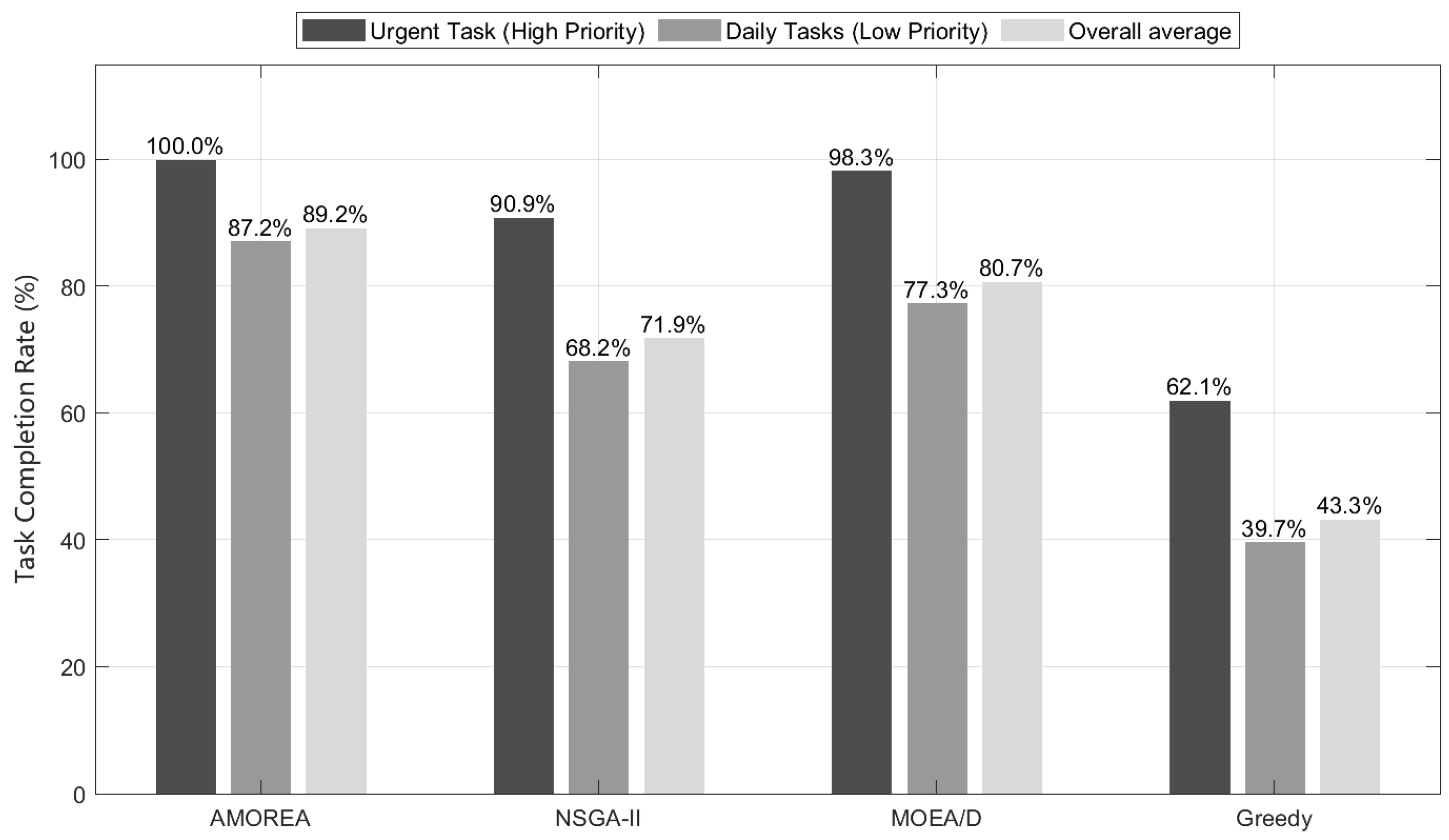
Figure 10 compares the task completion rates of AMOREA, NSGA-II, MOEA/D, and Greedy under the tested nine remote sensing satellites and 600 LEO communication nodes scenario. AMOREA achieves a 100.0% completion rate for urgent high-priority tasks, indicating that the proposed priority-aware scheduling mechanism can effectively protect mission-critical transmissions under strong resource competition. MOEA/D also achieves a relatively high urgent-task completion rate of 98.3%, whereas NSGA-II and Greedy reach 90.9% and 62.1%, respectively.
For low-priority daily tasks, AMOREA maintains the highest completion rate of 87.2%, outperforming MOEA/D, NSGA-II, and Greedy by 9.9, 19.0, and 47.5 percentage points, respectively. This result indicates that AMOREA does not simply prioritize urgent tasks at the expense of routine tasks; instead, through adaptive decomposition–reconstruction and multi-objective optimization, it can more effectively reuse fragmented visible windows across different task priorities.
In terms of the overall average completion rate, AMOREA achieves 89.2%, which is higher than MOEA/D, NSGA-II, and Greedy, whose completion rates are 80.7%, 71.9%, and 43.3%, respectively. These results demonstrate that AMOREA provides stronger task-service capability in the 9 remote sensing satellites and 600 LEO communication nodes scenario by jointly balancing priority-weighted transmission benefit, slicing cost, and node-load distribution.