1. Introduction
Since the CubeSat standard was introduced as a low-cost picosatellite platform for education and industry [
1], the use of small satellites has expanded rapidly owing to their low cost and short development cycles [
2]. As a result, small satellite missions have become increasingly sophisticated, encompassing satellite constellations for global coverage, high-capacity data transmission using optical inter-satellite links [
3], and rapid-revisit Earth observation. The importance of attitude control now extends beyond pointing alone: in very-low-Earth-orbit (VLEO) missions the attitude directly governs the aerodynamic interaction with the residual atmosphere, so that attitude stability and control are coupled to orbital operations such as differential-drag maneuvering and orbit maintenance [
4]. Agile and accurate attitude control is therefore increasingly central to overall mission performance across a widening range of CubeSat applications. To accomplish such missions, satellites must reorient toward multiple targets distributed over wide areas within a single orbital pass [
5]. This requirement demands an attitude control system capable of high-speed, high-precision, and large-angle maneuvers within short timeframes. In particular, emerging applications such as optical communication between low Earth orbit (LEO) satellites require pointing accuracies on the order of 0.1° combined with agile slewing at several degrees per second—a combination that conventional actuator architectures struggle to achieve simultaneously.
Among the actuators available for small-satellite attitude control, reaction wheels (RWs) have been the standard choice for CubeSat-class satellites, offering excellent pointing accuracy. For example, Li et al. [
6] reported a design accuracy below 0.008° for a CubeSat RW system, and the on-orbit performance of the Blue Canyon Technologies XACT unit aboard MinXSS-1 confirmed sub-arcminute pointing [
7]. Grøtte et al. [
8] demonstrated settling times of 1.0–8.25 s with 0.09° threshold accuracy using combined RW and magnetorquer control, while nonlinear RW controllers have achieved 0.04–0.05° accuracy in simulation [
9]. Recent flight-readiness frameworks for 3U-class platforms such as INHA RoSAT [
10] demonstrate that production-grade RW-based ADCS pipelines can be developed and verified at the CubeSat scale. However, the maximum body rates achievable with RWs are typically below 1°/s, leading to maneuver durations of several minutes for large-angle reorientations—a critical bottleneck for time-sensitive missions.
Beyond momentum-exchange devices (reaction wheels and CMGs) and magnetorquers, a third class of attitude actuator for small satellites has matured rapidly: miniaturized propulsion systems capable of producing thrust in multiple directions. By distributing several thrusters around the spacecraft body or by canting their nozzles, a single micropropulsion module can generate control torques about all three axes in addition to translational
, so that the same hardware serves both orbit and attitude control; unlike wheels, thruster torque neither saturates nor accumulates stored momentum. Several such systems have already been operated in space on CubeSat-class spacecraft. The twin 6U MarCO spacecraft (2018), the first interplanetary CubeSats, used a cold-gas micropropulsion module with eight R-236fa thrusters—four dedicated to attitude (reaction) control and four to trajectory-correction maneuvers—to maintain three-axis pointing during their Mars flyby [
11]. In low Earth orbit, the 1U UWE-4 satellite demonstrated, for the first time on a 1U CubeSat, electric-propulsion attitude and orbit control using four highly miniaturized NanoFEEP field-emission thruster heads operated in a hybrid scheme with magnetorquers, firing its thrusters in orbit from February 2019 and subsequently performing altitude change and collision avoidance maneuvers [
12,
13]. Compact electrospray (colloid) thruster arrays, such as the MIT ion-electrospray modules carrying eight emitters for combined two-axis attitude and orbit control, represent a further option for this class [
14].
These developments establish multi-directional micropropulsion as a viable attitude-control technology for CubeSats. Propulsion-based control is, however, constrained by finite propellant, a comparatively coarse minimum-impulse-bit resolution, and plume/contamination considerations, which make it best suited to slew and orbit-control tasks rather than the continuous, high-bandwidth fine pointing that is the focus of the present work. The momentum-exchange approach adopted here is therefore complementary to, rather than in competition with, these emerging propulsion systems.
Control moment gyroscopes (CMGs) generate significantly higher control torque than RWs and magnetic torquers by exploiting gyroscopic precession, enabling rapid attitude maneuvers essential for missions requiring frequent reorientation. Consequently, CMGs have been the primary actuators for large spacecraft such as the International Space Station (ISS), where high torque output is particularly advantageous. However, applying CMGs to nanosatellites introduces distinct challenges. In low-inertia platforms such as 3U CubeSats, the high torque output of CMGs can cause severe overshoot, oscillation, and degraded pointing accuracy [
15]. The Z-axis moment of inertia of a typical 3U CubeSat (≈0.0067 kg·m
2) is approximately five times smaller than the X- and Y-axis values (≈0.034 kg·m
2), making the yaw axis particularly susceptible to oscillatory responses when subjected to excessive CMG torque.
Realizing the potential of CMGs at the nanosatellite scale requires addressing several challenges documented in the literature. A persistent challenge in CMG-based systems is the presence of kinematic singularities, where torque cannot be generated in a desired direction due to the geometric configuration of the gimbals. Wie et al. [
16] develop the singularity-robust (SR) inverse steering law, and Wie [
17] provides a comprehensive treatment of CMG dynamics and steering strategies. Standard reference texts on spacecraft attitude determination and control [
18] provide the theoretical foundation. Jung and Tsiotras [
19] conduct rigorous experimental comparisons of various CMG steering control laws, evaluating their performance in escaping singular configurations. More recently, Geshnizjani and Fichter [
20] introduce a steering law that maximizes online torque capacity, and Pereira et al. [
21] propose a convex-allocation approach with a novel singularity metric. While these methods are effective for large spacecraft, directly applying them to nanosatellites often amplifies micro-vibrations and oscillatory responses due to the severe scale gap in the vehicle’s inertia properties.
In parallel, recent advancements have led to the development of compact CMGs tailored for CubeSat-class platforms. Akiyama et al. [
22] designed a micro-CMG system for the 50-kg TSUBAME satellite, targeting 90° maneuvers within 15 s, but the system prioritized agility over pointing precision. Gaude and Lappas [
23] presented a structural design and analysis of a CMG actuator for CubeSats, demonstrating feasibility at reduced mass and volume. Papakonstantinou et al. [
24] explored a gimballed CMG cluster design with singularity avoidance, and subsequently demonstrated a ground-tested Nano-CMG cluster achieving peak rates exceeding 50°/s, though with degree-level pointing error [
25]. These developments confirm that miniaturized CMGs can provide superior agility compared to RWs, but they have not yet resolved the fundamental tension between high torque output and fine pointing accuracy.
The variable-speed control moment gyroscope (VSCMG) has emerged as a hybrid actuator that combines the characteristics of a CMG and an RW within a single device. Yoon and Tsiotras [
26] analyzed the VSCMG for spacecraft attitude tracking, and Schaub and Junkins [
27] provided a comprehensive theoretical framework for VSCMG dynamics. McMahon and Schaub [
28] proposed simplified singularity avoidance strategies specifically leveraging the variable-speed degree of freedom. Higashiyama et al. [
29] addressed reference-aligned singularity avoidance in pyramid-type VSCMG clusters with experimental verification, and more recent VSCMG developments include double-gimbal extensions [
30]. However, conventional VSCMG approaches [
26,
27] primarily employ wheel acceleration as a supplementary control authority for singularity avoidance or integrated power/attitude tracking, rather than as a mechanism to actively attenuate the gyroscopic torque magnitude during the maneuver itself. Consequently, the gyroscopic torque produced during the slew phase remains at its maximum level when the satellite enters the fine-pointing regime, and the wheel-speed saturation limit further constrains the available acceleration authority once high spin rates have been built up. The resulting overshoot and prolonged settling times are particularly severe in low-inertia nanosatellites, where even modest residual CMG torque excites cross-axis oscillations.
To position the contribution precisely, the proposed method is not a new continuous feedback law but an actuator-level operating strategy, and it is distinct from the families with which it might be confused. (i) Unlike gain-scheduling and adaptive control, which adapt the controller gains or estimated parameters online while the actuator and its stored momentum are unchanged, the proposed scheme keeps the gains fixed and instead alters the physical wheel-momentum level of the plant. (ii) Unlike conventional momentum management null-motion, momentum dumping, which redistributes or offloads momentum while preserving control authority, the proposed scheme deliberately reduces the momentum magnitude
to attenuate the gyroscopic coupling torque
before fine pointing. (iii) Unlike torque-/input-shaping and reference-governor methods, which shape the commanded torque or reference trajectory, the proposed scheme acts directly on the physical momentum state of the VSCMG. In contrast to conventional variable-momentum VSCMG operation, which uses continuous, always-on wheel acceleration for singularity avoidance or integrated power/attitude tracking (IPACS) [
26,
27], the present approach uses a discrete, attitude-error-triggered two-level momentum switch (
Table 1).
This actuator-level viewpoint also clarifies the relation to recent high-accuracy control research, which largely pursues precision through increasingly sophisticated laws: robust nonlinear designs such as nonfragile super-twisting disturbance-observer-based inverse-optimal control [
31], predictive actuator-drive schemes such as model-predictive control of switched-reluctance machines [
32], and alternative actuation concepts such as electromagnetic docking/separation [
33]. The present work is complementary to all of these: because the two-step modulation acts at the momentum-management level, it is control-law-agnostic and can be combined with such inner-loop laws or actuator drives rather than replacing them. This complementarity, together with the hardware-grounded design-and-validation pipeline, constitutes the novelty claimed here.
The preceding review reveals a clear gap: while miniaturized CMGs and VSCMG theory have each advanced significantly, the agility–precision trade-off intrinsic to applying CMGs to low-inertia 3U platforms has not been adequately resolved. The present work focuses on this central problem and contributes:
A preemptive switched-momentum control strategy on a VSCMG platform. Unlike conventional VSCMG approaches [
26,
27] that employ wheel acceleration primarily for singularity avoidance or power tracking—an approach fundamentally limited by wheel-speed saturation when the wheels are already spinning near maximum rate—the proposed two-step control actively reduces the wheel angular momentum once the attitude error falls below a threshold, directly attenuating the gyroscopic torque magnitude before fine stabilization. The variable-speed degree of freedom is exploited as a discrete momentum switch (Phase 1 → Phase 2) rather than as a continuous control input, while the same hardware retains the option for continuous-speed (RW-mode) operation discussed in
Section 2.4. This is the primary contribution.
A hardware-grounded simulation pipeline. The actuator dynamics used in the closed-loop simulations are not synthesized from scratch: the gimbal-motor state-space model was identified experimentally (93.2% time-domain fit) and selected after a systematic PID/LQR/IOS comparison; the wheel-dynamics input was directly bench-measured on the fabricated prototype. This provides a substantially stronger evidentiary base than purely numerical CMG-control studies.
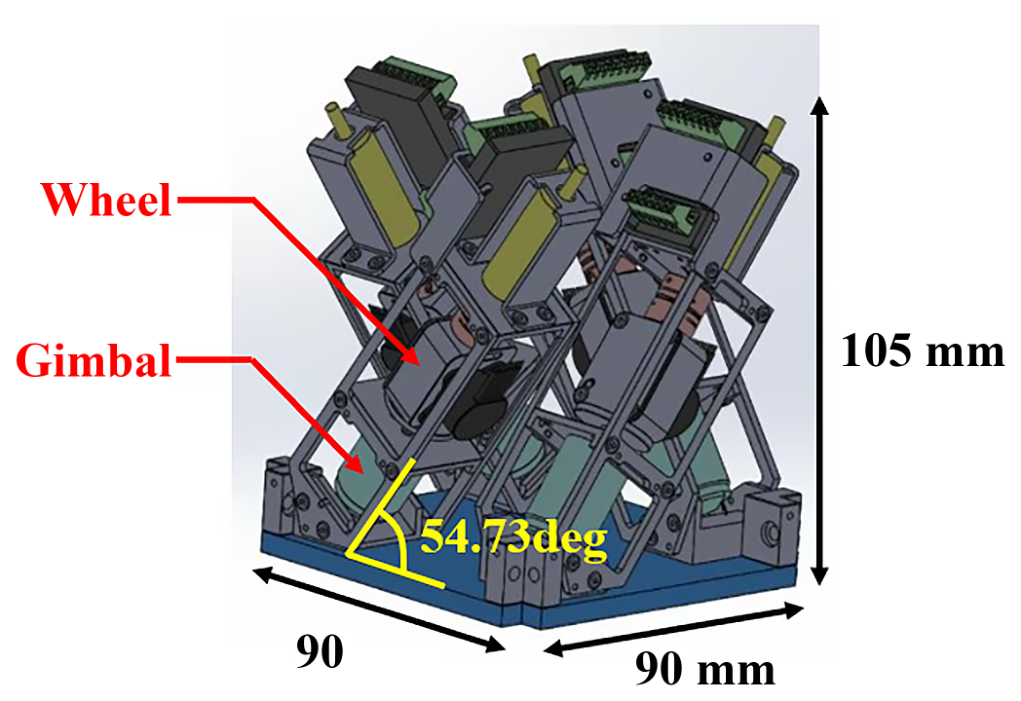
A 1U-class fabricated CMG module (90 × 90 × 105 mm, 584 g) that defines the actuator-rate constraints in the simulation envelope. Component-level ground testing on the prototype confirms that the wheel-speed and gimbal-rate ranges assumed in the simulations are achievable.
The remainder of this paper is organized as follows.
Section 2 presents the materials and methods, organized into a high-level system overview, detailed mathematical modeling and controller design including stability analysis, and descriptions of the specific simulation conditions.
Section 3 presents simulation results, evaluating agility and accuracy in both two-step CMG and VSCMG RW modes.
Section 4 discusses the implications including practical hardware considerations.
Section 5 concludes the paper.
Appendix A provides actuator-level feasibility verification.
5. Conclusions
This study presented a two-step VSCMG control strategy for agile attitude maneuvers of 3U nanosatellites, directly targeting the agility–precision trade-off that arises when CMGs are scaled down to low-inertia platforms.
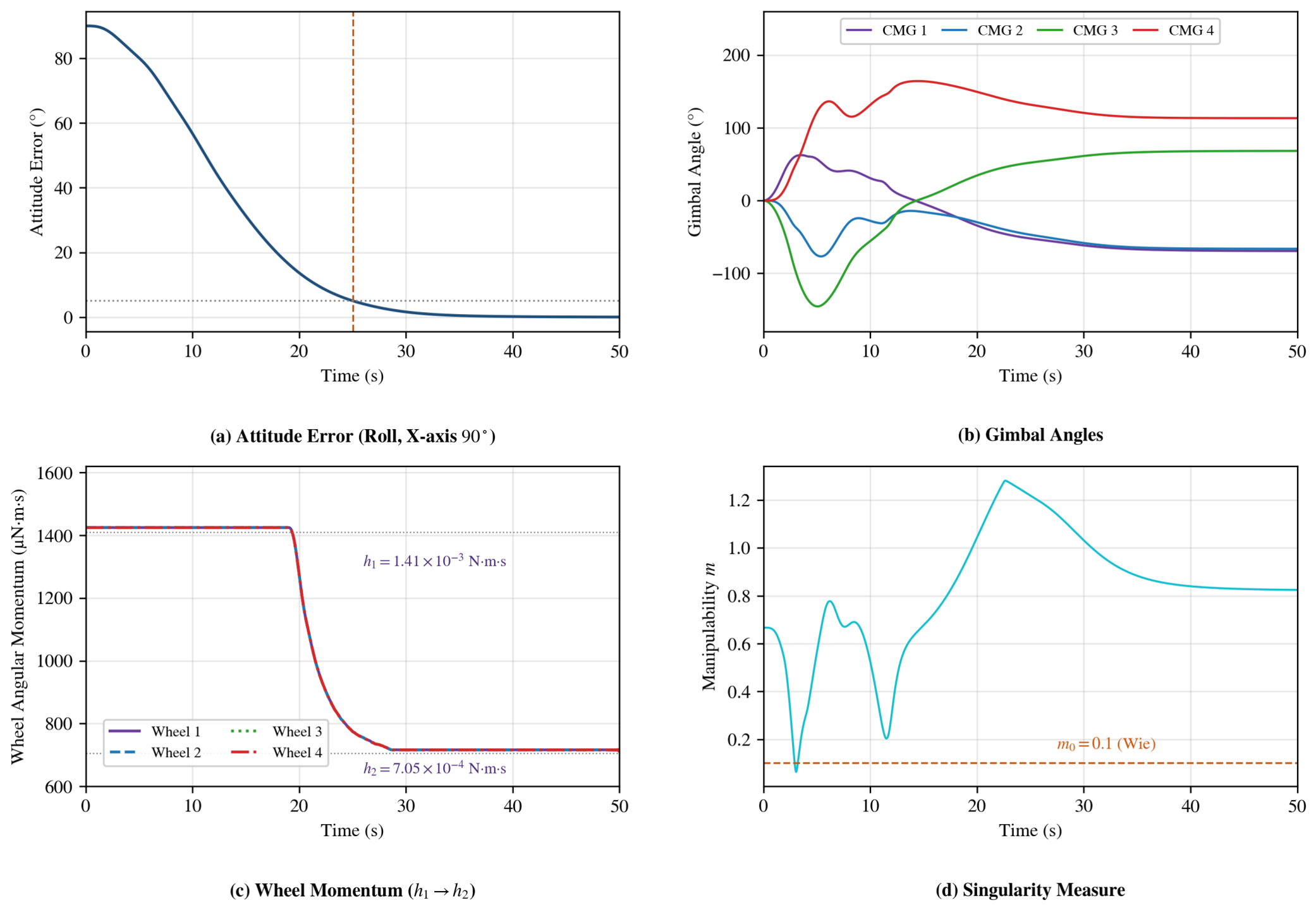
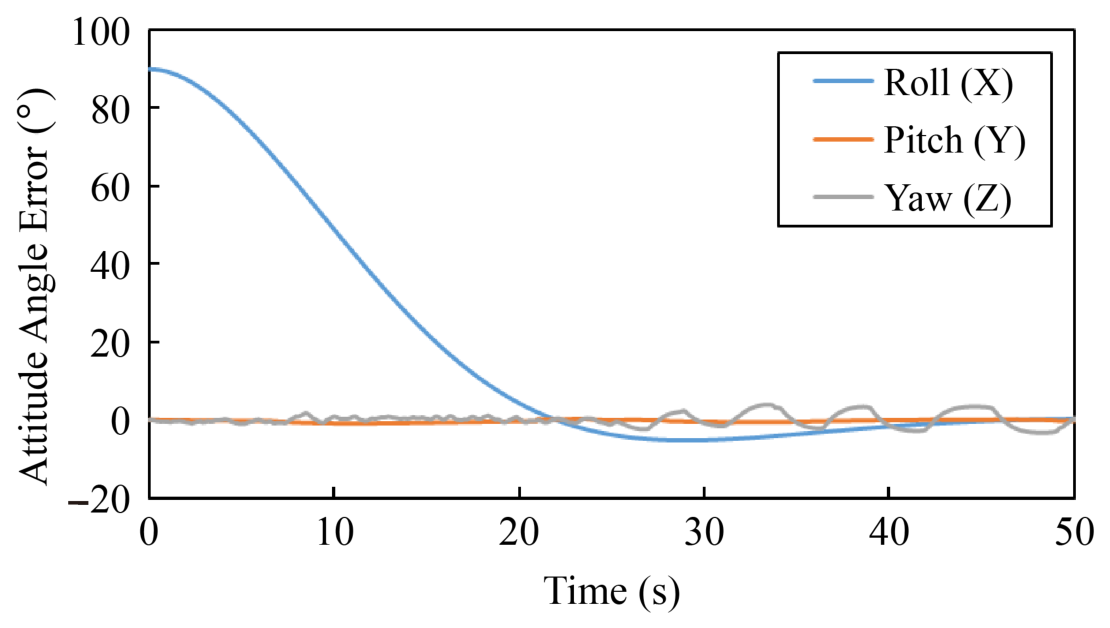
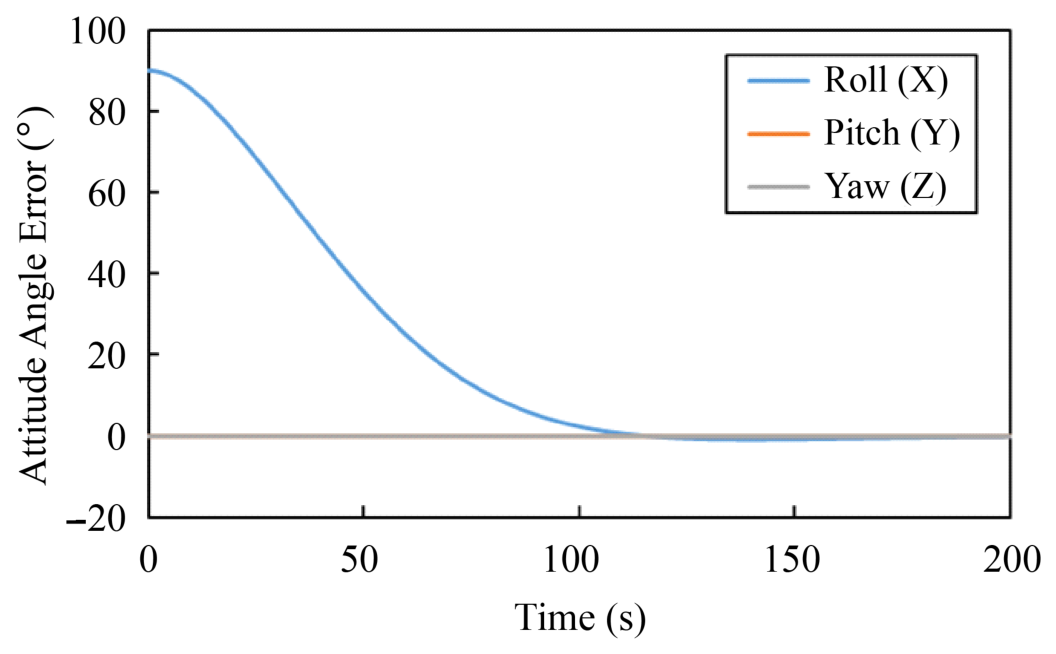
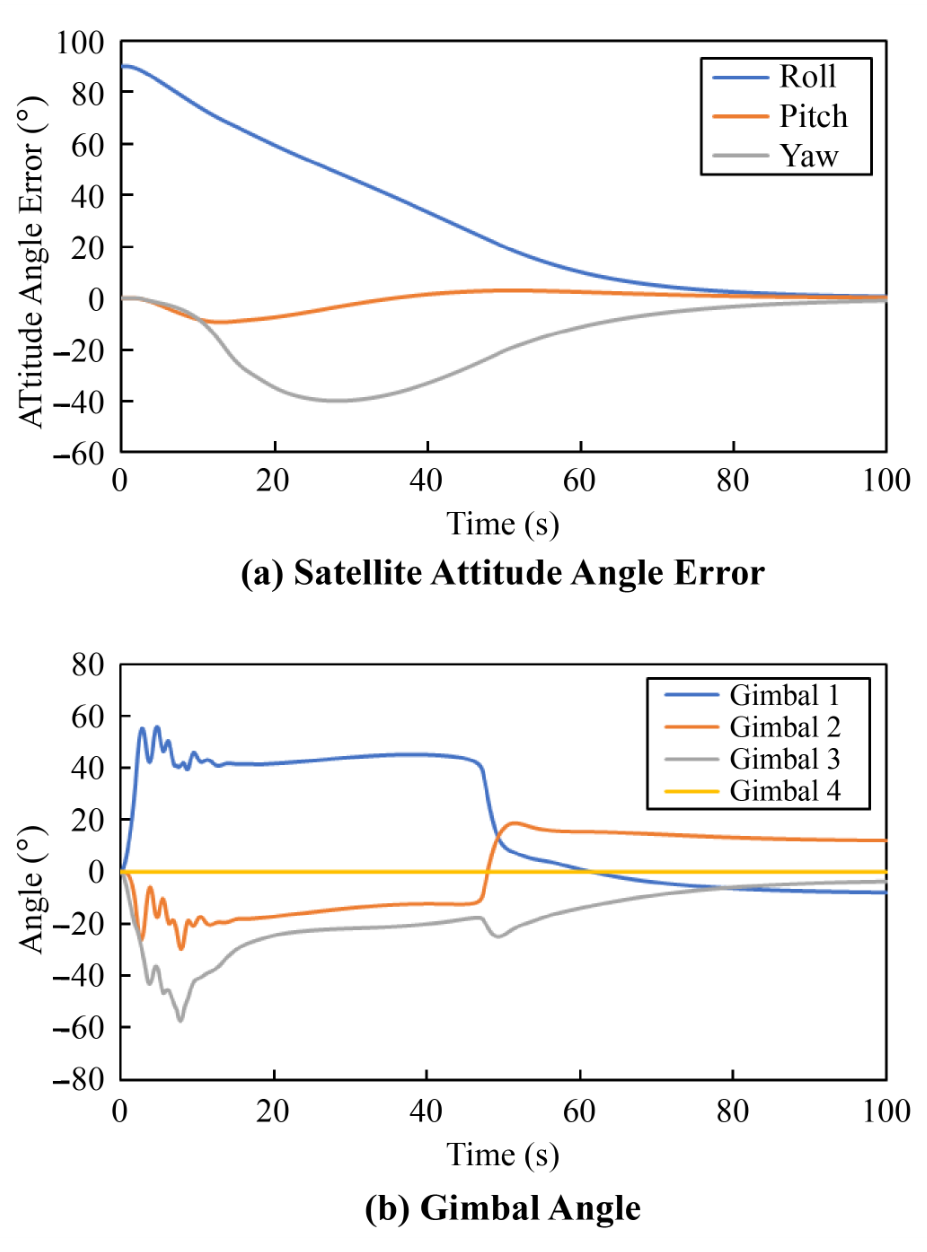
The proposed strategy preemptively reduces the wheel angular momentum once the attitude error falls below a 5° threshold, attenuating the gyroscopic torque before the satellite enters the fine-pointing regime. Closed-loop simulations under aerodynamic and gravity-gradient disturbances at 560 km altitude demonstrate that this approach achieves a 90° slew in 25.3 s at 3.55°/s with 0.42° accuracy—a 4.5× improvement in slew rate over a representative reaction-wheel system and a 12× improvement in accuracy over conventional single-mode CMG operation on the same platform. A Lyapunov-based stability analysis was provided for the quaternion feedback loop under nominal torque tracking, and the closed-loop simulations extend this nominal result to the case of bounded LEO disturbances.
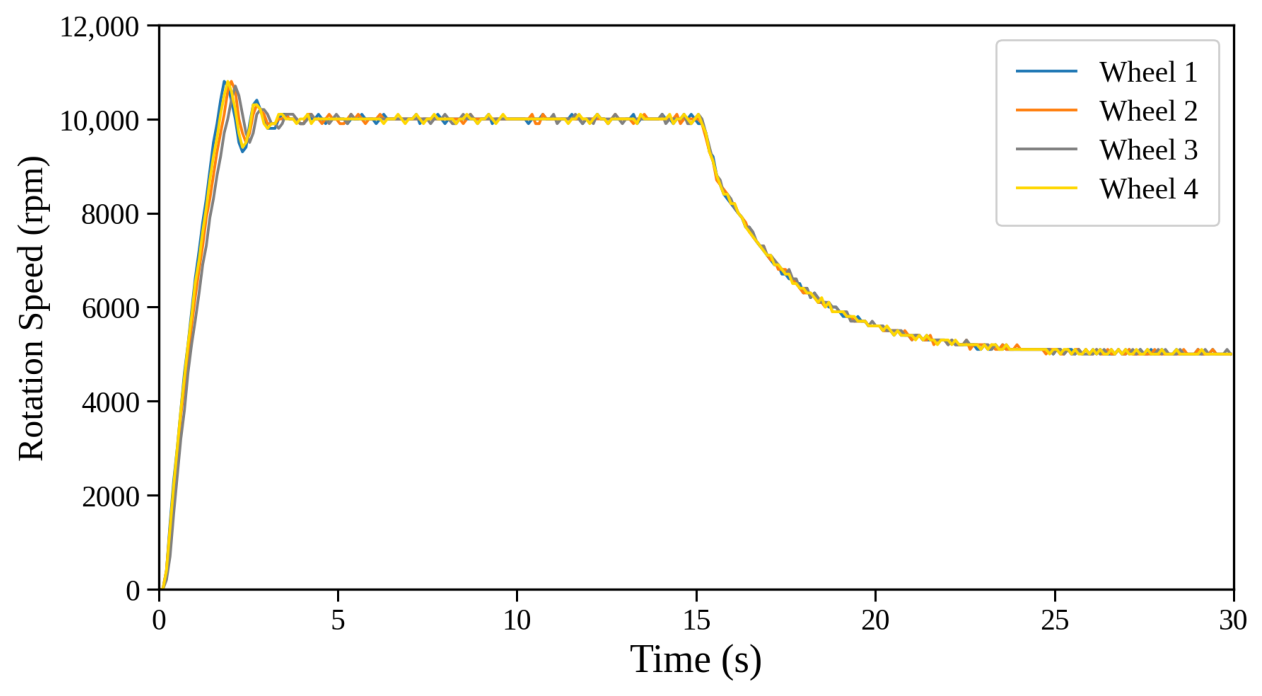
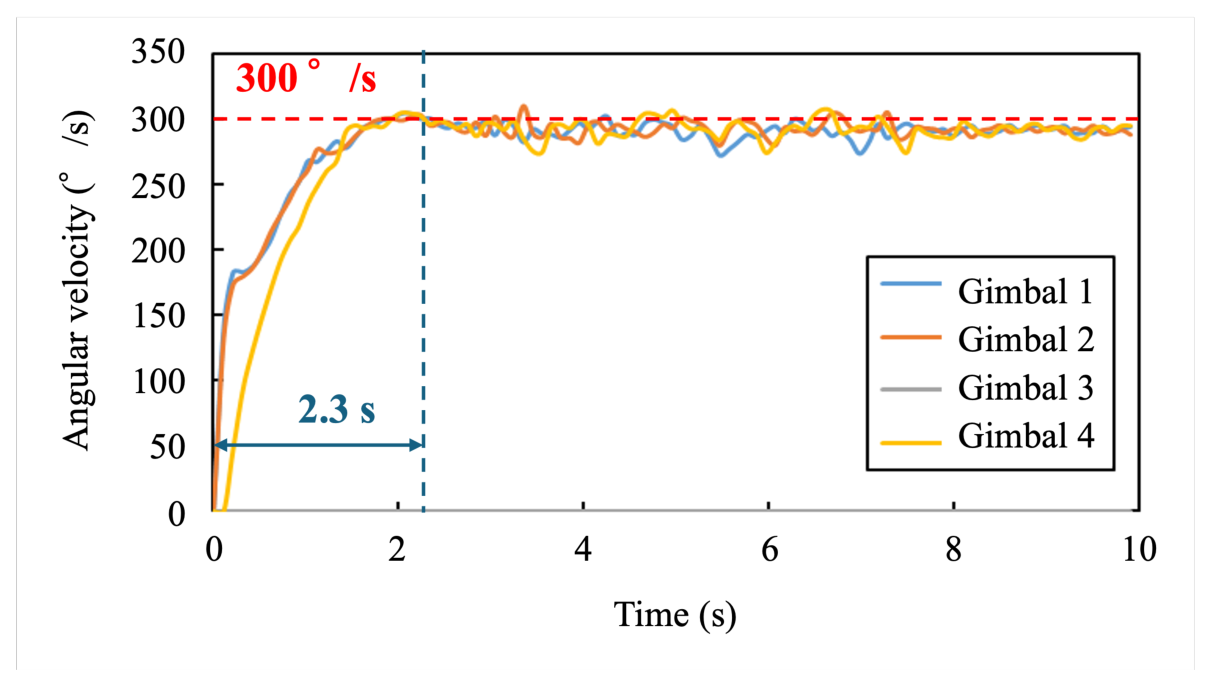
A distinguishing feature of the present work is the hardware-grounded simulation pipeline: the gimbal-motor state-space model was identified experimentally with a 93.2% time-domain fit and selected after a systematic PID/LQR/IOS comparison; the wheel-dynamics input to the simulation was bench-measured on the fabricated 1U-class prototype rather than purely synthesized. Component-level ground testing on the prototype confirmed that the required wheel speeds (≤10,000 rpm) and gimbal angular velocities (≈300 rad/s) are achievable using COTS motors (
Appendix A).
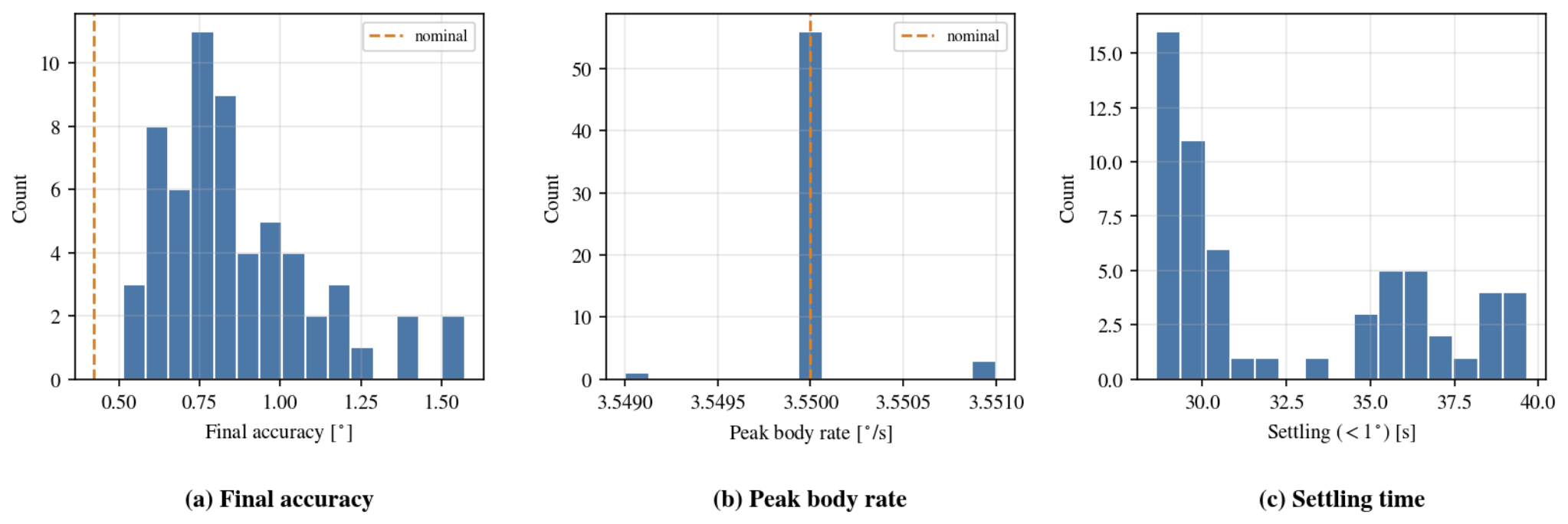
Several limitations should be noted. The Lyapunov analysis assumes nominal torque tracking; formal robustness analysis of the switched two-step law under model uncertainties remains open. The closed-loop simulation traversed two transient near-singular passages with
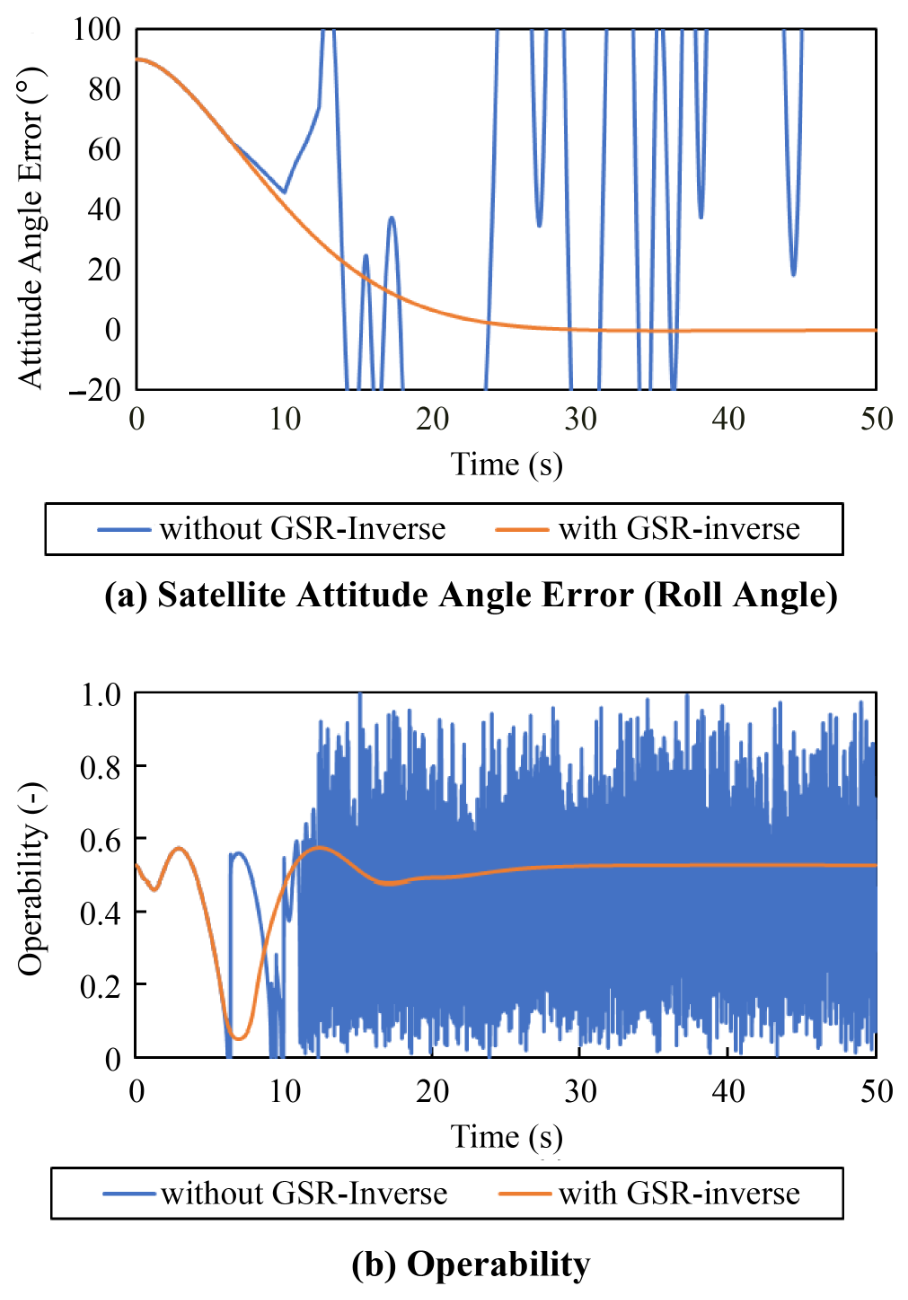
, below the conventional warning threshold. While the pseudo-inverse completed this nominal maneuver, robustness near the singular manifold should not rely on it; the steering law was therefore augmented with a generalized singularity-robust (GSR) inverse [
16], whose effectiveness—and its behavior under a single-CMG failure—were demonstrated in
Section 3.3 and
Section 3.4. Ground experiments used non-space-qualified COTS motors. Future work will proceed in four directions: (1) hardware-in-the-loop testing of the full closed loop on an air-bearing table [
37,
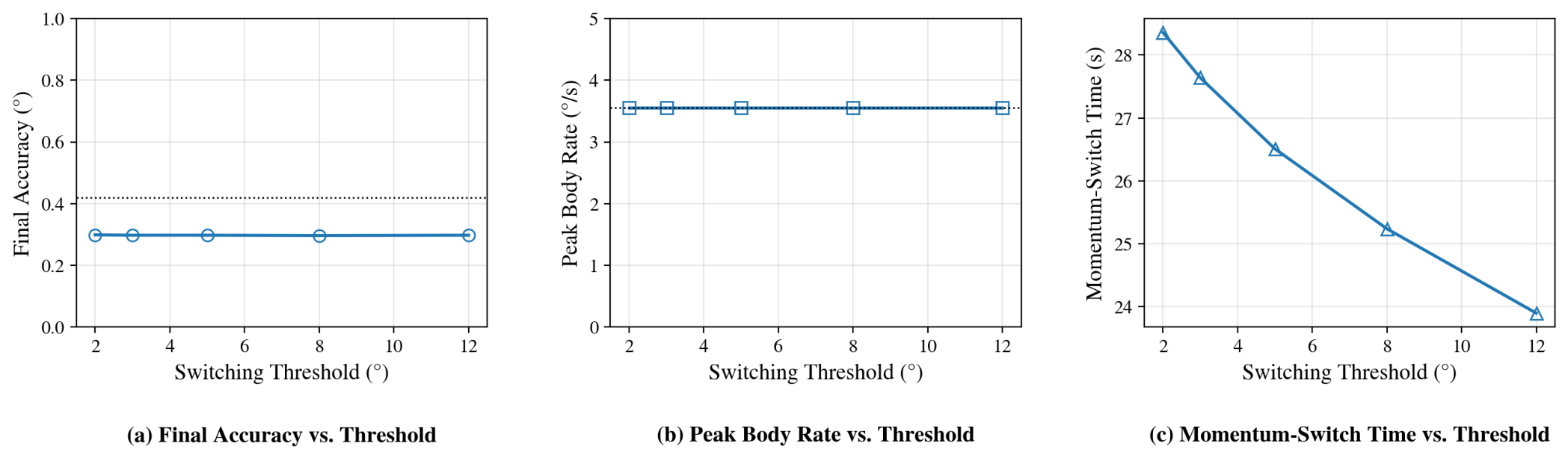
38] to validate torque output, settling time, and accuracy under realistic spacecraft dynamics; (2) systematic parametric optimization of the two-step threshold; (3) transition to space-qualified actuators accompanied by thermal-vacuum testing and micro-vibration characterization, advancing toward flight readiness for the HATOSAT nanosatellite mission; and (4) experimental verification of singularity transit—including the interaction between the GSR inverse and the two-step momentum schedule—on the air-bearing testbed.
We emphasize that the closed-loop attitude-control performance reported here is established in simulation. The ground experiments (
Appendix A) validate the actuator-level feasibility only—namely, that the wheel-speed and gimbal-rate envelopes assumed in the simulations are achievable on the fabricated prototype. Accordingly, the present study is best characterized as a simulation study supported by experimentally identified actuator models and component-level feasibility tests, rather than as a system-level, experimentally validated attitude-control demonstration. Hardware-in-the-loop and air-bearing-table testing of the full closed loop are planned as the next validation step.