


Abstract
Existing low-dimensional cavity element models developed under the lumped-parameter assumption, which neglect cavity geometric parameters and inertial effects within the cavity, cannot meet the simulation requirements of aircraft-engine secondary air systems (SAS) during the fast transient response processes. To address this gap, this study proposes a modular modeling methodology for a fast transient cavity low-dimensional model. The cavity is partitioned into modules according to the internal flow features during the fast transient response, and the partition ratios are determined by evaluating how different geometric parameters affect these flow characteristics. Using this method, low-dimensional models are constructed for single-port cavities and dual-port cavities under various geometric parameters, and the fast transient depressurization response is investigated. In parallel, corresponding three-dimensional models are established using a validated simulation approach, and three-dimensional computations are performed. Comparison between the low-dimensional and three-dimensional results confirms that the proposed method effectively reproduces the key flow phenomena in the cavity during the fast transient events with credible predictive accuracy. This work optimizes existing low-dimensional simulation algorithms for air systems and provides technical support for studying fast transient responses in aircraft-engine SAS.
1. Introduction
Abrupt structural failures in aircraft-engine air systems constitute a common class of air-system malfunctions and can escalate to the aviation-engine safety top event known as uncontained high-energy debris fragments [1]. To mitigate this risk, civil aviation authorities worldwide have promulgated regulations that specify passive-safety design requirements following a range of abrupt structural failure scenarios [2,3]. For example, the Federal Aviation Administration (FAA) released Federal Aviation Regulation Part 33 (FAR33). This regulation contains multiple key provisions including 33.19, 33.27, 33.34, and 33.94. These clauses set design-stage requirements for uncontained high-energy debris fragments. The involved contents cover rotor strength, fragment energy, and trajectory prediction. They also specify relevant requirements for casing containment capability [3]. Shaft fracture is a representative abrupt structural failure mode that can trigger uncontained high-energy debris fragments; accordingly, it has been widely adopted as a canonical case for investigating the fast transient response of the air systems induced by abrupt structural failures, thereby supporting passive safety design for aero-engines [4,5,6].
The prevailing approach for fast transient air-system response research is a whole-engine low-dimensional simulation [7]. All Secondary Air System (SAS) boundaries lie in the aero-engine main gas path with strong coupling effects. Research under SAS–main gas path interaction captures boundary variations more accurately and improves load evolution prediction in fast transient events [8]. The SAS has numerous components. Its low-dimensional models are mainly built via the network method, and component model accuracy directly determines simulation reliability. The SAS is treated as a fluid network composed of cavities, pipes, and diverse throttling elements [9,10]. Scholars differ in throttling element classification but reach consensus on cavity and pipe classification and modeling assumptions [11]. For pipes, axial linear parameter distribution is assumed, with cross-sectional non-uniformity ignored and gas velocity considered. For cavities, port area, internal flow velocity, and spatial parameter non-uniformity are generally neglected. The core premise is that a cavity with a far smaller outlet area than its surface area can be simplified as a lumped-parameter control volume. Its pressure response follows mass and energy conservation, independent of geometric parameters. Under the above assumptions, the prediction performance of low-dimensional cavity and pipe models has been experimentally validated in multiple fields [12,13].
In practical SAS, compressor and turbine disc cavities have large port areas, which violate the key assumption that port area is far smaller than cavity surface area. Current studies simplify multiple disc cavities into a single unit to meet modeling requirements and establish relevant models [8]. This simplification has minor impacts on simulations under large time-scale conditions. For engine condition-induced SAS transient responses, boundary variation lasts over 1 s with a 0.1 s time step. In this case, boundary disturbances can fully spread across the whole SAS, and axial distance has little effect on propagation time. However, SAS fast transient processes caused by abrupt structural failures require a time step much smaller than 0.1 s. For typical shaft fracture, boundary adjustment finishes within 10 ms [14], and the simulation time step can drop to 0.01 ms. Disturbances cannot cover the entire SAS in such a short time step, so the axial distance of cavities must be considered. The total axial dimension of SAS disc cavities accounts for over 40% of engine length. Simplified treatment of disc cavities will directly reduce simulation accuracy.
This issue is characterized by an extremely short boundary variation duration and complex system flow path structure. For long-duration boundary changes, the flow inertial force inside the cavity can be neglected. The cavity can be treated as a lumped-parameter control volume during transient responses [7]. This treatment is commonly adopted in the research of pressure vessel discharge processes. For flow systems with simple flow paths, three-dimensional simulation can be directly employed. Low-dimensional simulation, which simplifies flows for higher efficiency, is no longer required. A representative case is the investigation of gas explosion shock wave propagation in mine tunnels [15].
Motivated by this challenge, this work aims to develop a low-dimensional cavity modeling method targeted at the fast transient response of SAS following failures. The proposed method follows a modular paradigm, partitioning the cavity according to geometric and flow features at different locations and then formulating appropriate assumptions and models for each partition. In this way, the approach preserves the computational efficiency of a low-dimensional framework while improving predictive accuracy under fast transient operating conditions.
2. Analysis of Existing Low-Dimensional Cavity Models
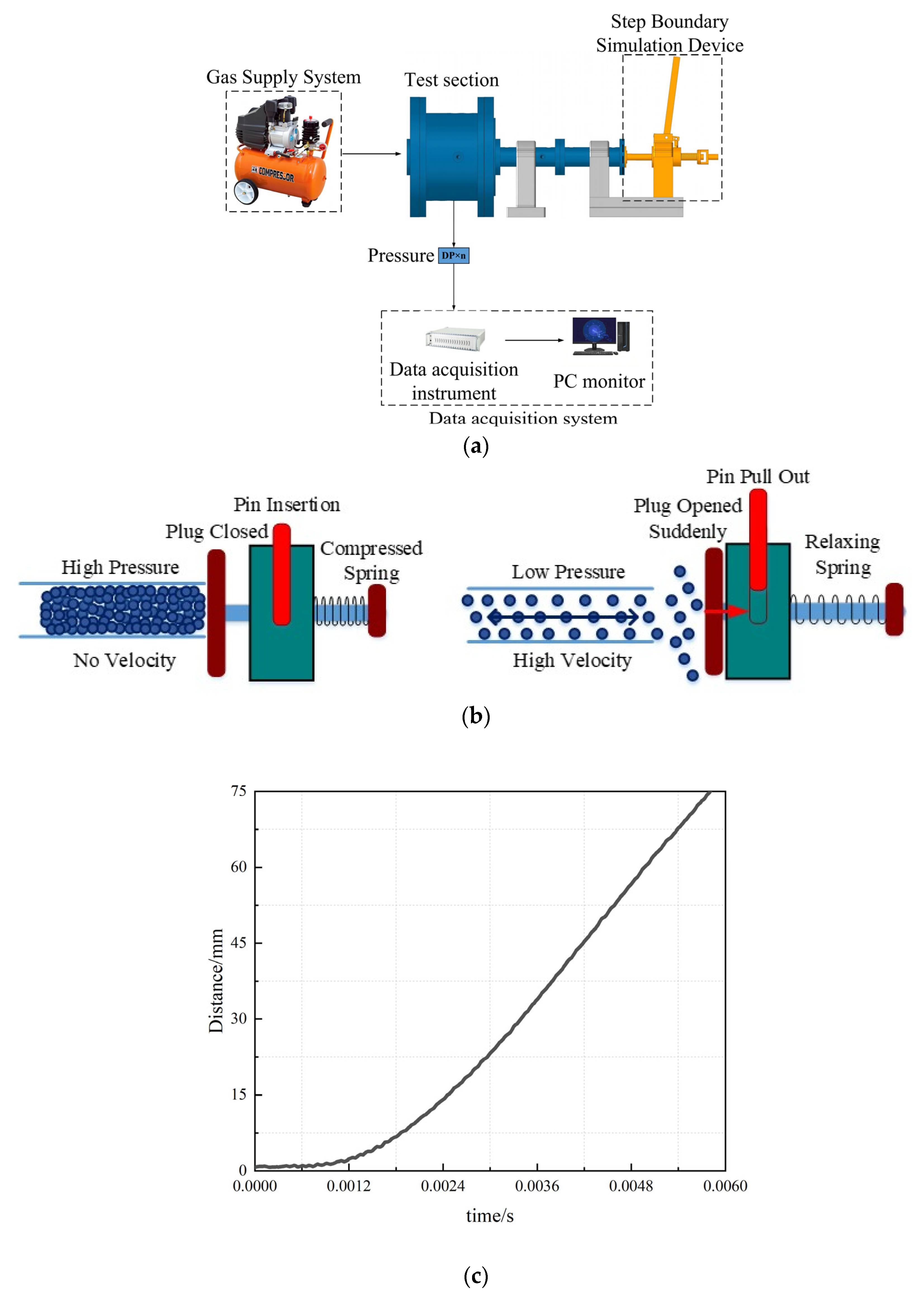
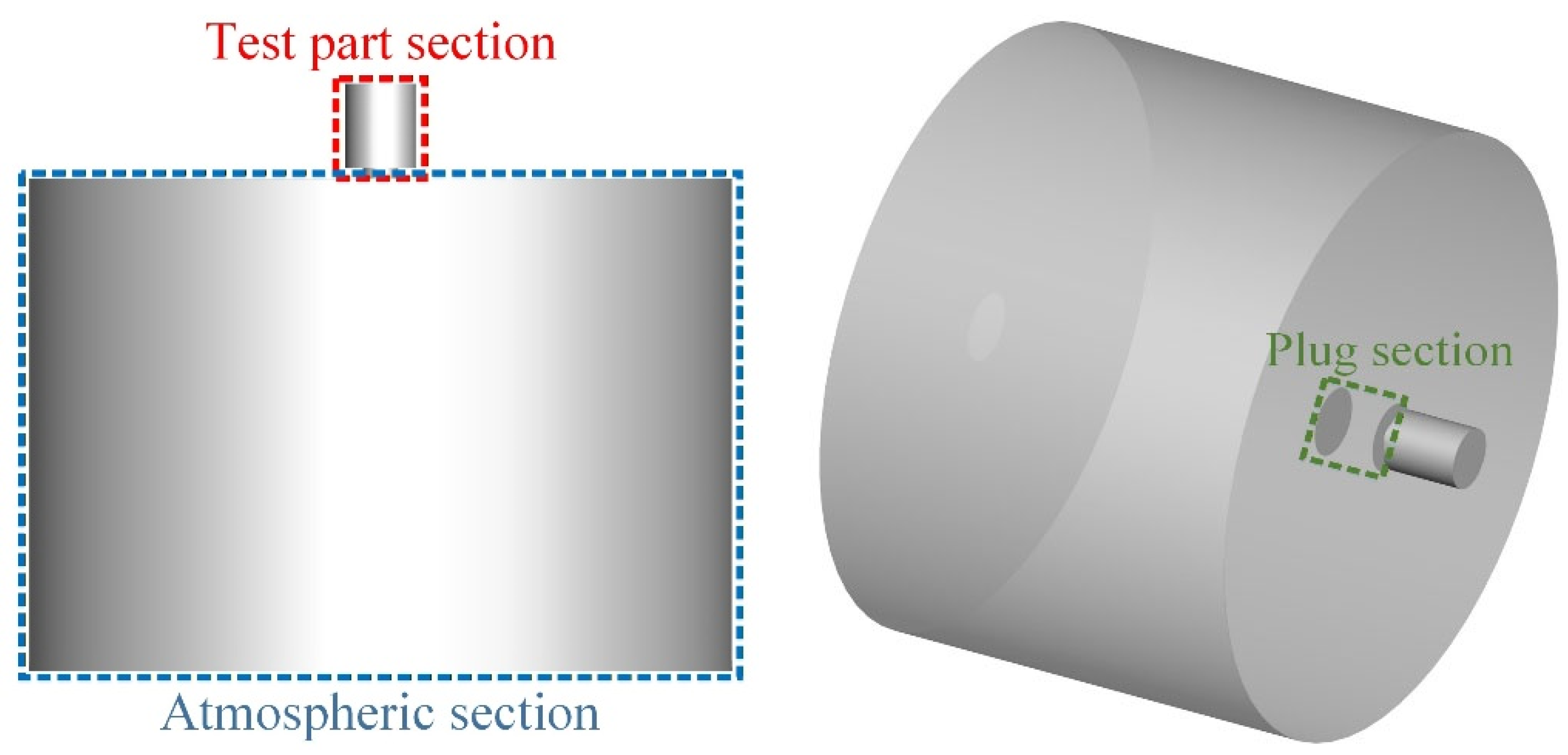
The experimental and simulation work relevant to this study has been reported in Ref. [16]. The fast transient experimental platform for the air system employed in this work provides the required geometric step boundary conditions through the rapid motion of the plug in the step boundary simulation device. The configuration of the experimental platform and the operating principle of the step boundary simulation device are illustrated in Figure 1.
Figure 1.
Experimental platform system diagram. (a) Partition schematic diagram; (b) Operating principle schematic of step boundary simulation device; (c) Positional variation process of the plug [16].
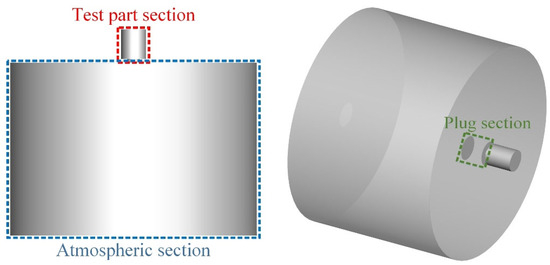
This study employs the three-dimensional simulation model reported in Ref. [16], which has been subjected to independence analysis and experimentally validated, to conduct the corresponding three-dimensional simulations, as shown in Figure 2. In all three-dimensional simulations performed in this study, the geometric step boundary is realized through the motion of the plug section. The prescribed motion follows the same law as that used in the experiments, as shown in Figure 1c, thereby ensuring consistency in the boundary conditions for all datasets used in the study.
Figure 2.
Three-dimensional simulation model.
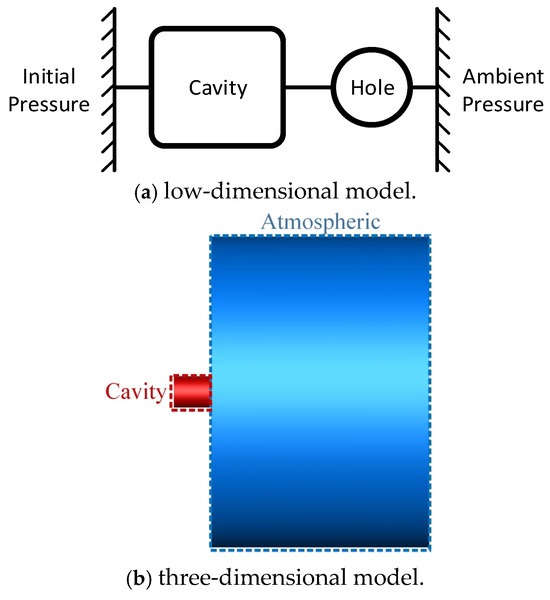
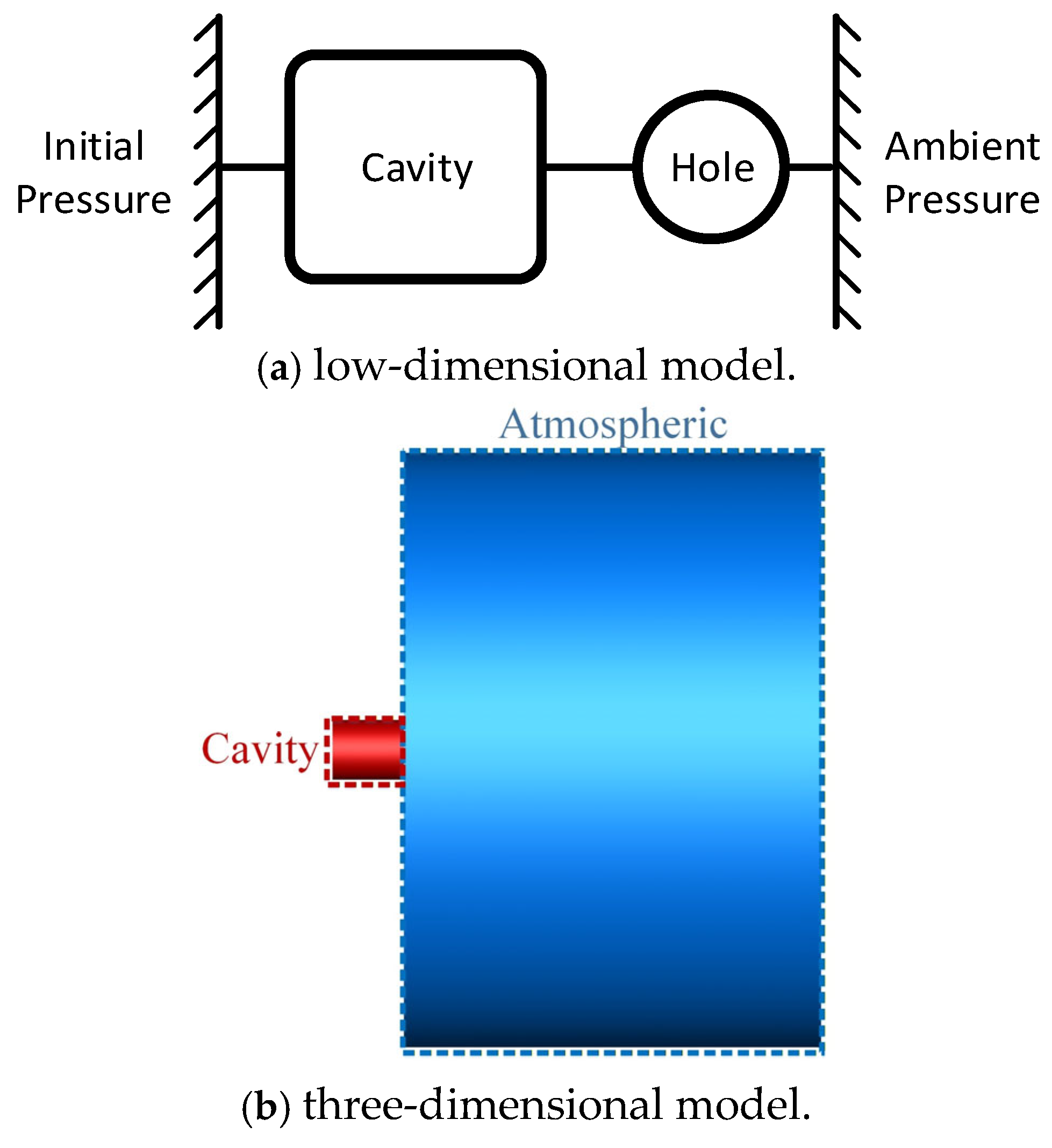
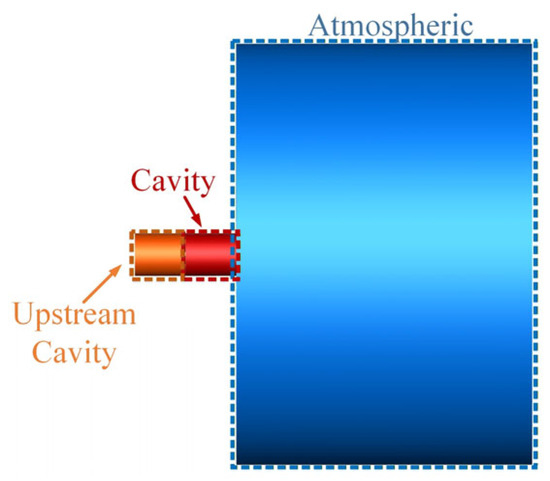
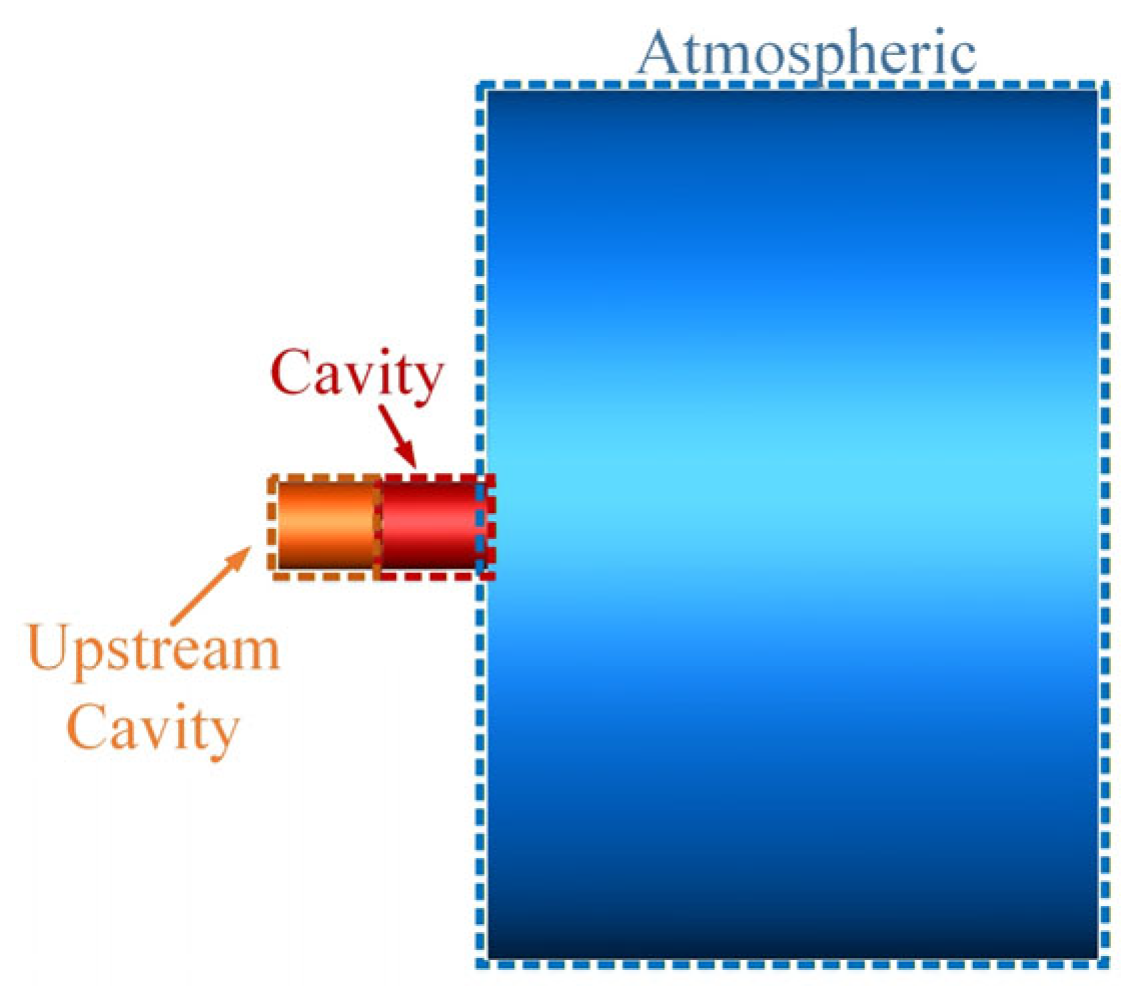
The validated three-dimensional model from Ref. [16] and the low-dimensional model without flow inertial effects are adopted to simulate the fast transient discharge response of the single-port cavity. The purpose is to verify whether existing low-dimensional cavity models can accurately predict pressure variations inside the cavity when key assumptions are violated. Model parameters are listed in Table 1, where denotes the port area, and denotes the cavity volume. The comparison metric is the pressure variation inside the cavity, and the pressure at the cavity midpoint is selected for comparison in the three-dimensional simulation, with the model shown in Figure 3.
Table 1.
Parameters for the validation case of the low-dimensional model.
Figure 3.
Schematic diagram of the single-port cavity discharge model.
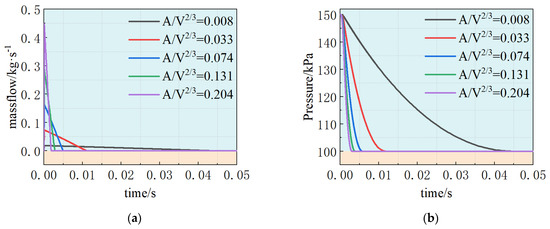
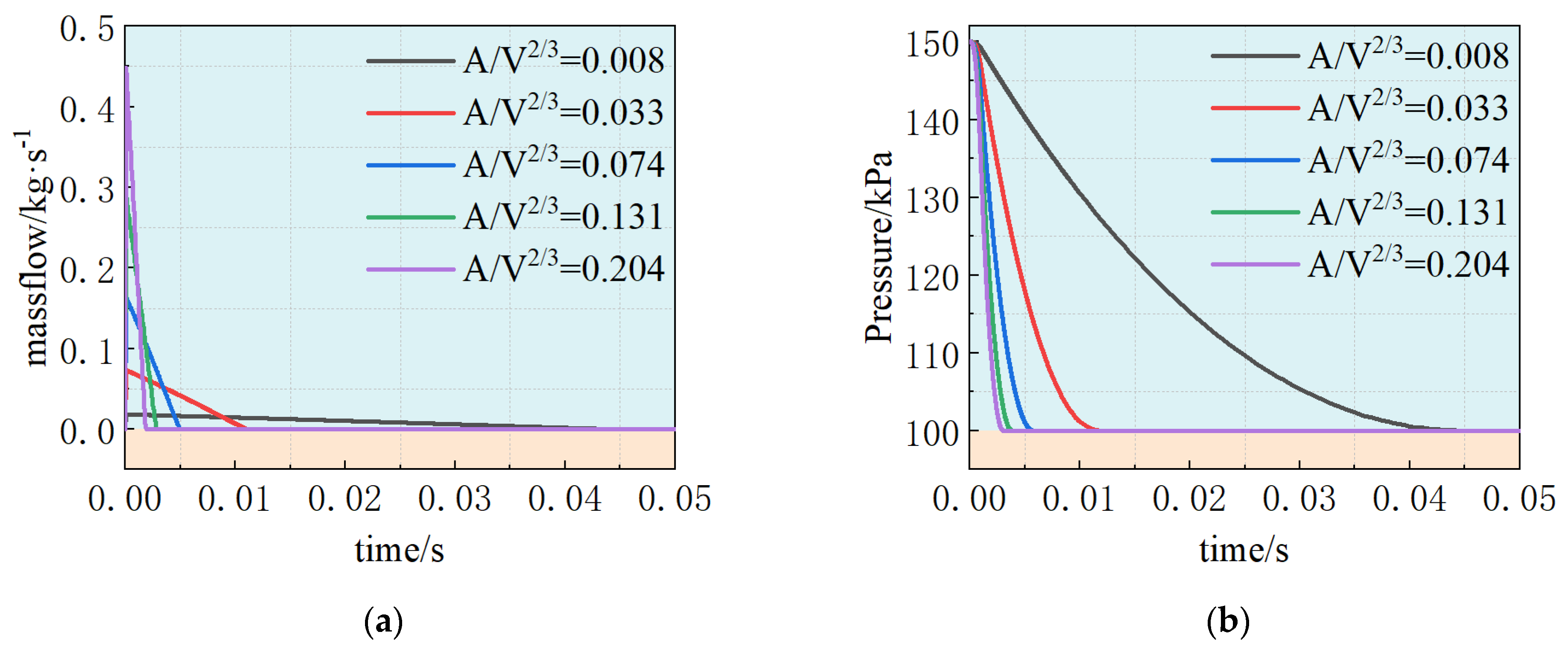
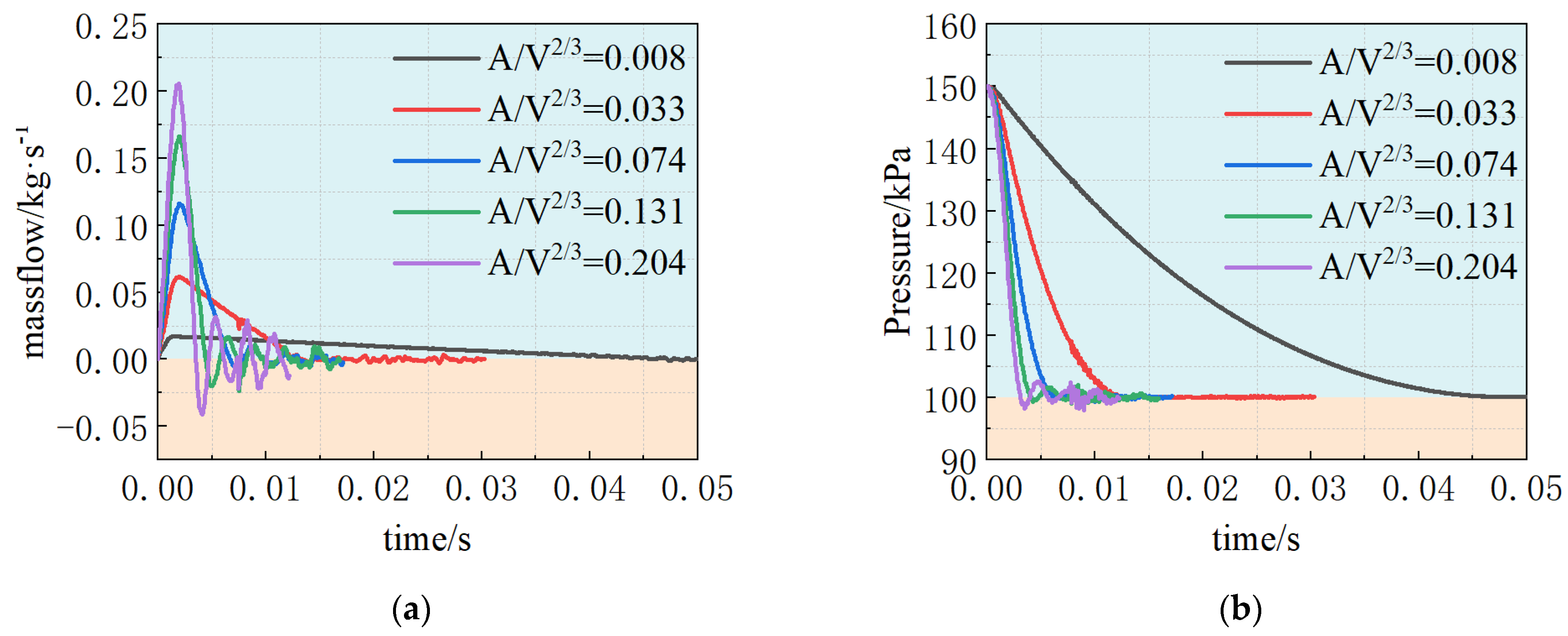
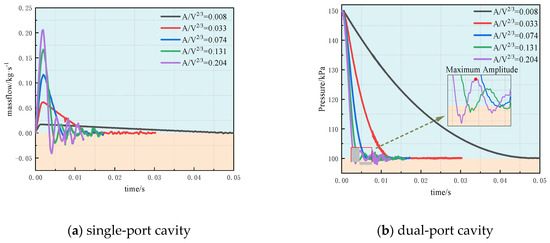
The low-dimensional and three-dimensional simulation results for different values of are shown in Figure 4 and Figure 5. In the three-dimensional simulations, increasing leads to periodic flow reversal at the cavity outlet, which accelerates the pressure decay within the cavity and induces pronounced pressure oscillations; moreover, the oscillation amplitude increases with . When reaches 0.204, the maximum pressure-oscillation amplitude is approximately 3 kPa. By contrast, the low-dimensional simulations capture the effect of increasing on the pressure-decay rate, but they fail to reproduce the periodic outlet flow reversal and the associated pressure oscillations inside the cavity.
Figure 4.
Comparison of low-dimensional simulation results. (a) Comparison of outlet flow rate changes under different conditions of A/V2/3; (b) Comparison of chamber pressure changes under different conditions of A/V2/3.
Figure 5.
Comparison of three-dimensional simulation results. (a) Comparison of outlet flow rate changes under different conditions of A/V2/3; (b) Comparison of chamber pressure changes under different conditions of A/V2/3.
These behaviors can be explained by momentum effects. When a pressure difference exists between the cavity and the surroundings, the gas near the outlet is accelerated outward by the pressure gradient. As the cavity pressure decreases toward the ambient level, the already-accelerated gas cannot be brought to rest instantaneously due to inertia; it continues to discharge, causing the cavity pressure to “overshoot” below the ambient pressure. The pressure difference then reverses sign, driving reverse flow. This alternating process, governed jointly by the pressure difference and inertial forces, manifests as pressure oscillations. A larger implies a higher flow rate and a larger amount of gas participating in momentum exchange within the cavity, making oscillations more likely and increasing their amplitude.
From the perspective of low-dimensional modeling, when , the region over which momentum effects are significant remains confined near the outlet, and the resulting pressure oscillations are negligible; the cavity can then be approximated as a lumped-parameter control volume, and existing low-dimensional cavity models can still predict the fast transient depressurization with reasonable accuracy. As increases, however, the non-uniformity of velocity and thermodynamic states within the cavity becomes more pronounced, and low-dimensional models that neglect internal gas velocity and spatial non-uniformity cannot capture the oscillatory behavior. Therefore, incorporating the effect of inertial forces within the cavity on top of existing volume-based low-dimensional cavity models is expected to improve the fidelity of internal-flow predictions during fast transient responses.
3. Modular Modeling of a Fast Transient Cavity
3.1. Modular Partitioning of the Cavity
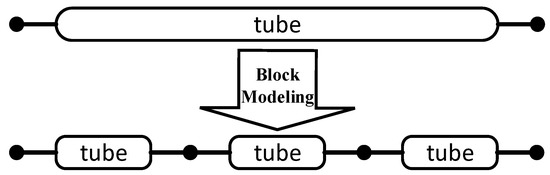
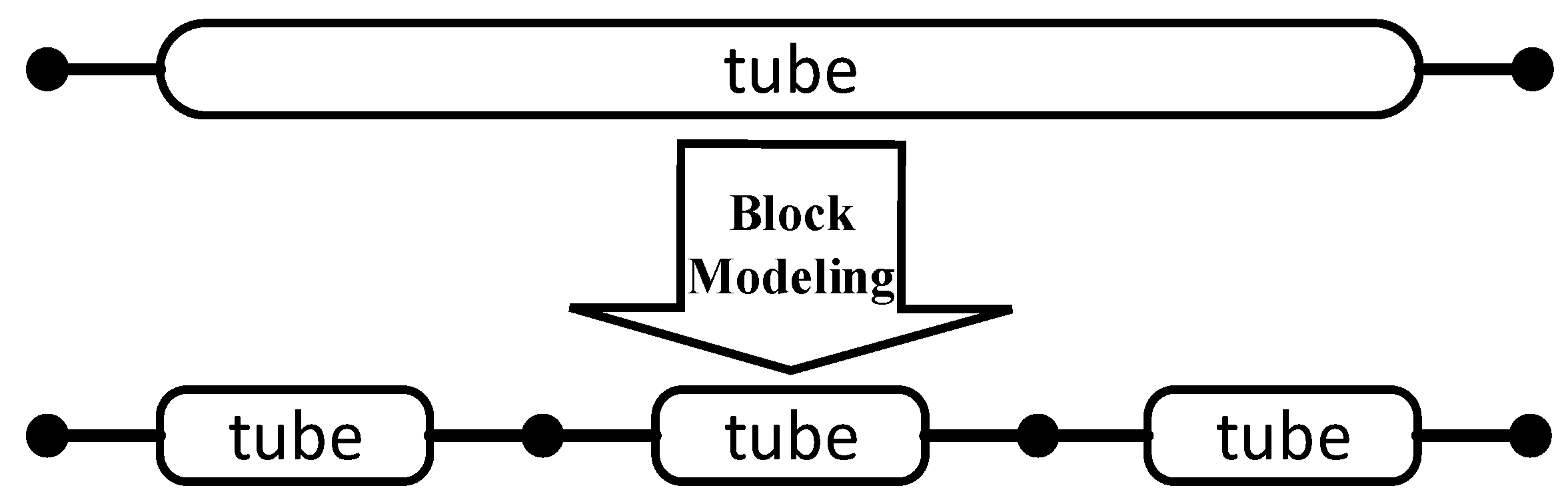
Constrained by inherent limitations of low-dimensional simulation methods in spatial representation, multidirectional flow inside a single element cannot be reproduced by algorithmic refinement alone. Accordingly, progress must be made by upgrading the modeling strategy itself. A representative example is the prevailing low-dimensional modeling approach for pipe elements: under the assumptions that radial flow can be neglected and that cross-sectional variables are uniformly distributed, axial flow is represented by an axial partitioning strategy that decomposes a single pipe element into a series of identical sub-element models connected in sequence [17], as illustrated in Figure 6.
Figure 6.
Schematic of partition-based modeling for a pipe element.
This approach, conceptually analogous to mesh generation, strikes a balance between fully multidimensional grid-based models and low-dimensional models: it improves simulation accuracy by increasing model resolution while preserving computational efficiency, thereby enabling the evolution of key variables in a pipe to be captured. Unlike pipes, where the flow can typically be treated as predominantly axial, the flow within a cavity is considerably more complex. At an arbitrary location, the local motion may be regarded as the vector superposition of axial and radial components. Consequently, when a partition-based modeling strategy is adopted, the cavity flow must first be simplified into subdomains according to its characteristic flow features. Within each subdomain, the flow is represented as predominantly unidirectional, and the overall cavity dynamics are then reconstructed by coupling multiple subdomains to capture the dominant flow behavior.
Per findings in Ref. [16], cavity port quantity governs the constraint on intracavity axial flow. This work analyzes flow characteristics of centrally arranged single-port and dual-port cavities under fast transient responses. Three-dimensional models for the single-port and dual-port cavities are established and simulated using the validated CFD methodology reported in Ref. [16]. The corresponding model parameters are listed in Table 1. The single-port three-dimensional model is shown in Figure 3b, and the dual-port three-dimensional model is shown in Figure 7. For the dual-port configuration, to reproduce pressure oscillations within the cavity, an upstream cavity is introduced on the side opposite the ambient-pressure boundary to provide a dynamic boundary condition. To isolate the effects of interest, the geometric parameters of the upstream cavity are held constant throughout the subsequent investigations.
Figure 7.
Schematic of the dual-port cavity model.
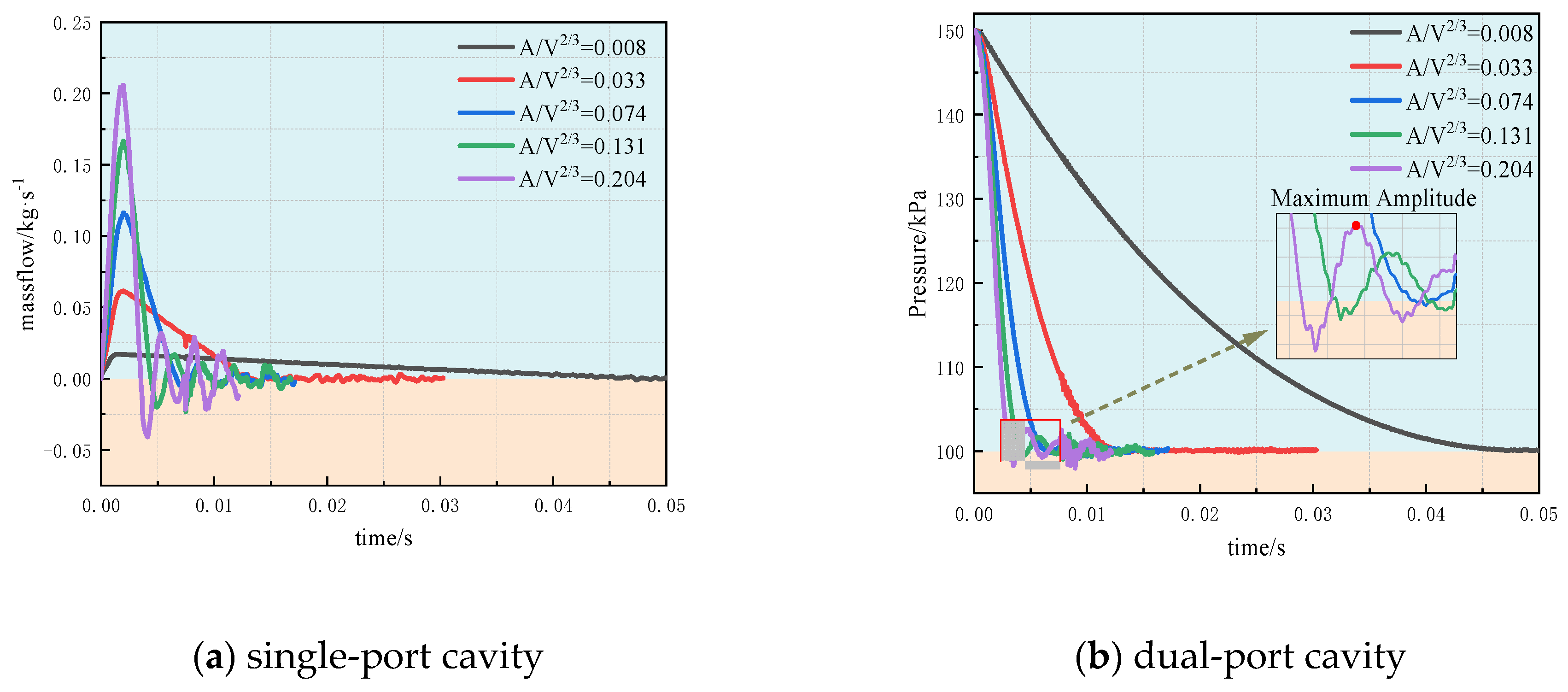
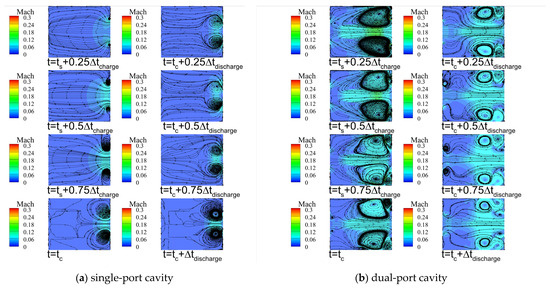
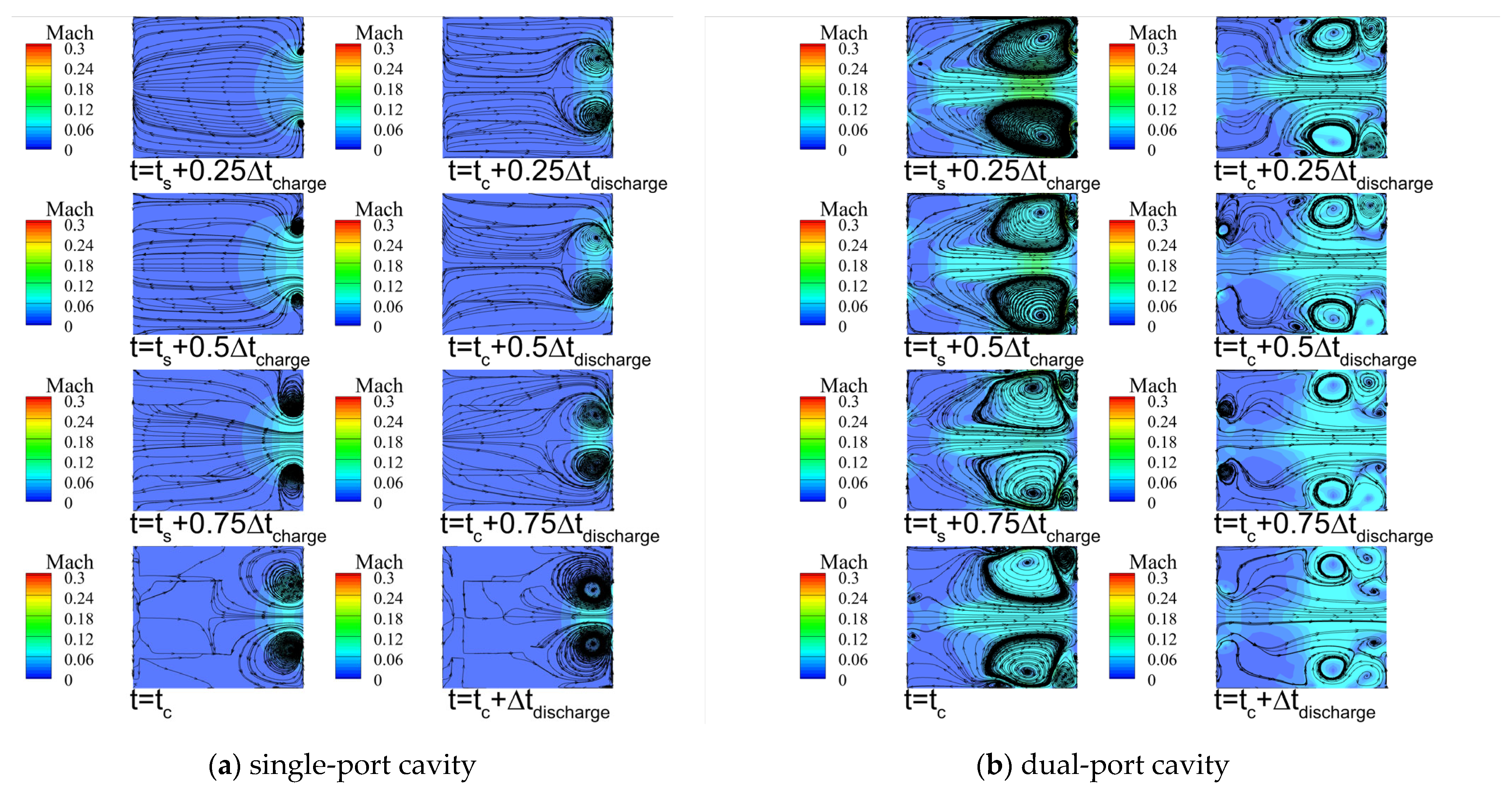
The discharge and charge processes within the cavity are identified from the time history of the cavity outlet mass flow rate obtained from the three-dimensional simulations, as shown in Figure 8. The analysis focuses on one representative cycle composed of the first charge process and the second discharge process after the onset of pressure oscillations. The start of the charge process is defined as instant , and the end is defined as instant . The charge duration is denoted by , and the discharge duration is denoted by . Both durations are divided into four equal intervals, and the velocity distributions and streamline fields in the cavity at the selected instants are compared, as shown in Figure 9.
Figure 8.
Temporal variation of cavity mass flow rate.
Figure 9.
Streamlines in the cavity during different processes.
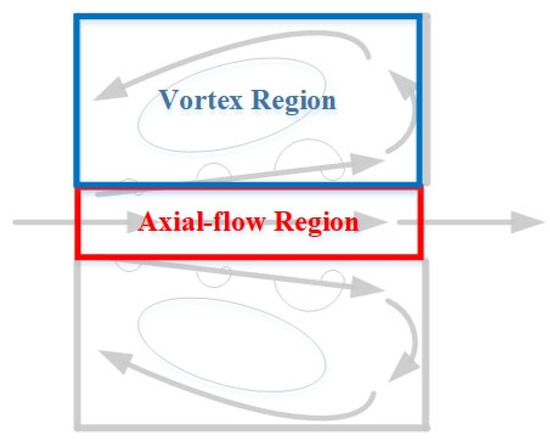
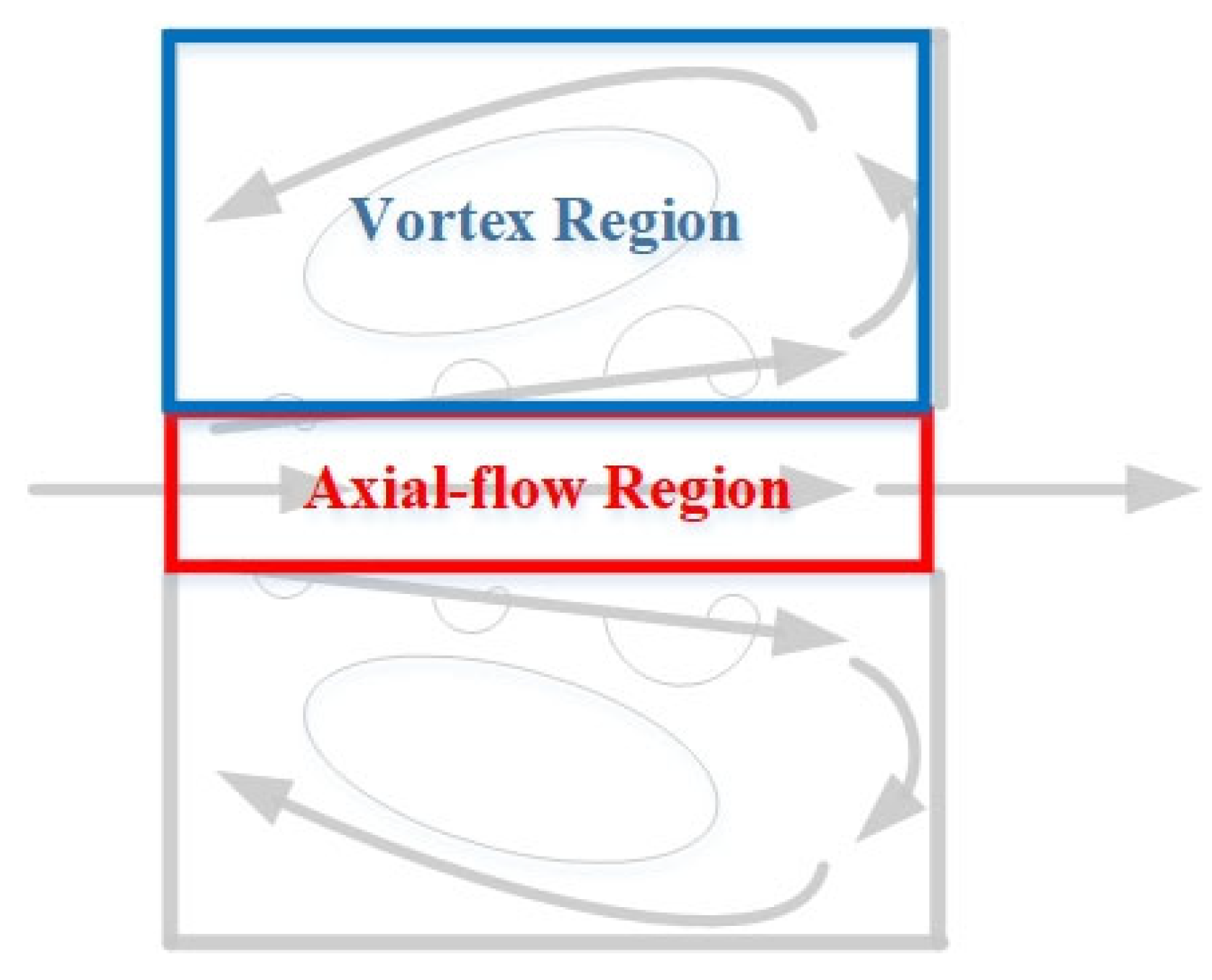
Based on the results in Figure 9, the internal flow characteristics of cavities with different port configurations are compared across the charge and discharge processes. For both single-port and dual-port cavities, the flow within the port radius is almost entirely axial. Outside this radius, vortical flow is observed, with both the size and location of the vortices varying dynamically with the process. Guided by these features, the cavity is partitioned into two regions using the port radius as the boundary: the low-radius region, where only axial flow is considered, is defined as the axial-flow region; the high-radius region, where the presence of vortices leads to complex flow structures, is termed the vortex region, as shown in Figure 10. The flow features within the vortex region require further refined analysis.
Figure 10.
Schematic of cavity partitioning.
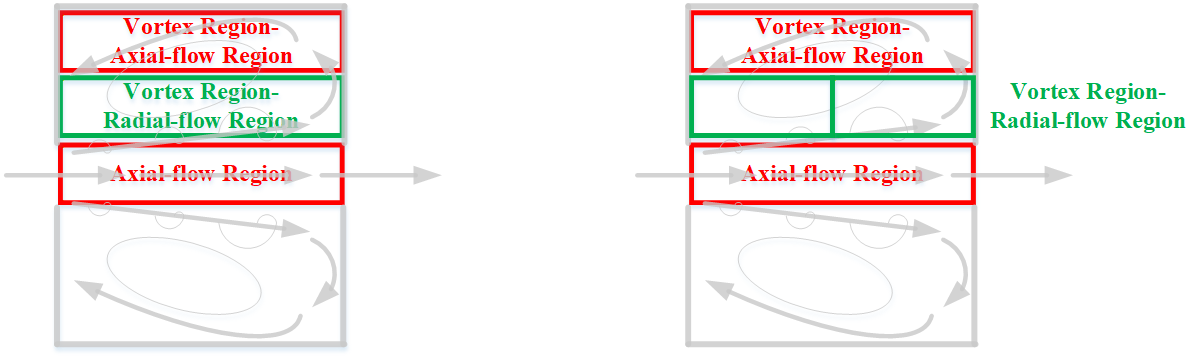
For the single-port cavity, the vortex in the vortex region gradually increases in size during the recharge process, whereas no pronounced change is observed during the discharge process. For the dual-port cavity, a vortex appears in the vortex region near the port connected to the ambient environment during recharge, and its position and size remain essentially stable. During discharge, a vortex develops near the port connected to the upstream cavity as the process progresses, and it disappears at the end of the discharge process. Taken together, these observations indicate that vortices persist throughout the recharge and discharge processes and are not fundamentally altered by either the number of the port or the process stage. Under the influence of the vortex, the lower-radius portion of the vortex region exhibits pronounced radial motion, whereas the higher-radius portion remains predominantly axial. The vortex region is therefore further partitioned on the basis of Figure 10, as shown in Figure 11a. Moreover, according to the direction of the radially moving gas in the vortex region, the radial flow on the two sides of the vortex core is opposite when a vortex is present. The partitioning of the vortex region is thus refined again, as shown in Figure 11b, providing the basis for modular partitioning and modeling of the cavity.
Figure 11.
Schematic of vortex-region partitioning. (left) Unrefined Vortex Region-Radial-flow Region; (right) Refined Vortex Region-Radial-flow Region.
3.2. Method for Quantifying the Partition Range
After determining the modular partitioning strategy for the cavity, the spatial extent of each region within the cavity must be quantified. Since the SAS may operate under different engine conditions during fast transient responses, the initial pressure ratio between each cavity and its boundaries is not known in advance. Thus, the effect of the initial pressure ratio on region boundaries is neglected during modeling. This study is conducted at an initial pressure ratio of 1.5, and the model’s prediction accuracy for other initial pressure ratios will be evaluated in subsequent analysis.
Figure 11 shows that, during an individual charge or discharge process, the flow state within the vortex region evolves dynamically over time. Consequently, the flow characteristics at any single instant are not suitable as a direct quantitative basis for defining the partitioned extent. Within the same process, however, the flow characteristics of the vortex region, including the vortex topology and velocity distribution, exhibit a high degree of similarity, with differences arising primarily in the spatial extent of the vortex. The flow-field data from a single process can therefore be temporally averaged to provide a robust basis for quantifying the partitioned extent.
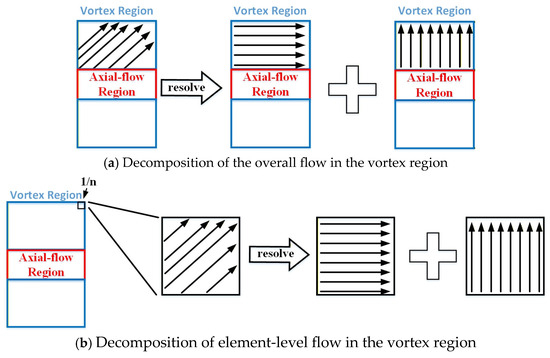
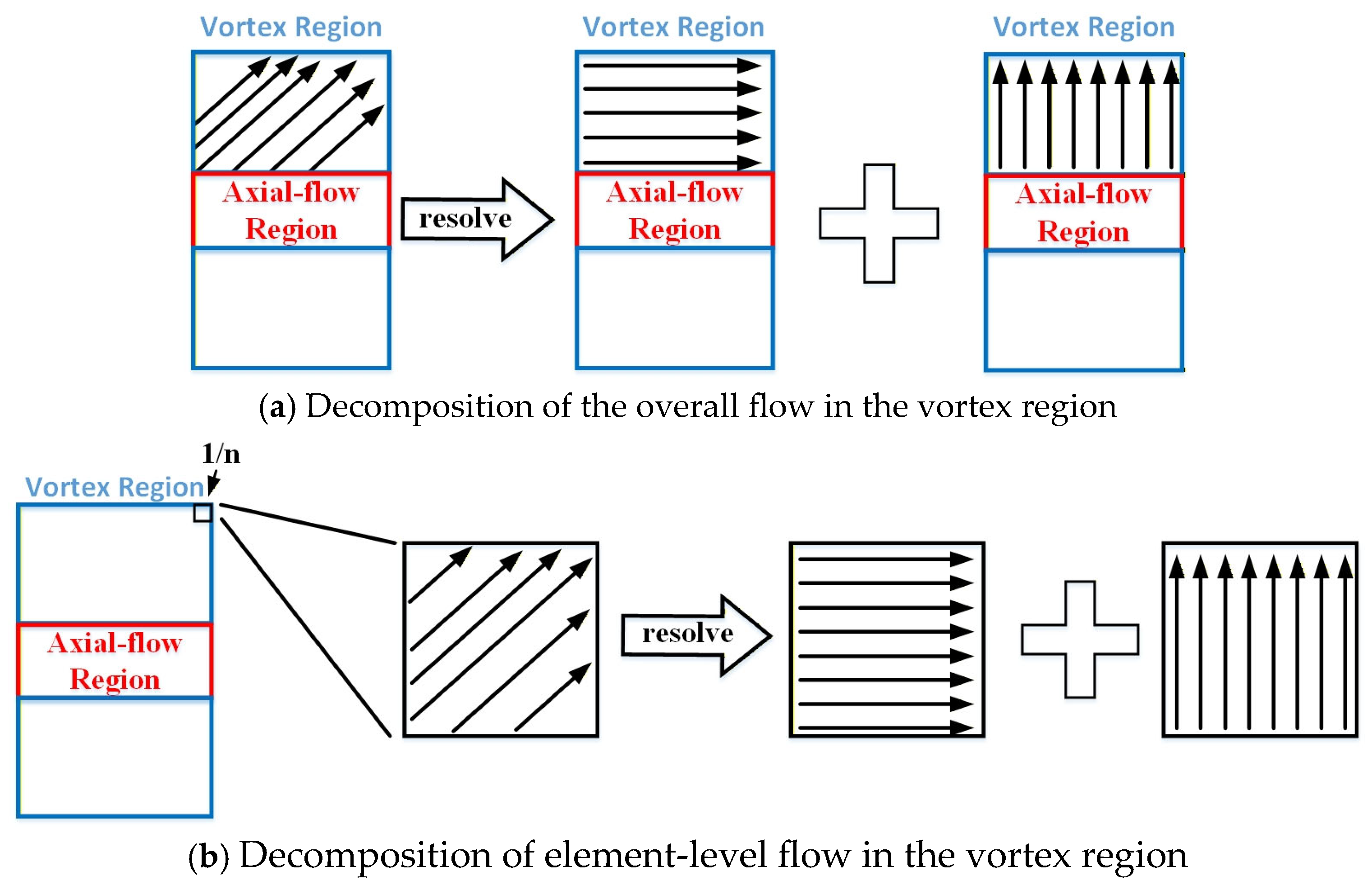
The flow can be decomposed into axial and radial components. By analyzing the relative contributions of axial and radial motion within the vortex region over a single cycle, the quantitative allocation of the vortex region can be determined. A simplified approach treats the entire vortex region as a single entity, neglecting its internal flow-field details, and superposes all flow vectors within the region into an equivalent flow with a single direction, as illustrated in Figure 12. To further improve the accuracy of the quantitative allocation, this study adopts the logic of mesh discretization used in three-dimensional modeling: the vortex region is divided into multiple cells, the flow within each cell is analyzed individually, and the results are accumulated to obtain the final allocation ratio of the vortex region.
Figure 12.
Schematic of flow decomposition.
The vortex region is discretized into square elements. At any time within the selected cycle, the flow in any element is represented as the vector superposition of axial and radial motion, as shown in Figure 12. According to the mass-flow relationship given in Equation (1), for the nth element at time , the ratio of the decomposed axial flow rate to the radial flow rate equals the ratio of the axial velocity to the radial velocity . The quantity is used as the allocation ratio between the axial-flow extent and the radial-flow extent for the nth element at time . The cycle-averaged value of , denoted by , is then taken as the allocation ratio for the nth element. By weighting with the corresponding element volume within the vortex region and summing across all elements, the axial-flow region and the radial-flow region are obtained, along with their ratio . The relevant expressions are given by the following set of equations, where denotes the total number of samples within one cycle.
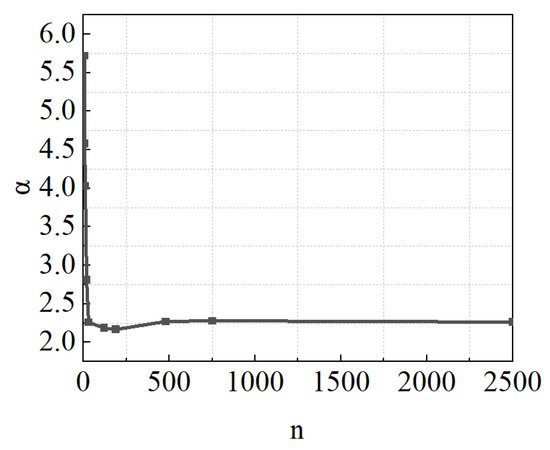
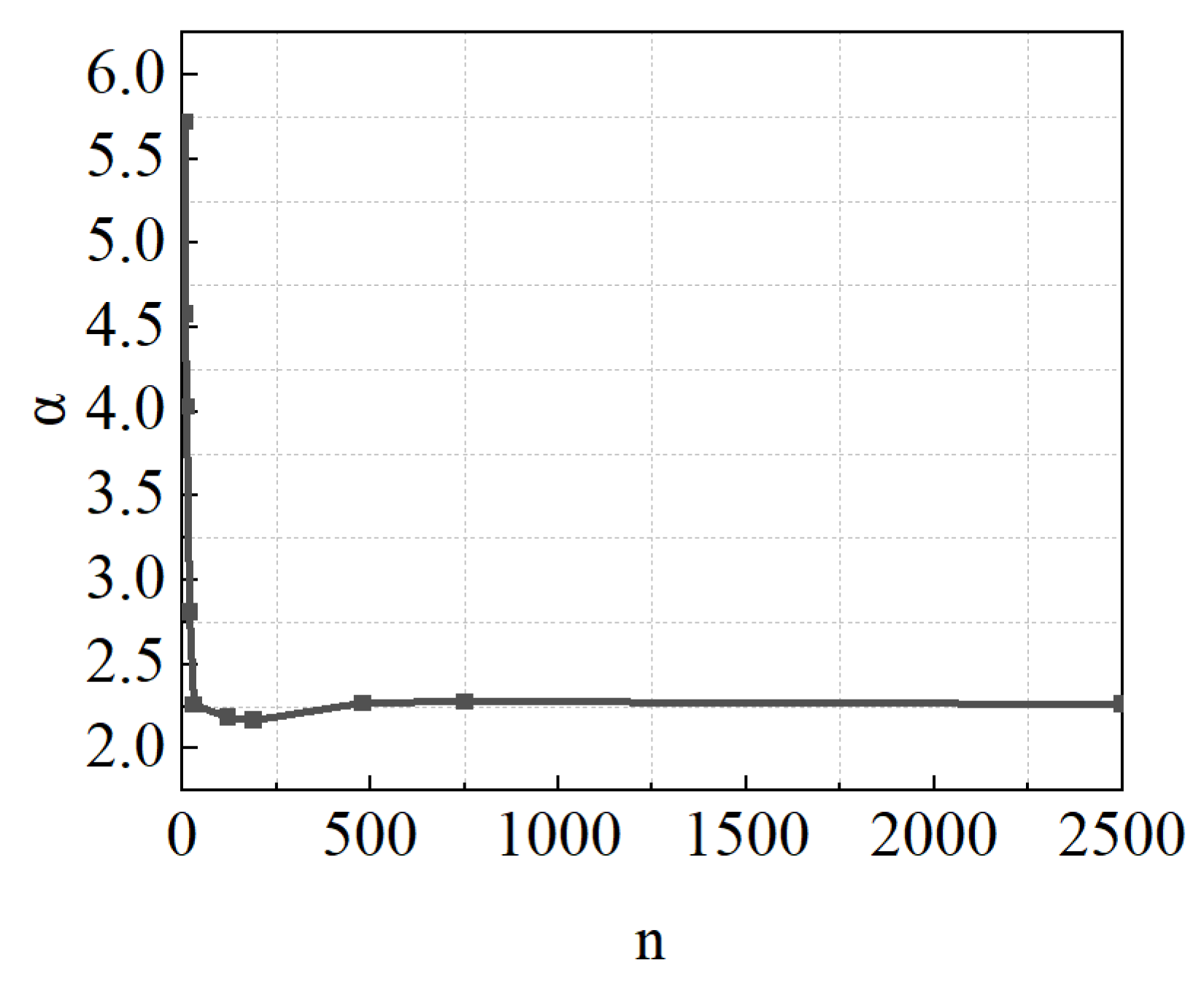
The dependence of the parameter on is examined, as shown in Figure 13. The results indicate that under condition , remains essentially unchanged as increases. Therefore, subsequent investigations are conducted under condition .
Figure 13.
Effect of on .
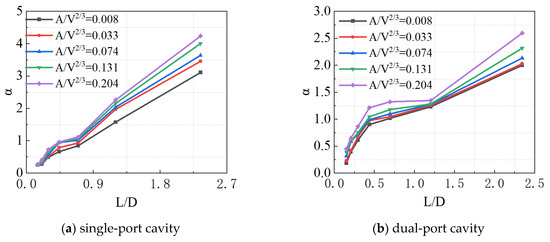
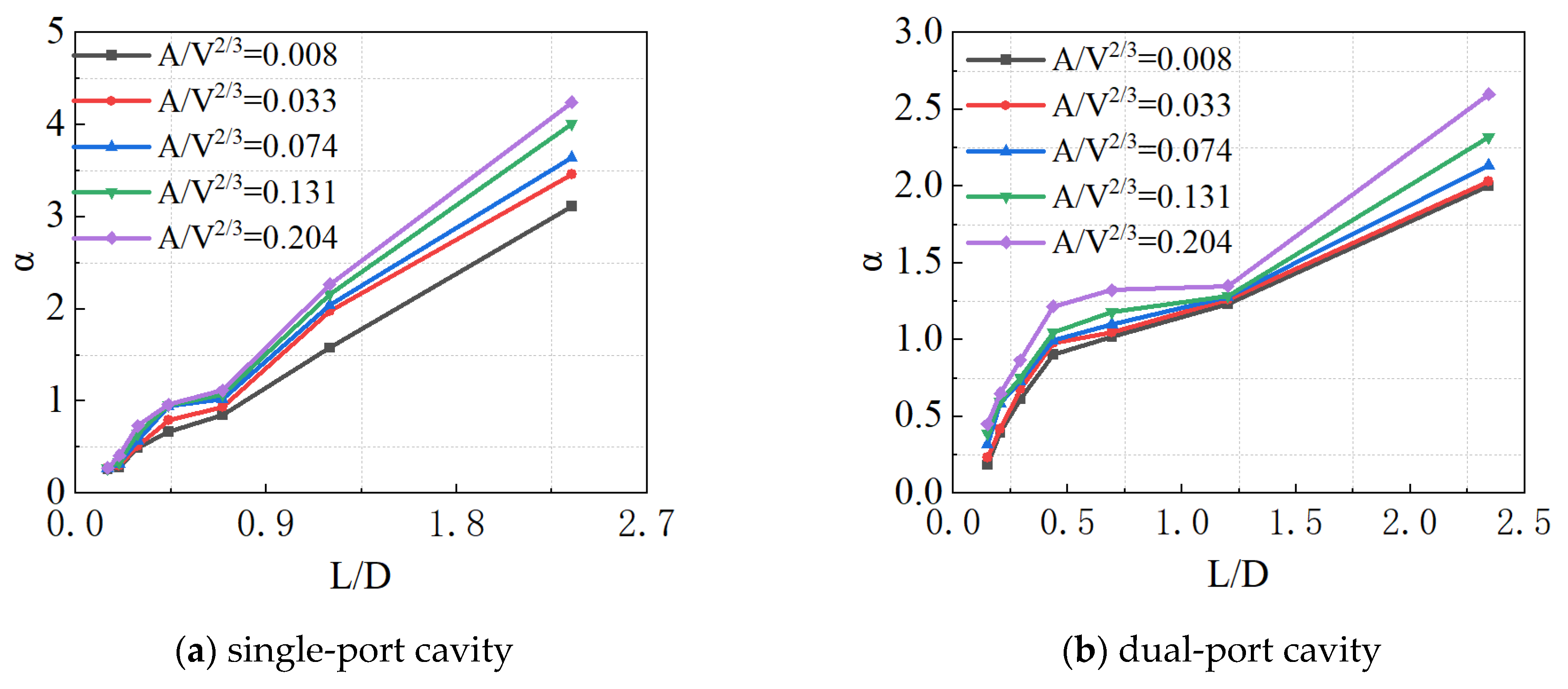
Ref. [16] analyzed how cavity geometric parameters influence gas inertial effects in the cavity when inertia is explicitly taken into account. The underlying mechanism is that the axial and radial dimensions constrain flow development in their respective directions, which necessitates incorporating the influence of cavity geometry when allocating the spatial extent of each partitioned region. Cavities spanning different values of and are analyzed, and the resulting variations of with and are obtained for both the single-port cavity and the dual-port cavity, as shown in Figure 14. During low-dimensional modeling, the ratio between the axial-flow extent and the radial-flow extent within the vortex region can be determined by interpolating the tabulated cavity geometric parameters.
Figure 14.
Effect of and on .
3.3. Axial-Flow Model
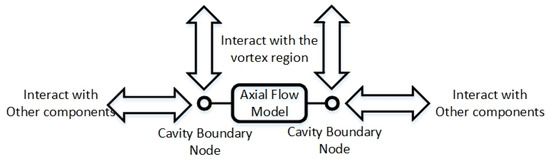
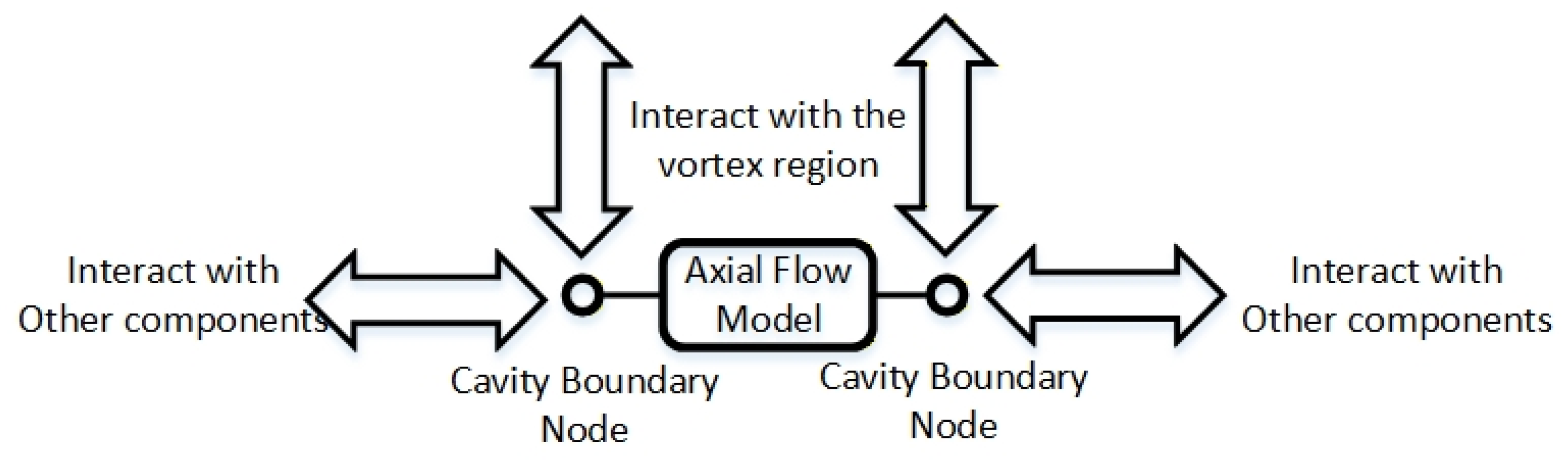
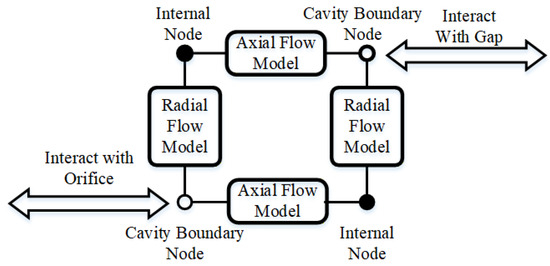
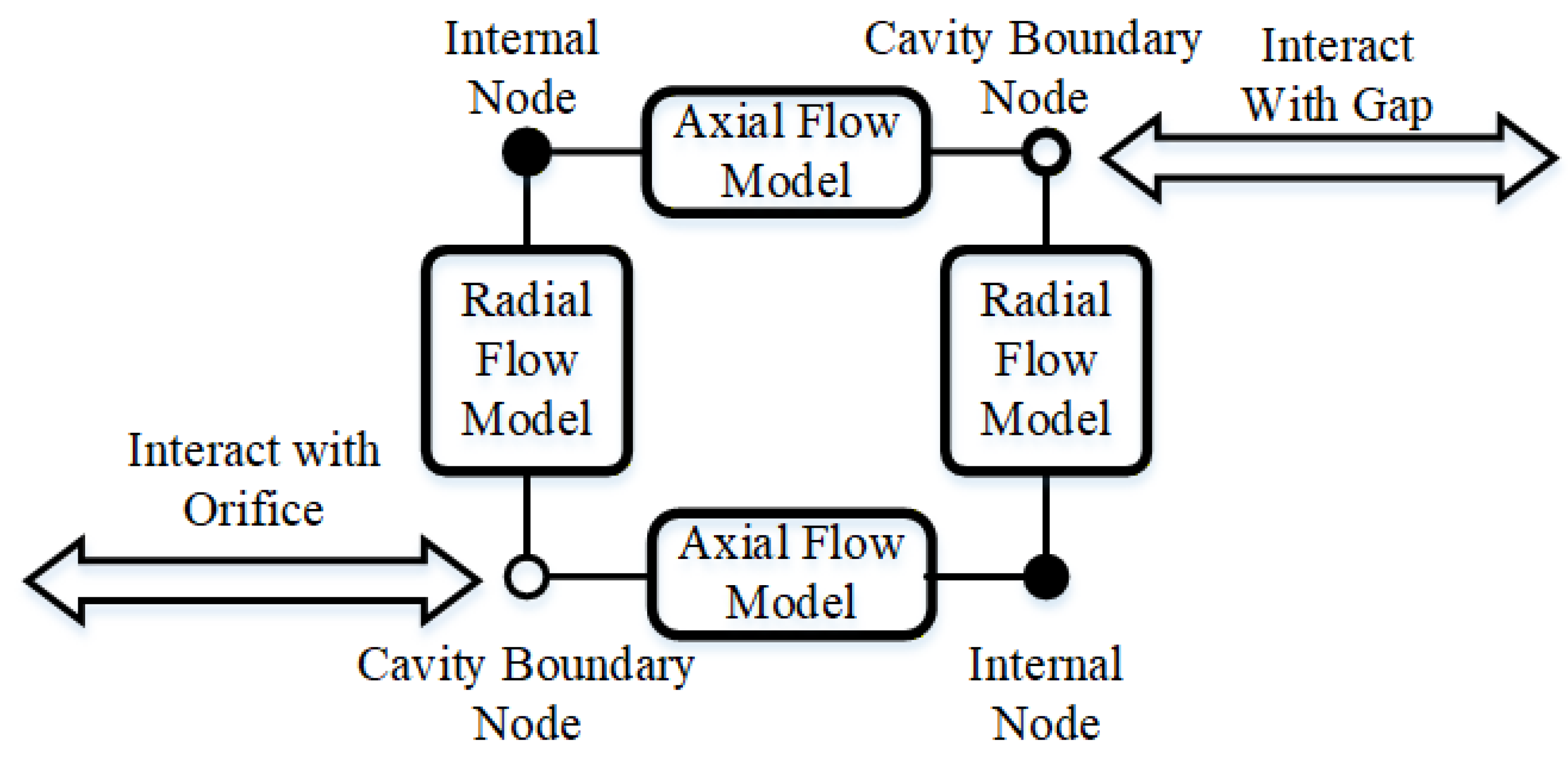
Based on the modular partitioning described above, the low-dimensional cavity model must represent transport in both the axial and radial directions. Accordingly, we introduce physically justified assumptions and construct models consistent with the dominant features of each flow region. Two axial-flow regions are identified within the cavity; here, we first analyze the axial-flow region within the radial extent of the port. In this region, the gas motion is primarily axial, and its interactions with the vortex region and other elements along the flow path occur exclusively at the regional boundary. The corresponding modeling approach is illustrated in Figure 15.
Figure 15.
Schematic of the modeling approach for the axial-flow region.
Following this modeling approach, the axial-flow model for the axial-flow region is established under the assumptions listed below.
- (1)
- Within this region, the gas flow is purely axial, and the momentum and energy losses associated with interactions with other regions are neglected.
- (2)
- Frictional effects between this region and adjacent non-axial-force regions are not considered.
- (3)
- All gas properties are uniform over any given radial cross-section and vary only linearly along the axial direction.
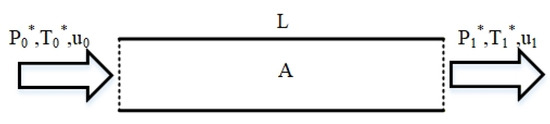
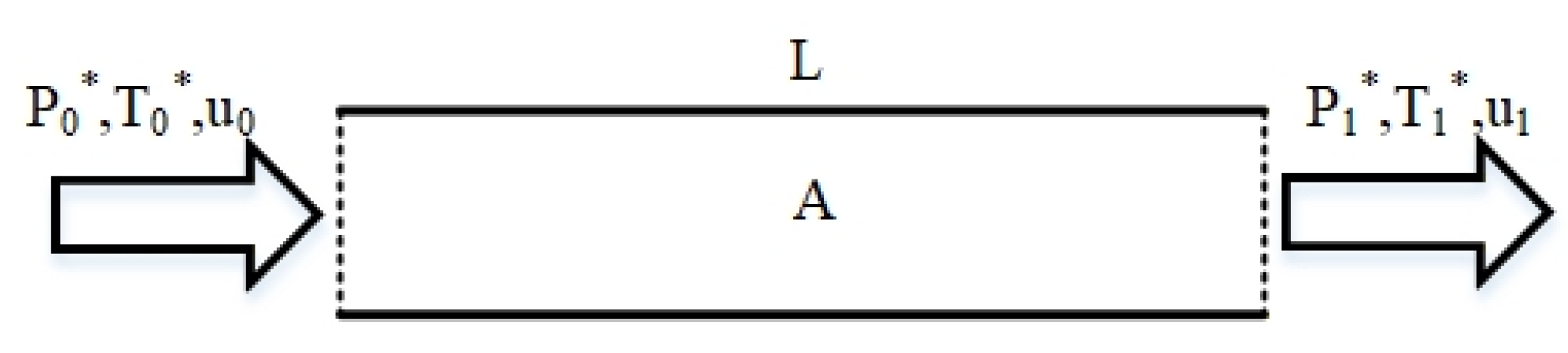
On the basis of these assumptions, an axial-flow element is introduced, as shown in Figure 16. The flow direction of the axial-flow element is prescribed a priori and defined as positive. The inlet flow state is specified by inlet total pressure , inlet total temperature , and inlet velocity , whereas the outlet state is specified by outlet total pressure , outlet total temperature , and outlet velocity . The geometric parameters are the flow cross-sectional area and the element length .
Figure 16.
Schematic of the axial-flow model.
The relationship between total temperature and static temperature is given in Equations (7) and (8).
From Equations (7) and (8), it follows that
The relationship between total pressure and static pressure is given in Equation (10).
Using the expressions above, the static-density identity of the gas can be derived, as shown in Equation (11).
Here, and denote the specific heat at constant pressure of the gas and the ratio of specific heats, respectively, and is the Mach number. Using Equation (11), the static gas density at the port of the axial-flow element can be evaluated. Building on the solution strategy for transient air systems reported in Ref. [9], a momentum residual equation can be formulated on the basis of the mass-residual and energy-residual equations, as expressed in Equation (12).
In this equation, and are the static pressures at the element inlet and outlet, respectively, and is the arithmetic mean of the inlet and outlet flow velocities.
The axial-flow model in the vortex region is largely consistent with that of the axial-flow region, except that wall-friction resistance along the cavity must be accounted for. Accordingly, a friction-resistance term is added to Equation (12), yielding Equation (13).
During the fast transient response, flow reversal may occur; consequently, the flow resistance is direction dependent. f is evaluated using Equation (14).
In this equation, is the wall-resistance coefficient, obtained from CFD simulations or calculated using engineering correlation formulas.
3.4. Radial-Flow Model
The influence of the cavity dimensionless geometric parameters on the extent of the region indicates that the radial-flow region varies with the cavity port area and the cavity shape . Accordingly, the element adopted to represent the radial-flow region is selected based on the corresponding regional extent.
When the radial-flow region has a nonzero extent and the radial length must be retained, the axial-velocity effect within this region can be neglected; therefore, an axial-flow element can be used to represent the radial flow. When the radial-flow region is absent and the radial length can be ignored, the model can be reduced to a flow-through element that neglects inertia and length effects. By applying the continuity equation and the energy-conservation equation, the expression for the flow rate through a cross-section can be derived, as given in Equation (15).
Here, is the flow area, is the inlet total pressure, is the inlet total temperature, and is the outlet static pressure.
4. Validation of the Modular Low-Dimensional Modeling Method for a Fast Transient Cavity
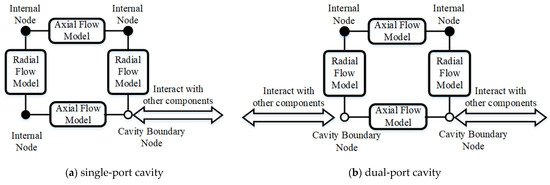
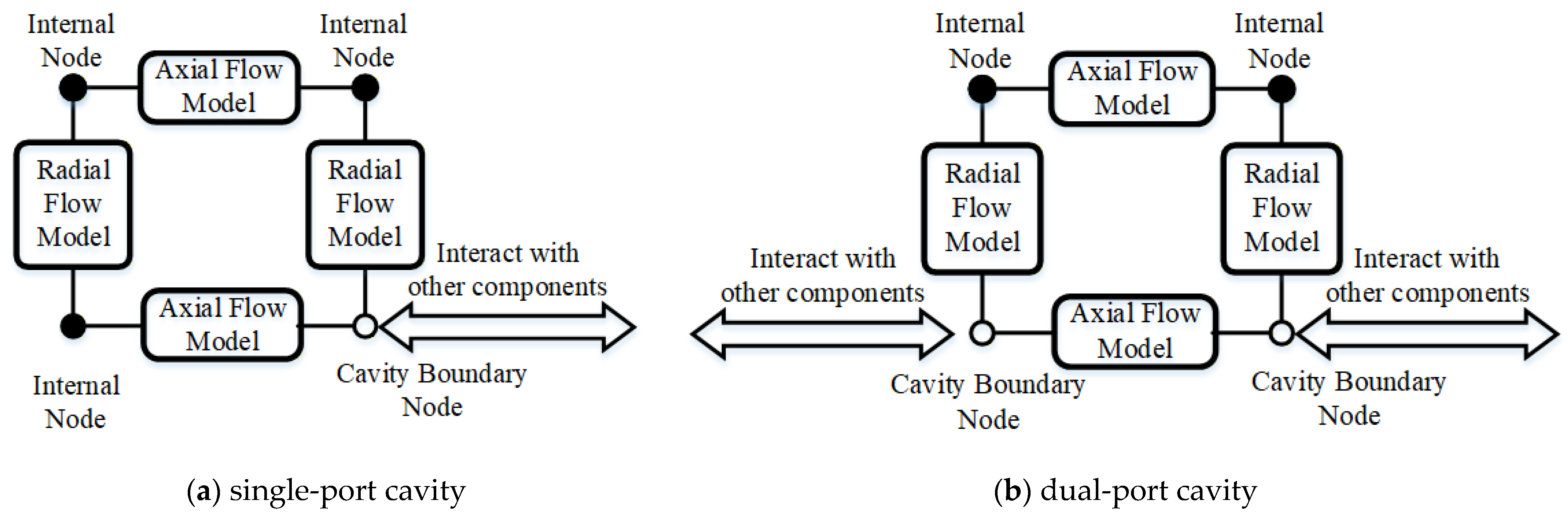
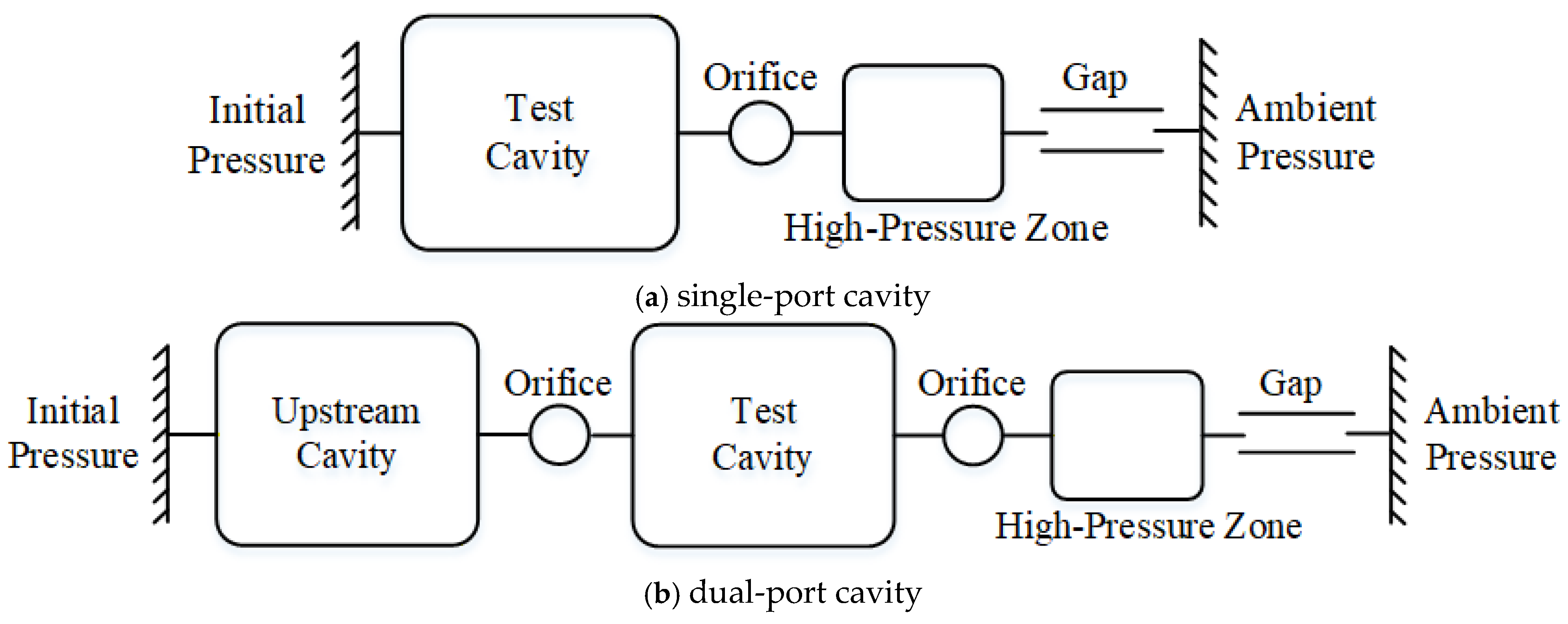
Using the zonal modular modeling method, low-dimensional cavity models are constructed for both single-port and dual-port cavities. Numerical simulations are then performed to resolve the fast transient response during the cavity discharge process, and the results are compared with the corresponding three-dimensional simulations to validate the predictive accuracy of the low-dimensional models under different port areas , cavity shapes , and initial pressure ratios . This comparison provides a basis for assessing the reliability of the modular modeling method for fast transient cavities. The single-port and dual-port cavity models established using this modeling method are shown in Figure 17.
Figure 17.
Schematic of the modular low-dimensional cavity model.
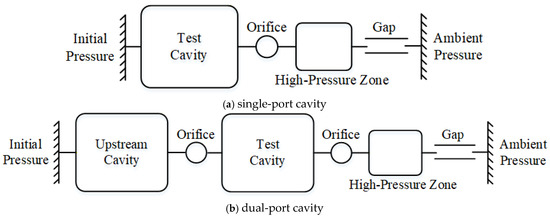
The overall flow-path structure is shown in Figure 18. To represent the influence of the local high-pressure region near the outlet reported in Ref. [16], an element characterizing this local high-pressure region is introduced between the test cavity and the ambient-pressure boundary. Based on the geometric data provided in Ref. [16], this element has a length of 80 mm and a diameter of 80 mm. A corresponding model is established with reference to the single-port cavity model, as shown in Figure 19. Interpolation of the data in Figure 14 gives the corresponding value as 1.89. The mass flow rate from the test cavity to the ambient environment is selected as the comparison metric, and the simulation accuracy of the low-dimensional model is assessed by comparing the duration of the cavity charge and discharge processes and the total transported mass.
Figure 18.
Schematic diagram of the low-dimensional cavity discharge flow path model.
Figure 19.
Schematic diagram of the local high-pressure zone model.
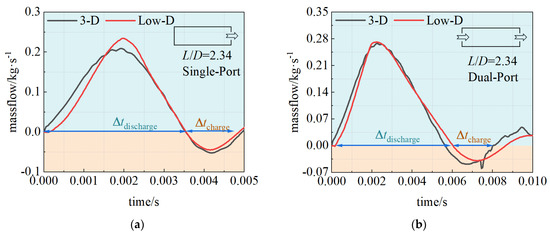
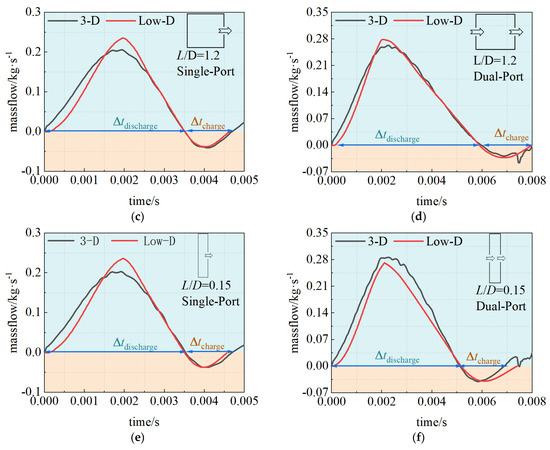
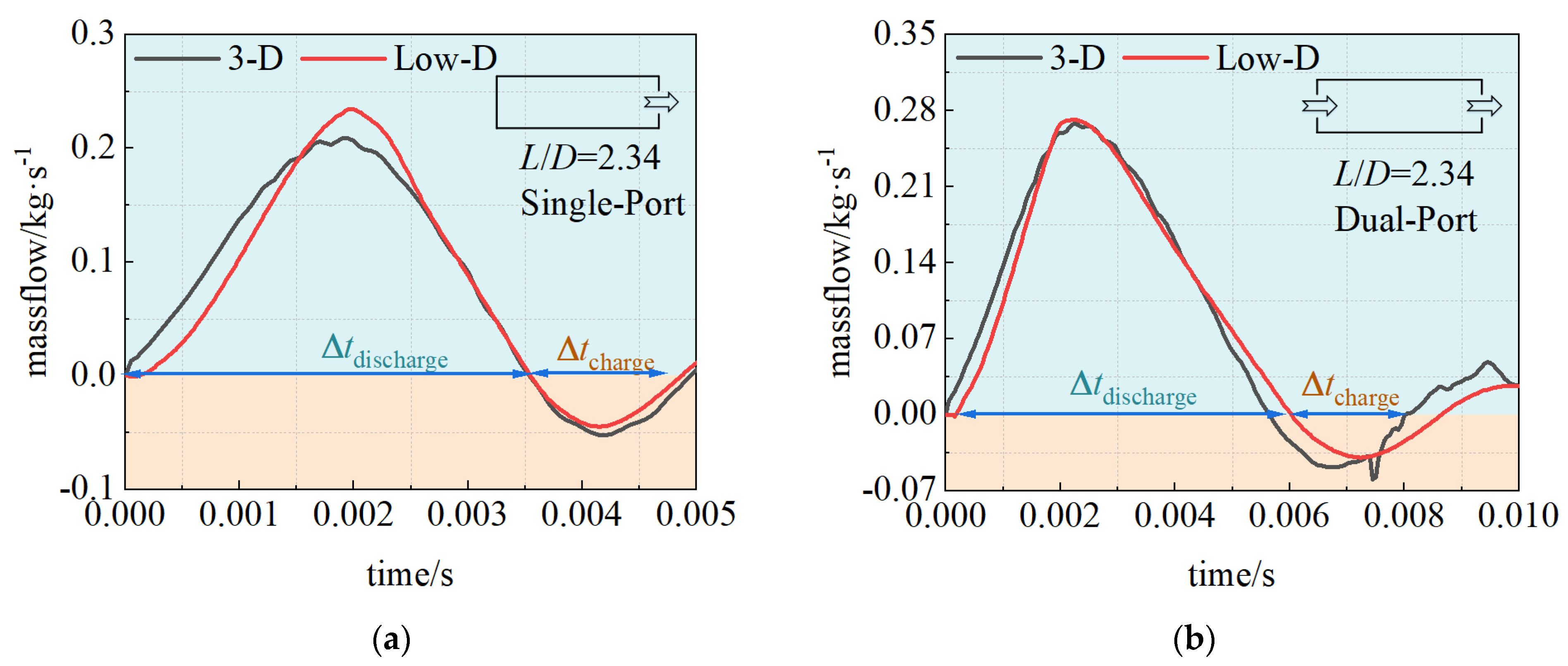
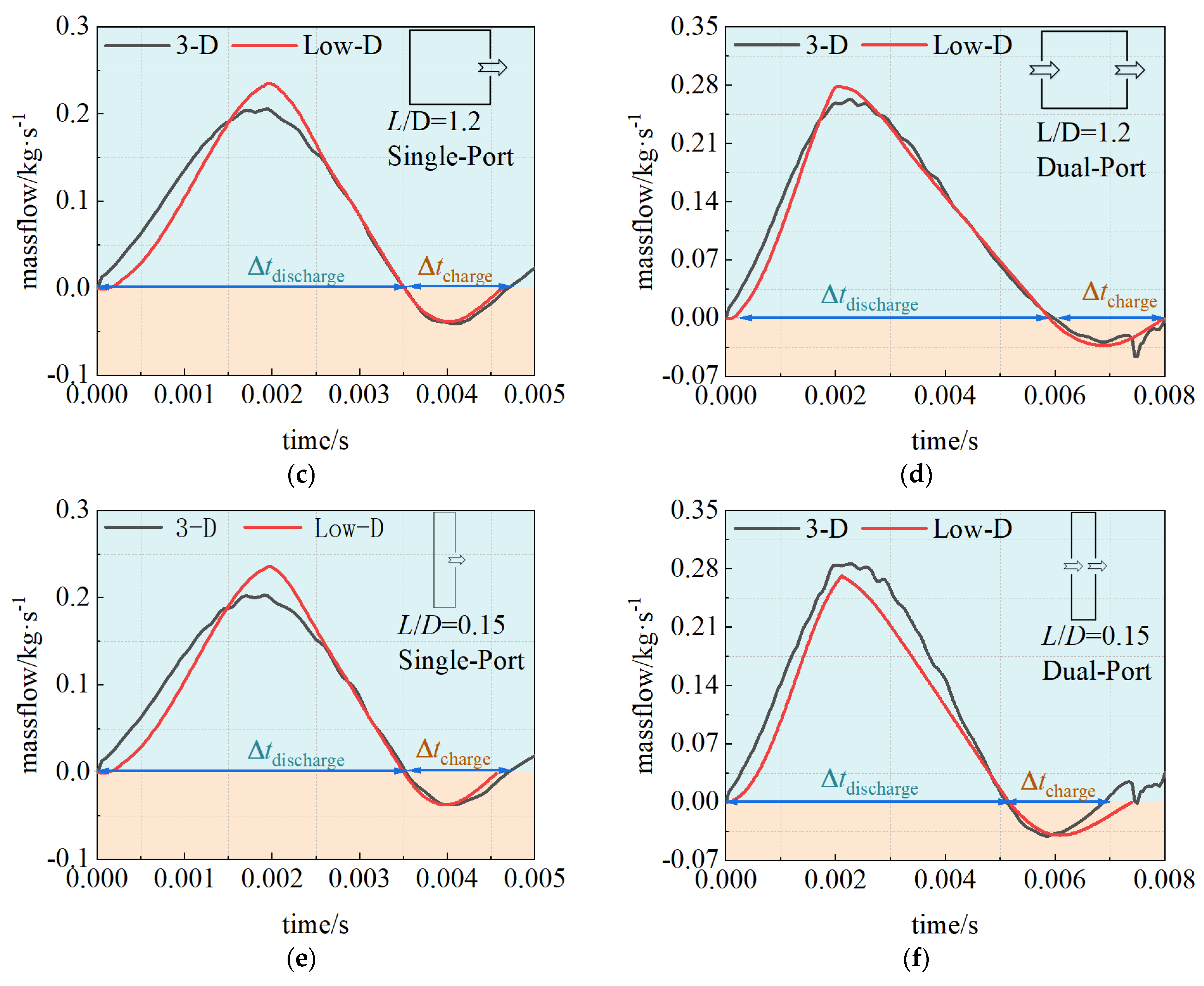
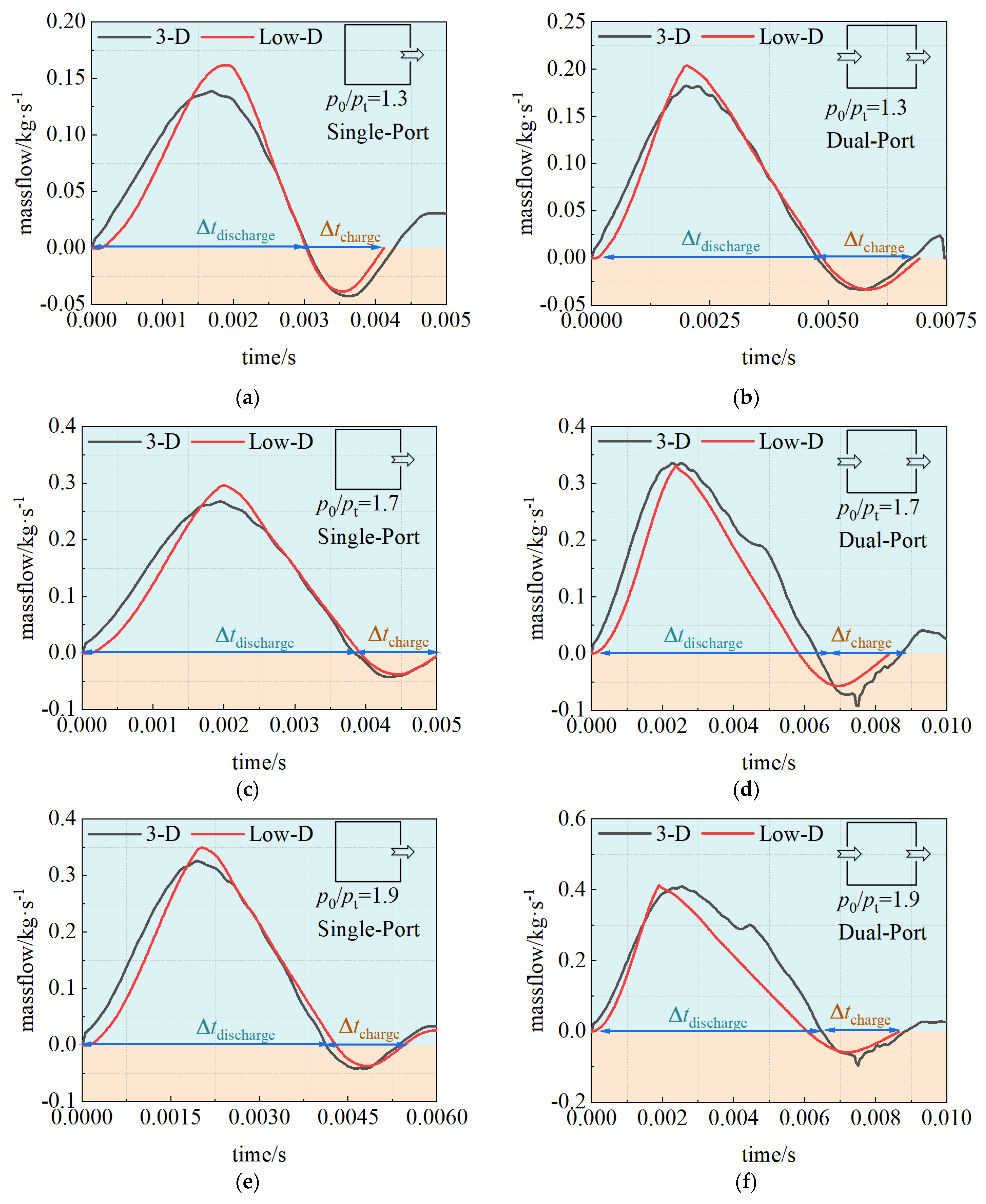
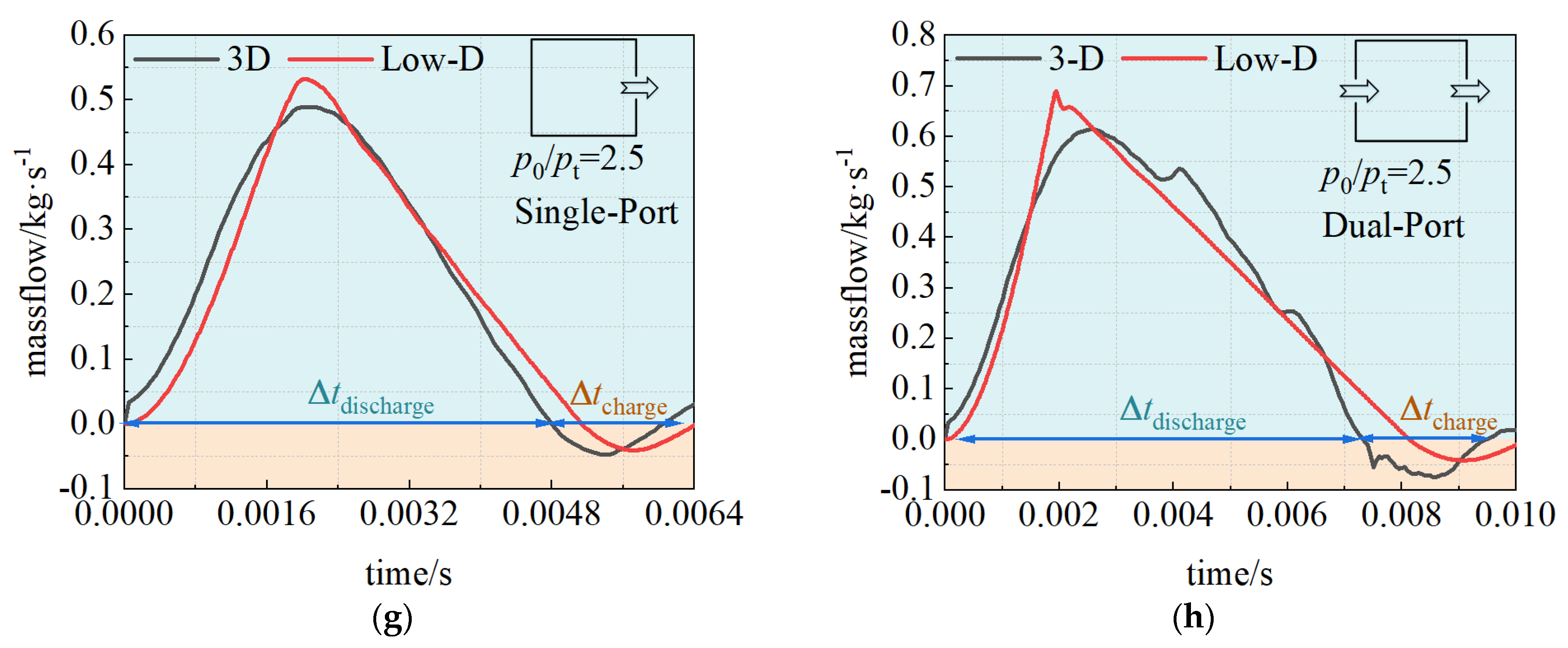
Following the cases listed in Table 2, three-dimensional simulations and low-dimensional simulations were performed for the fast transient discharge response of both a single-port cavity and a dual-port cavity. The simulation accuracy of the low-dimensional model under different conditions was evaluated by comparison, and the results are shown in Figure 20. Quantitative comparisons of discharge-process duration , discharged-gas mass , charge-process duration , and charged-gas mass under different conditions are reported in Table 3, Table 4 and Table 5.
Table 2.
Table of simulation cases for comparison across .
Figure 20.
Comparison of cavity outlet flow rate variations under different values of . (a) L/D = 2.34, Single-Port; (b) L/D = 2.34, Dual-Port; (c) L/D = 1.2, Single-Port; (d) L/D = 1.2, Dual-Port; (e) L/D = 0.15, Single-Port; (f) L/D = 0.15, Dual-Port.
Table 3.
Comparison of cavity simulation results for .
Table 4.
Comparison of cavity simulation results for .
Table 5.
Comparison of cavity simulation results for .
Based on the preceding analysis, under different length-to-diameter ratios, the low-dimensional and three-dimensional simulations of the fast transient discharge response in single-port and dual-port cavities exhibit certain discrepancies yet show good overall consistency. Both approaches accurately capture the dynamic evolution of the outlet flow rate from the cavity.
Under different length-to-diameter ratios, the maximum error in during the discharge process is 16.6%, while that in is 7.1%. During the charge process, the maximum error in is 24.0%, and that in is 22.8%. Overall, the errors of the main parameters remain within 10% for most operating conditions. The simulation accuracy for the discharge process is generally higher than that for the charge process, and the errors under single-port conditions are consistently smaller than those under dual-port conditions. The largest discrepancy occurs under condition , where the error in the total inflow during the charge process of the dual-port cavity reaches 24.0%.
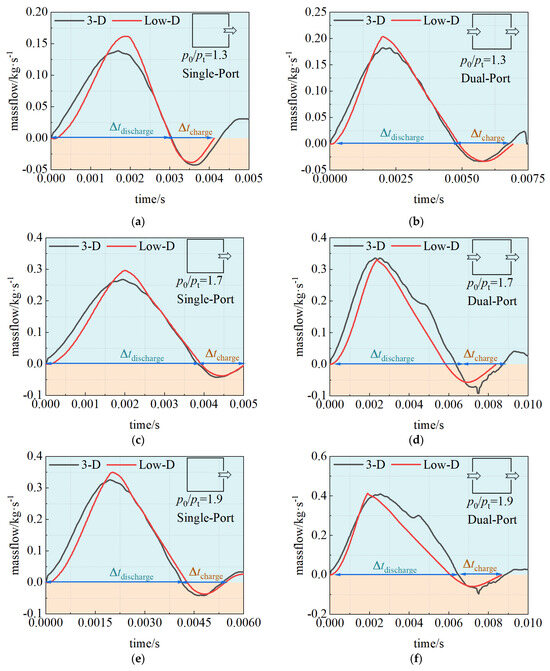
Using the operating conditions listed in Table 6, we perform three-dimensional and low-dimensional simulations of the discharge fast transient response for both single-port and dual-port cavities to evaluate the prediction accuracy of the low-dimensional model under different conditions. The comparisons are summarized in Figure 21. Quantitative results for discharge duration , total discharged mass , charge duration , and total charged mass under different conditions are reported in Table 7, Table 8, Table 9 and Table 10. The simulation results for have already been presented in Figure 20c,d as well as in Table 4 and are therefore not repeated here.
Table 6.
Table of simulation cases for comparison across different values.
Figure 21.
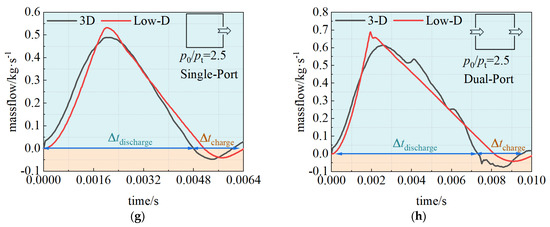
Comparison of cavity outlet flow rate variations under different values of . (a) p0/pt = 1.3, Single-Port; (b) p0/pt = 1.3, Dual-Port; (c) p0/pt = 1.7, Single-Port; (d) p0/pt = 1.7, Dual-Port; (e) p0/pt = 1.9, Single-Port; (f) p0/pt = 1.9, Dual-Port; (g) p0/pt = 2.5, Single-Port; (h) p0/pt = 2.5, Dual-Port.
Table 7.
Comparison of cavity simulation results for s.
Table 8.
Comparison of cavity simulation results for .
Table 9.
Comparison of cavity simulation results for .
Table 10.
Comparison of cavity simulation results for .
Under different pressure-ratio conditions, the low-dimensional and three-dimensional simulation models show good overall consistency in predicting the fast transient discharge response of single-port and dual-port cavities, although certain discrepancies remain across individual operating conditions. The low-dimensional approach effectively reproduces the key dynamic features of the cavity during both discharge and charge stages under varying pressure ratios.
From the perspective of the error distribution, the overall simulation accuracy during the discharge process is superior to that during the charge process. The errors for case are generally below 10.1%, whereas the maximum error for case reaches 24.2%. By contrast, the charge process exhibits larger errors overall, with the maximum error in case reaching 16.9% and the error in case increasing to as high as 39.0%. In addition, the error level under single-port conditions is generally lower than that under dual-port conditions. As the pressure ratio increases, the error under dual-port conditions shows a pronounced upward trend. Among all cases, the most significant deviation occurs in the dual-port cavity condition at pressure ratio , where the error in the total mass of inflowing gas during the charge process reaches 39.0%.
Using the operating conditions listed in Table 11, we conduct three-dimensional and low-dimensional simulations of the discharge fast transient response for both single-port and dual-port cavities to further assess the predictive accuracy of the low-dimensional model under different conditions. The comparison is summarized in Figure 22. Quantitative comparisons of discharge duration , total discharged mass , charge duration , and total charged mass under different conditions are reported in Table 12 and Table 13. The simulation results for have already been presented in Figure 20c,d as well as in Table 4 and are therefore not repeated here.
Table 11.
Table of simulation cases for comparison across different values.
Table 12.
Comparison of cavity simulation results for different values.
Table 13.
Comparison of cavity simulation results for different values.
Figure 22.
Comparison of cavity outlet flow rate variations under different values of A/V2/3. (a) A/V2/3 = 0.074, Single-Port; (b) A/V2/3 = 0.074, Dual-Port; (c) A/V2/3 = 0.131, Single-Port; (d) A/V2/3 = 0.131, Dual-Port.
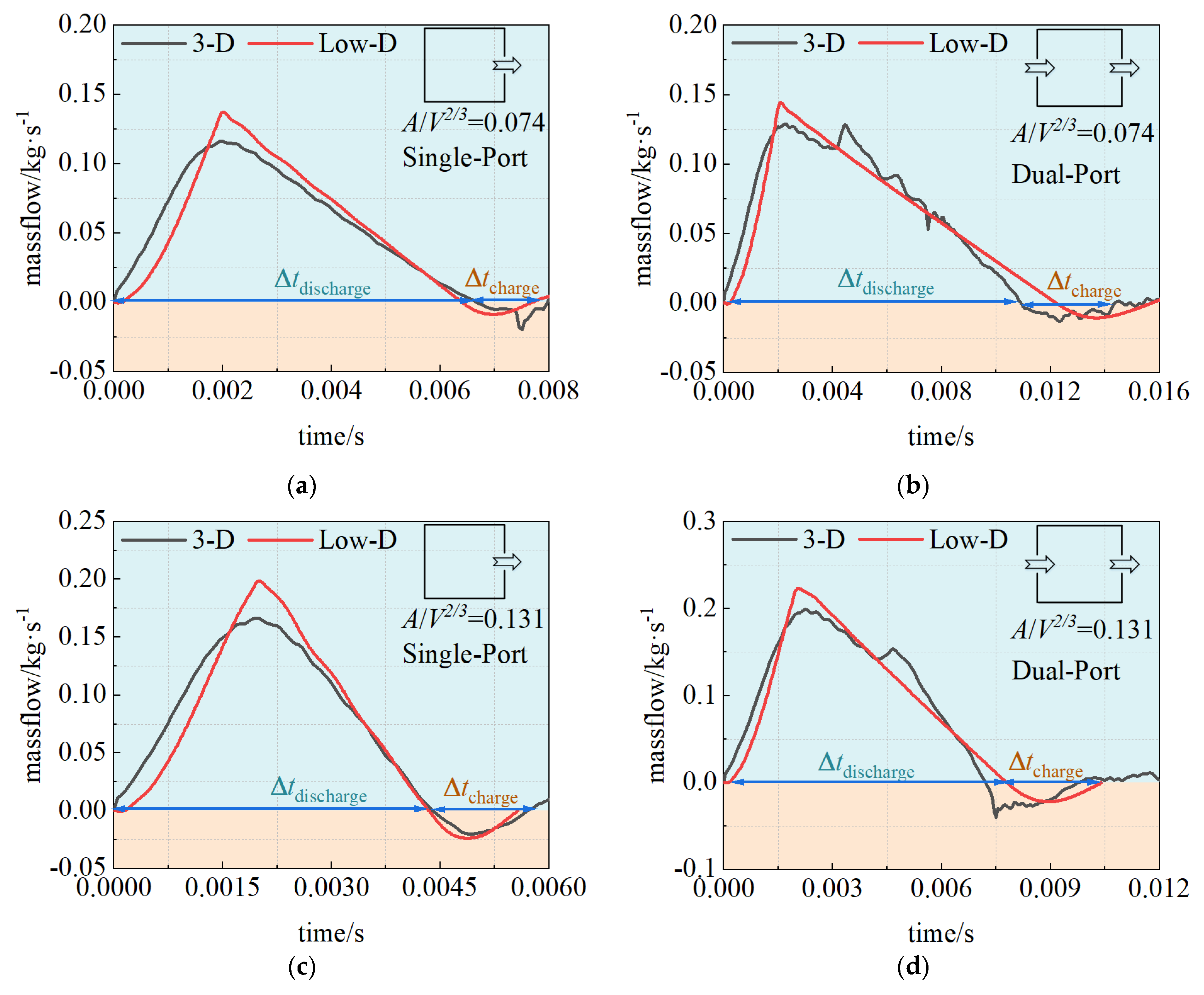
Based on the above analysis, under different conditions, the low-dimensional simulation and the three-dimensional simulation exhibit certain discrepancies in predicting the fast transient response of discharge in single-port and dual-port cavities, yet their overall agreement remains strong. Both methods accurately capture the periodic flow-reversal characteristics at the cavity outlet. Under different conditions, the maximum error for during the discharge process is 3.9%, and that for is 3.8%; the maximum error for is 25.9%, while that for is 9.6%. Overall, the errors in the principal parameters remain within 10% for most operating conditions. The largest deviation occurs under condition , where the error in the total inflow during the charge process of the dual-port cavity reaches 25.9%.
For cavities with different inlet/outlet configurations, the charged mass during the charging process increases gradually with . As increases from 0.074 to 0.208:
- (1)
- For the single-inlet/outlet cavity, increases from 1.87 × 10⁻⁵ kg to 2.72 × 10⁻⁵ kg, with a growth rate of 45.5%;
- (2)
- For the dual-inlet/outlet cavity, increases from 2.31 × 10⁻⁵ kg to 4.39 × 10⁻⁵ kg, with a growth rate of 90.0%.
This trend aligns with the law describing how affects the flow inertia inside the cavity, as reported in Ref. [16]. Meanwhile, it reflects the compatibility with existing low-dimensional cavity models: as decreases, mcharge also decreases, and the difference between the simulation results of the two low-dimensional models gradually reduces. The predictions become nearly consistent when .
From the above comparison results, the cavity discharge model established by the modular modeling method for rapidly transient cavities can satisfactorily reproduce the three-dimensional simulation results under various working conditions, including different inlet/outlet area ratios , cavity shape ratios , and initial pressure ratios . In most conditions, the errors of key parameters can be controlled within 10%, showing good overall consistency and meeting the basic accuracy requirements of the research.
The error distribution reveals clear trends in model performance. The simulation accuracy for the discharge process is generally higher than that for the charge process, and the error level under single-port conditions is overall lower than that under dual-port conditions. Across different parameter settings, relatively large errors tend to occur near the boundaries of the parameter range. The maximum error appears under the dual-port cavity condition with a high initial pressure ratio, where the error in the total gas mass during the charge process reaches 39.0%. The principal causes of these errors can be attributed to the following four aspects.
- (1)
- Influence of simplified assumptions in zonal modeling. The modular modeling method for fast transient cavities discretizes the cavity into multiple zones and assumes one-dimensional flow within each zone. Interactions with other zones or components are considered only at the flow inlet and outlet of each zone, while the complex coupling and mutual influence among zones during internal flow evolution are neglected.
- (2)
- Influence of simplified complex flow structures. This modeling approach represents the three-dimensional complex flow inside the cavity as a superposition of one-dimensional flows in different directions. As a result, it is difficult to accurately reproduce the spatial distributions of pressure and velocity within the cavity. In particular, non-unidirectional flow structures that may exist inside the cavity, such as vortices and recirculation, cannot be effectively captured, leading to the loss of detailed flow information.
- (3)
- Influence of the mapping relationship between cavity geometry and zonal range. In the zonal-range quantification method, the mapping relationship between cavity geometric parameters and zonal ranges is derived from processed three-dimensional simulation data. During data processing, temporal and spatial averaging is applied to the three-dimensional simulation results. This treatment introduces discrepancies between the flow state represented in the model and the actual three-dimensional flow, thereby affecting the accuracy of the simulation results.
- (4)
- Influence of simplified ambient pressure distribution. Although the low-dimensional model represents the local non-uniform distribution of ambient pressure near the cavity outlet by introducing a local high-pressure region, this treatment remains simplified relative to the three-dimensional model. Consequently, the suppression of outflow by the local high-pressure region during discharge, as well as its promotion of inflow during charge, cannot be fully represented in the low-dimensional simulation, which in turn affects the simulation results.
5. Results
Existing low-dimensional cavity models can accurately reproduce the cavity fast transient response when the inlet and outlet areas satisfy criterion . However, these models neglect inertial forces within the cavity and, when criterion is violated, fail to capture the periodic flow-reversal behavior that can arise during a fast transient event. To address this limitation, a modular modeling framework is developed for constructing a low-dimensional fast transient cavity model. The approach partitions the cavity into regions according to distinct flow characteristics and represents the flow in each region, thereby incorporating the influence of in-cavity inertia. On this basis, a mapping is established between cavity geometric parameters and the spatial extent of each region, enabling the geometric effects to be represented through systematic adjustment of region ranges. The resulting low-dimensional cavity model reproduces the periodic flow reversal observed during discharge fast transient responses, with the outlet mass-flow evolution closely matching three-dimensional simulation results. In various operating conditions, the errors of key parameters are mostly within 10%, achieving accurate simulation of the fast transient response of the cavity under diverse working conditions.
Author Contributions
Conceptualization, K.Z.; methodology, K.Z. and C.L.; software, K.Z. and C.L.; validation, K.Z.; formal analysis, K.Z.; investigation, K.Z.; resources, C.L.; data curation, K.Z. and J.W.; writing—original draft preparation, K.Z.; writing—review and editing, K.Z., C.L. and J.W.; supervision, C.L.; project administration, C.L. All authors have read and agreed to the published version of the manuscript.
Funding
This research received no external funding.
Institutional Review Board Statement
Not applicable.
Informed Consent Statement
Not applicable.
Data Availability Statement
The datasets presented in this article are not readily available because the data are part of an ongoing study. Requests to access the datasets should be directed to the corresponding author.
Conflicts of Interest
The authors declare no conflicts of interest.
Abbreviations
The following abbreviations are used in this manuscript:
| SAS | Secondary Air System |
| FAA | Federal Aviation Administration |
| FAR33 | Federal Aviation Regulation Part 33 |
References
- Li, J.J.; Xuan, H.J.; Liao, L.F. Penetration of disk fragments following impact on thin plate. J. Zhejiang Univ. Sci. A 2009, 10, 677–684. [Google Scholar] [CrossRef] [Scilit]
- European Union Aviation Safety Agency. CS-E: Certification Specifications for Engines; European Union Aviation Safety Agency: Cologne, Germany, 2024.
- United States Federal Aviation Administration. Federal Aviation Regulations: Airworthiness Standards, Aircraft Engines; US Department of Transportation, Federal Aviation Administration: Washington, DC, USA, 1986.
- Soria, C. Gas Turbine Shaft Over-Speed/Failure Modelling: Aero/Thermodynamics Modelling and Overall Engine System Response. Ph.D. Thesis, Cranfield University, School of Engineering, Power and Propulsion, Cranfield, UK, 2014. [Google Scholar]
- Eryilmaz, I.; Pachidis, V. A design approach for controlled blade-off in overspeeding turbines. Eng. Fail. Anal. 2022, 138, 106323. [Google Scholar] [CrossRef] [Scilit]
- Pawsey, L.; Rajendran, D.J.; Pachidis, V. Characterisation of turbine behaviour for an engine overspeed prediction model. Aerosp. Sci. Technol. 2018, 73, 10–18. [Google Scholar] [CrossRef] [Scilit]
- Alexiou, A.; Mathioudakis, M. Secondary Air System Component Modeling For Engine Performance Simulations. In Proceedings of the ASME Turbo Expo 2008: Power for Land, Sea and Air, Berlin, Germany, 9–13 June 2008; p. GT-2008-50771. [Google Scholar] [CrossRef] [Scilit]
- Calcagni, C.; Gallar, L.; Pachidis, V. Development of a one-dimensional dynamic gas turbine secondary air system model—Part II: Assembly and validation of a complete network. In Proceedings of the Turbo Expo: Power for Land, Sea, and Air, Orlando, FL, USA, 8–12 June 2009; pp. 435–443. [Google Scholar] [CrossRef]
- Liu, C.K.; Liu, H.M.; Li, Y.R. Modularized simulation modeling of air system with fast transients. J. Aerosp. Power 2015, 30, 1826–1833. [Google Scholar] [CrossRef]
- Nikolaidis, T.; Wang, H.; Laskaridis, P. Transient modelling and simulation of gas turbine secondary air system. Appl. Therm. Eng. 2020, 170, 115038. [Google Scholar] [CrossRef] [Scilit]
- Gallar, L.; Calcagni, C.; Pachidis, V.; Pilidis, P. Development of a one-dimensional dynamic gas turbine secondary air system model—Part I: Tool components development and validation. In Proceedings of the Turbo Expo: Power for Land, Sea, and Air, Orlando, FL, USA, 8–12 June 2009; pp. 457–465. [Google Scholar] [CrossRef] [Scilit]
- Dutton, J.C.; Coverdill, R.E. Experiments to study the gaseous discharge and filling of vessels. Int. J. Eng. Educ. 1997, 13, 123–134. [Google Scholar]
- Lu, X.; Zhang, K.; Wang, W.; Wang, S.; Deng, K. Preliminary experimental study on pressure loss coefficients of exhaust manifold junction. Int. J. Rotating Mach. 2014, 2014, 316498. [Google Scholar] [CrossRef] [Scilit]
- Gallar, L. Gas Turbine Shaft Over-Speed/Failure Performance Modelling. Ph.D. Thesis, Cranfield University, School of Engineering, Power and Propulsion, Cranfield, UK, 2010. [Google Scholar]
- Sun, L.; Jiang, B.; Gu, F. Effects of changes in pipe cross-section on the explosion-proof distance and the propagation characteristics of gas explosions. J. Nat. Gas Sci. Eng. 2015, 25, 236–241. [Google Scholar] [CrossRef] [Scilit]
- Zuo, K.; Liu, C.; Wang, J. Experiments and Simulations on the Factors Governing Fast Transient Responses in Cavity Discharge. Appl. Sci. 2026, 16, 3535. [Google Scholar] [CrossRef] [Scilit]
- Chevalier, A.; Müller, M.; Hendricks, E. On the validity of mean value engine models during transient operation. SAE Trans. 2000, 109, 1571–1592. [Google Scholar] [CrossRef] [Scilit]

Disclaimer/Publisher’s Note: The statements, opinions and data contained in all publications are solely those of the individual author(s) and contributor(s) and not of MDPI and/or the editor(s). MDPI and/or the editor(s) disclaim responsibility for any injury to people or property resulting from any ideas, methods, instructions or products referred to in the content. |
© 2026 by the authors. Licensee MDPI, Basel, Switzerland. This article is an open access article distributed under the terms and conditions of the Creative Commons Attribution (CC BY) license.