1. Introduction
The advancement of aerospace technology has led to the deployment of complex thin-walled components in hypersonic vehicles and aero-engines. These structures must withstand severe service conditions characterized by intense aerodynamic heating and high-level acoustic noise, resulting in coupled thermo-acoustic loads. This combination is particularly critical for design: the thermal load can induce compressive stresses leading to buckling, which drastically reduces structural stiffness, while the concurrent high-intensity acoustic load can excite severe nonlinear vibrations (e.g., large-deflection oscillations, dynamic snap-through) of the now-buckled, softened structure. This synergy threatens fatigue life, dynamic stability, and functional integrity. Consequently, these structures are prone to enter a post-buckling state and exhibit significant nonlinear dynamic response characteristics [
1,
2]. Enhancing the dynamic strength design criteria for these structures, therefore, necessitates a fundamental understanding of their post-buckling behavior under coupled loads, achieved through a combined approach of experimental testing and detailed simulation.
Some acoustic excitation experiments in thermal environments have been carried out on thin-walled structures with the four-edge fixed constraint. Schneider et al. of Lockheed, funded by the U.S. Air Force, conducted thermo-acoustic fatigue experiments on thin-walled structures earlier, and Jacobson of Northrop conducted thermo-acoustic fatigue experiments on composite structural panels. The German Space Research Centre has also carried out experimental research on thermo-acoustic for the thermal protection system (TPS) of the space shuttle and the calibration of launch vehicle storage tanks [
3,
4]. NASA Langley’s Rizzi [
5] summarized the needs of thermo-acoustic experiments, the required experimental equipment, described the dynamic response test methods, high temperature acoustic fatigue experimental methods, etc.
Currently, there are mainly analytical and numerical simulation methods for the analysis of nonlinear response of thin-walled structures, including the perturbation method, Fokker–Planck–Kolmogorov (FPK) equation method, equivalent linearization (EL) method, reduced-order modal (ROM) method, and Galerkin method. Among them, numerical simulation methods are generally used for dynamic response analysis of complex structures. Vaicaitis [
6] used the Galerkin method in combination with Monte Carlo method to study the nonlinear response of a large number of aerospace structures under random excitation. Lee [
7,
8] used the Galerkin method and EL method to obtain the statistical parameters of the structural response under thermo-acoustic loading. The disadvantage of the Galerkin method is that it is difficult to apply to complex structures. Additionally, the results obtained by the EL method do not reflect the nonlinear characteristics of the thermo-acoustic response well. In order to achieve dynamic response analysis of complex structures and efficient computational methods, finite element method (FEM) combined with ROM has been widely used. Dhainaut [
9] used the FEM/ROM method to calculate the nonlinear stochastic response of isotropic and composite plates under thermo-acoustic loading. Rizzi [
10,
11] investigated the effect of different modal combinations by using the ROM method. Spottswood [
12] applied the FEM/ROM method to the calculation of thermo-acoustic response of shallow bending beams, and the results obtained were in agreement with those by FEM. Li et al. [
13] and Cai et al. [
14] investigated the vibration and acoustic response characteristics of composite laminates and acoustic vibration systems containing porous elastic materials under thermo-acoustic loading by using the classical laminate theory and the modified Biot model, respectively. The results show that an increase in temperature leads to a decrease in the natural frequency of the structure and a significant decrease in the acoustic radiation efficiency. In addition, Murphy [
15] studied the dynamic response of thin-walled structures in thermo-acoustic environments through theoretical modeling and experimental validation, and analyzed their nonlinear snap-through response characteristics. Ng [
16] and Liu et al. [
17] investigated the nonlinear response of thermally flexed thin plates and composite thin plates under thermo-acoustic excitation by using the EL method and FEM/ROM, respectively. Hollkamp [
18] and Duan et al. [
19] further investigated the coupling effect of the interaction between acoustic environment and structure by combining experimental and numerical simulation, and the results showed that this coupling effect has a significant effect on the nonlinear response and fatigue life of thin-walled structures. In addition, Kahirdeh et al. [
20] investigated the fatigue damage process of aluminum alloy 7075-T6 by a parametric method, and found that the acoustic entropy can effectively reflect the evolution of fatigue damage of the material. Zhang et al. [
21] and Ge et al. [
22] proposed new models to predict the residual strength and fatigue life under thermo-acoustic loading for C/SiC composites and metallic structures, respectively.
Although important progress has been made on the response characteristics of thin-walled structures in thermo-acoustic environments, there is still a lack of systematic studies on the large-deflection nonlinear response and its mechanism in post-buckling. Especially for thin-walled structures with different geometries, such as flat plates, column shells and spherical shells, the differences in their responses under thermo-acoustic loading and the intrinsic mechanisms have not been fully clarified. In addition, with the development of aerospace structures towards higher temperatures and stronger acoustic excitations, higher requirements have been placed on the thermo-acoustic response analysis of thin-walled structures. For example, Yu et al. [
23] investigated the dynamic heat transfer process of a hyper-sonic vehicle thermal protection system in a thermo-acoustic fatigue experiment by using a control-oriented modeling approach, and the results showed that the model can quickly and accurately predict the transient and steady-state heat transfer behavior in a thermo-acoustic environment. Liu et al. [
17] and Zhang et al. [
24] investigated respectively the dynamic response characteristics of composite thin plates and reinforced plates in a thermo-acoustic environment, and found that the geometry and boundary conditions of the structure have a significant effect on their response behavior. These studies indicate that it is of great practical significance to further investigate the nonlinear response characteristics of thin-walled structures under thermo-acoustic loading.
This study aims to conduct a comparative investigation into the post-buckling nonlinear dynamic behaviors of three typical thin-walled geometries (flat plate, cylindrical shell, and spherical shell) under coupled thermo-acoustic loads. The three geometries—flat plate, cylindrical shell, and spherical shell—were selected as canonical representatives of fundamental structural forms with distinct curvature characteristics and inherent stiffness. The flat plate, with zero Gaussian curvature, provides a foundational baseline and is convenient for initial experimental validation. The cylindrical shell, possessing single curvature, is archetypal of many aerospace components such as fuselage sections and engine nacelles. The spherical shell, with positive double curvature, exhibits the highest inherent stiffness and buckling resistance among the three, representing idealized high-stability configurations like certain pressure vessels or dome segments. This systematic progression in geometric complexity allows for a controlled investigation into how curvature fundamentally governs the post-buckling nonlinear dynamics under combined thermal and acoustic loading. The primary objective is to elucidate the influence of geometric configuration on the dynamic response and stability in the post-buckling regime. This study specifically focuses on the post-buckling response for two key reasons. First, from an engineering perspective, aerospace thin-walled components operating in extreme thermo-acoustic environments may inevitably experience thermal buckling and subsequently function in a post-buckled state. Their performance and integrity in this regime are of paramount concern. Second, scientifically, the post-buckling state triggers strong geometric nonlinearities, leading to complex dynamic phenomena—such as stiffness variation, bifurcation of equilibrium positions, and snap-through motions—that are absent in the linear, pre-buckling range. Understanding these nonlinear mechanisms is crucial for accurate life prediction and failure prevention. To this end, the validity of the employed FEM/ROM method for simulating large-deflection nonlinear responses is first verified through acoustic excitation experiments on a flat plate specimen under thermal stress. Subsequently, a detailed numerical analysis based on the validated model is performed to compare and contrast the response characteristics, including thermal modal evolution, snap-through phenomena, and probability density distributions, among the three geometries. The findings are expected to provide a theoretical basis for the design of aerospace thin-walled components operating in extreme thermo-acoustic environments.
3. Thermo-Acoustic Excitation Experiment
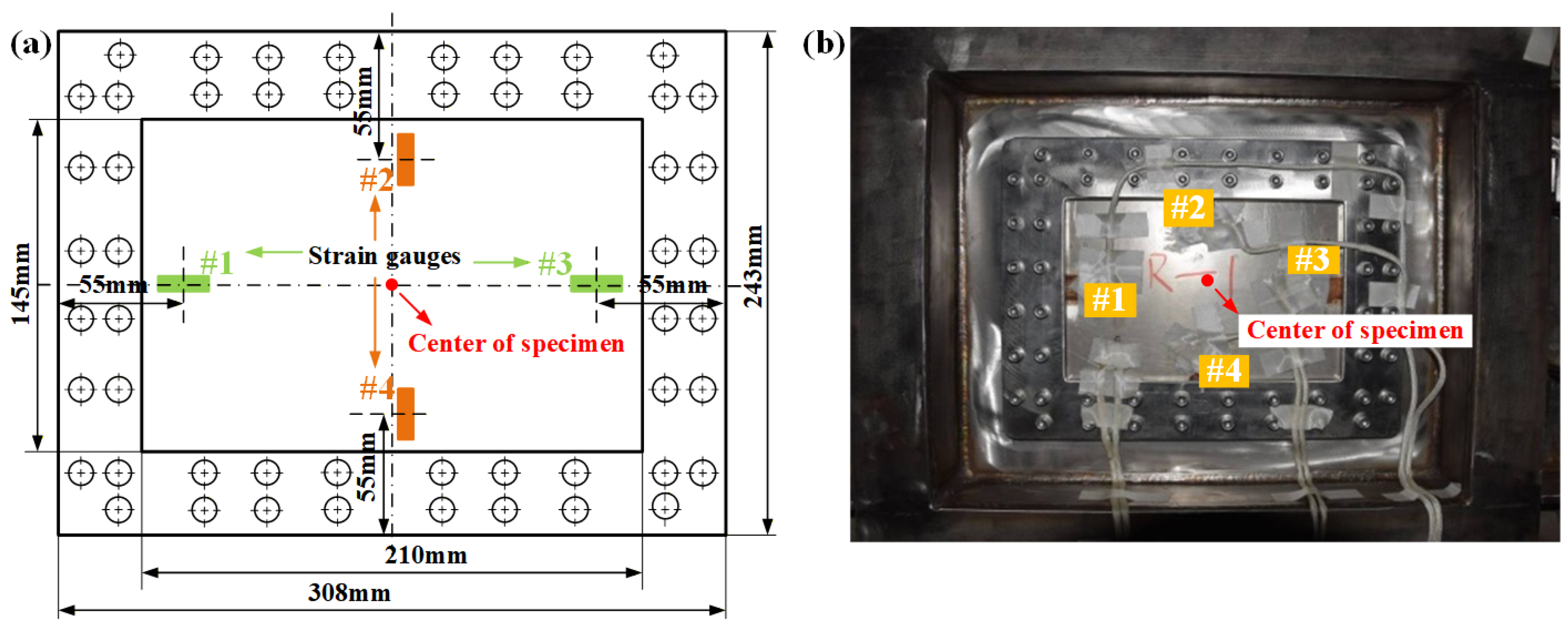
To validate the reliability and efficacy of the thermo-acoustic response simulation approach for thin-walled structures, acoustic excitation experiments were performed at the Aircraft Strength Research Institute (in Xi’an, China) on Haynes 188 alloy plates under thermal loading. The geometry of the specimen and the position of the strain gauge are shown in
Figure 1a. The key mechanical and thermal properties of this material (Young’s modulus
E, Poisson’s ratio
v, coefficient of thermal expansion
α, density
ρ, and thermal conductivity
K) at relevant temperature points are listed in
Table 1 (
Section 4.1). For the analysis within the experimental temperature range of 50 °C to 250 °C, property values are obtained via linear interpolation of the data provided in
Table 1. The strain in the X direction of the midpoint of the short side (#1, #3) and the strain in the Y direction of the midpoint of the long side (#2, #4) were measured. The on-site installation position of the specimen and the actual patch position of the strain gauge are shown in
Figure 1b. The four edges of the experimental part are pressed by a mouth frame fixture, and the four edges of the experimental part are fixed by double-row bolt tightening to realize the four-edge fixed constraint. The loading conditions of thermo-acoustic load are shown in
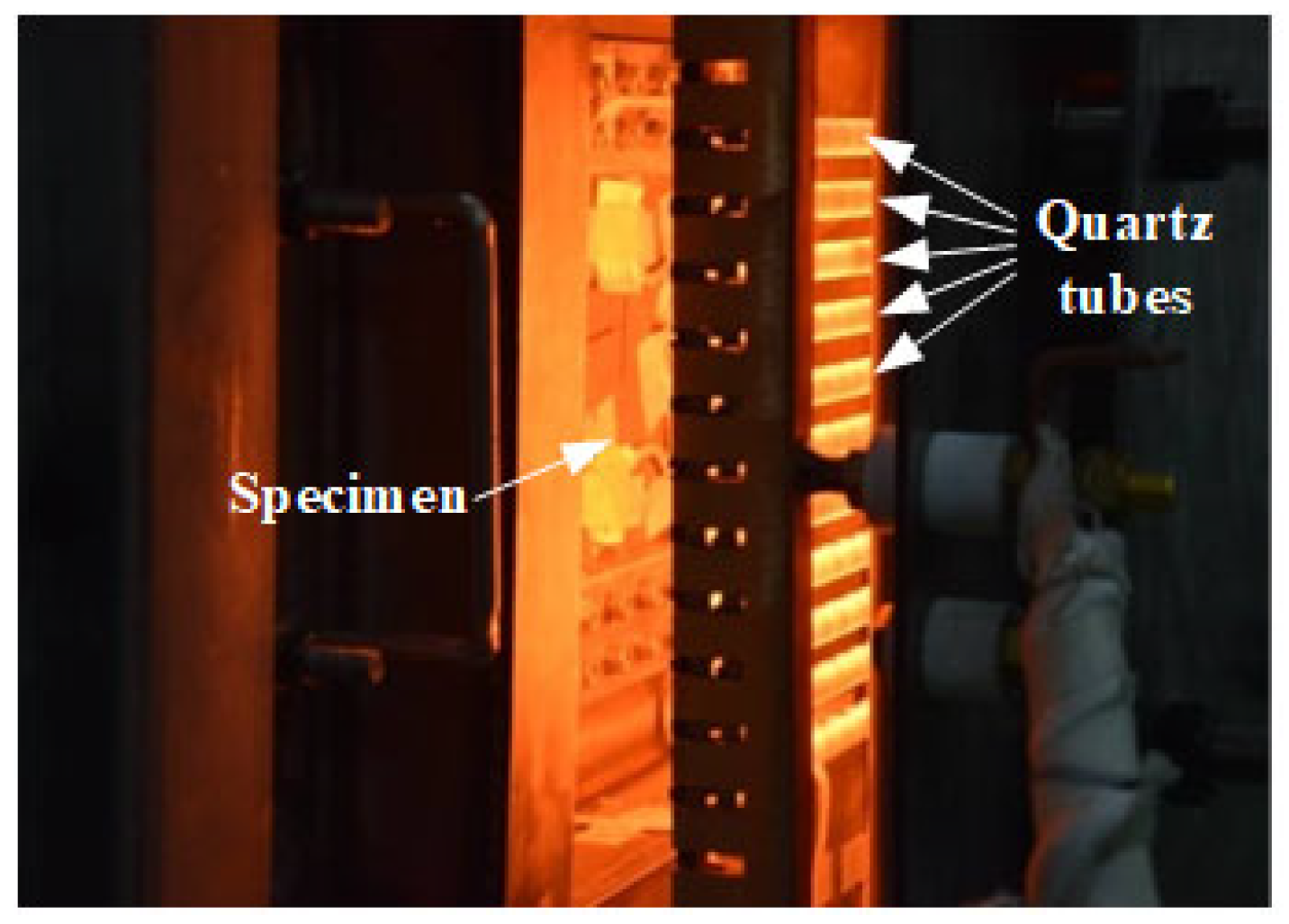
Table 1. The noise load is controlled by the sound field control method, and the noise load is applied by the grazing incidence method. The surface of the specimen was heated asymmetrically on both sides by custom-built quartz lamp heaters (developed in-house at the institute), as shown in
Figure 2. The setup can be understood in conjunction with the specimen installation view presented in
Figure 1b. The quartz lamps were positioned parallel to the plate surface on one side, with a controlled distance to achieve the desired uniform temperature field.
In the experimental test, the acceleration response of the midpoint position of the thin-walled plate structure under different combinations of thermo-acoustic loads was measured by a laser vibrometer. The acceleration response results at the center under different loads are analyzed, and the first-order thermal modal frequencies of the experimental specimen at different temperatures are obtained.
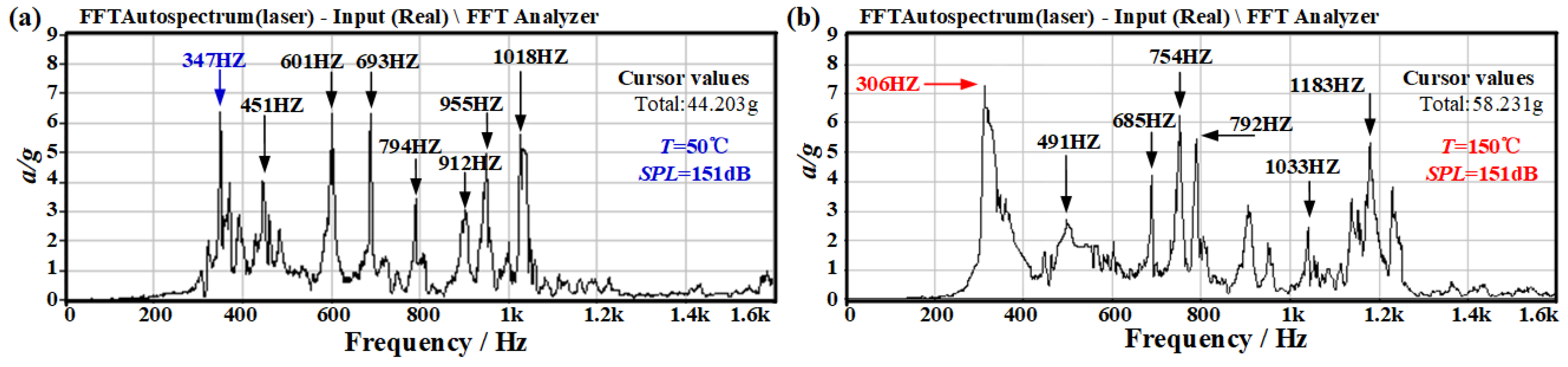
The experimental frequencies, such as those presented in
Figure 3 and
Table 2, were detected and extracted through standard signal processing. The time-history acceleration signals, acquired at the plate’s center point using the laser vibrometer, were processed with a Fast Fourier Transform (FFT) to convert them from the time domain to the frequency domain. The first-order thermal modal frequency for a given temperature and SPL condition was then identified as the frequency corresponding to the dominant peak in the resulting acceleration power spectral density (PSD) within the analysis band of interest (consistent with the excitation band). This method provides a direct and reliable means of determining the structure’s resonant frequency from its response to broad-band acoustic excitation.
The following two points are explained regarding the thermo-acoustic experiment carried out in this study: (1) the specimen is bounded by the frame fixture and the double-row tightening bolts, but the frame fixture has a certain chamfer; (2) the strong acoustic excitation in high temperature environment will make the structural boundary conditions have a certain release. Correct modal calculation and analysis is the premise of the whole thin-walled structure thermo-acoustic dynamic response calculation and analysis. Therefore, to ensure the reliability of the simulation, the boundary condition in the finite element model was refined to more closely represent the physical test setup. This involved a minor, physically justified adjustment to account for the finite stiffness of the fixture (due to the chamfer) and potential thermal-acoustic softening at the boundaries, moving from an idealized clamp towards the actual experimental constraint. This refined boundary condition was then kept consistent for all subsequent parametric studies.
The simulated results in
Table 2 are obtained from the thermal modal calculation; the full model specification is provided in
Section 4.1. A comparison between these simulated results and the experimental data reveals a discrepancy within ±2 Hz. This close agreement demonstrates that the first-order thermal modal frequency of the thin-walled flat plate structure has achieved consistency between simulation and experiment, providing an initial validation of the computational method. In addition, the fundamental frequency shows a tendency of decreasing and then increasing with increasing temperature. Considering the critical buckling temperature Tc = 68.46 °C of the structure in
Section 4, the changing characteristics of softening in pre-buckling and hardening in post-buckling of the structure are verified, as shown in
Table 2. In particular, before thermal buckling occurs, the thin-walled structure is mainly affected by thermal stresses and material physical property changes. The elasticity modulus of the material usually decreases as the temperature increases, while the increase in thermal stresses leads to a weakening of the stiffness of the structure. In this case, the strain rate and thermal softening effects caused by thermal loading also lead to a decrease in the yield stress, causing the structure to gradually decrease in frequency and thus exhibit softening characteristics. When thermal buckling occurs in a thin-walled structure, the structure enters a state of large deformation. At this time, the geometric nonlinear effect caused by large deformation will significantly increase the stiffness of the structure. In post-buckling, the ultimate load carrying capacity of the structure may increase due to the stabilization effect of the large deformation, which leads the structure into a kind of hardened regime. This macroscopic hardening response, primarily attributed to geometric nonlinearity, aligns with the characteristic post-buckling behavior reported for plates in the literature [
1]. The overall nonlinear dynamic response can involve complex interactions between the thermally induced static post-buckling state and the dynamically excited vibration modes. In addition,
Figure 3 presents representative acceleration response spectra at the center of the specimen in pre-buckling (
Figure 3a) and post-buckling (
Figure 3b). It can be observed that at a fixed SPL = 151 dB, the first-order response frequencies of the experimental piece corresponding to a pre-buckling temperature of 50 °C and a post-buckling temperature of 150 °C are 347 Hz and 306 Hz, respectively.
The strain values at the midpoint of the short side and the midpoint of the long side of the thin-walled flat plate structure at the fundamental frequency (the first-order frequency) under SPL = 151 dB in the simulation calculations are extracted and compared with the results of unidirectional strains obtained from the experimental parts at the patch position, as shown in
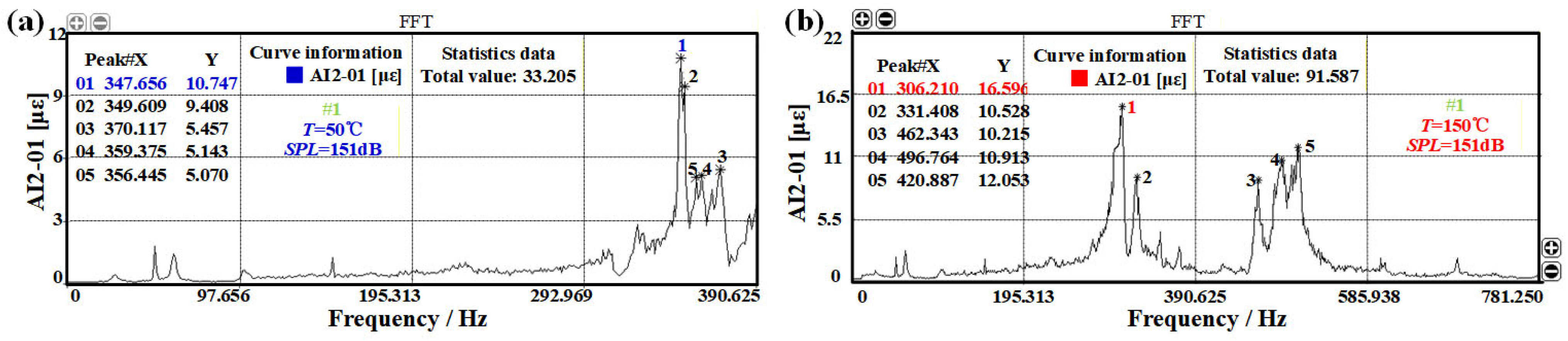
Table 3. A comparison of the specific values reveals that the simulated strain values at the midpoint of the short edge are significantly higher than the experimental values at 100 °C and 150 °C. These discrepancies are likely due to simplifications inherent in the computational model, which include the assumption of linear elastic material behavior, idealized geometry and boundary conditions, and the use of a simplified damping model. Such simplifications are common in dynamic simulations of complex coupled phenomena like thermo-acoustic–structural interaction. Notably, despite these point-wise differences, the simulated strains are of the same order of magnitude as the experimental data across the entire temperature range. More importantly, the model successfully reproduces the key trend of increased strain from the pre-buckling (50 °C) to the post-buckling (150 °C) regime, as shown in
Figure 4. This demonstrates the model’s capability to capture the essential global trends in nonlinear dynamic response, which is sufficient and critical for the subsequent comparative parametric study of different geometries in
Section 4.
Figure 4 illustrates the strain spectra of the midpoint (#1) of the short side of the specimen in pre-buckling (50 °C) and post-buckling (150 °C). In pre-buckling, the structure is in the linear response stage, and the strain is mainly caused by the combined effect of thermal stress and acoustic-pressure load; at this time, the stiffness of the structure is higher, the strain response is more stable, and the strain value is 10.747 με. In post-buckling, the structure enters into the nonlinear response stage, and the large deformation leads to the redistribution of stiffness, and the strain is significantly increased, corresponding to a strain value of 16.596 με. Such changes in strain response in pre-buckling and post-buckling reflect the transformation of the mechanical behavior of thin-walled structures during thermal buckling, while the softening behavior in pre-buckling and the hardening behavior in post-buckling are both related to the temperature increase. The synthesis of
Table 3 and
Figure 4 shows that the temperature has a significant effect on the strain response of thin-walled structures. In pre-buckling, as the temperature increases, the thermal stress increases, the stiffness of the structure gradually decreases, and the strain increases. In post-buckling, the strain response of the structure is more sensitive to temperature changes, which further indicates the sensitivity of the geometric non-linearity of the structure to temperature changes.
4. Thermo-Acoustic Response Simulation Analysis
This section presents the core comparative investigation of this study.
Applying the validated finite element method/reduced-order modal (FEM/ROM) approach, implemented using the commercial finite element software ANSYS (version 12.0), a systematic parametric analysis is conducted to elucidate the post-buckling nonlinear dynamic behaviors of the three distinct geometries—flat plate, cylindrical shell, and spherical shell—under coupled thermo-acoustic loading. The following subsections detail the thermal modal evolution and the displacement response characteristics, aiming to reveal the influence of geometric configuration and the interplay between the thermal state (S) and acoustic excitation (SPL).
4.1. Thermal Modal Analysis
Haynes 188 alloy was selected for the study and the material parameters in different temperatures are shown in
Table 4. In the simulations, these properties (
E,
v,
α,
ρ,
K) were treated as temperature-dependent. Values at the discrete temperatures listed in
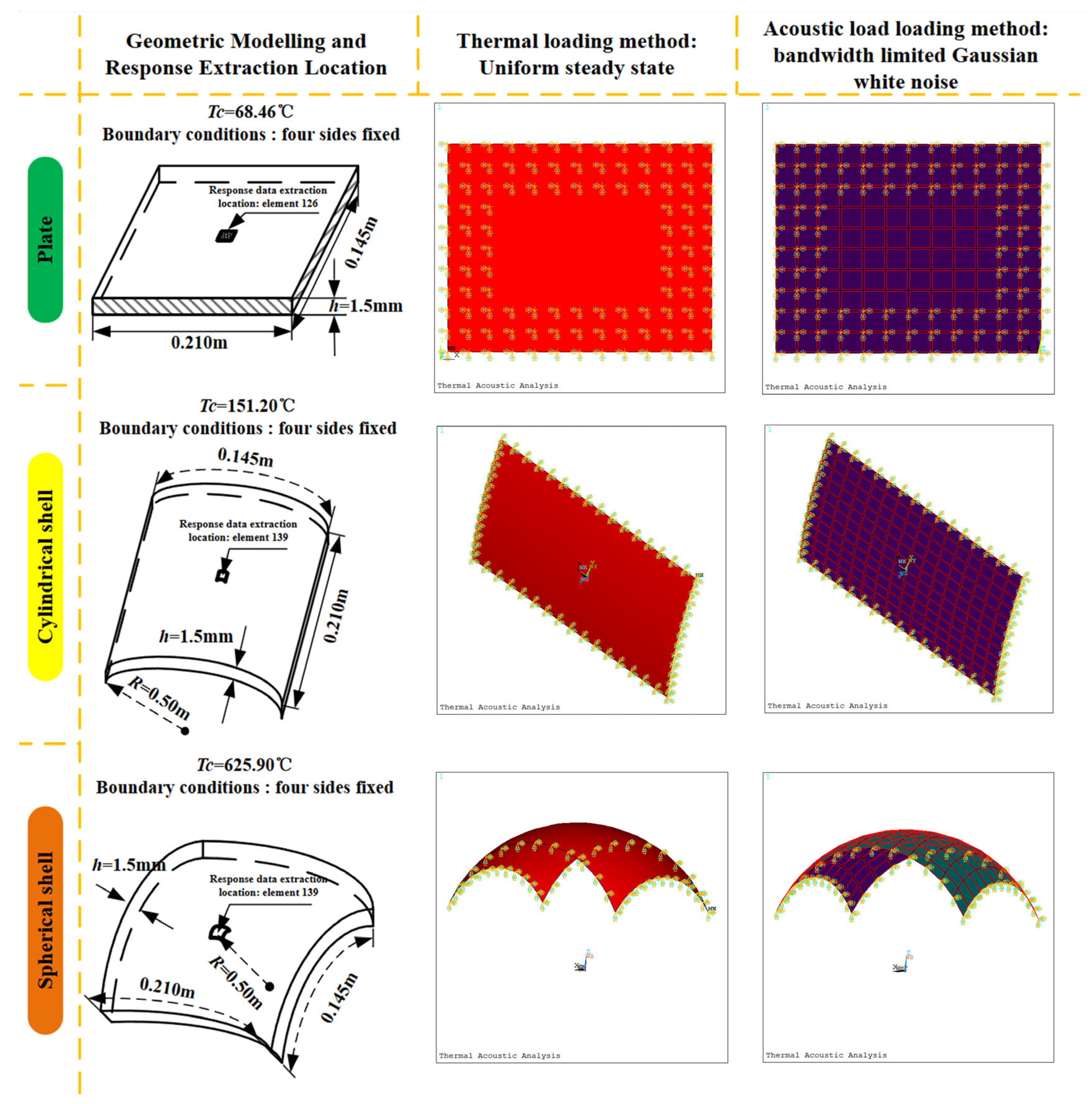
Table 4 were used, and linear interpolation was applied for intermediate temperatures corresponding to the specific buckling coefficients (S) in the parametric study. The thickness is 1.5 mm, the boundary condition is four-edge fixed constraint, and the geometrical models include flat plate, column shell and spherical shell. The thermal load is a uniform steady state temperature field. And the acoustic load is modeled as a spatially uniform, band-limited Gaussian white noise pressure field p(x,y,t). This represents a diffuse acoustic field with spatial correlation across the structure’s surface. The load is applied as a transverse pressure with a constant power spectral density (PSD) over the frequency band of 100 Hz to 1250 Hz, which corresponds to the experimental excitation bandwidth detailed in
Section 3. The temporal characteristic is defined by this band-limited white noise spectrum, providing a representative broadband acoustic excitation for the parametric studies. The thermo-acoustic responses of the thin-walled structures in pre-buckling and post-buckling are calculated, with emphasis on the response results in post-buckling. The actual geometrical models of the three different structures and their corresponding thermo-acoustic loading models are shown in
Figure 5. The critical buckling temperatures corresponding to the flat plate, column shell and spherical shell are calculated to be 68.46 °C, 151.20 °C and 698.28 °C, respectively. For convenience of description, the temperature is expressed in terms of the buckling coefficient S. The definition of S is given in Equation (3), and (1.1, 184) indicates that the S = 1.1 and the SPL = 184 dB.
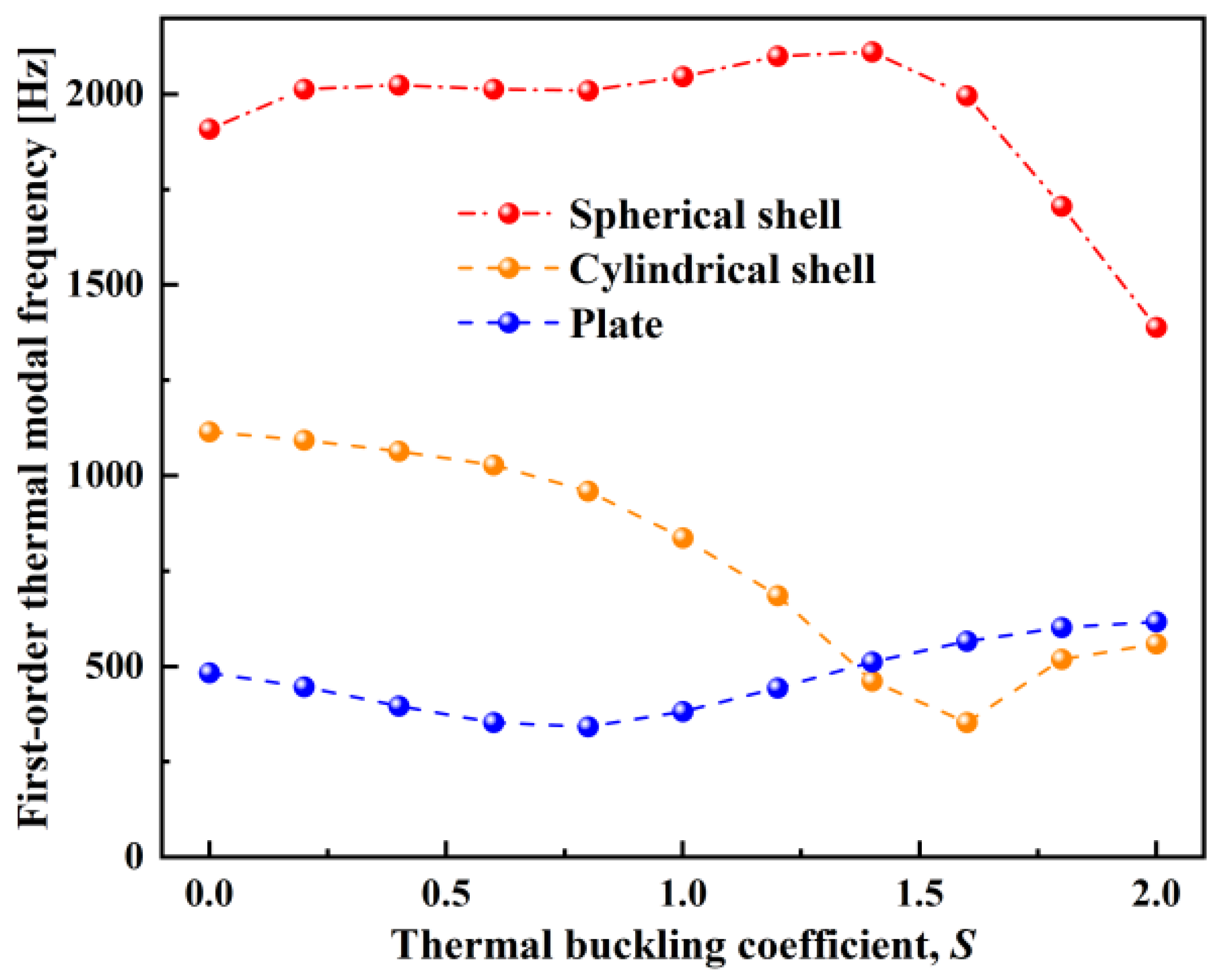
The calculated first-order thermal mode frequencies of the three different structures at different buckling coefficients are shown in
Table 5 and
Figure 6. It is observed that the first-order thermal mode frequencies of the three structures show different trends with the change in S. The flat plate structure exhibits obvious softening characteristics in pre-buckling and the frequency decreases with increasing temperature; in post-buckling, it enters the hardening stage and the frequency increases significantly. This change reflects the transformation of the mechanical behavior of the structure in pre-buckling and post-buckling: the structural stiffness decreases due to the temperature increase in pre-buckling, and the large deformation leads to the redistribution of the structural stiffness in post-buckling, thus showing the hardening characteristics. This non-monotonic trend—softening followed by hardening—is a characteristic nonlinear stiffness behavior observed in post-buckled plates and aligns with findings reported in prior studies [
1]. The frequency trend of the column-shell structure is similar to that of the flat plate, but the minima are shifted to the right, indicating a more complex dynamic response after buckling. In contrast, the spherical shell displays a distinct trend, characterized by an initial reduction in frequency followed by an increase in the post-buckling phase, which may be attributed to the geometry and boundary conditions of the spherical shell structure that lead to its ability to maintain high stiffness in post-buckling. In addition, the geometry has a significant effect on the thermal mode frequencies of thin-walled structures. The highest thermal modal frequencies are found for the spherical shell structure, followed by the cylindrical shell and the lowest for the flat plate structure. It indicates that geometry has a significant effect on the stiffness and vibration characteristics of the structure. The spherical shell structure is able to better distribute the stresses due to its greater curvature and thus maintains a higher frequency after buckling. In contrast, flat plate structures are more prone to stiffness reduction after buckling. In addition, the critical buckling temperature (Tc = 151.20 °C) of the column-shell structure is intermediate between that of the flat plate and the spherical shell, which reflects the influence of its geometry on buckling stability.
Building upon the frequency trends, the subsequent analysis employs a control-variable approach to investigate the displacement response and its underlying mechanisms. The time histories and probability density functions (PDFs) of the displacement response will be examined across different buckling coefficients (S) and sound pressure levels (SPL). This allows for a detailed analysis of the snap-through characteristics of the flat plate and the distinct response behaviors of the shell structures in the post-buckling regime, clarifying the individual and coupled roles of thermal and acoustic loads based on the systematic variation in these parameters.
4.2. Post-Buckling Response Analysis of Flat Plate
The time-domain results and probability spectral densities of the displacement response of the flat plate structure in the vicinity of the critical buckling at different sound pressure levels are shown in
Figure 7. It is shown that the non-linearity of the structure at critical buckling is obvious, the probability spectral density of the displacement response gradually deviates from the normal distribution, the absolute value of the mean value does not change significantly with the increase in the SPL and remains near zero, and the amplitude increases with the increase in the SPL.
Figure 8 gives the relationship between the root mean square (RMS) value of the structural displacement response and the SPL during critical buckling, and the results show that the RMS value of the displacement increases with the increase in the SPL.
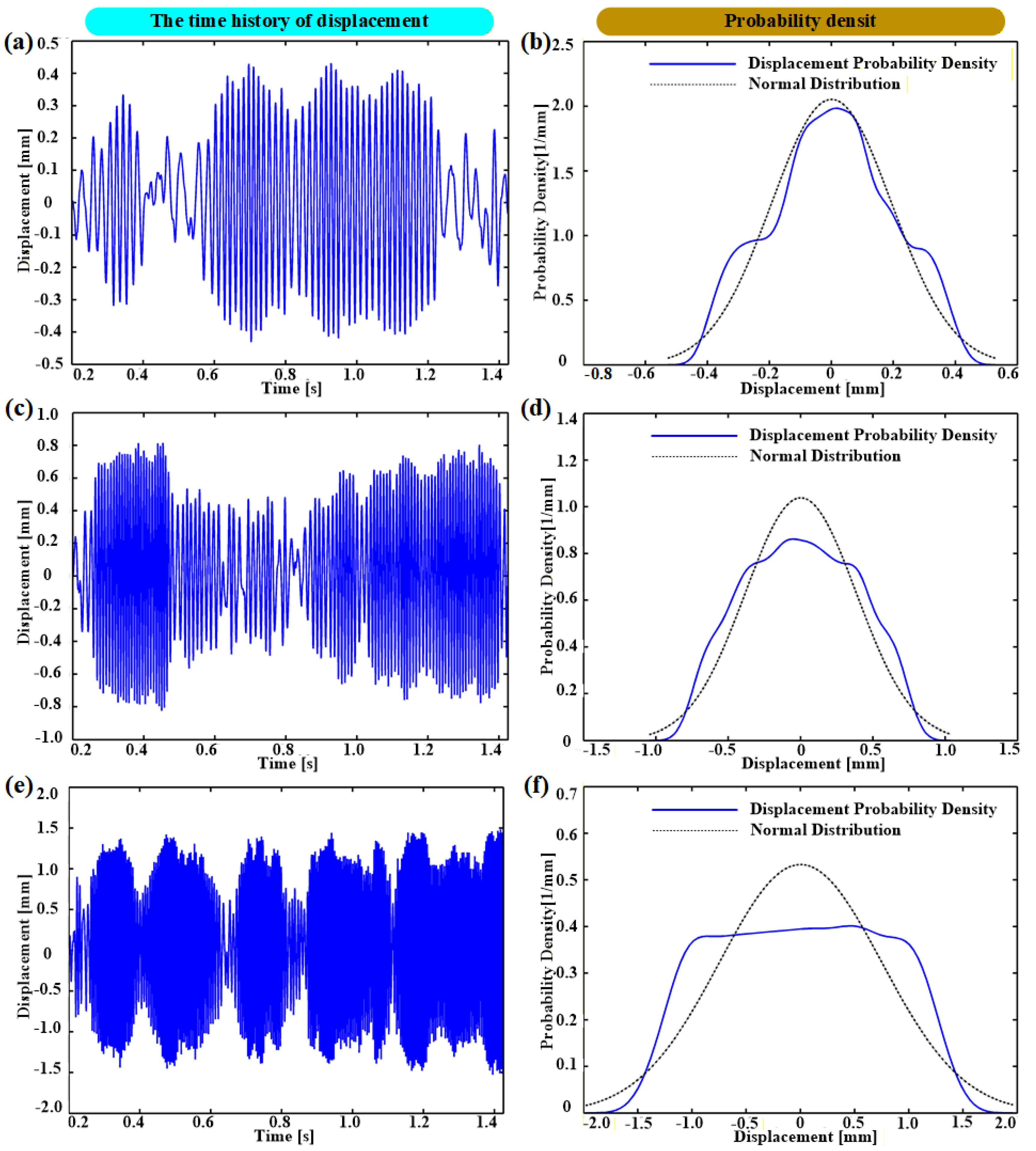
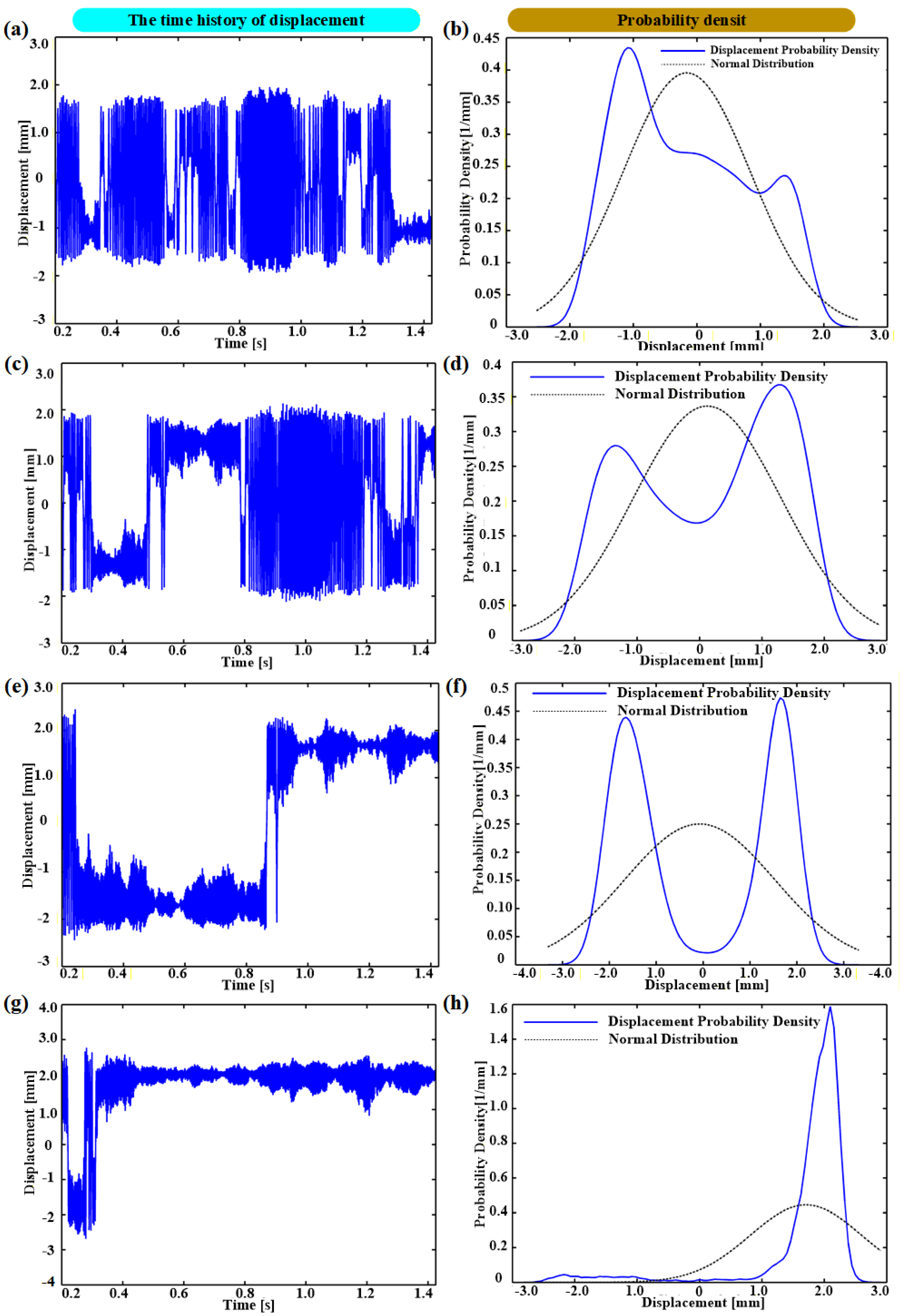
In post-buckling, the time-domain results of the displacement response of the flat plate structure at different acoustic pressure levels with probability spectral densities are shown in
Figure 9. It is shown that the relative strength of the thermo-acoustic load determines the snap-through form of the response. When the acoustic load is stronger, the structure exhibits a continuous snap-through motion, and its probability spectral density obviously deviates from the normal distribution, and the mean value of the displacement response is shifted from the zero position of the initial equilibrium to both sides with an increase in amplitude due to the structural thermal stresses, as shown in
Figure 9a,b. When the thermo-acoustic loads are comparable, the structure exhibits intermittent snap-through motions around the two equilibrium positions of the post-buckling (upper convex equilibrium position and lower concave equilibrium position). Among them, the short-interval snap-through motion and the long-interval snap-through motion are shown in
Figure 9c,d, respectively, and their displacement response probability spectral densities exhibit a double-peak state, as shown in
Figure 9d,f. This is consistent with the dynamic snap-through phenomena and nonlinear response characteristics described for thermally buckled plates under random acoustic excitation [
1,
15,
32]. In addition, it coincides with the relationship of the potential energy curve with the S in the theoretical part, and the displacement response amplitude increases with the increase in S (thermal load). As the S continues to increase, the structure exhibits random vibrations around an equilibrium position after buckling, as shown in
Figure 9g. Its displacement probability spectral density again returns to a single-peak state with an increase in the mean value of the response and a decrease in the amplitude, as shown in
Figure 9h.
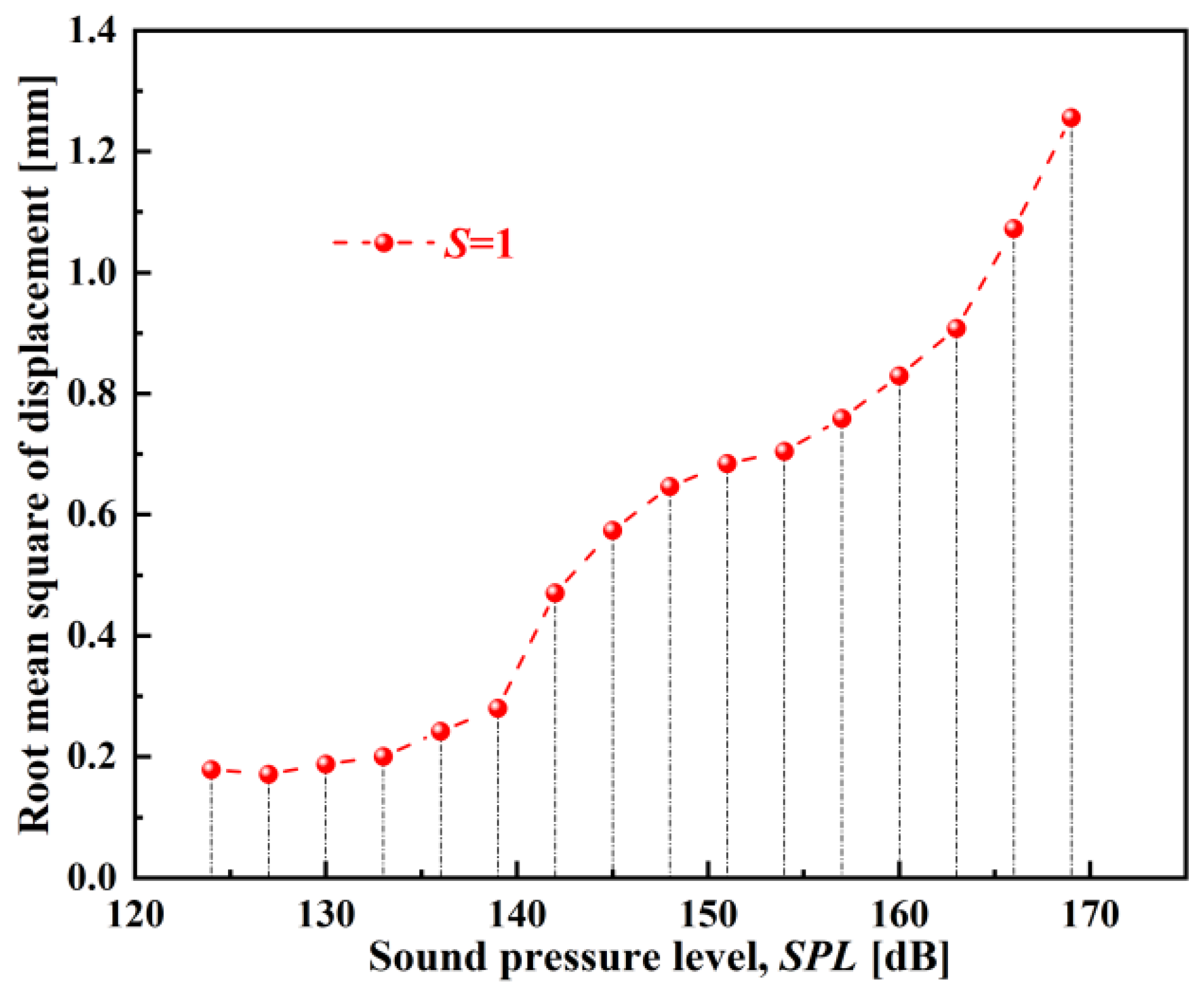
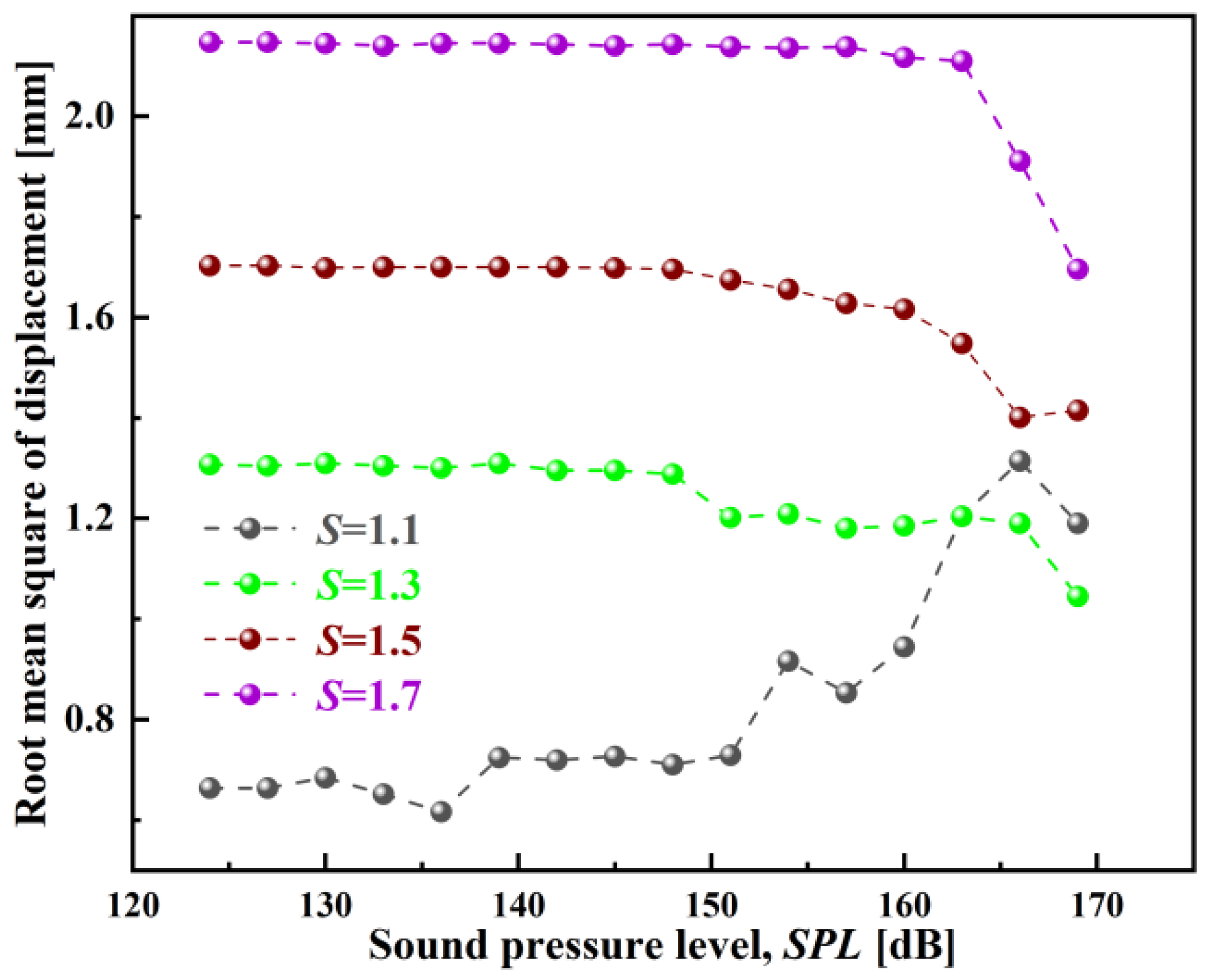
Figure 10 demonstrates the relationship between the RMS value of the displacement response and the SPL in the post-buckling state. The results show that at S = 1.1, the displacement RMS increases with the increase in SPL; however, in the range of S = 1.3 to S = 1.7, the contribution of SPL to the displacement RMS is not obvious, and the S becomes the dominant factor. In addition, the snap-through motion of the structure around the two equilibrium positions of post-buckling under strong acoustic loading makes the displacement RMS decrease. It indicates that in post-buckling, the dynamic response of the structure is significantly affected by the coupling effect of thermal and acoustic loads, and the dominant role of the S on the structural response gradually increases.
4.3. Post-Buckling Response Analysis of Shell Structures
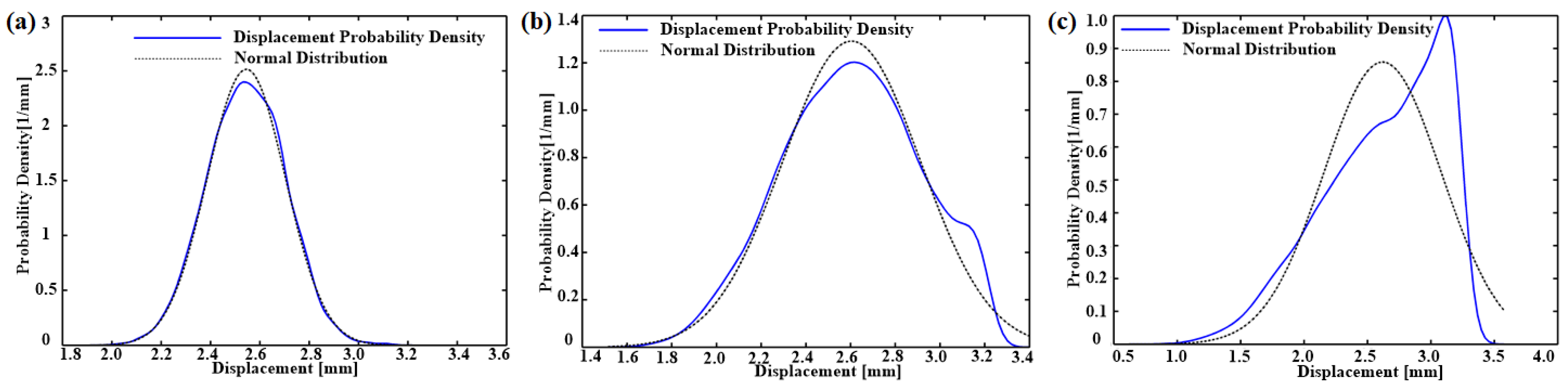
In post-buckling (such as S = 1.7), the displacement response of the column-shell structure exhibits a change rule that is closely related to the SPL. As shown in
Figure 11, when the SPL is lower (SPL = 172 dB), the displacement response of the column-shell structure maintains linear random vibration and the displacement probability spectral density obeys a normal distribution (
Figure 11a). It indicates that at lower SPL, the column-shell structure is more stable and the thermo-acoustic excitation has less effect on it. However, as the SPL increases (for SPL = 178 dB and SPL = 184 dB), the nonlinear response of the structure gradually appears, and the displacement probability spectral density begins to deviate from the normal distribution, with a significant increase in the response amplitude and mean value (
Figure 11b,c). It indicates that the column-shell structure gradually loses the linear response characteristics at higher SPL and exhibits obvious nonlinear behavior.
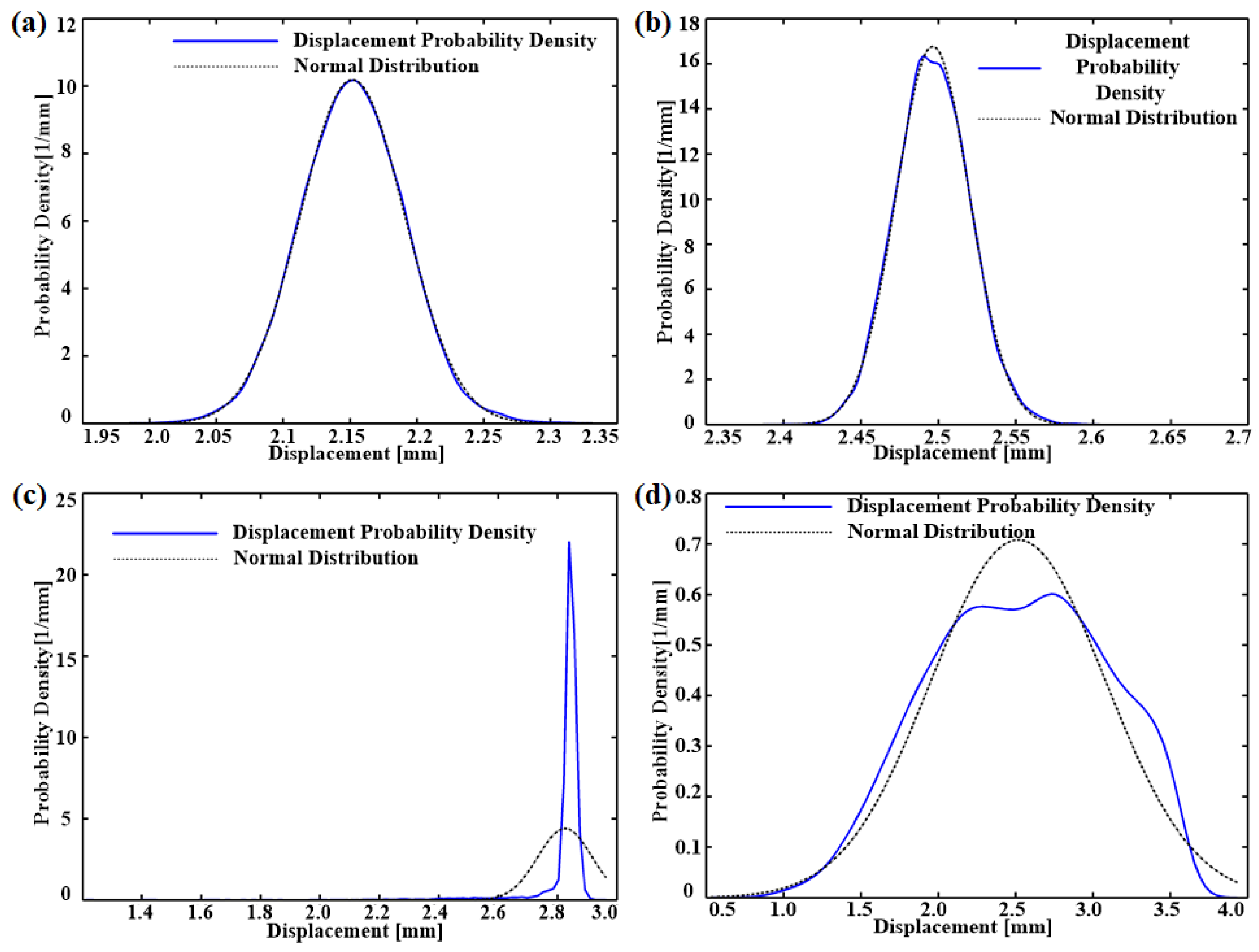
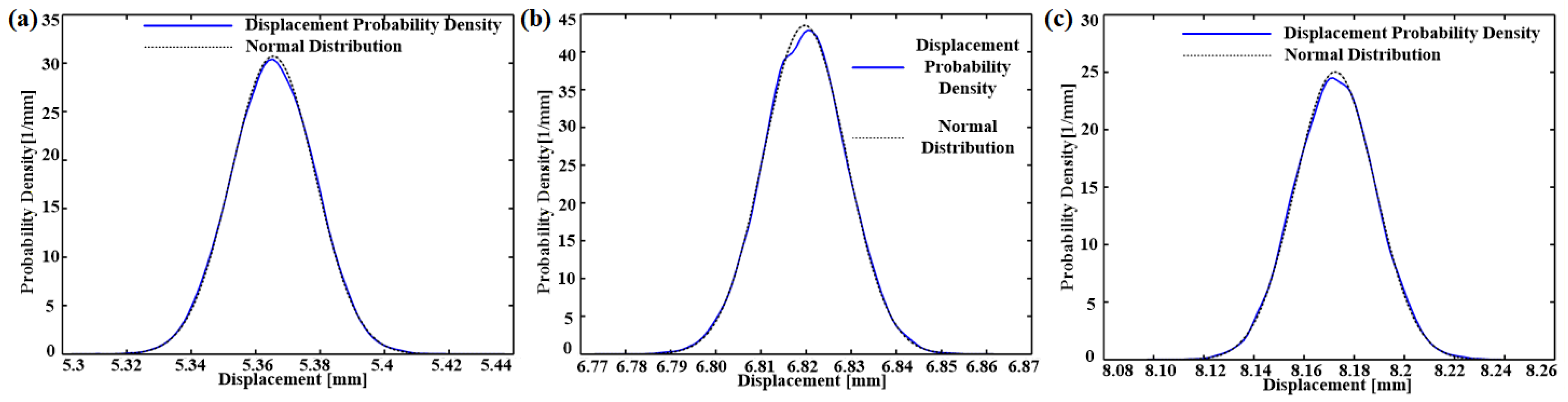
Figure 12 demonstrates the variation in the displacement response probability spectral density of the column-shell structure with the S at a fixed sound pressure level (SPL = 184 dB). It is found that when the S is small (S = 1.1), the structure still maintains linear random vibration and the displacement probability spectral density obeys a normal distribution (
Figure 12a). However, as the S increases, the structure enters the softening work region, the stability is weakened, the non-linearity of the displacement response is enhanced, the probability spectral density deviates from the normal distribution, the response amplitude decreases, and the mean increases (e.g., S = 1.3 and S = 1.5), as shown in
Figure 12b,c. When the S is further increased (S = 1.9), the softening phenomenon of the structure becomes more obvious and the displacement response amplitude increases significantly, while the contribution of SPL to the structural non-linearity diminishes, and the probability spectral density is gradually restored to a normal distribution (
Figure 12d). This indicates that in post-buckling, the S plays a dominant role in the response characteristics of the column-shell structure, and the coupling effect of thermal stress and SPL significantly affects the dynamic behavior of the structure.
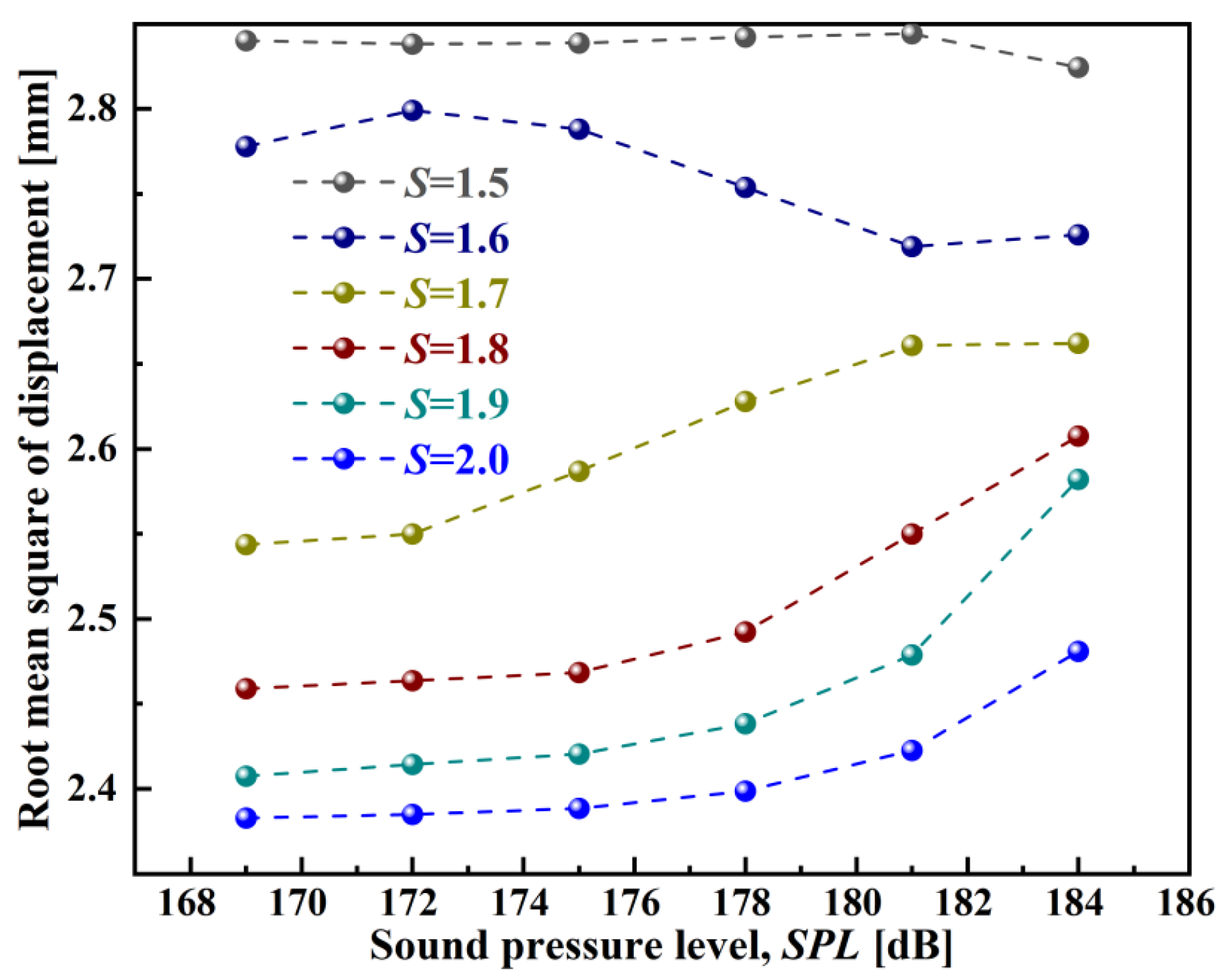
Figure 13 reveals the relationship between the displacement response RMS and SPL for the column-shell structure in post-buckling. When S = 1.5 and S = 1.6, the RMS of displacement response increases and then decreases with the increase in SPL. This indicates that in the range of the S, the mechanism of the internal stresses in the structure is changed, and the effect of the SPL on the structural response is gradually weakened. However, when S = 1.5 to S = 2.0, the RMS value of the displacement response increases continuously with the increase in the SPL, which indicates that the nonlinear response of the structure strengthens gradually with the increase in the SPL. In addition, in post-buckling, the RMS value of displacement response decreases with increasing S, which indicates a significant change in the way thermal loading affects the response of the column-shell structure as compared to the flat plate structure.
The spherical shell structure exhibits different dynamic response characteristics from the column-shell structure in post-buckling. As shown in
Figure 14, the displacement response of the spherical shell structure always belongs to linear random vibration at a fixed sound pressure level (SPL = 184 dB), and the displacement probability spectral density obeys a normal distribution. It reveals that the internal stability of the spherical shell structure is significantly stronger than that of the flat plate and column-shell structures. With the increase in the S, the mean value of the displacement response gradually increases, but the amplitude changes are small.
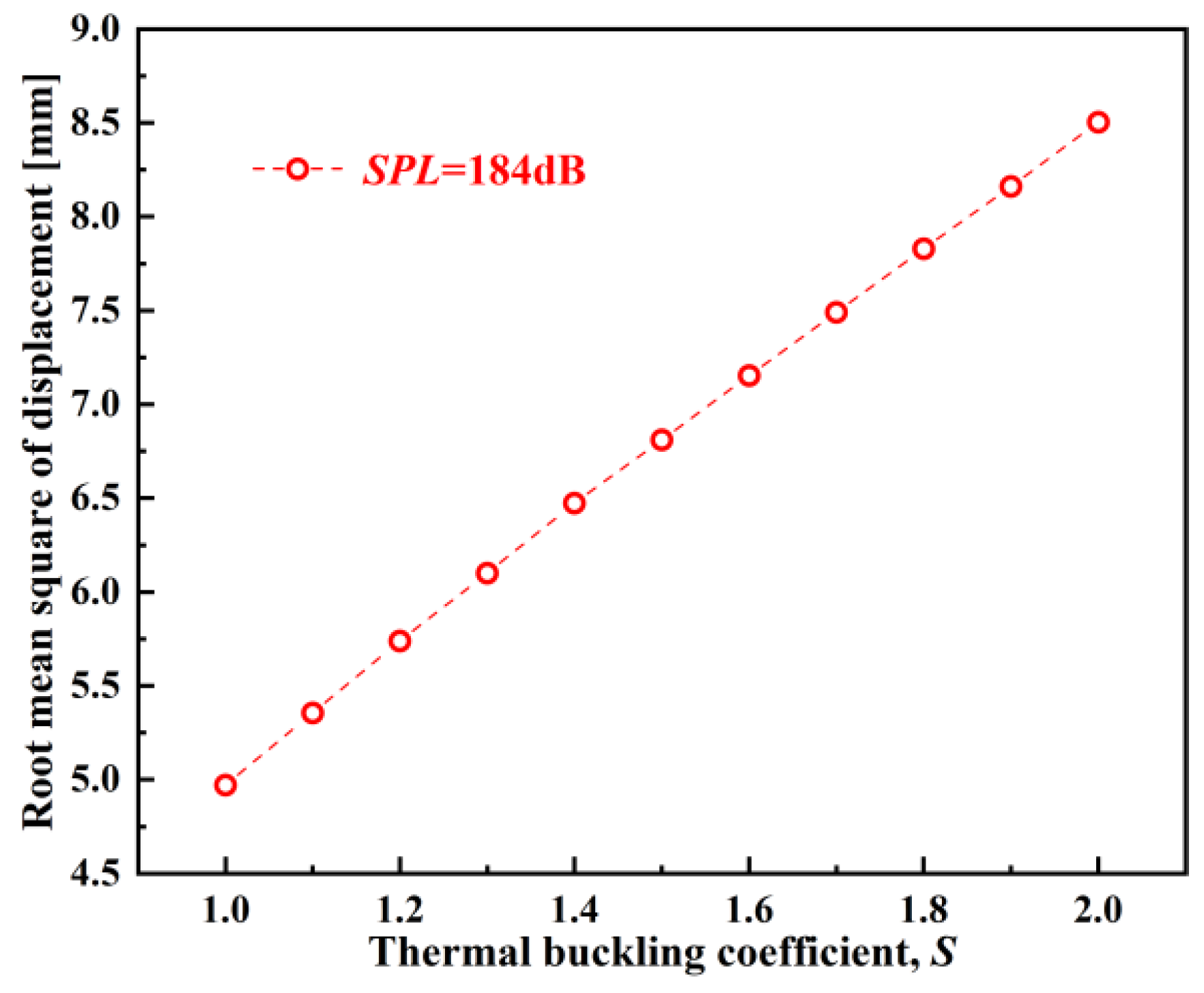
Figure 15 further shows that the RMS value of the displacement response increases approximately linearly with the increase in the S. It shows that the spherical shell structure exhibits high stability and buckling resistance under thermo-acoustic loading, and its dynamic response is mainly affected by the linearity of S.
Collectively, there are notable differences in the behavioral mechanisms governing the dynamic responses of flat plate, column-shell, and spherical shell structures under thermo-acoustic loading. The flat plate structure demonstrates pronounced nonlinear characteristics, particularly in post-buckling, with its response significantly influenced by the S and SPL. While the column-shell structure exhibits similar nonlinear characteristics, it is comparatively more stable, with its response primarily determined by the coupling effects of the S and SPL. In contrast, the spherical shell structure displays greater stability and buckling resistance, with its dynamic response predominantly dictated by the linear effects of the S. These differences primarily arise from the geometric and stiffness characteristics of the three structures, with the spherical shell structure offering enhanced dynamic stability due to its superior curvature and stiffness.
5. Conclusions
Both experimental and numerical results indicate that the thermal modal frequency exhibits an initial decline followed by a rise as the buckling coefficient increases. For instance, the first-order frequency of the flat plate decreased from 491 Hz at S = 0 to 346 Hz at S = 0.8 (pre-buckling softening) and then increased to 624 Hz at S = 2.0 (post-buckling hardening). Furthermore, the dynamic strain response (e.g., 10.7 µε at 50 °C and 16.6 µε at 150 °C for the short-side midpoint) shows close agreement with the experimental values. This validates the adopted computational model and method in accurately describing the complex response behavior of thin-walled structures under thermo-acoustic loading, thereby providing a reliable theoretical basis for the subsequent parametric and comparative analysis in this work.
Based on the parametric studies, the post-buckling responses of flat plate, column-shell, and spherical shell structures under thermo-acoustic loading exhibited significant differences, rooted in their distinct critical buckling temperatures (Tc_plate = 68.46 °C, Tc_column-shell = 151.20 °C, Tc_spherical-shell = 698.28 °C). Flat plates showed pronounced softening and hardening behaviors, with the frequency variation range (491 Hz to 624 Hz) being the smallest among the three. Column shells exhibited less regular responses, with the most dramatic frequency drop from 1120 Hz (S = 0) to 360 Hz (S = 1.6), indicating complex instability. In contrast, spherical shells demonstrated the highest stability and buckling resistance, maintaining the highest frequency range (1913 Hz to 2109 Hz for S = 0 to S = 1.8) and showing a primarily linear relationship between displacement RMS and the buckling coefficient S.
The flat plate structure exhibited various post-buckling motions (continuous snap-through, intermittent snap-through, and random vibration around a single equilibrium position), with nonlinear characteristics that deviated from normal distributions. In contrast, column shells showed strong stability, with normal distribution responses at low SPLs and nonlinear characteristics at high SPLs. Spherical shells maintained high stability and buckling resistance, with linearly increasing response amplitudes as the buckling coefficient increased. The systematic comparison conducted in this work demonstrates that the geometric configuration, through its direct effect on critical buckling temperature and inherent stiffness, is a primary determinant of the observed post-buckling dynamic regime—from the highly nonlinear, snap-through prone response of flat plates to the stable, near-linear response of spherical shells.
From a practical engineering perspective, the findings of this comparative study provide actionable insights for the design and integrity assessment of thin-walled aerospace components. The significantly distinct critical buckling temperatures (e.g., 68.46 °C for plates vs. 698.28 °C for spherical shells) offer a clear guideline for selecting appropriate geometric configurations based on specific service temperature ranges. The identified nonlinear dynamic regimes—such as the snap-through motions in flat plates and the transition from linear to nonlinear response in cylindrical shells with increasing SPL—directly inform the prediction of dynamic instability and sonic fatigue life under combined loads. Furthermore, the demonstrated high stability and linear response of spherical shells underscore their superior suitability for applications requiring maintained stiffness and predictable behavior in post-buckling. These results can be integrated into design guidelines to optimize geometry for enhanced buckling resistance, and into analytical tools for more accurate prediction of nonlinear dynamic responses, thereby contributing to the development of safer and more reliable hypersonic vehicle skins, aero-engine casings, and other critical thin-walled structures exposed to intense thermo-acoustic loads.
The findings and conclusions of this comparative study are obtained within a specific scope defined by several key modeling and parametric choices, which also point to natural avenues for extension. The analysis is conducted for a single material system (Haynes 188 alloy) and three canonical geometries (flat plate, cylindrical shell, spherical shell) under a four-edge fixed boundary condition. The thermal load is modeled as a uniform steady-state temperature field, and the acoustic excitation is represented as a spatially uniform, band-limited Gaussian white noise. Future work could involve applying the validated FEM/ROM approach to other aerospace-grade materials (e.g., titanium alloys, composites) and to more complex or integrated geometries representative of actual components. Investigating the influence of different boundary conditions (e.g., simply-supported, elastic restraint) and more sophisticated load models, such as non-uniform thermal gradients or correlated acoustic pressure fields, would further elucidate the robustness and transferability of the observed geometric influences on post-buckling dynamics.