1. Introduction
With the continuous advancement of frontier engineering domains such as aerospace hot-section components toward higher power density and extreme service conditions, the synergistic optimization of lightweight structural design and efficient thermal management has emerged as a critical bottleneck limiting performance breakthroughs [
1]. Conventional thermal management systems typically adopt a segregated configuration between load-bearing substrates and fluid channels, a paradigm that results in excessive material redundancy and significant degradation of overall system stiffness, rendering them inadequate for the pressing demands of modern equipment for compactness and high integration [
2]. The development of load-bearing and thermal management integrated lightweight structures characterized by high thermal conductivity and design flexibility not only reduces overall structural mass and enhances spatial utilization but also enables coordinated optimization of thermal regulation and mechanical support under complex operational conditions [
3].
Lattice materials are a class of artificially designed porous metamaterials formed by the periodic arrangement of unit cells connected via rod or thin-wall structures in three-dimensional space, with their core feature lying in the precise topological programming to achieve directional tuning of mechanical properties [
4]. Representative configurations include BCC, face-centered cubic (FCC), and triple-periodic minimal surfaces (TPMS), among which the morphology, relative density, and connectivity of unit cells can be engineered to surpass conventional porous materials in specific strength, specific stiffness, and energy absorption capacity, rendering them an ideal platform for lightweight structural design and multifunctional integration [
5]. Lattice-based metamaterials, owing to their programmable architectural design, have been increasingly integrated into aerospace engineering applications through AM [
6]. Notably, negative Poisson’s ratio lattice structures have enabled variable-camber wing designs for low-speed unmanned aerial vehicles, enhancing aerodynamic adaptability [
7]. The Korea Aerospace Research Institute has successfully developed lattice-infused landing gear systems for lunar and Martian landers, significantly improving impact energy absorption [
8]. Similarly, Cobra Aero, in collaboration with Renishaw, utilized metal AM to fabricate a monolithic, lattice-structured air-cooled cylinder for UAV engines, with enhanced thermal uniformity compared to conventional finned designs [
9]. Furthermore, meter-scale lattice structures have been prototyped as foundational components for lunar surface habitats, with modular assembly enabling scalable construction beyond the build volume of single-printer systems [
10].
The porous network not only bears external mechanical loads but also enables the formation of continuous fluid channels, facilitating thermo–mechanical integrated design [
11,
12]. Owing to the layer-by-layer deposition capability of AM, lattice structures with complex topologies can be fabricated with high precision [
13,
14]. Ho et al. fabricated a rhombic dodecahedron lattice heat exchanger using LPBF, achieving a 45% enhancement in thermal conductivity compared to conventional designs, significantly outperforming fin-tube structures [
15]. Wong and Leong investigated an AlSi10Mg octet truss heat exchanger, optimizing internal geometry through uniform porosity control, demonstrating the unique advantages of AM in enhancing heat transfer efficiency [
16]. Dixit et al. employed stereolithography to produce a Gyroid lattice, realizing a 55% improvement in heat exchange efficiency over conventional counterflow designs and achieving monolithic integration in a single-piece fabrication [
17].
Hollow-walled lattice materials, as AM-enabled metallic metamaterials, are reshaping the design paradigm of lightweight thermo–mechanical integrated structures by surpassing conventional solid lattices [
18]. In thermal management, Han et al. pioneered a bio-inspired interlaced through-channel architecture that enables dynamic self-supporting effects, enhancing load-bearing capacity and energy absorption while maximizing specific surface area to ensure efficient heat conduction under extreme operational conditions [
19]. Wu et al. proposed a plate–hollow truss hybrid topology, leveraging strong structure–function coupling to simultaneously elevate ultimate stress and material utilization efficiency [
20]. Ye et al. employed genetic algorithm-based multi-objective optimization on TPMS-interpenetrating networks to achieve Pareto-optimal trade-offs between mechanical performance and thermal transport [
21]. Wang et al. jointly optimized flow–thermal coupling parameters in lattice sandwich structures using response surface methodology and genetic algorithms, generating Pareto-optimal solution sets across multi-temperature-gradient environments [
22]. Yu et al. experimentally demonstrated that spiral-surface heat exchangers improve heat transfer efficiency by 26.4% while reducing pressure drop by 16%, revealing that fluid frequency and isosurface topology dominate thermal transport regulation [
23]. Luo et al. found that Kagome and pyramidal cooling channels reduce cold-wall temperatures by approximately 40%, yet concurrently increase overheating risk in hot-wall regions by 9–10%, highlighting the design challenge posed by non-uniform thermal distribution [
24]. In mechanical performance, Li et al. integrated thin-walled and rod-based unit cells via nested hollow-wall architectures, achieving a specific energy absorption of 32.13 J/g, exceeding conventional honeycombs and foams [
25]. The Ma Qian team fabricated hierarchical node structures in AlSi10Mg using LPBF, shifting failure modes from uncontrolled node fracture to predictable strut buckling, thereby significantly enhancing stress recovery capability [
26,
27]. Guo et al. developed the partially hollow lattice structure (PHBCC) topology, which outperforms conventional BCC and HBCC configurations by improving specific stiffness, specific strength, and specific energy absorption by 92%, 51.9%, and 22.8%, respectively [
28]. Collectively, these advances underscore the comprehensive advantages of novel hollow-lattice topologies in integrated lightweight thermal-management and load-bearing systems.
Spiral curved channel architectures have further expanded the design frontier of thermo–mechanical metamaterials, demonstrating unique advantages in thermal management and mechanical performance modulation. In high-efficiency heat exchange, Cao et al. constructed fully confined spiral channels based on the shell-side flow characteristics of spiral baffle shell-and-tube heat exchangers, revealing that both the Nusselt number and sound pressure level increase synchronously with a rising Reynolds number, underscoring the dominant role of secondary flows induced by spiral flow in heat transfer enhancement [
29]. Ma et al. focused on microchannel heat sinks and, through orthogonal design and multi-objective optimization, validated the superior performance of triangular-cross-section spiral channels: under identical hydraulic diameter and Reynolds number conditions, the maximum chip temperature was reduced by up to 12 K compared to straight channels; owing to minimal turning angles that amplify Dean vortex effects, flow velocity increased by 65% under laminar conditions while maintaining the lowest pressure drop among all configurations, achieving a ‘high heat transfer–low resistance’ design paradigm [
30,
31]. In mechanical performance and energy absorption, Kluge et al. integrated spiral geometries into TPMS porous structures and, via quasi-static compression and impact load experiments, confirmed their concurrent high specific strength and exceptional energy dissipation capacity, mitigating dynamic effects and enabling lightweight load-bearing applications as AM infill structures [
32]. Carton et al. proposed a graph-structure-encoded braided lattice design framework, overcoming the stiffness and deformation limitations of conventional periodic lattices, enabling an order-of-magnitude tunability in anisotropic stiffness, up to fourfold elongation, and programmable failure modes—providing a systematic design tool for intelligent metamaterials with nonlinear large-deformation responses [
33]. Collectively, these studies demonstrate that spiral curved channel lattices have evolved from single-function flow channels into multidimensional functional units integrating thermal–fluid regulation, mechanical response, and acoustic field manipulation, with design logic transitioning from geometric parameter optimization toward ‘topology–mechanism–performance’ co-design.
Despite extensive advancements in demonstrating the potential of lattice structures for integrated thermal–mechanical functionality and the unique advantages of spiral channels in enhancing heat transfer and reducing flow resistance, a critical disconnect remains between these two domains, preventing the emergence of a unified design framework. Current mainstream lattice architectures—such as TPMS, hollow BCC/FCC—primarily originate from mechanics-driven topology optimization, where sharp junctions between struts induce boundary layer separation and secondary flow losses, leading to elevated local pressure drops. Moreover, these lattices are typically constrained to thin-walled configurations and lack the structural integrity to function as independent fluid channels, severely limiting their adaptability to complex real-world operating conditions. Conversely, research on spiral channels has largely focused on performance evaluation and parametric optimization, with their intrinsic advantages—smooth curvature, low flow resistance, and inherent anti-clogging capability—yet to be systematically integrated into the topological design of load-bearing lattices. To bridge this gap, this study proposes a parametric design methodology for spiral-generatrix hollow lattice structures tailored for AM. The unit cell is constructed by sweeping a circular cross-section along a cylindrical helical curve, with four key parameters, unit cell diameter, overhang angle, inner channel diameter, and outer channel diameter, governing the geometric modulation of curvature and wall thickness. Thermal–fluid and mechanical compression simulations are co-optimized to evaluate the coupled thermo–mechanical performance, while LPBF fabrication of Ti6Al4V specimens validates both manufacturability and simulation fidelity. This integrated approach synergistically merges the fluidic control benefits of spiral channels with the load-bearing capacity of hollow lattices, establishing a novel design paradigm for high-efficiency, application-adaptive thermal–mechanical metamaterials.
2. Design and Experiment
2.1. Design of HSL
2.1.1. Cylindrical Helical Curve
In this paper, a cylindrical helix is adopted as the sweep generator. A three-dimensional solid model is constructed through the sweep operation of a cross-sectional profile along this path. Within a three-dimensional Cartesian coordinate system, the cylinder axis is aligned with the z-axis. The helix is generated by the combined motion of a point: this point moves with a constant linear velocity along a cylindrical generator (i.e., a line parallel to the z-axis), while simultaneously revolving around the z-axis with a constant angular velocity. The resulting trajectory is a continuous and smooth spatial cylindrical helix. Its orthogonal projection onto the x-y plane is a circle centered at the coordinate origin with radius r. For every complete rotation of 2π radians, the axial height increases by a distance P. The parametric equations of this helix can be rigorously expressed as:
where t ∈ [0, 2π
n] is the dimensionless angular parameter, and
n denotes the number of complete helical turns.
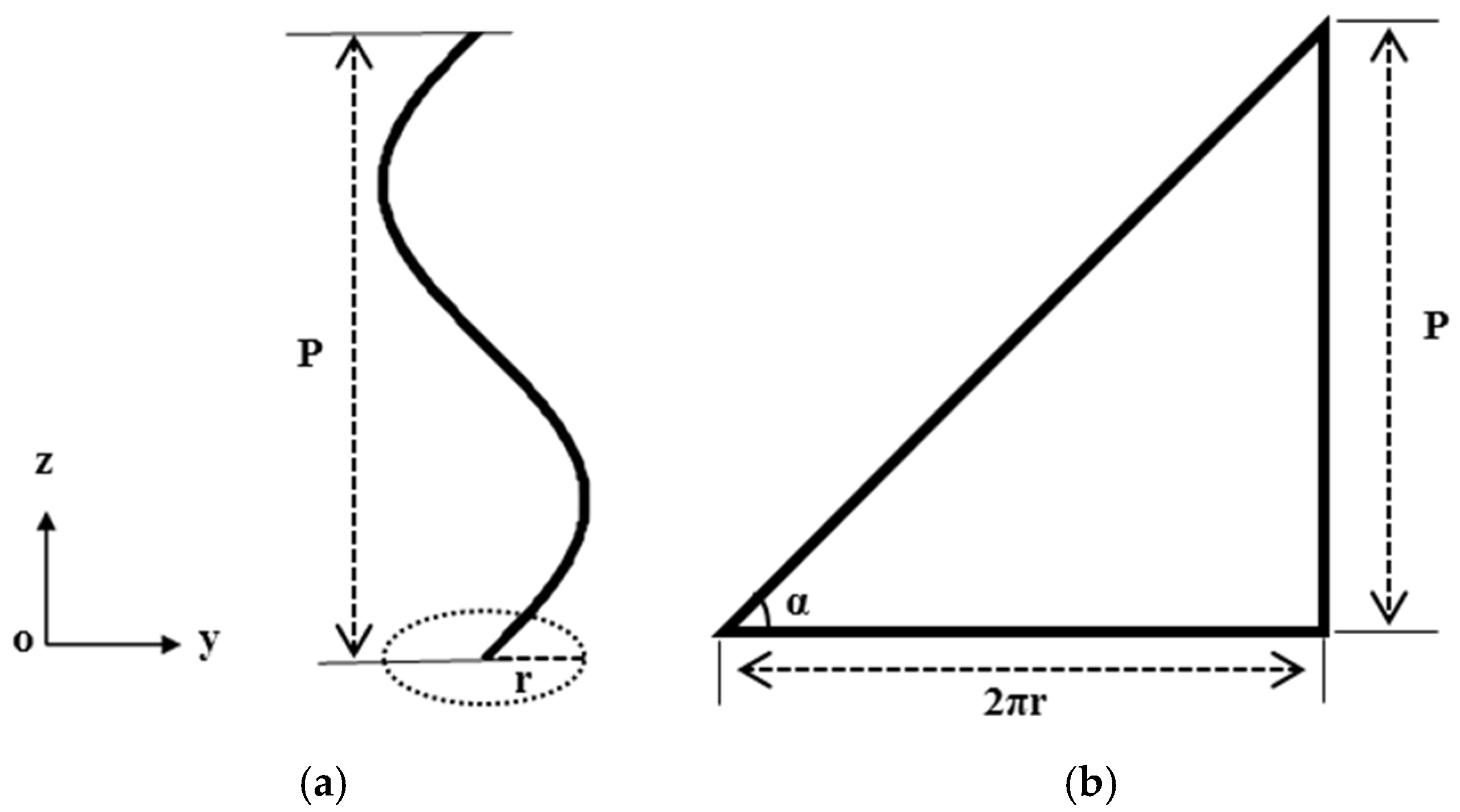
Figure 1a depicts a three-dimensional right-handed helix completing one full cycle, corresponding to a rotation angle of 2π radians. Development of this spatial curve onto a two-dimensional plane yields a straight-line trajectory of identical length, illustrated in
Figure 1b. This development reveals a right triangle where the base length equals the circumferential distance 2πr of the helix’s projection circle, and the height corresponds to the lead P. The fundamental geometric parameters defining the helix are:
Radius (r): The radius of the base cylinder.
Lead distance (P): The axial distance advanced per full 2π-radian revolution.
Helix angle (α): The acute angle formed between the helix tangent and the plane perpendicular to the cylinder axis. This angle α is functionally related to r and P, as expressed in Equation (2).
Helices are classified by handedness:
Left-handed: Axial advancement occurs under counter-clockwise rotation when viewed along the direction of advance.
Right-handed: Axial advancement occurs under clockwise rotation when viewed along the direction of advance.
Collectively, these parameters (r, P, α, handedness) define the complete spatial configuration and directional properties of the helical generator.
2.1.2. Parametric Design for HSL
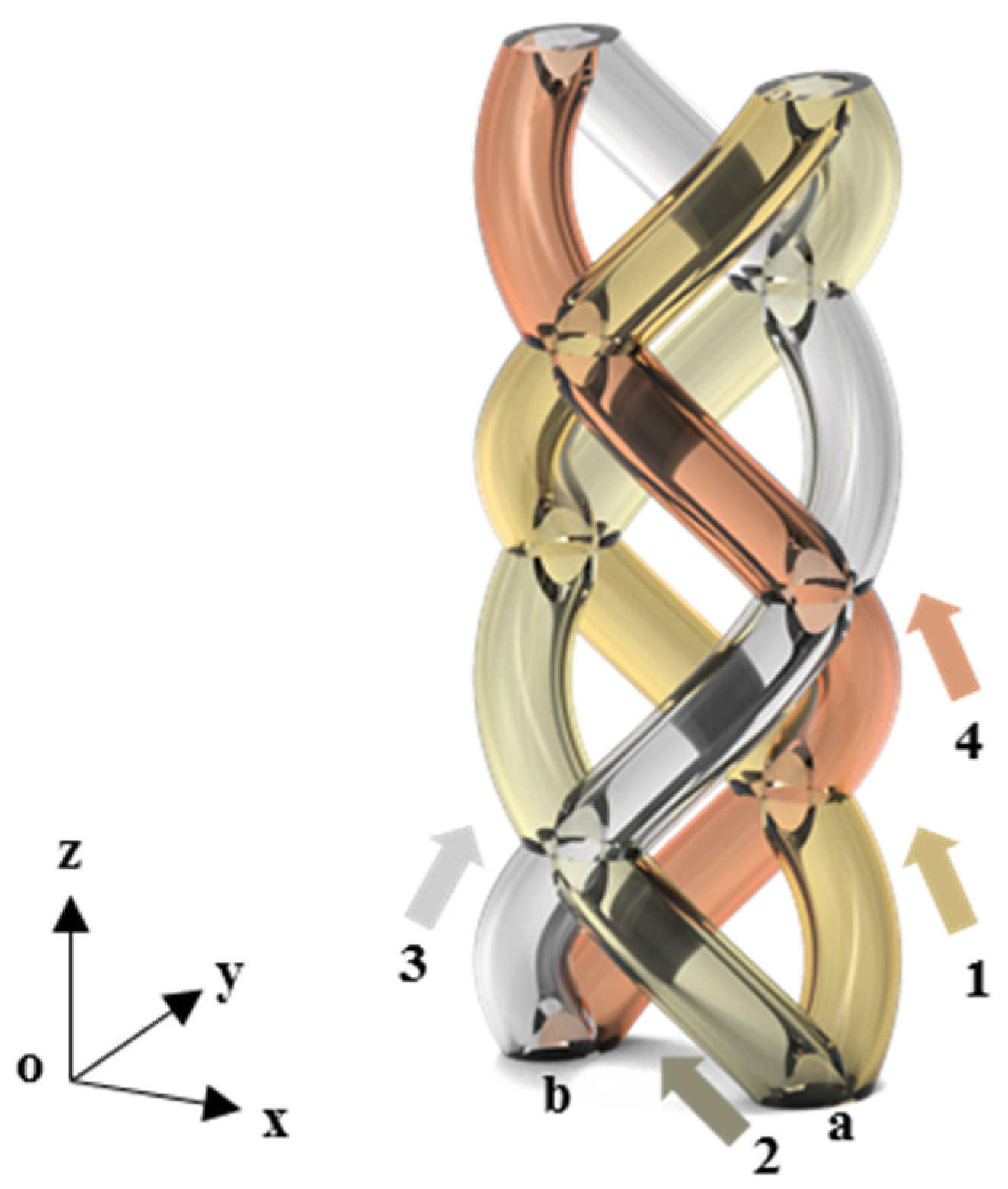
The unit cell of the four-helix symmetric HSL is constructed to overcome the geometric asymmetry and arraying challenges inherent in single-helix designs as shown in
Figure 2. Four helical filaments, each with identical radius r and pitch P, originate from two symmetric points: a(r,0,0) and b(−r,0,0). These helices are partitioned into two pairs based on handedness: helices 1 and 3 are right-handed, while helices 2 and 4 are left-handed. Pairs of identical handedness (1–3 and 2–4) remain spatially parallel, whereas oppositely handed pairs (1–2, 1–4, 3–2, 3–4) intersect periodically along the z-axis with a spacing of P/2. A circular cross-section of diameter d is swept along each helical path to generate solid filaments, which are then merged via Boolean union operations to form a single coherent unit cell. The resulting structure contains eight curved solid rods and is bounded by two perpendicular planes at z = 0 and z = P/2. The unit cell exhibits a periodic array spacing of 2r in the x- and y-directions, and P/2 in the z-direction, enabling seamless macroscopic lattice expansion. To fabricate a hollow tubular variant with outer and inner diameters d
out and d
in, respectively, two solid lattice models are generated with diameters d
out and d
in. The inner core is removed via Boolean difference operations, yielding a thin-walled helical pipe lattice.
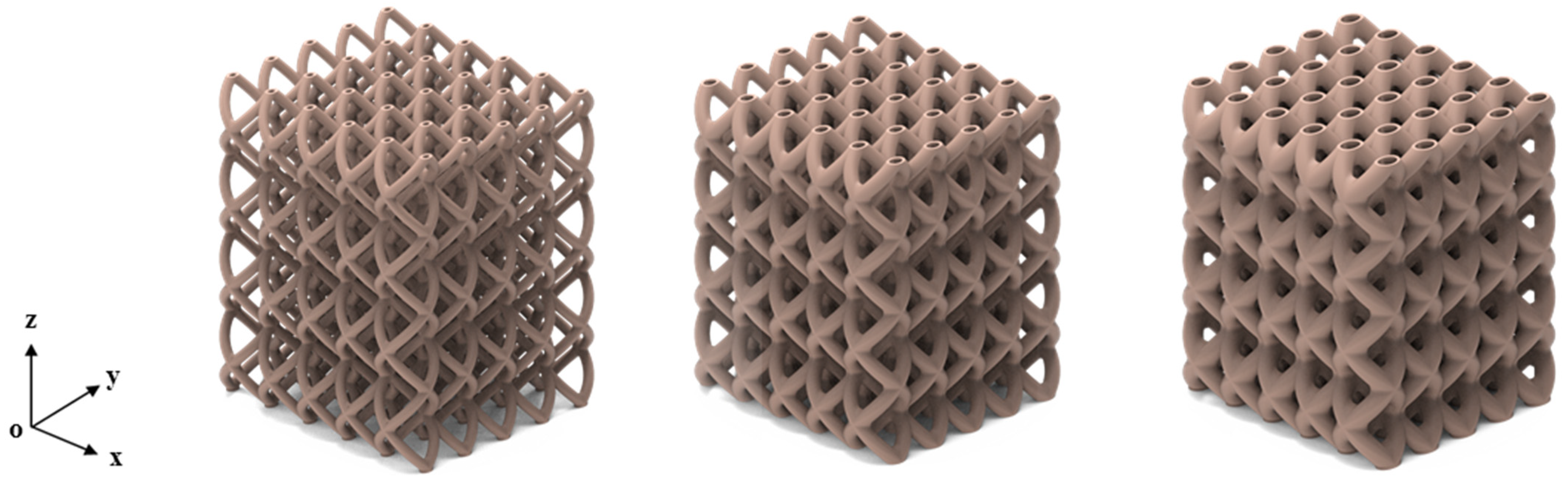
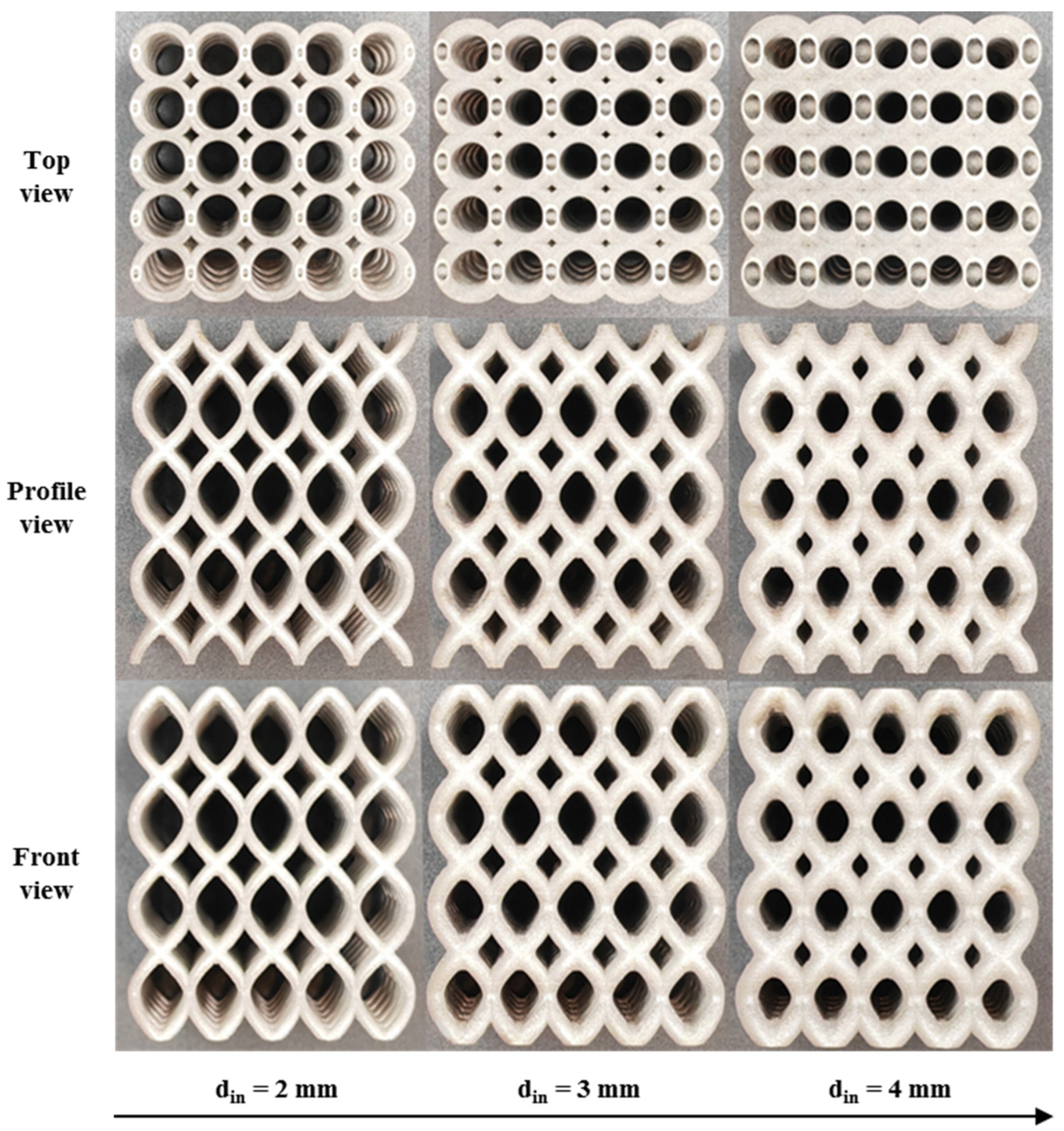
Figure 3 presents the complete HSL structure composed of a 5 × 5 × 4 unit cell, where the helix radius r is 5 mm and with a constant helix angle of 45°.
In the geometric design of cellular structures, the helical mother line radius r, inner and outer pipe radii d
in and d
out, and pitch P are key geometric parameters influencing the relative density of the structure. The analytical model refers to a mathematically derived, closed-form relationship that directly correlates geometric design parameters. As shown in
Figure 2, the total volume of the hollow helical pipes within a single unit cell is given by Equation (3), and this volume corresponds to twice the unit cell volume, the minimum bounding cube volume Vmax enclosing the unit cell is determined by Equation (4), and the theoretical relative density ρ is calculated by Equation (5) based on the above two equations. The analytical model enables rapid prediction and inverse design of HSL structures based on engineering requirements, embodying precise analytical relationships rather than approximate or data-driven models.
Table 1 lists the theoretical and actual relative densities of the three lattices shown in
Figure 3, where the theoretical relative density is calculated from Equations (3)–(5), and the actual relative density is determined by the ratio of the model’s actual volume to its bounding volume. As the inner diameter increases from 1 mm to 3 mm, the theoretical relative density is consistently lower than the actual value, with a deviation stabilized at approximately 2%; this discrepancy arises from the neglect of spatial overlap regions between the helical pipes, and in engineering practice, the wall thickness can be adjusted to fine-tune the material volume and precisely match the target value.
2.1.3. Design for AM
In the parametric design of lattice structures, geometric parameters, as static intrinsic features, directly govern the macroscopic morphology, mechanical response, and functional performance. Taking spring-type lattices as an example, the core geometric parameters include: the helical radius r, which characterizes the curvature of the helical trajectory; an increase in r, which reduces axial stiffness while enhancing flexibility, but may compromise overall stability; the helical lead angle α, defined as the angle between the helical line and its projection on the cylindrical base, whose increase directs the structure toward axial-dominated load-bearing behavior, enhancing axial compressive stiffness; the inner diameter din, which determines the cross-sectional area of the internal flow channel, directly influencing thermal conduction pathways and cooling efficiency, and is a critical variable for efficient thermal design; the outer diameter dout, which, together with din, defines the wall thickness and directly modulates the relative density and mechanical strength of the structure. These parameters exhibit strong coupling relationships, and their collaborative optimization is a prerequisite for constructing high-performance HSL structures.
The geometric and process parameters exhibit significant nonlinear coupling, with their interaction governed by the physical limits of L-PBF equipment, material thermophysical properties, and dynamic molten pool behavior [
34]. During structural design, geometric parameters are not independently adjustable variables but must be co-optimized within the process feasibility domain. Research indicates [
35] that the minimum stable printable wall thickness is 0.2–0.3 mm; below this threshold, insufficient molten pool overlap leads to discontinuous melt beads, powder inclusions, and elevated porosity, significantly compromising structural integrity. This constraint is closely correlated with the d
in and d
out, requiring d
out − d
in ≥ 0.6 mm to maintain molten pool thermal stability. For the overhang characteristics of helical channels, the effective overhang angle is determined by the ratio of pitch P to circumference 2πr, and it is recommended to control the helical lead angle α at or above 45° to enhance process reliability. Furthermore, the overall envelope dimensions of the structure (including radius r and pitch P) must be smaller than the build volume of the employed L-PBF system; this constraint constitutes a hard boundary that must be verified at the initial design stage against equipment specifications (e.g., 300 mm × 300 mm × 400 mm) to avoid print failure due to dimensional exceedance.
The geometric parameters of the HSL structure were selected based on a balanced consideration of manufacturability, structural integrity, and experimental control. The helix angle was fixed at 45° to ensure adequate self-supporting capability during LPBF while preserving the intended helical topology. To avoid size effects and ensure printability within a single build, the design constrained the structure to 3–5 unit cells, with an overall length not exceeding 80 mm, leading to a selected spiral radius of 5 mm. The outer diameter was systematically varied between 2 mm and 4 mm, informed by empirical thresholds: outer diameters > 4 mm resulted in insufficient external flow channels and excessive material volume, while diameters < 2 mm compromised internal channel design due to challenges in powder removal. Given the LPBF minimum feature size of 0.3 mm and the practical stability threshold of 0.5 mm, the inner diameter was correspondingly set to 1 mm, 2 mm, and 3 mm for the three cases. The spiral radius and helix angle were held constant across simulations, with only the outer diameter and inner diameter varied. This approach enabled a clear correlation between porosity distribution, internal flow size, and thermal–mechanical response. As summarized in
Table 2, the key geometric parameters of the HSL structure are systematically mapped to the operational constraints of AM processes. This adaptive parameterization enables the concurrent optimization of structural performance and manufacturability.
2.2. Thermal Management Simulation
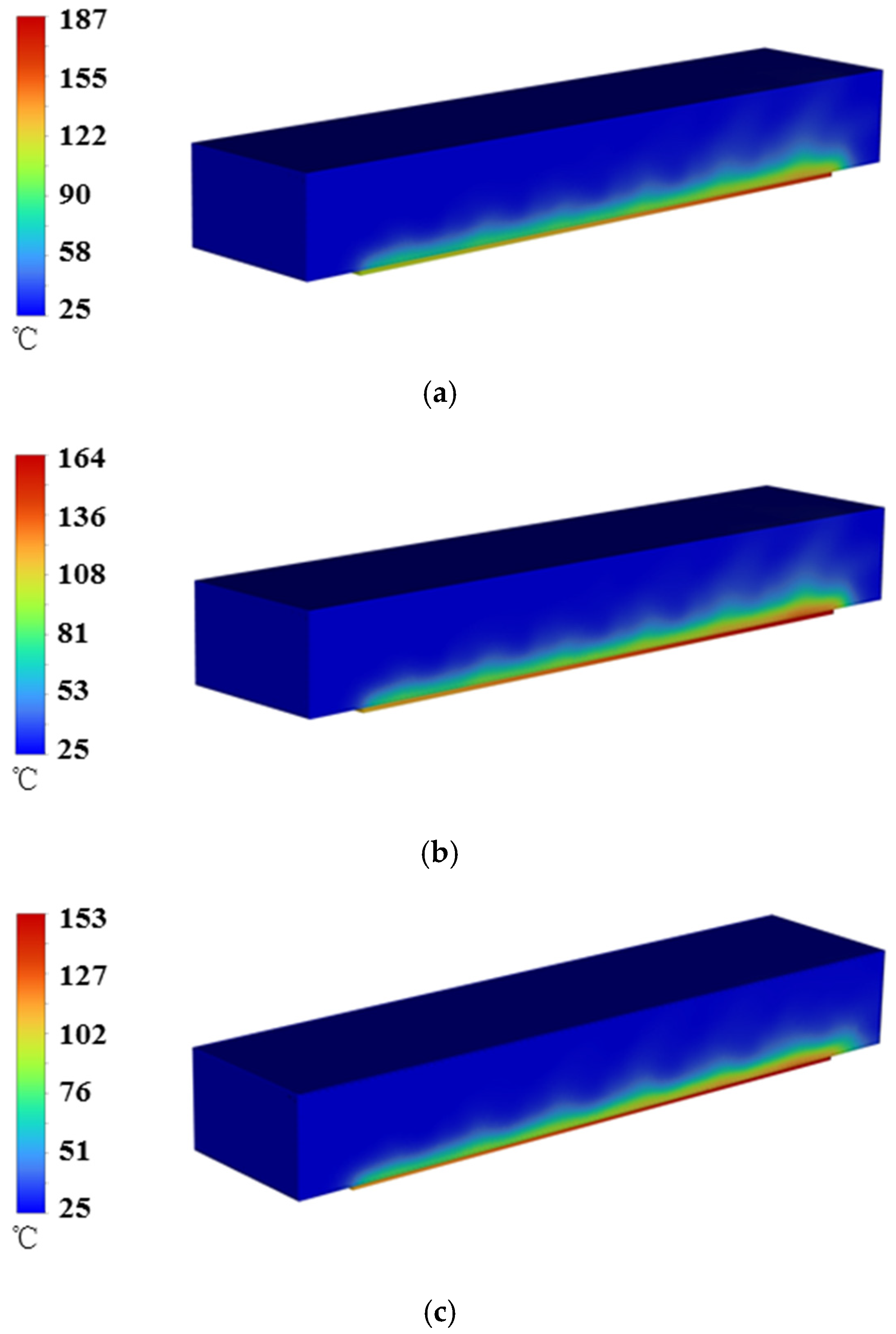
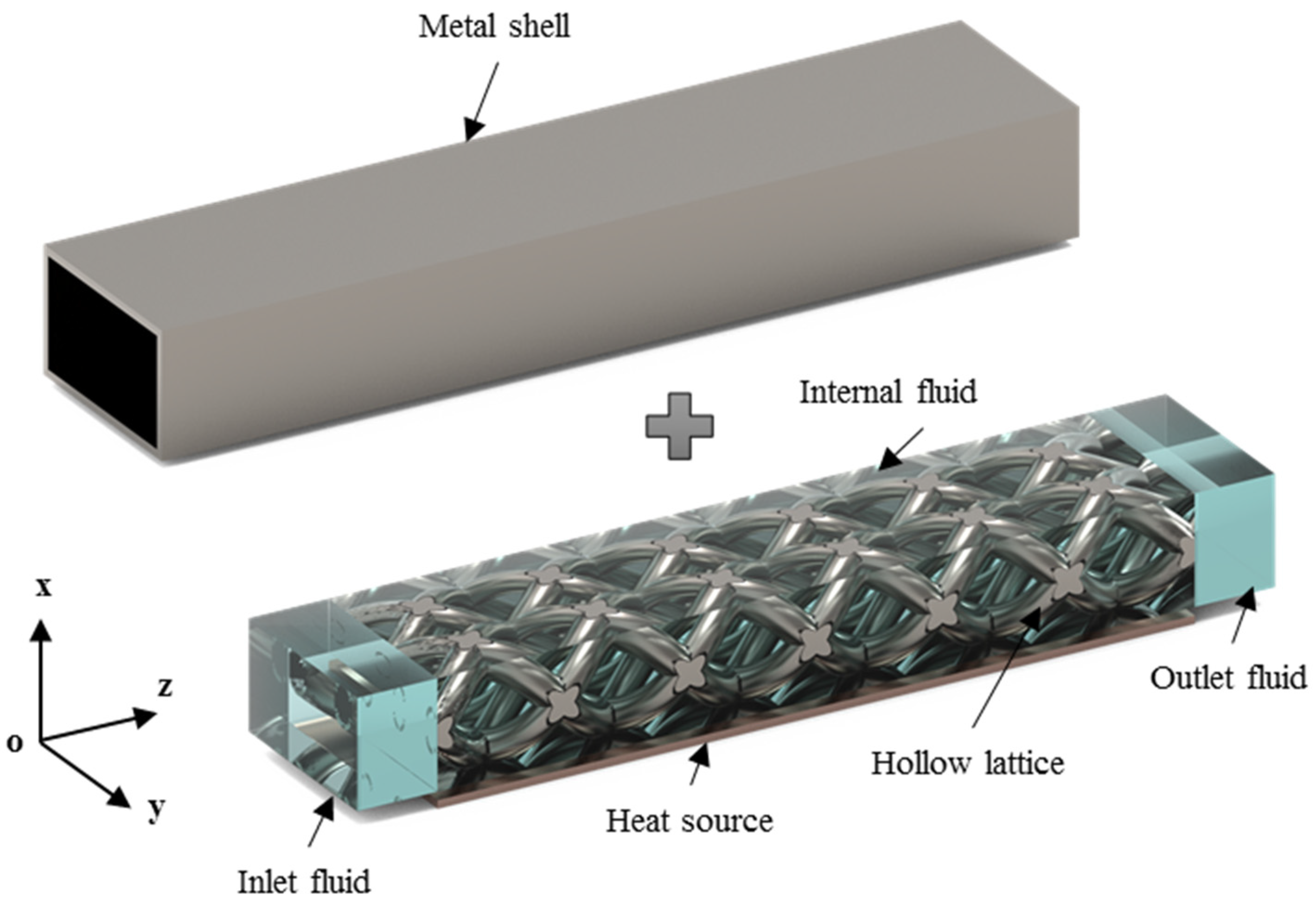
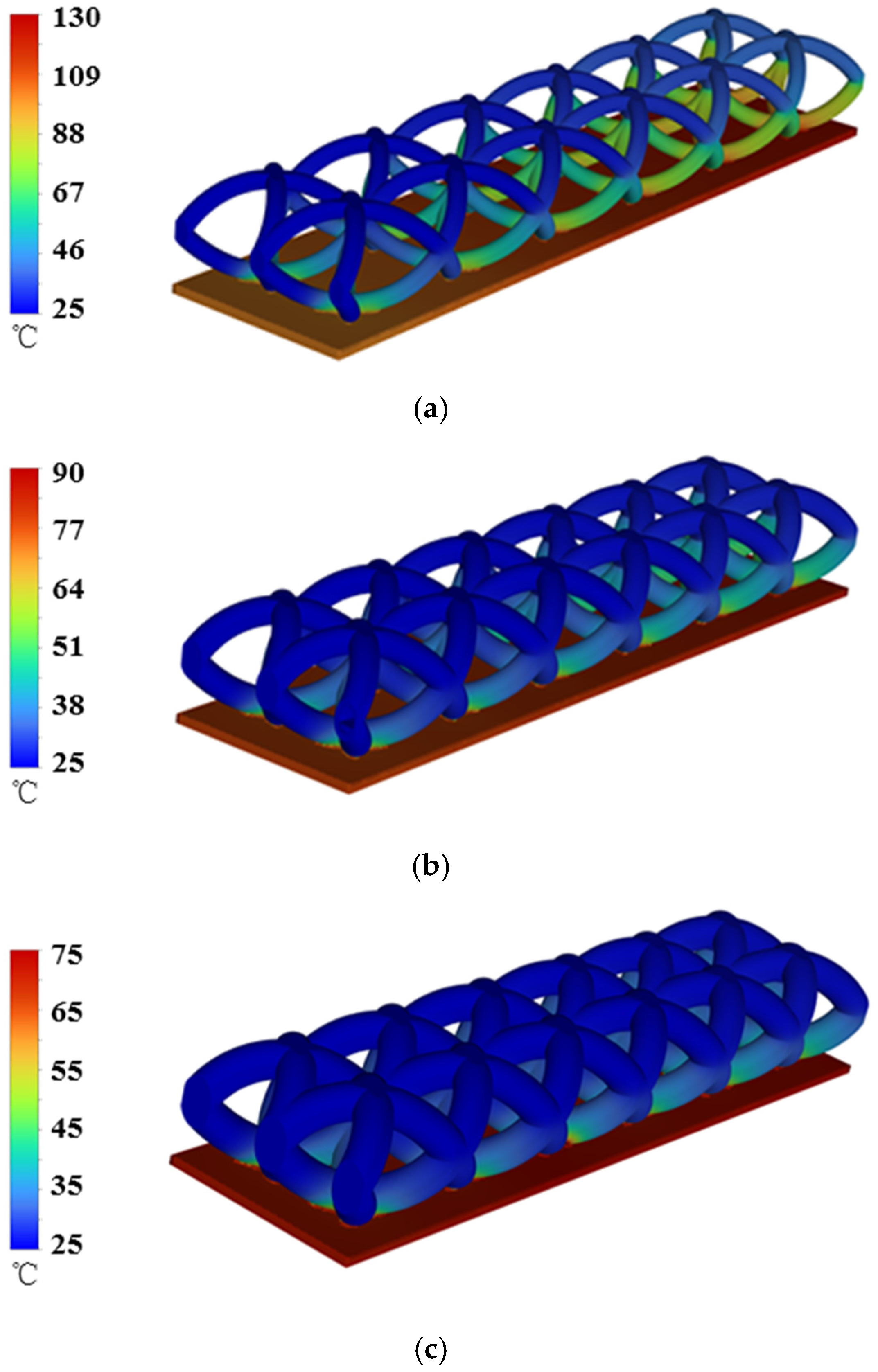
The thermal and heat dissipation performance of the HSL structure is evaluated using a rectangular envelope model of 1 × 2 × 6, balancing computational efficiency with assessment accuracy. Two distinct fluid distribution configurations are defined to reflect practical engineering scenarios: Case 1 and Case 2. In Case 1 (
Figure 4), fluid flows exclusively through the internal hollow channel, which is geometrically defined by the envelope of the spiral voids within the metallic HSL. A copper plate, positioned at the origin of the x-axis and in direct contact with the HSL, serves as the heat source, imposing heat flux densities of 2.5 × 10
7 W/m
3 for Case 1 and for 2.5 × 10
8 W/m
3 for Case 2. The fluid inlet is located at the start of the z-axis, with the outlet at its terminus, establishing a unidirectional flow path. In Case 2 (
Figure 5), fluid flows simultaneously through both the internal channel and the external annular region formed by the complement of the HSL structure within a surrounding metallic shell, which acts as a fixed outer boundary. The external fluid domain is explicitly resolved as the void space enclosed by the shell but exterior to the HSL, with inlet and outlet regions defined at the z-axis ends to prescribe velocity and thermal boundary conditions. The cooling fluid in both cases is deionized water, and the key material properties employed in the simulations are tabulated in
Table 3.
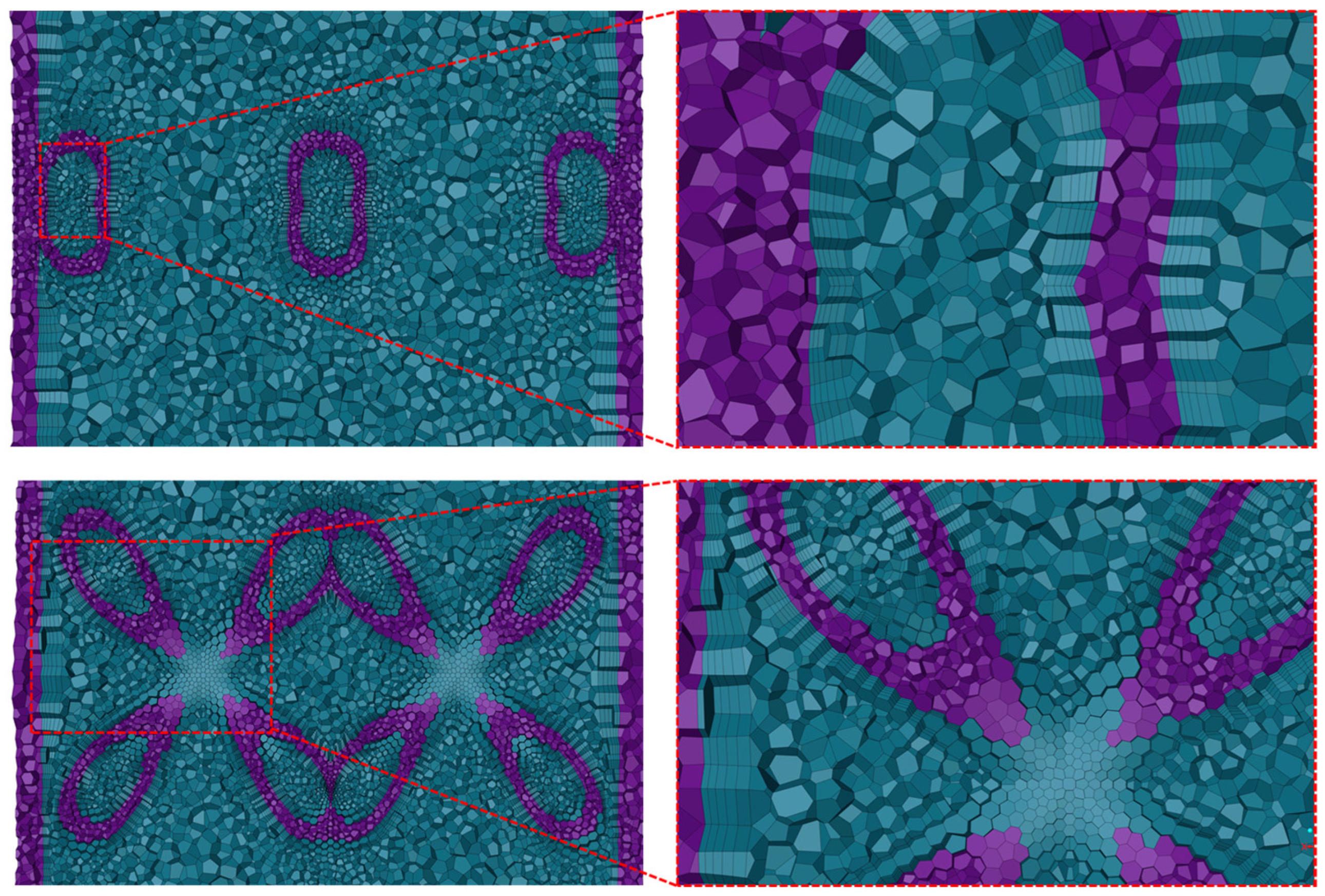
To investigate the heat transfer performance of topology-optimized heat sinks under forced convection, this study employs a commercial CFD solver based on the finite volume method for three-dimensional steady-state numerical simulations, solving the conservation equations of mass, momentum, and energy. Given an inlet velocity of 0.1 m/s and a Reynolds number range of 200–400, the flow is confirmed to be laminar, and thus a laminar model is selected for the CFD solver. The computational domain is discretized using unstructured polyhedral meshes, generated via a workflow that begins with high-fidelity triangular surface meshes, transitions through tetrahedral volumetric meshes, and is ultimately converted into polyhedral cells—a strategy that preserves geometric fidelity while significantly reducing the total element count and enhancing numerical stability and convergence efficiency. To accurately resolve the velocity and temperature gradients near solid walls, five layers of prismatic boundary layers are applied along the walls, with a growth rate of 1.2.
The configurations across all cases are identified by inner diameter d
in, and the metallic HSL geometry parameters are strictly consistent with those listed in
Table 2. The grid element distribution for each computational model is presented in
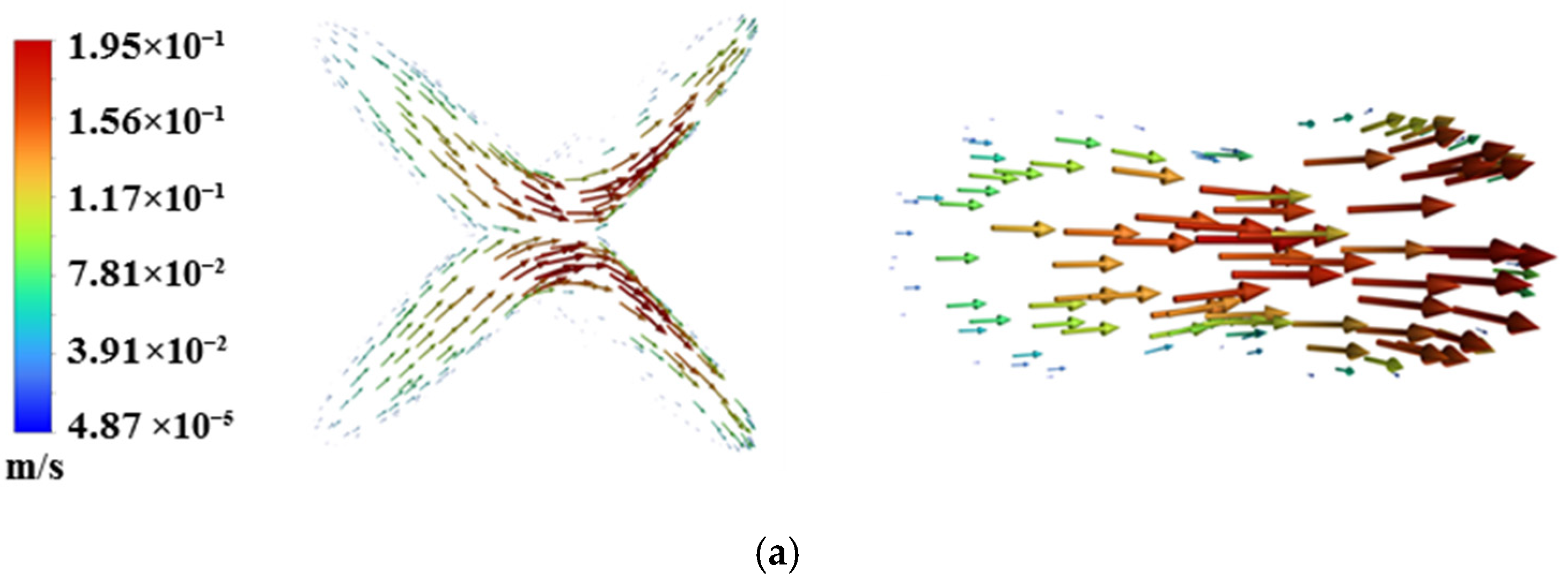
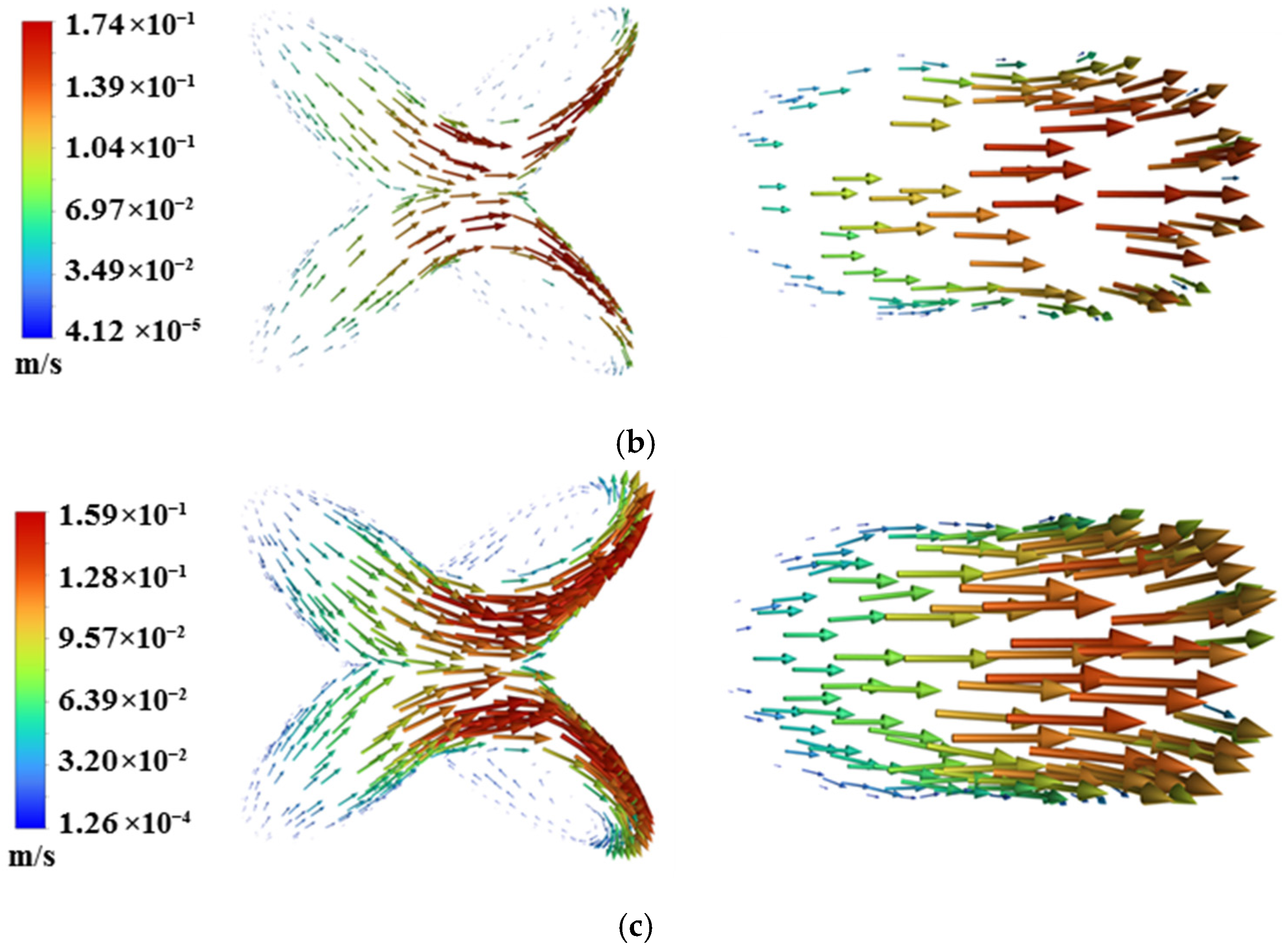
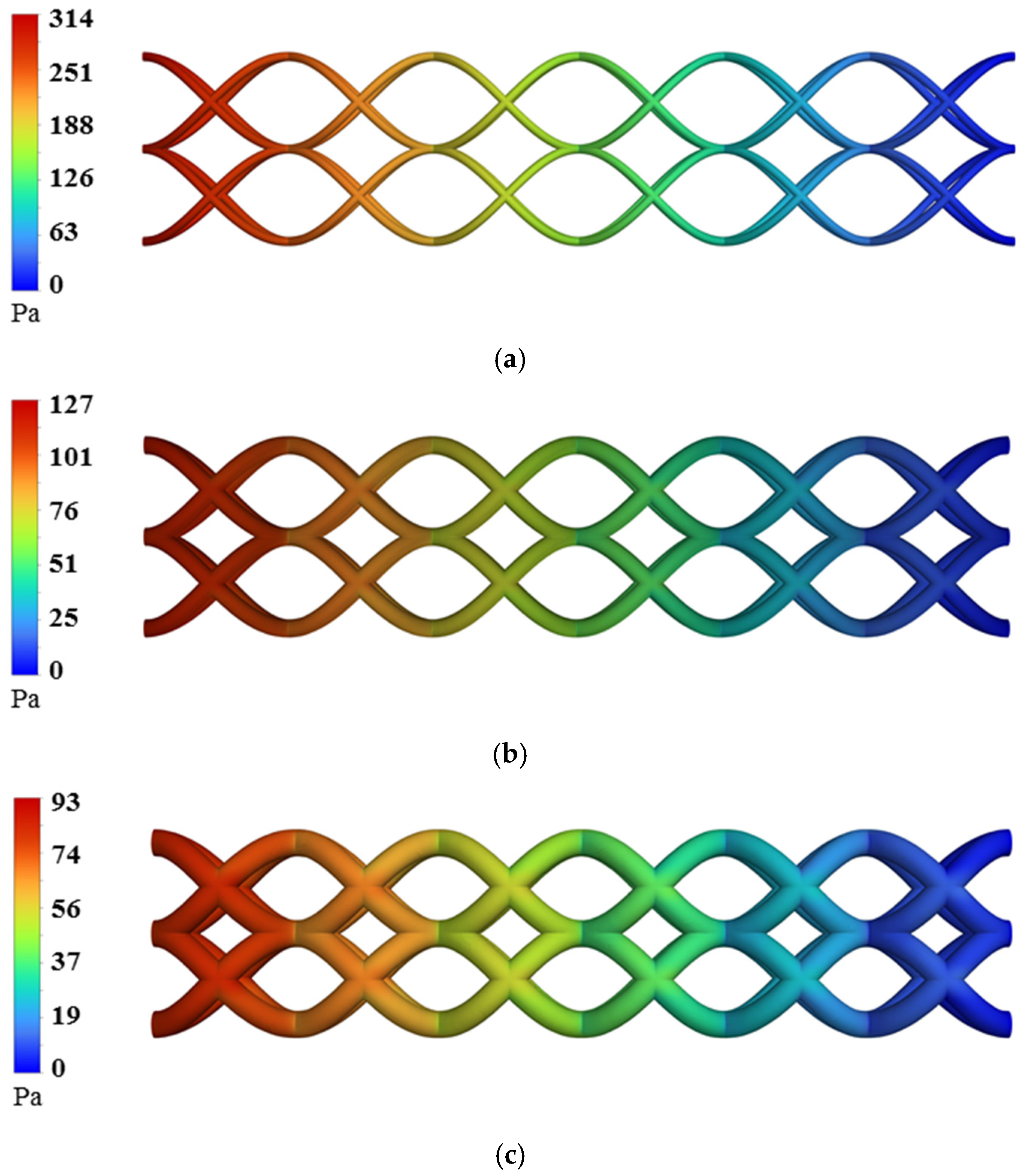
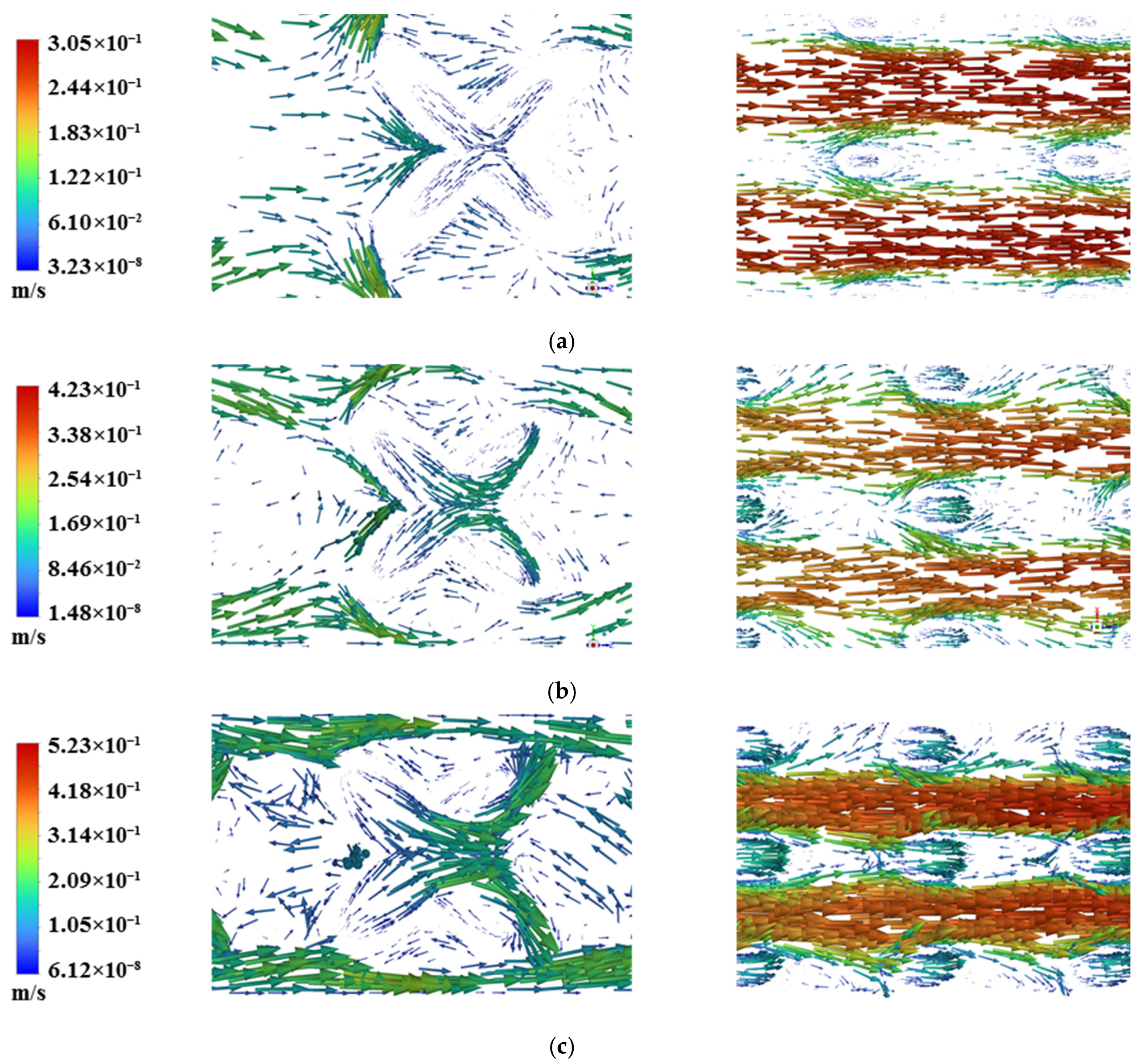
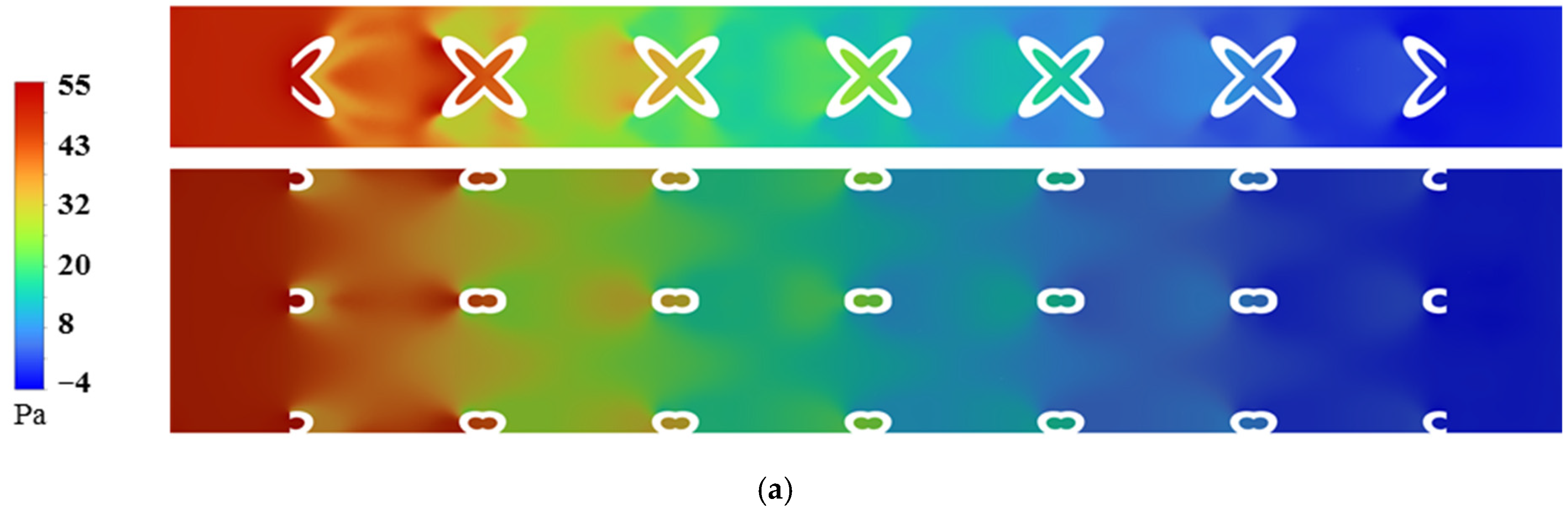
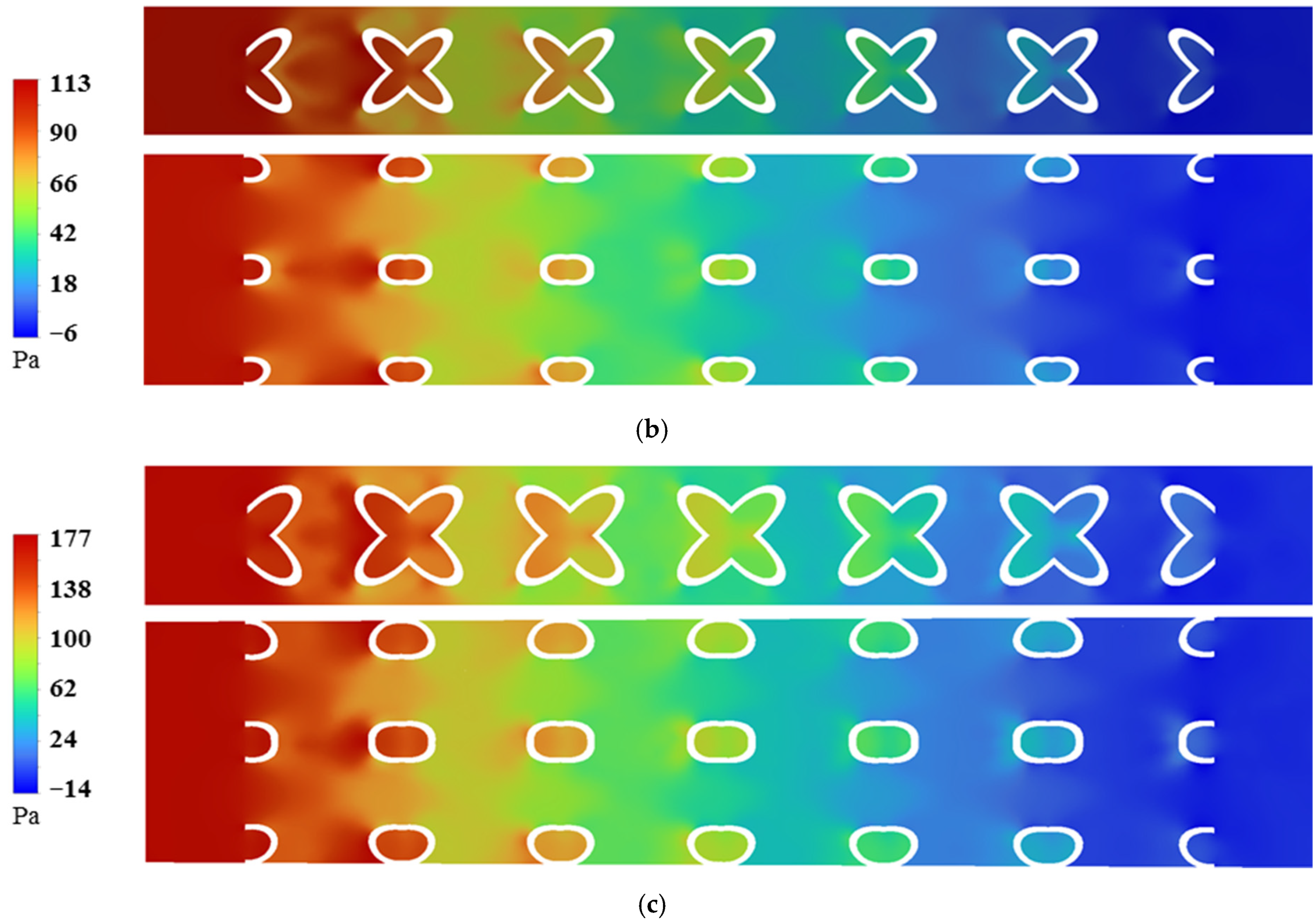
Table 4, with all models maintaining a mesh size on the order of one million elements, a resolution validated by pre-convergence analysis to effectively constrain computational resource consumption while satisfying the dual demands of accuracy and efficiency in steady-state CFD simulations. The boundary conditions are set as: inlet temperature 25 °C and inlet velocity 0.1 m/s. The simulation outputs include the temperature field, velocity field, and pressure field distributions, used to quantitatively compare the thermal performance of different topological configurations. All CFD simulations were performed using ANSYS Fluent 2025.
Figure 6 presents the key cross-sectional mesh distribution for the HSL structure with the inner diameter of 2 mm in Case 2, which clearly illustrates the complex, multi-faceted unstructured mesh configuration required to accurately capture the fluid–solid interfaces and resolve the flow behavior within the topology-optimized structure.
In the thermal management simulation, several key assumptions were made to facilitate a focused parametric study of geometric influences on thermal performance. The working fluid was modeled with temperature-independent thermophysical properties to decouple thermal feedback effects and isolate the impact of channel geometry. The flow was assumed to be steady-state, incompressible, and laminar, with no-slip boundary conditions enforced at the channel walls. Transient dynamics and entrance effects were excluded to maintain computational tractability. Furthermore, the internal channel geometry was idealized as perfectly smooth, omitting the surface roughness inherent to LPBF-fabricated structures. These simplifications are consistent with standard practices in the early-stage thermal design of AM lattices, enabling a clear and unambiguous correlation between structural parameters and thermal performance metrics.
2.3. Load-Bearing Performance Evaluation
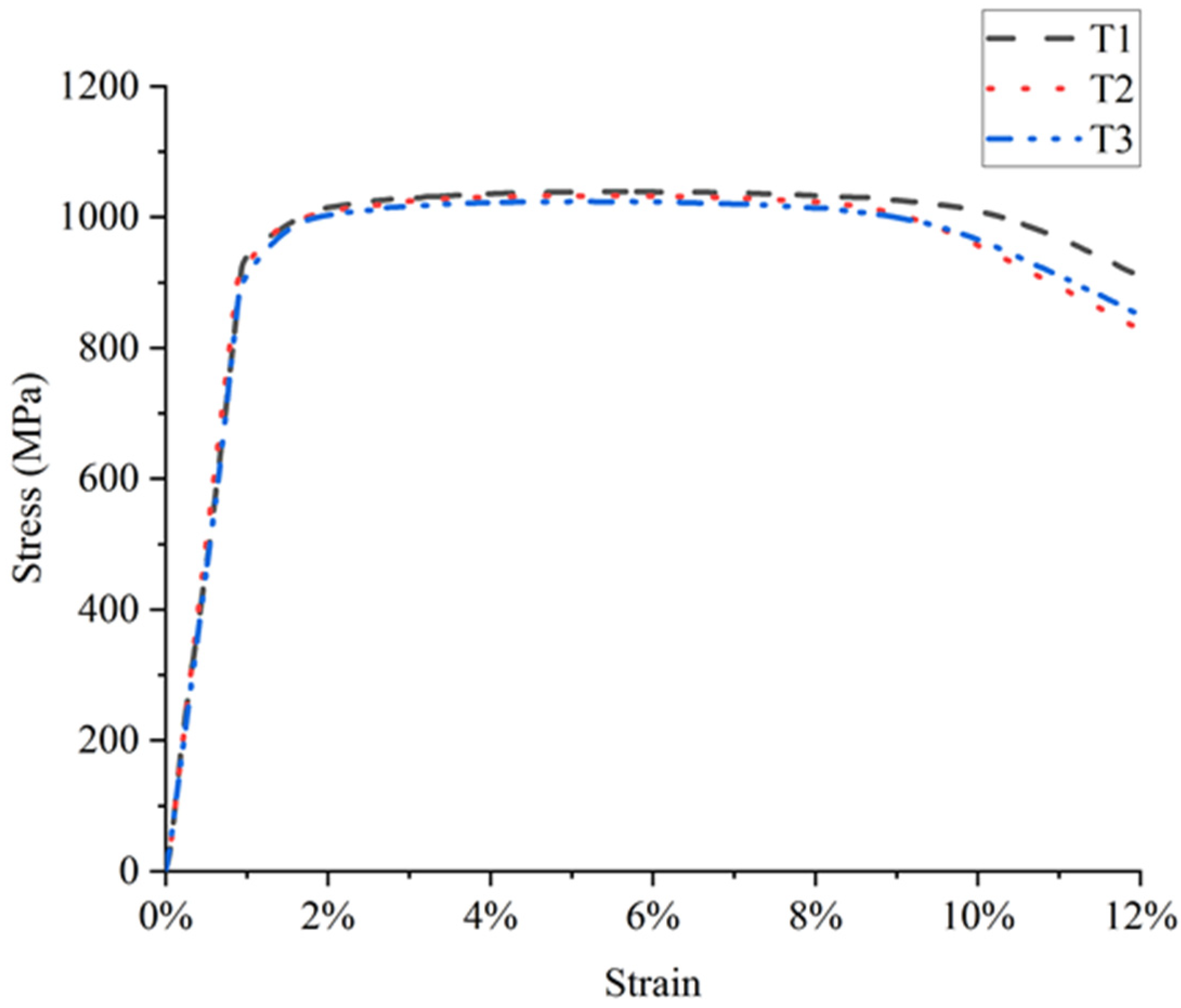
To obtain complete elastoplastic parameters for supporting mechanical performance analysis in numerical simulations, uniaxial tensile tests were conducted in accordance with ASTM E8 standard, with three replicated specimens labeled T1, T2, and T3, demonstrating excellent reproducibility between groups. The test was conducted at 25 °C using equipment YDL-2000 (China Machinery Testing Equipment Co., Ltd., Jilin, China). Based on the stress–strain responses illustrated in
Figure 7, a simplified plasticity model incorporating the von Mises yield criterion and isotropic hardening was developed and implemented as the constitutive input for numerical simulations. The elastic modulus E
0 of the base Ti6Al4V is 101 GPa, and its yield strength σ
0 is 989 MPa. For thermally treated Ti6Al4V LPBF specimens, multiple studies have reported that the elastic mechanical property differences between the build direction (Z) and the build plane (XY) are typically minor. Therefore, we directly employ an isotropic model based on this set of parameters for the computations. The tensile direction of these in situ-fabricated specimens defined by their geometric long axis and principal loading axis aligns precisely with the primary compression axis during the quasi-static compression tests of the HSL structures. In the LPBF process, both the tensile specimens and the HSL lattices share the same z-axis as their dominant build direction. The compressive load in the subsequent mechanical tests was also applied along this z-axis. As such, the uniaxial stress–strain curve derived from this specific build direction accurately captures the mechanical behavior of the structure under its primary load-bearing orientation.
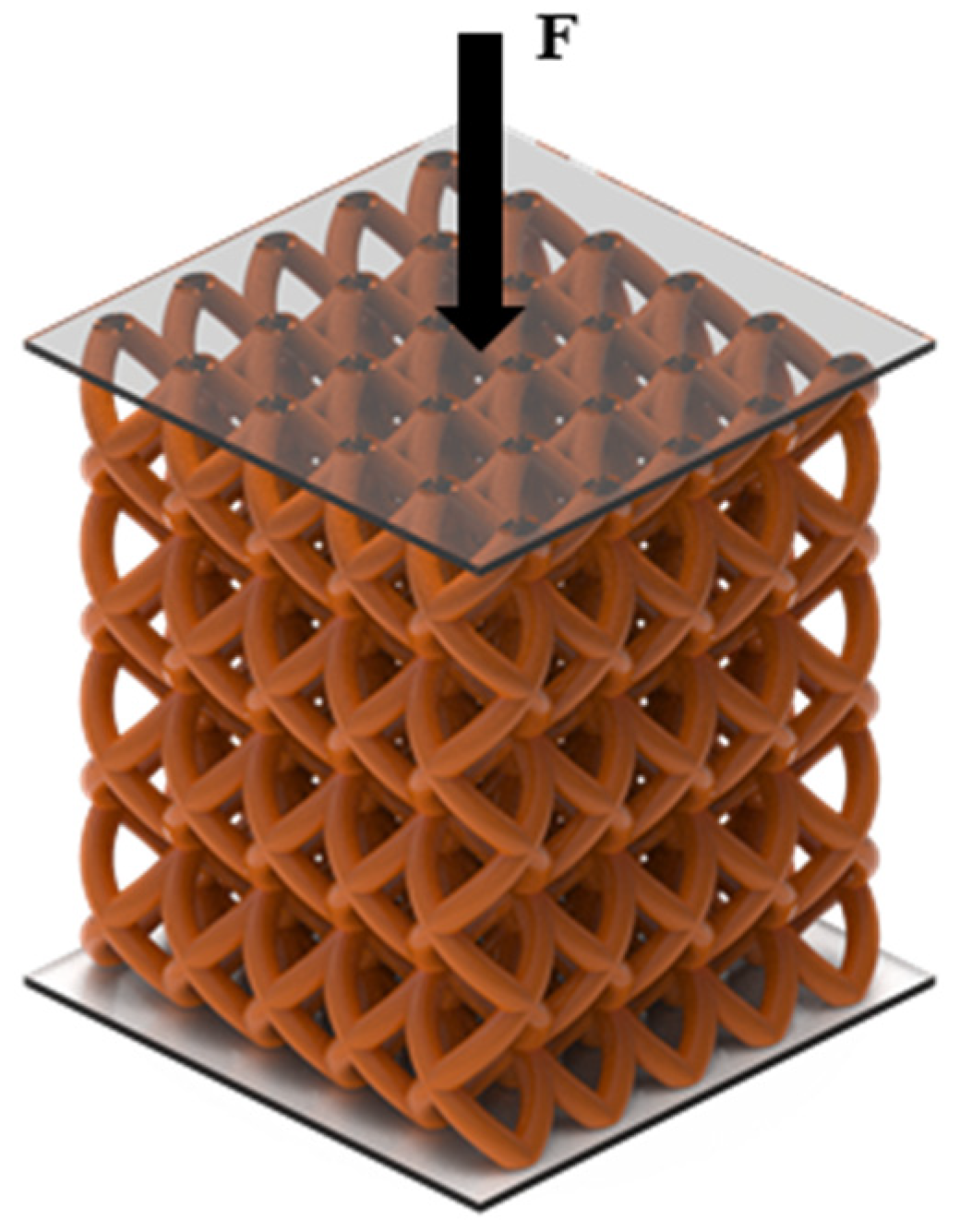
To investigate the mechanical performance of the proposed metamaterial structure, quasi-static simulations were performed using ABAQUS/Standard, in which the HSL metamaterial was discretized using four-node doubly curved shell elements with reduced integration (S4R) to mitigate shear locking while accurately capturing membrane–bending coupling effects. The shell thickness at each node was explicitly defined based on geometric data derived from LPBF process simulations to ensure fidelity, and a structured quad-dominant meshing scheme with uniform element size within each unit cell, scaled to local strut curvature, was employed to maintain consistency across configurations. As illustrated in
Figure 8, the numerical model comprises a rigid loading plate, a HSL metamaterial, and a fixed bottom support plate, where the support plate constrains the bottom displacement of the HSL. The loading plate descends vertically at a constant rate of 2 mm/min to induce compression. The interaction between the rigid loading plate, the fixed bottom support plate, and the HSL structure was modeled using the general contact formulation to automatically resolve all potential contact pairs, including self-contact within the lattice and contact with rigid fixtures without manual surface definition, and a penalty-based contact algorithm with a friction coefficient of 0.1 was implemented to accurately represent shear behavior at the interface, thereby ensuring the numerical model reproduces the physical response while maintaining robust convergence and computational tractability.
2.4. Experimental Validation
LPBF technology was employed using a BLTS310 system (Xi’an Bright Laser Technologies Co., Ltd., Shaanxi, China) to fabricate Ti6Al4V HSL superstructures. The feedstock powder was argon-atomized Ti6Al4V with a powder size distribution of Dv(10) = 30.0 µm, Dv(50) = 44.6 µm, and Dv(90) = 66.2 µm. The layer thickness was set to 0.03 mm, with a laser power of 100 W, scanning speed of 750 mm/s, and spot size of 80 μm—a combination that effectively achieves high density and low residual stress, suitable for precise fabrication of complex HSL structures. After printing, the specimens were separated from the build plate using electrical discharge machining, followed by ultrasonic cleaning to remove internal residual powder at a frequency of 30 kHz, temperature of 40 °C, duration of 35 min, and power density of 1.1 W/cm2, using a neutral cleaning agent; a final rinse with anhydrous ethanol was performed to ensure complete removal of contaminants from internal channels.
This study experimentally validates the mechanical performance of the LPBF-fabricated HSL structure, while the thermal performance is evaluated based on the aforementioned CFD simulation results; the existing literature has sufficiently confirmed the high consistency between experiment and simulation in the response of metallic HSL structures. To characterize the surface topography of LPBF-fabricated samples, a super-depth optical microscope (VHX-4000) was employed for high-resolution observation, with emphasis on assessing forming quality and micro-defect distribution. Quasi-static compression tests were conducted on a hydraulic loading system (YDL-2000) at a loading rate of 2 mm/min, corresponding to a nominal strain rate of 5.3 × 10⁻⁴ s−1; the compressive load was applied by the upper platen, while the lower platen was fixed, and a digital camera was positioned on the front face of the specimen to record the entire deformation process. The nominal compressive strain was defined as the ratio of displacement to the initial specimen height, and the nominal compressive stress was calculated as the ratio of applied load to the cross-sectional profile area of the specimen. Two independent specimens were fabricated and tested for each configuration, and the results demonstrated good repeatability and reproducibility in the stress–strain response of each specimen group.
4. Conclusions
In this study, a novel parametrically designed HSL structure is proposed, enabling integrated thermal management and structural load-bearing applications via AM. The HSL structure was fabricated using LPBF technology, with its performance evaluated through CFD simulations and FE analysis, followed by validation via quasi-static compression experiments.
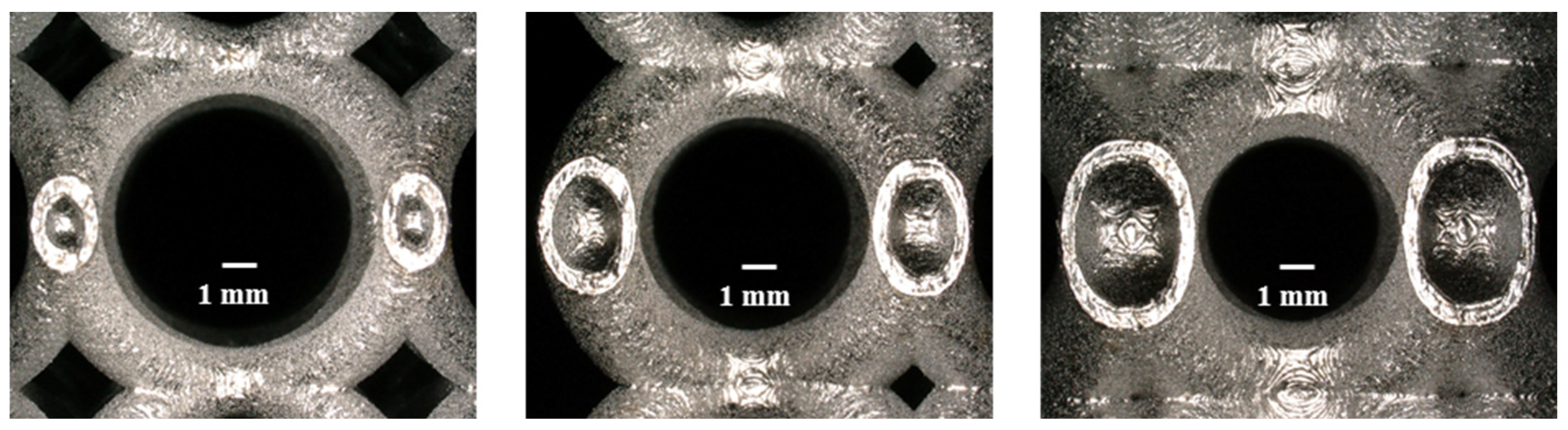
Optical microscopy revealed that the LPBF-fabricated Ti6Al4V specimens were free of visible macroscopic defects such as cracks and pores, with continuous, well-defined microscopic melt tracks, excellent interlayer bonding, and high geometric fidelity. The measured mass deviation gradually decreased from 6.91% to 5.32% as the inner diameter increased and eventually stabilized, confirming that process consistency met the error tolerance requirements.
In terms of thermal performance, the spiral geometry induces Dean vortices via centrifugal force, significantly enhancing momentum exchange between mainstream flow and near-wall regions to improve radial mixing efficiency. Under internal flow conditions, increasing the inner diameter from 1 mm to 3 mm reduced the average heat source temperature by 36.3% and system pressure drop by 72.7%. For combined internal–external flow conditions, the metal HSL and fluid channels synergistically formed a three-dimensional heat dissipation network with ‘internal absorption and external diffusion’ characteristics, effectively improving heat distribution uniformity and suppressing local hot spot formation. However, an excessively large inner diameter caused external flow channel blockage, leading to a sharp pressure drop rise. Through a comprehensive trade-off between thermal performance and flow resistance, a 2 mm inner diameter was identified as the Pareto optimal solution for microchannel cold plate applications, balancing high heat dissipation efficiency with low flow resistance.
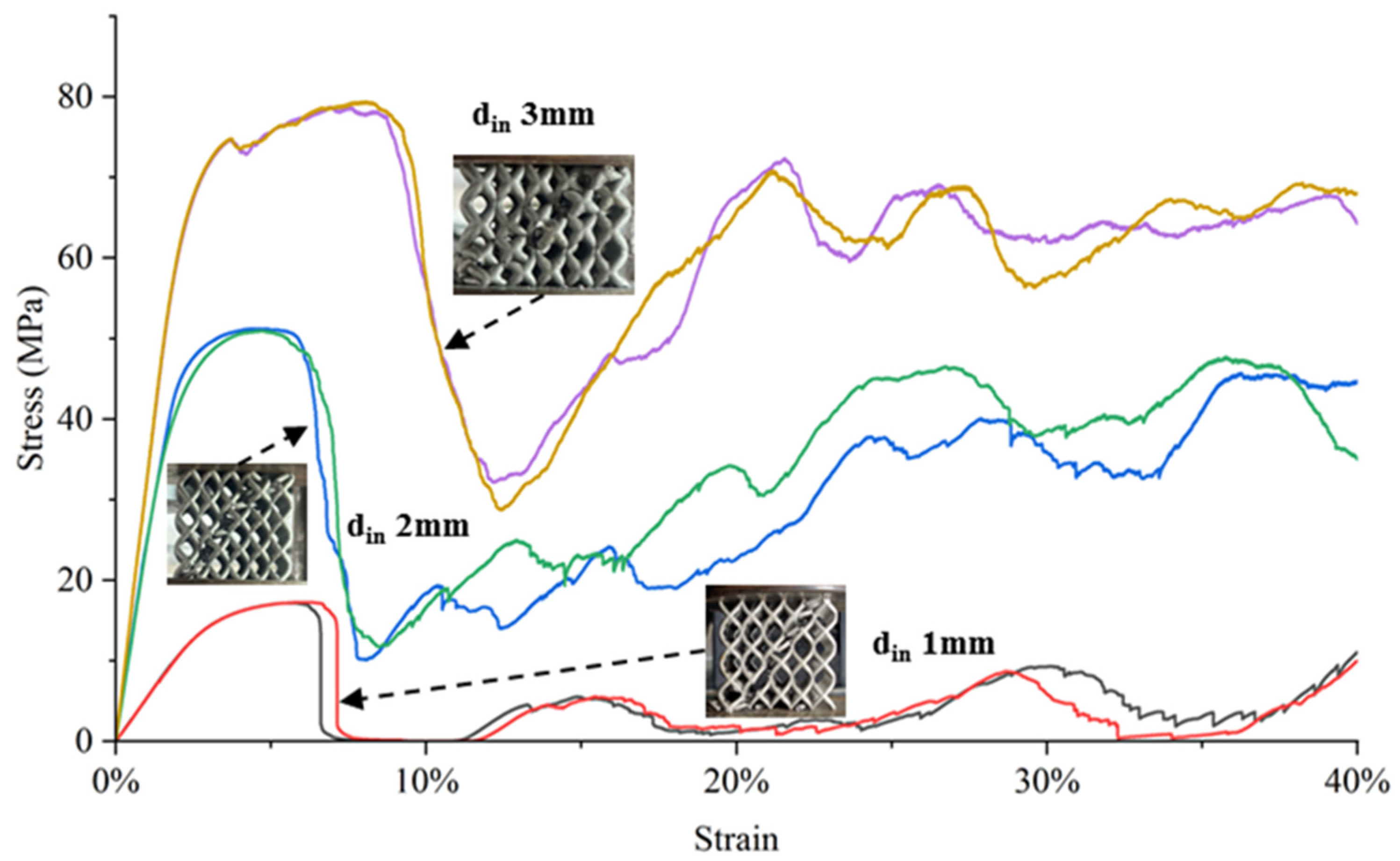
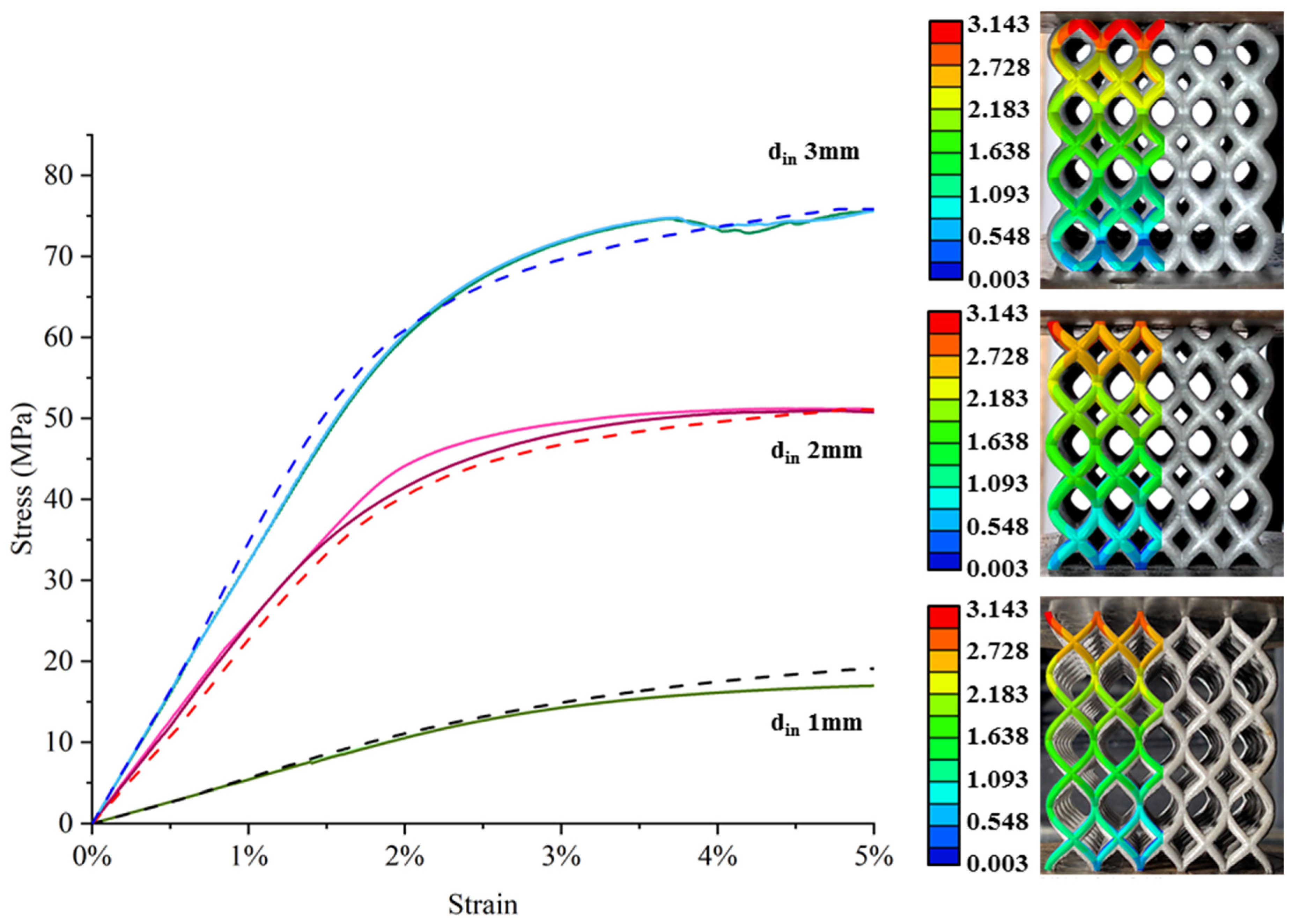
Mechanical performance tests demonstrated that structural stiffness and strength improved significantly with an increasing inner diameter: the elastic modulus increased from 0.54 GPa to 3.22 GPa, while yield strength and ultimate strength rose from 13.22 MPa and 17.21 MPa to 62.69 MPa and 79.06 MPa, respectively. Compression failure propagated along an approximately 45° shear band, consistent with the typical buckling–fracture mechanism of lattice structures. Experimentally measured stress–strain curves were highly consistent with simulation results, with prediction errors of elastic modulus and yield strength both below 5%, verifying numerical model reliability.
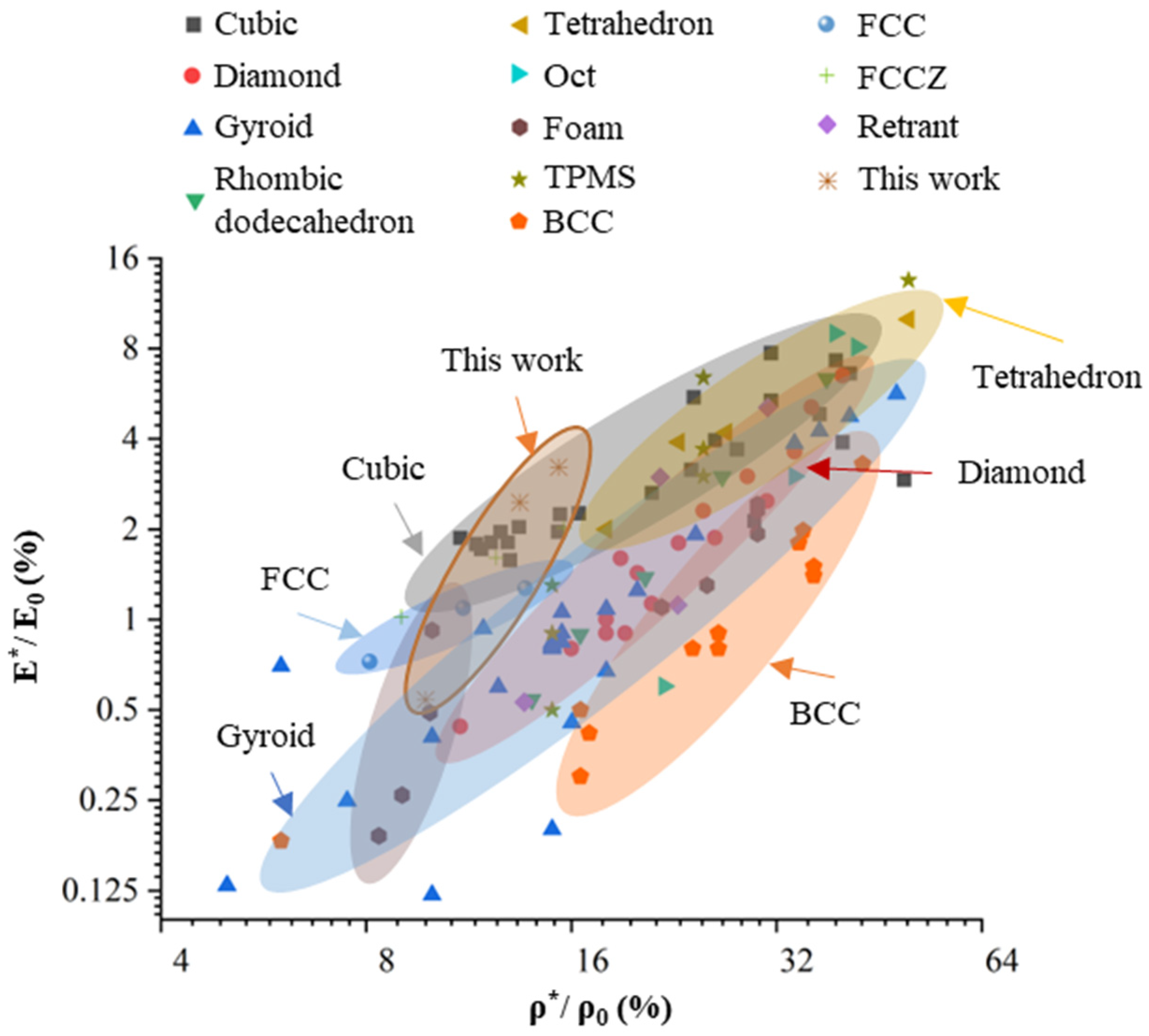
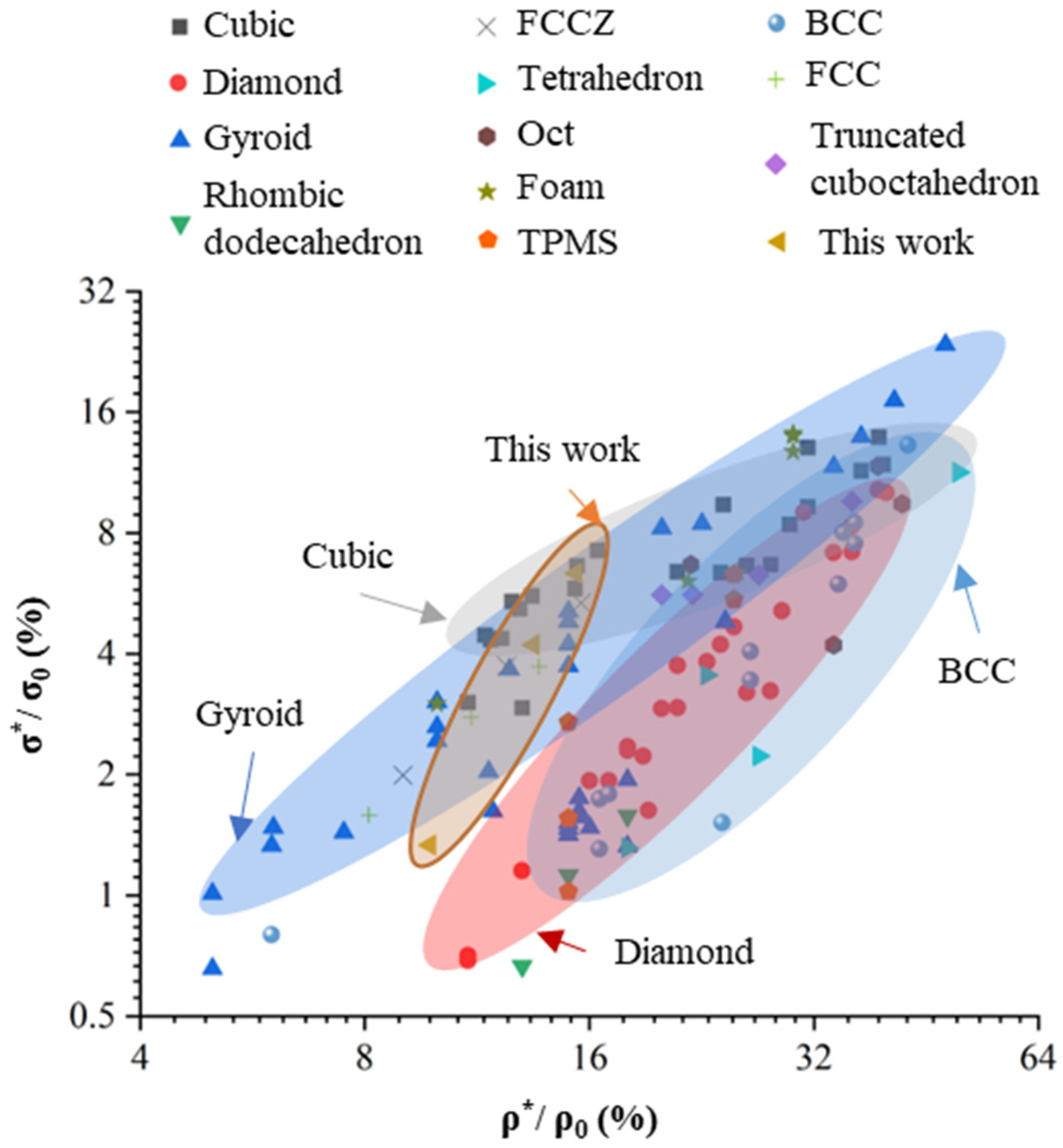
Compared with BCC and diamond lattices, the HSL exhibited superior elastic modulus and yield strength at equal mass, approaching cubic topology performance. This advantage stems from two core mechanisms: the spiral geometry homogenizes the stress field to suppress nodal stress concentration; and the hollow tubular units significantly increase section moment of inertia at equal mass, greatly improving critical buckling load.
This structure provides a promising design paradigm for thermo–mechanical integrated functional components. The HSL structure holds practical potential in active thermal protection systems, particularly through its unique capability to isolate and independently manage internal and external fluid streams, enabling flexible spatial allocation of liquid fuel and coolant channels based on mission-specific thermal and propulsion requirements in hypersonic vehicles and reusable launch systems. Future development will focus on multi-physics optimization under thermo–mechanical coupling, hybridization with complementary lattice topologies, and tailored fluid property mapping, such as pairing high-specific-heat coolants with low-conductivity fuel streams, to enable next-generation thermal management and high-energy-density propulsion platforms.




 ,
,