3.1. Effects of the Radial Position of the Arc-Shaped Splitter Plates on the Flow and Sound
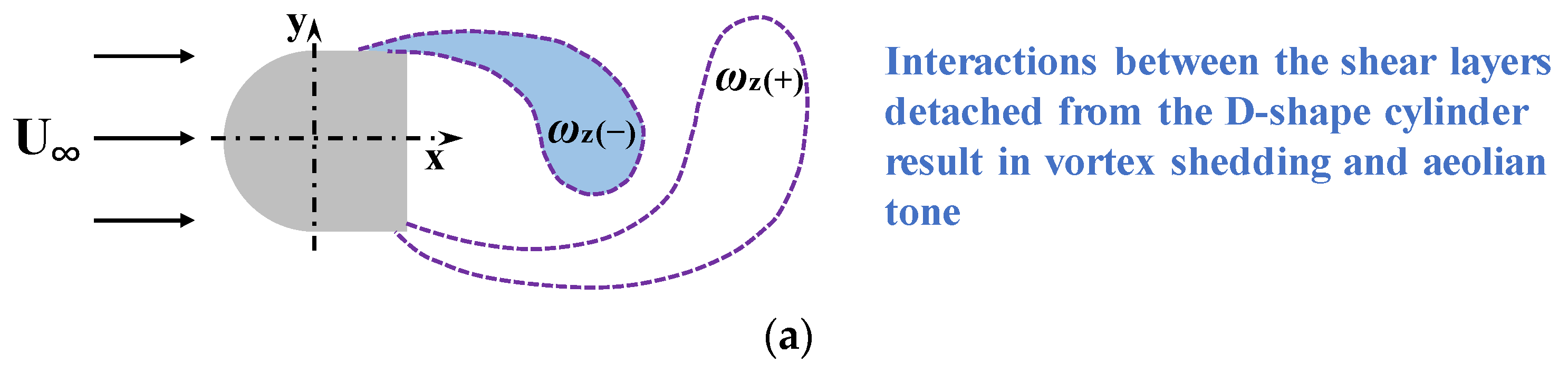
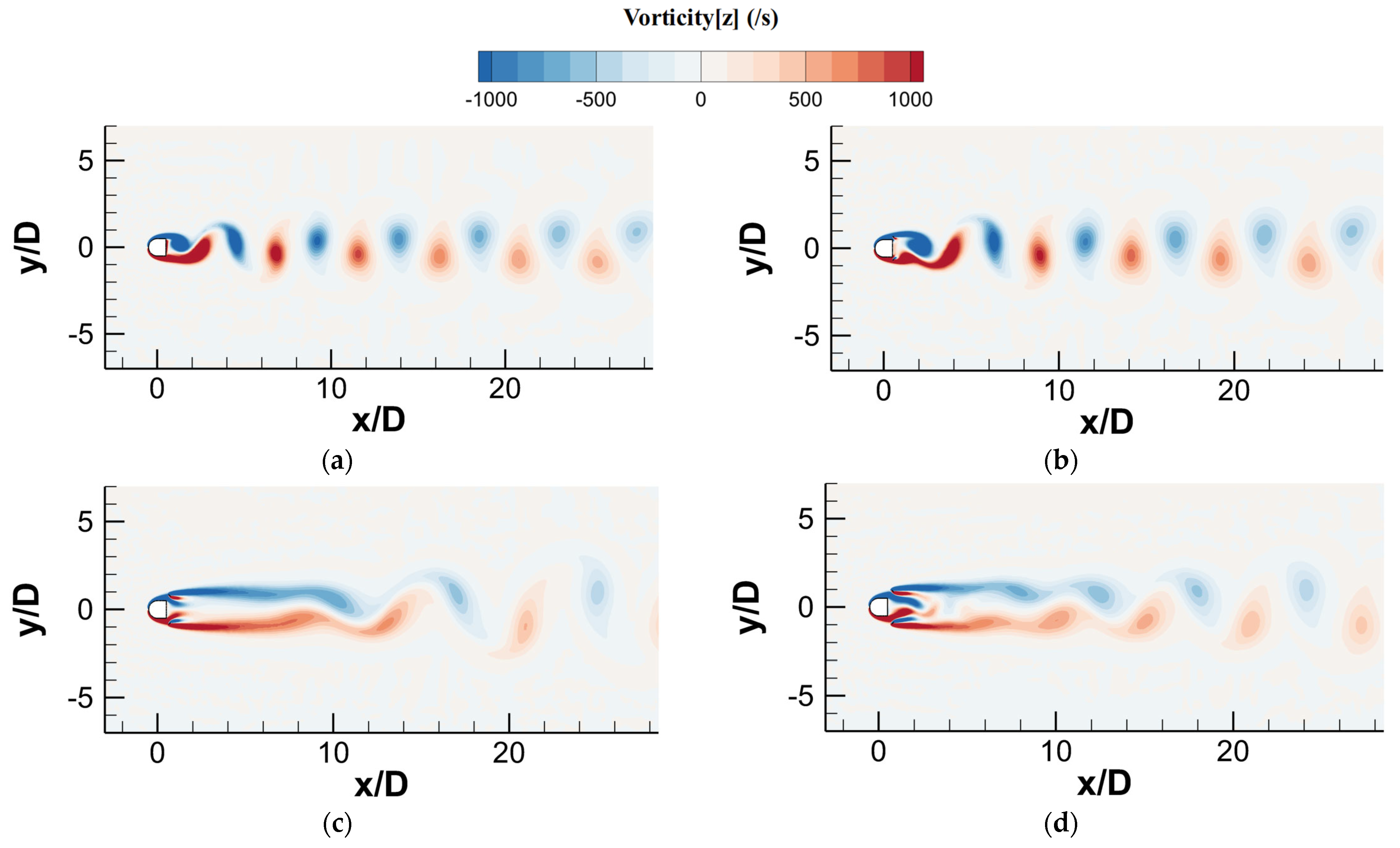
Figure 4 illustrates the instantaneous contours of vorticity z for the D-shaped cylinder with and without the arc plates. In this subsection, unless otherwise specified, the arc angle of the arc plates is fixed at 8°. In the D-shaped cylinder case, the interaction between the separated shear layers induces Kármán vortex shedding near the D-shaped cylinder. For the cases with arc splitter plates, substantial changes can be found in the flow dynamics in
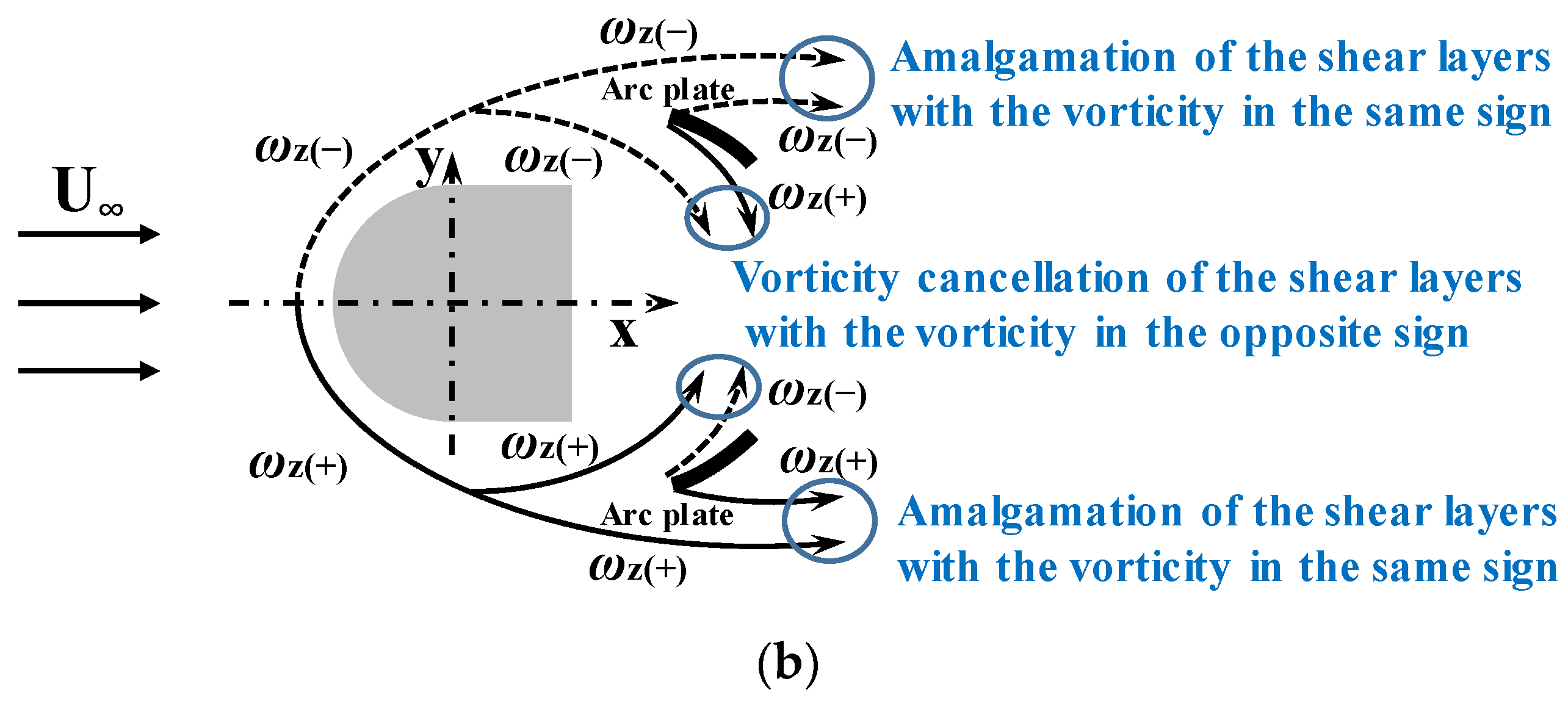
Figure 4. Upon using the arc splitter plates, the shear flows developed from the D-shaped cylinder interact with those from the arc plates and move downstream. A gap between the D-shaped cylinder and the arc plate is a crucial factor since it determines the amount of fluid injected into the gap and the degree of vorticity cancellation [
37,
38]. For R
arc = 0.85D, a small amount of fluid is injected into the gap. Shear layers from the upper side of the D-shaped cylinder and the inner wall of the top arc-shaped plate in the opposite angular rotation undergo vorticity cancellation. A similar process for the lower side of the D-shaped cylinder and the nearby arc plate occurs. In addition, the merged shear layers, from the upper side of D-shaped cylinder − the outer wall of the top arc plate and the lower side of D-shaped cylinder − the outer wall of the bottom arc plate, interact with each other and travel downstream, dictating the formation zone of vortex shedding. For R
arc = 1.05D, a larger amount of fluid is injected into the gap compared with R
arc = 0.85D, which leads to a considerable degree of vorticity cancellation. The fluid rolls and moves downstream, losing energy as a result of vorticity cancellation [
30,
31]. The process of vorticity cancellation effectively takes place near the D-shaped cylinder, causing a low-intensity vorticity zone in the wake. Additionally, the merged shear layers become stretched and travel downstream until the generation of periodic vortex shedding in comparison with the no-arc plate case. For a larger radial distance of the arc plates in R
arc = 1.2D, almost entire shear layers separated from both the upper and lower sides of D-shaped cylinder are injected into the gap between the arc plates and D-shaped cylinder, which causes vortex shedding once again near the D-shaped cylinder. The implementation of R
arc = 1.2D decrease the formation length and raise intensities of the interactions between shear layers in comparison with R
arc = 1.05D.
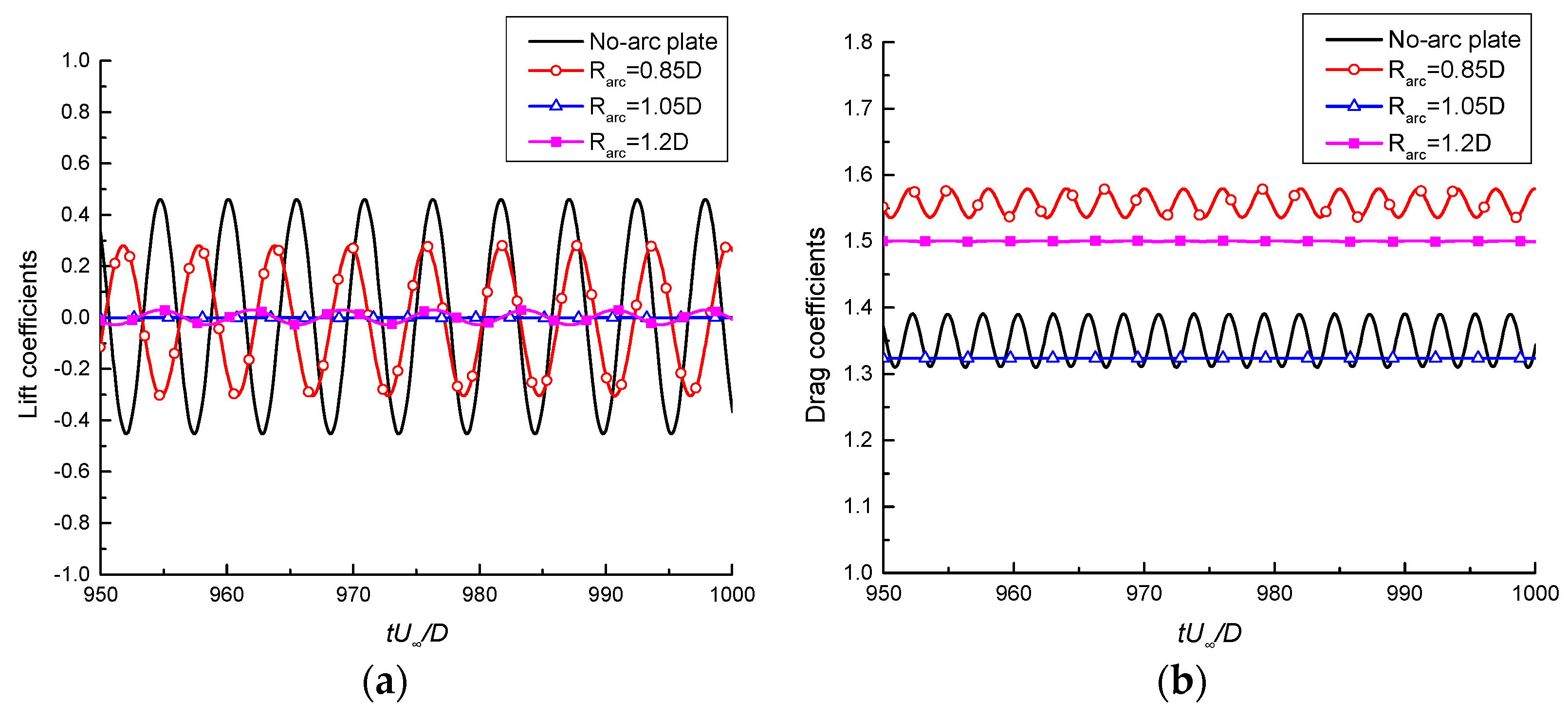
Figure 5 and
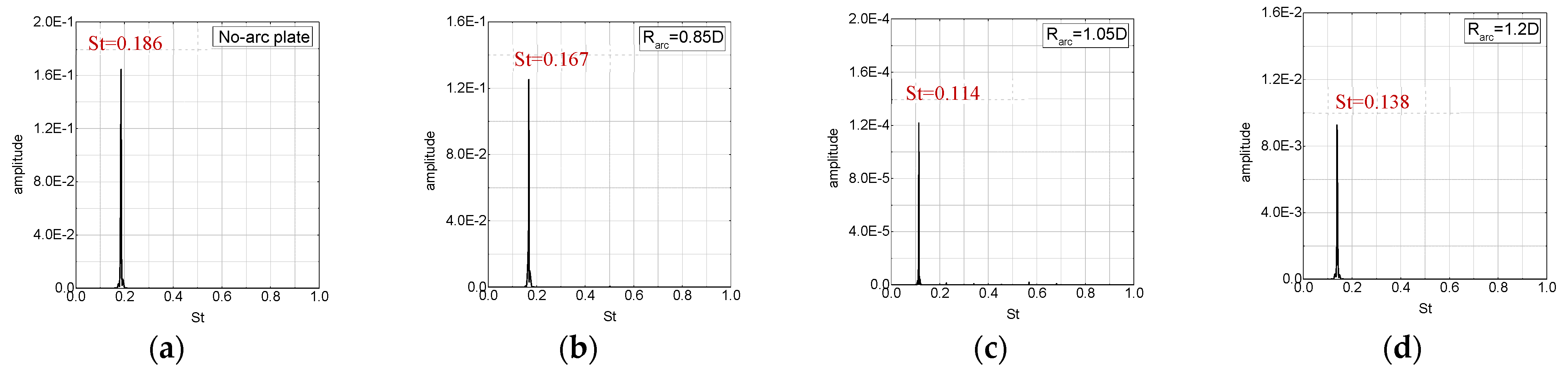
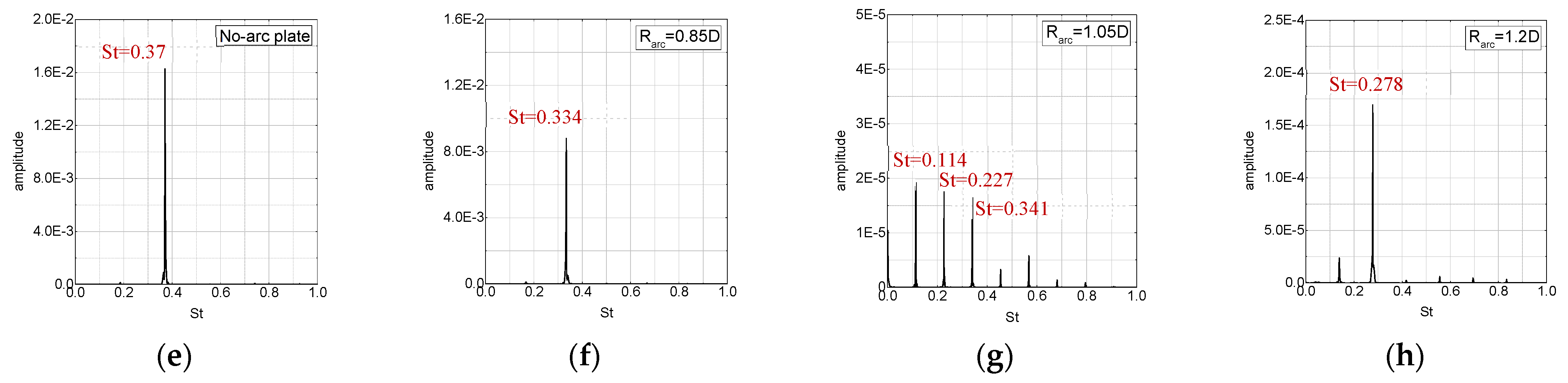
Figure 6 depict the time-trace lift and drag coefficients and the corresponding frequency spectra. The results show that the magnitudes of the lift fluctuations are significantly higher than those of the drag fluctuations in these cases. For the D-shaped cylinder without the arc plates, the amplitude of lift fluctuations in the spectra exhibits a distinct peak with an St around 0.186 in
Figure 6a, which corresponds to the Kármán vortex shedding frequency. In the spectra of the drag fluctuations, a peak appears at the harmonics of the vortex shedding frequency around St = 0.37. The interactions between the shear flows detached from the D-shaped cylinder take place near the cylinder surface, resulting in significant amplitudes in fluctuations of lift and drag forces. When the arc plates are introduced, the results show that the magnitudes of the lift and drag fluctuations decrease in intensity, and the peak values occur at a lower St relative to the no-arc plate case. In the R
arc = 0.85D case, the magnitudes of lift and drag fluctuations drop in comparison with the no-arc plate case owing to vorticity cancellation. When the arc plates are positioned at R
arc = 1.05D, the magnitudes of the lift and drag fluctuations reach the minimum among all the indicated cases. Unlike the D-shaped cylinder without the arc plates, a main peak appears at the vortex shedding frequency of 0.114 for the spectra of fluctuating drag coefficients as a result of the effects of the lift fluctuations together with the significantly reduced drag fluctuations for the R
arc = 1.05D case. At the same time, the drag coefficient in R
arc = 1.05D is reduced by the arc plates according to
Figure 4b, which is usually beneficial to bluff bodies. With further increasing the radial distance to R
arc = 1.2D, the magnitudes of lift and drag fluctuations are increased in comparison with the R
arc = 1.05D due to vortex shedding once again close to the D-shaped cylinder.
Moreover, for the D-shaped cylinder without the arc plates, the St of vortex shedding is 0.186, and it decreases to 0.167 in the Rarc = 0.85D as a result of the diffused separated shear layer. Subsequently, it is further reduced to 0.114 at Rarc = 1.05D due to further stretched shear layers and increased formation length. For a larger radial distance of the arc plates at Rarc = 1.2D, the vortex shedding frequency is increased to 0.138 due to vortex shedding once again near the D-shaped cylinder and the decreased formation length compared with the Rarc = 1.05D case. Obviously, the application of the arc plates suppresses vortex shedding, thereby mitigating the force fluctuations at the D-shaped cylinder surface. Consequently, the lift and drag fluctuations are decreased by the arc splitter plates. Additionally, the separated shear layers become stretched and forced to move downstream, delaying the formation of vortex shedding with the arc plates. Therefore, the Strouhal number associated with vortex shedding decreases relative to the no-arc plate case.
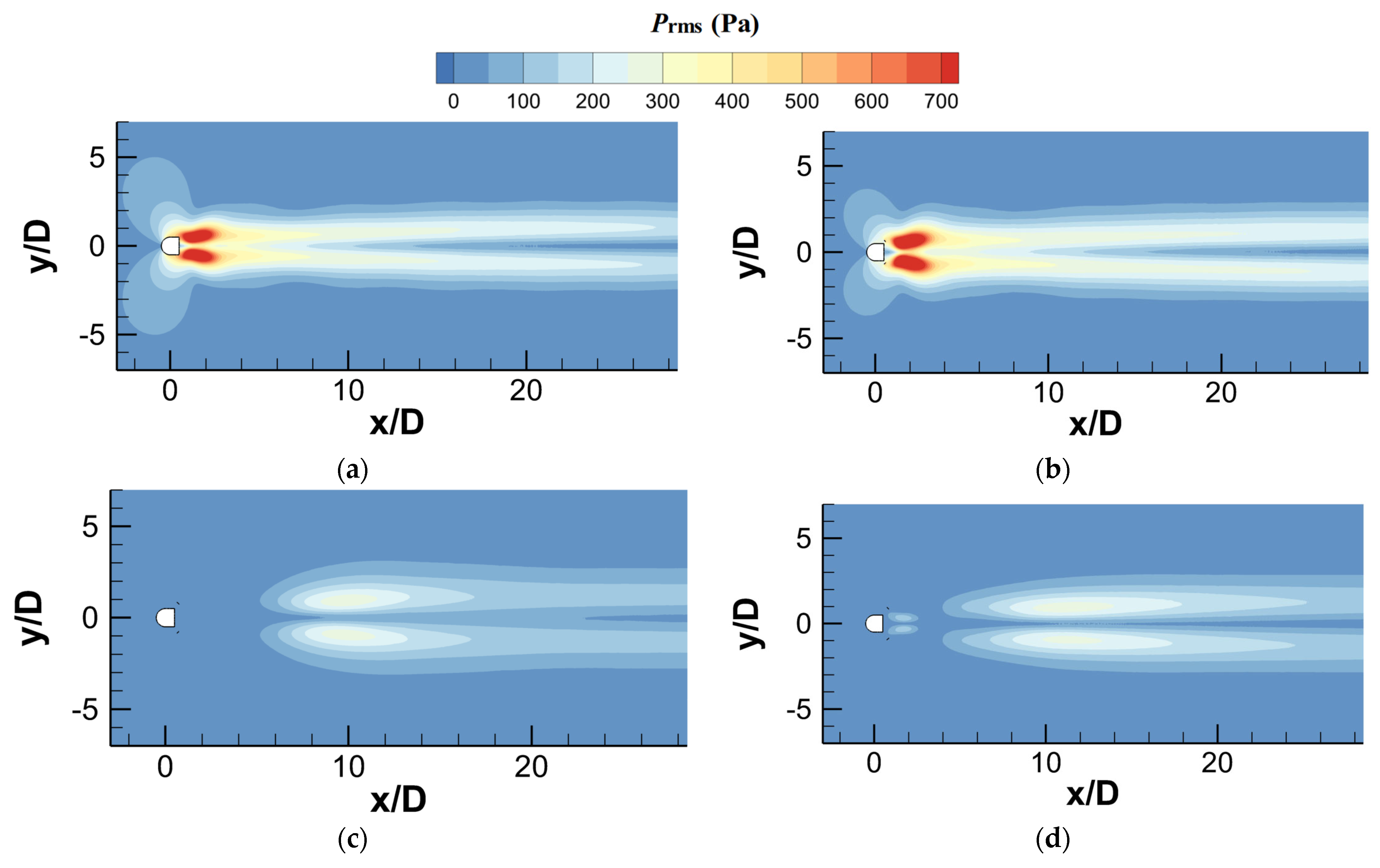
Figure 7 presents the root mean square fluctuating pressure contours for the D-shaped cylinder with and without the arc plates. For the case without the arc plates, peak fluctuation intensity concentrates in the vicinity of the cylinder’s trailing edge, coinciding with the development of the vortex shedding. The distribution of
Prms at R
arc = 0.85D remains analogous to the no-arc plate case, where the pressure fluctuations result from the interactions between the separated shear layers. At R
arc = 1.05D, the extended formation length and the attenuated intensity of the interactions between separated shear layers lead to the diminished
Prms magnitudes with the peak fluctuations shifting away from the D-shaped cylinder. The pressure fluctuations of the R
arc = 1.2D are enhanced near the D-shaped cylinder in comparison with R
arc = 1.05D due to the interactions between the shear layers once again close to the D-shaped cylinder.
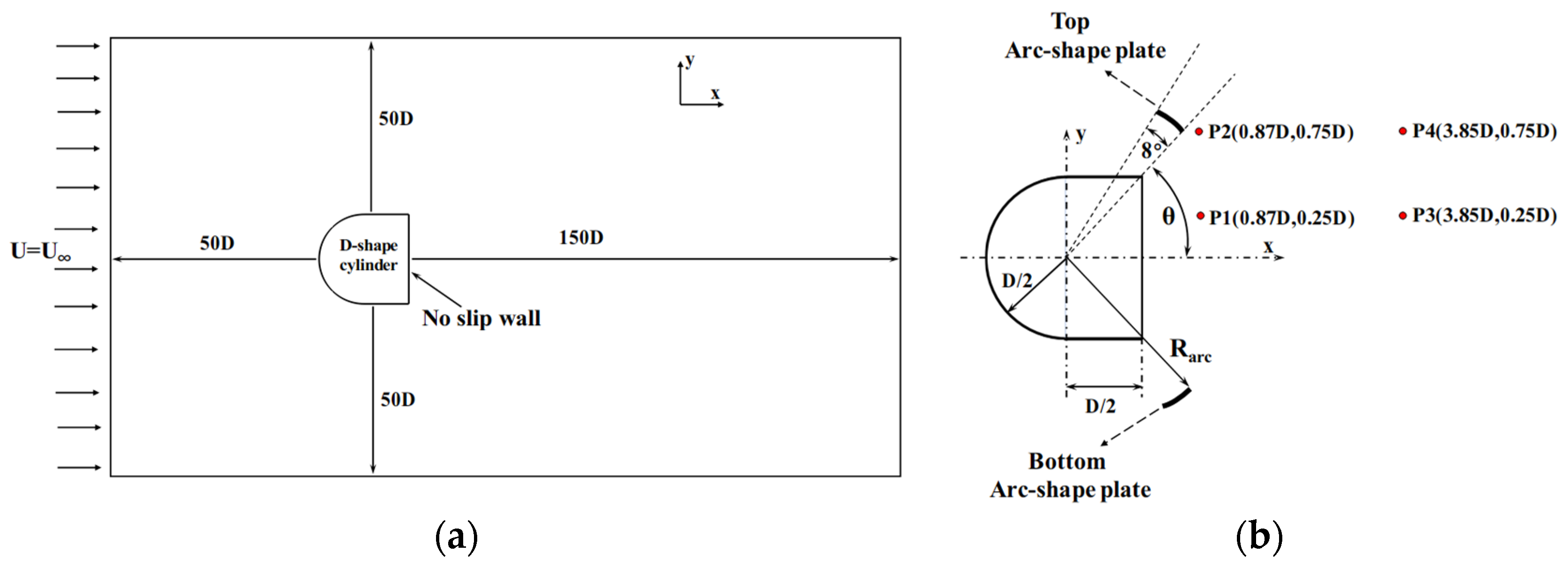
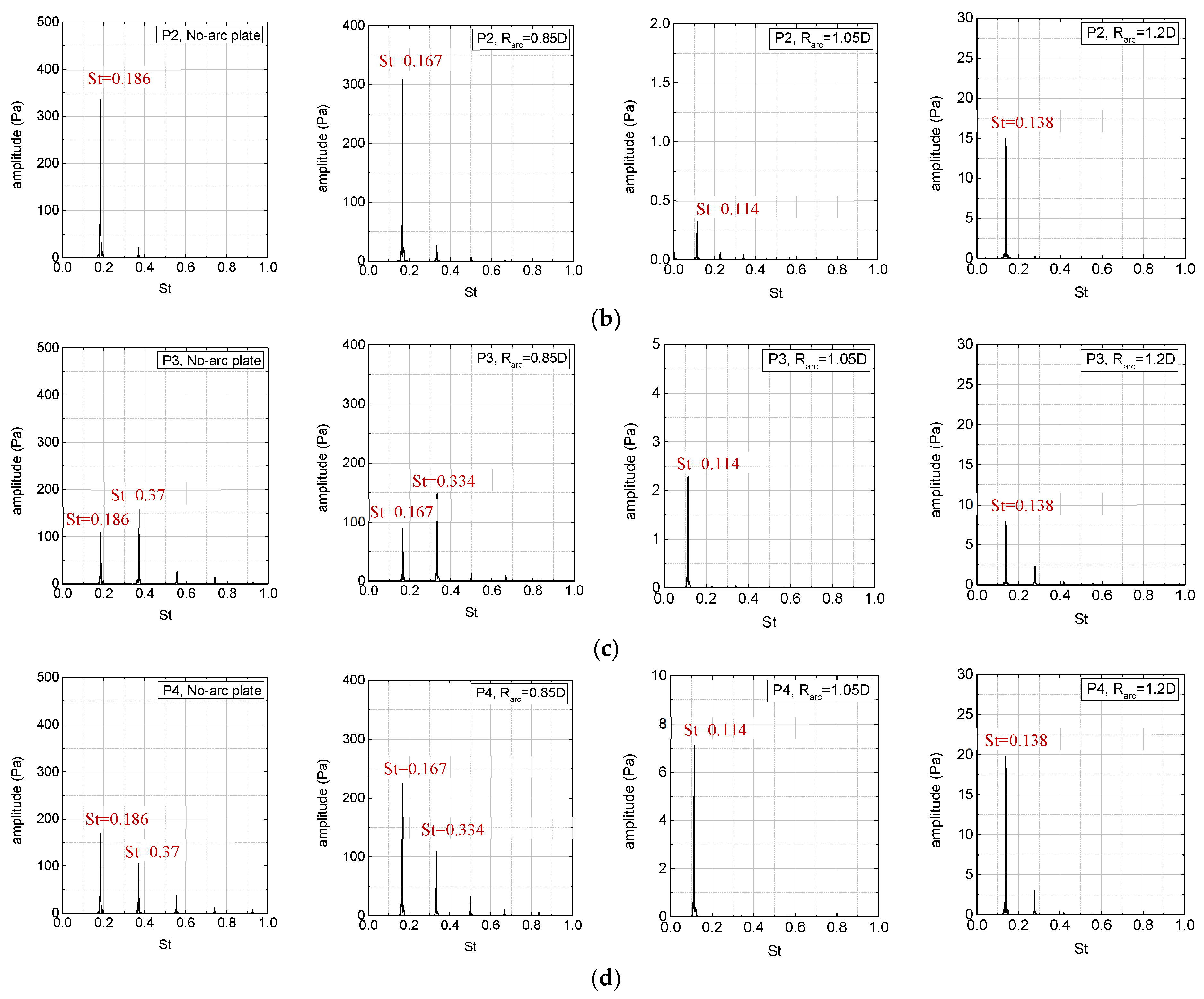
The probes have been placed in the wake region as shown in
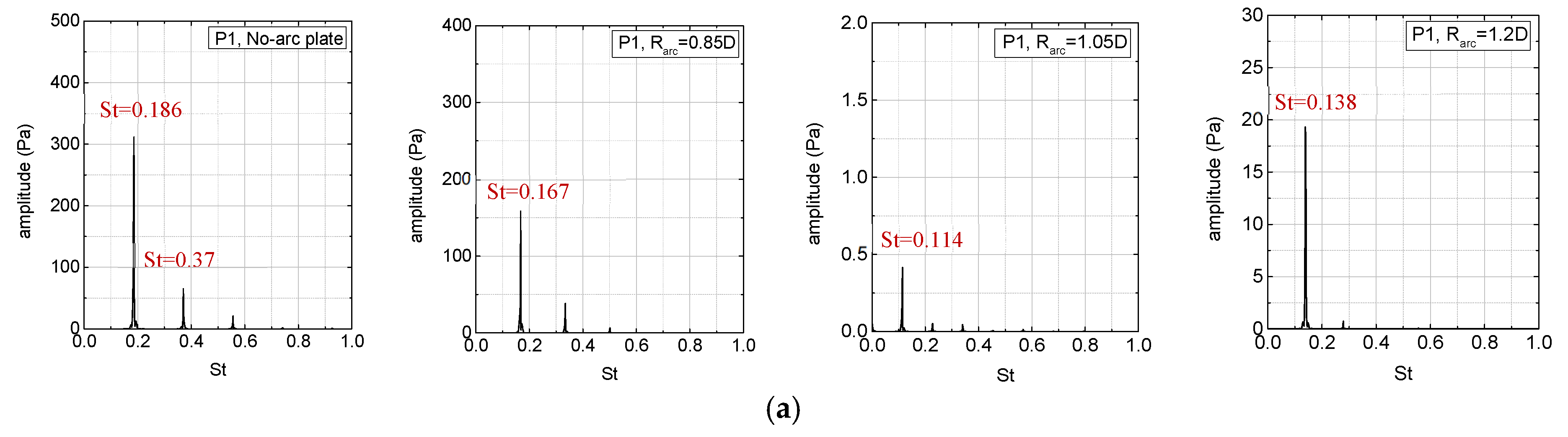
Figure 1b, P1 and P2 in the near wake, and P3 and P4 further downstream of the D-shaped cylinder, to investigate the pressure fluctuations for different cases. The spectra of pressure fluctuations at these probes are shown in
Figure 8. In the no-arc plate case, the interactions between detached shear flows occur in proximity to the aft section of the cylinder, resulting in substantial pressure oscillations in the wake region. With the arc splitter plates, the vortex shedding from the D-shaped cylinder is suppressed. The magnitudes of the pressure fluctuations for each probe, except P4, in the R
arc = 0.85D, R
arc = 1.05D, and R
arc = 1.2D cases are smaller than those of the no-arc plate case. For the no-arc plate case, the pressure spectra for the probes, P1, P2, and P4, are dominated by primary peaks with vortex shedding frequency of 0.186, which can be attributed to the effects of the significantly governed lift fluctuations on the pressure field. The spectra of P2 show the largest pressure fluctuations among the probes due to the interactions of separated shear layers near the wake. However, a main peak appears at twice the vortex shedding frequency of 0.37 in the spectra of P3 due to the effects of the drag fluctuations on the pressure field. For R
arc = 0.85D, the magnitudes of the pressure spectra for P1, P2, and P3 are decreased because of the suppression of vortex shedding compared with the no-arc plate case. The spectra at P2 show the largest fluctuations among the probes. Similar with the no-arc plate case, a main peak appears at twice the vortex shedding frequency of 0.334 for P3 as a result of the effects of the drag fluctuations. However, the magnitudes of the main peaks at P4 show higher values compared with the no-arc plate case, and this is caused by the increased intensities of pressure fluctuations in the far wake due to the movement of the vortex shedding position. For R
arc = 1.05D, the fluctuation magnitudes reach the minimum for each probe compared with the other indicated cases, as a result of a larger degree of vorticity cancellation and the weakened interactions between the detached shear flows. The pressure spectra for each probe are dominated by primary peaks with an St of 0.114. The spectra of P4 show the largest pressure fluctuations among the probes owing to the further stretched shear layers and the vortex shedding position being further away from the D-shaped cylinder at R
arc = 1.05D. For R
arc = 1.2D, the magnitudes of the pressure fluctuations are increased in comparison with the R
arc = 1.05D case. As mentioned above, the flow dynamics of R
arc = 1.2D raise the intensities of interactions between the shear layers in comparison with R
arc = 1.05D, hence the pressure fluctuations. The spectra of P1 show the considerable values of pressure fluctuations due to the vortex shedding once again being close to the D-shaped cylinder. However, the spectra of P4 show the largest pressure fluctuations among the probes at R
arc = 1.2D. It is indicated that although the vortex shedding is once again near the alt section of the D-shaped cylinder at R
arc = 1.2D, the stretched shear layers separated from the outer walls of the top and bottom arc plates interact in the far wake, dominating the pressure field as well as the vortex shedding frequency.
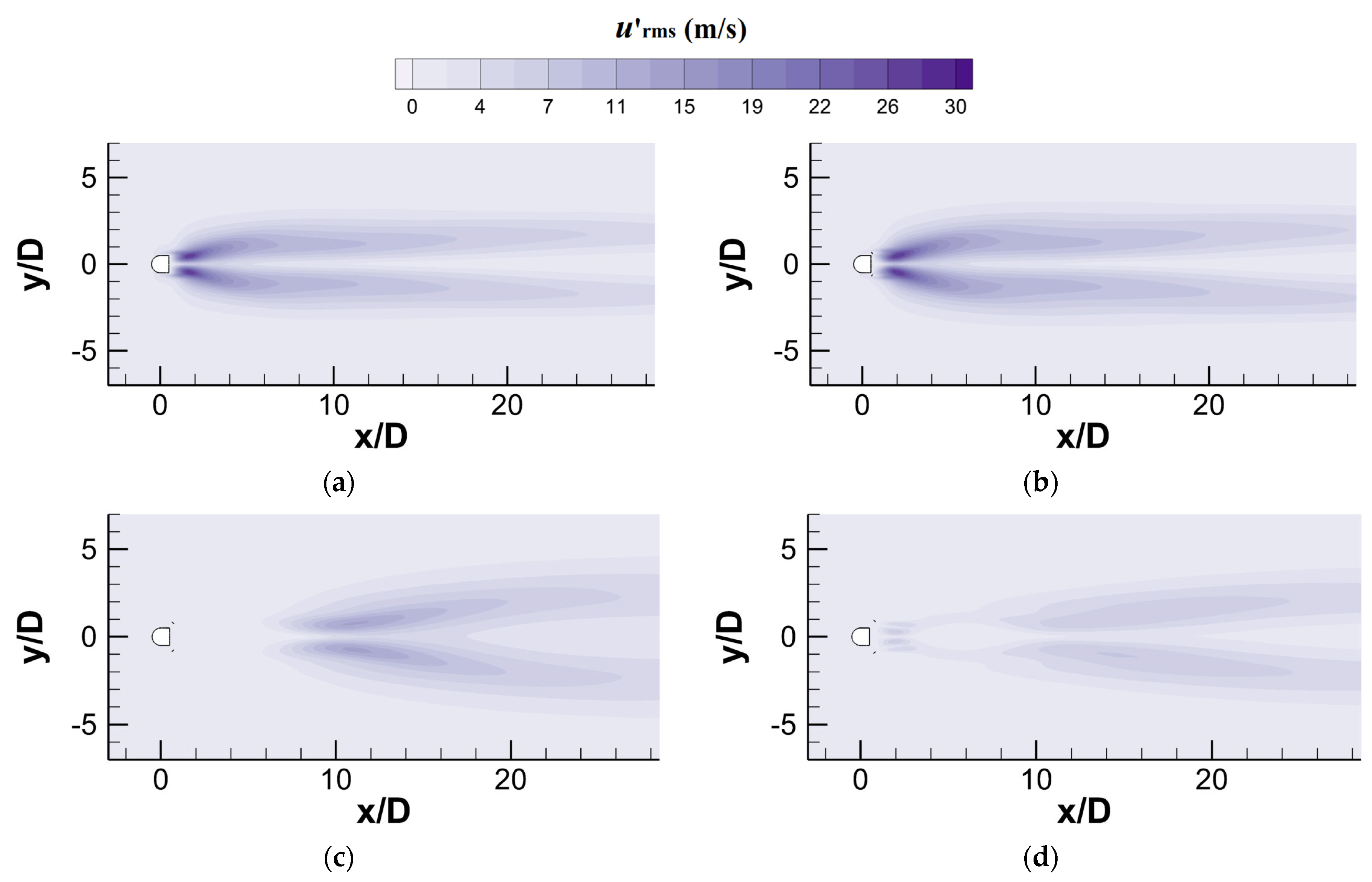
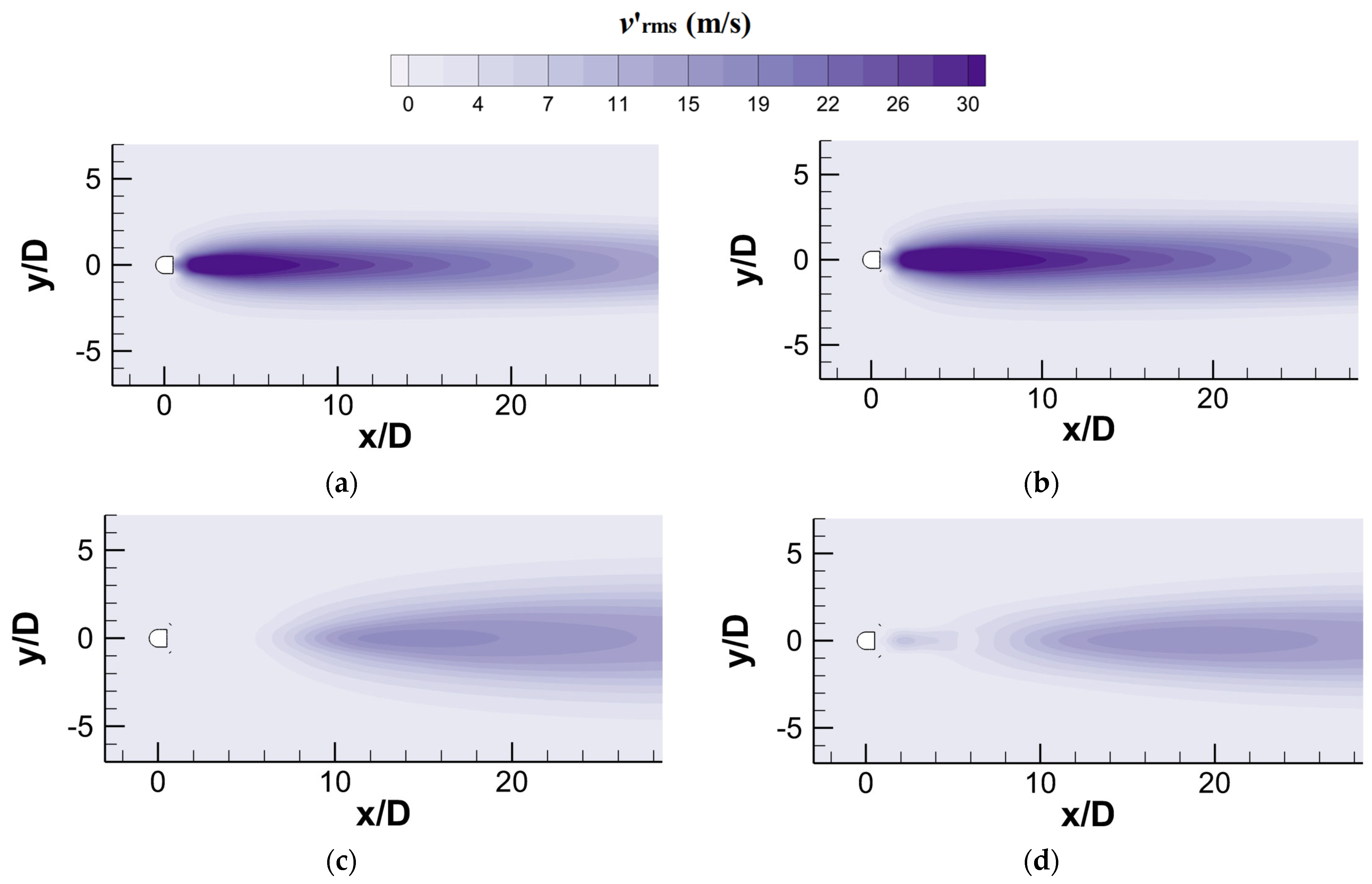
Figure 9 and
Figure 10 present the distributions of root mean square streamwise (
u′
rms) and transverse (
v′
rms) velocity fluctuations for all the selected cases. The distributions of
u′
rms and
v′
rms in every case exhibit symmetry about the centerline of the wake, with high values observed in the wake. The intensities of velocity fluctuations in the no-arc plate case and R
arc = 0.85D are significantly stronger than those in the R
arc = 1.05D and R
arc = 1.2D cases due to the intense aerodynamic unsteadiness in the wake. At R
arc = 1.05D, the
u′
rms and
v′
rms magnitudes observed in the wake are considerably smaller, indicating that the arc plates suppress the flow unsteadiness in the wake. In addition, the velocity fluctuations near the D-shaped cylinder are attenuated, and the high values of
u′
rms and
v′
rms are mainly confined to the far wake region. In the R
arc = 1.2D case, the velocity fluctuations intensify again near the cylinder owing to the vortex shedding once again being close to the D-shaped cylinder compared with R
arc = 1.05D. In general, the wake regions display relatively low
u′
rms and
v′
rms levels for the cases with the arc plates, demonstrating the effectiveness of the arc splitter plates in controlling vortex shedding and flow unsteadiness.
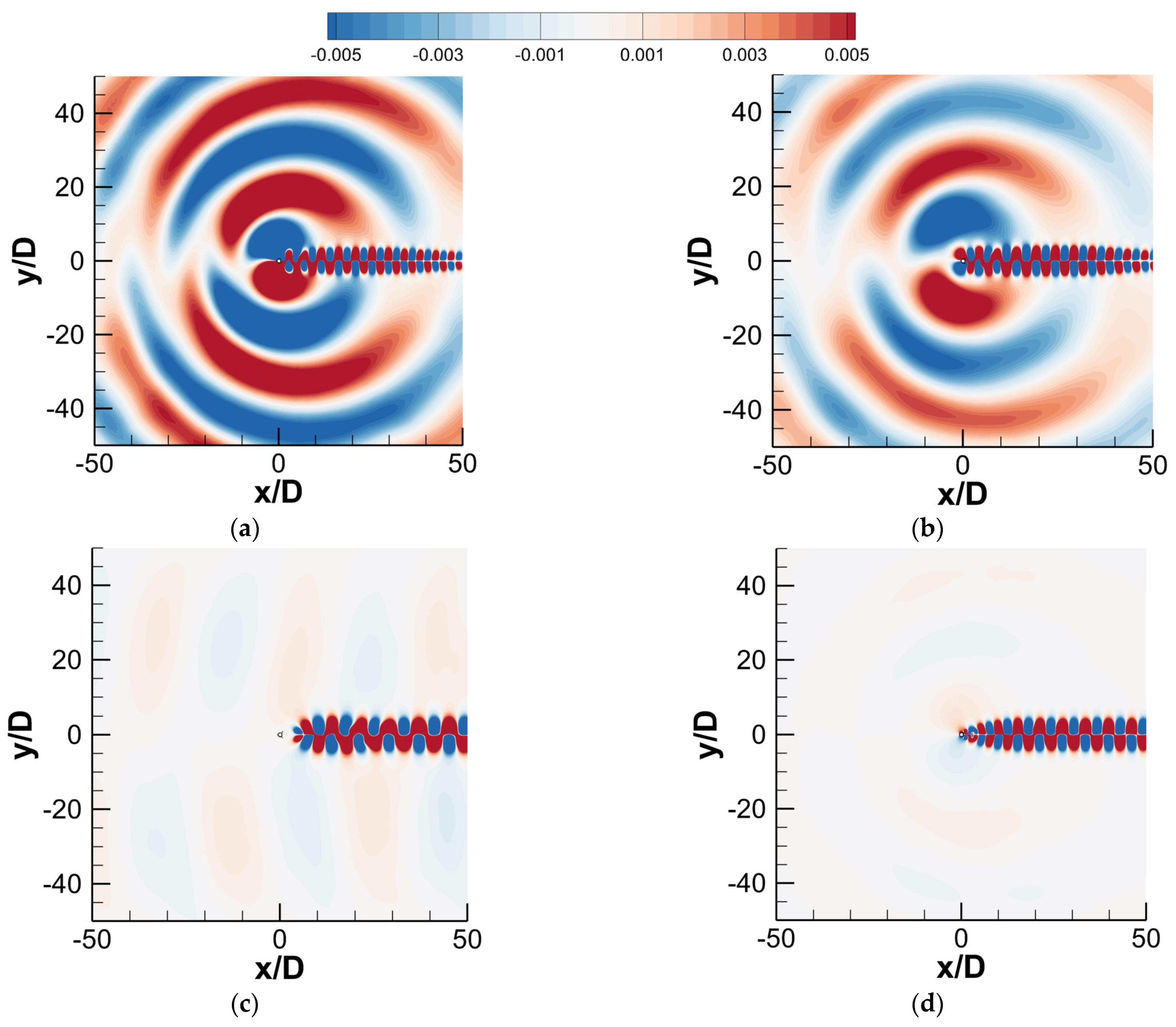
The acoustic characteristics have been evaluated through the estimation of the disturbance pressure field. The disturbance pressure field can be obtained by subtracting the mean pressure from the instantaneous pressure field.
Figure 11 shows the disturbance pressure contours for the cases with and without the arc plates. The disturbance pressure is non-dimensionalized by 0.5
ρU
∞2. In the no-arc plate case, the disturbance pressure pulses originate from the upper and lower surfaces of the D-shaped cylinder owing to the alternate vortex shedding. The emitted sound exhibits pronounced directivity, with the highest intensity observed perpendicular to the flow direction. The results indicate that the lift dipole contributes more significantly to the disturbance pressure than the drag dipole for laminar flow around a D-shaped cylinder. For R
arc = 0.85D, a reduction in the acoustic strength is noticeable from the contours compared with the D-shaped cylinder without the arc plates. Evidently, for the R
arc = 1.05D and R
arc = 1.2D cases, the amplitudes of the radiated sound pressure are significantly reduced in comparison with the no-arc plate case. Therefore, with the introduction of the arc plates, the intensity of the radiated sound is reduced, as can be seen from the disturbance pressure contours.
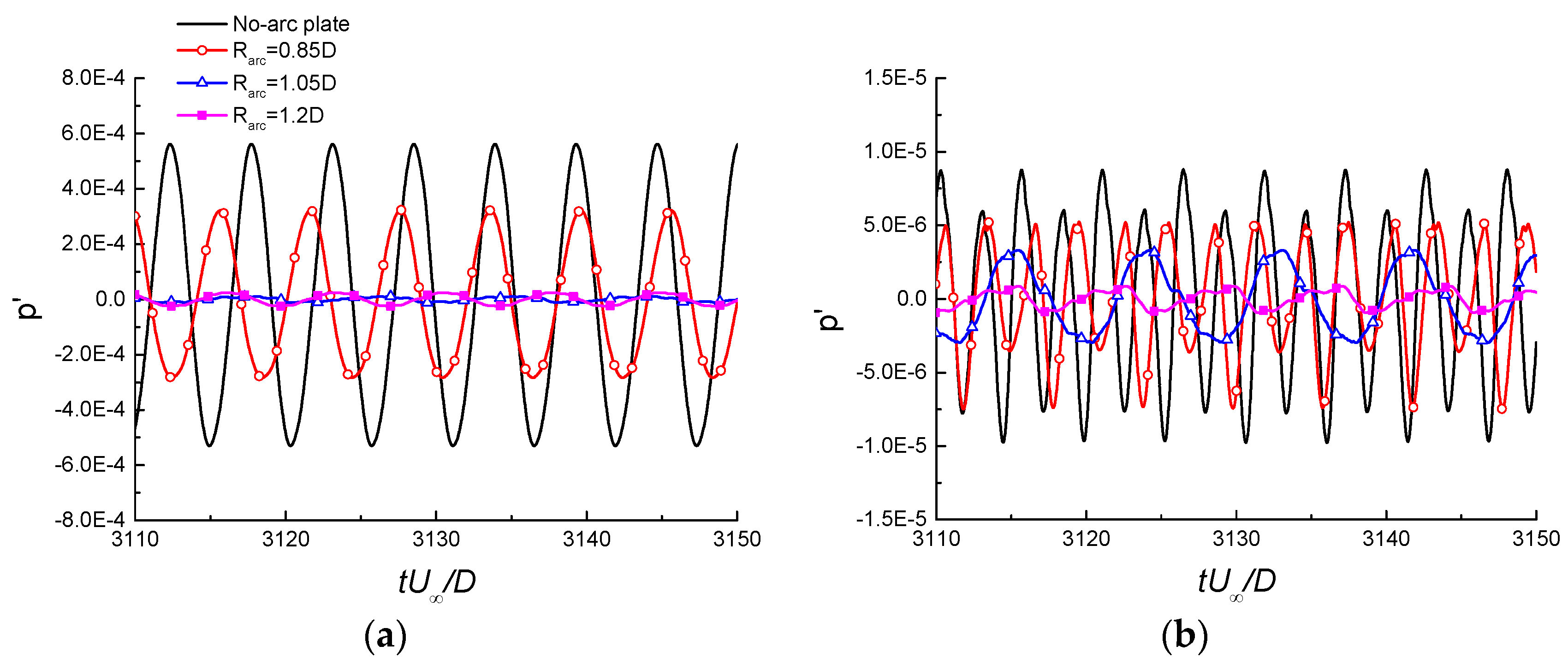
Figure 12 shows the time-trace sound pressure for different cases at two far-field positions, A1 (0, 150D) and A2 (150D, 0), respectively. Position A1 lies perpendicular to the free-stream direction, while A2 is situated downstream. Across all the configurations, the D-shaped cylinder without the arc plates exhibits higher amplitude of sound pressure relative to the cases with the arc splitter plates at the far-field positions. For R
arc = 1.05D and R
arc = 1.2D, the magnitudes of the acoustic pressure fluctuations are considerably lower than those in the R
arc = 0.85D and the no-arc plate cases. This attenuation of sound pressure fluctuations is attributed to the reduced strength of the sound source resulting from the vorticity cancellation effects and the expanded formation region of vortex shedding for R
arc = 1.05D and R
arc = 1.2D. Due to the influence of the lift fluctuations, the amplitudes of the acoustic pressure fluctuations at A1 for each case are much greater than those at A2, and the shapes of time histories of the sound pressure at A1 are similar to those of the lift coefficients.
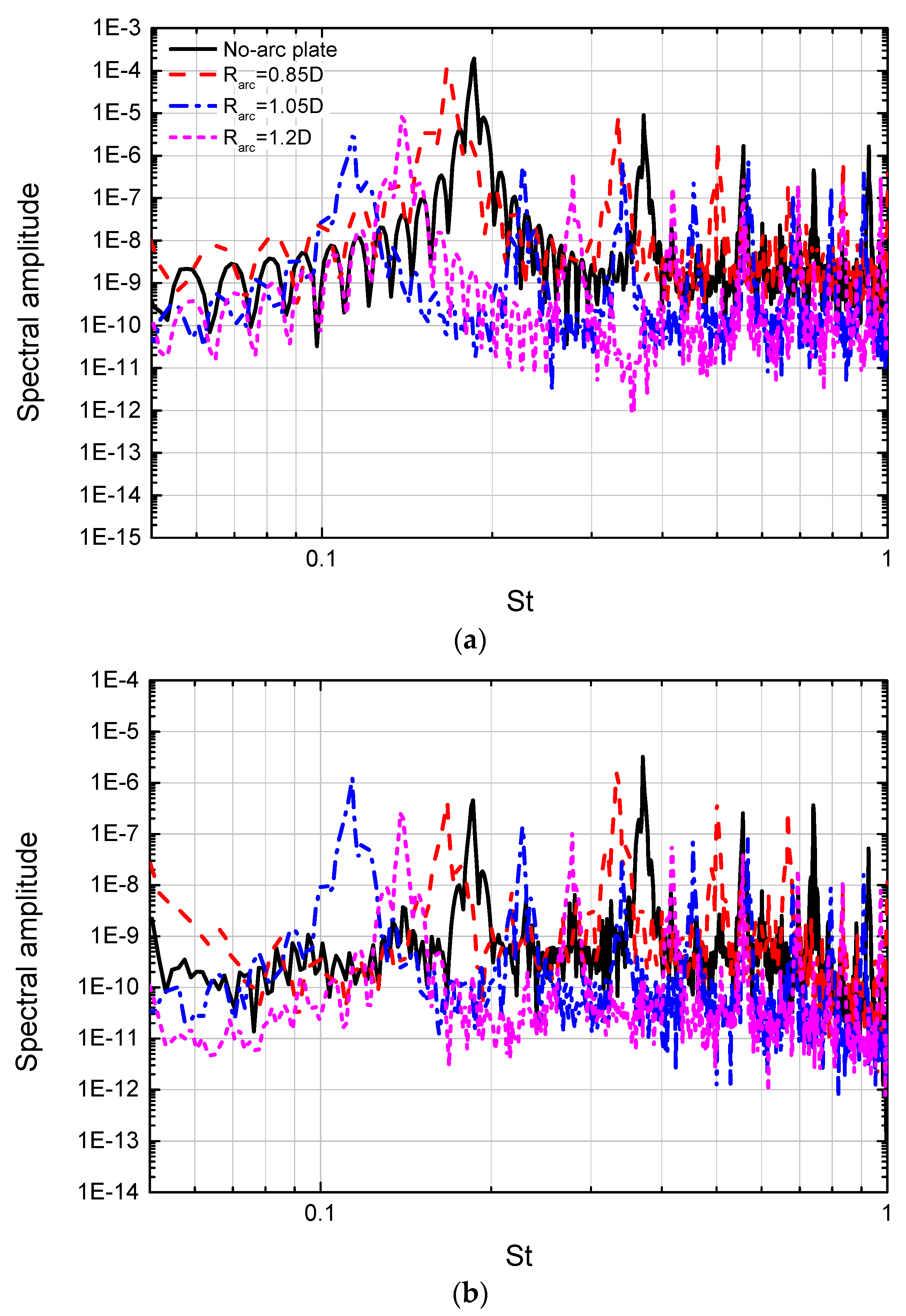
The frequency contents of sound pressure at A1 and A2 for the cases are provided in
Figure 13. The dominant peaks of the aeolian tones at A1 occur at the vortex shedding frequencies for every case, since acoustic waves propagating along the x = 0 axis are largely influenced by the lift forces. For R
arc = 0.85D and the case without the arc plates, the dominant peaks observed at A2 emerge at twice the vortex shedding frequency due to the fact that downstream-propagating acoustic pressure is mainly driven by the fluctuations of the drag forces, which oscillate at double the vortex shedding frequency. However, for the R
arc = 1.05D and R
arc = 1.2D cases at A2, tonal peaks are identified at the vortex shedding frequency. Obviously, the acoustic field is predominantly influenced by lift dipole sources, with a comparatively smaller contribution from drag dipoles. In every case studied, the frequencies of the aeolian tones correspond directly to the vortex-shedding frequencies and the harmonics, confirming that the acoustic emissions are synchronized with the vortex shedding process. Moreover, for the cases with the arc plates, the Strouhal number associated with vortex shedding frequency is reduced relative to the no-plate case. Consequently, the frequency of the generated acoustic pressure decreases accordingly, leading to a corresponding increase in the radiated sound wavelength.
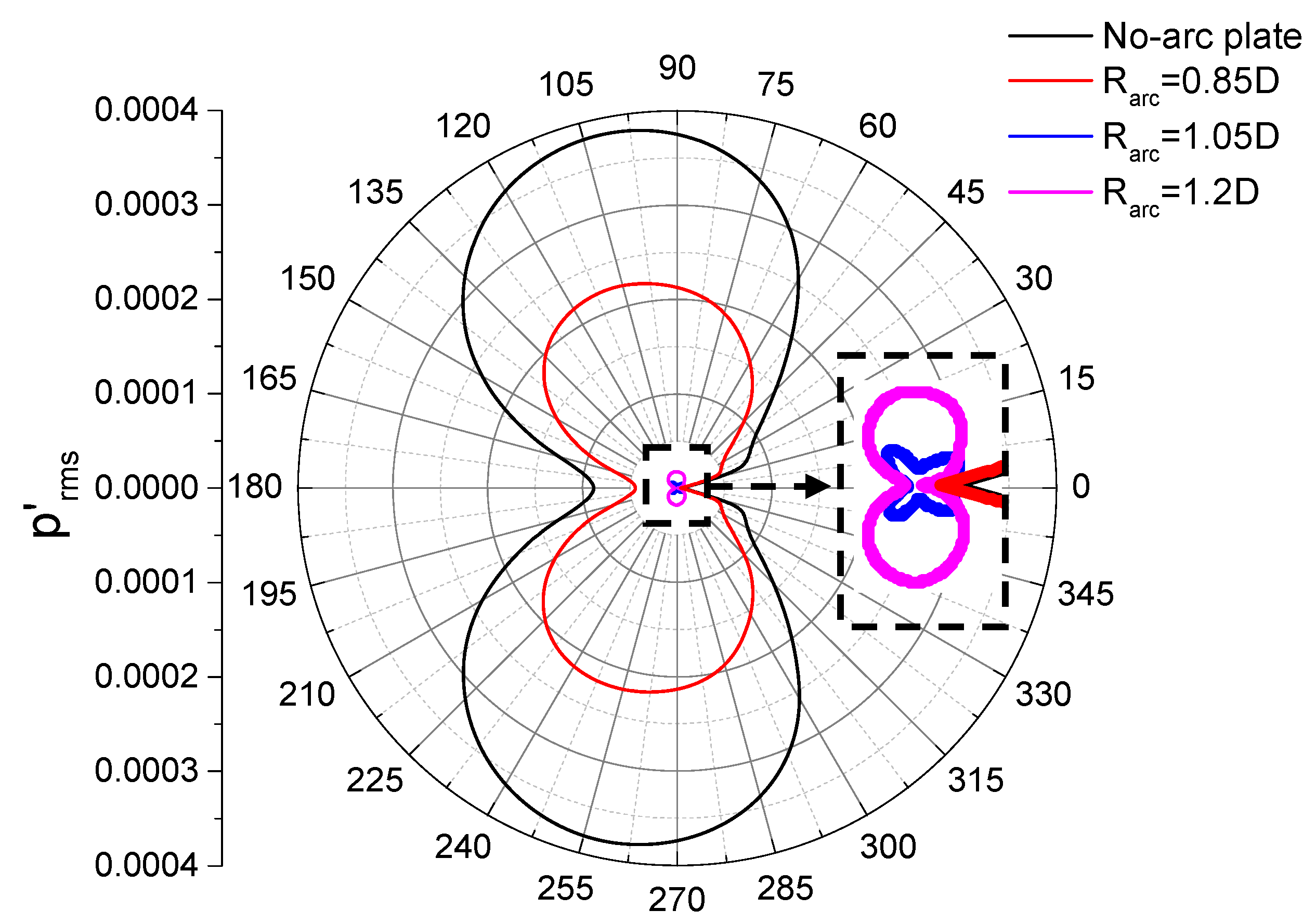
Figure 14 presents the directivity pattern of the root mean square sound pressure at a radial distance of 150D. In the figure, the direction of the flow is from left to right. Upon the introduction of the arc plates, the results clearly show a significant effect on sound directivity. It can be found that, across nearly all directions, the cases with the arc plates consistently generate lower-amplitude acoustic waves compared to the no-arc plate case. The sound reduction is especially pronounced in the region that is approximately perpendicular to the free-stream direction. Maximum noise reduction has been noted for the R
arc = 1.05 cases.
In order to evaluate the impact of the arc plates on the overall sound intensity, the reduced SPL has been obtained for the cases with the arc plates. The reduced SPL is defined by:
where
and
represent the root mean square acoustic pressure for the cases with and without the arc plates, respectively.
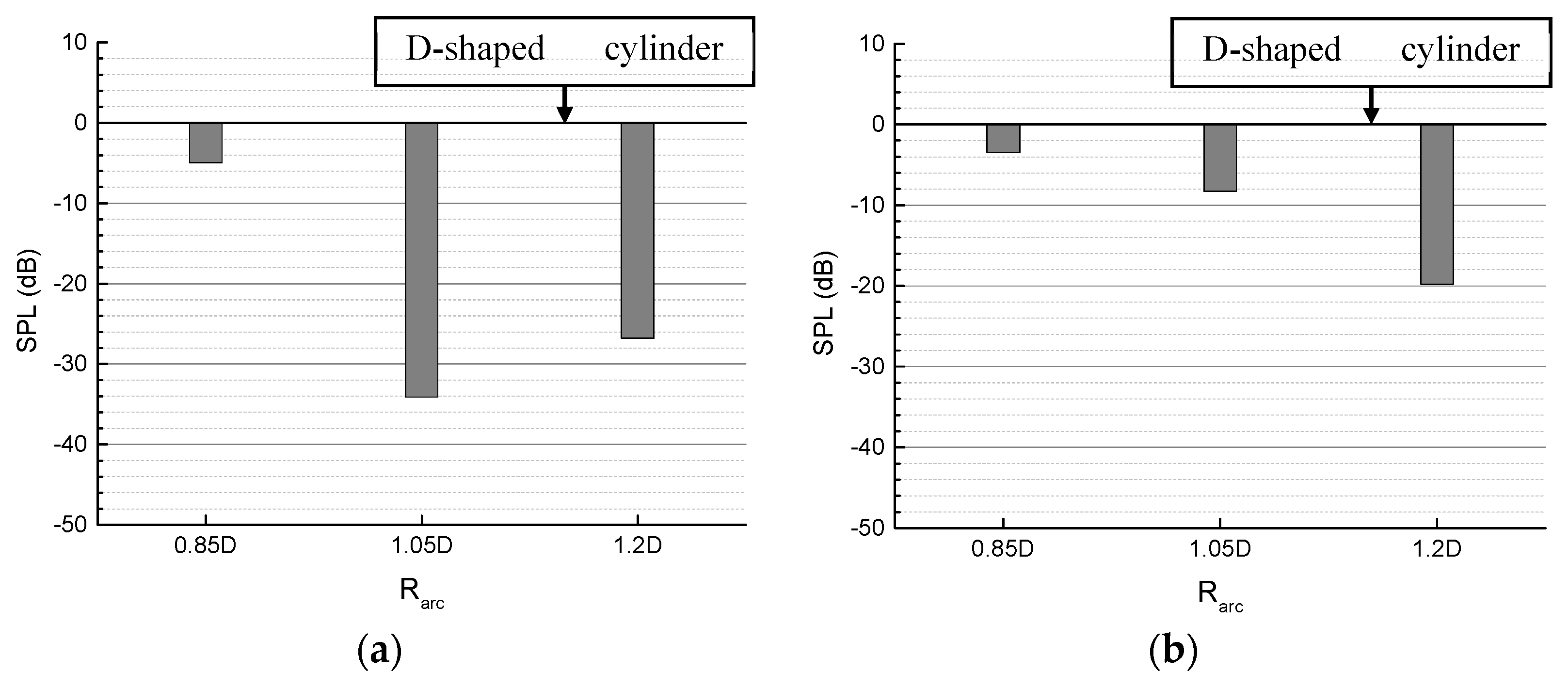
Figure 15 shows the reduced SPL for different cases at the two far-field positions, A1 (0, 150D) and A2 (150D, 0), respectively. The results of the D-shaped cylinder case without the arc plates are illustrated for reference. For the R
arc = 0.85D, the SPL is reduced at the two far-field positions as a result of the vortex shedding suppression. As the arc plates are positioned at R
arc = 1.05D, a significant reduction in aerodynamic sound at the two far-field positions is observed because of the considerable degree of vorticity cancellation. The application of the arc plates for R
arc = 1.05D exhibits a very effective control of sound, reducing the sound pressure level by approximately 34 dB at A1. For a larger radial distance of R
arc = 1.2D, the SPL is increased compared with R
arc = 1.05D at A1, while the SPL at A2 is smaller relative to that of R
arc = 1.05D. In all the cases with the arc splitter plates, the SPL values are smaller compared with the D-shaped cylinder case. As mentioned above, the implementation of the arc plates mitigates the pressure and velocity fluctuations. Thus, aerodynamic sound is decreased compared with that of the no-arc plate case.
3.2. Effects of the Arc Angle of the Arc-Shaped Splitter Plates on the Flow and Sound
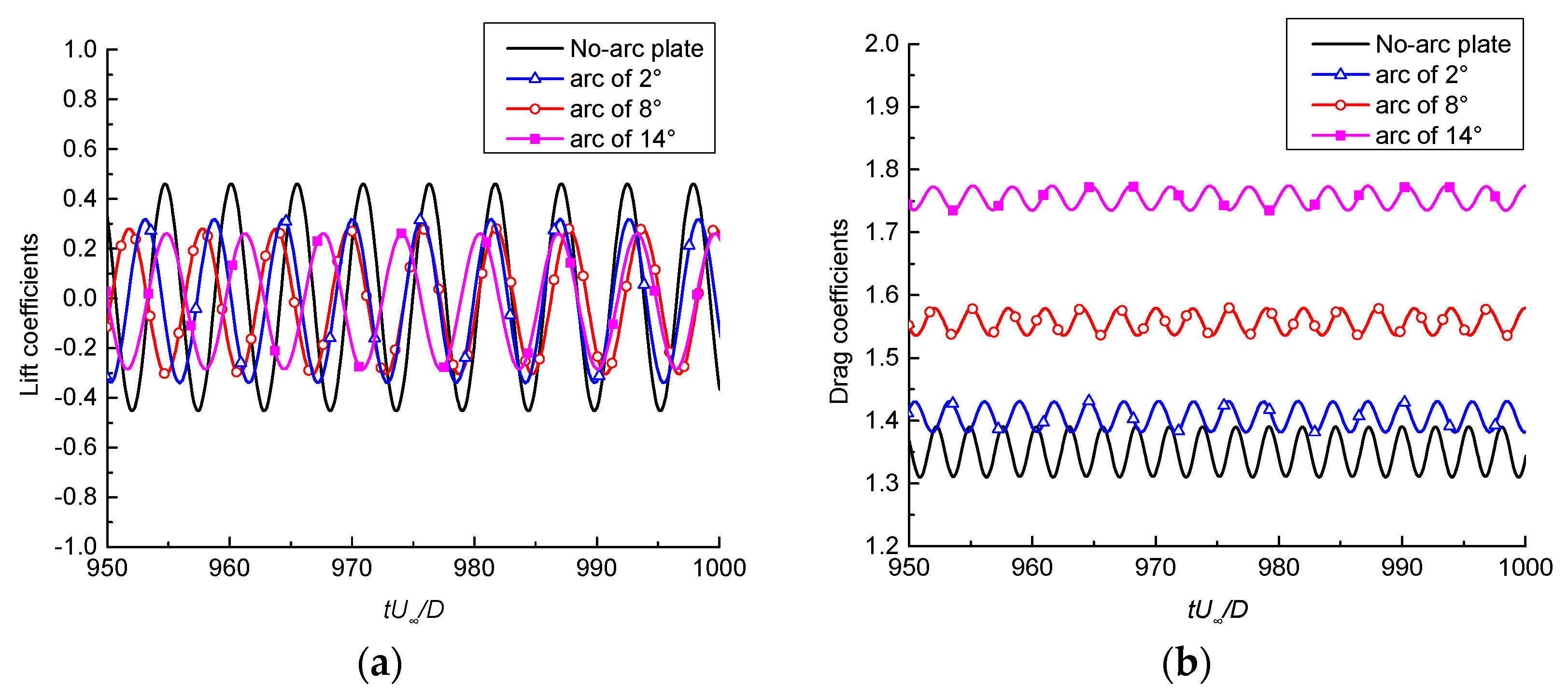
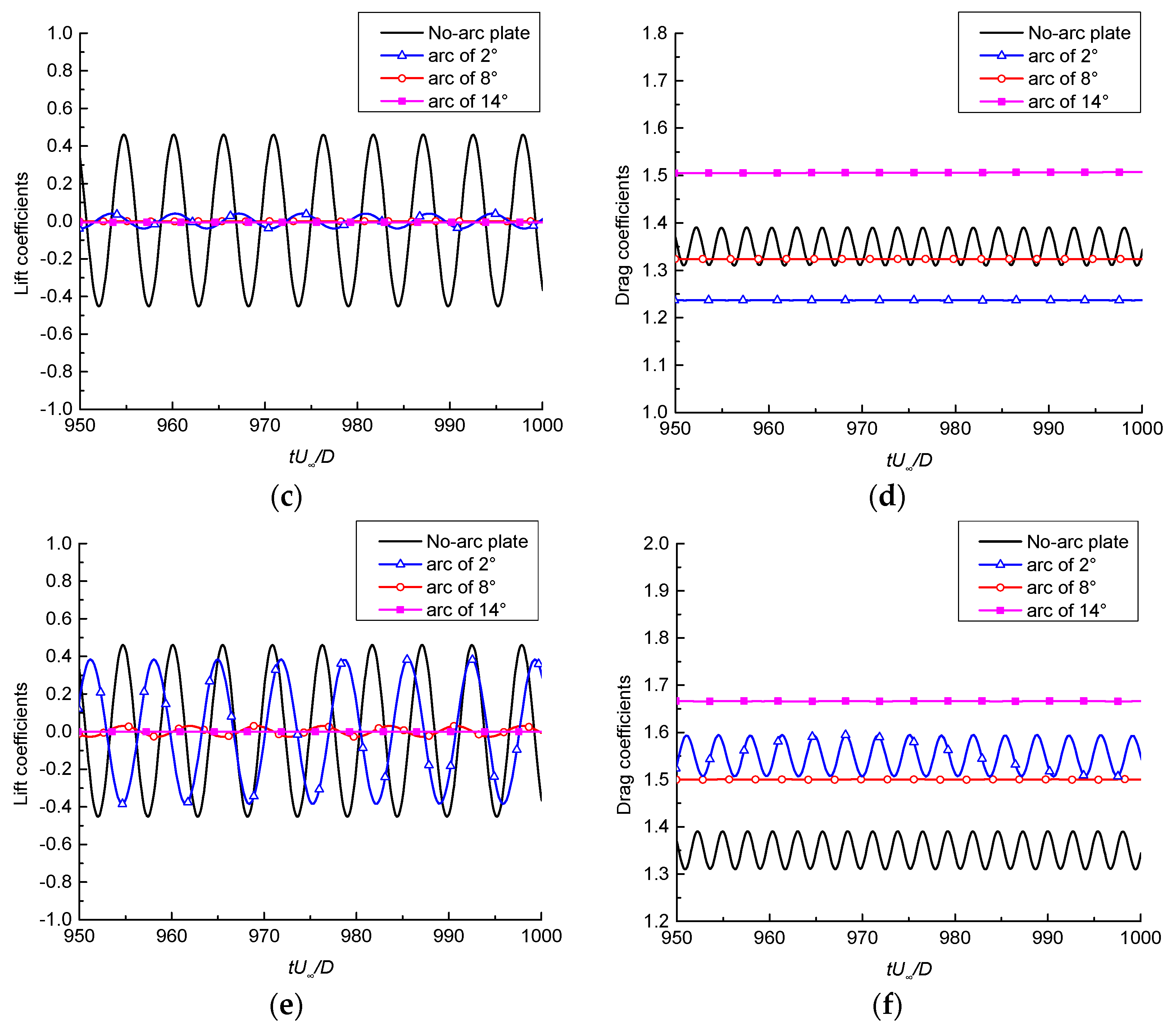
Figure 16 depicts the time-trace lift and drag coefficients for the arc plates with different angles. The results show that the arc angle clearly influences the lift and drag coefficients. The small arc angles fail to effectively guide and integrate the flow, resulting in the increased lift fluctuations, while the large arc angles lead to higher drag. For R
arc = 0.85D, the lift fluctuations at a 14° arc angle are relatively small, but the drag coefficient reaches its maximum among all cases. Conversely, the 2° arc angle exhibits pronounced lift fluctuations but lower drag compared to the other two angles. However, all three arc angles for R
arc = 0.85D show higher drag coefficients compared to the no-arc plate case. For R
arc = 1.05D, all three arc angles substantially reduce lift fluctuations, with the 8° and 14° cases achieving an extremely small level. Notably, the 14° arc angle produces the higher drag compared to the no-arc plate case, whereas the 2° and 8° arc angles yield drag values lower than that of the no-arc plate case, with the 2° arc angle achieving the minimum. For R
arc = 1.2D, the 8° and 14° arc angles significantly suppress lift fluctuations, while the 2° arc angle shows a slight reduction in lift fluctuations. Additionally, the drag coefficient for the 8° arc angle is lower than that for the 2° case, while the 14° configuration exhibits a high drag coefficient. Notably, all three arc angles for R
arc = 1.2D result in higher drag coefficients than the no-arc plate case.
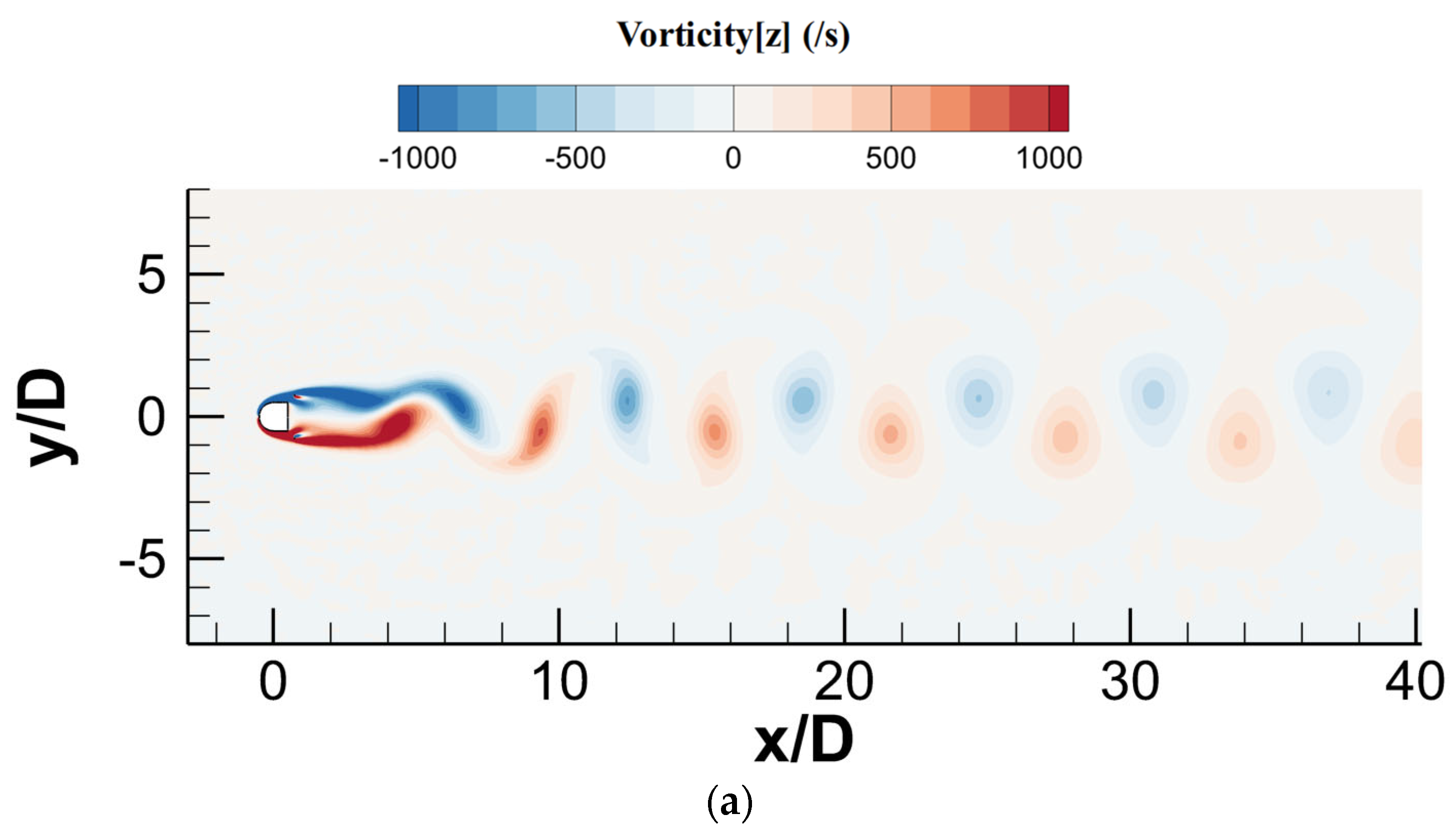
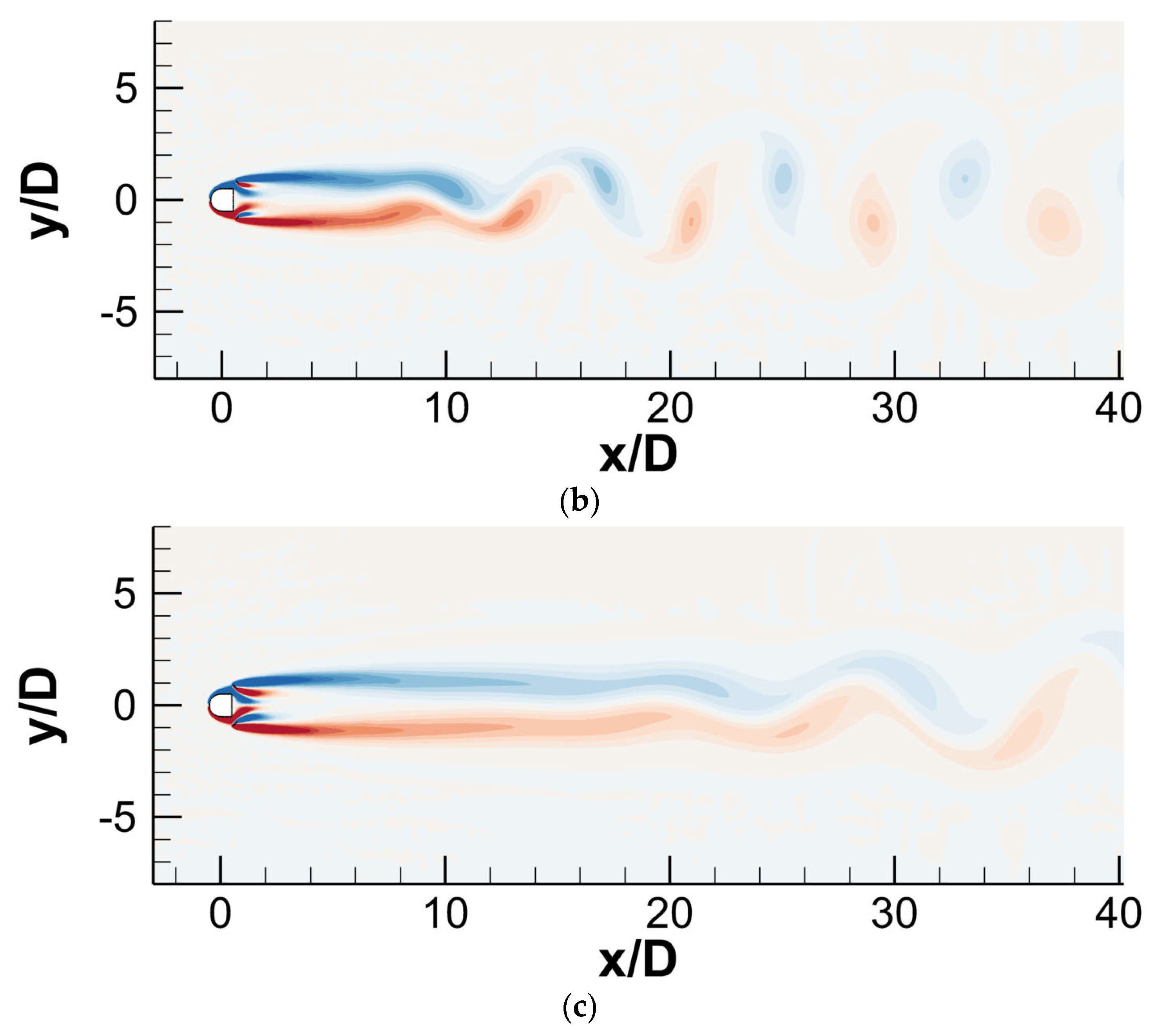
Figure 17 illustrates the vorticity contours for different arc angles at R
arc = 1.05D, highlighting the impacts of different arc angles on the flow field. For the 2° arc angle, the vorticity cancellation of the fluid is weak, and the suppression of vortex shedding is limited. For the 8° arc angle, the vorticity cancellation is significantly enhanced, leading to a weakened Kármán vortex street. For the 14° arc angle, the vorticity cancellation further suppresses the Kármán vortex street, pushing it farther away from the cylinder. The following analysis explores the noise characteristics for different arc angles.
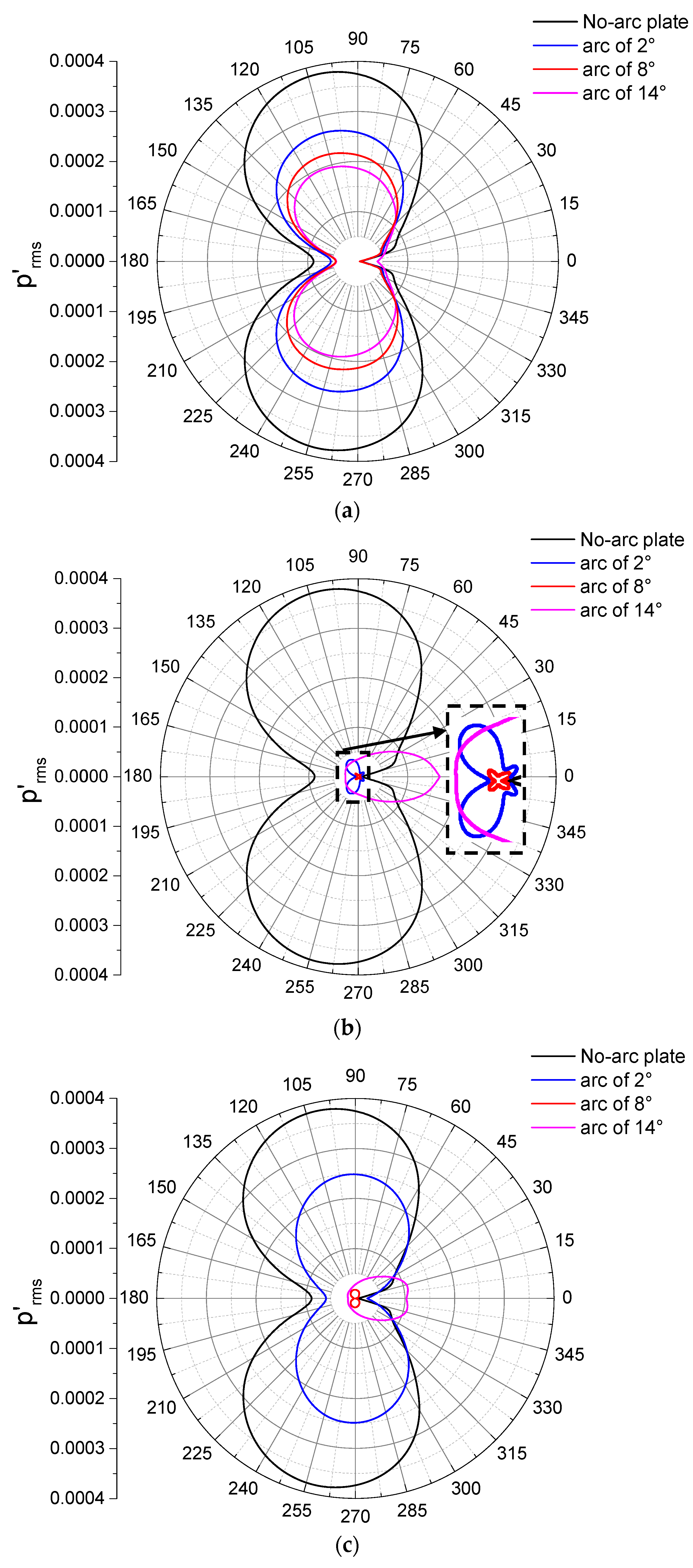
Figure 18 shows the directivity patterns of the root mean square sound pressure at a radial distance of 150D for different cases. In the figure, the direction of the flow is from left to right. Across all the configurations, the D-shaped cylinder without the arc plates exhibits higher values of the root mean square sound pressure relative to the cases with the arc splitter plates at the far-field positions. For R
arc = 0.85D, the 2° arc angle produces the highest noise among all three arc angles, as the short arc fails to effectively integrate the flow. In contrast, the 14° arc angle achieves the lowest noise due to the vorticity cancellation process. However, the noise reduction is limited because the smaller radial distance (R
arc = 0.85D) restricts the extent of vorticity cancellation. For R
arc = 1.05D, all three arc angles significantly reduce noise, with the 8° arc angle yielding the minimum noise. However, the 14° arc angle exhibits higher noise levels due to the increased noise emissions from the arc plate itself among all three arc angles. For R
arc = 1.2D, the 8° arc angle again achieves the lowest noise among all three arc angles, while the 14° arc angle shows relatively high noise. Among all cases analyzed, the 8° arc angle at R
arc = 1.05D demonstrates the most effective noise suppression.
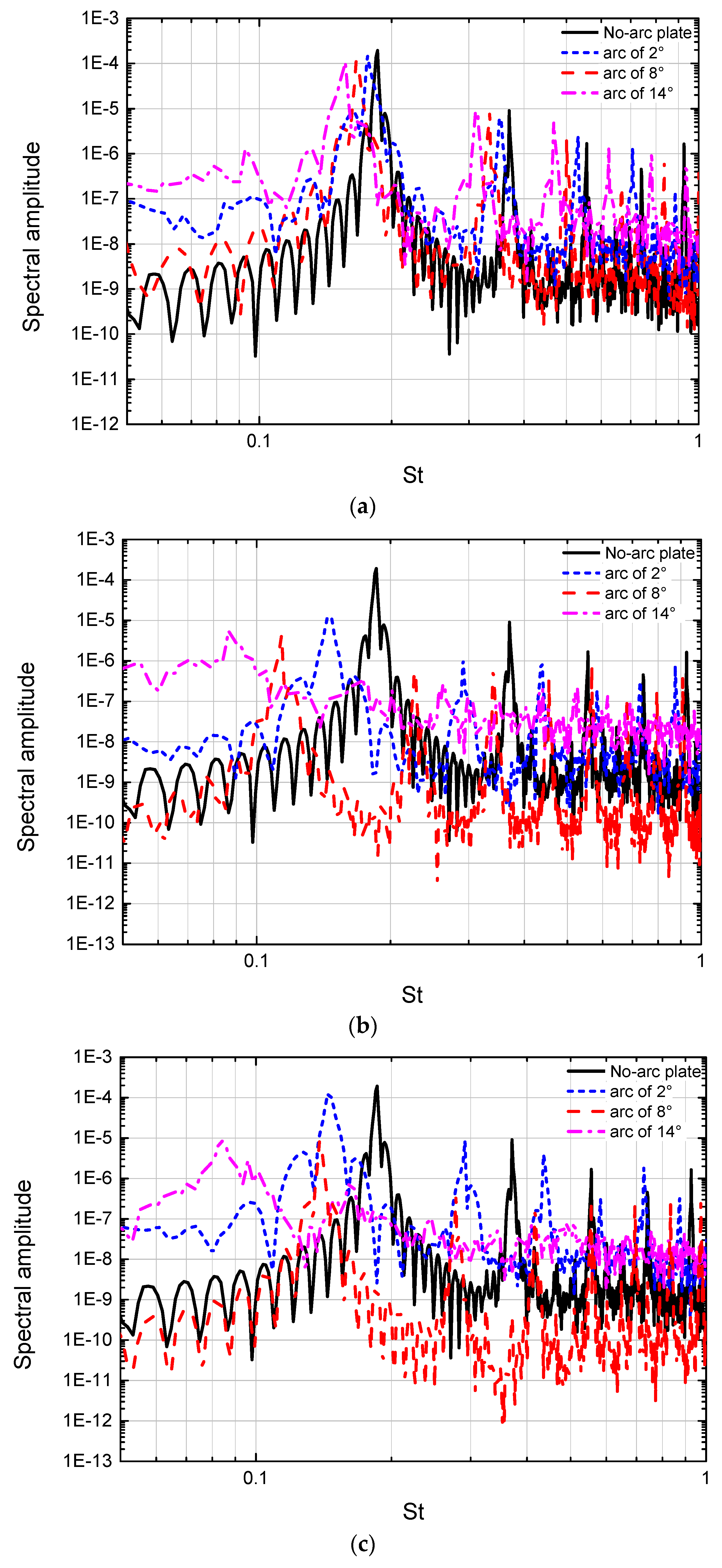
The frequency information of sound pressure at A1 (0, 150D) for different cases is presented in
Figure 19. For the different arc angles at R
arc = 0.85D, a reduction in the aeolian tone at the vortex shedding frequency is observed, although the attenuation remains limited in magnitude. Additionally, the vortex shedding frequency for each arc angle shifts to lower values compared to the baseline cylinder. For R
arc = 1.05D, all three arc angles achieve substantial noise reduction, with the 8° arc exhibiting the most pronounced suppression of sound. For R
arc = 1.2D, the 8° arc again results in the lowest noise level at the vortex shedding frequency. With the 14° arc, no distinct peak corresponding to vortex shedding is evident; instead, the spectrum becomes broadband in character. For all cases with the arc plates, the Strouhal number associated with the vortex shedding frequency is reduced compared to the no-arc plate case.