
Thermo-Mechanical Design of the C/C-SiC-Based Thermal Protection Structure for the Forebody of the Hypersonic Sounding Rocket STORT †

 , ,
, ,
Abstract
1. Introduction
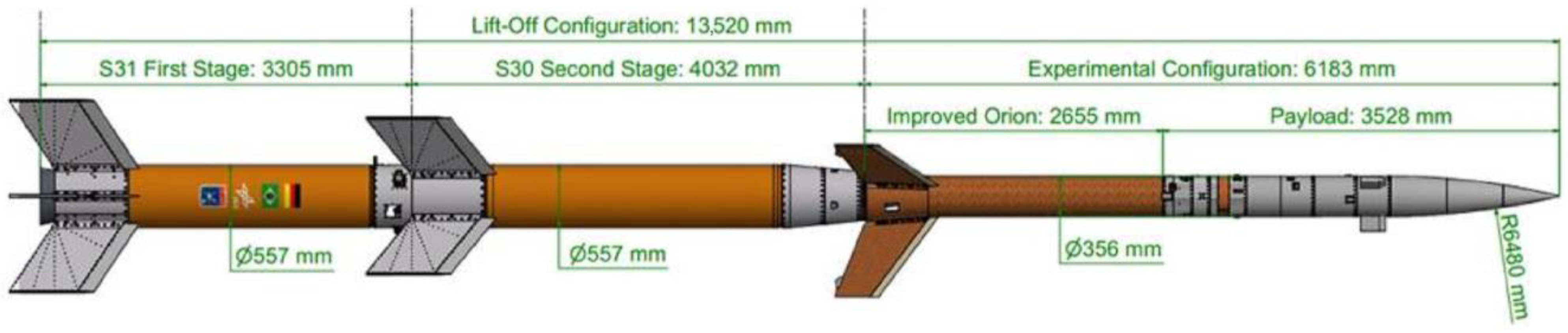
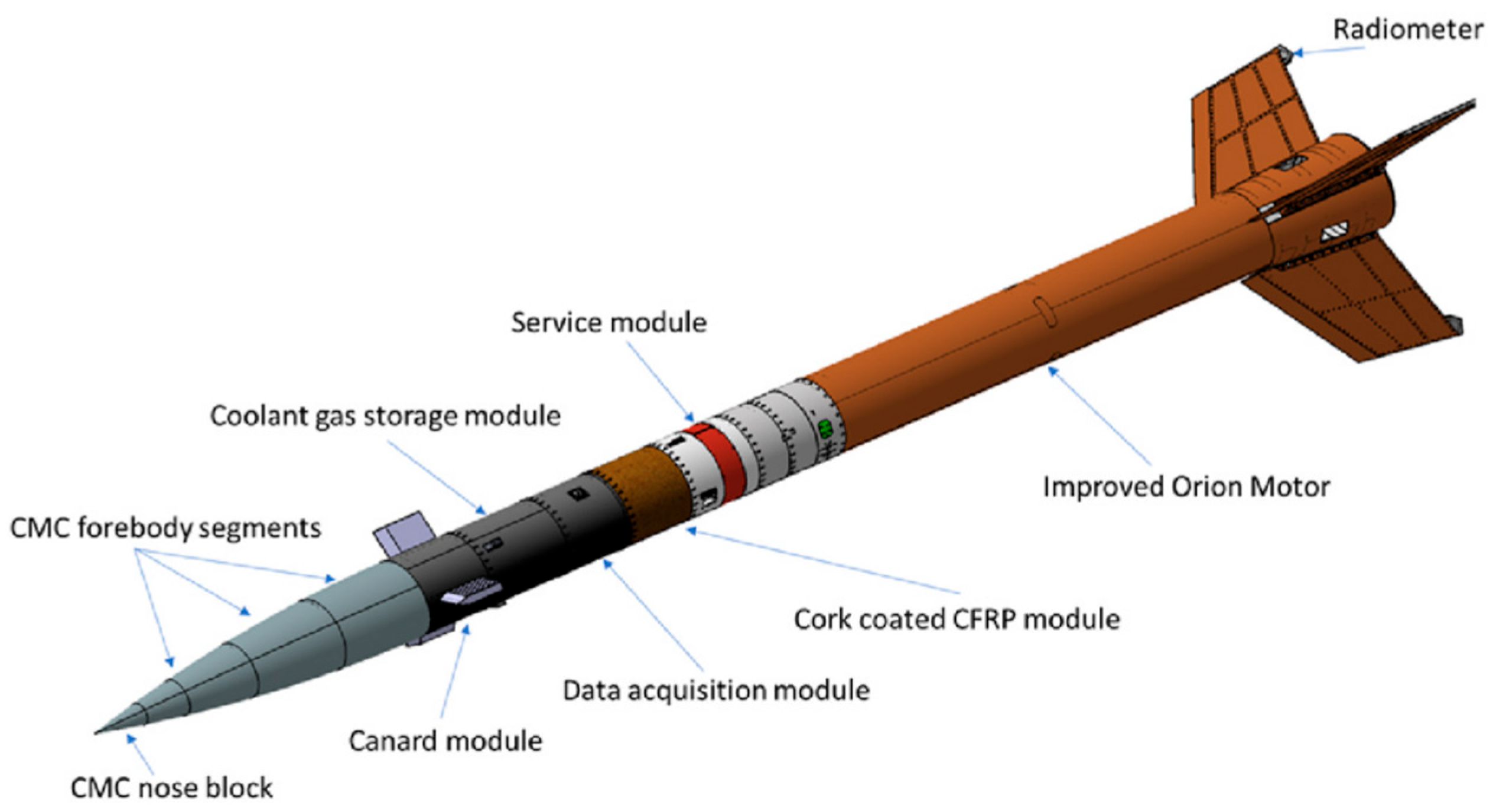
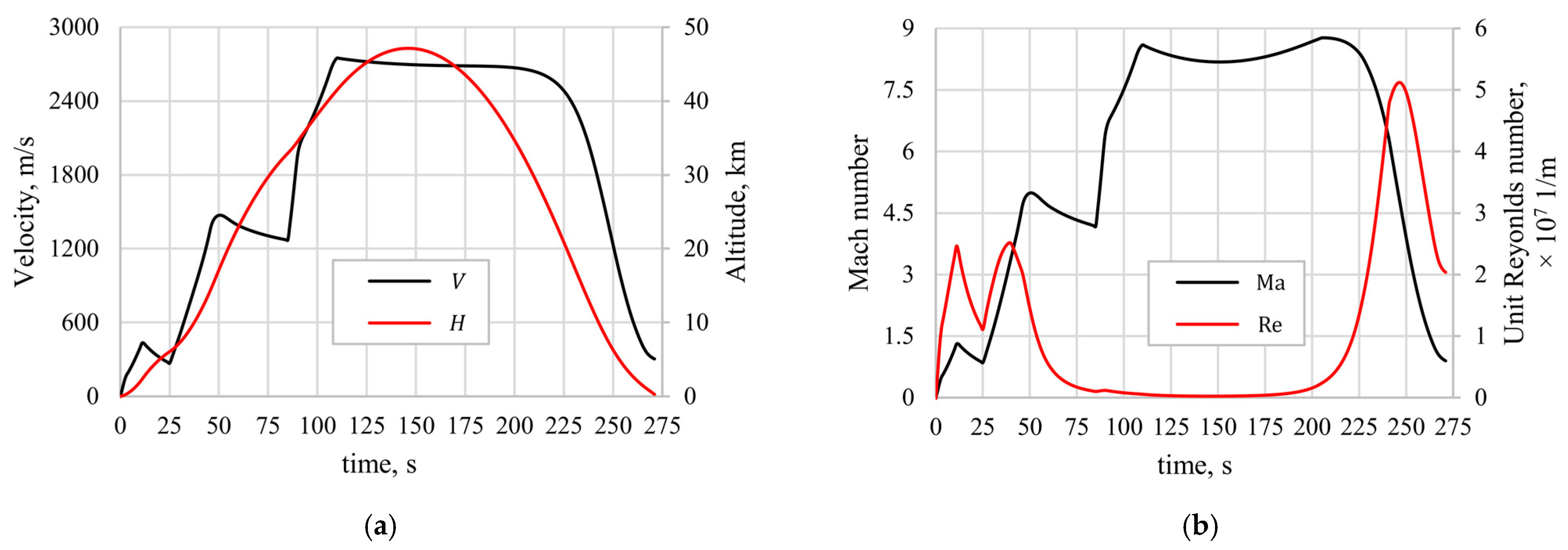
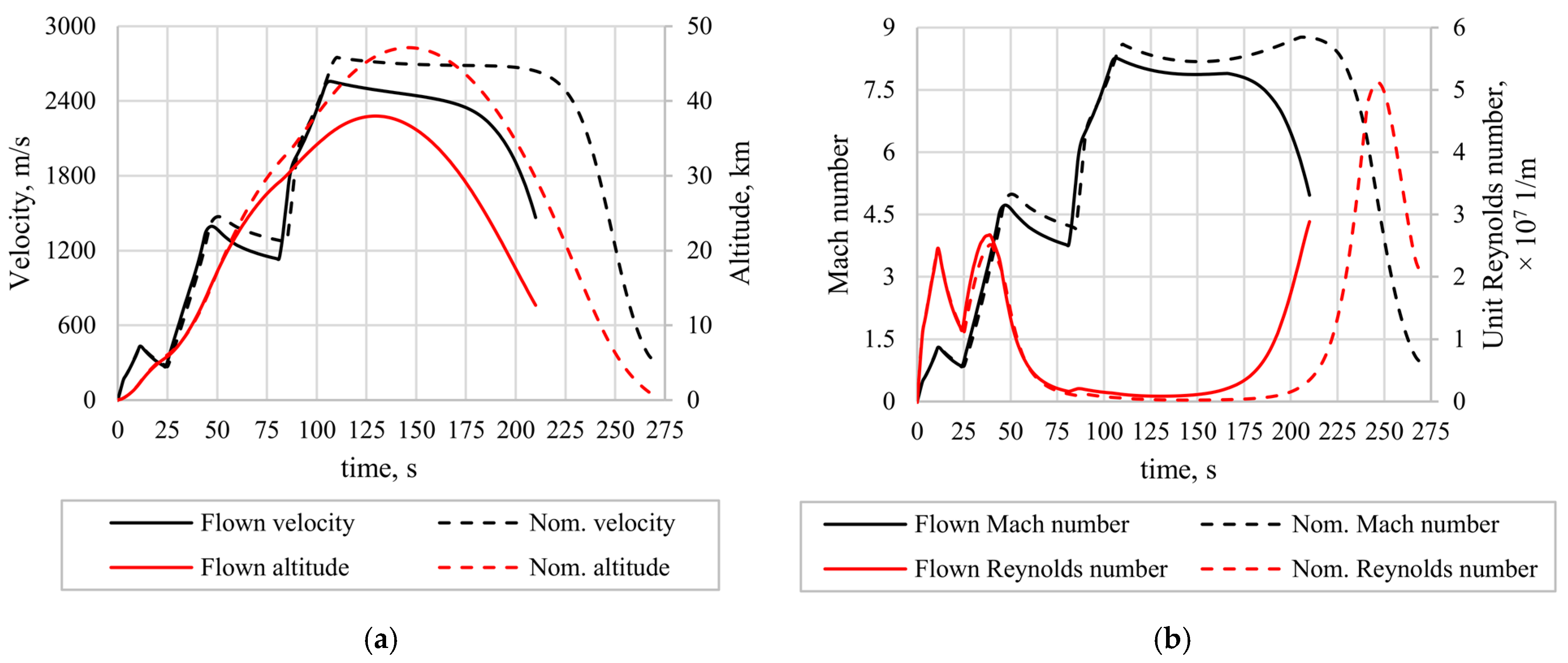
2. STORT Sounding Rocket Configuration and Planned Trajectory
3. Design Overview
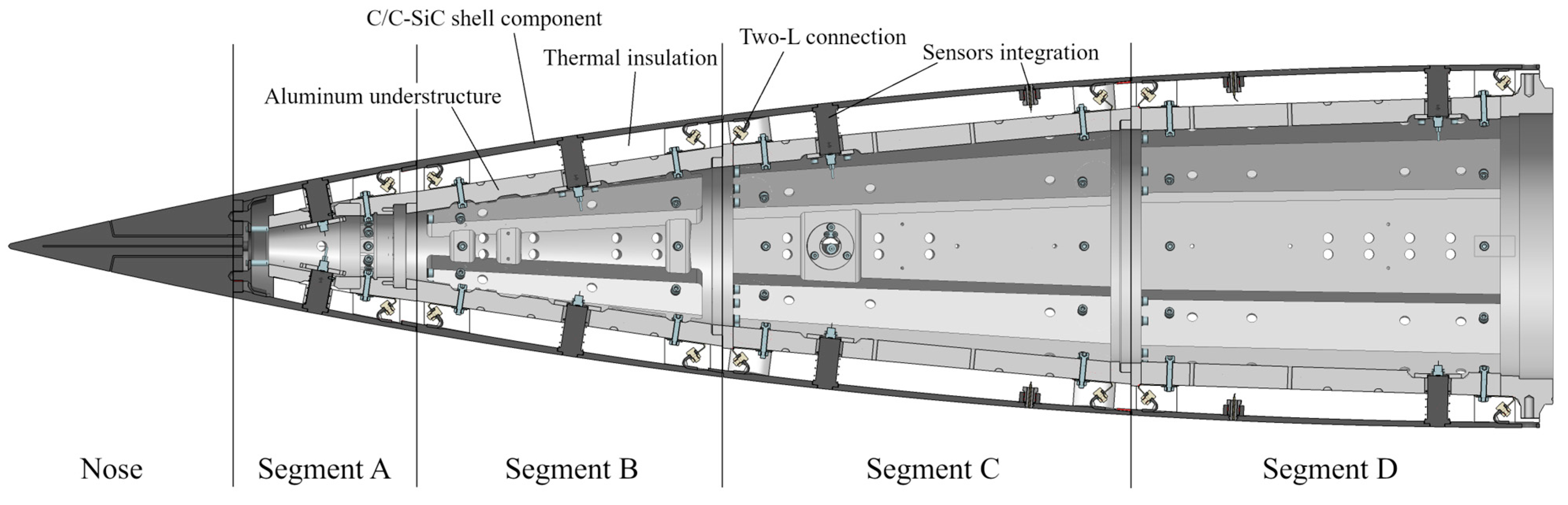
3.1. Forebody Structure Concept
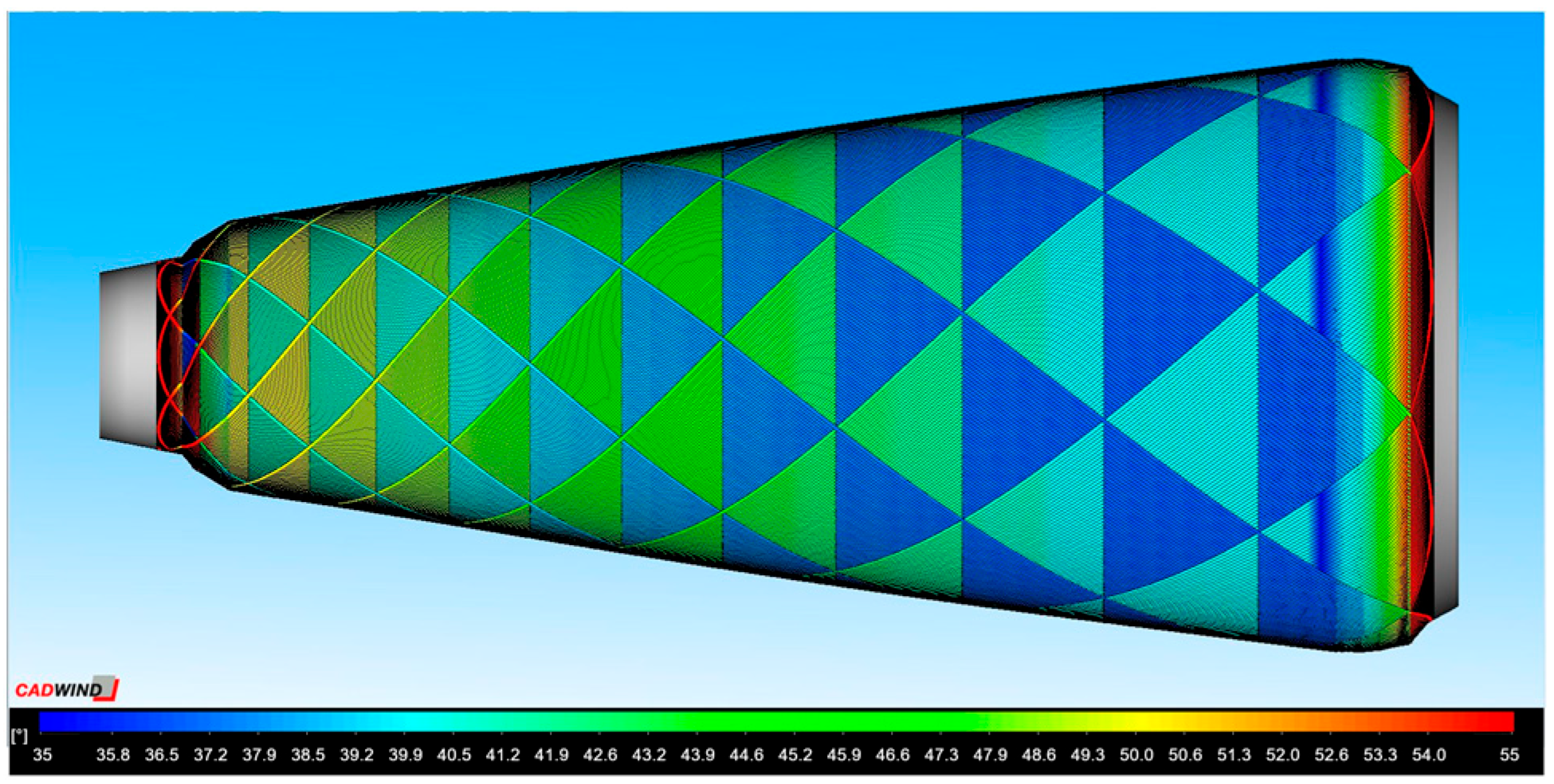
3.2. Wet Filament-Wound CMC Components for the TPS
- First, the raw component is set up in the carbon fibre reinforced polymer (CFRP) status.
- Second, the so-called carbon-carbon (C/C) status is generated through a pyrolysis process, at temperatures that generate the carbonization of the matrix.
- In the present case, the in-house developed in-situ joining process (see Ref. [19]) was implemented in the C/C-state to integrate ceramic brackets on the internal surface of the shell component for the connection to the substructure, according to the configuration that will be explained in details in Section 3.3.
- Finally, the C/C-SiC integral final component is realised through reactive silicon melt infiltration.
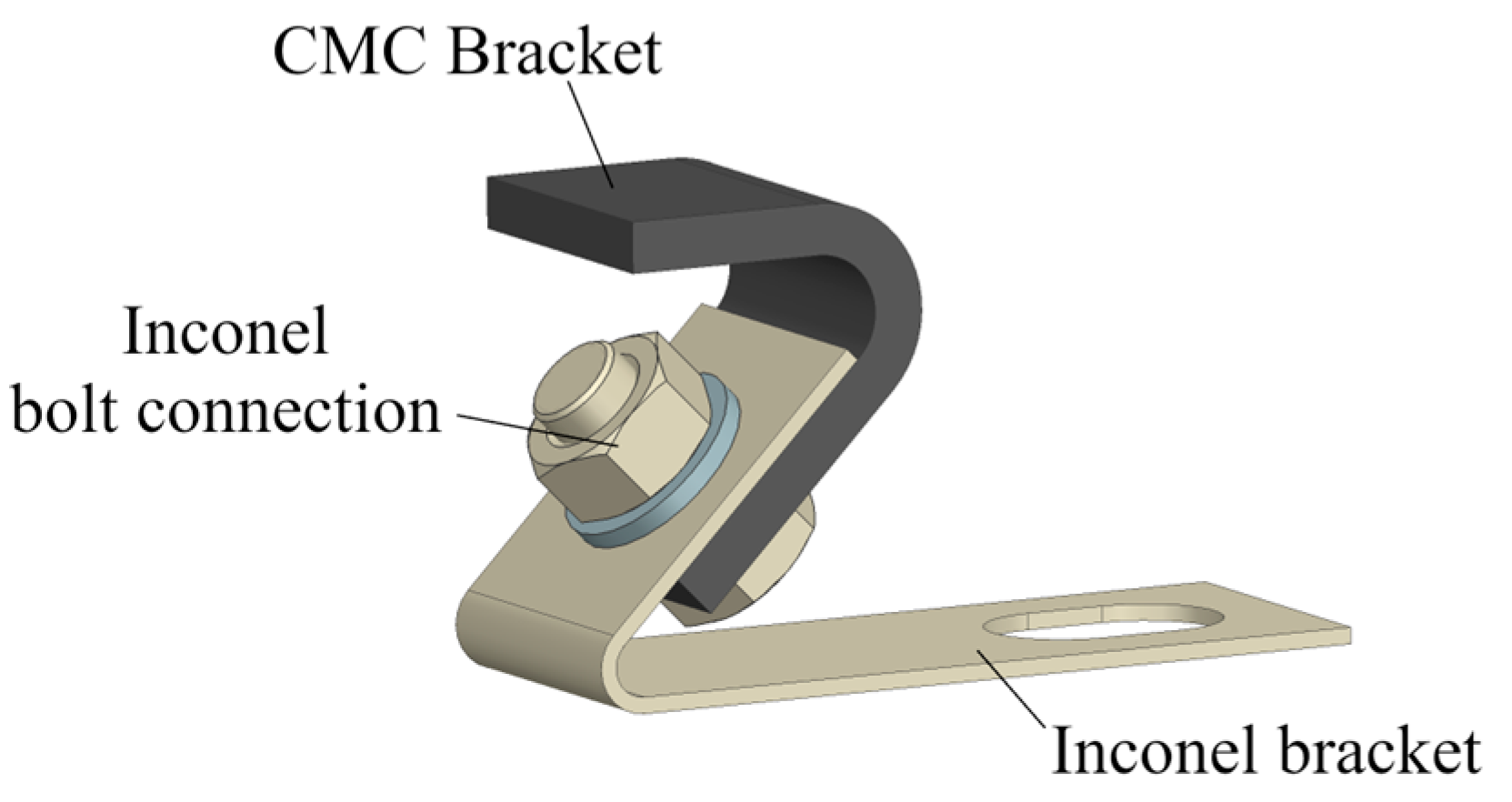
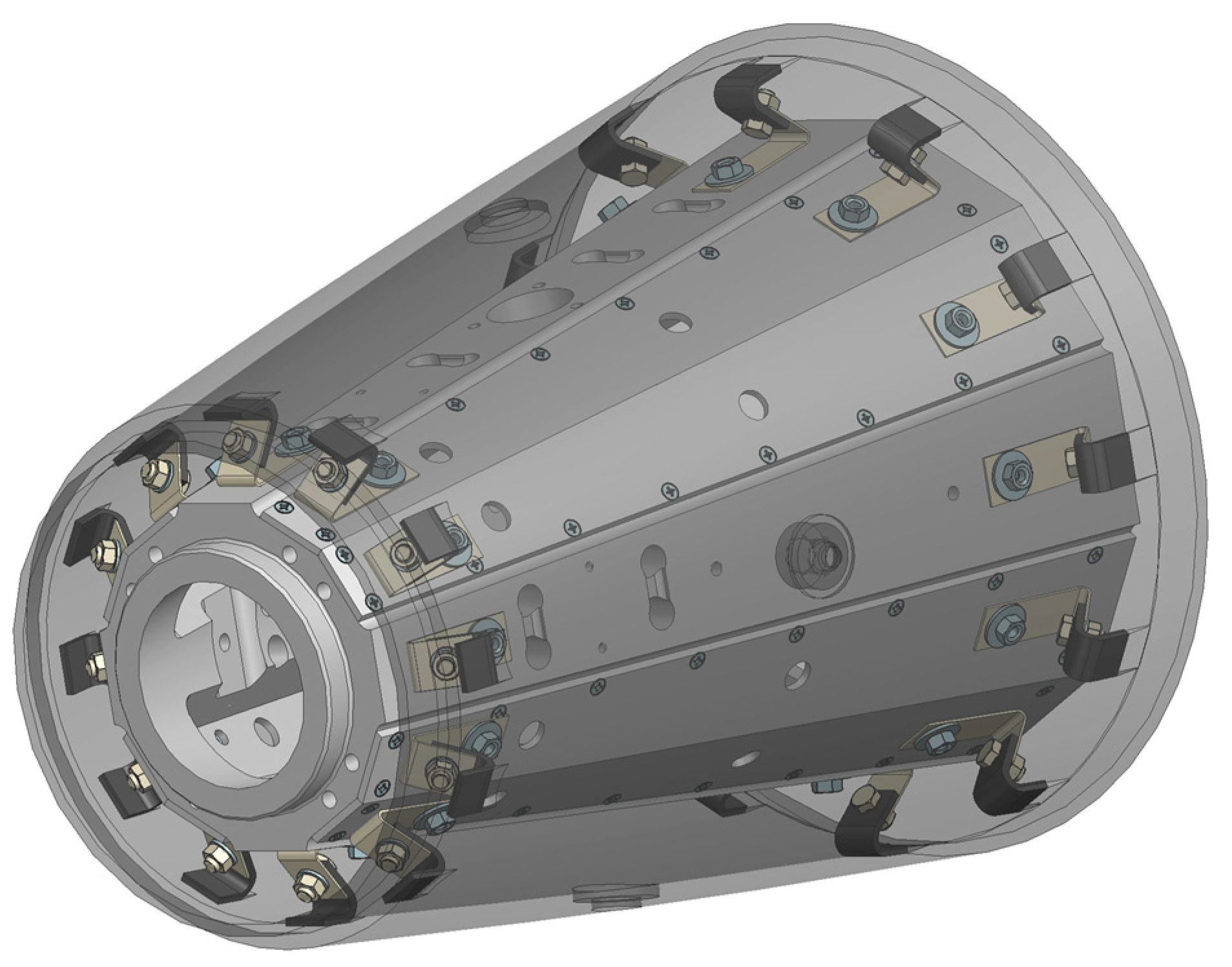
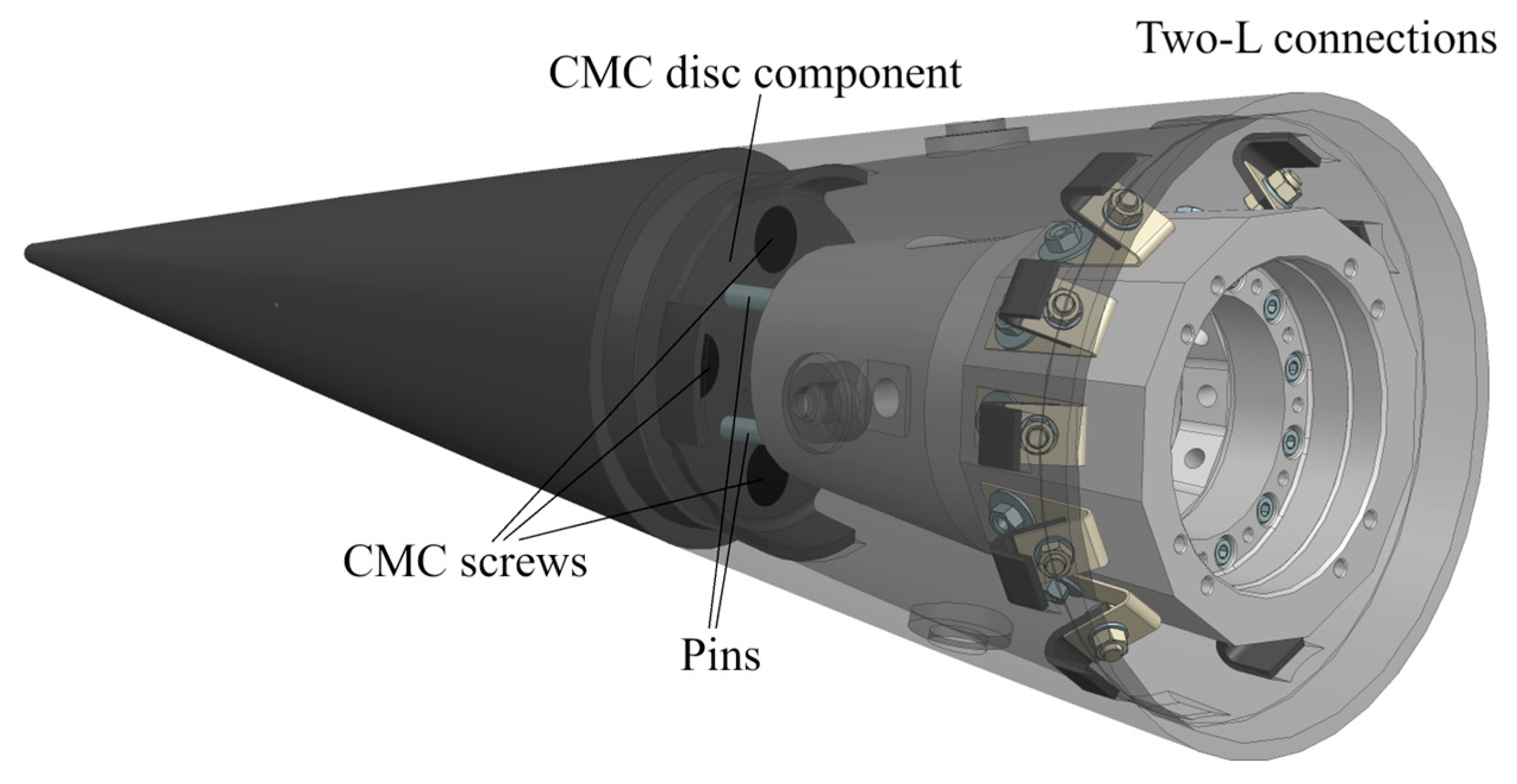
3.3. Connection Elements Between TPS and Substructure
4. Numerical Analyses for the Thermo-Mechanical Validation of the Structure
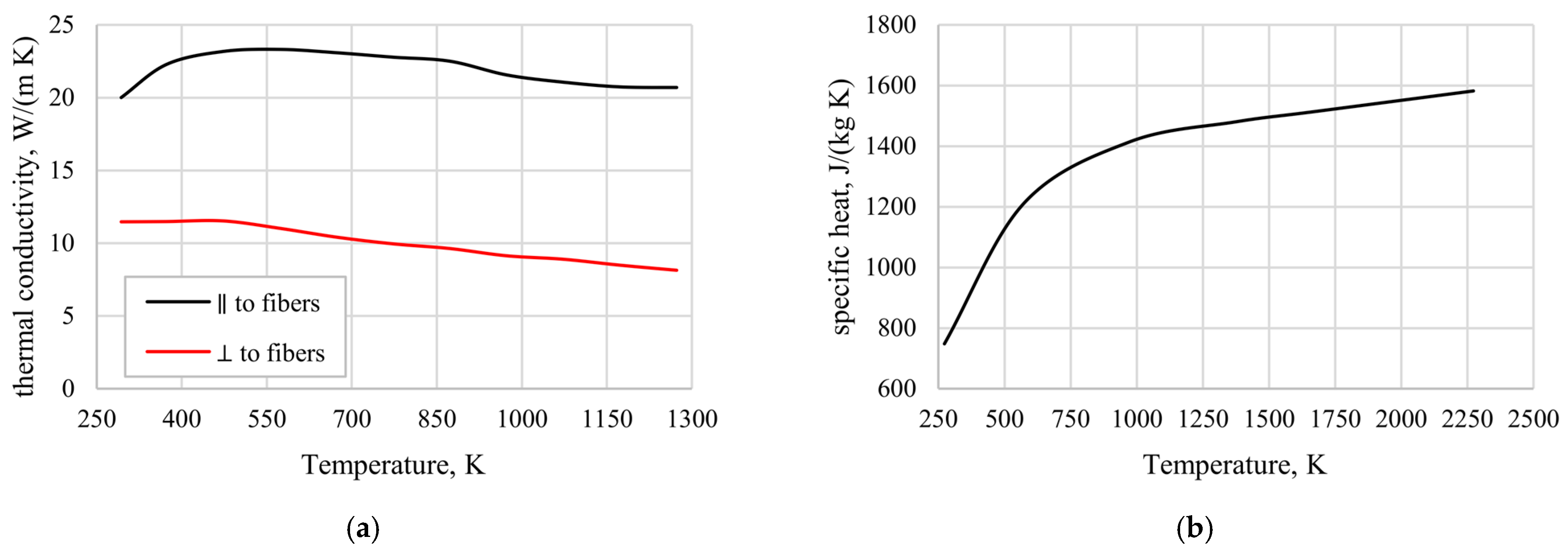
4.1. TPS Thermal Analysis
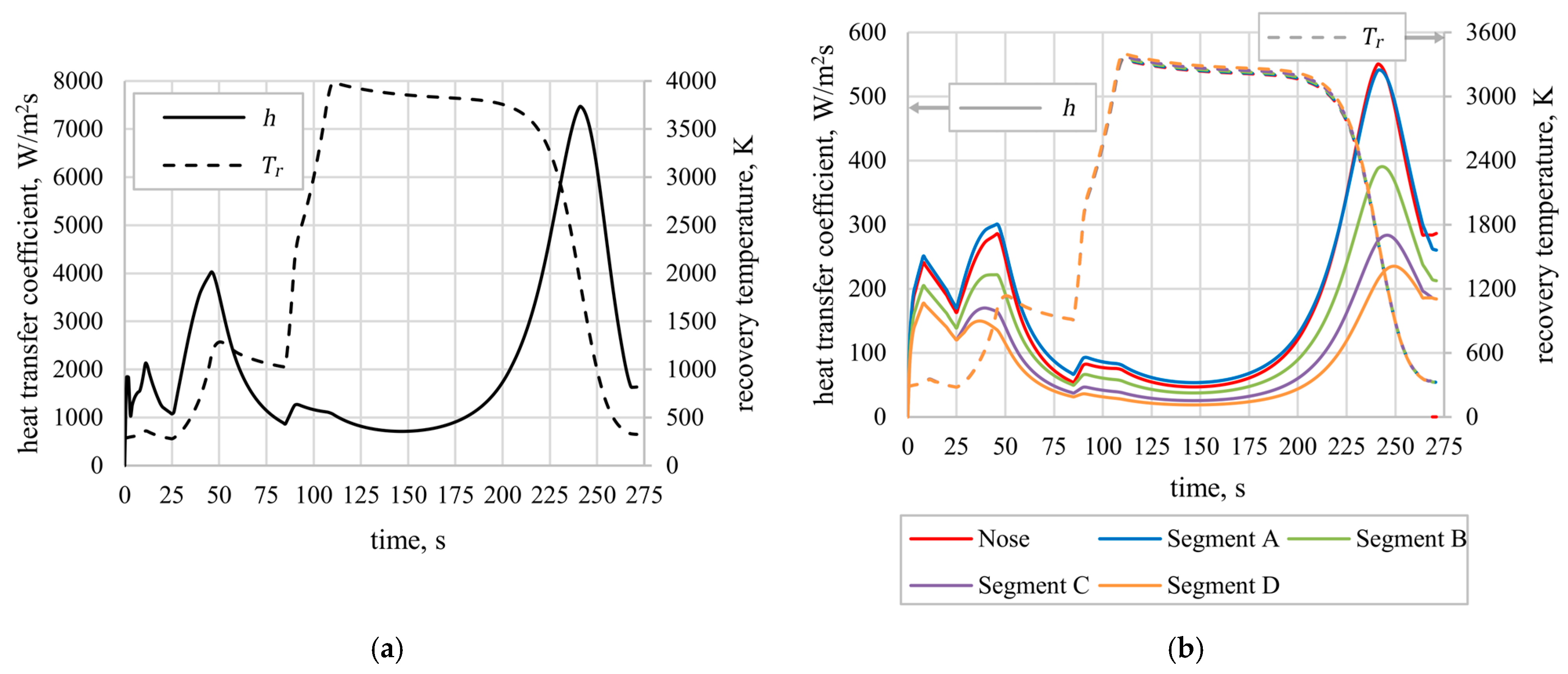
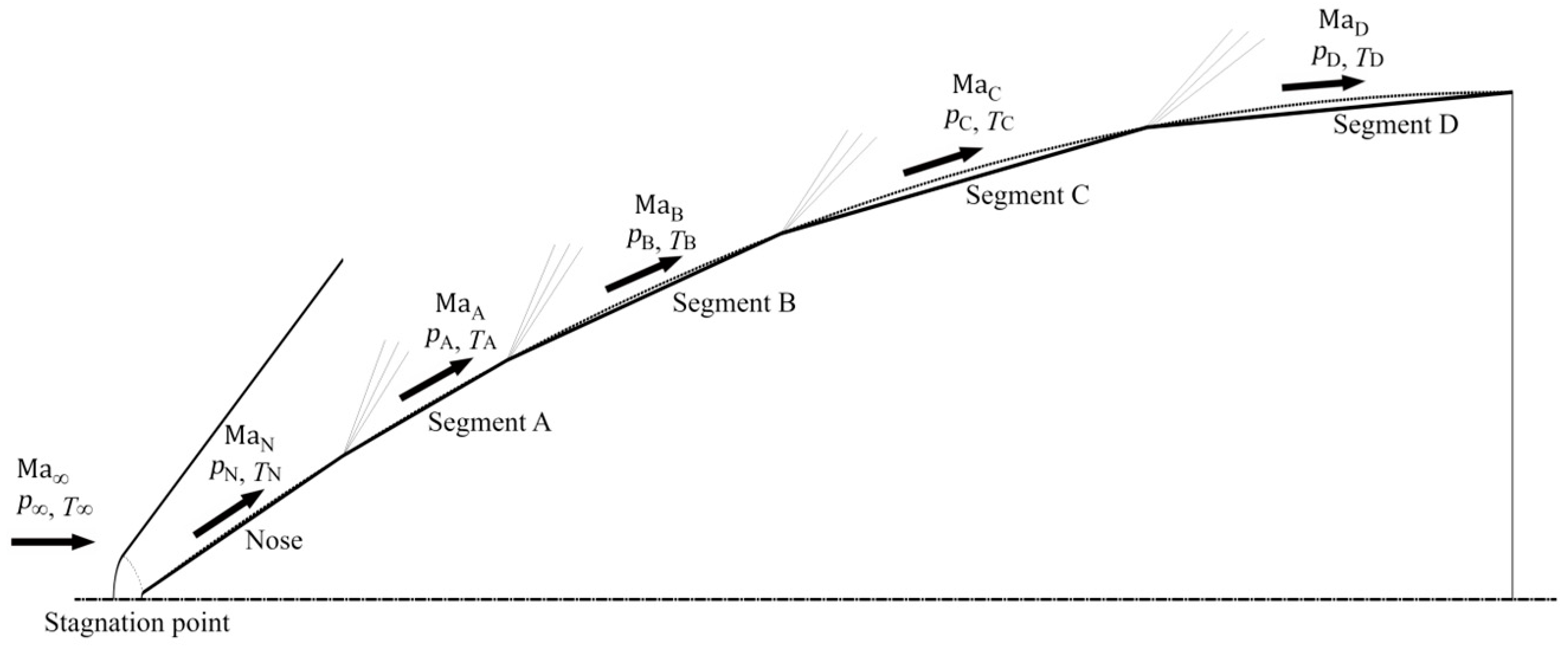
- A convective heat flux on the shell surfaces, given by the following equation
- A radiation heat flux from the shell external surfaces to the environment, using an emissivity of 0.85 for the CMC material, as a typical average value from literature data [22].
- Thermal contact between the shells and the high temperature thermal insulation.
- Adiabatic condition on the inner surfaces of the thermal insulation and model sides.
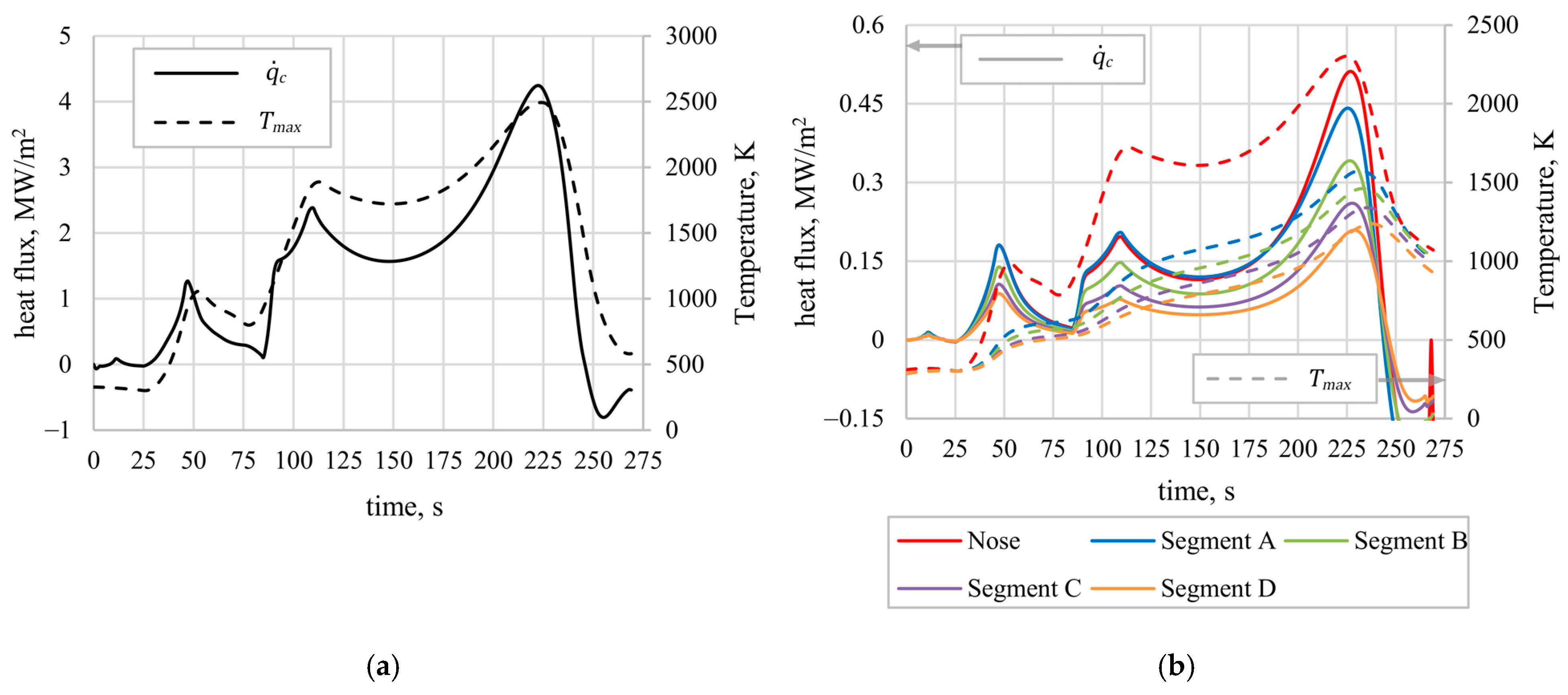
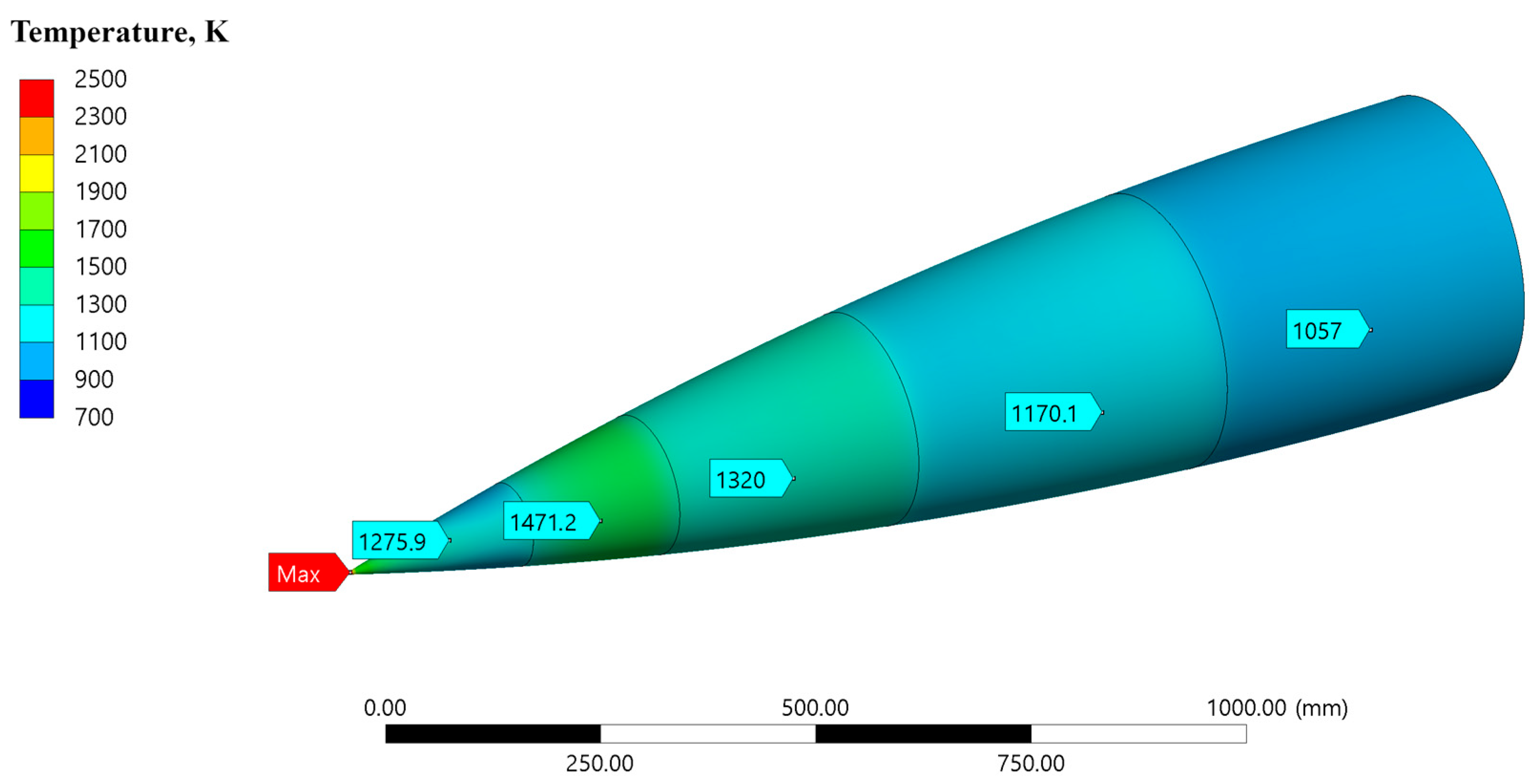
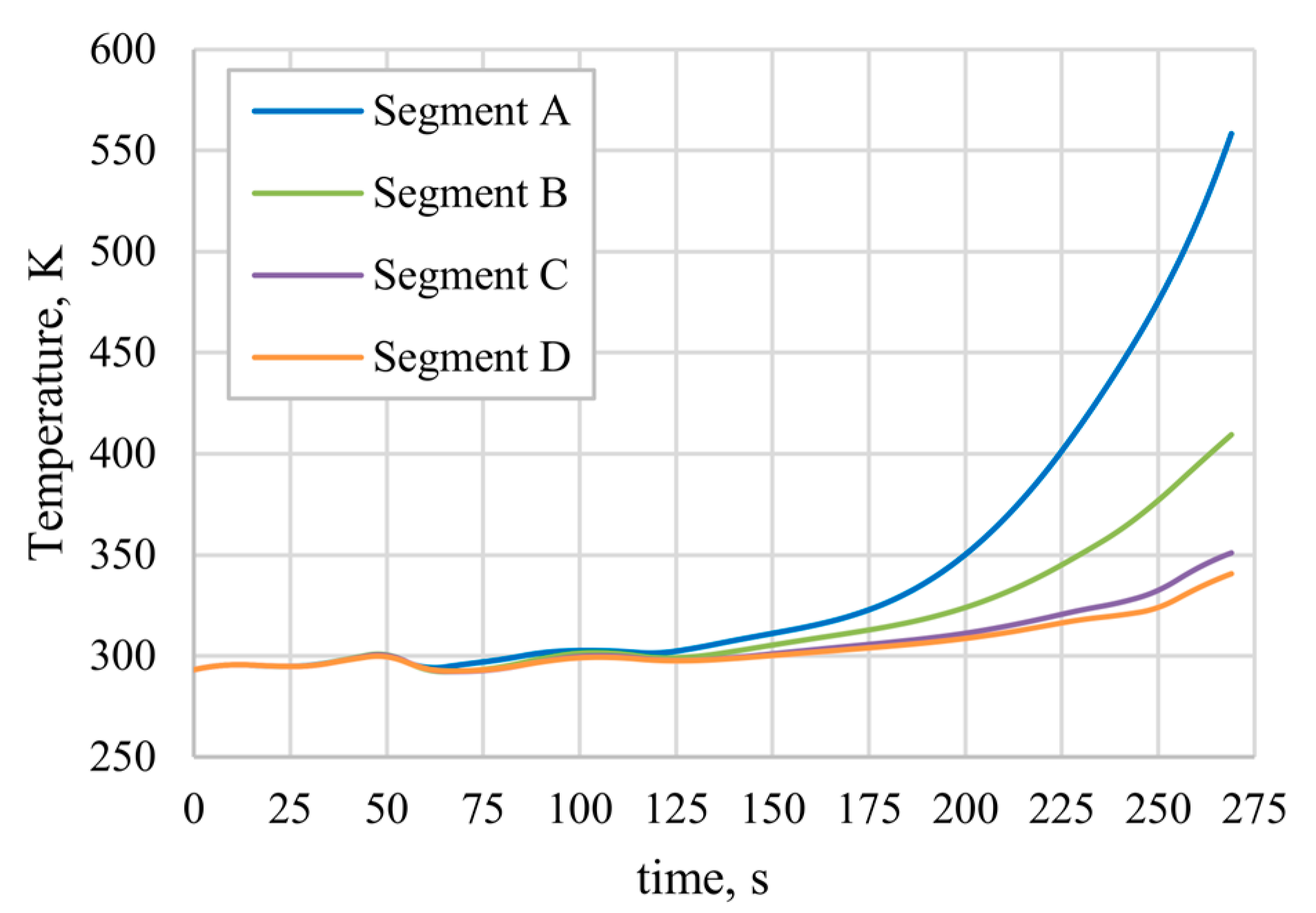
4.2. Results of the TPS Thermal Analysis
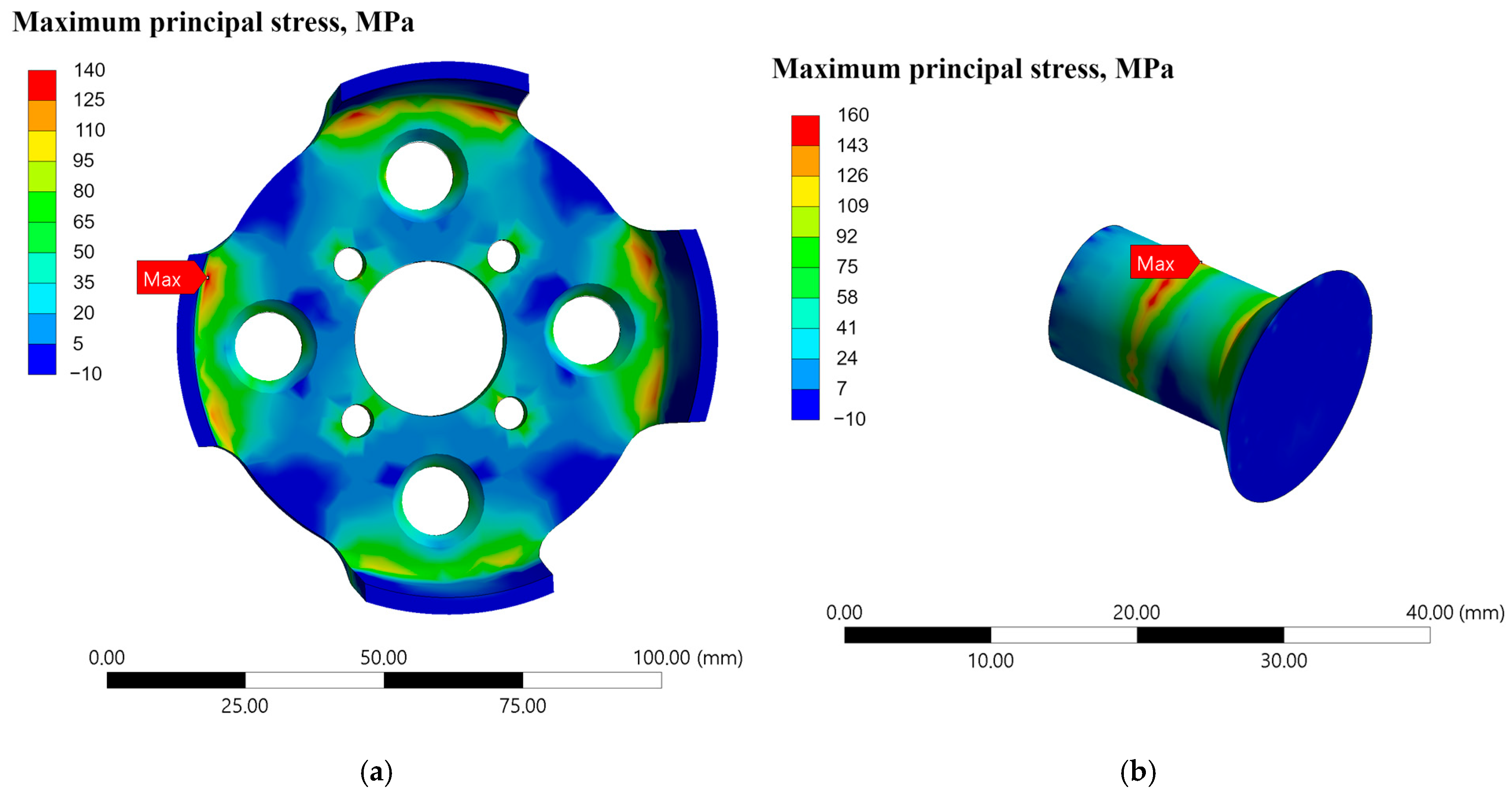
4.3. Forebody Structure Mechanical Validation
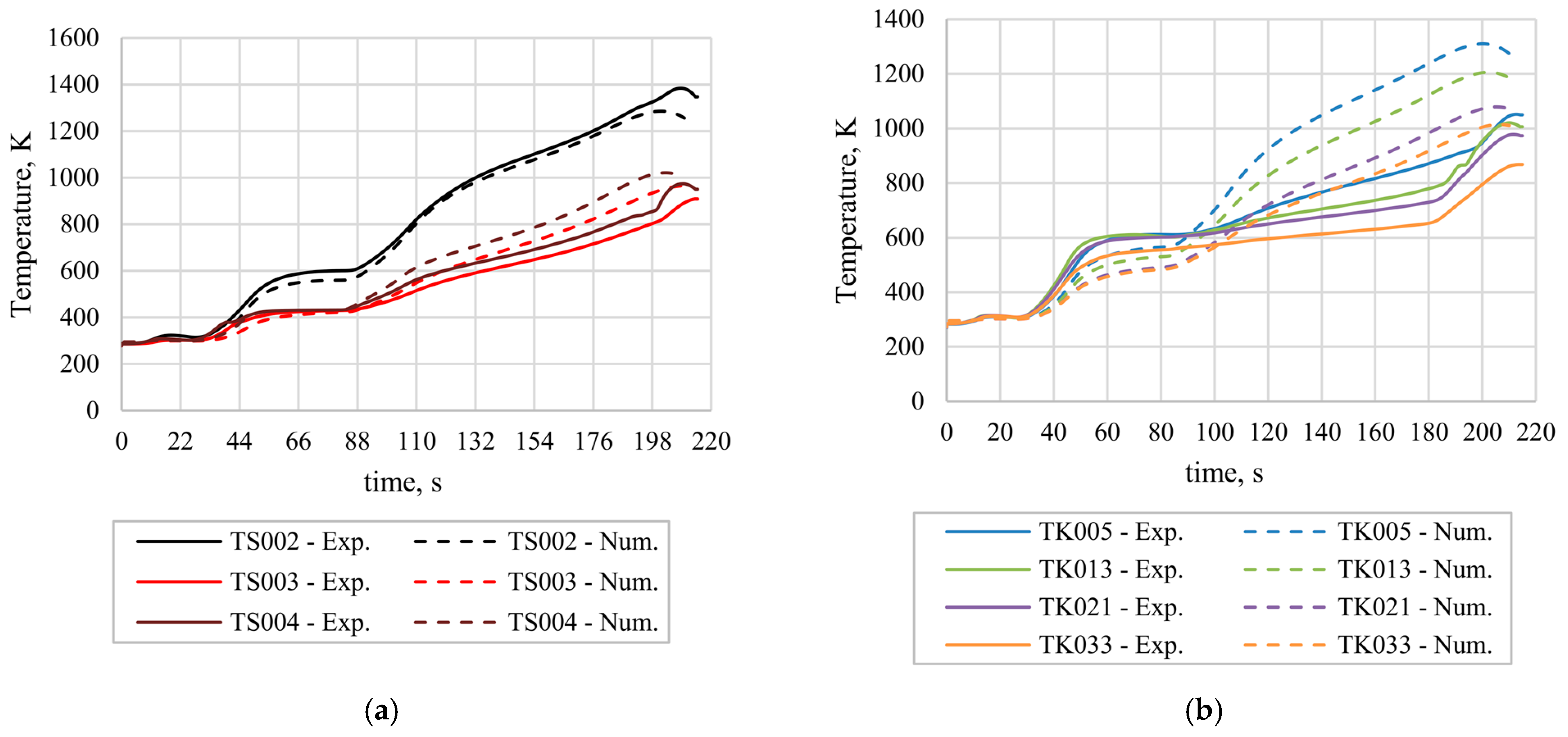
5. Comparison Between Thermal Analysis Numerical Results and Flight Temperature Data
6. Conclusions
Author Contributions
Funding
Data Availability Statement
Conflicts of Interest
References
- Anderson, J.D. Hypersonic and High-Temperature Gas Dynamics, 3rd ed.; American Institute of Aeronautics and Astronautics: Reston, VA, USA, 2019. [Google Scholar] [CrossRef]
- Milos, F.S.; Chen, Y.-K. Ablation and Thermal Response Property Model Validation for Phenolic Impregnated Carbon Ablator. J. Spacecr. Rockets 2012, 47, 786–805. [Google Scholar] [CrossRef]
- Zuber, C.; Reimer, T.; Esser, B.; Gülhan, A.; Herdrich, G.; Biller, N. Development of the Low-Density Phenolic-Based Fibrous Ablator ZURAM-K. J. Spacecr. Rockets 2021, 58, 415–424. [Google Scholar] [CrossRef]
- Glass, D. Ceramic Matrix Composite (CMC) Thermal Protection Systems (TPS) and Hot Structures for Hypersonic Vehicles. In Proceedings of the 15th AIAA International Space Planes and Hypersonic Systems and Technologies Conference, Dayton, OH, USA, 28 April–1 May 2008. AIAA 2008-2682. [Google Scholar] [CrossRef]
- Hald, H.; Weihs, H. Safety Aspects of CMC Materials and Hot Structures. In Proceedings of the Joint ESA-NASA Space-Flight Safety Conference, Noordwijk, The Netherlands, 11–14 June 2002. ESA SP-486. [Google Scholar]
- Patel, M.; Saurabh, K.; Bhanu Prasad, V.V.; Subrahmanyam, J. High temperature C/C–SiC composite by liquid silicon infiltration: A literature review. B. Mater. Sci. 2012, 35, 63–73. [Google Scholar] [CrossRef]
- Kochendörfer, R. Liquid silicon infiltration—A fast and low cost CMC-manufacturing process. In Composites—Design, Manufacture and Application: Proceedings of the 8th International Conference on Composite Materials, Honolulu, HI, USA, 15–19 July 1991; Woodhead Publishing: Cambridge, UK, 1991. [Google Scholar]
- Reimer, T.; Petkov, I.; Koch, D.; Frieß, M.; Dellin, C. Fabrication and Characterization of C/C-SiC Material Made with Pitch-Based Carbon Fibers. In Processing and Properties of Advanced Ceramics and Composites VII; Mahmoud, M.M., Bhalla, A., Bansal, N.P., Singh, J.P., Castro, R.H.R., Manjooran, N.J., Pickrell, G., Johnson, S., Brennecka, G., Singh, G., et al., Eds.; The American Ceramic Society, John Wiley & Sons, Inc.: Hoboken, NJ, USA, 2015; pp. 277–296. [Google Scholar] [CrossRef]
- Reichert, F.; Langhof, N.; Krenkel, W. Influence of Thermal Fiber Pretreatment on Microstructure and Mechanical Properties of C/C-SiC with Thermoplastic Polymer-Derived Matrices. Adv. Eng. Mater. 2015, 17, 1119–1126. [Google Scholar] [CrossRef]
- Frieß, M.; Böyükbas, M.; Vogel, F.; Cepli, D.; Schatz, O.; Süß, F.; Shi, Y. Manufacture and thermomechanical characterization of wet filament wound C/C-SiC composites. Int. J. Appl. Ceram. Tec. 2022, 19, 34–44. [Google Scholar] [CrossRef]
- Best, J.; Freudenberg, W.; Langhof, N.; Schafföner, S. Processing-microstructure correlations in material extrusion additive manufacturing of carbon fiber reinforced ceramic matrix composites. Addit. Manuf. 2024, 79, 103888. [Google Scholar] [CrossRef]
- Shi, Y.; Li, S.; Sitnikova, E.; Cepli, D.; Koch, D. Experimental evaluation and theoretical prediction of elastic properties and failure of C/C-SiC composite. Int. J. Appl. Ceram. Tec. 2022, 19, 7–21. [Google Scholar] [CrossRef]
- Buffenoir, F.; Zeppa, C.; Pichon, T.; Girard, F. Development and flight qualification of the C–SiC thermal protection systems for the IXV. Acta Astronaut. 2016, 124, 85–89. [Google Scholar] [CrossRef]
- Böhrk, H.; Löhle, S.; Fuchs, U.; Elsäßer, H.; Weihs, H. FinEx—Fin Experiment on HIFiRE-5. In Proceedings of the 7th Symposium on Aerothermodynamics for Space Vehicles, Brugge, Belgium, 9–12 May 2011. [Google Scholar]
- Böhrk, H.; Dittert, C.; Weihs, H.; Thiele, T.; Gülhan, A. Sharp Leading Edge at Hypersonic Flight: Modeling and Flight Measurement. J. Spacecr. Rockets 2014, 51, 1753–1760. [Google Scholar] [CrossRef]
- Gülhan, A.; Hargarten, D.; Zurkaulen, M.; Klingenberg, F.; Siebe, F.; Willems, S.; Di Martino, G.; Reimer, T. Selected results of the hypersonic flight experiment STORT. Acta Astronaut. 2023, 211, 333–343. [Google Scholar] [CrossRef]
- Di Martino, G.D.; Reimer, T.; Dauth, L.; Baier, L. Structure Design of a Sounding Rocket Fairing with a Segmented Filament Winding-Ceramic Matrix Composite Thermal Protection System. In Proceedings of the 2nd International Conference on High-Speed Vehicle Science Technology, Brugges, Belgium, 11–15 September 2022. [Google Scholar]
- Reimer, T.; Di Martino, G.; Petkov, I.; Dauth, L.; Baier, L.; Gülhan, A. Design, Manufacturing and Assembly of the STORT Hypersonic Flight Experiment Thermal Protection System. In Proceedings of the 25th AIAA International Space Planes and Hypersonic Systems and Technologies Conference, Bengaluru, India, 28 May–31 June 2023. AIAA 2023-3089. [Google Scholar] [CrossRef]
- Kochendorfer, R.; Lutzenburger, N.; Weihs, H. Joining Techniques for Fibre Ceramic Structures. Adv. Compos. Lett. 2004, 13, 75–85. [Google Scholar] [CrossRef]
- Breede, F. Entwicklung Neuartiger Faserkeramischer C/C-SiC Verbundwerkstoffe auf Basis der Wickeltechnik für Raketendüsen. PhD Thesis, Universität Stuttgart, Stuttgart, Germany, 2017. [Google Scholar]
- Böhrk, H.; Beyermann, U. Secure tightening of a CMC fastener for the heat shield of re-entry vehicles. Compos. Struct. 2010, 92, 107–112. [Google Scholar] [CrossRef]
- Neuer, G.; Jaroma-Weiland, G. Spectral and Total Emissivity of High-Temperature Materials. Int. J. Thermophys. 1998, 19, 917–929. [Google Scholar] [CrossRef]
- National Oceanic and Atmospheric Administration; National Aeronautics and Space Administration. U.S. Standard Atmosphere, 1976; Report Nr. NOAA-S/T-76-1562; U.S. Government Printing Office: Washington, DC, USA, 1976.
- Hord, R.A. An Approximate Solution for Axially Symmetric Flow over a Cone with an Attached Shock Wave; Langley Aeronautical Laboratory, Langley Field, Va.; NACA Technical Note 3485; National Advisory Committee for Aeronautics: Washington, DC, USA, 1955.
- White, F.M. Viscous Fluid Flow, 3rd ed.; McGraw-Hill: New York, NY, USA, 2006; pp. 15–44. [Google Scholar]
- Van Driest, E.R. The Problem of Aerodynamic Heating. Aeronaut. Eng. Rev. 1956, 15, 26–41. [Google Scholar]
- Mangler, W. Grenzschichten an Rotationskörpern bei Symmetrischer Anblasung; Bericht/A 17; Aerodynamische Versuchsanstalt: Göttingen, Germany, 1945; Volume 45. [Google Scholar]
- Shi, Y.; Kessel, F.; Friess, M.; Jain, N.; Tushtev, K. Characterization and modeling of tensile properties of continuous fiber reinforced C/C-SiC composite at high temperatures. J. Europ. Ceram. Soc. 2021, 41, 3061–3071. [Google Scholar] [CrossRef]
- RATH-Group. Product Data Sheet ALTRA® 1500C; RATH Group: Mönchengladbach, Germany, 2025. [Google Scholar]
- Reimer, T. The EXPERT C/C-SiC Nose Cap—System Design and Thermomechanical Layout. In Proceedings of the AIAA/CIRA 13th International Space Planes and Hypersonics Systems and Technologies Conference, Capua, Italy, 16–20 May 2005. AIAA 2005-3262. [Google Scholar] [CrossRef]
- EN 1999-1-2; Design of Aluminium Structures—Part 1–2: Structural Fire Design. Eurocode 9; CEN: Brussels, Belgium, 2007.
- Jain, N.; Koch, D. Prediction of Failure in Ceramic Matrix Composites Using Damage-Based Failure Criterion. J. Compos. Sci. 2020, 4, 183. [Google Scholar] [CrossRef]
- Reimer, T.; Di Martino, G.; Dauth, L.; Baier, L.; Gülhan, A.; Klingenberg, F.; Hargarten, D. STORT Hypersonic Flight Experiment Forebody Temperature Results. In Proceedings of the AIAA SCITECH 2025 Forum, Orlando, FL, USA, 6–10 January 2025. AIAA 2025-1342. [Google Scholar] [CrossRef]









| Event | Time, s |
|---|---|
| Lift-off, ignition 1st stage | 0 |
| Burnout 1st stage | 11.4 |
| Ignition 2nd stage | 24.0 |
| Burnout 2nd stage | 51.1 |
| Ignition 3rd stage | 88.0 |
| Burnout 3rd stage | 113.0 |
| Apogee | 141.9 |
| Impact | 265.4 |
| Segment A | Segment B | Segment C | Segment D | |
|---|---|---|---|---|
| Maximum axial displacement, mm | 0.76 | 0.88 | 1.09 | 0.56 |
| Maximum radial displacement, mm | 0.52 | 1.27 | 1.51 | 1.20 |
| Max. stress in CMC element, MPa | 110.1 a 137.0 b 156.7 c | 127.9 a | 147.5 a | 121.4 a |
| Max. stress ratio in CMC element | 0.61 a 0.76 b 0.87 c | 0.71 a | 0.82 a | 0.67 a |
| Thermocouple ID | CMC Component | NRMS |
|---|---|---|
| TS002 | Nose | 0.06 |
| TS003 | Nose | 0.14 |
| TS004 | Nose | 0.12 |
| TK005 | Segment A | 0.28 |
| TK013 | Segment B | 0.25 |
| TK021 | Segment C | 0.19 |
| TK033 | Segment D | 0.24 |
Disclaimer/Publisher’s Note: The statements, opinions and data contained in all publications are solely those of the individual author(s) and contributor(s) and not of MDPI and/or the editor(s). MDPI and/or the editor(s) disclaim responsibility for any injury to people or property resulting from any ideas, methods, instructions or products referred to in the content. |
© 2026 by the authors. Licensee MDPI, Basel, Switzerland. This article is an open access article distributed under the terms and conditions of the Creative Commons Attribution (CC BY) license.
Share and Cite
Di Martino, G.D.; Reimer, T.; Baier, L.; Dauth, L.; Hargarten, D.; Gülhan, A. Thermo-Mechanical Design of the C/C-SiC-Based Thermal Protection Structure for the Forebody of the Hypersonic Sounding Rocket STORT. Aerospace 2026, 13, 278. https://doi.org/10.3390/aerospace13030278
Di Martino GD, Reimer T, Baier L, Dauth L, Hargarten D, Gülhan A. Thermo-Mechanical Design of the C/C-SiC-Based Thermal Protection Structure for the Forebody of the Hypersonic Sounding Rocket STORT. Aerospace. 2026; 13(3):278. https://doi.org/10.3390/aerospace13030278
Chicago/Turabian StyleDi Martino, Giuseppe Daniele, Thomas Reimer, Luis Baier, Lucas Dauth, Dorian Hargarten, and Ali Gülhan. 2026. "Thermo-Mechanical Design of the C/C-SiC-Based Thermal Protection Structure for the Forebody of the Hypersonic Sounding Rocket STORT" Aerospace 13, no. 3: 278. https://doi.org/10.3390/aerospace13030278
APA StyleDi Martino, G. D., Reimer, T., Baier, L., Dauth, L., Hargarten, D., & Gülhan, A. (2026). Thermo-Mechanical Design of the C/C-SiC-Based Thermal Protection Structure for the Forebody of the Hypersonic Sounding Rocket STORT. Aerospace, 13(3), 278. https://doi.org/10.3390/aerospace13030278