1. Introduction
For modern high-speed vehicle development, velocity has emerged as a critical design parameter to achieve time-sensitive operational objectives [
1]. The increase in flight speed inevitably leads to increased aerodynamic drag and heat. High drag could affect the maneuverability [
2,
3], while intense heating requires the vehicles to be equipped with thermal protection systems, which increases launch costs and decreases the effective payload [
4]. Thus, the reduction in aerodynamic drag and heat flux is highly significant for the design of high-speed flight vehicles.
In high-speed flows, the nose and fuselage leading edge typically endure the most intense thermal loads. Simultaneously, the nose’s geometry governs the shock wave’s morphology, directly influencing drag coefficients. To actively manage drag and heat flux, researchers have explored diverse flow control methods aimed at restructuring the flow field [
5,
6]. The forward-facing cavity [
7], energy deposition [
8,
9], installation of aerospike [
10], transpiration cooling [
11,
12,
13], counter-flowing jets [
14,
15], etc., are all commonly employed drag reduction schemes based on flow field control. The aerospike, due to its simple structure and remarkable drag reduction effect, has gained the preference of numerous researchers. By piercing the powerful shock generated at high Mach numbers, the spike transforms it into an oblique shock, markedly reducing drag. However, its thermal protection remains inadequate, and aerodynamic performance declines noticeably at non-zero angles of attack, limiting its practical application.
To attain satisfactory overall drag reduction and thermal protection, combined flow control schemes integrating active thermal protection with passive flow control have emerged in recent years. Jiang et al. [
16,
17] introduced an innovative configuration combining spike with lateral jet systems, conducting comprehensive experimental and computational analyses. Their findings revealed that lateral jets effectively pushed away the reattachment shock waves and diminished shock intensity. Guo et al. [
18] further studied a dual-configuration system incorporating a spike-aerodisk with specially designed airflow channels. This design enables high-pressure air captured behind bow shocks to enter through aerodisk channels, subsequently expelled through lateral jets along the spike body for simultaneous aerodynamic and thermal mitigation. Liu et al. [
19] engineered a three-part system incorporating spike-aerodisks with lateral and rear jet mechanisms to enhance high-speed vehicle performance. Their findings reveal substantial reductions in drag coefficient and improved thermal protection efficacy via synchronized jet operation. Ou et al. [
20] performed configuration optimization on integrated spike and counterflow jet setups using numerical simulation paired with multi-objective evolutionary algorithms under high-speed flow conditions at Mach 5.75. Their research framework established dual optimization objectives encompassing both the comprehensive drag coefficient and thermal load distribution characteristics at the leading edge of blunt-nosed structures. Although current studies have addressed the jet effects of single-position or multi-position, there remains a notable lack of systematic research on the simultaneous implementation of multi-zone synergistic jets, specifically at the top, lateral and bottom, on the aerospike. In particular, the coupling mechanism of multi-jet interfering with the flow field and its influence on the drag and heat flux reduction efficiency are still unclear.
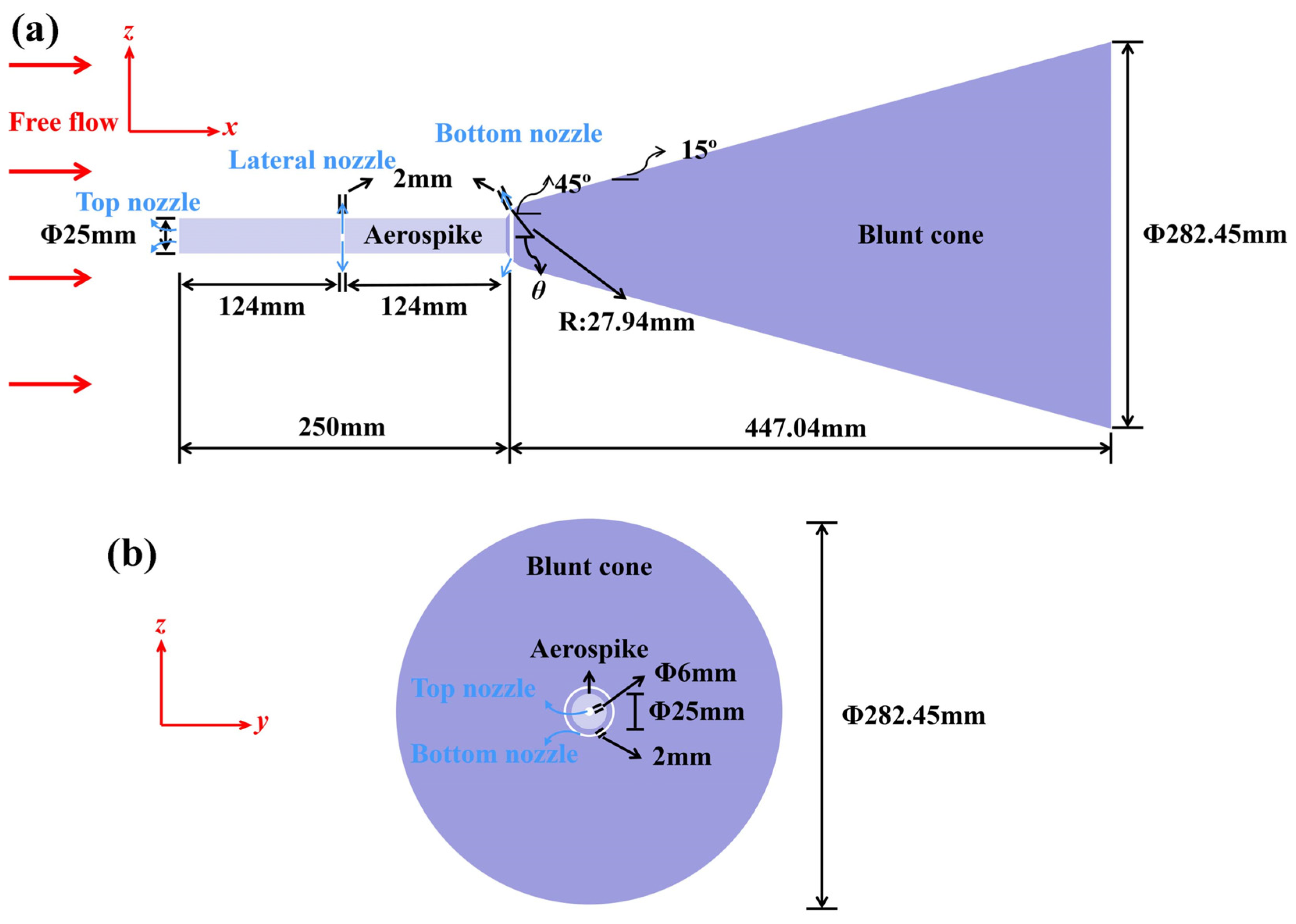
Based on this, the paper processes a combined drag and heat flux reduction scheme integrating an aerospike with partition jets. The effects of top, lateral and bottom jets and their combinations on flow field structure, as well as wall pressure and heat distributions, are systematically analyzed. The law of shock shape and separation zone evolution caused by multi-jet interference is revealed. The drag reduction and thermal protection efficiency of each scheme are evaluated.
3. Results and Discussion
Using the non-jet blunt cone and spike configuration as baseline references, the study first examines the aerodynamic phenomena associated with head-mounted spike configurations under high-speed flight conditions. Subsequently, the flow field characteristics are further examined at different positions of the spike and blunt cone. Finally, an analysis is conducted on the flow field properties of the arrangement featuring partitioned jet flow. Quantitative assessments of jet-induced drag mitigation and thermal protection enhancements are performed.
The Stanton number,
St, is used to present the heat flux, defined as Equations (2) and (3):
where
Taw is the adiabatic wall temperature and
Tw is the wall temperature.
T∞,
γ, Ma and Pr are free stream temperature, ratio of specific heats, Mach number and Prandtl number, respectively.
The jet drag reduction efficiency, denoted as
η, is introduced to quantify the improvement in drag reduction performance achieved by various jet configurations compared to a reference configuration. It is defined by Equation (4):
where
D is the drag, and the unit is N.
D0 denotes the drag of the baseline blunt cone without the drag reduction device,
D1 represents the drag of the blunt cone after the addition of the spike, and
D2 corresponds to the drag obtained for the combined configuration. When the angle between the jet direction and the freestream direction is greater than 90°, the drag represented by
D2 includes not only the aerodynamic drag but also the additional drag caused by the reverse action of the jet gas. The specific calculation relationship is shown in Equations (5) and (6):
where
Dq and
Djet are the aerodynamic drag and jet additional drag, respectively.
Seff is the projected area of the jet in the free stream direction,
Pjet and
P∞ are the jet pressure and free stream pressure, respectively, and
vjet is the jet velocity.
The equivalent specific impulse
I, defined as the drag reduction per unit mass flow rate of the jet gas, is expressed in units of m/s and is given by:
where
Q represents the mass flow rate of the jet in kg/s.
The drag coefficient
Cd is defined as:
3.1. Characteristics of the Flow Field of Reference Configurations
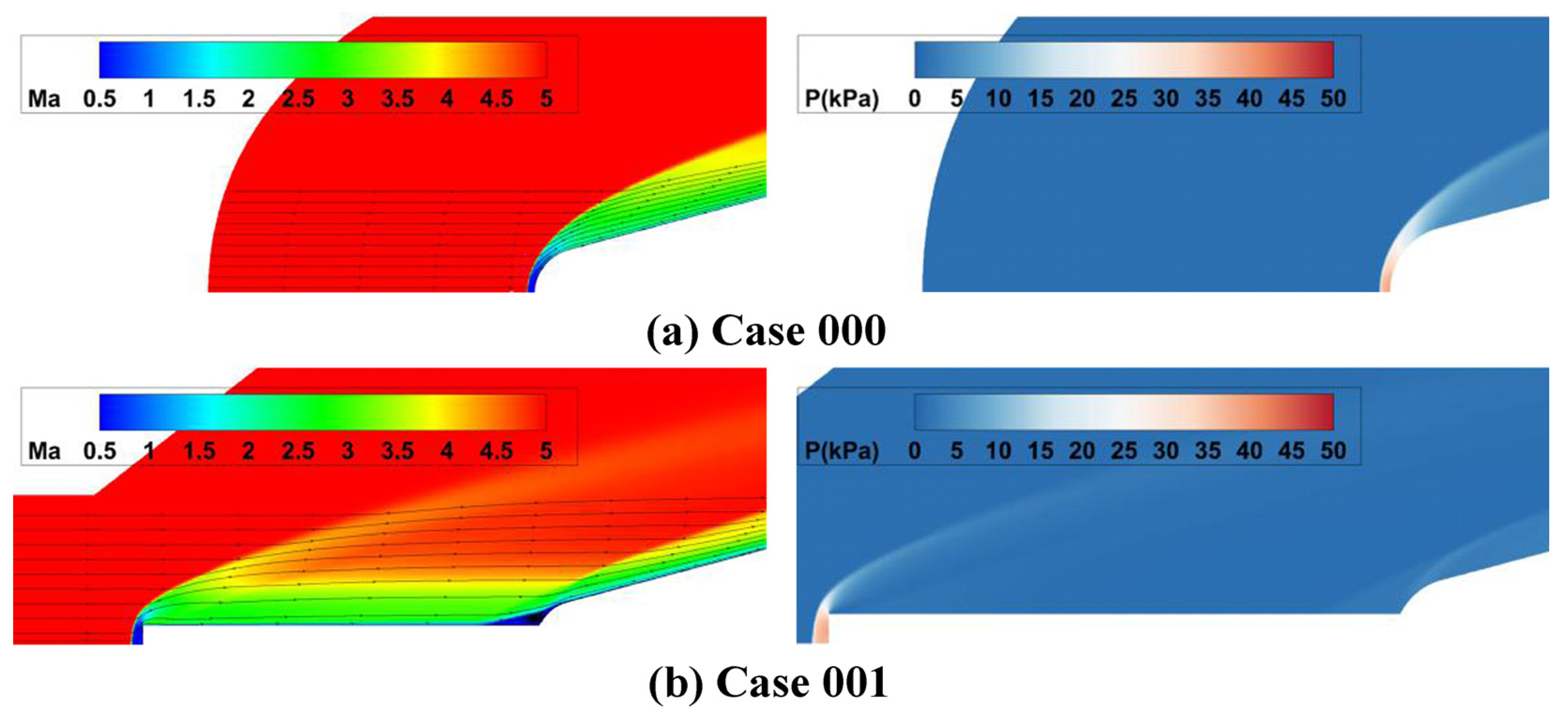
To examine the influence of jet placement on drag and heat flux reduction and thermal protection performance, the blunt cone (designated as Case 000) and the aerospike-equipped blunt cone (Case 001) are used as baseline configurations. The corresponding flow fields without jet interaction are acquired under identical high-speed freestream conditions. Numerical simulation results depicting Mach number and pressure contours for these reference cases are presented in
Figure 8.
As shown in
Figure 8, computational results distinctly capture complex flow structures such as the bow shock, shear layer, reattachment shock and recirculation zone. Compression of the high-speed free stream by the blunt cone produces a pronounced bow shock ahead of the nose, resulting in substantial wave drag and affecting the aerodynamics of the high-speed vehicle. Moreover, high-temperature gas within the shock layer transfers extensive thermal energy to the cooler surface of the blunt cone, inducing severe heat flux that introduces considerable operational hazards. Following the installation of an aerospike ahead of the blunt cone, a detached bow shock emerges in the free stream at the tip of the aerospike. Maximum shock intensity occurs near the rod’s stagnation region, while the remaining shock structure predominantly exhibits oblique shock characteristics that minimally perturb the undisturbed free stream flow. Flow separation emerges behind the aerospike, leading to the development of a recirculation region downstream of the separation location. Within this zone, the shear layer interacts with both the aerospike surface and the blunt cone head. The presence of this recirculation zone contributes to the formation of a separation shock wave. As the flow continues downstream, the shear layer impinges upon the surface of the blunt cone, generating a reattachment shock wave. The position where this reattachment shock forms lies in proximity to the shoulder region of the blunt cone. Owing to the substantial angle of the reattachment shock, it is anticipated that the temperature and pressure of the airflow will increase sharply after passing through the shock. This escalation presents considerable challenges for thermal management in the shoulder area of the blunt cone. Furthermore, the upstream separation shock interacts with the reattachment shock in the vicinity of the reattachment point. Analysis based on streamline patterns reveals that the high-temperature gas compressed by the reattachment shock comes into direct contact with the surface of the blunt cone. This condition is highly detrimental to effective thermal protection. Studies in the related literature have shown that the shoulder region of blunt bodies equipped with aerospike configurations may be subjected to thermal conditions more severe than those at the stagnation point, potentially leading to the formation of localized hot spots.
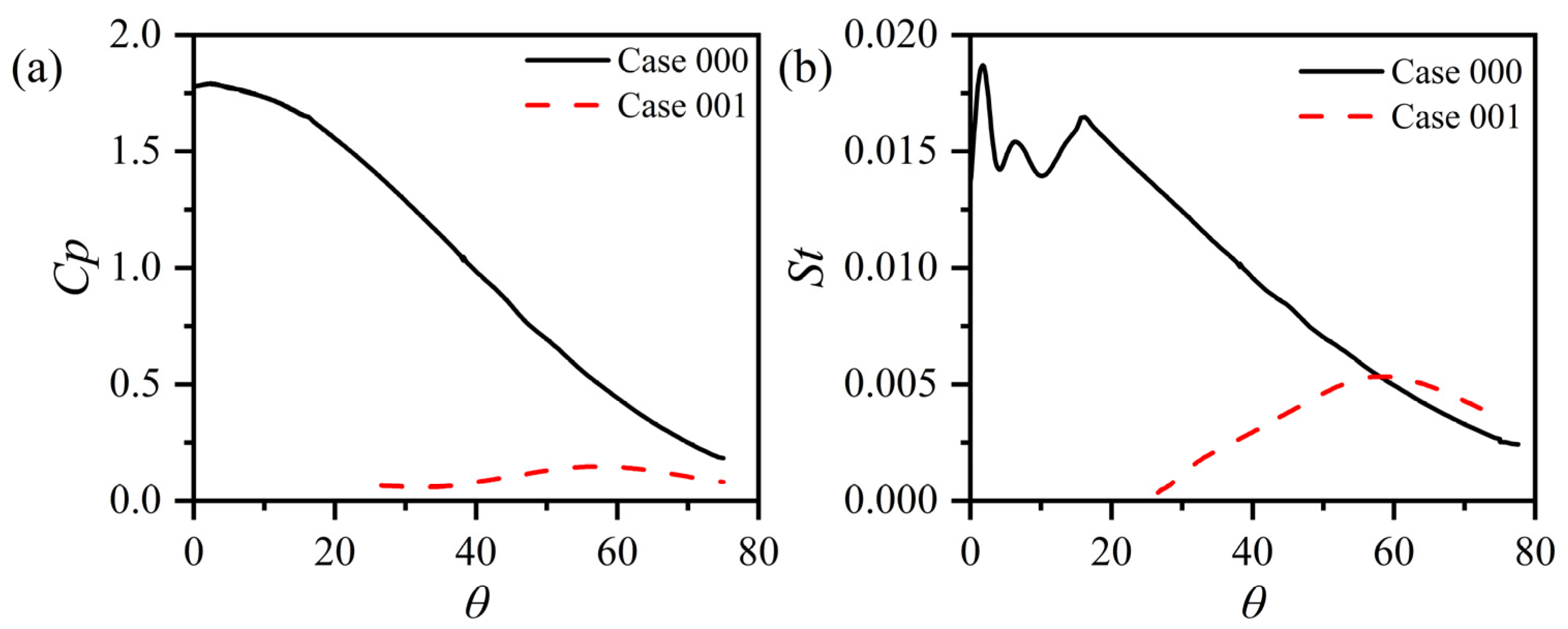
Figure 9 displays a comparative analysis of pressure coefficients and Stanton number for Cases 000 and 001. Mounting the aerospike ahead of the blunt cone results in a marked decrease in pressure coefficients across the blunt body, though an elevation is observed near its shoulder. The presence of the spike effectively mitigates aerodynamic heating on the blunt body. Owing to shock wave interactions, more intense aerodynamic heating arises within the shoulder region, leading to an increased Stanton number. These findings regarding both pressure coefficient and Stanton number further corroborate the flow field analysis illustrated in
Figure 8.
3.2. Study on the Spike–Single-Zone Jet Configurations
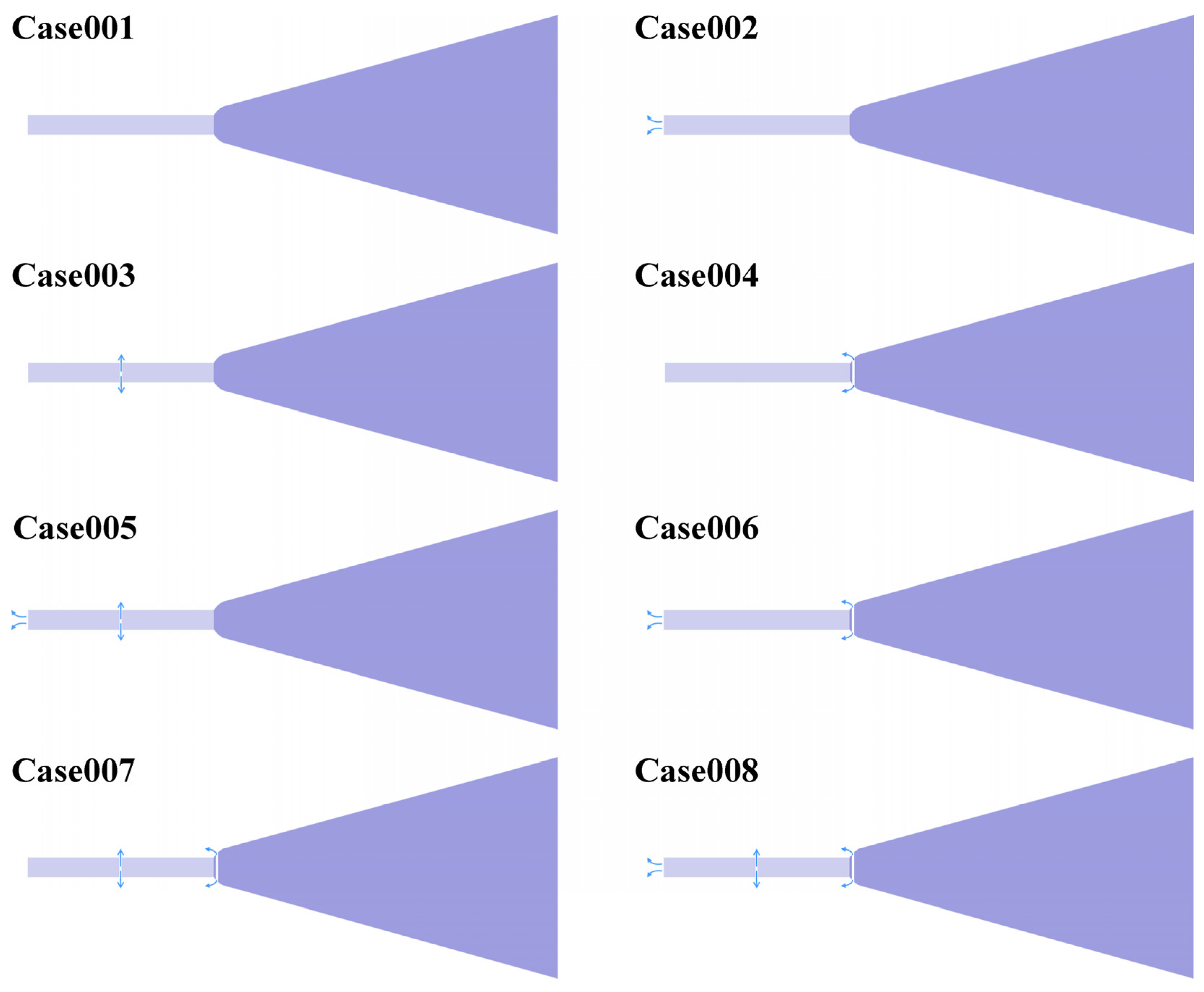
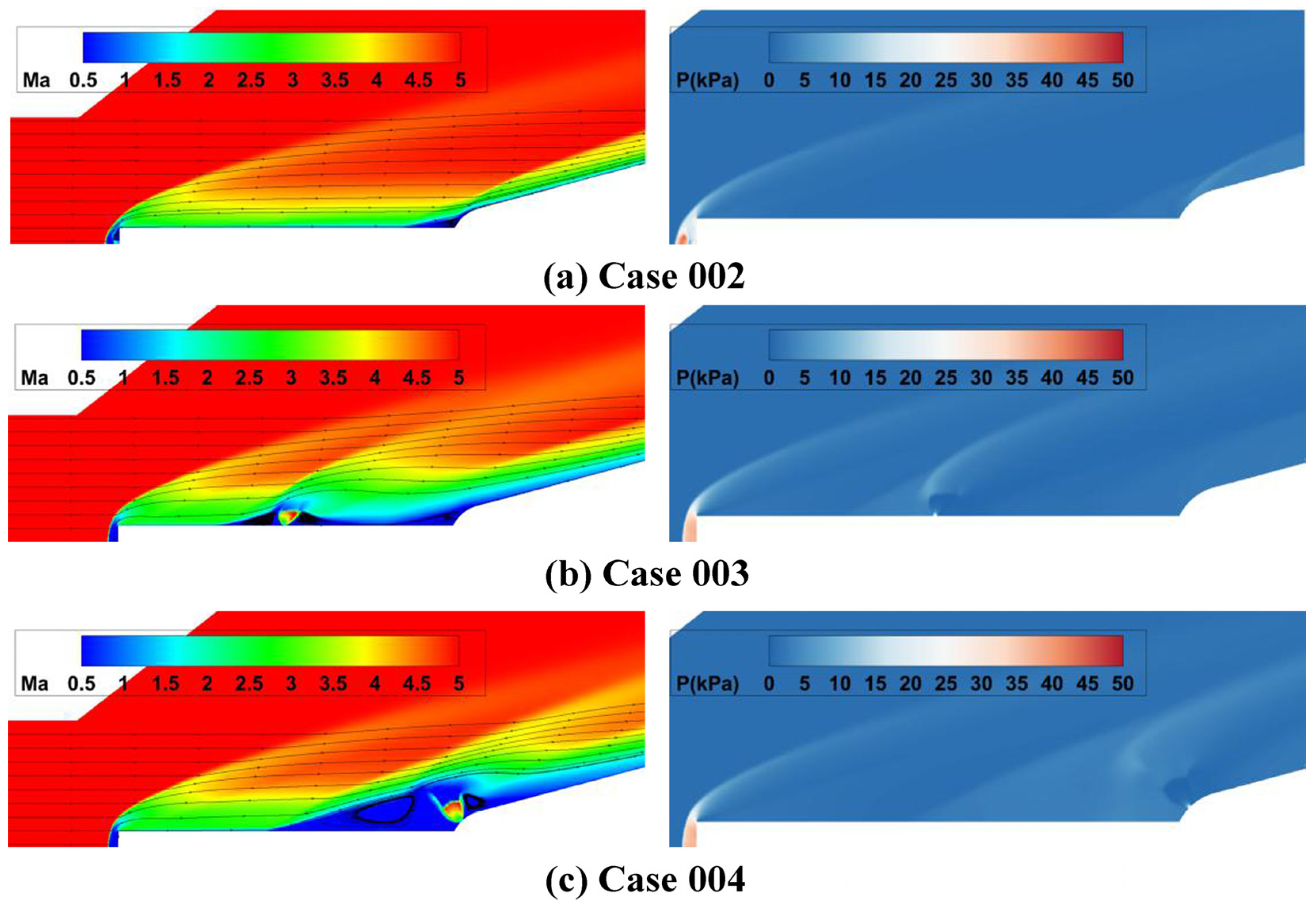
Figure 10 illustrates the flow structure and pressure distribution of the aerospike with a single-zone jet configuration. When a reverse jet is initiated from the tip of the aerospike the shock wave shifts upstream. The jet expands abruptly to supersonic speeds, then decelerates through a Mach disk to subsonic velocities. This ejected flow is deflected and reattaches along the spike’s windward side, establishing a recirculation region of low-speed fluid. It could not only reduce the impact of free flow on the aerospike, but also effectively cool the spike wall to prevent high-temperature ablation. The air attached to the windward surface is separated at the corner of the spike and flows along with the free flow. According to the analysis of the calculation results of Case 002 in
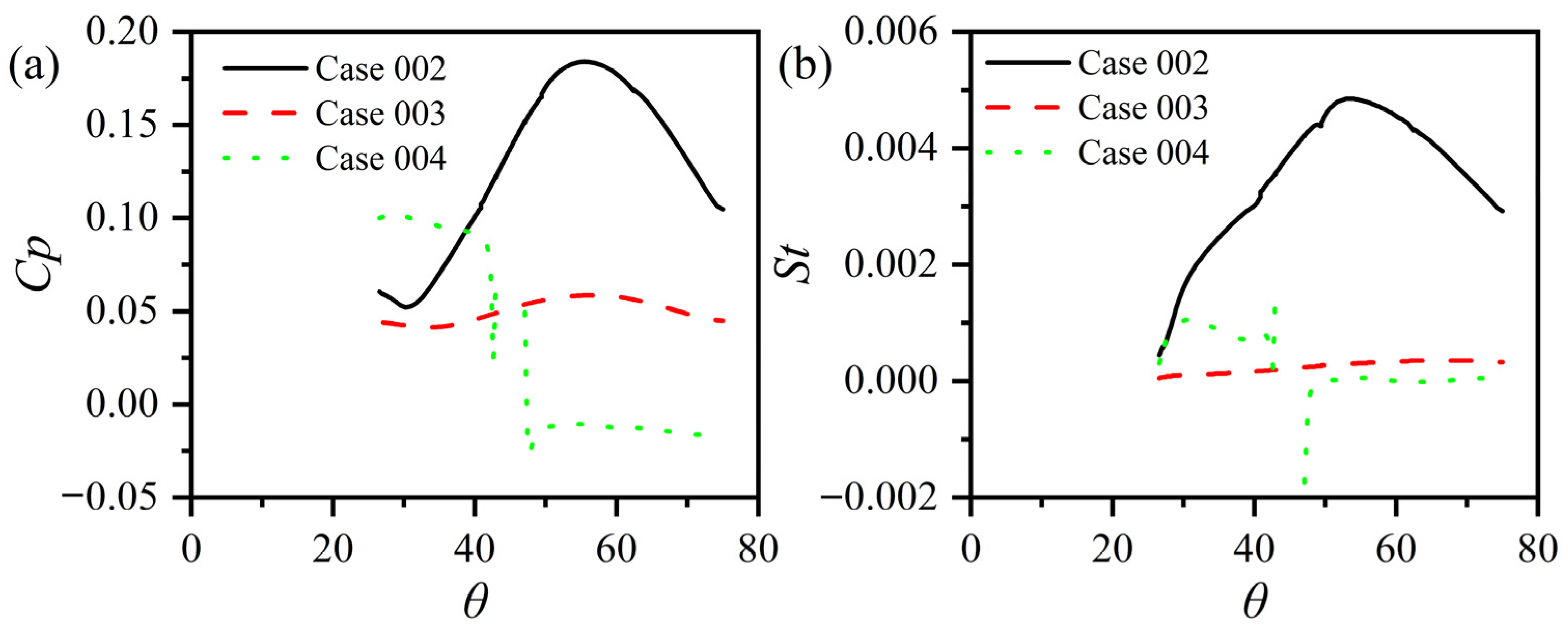
Figure 11,
Cp and Stanton number distributions on the wall of the blunt nose generally show a trend of first rising and then decreasing. When
θ is around 25~30°, the wall pressure tends to decrease, but when
θ exceeds 30°, the wall pressure of the blunt nose initially rises until attaining peak values at the reattachment point before subsequent decline. The Stanton number also has a similar trend with increasing
θ. Comparative analysis of Case 001 data in
Figure 9 reveals that enhanced reverse jet flow exerts negligible impact on the distribution trends and values of the Cp and Stanton number.
After the introduction of the lateral jet, the bow shock generated at the tip of the aerospike is further pushed away. The half angle of shock waves increases significantly, and the distance between the shock wave and the blunt body becomes larger. It is obvious from
Figure 10b that the lateral jet is injected vertically into the high-speed flow and is subjected to the free flow action. While the jet plume demonstrates downstream deflection characteristics, its fundamental under-expanded jet configuration remains identifiable. Recirculation zones are present on each side of the lateral jet nozzle and beneath the aerospike. Introducing the lateral jet leads to a marked expansion of the recirculation zone at the aerospike base, significantly contributing to thermal protection. Cooler jet gas impedes direct interaction between the free stream and the surface, thereby helping mitigate aerodynamic heating. A compression wave generated ahead of the reattachment point compresses near-wall fluid, leading to elevated pressure and thermal gradients in the vicinity of reattachment. This behavior aligns with the tendencies shown in the
Cp and Stanton number distributions in
Figure 11. The trends of the
Cp and Stanton number in Case 003 are similar to those of Case 002, both increasing first and then decreasing, but the fluctuations are less compared to the other two cases.
The bottom nozzle generates a characteristic under-expanded jet configuration, displaying an elongated morphology with extended penetration depth compared to the top and lateral jets. An upward-inclined shear layer, produced by the reattachment shock, generates an extensive recirculation region situated at the base of the aerospike and immediately downstream of the jet nozzle exit. This recirculation area exhibits markedly greater expansion compared to alternative jet arrangements. Both separation and reattachment shock structures are displaced away from the surface due to the influence of the high-speed jet effluent. As illustrated in
Figure 10c, the freestream is effectively shielded from direct contact with the blunt body wall, as the jet envelops the frontal surface of the cone and extends over a section of the aerospike. From the distributions of the
Cp and Stanton number of the blunt cone head in
Figure 11, it can be observed that for the Case 004 configuration, when
θ < 45° and close to the spike, the wall pressure increases, and when
θ > 45° and away from the spike, the wall pressure decreases. The results indicate that the jet-induced wall coating elevates pressure on the side adjacent to the aerospike, displacing the reattachment shock further from the surface, while the jet’s ejection effect reduces pressure on the opposite side. The calculated Stanton number of Case 004 is significantly lower than the results of Case 000 and Case 001.
3.3. Study on the Spike–Multi-Zone Jet Combined Configuration
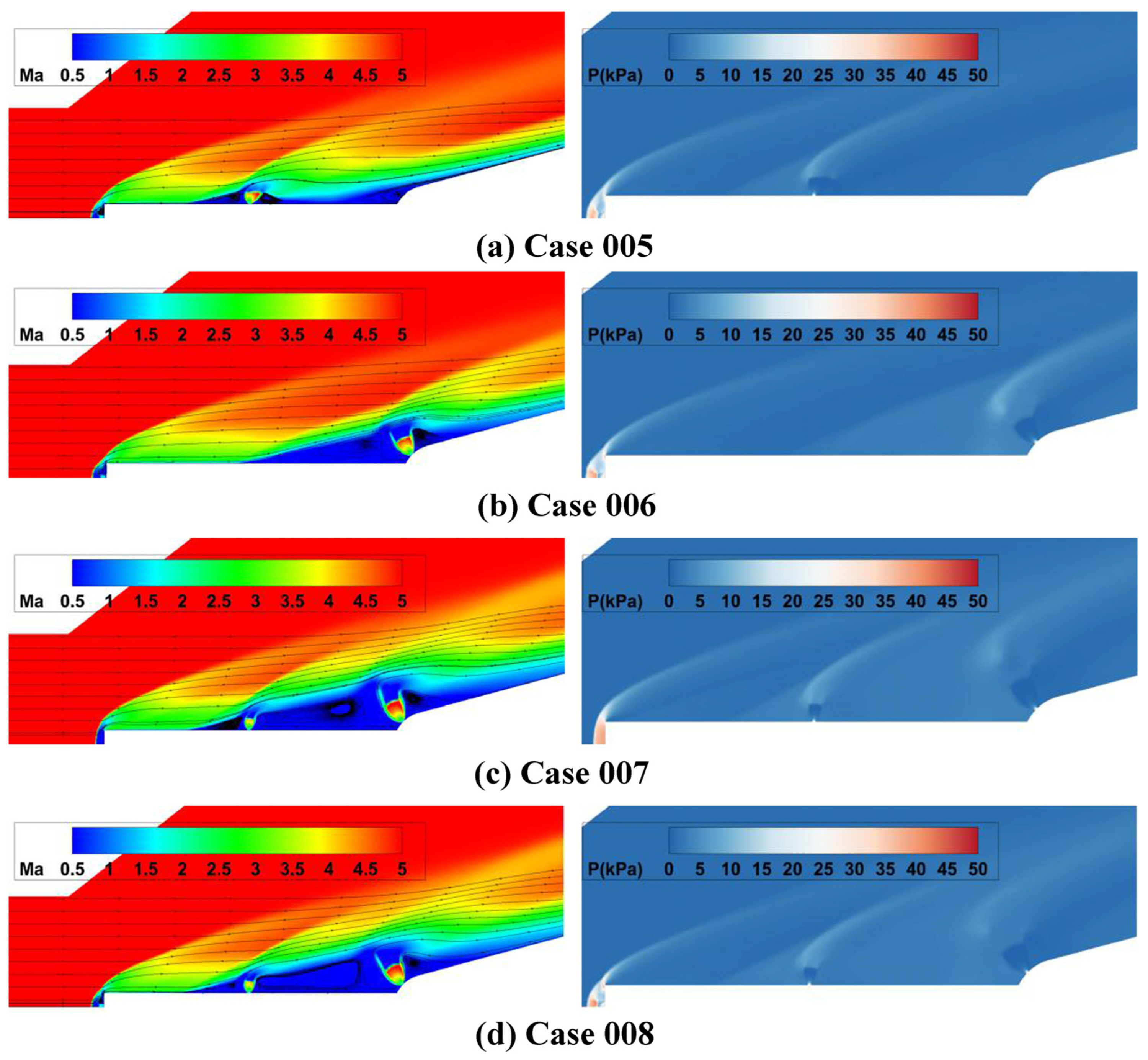
Figure 12 displays Mach number and pressure contours for the combined aerospike and multi-zone jet configuration. Relative to the single-zone jet case, substantial alterations are observed in the flow field structure of the multi-zone jet arrangement. Firstly, the front end of the aerospike is only affected by the free stream and top jet, and the lateral jet and the bottom jets do not affect the front-end flow field of the aerospike. In Case 003 and Case 005, alterations within the flow field remain relatively minor. This is attributed to the top jet generating only a limited recirculation region at the spike’s tip, subsequently merging with the freestream and progressing downstream without inducing substantial changes to the flow further aft. A similarly modest discrepancy is observed between Case 004 and Case 006. Comparative analysis of Case 003, Case 004, Case 007, and Case 008 reveals that the synergistic interaction of the lateral and bottom jets promotes the development of an expanded recirculation zone situated between the spike base and the blunt cone. The configurations Case 007 and Case 008 displace the reattachment shock wave farther from the wall. Consequently, the Mach number of the fluid adjacent to the blunt cone surface is reduced, contributing positively to improved drag and heat flux reduction performance.
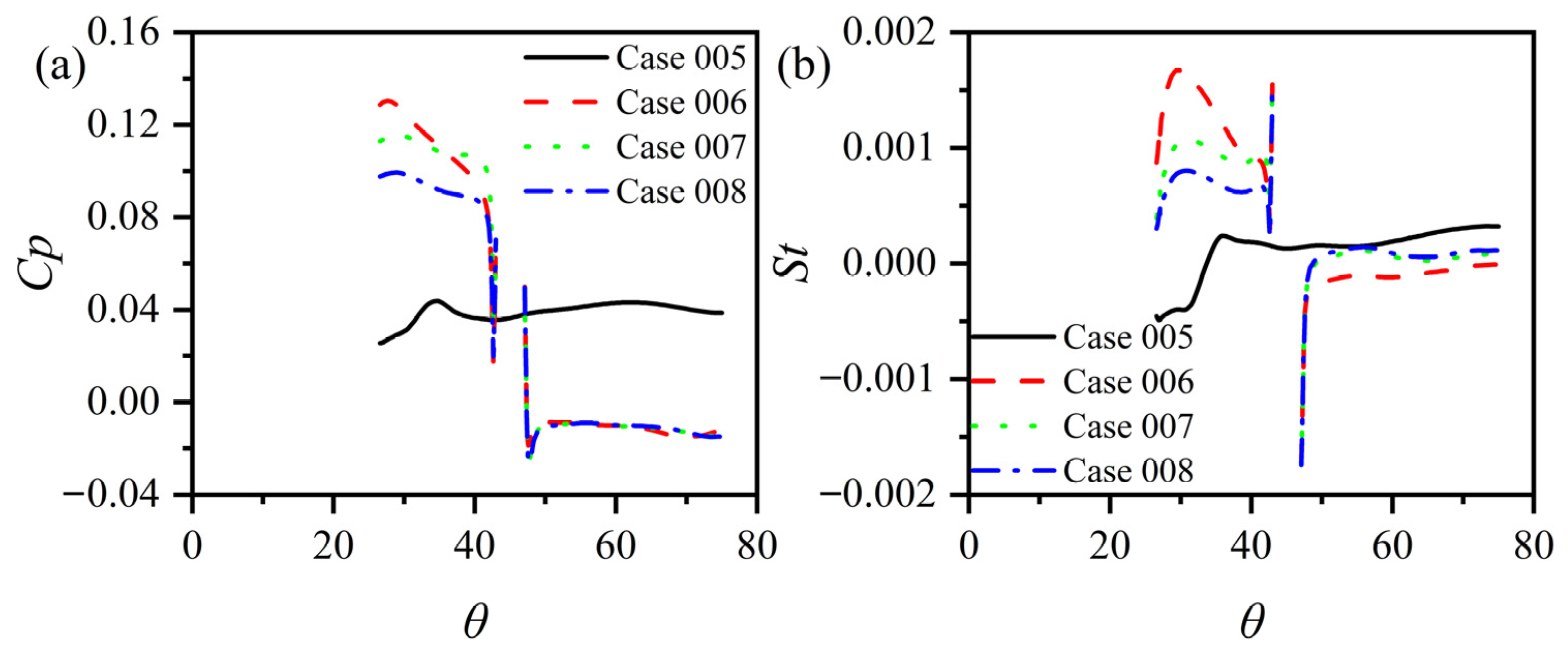
Figure 13 illustrates the distributions of
Cp and Stanton number across four distinct configurations. The outcomes reveal abrupt variations in both heat flux and pressure occurring at the jet nozzles. Owing to the influence of the jet emanating from the blunt body, at angles where
θ < 45° and in regions proximate to the aerospike, the values of
Cp and
St exceed those observed in the configuration devoid of jet flow. When θ > 45° and in the direction away from the aerospike, the pattern is opposite. This implies that the wall jet, serving as the predominant factor, imposes a more substantial effect on thermal and pressure distributions relative to the reattachment shock wave. At locations distant from the jet nozzles, the variation trend of the Stanton number in Case 008 resembles that in Case 007, yet the maximum Stanton number (
Stmax) is reduced, signifying that the design of Case 008 possesses a more effective heat reduction capability than both Case 006 and Case 007.
3.4. Analysis of the Jet Effect
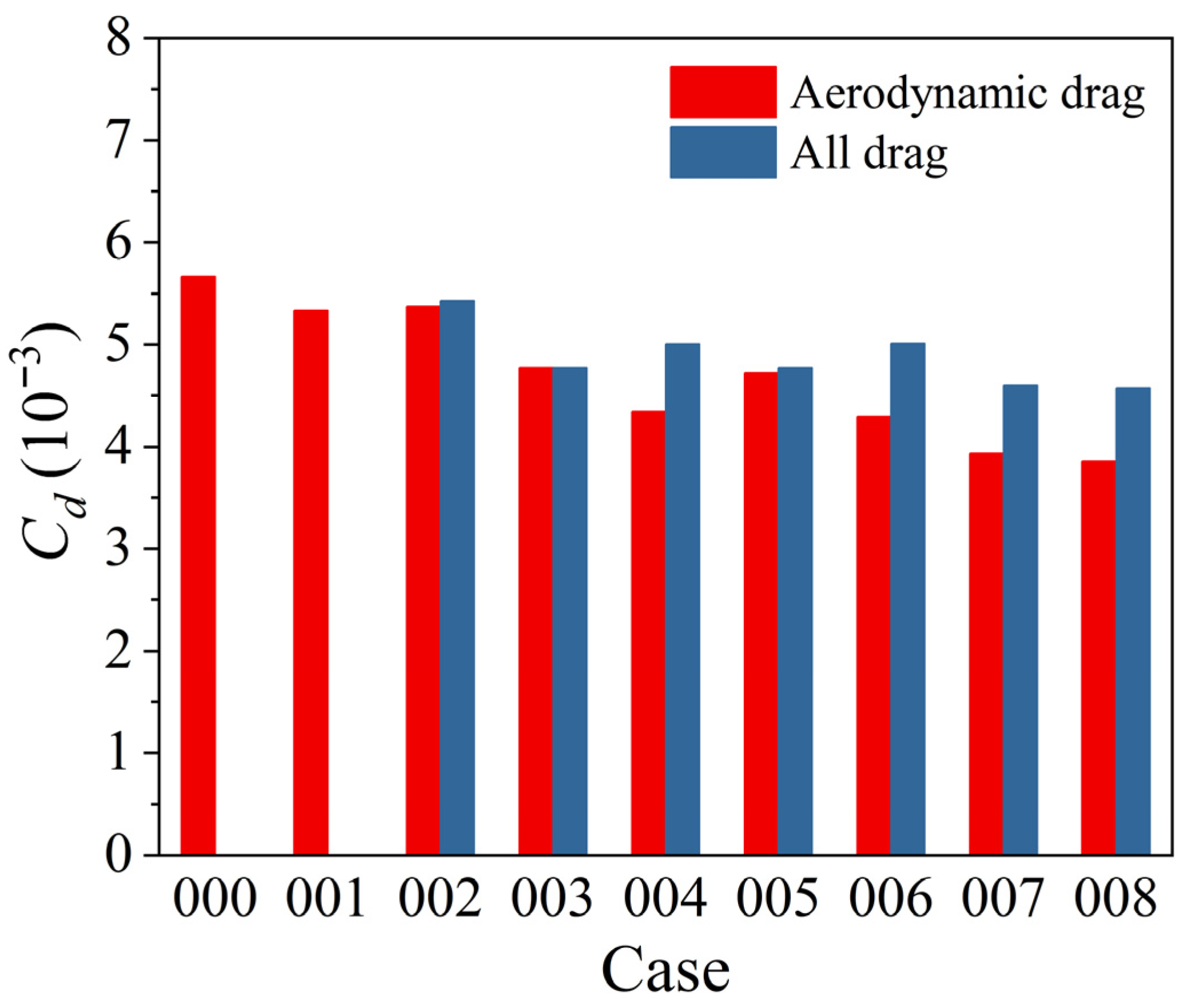
Figure 14 displays a comparative analysis of drag coefficients among various configurations. The incorporation of the aerospike and jet system yields markedly diminished drag relative to the baseline blunt cone. However, the achieved drag reduction proves less substantial than the reverse thrust produced by the top jet outflow, culminating in an aggregate drag marginally exceeding that observed in the absence of jet operation. Case 003 has no reverse force along the free flow direction; thus, the values of aerodynamic drag and total drag are the same. The results of Case 004 indicate that the bottom jet leads to a remarkable decrease in aerodynamic drag. Even considering the influence of the jet reverse force leading to a slightly increased actual drag compared with the aerodynamic drag, it is still smaller than the drag coefficients of Case 000 and Case 001. When considering solely the computation of aerodynamic drag, Case 008 exhibits the most effective drag reduction performance. The results of Case 006 and Case 007 are relatively close, while those of Case 005 are the worst. However, the multi-zone jet approach is confronted with the counterforce of simultaneous jets in different regions. The lateral jet generates a counterforce oriented perpendicularly to the direction of airflow. During drag calculation, the influence of this lateral jet mode can be disregarded, whereas the counterforces produced by the other two jet configurations must be accounted for. As established in prior analysis, the top jet exerts minimal influence on the downstream flow field. Consequently, the drag coefficients of Case 007 and Case 008 show little variation. The lateral jet contributes more significantly to drag reduction compared to the bottom jet. As a result, Case 005 demonstrates a lower drag coefficient than Case 006.
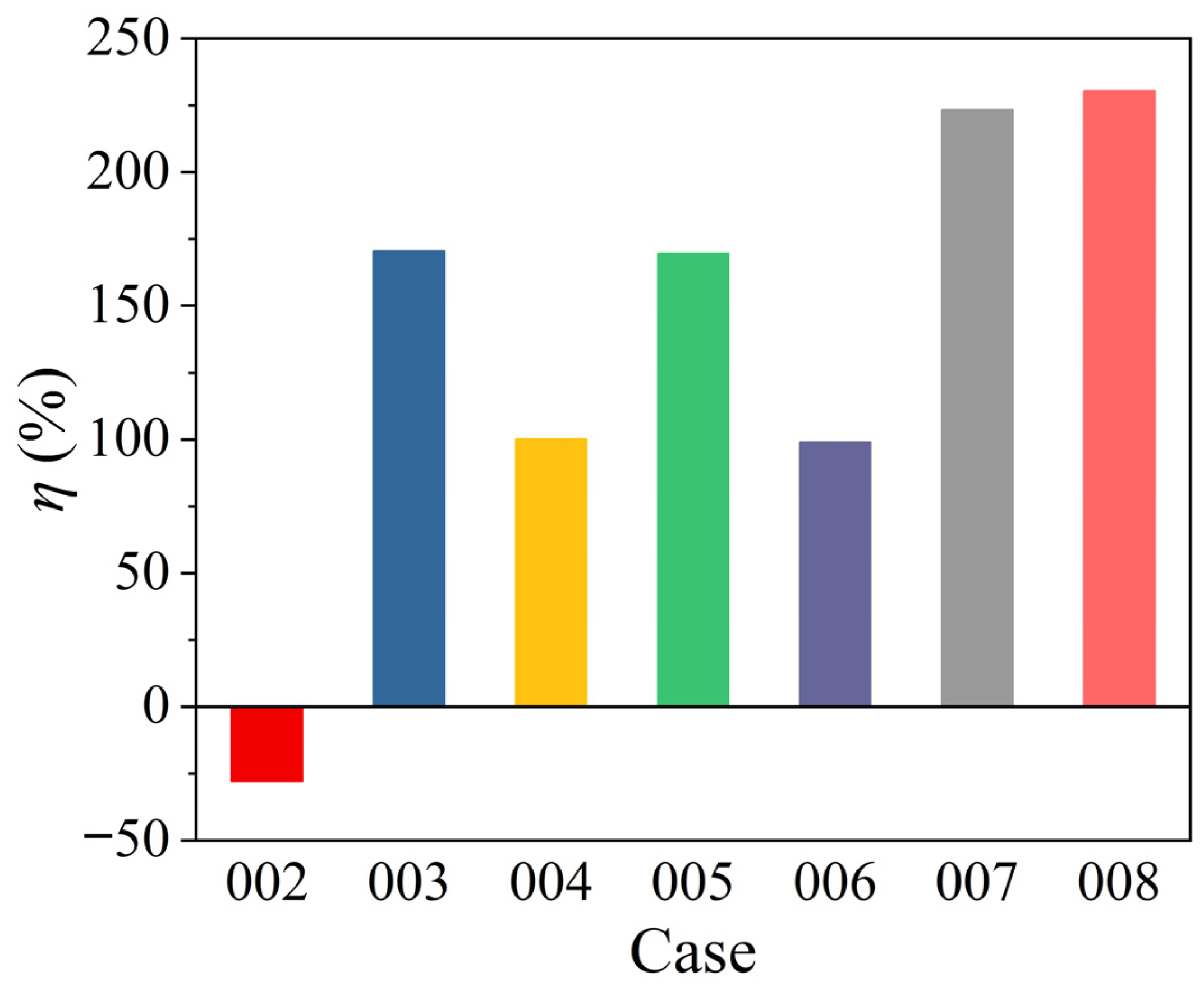
Furthermore, a quantitative assessment of jet efficiency is conducted using Equation (1), with computational outcomes illustrated in
Figure 15. The drag and heat flux reduction achieved by the spike–top jet (Case 002) is less pronounced compared to the aerospike-only configuration. While both the jet applied along the spike and the blunt cone contribute to a reduction in the drag coefficient, the lateral jet configuration (Case 003) demonstrates superior performance to the bottom jet (Case 004), improving jet efficiency by 70%. The drag reduction efficiencies of all four multi-zone jet combined configurations (Case 005 through 008) are higher than that of the configuration without the spike. Among them, the configuration with the highest drag reduction efficiency is Case 008, reaching up to 230%.
Based on the preceding numerical simulation, Case 008 unquestionably exhibits the most effective drag and heat flux reduction and highest jet efficiency. However, due to the constrained payload capacity of the high-speed vehicle, carrying a substantial mass of working fluid to enable drag and heat flux reduction and thermal management would contradict the fundamental objective of optimized system design. Therefore, the paper simultaneously evaluates the effects of the working medium’s mass flow rate, the St
max, drag reduction efficiency, and the equivalent specific impulse. Corresponding data for various configurations are provided in
Table 2. The top jet nozzle of the aerospike (Case 002) has the largest
I, while the mass flow rate is the smallest. Cases 005–008 have multi-zone jets; thus, depending on the positions of the nozzles, the mass flow rates need to be calculated by superposition. The mass flow rate of Case 008 is undoubtedly the largest. It could be found from
Figure 11 and
Figure 13 that the top jet configuration (Case 002) cannot reduce the
Stmax.
Table 2 indicates that both adding the spike and the spike–jet configurations could diminish the heat flux across the surface. Among these, the lateral jet demonstrates the most pronounced effect, with Case 003 exhibiting the lowest
Stmax. When considering both mass flow rate and drag coefficient, the Case 003 configuration proves optimal for drag and heat flux reduction within the scope of this study.