1. Introduction
Many large-scale systems such as wind turbines [
1,
2], rotorcraft [
3], aircraft [
4,
5], and ship airwakes [
6,
7] are difficult to study in the laboratory due to their large physical scale. As a result, the turbulent structures that exist in the boundary layers and wakes are not well characterized because simulations and experiments that can achieve dynamic similarity (or matching of all relevant nondimensional parameters) are relatively rare due to their cost. The critical nondimensional parameters for aerodynamic similarity are the Reynolds number,
, the Mach number,
, and a nondimensional frequency if flow periodicity is anticipated, usually written as a Strouhal number,
, with each defined as
where the fluid properties are given as the density,
, the viscosity,
, and the sonic velocity,
a. A relevant lengthscale,
L, velocity scale,
U, and frequency,
f, are chosen based on the application. (Here, we only consider matching the aerodynamics at large scale, but other parameters may be relevant if, for example, fluid-structure interactions are anticipated to play an important role). In conjunction with these parameters, the boundary and inflow conditions must also be considered in order to achieve dynamic similarity [
1,
8]. From an experimental perspective, another practical consideration is sizing the model based on the restrictions of the facility test section [
9,
10]. In this case, a Reynolds number can be defined that gives an estimate of the largest useful
achievable on a model in the facility. Here, we use the definition of Bodenschatz et al. [
11]:
where
A is the cross-sectional area of the wind tunnel test section and the factor of
represents the frontal area of a model that is 10% of the tunnel cross-sectional area, which is a general rule of thumb for model blockage sizing. To demonstrate why
matching is a challenge, consider a conventional wind tunnel using atmospheric air available at many universities. Here, the test section is on the order of 1 m
2, and subsonic flow speeds of approximately 100 m/s would then give a maximum
. In this regime, the boundary layer on a lifting airfoil surface is more sensitive to small changes in the Reynolds number, with an approximate threshold of
or higher being required to avoid these scale effects [
2,
5]. Considering that many engineering systems readily achieve Reynolds numbers in the several million to tens of millions highlights the testing gap that exists [
2].
One approach to achieving large Reynolds numbers on small models is to use a different working fluid with a larger kinematic viscosity,
. In a water tunnel, the density is much greater than air, but so too is the viscosity, such that
m
2/s at
. In atmospheric air,
m
2/s, meaning
in water is limited to about 15 times that of an atmospheric air facility at the same velocity [
12]. Water facilities are also typically much lower speed, usually
m/s, primarily because the power required for the facility is proportional to the working fluid density. It is therefore advantageous to use a fluid that has a larger density than air but without a significant change in viscosity, so that a large
can be achieved with lower power requirements compared to liquids. This is the role of a heavy gas, i.e., a gas with a higher density than atmospheric air, which can be achieved by replacing air with a denser gas and/or by pressurizing the gas. Pressurizing works well because
increases proportionally to static pressure and in most gases, viscosity is only a weak function of pressure [
13]. Additionally, a very useful aspect of
pressurized heavy gas testing is that the Reynolds number can be infinitely adjusted independent of other nondimensional parameters
and
in (
1). For example, static pressure can be changed for a single model to isolate Reynolds number effects, with the geometric blockage and wind speed being fixed. This test capability, unique to pressurized heavy gas facilities, makes them very versatile and an ideal tool for examining Reynolds number effects. Heavy gas testing does have drawbacks, namely construction complexity and limited access for optics and personnel, as well as pumping and draining times, which slow down testing. However, these trade-offs are generally counterbalanced by the unique capabilities of heavy gas testing as described in the following.
Heavy gas wind tunnel facilities generally fall into one of two categories, the first being large-scale wind tunnels geared towards commercial work, and the second being smaller-scale University facilities focused on fundamental research. The large cost disparity between the two types of facilities aside, there are only a few operating heavy-gas type facilities of any type currently in the world. One example of a larger tunnel is the NASA Langley Transonic Dynamics Tunnel, which can operate using atmospheric air or a heavy gas refrigerant (R134a) at static pressures up to 1 atmosphere, where
. This facility has a large test section of
m
2 and uses a 22 MW fan drive system to achieve velocities of 411 m/s [
14,
15], which gives an
. Another large commercial facility, the ONERA F1 tunnel, uses compressed air as the working fluid at static pressures up to 4 bar, which results in a kinematic viscosity of
at speeds up to 80 m/s. This occurs in a 3.5 m × 4.5 m test section, giving
[
16]. The F1 tunnel requires 9.5 MW to operate at maximum Reynolds number conditions. Due to the large power requirements and significant operating expense, we classify these two facilities as commercial scale.
Smaller university facilities can still achieve large Reynolds numbers by utilizing higher static pressures, lowering the kinematic viscosity of the working fluid. Here, the focus is on facilities that enable the feasible testing of entire model geometries in the working section. Examples include the Variable Density Turbulence Tunnel Facility (VDTT) at the Max Planck Institute, which utilizes sulfur hexafluoride, SF
6, and operates with a kinematic viscosity as low as
when pressurized to the facility’s maximum pressure of 15 bar [
11]. This tunnel has a test section with tapered corners that results in an area of
m
2 and a top speed of 5 m/s at full pressure, giving an
. The Princeton High Reynolds Number Test Facility (HRTF) is a very-high-pressure (207 bar) wind tunnel that achieves an
with a smaller test Section (46 cm in diameter) at speeds of up to 16 m/s [
17]. Another similar facility is the HDG at the German Aerospace Center (DLR), which uses pressurized air up to 100 bar at speeds of 35 m/s, giving an
[
18,
19].
The smaller but higher-pressure facility is an attractive option for aerodynamics research because it can achieve Reynolds numbers on the same order of magnitude as much larger tunnels, but at reduced fabrication and operation costs. However, there is a significant gap in access to these facilities, as only a few such tunnels currently exist. This motivated the development of a new facility at the Pennsylvania State University known as the Compressed Air Wind Tunnel (CAWT), aimed at studying high-Reynolds-number aerospace applications. The tunnel can be pressurized up to 35 bar, giving a and enabling a wide range of test conditions for the investigation of scaling effects. Speeds of 15 m/s are possible in the 1.04 m diameter test section, resulting in a wind-tunnel Reynolds number of . Key to this new facility is the relatively large test section diameter, which enables the practical fabrication and instrumentation of larger models. Also, this facility was designed as a conventional, single-return wind tunnel with the goal of uniform, low-turbulence levels in the test section. In the following document, the configuration, capabilities, and basic flow characteristics of this new facility are described.
1.1. Facility Description
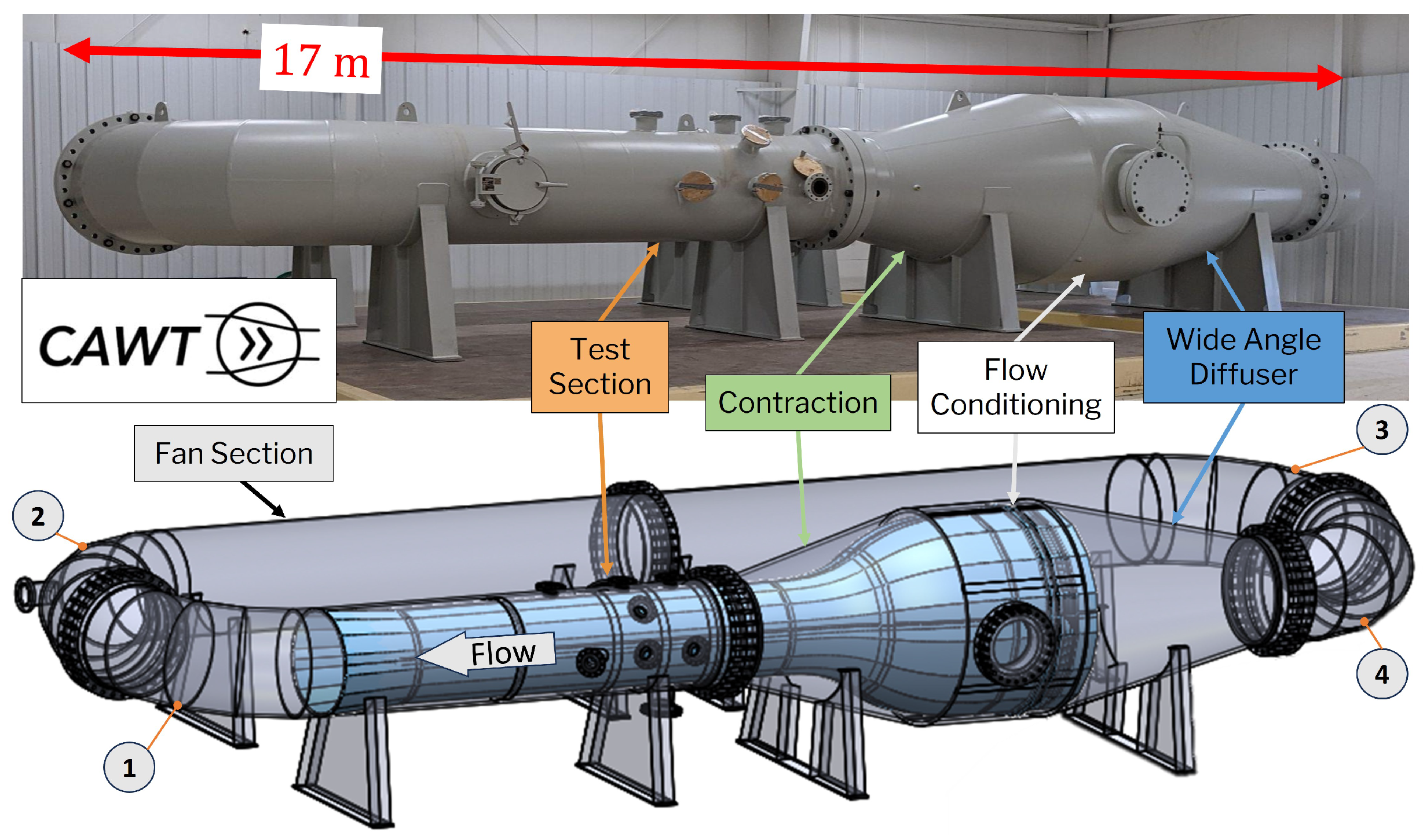
The Compressed Air Wind Tunnel (CAWT) is a single-return, closed-circuit design capable of 35 bar (500 psig) of internal pressure with test section velocities of 15 m/s using the maximum test section diameter of 1.04 m (41 inch). The backbone of the facility is a large, toroidal pressure vessel composed of five individual sections connected by standard ASME 48 inch flanges and high-strength bolts. When assembled, the vessel resides in a 17 m by 7 m (56 ft by 23 ft) footprint and weighs a total of 500 kN (50 tons). The vessel sections were constructed and certified to ASME Boiler and Pressure Vessel Code, Division I, by the Halvorsen Company of Cleveland, Ohio, United States. A picture of the CAWT pressure vessel shell is shown in
Figure 1. An overview of facility capabilities and operating range is given in
Table 1.
The flow circuit is broken up into several elements that follow a conventional single-return wind tunnel facility design [
9]. This configuration has been found to generally be the most efficient at reducing the turbulent fluctuations in the test section compared to multiple-return facilities. One major difference of this facility compared to a conventional wind tunnel is that most of the diffusion occurs at just a single location in the flow circuit. In the CAWT, this section is known as the rapid expansion (or wide-angle diffuser) which immediately precedes the flow conditioning section. Wind tunnels that continuously diffuse the flow around the circuit are considerably more efficient; however, this design has several drawbacks for a compressed-air wind tunnel. The first is cost, which is proportional to the vessel weight. The weight of a pressure vessel scales as
, where
L is the tunnel length,
r the radius, and
t the wall thickness. Typically, flow diffusion occurs over large distances because the walls must maintain an approximately
diffusion angle or less, otherwise the flow will separate and stall the diffuser [
9,
10,
20]. Large diameters are therefore very expensive to construct, since considerable length is required for the flow circuit.
To shorten the required tunnel length, a wide-angle diffuser can be used to force the flow to rapidly expand. Screens or porous plates add additional flow resistance in order to keep the wall boundary layer attached at diffusion angles far beyond what can be achieved in typical shallow angle diffusers [
20,
21]. These devices do have drawbacks; namely, they impose large additional losses in the flow circuit, which must be continually overcome by the fan drive system. In the CAWT, a wide-angle diffuser was included to achieve a smaller facility footprint while also limiting the number of large diameter sections that were required, reducing overall cost as compared to diffusing the flow continuously throughout the circuit. Additionally, it became possible to have a relatively large test section, a large contraction ratio, and provisions for several anti-turbulence screens. With this configuration, the tunnel maintains a contraction ratio of 4.5:1, which helps to reduce the turbulence level in the test section while also minimizing losses through the flow conditioning. Finally, including one large-diameter section has enabled the flexibility to test larger models outside of the conventional test section when background flow is not required, such as vertical lift rotors in hover. In the following, the flow circuit is described in detail starting from the entrance to the wide-angle diffuser and proceeding in the streamwise direction.
The wide-angle diffuser in the CAWT is located in the conical portion of the pressure vessel, as noted in
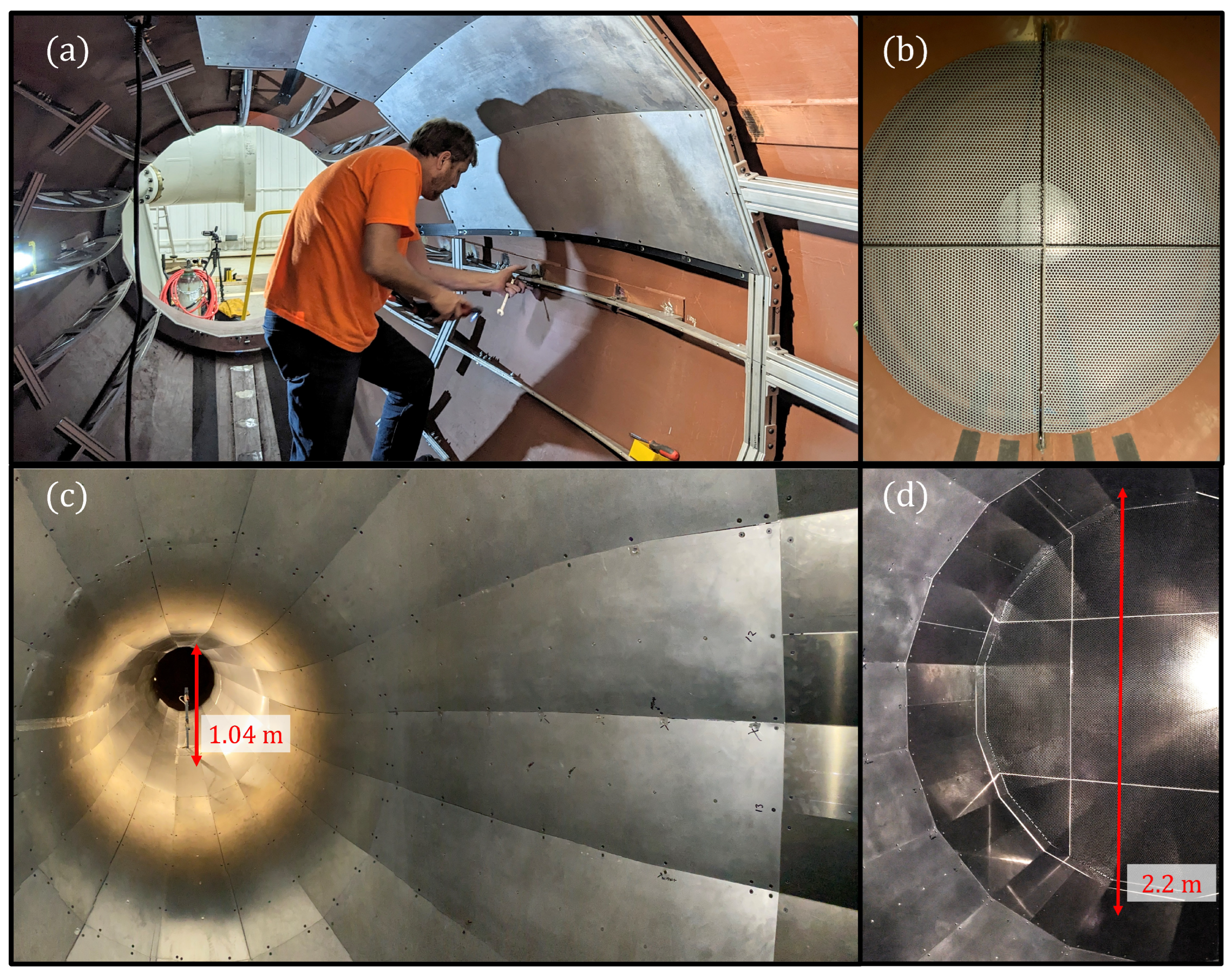
Figure 1. The flow moves through two separate porous plates, the first of which is located 12.7 cm (5 inches) from the inlet to the conical portion of the wide-angle diffuser after elbow number four. The second plate is located 1.83 m (72 inches) further downstream (approximately 2/3 of the streamwise length from the inlet of the wide-angle diffuser). The first plate has a higher solidity of 60% with 9.5 mm (0.375 inch)-diameter holes, since this is the region most likely to separate due to the sharp transition between the cylindrical and conical sections of the vessel. The second porous plate has 12.7 mm (1/2 inch)-diameter holes and a solidity of 52%. The second wide-angle diffuser plate is shown in
Figure 2c. Using the method of Tavoularis and Nedić [
22], the combined loss factor of the screens using the mean velocity in the diffuser is approximately 4.46. This value was chosen to exceed the recommendations of Mehta [
20], who surveyed a number of wide-angle diffuser designs. The design loss factor is larger than necessary, given the area ratio of the diffuser (approximately 3.6:1) and total diffusion angle of 25 degrees. However, this decision was made based on porous plates available off the shelf at the time, as well as the inclusion of a safety factor to ensure proper operation of the diffuser.
After the flow passes through the diffuser, it enters the lined portion of the wind tunnel and the flow conditioning section. The modular internal liner is installed in the flow conditioning, contraction, and test sections of the tunnel, as noted in
Figure 1. The liner serves several purposes: it provides a smooth, continuous surface for the flow path, it provides a rigid structure beneath the liner surface that is used to mechanically support models, and it enables wire and tubing routing outside of the flow. The liner itself is a 16-sided polygon so that the internal volume of the vessel could be maximized while retaining flat surfaces that are much simpler for optical measurements and model mounting. The portion of the liner in contact with the flow is made up of many 3.18 mm (1/8 inch) thick aluminum panels. These panels are held in place with flush, countersunk screws that bolt into the support structure. Removal of the panel screws enables access to different segments of the tunnel. The contraction support structure is shown in
Figure 2a, while the finished contraction is shown in
Figure 2c for comparison.
The structure beneath the panel segments takes a different form depending on the geometry of the section. In the flow conditioning and test sections, the support structure is a combination of aluminum extrusions (80/20, Inc., Columbia City, IN, USA) bolted together with machined brackets. This setup used a simpler fabrication approach because all panels in these sections are flat. For the more complex contraction section, a different design was used that consisted of machined aluminum ribs, which gives the correct wall contour shape. These ribs are held in place by a series of spacers and mounting brackets to ensure proper locating of the panels. The contraction panels themselves had to be individually cut and then rolled to the proper curvature of the wall in that section. The panels are center-mounted to the support ribs and the edges are bound with a series of flexible, 3-D printed strips that enable a tight joint between adjacent plates.
The flow conditioning section includes a 152 mm (6 inch)-deep aluminum honeycomb with 9.5 mm (3/8 inch) cell width (HoneyCommCore Inc., Mills River, NC, USA), and is shown in
Figure 2d. The flow straightener is followed immediately by one anti-turbulence screen with 0.23 mm (0.009 inch) wire diameter and a 0.5 mm (0.020 inch) opening size, giving a solidity of 52% and 34.4 meshes per 25.4 mm (supplied by Compass Wire Cloth, Inc., Vineland, NJ, USA), to promote uniform, low-turbulence flow into the test section. The tight confines of the wind tunnel pressure vessel required the development of a specialized screen tension mechanism. This system utilized additively manufactured brackets with bolts that guided metal tension ties through the screen eyelets and over the support structure. This design enabled setting the screen tension evenly across the screen membrane in successive steps inside the confines of the pressure vessel. Currently, the tunnel has provisions for adding two additional anti-turbulence screens in the future.
After passing through the anti-turbulence screens, the flow enters the settling chamber, which is 0.705 m long, before it flows through the contraction. The contraction smoothly reduces the flow area from the settling chamber (2.2 m diameter) to the test section, giving a contraction ratio of 4.5:1. The contraction shape is defined using a polynomial with an inflection point as in Brophy [
23]. The test section follows directly after the contraction, has 16 sides, and is 4.2 m long with a constant cross-sectional area. Models are typically located one diameter (1 m) from the inlet of the test section to ensure uniform model flow. After leaving the test section, the flow moves through a short diffuser, which returns the flow to the unlined portion of the wind tunnel and into corner number one and then corner number two. The flow then passes through a safety screen, which also supports the fan’s main driveshaft. The fan itself is located approximately 1.5 diameters (1.77 m) downstream of corner 2. After exiting the fan, the flow moves through a series of stators to de-swirl the flow. The flow then travels down a constant area section until it reaches the 3rd and 4th corners before re-entering the wide-angle diffuser. The corner numbering scheme is given in
Figure 1.
1.2. Supporting Equipment
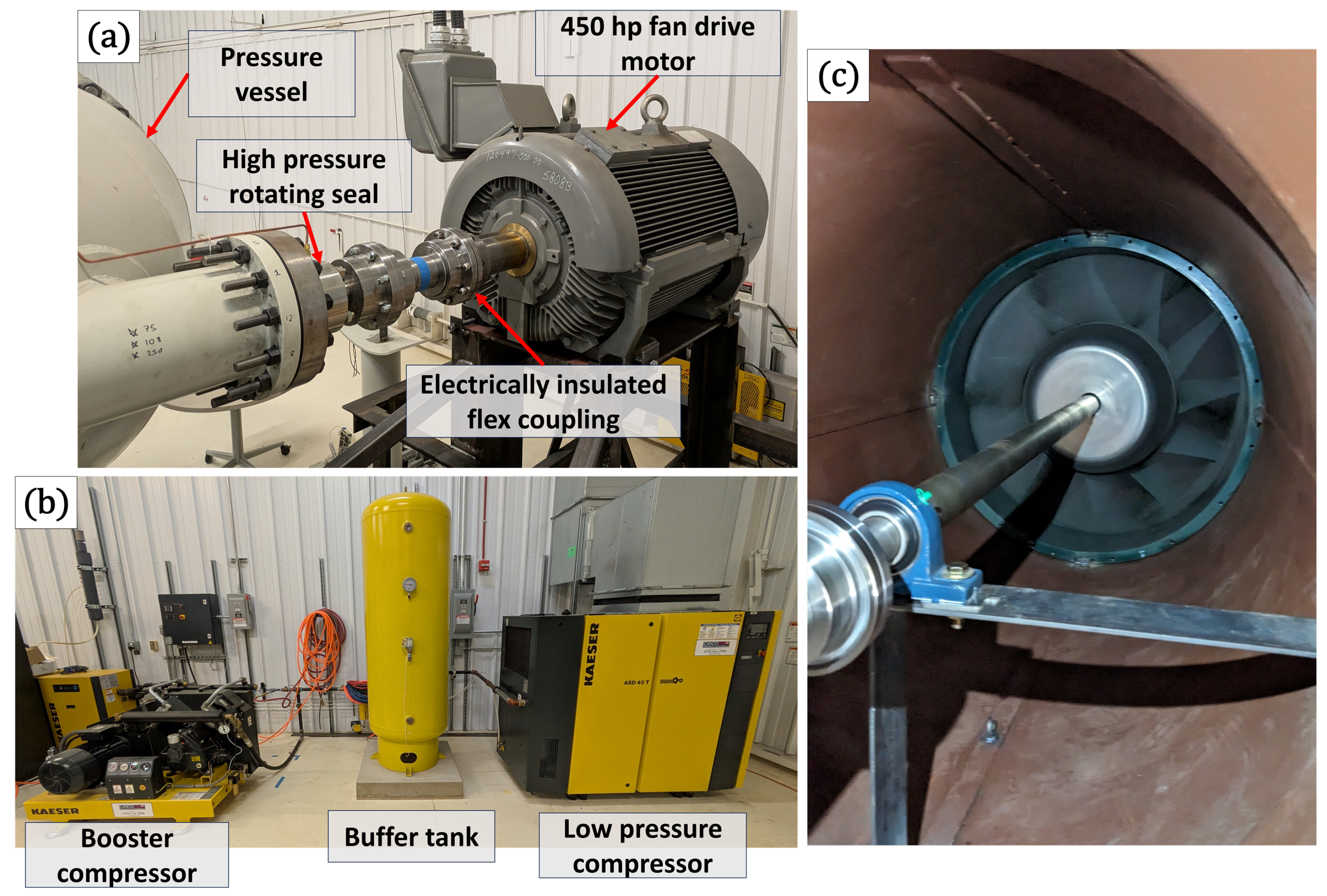
High-pressure air is supplied by a two-stage system consisting of a 30 kW (40 hp) Kaeser AS 40T rotary screw compressor and a 19 kW (25 hp) Kaeser N253-G booster compressor (both supplied by Casco USA, Washington, PA, USA), raising the final output pressure to the required 35 bar (500 psig). A refrigerated dryer and filtering system ensures that the air supply is clean and dry. A control panel regulates the filling rate and pressure in the CAWT main vessel. The compressed air working fluid inside the CAWT is motivated around the flow circuit by a six-bladed vaneaxial fan custom built by the New York Blower Company. The fan operates at rotational speeds up to 1200 rpm and can be seen during operation in
Figure 3. The fan is driven by a 336 kW (450 hp) electric motor located outside of the wind tunnel that is controlled by a variable frequency drive. Flow speed is precisely regulated by altering the fan rotation rate. Inside the test section, the CAWT is capable of producing Reynolds numbers, based on free-stream conditions, of 34 million per meter, enabling high-Reynolds-number testing.
1.3. Instrumentation
Tunnel temperature and static pressure are continuously monitored and recorded during all experiments (Omega RTD-NPT series temperature sensor and Omega PX409 series pressure transducer, respectively, both supplied by DwyerOmega, Michigan City, IN, USA) so that real gas corrections can be applied to the data. These measurements are primarily used to determine the gas density and viscosity using the methods of Zagarola [
13], and we utilize the same stated uncertainties as in that work of
for density and
for viscosity due to the real gas corrections driving the uncertainty rather than the sensor accuracy. Electrical signals are passed from the pressurized side to the atmospheric side via several electrical feed-throughs (WFS series, supplied by TC Measurement and Control, Berkeley, IL, USA). Hot-wire anemometry capabilities are provided by a TSI IFA 300 research anemometer (TSI Incorporated, Shoreview, MN, USA) and single-wire (1 velocity component) 55P11 probe (Dantec Dynamics, Tonsbakken, Skovlunde, Denmark). A simultaneous sample and hold data acquisition system capable of 250 kHz per channel (PCI-6143 from National Instruments, Austin, TX, USA) is the primary data acquisition tool for the measurements presented in this work. Data are acquired using custom Labview software and stored locally on a Windows PC in binary and delimited floating point file formats.
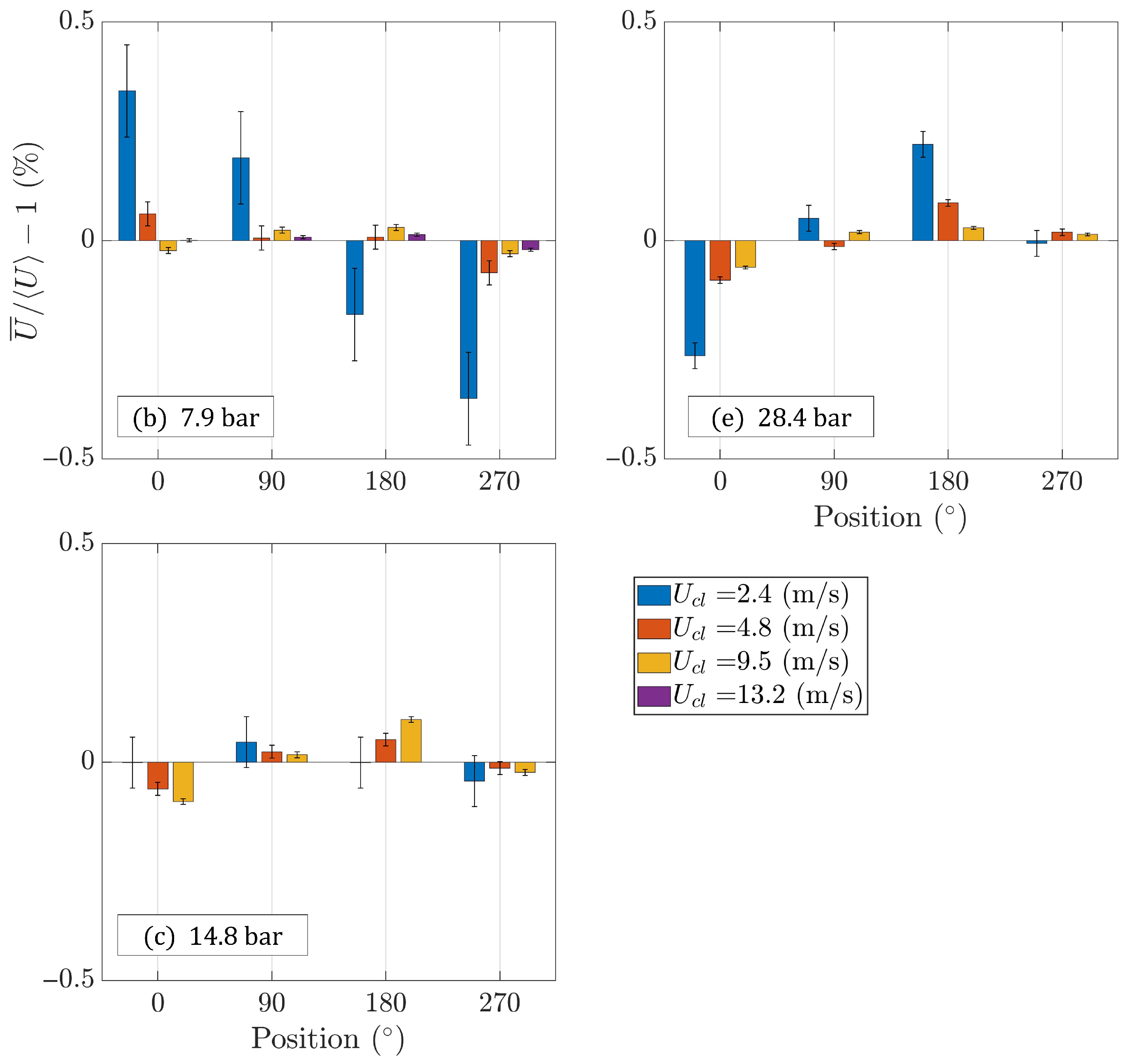
For flow uniformity assessment, the setup shown in
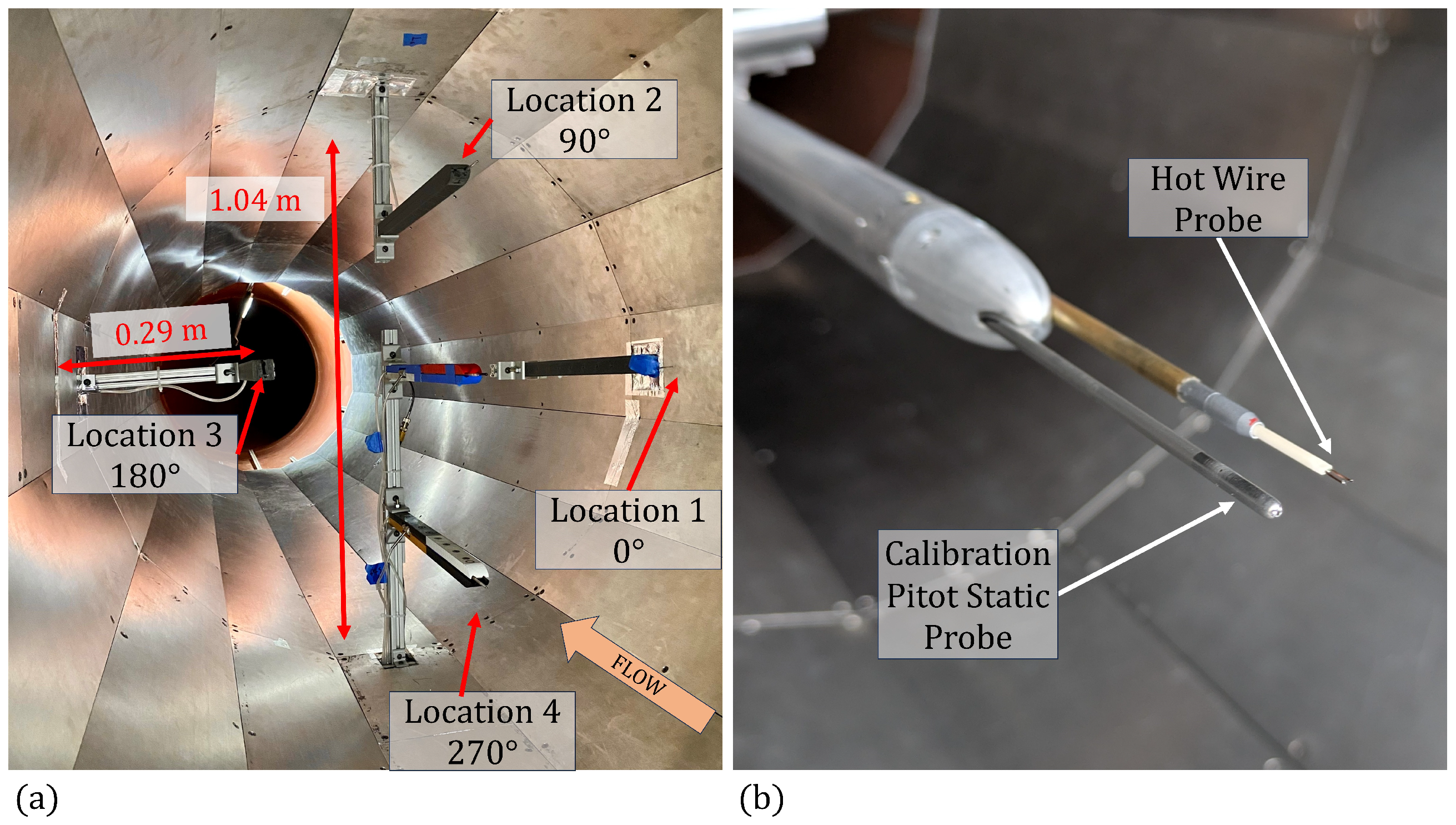
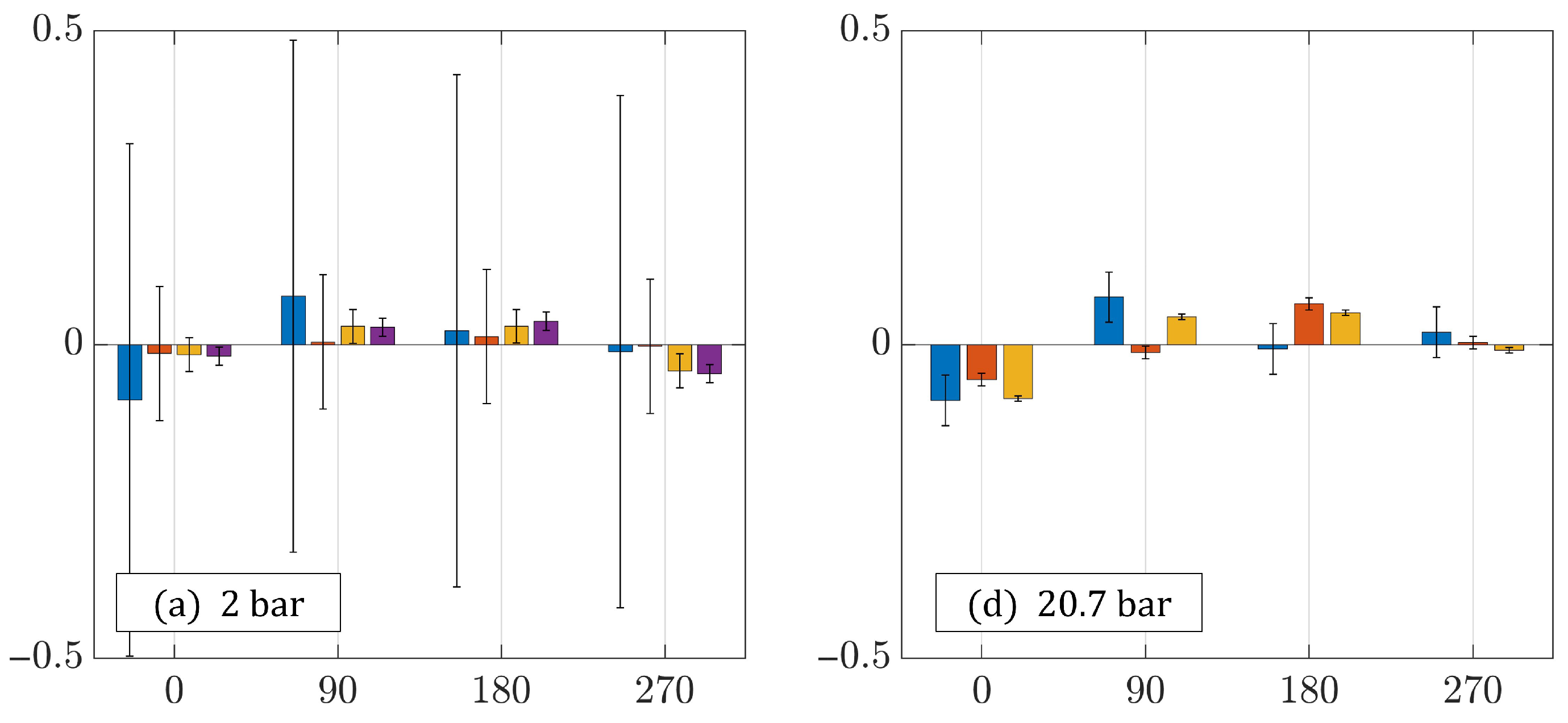
Figure 4a was utilized that included four circumferential Pitot-static probes. All Pitot-static probes were 1/8 inch in diameter (United Sensor, Inc., Amherst, NH, USA) and connected to differential pressure transducers (DP-15, Validyne Engineering, Canoga Park, CA, USA). The transducers were calibrated in situ using a pneumatic deadweight tester (PK II, Ametek Inc., Berwyn, PA, USA) to an accuracy of
of their full scale range of 3700 Pascals. The four radially located Pitot-static probes are denoted as Locations 1 through 4, with Location 1 being the probe on the right-hand side when looking downstream, as indicated in
Figure 4. Each of the four probes was spaced 0.29 m from the tunnel wall, giving a radial position from the centerline of
[
24].
A second setup shown in
Figure 4b was used to measure the streamwise fluctuating velocities at several positions along the tunnel centerline. In this setup, a hot-wire anemometer (HWA) was used with a 1.25 mm sensing length and a diameter of 5 microns (55P11 probe from Dantec Dynamics, Tonsbakken, Skovlunde, Denmark) giving a length-to-diameter ratio of 250, which is sufficient to avoid end-conduction effects [
25,
26]. The probe was driven by the same TSI IFA 300 hot-wire anemometer system, which was located outside the tunnel. The wire was calibrated in situ before and after each velocity acquisition to ensure minimal drifting of the probe due to changes in the tunnel temperature. If the tunnel temperature did change during a run, it was typically small (less than 5° degrees Celsius) and a temperature correction was applied to the calibration [
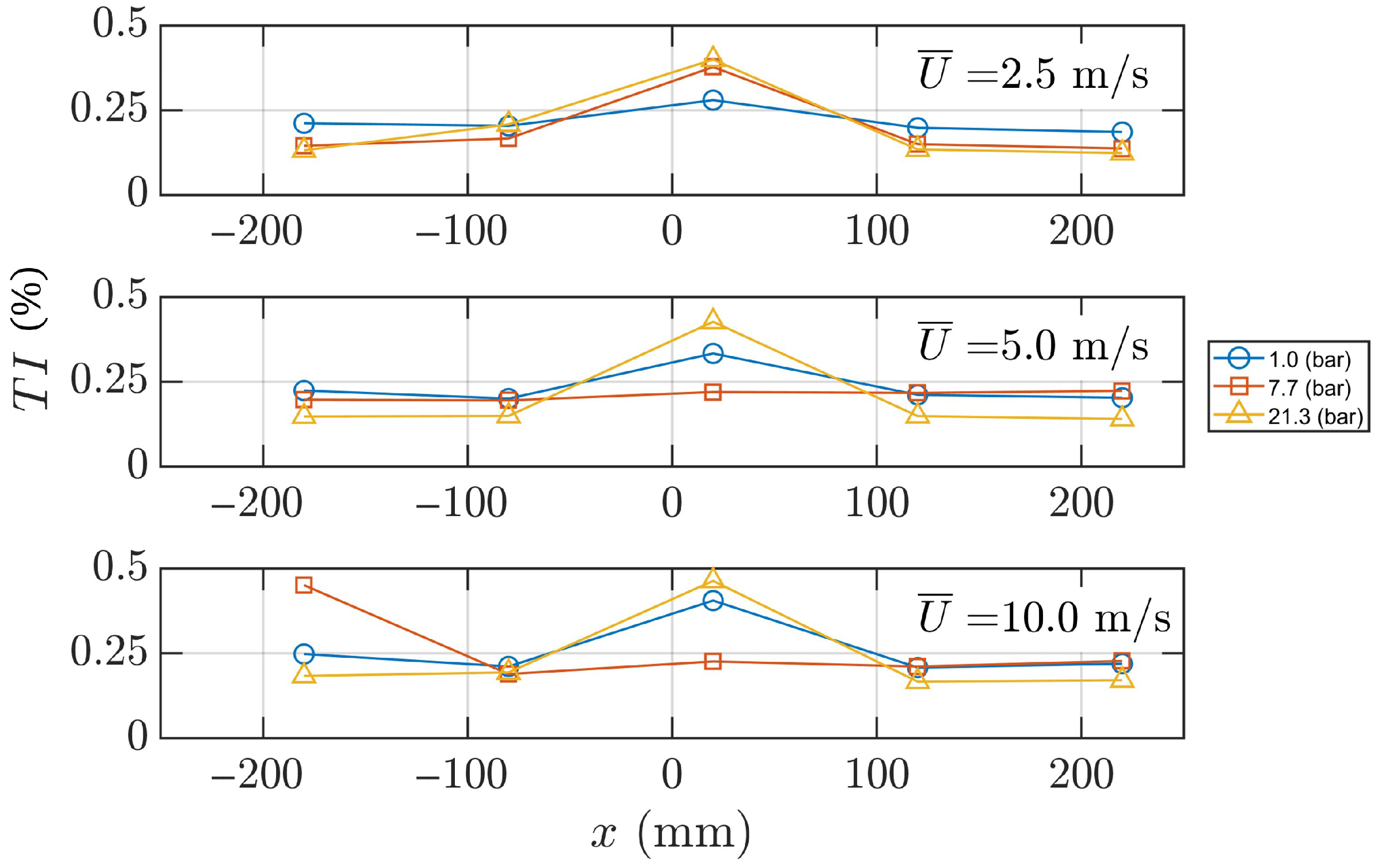
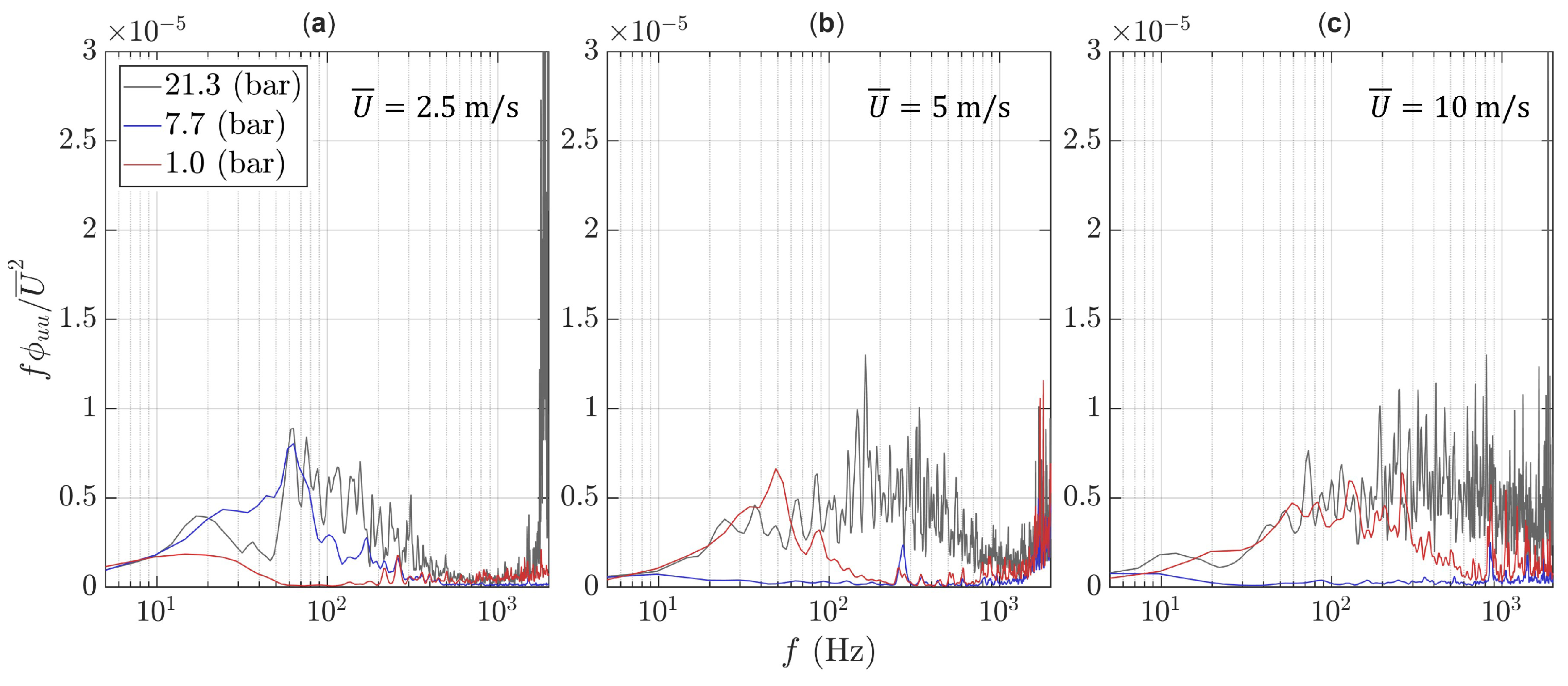
27]. All data were sampled between 10 kHz and 30 kHz for the hot-wire anemometer after the signal passed through an anti-aliasing filter inside the IFA 300, which was set to a low-pass value of 20 kHz. In post-processing, frequencies between 5 Hz and 2 kHz were used to compute the turbulence intensity. A minimum of 10,000 samples were used to compute each power spectra and turbulence intensity value.
The hot-wire probe itself was mounted to a traversing mechanism inside the wind tunnel test section. The traverse was aligned using a series of adjustable jack screws on the traverse rails so that the probes are precisely aligned with the centerline of the test section. The traverse can move a distance of 826 mm across the span of the tunnel and 1028 mm in the streamwise direction. The maximum upstream probe location was approximately 1 m downstream of the inlet to the test section (or one test section diameter). This corresponds to the most common model testing location.
1.4. Tunnel Test Capabilities
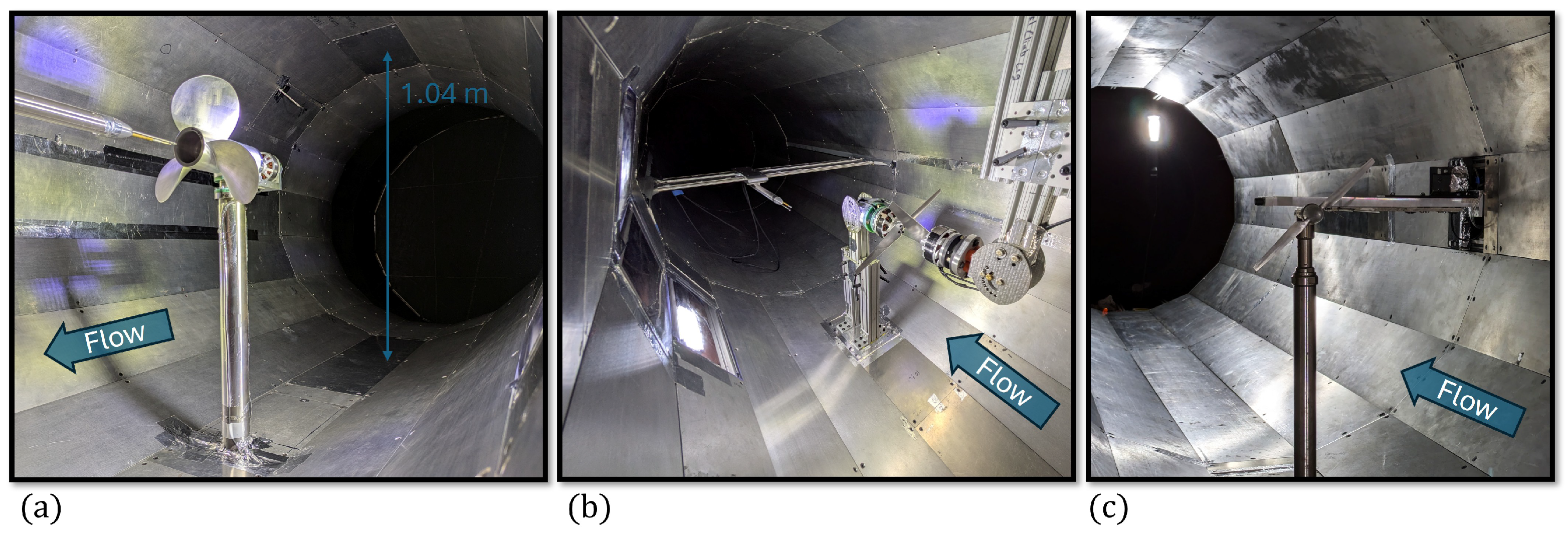
Model testing in the CAWT has primarily focused on rotating systems such as marine propellers, rotors used for vertical take-off and landing (VTOL) aircraft, and wind turbines. The setup for each of these configurations is shown in
Figure 5. Each setup was developed to operate over a wide range of tunnel conditions and therefore Reynolds numbers. Since the goal of the facility is to understand Reynolds number scaling, the range of model Reynolds numbers is of key importance. For a rotating model, Reynolds number can be defined at the
span station on the blade using an estimate of the local velocity at that station,
, as well as the local chord length to define
, where
is the chord length at the
station and
is the mean freestream velocity. This
definition attempts to capture the most dynamically relevant Reynolds number to the blade-level aerodynamics (i.e., the boundary layer). A summary of representative model geometries as well as the maximum achievable
and
are given in
Table 2, where
represents the Reynolds number based on rotor diameter and the freestream flow. The maximum Reynolds numbers are based on the maximum working pressure and a velocity of 10 m/s in the facility. Marine models typically have much larger chords but operate at lower rotational speeds than the rotors used for vertical lift. The coaxial setup has the highest operational tip Mach number,
, while the wind turbine model operates at a tip velocity,
, which is seven times the freestream velocity. Models with these dimensions exist and have been tested extensively in the facility, and more information for each setup can be found in Miller et al. [
3], Devlin and Miller [
28], Han and Miller [
29], and Medina et al. [
30].
Model values for non-rotating models such as a stationary airfoil or fuselage model typically use the tunnel Reynolds number per unit length of 34 million per meter. Given the constraints of the tunnel, an airfoil with a chord of 18 cm is reasonable and would have a maximum Reynolds number based on the chord length of million. Larger models, such as an aircraft fuselage, could use longer streamwise lengths that take advantage of the 4.2 m-long tunnel test section.