1. Introduction
Floating-base robotic systems, including aerial manipulators, underwater and amphibious vehicles, free-floating space robots, and legged systems during non-contact phases, share the fundamental property that their global motion is governed not by external constraints but by their internal inertial structure. In contrast to fixed-base platforms, whose dynamics are anchored by rigid environmental supports, floating-base systems must regulate stability, interaction forces, and disturbance responses through their own mass distribution and actuation capabilities. As a result, the placement of the center of mass (CoM) and the distribution of inertia play a central role in determining performance, together with the geometric relationship between the CoM and the actuators. Because actuator forces generate torques through moment arms defined by their position relative to the CoM, the available control authority is strongly shaped by this inertial– actuation geometry [
1,
2].
The importance of CoM placement is well established in hydrodynamics and naval architecture, where the separation between the center of buoyancy (CoB) and the CoM defines passive roll–pitch stability [
3,
4]. Lowering the CoM increases the hydrostatic righting moment, a principle routinely exploited to improve the stability of ships, buoys, and floating structures [
5]. In robotic systems, however, the ability to dynamically reposition internal mass as a means of reshaping global stability has received comparatively limited attention. Most robotic platforms instead rely on external actuation, such as thrust vectoring [
6], reaction wheels [
7], arm-based momentum exchange [
8], or flapping-based stabilization [
9], to maintain stability and regulate motion. While effective, these approaches can be energy intensive and sensitive to model uncertainties, and their performance is often limited by actuator saturation [
10].
Recent studies across multiple subfields of robotics suggest that internal mass shifting offers a compelling alternative for shaping whole-body dynamics. In aerial robotics, shifting internal mass or reconfiguring inertial geometry has been shown to generate control torques, improve manipulation stability, and regulate interaction forces [
8].
In soft and amphibious robots, internal fluid redistribution has been leveraged to adjust buoyancy and CoM for locomotion and stabilization [
11]. Free-floating platforms in microgravity environments have used reconfigurable masses for momentum exchange and inertia shaping [
12]. Collectively, these examples indicate a broader principle: internal mass redistribution can fundamentally alter the global dynamics of floating-base systems, even in the absence of external forces.
Despite this growing body of work, existing studies remain largely platform-specific and do not provide a unified theoretical explanation for why mass shifting enhances stability, interaction robustness, and disturbance rejection across different physical domains. The literature commonly examines aerial manipulators [
13], underwater gliders [
14], or microswimmers [
15] in isolation, without articulating the general geometric mechanisms that make mass shifting broadly effective. Furthermore, comprehensive experimental validation across domains is scarce, leaving open the question of whether these mechanisms apply universally.
In this work, we address these gaps by developing a general theory of mass shifting for floating-base robotic systems. We show that internal mass movement reshapes global behavior through three interconnected geometric effects: (i) CoM displacement, which changes gravitational or hydrostatic restoring torques; (ii) moment-arm modification, which alters how external forces generate rotational motion; and (iii) inertia modulation, which affects the system’s response to impacts and dynamic disturbances. Remarkably, these effects arise purely from geometry and therefore hold regardless of the surrounding medium (air, water, or microgravity) or the actuation architecture.
To validate the theoretical framework, we first analyze a simplified buoyant two-mass system subjected to multi-sine wave excitation. This simulation provides a controlled environment in which buoyancy, gravity, and internal mass distribution are the sole contributors to the dynamics, isolating the relationship between CoM placement and hydrostatic stability. We then show that the same principles govern aerial manipulation by conducting real-world experiments on the AeroBull platform, a multirotor robot equipped with a dedicated mass-shifting mechanism for physical interaction.
The combined theoretical, simulated, and experimental results demonstrate that mass shifting constitutes a powerful, energy-efficient, and platform-agnostic strategy for shaping the global behavior of floating-base robots. By providing a passive means of enhancing stability and interaction robustness, mass redistribution offers new opportunities for the design of robotic systems capable of operating reliably in uncertain, dynamic, and physically demanding environments.
2. General Theory of Mass Shifting in Floating-Base Systems
Floating-base robotic systems, such as aerial vehicles, underwater robots, amphibious platforms, and free-floating space manipulators, share a fundamental property: their global momentum is directly influenced by the distribution of internal mass. In the absence of fixed connections to the environment, changes in internal mass configuration alter the system’s center of mass (CoM), inertia matrix, and the moment arms through which external forces act. As a result, mass shifting becomes a powerful mechanism for regulating the global dynamics of the platform without relying on external actuation or contact forces.
This section develops a unified theoretical framework describing how internal mass displacement affects the stability, interaction behavior, and disturbance response of floating-base robots. The framework is intentionally general, showing that buoyant bodies, aerial robots, and free-floating systems all obey the same principles when internal masses are displaced.
2.1. Floating-Base Dynamics with Internal Mass Redistribution
Consider a floating-base system whose configuration is defined by the generalized coordinates
where
is the position of a body’s reference frame attached to the base,
its orientation, and
the internal degrees of freedom associated with movable masses. The system’s kinetic energy is influenced by the internal motion through the total inertia matrix
where
captures changes in inertial properties due to internal mass displacement.
The global equations of motion follow the standard floating-base form:
with
the base twist,
the generalized external wrench (gravity, buoyancy, contacts), and
the wrench induced by internal mass accelerations.
When internal masses are static (i.e., held in a displaced position), their effect is purely geometric: they modify the global CoM position,
and reshape the lever arms by which external forces generate torques. The modeling assumptions underlying this formulation are stated explicitly in
Section 2.2. This simple geometric effect is responsible for large changes in stability, robustness to external disturbances, and interaction forces.
2.2. Modeling Assumptions and Scope of Validity
The theoretical framework developed in this section describes the influence of internal mass redistribution on the global dynamics of floating-base systems. To ensure analytical clarity and generality, several modeling assumptions are adopted and stated explicitly here.
First, the internal masses are assumed to be either static or repositioned in a quasi-static manner relative to the dominant dynamics of the floating base. During interaction or disturbance-response phases, the internal mass configuration is therefore treated as fixed. Under this assumption, internal mass displacement affects the system dynamics exclusively through geometric modification of the global center of mass and inertia matrix. Inertial coupling terms arising from internal mass accelerations, such as Coriolis or reaction forces associated with rapid mass motion, are neglected.
Second, the inertia matrix appearing in Equations (2)–(4) is interpreted as a configuration-dependent quantity that varies parametrically with the internal mass placement. The inertia tensor is thus reshaped by the relative position of the internal masses, but no additional dynamic states are introduced for the mass motion itself. This formulation captures the dominant physical effects of mass shifting on stability, interaction torques, and impact response, while maintaining a compact and interpretable model structure.
The above assumptions are valid when the time scale of internal mass repositioning is significantly slower than the time scale of external interaction dynamics, impacts, or disturbance responses. This condition is satisfied in the simulations and experiments considered in this work, where mass shifting is performed prior to or between interaction phases. Extending the framework to explicitly include dynamic internal mass motion is a natural direction for future work, but is beyond the scope of the present study, which focuses on geometric and inertial effects.
2.3. Buoyancy, Restoring Torques, and Hydrostatic Stability
For systems interacting with fluids (UAV splashdown, amphibious robots, marine platforms), the separation between the center of buoyancy (CoB) and the center of mass (CoM) dictates hydrostatic stability. The buoyant force acts vertically upward at the CoB and is given by
where
is the submerged volume. The resulting torque about the base is
Thus, moving an internal mass vertically modifies and immediately changes the restoring torque. Lowering the CoM increases the moment arm and therefore the magnitude of , improving passive roll–pitch stability. Conversely, raising the CoM can make the system neutrally stable or even unstable.
This mechanism is well known in naval architecture, but here we emphasize that it generalizes to any floating-base system in fluid environments, from amphibious UAVs to soft aquatic robots.
2.4. Mass Shifting and Interaction Stability
External interaction forces—such as tool contact forces in aerial manipulation or hydrodynamic loads—produce torques about the floating base depending on their moment arm relative to the CoM:
Shifting the center of mass toward the point of contact directly affects the torque generated by external forces during physical interaction. When the CoM is displaced closer to the contact location, the moment arm through which the external force acts is reduced, leading to a corresponding decrease in the induced rotational moment on the body. This reduction in torque limits undesired rotational motion, thereby stabilizing the system during interaction and enabling more accurate and robust force regulation. The improvement in stability also enhances the controllability of the platform, since the control effort required to counteract externally induced rotations is significantly diminished. This phenomenon is analogous to the human strategy of leaning forward while applying force with a handheld tool: repositioning one’s own CoM improves balance and increases the efficiency and precision of the interaction. In robotic systems, an analogous stabilizing effect can be achieved through deliberate internal mass displacement, offering a passive and energy-efficient means of improving interaction performance. Beyond reducing the induced torque, shifting the CoM also redistributes the mechanical load across the actuators: when the CoM is moved toward the contact interface, the back propellers gain a more advantageous moment arm for generating stabilizing torques. This improves overall control authority and reduces saturation risk, enabling the system to sustain larger interaction forces with lower actuator effort.
2.5. Impact Response and Angular Momentum Shaping
During impacts or sudden external disturbances, the system’s response is governed by its angular momentum,
where the inertia matrix
depends explicitly on the internal mass configuration. When the internal mass is positioned farther from the axis of rotation, the overall moment of inertia increases, causing a reduction in the angular acceleration produced by a given impulsive torque. As a result, the system becomes inherently more resistant to abrupt rotational disturbances, exhibiting improved robustness during impacts or contact transitions. In contrast, pulling the mass closer to the rotational axis reduces the inertia, enabling faster reorientation and more agile rotational maneuvers.
Mass shifting therefore provides a means of actively modulating the system’s inertia in addition to influencing its static stability. By controlling the distribution of internal mass, the robot can tailor both its resistance to external perturbations and its capacity for rapid attitude adjustment, demonstrating that mass shifting serves as a unified mechanism for inertia modulation and stability modulation.
2.6. Summary of Theoretical Insights
The theoretical framework developed in this section demonstrates that internal mass shifting fundamentally reshapes the dynamics of floating-base robotic systems through a set of closely related geometric mechanisms. Foremost among these is the modification of the center of mass, which directly alters the gravitational or hydrostatic restoring torques acting on the system and thereby influences its intrinsic stability. Changes in the CoM position also modify the moment arms through which external forces generate rotational motion, with important consequences for interaction tasks in which contact forces or environmental disturbances induce torques about the base. In addition, internal mass displacement affects the structure of the inertia matrix, altering the system’s response to impulsive forces and its susceptibility to rapid rotational disturbances. Taken together, these effects reveal that mass shifting provides a passive and energetically efficient means of influencing global behavior, particularly in scenarios where external control authority is limited or where environmental uncertainties play a dominant role.
Because these mechanisms arise purely from geometric considerations and do not depend on the surrounding medium or the specific actuation strategy, they apply broadly across a wide range of floating-base platforms. In the following sections, we validate the generality of these predictions in two complementary settings: a simplified buoyancy simulation that isolates the hydrostatic component of the theory, and real-world experiments conducted on the AeroBull aerial robot, which demonstrate the same principles operating under aerodynamic actuation and physical interaction.
3. Validation via Buoyancy Simulation
To validate the theoretical predictions developed in
Section 2, we first study the effect of internal mass shifting in a simplified buoyant system. This simulation provides a controlled environment in which the role of center-of-mass (CoM) displacement on hydrostatic stability can be isolated from other aerodynamic or mechanical effects. Although deliberately minimal, the model captures the essential dynamics of floating-base systems subjected to gravity, buoyancy, external disturbances, and internal mass redistribution. The simulation is therefore intended as a conceptual validation tool rather than a predictive hydrodynamic model.
3.1. Simulation Model
The simulation considers a simplified two-mass system designed to capture the essential buoyancy and rotational dynamics of a floating-base robot subjected to external disturbances. The model consists of two point masses connected by a rigid link: an upper mass representing the robot body, , associated with a rigid hull cross-section, and a lower mass representing a dense battery, . Varying the link length L directly shifts the vertical position of the system’s center of mass, allowing the influence of internal mass redistribution to be examined in isolation.
The motion of the system is restricted to planar heave–pitch dynamics, governed by the coupled equations
where
y denotes the vertical position of the hull,
its pitch angle, and
the total mass. The buoyant force is computed from the instantaneous submerged area of the hull cross-section,
and acts at the center of buoyancy (CoB). For clarity, the center of mass (CoM) denotes the point at which the total mass of the system can be considered to be concentrated, while the center of buoyancy (CoB) corresponds to the centroid of the displaced fluid volume. The relative position between the CoM and CoB defines a moment arm through which gravitational or buoyant forces generate restoring torques. This geometric relationship underlies the stability mechanisms discussed throughout the paper and is independent of the specific physical domain.
Vertical hydrodynamic damping is captured through a linear-plus-quadratic model,
where
is the vertical velocity of the water particles beneath the hull.
The rotational dynamics depend on three principal torque contributions. The buoyancy torque,
arises from the horizontal offset between the centers of buoyancy and mass and provides a restoring moment whenever the body is tilted. A second contribution originates from the gravitational action on the lower mass,
which also promotes upright stability when the mass is displaced below the hull. Rotational energy dissipation is represented by a viscous damping term of the form
To introduce realistic external disturbances, the water surface is modeled as a multi-sine traveling wave,
which generates time-varying buoyant forces and wave-induced excitations. The combination of wave forcing, buoyancy, gravity, and internal mass displacement makes the model well suited for evaluating the theoretical predictions concerning how center-of-mass shifting influences hydrostatic stability and the system’s ability to resist external perturbations.
Modeling Simplifications and Scope
The buoyancy simulation adopts a two-dimensional cross-sectional model with linear-plus-quadratic hydrodynamic damping and a multi-sine representation of the free-surface elevation. Three-dimensional hydrodynamic effects, added mass, wave radiation, turbulence, and viscous wake interactions are not explicitly modeled. These simplifications are intentional and reflect the primary objective of the simulation, which is to isolate and visualize the geometric influence of center-of-mass displacement on hydrostatic stability and restoring torques.
While higher-fidelity hydrodynamic models are required for accurate prediction of real sea-state behavior, the neglected effects primarily influence the magnitude and temporal characteristics of the response rather than the existence or direction of the restoring mechanisms analyzed here. As a result, the simplified model is sufficient to demonstrate how center-of-mass shifting reshapes buoyancy-induced torques and alters stability trends, which is the focus of the present study.
3.2. Simulation Procedure
To examine the influence of internal mass redistribution on buoyancy-driven stability, two configurations of the two-mass model were evaluated. The first configuration employed a short link of length , whereas the second used a longer link of . These two cases differ solely in the vertical displacement of the internal mass and therefore in the location of the overall center of mass. Apart from this geometric modification, all other system parameters, including mass distribution, hull profile, and environmental forcing, were kept identical.
Both simulations were initialized with the same heave and pitch conditions and were subjected to an identical multi-sine wave excitation that generated time-varying hydrodynamic forces. At every integration step, the submerged portion of the hull cross-section was computed by clipping the polygonal representation of the hull with the instantaneous waterline, allowing the submerged area, buoyancy centroid, and associated hydrostatic forces to be calculated accurately. This procedure ensured that the resulting motion reflected the coupled influence of wave-driven excitation, hydrostatic restoring forces, and the altered center-of-mass location arising from the different link lengths.
3.3. Simulation Results
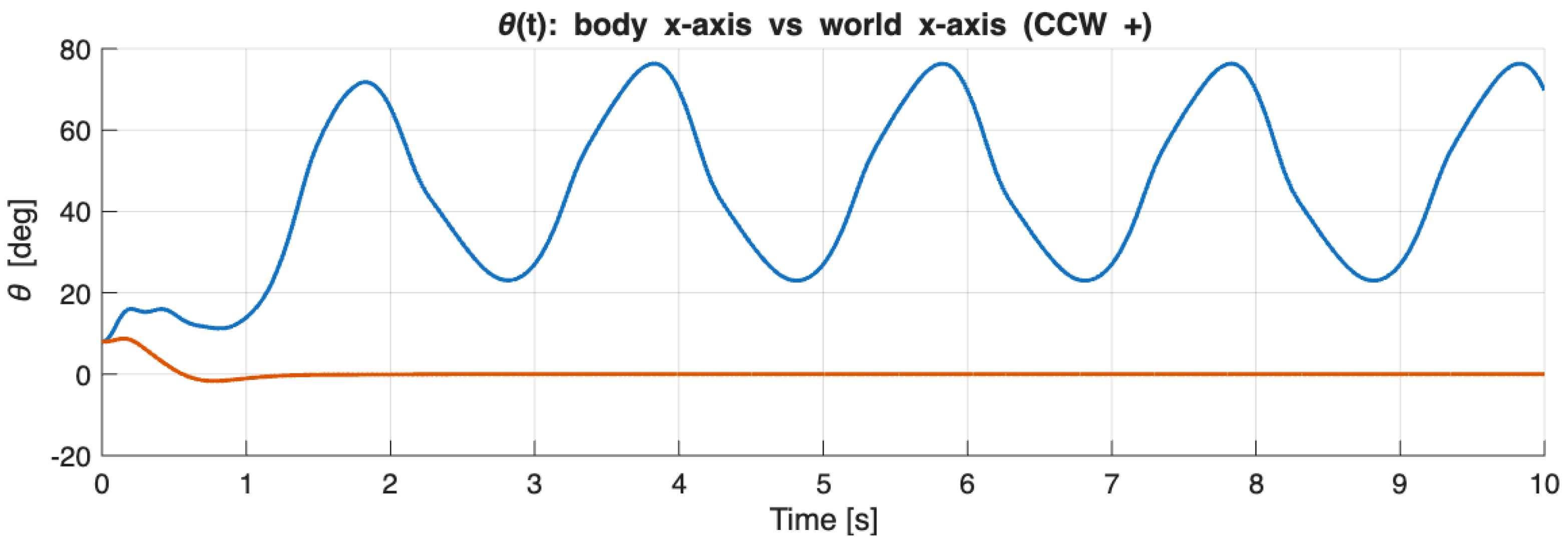
Figure 1 illustrates the evolution of the pitch angle
for both configurations. The system with the shorter link displays pronounced angular excursions and, under sufficiently strong wave excitation, enters an unstable regime in which the simulated hull undergoes a partial overturning motion. This behavior reflects the limited hydrostatic restoring moment available when the center of mass lies close to the geometric center of the hull.
In contrast, the configuration with the longer link, in which the internal mass is placed farther below the hull, exhibits markedly improved stability. The increased vertical separation between the centers of buoyancy and mass generates a stronger restoring torque, resulting in reduced pitch oscillations and rapid attenuation of wave-induced disturbances. The system maintains a near-upright posture even under the same excitation that destabilizes the short-link configuration.
These results provide direct validation of the theoretical predictions presented in
Section 2. By lowering the center of mass, the system experiences stronger hydrostatic restoring torques and reduced moment arms for the hydrodynamic forces imposed by the waves, leading to improved passive stability without any external actuation. Because the simulation isolates buoyancy, gravity, and internal mass distribution from other environmental or actuation effects, it offers a clear and intuitive demonstration of how mass shifting enhances stability. This lays the foundation for the subsequent validation on the AeroBull aerial platform, where the same principles manifest under aerial interaction forces rather than hydrodynamic excitation.
Scope of Validation
The simulations and experiments presented in this paper are intended to validate the correctness and generality of the proposed modeling framework, rather than to provide an exhaustive performance-oriented evaluation. Accordingly, quantitative metrics such as RMS tracking error, peak torque, controller output, or energy consumption are not reported, as they are highly task-, controller-, and platform-dependent. The focus of this work is on demonstrating how internal mass shifting reshapes global dynamics and stability properties across different physical domains, independent of specific control implementations.
4. Experimental Validation on the AeroBull Aerial Robot
The buoyancy simulation presented in
Section 3 isolates the hydrostatic consequences of internal mass shifting and demonstrates, in a controlled setting, how the relative placement of mass influences the passive stability of a floating-base system. Real robotic platforms, however, operate in environments in which multiple additional forces—such as aerodynamic thrust, ground reaction loads, contact wrenches, and actuator saturation constraints—interact in complex ways with the vehicle’s inertial properties. To assess the generality of the mass-shifting principles developed in
Section 2, we validate them on a physical aerial robot designed specifically for interaction-intensive tasks: the AeroBull platform, firstly introduced in [
16].
AeroBull constitutes a fully actuated floating-base aerial manipulator equipped with an internal mechanism that allows precise repositioning of a substantial internal mass. Although the platform flies in air and therefore does not experience buoyancy-induced restoring forces, its stability during contact is governed by the same fundamental geometric relationships that shape the behavior of buoyant systems: the global center of mass determines the moment arms through which interaction forces generate torques, and thus strongly influences both stability and control authority. By enabling real-time control over its CoM location, AeroBull provides a compelling testbed for examining how the effects of mass shifting extend beyond the hydrostatic domain and apply to aerial manipulation, where stability emerges from the interplay between inertial geometry, gravitational effects, applied interaction forces, and thrust allocation.
4.1. AeroBull Platform Overview
The AeroBull robot is a multirotor system equipped with a mobile internal mass that translates along a linear rail embedded within the airframe. This design permits controlled and continuous variation of the vehicle’s center of mass without modifying its external geometry, aerodynamic characteristics, or actuator configuration. At the front of the platform, a dedicated tool interface enables physical interaction with the environment, allowing the robot to apply forces during tasks such as scraping, sanding, pushing, or surface inspection.
In conventional multirotor platforms, external interaction forces applied at a location offset from the vehicle’s CoM generate pitching moments that must be actively counteracted through differential thrust modulation. This reliance on motor torques alone can significantly limit interaction performance, especially when high contact forces are required or when the system is subject to disturbances. By contrast, AeroBull mitigates these challenges by displacing its internal mass in the direction of interaction, thereby reducing the effective moment arm between the CoM and the contact point. As a result, the torque induced by the same interaction force is substantially reduced, leading to improved intrinsic stability and enhanced controllability during contact-rich operations. In addition, altering the CoM changes the leverage with which the rear propellers contribute to pitch regulation. When the CoM is shifted forward, the rear propellers operate with a larger stabilizing moment arm, reducing their required thrust for the same torque production. This redistribution of actuator effort is central to the improved interaction stability observed in the experiments.
4.2. Experimental Procedure
The AeroBull experimental results reported in this section are reproduced from Reference [
16], which presents a comprehensive experimental evaluation of the platform, including actuator constraints, controller architecture, feedback gains, trajectory generation strategy, and internal mass motion parameters. Reference [
16] is a peer-reviewed publication and provides the full experimental details required for repeatability. In the present work, these experiments are reused without modification and serve to validate the general theoretical framework developed in
Section 2, rather than to introduce new experimental findings. To evaluate the theoretical predictions developed in
Section 2 under realistic operating conditions, AeroBull was subjected to a series of controlled contact-interaction experiments designed to probe the influence of internal mass shifting on aerial manipulation stability. The experiments, which have been presented in [
16] as part of the specific platform development, focused on a surface–pushing task in which the robot applied sustained contact forces while maintaining a stable attitude.
Two distinct center-of-mass configurations were examined under otherwise identical conditions:
Case 1: Fixed CoM. The internal mass was positioned near the geometric center of the vehicle, corresponding to the nominal configuration in which the moment arm between the CoM and the contact point is largest. This condition realizes the baseline moment–arm expression described in
Section 2.
Case 2: Forward-Shifted CoM. The internal mass was displaced forward along the linear rail, translating the CoM toward the tool interface. This geometric modification reduces the moment arm for the same applied interaction force, implementing directly the mass-shifting mechanism predicted by the theoretical framework.
In each trial, the robot approached a rigid vertical surface, established gentle tool–surface contact, and subsequently applied a commanded interaction force profile using its onboard impedance controller. Throughout the interaction, the vehicle’s pitch angle, motor thrust allocation, and measured contact force were recorded at high temporal resolution. These measurements enabled a direct comparison of the robot’s stability and control effort under the two CoM configurations.
Although these experiments differ fundamentally from the buoyancy-driven simulation in
Section 3, they probe the same underlying physical mechanism: in both cases, modifying the relative location of the CoM alters the torque induced by external forces and thereby affects the system’s stability. The AeroBull trials therefore serve as a complementary real-world validation of the general mass-shifting principle, demonstrating its effectiveness in an aerial domain where interaction forces arise from contact dynamics and are counteracted through differential thrust rather than hydrostatic restoring moments.
4.3. Results
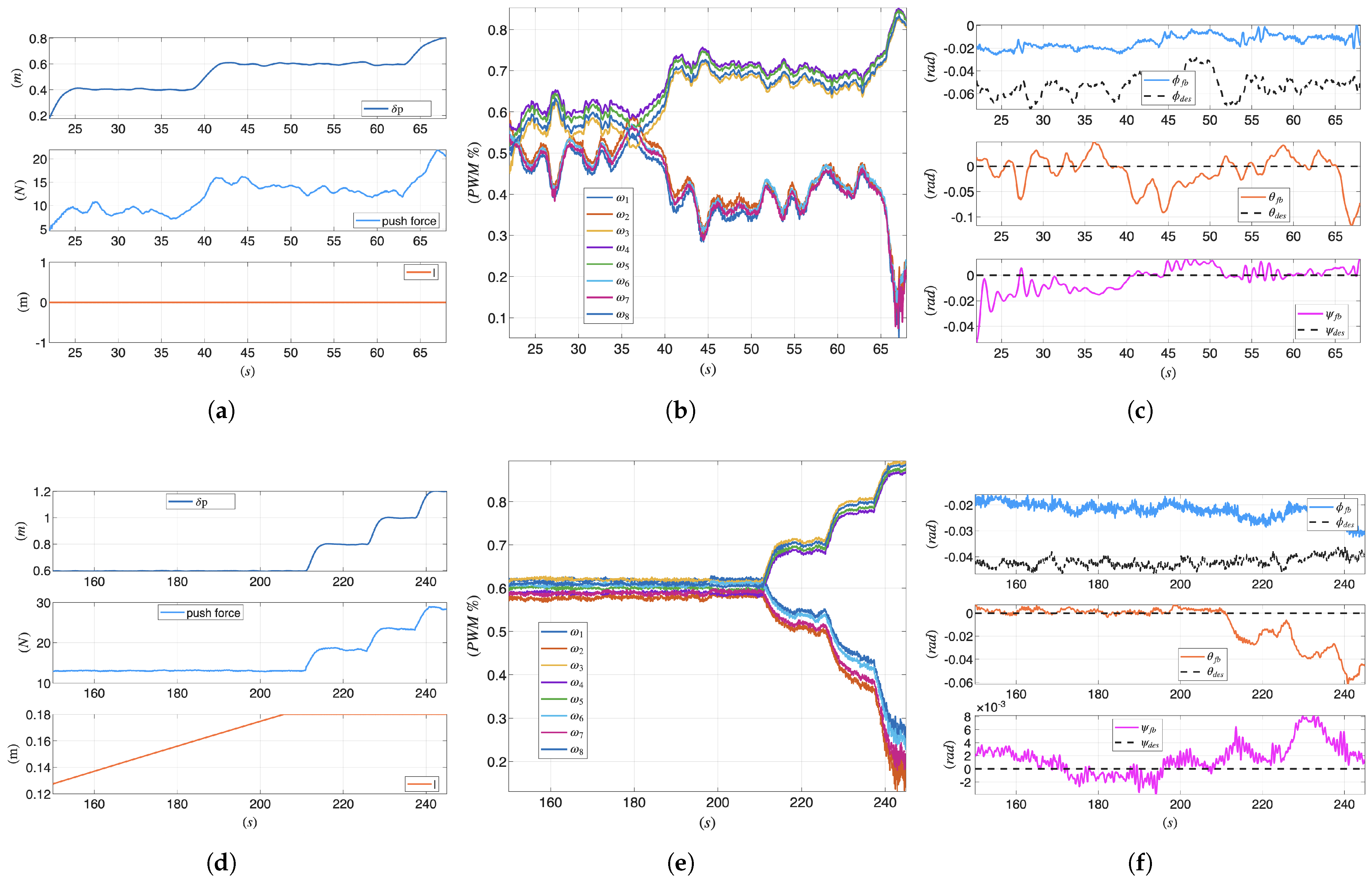
Figure 2 summarizes the outcome of the two experimental conditions. These results are based directly on the experimental dataset reported in the AeroBull study [
16], in which the robot was commanded to exert increasing contact forces against a rigid vertical surface under both a fixed center-of-mass configuration and a forward-shifted one. We reproduce the same two configurations here because they provide a direct and controlled means to assess the influence of center-of-mass placement on interaction stability, thereby enabling a clear validation of the theoretical mass-shifting principles developed in
Section 2.
In the fixed-CoM case, the interaction force is applied at a large moment arm relative to the vehicle’s center of mass, generating substantial pitch torques that must be counteracted by differential thrust. As documented in [
16] and visible in our reproduction, this configuration leads to pronounced pitch deviations and increasingly asymmetric actuator usage as the interaction force rises. Beyond moderate forces (approximately 10–13 N in the original measurements), the vehicle approaches its control limits and becomes unable to maintain a stable contact condition. This behavior directly reflects the geometric disadvantage imposed by a larger moment arm
.
In the forward-shifted CoM case, the internal mass is displaced toward the interaction interface, reducing the moment arm and thus the torque induced by the same external force. The experimental observations reported in [
16] show that this configuration yields dramatically improved stability, where pitch excursions remain small, thrust allocation becomes more balanced across the motors, and the rear propellers operate farther from their saturation limits thanks to the improved moment-arm geometry created by the forward CoM shift. In the original AeroBull experiments, the forward-shifted configuration maintained stable contact forces exceeding 25 N, which is nearly the weight of the system, without destabilization. Our reproduced plot in
Figure 2 illustrates these same trends and confirms the predicted benefit of center-of-mass relocation.
The contrast between the two cases provides a clear experimental verification of the theoretical developments in
Section 2: by reducing the moment arm
, the system requires significantly smaller corrective torques, improves its passive resistance to disturbances, and expands the range of interaction forces that can be stably supported. Because both cases use the same controller, the same platform, and identical experimental conditions (as established in [
16]), the observed differences arise purely from the geometric modification of the inertial structure. This confirms that center-of-mass shifting is an effective and domain-independent strategy for enhancing the stability of floating-base systems during physical interaction.
5. Discussion
The results presented in
Section 3 and
Section 4 demonstrate that internal mass shifting provides a robust, domain-independent mechanism for enhancing the stability and interaction capability of floating-base robotic systems. Despite the substantial physical differences between buoyant motion on water and aerial contact interaction, both systems exhibit behavior that is consistent with the geometric principles developed in
Section 2. The convergence of these results highlights the universality of mass-induced reshaping of global dynamics and underscores the fundamental role of inertial geometry in determining the stability of robots that operate without fixed bases.
5.1. Unified Effects Across Physical Domains
A central insight emerging from this work is that the influence of mass shifting on stability arises from a small set of geometric mechanisms that are independent of the surrounding medium or actuation strategy. By altering the location of the center of mass, the system modifies the restoring torques generated either by gravity or buoyancy, thereby changing its intrinsic resistance to rotational disturbances. This shift also alters the moment arms through which external forces—such as wave excitation, contact forces, or impulsive loads—produce rotational motion. In addition, redistributing mass reshapes the inertia matrix, influencing the system’s response to impacts and sudden perturbations. These effects appear consistently in both the buoyancy simulation and in the AeroBull experiments, despite the disparate physical contexts. The former isolates hydrostatic forces in a controlled environment, while the latter embodies a complex, real-world aerial manipulation scenario involving aerodynamic actuation and contact dynamics. The agreement between these cases confirms that the underlying principles governing the behavior of floating-base systems are geometric in nature and therefore broadly applicable. However, it is important to notice that while the experimental and simulation results presented in this work validate the stabilizing effects of center-of-mass displacement under interaction, the analysis of impact robustness and inertia shaping is primarily grounded in theoretical considerations. These results follow directly from the dependence of angular momentum on the inertia matrix and do not rely on platform-specific dynamics. Experimental or high-fidelity simulation studies explicitly targeting impact scenarios are therefore identified as an important direction for future validation.
5.2. Implications for Floating-Base Robotics
Taken together, the buoyancy simulation and the AeroBull aerial experiments demonstrate the same underlying geometric mechanisms despite operating in fundamentally different physical domains. In both cases, shifting the internal mass modifies the global center of mass, alters the moment arms through which external forces act, and reshapes the effective inertia governing the system’s response to disturbances. While buoyancy provides the restoring force in the aquatic case and thrust distribution governs stability in the aerial case, the resulting improvement in passive stability and interaction robustness arises from the same geometric principles. This conceptual correspondence reinforces the unifying perspective of the proposed framework without relying on domain-specific performance metrics. The demonstrated benefits of mass shifting carry several important implications for the design and control of future robotic platforms. By lowering the center of mass, a system can substantially increase its passive stability, reducing reliance on high-gain feedback and thereby improving robustness in situations characterized by sensing limitations, modeling uncertainties, or unpredictable environmental disturbances. This enhanced stability is particularly valuable during physical interaction, where external forces applied at a distance from the CoM can otherwise induce destabilizing torques. By reducing these moment arms through mass relocation, the robot attains more precise and reliable force application, improving performance in tasks ranging from inspection and sanding to scraping, cleaning, or nondestructive testing.
Moreover, because the stabilizing influence of mass shifting arises from geometry rather than active control, it provides an inherently energy-efficient means of shaping system dynamics. This advantage extends to a wide variety of platforms, including aerial robots, maritime and amphibious systems, free-floating space robots, and soft or deformable bodies that incorporate reconfigurable internal mass or fluid redistribution. In each of these settings, the fundamental mechanism remains the same: moving internal mass reshapes the relationship between external forces and the resulting motion.
5.3. Limitations and Opportunities
Although the results are promising, several limitations point toward opportunities for future research. In the buoyancy simulation, the floating body is modeled using a two-dimensional cross-sectional representation with simplified hydrodynamic forces. Effects such as three-dimensional wave interactions, added mass, viscous damping anisotropy, turbulence, and wake-induced forces are not included. These effects may lead to quantitative differences between the simulated response and the behavior of real floating platforms operating in complex sea states. However, the purpose of the simulation is not to reproduce realistic ocean dynamics, but to provide a controlled environment in which the geometric role of center-of-mass placement can be isolated and examined. The theoretical framework developed in this work addresses how mass redistribution modifies restoring torques and inertial properties, which are first-order effects that remain present regardless of the specific hydrodynamic model employed. Future work may extend the proposed framework to higher-fidelity three-dimensional simulations or experimental validation in realistic sea conditions.
The AeroBull experiments, in turn, focus on planar motion and linear mass translation; future platforms may incorporate multi-axis mass motion or employ variable-stiffness structures that allow distributed inertial shaping. Another promising direction lies in the integration of mass-shifting mechanisms with predictive or adaptive control frameworks, where dynamic CoM repositioning could be used not only for stabilization but also as a means of optimizing energy consumption or enabling complex contact sequences.
It is important to note that the AeroBull experiments reported in this section are reproduced from Reference [
16] and are used here to demonstrate the generality of the proposed modeling framework rather than to provide a statistical evaluation of experimental performance. As no new experimental trials are introduced in the present work, cross-statistical comparisons across repeated runs are outside the scope of this study. Such analyses represent a natural extension for future work focused on performance benchmarking and controller optimization.
Furthermore, in this work, internal mass redistribution is considered in a static or quasi-static sense, with mass configurations treated as fixed during interaction, disturbance response, or impact events. This assumption allows the geometric effects of center-of-mass placement and inertia reshaping to be analyzed independently of the dynamics of mass actuation itself. While time-varying internal mass motion may enable additional capabilities such as active angular momentum shaping or impact mitigation, incorporating such effects would require extending the model to account for inertial coupling and control of internal mass accelerations. Investigating these aspects experimentally and theoretically represents an important direction for future work.