2.3.2. Response Surface Optimization
Based on the optimized airfoil from
Section 2.2.2, a parametric model of the ducted fan was established. Three control sections at 0.2
R, 0.5
R, and
R were selected for modeling. The chord length and twist angle of the airfoil on these control sections were defined as design variables for RSM, comprising six parameters in total. Their corresponding ranges are specified in Equation (10).
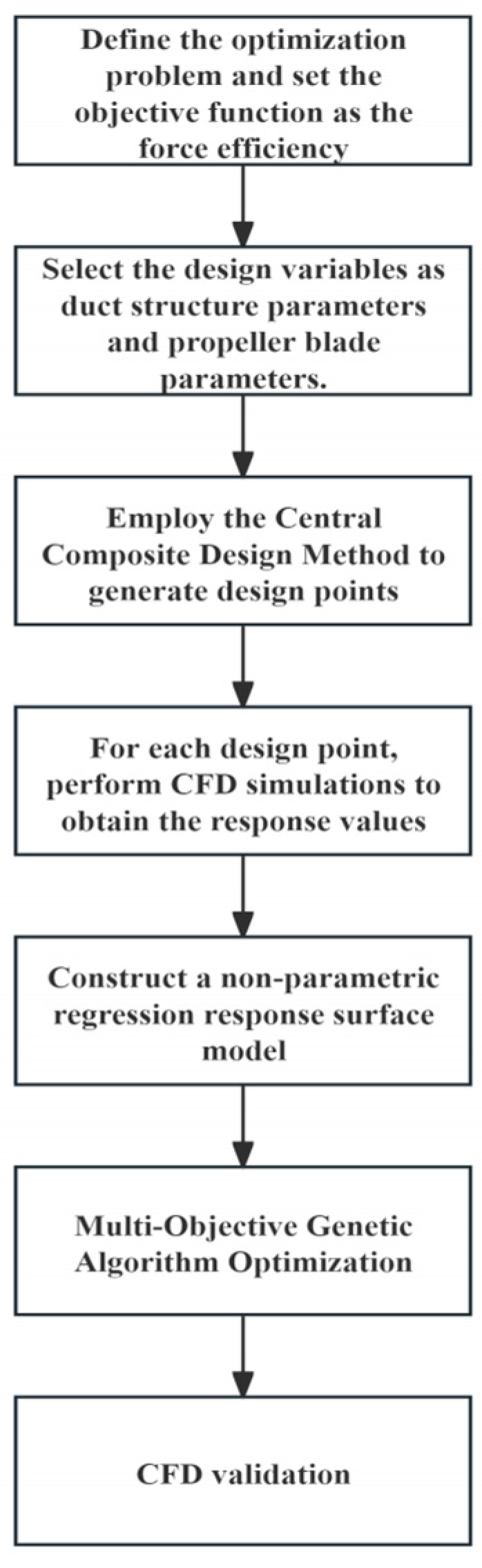
Once the type, number, and range of design variables are identified, the CCD method is adopted to generate design points within the design space. Detailed information of these design points, 45 in total, is provided in
Table A1 of
Appendix A. CFD simulations are performed on these designed points to obtain the corresponding response objectives, namely the values of propeller lift, propeller torque, and duct lift.
The standard k-epsilon model from the vortex-viscosity model was selected for turbulence calculation in this study. As a two-equation model, it is straightforward and readily implementable, while also demonstrating good applicability in handling rotating flows, boundary layer flows with strong reverse pressure gradients, flow separation, and secondary flows. The MRF method was employed to simulate the flow field around the propeller, dividing the computational domain into a stationary region and a rotating region. The rotational speed of the dynamic domain was set at 18,000 r/min. The pressure–velocity coupled equations were solved using the SIMPLE algorithm with a hybrid initialization, running for 2400 steps until convergence was achieved. Propeller lift and torque, along with duct lift values, were monitored throughout.
The stationary domain of the computational domain is a cylinder with a diameter of 30
D and a length of 50
D, where
D denotes the duct propeller disk diameter, i.e., 80 mm. The rotating domain is a cylinder with a diameter of 81 mm and a height of 13 mm. The boundary condition settings are presented in
Table 1. The overlapping surface between the stationary domain and the rotating domain is defined as the “Interface” type to ensure the continuous transfer of computational values between the two domains.
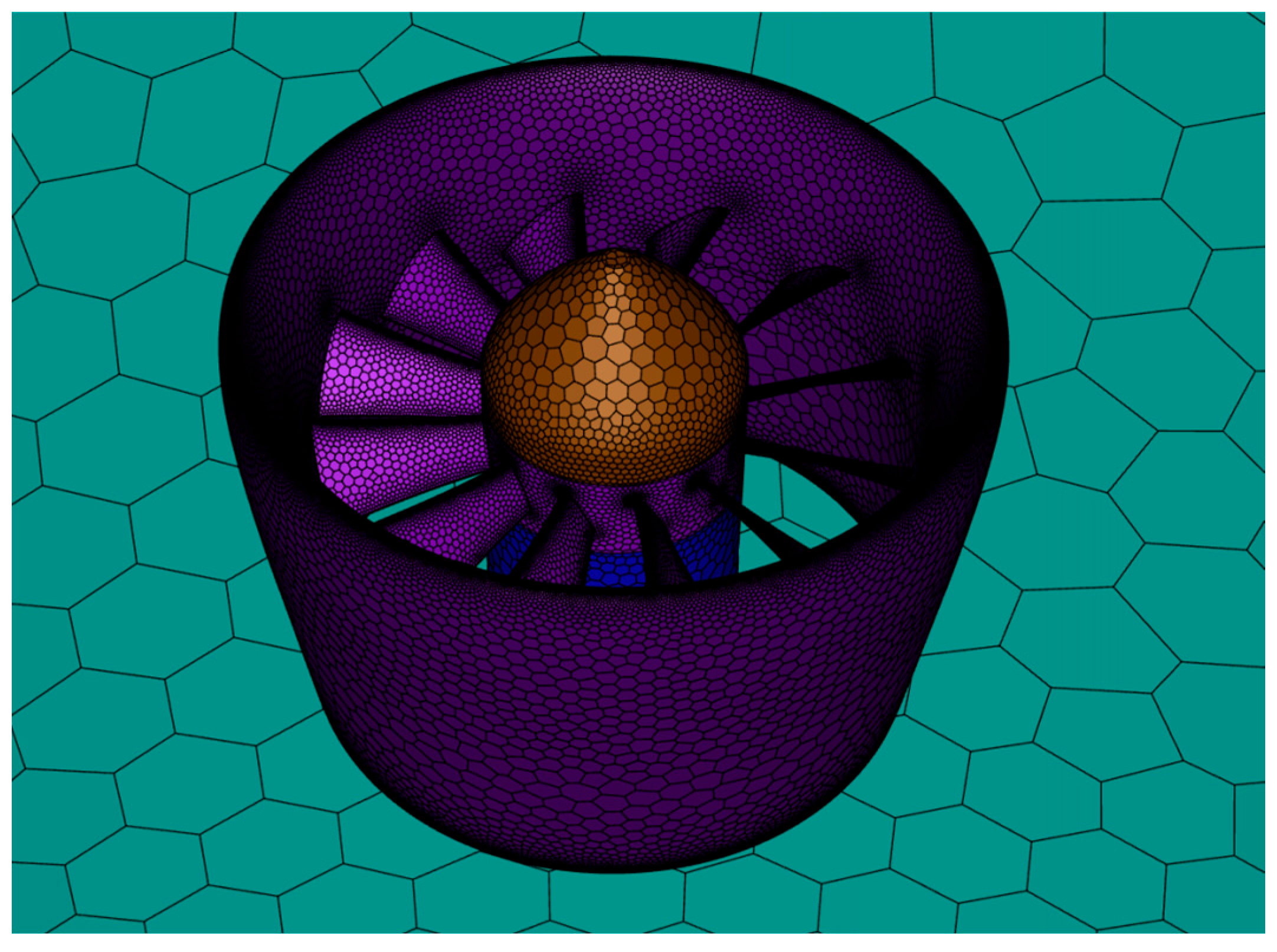
Meshing was performed via the meshing module of the finite element analysis software. Polyhedral core element type was adopted for mesh generation, and the software’s built-in optimization algorithm was utilized to improve mesh quality.
Figure 7 shows the local surface mesh of the computational domain. The total number of mesh elements is 3.31 million, with a minimum orthogonal quality of 0.25 and a maximum skewness of 0.7, which meets the requirements for simulation applications.
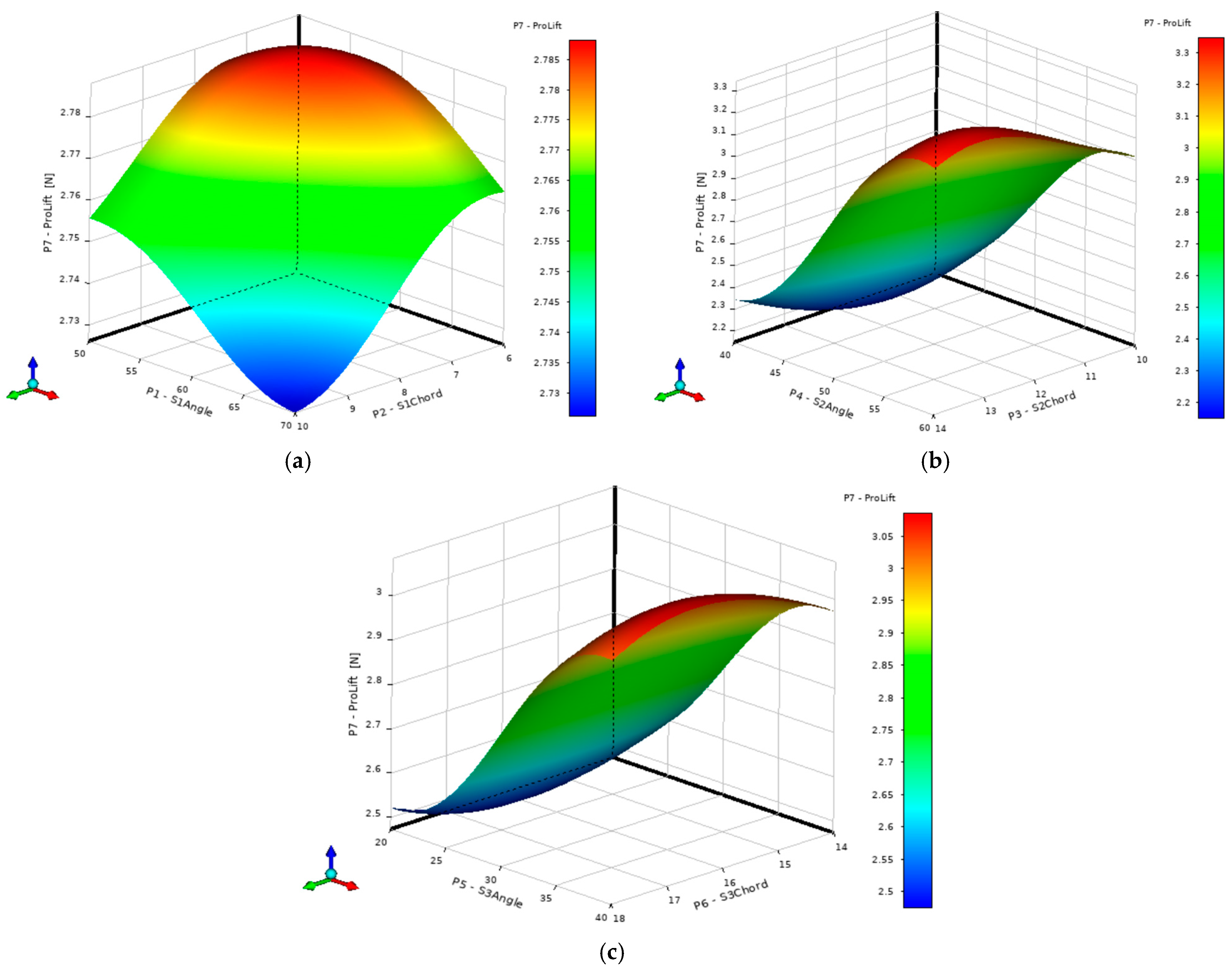
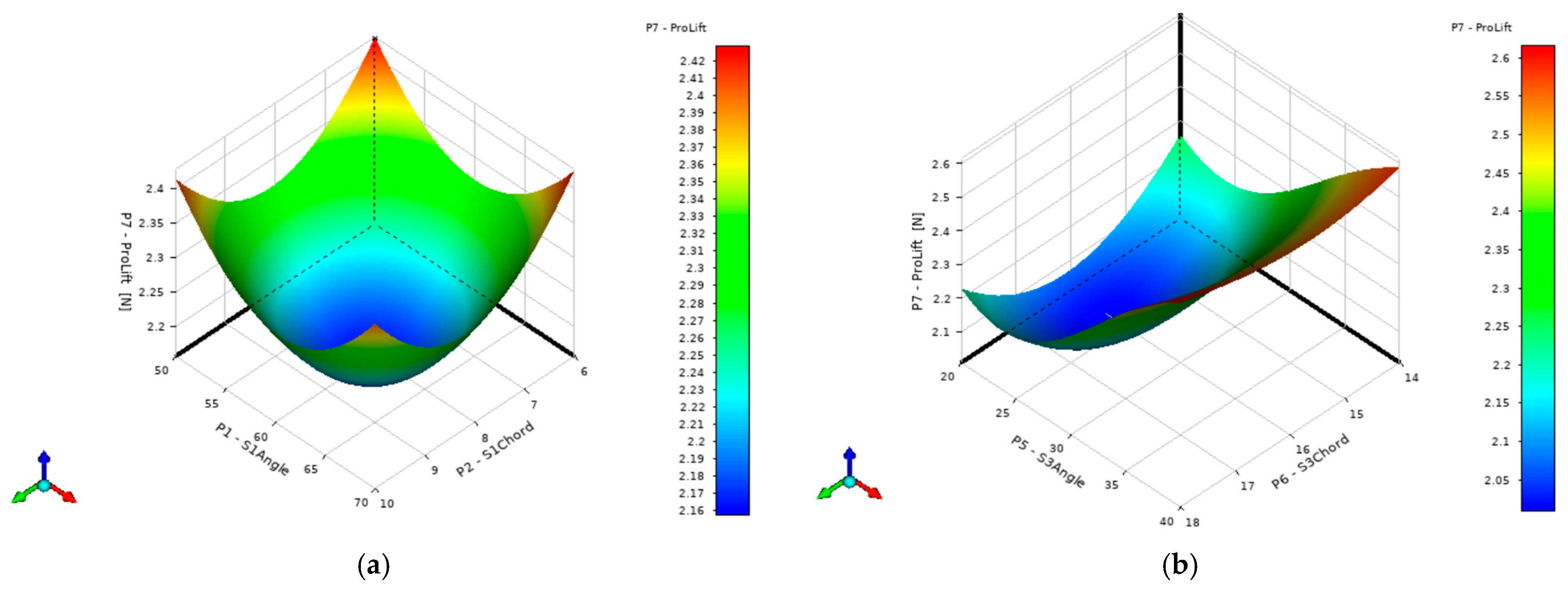
Given the high dimensionality of input variables and strong nonlinear coupling between design variables and response objectives in duct fan design optimization, this study employs nonparametric regression models to construct response surfaces. Compared to traditional parametric response surface models, nonparametric regression response surfaces exhibit “data-driven, structure-free” characteristics. They do not require prior assumptions about variable coupling relationships and can accurately characterize high-dimensional nonlinear systems with minimal samples. This effectively overcomes the reliance on prior assumptions and the limited adaptability of traditional models in scenarios with small sample sizes. The three-dimensional response surface constructed using the nonparametric regression model is shown in
Figure 8 (where each design variable assumes the midpoint within its range of values). S1, S2, and S3 cross-sections correspond to the sections at 0.2
R, 0.5
R, and
R, respectively. The characteristics of the three-dimensional surface in
Figure 7 reveal significant nonlinear coupling relationships between the two design variables corresponding to each cross-section and the response objective. This not only validates the complexity of variable interactions but also further demonstrates the nonparametric regression model’s capability to accurately capture such strongly coupled characteristics.
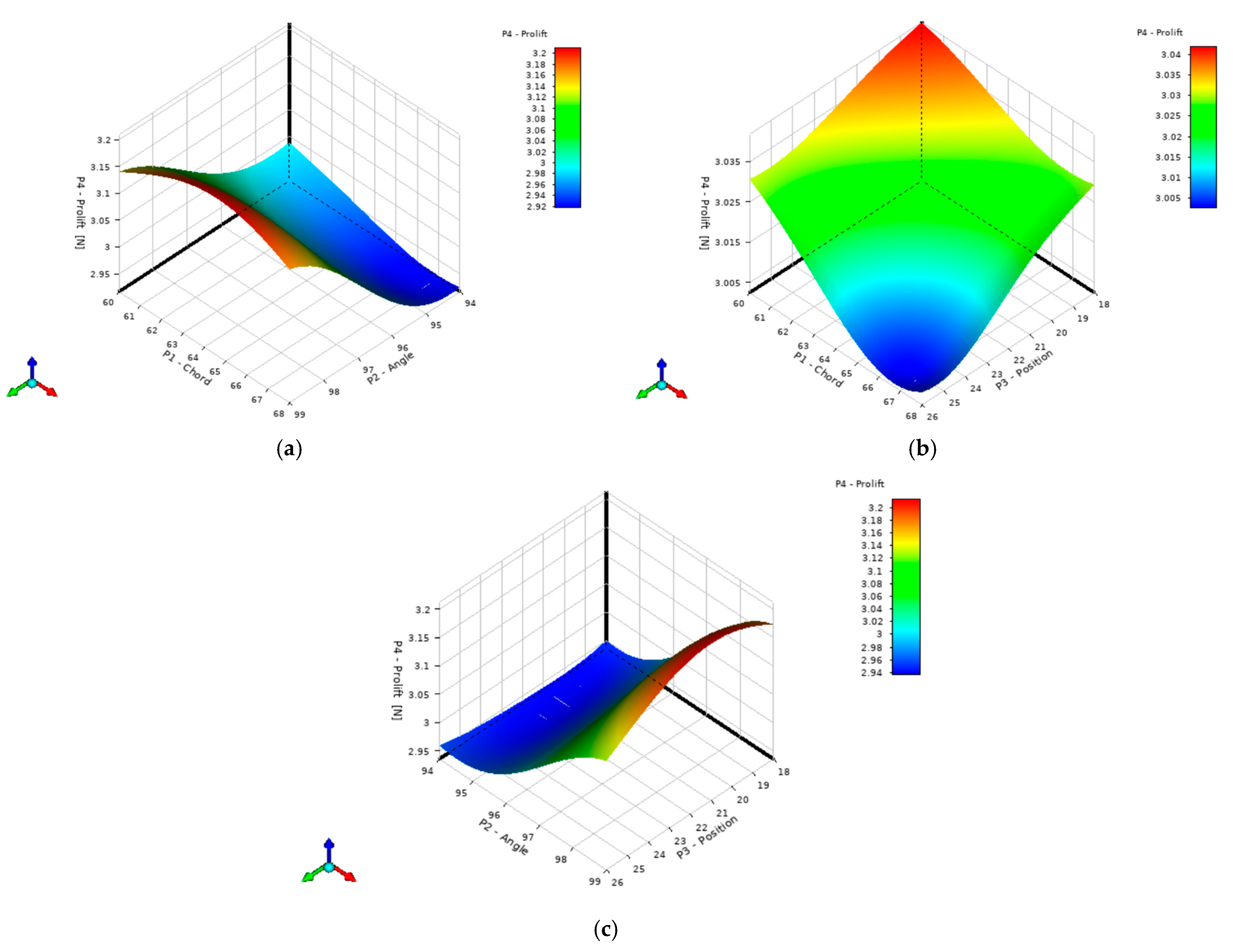
The value of the twist angle of the blade element in the S2 section was changed; the corresponding response surfaces for the S1 and S3 sections are depicted in
Figure 9. Through the comparison of
Figure 8 and
Figure 9, the complex coupling effects among all design variables are confirmed. Altering the S2 section parameters modifies the relationship between the design variables and response variables for the S1 and S3 sections, thereby altering the response surface morphology.
The accuracy and reliability of the response surface surrogate model can be evaluated through the value of the coefficient of determination
. The closer the coefficient of determination is to 1, the higher the goodness of fit of the response surface, and the better the fitting quality [
19]. The coefficients of determination for each output parameter are presented in
Table 2. The coefficient of determination
indicates that the response surface fitting quality in this optimization is favorable, yielding accurate and reliable prediction results.
Based on the aforementioned non-parametric regression response surface model, this paper selects the MOGA as the optimization algorithm. It is a variant of the popular Non-Dominated Sorting Genetic Algorithm II (NSGA–II) which is based on the concept of controlled elites, supporting multiple objectives and constraints, and is capable of searching for Pareto optimal solutions globally [
20].
In terms of algorithm configuration, the initial population size was set to 6000 samples, with 1200 new individuals generated per generation through evolution, and the maximum number of iterations was limited to 20 generations.
Assuming that the optimization problem is defined as maximizing the total lift of the ducted fan with no constraints on torque (i.e., without considering lift efficiency), the optimization results obtained by the RSM are presented in
Table 3.
Assuming that the optimization problem is defined as minimizing the propeller torque and maximizing the overall lift of the ducted fan (i.e., pursuing maximum lift efficiency), the optimization results obtained by the RSM under these objectives and constraints are presented in
Table 4.
This paper defines the optimization problem and constraints such that the overall lift of the ducted fan is maximized at a given power level. This approach effectively addresses the issue of over-optimization, where pursuing the lift efficiency of the ducted fan leads to insufficient overall lift. Based on experimental data at the design point, the torque range of the propeller is 0.05–0.12
. A value of 0.1
is selected as the power constraint, and the optimal combination of design variables that maximizes the overall lift is solved for. Taking 0.1
as the torque threshold, this value ensures the practical feasibility of the parameters; it not only avoids the issue of insufficient lift that may arise when the torque is too low but also does not reach the upper limit of the torque range (0.12
). This makes it a reasonable value that balances the power constraint and lift performance. Ultimately, the optimization results obtained via the RSM are presented in
Table 5.
Candidate point 1 was selected for CFD validation of this optimization result. Considering factors such as physical manufacturing and 3D printing accuracy, the design variable combinations were fine-tuned. The final response target values are shown in
Table 6, with the response surface fitted values exhibiting a total lift error of 2.7% and a propeller torque error that is negligible compared to the simulation validation values.
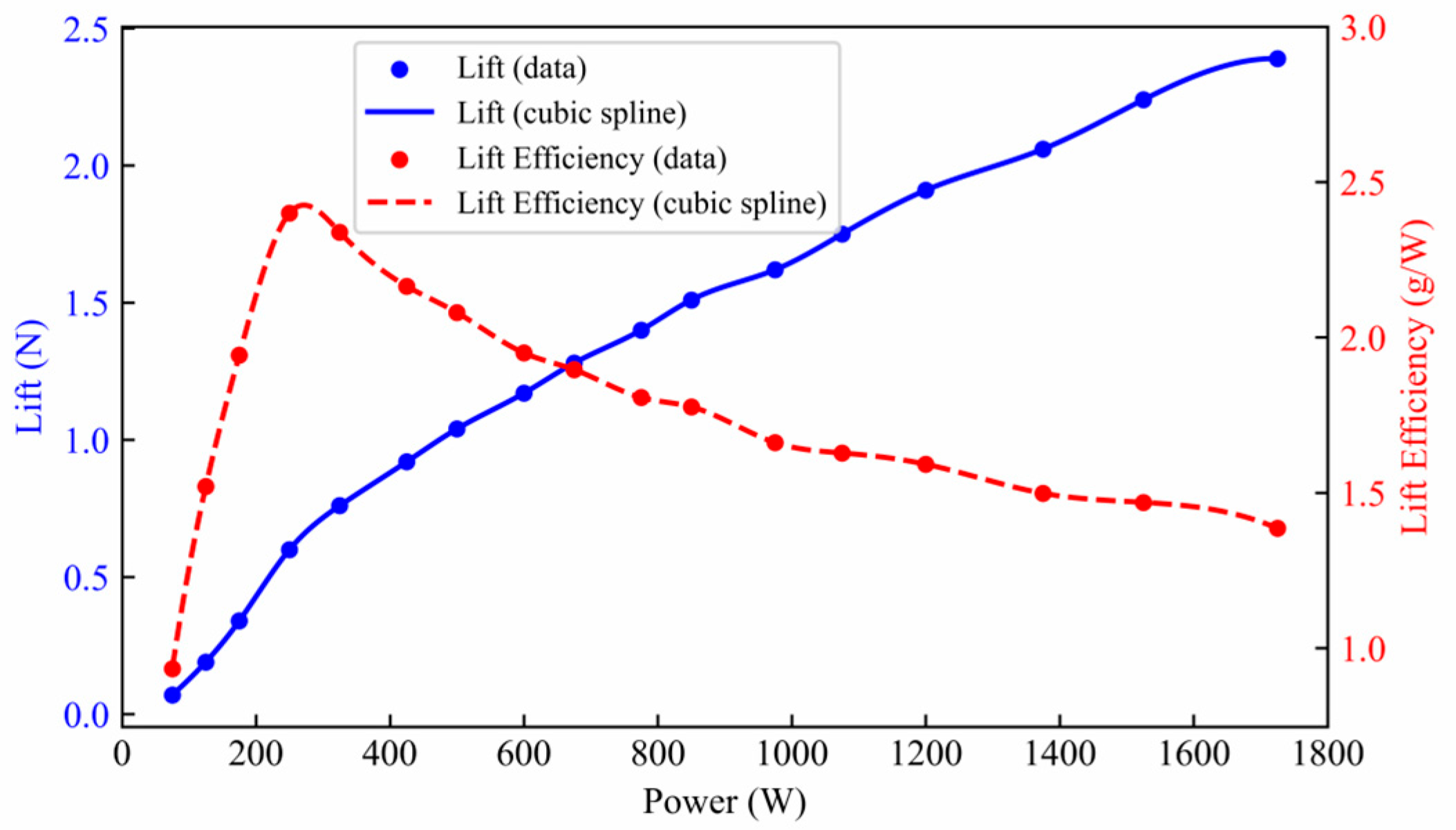
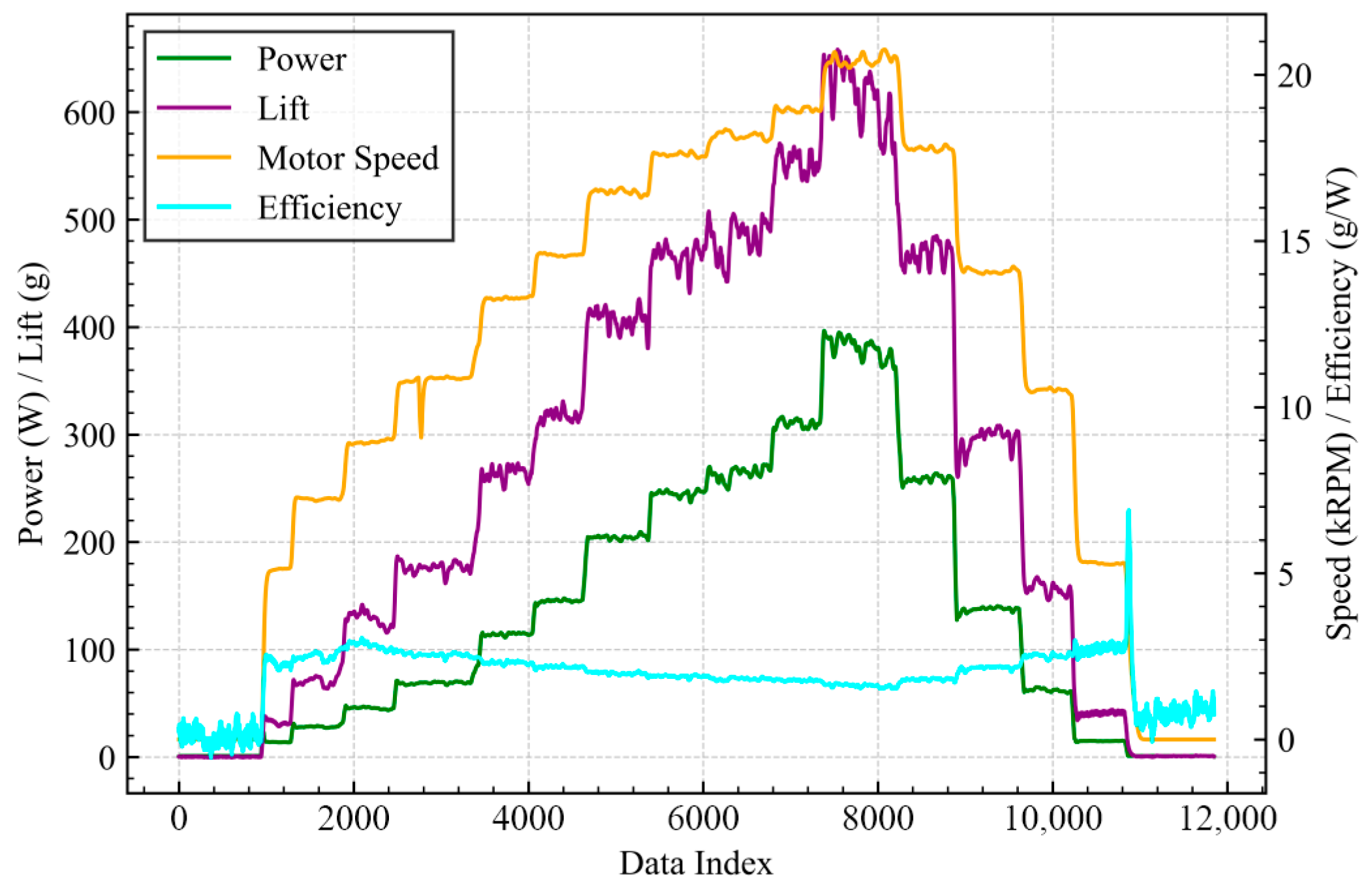
According to the propeller shaft power calculation formula P = Mω, at rotational speed n = 18,000 r/min and torque M = 0.101 , the corresponding power P = 191 W, yielding lift efficiency λ = 2.75 g/W.
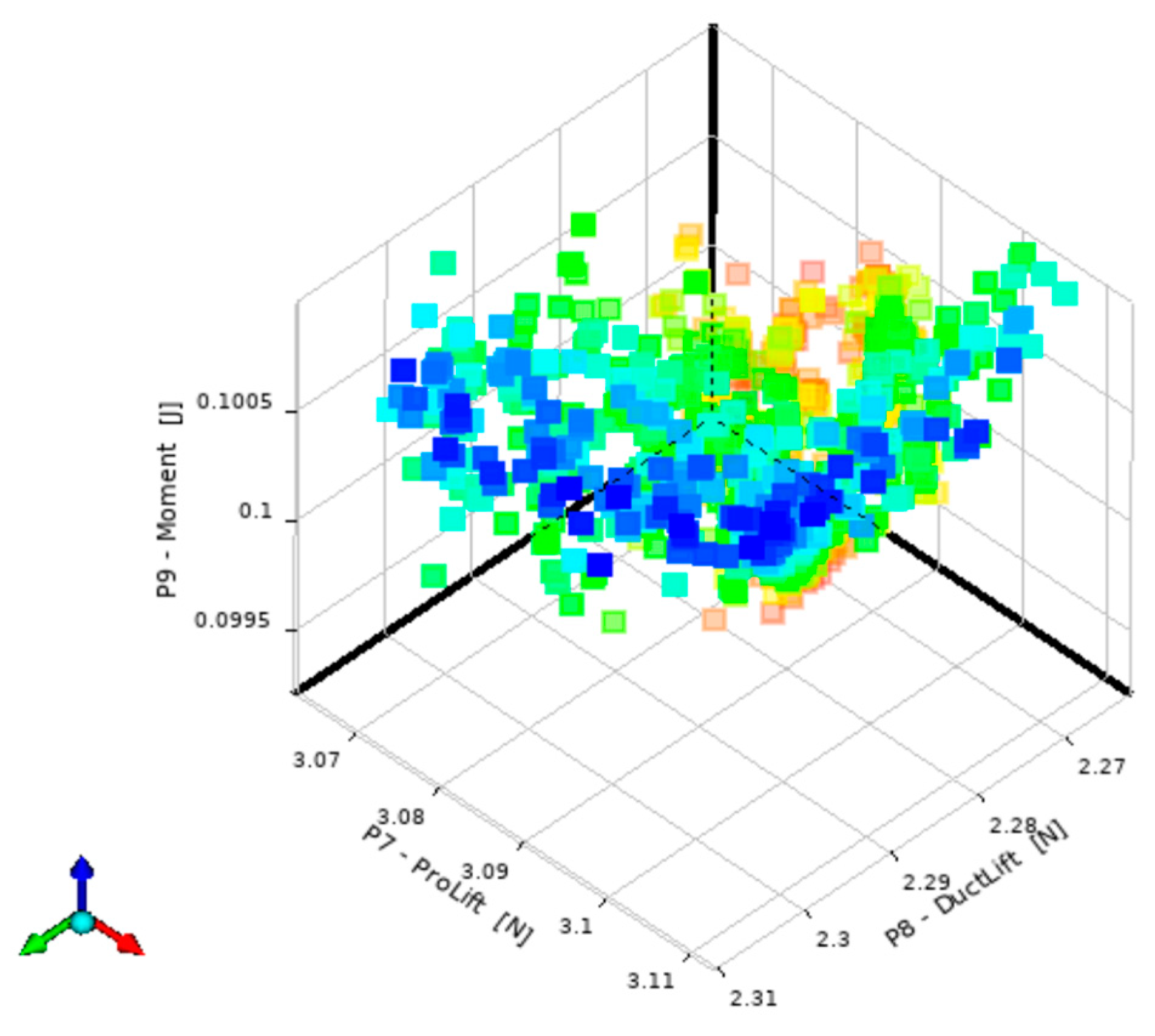
The multi-response objective trade-off for this optimization problem is illustrated in
Figure 10, where the x-axis represents propeller lift, the y-axis denotes duct lift, and the z-axis indicates propeller torque. Each discrete data point in the figure is a feasible point, corresponding to a feasible solution obtained during the optimization solution process, and these points together constitute the feasible solution space for the problem. Meanwhile, the different hues of the feasible points in the figure indicate the merit of the corresponding feasible solutions; the cooler the hue of a point (e.g., blue tones), the higher the degree of alignment with the preset optimization objectives.