
Finite Element Study on the Stiffness Variation Mechanisms of Radially Bolted Cylindrical–Cylindrical Shell Joints Under Transient Thermo-Mechanical Loading


Abstract
1. Introduction
2. Analytical Model and Finite Element Modeling
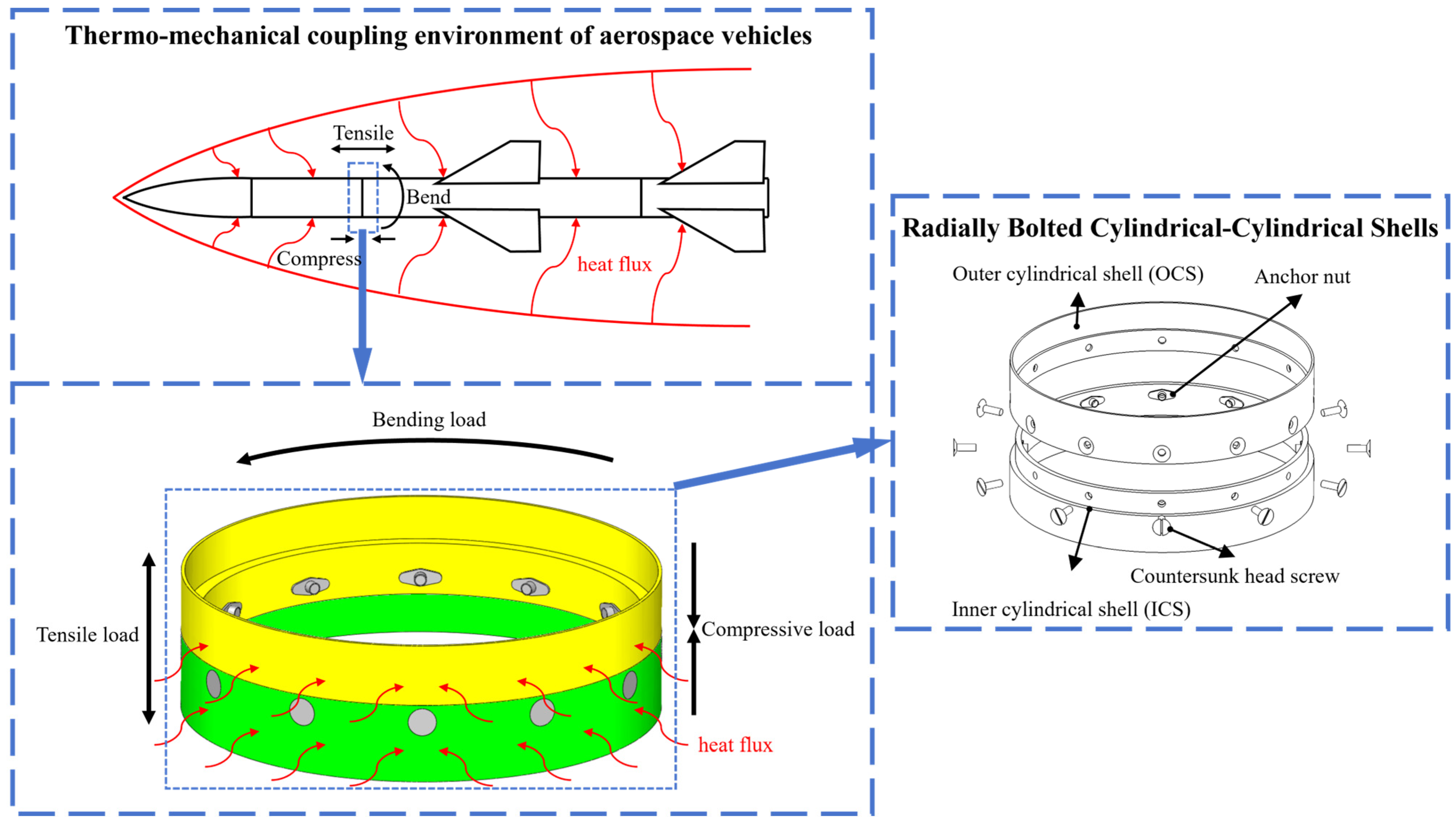
2.1. Analytical Model Description
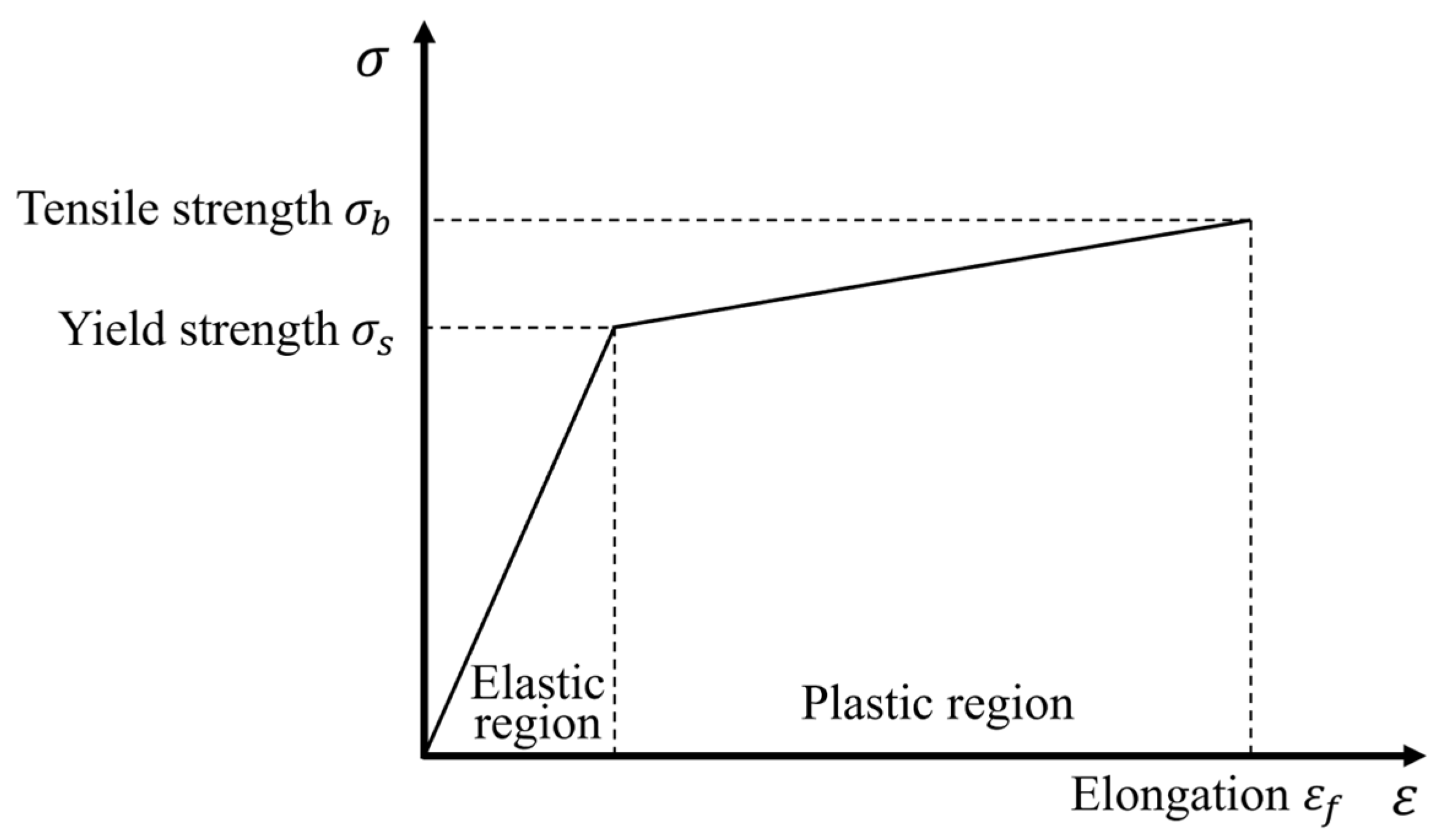
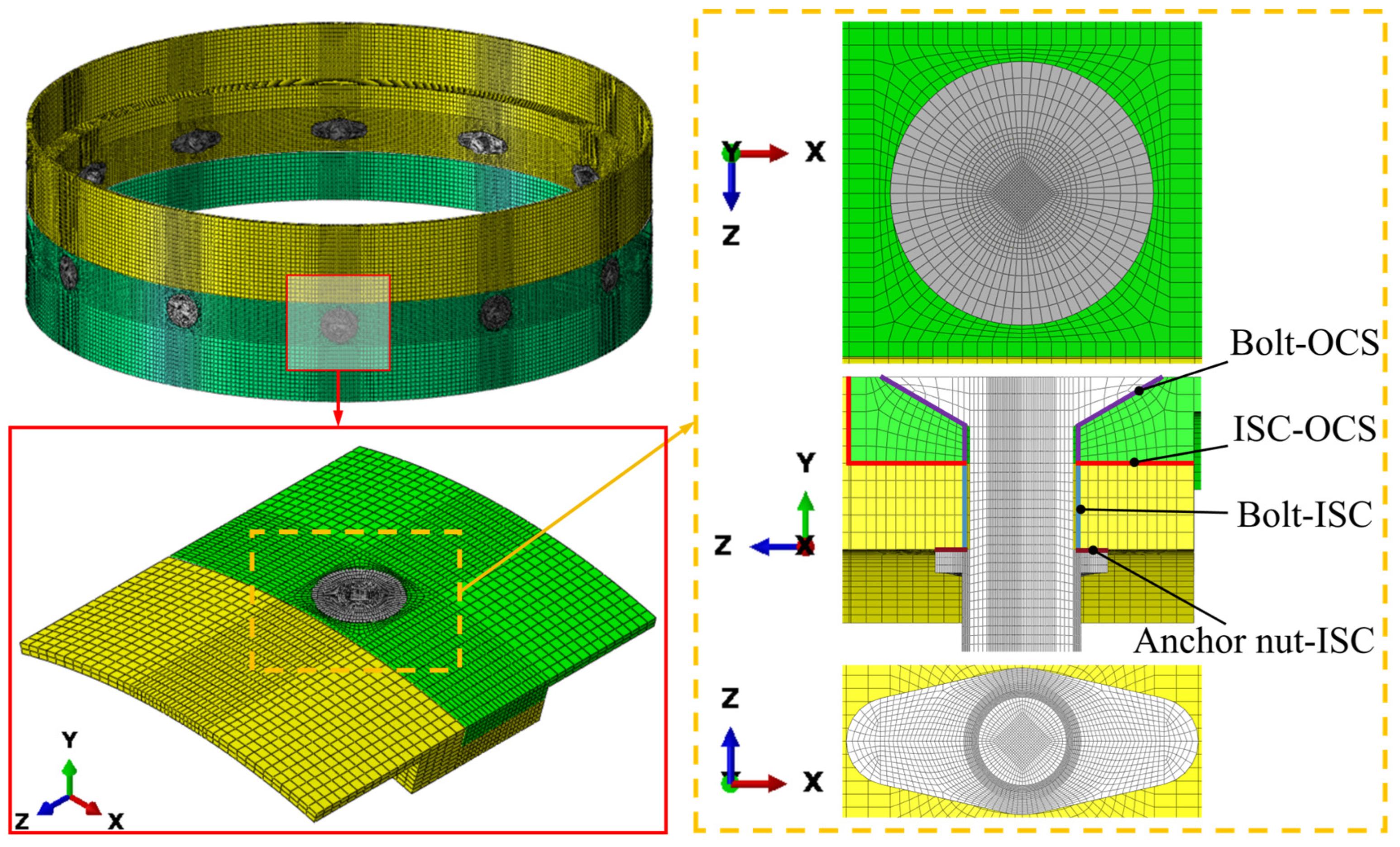
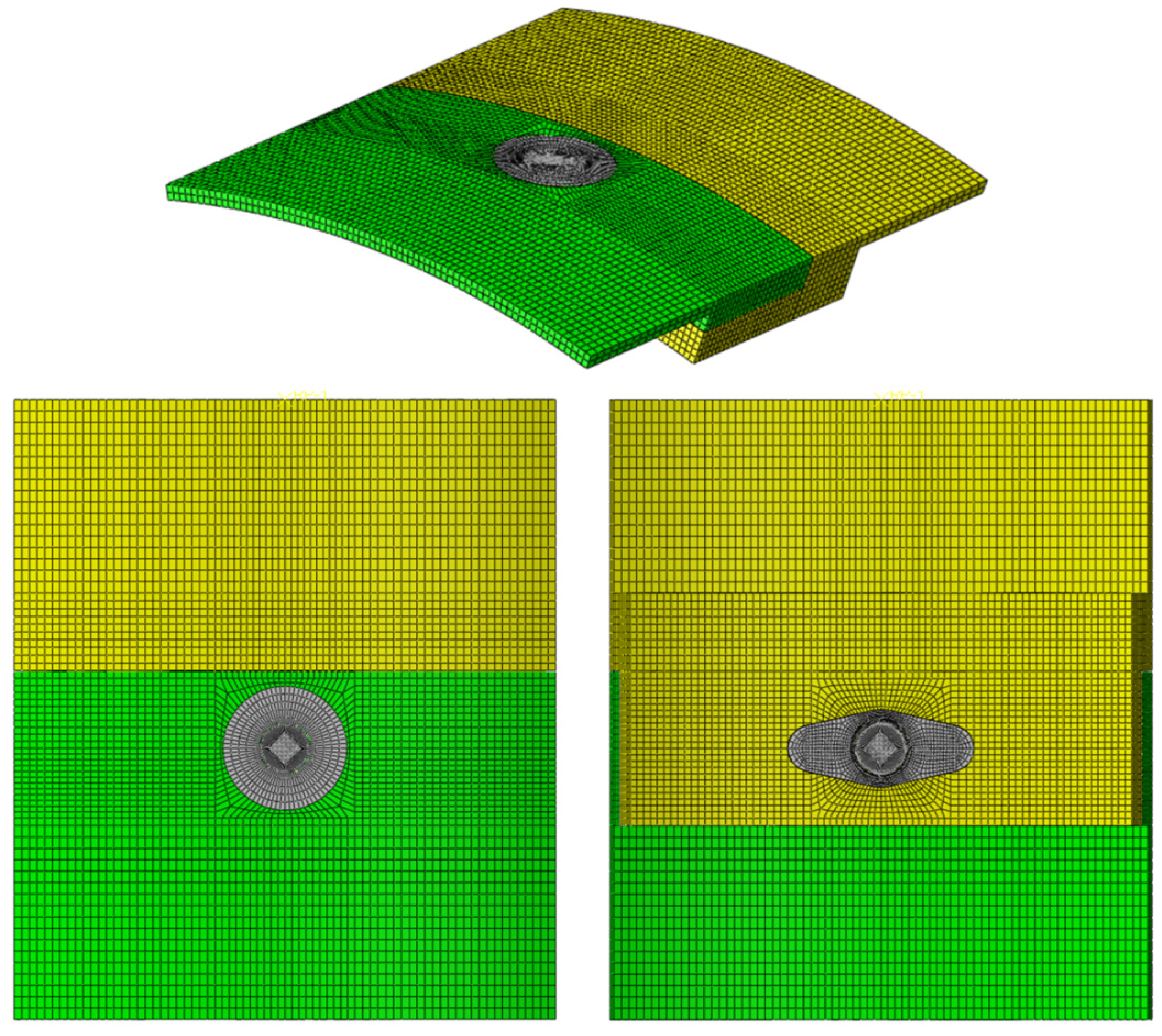
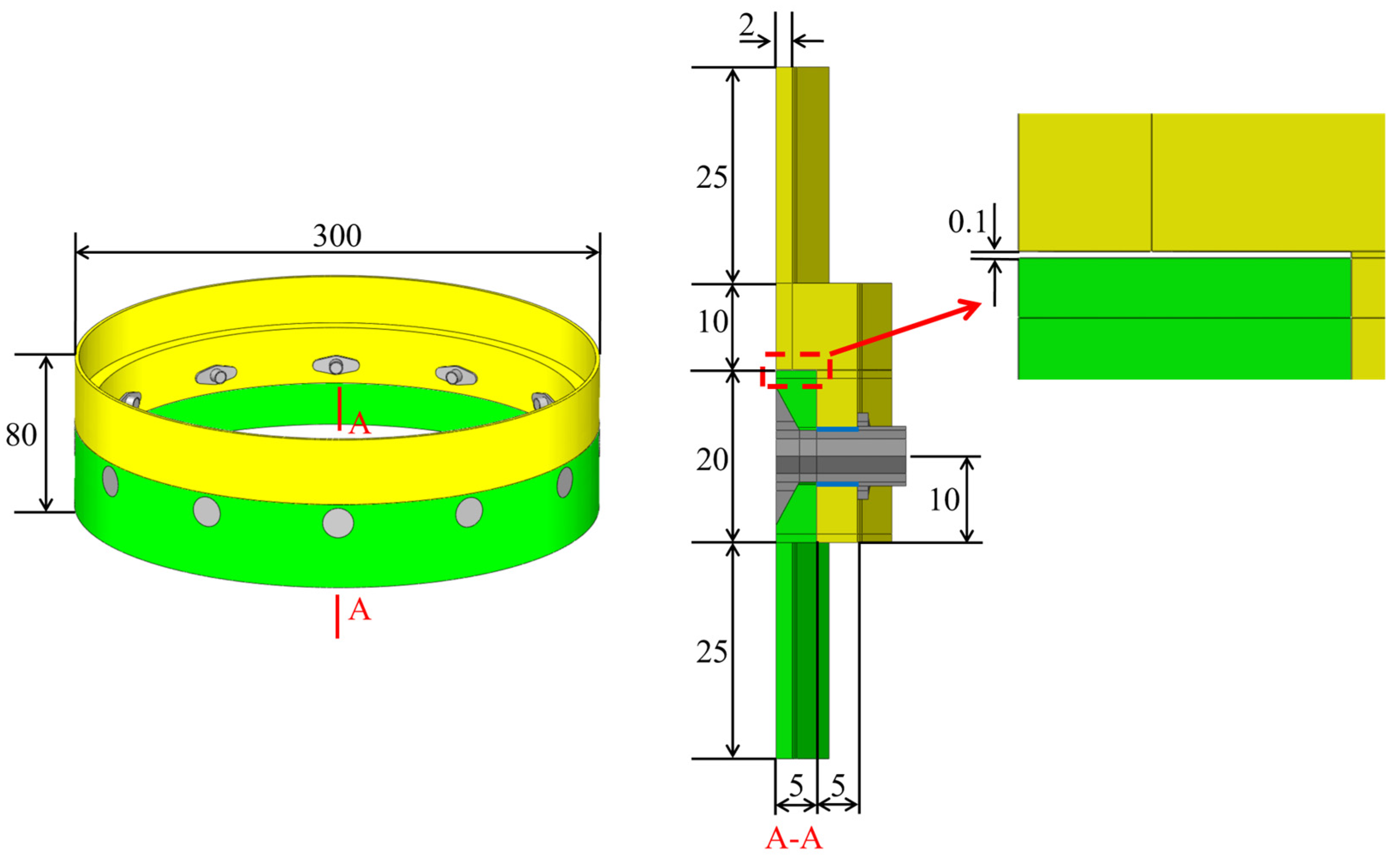
2.2. Finite Element Modeling
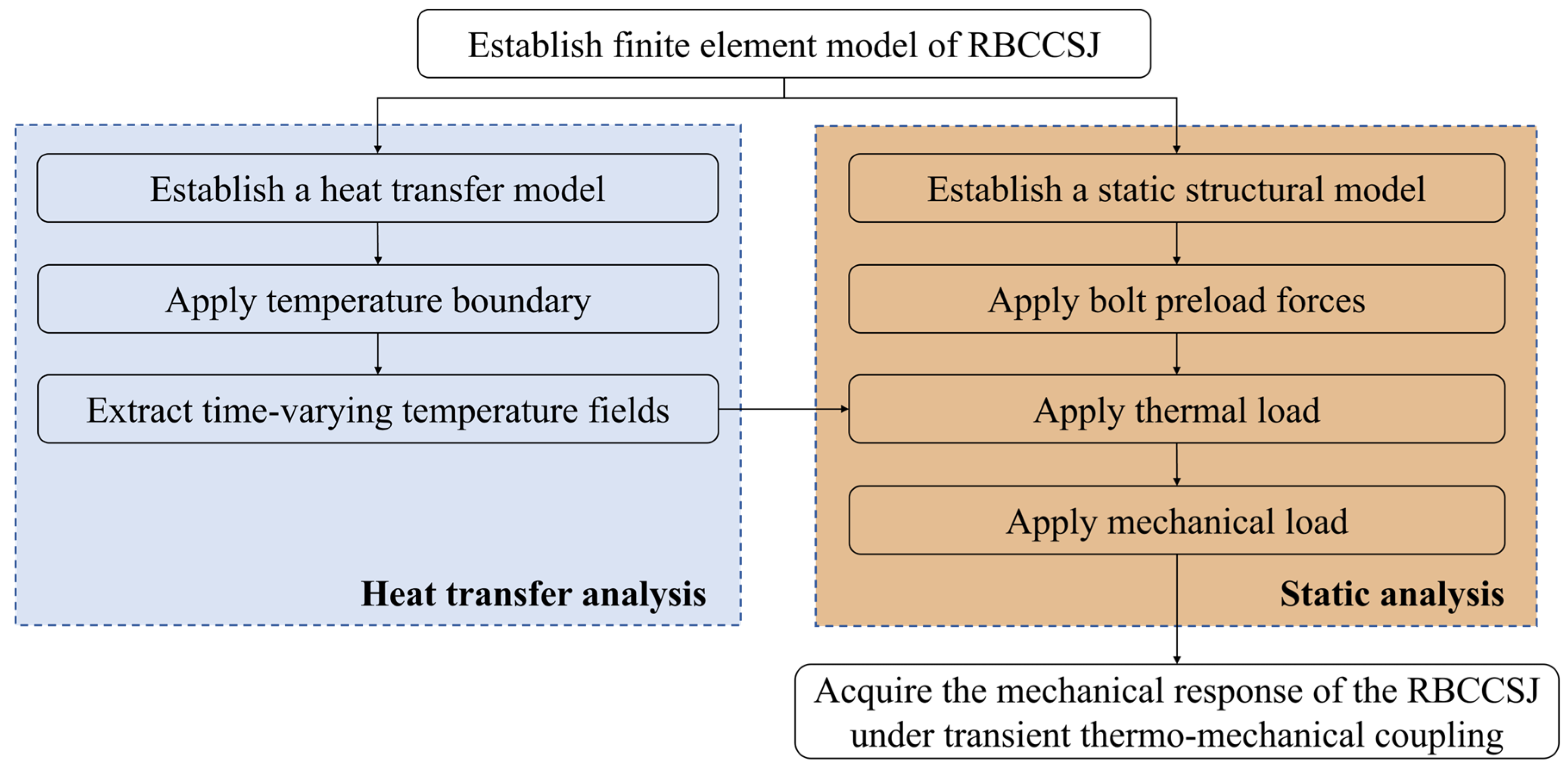
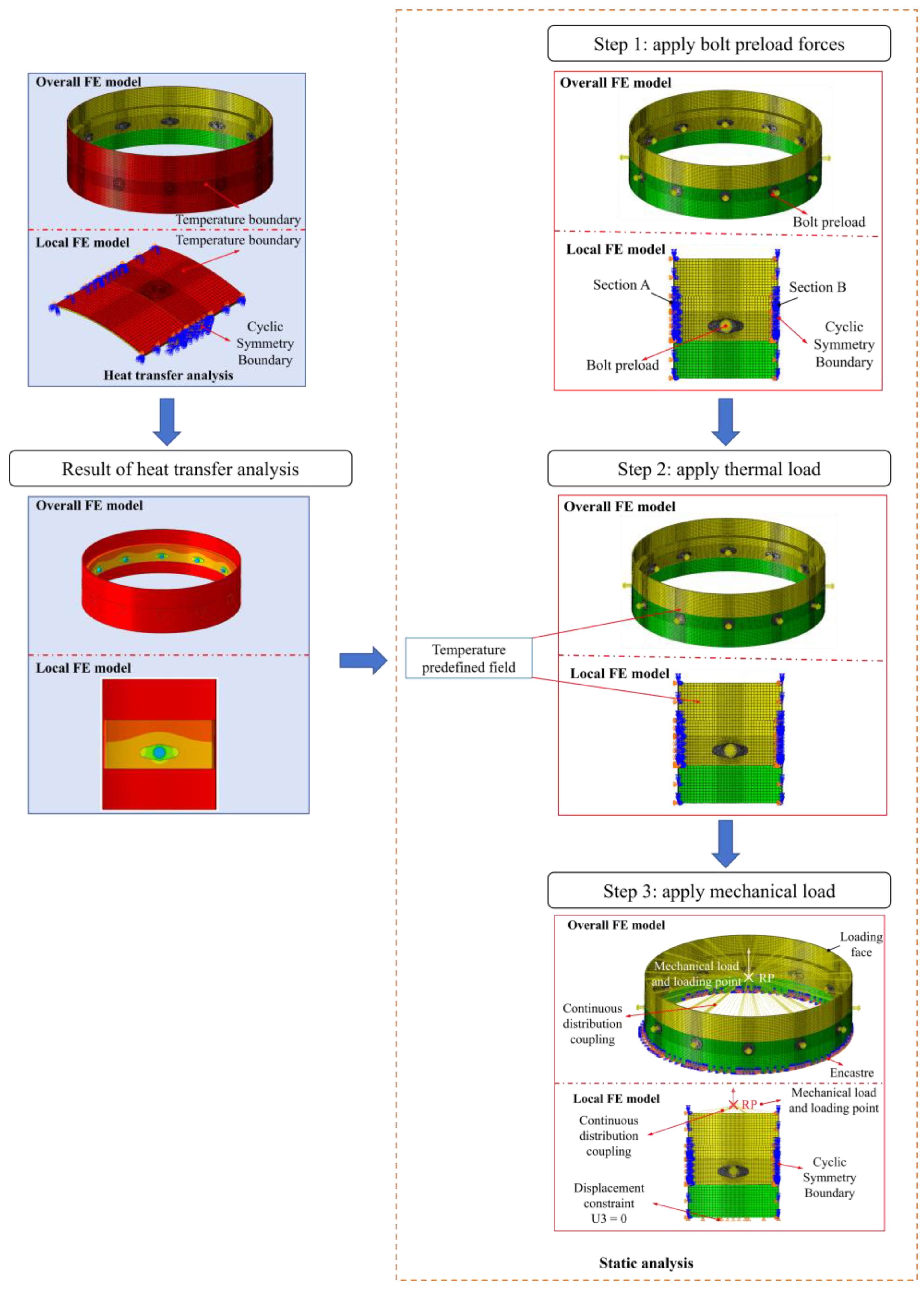
2.3. Thermo-Mechanical Coupling Analysis Procedure
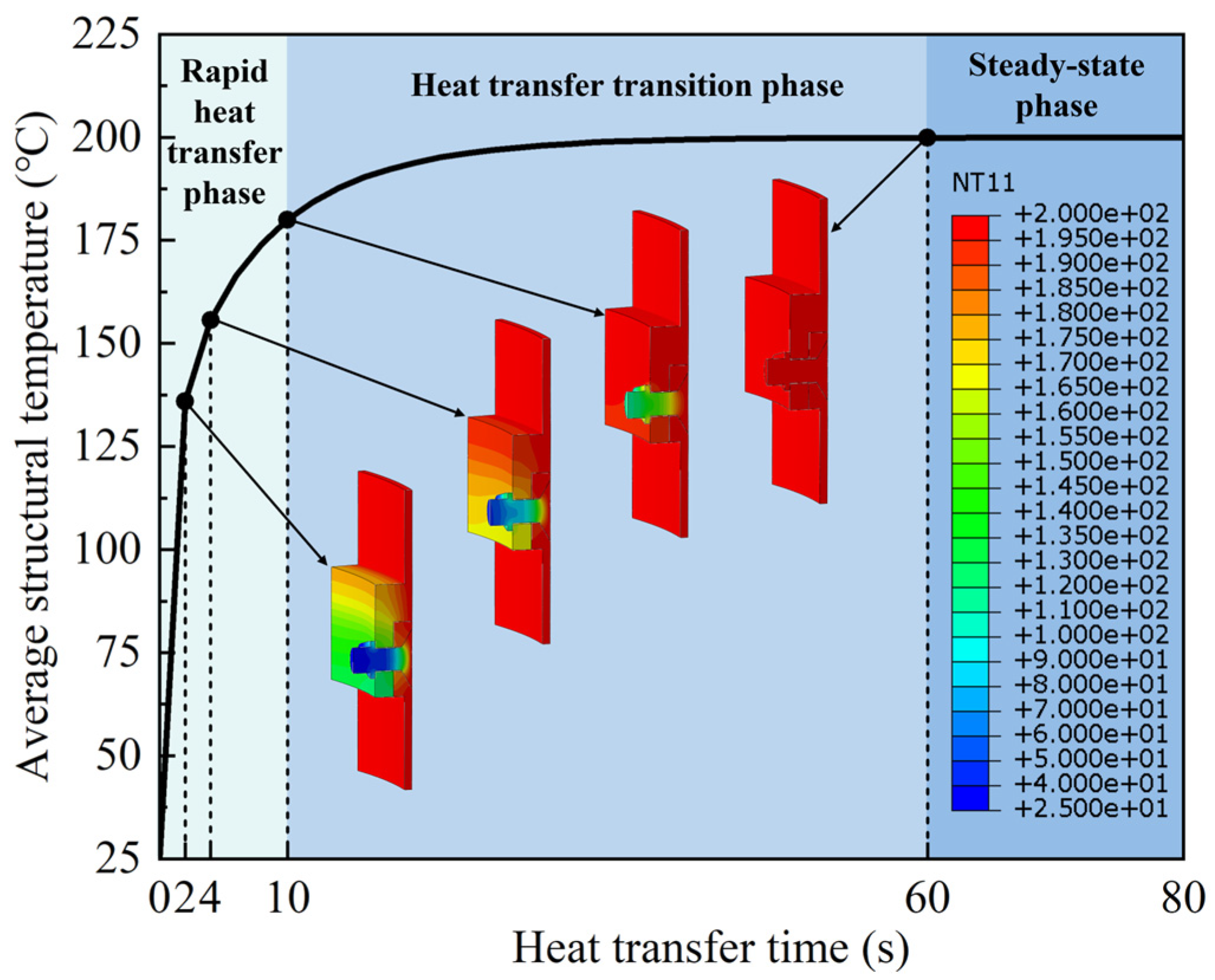
3. Analysis of Heat Transfer in the RBCCSJ Under Aerodynamic Heating
4. Mechanism Analysis of the Effects of Transient Thermo-Mechanical Coupling on Structural Connection Stiffness
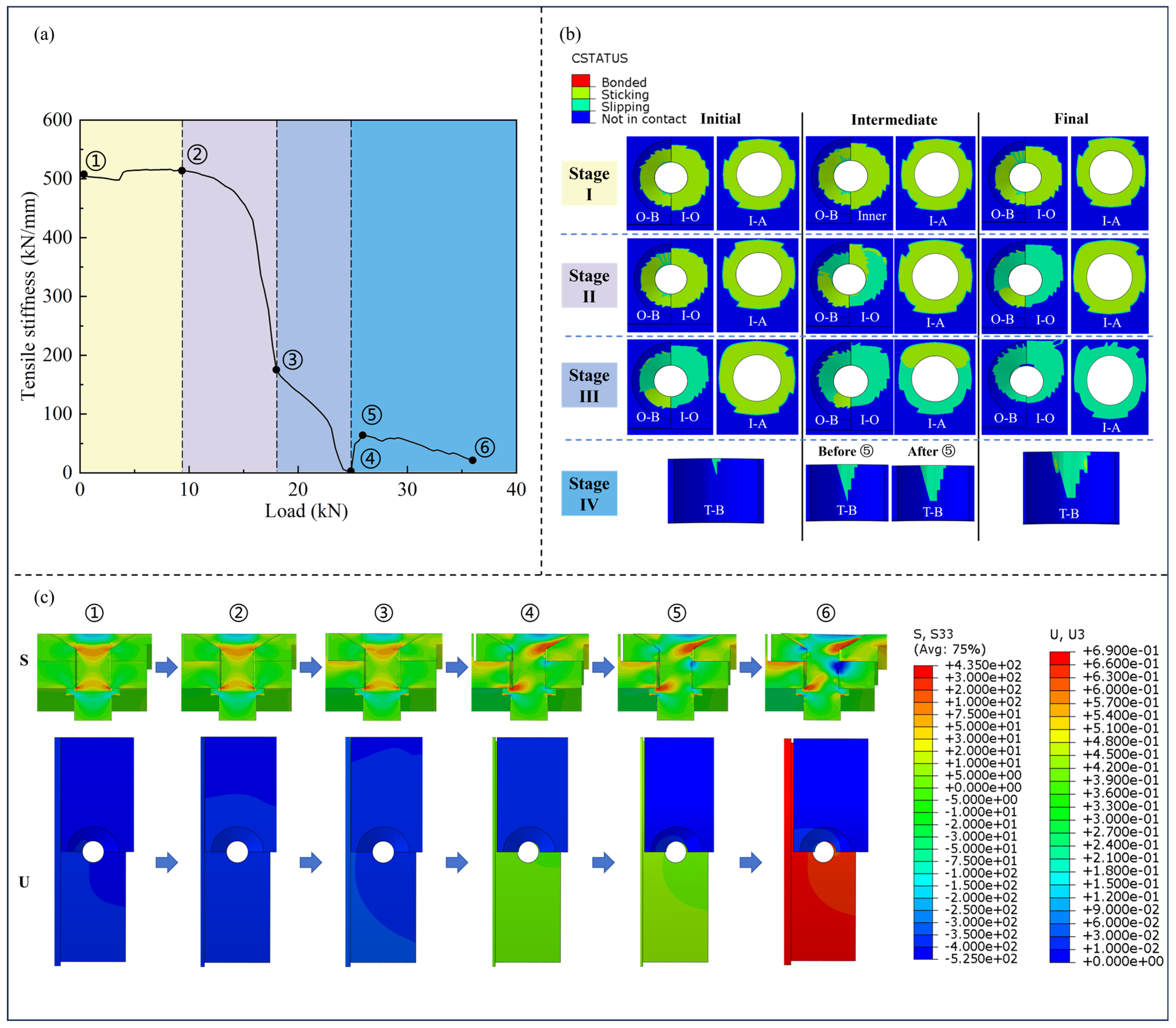
4.1. Tensile Stiffness Mechanism
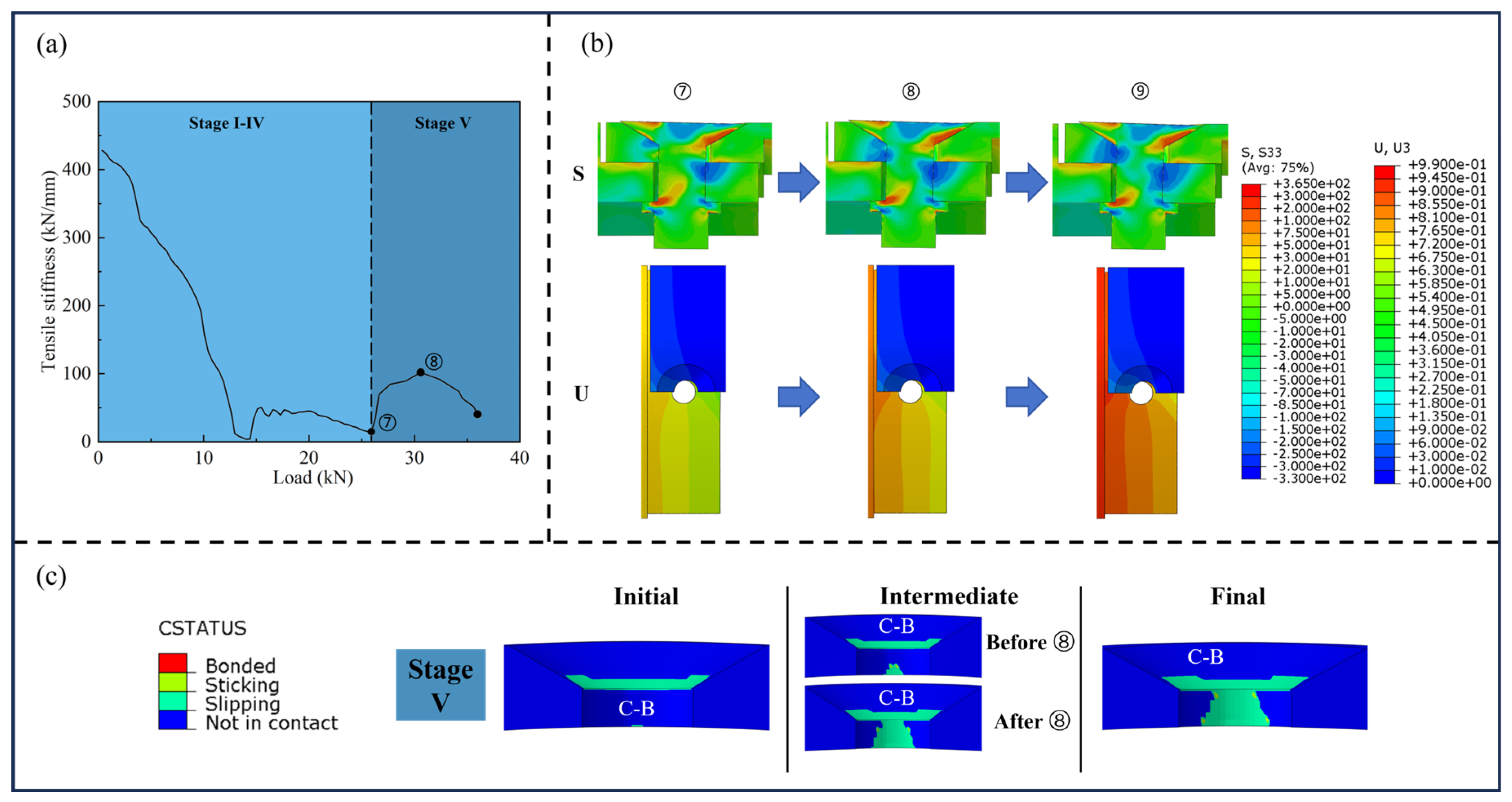
4.1.1. Under Ambient Temperature Conditions
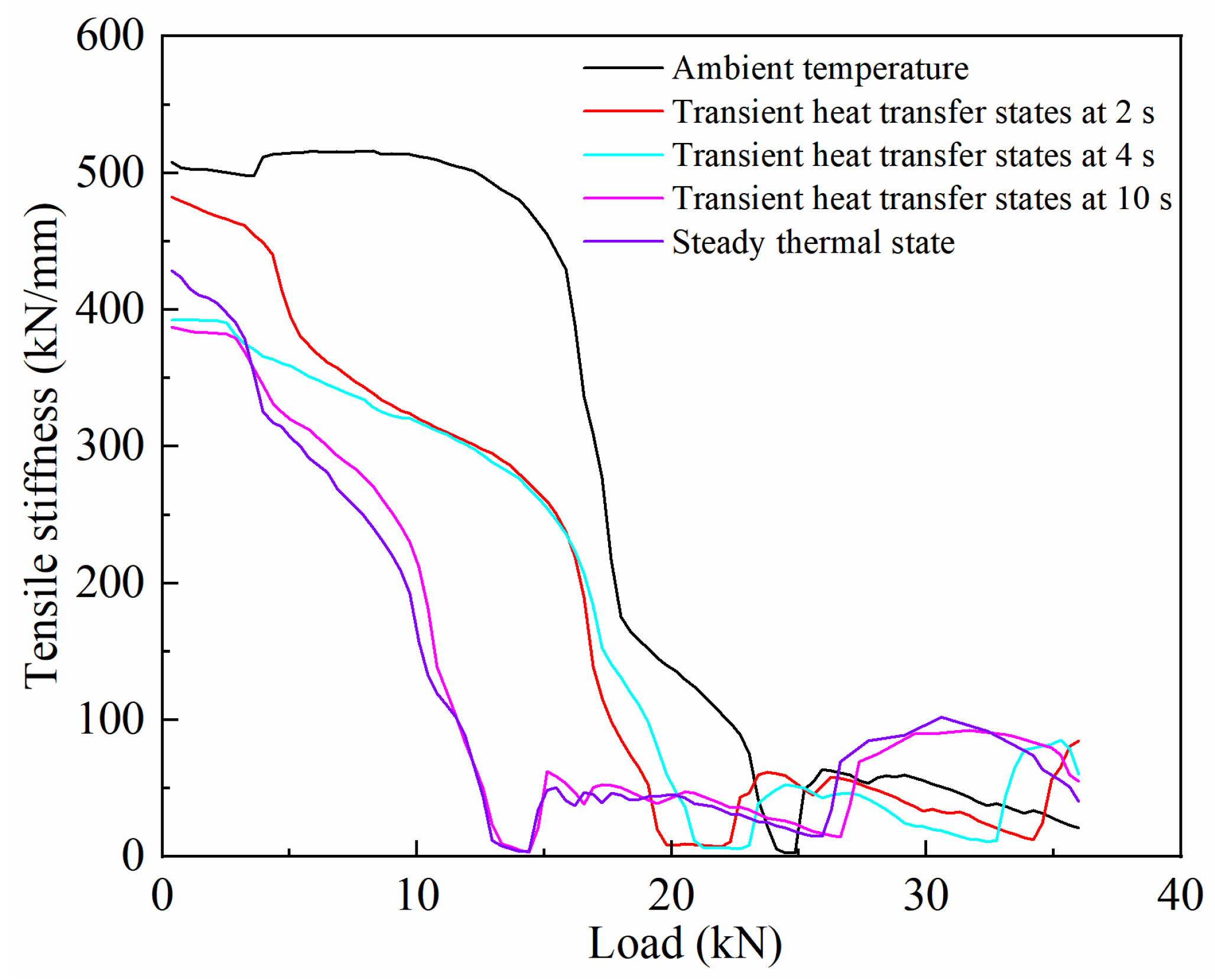
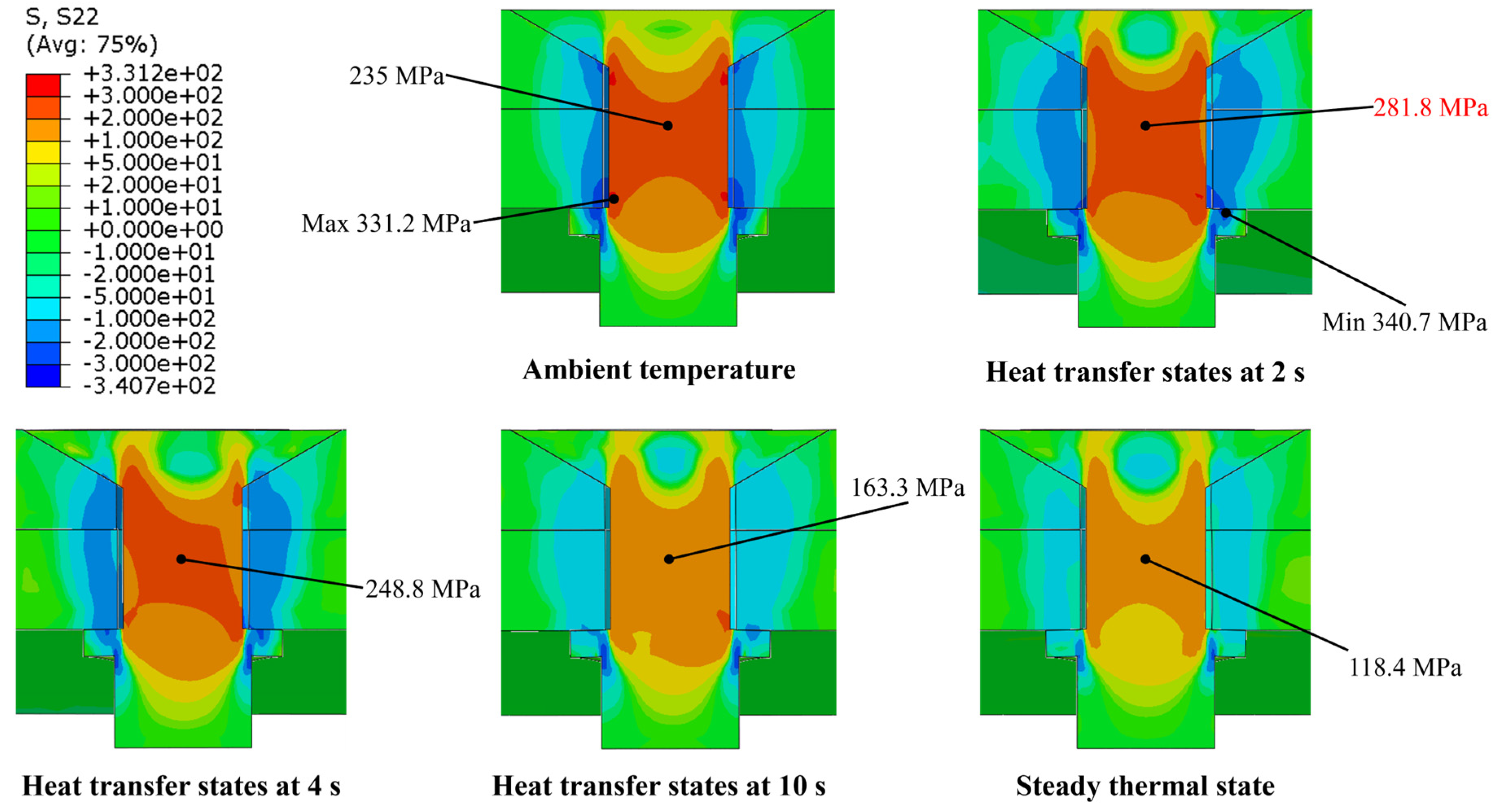
4.1.2. Under Different Heat Transfer Temperature Conditions
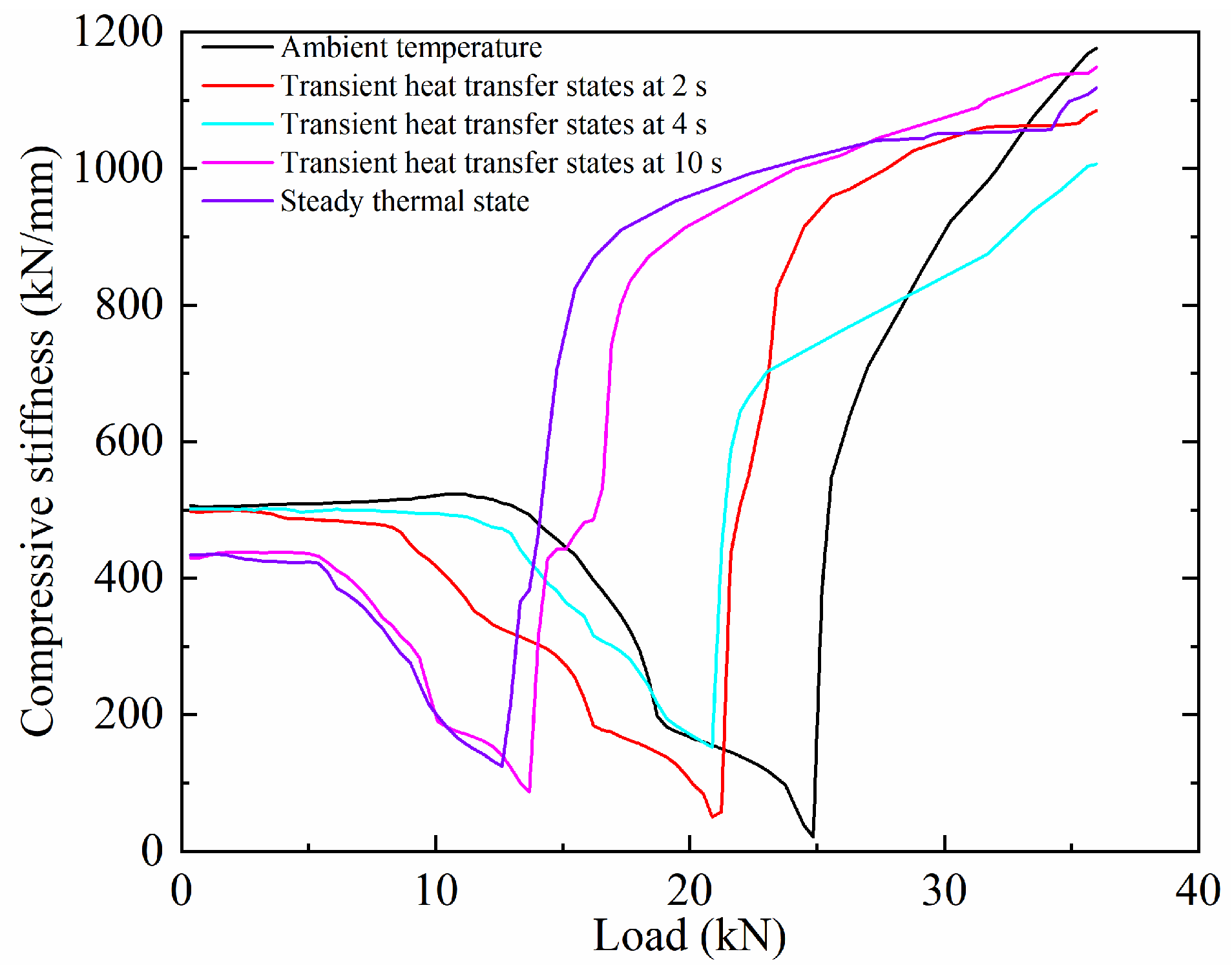
4.2. Mechanism of Effects on Compressive Stiffness
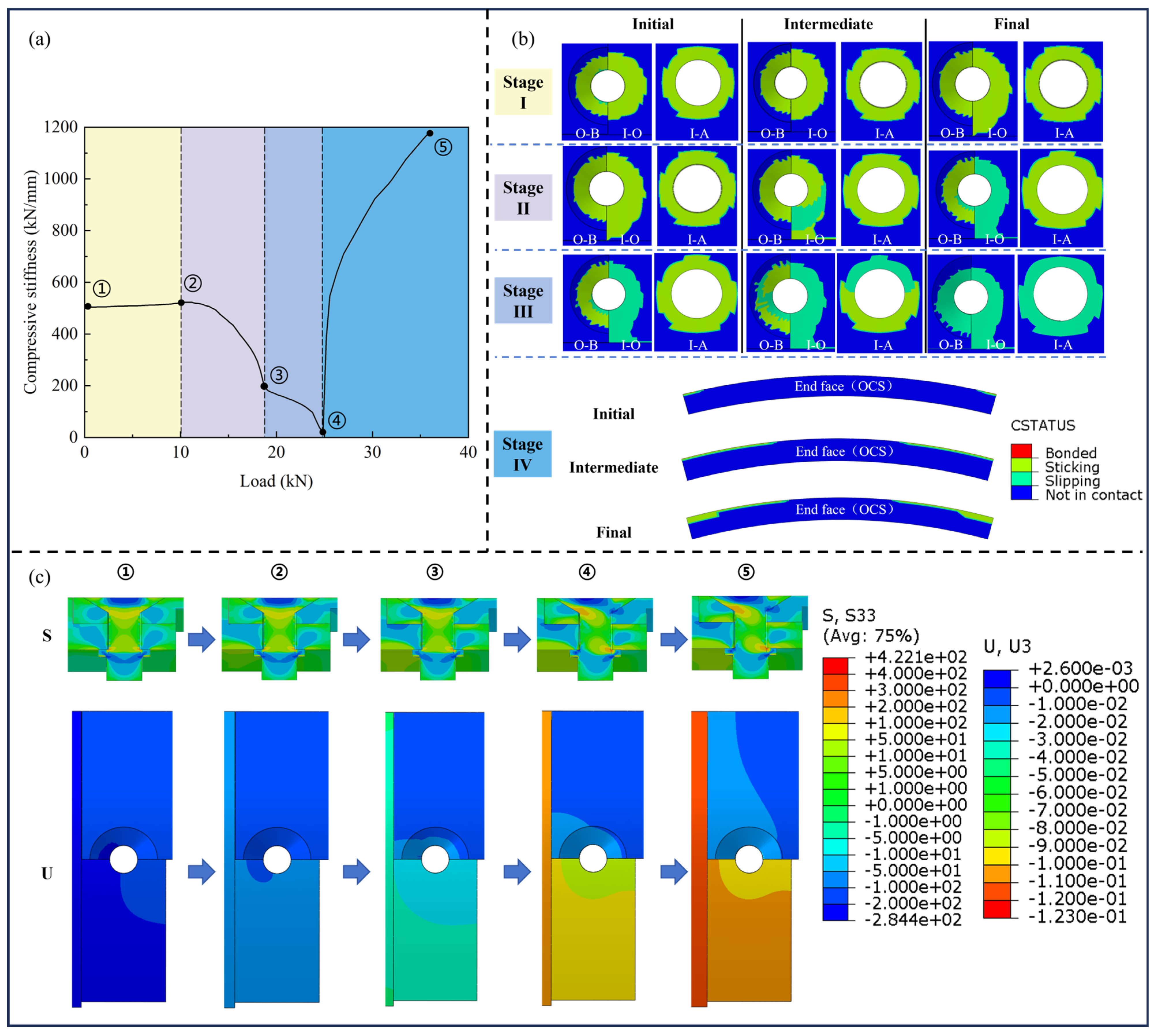
4.2.1. Under Ambient Temperature Conditions
4.2.2. Under Different Heat Transfer Temperature Conditions
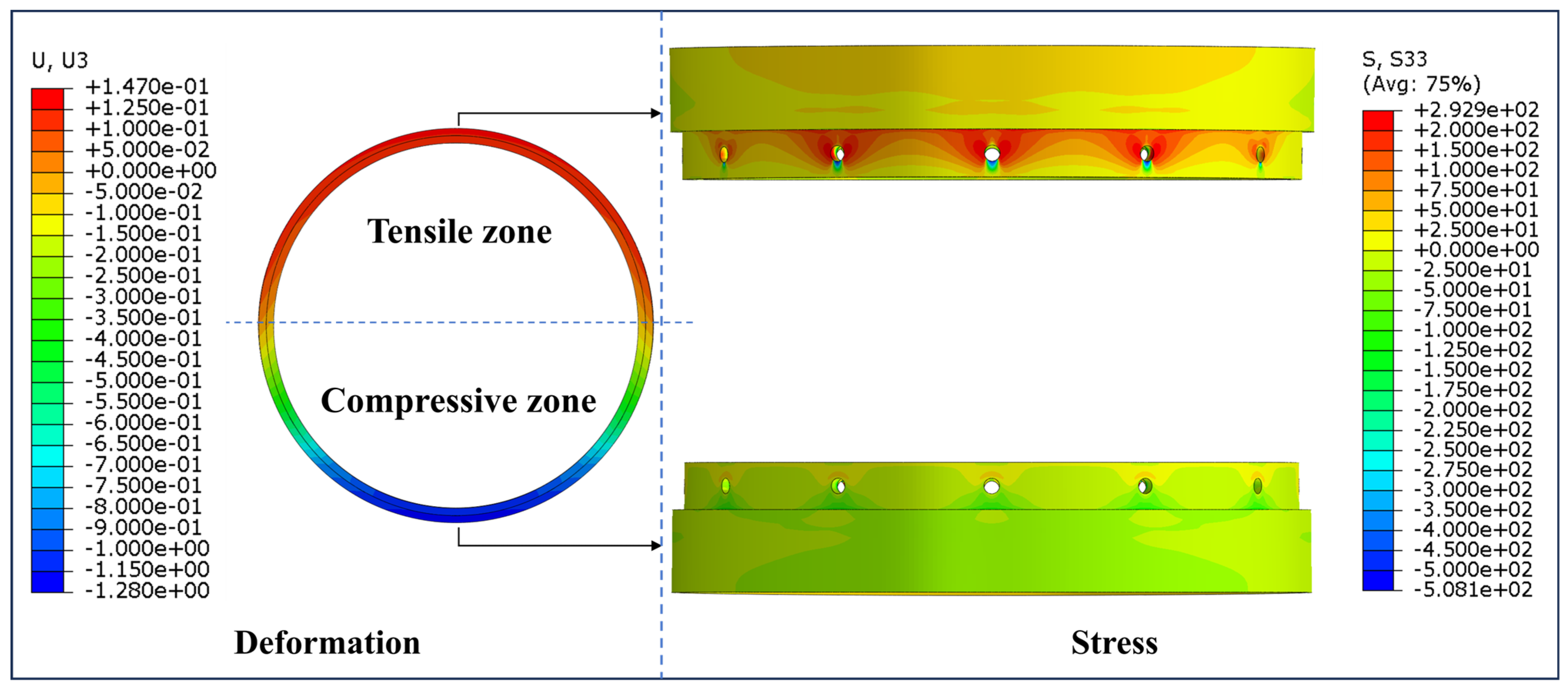
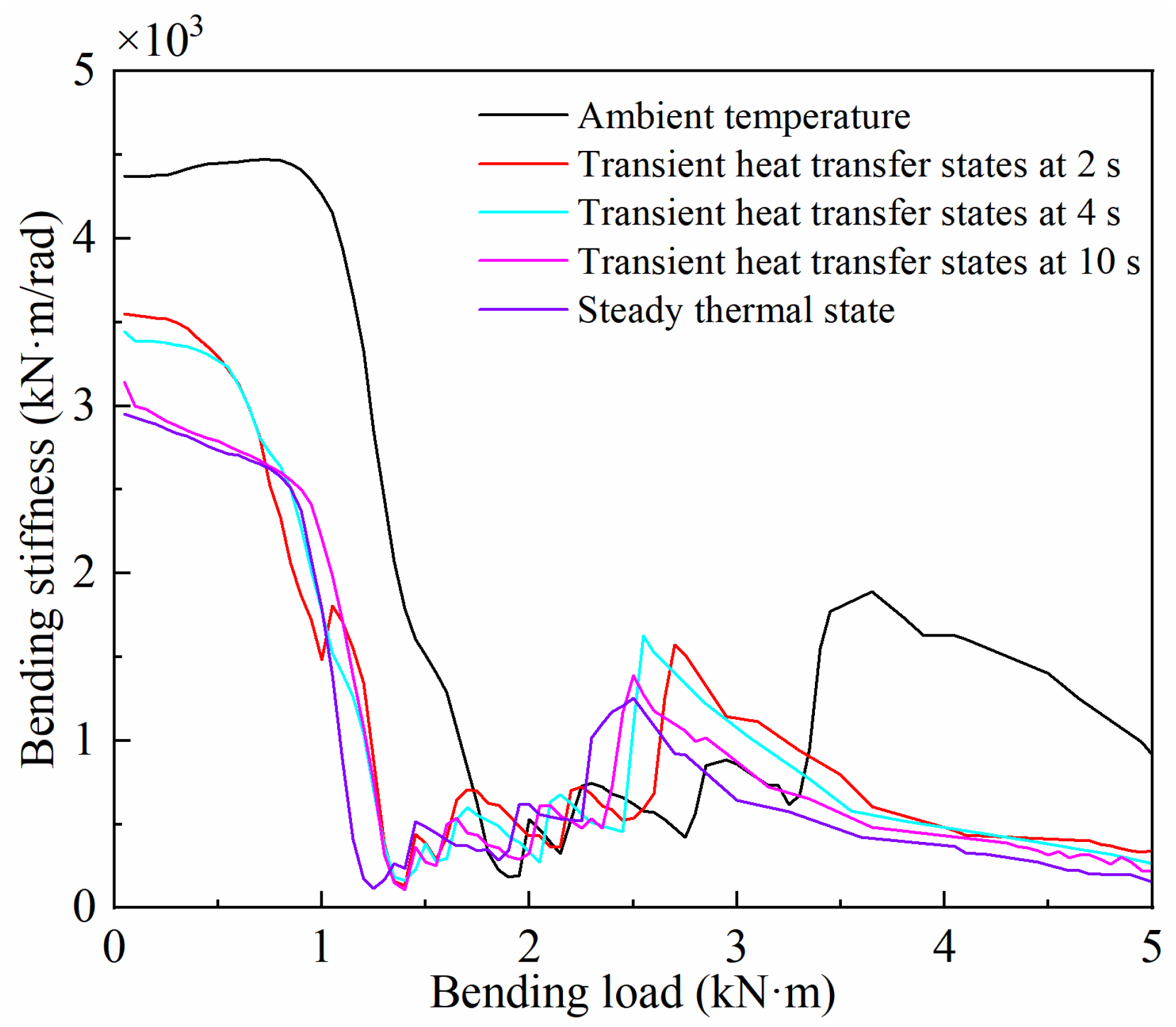
4.3. Mechanism of Effects on Bending Stiffness
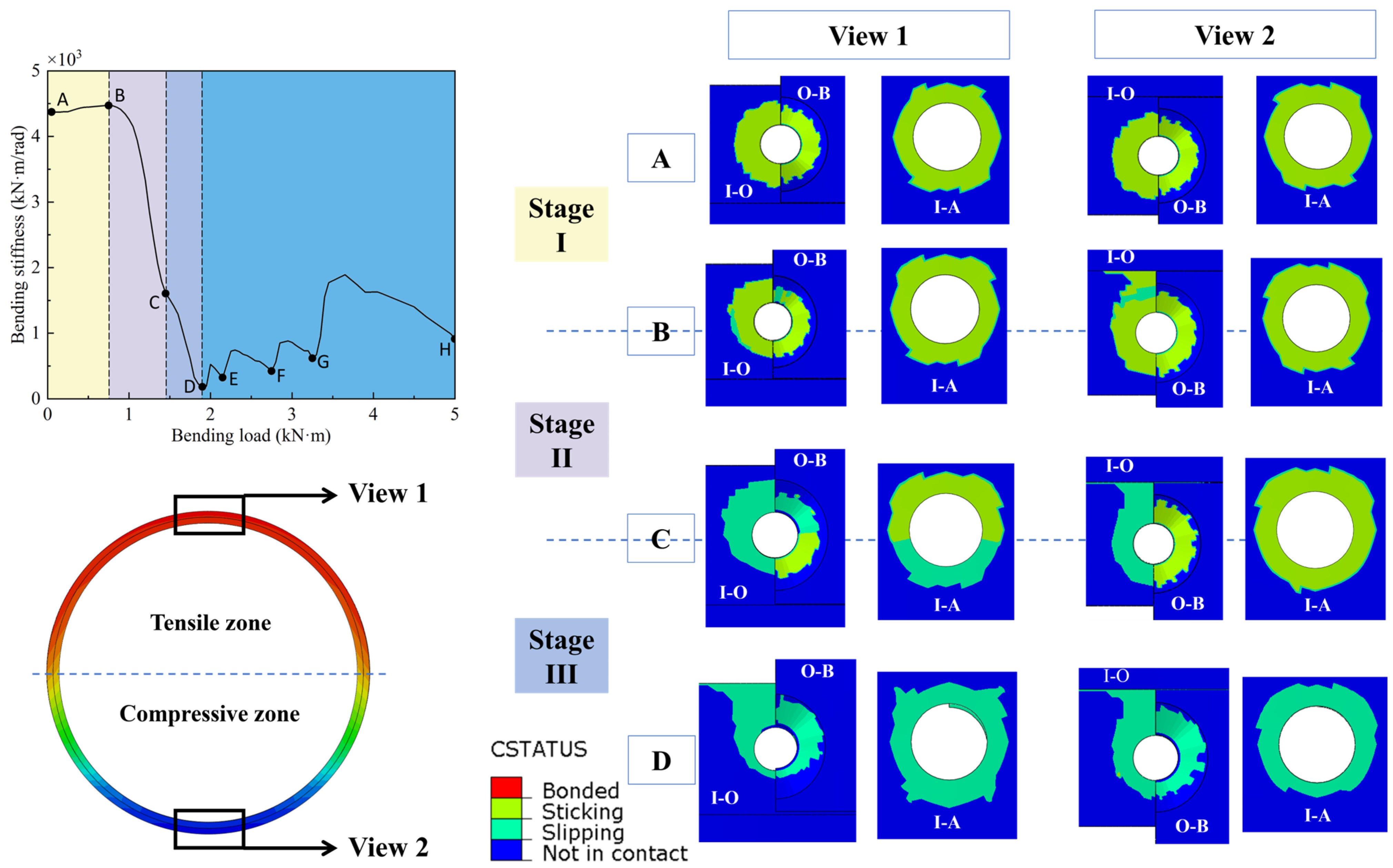
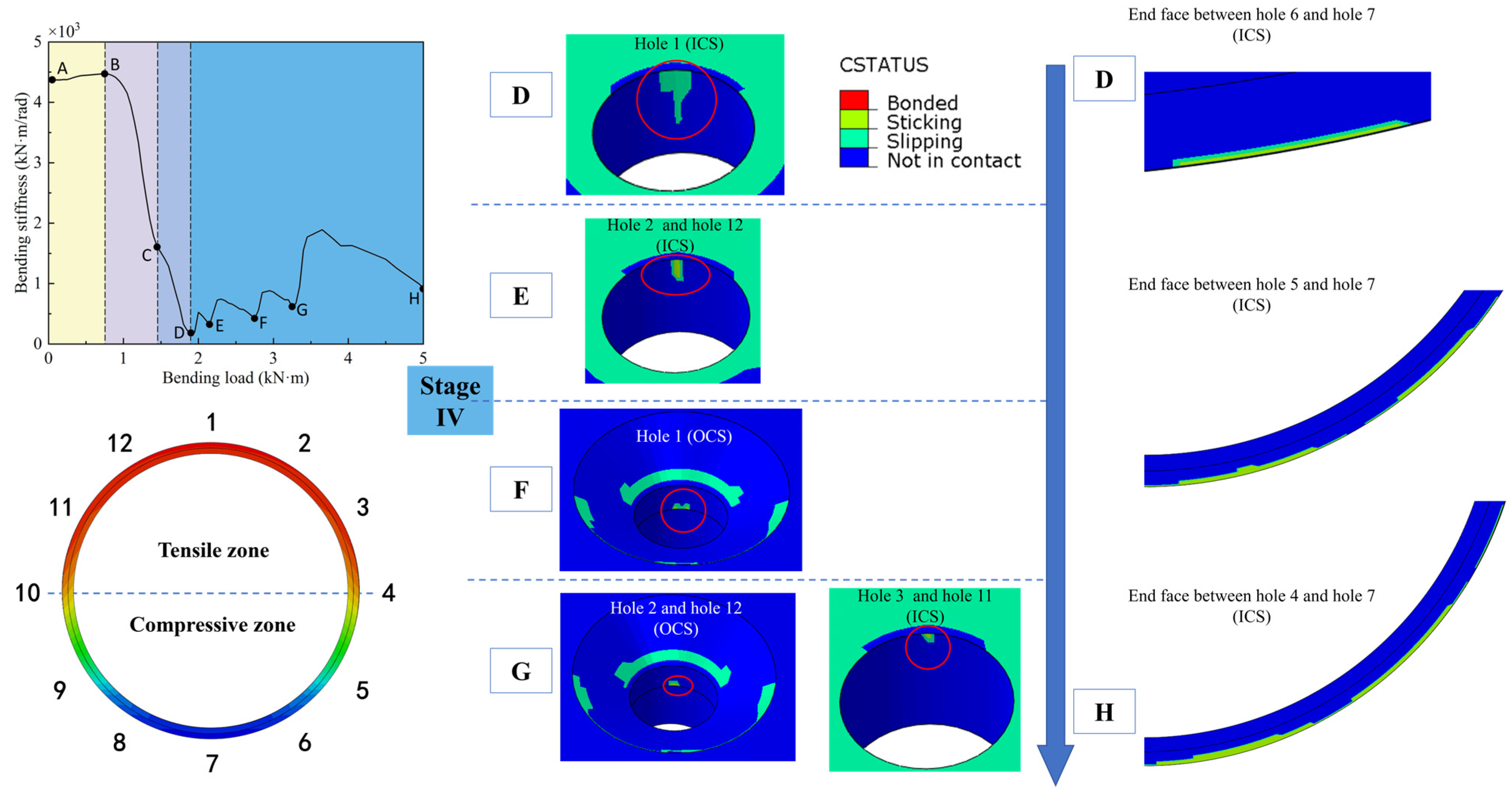
4.3.1. Under Ambient Temperature Conditions
4.3.2. Under Different Heat Transfer Temperature Conditions
5. Conclusions
Author Contributions
Funding
Data Availability Statement
Conflicts of Interest
References
- Yay, Ö.; Kunt, G.; Gürgen, S. Bolted joints in aerospace structures. In Joining Operations for Aerospace Materials; Gürgen, S., Ed.; Sustainable Aviation; Springer Nature: Cham, Switzerland, 2024; pp. 41–53. [Google Scholar]
- Zhang, S.; Guo, N.; Xu, C. Experimental and numerical investigations into tensile and compressive behavior of radial countersunk screw lap joints. Int. J. Non-Linear Mech. 2025, 177, 105159. [Google Scholar] [CrossRef]
- Gharouni, S.M.; Panahiha, H.M.; Jam, J.E. Space Shuttle solid rocket motor (SRM) field joint: Review paper. Metall. Mater. Eng. 2014, 20, 155–163. [Google Scholar] [CrossRef]
- Chakhari, J.; Daidié, A.; Chaib, Z.; Guillot, J. Numerical model for two-bolted joints subjected to compressive loading. Finite Elem. Anal. Des. 2008, 44, 162–173. [Google Scholar] [CrossRef]
- Chaves, C.E.; Fernandez, F.F. A review on aircraft joints design. Aircr. Eng. Aerosp. Technol. 2016, 88, 411–419. [Google Scholar] [CrossRef]
- Umakanth, M.; Kumar, P.U.; Narayanamurthy, V.; Korla, S. Predicting the rotational compliance of a flight inter-section joint. NMIMS J. Eng. Technol. Rev. 2021, 3, 62–73. [Google Scholar]
- Umakanth, M.; Kumar, P.U.; Narayanamurthy, V.; Korla, S. Influence of number of studs on compliance of a flight intersection joint. IOP Conf. Ser. Mater. Sci. Eng. 2021, 1166, 012050. [Google Scholar] [CrossRef]
- Umakanth, M.; Kumar, P.U.; Narayanamurthy, V.; Korla, S. Axial stiffness of a slot-nut type conformal segment joint. In Recent Advances in Applied Mechanics; Tadepalli, T., Narayanamurthy, V., Eds.; Lecture Notes in Mechanical Engineering; Springer: Singapore, 2022; pp. 367–377. [Google Scholar]
- Umakanth, M.; Kumar, P.U.; Narayanamurthy, V.; Korla, S. Modelling the joint rotational compliance of stud-pocket type flight inter-section joint. Thin-Walled Struct. 2023, 185, 110565. [Google Scholar] [CrossRef]
- Tang, Q.; Li, C.; She, H.; Wen, B. Vibration analysis of bolted joined cylindrical-cylindrical shell structure under general connection condition. Appl. Acoust. 2018, 140, 236–247. [Google Scholar] [CrossRef]
- Vadean, A.; Leray, D.; Guillot, J. Bolted joints for very large bearings—Numerical model development. Finite Elem. Anal. Des. 2006, 42, 298–313. [Google Scholar] [CrossRef]
- Li, X.; Zhang, X.; Wang, R.; Wang, W. Study on the behavior of sunk screw connection between cabins in the rocket. Acta Astronaut. 2020, 166, 199–208. [Google Scholar] [CrossRef]
- Zhang, X.; Wang, R.; Li, X.; Lu, C.; Wang, Z.; Wang, W. Dynamics modeling and characterization of sunk screw connection structure in small rockets. Aerospace 2022, 9, 648. [Google Scholar] [CrossRef]
- Mohapatra, R.; Palathingal, S.; Narayanamurthy, V.; Ramji, M. Modeling of counter-bore and counter-sink screw lap joints. Mech. Based Des. Struct. Mach. 2024, 52, 289–314. [Google Scholar] [CrossRef]
- Li, D.; Xu, C.; Li, R.; Zhang, W. Contact parameters evolution of bolted joint interface under transversal random vibrations. Wear 2022, 500–501, 204351. [Google Scholar] [CrossRef]
- Li, D.; Botto, D.; Li, R.; Xu, C.; Zhang, W. Experimental and theoretical studies on friction contact of bolted joint interfaces. Int. J. Mech. Sci. 2022, 236, 107773. [Google Scholar] [CrossRef]
- Yang, H.; Xu, C.; Guo, N. Modelling tangential friction considering contact pressure distribution of rough surfaces. Mech. Syst. Signal Process. 2023, 198, 110406. [Google Scholar] [CrossRef]
- Verwaerde, R.; Guidault, P.-A.; Boucard, P.-A. A non-linear finite element connector model with friction and plasticity for the simulation of bolted assemblies. Finite Elem. Anal. Des. 2021, 195, 103586. [Google Scholar] [CrossRef]
- Sehgal, A.K.; Juneja, C.; Singh, J.; Kalsi, S. Comparative analysis and review of materials properties used in aerospace industries: An overview. Mater. Today Proc. 2022, 48, 1609–1613. [Google Scholar] [CrossRef]
- Trofimov, E.A.; Lutfullin, R.Y.; Kashaev, R.M. Elastic properties of the titanium alloy Ti-6Al-4V. Lett. Mater. 2015, 5, 67–69. [Google Scholar] [CrossRef]
- Ibrahim, R.A.; Pettit, C.L. Uncertainties and dynamic problems of bolted joints and other fasteners. J. Sound Vib. 2005, 279, 857–936. [Google Scholar] [CrossRef]
- Hu, J.; Zhang, K.; Cheng, H.; Qi, Z. Mechanism of bolt pretightening and preload relaxation in composite interference-fit joints under thermal effects. J. Compos. Mater. 2020, 54, 4929–4946. [Google Scholar] [CrossRef]
- Mayeaux, B.M.; Collins, T.E.; Jerman, G.A.; McDanels, S.J.; Piascik, R.S.; Russell, R.W.; Shah, S.R. Materials analysis: A key to unlocking the mystery of the Columbia tragedy. JOM 2004, 56, 20–30. [Google Scholar] [CrossRef]
- Alkatan, F.; Stephan, P.; Daidie, A.; Guillot, J. Equivalent axial stiffness ofvarious components in bolted joints subjected to axial loading. Finite Elem. Anal. Des. 2007, 443, 589–598. [Google Scholar] [CrossRef]
- Li, X.; Zhang, X. The strength analysis of steel sunk screw connections in the rocket. Acta Astronaut. 2017, 137, 345–352. [Google Scholar] [CrossRef]
- Mohapatra, R.; Palathingal, S.; Narayanamurthy, V.; Ramji, M. Modeling the mechanical behavior of torque-tightened screw lap joints. Eng. Struct. 2024, 298, 117071. [Google Scholar] [CrossRef]
- Mohapatra, R.; Palathingal, S.; Narayanamurthy, V.; Ramji, M. Modeling the joint rotational stiffness of a radial-type flight intersection joint: An analytical approach, numerical simulation, and experimental validation. Thin-Walled Struct. 2024, 196, 111473. [Google Scholar] [CrossRef]
- Mohapatra, R.; Palathingal, S.; Narayanamurthy, V.; Ramji, M. Investigating the influence of pre-tightening on radial-type flight intersection joints using a spring-mass model. Proc. Inst. Mech. Eng. Part. G J. Aerosp. Eng. 2025, 239, 702–723. [Google Scholar] [CrossRef]
- Marek, P.; Pawlicki, J.; Mościcki, A. Tightness problems at the flange connection in transient temperature and high pressure condition. Eng. Fail. Anal. 2022, 133, 105986. [Google Scholar] [CrossRef]
- Abid, M. Determination of safe operating conditions for gasketed flange joint under combined internal pressure and temperature: A finite element approach. Int. J. Press Vessels Pip. 2006, 83, 433–441. [Google Scholar] [CrossRef]
- Omiya, Y.; Sawa, T. Thermal stress analysis and the sealing performance evaluation of bolted flange connection at elevated temperature. In Proceedings of the ASME 2009 Pressure Vessels and Piping Conference, Prague, Czech Republic, 26–30 July 2009; High Pressure Technology; Nondestructive Evaluation Division; Student Paper Competition; ASMEDC: New York, NY, USA, 2009; Volume 5, pp. 397–408. [Google Scholar]
- Sawa, T.; Muramatsu, A.; Kumano, H. Mechanical behavior of bolted joints under thermal changes. In Reliability, Stress Analysis, and Failure Prevention Aspects of Adhesive and Bolted Joints, Rubber Components, Composite Springs; American Society of Mechanical Engineers: New York, NY, USA, 1998; pp. 141–150. [Google Scholar]
- Jaglinski, T.; Lakes, R. Creep behavior of Al-Si Die-Cast alloys. J. Eng. Mater. Technol. 2004, 126, 378–383. [Google Scholar] [CrossRef]
- Jaglinski, T.; Nimityongskul, A.; Schmitz, R.; Lakes, R.S. Study of bolt load loss in bolted aluminum joints. J. Eng. Mater. Technol. 2007, 129, 48–54. [Google Scholar] [CrossRef][Green Version]
- Kettler, K.; Klenk, A.; Weihe, S. Experimental and numerical investigations on the relaxation behavior of power plant flange connections under steady state and transient conditions. J. Press Vessel Technol. 2024, 146, 041302. [Google Scholar] [CrossRef]
- Coman, C.D.; Constantinescu, D.M. Temperature effects on joint strength and failure modes of hybrid aluminum–composite countersunk bolted joints. Proc. Inst. Mech. Eng. Part J. Mater. Des. Appl. 2019, 233, 2204–2218. [Google Scholar] [CrossRef]
- Coman, C.D. Thermal influence on the stiffness of hybrid metal-composite countersunk bolted joints. INCAS Bull. 2021, 13, 35–45. [Google Scholar] [CrossRef]
- Sasikumar, A.; Guerrero, J.; Quintanas-Corominas, A.; Costa, J. Numerical study to understand thermo-mechanical effects on a composite-aluminum hybrid bolted joint. Compos. Struct. 2021, 275, 114396. [Google Scholar] [CrossRef]
- Madhusudana, C.V. Thermal Contact Conductance; Springer: New York, NY, USA, 1996. [Google Scholar]
- Childs, P.R.N. Fastening and power screws. In Mechancial Design Engineering Handbook; Elsevier: Amsterdam, The Netherlands, 2014; pp. 677–719. [Google Scholar]







| Component | Material | Young’s Modulus (MPa) | Poisson’s Ratio | Density (t/mm3) | Tensile Strength (MPa) | Yield Strength (MPa) | Elongation (%) |
|---|---|---|---|---|---|---|---|
| Cylindrical shell | AL 6061 | 68,900 (25 °C) 67,200 (50 °C) 64,800 (100 °C) 62,000 (150 °C) 58,600 (200 °C) | 0.33 | 2.8 × 10⁻⁹ | 310 (25 °C) 290 (100 °C) 230 (150 °C) 130 (200 °C) | 276 (25 °C) 262 (100 °C) 214 (150 °C) 103 (200 °C) | 17 (25 °C) 18 (100 °C) 20 (150 °C) 28 (200 °C) |
| Bolts and nuts | AISI 304 | 195,000 (25 °C) 192,000 (50 °C) 190,000 (100 °C) 186,000 (150 °C) 183,000 (200 °C) | 0.29 | 7.85 × 10⁻⁹ | 600 (25 °C) 565 (100 °C) 545 (150 °C) 530 (200 °C) | 290 (25 °C) 255 (100 °C) 240 (150 °C) 225 (200 °C) | 40 (25 °C) 42 (100 °C) 45 (150 °C) 50 (200 °C) |
| Component | Material | Specific Heat Capacity (mJ/(t·K)) | Thermal Conductivity (mW/(mm·K)) | Coefficient of Thermal Expansion (K−1) |
|---|---|---|---|---|
| Cylindrical shell | AL 6061 | 8.97 × 10⁸ (25 °C) 9.02 × 10⁸ (50 °C) 9.21 × 10⁸ (100 °C) 9.46 × 10⁸ (150 °C) 9.73 × 10⁸ (200 °C) | 167 (25 °C) 173 (50 °C) 177 (100 °C) 180 (150 °C) 186 (200 °C) | 2.36 × 10⁻⁵ (25 °C) 2.41 × 10⁻⁵ (50 °C) 2.48 × 10⁻⁵ (100 °C) 2.54 × 10⁻⁵ (150 °C) 2.61 × 10⁻⁵ (200 °C) |
| Bolts and nuts | AISI 304 | 5.02 × 10⁸ (25 °C) 5.05 × 10⁸ (50 °C) 5.15 × 10⁸ (100 °C) 5.25 × 10⁸ (150 °C) 5.35 × 10⁸ (200 °C) | 15 (25 °C) 15.4 (50 °C) 16.1 (100 °C) 16.7 (150 °C) 17.3 (200 °C) | 1.65 × 10⁻⁵ (25 °C) 1.68 × 10⁻⁵ (50 °C) 1.72 × 10⁻⁵ (100 °C) 1.76 × 10⁻⁵ (150 °C) 1.80 × 10⁻⁵ (200 °C) |
| Component | Element Number | Node Number | Element Size (mm) | Jacobian Ratio |
|---|---|---|---|---|
| Outer cylindrical shell | 78,912 | 106,488 | 0.13–2.24 | 0.36–1 |
| Inner cylindrical shell | 116,126 | 148,680 | 0.1–2.03 | 0.76–1 |
| Bolt & Anchor nut | 25,296 | 29,894 | 0.06–1.54 | 0.52–1 |
| Total | 498,590 | 613,896 | 0.06–2.24 | 0.36–1 |
| Heat Transfer Time | Average Structural Temperature | Purpose of Analysis |
|---|---|---|
| 0 s | 25 °C | Baseline stiffness characteristics |
| 2 s | 136 °C | Initial rapid heat transfer |
| 4 s | 155.6 °C | Ongoing through-thickness conduction |
| 10 s | 180 °C | Near equilibrium of shells |
| 60 s | 200 °C | Fully stabilized temperature field |
| Special Points | Tensile Stiffness (kN/mm) | Corresponding Load (kN) |
|---|---|---|
| ① | 503 | 0.36 |
| ② | 513 | 9.36 |
| ③ | 175 | 18 |
| ④ | 2.82 | 24.84 |
| ⑤ | 64.01 | 25.92 |
| ⑥ | 21.25 | 36 |
Disclaimer/Publisher’s Note: The statements, opinions and data contained in all publications are solely those of the individual author(s) and contributor(s) and not of MDPI and/or the editor(s). MDPI and/or the editor(s) disclaim responsibility for any injury to people or property resulting from any ideas, methods, instructions or products referred to in the content. |
© 2025 by the authors. Licensee MDPI, Basel, Switzerland. This article is an open access article distributed under the terms and conditions of the Creative Commons Attribution (CC BY) license.
Share and Cite
Guo, N.; Yun, W.; Zhang, S.; Du, H.; Xu, C. Finite Element Study on the Stiffness Variation Mechanisms of Radially Bolted Cylindrical–Cylindrical Shell Joints Under Transient Thermo-Mechanical Loading. Aerospace 2026, 13, 49. https://doi.org/10.3390/aerospace13010049
Guo N, Yun W, Zhang S, Du H, Xu C. Finite Element Study on the Stiffness Variation Mechanisms of Radially Bolted Cylindrical–Cylindrical Shell Joints Under Transient Thermo-Mechanical Loading. Aerospace. 2026; 13(1):49. https://doi.org/10.3390/aerospace13010049
Chicago/Turabian StyleGuo, Ning, Weizhen Yun, Shuo Zhang, Haoyu Du, and Chao Xu. 2026. "Finite Element Study on the Stiffness Variation Mechanisms of Radially Bolted Cylindrical–Cylindrical Shell Joints Under Transient Thermo-Mechanical Loading" Aerospace 13, no. 1: 49. https://doi.org/10.3390/aerospace13010049
APA StyleGuo, N., Yun, W., Zhang, S., Du, H., & Xu, C. (2026). Finite Element Study on the Stiffness Variation Mechanisms of Radially Bolted Cylindrical–Cylindrical Shell Joints Under Transient Thermo-Mechanical Loading. Aerospace, 13(1), 49. https://doi.org/10.3390/aerospace13010049