3.1. Fitting of Aerodynamic Coefficients
For complex aerodynamic geometries, two primary approaches are commonly used to determine aerodynamic coefficients: numerical simulation and wind tunnel testing [
29]. In this study, computational fluid dynamics (CFD) is employed using the ANSYS Fluent solver (version 2021 R1) to investigate the variation in the aerodynamic coefficients of a tethered aerostat with respect to the yaw angle.
A representative tethered aerostat configuration is selected as the research model. Because the tethered aerostat maintains a relatively high internal overpressure under normal operating conditions, and its large geometric scale renders small envelope deformations negligible—these deformations being higher-order effects compared with the aerostat’s overall motion—the aerostat is modeled as a rigid body in the simulation [
30], and structural deformation is neglected. Considering that its operational wind speed generally remains below 50 m/s (approximately 0.15 Ma), the effects of air compressibility can be ignored.
Considering that the wake region generated by a solid body may extend several times the characteristic length [
31], a large-scale computational domain encompassing both the aerostat and its wake is established. Due to the viscous effects of the fluid, a pronounced boundary layer forms around the aerostat surface. Using
to determine the boundary-layer mesh parameters [
32], the fundamental parameters of the tethered-aerostat simulation model and the boundary-layer settings are summarized in
Table 3. To capture this effect accurately, an overset grid technique [
33] is adopted, in which a cylindrical subdomain surrounding the aerostat is embedded within the main flow field. Data transfer between the two domains is achieved via grid-node interpolation, while local mesh refinement is applied in the subdomain to resolve the boundary layer and near-field flow structures, ensuring high accuracy and reliability of the simulation results.
The turbulence model adopted in this study is the shear-stress transport k–ω (SST k–ω) model. This model employs the k–ω formulation in the near-wall region to accurately resolve boundary-layer flows, while automatically transitioning to the k–ε formulation in the far field to ensure numerical stability [
34]. Its built-in shear-stress limiter allows more accurate prediction of flow separation induced by adverse pressure gradients. For bluff bodies such as tethered aerostats operating at high Reynolds numbers—where complex separated flows, vortex shedding, and broad wakes are prominent—the SST k–ω model has been widely validated as a reliable choice, capable of accurately predicting aerodynamic loads and separation characteristics.
During normal operation, the pitch angle of the tethered aerostat typically ranges from 5° to 8° [
35], within which its aerodynamic performance is optimal. Accordingly, a fixed pitch angle of 5° is adopted for subsequent analyses.
To evaluate the independence of the simulation results from mesh resolution, a computational model was established and tested using three mesh densities for grid-independence verification. The incoming flow velocity is set to 10 m/s, with an initial wind direction of
. As shown in
Table 4, when the mesh count increases from 1.9 million to 3.3 million, the variations in key physical quantities are relatively significant. However, further increasing the mesh to 5.7 million yields only minor differences compared with the 3.3-million mesh, indicating that the solution has effectively converged at this resolution. Therefore, considering both computational accuracy and efficiency, the mesh with 3.3 million cells was selected for the subsequent numerical simulations.
Four inflow velocities—1 m/s, 5 m/s, 10 m/s, and 20 m/s—were selected to examine the sensitivity of aerodynamic coefficients to the Reynolds number. The results, summarized in
Table 5, show that all errors remain at very small magnitudes. Given the large characteristic size of the tethered aerostat, the Reynolds numbers corresponding to its operational inflow velocities (1 m/s to 20 m/s) are far above the transitional Reynolds number. This indicates that the flow field remains in a fully developed turbulent regime throughout the entire operating range.
Under an inflow velocity of 10 m/s, steady-state simulations are performed to obtain yawing moments corresponding to different yaw angles. Furthermore, by imposing prescribed yaw rotational velocities, the yawing moments at different yaw rates—representing yaw damping—are determined. Based on these data, polynomial curve fitting is conducted for both the yawing moment and yaw damping. The yaw angle fitting range is set from −50° to 50°, and the yaw rate range from −5°/s to 5°/s. Using the least-squares method, polynomial functions of the steady-state aerodynamic coefficients are obtained, with yaw angle and yaw rate as independent variables. The fitting process minimizes the sum of squared errors between the simulated and fitted values.
Table 6 presents the polynomial coefficients of the fitted aerodynamic coefficient equations. As shown in Equation (24) and
Table 7, the mean absolute error (MAE) does not exceed 0.13, and the root mean square error (RMSE) remains below 0.24, demonstrating satisfactory fitting accuracy.
Consequently, the fitted expressions for the yaw moment coefficient
as a function of yaw angle
ψ, and for the yaw damping coefficient
as a function of yaw rate
, are obtained as follows:
In practical tethered aerostat operations, the roll angle typically does not exceed ±6°.
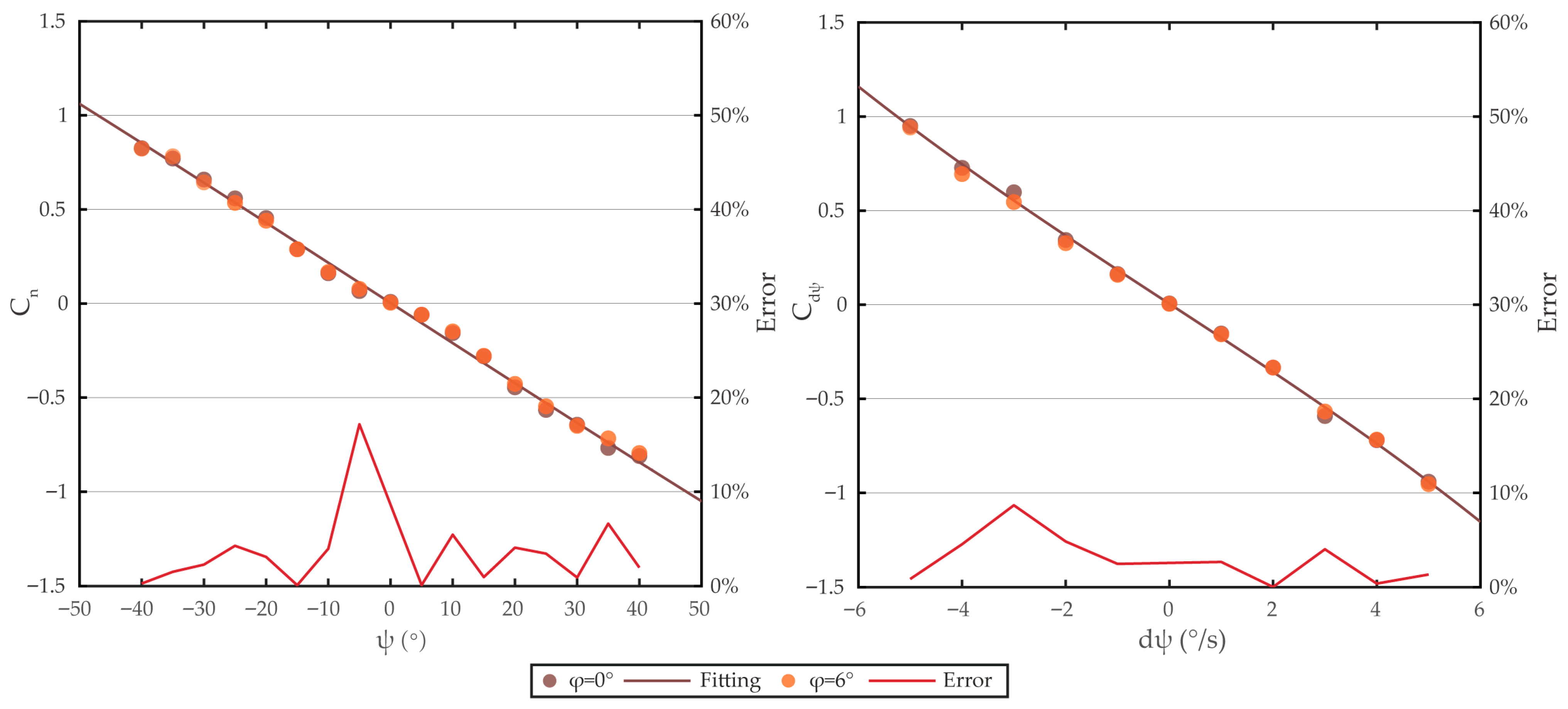
To evaluate the influence of roll angle on aerodynamic characteristics, a steady-state aerodynamic simulation was conducted with a maximum roll angle of 6°. The corresponding yawing moment and yaw damping coefficients were obtained and compared with the baseline case at a roll angle of 0°. The relative error distributions of the two coefficients are shown in
Figure 5.
The results indicate that under the 6° roll condition, the relative errors of both the yawing moment coefficient and the yaw damping coefficient are generally within 5%. Although the maximum relative error (18%) occurs at a yaw angle of −5°, the corresponding absolute error is only 0.011, which has a negligible effect on the overall fitting accuracy. This anomaly primarily arises from the small baseline value under this operating condition, which significantly amplifies the relative error. Based on the above analysis, it can be concluded that within the small roll-angle range , the yawing moment and yaw damping coefficients of the tethered aerostat are insensitive to variations in roll angle and can therefore be approximated as M(φ) = 0.
3.2. Simulation Model
This study focuses on the lateral stability of tethered aerostats. The governing equations—including the momentum, turbulence, and energy equations—are solved using a segregated iterative scheme based on the SIMPLE algorithm [
36]. To further simulate the dynamic response of the tethered aerostat under wind-field conditions, a transient simulation approach [
37] is employed. A user-defined function (UDF) is used to assign the model’s rotational inertia and corresponding degrees of freedom, while the gravitational, buoyant, and tether tension moments associated with the roll motion are applied to the aerostat body. Meanwhile, the dynamic mesh technique [
38], combined with smoothing and local remeshing methods, is utilized to update the mesh. The simulation is conducted in double-precision format, enabling the acquisition of the time-dependent variations in the aerostat’s attitude angles.
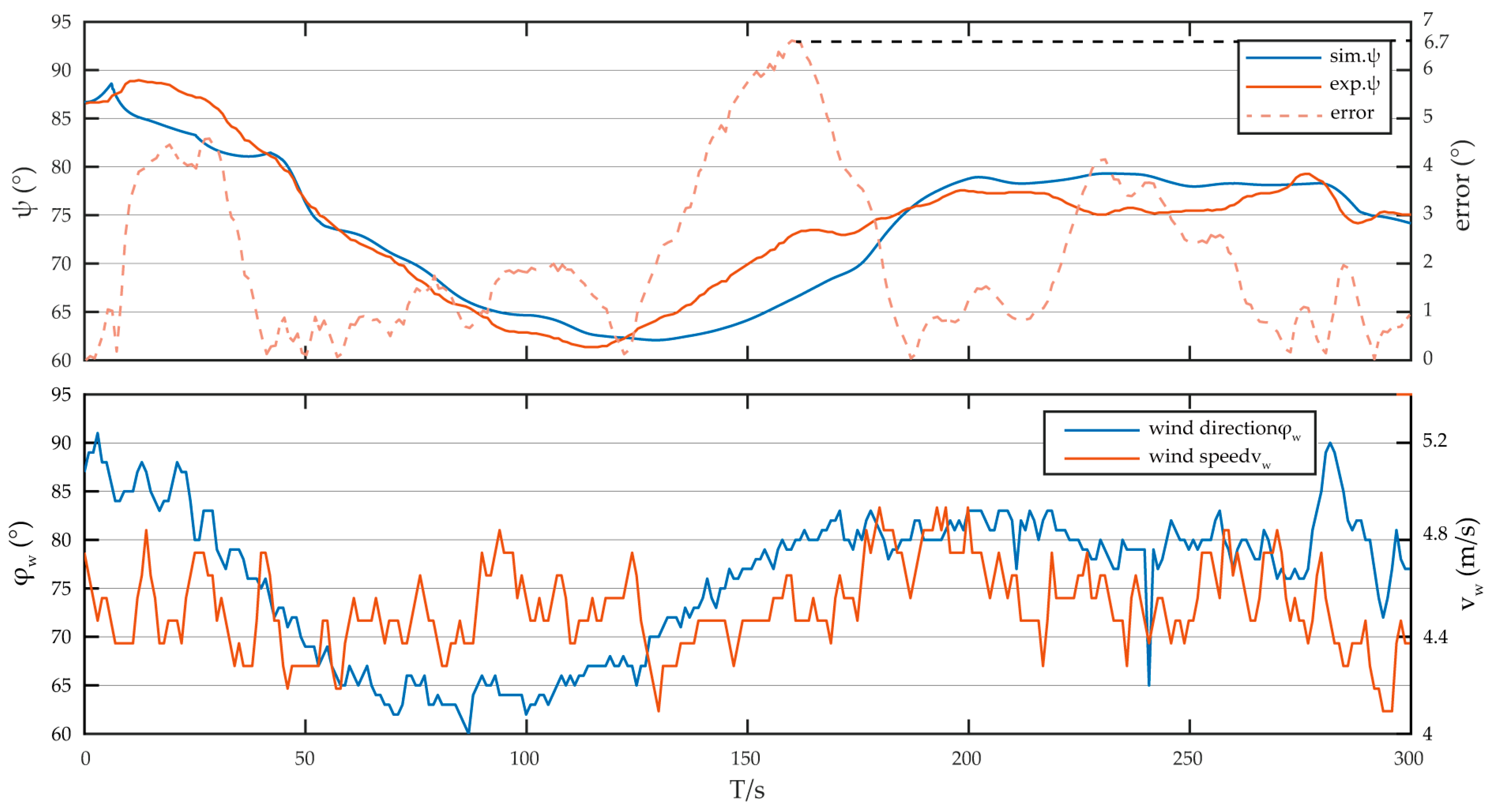
To verify the accuracy of the CFD model, multiple field experiments were conducted on the selected tethered aerostat system. A tethered aerostat identical in configuration and dimensions to the simulation model was used, and attitude and wind sensors were installed on the aerostat to obtain the corresponding flight parameters and wind-field data. The measured wind-field parameters were used as model inputs for simulation, and the simulated results were compared with the attitude data obtained from field experiments, as shown in
Figure 6. The comparison shows that the simulation curve is consistent with the experimental data in terms of overall trend; the simulated response oscillates around the experimental curve but exhibits a noticeable phase lag. During the initial stage (0–100 s), the simulation and experimental curves match closely; thereafter, the simulation gradually lags behind the experimental data, reaching a maximum deviation of −6.7° at 162 s. The mean absolute error (MAE) of the yaw-angle prediction is 2.16°, and the root-mean-square error (RMSE) is 2.74°. The ratio of RMSE to MAE is approximately 1.29, indicating that the error distribution is close to normal and no extreme deviations occur. The RMSE corresponds to about 9% of the full dynamic range (approximately 30°).
The discrepancies between the simulation and experimental results can be attributed primarily to three factors. First, the simulation model employs a simplified treatment of pitch attitude: the aerostat pitch angle is fixed in the simulation, whereas small dynamic variations occur during the experiments. Although these variations remain close to the prescribed value of 5° in the simulations, the resulting dynamic effects can still introduce observable deviations. Second, uncertainties exist in the rotational inertia parameters used in the simulations. These parameters are derived from theoretical calculations, whereas in the experiments, the actual installation positions of components such as the payload gondola may differ from the theoretical assumptions, leading to discrepancies between the true system inertia and the values adopted in the simulations. Finally, the errors exhibit a cumulative nature in the time domain. Because the simulation spans a long duration, small initial discrepancies grow progressively with integration time. This explains why the simulation and experimental curves agree well at the beginning but gradually diverge as time progresses.
Despite the phase offset, the overall error remains within 10%, and the response trends are consistent. Considering the inherent difficulty of fully reproducing complex real-world conditions through numerical simulation, this level of deviation is deemed acceptable. Therefore, the developed CFD model is considered reliable and suitable for subsequent analyses.
3.3. Response Curve Analysis
With an input wind direction of
and a wind speed of
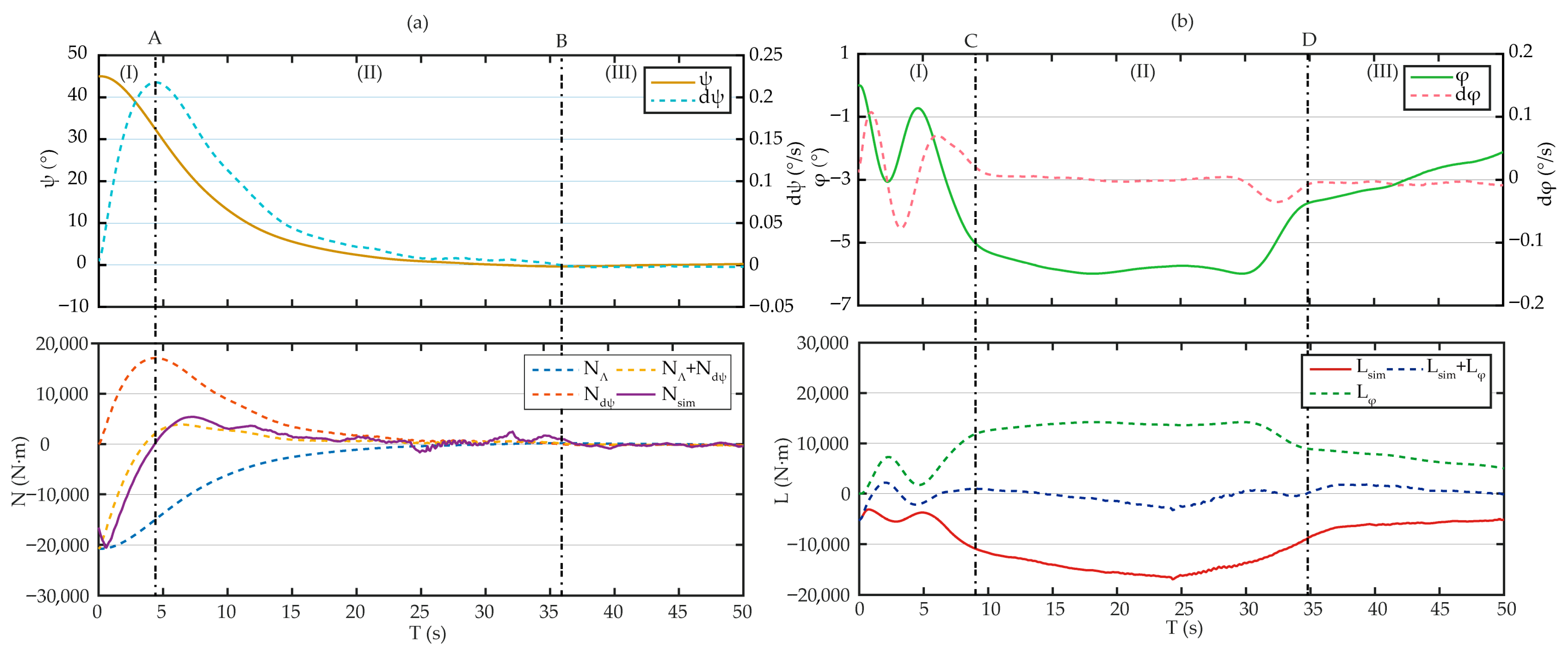
, a lateral stability simulation was conducted. The response curves of yaw and roll angles, as well as the variation in yawing and rolling moments, are shown in
Figure 7.
As observed from the curves, the yaw angle exhibits an initial acceleration followed by deceleration, gradually decreasing from 45° over approximately 30–40 s. It slightly overshoots beyond 0°, producing a small overshoot, and eventually stabilizes near 0°. According to Equation (25):
The angular acceleration is determined by the combined effects of the aerodynamic yawing moment and the yaw damping moment. Based on their relative relationship, the yaw-angle response process can be divided into three stages: (I) (from 0 s to dash-dotted line A) In the initial response stage, the aerostat’s angular velocity is low, resulting in weak yaw damping, while the yawing moment reaches its maximum. Consequently, the angular acceleration is at its peak, and the yaw angle exhibits a rapid convergence trend. (II) (from dash-dotted line A to dash-dotted line B) As the yaw angle decreases and the angular velocity increases, the yaw damping becomes significantly stronger and gradually exceeds the diminishing yawing moment, leading to a reduction in angular acceleration and a slower convergence of the yaw angle. (III) (from dash-dotted line B to 50 s) When the yaw angle approaches 0°, the yawing moment tends toward zero, but the system still possesses a certain angular velocity, causing the yaw angle to slightly overshoot the equilibrium position. At this stage, the yawing moment and damping jointly form a decelerating moment, ultimately driving the yaw angle to a stable equilibrium state.
The roll angle exhibits a similarly distinct phase differentiation. In stage (I) (from 0 s to dash-dotted line C), due to the step input of the incoming flow, oscillatory behavior is observed in the roll response, with its characteristic equation and response frequency given as:
where
represents the damping term in the characteristic equation,
denotes the external moment term after eliminating the influence of
φ, and
accounts for the effect of yaw angle after excluding the influence of
φ.
In stage (II) (from dash-dotted line C to dash-dotted line D), the rolling aerodynamic moment generated by the combined effects of yaw motion and the incoming flow nearly balances the restoring rolling moment, causing the roll angle to stabilize around a certain value.
In stage (III) (from dash-dotted line D to 50 s), as the yaw angle approaches a steady state, the aerodynamic moment induced by yaw motion vanishes. Under the action of the rolling restoring moment, the roll angle gradually converges toward 0°, and the corresponding roll angular acceleration can be expressed as:
Eventually, the roll angle converges to 0°, reaching a stable equilibrium condition.
3.4. Analysis of Payload Location and Main Tether Point
In the design of a tethered aerostat system, the payload position and the arrangement of the main tether point are critical design parameters. These factors not only affect the pitch characteristics of the system [
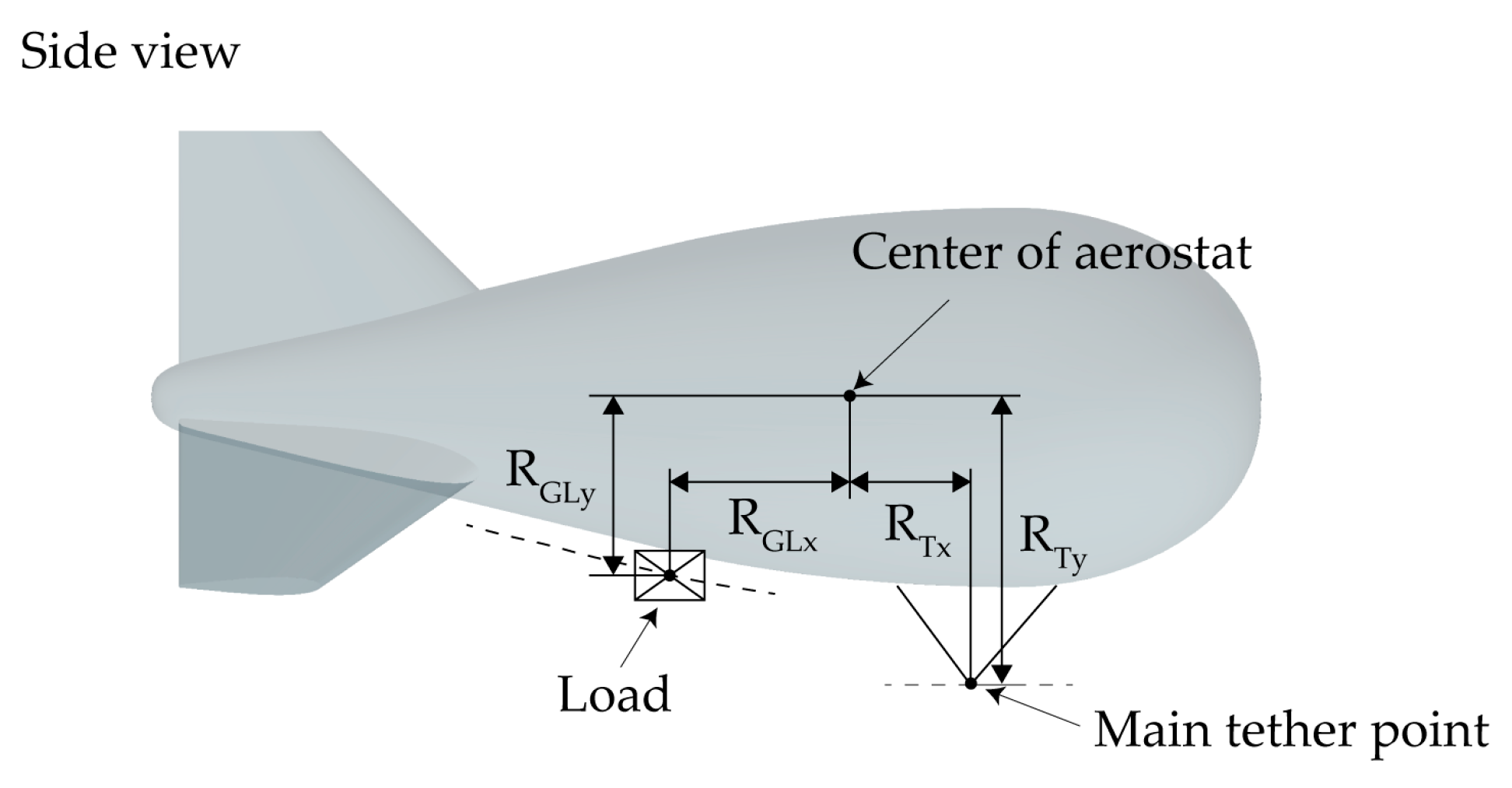
17] but also significantly alter the distribution of the moments of inertia, thereby exerting a substantial influence on lateral stability. In this study, both the payload and the tether interface are positioned at the bottom of the aerostat envelope. When the lateral coordinate of the payload center of gravity,
, is adjusted, its longitudinal coordinate
and the coordinates of the main tether point
change accordingly, as illustrated in
Figure 8. Based on the torque equilibrium condition about the center of the aerostat, all coordinate parameters must satisfy the force equilibrium equation and the aerostat contour equation given in Equation (30).
The lateral coordinate of the payload center of gravity,
, is selected as the key variable. Based on practical engineering experience from field operations, seven simulation cases were established within the range
to 7 m, with an interval of 1 m, and the corresponding aerostat parameters for each case are summarized in
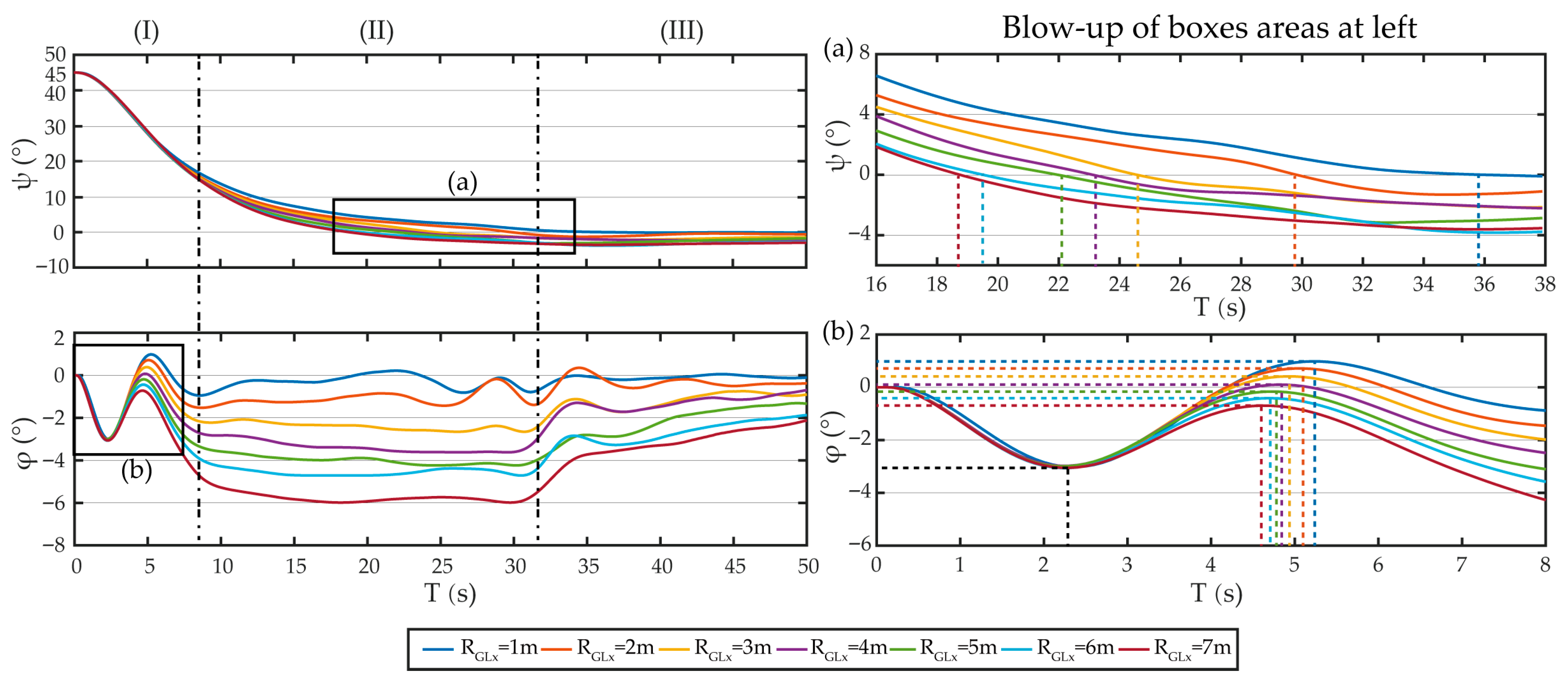
Table 8. All simulations were conducted under consistent initial conditions: pitch angle of 5°, yaw angle of 45°, roll angle of 0°, and inflow velocity of 10 m/s. The obtained yaw and roll angle response curves are shown in
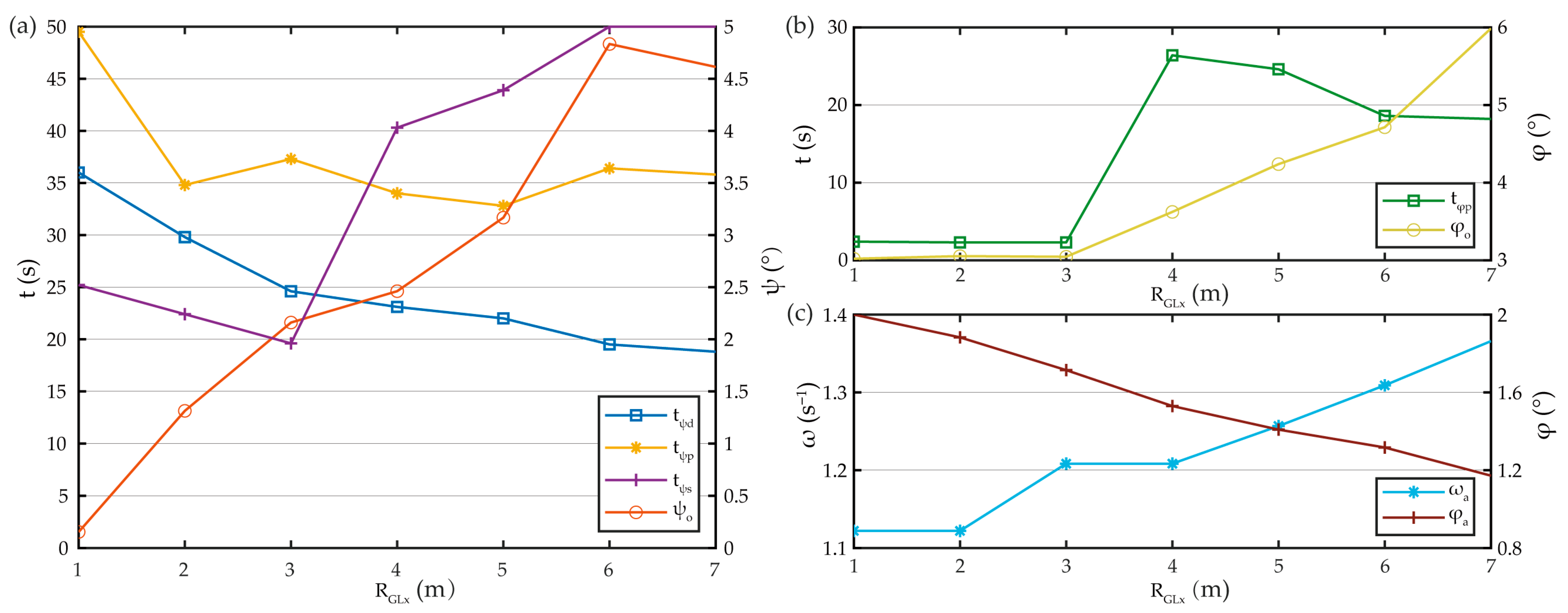
Figure 9, where in (a) the dashed line shows the intersections of the curves with the 0° line, and in (b) the dashed lines indicate the minima and maxima of each curve in Stage (I). Key dynamic parameters were further extracted and analyzed, including yaw angle decay time
, peak time
, settling time
, peak yaw angle
;as well as roll angle peak time
, peak value
, oscillation frequency
, and oscillation amplitude
. The extracted parameter results are collectively presented in
Figure 10.
With the increase in the parameter , the yaw stabilization time of the tethered aerostat gradually decreases, while the yaw peak angle increases. Except for the case of = 1 m, where reaches 49.5 s, the other models exhibit values fluctuating around 35 s. Taking 5% of the inflow direction as the yaw stability criterion, i.e., , it can be seen that for = 1 m to 3 m, the yaw angle peaks are all below 2.25°, indicating that the system reaches a steady state during the descending phase, with smaller than the decay time and further decreasing as increases. When = 4 m, the yaw peak exceeds 2.25°, and the system undergoes oscillation before stabilization, resulting in a longer as continues to increase.
Meanwhile, as increases, the roll angle peak also rises significantly. When = 1 m to 3 m, the roll peak corresponds to the oscillation amplitude in stage (I). However, when = 4 m, the peak exceeds this stage’s oscillation amplitude, leading to a sudden increase in the peak time , which then gradually decreases with further increases in . Moreover, during stage (I), the roll oscillation frequency increases with , while the oscillation amplitude decreases, indicating that a larger results in smaller amplitudes and faster oscillations—an unfavorable trend for the stable operation of the tethered aerostat.
In summary, to achieve faster stabilization—characterized by smaller yaw stabilization time and peak angle, as well as lower roll peak and peak time —the model with = 3 m demonstrates superior lateral stability among the seven cases analyzed. This result provides a valuable reference for selecting the payload and primary tether attachment positions in practical tethered aerostat design. Consequently, subsequent investigations on the effects of wind direction and speed adopt the = 3 m configuration.
3.5. Inflow Response Analysis
For the configuration
= 3 m, simulations were performed to examine the response under various inflow conditions. In the wind-direction study, the initial pitch angle was set to 5°, the inflow speed
to 10 m/s, and the inflow direction
was varied in 10° increments. In the wind-speed study, the initial pitch angle was 5°, the initial yaw angle 40°, and the inflow speed
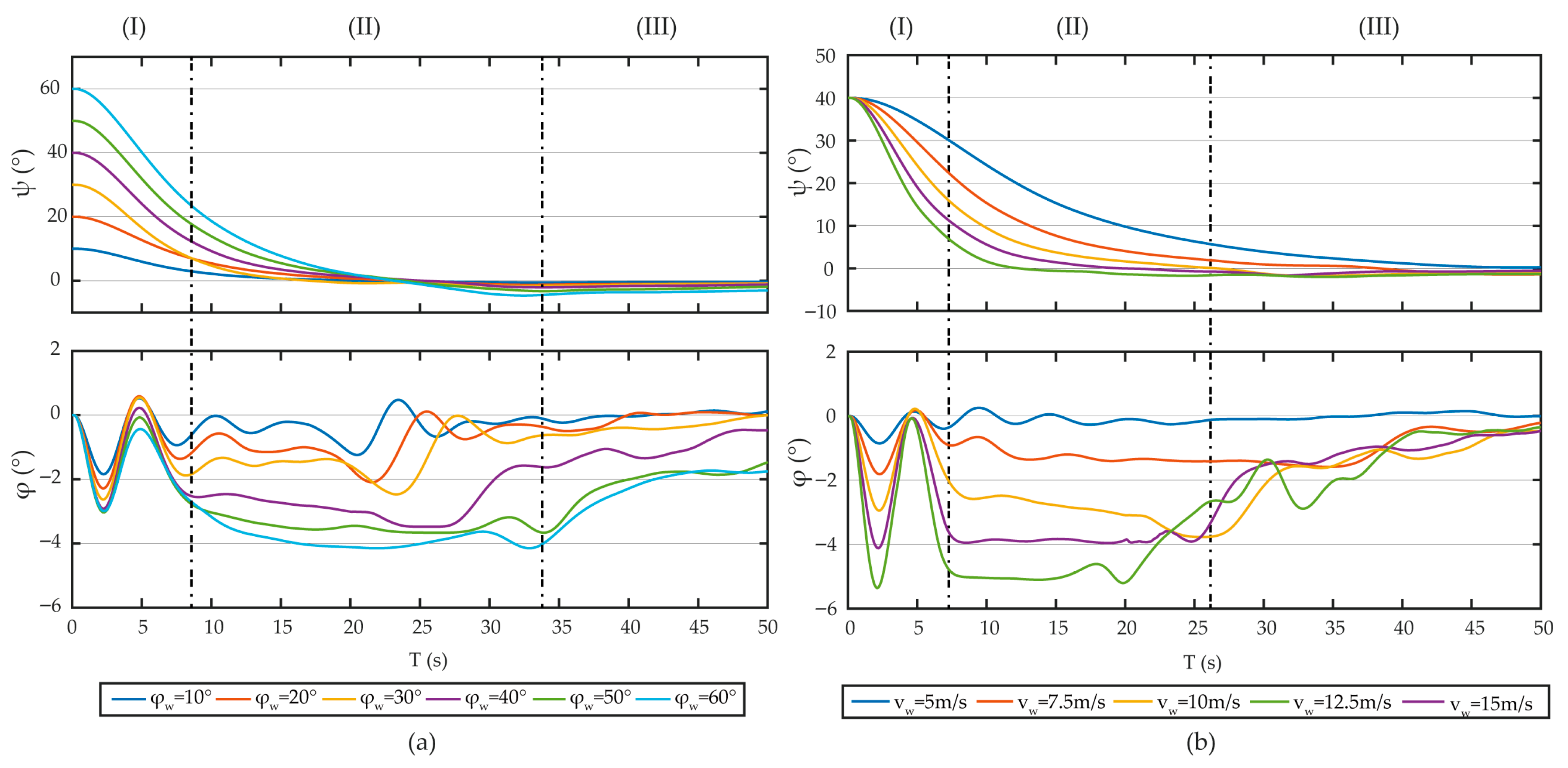
was varied in 5 m/s increments. The corresponding results are presented in
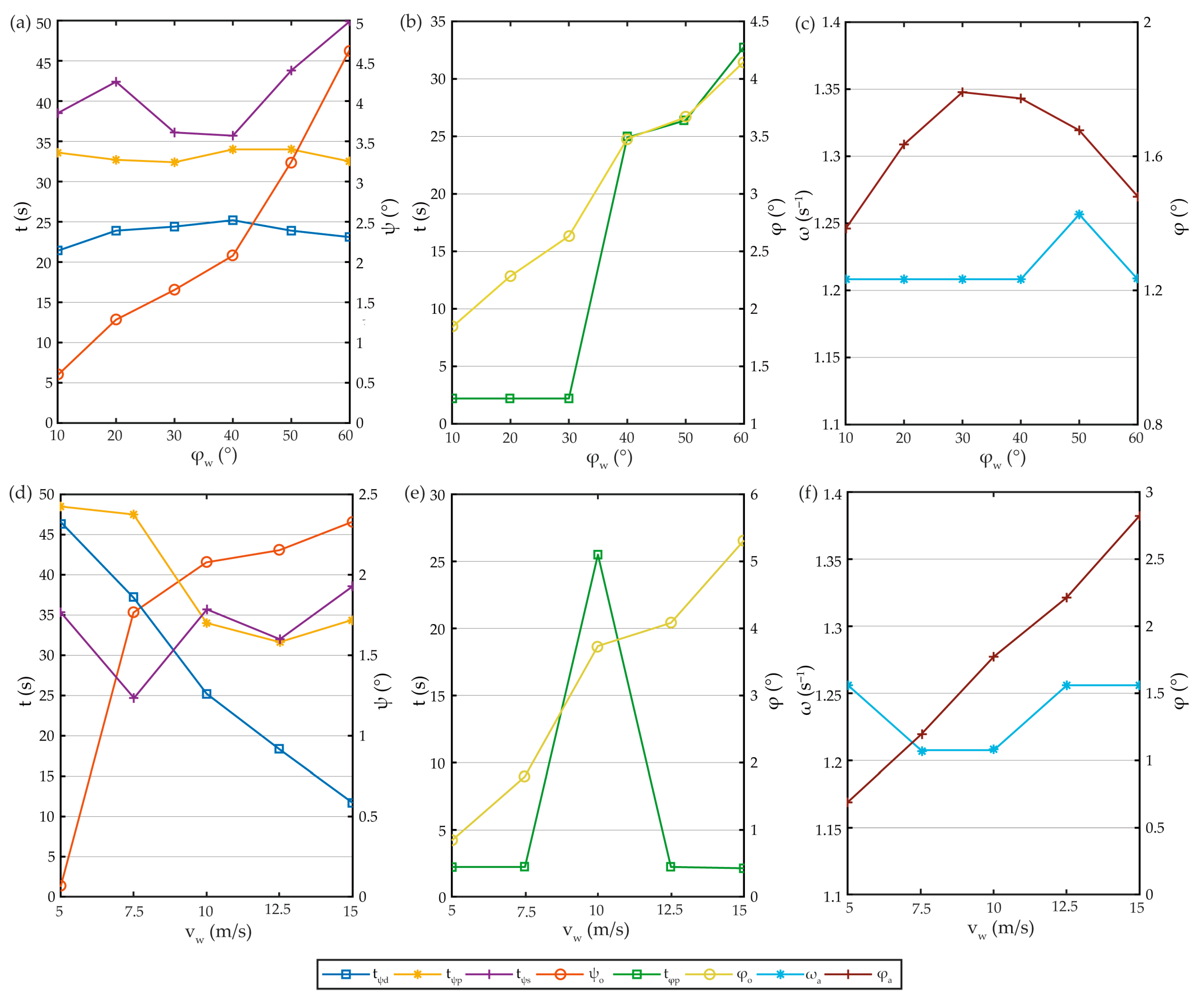
Figure 11, and key yaw- and roll-related parameters extracted from these curves are summarized in
Figure 12.
As increases, the yaw angle required for the aerostat to reach equilibrium increases correspondingly; the strengthened yawing moment raises the yaw rate, causing the peak time to fluctuate around ≈33 s without a clear trend. The decay time follows a parabolic variation with (first increasing then decreasing), reaching a maximum of 35.2 s at = 40°. The settling time exhibits an inverted-V pattern, with the fastest settling occurring at = 40°. The inflow direction strongly affects , which rises rapidly as increases.
The roll-angle variation with inflow direction is pronounced: the roll peak correlates approximately linearly with . The roll peak time remains near 2.2 s for between 10° and 30°, but undergoes a sudden increase at 40°, since the peak shifts from stage (I) to stage (II), producing a marked prolongation of that continues to increase with . Because the moment of inertia is unchanged, the roll natural frequency in stage (I) is essentially constant. With increasing the roll moment intensifies, which tends to increase the stage-(I) oscillation amplitude ; however, the concomitant rise in yaw rate enhances the influence of yaw motion on roll, shifting the roll equilibrium and thereby reducing . Consequently, under the coupled action of roll moment and yaw motion, displays a rise-then-fall trend as increases.
Wind speed also significantly affects yaw and roll parameters. As increases, the yaw peak , roll peak , and roll amplitude all increase markedly, while the yaw decay time shortens. The peak yaw period generally decreases with increasing inflow speed. When the wind speed is = 5 m/s or 7.5 m/s, the yaw angle remains below 2°, and the settling time decreases with increasing . At = 10 m/s and above, shows a slight increase, but the overall variation is limited. The roll peak time exhibits a sudden rise at = 10 m/s, where the peak jumps from stage (I) to stage (II); the roll frequency shows no significant change.
In summary, as the wind direction increases, the stable yaw angle of the tethered aerostat increases, and the yaw rate becomes higher. The yaw decay time first increases and then decreases, reaching its maximum at = 40°. The peak roll angle increases approximately linearly with , and its peak time becomes markedly prolonged when ≥ 40°. As the wind speed increases, the yaw angle, roll angle, and their amplitudes all increase significantly, while the yaw decay time becomes shorter. A specific wind speed (10 m/s) induces a sudden increase in the roll peak time together with a transition between motion stages. Overall, variations in wind direction primarily affect the temporal characteristics and motion stages of the dynamic response, whereas increasing wind speed substantially amplifies the response magnitude and, under specific conditions, triggers abrupt changes in the dynamic characteristics.