1. Introduction
The transfer of ship-borne aircraft by tractor under the complex maritime states has multiple advantages. Research on rod towing for ship-borne aircraft in complicated environments is crucial for ensuring the safety and stability of the towing process of the aircraft. When the aircraft lands on a ship deck, the limited space on the deck requires high stability and precision in rough seas. With their inherent advantages of high flexibility, strong stability, and the absence of auxiliary equipment on deck, tractors effectively meet the requirements for aircraft movement and positioning on ship decks. Therefore, this paper mainly studies the traction dynamic characteristics of ship-borne aircraft under high sea states and provides a safety reference for the traction operation of ship-borne aircraft.
Considerable research efforts have been devoted to the dynamic modeling and control of ship-borne aircraft systems. Wang X. W. et al. [
1] introduced a computationally efficient hierarchical seeding scheme combined with model predictive tracking for coordinated deck taxiing. Leveille [
2] employed the Shipboard-Spatial Motion and Securing Helicopter (SSMASH) method to investigate helicopter–ship coupled dynamics, while Vilchis et al. [
3] developed nonlinear helicopter models and corresponding control strategies. Li Y. J. et al. [
4] proposed a six-degree-of-freedom Iterative Dynamic Re-weighting Algorithm (IDRA) to improve aircraft modeling efficiency.
From a multibody dynamics perspective, Yang H. et al. [
5] established a Lagrange-based kinetic model for an aircraft–tractor system, and Zhao D. X. et al. [
6] constructed a multibody dynamics model to analyze aircraft towing forces. Fricke et al. [
7], York et al. [
8], Linn et al. [
9,
10], and Cui et al. [
11] focused on landing gear–tire–ground interaction modeling and dynamic response analysis, providing important foundations for ground operation dynamics. Lu X et al. [
12] developed the tractor–aircraft system model through Adams software, and the study found that the binding force at both ends of the front landing gear can reduce the acceleration offset between the tractor and the aircraft during braking.
The vulnerability of ship-borne aircraft to wave-induced ship motions has also attracted increasing attention. Dooley et al. [
13] investigated the effects of waves and ship motions on airwake characteristics and helicopter operations, while Shukla [
14] provided a comprehensive review of ship–helicopter coupled airwake interactions. Memon et al. [
15] developed a motion-cueing optimization method for flight simulators to study shipboard helicopter landings under varying wind and wave conditions, improving the realism and safety of simulated training. Zhu et al. [
16] analyzed ship resonance phenomena through simulation experiments and verified their effects on shipboard aircraft operations, showing that resonance-induced amplification of ship motions can adversely affect deck operation safety. Wen Z. et al. [
17] developed a six-degree-of-freedom ship motion model to study aircraft attitude evolution during deck operations. Furthermore, Byeong-Woo Yoo et al. [
18] established a dynamic simulation model incorporating ship motions and landing gear–deck interactions to analyze aircraft movement characteristics and deck operation stability.
In recent years, research has expanded toward autonomous dispatch, path planning, and control strategies for carrier deck operations. Liu J. et al. [
19] reformulated the bar-free towed shipboard aircraft as a tractor–trailer system and proposed an efficient offline trajectory planning algorithm. Zhang Z. L. et al. [
20] developed a genetic collision avoidance algorithm with kinematic constraints to generate optimal sliding paths for irregular targets in complex obstacle environments, satisfying radius-of-gyration limitations. Under highly constrained deck environments, Li et al. [
21] introduced an iterative Safe Dispatch Corridor (iSDC) framework that integrates Kinematics-Informed Bidirectional RRT* (KIB-RRT*) planning with corridor optimization, significantly improving dispatch efficiency. From a control perspective, Wang and Yu [
22] investigated the stability of carrier-based aircraft tractors using an adaptive sliding mode control method based on radial basis function (RBF) neural networks. Sun et al. [
23] further combined Closed-Loop RRT (CL-RRT) with Model Predictive Control (MPC) to enhance path feasibility and tracking performance for aircraft towing systems.
Domestic and international scholars have conducted extensive research on key technologies such as carrier-based aircraft multibody dynamics, tire loads, arresting systems, trajectory planning, and towing systems, achieving significant progress. However, existing studies mostly focus on relatively stable deck environments. The mechanisms by which complex coupled dynamics of the aircraft–tow bar–towing vehicle system affect towing safety and component loads under ship motion in severe sea conditions remain insufficiently explored. Therefore, this study aims to establish a dynamic model that accounts for the coupling between ship multi-degree-of-freedom motion and the towing system under high sea states, with a focus on analyzing the dynamic response and critical component loads of carrier-based aircraft towing in typical severe sea conditions, in order to provide quantitative evidence and theoretical support for safe towing operations under complex sea states.
The main contribution of this study lies in the establishment of a unified full-system dynamic model for ship-borne aircraft rod-traction operations under high sea states. Unlike existing studies that focus on isolated subsystems or quasi-static deck assumptions, the proposed framework integrates ship motion excitation, tow rod dynamics, tire–deck interaction, and traction speed control into a single multibody dynamic model, providing a system-level perspective on towing stability in severe marine environments. It should be emphasized that this study does not aim to propose a new fundamental dynamics theory or predictive model. Instead, its contribution lies in providing an engineering-oriented, system-level quantitative analysis of the coupled aircraft–tow rod–tractor–ship dynamics under high sea states, which are insufficiently addressed in the existing literature.
2. Modeling and Methodology of the Ship-Borne Aircraft Rod-Traction System
2.1. Methods and Software
The modeling framework presented in this section is formulated in a general form and is applicable to a wide range of ship-borne aircraft rod-traction systems. Specific system parameters are introduced later only for numerical case studies.
A time-domain multibody dynamics approach is adopted to investigate the towing behavior of ship-borne aircraft under high sea states. The aircraft, tow rod, tractor, landing gears, tires, and ship deck are modeled as a coupled dynamic system. Rigid-body assumptions are applied to the aircraft fuselage, tractor body, and tow rod, while elastic-damping elements are used to represent landing gear struts, tire–deck contact, and tow rod deformation. It should be emphasized that the significance of the proposed model lies not in the individual dynamic formulations but in the explicit coupling of multiple subsystems that are usually treated independently in existing studies. The multibody dynamics approach adopted in this study is an engineering-oriented formulation rather than a fully generalized multibody dynamics framework. The system consists of multiple rigid bodies and simplified flexible components, whose dynamics are described using Newton–Euler equations and coupled through force interactions and coordinate transformations. This approach is suitable for analyzing system-level dynamic responses of complex engineering systems while maintaining computational efficiency.
Ship motions are prescribed as harmonic roll, pitch, and heave excitations with amplitudes and periods determined by sea state levels reported in the literature. Wind loads acting on the aircraft and tractor are applied at their centers of gravity based on aerodynamic drag formulations.
MATLAB R2021b was employed as the primary simulation platform for this study. The coupled multibody dynamic model of the aircraft–tow bar–tractor–ship system was implemented using custom MATLAB scripts. Time-domain simulations were performed to solve the governing equations of motion under different sea state conditions. In addition, a Proportional–Integral–Derivative (PID) controller was implemented within the MATLAB environment to regulate the tractor traction speed. All dynamic response analyses, including traction forces and tire loads, were carried out based on the simulation results.
2.2. System Geometry and Boundary Conditions
The towing system consists of the aircraft, landing gears, tires, tow rod, tractor, and ship deck. The aircraft is connected to the tractor through a rigid tow rod via hinge joints, allowing force transmission while constraining relative motion. The tires maintain continuous contact with the deck through elastic-damping elements, representing tire–deck interaction.
The ship deck motion is prescribed as a boundary excitation and is not solved dynamically. Roll, pitch, and heave motions are applied to the deck reference frame according to harmonic functions corresponding to different sea state levels. The tractor motion is controlled by a closed-loop speed controller, while the aircraft responds passively to traction- and deck-induced excitations.
3. Dynamic Modeling of Ship-Borne Aircraft Traction Under High Sea States
The main tow system of the ship-borne aircraft includes the aircraft, the tires, the tractor, the tow rods, and the ship. The tires are connected to the aircraft via the landing gear and contact with the deck. In rod-traction systems, the tractor and aircraft are linked through tow rods by hinge joints. Given that aircraft towing typically is at low speeds, the following modeling assumptions are made. (1) The fuselage of the aircraft and the tractor body are regarded as rigid bodies, and all mass is assumed to reside at the center of gravity. (2) The traction hinge is rigid connection. (3) The motion of the aircraft traction system is coupled with ship motion. At the beginning of the modeling process, it is hypothesized that increasing sea state severity will amplify traction rod forces and tire lateral forces due to coupled ship motions, thereby reducing towing stability. In addition, for straight-line towing under high sea states, appropriate increases in traction speed are expected to mitigate traction force fluctuations and improve system stability.
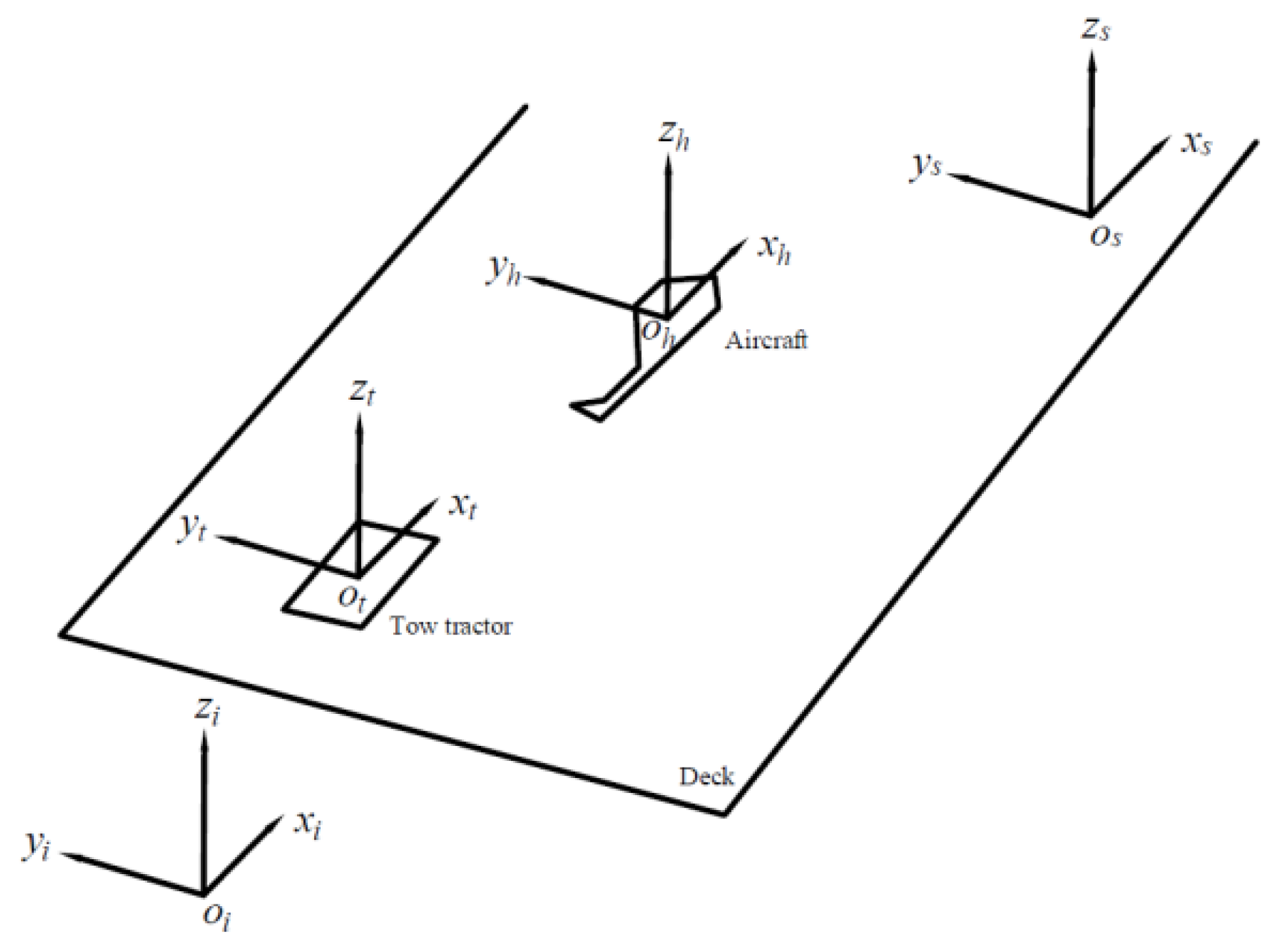
Although generalized coordinates and constraint equations are not explicitly defined, they are implicitly represented through the transformation relationships among the inertial, aircraft, tractor, and ship coordinate systems (
Figure 1).
3.1. High Sea States and Ship Motion
3.1.1. High Sea States
For high sea states, there is no clear definition in form at present. Generally, sea states are classified according to wave type and wave height. Wave type and wave height are different under the different sea states. The higher the sea state level, the worse the sea environment, and the more complex the corresponding excitation. The wave characteristics corresponding to each sea state level are shown in
Table 1. Since the research object of this paper is the traction system on the small deck, the traction system is more sensitive to the waves during traction operation. Therefore, the four-level sea state and above is regarded as a high sea state in this study.
3.1.2. Ship Motion
Considering that the traction system of ship-borne aircraft under high sea states encompasses the coupling motion of numerous components such as the aircraft, the tractor, and the vessel, it is essential to establish different coordinate systems to comprehensively calculate the transient dynamics of the whole multibody system. Four coordinate systems are defined in this paper, which are the inertial coordinate system (
oixiyizi), the aircraft coordinate system (
ohxhyhzh), the tractor coordinate system (
otxtytzt), and the hull coordinate system (
osxsyszs), as shown in
Figure 1.
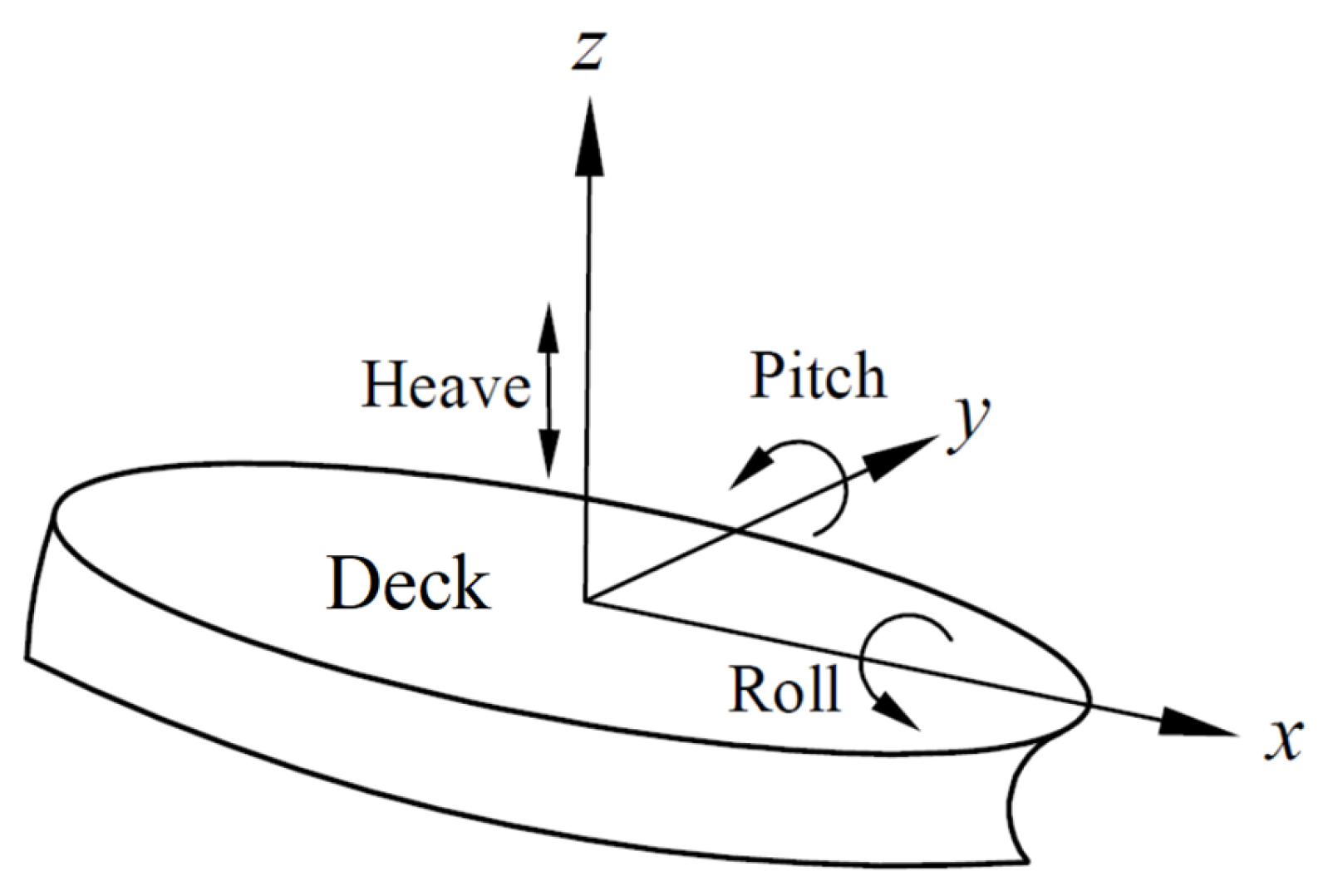
Ship-borne aircraft are susceptible to ship motion during the traction process, especially in high sea states. Waves caused by other factors such as sea winds act on the hull and cause intense ship motion. At the same time, the tires are directly in contact with the deck of the ship, so that the complex motion of the ship is directly fed back to the tractor-aircraft system, which undoubtedly threatens the traction process of ship-borne aircraft. Therefore, analyzing the ship’s motion is essential before studying the traction dynamics of ship-borne aircraft. The general ship motion may be affected by various nonlinear irregular waves. In order to facilitate modeling, the hull is regarded as a rigid body in this paper. The hull generates six-degree-of-freedom (DOF) motion under the action of wind load and waves. The motion includes the roll, the pitch, the heave, the yaw, the surge, and the sway. Due to the relatively large influence of the rolling, pitching, and heaving on the motion of the hull, the motion in these three directions is selected as the research object.
Figure 2 illustrates the schematic diagram of the specific ship motion where the rolling is the motion of the hull around the
x-axis, the pitching is the motion of the hull around the
y-axis, and heaving is the heave motion of the hull in the
z-axis. The motion of a ship in an irregular wave is composed of the superposition of several regular waves with different frequencies and periods. In this paper, the motion of a ship is regarded as harmonic motion [
20], and the specific motion form of the ship is as follows:
3.2. Force Analysis for Traction System
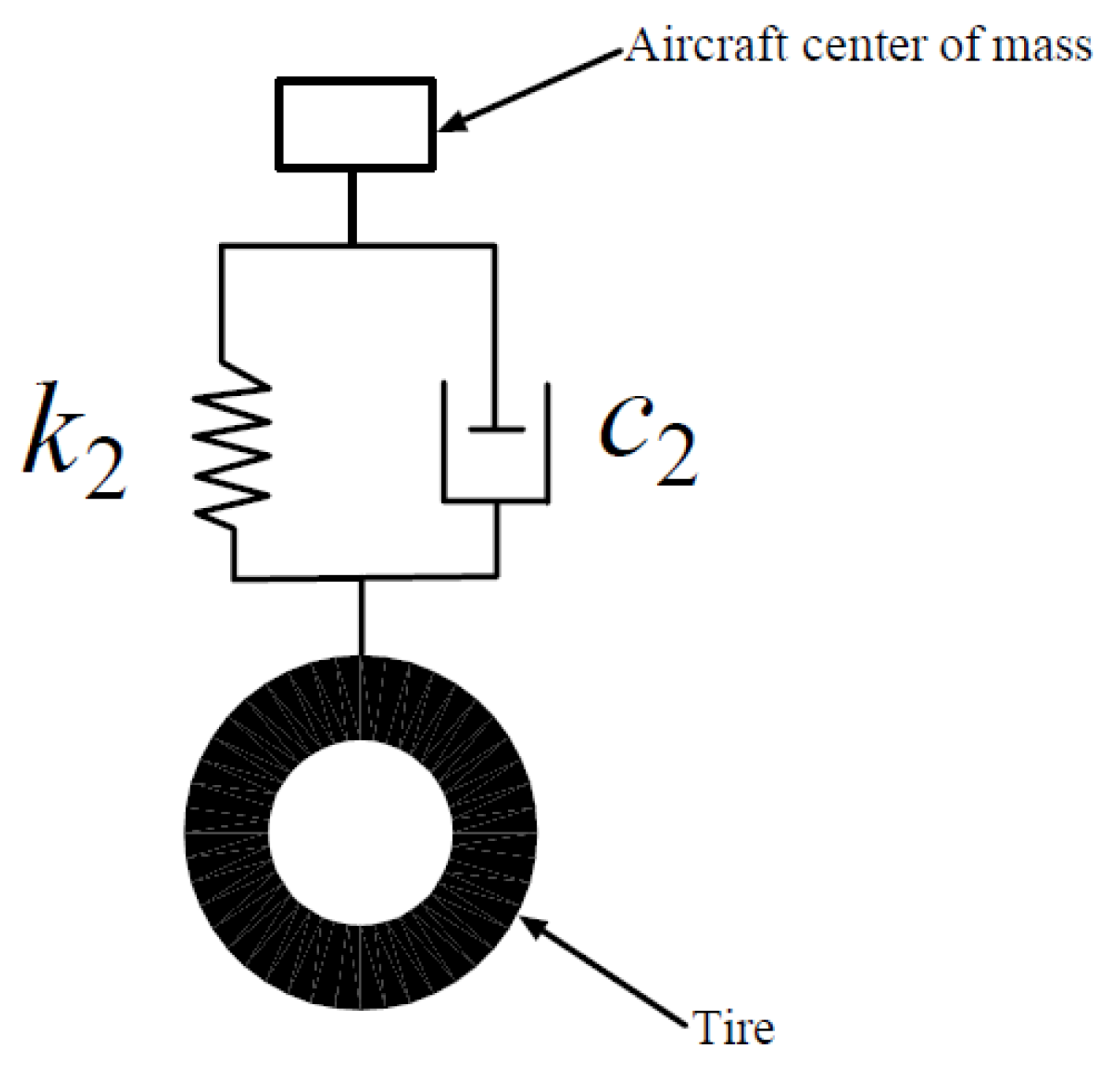
To examine how traction systems evolve over time, the first step is to analyze the landing gear configuration, the wind load, the tow bar, and tractors’ driving forces. The undercarriage is simplified in this paper, as demonstrated in
Figure 3. The normal load on the undercarriage is determined by the following formula.
where
k2 is the landing gear strut stiffness,
c2 is the damping constant,
is the pillar displacement, and
is the pillar speed.
Tractors and aircraft are vulnerable to wind loads. In the study, it is assumed that air resistance is applied to the center of gravity for tractors and aircraft, and the airflow loading acting on tractors and aircraft is written as
where
Cd is the wind resistance coefficient,
Sh and
St are the vertical projected areas of the aircraft and the tractor, respectively,
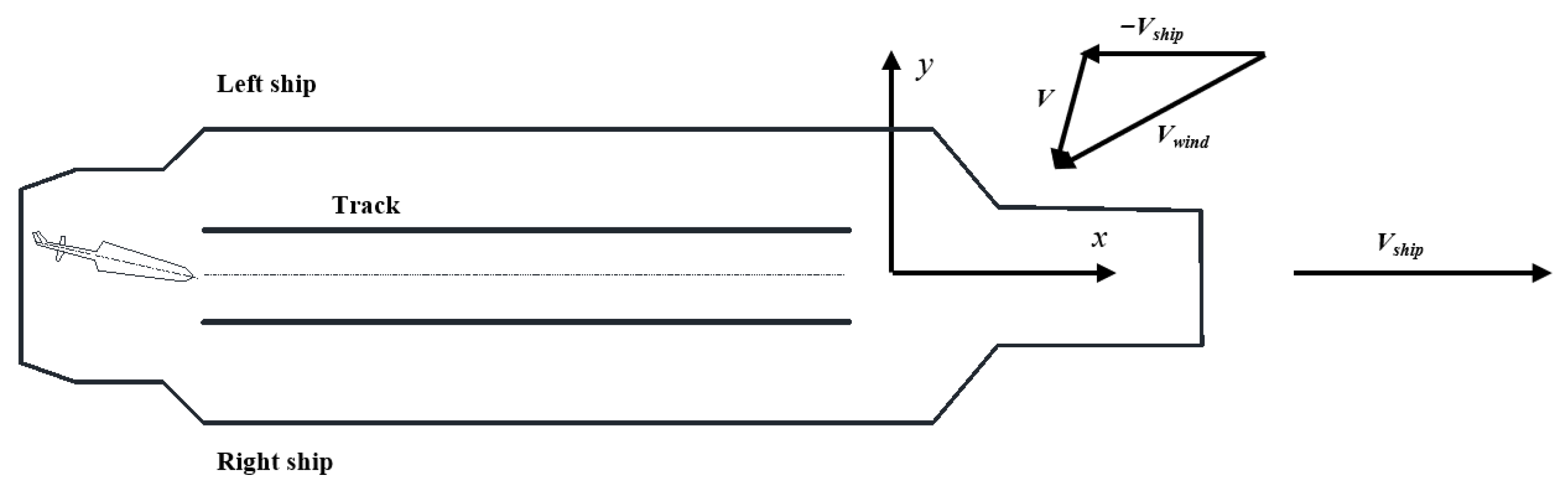
V = Vwind + Vship is the synthetic wind speed, and the direction is the wind synthesis direction. The specific diagram is shown in
Figure 4.
For the traction with a towing rod, the two ends of the traction rod are connected to the aircraft and the tractor, respectively. The traction rod is subject to forces given by
where
k and
c are the stiffness and damping of the traction rod, respectively, and Δ
L is the stretch experienced by the traction rod.
is the deformation speed of the traction rod.
The tractor is mainly driven by the rear wheels whose driving force can be expressed as
where
Fg is the traction force that the aircraft needs to provide to the tractor, and
Fwt is the resistance that the tractor is subjected to during driving, mainly including air resistance, acceleration resistance, wheel driving resistance, slope resistance, and the gravitational force component of the aircraft and tractor in their respective coordinate system.
3.3. Dynamics Modeling of Traction System with Rod
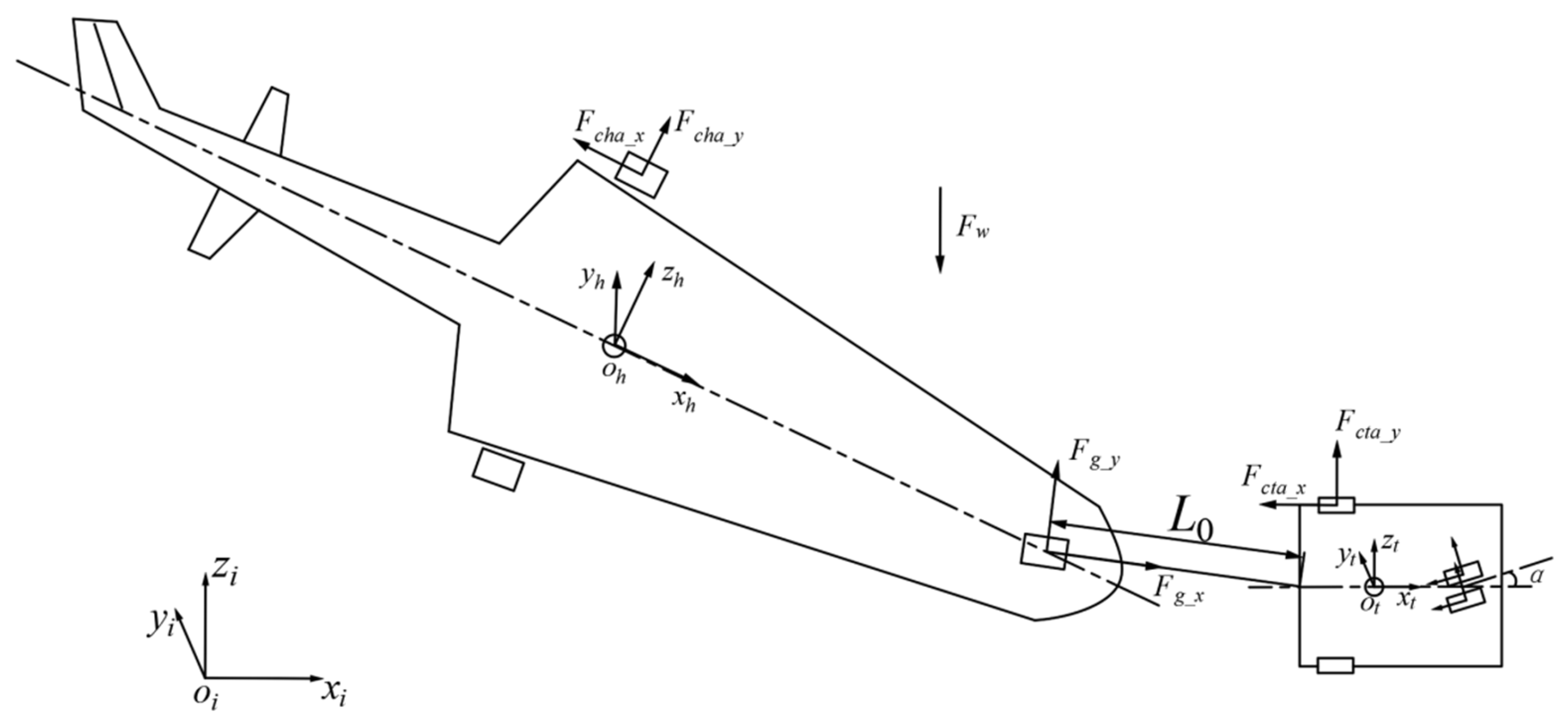
Figure 5 presents the force-analysis diagram of the rod-traction system. Constraints within the system are reflected by tire–deck contact models and force transmission between the aircraft, tow rod, and tractor (
Figure 5). According to the constraints between the tractor, the traction rod, and the aircraft, the synthes external force and torque of the aircraft and the tractor are derived, respectively. The synthes external force of the aircraft fuselage under rod-traction is as follows:
where
Fcha_i is the force of the tire on the aircraft in the inertial system,
Fg_i is the force exerted on the aircraft by the tow rod,
Fwh_i is the lateral air resistance of the aircraft, and
FGh_i is the gravity of the aircraft in the inertial system. The external torque of the aircraft fuselage under the rod-traction is as follows:
where
Mcha is the torque of the tire to the aircraft,
Mgh is the torque of the traction rod to the aircraft, and
Mwh is the torque of the lateral air resistance to the aircraft. The synthes external force of the tractor is expressed as
where
Fcta_i is the force of the tire on the tractor in the inertial system,
Fg_i is the force exerted by the traction rod on the aircraft,
Fwt_i is the lateral air resistance of the aircraft, and
FGt_i is the gravity of the aircraft in the inertial system. The external torque of the tractor is written as
where
Mcta is the torque of the tire on the tractor,
Mgt is the torque of the traction rod on the tractor, and
Mwt is the torque of the lateral air resistance on the tractor.
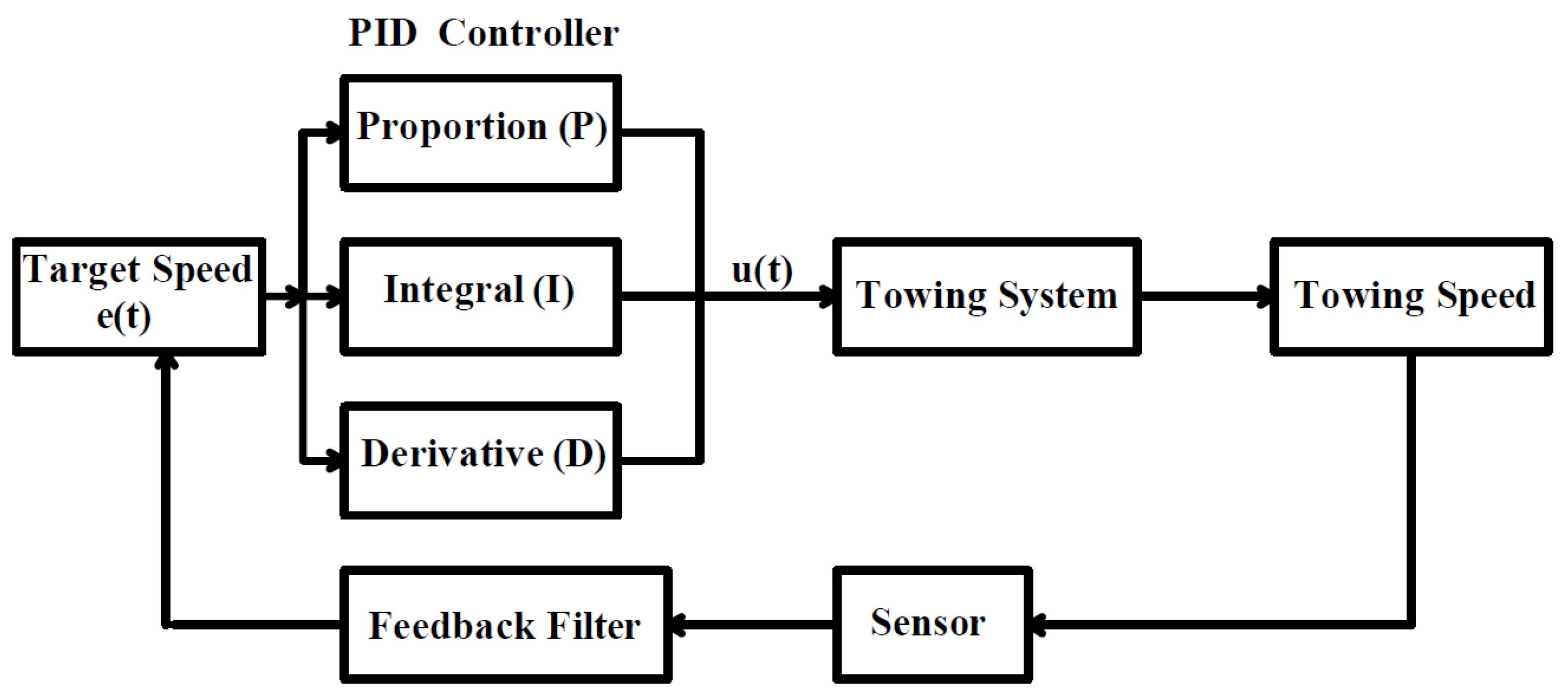
3.4. Proportional–Integral–Derivative Speed Control
The traction device built in this study can adjust the travel speed of the tractor with the help of the Proportional–Integral–Derivative (PID) algorithm. Fine-tuning the PID gains keeps the tractor’s speed steady across varying field states. The formula of the PID control algorithm can be written as
where
u(
t) is the output control quantity, which is the first derivative of the driving force of the tractor tire;
kp is the proportional amplification factor;
ki is the integral time constant; and
kd is a differential time constant.
Figure 6 demonstrates the principle of controlling the speed of the tractor. Speed regulation proceeds in closed-loop cycles: a target value is fed in, the mismatch
e(
t) with the current ground speed is measured, and a PID-generated correction
u(
t) drives the propulsion system. The resulting new speed is immediately compared with the target to produce an updated error, and the sequence repeats until the tractor settles at the demanded velocity. Here,
e(
t) denotes the instantaneous difference between commanded and measured travel speeds.
5. Discussion
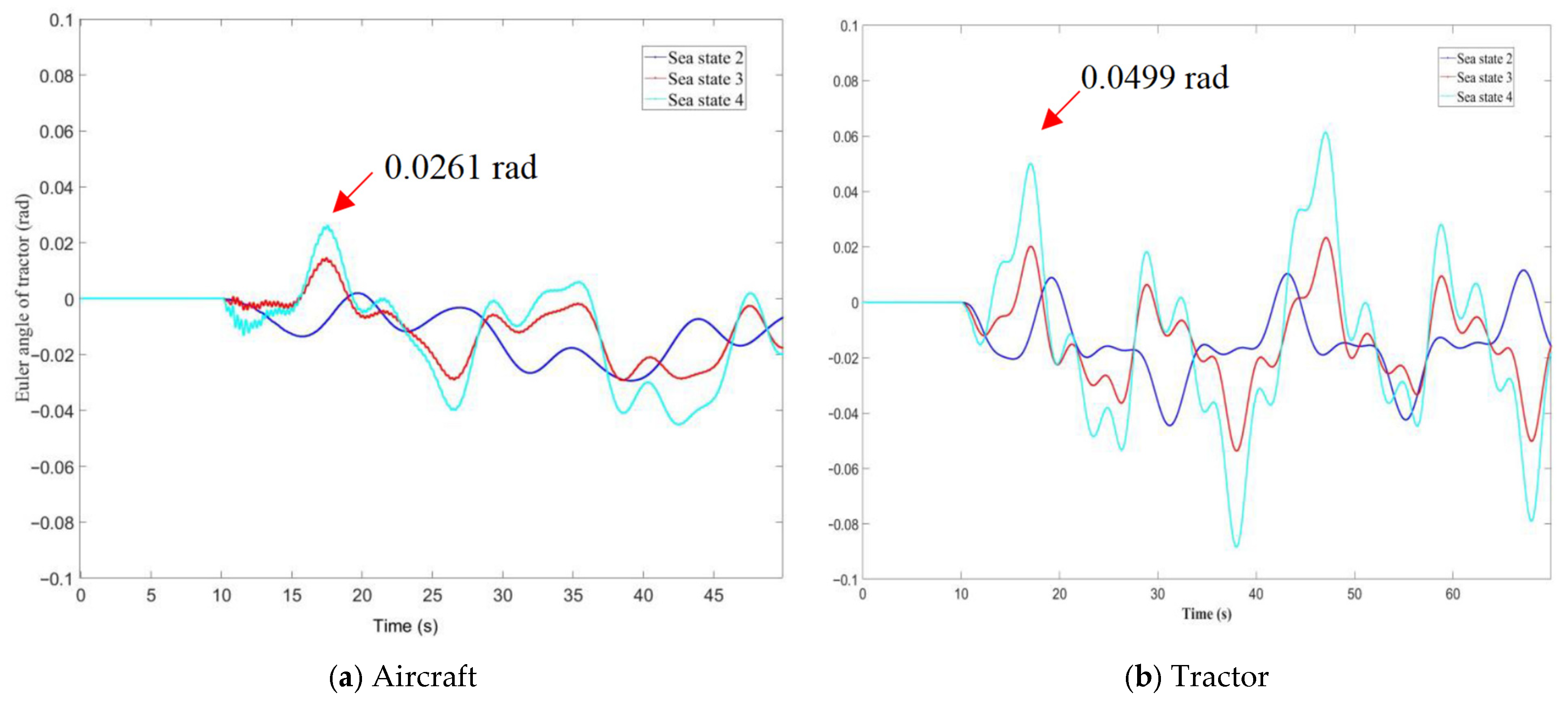
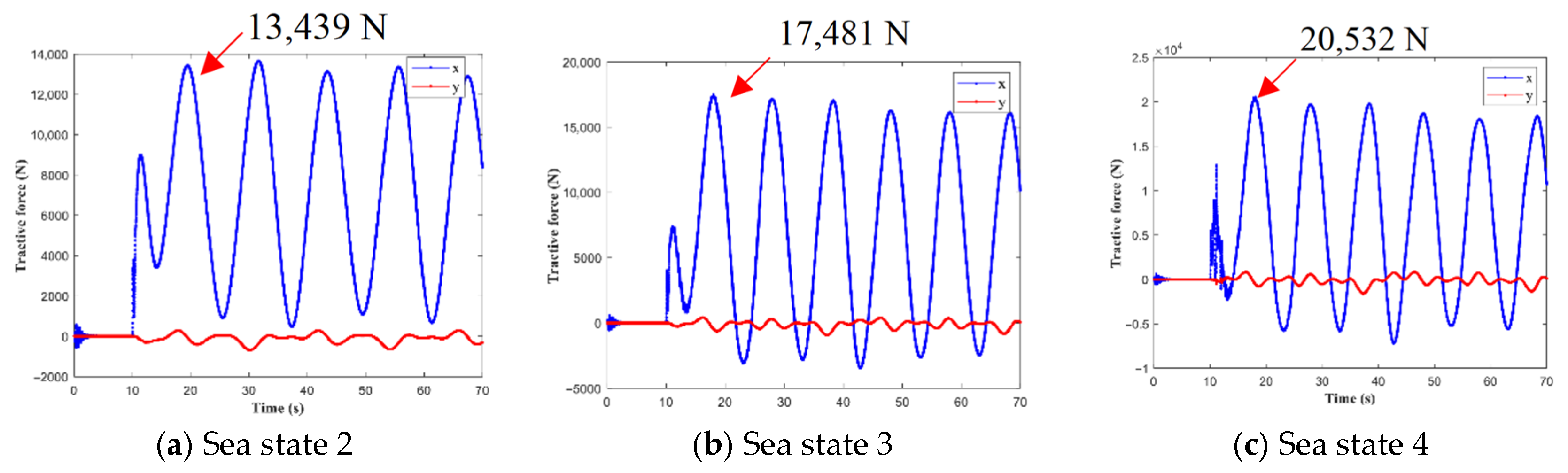
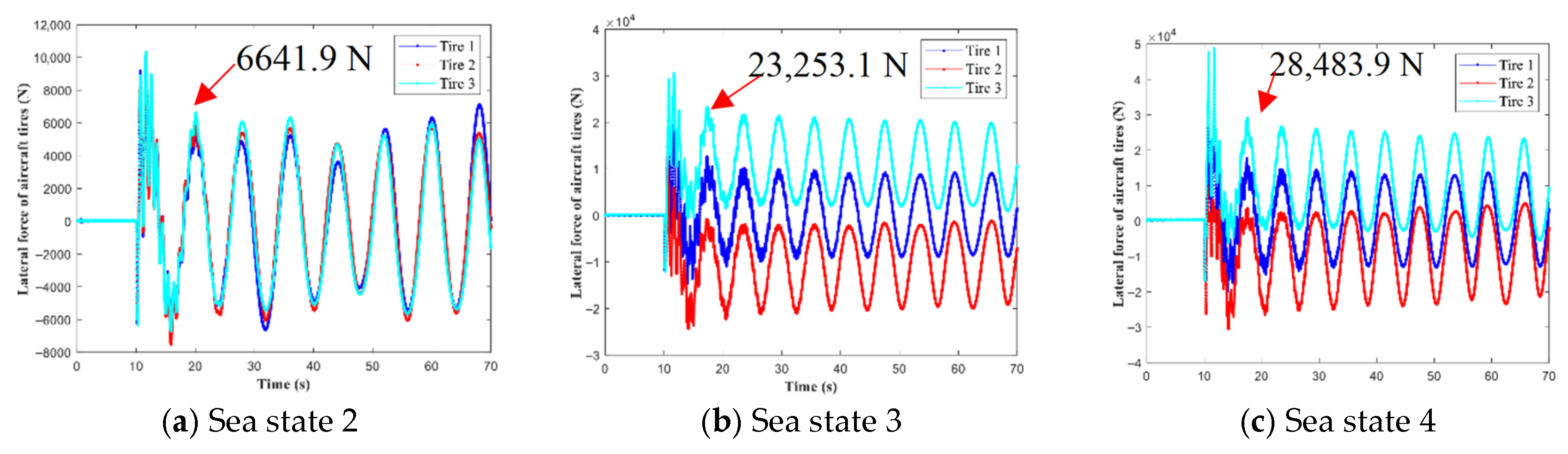
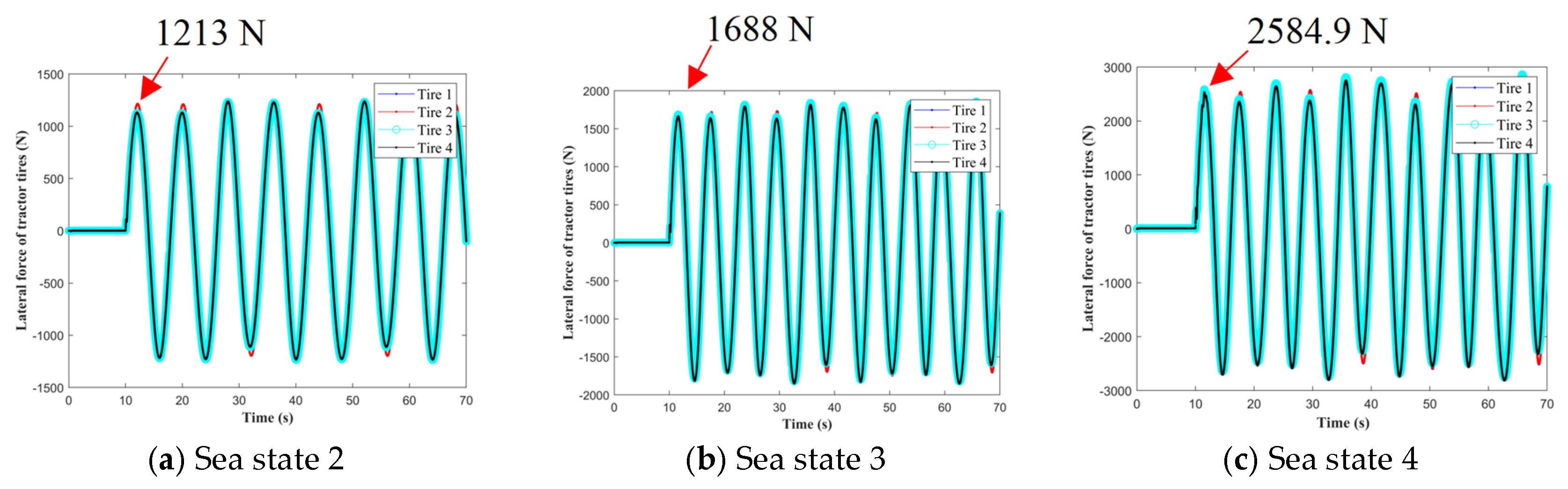
The results of this study highlight the significant impact of ship motion on the dynamic behavior of ship-borne aircraft towing systems. By incorporating rolling, pitching, and heaving motions into multibody modeling, our analysis demonstrates that the coupled effects of ship motion play a decisive role in amplifying towing rod forces and tire lateral loads, directly affecting towing stability. This finding provides valuable quantitative insights into the towing process under complex sea conditions while also revealing limitations inherent in model simplifications. First, tire lateral force sensitivity increases markedly with rising sea state levels. Under sea state 3, lateral tire forces increased by 250.1%, indicating significant sea state influence on towing safety. This result aligns with prior studies, such as Zhu et al. [
16], who observed similar trends in analogous vessel towing dynamics analysis, noting that worsening sea states cause severe lateral force fluctuations, thereby increasing the risk of towing instability. However, unlike Zhu et al. [
16]’s study, our research further reveals that under sea state 4, the increase in tire force is accompanied by intermittent ground loss, posing greater challenges to the safety of the vessel towing system. This new finding highlights the profound impact of high sea states on towing stability and tire lifespan, particularly as sea conditions worsen, significantly increasing the risk of tire skidding. Second, variations in traction speed exert a certain influence on the system’s dynamic response. Results indicate that appropriately increasing traction speed can reduce lateral force fluctuations, thereby enhancing system stability to some extent. Although higher traction speeds increase traction demands during acceleration phases, lateral force amplitudes decrease significantly during steady-speed operation. This finding aligns with studies by Yang et al. [
5] and Wang et al. [
22] on the influence of traction speed on system stability, who also observed that higher speeds can mitigate dynamic disturbances caused by sea conditions. However, this study further highlights a noteworthy point: while increased traction speed reduces lateral force fluctuations, it may induce more dynamic coupling effects under complex towing conditions (e.g., during steering or braking maneuvers). Therefore, optimizing traction speed requires not only stability considerations but also comprehensive analysis tailored to specific operational conditions. Although our simulation study has revealed the dynamic response of the towing system under various sea states, the simplification of the model remains a significant limitation. First, this study assumes that the vessel’s motion follows simplified harmonic motion, which overlooks the impact of irregular waves and sea state variations on the towing system. In reality, vessel motion is influenced by complex wave patterns that may exhibit nonlinear and stochastic characteristics, thereby exerting more intricate effects on the towing system. Compared to the work of Fricke et al. [
7], which accounts for multiple wave patterns in vessel motion and proposes a more flexible model, our approach is less comprehensive. Therefore, future research should consider incorporating irregular wave models to more accurately describe the impact of actual sea conditions on the towing system. Additionally, the towing rod, aircraft, and tractor are assumed to be rigid bodies in this study. This assumption neglects structural flexibility effects, particularly the nonlinear behavior of the towing rod and landing gear. This simplification may underestimate the dynamic response of the towing system under high sea conditions, especially during complex mechanical interactions. Yang et al. [
24] proposed that modeling the towing system as a flexible body better reflects structural responses under high sea states. Consequently, future work should consider incorporating flexible body models to further enhance simulation accuracy. It is worth noting that although we have not conducted large-scale physical validation, our model exhibits reasonable physical trends when compared with parameters and results from the existing literature. For instance, the increasing trends of traction force and tire lateral force with worsening sea conditions align with previous research findings (Li et al. [
4], indicating that our model captures the primary dynamic mechanisms during the towing process. Future studies should consider experimental validation to further enhance the model’s reliability and practicality.
Overall, this study provides a new quantitative analytical framework for carrier-based aircraft towing operations in complex sea conditions, revealing the profound impact of ship motion on towing stability and safety. However, limitations such as the simplified ship motion model and rigid-body assumptions require further refinement in future work. Future research may consider incorporating more complex wave models and nonlinear responses to better simulate the dynamics of towing systems in real-world environments. Through these enhancements, our model will be able to provide more precise safety guidance for carrier-based aircraft towing operations and offer a theoretical basis for optimizing traction speeds and system design in practical applications.
6. Conclusions
This study investigated the dynamic characteristics of a ship-borne aircraft rod-traction system under high sea states by establishing a coupled multibody dynamics model that incorporates ship roll, pitch, and heave motions. The results demonstrate that sea state severity plays a dominant role in towing stability. As the sea state increases, both traction rod forces and tire lateral forces are significantly amplified. In particular, noticeable tire sideslip occurs at sea state 3, where the peak lateral tire force increases by approximately 250% compared with sea state 2, while intermittent off-ground phenomena and a further force increase are observed at sea state 4. These findings indicate that wave-induced ship motions can rapidly degrade towing stability and impose critical operational limits under rough sea conditions.
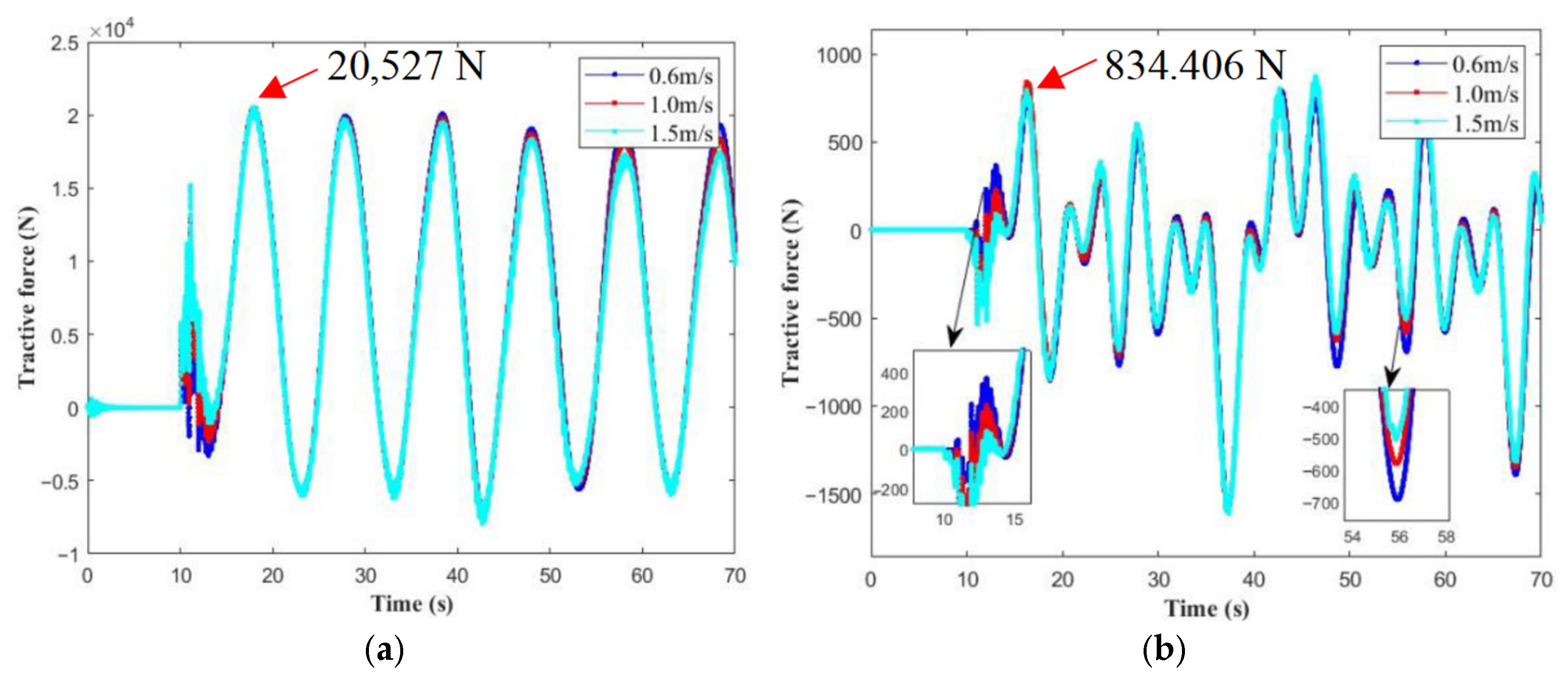
The influence of traction speed was also examined under high sea states. The results show that, although higher traction speeds lead to increased traction demand during the acceleration phase, the lateral force fluctuations during steady straight-line towing are reduced as speed increases. This suggests that appropriate traction speed selection can partially mitigate motion-induced disturbances and improve system stability under severe sea conditions. Overall, the proposed modeling framework provides quantitative insights into the coupled aircraft–tow rod–tractor–ship dynamics and offers practical guidance for assessing towing safety and operational limits of ship-borne aircraft in high sea states.
Despite the valuable insights provided by this study, there are several limitations. First, the current analysis focuses on straight-line towing operations with simplified harmonic ship motions, while more complex scenarios such as turning, braking, and combined longitudinal–lateral towing are not considered. These conditions could introduce additional dynamic coupling effects that may further influence towing stability. Second, the ship motion model used in this study does not fully capture the stochastic and irregular characteristics of real ocean waves under severe sea states. Additionally, the aircraft, tractor, and tow bar are modeled as rigid bodies, neglecting structural flexibility and nonlinear effects in the tow bar and landing gear.
Future work will extend the current framework to include maneuvering towing operations and irregular wave-induced ship motions. The incorporation of flexible body modeling, nonlinear tire–deck interaction, and advanced control strategies is expected to improve model fidelity. Experimental validation through scaled tests or hardware-in-the-loop simulations will also be pursued to enhance the reliability and practical applicability of the proposed approach.