1. Introduction
Satellites are performing orbit maneuvers with different kinds of propulsion systems. These could be either cold gas thrusters, chemical propulsion thrusters (e.g., mono- or bi-propellant thermodynamic engines), or electrical propulsion systems (e.g., gridded ion thrusters or Hall effect thrusters) [
1,
2]. These different in-space propulsion systems have to pass extensive on-ground testing. Especially gridded ion and Hall effect thrusters need long-duration testing in vacuum chambers. Such ground test vacuum facilities must be equipped with powerful pumping systems in order to keep the chamber pressure low enough to keep the ion or plasma processes working. The investigations within this paper focus mainly on pumping gases for electric space propulsion (EP) testing [
3], with xenon being the main propellant. For these EP thruster tests, a low vacuum chamber working pressure in the order of 10
−3 to 10
−6 mbar is necessary for enabling the correct plasma working conditions [
4,
5]. Higher pressures will have a noticeable impact on thruster performance.
When testing micro thrusters, dumping propellant gases can be achieved with only turbomolecular pumps, e.g., a propellant flow of up to 1 mg/s may be handled with turbopumps; above this mass flow value, cryogenic pumps are a more powerful option.
DLR operates an electric space propulsion test facility, the STG–ET (Simulationsanlage Treibstrahlen Göttingen–Elektrische Triebwerke) [
3].
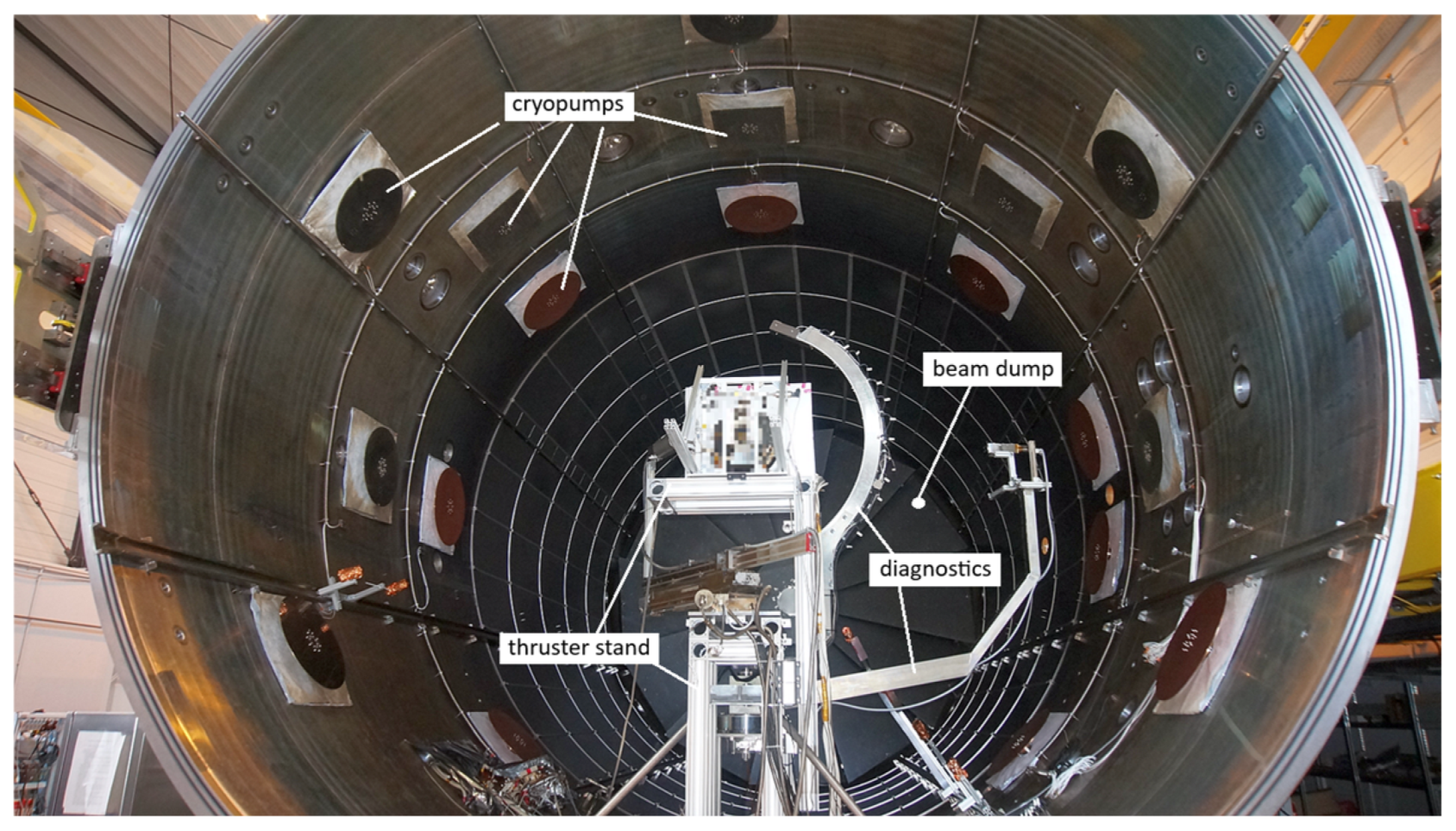
Figure 1 shows this facility with its open 12 m vacuum chamber and a view of the 18 cryopumps. The cryopumps use the single-stage open configuration [
6,
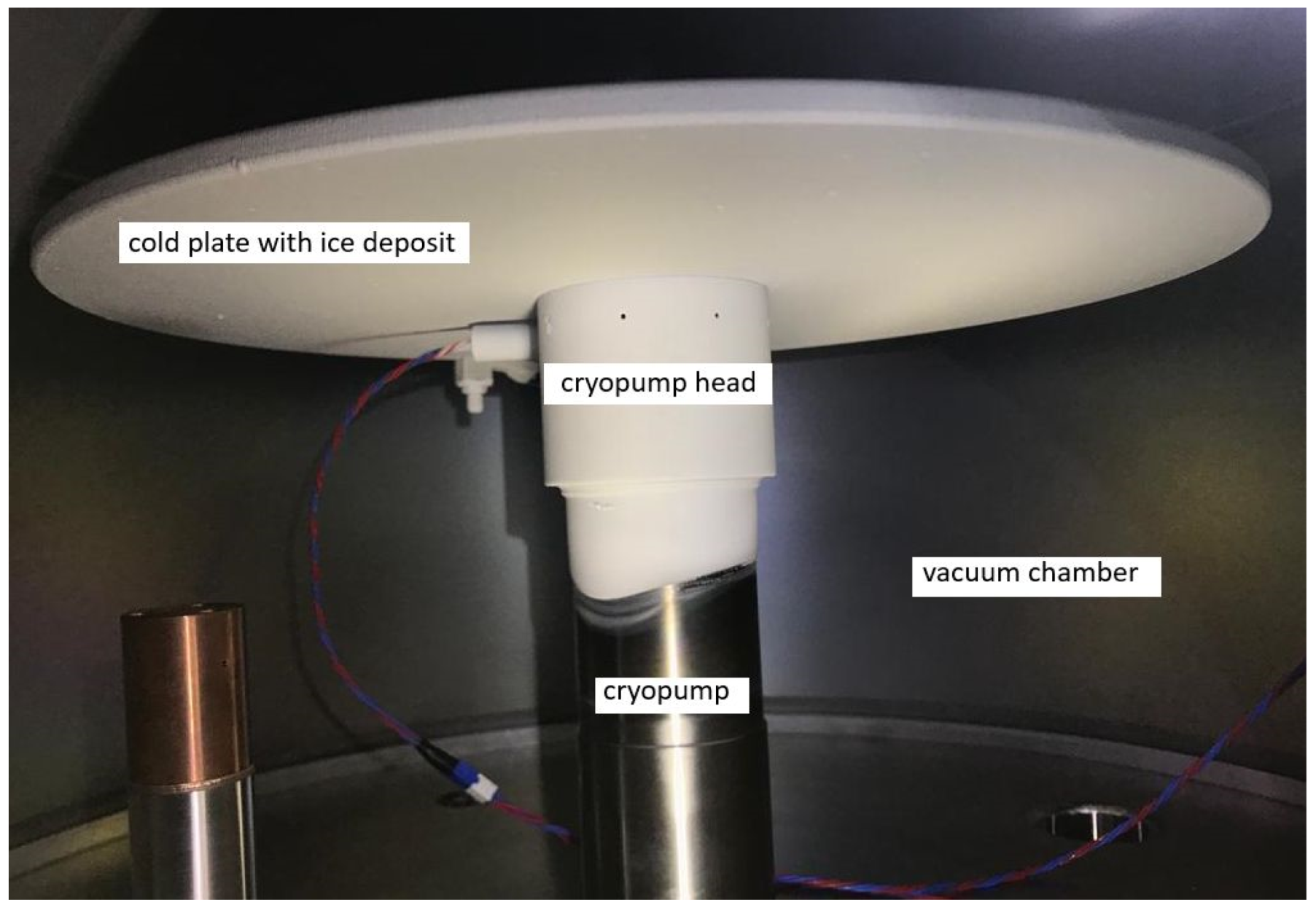
7]. A typical cryogenic pump of this type is displayed in
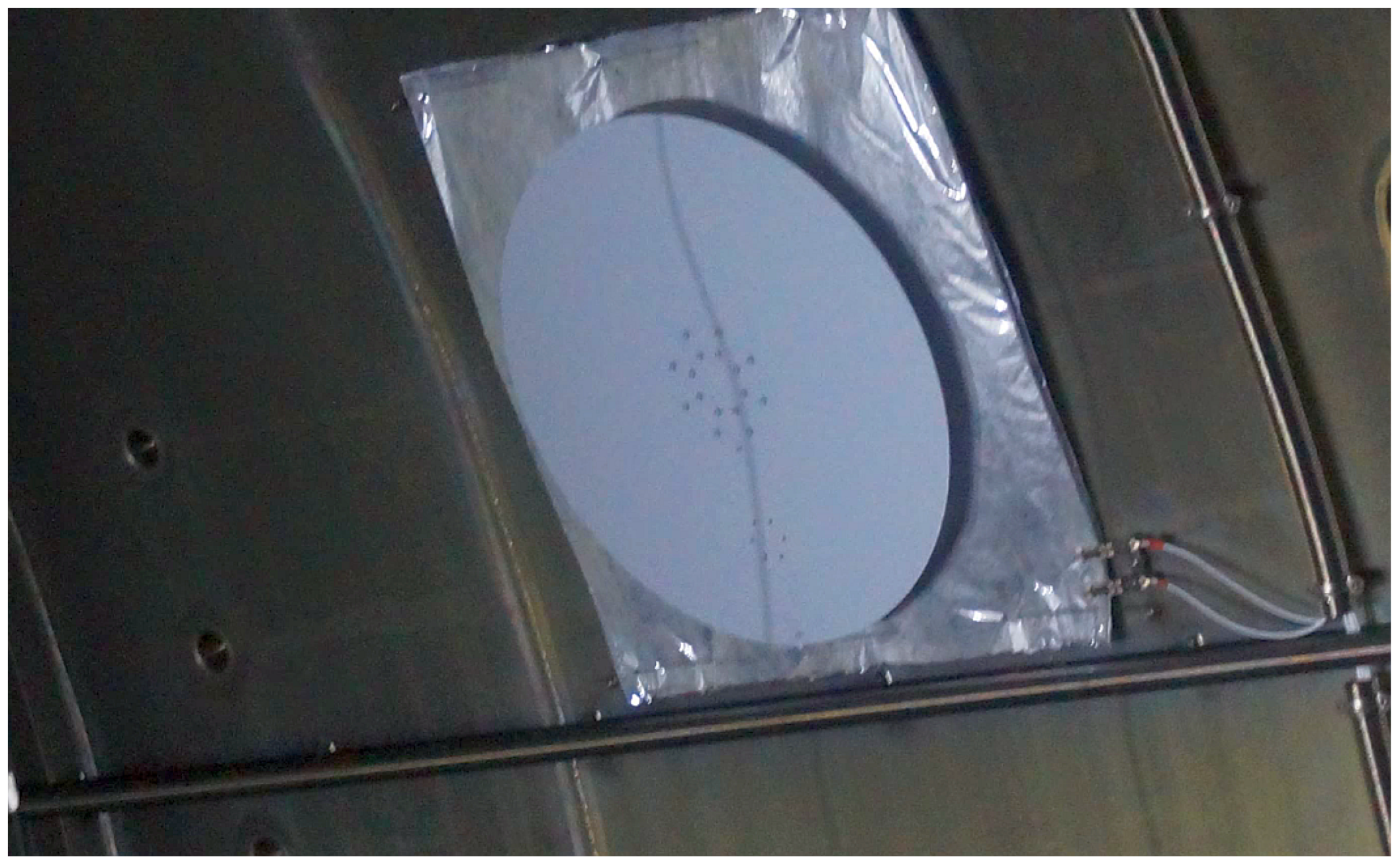
Figure 2, in operation in a lab vacuum chamber at HSR AG, Liechtenstein. An image of one of the pumps in operation at STG–ET is shown in
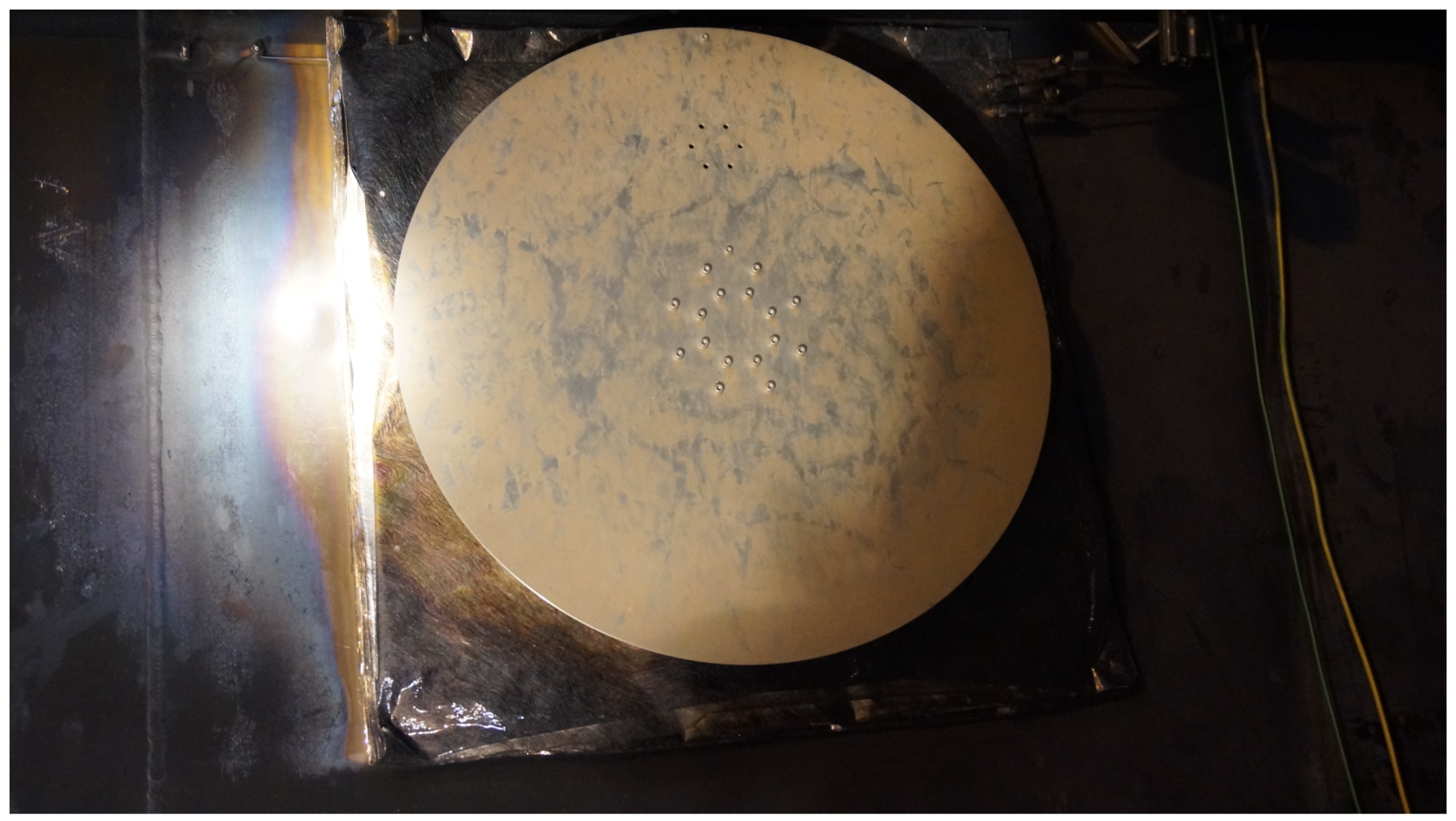
Figure 3. One can see the white xenon cryo deposit on its cold plate and the thermal insulation between the pump and the chamber wall. As the pumps are mounted along the chamber wall, some of the cold plates also face downwards. This has to be mentioned here because for these cold plates, gravity forces will act as a peel-off force onto the cryo condensates. EP thruster operation involves sputtering, and this provokes deposits on the cold plates (see
Figure 4), which may affect the bonding of ice layers to the cold plate and facilitate detachment.
Its highest pumping speed is achieved when all turbo pumps plus 18 cryogenic pumps are operating, which results in a pumping speed of 276,000 L/s for xenon [
7]. The cryopumps can only dump a finite mass of propellant gas, and that mass is accumulated on the cold plates. The pumps must be regenerated. When testing a powerful electric space propulsion thruster of the >5 kW class, this pumping capability limit results in, at maximum, a few weeks of uninterrupted operation between regeneration cycles.
A typical electric propulsion lifetime test campaign may last for days, weeks, or even months. For a ground test facility like DLR STG–ET with open single-stage cryopumps (Leybold GmbH, Bonner Strasse 498, Cologne, Germany), this means that a test has to be interrupted for regenerating the cryopumps. There are some facilities with cryopumps mounted in individual compartments decoupled from the main chamber by gate valves. In these, the regeneration can be performed separately for each pump without the need for test interruption. On the other hand, this makes the arrangement more complex, and the necessary test pumping speed must be reached without the specific cryopump(s) being regenerated.
In our case, regeneration has to happen after days or weeks of uninterrupted operation. Such an interruption can be scheduled, and the thruster can be switched off and is able to cool down before regeneration (warm-up) of the cryopumps takes place.
As an uninterrupted operation is the ideal case, sometimes during the operation, we observed spontaneous events of chamber pressure increase. These may trigger the thruster shutdown and/or test interruption.
This paper focuses on these events and investigates possible causes, with the aim of having tools at hand to avoid these events or find countermeasures.
Within the Section
Section 2, four of the observed pressure rise events will be presented, followed by a section about the idea to attribute the rising pressure to condensate detachment from cryopumps.
Section 4,
Section 5 and
Section 6 present an ice detachment model with its parameters, and options about detachment piece geometry.
Section 7 then compares the model results with the measured pressure rise events, followed by a discussion.
2. Pressure Rise Events
At DLR STG–ET, the typical baseline pressure with all pumps on and no thruster running is of the order of 1–3 × 10
−7 mbar. Depending on thruster mass flow, the pressure during thruster operation is in the 10
−6–10
−5 mbar range [
7]. For most of the test campaigns performed so far, a safety feature for thruster operation is a pressure alert channel that stops thruster operation if the pressure exceeds a certain value (pressure redline). The need for such safety measures comes, among others, from issues with hot (1000 °C) neutralizer (also called cathode) components containing LaB
6 [
8]. If the additional gas released by the pressure event contains oxygen, water, or CO
2, the hot neutralizer parts of the thruster may be permanently damaged. Unfortunately, during thruster operation, sometimes events happen that make the pressure rise and, via the above-mentioned pressure alert channel, force the thruster to stop.
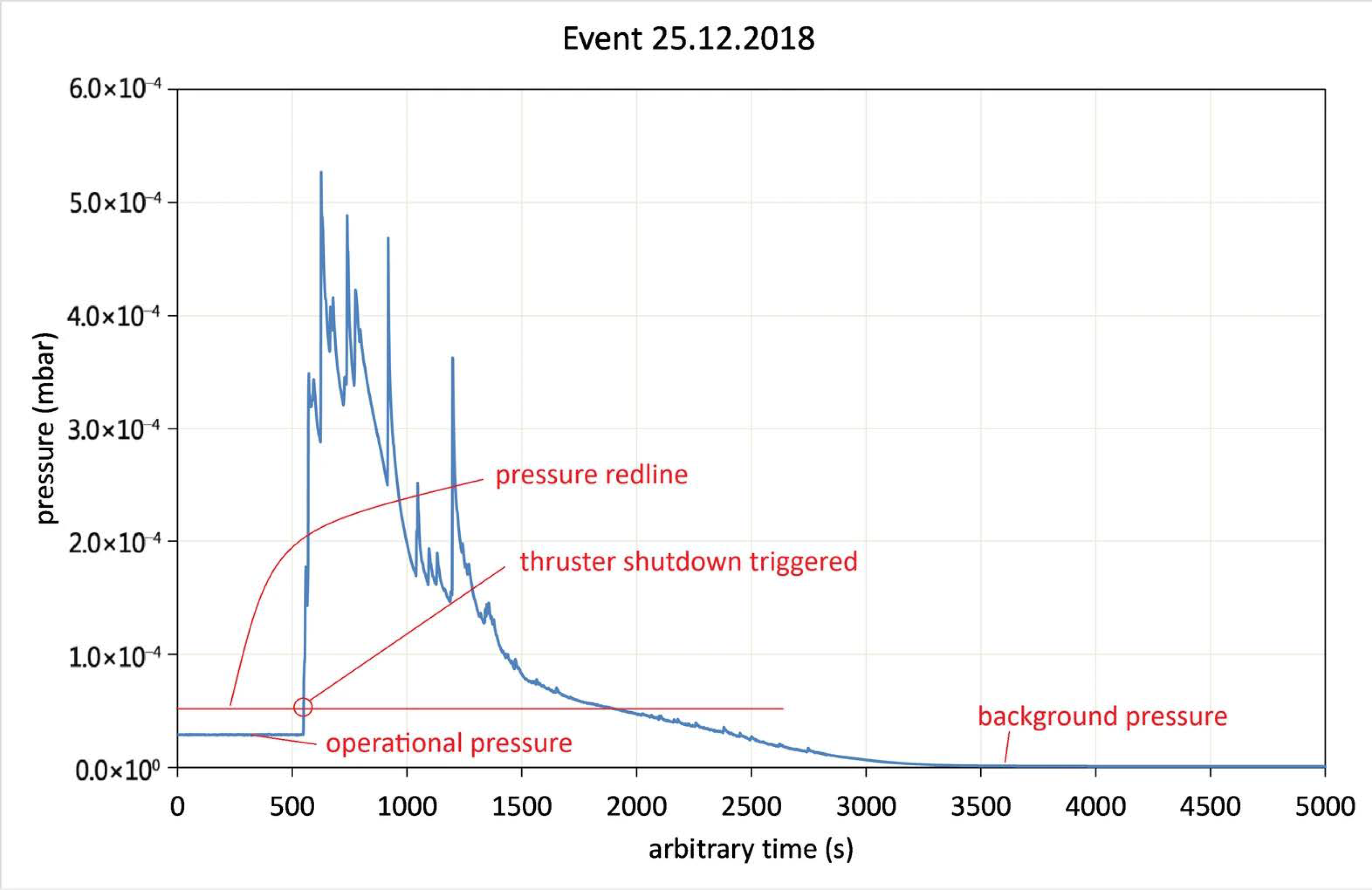
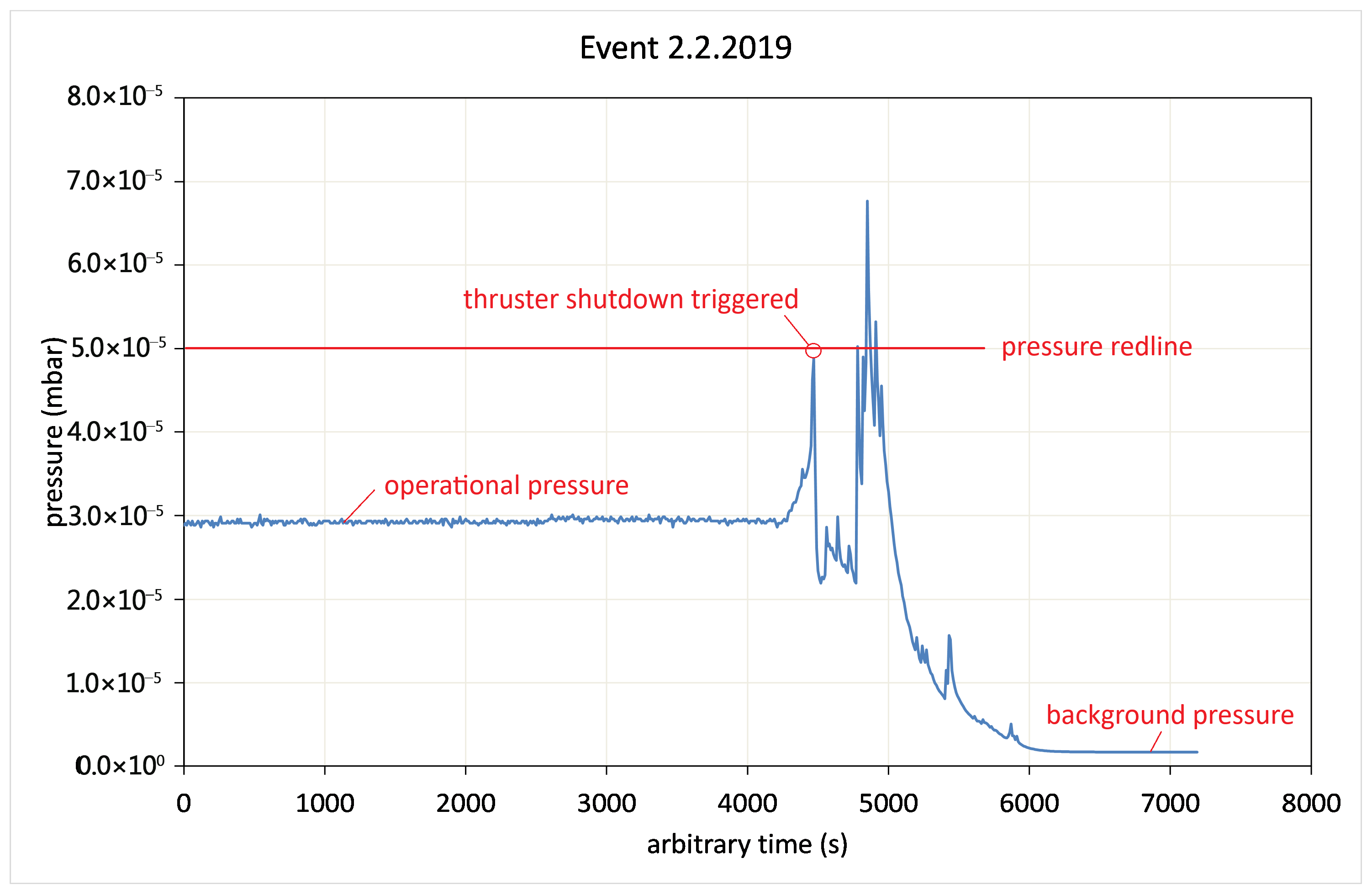
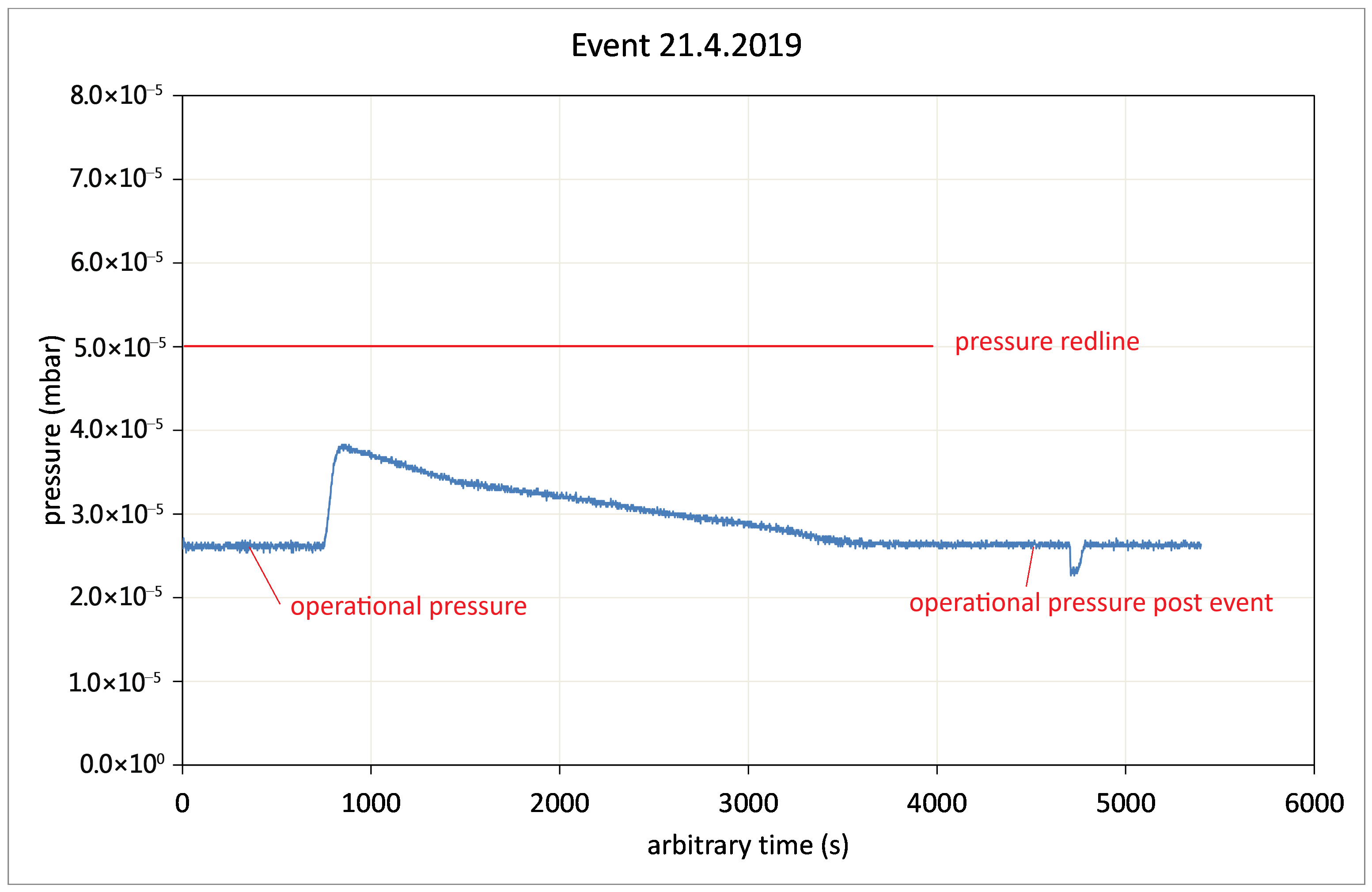
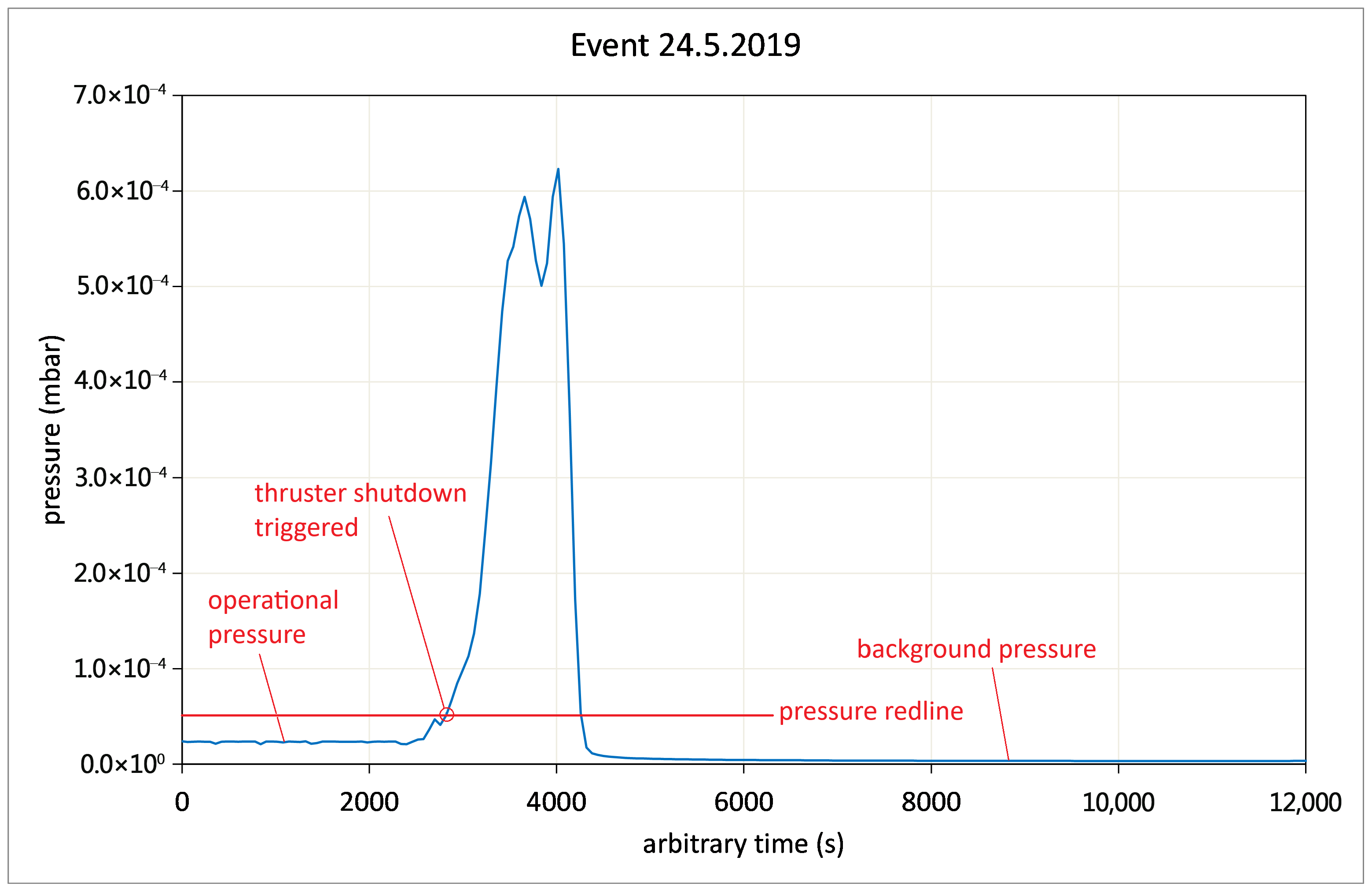
The following examples show four of these pressure rise events that occurred during test campaigns in 2018 and 2019. During these campaigns, the pressure alert redline was set to 5 × 10⁻⁵ mbar, and passing this redline forced the thruster to shut down. The pressure redline and the instant where the thruster shut-off event was triggered are marked in the upcoming figures that show the pressure rise events.
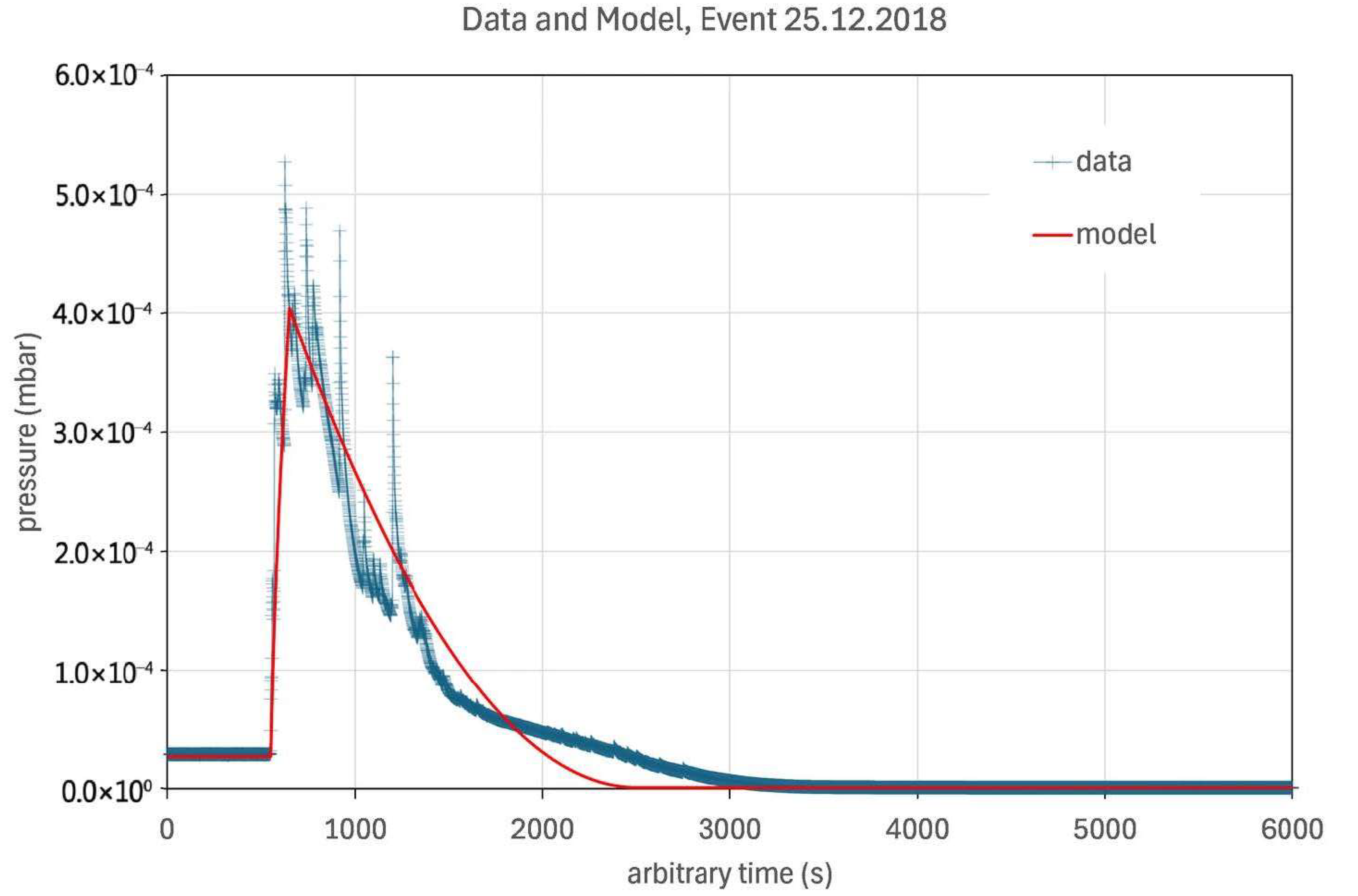
In the event of 25 December 2018,
Figure 5, the operational pressure was 2.8 × 10
−5 mbar during regular thruster operation. The event made the pressure rapidly rise up to 5 × 10
−4 mbar, which triggered the thruster shut-off signal. After roughly 3000 s, the operating pumps made the pressure decrease to 8.5 × 10
−7 mbar after the event, the thruster being still switched off.
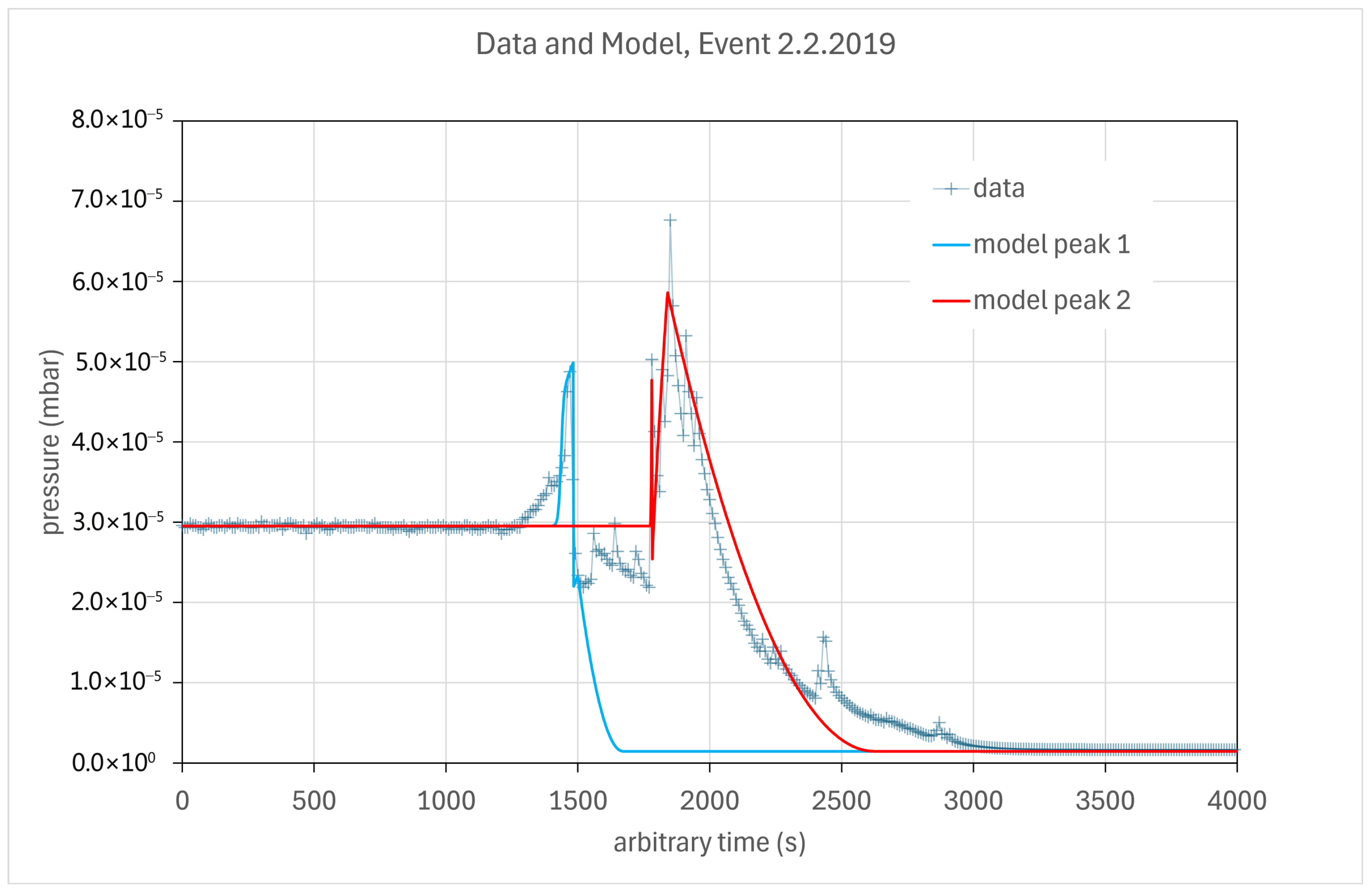
Figure 6 shows the pressure rise event that happened on 2 February 2019. The operational pressure before the event was 2.9 × 10
−5 mbar, and going back to 1.7 × 10
−6 mbar after the event. Again, in this case, the thruster was shut off due to the pressure rise event.
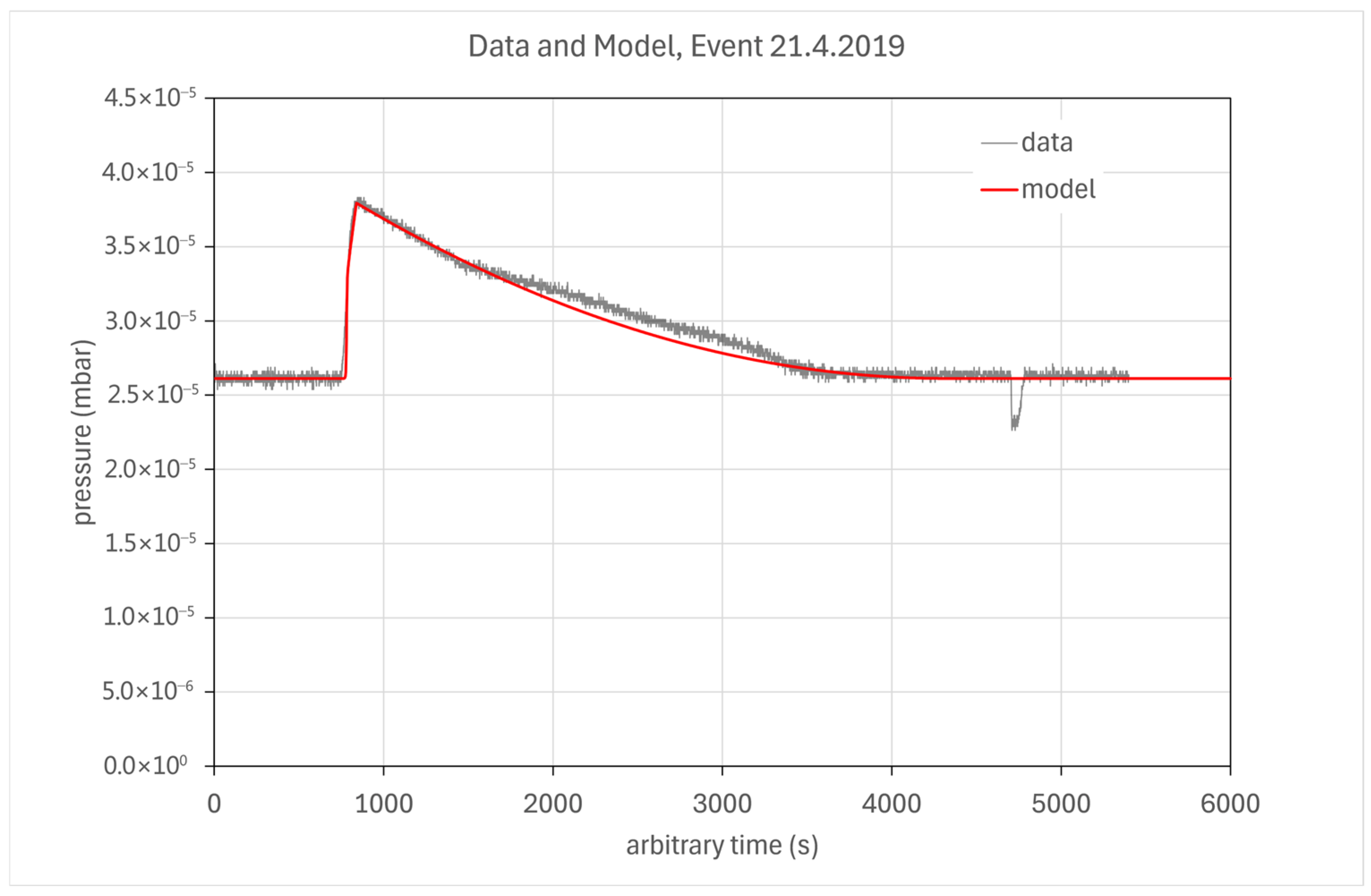
Figure 7 shows another pressure rise event recorded on 21 April 2019. The operational pressure during testing before the event was 2.64 × 10
−5 mbar. As in this case, the red line was not triggered, the pressure after the event went back to the operational pressure recorded before the event, while the thruster was still running.
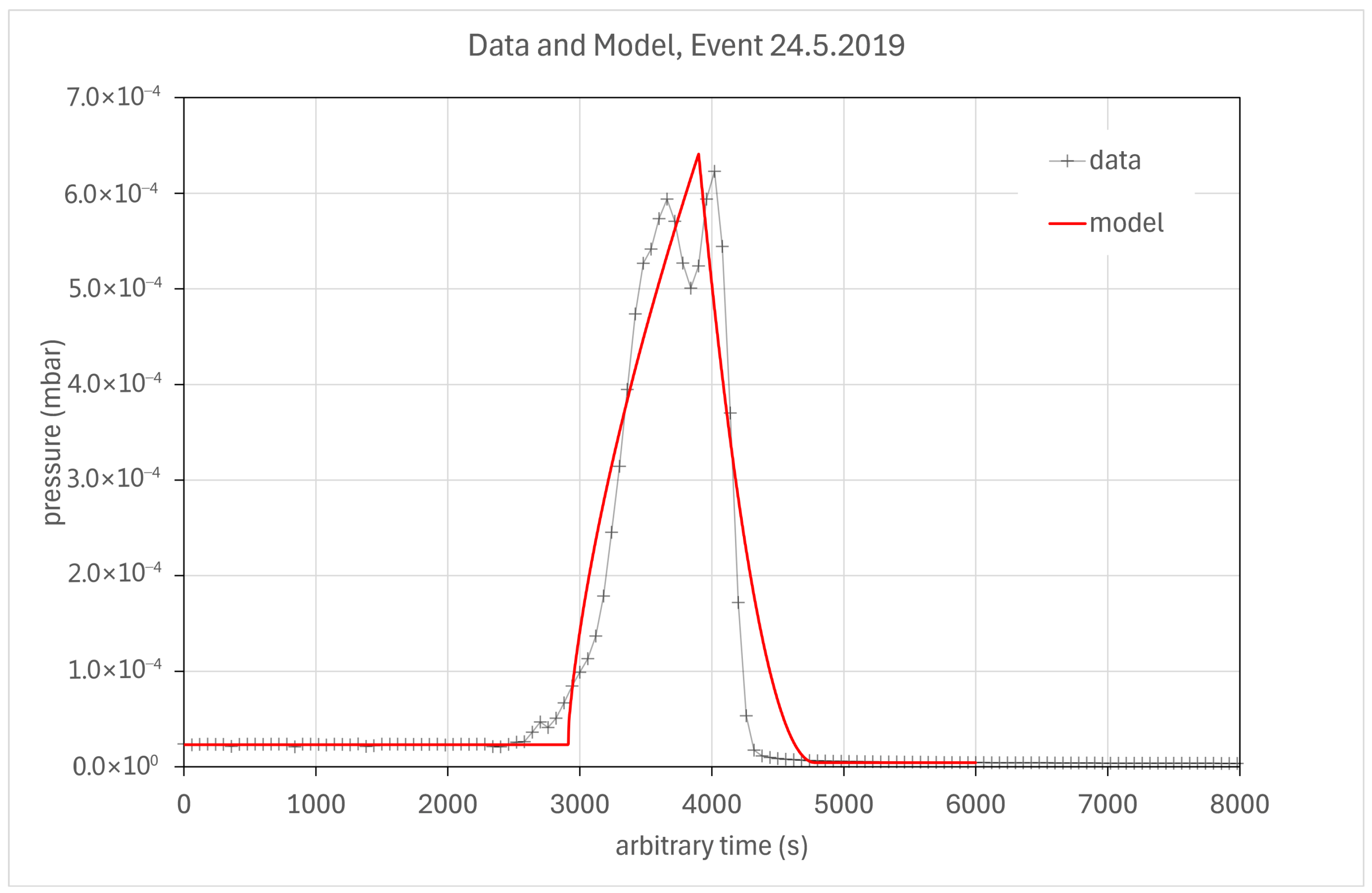
Figure 8 displays an event that took place on 24 May 2019. In this case, the operational pressure before the event was 2.34 × 10
−5 mbar, and going back to 3.3 × 10
−6 mbar after the event. As in this case, the pressure redline was reached, the thruster was shut off, and the pumps went back to baseline pressure.
Common to all of these events is a sudden steep pressure rise that has a duration of seconds up to a few tens of seconds. The events have a total duration lasting several minutes up to tens of minutes, and end with a pressure level similar to before the event, or back to the baseline pressure if the thruster has been switched off.
The main focus of this paper is the investigation and explanation of such events. This is of importance because the events trigger a thruster shut-off, as presented above, and this is sometimes dangerous for the object under test. Exposing hot thruster parts to higher pressures or even releasing oxygen may damage these components. Therefore, such events have to be prevented as much as possible, and/or countermeasures must be taken. First of all, the nature of these events has to be investigated and understood.
The approach to understand and model these events can only be a phenomenological one, but upcoming investigations should dig deeper into a detailed analysis.
3. Possible Explanation for Pressure Rise Events
A first guess for explaining the short rise in chamber pressure may be that some gas is released from an opening of a gas trap, e.g., a blind thread hole or similar. But the occurrence and shape of the pressure rise pattern may also point to a break-off of some cryo-deposit originating from a cryopump. Such an incident may be triggered by a cryopump hanging upside down (see
Figure 1) and/or contaminations accumulated on a cold plate that facilitate a peel-off (see
Figure 4). As a good hint,
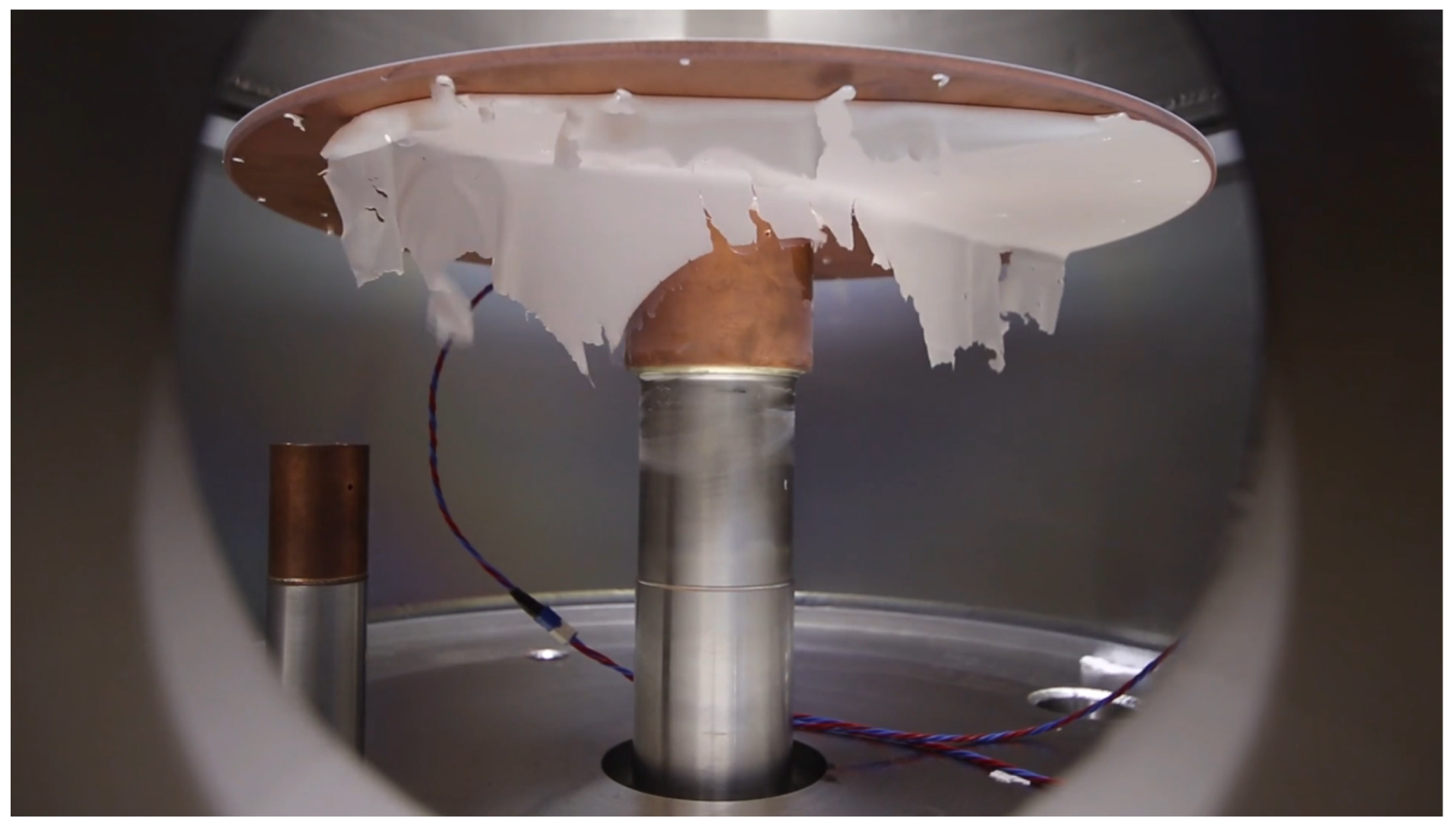
Figure 9 shows a warm-up of a cryopump cold plate recorded by the team of the company HSR AG, Balzers, Liechtenstein. This company has vacuum components in its portfolio and specializes in cryopumps. The ice in that picture is a solid xenon coating that still holds together but is partly decoupled from the cryopump cold plate (copper plate).
The pattern in
Figure 9 refers to a controlled cryopump warmup, which is not the case for the pressure rise events discussed above for the STG–ET, which occur spontaneously during normal operation. Our assumption here is that a small part of the condensed ice layer detaches from the cold plate, and then evaporates and causes the pressure to rise.
The following sections will show an approach for modeling such detachments and compare the results with measured data. One should keep in mind that a first approach model may not simulate all detailed features that happen to the detached ice sheet, which are visible in
Figure 9.
4. Cryopump Ice Modeling
The condensation physics at the cold plate surface of a cryopump is complex and depends on many parameters [
9,
10]. The condensation includes different gases at the same time, may generate various ice lattice structures, and will depend on the surface microstructure and cleanliness of the cold plate as well. Literature about this subject is also not very abundant, and designing or optimizing a pump system is not straightforward [
11,
12].
The model designed for this study uses the forward timestep integration algorithm and is based on particle number flow. Therefore, mass flows measured in mg/s or volume flows in sccm or m3/s, have to be first converted into particle flows (). After the execution of a timestep, the particle numbers are converted back to a pressure in mbar. This makes any later comparison easier because the vacuum chamber data acquisition system stores its measurements in mbar.
The numerical algorithm for pumping is based on a withdrawal of particles from the vacuum chamber volume, and adding two particle flows, one representing a chamber leak flow and another simulating the thruster. Details are shown in
Section 4.1. Without a thruster flow, it is possible to adjust the leak flow so that a typical background pressure is achieved. The detachment process is modeled via a user-set initial condensate mass that is released at a specific time after the program starts. With ice release, it is important to calculate the mass flow that the ice object sublimates into the chamber volume. The underlying assumptions and equations are outlined in
Section 4.2. The sublimated mass is subtracted from the original condensate mass, and the sublimated mass is dumped by the pumping algorithm. Based on the new reduced ice mass, a new surface area is calculated, which is needed again in the sublimation flow calculation. All this is performed per user-set timestep. The sublimation calculations stop when all of the initial condensate mass is consumed.
4.1. Vacuum Chamber
The model vacuum chamber used for this investigation is very simple and contains a pumping system with a fixed pumping speed of 276 m
3/s, a value which comes from measurements on xenon [
7]. The chamber wall temperature is meant as chamber ambient temperature
Tamb and is set to a constant 300 K, which defines the thermal radiation field inside the chamber as
with
being the Stefan–Boltzmann constant.
The model works with the two gases nitrogen as background gas and xenon as thruster propellant. Xenon is also the only gas that condensates on the model cryopump. The relative atomic numbers are and , and with the atomic mass unit of , the atomic masses and particle numbers can be calculated.
The chamber volume is
[
3]. The chosen vacuum chamber leak rate is in the range of
. When running the model without thruster gas and clean cryopumps, such leak rates lead to chamber background pressures in the order of 10
−6–10
−7 mbar, consistent with measurements.
The thruster mass flow used in this work is in the range of
. The particle flows for leak and auxiliary gas can be derived from the following Equations:
and
With the given high pumping speed, which was measured during a high-vacuum state and with all cryopumps running, a complete model pump-down starting at 1013 mbar will take much less time compared to real life. A real pump-down needs longer times because it starts with a much lower pumping speed due to the operation of displacement pumps (rotary vane, Roots pumps, turbomolecular pumps) before the cryopumps are started.
4.2. Solid Cryo Condensates
The model only uses xenon as a solid condensed gas onto a cryopump surface. In practice, nitrogen and other gases will also condense if the plate temperature is below 20 K. But in a first approach within this study, we focus on cold plate temperatures of 50 K and xenon ice only.
In general, the saturation pressure of a condensate can be presented by the following Equation (see [
13]):
With
as saturation pressure,
A,
B,
C as parameters, and
T as absolute temperature. The parameters
A,
B, and
C are given in
Table 1. Equation (3) can be rewritten for xenon (with A and B given by
Table 1):
The density of solid xenon ice at 50 K is of the order of 3430 kg/m
3 [
7,
14,
15]. Visual observations at STG–ET and other EP test facilities reveal that, in the case of cryopumping xenon in those facilities, the xenon ice structure seems more like a polycrystalline loose ice cover, more like snow (compare, for instance, with
Figure 3). Using a similarity approach, which states that snow of water has about one third of the density of water ice (The density of snow has a very wide range, depending on deposition condition and environment), we make a simplification and set the xenon ice density
to
Another important property of solid xenon ice is its infrared absorption coefficient
(emissivity). This parameter is needed for calculating the energy absorption of an ice-coated cryopump plate or a detached ice piece. The emissivities of cryogenic condensates are well known for many gases, e.g., for water ice, it is around 0.8–0.95 [
16,
17]. Unfortunately, this is not so for solid xenon, but from experience with cryopump operation, the emissivity of solid xenon (xenon ice or snow) is significantly lower than the emissivity of water/snow ice. Values of 0.4–0.6 for gases used in cryogenic applications are mentioned in ref. [
18]. For this work, the following value has been adopted:
4.3. Condensate Detachment Model
The idea is to set up a model for simulating an ice sheet detachment similar to the behavior seen in
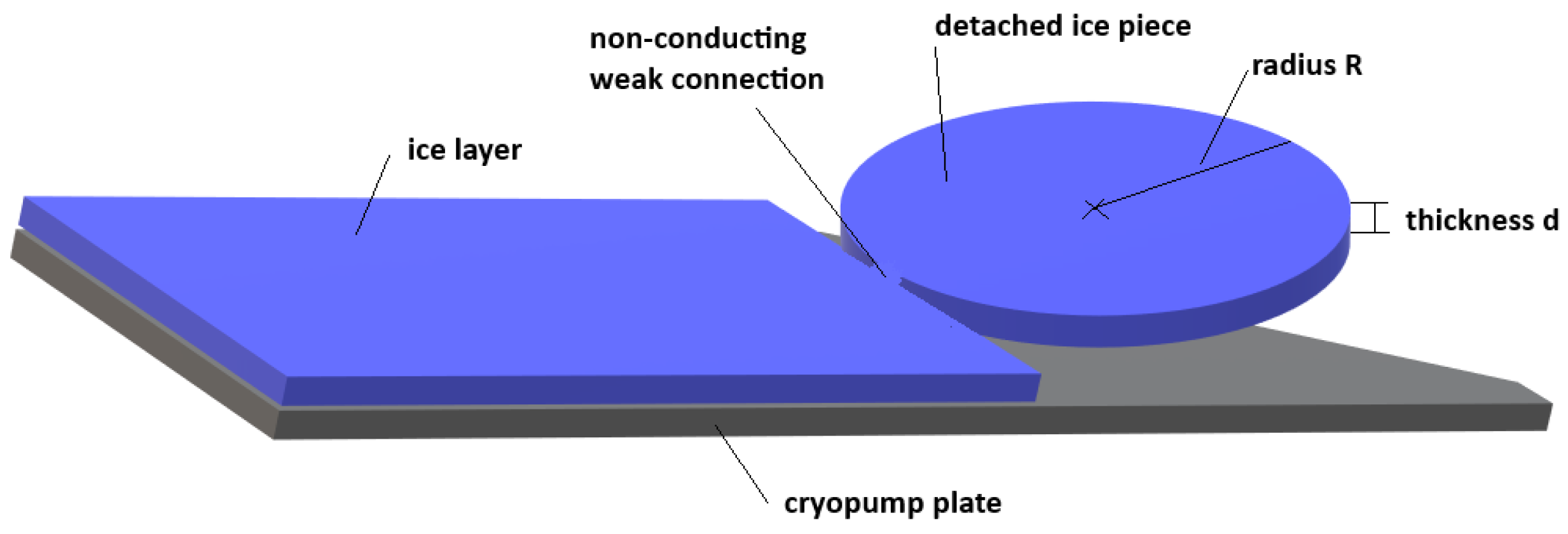
Figure 9. Of course, a basic model cannot reproduce such a complex pattern. Therefore, the model is based on a simple-shaped ice sheet that peels off the cryopump plate, but is still attached to the remaining ice layer on the cryo plate.
Figure 10 shows a model of a cryopump cold plate with an attached ice layer and a detached circular piece of solid condensate. The detached piece is only held by a small non-heat-conducting link. This link indicates that the detached piece can fall down to the bottom of the model chamber and disintegrate or become subject to other unforeseen effects, for example, a Leidenfrost phenomenon [
18].
In
Figure 10, the detached piece has the shape of a disk with radius
R and thickness
d. We couple the thickness to the radius with a thickness factor
tf by the Equation
With a given ice mass
M and an ice density
we can calculate the corresponding radius
R with the following Equation:
The value of the surface area of the detached ice sheet is important for the total evaporation stream and for the thermal radiation input from the ambient temperature field, and is defined as follows:
If looking at
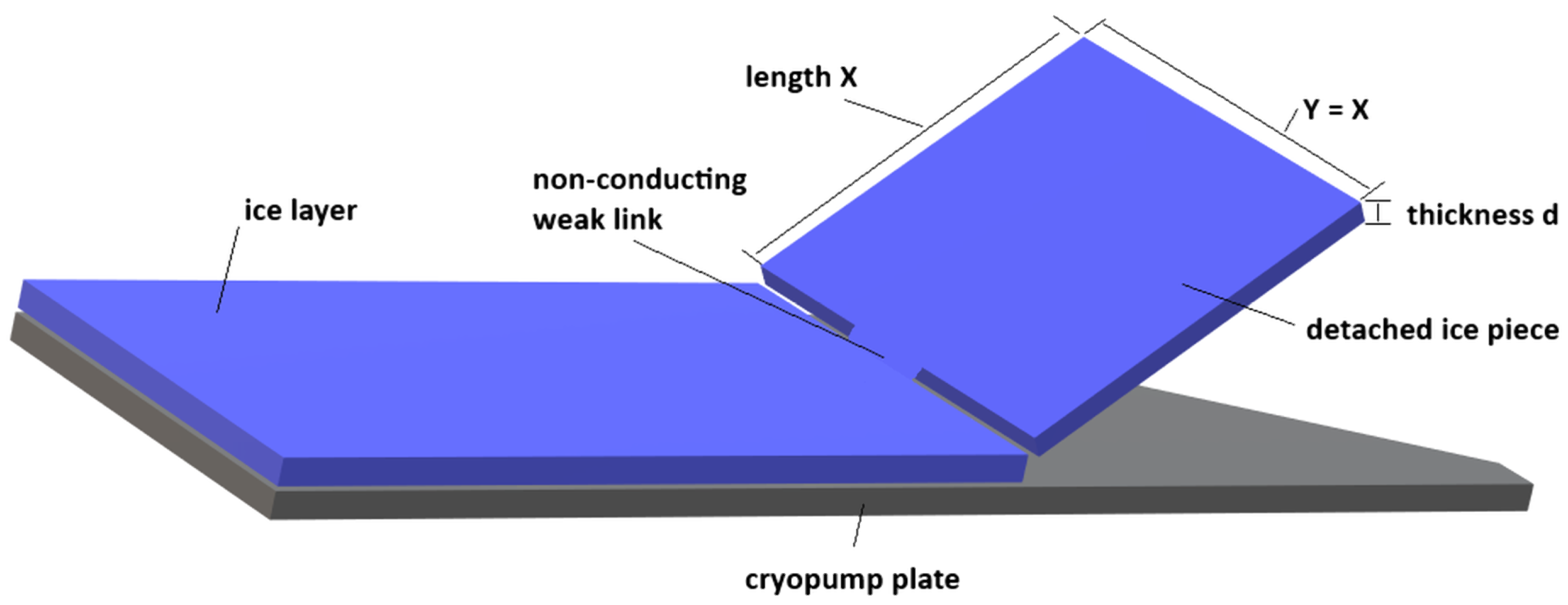
Figure 9, one may argue that a typical ice sheet is not circular, but rather shaped like a rectangle or square. We tried this with a square piece of ice, as displayed in
Figure 11. For a square, we have
, and again define a thickness factor
tf for deducing the thickness
d by the following:
Again, with a given ice mass
M and ice density
ρ, we can calculate the corresponding size
X by the following Equation:
The total surface area of this square detached ice sheet is calculated as follows:
4.4. Calculation of Ice Mass and Flow
With the above set geometry and the xenon saturation pressure, it is possible to model an evaporative mass flow. As other boundary conditions, we set the initial ice sheet temperature to 50 K, and the radiative ice emissivity to 0.4. Following ref. [
19], we can calculate the molar flow per condensed surface area as follows:
Here, αv is the vacuum vaporization coefficient, which is set to 1 for simplicity.
is the saturation pressure as set in Equation (4). p is the actual pressure, M is the molecular weight, T is the absolute temperature, and R is the gas constant.
With the above settings, Equation (13) can be converted into a mass flow, which leads to the following:
The factor 100 takes into account that here pressures are given in mbar. Based on the mass flow and the actual surface area
(see Equation (9) or (12)) of the detached ice piece, the evaporated mass per time step
can be calculated as follows:
As mentioned above, the integration uses particle numbers, and this can be derived from the following (15):
The sublimation energy that is taken from the condensate for a
is calculated with the sublimation enthalpy
via the following:
On the other hand, the thermal radiation energy deposited in the ice sheet during
is given by the following:
With Equations (17) and (18) we can deduce the temperature change in the ice sheet remaining mass
m:
with
being the xenon ice heat capacity. The new temperature after the energy exchange took place is given by the following:
Finally, we can sum up all particle flows and calculate the new total number of particles present in the volume
after a timestep:
with
being the pumping speed,
and
being the gas flows, and
being the flow of sublimation of xenon ice (already containing
). Equation (21) is the core of the model algorithm and the discrete forward timestep process.
The number of particles can be converted back to pressure by the following Equation:
with
being the particle number in the chamber,
being the chamber volume,
being the Boltzmann constant, and
being the ambient temperature.
5. Software Interface
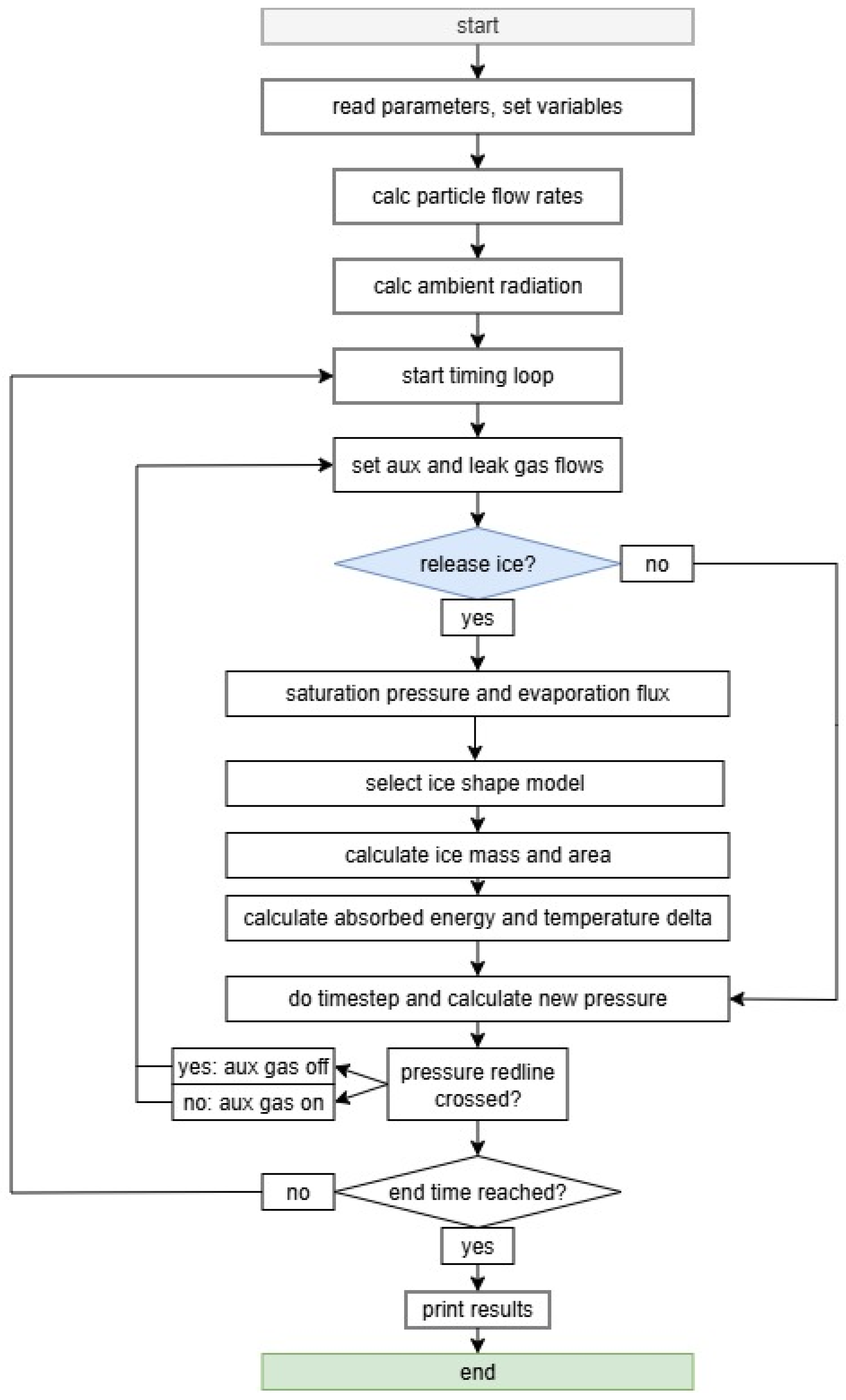
The main flow diagram of the forward timestep model is plotted in
Figure 12. After starting the program, the variables are read in (pumping speed, ambient temperature, ice sheet conditions, etc.), and control parameters are set. A user-given parameter is the time when the ice detachment should start. This is handy for shifting the pressure rise event with respect to the real event (arbitrary time in the event plots), and reaching a good synchronization. When the ice release branch is triggered, an additional particle emission starts. This emission depends on the magnitude of the emitting surface area, which is calculated from initial ice mass and shape parameters. During sublimation, the ice mass is reduced, and with it the emitting surface area. This loop continues until all condensate mass is consumed.
At program start, leak gas flow and auxiliary thruster gas flow are turned on. If the redline pressure is reached during code execution, the auxiliary gas flow is switched off. This simulates the experiment in which the thruster must be turned off if a pressure limit is crossed. In all discussed cases, the redline pressure is set to 5.0 × 10⁻⁵ mbar, which is a typical value in real test campaigns.
The program runs until a user-defined time is reached. The internal timestep used was in the range of 0.0003–0.001 s, small enough to prevent numerical instabilities.
6. Comparison of Two Ice Models
The first model runs compare the two shape models for the detached ice sheets.
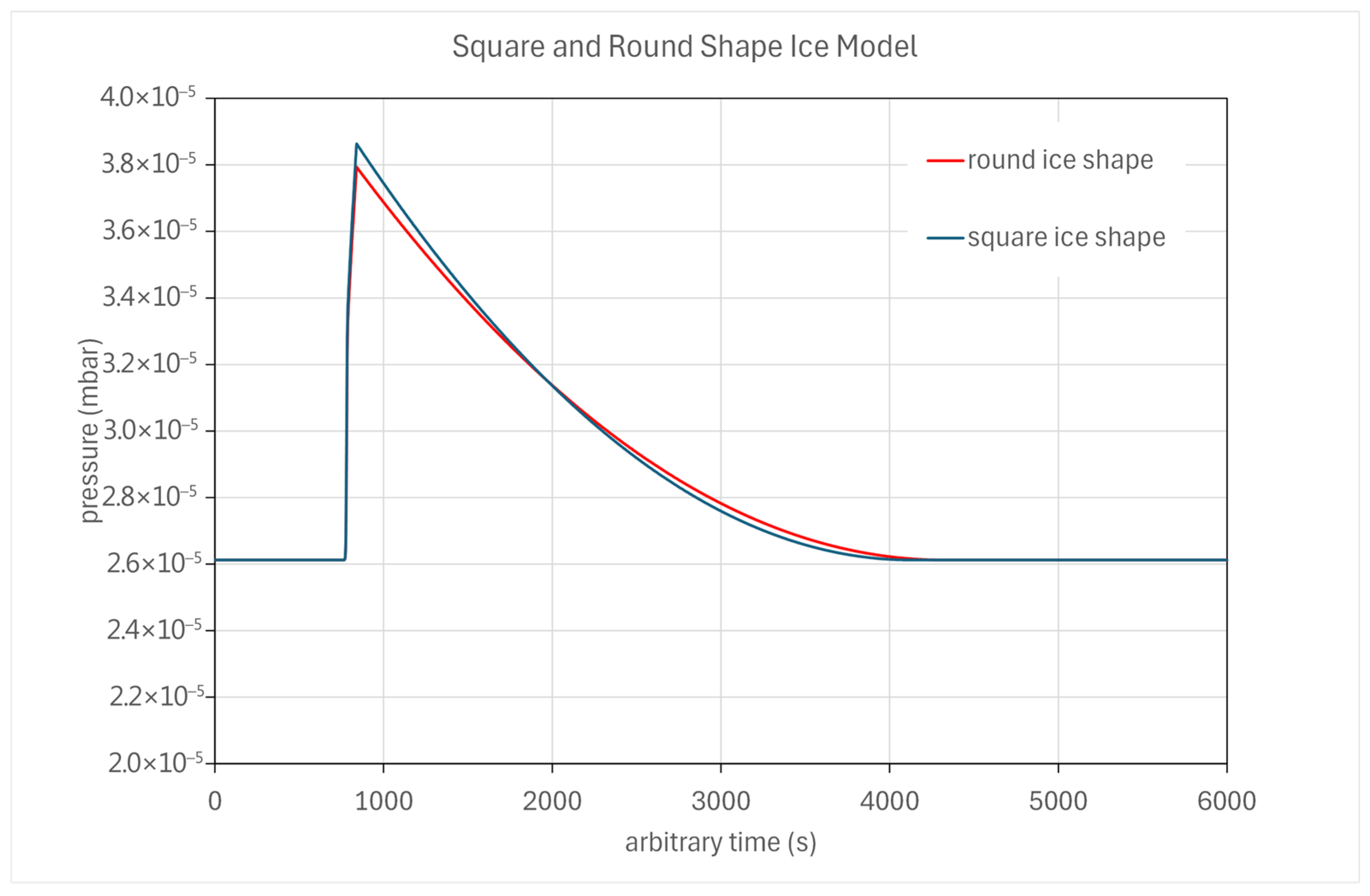
Figure 13 shows these two model runs with identical boundary conditions of pump speed, ambient temperature, initial pressure, leak rate, gas flow rate, initial condensate temperature, ice emissivity, and a condensate mass of 0.022 kg. The difference is as follows:
As the modeled pressure evolution curves are very similar and the square ice model has more degrees of freedom, the square model was abandoned for simplicity. It may be used in further studies for fine-tuning and fitting to observations. The first analysis showed that the round shape model reproduces the measured data with respect to its time evolution very well, with its steep rise and a longer decline. Also, the mass of 0.022 kg seems reasonable when looking at the real condensate on a cryopump. All variables that went into the two model runs are listed in
Table 2. The only distinction between the two runs relates to the detached ice shape parameters.
7. Modeling Pressure Rise Events
This section illustrates the application of the model described to the pressure rise events discussed in
Section 2. Because we want to present a phenomenological approach in describing the observed pressure rise events, the selection of model parameters was not performed based on a least-squares fit or similar procedure. This is due to the fact that the real events are much more complex and may involve ice sheet breakage or multiple ice sheet detachments. Furthermore, the multiple peaks appearing in some events would disturb any least squares fit. The aim here is to investigate if the model is adequate for a first step understanding and confirming that the principle of ice detachment can explain the observed pressure curves. After multiple runs with different values of the free parameters, the best set was selected by a qualitative assessment and visual comparison.
Table 3 lists the variables that can be set in the model user interface for all model runs. The main differences concern the geometry of the detached ice sheet, the initial ice mass, and the ice release duration.
Figure 14 shows a comparison of a model run with the event recorded on 25 December 2018 (see
Figure 5). The pressure rise triggered the thruster gas switch-off, and the pressure finally went back to the chamber background pressure.
The event on 2 February 2019 showed a more complex structure (see
Figure 6) with its two pronounced peaks. At the moment, the model is not able to release two ice sheets at different times in a single run. For simulating this event, two separate model runs were used, one for each of the peaks.
Figure 15 displays the plot with the two ice release runs. Here again, the pressure rise triggered (at the first peak) the thruster gas switch-off, and the pressure finally went back to the chamber background pressure.
The pressure redline was not crossed in the event that took place on 21 April 2019, as can be seen in
Figure 16. The thruster continued to run, and the pressure decreased back to the operational pressure in the 10
−5 mbar range. The model nicely reproduces the data.
The last event discussed here was recorded on 24 May 2019. This was an event with a bigger sheet detachment, and the redline was triggered.
Figure 17 shows the comparison data versus the model run. The fine details of the event are not so well reproduced with the model assumptions, e.g., the slower event start and the steep decline in pressure observed in the measurements. One conclusion here is that there is a need for some refinements with respect to detached ice shape and release timing.
8. Discussion
Table 4 summarizes the main parameter settings in the model runs to fit the pressure rise events. The main point is that the released mass ranges from 2 g up to 0.4 kg, which means that we had ice sheets from a very tiny size to a noticeable percentage of the cryopump ice layer. Changing the release time interval (duration) enabled the adaptation to different slopes at the beginning of the pressure rise event. The ice release durations ranged from 80 s (Event no. 2) to 1000 s (Event no. 4).
As mentioned above, the fitting was not performed by a typical least squares approach, because at this early stage of model design, it was primordial to have something in hand for a coarse modeling of up and down slope, peak, and event duration. A precise fitting will be a task in further studies, which may include multiple ice release events in one run and more ice shape options.
Another important topic to add could be the investigation of the bonding mechanism of the ice layer onto the cold plate. If this could be implemented in the model, we would have in hand more information on how to optimize the cryopump operational strategies.
9. Conclusions
The goal of this paper was to present sporadic events of rising pressure during electric space propulsion tests in vacuum chambers equipped with cryogenic pumps, propose a process that may explain the observations, and present a software model that simulates the release of xenon ice sheets from a working cryopump cold plate.
The model is based on ice sheets of circular shape with a fixed radius-to-thickness ratio. It could be shown that this model is able to generate pressure rise events that look very similar to the observed events, with respect to pressure rise slope and time, whole event duration, pressure maximum, and downslope. Furthermore, this was achieved with reasonable masses for the detached ice sheets in a range from 2 g up to 0.4 kg.
This model is used for comparison with four events that happened in the large EP test vacuum chamber STG–ET at DLR in Goettingen, during space propulsion tests in 2018 and 2019.
Cryopumps with cold plates mounted facing downwards in a chamber like STG–ET, and the contamination of cold plates with sputtered material can contribute to an easier ice sheet detachment from the pumps.
Future work will refine the model by introducing more differentiated shape options, multiple ice piece detachments, and the implementation of other gases. The investigations may also include a variation in physical condensate properties, and implement properties of the ice layer interface between cold plates and cryogenic condensate. All in all, we made a first step to improve the operational strategies for cryopumping xenon for space propulsion test optimization.