
Article

Patterns of Extreme Precipitation Indices in the Eastern Free State Region, South Africa (1981–2023)

by
Lokuthula Msimanga
1,*,
Sonwabo Perez Mazinyo
1 and
Onalenna Gwate
2
1
Department of Chemical and Earth Sciences: Geography and Environmental Science, University of Fort Hare, Private Bag X1314, Alice 5700, South Africa
2
Department of Geography and Geoinformation Sciences, Lupane State University, Lupane P.O. Box 170, Zimbabwe
*
Author to whom correspondence should be addressed.
Climate 2026, 14(5), 107; https://doi.org/10.3390/cli14050107
Submission received: 9 February 2026 / Revised: 19 March 2026 / Accepted: 27 March 2026 / Published: 19 May 2026
(This article belongs to the Special Issue Hydroclimatic Extremes: Modeling, Forecasting, and Assessment)

Abstract

South Africa is highly susceptible to climate variability and long-term climatic shifts, necessitating a comprehensive understanding of changing extreme precipitation patterns to guide effective mitigation and adaptation responses. This study examined variations in extreme precipitation indices from 1981 to 2023 across the eastern Free State Province using daily rainfall records derived from the Climate Hazards Group InfraRed Precipitation with Station data (CHIRPS). Ten extreme precipitation indices were evaluated, with trend detection conducted through the Innovative Trend Analysis (ITA) technique. Findings indicate that the majority of municipalities exhibited statistically significant declining trends (p < 0.05) in total wet-day precipitation (PRCPTOT), R99P, R95P, the Simple Daily Intensity Index (SDII), CDD, RX5day, R20mm, and R10mm, suggesting an overall reduction in both heavy and moderate rainfall occurrences. In contrast, significant upward trends (p < 0.05) were identified in CWD, and RX1day, reflecting a shift toward prolonged wet periods and more intense short-duration rainfall events. Taken together, these divergent patterns point to the simultaneous emergence of heightened drought vulnerability driven by reduced cumulative rainfall and increased flood risk linked to intensified precipitation extremes. These results underscore the importance of forward-looking, climate-resilient water resource management and context-specific adaptation strategies suited to the eastern Free State’s complex mountainous terrain.

1. Introduction

Climate change has been widely associated with rising frequency and intensity of heavy rainfall and other extreme meteorological events. The intensification of heavy precipitation under a changing climate is well documented [1,2]. These extreme occurrences frequently precipitate environmental disasters, including floods and slope failures [3], which in turn generate substantial impacts on human well-being, built systems, and ecological integrity [4]. Although a growing body of literature has examined the occurrence and variability of extreme precipitation, knowledge of their spatial and temporal distribution across the African continent remains limited [5]. Nonetheless, several regional studies have reported discernible shifts in extreme weather patterns within parts of Africa [6,7,8,9,10]. The short-lived nature of many extreme weather events further complicates their representation in climatological averages, often resulting in underestimation or mischaracterization of their true behaviour [3]. Consequently, a nuanced understanding of the dynamics governing extreme rainfall events is essential for informing robust climate adaptation and mitigation planning.
South Africa’s climate is marked by pronounced variability in both temperature and precipitation, conditions that frequently give rise to climate anomalies and wildfire occurrences [11]. For instance, ref. [12] found that approximately 30–40% of meteorological stations across the country registered significant increases in TX90p (very warm days), thereby offering a quantifiable interpretation of “high temperatures” rather than relying on a generalized descriptor. The 2015–2018 Western Cape drought, commonly termed the “Day Zero” crisis, highlighted Cape Town’s susceptibility to acute water shortages and its heavy dependence on surface water storage [13,14]. These phenomena, however, exhibit substantial spatial and temporal variability. Consistent with patterns observed elsewhere in the subcontinent, climate change is amplifying both the recurrence and vulnerability to such extreme events [11,15]. A notable example is the April 2022 flooding, regarded as one of the most devastating events recorded in KwaZulu-Natal and the Eastern Cape, which resulted in significant loss of life, widespread damage to homes and infrastructure, and severe economic consequences [11,16,17]. During this event, cumulative rainfall over a two-day period nearly equalled the region’s long-term average annual precipitation [11].
The frequency of these extreme events has necessitated the need for more rigorous and in-depth studies [18]. Consequently, understanding the dynamics and attributes of climate extremes is critical for designing effective mitigation and adaptation strategies to better predict future changes [1,18].
South Africa has witnessed several prominent extreme weather events in recent years, reinforcing the urgent need for comprehensive climate analysis [1,19,20]. However, much of the existing research has largely focused on national-scale patterns or major urban centres, with comparatively limited focus on extreme rainfall events in the mountainous regions such as the eastern Free State Region (EFSR). For instance, ref. [21] investigated extreme rainfall patterns in KwaZulu-Natal and Limpopo, and observed a decline in the number of rainy days alongside rising minimum temperature (Tmin) and maximum temperature (Tmax) over the periods 1968–2004 and 1968–2017, respectively. Ref. [22] projected that future climate change will exacerbate extreme heat conditions across major South African cities such as Johannesburg, Cape Town, Durban, and Pretoria, with increases in frequency, duration, and intensity of hot days and nights. Ref. [23] similarly documented historical trends in extreme temperature events, identifying marked increases in heatwaves and hot days/nights coupled with reductions in cold extremes. Consistent with these findings, ref. [19] reported significant upward trends in the occurrence of hot days and nights, declines in cold days and nights, and a rise in the intensity of extreme precipitation events across the country.
Precipitation is one of the most critical parameters for characterising extreme weather events. Despite its importance, there remains a widespread lack of spatially explicit precipitation records in many developing countries, where observations are often limited to sparse and unevenly distributed meteorological stations. South Africa faces similar constraints, with limited coverage and research focused on extreme weather variability. In this context, remotely sensed datasets offer a practical alternative for generating spatially continuous precipitation information. Accordingly, this study utilised the Climate Hazards Group InfraRed Precipitation with Stations (CHIRPS) dataset, which integrates satellite-derived observations within situ station measurements to produce reliable, long-term precipitation records at high spatial resolution, of 0.05° (~5 km) from 1981 to the present.
The study seeks to investigate extreme precipitation events within the eastern part of the Free State Province. Although several studies have examined rainfall variability across southern Africa, relatively few have focused on local-scale changes in precipitation extremes using high-resolution satellite datasets. This study contributes to the literature by analysing trends in ten extreme precipitation indices derived from CHIRPS daily rainfall data for the study area. By focusing on extreme rainfall characteristics rather than only seasonal totals, the study provides insights into changing rainfall patterns that are relevant for local climate risk management, water resources planning, and agricultural adaptation strategies. This research examines the temporal and spatial variability of extreme rainfall patterns in the region using daily rainfall data for the main rainy season, October–April (1981–2023).

2. Methodology

2.1. Study Area

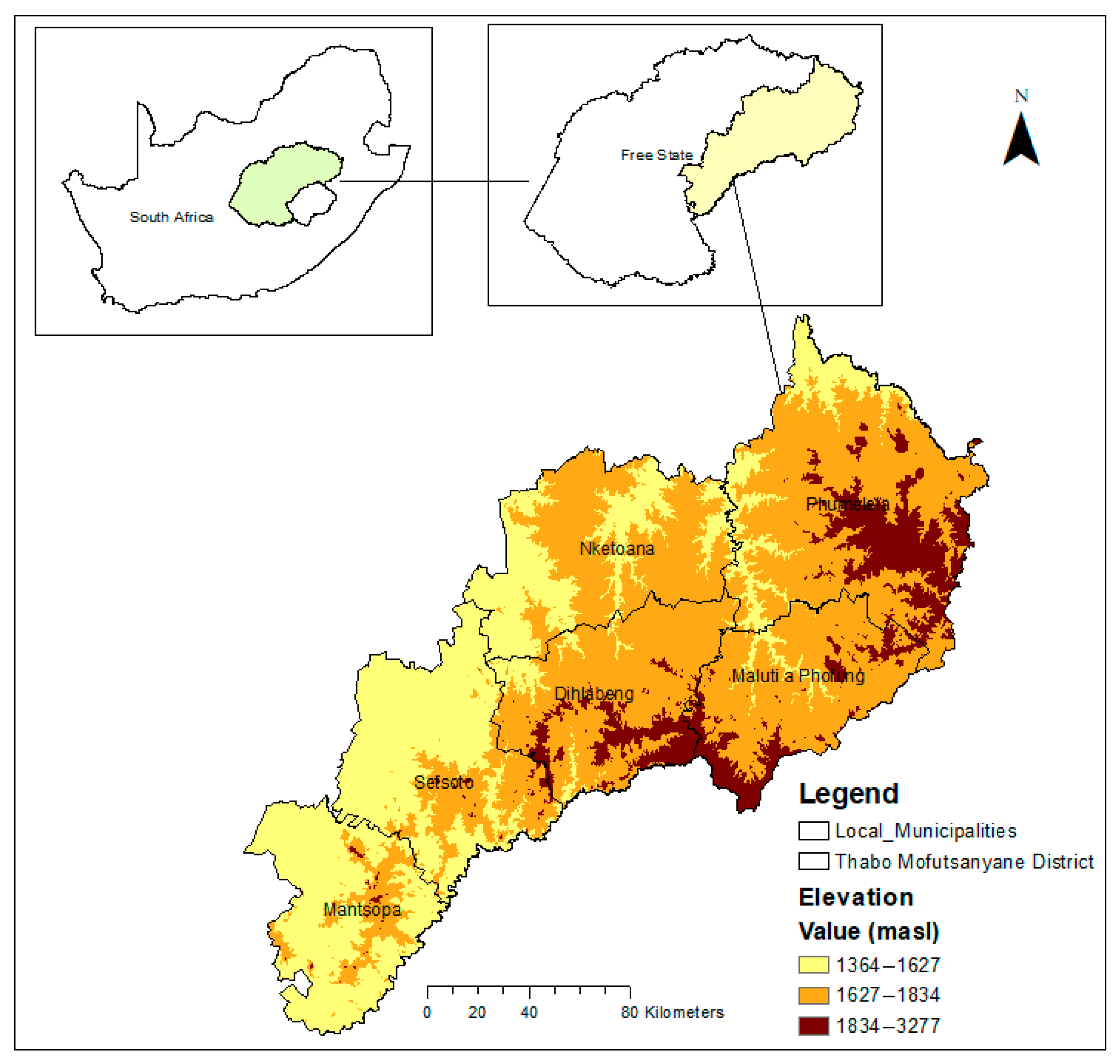
The eastern Free State region, situated within South Africa’s Free State Province, is distinguished by varied topography and climatic diversity (Figure 1). This rugged terrain plays a significant role in shaping local weather systems and precipitation behaviour. The area is particularly prone to extreme weather occurrences, including flash flooding and extended drought periods [24,25,26], with substantial consequences for both communities and ecosystems. Administratively, the region comprises six local municipalities: Nketoana, Dihlabeng, Phumelela, Setsoto, Maluti-a-Phofung, and Mantsopa. The northeastern and eastern portions of the province exhibit especially complex topography, with elevations reaching approximately 1800 m above sea level [27].
Land use in the region is largely agricultural, with rainfed farming being the dominant practice. The vegetation in the eastern Free State region is predominantly grassland, with a mosaic of woody and grass-dominated vegetation units. The grassland ecosystems, however, are continually threatened anthropogenic activities, including overgrazing, agricultural expansion, residential and industrial development, and encroachment of invasive alien plant species [28,29].

2.2. Data Sets

Daily precipitation records were obtained from the Climate Hazards Group InfraRed Precipitation with Stations (CHIRPS) dataset and from weather stations (South African Weather Service, Pretoria, South Africa). The CHIRPS calibrates global Cold Cloud Duration (CCD) rainfall estimates using the Tropical Rainfall Measuring Mission Multi-satellite Precipitation Analysis version 7 (TMPA 3B42 v7) [30]. For this study, data spanning 1 January 1981 to 31 December 2023 were utilised. The study period was limited to 1981–2023, as CHIRPS data were available and quality-checked only up to December 2023 at the time of analysis. Dataset performance was evaluated against observed measurements using root mean square error (RMSE), mean absolute error (MAE), percent bias (PBIAS), and the RMSE-observations standard deviation ratio (RSR). The evaluation was conducted using daily rainfall records from Bethlehem town and Ficksburg town in the eastern Free State Province, covering the period 2000–2024. These stations were selected owing to the availability of data.

2.3. Data Analysis

2.3.1. Calculation of Extreme Precipitation Indices

Ten extreme precipitation indices (Table 1) were computed using RClimDex v1.9-3 within the RStudio (version 4.4.1) environment (R). These indices were classified based on precipitation magnitude (mm) and include the annual maximum 1-day precipitation (RX1day), annual maximum consecutive 5-day precipitation (RX5day), extremely wet days (R99p), very wet days (R95p), total annual wet-day precipitation (PRCPTOT), and the Simple Daily Intensity Index (SDII).
The extreme precipitation indices may also be expressed in terms of frequency (days), reflecting the number of occurrences exceeding specified rainfall thresholds. These include the number of heavy precipitation days ≥ 10 mm (R10mm), very heavy precipitation days ≥ 20 mm (R20mm), consecutive dry days (CDD), and consecutive wet days (CWD). All indices were calculated for each of the six local municipalities illustrated in Figure 1.

2.3.2. Trend Analysis

After generating the climate extreme indices, the study explored the presence of trends and their magnitude using non-parametric tests including the Innovative Trend Analysis (ITA), Mann–Kendall (MK) Test, and Sen’s slope. We applied both the MK test and ITA to ensure a comprehensive assessment of precipitation trends. The MK test detects overall monotonic trends, while ITA provides additional insights into partial, nonlinear, or quantile-specific trends that may not be captured by traditional statistical methods [31,32,33]. The Sen’s slope estimator was employed to determine the magnitude of the trend in the selected rainfall indices [32].

2.4. Change Point Detection

Precipitation records were further analysed using a step-change detection approach to identify shifts in rainfall patterns over the study period. Accordingly, Pettitt’s test was employed to examine potential change points in the time series. Pettitt’s test is a non-parametric, rank-based method and is therefore distribution-free [34].

3. Results

3.1. Pattern of PRCPTOT, R95P, R99P, SDII and R10mm

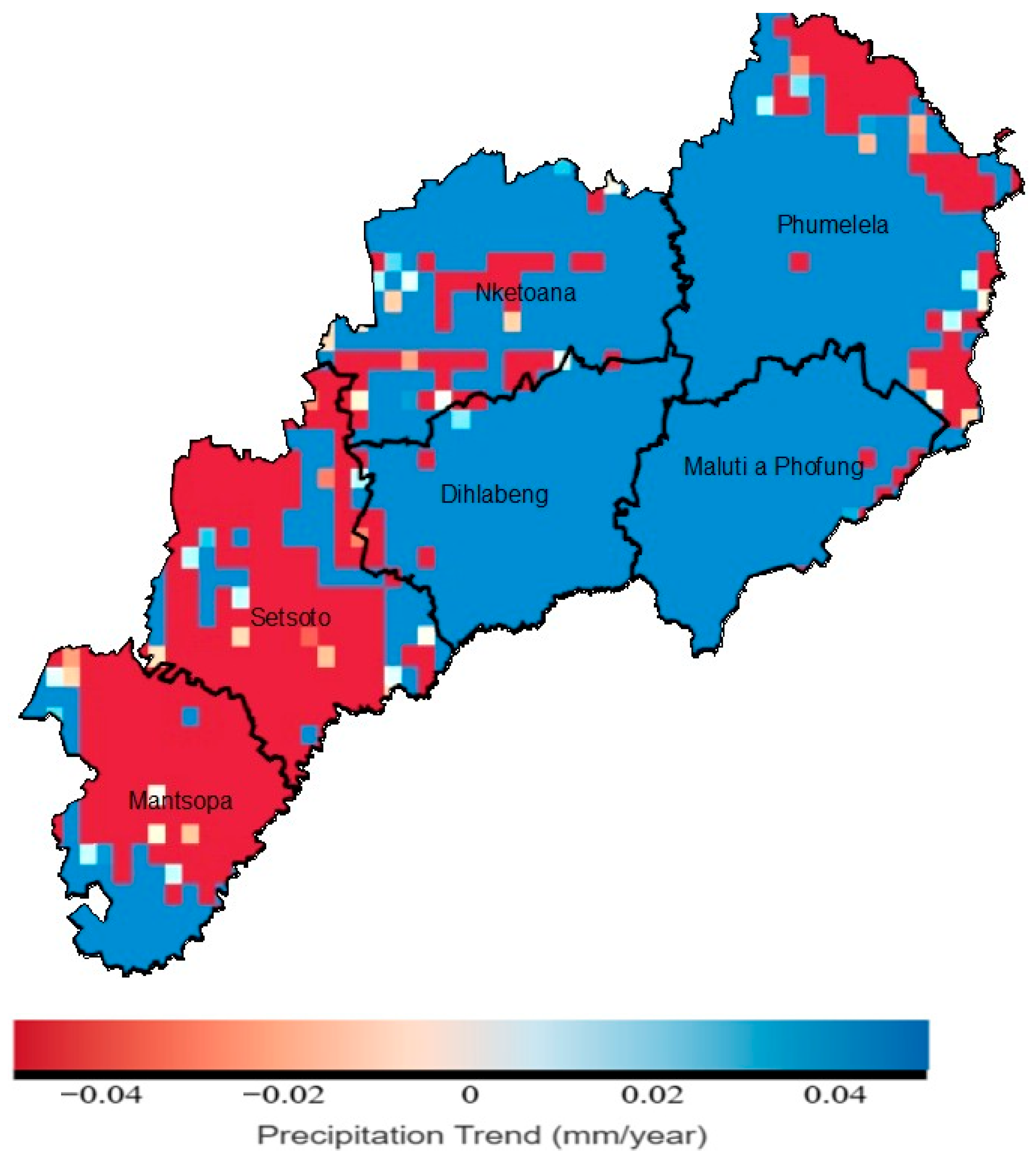
Step changes (p < 0.01) in daily rainfall over the study period were detected in all municipalities except Dihlabeng, which exhibited a declining (−1.173 mm day−1) trajectory. The detected change points occurred on 27 September 2017 for Maluti-a-Phofung, 24 September 2007 for Setsoto, 21 September 2005 for Mantsopa, 15 June 2017 for Phumelela, and 24 September 2023 for Nketoana. Among these, only Phumelela demonstrated an increasing daily precipitation rate on both sides of the breakpoint, although the post-break increase was more pronounced than the pre-break trend. In Nketoana, the rate of decline intensified after the breakpoint. On the other hand, in Maluti-A-Phofung, Setsoto, and Mantsopa, the rate of decrease was higher prior to the breakpoint and afterwards. There was a moderate relationship between station precipitation and the CHIRPS precipitation data. In the town of Bethlehem (MAE = 98 mm year−1, RMSE = 122 mm year−1. PBIAS = 8%, and RSR = 1.06, n N = 25 years) when the average annual precipitation was 491 mm between the year 2000 and 2024 at Bethlehem town. Similarly, in Ficksburg town MAE was 90 mm year−1, RMSE 124 mm year−1, PBIAS = 8.5% and RSR 1.07 when the average annual precipitation was 520 during the same period. The Kendall’s tau analysis (Figure 2) shows that precipitation trends were predominantly decreasing across most municipalities, with the exception of Phumelela, Dihlabeng and portions of Maluti-a-Phofung and Nketoana.
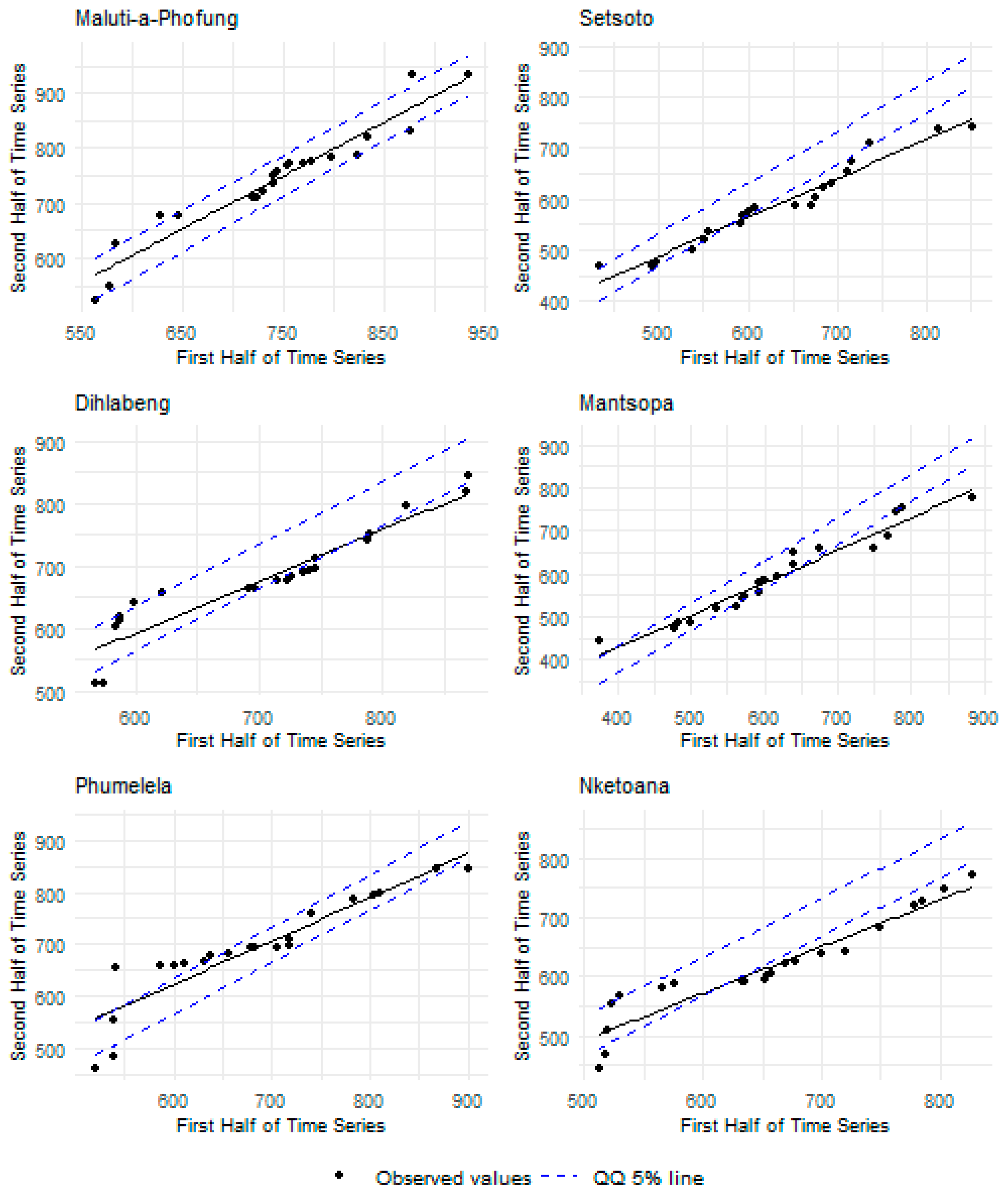
Similarly, the ITA results indicate a declining trend in PRCPTOT (Figure 3) for Setsoto, Dihlabeng, Mantsopa, Nketoana, and Maluti-a-Phofung, with rates of −2.060, −1.173, −1.218, −1.871, and −0.022 mm year−1, respectively. In contrast, Phumelela exhibited an increasing rainfall trend, averaging +0.465 mm year−1. Sen’s slope estimates for PRCPTOT further show that the largest positive trend magnitude occurred in Phumelela (+0.103 mm year−1), while the smallest (−0.008 mm year−1) was observed in Mantsopa. The highest annual PRCPTOT values for four municipalities were recorded in 1996: Setsoto (851 mm), Dihlabeng (869 mm), Phumelela (901 mm), and Nketoana (827 mm). Mantsopa registered its maximum annual total of 884 mm in 1988, whereas Maluti-a-Phofung recorded a peak of 935 mm in 2006.
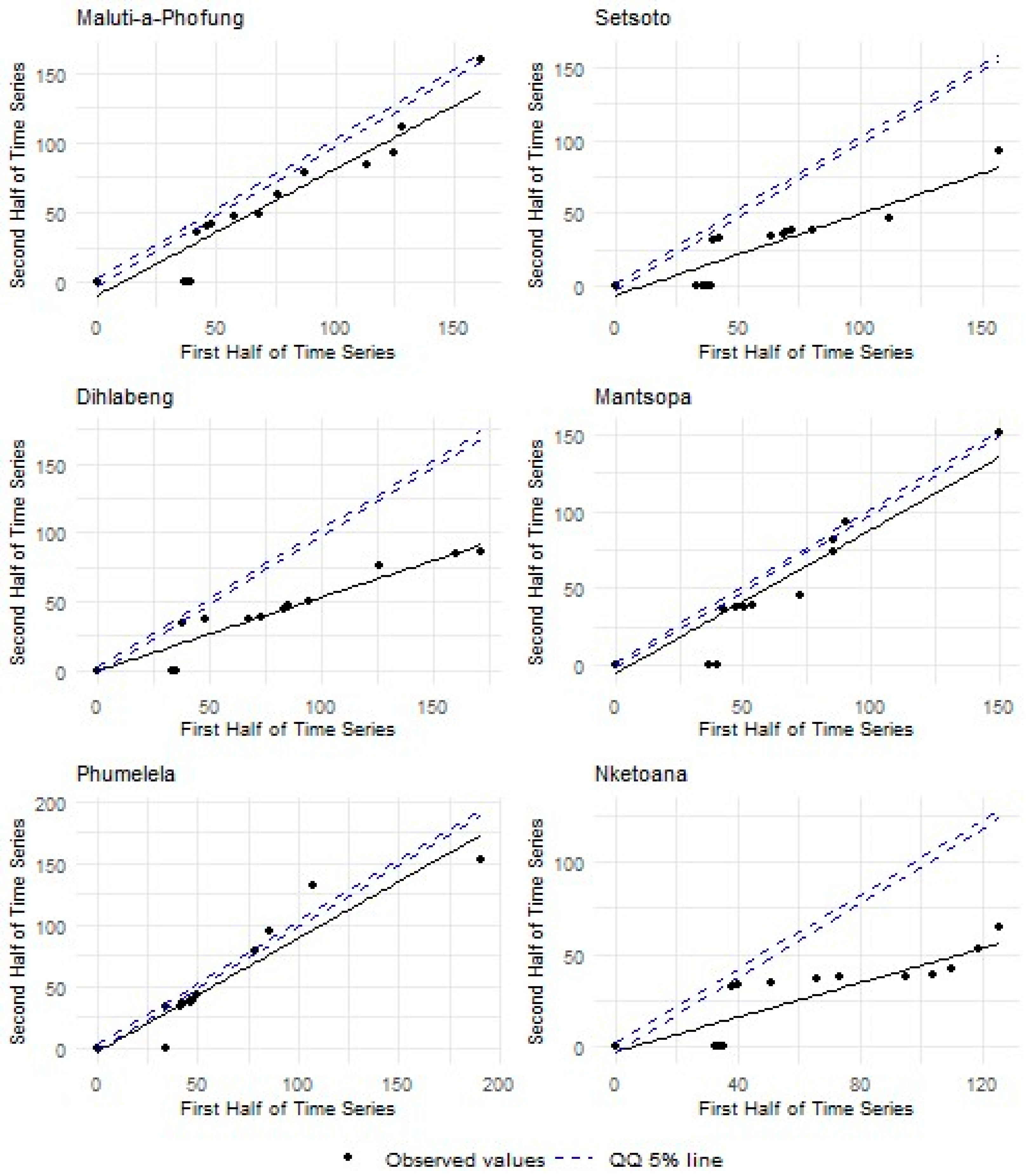
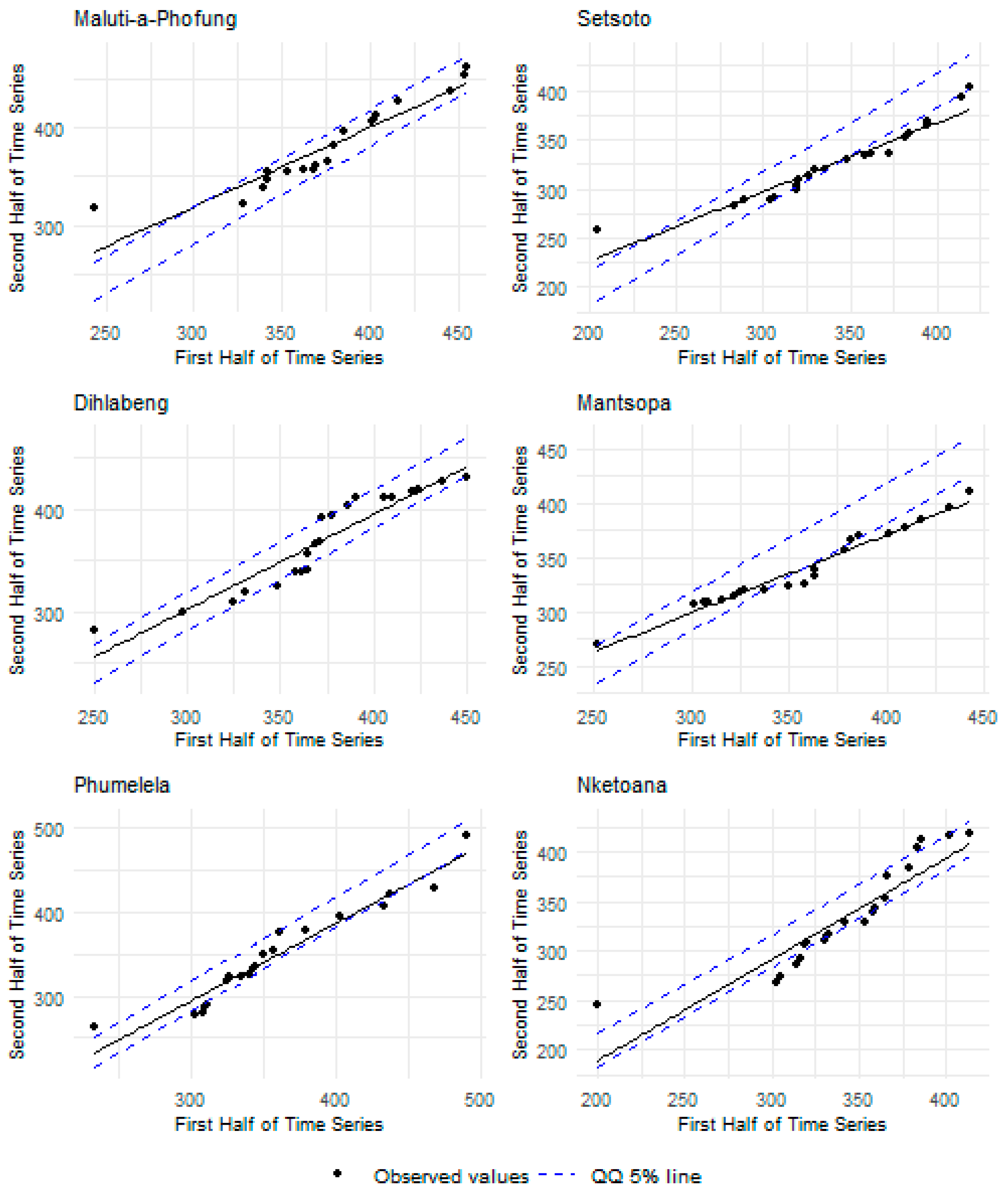
Both R95P and R99P indices exhibited declining trends across the municipalities (Figure S2 and Figure 4). Setsoto, in particular, showed a significant decrease (−1.55 mm year−1) in very wet days (R95P) compared to other municipalities that show moderate negative trends in very wet days (R95P).
During the study period, higher negative ITA trends in R99P values were primarily observed in Setsoto, Dihlabeng and Nketoana, with rates of −1.221, −1.096 and −5.835 mm year−1, compared to other municipalities. The 99th percentile index (R99P) exhibited steeper declining trends compared to the 95th percentile (R95P). Results from the MK test indicated that all the precipitation indices (R95P, R99P, and PRCPTOT) were statistically insignificant (p > 0.05), with the exception of Setsoto. Setsoto reported a statistically significant (p < 0.05) downward trend in R99P. Sen’s slope magnitude for R99P was highest in Setsoto, with a maximum value of 0.238 mm year−1.
Supplementary Figure S3 illustrates the SDII trends for Maluti-a-Phofung, Setsoto, Dihlabeng, Mantsopa, Phumelela, and Nketoana over the period 1981–2023. The findings indicate a very slight negative trend in daily precipitation intensity for Maluti-a-Phofung and Mantsopa, and more moderate declining trends in Dihlabeng, Setsoto, and Nketoana. In contrast, Phumelela displays a slight positive trend, suggesting a marginal increase in precipitation intensity. The predominance of data points below the 1:1 line further reflects an overall decreasing tendency in SDII across the study area.
The ITA results indicate a reduction in the frequency of heavy precipitation days (R10mm) in Maluti-a-Phofung, Setsoto, Dihlabeng, Mantsopa, and Nketoana, with trend magnitudes ranging from approximately −0.011 to −0.124 mm year−1. As shown in Supplementary Figure S6, the majority of data points fall below the 1:1 line, confirming a declining tendency in R10mm across these five municipalities. In contrast, Phumelela was the only municipality to exhibit an upward trend, with an estimated positive ITA slope of about +0.081 mm year−1.

3.2. Trends in CDD, CWD, RX1day, and R20mm

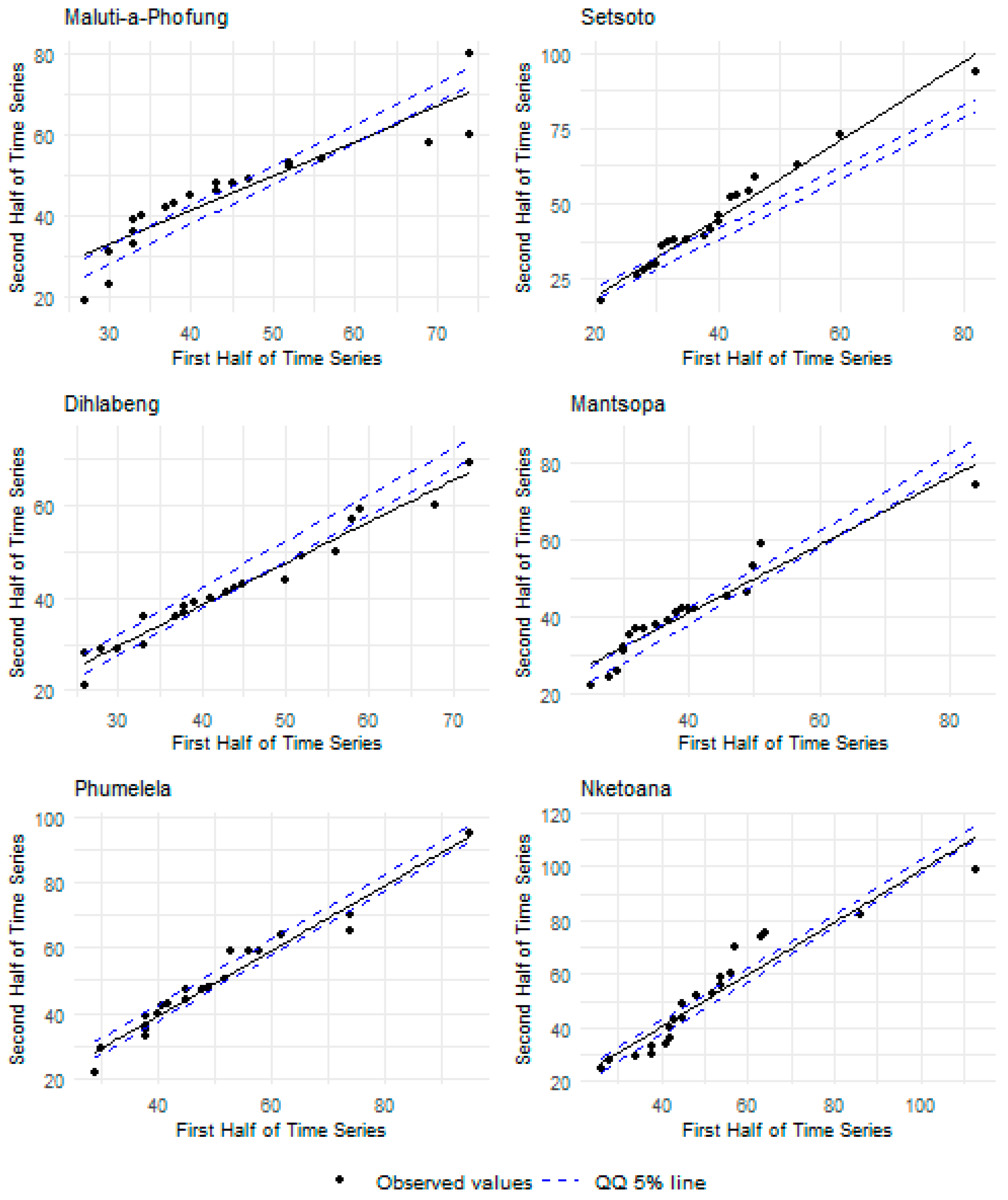
Trends in consecutive wet days (CWD) and consecutive dry days (CDD) for each municipality are presented in Supplementary Table S1, Figure S4 and Figure 5. The Innovative Trend Analysis (ITA) results indicate positive trends in CWD across all six municipalities, suggesting an increase in the duration of consecutive wet spells over the study period. CDD values, however, display mostly small negative slopes, indicating a slight reduction in consecutive dry days in several municipalities. For example, negative slopes were observed in Dihlabeng (−0.128), Phumelela (−0.077), and Nketoana (−0.050). In contrast, Setsoto and Mantsopa show weak positive tendencies, suggesting marginal increases in dry spell duration. Similarly, Sen’s slope estimates indicate positive trends in CWD in five municipalities, reinforcing the overall increase in wet spell persistence. With regard to variability in CWD, Nketoana recorded the highest values, reaching 16 days year−1 in 2005. MAP and Phumelela each recorded 15 days year−1 in 1992 and 2017, respectively, while Dihlabeng and Setsoto registered 12 days year−1 in 2018 and 2006. In contrast, Mantsopa exhibited the lowest variability in CWD, with a maximum of 10 days year−1 recorded in 1988 and 2017.
With respect to maximum 1-day precipitation (RX1day), a positive trend was observed in five of the local municipalities, while Setsoto was the only municipality showing a declining tendency. The ITA results for maximum 5-day precipitation (RX5day) displayed spatial variability across the region (Figure 6). Decreasing trends in RX5day were evident in Maluti-a-Phofung, Setsoto, Mantsopa, and Nketoana. In contrast, Dihlabeng and Phumelela demonstrated increasing trends in maximum 5-day rainfall, with estimated rates of +0.105 and +0.298 mm year−1, respectively.
The results of heavy precipitation events, representing days with precipitation of 10 mm or more (R10mm) and very heavy precipitation events (R20mm), are presented in Supplementary Table S1 and Supplementary Figures S6 and S7. The results indicate a positive upward trend of R20mm in three municipalities (MAP, Dihlabeng and Nketoana), indicating an increase in R20mm. Dihlabeng, in particular, exhibited a pronounced rise in R20mm, with a trend rate of 2.027 mm year−1. Maluti-a-Phofung and Nketoana showed only slight positive tendencies, with estimated ITA slopes ranging between approximately 0.011 and 0.015 mm year−1. Conversely, Setsoto, Phumelela, and Mantsopa predominantly displayed declining trends in R20mm (Supplementary Figure S7).

4. Discussion

Research on extreme climatic variability is particularly important in regions such as the eastern Free State, where livelihoods are strongly dependent on rainfed agriculture. This study evaluated ten extreme precipitation indices over the 1981–2023 period. The findings reveal predominantly negative trends across five municipalities, with only Phumelela exhibiting a positive trend. This pattern suggests a potential reduction in PRCPTOT across much of the study area. Reduced precipitation can lower soil moisture availability, constrain pasture productivity, and increase yield variability in rain-fed crops [35,36,37]. CHIRPS data captured the general magnitude of annual precipitation in the study area but underestimates on average, although PBIAS was within acceptable limits (<10%). Errors were moderate to high and within (~20% of annual precipitation). These results suggest that CHIRPS is suitable for broad-scale precipitation assessments, but its application for site-specific analyses or precise annual estimates should be approached with caution.
Bias correction was not applied because the primary objective of this study was to analyse temporal trends in extreme precipitation indices rather than absolute rainfall totals. In addition, the observed errors fell within acceptable thresholds (<10%). Previous studies have shown that bias correction improves absolute accuracy but does not substantially alter long-term precipitation trend detection [38]. In addition, bias correction often has limited influence on the direction and significance of precipitation trends, particularly when the bias is relatively small and stable over time. This suggests that the lack of bias correction in this study is unlikely to have affected the overall direction of the precipitation trends reported, though absolute values may be influenced. Negative slope values for both R95p and R99p were predominant across most municipalities, indicating a decline in the contribution of very wet and extremely wet precipitation events to total rainfall. This suggests that heavy rainfall events are becoming less frequent or less intense in the study area. In contrast, ref. [12] reported mixed but largely non-significant trends in R95p and R99p across South Africa for the period 1921–2015, reflecting substantial spatial variability in extreme precipitation patterns at the national scale. More recent work by [1] similarly identified both increasing and decreasing trends in these indices across different stations, further emphasizing the heterogeneous nature of rainfall extremes across the country. Localised increases in R95p and R99p have also been documented in parts of KwaZulu-Natal and the Free State [20]. Taken together, these studies indicate that extreme precipitation trends in South Africa are highly spatially variable, with some regions experiencing intensification of heavy rainfall events while others exhibit declining trends. The predominantly negative trends observed in this study, therefore, point to a regional weakening of extreme precipitation in the Eastern Free State, which may contribute to increasing drought vulnerability and reduced rainfall reliability. These findings highlight the importance of local-scale analyses, as national or regional averages may obscure significant sub-regional changes in rainfall extremes. The observed increase in consecutive wet days (CWD) is consistent with findings reported in other regions of South Africa. For example, several rainfall stations in eastern KwaZulu-Natal recorded cumulative rainfall totals exceeding 200 mm over a 16-day period [11], illustrating the occurrence of prolonged wet spells in parts of the country. Such increases in CWD are of concern because extended rainfall episodes can heighten flood risk, accelerate soil erosion, and disrupt agricultural activities and infrastructure.
However, these findings contrast with those of [21], who reported declining CWD trends in parts of Cedara and Estcourt in KwaZulu-Natal. This divergence highlights the strong spatial heterogeneity of precipitation patterns, even across relatively close geographic areas. The variability suggests that precipitation regimes in South Africa are shaped by a combination of localized climatic controls, including topographic influences, moisture transport from the Indian Ocean, and large-scale atmospheric circulation anomalies such as the El Niño–Southern Oscillation (ENSO) [39,40,41,42]. Consequently, changes in CWD should not be interpreted merely as statistical variations but rather as indicators of underlying climatic processes that influence rainfall persistence and extreme precipitation events. These dynamics have important implications for flood risk management, soil conservation, and agricultural planning in regions experiencing increasing wet spell durations.
The duration of extreme wet events generally increased over the period 1981–2023. However, the Mann–Kendall test indicated statistically insignificant patterns (p > 0.05) for SDII, CWD, and CDD, implying that although slope estimates suggest directional changes, these trends lack statistical robustness. This outcome is expected, as Innovative Trend Analysis is capable of detecting variations within lower, middle, and upper quantiles, as well as identifying non-linear, non-monotonic, and opposing trends within the same dataset that may remain undetected by conventional methods. In contrast, the MK test is limited to identifying overall monotonic (linear) trends in a time series.
From a temporal perspective, these contrasting patterns suggest shifts in the persistence and frequency of wet spells, where certain regions experience intensifying precipitation events while others become increasingly prone to drought conditions [43,44]. Consequently, changes in CWD should be interpreted not merely as statistical variations, but as reflections of complex spatial–temporal precipitation dynamics governed by interacting climatic drivers.
The findings indicate fluctuating patterns in the occurrence of dry and wet spells over the study period. A sustained increase in consecutive dry days (CDD) alongside a decline in consecutive wet days (CWD) suggests a shift toward longer dry periods and shorter rainfall episodes. Such changes can reduce the persistence of rainfall events and ultimately contribute to declines in annual total precipitation (PRCPTOT), with important implications for water resource availability and regional agricultural productivity. Ref. [45] similarly noted that increasing CDD trends coupled with declining CWD can significantly influence annual precipitation totals by reducing the frequency and duration of rainfall events. This combination of rising CDD and declining CWD highlights the dual challenge of increasing drought conditions and reduced rainfall persistence, which may lead to greater rainfall variability and lower soil moisture availability. These trends reinforce the urgency of implementing adaptive water resource management and climate-resilient agricultural practices in the region.
Trend analysis of the extreme precipitation indices RX1day and RX5day offers valuable insight into the behaviour and potential consequences of rainfall extremes in the eastern Free State Region. The positive RX1day trend detected in five municipalities indicates an increase in the occurrence or intensity of short-duration, high-magnitude rainfall events, conditions that can trigger flash flooding and place significant pressure on infrastructure. In contrast, Setsoto exhibits a declining RX1day trend, implying a reduction in extreme one-day rainfall events. This spatial contrast underscores the uneven distribution of precipitation extremes across the region. Analysis of the RX5day index indicates increasing trends in Dihlabeng and Phumelela, suggesting a rise in the intensity of prolonged rainfall events within these municipalities. Comparable upward RX5day trends have been documented at both national [1,20] and regional scales, such as in the Enkangala escarpment [44], reinforcing the spatial heterogeneity of extreme rainfall patterns across South Africa. Events of this nature can exceed drainage capacity, accelerate surface runoff, and heighten flood susceptibility. Conversely, declining RX5day trends observed in Maluti-a-Phofung, Setsoto, Mantsopa, and Nketoana align with localized reductions reported elsewhere [1]. These contrasting patterns further emphasize the spatial variability of extreme rainfall within the study area and point to the need for future research that links RX5day dynamics to hydrological responses, including streamflow behaviour, soil moisture variability, and flood risk.
Trend evaluation of the R10mm and R20mm indices demonstrates spatially variable patterns of heavy and very heavy rainfall across the municipalities, with important implications for water resource management and agricultural planning. The R10mm index, which represents heavy precipitation days, displayed declining trends in Maluti-a-Phofung, Setsoto, Dihlabeng, Mantsopa, and Nketoana. This suggests a reduction in the intensity and frequency of heavy rainfall events under historical climatic conditions. While such declines may lessen the immediate likelihood of flash flooding, they may also contribute to the gradual intensification of drought conditions. Comparable downward trends in R10mm and R20mm have been reported by [12] across several parts of South Africa, as well as by [1], who documented reduced frequencies of heavy rainfall days at a national scale. In contrast, Phumelela exhibited a positive R10mm trend (+0.081 mm year−1), indicating an increase in heavy rainfall occurrences and associated flood risk. For the R20mm index, upward trends were observed in Maluti-a-Phofung, Dihlabeng, and Nketoana, with Dihlabeng showing a particularly pronounced increase of 2.027 mm year−1, highlighting the need for focused management strategies to address the impacts of intensified rainfall. These localized increases align with findings from the [20], which reported intensification of extreme precipitation events in selected municipalities. Conversely, Setsoto, Phumelela, and Mantsopa showed declining R20mm trends, reflecting fewer very heavy rainfall days. The contrasting behaviour of the R10mm and R20mm indices illustrates the heterogeneous influence of climate change on regional precipitation dynamics and reinforces the necessity for location-specific water management and agricultural adaptation measures to mitigate emerging risks.
To illustrate the contrasting spatial patterns observed across the study area, Setsoto and Phumelela municipalities are presented as representative cases. Setsoto shows more pronounced negative trends in SDII, PRCPTOT, RX1day, and R20mm, together with an increase in CDD. This combination of declining rainfall totals, reduced precipitation intensity, and longer dry spells suggests a shift toward increasingly dry conditions and heightened drought susceptibility. These findings align with [46], who reported recurrent drought occurrences in Setsoto, indicating that the municipality may already be experiencing the impacts of increasing rainfall variability. In contrast, Phumelela municipality exhibits positive trends in several rainfall indices, including SDII, PRCPTOT, CWD, RX1day, RX5day, and R10mm. These trends indicate an overall increase in both the amount and intensity of precipitation, accompanied by longer wet spells. The upward trends in maximum precipitation indices (RX1day and RX5day), together with a greater frequency of heavy rainfall days (R10mm), point to a potential increase in flood risk. At the same time, the rise in CWD suggests a reduced likelihood of prolonged dry periods, which may enhance water availability and support agricultural productivity relative to drier municipalities. These contrasting municipal-level patterns highlight the spatially uneven nature of precipitation changes, demonstrating that climate variability and change do not manifest uniformly across the region. While some municipalities appear to be becoming drier and more drought-prone, others may experience increasing rainfall intensity and associated flood risks. Such divergent trends have important implications for local livelihoods, particularly in areas heavily dependent on rainfed agriculture, where shifts in rainfall regimes may affect food security, water availability, and agricultural stability [47].
In this context, location-specific adaptation strategies will be essential. For example, municipalities such as Setsoto, where drying trends dominate, may require strengthened water storage capacity, improved irrigation efficiency, and drought preparedness measures. Conversely, areas such as Phumelela, where rainfall intensity appears to be increasing, may need to prioritize flood management interventions, including improved drainage infrastructure and early warning systems. By identifying these municipality-specific divergences in rainfall extremes, this study provides fine-scale evidence that complements broader national and regional analyses, offering actionable insights for targeted climate adaptation planning.

5. Conclusions

The analysis of extreme precipitation indices for 1981–2023 in the Eastern Free State Region reveals mixed but meaningful changes in rainfall patterns. Most municipalities show declining trends in PRCPTOT, R95p, and R99p, indicating an overall reduction in total rainfall and suggesting increasing drought vulnerability. In contrast, indices such as CWD and RX1day show upward trends in several areas, pointing to a growing likelihood of intense short-duration rainfall events. These contrasting trends highlight the dual risks of reduced rainfall availability and increased flood potential, both of which have important implications for water resources and rainfed agriculture in the region. The results underscore the need for location-specific adaptation strategies, including improved water storage and irrigation efficiency in drier municipalities, and strengthened stormwater and flood management infrastructure in areas experiencing increases in rainfall intensity. Although the study provides valuable insights into historical changes in rainfall extremes, uncertainties remain due to limitations in trend estimation and potential non-climatic influences. Future research should extend the analysis to other regions and incorporate climate model projections to better inform long-term adaptation planning. Overall, the findings provide fine-scale evidence of changing precipitation dynamics, offering useful guidance for climate-resilient water management and agricultural planning in the Eastern Free State.

Supplementary Materials

The following supporting information can be downloaded at: https://www.mdpi.com/article/10.3390/cli14050107/s1, Figure S1: Graphical presentation of the ITA method (Boudiaf et al., 2021:p7). Figure S2: Trend of R95P indices across the six municipalities. Figure S3: Trend of SDII indices across the six municipalities. Figure S4: Trend of CWD indices across the six municipalities. Figure S5: Trend of RX1day indices across the six municipalities. Figure S6: Trend of R10MM indices across the six municipalities. Figure S7: Trend of R20MM indices across the six municipalities; Table S1: The results of precipitation indices for the six local municipalities in EFSR.

Author Contributions

L.M.: Developed the conceptualization, conducted data collection and analysis, and wrote the original research manuscript. O.G.: Assisted in conceptualization, methodological development, data analysis, and editing of the article. S.P.M.: Reviewed and edited the article. All authors have read and agreed to the published version of the manuscript.

Funding

This research received no external funding.

Data Availability Statement

The authors confirm that the data supporting the findings of this study are available within the article and its Supplementary Materials.

Conflicts of Interest

The authors declare no financial or personal relationships that may have inappropriately influenced them in writing this article.

References

  1. McBride, C.M.; Kruger, A.C.; Dyson, L. Changes in extreme daily rainfall characteristics in South Africa: 1921–2020. Weather Clim. Extrem. 2022, 38, 100517. [Google Scholar] [CrossRef]
  2. IPCC. Climate Change 2022, Mitigation of Climate Change Summary for Policymakers. Contribution of Working Group III to the Sixth Assessment Report of the Intergovernmental Panel on Climate Change; Intergovernmental Panel on Climate Change: Geneva, Switzerland, 2022. [Google Scholar]
  3. Clarke, B.; Otto, F.; Stuart-Smith, R.; Harrington, L. Extreme weather impacts of climate change: An attribution perspective. Environ. Res. Clim. 2022, 1, 012001. [Google Scholar] [CrossRef]
  4. Madakumbura, G.D.; Goldenson, N.; Hall, A. Anthropogenic influence on extreme precipitation over global land areas seen in multiple observational datasets. Nat. Commun. 2021, 12, 3944. [Google Scholar] [CrossRef]
  5. Bobde, V.; Akinsanola, A.A.; Folorunsho, A.H.; Adebiyi, A.A.; Adeyeri, O.E. Projected regional changes in mean and extreme precipitation over Africa in CMIP6 models. Environ. Res. Lett. 2024, 19, 074009. [Google Scholar] [CrossRef]
  6. Etana, D.; Snelder, D.J.R.M.; Van Wesenbeeck, C.F.A. Trends of Climate Change and Variability in Three Agro-Ecological Settings in Central Ethiopia: Contrasts of Meteorological Data and Farmers’ Perceptions. Climate 2020, 8, 121. [Google Scholar] [CrossRef]
  7. Luhunga, A.P.M.; Songoro, E. Analysis of Climate Change and Extreme Climatic Events in the Lake Victoria Region of Tanzania. Front. Clim. 2020, 2, 559584. [Google Scholar] [CrossRef]
  8. Niyongendako, M.; Lawin, A.E.; Manirakiza, C.; Lamboni, B. Trend and Variability Analysis of Rainfall and Extreme Temperatures in Burundi. Int. J. Environ. Clim. Change 2020, 10, 36–51. [Google Scholar] [CrossRef]
  9. Atiah, W.A.; Tsidu, G.M.; Amekudzi, L.K.; Yorke, C. Trends and interannual variability of extreme rainfall indices over Ghana, West Africa. Theor. Appl. Climatol. 2020, 140, 1393–1407. [Google Scholar] [CrossRef]
  10. Ogolo, E.O.; Matthew, O.J. Spatial and temporal analysis of observed trends in extreme precipitation events in different climatic zones of Nigeria. Theor. Appl. Climatol. 2022, 148, 1335–1351. [Google Scholar] [CrossRef]
  11. Mashao, F.M.; Mothapo, M.C.; Munyai, R.B.; Letsoalo, J.M.; Mbokodo, I.L.; Muofhe, T.P.; Matsane, W.; Chikoore, H. Extreme Rainfall and Flood Risk Prediction over the East Coast of South Africa. Water 2023, 15, 50. [Google Scholar] [CrossRef]
  12. Kruger, A.C.; Nxumalo, M.P. Historical rainfall trends in South Africa: 1921–2015. Water SA 2017, 43, 285–297. [Google Scholar] [CrossRef]
  13. Wolski, P.; Jack, C.; Tadross, M. Spatio-temporal patterns of rainfall trends and the 2015–2017 drought over the winter rainfall region of South Africa. Int. J. Climatol. 2020, 41, E1303–E1319. [Google Scholar] [CrossRef]
  14. Warner, J.F.; Meissner, R. Cape Town’s ‘Day Zero’ water crisis: A manufactured media event ? Int. J. Disaster Risk Reduct. 2021, 64, 102481. [Google Scholar] [CrossRef]
  15. He, B.; Ding, K.J. Global greenhouse gases emissions effect on extreme events under an uncertain future: A case study in Western Cape, South Africa. PLoS Clim. 2023, 2, e0000107. [Google Scholar] [CrossRef]
  16. Grab, S.W.; Nash, D.J. A new flood chronology for KwaZulu-Natal (1836–2022): The April 2022 Durban floods in historical context. S. Afr. Geogr. J. 2023, 106, 476–497. [Google Scholar] [CrossRef]
  17. Ebhuoma, E.E.; Nene, N.J.; Leonard, L. Analysis of urban households’ preparedness and municipal interventions to build flood resilience in Durban, South Africa: Implications for SDG 11. Environ. Sustain. Indic. 2024, 23, 100454. [Google Scholar] [CrossRef]
  18. Wubaye, G.B.; Gashaw, T.; Worqlul, A.W.; Dile, Y.T.; Taye, M.T.; Haileslassie, A.; Zaitchik, B.; Birhan, D.A.; Adgo, E.; Srinivasan, R. Trends in Rainfall and Temperature Extremes in Ethiopia: Station and Agro-Ecological Zone Levels of Analysis. Atmosphere 2023, 14, 483. [Google Scholar] [CrossRef]
  19. Kruger, A.; Mbatha, S.; Ngwenya, S. Trends in Extreme Climate Indices in South Africa Version and Amendment Schedule. 2021; South African Weather Service: Pretoria, South Africa, 2021. [Google Scholar]
  20. SAWS. Trends in Extreme Climate Indices in South Africa. 2023. Project Report, Version 1; South African Weather Service: Pretoria, South Africa, 2023. [Google Scholar]
  21. Ndlovu, M.; Clulow, A.D.; Savage, M.J.; Nhamo, L.; Magidi, J.; Mabhaudhi, T. An Assessment of the Impacts of Climate Variability and Change in KwaZulu-Natal Province, South Africa. Atmosphere 2021, 12, 427. [Google Scholar] [CrossRef]
  22. Mengistu, A.G.; Woyessa, Y.E.; Tesfuhuney, W.A.; Steyn, A.S.; Lee, S.S. Assessing the impact of climate change on future extreme temperature events in major South African cities. Theor. Appl. Climatol. 2024, 155, 1807–1819. [Google Scholar] [CrossRef]
  23. Van Der Walt, A.J.; Fitchett, J.M. Exploring extreme warm temperature trends in South Africa: 1960–2016. Theor. Appl. Climatol. 2021, 143, 1341–1360. [Google Scholar] [CrossRef]
  24. Mbiriri, M.; Mukwada, G.; Manatsa, D. Spatiotemporal characteristics of severe dry and wet conditions in the Free State Province, South Africa. Theor. Appl. Climatol. 2019, 135, 693–706. [Google Scholar] [CrossRef]
  25. Orimoloye, I.R.; Belle, J.A.; Olusola, A.O. Spatial assessment of drought disasters, vulnerability, severity and water shortages: A potential drought disaster mitigation strategy. Nat. Hazards 2021, 105, 2735–2754. [Google Scholar] [CrossRef]
  26. Msimanga, I.; Mukwada, G. Examining Spatiotemporal Trends of Temperature and Precipitation and Households Perceptions of Climate Change in the Eastern Free State Region of South Africa. Adv. Meteorol. 2025, 2025, 7161645. [Google Scholar] [CrossRef]
  27. Orimoloye, I.R.; Ololade, O.O.; Belle, J.A. Satellite-based application in drought disaster assessment using terra MOD13Q1 data across free state province, South Africa. J. Environ. Manag. 2021, 285, 112112. [Google Scholar] [CrossRef] [PubMed]
  28. Brand, R.F.; Preez, P.J.; Brown, L.R. South African Journal of Botany High altitude montane wetland vegetation classi fi cation of the Eastern Free State, South Africa. S. Afr. J. Bot. 2013, 88, 223–236. [Google Scholar] [CrossRef]
  29. Modise, S.A. Ecological Analysis of Afromontane Grasslands in The Eastern Free State Using The Biotope Quality Index. Ph.D. Thesis, University of the Free State, Bloemfontein, South Africa, 2023. [Google Scholar]
  30. Funk, C.; Peterson, P.; Landsfeld, M.; Pedreros, D.; Verdin, J.; Shukla, S.; Husak, G.; Rowland, J.; Harrison, L.; Hoell, A.; et al. The climate hazards infrared precipitation with stations—A new environmental record for monitoring extremes. Sci. Data 2015, 2, 150066. [Google Scholar] [CrossRef]
  31. Sen, Z. Innovative Trend Analysis Methodology. J. Hydrol. Eng. 2012, 17, 1042–1046. [Google Scholar] [CrossRef]
  32. Gwatida, T.; Kusangaya, S.; Gwenzi, J.; Mushore, T.; Shekede, M.D.; Viriri, N. Is climate really changing? Insights from analysis of 30-year daily CHIRPS and station rainfall data in Zimbabwe. Sci. Afr. 2023, 19, e01581. [Google Scholar] [CrossRef]
  33. Lei, C.; Wang, Y.; Xu, Y. Spatiotemporal characteristics of different—Grade extreme precipitation evolution detected by innovative trend analysis. Theor. Appl. Climatol. 2023, 154, 1119–1136. [Google Scholar] [CrossRef]
  34. Pettitt, A.N. Some results on estimating a change-point using non-parametric type statistics. J. Stat. Comput. Simul. 1980, 11, 261–272. [Google Scholar] [CrossRef]
  35. FAO. FAO Southern Africa El Niño Response Plan (2016/17); FAO: Rome, Italy, 2017. [Google Scholar]
  36. Mupangwa, W.; Makanza, R.; Chipindu, L.; Moelesti, M.; Mkuhlani, S.; Liben, F.; Nyagumbo, I.; Mutenje, M. Temporal rainfall trend analysis in different agro-ecological regions of southern africa. Water SA 2021, 47, 466–479. [Google Scholar] [CrossRef]
  37. Nhemachena, C.; Nhamo, L.; Matchaya, G.; Nhemachena, C.R.; Muchara, B.; Karuaihe, S.T.; Mpandeli, S. Climate Change Impacts on Water and Agriculture Sectors in Southern Africa: Threats and Opportunities for Sustainable Development. Water 2020, 12, 2673. [Google Scholar] [CrossRef]
  38. Beyene, T.D.; Zimale, F.; Gebrekristos, T.; Nedaw, D. Evaluation of a multi-staged bias correction approach on CHIRP and CHIRPS rainfall product: A case study of the Lake Hawassa watershed. J. Water Clim. 2023, 14, 1847–1867. [Google Scholar] [CrossRef]
  39. Dent, M.; Lynch, S.D.; Tarboton, H. Detailed delimitation of rainfall regions in southern Africa. Water SA 1990, 16, 1–4. [Google Scholar]
  40. Reason, C.; Jagadheesha, D. A model investigation of recent ENSO impacts over southern Africa. Meteorol. Atmos. Phys. 2014, 89, 181–205. [Google Scholar] [CrossRef]
  41. Rouault, M.; Reason, C.J.; Lutjeharms, J.R.E.; Mulenga, H.; Richard, Y.; Fauchereau, N.; Trzaksa, S. Role of The Oceans in South Africa’s Rainfall; Water Research Commission (WRC): Pretoria, South Africa, 2003. [Google Scholar]
  42. Manatsa, D. Relative Impacts of ENSO and Indian Ocean Dipole/Zonal Mode on Southern African Rainfall. Master’s Thesis, University of Cape Town, Cape Town, South Africa, 2010. [Google Scholar]
  43. Botai, C.M.; Botai, J.O.; Dlamini, L.C.; Zwane, N.S.; Phaduli, E. Characteristics of droughts in South Africa: A case study of free state and North West provinces. Water 2016, 8, 439. [Google Scholar] [CrossRef]
  44. Abubakar, H.B.; Scholes, M.C.; Engelbrecht, F.A. Spatiotemporal Rainfall Variability and Trends Analysis over the Enkangala Escarpment of South Africa (1972–2022). Atmosphere 2025, 16, 414. [Google Scholar] [CrossRef]
  45. Quenum, G.M.L.D.; Nkrumah, F.; Klutse, N.A.B.; Sylla, M.B. Spatiotemporal changes in temperature and precipitation in West Africa. Part i: Analysis with the CMIP6 historical dataset. Water 2021, 13, 3506. [Google Scholar] [CrossRef]
  46. Abubakar, H.B.; Newete, S.W.; Scholes, M.C. Drought characterization and trend detection using the reconnaissance drought index for setsoto municipality of the free state province of south africa and the impact on maize yield. Water 2020, 12, 2993. [Google Scholar] [CrossRef]
  47. Ahana, B.S.; Posite, V.R.; Maouly, D.K.; Abdelbaki, C.; Kantoush, S.A.; Nguyen, B.Q.; Kumar, N. Changing Rainfall Patterns in the Northeastern South Kivu Region, Democratic Republic of the Congo: A Detailed Analysis Using CHIRPS Rainfall Data (1981–2023). Earth Syst. Environ. 2024, 8, 1733–1750. [Google Scholar] [CrossRef]
Figure 1. Map of the Study area and location of the six local municipalities with elevation.
Climate 14 00107 g001
Figure 2. Slope of trend in precipitation (1981–2020).
Climate 14 00107 g002
Figure 3. The trend of PRCPTOT indices across the six municipalities.
Climate 14 00107 g003
Figure 4. Trend of R99P indices across the six municipalities.
Climate 14 00107 g004
Figure 5. Trend of CDD indices across the six municipalities.
Climate 14 00107 g005
Figure 6. Trend of RX5day indices across the six municipalities.
Climate 14 00107 g006
Table 1. Definitions of indices used in the study.
IndicesDefinitionUnit
CWD (consecutive wet days)maximum consecutive number of wet days ≥ 1 mm/daydays
CDD (consecutive dry days)maximum consecutive number of dry days < 1 mm/daydays
RX1day (1-day max precipitation)Highest precipitation amount in 1-day periodmm
RX5day (5-day max precipitation)Highest precipitation amount in 5 days (falls in five consecutive days)mm
R10MM (Amount of heavy rain days)Annual count of days when precipitation is ≥10 mmdays
R20MM (number of very heavy rainfall)Annual count of days when precipitation is ≥20 mmdays
R95P (Amount of rainfall from Very wet days)Annual total precipitation when daily rainfall > 95th percentilemm
R99P (Amount of rainfall from Extremely wet days)Annual total precipitation when daily rainfall > 99th percentilemm
PRCPTOT (Annual total wet-day precipitation)Annual total precipitation in wet daysmm
SDII (Simple Daily Intensity Index)Annual total precipitation divided by the number of wet days (when total PR ≥ 1.0 mm)mm/day
Disclaimer/Publisher’s Note: The statements, opinions and data contained in all publications are solely those of the individual author(s) and contributor(s) and not of MDPI and/or the editor(s). MDPI and/or the editor(s) disclaim responsibility for any injury to people or property resulting from any ideas, methods, instructions or products referred to in the content.