1. Introduction
Increasing temperatures associated with global climate change have heightened reliance on air conditioning systems in buildings, thereby increasing energy demand and associated greenhouse gas emissions. Nature-based solutions offer promising opportunities to mitigate elevated ambient temperatures, reduce building energy consumption, and limit emissions at a whole-city scale. Among these solutions, the strategic use of urban trees has emerged as an effective and widely applicable approach for moderating thermal conditions in cities [
1,
2].
Urban environments exhibit substantial spatial variability in climatic conditions due to differences in land use, built form, and vegetation cover. These localized conditions, commonly referred to as urban microclimates, differ from broader city-scale climate patterns and can significantly influence building energy performance [
3]. Even small variations in microclimate can lead to measurable changes in cooling demand and thermal comfort, underscoring the importance of representing microclimatic effects in urban energy analyses [
4,
5].
Urban trees influence microclimates through several key mechanisms, including shading, evapotranspiration (ET), and modification of wind flow. Shading reduces incident solar radiation on building envelopes and surrounding surfaces, leading to lower surface temperatures and reduced cooling loads [
6,
7,
8]. Evapotranspiration cools the surrounding air through latent heat exchange and has been shown to contribute to urban heat mitigation under favorable climatic conditions [
9,
10,
11]. Trees can also alter wind speed and direction, further affecting convective heat transfer and thermal conditions around buildings [
12]. Collectively, these studies demonstrate the significant role of urban vegetation in modifying microclimates and reducing building energy demand. However, they often rely on computationally intensive microclimate models or focus on limited spatial extents, which constrains their applicability at the whole-city scale.
Despite substantial evidence of the benefits of urban trees, computationally efficient approaches need to be developed to assess building energy performance across entire cities while accounting for spatial variability in microclimate conditions. Existing methods fail to balance physical detail with scalability, limiting their use in urban planning and large-scale energy assessments. In particular, integrating high-resolution geometric representations of buildings and vegetation with microclimate-informed energy modeling in a scalable framework remains a key challenge.
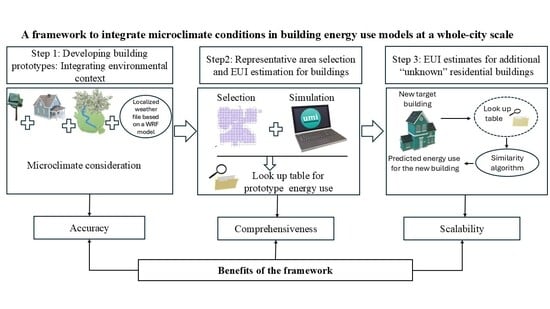
To address these limitations, this study presents a microclimate-informed framework for estimating building energy consumption at the city scale using detailed three-dimensional geometric modeling. The framework focuses on explicitly representing tree shading effects through LiDAR-derived building and vegetation geometry as a proof of concept for scalable urban energy analysis. While evapotranspiration is recognized as an important microclimatic process, it is not explicitly modeled in the present work and is instead discussed as a direction for future development. Energy flux comparisons indicate that tree shade is an important cooling mechanism, intercepting up to 97% of incoming solar radiation (800 W m
−2), but that ET may have a less important role [
13]. By prioritizing computational efficiency and transferability, the proposed approach provides urban planners and decision-makers with a practical tool to evaluate tree-shading strategies in support of climate-responsive urban design.
2. Materials and Methods
During the preparation of this report the first author used ChatGPT-4.1 to improve grammar, spelling, and overall sentence clarity. After using this tool all authors reviewed and edited the material as needed and take full responsibility for the content of this publication.
2.1. Study Area: City of Des Moines, Iowa, USA
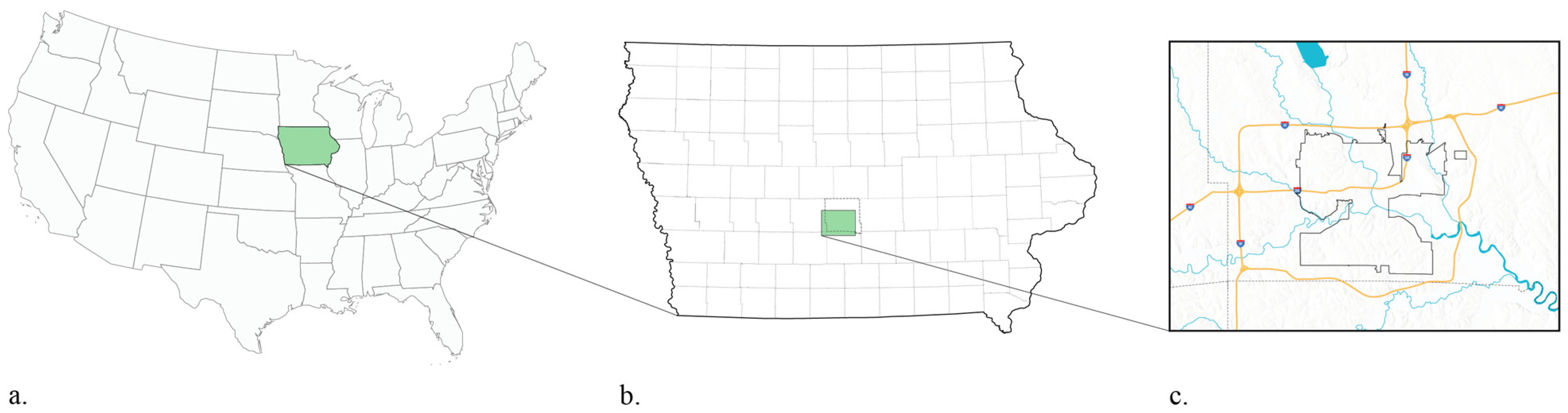
Our research was focused on the City of Des Moines, Iowa, USA (
Figure 1) located at the confluence of the Racoon and Des Moines Rivers. Des Moines currently has approximately 89,000 households [
14]. The city has 54 recognized neighborhoods and covers an area of approximately 150 square kilometers (57.5 square miles). This study area was chosen for its suitability to study urban microclimates and their impacts on vulnerable populations in the context of global warming. In addition, Des Moines is characterized by diverse landscape features (e.g., the river confluence), land uses and land use patterns, creating an ideal setting to study complex urban microclimates. The city’s urban forest includes approximately 50,000 trees, providing an average of nearly 30% canopy cover which also contributes to spatial variability in urban microclimates [
15].
The City of Des Moines is situated at the confluence of the two major waterways in the region, and includes a revitalized downtown area, industrial and logistic transportation zones and airport facilities, as well as public buildings, such as schools and hospitals. The city also has parks and open spaces interspersed with areas that include high-, medium- and low-density residential zones.
2.2. Des Moines Is Located in Climate Zone 5A of the International Energy Conservation Code
This is an area characterized overall as a cold, moist climate (IECC) [
16]. In addition, central Iowa is within the Dfa category in the Köppen-Geiger climate classification, recognized as a “Humid Continental” climate. This climate is defined by four distinct seasons, notably by cold winters with subfreezing temperatures, hot and humid summers, and year-round precipitation [
17]. Use of air conditioning to cool buildings is important due to summer heat waves with sustained high temperatures that often reach uncomfortable levels. Additionally, climate change is expected to lead to more frequent and severe heat waves which will necessitate development of more cooling strategies that reduce reliance on energy-intensive air conditioning systems. To investigate such potential strategies, this research focuses on the shadow effects of trees and buildings which could play significant roles in mitigating urban heat during the summer.
2.3. Overall Modeling Framework
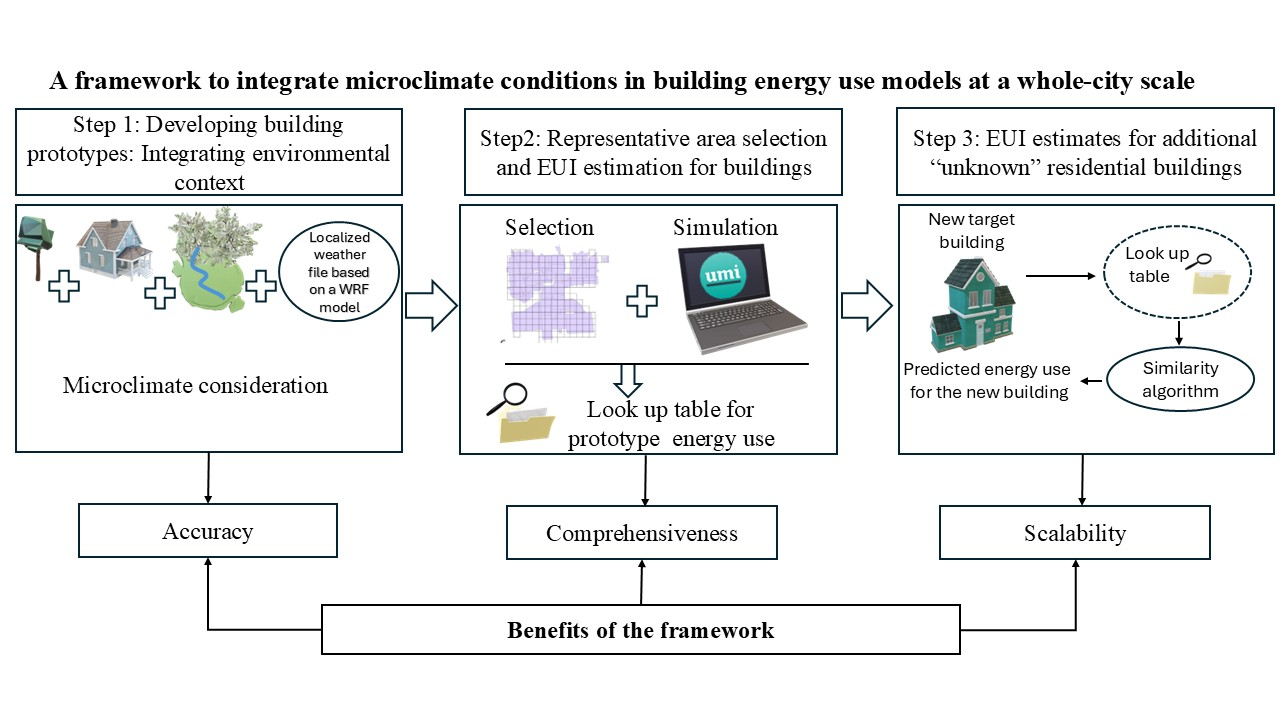
The primary goal of this research was to integrate microclimate effects of urban landscape features into urban energy modeling. A modified version of the U.S. Department of Energy (DOE) reference building approach [
18] was adopted for creating building prototypes. However, several additional inputs were generated specifically for this study. In particular, the DOE reference residential building prototypes were enhanced by incorporating microclimatic features, with a focus on the influence of trees in proximity to buildings [
19]. These enhanced prototypes are designed to be transferable across multiple urban settings, enabling the estimation of energy use for buildings subject to similar localized environmental conditions without requiring individual simulations for each building.
To isolate microclimate effects, energy simulations were conducted for representative summer days, when shading and evapotranspiration from nearby trees exert measurable impacts on building thermal performance. Localized climatic conditions across the city were predicted using the Weather Research and Forecasting (WRF) model based on a system of spatial grid cells (
Figure 2). Clusters of grid cells with similar dry-bulb temperature, dew-point temperature, wind speed, wind direction, and relative humidity were developed to characterize microclimatic conditions. Light Detection and Ranging (LiDAR) data were used to extract tree and building geometry for initial estimates of Energy Use Intensity (EUI), and the Urban Modeling Interface (UMI) was used to generate composite EUI estimates for representative building clusters. These results were then scaled to produce EUI estimates for residential buildings across the full study area of the City of Des Moines (
Figure 2).
2.4. Developing Building Prototypes: Integrating Environmental Context
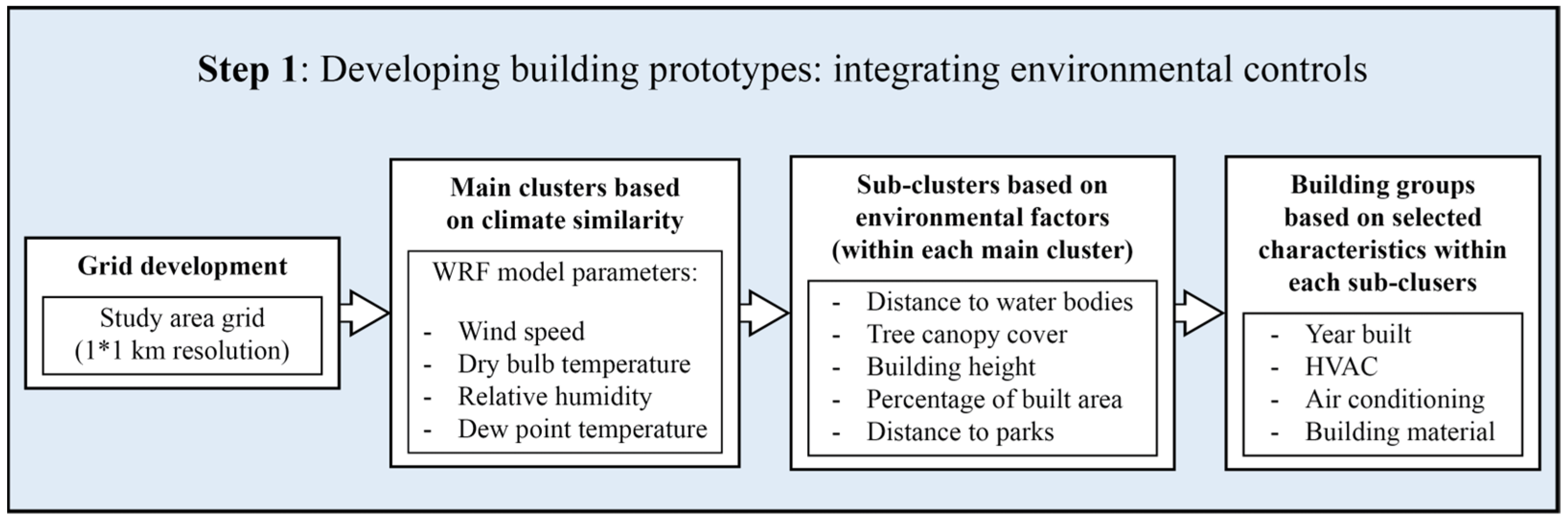
The development of building prototypes using environmental context integration involved three steps. First, a set of main clusters was established by identifying groups of grid cells with similar weather patterns based on WRF model outputs. Second, to account for local environmental variations within these main clusters, sub-clusters were created based on proximity to green spaces, rivers and ponds, as well as urban morphology factors such as building height, built area percentage and tree canopy cover. The sub-clusters captured microclimatic variations that might have been smoothed out during the grouping of the main clusters. Buildings within each sub-cluster were subsequently divided into groups based on building age, HVAC systems, and building materials (
Figure 3).
2.5. Weather Research and Forecasting-Based Systematic Grid for Identification of Main Clusters
For this study, the weather files are based on Chen et al. [
20], who implemented the Weather Research and Forecasting (WRF) model (version 4.1) at 1 × 1 km spatial resolution. The model incorporates satellite-derived land use and land cover information from MODIS (Moderate Resolution Imaging Spectra-radiometer) (MCD12Q1.006) together with higher-resolution (30 m) National Land Cover Database data, using fractional land use parameterization to improve urban land characterization. Simulations were conducted for summer (June–August 2012), and model outputs were further refined using the WRF M (MODIS) framework, which integrates MODIS land surface temperature with WRF results to enhance representation of urban thermal heterogeneity. Model performance was validated against in situ observations from two meteorological stations.
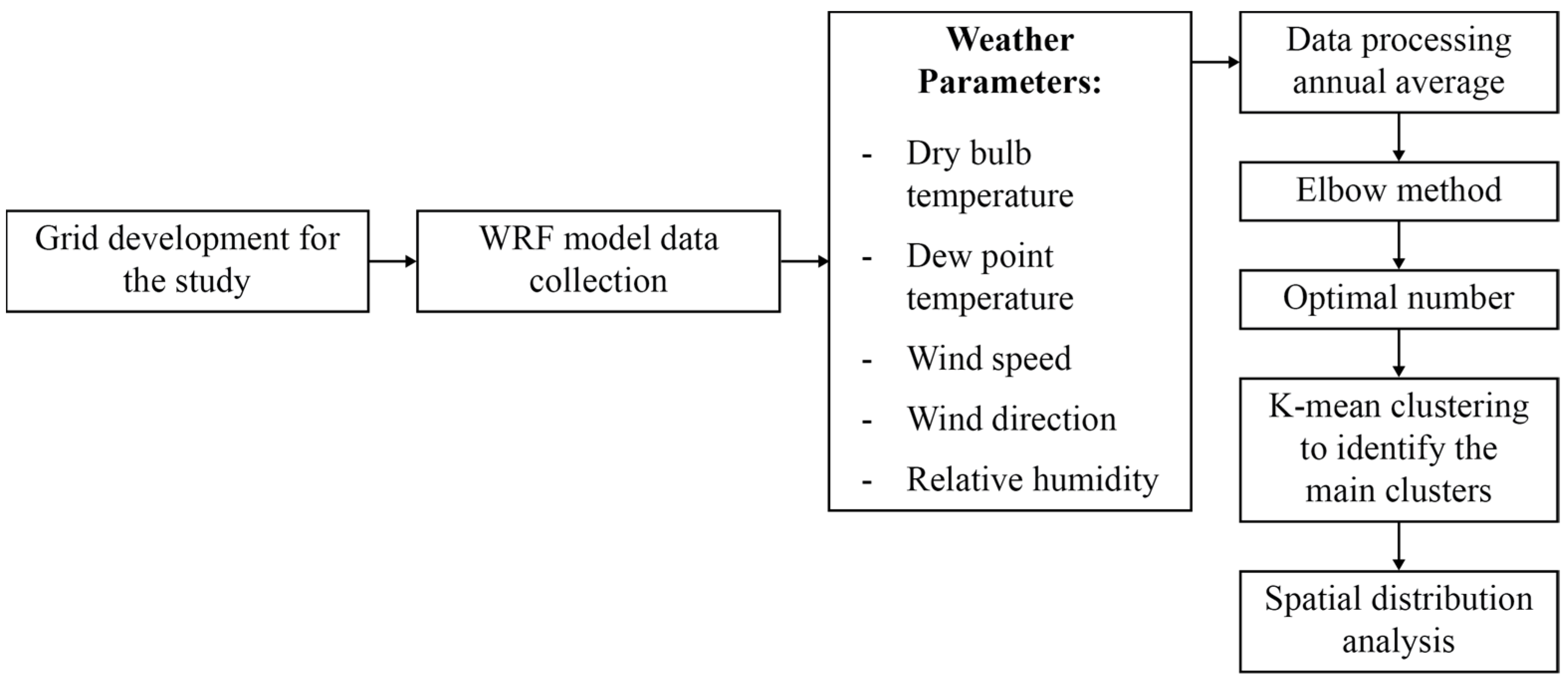
For each grid cell, five weather parameters known to influence building energy performance were selected: dry-bulb temperature, dew-point temperature, wind speed, wind direction, and relative humidity (
Figure 4). Validated WRF output parameters were converted into EnergyPlus Weather (EPW) files to capture microclimate variations influenced by local land use and surface characteristics for each cell in the grid network covering the study area. The optimal number of main clusters was determined using the elbow method [
21] to identify distinct groups of cells with similar local weather conditions (
Figure 4).
A K-means clustering algorithm [
22] was then applied to group the grid cells based on these weather characteristics.
2.6. Identification of Sub-Clusters Based on Environmental Factors
Tree canopy cover within each grid cell was quantified using ArcGIS Pro v.3.1.2 [
23] and a DSM (Digital Surface Model) of tree canopy heights. The ArcGIS Pro “Zonal Statistics” tool was used to calculate the number of grid cells containing tree canopy, and a canopy cover percentage was determined. Other urban features, potentially influencing microclimate effects were also analyzed using ArcGIS Pro, including distance from each cell to nearby water bodies (rivers and ponds) and green spaces (parks). The ArcGIS Pro “Near” tool was used to determine the distance from each cell to the nearest water body or park boundary.
Two additional characteristics were used to characterize the sub-clusters: building height and density of built structures. Building height data developed by Hu et al. [
24] were analyzed in ArcGIS Pro using the “Zonal Statistics” tool to determine a mean building height for each grid cell. Density of built structures was similarly determined using the same tool to calculate the proportional area of each grid cell occupied by buildings.
2.7. Development of Building Groups
A building template in UMI is a detailed blueprint that captures physical features and operational characteristics of a building. Building templates developed in previous work [
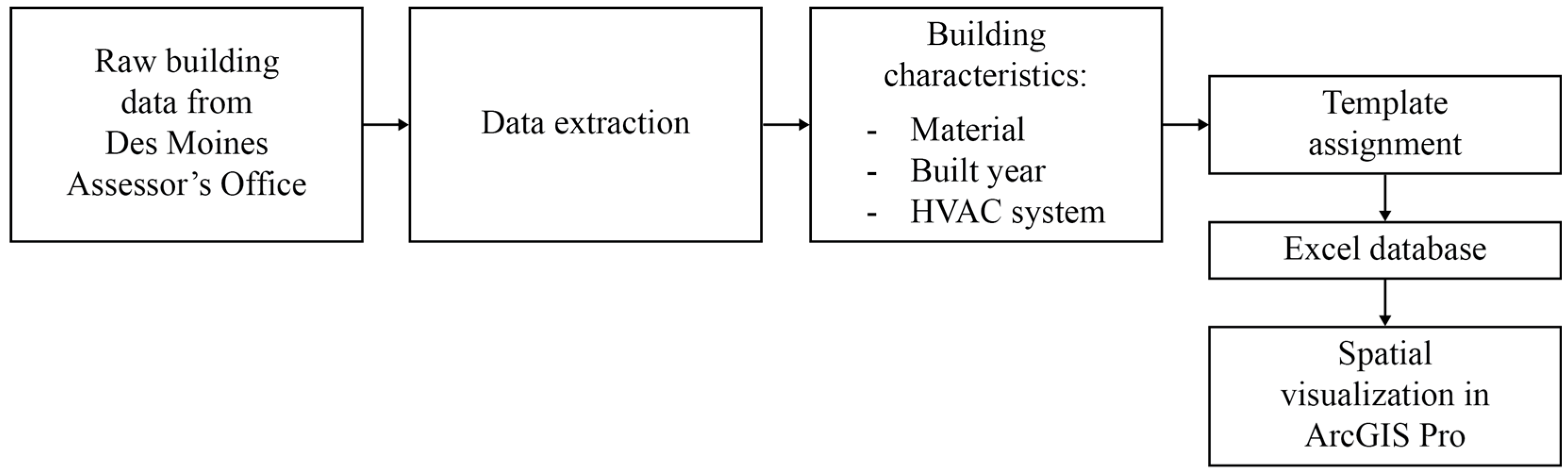
25] for a single neighborhood were used, focusing on building materials, ventilation type (air-conditioned or naturally ventilated), building age, and building condition. Additional comprehensive building characteristic data were extracted from the City of Des Moines Assessor’s office database, and a template was assigned based on these characteristics for each residential building in the study area. The templates were imported into ArcGIS Pro, where the “Join” function was used to link them with building shapefiles. This process enabled spatial visualization and geographic representation of building-specific data (
Figure 5).
2.8. Representative Cell Selection and EUI Estimation for Buildings
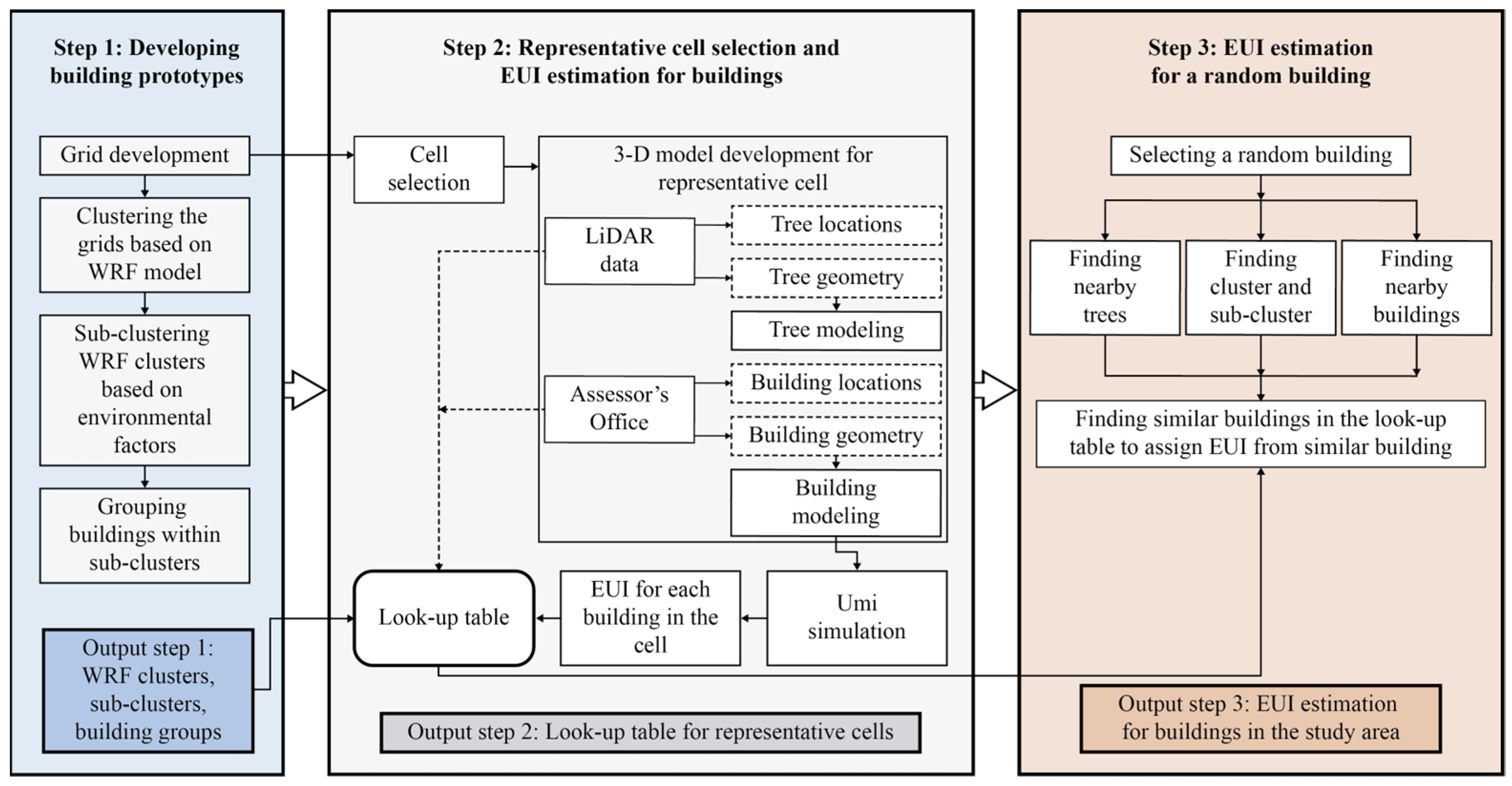
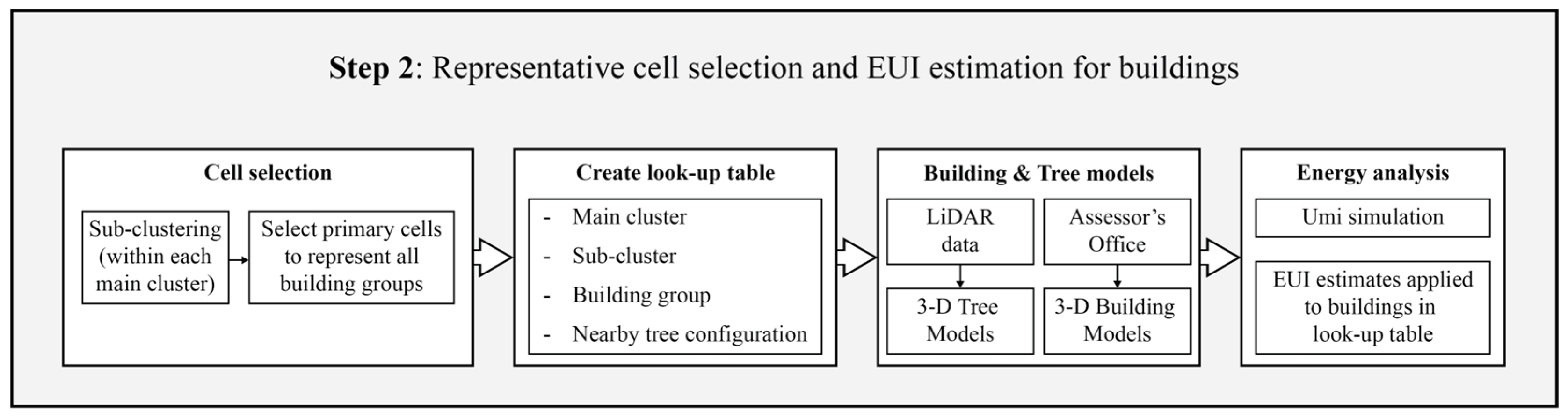
A grid cell selection process within the study area was implemented to minimize computational demand while maintaining accuracy in building energy estimations at the city scale. Similarly to the DOE building prototype approach, representative cells were selected to serve as archetypes for energy simulation and the results were applied to similar buildings in other cells from the same sub-cluster. Primary cells from each sub-cluster were chosen to serve as prototypes with typical building configurations and characteristics. An iterative approach was employed in which one cell was initially selected per sub-cluster, and additional cells were incorporated if the initial selection failed to capture variation present within that sub-cluster. A comprehensive look-up table was then developed to organize and structure essential data for each building, including main cluster designation, sub-cluster classification, building group categorization, and detailed information about nearby tree configurations (
Figure 6).
Following cell selection and database structuring, detailed three-dimensional models were created for buildings and trees. A 3-D representation of buildings was generated using building footprint and height data obtained from the City of Des Moines GIS database [
26]. Three-dimensional tree models were created using LiDAR point cloud data from the USGS 3-D Elevation Program [
27]. A filtering method based on the number of returns in CloudCompare V2.12.0 [
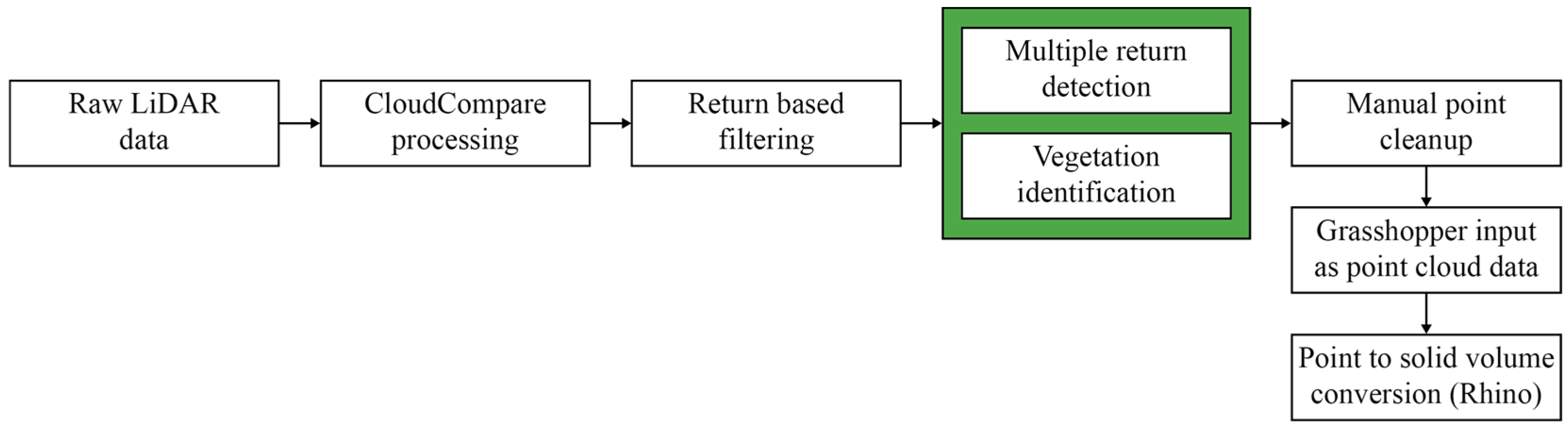
28] was applied for tree feature classification. To enhance visual validation, the point cloud was colorized using high-resolution aerial imagery and the ArcGIS Pro ‘Colorize LAS’ tool, which assigned RGB values to each point based on corresponding aerial photographs. Tree features were then isolated in CloudCompare for import into Grasshopper, a modeling interface within Rhino 3-D software [
29]. Algorithms were then developed to transform the point-cloud data into volumetric tree representations (
Figure 7).
Within the framework, the Urban Modeling Interface (UMI) v3.2 [
30] was used as the simulation platform for generating representative EUI values for the study area. UMI uses EnergyPlus [
31] for building thermal simulations and utilizes Radiance [
32] to calculate hourly solar radiation, allowing the modeling environment to represent the effects of urban shading and solar exposure on building energy performance [
33]. Although the present study does not execute full UMI simulations, the framework describes how representative buildings within selected sub-cluster cells would be simulated to obtain EUI values. These representative EUI values can then be used to populate a look-up table that includes each building’s main cluster, sub-cluster classification, and building-group category (
Table 1).
2.9. EUI Estimates for Additional “Unknown” Residential Buildings
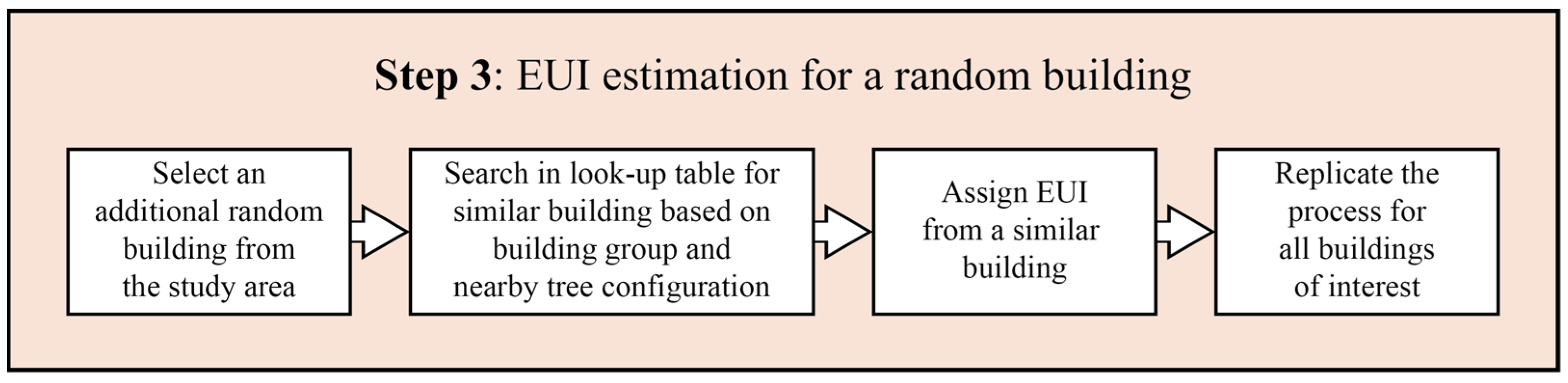
In the proposed framework, representative simulation outputs are stored in a hierarchical look-up table and serve as a reference database for estimating EUI values for the remaining buildings in the study area. The look-up table is organized by urban climate cluster, subcluster, and building template with simulated EUI values derived from representative cells for each combination. This similarity-based estimation strategy, inspired by the DOE prototype building methodology, is proposed to enable scalable, city-wide energy use estimation without requiring full simulations for each individual building (
Figure 8).
3. Results
3.1. Urban Microclimate Classification and Sub-Cluster Identification
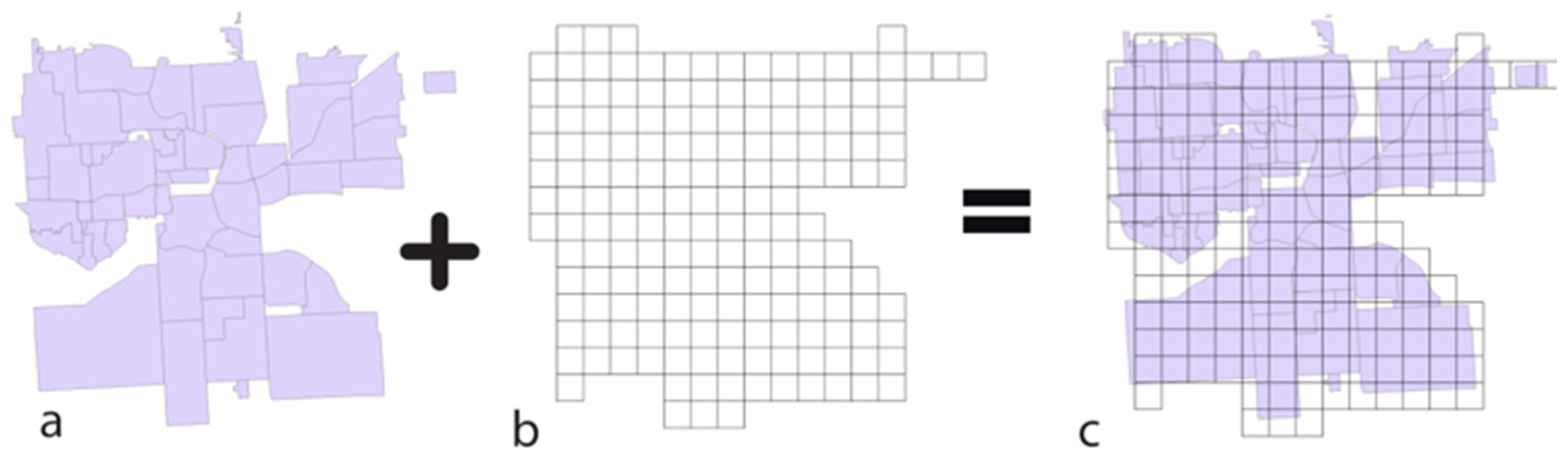
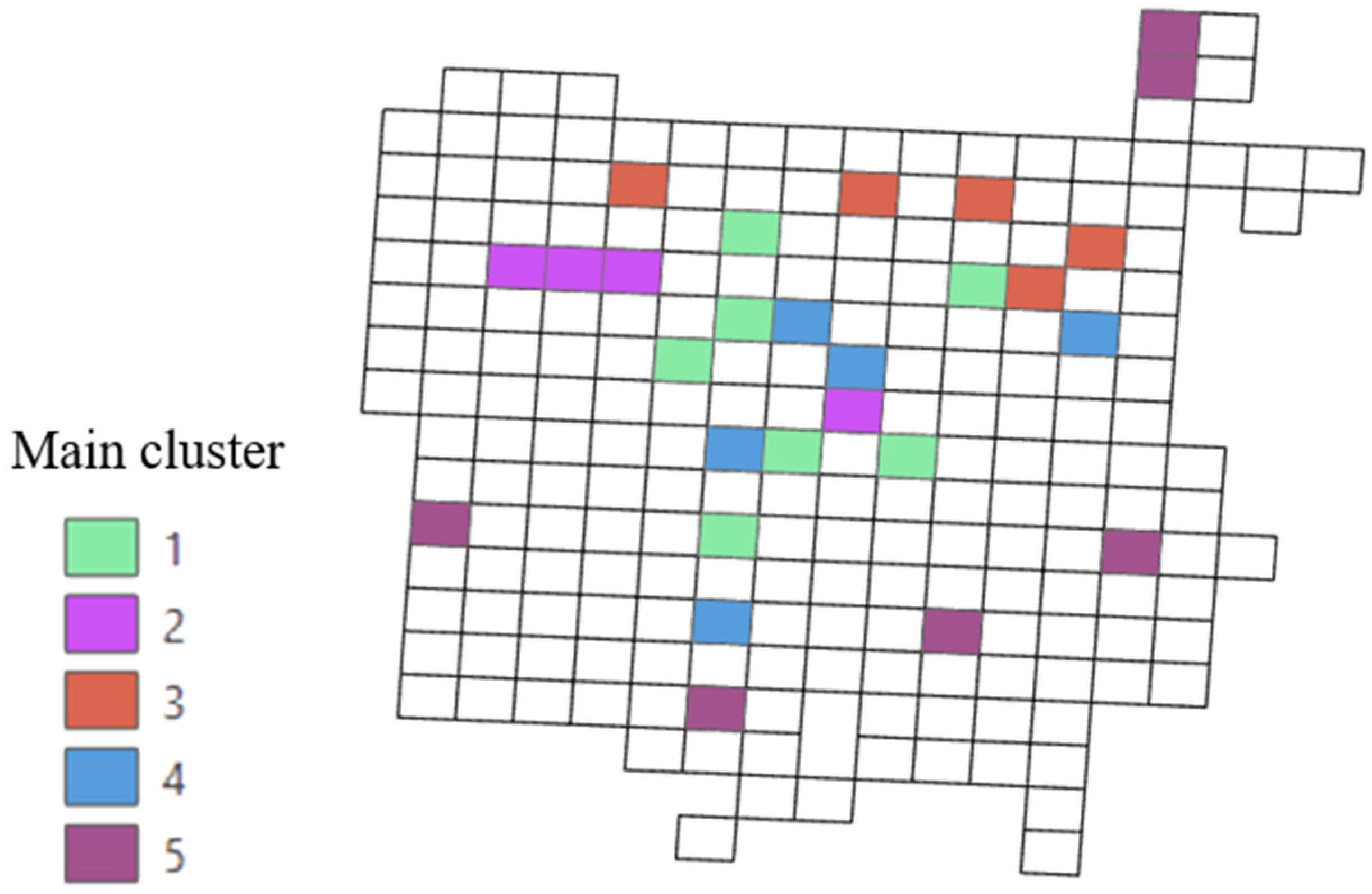
A WRF-based grid with 1-km resolution was applied to the City of Des Moines, dividing the study area into 218 grid cells (
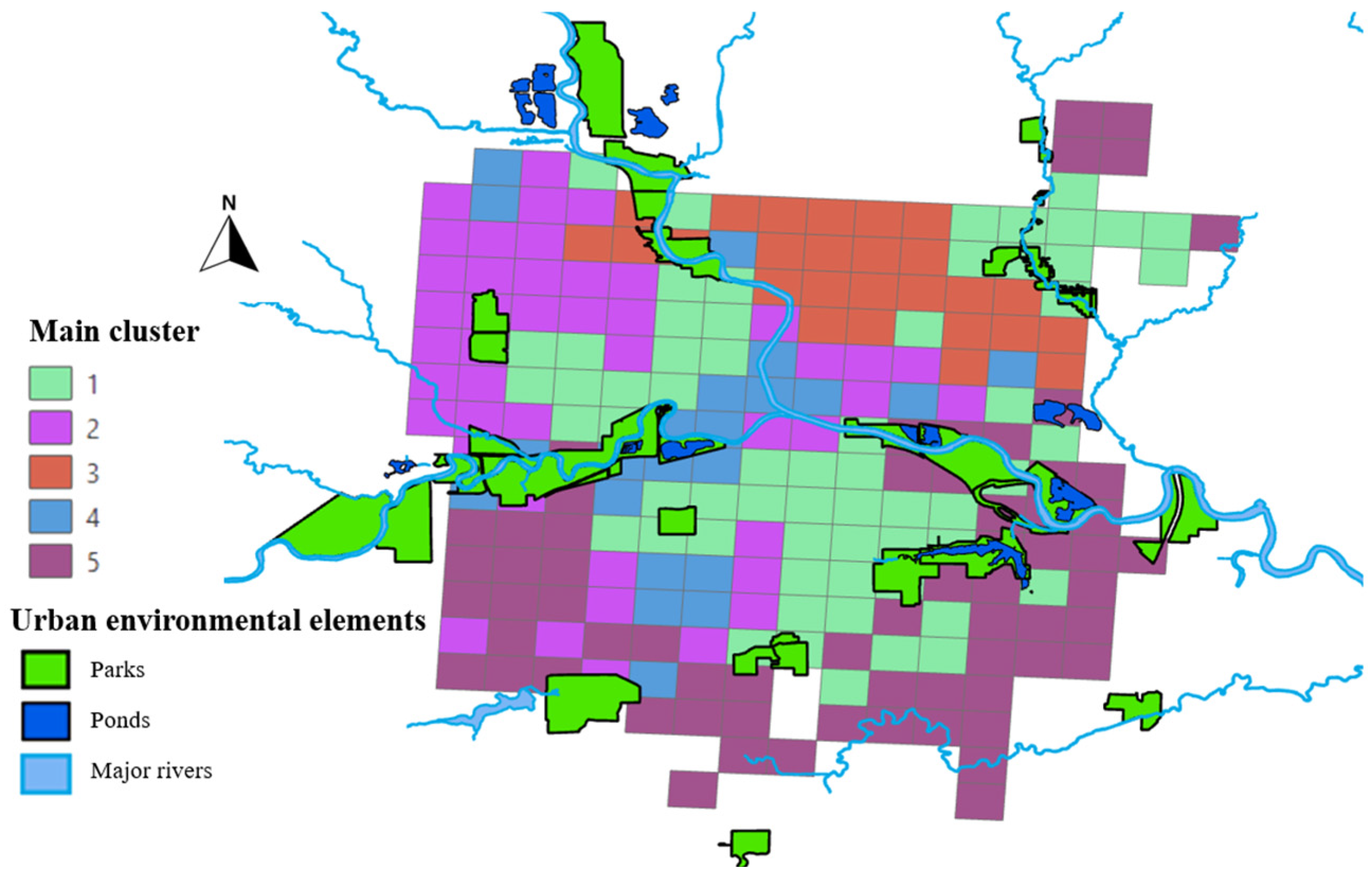
Figure 9). Based on June–August averages derived from hourly meteorological and land surface temperature data of dry bulb temperature, dew point temperature, wind speed, wind direction and relative humidity, a K-means clustering process identified five primary urban climate clusters (
Figure 10).
Clusters 1 and 2 exhibited similar average thermal conditions, with relatively cool mean temperatures (11 °C and 12 °C), comparable humidity levels (approximately 70%), and similar mean wind speeds (~4 m/s). Although their mean values are close, these clusters are distinguished within the framework by differences in the combined patterns of temperature, humidity, and wind characteristics. Cluster 3 was associated with moderate average temperatures (12 °C) and notably higher maximum wind speeds (21 m/s). Cluster 4 was characterized by higher average temperatures (12 °C) and lower relative humidity (68%), indicating warmer and drier microclimatic conditions, while Cluster 5 exhibited comparable thermal and humidity conditions but higher average wind speeds (5 m/s).
To capture local-scale variability, each main cluster was further divided into sub-clusters using environmental characteristics, including tree canopy cover, building height, built-up area percentage, and proximity to rivers, ponds, and parks. In total, Cluster 1 included six sub-clusters (61 grid cells), Cluster 2 had four (44 grid cells), Cluster 3 had three (26 grid cells), Cluster 4 had five (22 grid cells), and Cluster 5 had five subclusters (65 grid cells) (
Figure 10).
3.2. Urban Form, Vegetation Characteristics and Representative Cells
Tree canopy covers varied substantially across clusters and sub-clusters, ranging from 1.4% to 30.9%, indicating strong spatial heterogeneity in shading and cooling potential. Clusters with higher vegetation coverage exhibited greater potential for microclimate moderation through shading, while clusters with lower canopy cover showed reduced cooling capacity.
Building heights were relatively uniform across most clusters (2.5–3.1 m), except for Cluster 4, that contained significantly taller structures with mean heights up to 9.8 m and the highest built-up area percentages (up to 32.1%). In contrast, Cluster 5 was characterized by low-density development with minimal built-up area (0.3–3.2%).
Representative grid cells were chosen for each sub-cluster based on variations in urban morphology and environmental characteristics. Most sub-clusters could be adequately represented by a single cell, but sub-clusters with greater internal variability required multiple representative cells to ensure all building templates were captured (
Figure 11).
3.3. City-Scale Energy Modeling and EUI Estimation Process
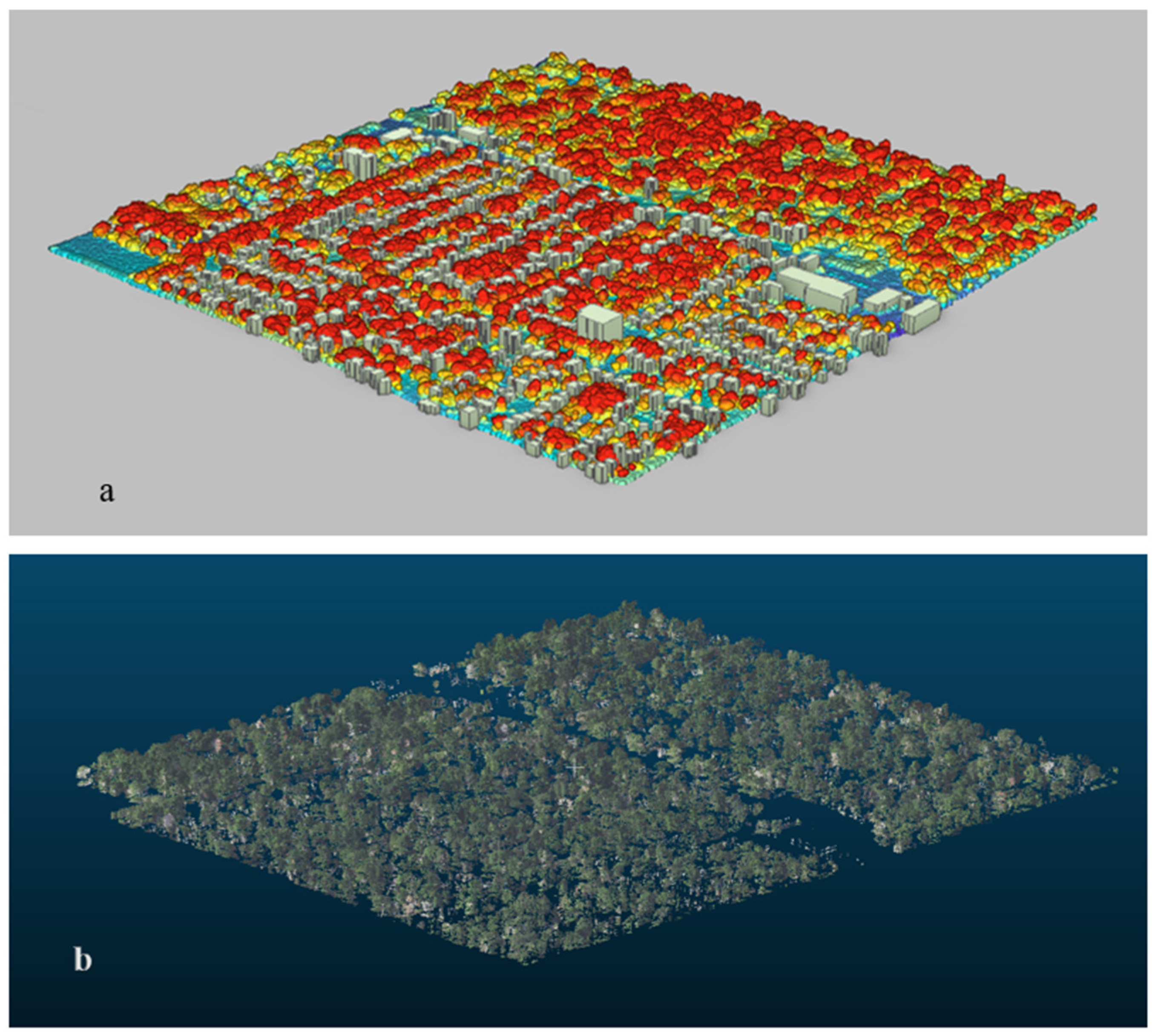
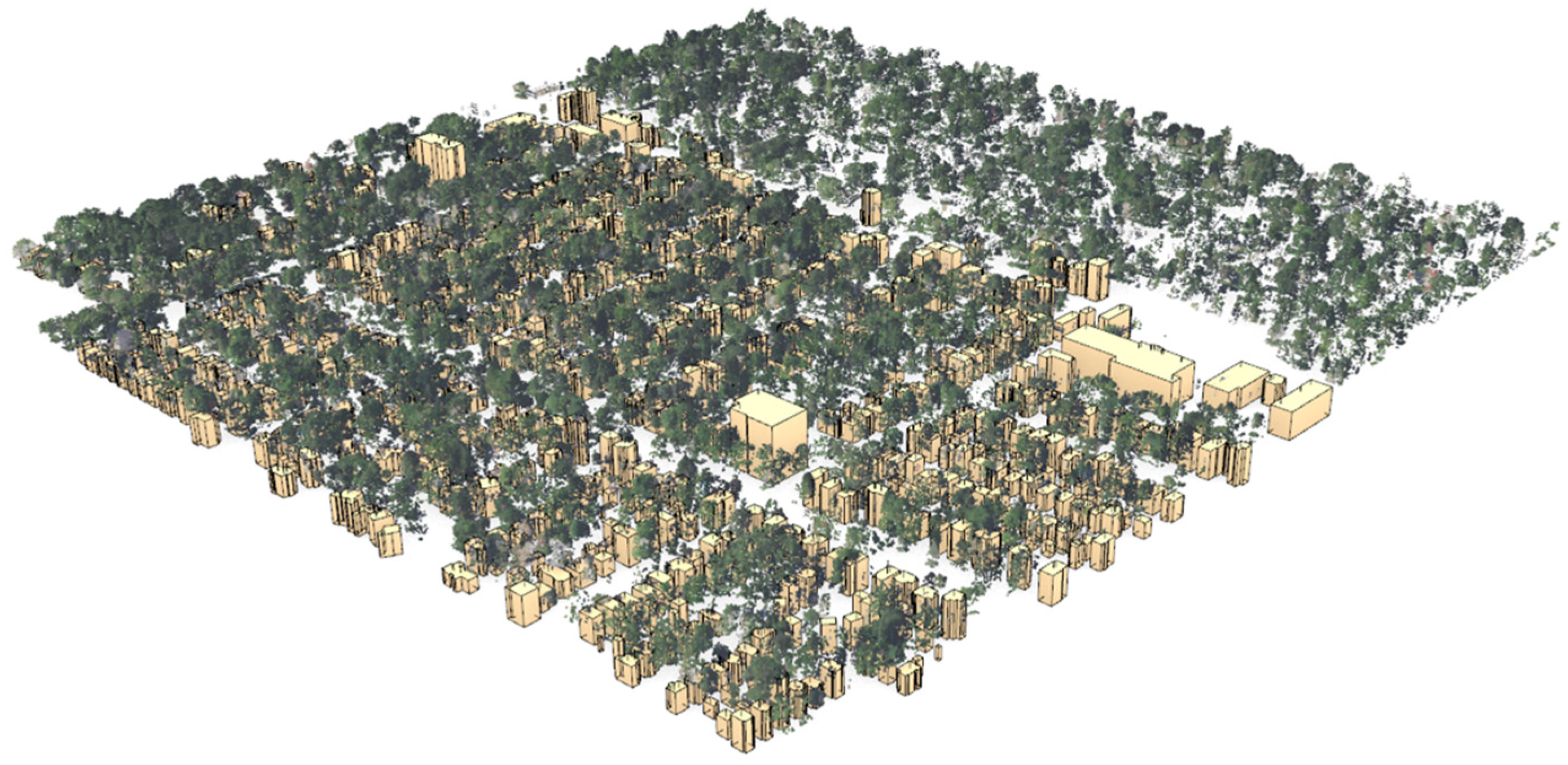
LiDAR-derived point cloud data were used to generate three-dimensional volumetric models of buildings and trees for each representative cell (
Figure 12 and
Figure 13). Buildings were assigned predefined templates specifying construction materials, ventilation systems, and building age. These models were implemented in UMI to simulate summer energy performance using cluster-specific weather files.
The representative cluster framework substantially reduces computational requirements. Based on the simulation effort required for the validation cases, simulating all representative cells would require orders of magnitude less computational time than modeling the entire building stock. Instead of simulating approximately 300,000 individual buildings, the framework requires simulations only for representative cells, enabling efficient extrapolation of energy use intensity (EUI) values to similar buildings within each cluster and subcluster.
3.4. Validation of the Modeling Approach
In this study, the city was first divided into a network of spatial cells covering the entire urban area. These cells were initially grouped into five clusters based on localized weather conditions and subsequently subclustered within each cluster according to key environmental characteristics. As explained in
Section 2, a representative cell was identified for each subcluster and used as the basis for detailed energy simulation.
The underlying assumption is that the EUI of buildings simulated within the representative cell can be used to estimate the EUI of buildings located in other cells belonging to the same subcluster, provided that buildings with comparable construction assemblies and air-conditioning systems are identified.
To evaluate this framework, energy simulations were conducted for similar building templates in a representative cell and a randomly selected cell from the same subcluster. In addition, because the available weather file represented conditions from June through August simulations were conducted only for these three months.
Figure 12.
Data sources used to distinguish trees: (a) USGS LiDAR data and (b) tree points isolated from buildings and ground features using CloudCompare to identify urban trees for a section of a neighborhood in Des Moines, Iowa.
Figure 12.
Data sources used to distinguish trees: (a) USGS LiDAR data and (b) tree points isolated from buildings and ground features using CloudCompare to identify urban trees for a section of a neighborhood in Des Moines, Iowa.
Figure 13.
A 3-D model visualization in Rhino showing volumetric trees derived from LiDAR points and buildings created from footprint extrusion, for a section of a neighborhood in Des Moines.
Figure 13.
A 3-D model visualization in Rhino showing volumetric trees derived from LiDAR points and buildings created from footprint extrusion, for a section of a neighborhood in Des Moines.
Two residential building templates were considered: Template A represents an air-conditioned building with a wood-framed façade and timber construction, while Template B represents an air-conditioned building with masonry construction. For this validation analysis, buildings were selected from Cluster 2, with randomly selected comparison buildings located in the northeastern cells of the study area. For the two randomly selected buildings in the comparison cell and their corresponding buildings in the reference cell, the monthly EUI differences ranged from 10% to 19% (
Table 2 and
Table 3).
The observed monthly EUI differences of 10–18% fall within error ranges commonly reported in the urban building energy modeling literature. A comprehensive review by Oraiopoulos and Howard [
34] indicates that models used for energy demand quantification typically exhibit errors ranging from 1% to 10%, and in some cases up to 30%, depending on modeling purpose, spatial resolution, and input assumptions. Similar ranges are reported for energy efficiency retrofit analysis and energy systems integration studies, where differences of 20–30% can occur even at annual and aggregated scales. These findings suggest that the level of variation observed in this study is consistent with accepted uncertainty levels for urban-scale and representative building energy modeling approaches.
4. Discussion
The clustering process we used demonstrates that despite relatively small differences in annual average weather parameters meaningful spatial variability in urban microclimate exists across the City of Des Moines. This finding is consistent with previous studies demonstrating that urban morphology, vegetation cover, and surface characteristics can generate substantial intra-urban microclimate variability, even under similar background meteorological conditions [
35,
36].
The use of annual averages in this research did eliminate some actual short term fluctuations, but was necessary to generate full-year weather files required for building energy simulations. To address this limitation, sub-clustering based on urban form and environmental characteristics was introduced, allowing local microclimate influences to be retained. Variations in tree canopy cover, building height, built-up area, and proximity to water bodies play a critical role in shaping microclimate conditions and, consequently, building energy demand. Areas with higher vegetation coverage and lower development intensity exhibit greater potential for cooling through shading and evapotranspiration, while dense urban areas experience increased thermal loads and cooling demand. Clustering results indicate that sub-clusters in Cluster 5, with tree canopy cover up to 30.9% and built-up area of 0.3–3.2%, are likely to have cooler microclimate conditions due to enhanced shading and evapotranspiration. In contrast, dense urban areas such as Cluster 4, with taller buildings (mean height 9.8 m) and more built-up area (up to 32.1%), are associated with warmer and drier conditions. These results highlight that even within a city with relatively small differences in annual average weather conditions important spatial variability exists in urban microclimate. Recognizing this variability is important for urban planning and building energy modeling, as it enables targeted strategies to mitigate heat in dense areas and leverage natural cooling in vegetated zones.
The representative cell approach we used provides a practical and scalable solution for city-scale energy modeling. Similar reduced order and representative-building approaches have been recognized as effective strategies for balancing computational efficiency and spatial heterogeneity in urban building energy modeling [
37]. By balancing computational efficiency with spatial heterogeneity, the framework enables urban planners and decision-makers to assess the energy impacts of tree-based mitigation strategies on city or neighborhood scale without relying on computationally intensive building-by-building simulations. While the current analysis focuses on shading effects, the framework is designed to incorporate evapotranspiration processes and finer temporal resolution weather data in future work.
According to the 2012 National Climate Report that year was the warmest year on record in the contiguous U.S. at the time, with an average temperature of 55.3 °F, which was 3.2 °F above the 20th-Century average combined with below-average precipitation, making it the 15th driest year [
38]. These conditions influenced factors such as urban heat, energy demand, and microclimate variations. Therefore, our results should be interpreted with these specific climatic conditions in mind, especially when applying findings to other cities and/or years with different climatic conditions.
5. Conclusions
This study presents an urban-scale building energy modeling framework that integrates microclimate variability into city-wide simulations while maintaining computational efficiency. By combining WRF-based weather clustering, urban form sub-clustering, LiDAR-derived three-dimensional representations of buildings and trees, and representative cell energy simulations, the proposed approach bridges the gap between detailed building-scale modeling and scalable city-scale analysis. The framework enables incorporation of local environmental effects, such as tree shading, building density, and proximity to urban features, without the need for computationally intensive building-by-building simulations.
The results demonstrate substantial spatial heterogeneity in urban microclimate conditions across the City of Des Moines. Five primary climate clusters were identified using 1-km WRF grid data, with further subdivision into 23 sub-clusters based on urban morphology and environmental characteristics. Tree canopy cover varied widely across sub-clusters, ranging from 1.4% to 30.9%, while built-up area ranged from 0.3% to 32.1%, indicating strong contrasts in shading potential and thermal behavior.
Validation of the representative cell approach showed that monthly cooling EUI differences between buildings simulated in representative cells and randomly selected cells within the same sub-cluster ranged from approximately 10% to 19% during the summer months (June–August). These variations fall within uncertainty ranges commonly reported in urban building energy modeling studies, supporting the reliability of the proposed extrapolation method. Importantly, the framework reduces computational demand by several orders of magnitude, replacing the need to simulate approximately 300,000 individual buildings with simulations of a limited number of representative cells. The findings of this study have important practical implications for urban planning and building energy assessment. The proposed framework provides urban planners, architects, and policymakers with an efficient tool to evaluate neighborhood- and city-scale energy impacts of urban form and vegetation strategies. By enabling rapid assessment of tree-based mitigation scenarios and spatially targeted cooling strategies, the method supports climate-responsive design and sustainable urban development. In future work, the framework will be extended to incorporate evapotranspiration effects of trees and higher temporal resolution weather data, further enhancing its ability to support data-driven decision making for resilient and low energy cities.
Author Contributions
S.L.: Conceptualization, Data curation, Formal analysis, Investigation, Methodology, Software, Visualization, and Writing—Original draft. U.P.: Conceptualization, Methodology, Funding acquisition, Project administration, Resources, Supervision, Writing, review & editing. J.T.: Conceptualization, Methodology, Funding acquisition, Project administration, Resources, Supervision, Writing, review & editing. All authors have read and agreed to the published version of the manuscript.
Funding
The authors acknowledge support from the US NSF under Grant # 1855902. Any opinions, findings, and conclusions, or recommendations expressed in this material are those of the authors and do not necessarily reflect the views of the NSF.
Data Availability Statement
Not applicable.
Acknowledgments
The authors would like to thank Angela Jones for support in development of figures.
Conflicts of Interest
The authors declare no conflicts of interest. The funders had no role in the design of the study; in the collection, analyses, or interpretation of data; in the writing of the manuscript; or in the decision to publish the results.
References
- Ettinger, A.K.; Bratman, G.N.; Carey, M.; Hebert, R.; Hill, O.; Kett, H.; Levin, P.; Murphy-Williams, M.; Wyse, L. Street trees provide an opportunity to mitigate urban heat and reduce risk of high heat exposure. Sci. Rep. 2024, 14, 3266. [Google Scholar] [CrossRef] [PubMed]
- Wang, Y.; Akbari, H. Analysis of urban heat island phenomenon and mitigation solutions evaluation for Montreal. Sustain. Cities Soc. 2016, 26, 438–446. [Google Scholar] [CrossRef]
- Shi, Y.; Ren, C.; Zheng, Y.; Ng, E. Mapping the urban microclimatic spatial distribution in a sub-tropical high-density urban environment. Archit. Sci. Rev. 2015, 59, 370–384. [Google Scholar] [CrossRef]
- Salvati, A.; Kolokotroni, M. Urban microclimate and climate change impact on the thermal performance and ventilation of multi-family residential buildings. Energy Build. 2023, 294, 113224. [Google Scholar] [CrossRef]
- Jalali, Z.; Shamseldin, A.Y.; Ghaffarianhoseini, A. Urban microclimate impacts on residential building energy demand in Auckland, New Zealand: A climate change perspective. Urban Clim. 2024, 53, 101808. [Google Scholar] [CrossRef]
- Schwaab, J.; Meier, R.; Mussetti, G.; Seneviratne, S.; Bürgi, C.; Davin, E.L. The role of urban trees in reducing land surface temperatures in European cities. Nat. Commun. 2021, 12, 6763. [Google Scholar] [CrossRef]
- Meili, N.; Manoli, G.; Burlando, P.; Carmeliet, J.; Chow, W.T.L.; Coutts, A.M.; Roth, M.; Velasco, E.; Vivoni, E.R.; Fatichi, S. Tree effects on urban microclimate: Diurnal, seasonal, and climatic temperature differences explained by separating radiation, evapotranspiration, and roughness effects. Urban For. Urban Green. 2021, 58, 126970. [Google Scholar] [CrossRef]
- Akbari, H.; Pomerantz, M.; Taha, H. Cool surfaces and shade trees to reduce energy use and improve air quality in urban areas. Sol. Energy 2001, 70, 295–310. [Google Scholar] [CrossRef]
- Morakinyo, T.E.; Lau, K.K.-L.; Ren, C.; Ng, E. Performance of Hong Kong’s common trees species for outdoor temperature regulation, thermal comfort and energy saving. Build. Environ. 2018, 137, 157–170. [Google Scholar] [CrossRef]
- Djedjig, R.; Bozonnet, E.; Belarbi, R. Analysis of thermal effects of vegetated envelopes: Integration of a validated model in a building energy simulation program. Energy Build. 2015, 86, 93–103. [Google Scholar] [CrossRef]
- Moss, J.L.; Doick, K.J.; Smith, S.; Shahrestani, M. Influence of evaporative cooling by urban forests on cooling demand in cities. Urban For. Urban Green. 2019, 37, 65–73. [Google Scholar] [CrossRef]
- Lu, F.; Gao, Y.; Jiang, L.; Chen, Y.; Hao, Z. The effect of greening layout on microclimate in urban residential areas in hot summer–Cold Winter Zones. Atmosphere 2023, 14, 1824. [Google Scholar] [CrossRef]
- Wu, Z.; Shi, Y.; Ren, L.; Hang, J. Scaled outdoor experiments to assess impacts of tree evapotranspiration and shading on microclimates and energy fluxes in 2D street canyons. Sustain. Cities Soc. 2024, 108, 105486. [Google Scholar] [CrossRef]
- U.S. Census Bureau. Des Moines City, Iowa, Household Data; U.S. Department of Commerce: Washington, DC, USA, 2024. Available online: https://data.census.gov/table?q=Des+Moines+city,+Iowa+houshold&y=2024 (accessed on 18 November 2025).
- U.S. Census Bureau. Des Moines City, Iowa, Household Data; U.S. Department of Commerce: Washington, DC, USA. Available online: https://data.census.gov/table?q=Des+Moines+city,+Iowa+houshold (accessed on 18 November 2025).
- International Code Council. Chapter 3: CE General Requirements. In 2021 International Energy Conservation Code (IECC); International Code Council: Whittier, CA, USA, 2021; Available online: https://codes.iccsafe.org/content/IECC2021P1/chapter-3-ce-general-requirements (accessed on 18 November 2025).
- DMA MPO (Des Moines Area Metropolitan Planning Organization). Dmampo.org. Available online: https://dmampo.org/project/central-iowa-climate-toolbox/climate-data/ (accessed on 25 November 2024).
- U.S. Department of Energy. Building Energy Codes Program. Prototype Building Models. EnergyCodes.gov. Available online: https://www.energycodes.gov/prototype-building-models (accessed on 18 November 2025).
- Ghiasi, S.; Passe, U.; Thompson, J. Addressing the need for microclimate considerations in DOE reference building prototypes for urban energy simulation with a focus on urban shadow effects. In Proceedings of the International Building Performance Simulation Association; International Building Performance Simulation Association: Loughborough, UK, 2024. Available online: https://par.nsf.gov/biblio/10517634 (accessed on 18 November 2025).
- Chen, W.; Zhou, Y.; Passe, U.; Zhang, T.; Wang, C.; Asrar, G.R.; Li, Q.; Li, H. Improving estimation of diurnal land surface temperatures by integrating weather modeling with satellite observations. Remote Sens. Environ. 2024, 315, 114393. [Google Scholar] [CrossRef]
- Thorndike, R.L. Who belongs in the family? Psychometrika 1953, 18, 267–276. [Google Scholar] [CrossRef]
- McQueen, J.B. Some methods of classification and analysis of multivariate observations. In Proceedings of the Fifth Berkeley Symposium on Mathematical Statistics and Probability; Statistical Laboratory of the University of California: Berkeley, CA, USA, 1967; pp. 281–297. [Google Scholar]
- Esri (Environmental Systems Research Institute). ArcGIS Pro, Version 3.1.2; Esri: Redlands, CA, USA, 2023.
- Hu, J.; Zhou, Y.; Yang, Y.; Chen, G.; Chen, W.; Hejazi, M. Multi-city assessments of human exposure to extreme heat during heat waves in the United States. Remote Sens. Environ. 2023, 295, 113700. [Google Scholar] [CrossRef]
- Passe, U.; Dorneich, M.; Krejci, C.; Malekpour Koupaei, D.; Marmur, B.; Shenk, L.; Stonewall, J.; Thompson, J.; Zhou, Y. An urban modelling framework for climate resilience in low-resource neighbourhoods. Build. Cities 2020, 1, 453–474. [Google Scholar] [CrossRef]
- City of Des Moines. Des Moines Area Regional GIS. 2024. Available online: https://www.dsm.city/departments/information_technology/des_moines_area_regional_gis.php (accessed on 18 October 2024).
- USGS (U.S. Geological Survey). 3-D Elevation Program. Available online: https://www.usgs.gov/3d-elevation-program (accessed on 10 October 2024).
- CloudCompare-Open SourceOpen-Source Project. Available online: https://www.danielgm.net/cc/ (accessed on 20 March 2024).
- McNeel, R.; Others. Rhinoceros 3D, Version 7.0; Robert McNeel & Associates: Seattle, WA, USA, 2020.
- Sustainable Design Lab. Urban Modeling Interface (UMI) (Version 3.2); Massachusetts Institute of Technology: Cambridge, MA, USA, 2023; Available online: https://web.mit.edu/sustainabledesignlab/projects/umi/index.html (accessed on 20 February 2024).
- U.S. DOE (Department of Energy). EnergyPlus, Version 8.4.; U.S. Department of Energy: Washington, DC, USA, 2016. Available online: https://energyplus.net/ (accessed on 20 February 2024).
- Ward, G.; Berkeley Lab. Radiance. Available online: https://www.radiance-online.org/ (accessed on 10 January 2024).
- Reinhart, C.F.; Walkenhorst, O. Validation of dynamic RADIANCE-based daylight simulations for a test office with external blinds. Energy Build. 2001, 33, 683–697. [Google Scholar] [CrossRef]
- Oraiopoulos, A.; Howard, B. On the accuracy of Urban Building Energy Modelling. Renew. Sustain. Energy Rev. 2022, 158, 111976. [Google Scholar] [CrossRef]
- Oke, T.R. The energetic basis of the urban heat island. Q. J. R. Meteorol. Soc. 1982, 108, 1–24. [Google Scholar] [CrossRef]
- Stewart, I.D.; Oke, T.R. Local Climate Zones for Urban Temperature Studies. Bull. Am. Meteorol. Soc. 2012, 93, 1879–1900. [Google Scholar] [CrossRef]
- Reinhart, C.F.; Cerezo Davila, C. Urban building energy modeling—A review of a nascent field. Build. Environ. 2016, 97, 196–202. [Google Scholar] [CrossRef]
- National Centers for Environmental Information (NCEI). Annual 2012 National Climate Report. Available online: https://www.ncei.noaa.gov/access/monitoring/monthly-report/national/201213 (accessed on 18 March 2024).
Figure 1.
Study area location: (a) United States with the state of Iowa shown in green, (b) counties in Iowa with Polk County indicated in green, and (c) corporate boundaries of the City of Des Moines outlined in black with major roads shown in gold.
Figure 1.
Study area location: (a) United States with the state of Iowa shown in green, (b) counties in Iowa with Polk County indicated in green, and (c) corporate boundaries of the City of Des Moines outlined in black with major roads shown in gold.
Figure 2.
Overall research framework for the three-step process used to incorporate microclimate effects in energy use simulations based on DOE building prototypes.
Figure 2.
Overall research framework for the three-step process used to incorporate microclimate effects in energy use simulations based on DOE building prototypes.
Figure 3.
Process for Step 1, developing building prototypes by integrating environmental context through a clustering process. This involved application of the study area grid, development of WRF-based main clusters, division into sub-clusters based on environmental factors, and then identification of groups based on physical and operational characteristics of the buildings.
Figure 3.
Process for Step 1, developing building prototypes by integrating environmental context through a clustering process. This involved application of the study area grid, development of WRF-based main clusters, division into sub-clusters based on environmental factors, and then identification of groups based on physical and operational characteristics of the buildings.
Figure 4.
Approach to use of weather data to develop clusters to describe similar grid cells using output from the Weather Research and Forecasting (WRF) model.
Figure 4.
Approach to use of weather data to develop clusters to describe similar grid cells using output from the Weather Research and Forecasting (WRF) model.
Figure 5.
Use of detailed building data from City of Des Moines Assessor’s database for template assignment and spatial representation.
Figure 5.
Use of detailed building data from City of Des Moines Assessor’s database for template assignment and spatial representation.
Figure 6.
Workflow used within Step 2 for the four-stage process of representative cell selection and Energy Use Intensity (EUI) estimation for buildings.
Figure 6.
Workflow used within Step 2 for the four-stage process of representative cell selection and Energy Use Intensity (EUI) estimation for buildings.
Figure 7.
Use of LiDAR point cloud data and process used to generate 3-D tree volumes for use in the urban energy model.
Figure 7.
Use of LiDAR point cloud data and process used to generate 3-D tree volumes for use in the urban energy model.
Figure 8.
Estimating EUI for additional “random” (unknown) residential buildings based on similarities with those included in the look-up table.
Figure 8.
Estimating EUI for additional “random” (unknown) residential buildings based on similarities with those included in the look-up table.
Figure 9.
Grid cell system used to analyze microclimate characteristics within the City of Des Moines, Iowa: (a) neighborhoods in the study area; (b) the system of grid cells applied; and (c) the grid system as an overlay on the full study area.
Figure 9.
Grid cell system used to analyze microclimate characteristics within the City of Des Moines, Iowa: (a) neighborhoods in the study area; (b) the system of grid cells applied; and (c) the grid system as an overlay on the full study area.
Figure 10.
Spatial distribution of five main clusters in the City of Des Moines, IA, identified through K-means cluster analysis of WRF model outputs.
Figure 10.
Spatial distribution of five main clusters in the City of Des Moines, IA, identified through K-means cluster analysis of WRF model outputs.
Figure 11.
Spatial distribution of representative cells across sub-clusters within the City of Des Moines, IA. Colored cells indicate the selected representative cells for each sub-cluster based on urban morphology characteristics.
Figure 11.
Spatial distribution of representative cells across sub-clusters within the City of Des Moines, IA. Colored cells indicate the selected representative cells for each sub-cluster based on urban morphology characteristics.
Table 1.
Hypothetical structure of a hierarchical look-up table containing EUI values for representative cells for urban climate clusters, subclusters, and building templates to illustrate data organization (e.g., columns: cluster id, subcluster, building template, and estimated EUI).
Table 1.
Hypothetical structure of a hierarchical look-up table containing EUI values for representative cells for urban climate clusters, subclusters, and building templates to illustrate data organization (e.g., columns: cluster id, subcluster, building template, and estimated EUI).
| Cluster | Subcluster ID | Building Template | Simulated EUI (kWh/m2) |
|---|
| 1 | SC 1 | Template 1 | 150 |
| 2 | SC 7 | Template 4 | 175 |
| 3 | SC 4 | Template 6 | 543 |
| 4 | SC 1 | Template 6 | 367 |
| 5 | SC 4 | Template 5 | … |
Table 2.
Simulations were run for buildings in cells from the five clusters based on localized weather conditions for Des Moines, IA.
Table 2.
Simulations were run for buildings in cells from the five clusters based on localized weather conditions for Des Moines, IA.
| Template | Building ID | Monthly EUI (kWh/m2) |
|---|
| June | July | August |
|---|
| A | Random building A | 4.6 | 8.5 | 3.6 |
| Representative Building A | 5.6 | 10.0 | 4.4 |
| B | Random building B | 6.2 | 12.3 | 5.0 |
| Representative Building B | 5.7 | 11.0 | 4.6 |
Table 3.
Monthly cooling energy use intensity (EUI, kWh/m2) for building templates simulated in representative and randomly selected grid cells within the same subcluster. Percentage differences between random and representative buildings illustrate performance variation used to validate the proposed framework for the summer period (June–August).
Table 3.
Monthly cooling energy use intensity (EUI, kWh/m2) for building templates simulated in representative and randomly selected grid cells within the same subcluster. Percentage differences between random and representative buildings illustrate performance variation used to validate the proposed framework for the summer period (June–August).
| | June | July | August |
|---|
| Template A | −18% | −15% | −19% |
| Template B | 10% | 12% | 10% |
| Disclaimer/Publisher’s Note: The statements, opinions and data contained in all publications are solely those of the individual author(s) and contributor(s) and not of MDPI and/or the editor(s). MDPI and/or the editor(s) disclaim responsibility for any injury to people or property resulting from any ideas, methods, instructions or products referred to in the content. |