1. Introduction
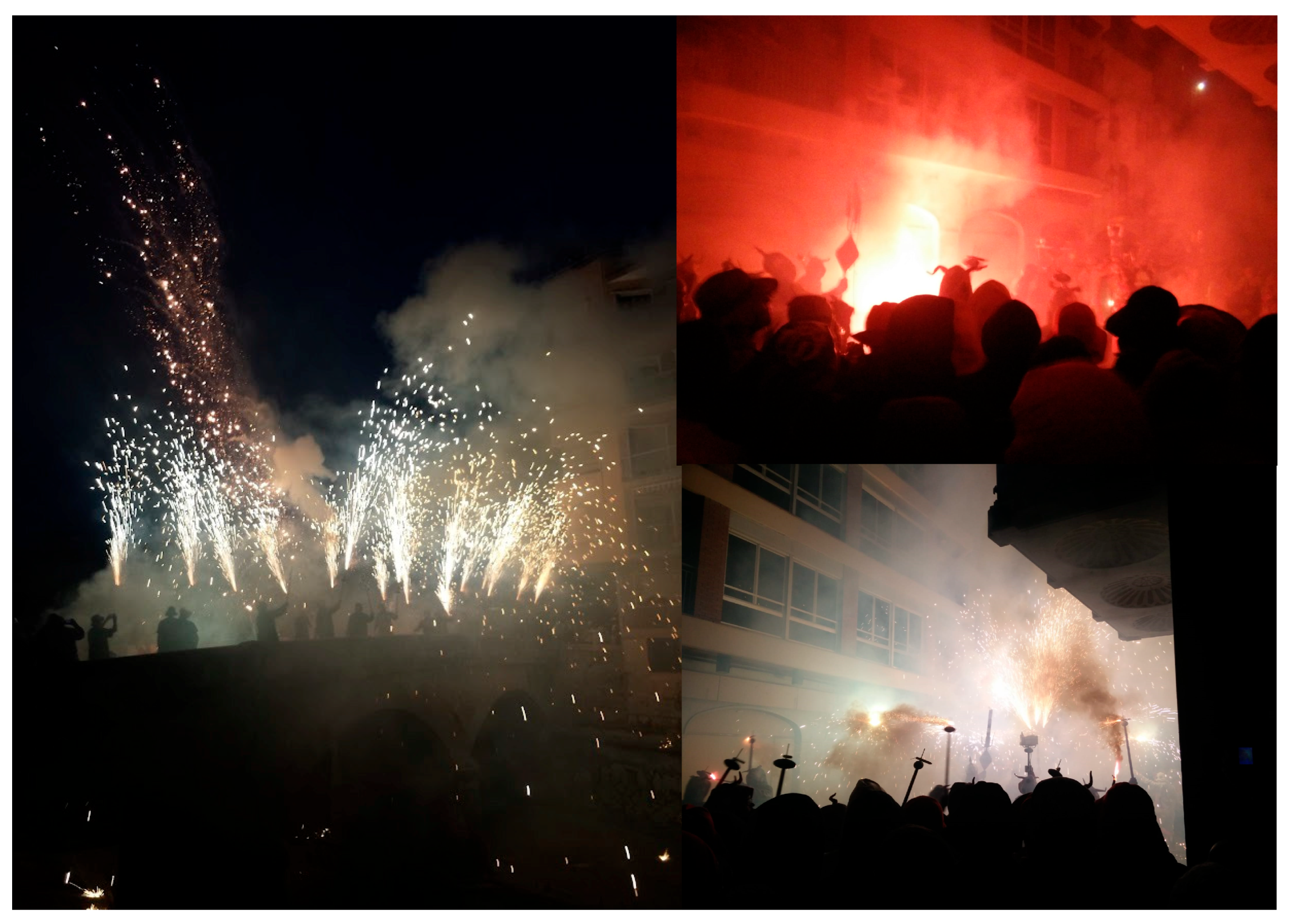
Correfocs (fire parades) are traditional fire festivals, where participants dressed as devils run through the streets with fireworks amid lively celebrations (
Figure 1). These festivals, rooted in medieval rituals but transformed over time, hold deep cultural significance in Catalonia as emblematic expressions of local identity and belonging, community cohesion and the intergenerational transmission of restive and pyrotechnic knowledge [
1].
Correfocs form part of a broader regional fire-festival tradition in which related celebrations, such as
La Patum de Berga and the Summer Solstice Fire Festivals of the Pyrenees, have been inscribed on UNESCO’s Representative List of the Intangible Cultural Heritage of Humanity. Recent decades have seen notable shifts in summer night-time weather, with rising temperatures and humidity potentially affecting the safety and enjoyment of these outdoor celebrations. Understanding the evolving climatic context of
correfocs is essential to preserving this unique intangible cultural heritage amid global environmental challenges.
This research integrates concepts from climate impacts, climate adaptation, cultural heritage studies, and resilience theory. Adaptive capacity refers to the potential of social systems, including cultural practices, to adjust and cope with climatic stresses. While much climate adaptation research centres on the physical infrastructure of ecosystems [
2,
3], traditions like
correfocs and human towers represent a living cultural fabric that is both vulnerable to climate change [
4,
5,
6]. Cultural resilience theory emphasises that heritage evolves through cycles of change, loss, and renewal, often sustained by community knowledge and engagement [
7].
To assess human thermal comfort during outdoor events, we use environmental indices such as the Heat Index [
8,
9,
10] and the Universal Thermal Climate Index (UTCI) [
11,
12,
13], which capture the combined effects of temperature, humidity, wind, and radiation. These metrics, combined with long-term meteorological data, enable an interdisciplinary evaluation of how changing temperatures affect cultural celebrations by modifying the thermal stress experienced by performers and spectators, constraining the timing and duration of events, and prompting adjustments in participation, costumes and safety protocols [
4]. Together, these perspectives provide a foundation for understanding how
correfocs, as intangible heritage, interact dynamically with climatic realities, suggesting pathways for adaptive strategies to ensure their continued existence in a changing climate.
Catalonia, located in the Mediterranean “hotspot” region, is experiencing marked climatic shifts that exceed global averages, reflected in rising temperatures, altered precipitation patterns, and increased frequency of extreme weather events [
14,
15,
16].
In recent decades, minimum temperatures in Spain have increased significantly, raising scientific concern due to their implications for human health and well-being, including sleep quality [
17,
18,
19,
20]. A key indicator of this warming trend is the rising frequency of tropical nights, defined as nights with minimum temperatures ≥20 °C. These tropical nights, once rare or absent in many areas, have become more widespread, extending their seasonal and geographical reach. Studies analysing data from 1970 to 2023 across 44 provinces reveal increased frequency, intensity, and consecutive occurrences of tropical nights, particularly in coastal regions characterised by high relative humidity [
21]. The trend reflects a broader escalation of thermal stress linked to climate change, highlighting challenges for populations enduring hotter, more humid night-time conditions. This intensification also has relevance for outdoor cultural events, such as Catalonia’s
correfocs. The events typically take place in the late evening, starting around 20:30 to 23:00, and involve coordinated routes. In this context, elevated thermal discomfort can impact participant safety and experience. Even so, no study, for the moment, links this rise in temperatures to the impact of intangible cultural heritage, as in
correfocs festivals.
Hu et al. [
22] highlighted that Spain’s cultural heritage sites face significant climate risks exacerbated by changing environmental conditions. The study translated historical climate data into specific risk levels, noting increased biological degradation due to rising humidity and temperature, which promote microbial growth that damages stone and wooden structures. It also underscores the vulnerability of cultural heritage to thermal stress, water infiltration, and other climate-driven processes. This evidence reinforces the urgent need for adaptive heritage management integrating climate projections, with an emphasis on site-specific vulnerabilities and resilience strategies, particularly relevant for Spain’s diverse cultural landscapes, including Catalonia.
A search was conducted in the Scopus database. The results show that only five documents have analysed
correfocs. The research is focusing on cultural [
23] and health [
24] aspects of the traditional Catalan festival. These articles explore topics such as acoustic exposure and fire in correfocs, the role of fire and drums in place-making during the event, collective cultural rites and their impact on community networks, and symbolic battles of good versus evil within pre-Christian traditions manifested in the
correfoc. Therefore, none of the studies indexed in the Scopus database establishes a direct connection between
correfocs and climate-related issues. Despite the interdisciplinary interest in the cultural and sensory dimensions of
correfocs, the relationship between this traditional celebration and climate or environmental factors remains unexplored in the existing literature. This highlights a potential gap for research investigating how climate considerations might interact with or impact the practice and perception of
correfocs.
The present research complements our focus on Catalonia’s cultural traditions, such as
correfocs, which are not recognised by UNESCO, by providing a broader climate risk assessment framework applicable to both tangible and intangible heritage, thereby supporting tailored adaptation policies and conservation efforts in the region. The present study aims to complement Olano Pozo et al. [
4], who examined the impacts of climate change on human tower exhibitions in Catalonia. By combining meteorological data with cultural analysis, this work helps bridge the scientific understanding of climate dynamics with heritage preservation imperatives, supporting more nuanced, place-based adaptation approaches for Catalonia’s rich and vulnerable cultural legacy.
In this sense, the two main objectives of this research are (i) to characterise the long-term thermal evolution of late-summer nocturnal conditions during major correfoc festivals along the Catalan coast, using reanalysis-based indicators of air temperature, humidity, and perceived heat; and (ii) to assess whether the progressive regional warming trend has translated into significant changes in perceived thermal stress—as expressed by the Heat Index (HI) and the Universal Thermal Climate Index (UTCI)—during the specific time window (21:00–23:00 local time) in which these events traditionally occur.
2. Data, Materials and Methods
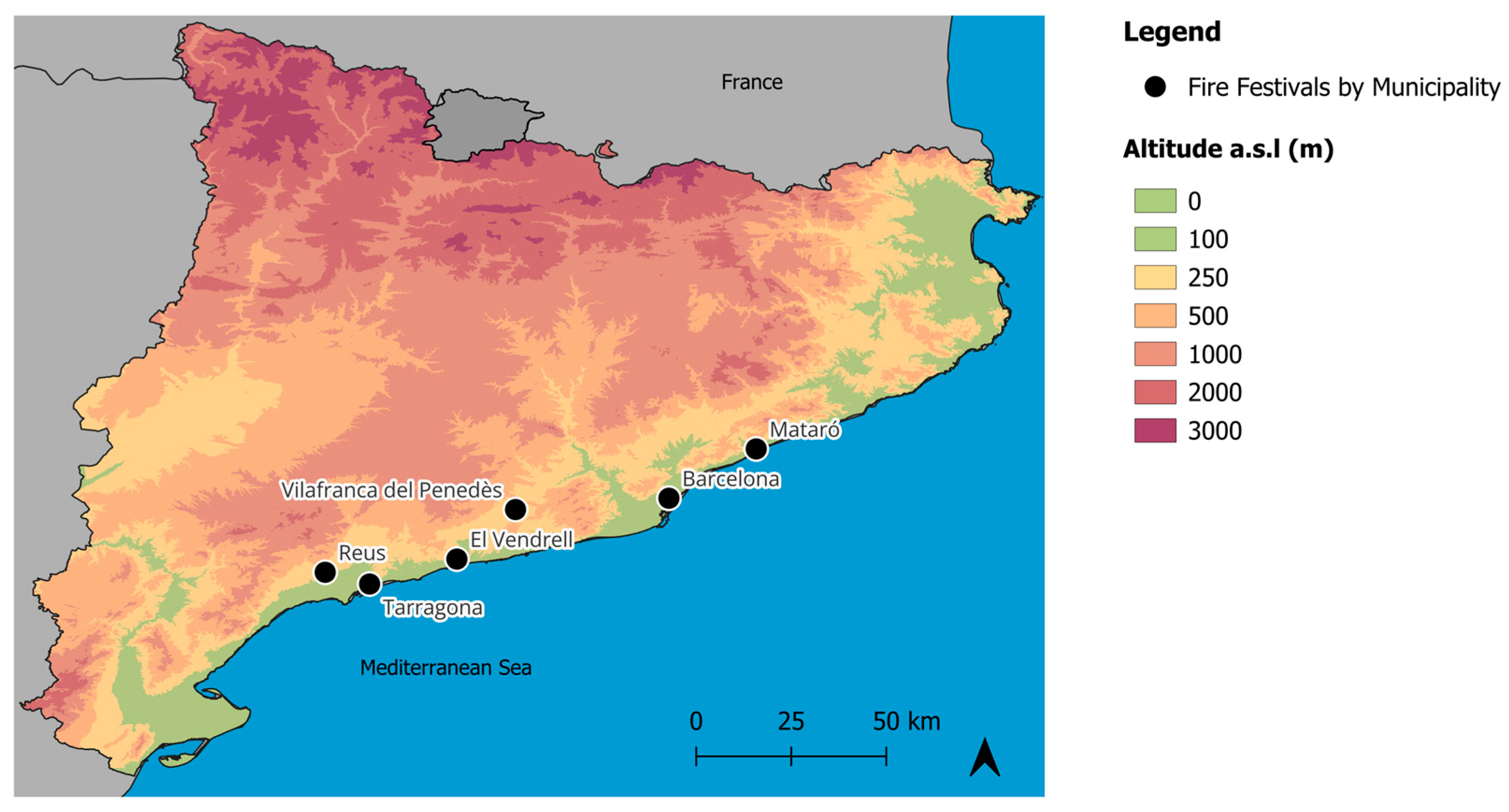
The study focuses on six emblematic fire festivals (
Figure 2) celebrated in summer during major local festivities along the Catalan coast:
Sant Pere in Reus (28 June),
Les Santes in Mataró (25 July),
Santa Anna in El Vendrell (26 July),
Sant Fèlix in Vilafranca del Penedès (29 August),
Santa Tecla in Tarragona (23 September), and
La Mercè in Barcelona (24 September). These events were selected as representative case studies due to their cultural significance, geographical distribution along the coastal region, and diversity in scale and format. The sample includes both traditional, community-based
correfocs (such as Sant Pere, Santa Anna, and Sant Fèlix) and larger, contemporary urban versions with higher public participation (notably La Mercè and Santa Tecla). This combination allows for an analysis that captures regional variability while encompassing different expressions of the
correfoc tradition across time, space, and urban context.
The climatic and meteorological data used in this study were retrieved from the Open-Meteo Historical Weather API using its default “Best Match” reanalysis setting, which provides a seamless combination of ERA5 and ERA5-Land products produced by ECMWF within the Copernicus Climate Change Service (C3S) [
25]. In this configuration, Open-Meteo blends ERA5-Land and ERA5 consistently across near-surface variables and automatically falls back to ERA5 when a given variable is not available from ERA5-Land, ensuring spatially and temporally coherent estimates
Given that this work represents a first exploratory step towards understanding the environmental characteristics of correfocs, we deliberately chose a straightforward, accessible data source. While fully acknowledging the inherent limitations of reanalysis products—particularly their tendency to underestimate near-surface temperature and humidity peaks in urban environments—this approach enables consistent baseline comparisons across locations and years. Previous similar studies have shown that in situ measurements during densely attended outdoor events often record higher values of air temperature and relative humidity than those derived from reanalyses. We expect to examine this discrepancy in subsequent field campaigns planned for the coming months. This methodological choice thus ensures both transparency and reproducibility in data acquisition while providing a solid foundation for future refinements that will incorporate in situ observations and microclimatic monitoring within the urban fabric of each event.
To assess the long-term evolution of thermal conditions during correfocs, a three-step analytical procedure was applied: (1) extraction of key meteorological variables, (2) computation of derived thermal indicators, and (3) estimation of temporal trends using Sen’s slope method. All variables were obtained at hourly resolution and subsequently averaged to represent the characteristic time window of each correfoc (typically 21:00–23:00 local time). These mean hourly composites were computed for each selected date and year, ensuring temporal consistency and comparability across the 1940–2023 period.
Hourly data for air temperature (T, °C) and relative humidity (RH, %) were obtained directly from the ERA5-Land Best Match reanalysis product provided through the Open-Meteo platform.
Two derived indicators were used to characterise thermal perception beyond air temperature alone: the Heat Index (HI) and the Universal Thermal Climate Index (UTCI).
The HI was computed following the regression formulation of the U.S. National Weather Service [
26], where T is the temperature and RH the relative humidity:
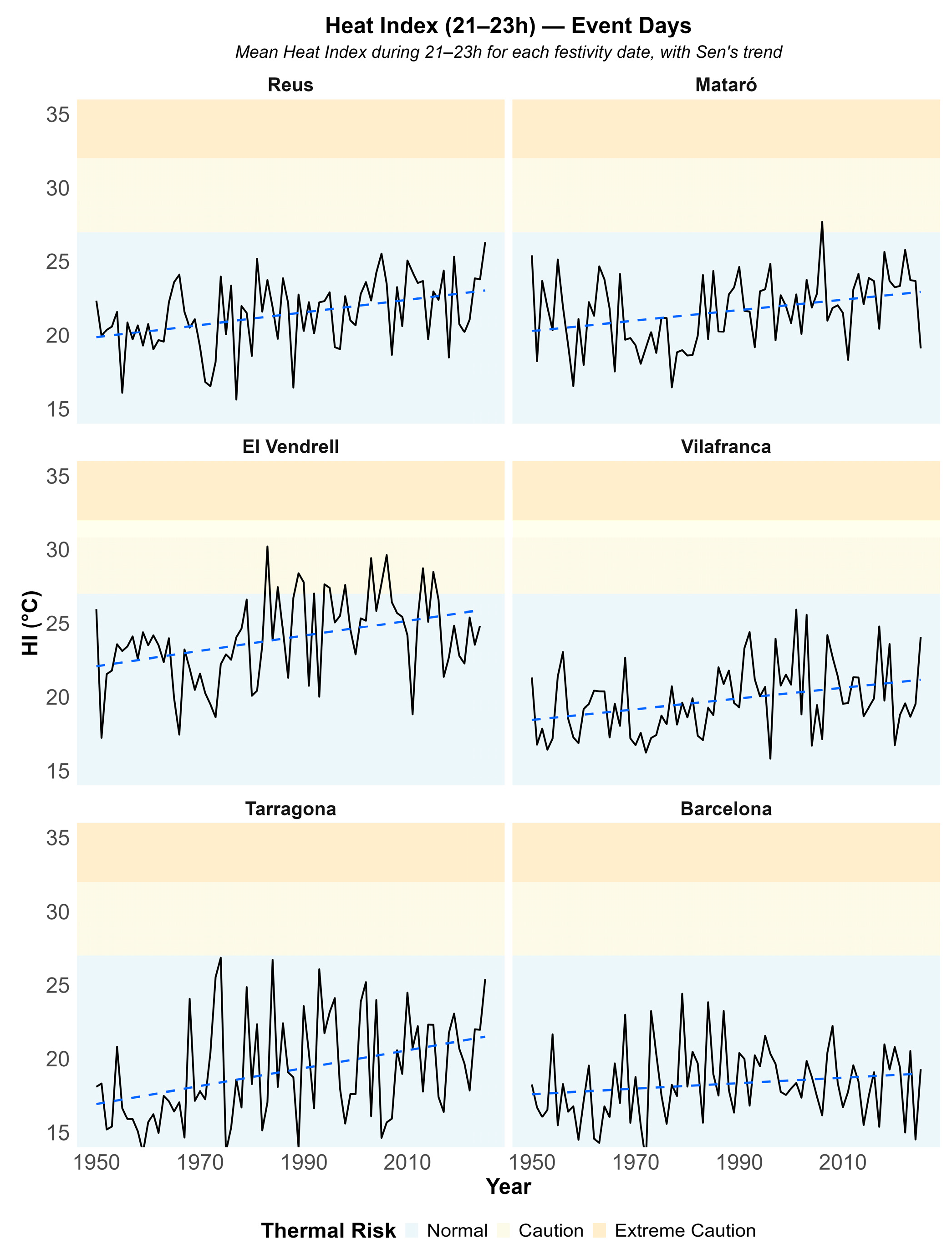
This index represents the apparent temperature humans perceive, accounting for the combined effects of air temperature and humidity. Following the U.S. National Weather Service classification, HI values were grouped into the following thermal-stress categories:
Caution (>26–32 °C). Fatigue is possible with prolonged exposure and/or physical activity;
Extreme Caution (32.1–40 °C). Heat stroke, heat cramps, and/or heat exhaustion are possible with prolonged exposure and/or physical activity;
Danger (40.1–52 °C). Heat cramps or heat exhaustion likely, and heat stroke possible with prolonged exposure and/or physical activity;
Extreme Danger (>52 °C). Heat stroke is highly likely.
Similar thresholds have been applied in outdoor-event and crowd-heat-risk assessments [
4,
5,
6,
27].
The Universal Thermal Climate Index (UTCI) was obtained using ERA-HEAT data [
28]. The computation of the UTCI is described in Di Napoli et al. [
29], and for each event day, the corresponding ERA-HEAT data were downloaded, and the UTCI value was extracted from the nearest grid cell to the event location. This methodological choice was made considering the exploratory nature of the study, which aims to identify and describe general climatic patterns rather than perform a detailed high-resolution spatial analysis.
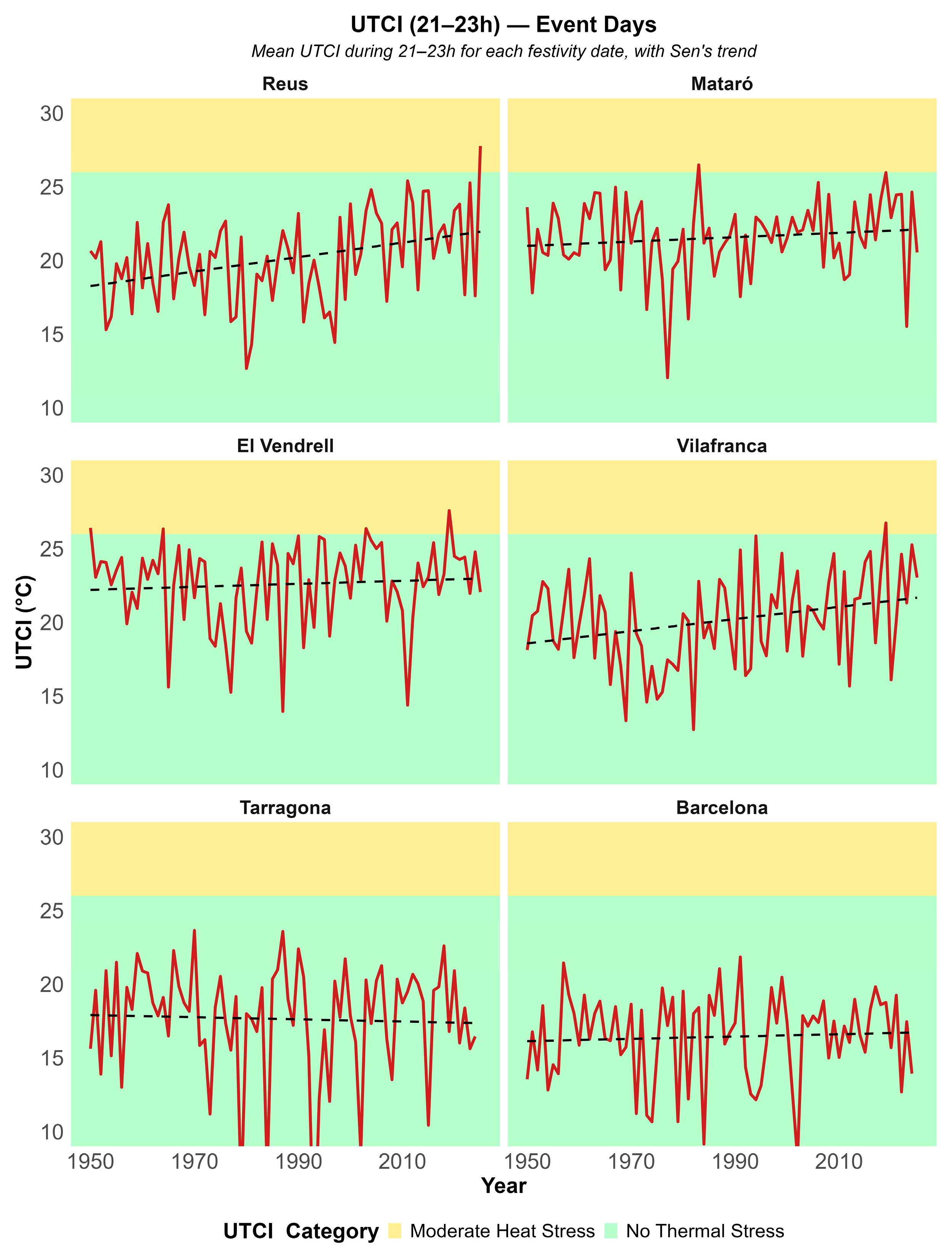
To interpret the results, the UTCI values were classified according to the physiological thermal stress scale, ranging from extreme cold to extreme heat, defined as follows:
Extreme heat stress (UTCI > 46 °C);
Very strong heat stress (38 °C < UTCI ≤ 46 °C);
Strong heat stress (32 °C < UTCI ≤ 38 °C);
Moderate heat stress (26 °C < UTCI ≤ 32 °C);
No thermal stress (9 °C < UTCI ≤ 26 °C);
Slight cold stress (0 °C < UTCI ≤ 9 °C);
Moderate cold stress (−13 °C < UTCI ≤ 0 °C);
Strong cold stress (−27 °C < UTCI ≤ −13 °C);
Very strong cold stress (−40 °C < UTCI ≤ −27 °C);
Extreme cold stress (UTCI ≤ −40 °C).
For each indicator (T, HI, UTCI), annual mean values were computed from the hourly composites corresponding to each
correfoc’s specific dates and time intervals, thus reflecting the representative night-time thermal environment of each event. Temporal trends were quantified using Sen’s slope estimator [
30], defined as:
where Xj and Xi represent the indicator values at years i and j, respectively. The slope β expresses the median annual rate of change and is reported per decade (°C·dec
−1). The statistical significance of the monotonic trends was evaluated using the non-parametric Mann–Kendall test [
31], consistent with previous climatological applications.
4. Discussion
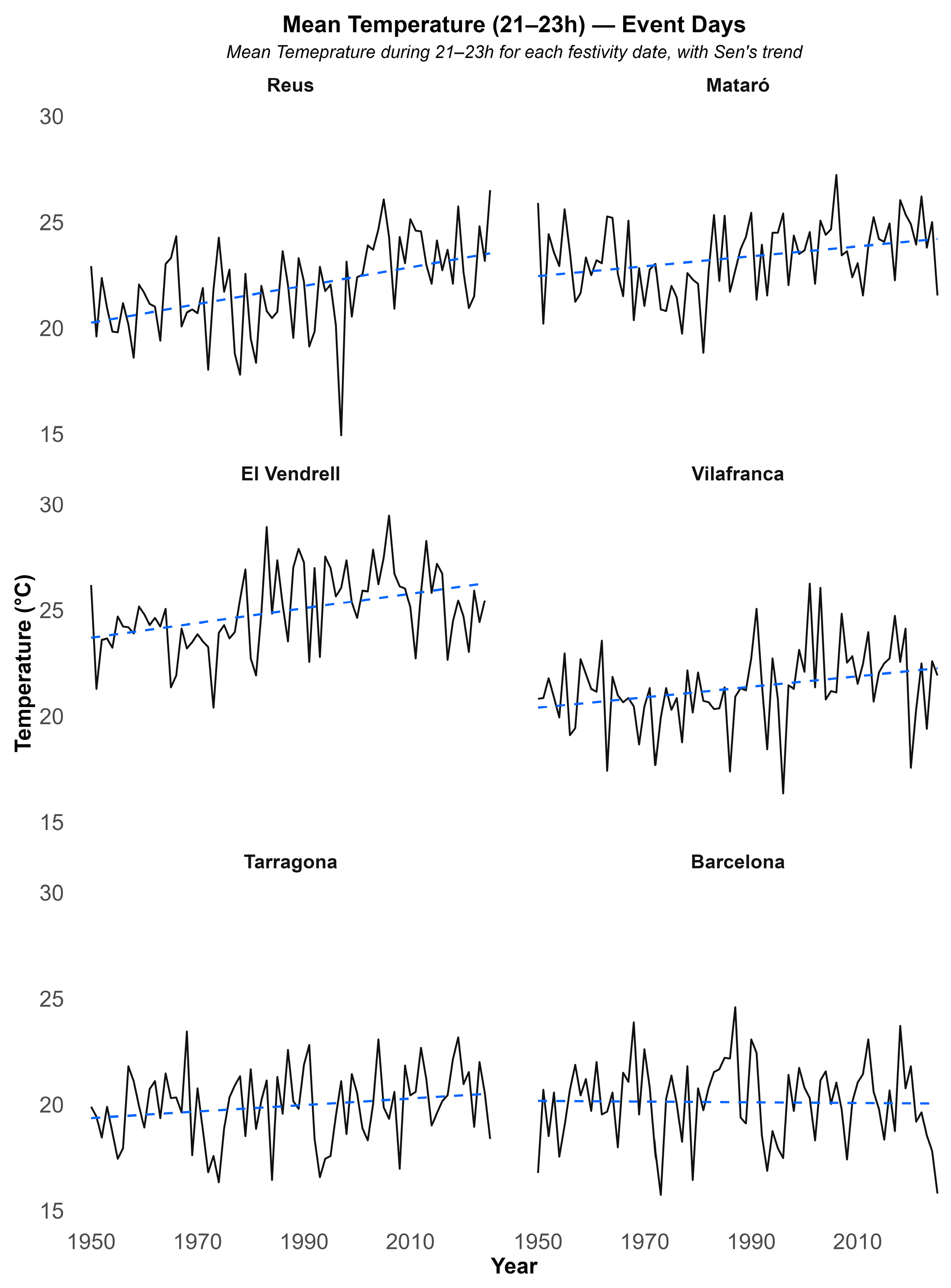
The results clearly demonstrate a consistent rise in night-time temperatures during the correfocs season across most studied locations, with inland and pre-coastal areas showing the most pronounced warming. These findings align with broader Mediterranean trends indicating accelerated nocturnal warming and increased frequency of tropical nights [
17,
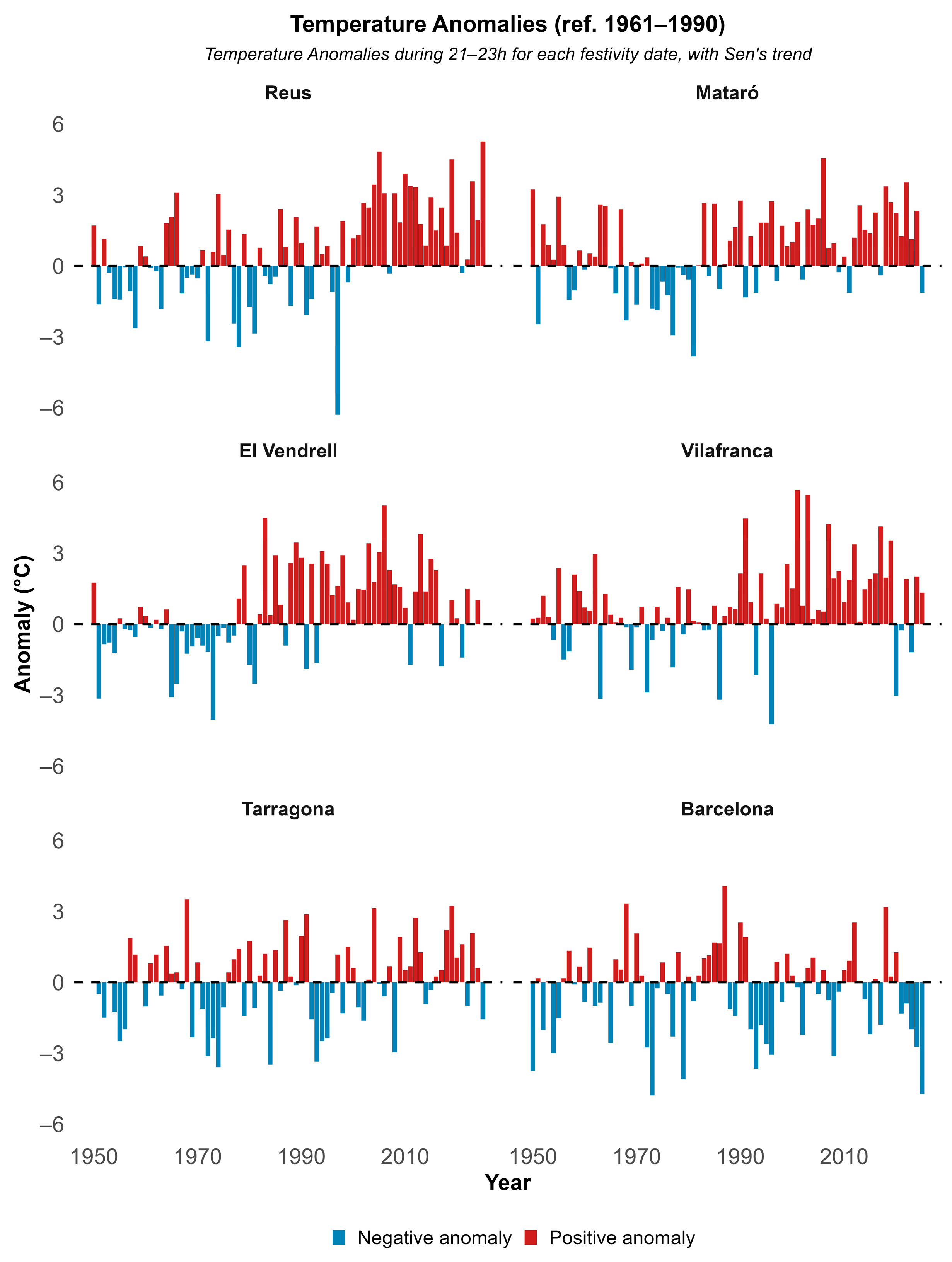
21]. The persistence of positive anomalies since the 1990s suggests that
correfocs, traditionally held under relatively mild evening conditions, are now performed in a significantly warmer thermal environment. This warming pattern reflects not only large-scale climatic change but also local amplification processes such as urban heat retention and reduced nocturnal ventilation. Consequently, the events’ temporal window—once assumed to mitigate heat exposure—no longer guarantees thermal safety or comfort for participants and spectators.
The analysis of Heat Index (HI) and Universal Thermal Climate Index (UTCI) reinforces the perception of a gradual intensification of thermal discomfort during correfocs. Although the majority of events still occur within comfort or mild stress categories, the increasing frequency of years exceeding the “caution” threshold for HI and approaching “moderate heat stress” for UTCI highlights a tangible shift in perceived heat conditions. These results are particularly relevant because correfocs involve sustained physical activity, dense crowds, and direct exposure to radiant heat from pyrotechnics—all factors that can compound physiological stress even at moderate ambient temperatures. The combination of higher humidity and limited nocturnal cooling amplifies perceived discomfort, potentially affecting endurance, attention, and safety, highlighting the need for practical measures to mitigate heat stress during correfocs. Such measures may include adjusting schedules to the coolest hours of the evening, shortening parades, providing free drinking water, adapting costumes and protective gear to be more breathable, and reinforcing on-site medical support and communication protocols to facilitate early detection of heat-related symptoms. The observed trends thus point to the growing importance of integrating thermal comfort considerations into the organisation of such events, from scheduling and route planning to participant hydration and emergency preparedness.
From a cultural-heritage perspective, the progressive warming of the nighttime environment poses both challenges and opportunities for adaptation. As living cultural practices,
correfocs exemplify the resilience of communities to environmental change—continuously adapting through knowledge, creativity, and collective agency [
6]. However, maintaining this resilience in a warming climate will require proactive strategies that combine scientific understanding with local cultural insight. Possible adaptive measures include adjusting performance timing to cooler evening hours, redesigning costumes and materials for heat tolerance, or enhancing awareness campaigns about heat risks. At a broader policy level, recognising
correfocs within climate adaptation and cultural-heritage frameworks could foster interdisciplinary collaboration between meteorological services, local authorities, and cultural associations. Such integration would ensure that the safeguarding of intangible heritage evolves alongside environmental realities, preserving the cultural vitality of
correfocs while protecting community well-being in a changing climate.
This study presents several limitations primarily related to the nature and resolution of the meteorological data used. The analysis is based on reanalysis and gridded datasets rather than direct observational records, which, despite their homogeneity and temporal coverage, may smooth local variability and underrepresent microclimatic effects typical of dense urban fabrics or narrow historical streets where correfocs take place. Reanalysis data also have inherent uncertainties associated with model parameterisation, interpolation, and the representation of coastal–inland gradients, which are particularly relevant in a region with complex topography and land–sea interactions such as Catalonia. Moreover, neither the additional radiant heat generated by fireworks, torches, and other pyrotechnic devices—a distinctive feature of correfocs—nor the long-term evolution of urban heat island intensity is explicitly represented in the datasets used, even though both can substantially modify perceived thermal stress at street level. Furthermore, the temporal window (21–23 h) used to characterise the events provides a consistent framework for comparison. However, it does not fully capture the rapid temporal variability in temperature, humidity, and wind that can occur during specific nights. Lastly, the analysis assumes a spatial correspondence between reanalysis grid points and the actual event locations, which may introduce spatial mismatches in highly localised environments such as urban centres or coastal areas. Taken together, these constraints mean that our results should be interpreted as an exploratory, first-order characterisation of the thermal background in which correfocs take place, rather than a fully resolved microclimatic analysis.
Future research should aim to refine and expand the present analysis through higher-resolution datasets and in situ measurements. Extending the study to more inland areas—particularly those such as Vilafranca and Reus, where the warming signal and thermal discomfort are more pronounced—would help clarify how distance from the coast and timing relative to the summer peak influence heat exposure during
correfocs. Comparative analyses with other regions or cultural events occurring later in the warm season could also enhance understanding of spatial and temporal variability in thermal risk. In addition, following the methodological approaches applied in the studies of human tower exhibitions (
castells) by Boqué-Ciurana et al. [
5], and Saladie et al. [
6], future work should include direct field measurements of microclimatic conditions—such as temperature, humidity, radiant heat, and crowd density—during real
correfocs events. These empirical data would allow for more precise validation of reanalysis-based indices and support the development of tailored adaptation and safety strategies for cultural events increasingly exposed to night-time heat stress, such as rescheduling or shortening events, adapting costumes and performance intensity, improving access to water and shaded rest areas, and reinforcing medical and communication protocols. In parallel, structured thermal comfort questionnaires among spectators and participants, combined with participatory workshops with correfoc teams, would provide subjective evidence on heat perception, perceived risks, and behavioural adaptations, thereby linking objective indices to lived experience and local coping practices. In addition, downscaling of future climate projections under the Shared Socioeconomic Pathways (SSP) scenarios should be incorporated to explore how regional warming may evolve throughout the late 21st century. Such downscaled projections would enable the estimation of whether current trends are likely to intensify toward conditions of greater night-time thermal stress, offering an anticipatory perspective on how
correfocs and other outdoor cultural traditions may need to adapt to future climate realities. In this sense, the present work should be understood as a starting point that motivates targeted in situ experiments and high-resolution urban-scale modelling explicitly designed to capture the unique thermal environment of correfocs.
5. Conclusions
This study characterises, for the first time, the long-term thermal evolution of late-summer nocturnal conditions during major correfoc festivals along the Catalan coast. The results reveal a clear and spatially coherent warming trend over the period 1950–2025, particularly evident in pre-coastal and inland locations such as Reus, El Vendrell, and Vilafranca. Mean night-time temperatures during the typical correfoc window (21:00–23:00) have increased steadily, leading to more frequent and intense positive anomalies relative to the 1961–1990 baseline. These findings confirm that the thermal environment in which correfocs are celebrated today differs substantially from that of the mid-20th century, with warmer and less comfortable evening conditions now prevailing.
The analysis of human comfort indices reinforces this trend. Both the Heat Index (HI) and the Universal Thermal Climate Index (UTCI) show upward trajectories, indicating an increasing incidence of nights falling into the “caution” or “moderate heat stress” categories. This shift reflects a progressive amplification of perceived thermal discomfort, particularly in inland and pre-coastal settings where humidity and reduced nocturnal cooling enhance the sensation of heat. Although extreme stress conditions remain rare, the results suggest that even modest increases in night-time temperature and humidity can alter the comfort and safety parameters of these intense, physically demanding celebrations. However, because the analysis relies on kilometre-scale reanalysis products and does not explicitly account for street-level microclimates or the additional radiant load from pyrotechnics, these findings should be regarded as an exploratory, first-order assessment of the thermal context of correfocs.
Overall, the study demonstrates that regional warming has effectively translated into heightened perceived thermal stress during correfocs, underscoring the dual vulnerability of both the people who participate in and attend these events and the intangible cultural practices themselves. Increasing night-time heat stress can reduce performers’ endurance, alter spectators’ comfort and willingness to attend, and force organisers to adjust core elements of the celebrations, such as schedules, route length, costume design, pyrotechnic intensity, and crowd-management protocols, to preserve safety. These results highlight the importance of incorporating climatic and comfort-based considerations into the planning and safeguarding of traditional outdoor festivals, not only to protect human health but also to keep the practices viable without eroding their core meanings. By linking reanalysis-based climate indicators to correfocs dates and settings, this research contributes to the broader understanding of how environmental change is progressively narrowing the thermal “comfort window” within which these living traditions can be performed, and it lays a foundation for developing adaptive strategies that sustain both cultural continuity and community well-being in a warming Mediterranean climate. As such, the present analysis should be regarded as an exploratory first step that will be complemented by future microclimate monitoring and thermal-comfort surveys during real correfocs, to translate these findings into concrete, evidence-based guidance for practitioners and communities.