


Abstract
This paper presents a macroeconomic approach to calculating Climate Value-at-Risk (CliVaR) for financial institutions, addressing critical limitations in existing commercial solutions and historical data availability. This methodology leverages the Network for Greening the Financial System (NGFS) scenarios to derive implied forward-looking means and volatilities from scenarios mapped to macroeconomic variables (MEVs), circumventing the reliance on insufficient historical data. Through regression analysis, we identify statistically significant relationships between climate-sensitive macroeconomic variables and bank equity values, based on the premise that climate risk is transmitted to bank balance sheets via its impact on the general economy. It is recognised that MEVs alone cannot explain the full variance in equity values and the regression of MEVs to equity is inherently inefficient. However, the purpose of the regression is to determine statistically significant MEVs and not to predict the share price. Along with the NGFS scenarios, this enables the Monte Carlo simulation and the calculation of CliVaR. To account for the regression inefficiency, a Post-Model Adjustment (PMA) equation is developed. The methodology is demonstrated in a practical case study, by calculating a CliVaR based climate risk Pillar 2A capital requirement for Standard Bank Group. This proof-of-concept demonstrates the feasibility of transparent, in-house CliVaR calculations.
1. Introduction
Climate risk represents one of the most significant emerging threats to financial stability in the twenty-first century. For banks, climate risk encompasses both physical risks from extreme weather events and transition risks arising from the shift toward a low-carbon economy. These risks can materialise as credit losses, market losses, liquidity shocks, operational disruptions and reputational damage. As regulators increasingly demand climate risk assessment and disclosure, banks must develop sophisticated methodologies to quantify and manage their climate-related exposures. The complexity of climate risk, with its long-term horizons and unprecedented nature, makes traditional risk management tools insufficient, necessitating innovative approaches to measurement and mitigation.
Despite widespread criticism regarding its limitations, Value-at-Risk (VaR) remains the cornerstone of risk measurement in the banking industry. VaR provides a single, easily communicated metric that estimates potential losses at a specific confidence level over a defined time horizon. Its popularity stems from its simplicity, regulatory acceptance and ability to aggregate risks across different asset classes and business lines. Critics point out VaR’s inability to capture tail risks, its assumption of normal distributions and its reliance on historical data that may not reflect future conditions. The banking industry nevertheless continues to rely heavily on VaR methodologies because they provide a standardised framework for risk comparison and capital allocation decisions.
The development of CliVaR capabilities would offer banks substantial strategic and operational advantages. A robust CliVaR framework would enable institutions to quantify climate-related losses in monetary terms, facilitating integration with existing risk management processes. This quantification would support more informed lending decisions, portfolio optimisation and capital allocation strategies aligned with climate considerations. CliVaR metrics would also enhance regulatory compliance, improve stakeholder communication and potentially unlock access to green financing opportunities. Banks with sophisticated CliVaR capabilities could differentiate themselves competitively by demonstrating climate resilience to investors and customers increasingly concerned about environmental sustainability.
Several data providers, including MSCI, have recognised this market need and now offer CliVaR statistics for listed entities. These commercial solutions provide banks with ready-made climate risk assessments, including scenario analyses and stress testing capabilities. The availability of such third-party solutions has accelerated climate risk integration for many financial institutions lacking internal expertise or resources to develop proprietary models.
Reliance on purchased CliVaR statistics, however, creates significant “black box” problems for banks. The proprietary nature of vendor models means banks cannot fully understand or validate the underlying assumptions, methodologies and data sources. This opacity poses serious challenges for risk management, as banks cannot explain model outputs to regulators or stakeholders, nor can they customise analyses to reflect institution-specific characteristics. The lack of transparency also impedes model validation, back testing and continuous improvement processes essential for effective risk management.
The focus of commercial providers on listed entities also creates a substantial coverage gap. Banks’ portfolios typically include significant exposures to non-listed entities such as small and medium enterprises, private companies and retail customers. These entities often represent the majority of lending portfolios, particularly for regional and community banks. The absence of CliVaR assessments for non-listed entities means banks using third-party solutions have incomplete climate risk pictures, potentially underestimating their true exposures.
In-house CliVaR calculation capabilities address these limitations while offering substantial improvements in risk assessment quality and customisation. Proprietary models provide complete transparency, enabling banks to understand, validate and explain their climate risk assessments. Internal development allows for customisation to specific portfolio characteristics, business models and geographic exposures. Banks can also extend coverage to all counterparties, including non-listed entities, ensuring comprehensive risk assessment.
Developing in-house CliVaR models, however, faces a fundamental challenge: the lack of sufficient historical climate data to calculate the means and standard deviations required for traditional VaR calculations. Climate change represents an unprecedented phenomenon with limited historical precedent, making traditional statistical approaches based on historical data inadequate. The non-stationary nature of climate risks means past patterns cannot reliably predict future outcomes, necessitating forward-looking approaches.
1.1. Motivation and Contribution
We propose developing a Monte Carlo CliVaR model utilising implied means and volatilities derived from Network for Greening the Financial System (NGFS) scenarios. This approach leverages the most popular forward-looking climate scenarios developed using sophisticated integrated assessment models (IAMs), providing scientifically grounded projections of climate-related economic impacts under different warming pathways.
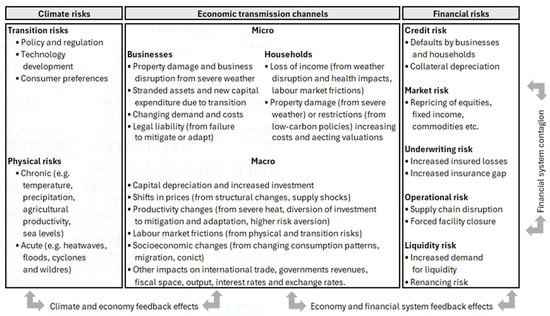
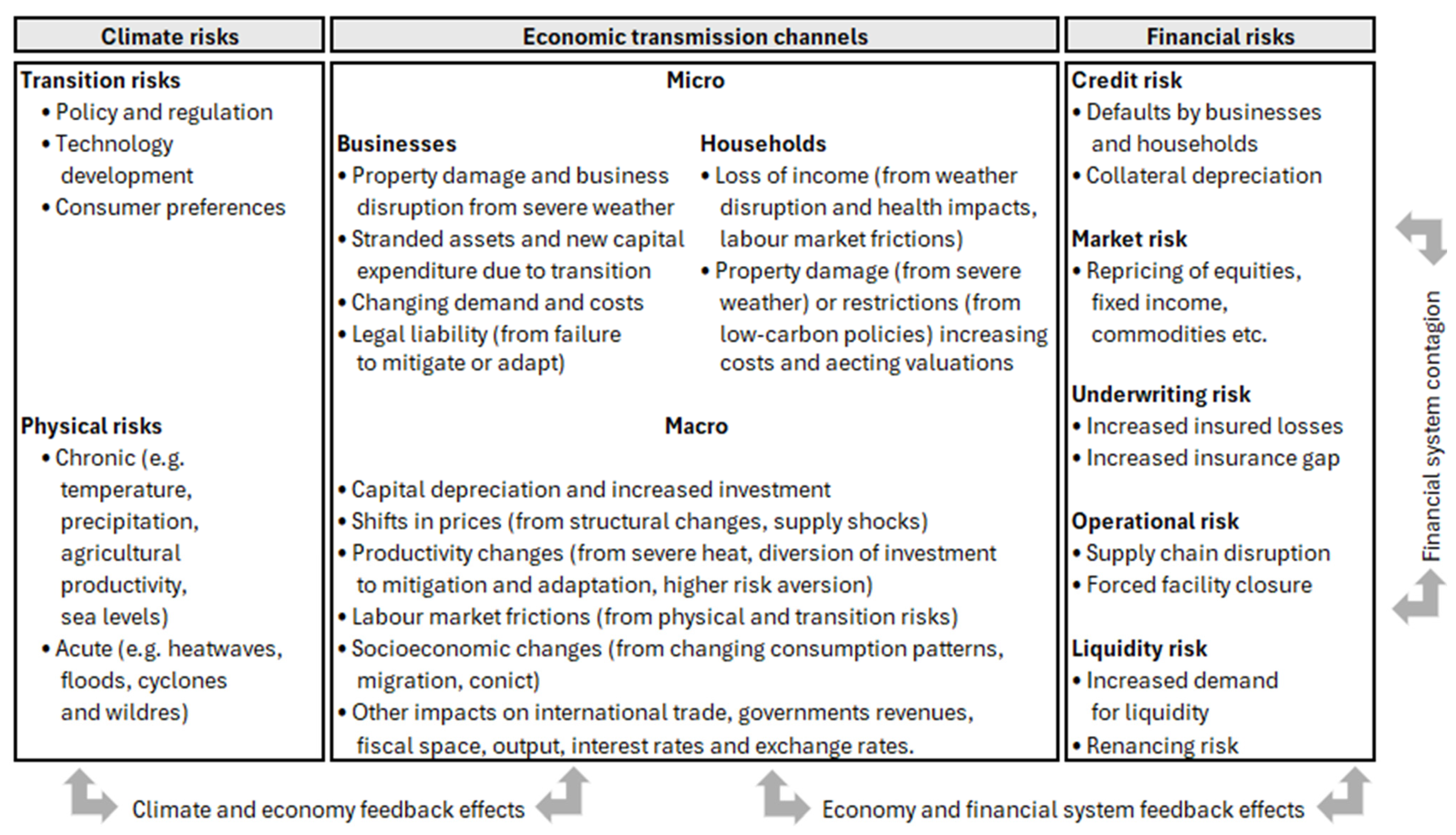
Climate risk affects the entire economy through multiple transmission channels, ultimately impacting macroeconomic variables such as GDP growth, inflation, interest rates and unemployment (see Figure 1). These economy-wide effects cascade through financial markets and real economic activity. Banks, occupying the central position in the economy as facilitators of capital flows, inevitably absorb these impacts through their intermediary activities. Climate-related macroeconomic shocks crystallise as credit losses, market value declines and other traditional financial risks on bank balance sheets.
Figure 1.
Climate risk Transmission channels. Source: [1].
Our proposed approach identifies macroeconomic variables (MEVs) for which NGFS scenarios provide projections, then builds a regression function relating these variables to bank share prices as a proxy for equity value. Using available historical data for macroeconomic variables and share prices, we perform regression analysis to determine statistically significant MEV relationships impacting the bank’s share price. This bank-specific analysis captures the unique sensitivity of individual institutions to climate-related macroeconomic changes.
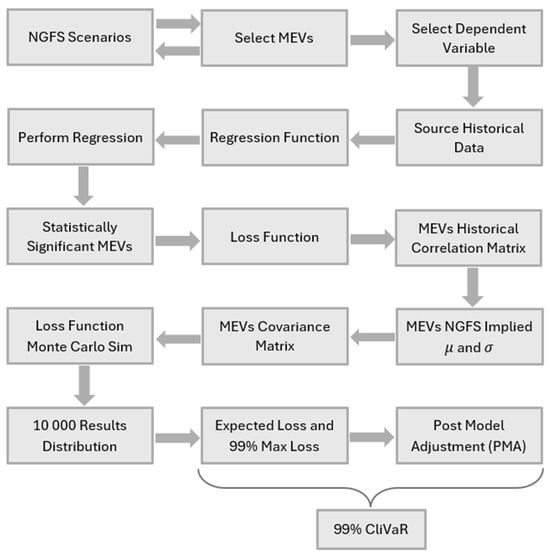
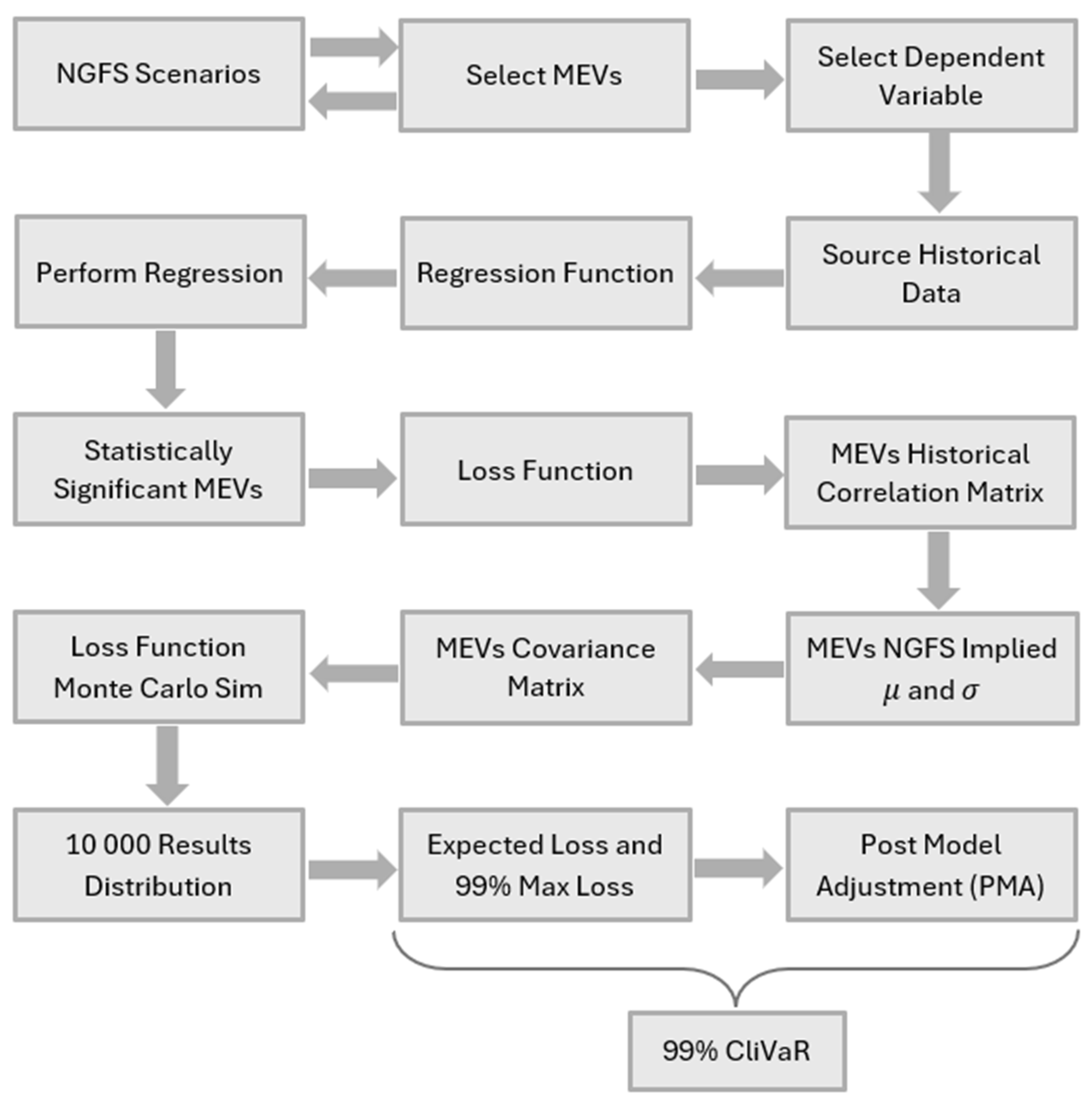
Subsequently, we utilise the identified significant MEVs, along with their correlations and climate-specific implied means and standard deviations from the NGFS scenarios, to conduct 10,000 Monte Carlo simulations on a loss function. These simulations generate a distribution of potential outcomes across all the NGFS climate scenarios for the chosen MEVs. The simulation results enable calculation of both expected climate risk losses and the 99% CliVaR, providing banks with robust metrics for climate risk assessment and management. This methodology combines the forward-looking nature of climate scenarios with bank-specific sensitivities, offering a practical solution to the CliVaR calculation challenge. Figure 2 gives an overview of the methodology.
Figure 2.
High Level Process Overview. Source: Authors.
This study is intended as a proof of concept and not a definitive model. The authors acknowledge that share prices are not accurate proxies for equity but are subject to market factors such as future expectations and market sentiment. Also, MEVs alone cannot explain a statistically significant portion of the variance in share prices. For this reason, a Post-Model Adjustment (PMA) equation is developed to adjust the CliVaR in relation to the regression inefficiency.
These shortcomings arise due to a lack of publicly available data. A bank wishing to implement this methodology internally will have access to much better and more detailed data, enabling them to construct a better regression function and to select a more appropriate dependent variable, for example, credit losses or CET1 equity. Moreover, although this study demonstrates the methodology using MEVs as independent variables, the methodology is suitable for any set of independent variables that fit the following condition: The independent variables should have available NGFS scenarios, or it should be possible to create scenarios by combining existing NGFS scenarios, as demonstrated by [2].
1.2. Paper Structure
The remainder of the paper is structured as follows: Section 2 gives the results of the literature review, which highlights the lack of existing transparent CliVaR methodologies. Section 3 describes the data used and the methodology developed in this study. Section 4 gives a detailed discussion of the results of the study. Finally, Section 5 delivers the conclusions derived from the study and the recommendations for further research.
2. Literature Review
CliVaR is a niche topic which is not very well covered in the literature, especially not from an institutional point of view. Interest in the topic is gathering pace; however, as financial institutions and regulators alike seek tools to address climate risk. This literature review highlights the relative lack of knowledge in this field and the relevance of the topic of this study. It sheds light on the links between climate change and financial instability, at the macro and institutional level and points to scenarios analysis, which is the basis of Monte Carlo simulation, as the most effective tool to quantify the risk. It further emphasises how climate risk is transmitted to corporations and financial institutions via its impact on the general economy and value chains, justifying this study’s link between MEVs and the performance of a financial institution.
Ref. [3] examined the financial risks of climate change on investment portfolios, especially equity value impairment. The study estimated a 3% chance of climate damage reaching half of global GDP by 2100, leading to a 10% impairment of the (then) current equity portfolio value of $7 trillion, increasing annually by 50 basis points. The author argued that while renewables and electric vehicles might strand fossil fuel assets, they may not prevent significant warming and related financial risks and that investors should reduce emissions by engaging with companies. The study compared the systemic risks of climate change to the 2008 financial crisis, highlighting the need for proactive risk management.
Ref. [4] also explored the potential financial implications of climate change for investment portfolios by employing a global CliVaR approach, with the aim to raise awareness within the financial sector about the potential financial risks associated with climate change and to provide insights for financial regulators to ensure the resilience of financial institutions against climate-related shocks. The study utilised existing Integrated Assessment Models to estimate the global CliVaR. The paper emphasised the need for more granular data and research on the economic and financial impacts of climate change to improve CliVaR estimations. The authors concluded that while estimating CliVaR is complex, it is a crucial step in understanding and managing the financial risks posed by climate change.
A methodology to assess systemic financial risks from climate change using a network-based climate stress test which was applied to Euro Area banks by [5]. “Green” and “brown” policy scenarios were compared. The study showed that investors, especially investment and pension funds, are significantly exposed to climate policy risks. Banks also face risks through loans to climate-sensitive sectors. The authors emphasised that early and stable climate policies help smooth asset value adjustments, while late, abrupt changes could harm the financial system.
Ref. [6] explored how climate-related risks impact companies’ financial performance and financing decisions across multiple countries. They found that higher climate risk reduces firm performance, especially in high-emission sectors and leads companies to increase debt financing to mitigate earnings volatility. These findings were consistent globally, showing that climate risk significantly influences corporate financial decisions. The study emphasises the need for firms and investors to integrate climate risk into their decision-making and investment strategies.
A “Precautionary Financial Policy” approach to tackle financial stability risks from climate change was proposed by [7]. They noted traditional risk management based on probabilistic models and historical data is insufficient due to the deep, radical uncertainty of climate risks, which are unpredictable in timing, magnitude and impact. The paper advocated for using the precautionary principle, emphasising preventative actions despite incomplete scientific certainty. It recommended incorporating climate risk into financial policies like capital adequacy, monetary policy and credit guidance. The authors called for a paradigm shift towards this approach to manage systemic climate risks effectively, urging policymakers to take proactive steps for a resilient and sustainable financial system.
Ref. [8] examined the suitability of bank stress tests for evaluating climate-related financial risks. The study identified key challenges and limitations in using traditional stress tests, primarily designed for short-term economic shocks, in the context of climate change. These included data limitations on the economic impacts of climate change, difficulties in modelling the complex and non-linear relationship between climate change and financial stability and the need to consider a wider range of climate scenarios beyond traditional economic variables. The author concluded that while stress tests can be a valuable tool for assessing climate risks, significant modifications and enhancements are needed to make them more effective in this context, emphasising the importance of ongoing research and development to improve the methodologies and data used in climate stress testing.
A framework to assess the effects of climate policy and transition narratives on economic and financial variables for financial risk assessment was devised by [9]. Transition risks were examined, such as unanticipated increases in carbon prices and productivity shocks, to reflect potentially disorderly transition processes. This framework was applied to the French financial system using models calibrated with the high-level reference scenarios from the Network for Greening the Financial System (NGFS). The study underscored the importance of considering various scenarios to account for the uncertainty and potential non-linear impacts of climate change. It concluded that scenario-based approaches offer a useful method for evaluating and mitigating potential financial risks associated with the low-carbon transition. The study also highlighted the need for ongoing improvements in data, models and methodologies to enhance the precision and reliability of climate-related financial risk assessments.
Ref. [10] studied the interconnectedness between climate change and the financial system. The study analysed how both physical and transition risks associated with climate change can significantly impact financial stability, potentially leading to asset stranding, increased defaults and broader financial instability. The paper reviewed existing methodologies and metrics for assessing these climate-related financial risks, highlighting the limitations of traditional approaches and emphasising the importance of new techniques, such as climate stress tests and scenario analysis, in understanding and managing these risks effectively. The author concluded that addressing climate-related financial risks is paramount for ensuring financial stability and achieving a sustainable future and stressed the need for collaboration between policymakers, financial institutions and researchers to develop effective solutions and navigate the challenges posed by climate change.
Ref. [11] provided a comprehensive overview of the existing research on the complex interplay between climate change and the financial system. It explored the bidirectional causal links, examining how the financial sector can both mitigate climate change and be impacted by the risks it poses. The study focused on specific transmission channels and identified key policy implications, such as the need for carbon pricing mechanisms, enhanced risk disclosure requirements and green finance initiatives, to address market failures and promote a sustainable financial system. The paper concluded that climate change and the financial system are deeply intertwined, presenting both risks and opportunities and emphasised the importance of further research and evidence-based policymaking to ensure a smooth transition to a low-carbon economy.
Ref. [12] aimed to raise awareness about the significant financial risks posed by climate change, explaining the different types of climate-related financial risks, including physical risks and transition risks and highlighting the challenges of measuring and managing these risks due to their long-term, uncertain and systemic nature. The study found that climate change is a source of financial risk that can impact a wide range of financial assets and institutions and that traditional risk management frameworks are inadequate for addressing these unique challenges. It discussed the crucial role of central banks and financial regulators in assessing and mitigating climate-related financial risks, promoting disclosure and transparency and enhancing the resilience of the financial system to climate change. The paper concluded that climate change is not just an environmental issue but also a significant financial stability concern and emphasised the need for urgent action from policymakers and financial institutions to manage these risks and ensure a smooth transition to a low-carbon economy.
A top-down approach was developed by [13] to evaluate the resilience of non-financial corporations and euro area banks to climate change. The study examined the impact of various climate scenarios on the financial system and economy, highlighting key transmission channels for climate-related risks. The findings showed significant threats to the euro area, especially under delayed transition scenarios, with immediate impacts from transition risks like higher carbon prices. Sectors with high carbon emissions and limited adaptation capacity were found to be particularly vulnerable. The authors stressed that early policy actions, such as carbon pricing and green finance, can reduce long-term costs of climate change for the economy and financial system. It concluded that a timely and well-managed transition to a low-carbon economy is essential for mitigating financial risks and enhancing system resilience.
Ref. [14] investigated the risk of capital stranding, where productive assets lose value due to the transition to a low-carbon economy. The paper aimed to analyse the systemic risk of capital stranding by examining how decarbonisation policies could impact a wider range of industries and assets, beyond just the fossil fuel sector. The study introduced a novel input-output analysis-based methodology to quantify the potential scale of capital stranding across different sectors and regions, highlighting the importance of considering the interconnected nature of the global economy and how decarbonisation in one sector can have cascading effects on others. Findings indicate that decarbonisation policies could lead to substantial capital stranding in sectors heavily reliant on fossil fuels, such as electricity generation, transportation and heavy industries and that the initial impact can be amplified through supply chain linkages, resulting in a ripple effect of capital stranding across the economy. Coordinated policy action is crucial to manage the transition to a low-carbon economy and minimise the potential for disruptive capital stranding.
Ref. [15] examined the evolving role of financial regulations in addressing climate change and supporting the transition to a low-carbon economy. The authors analysed ongoing efforts to understand and measure the potential impacts of climate change on financial institutions, investigated whether current regulations are equipped to handle the complexities of climate change and highlighted the importance of considering potential risks and unintended consequences of incorporating climate factors into financial policies. The study found that while progress has been made in assessing climate-related risks, significant data gaps and methodological limitations persist, hindering a comprehensive understanding of these risks. Existing legal frameworks may require revisions to accommodate the long-term and uncertain nature of climate change and empower financial regulators to address it effectively. The need for transparency and a balanced approach in incorporating climate considerations into financial policies was advocated, as policymakers face a complex challenge due to data limitations and the potential need for significant regulatory changes.
Ref. [16] investigated how a carbon price would affect firm valuations, specifically focusing on the cascading effects through the value chain. The authors aimed to quantify the impact of a carbon price, implemented through a tax or emissions trading system, on the valuation of individual firms and considered how carbon price signals propagate upstream and downstream through supplier and customer relationships. To this end, [16] developed a comprehensive model that combined financial data with input-output tables to capture the interconnectedness of firms within the global economy. The study found that the introduction of a carbon price can lead to substantial changes in firm valuations, with both winners and losers depending on their carbon intensity and position in the value chain and that the initial impact on carbon-intensive sectors can cascade through the value chain, affecting firms in seemingly unrelated industries. The paper emphasised the importance of considering the potential for cascading effects when designing and implementing carbon pricing mechanisms, as targeted policies and support measures might be necessary to mitigate negative impacts on specific sectors or firms.
Ref. [17] investigated the potential impact of fluctuations in carbon prices, a key policy tool for climate change mitigation, on the European banking system. The authors aimed to analyse the transmission of carbon price shocks to banks, assess the sensitivity of banks to different carbon price scenarios and identify potential vulnerabilities and systemic risks. The study found that gradual increases in carbon prices are likely to be manageable for the banking system, as they allow firms time to adapt and reduce emissions, whereas sudden and rapid carbon price hikes, particularly if firms fail to effectively lower their carbon footprint, could lead to significant losses for banks and potentially trigger broader financial instability. The study stressed the importance of early and predictable policy action to provide firms with clear incentives and sufficient time to adjust their business models and reduce their carbon footprint, thereby mitigating risks to the financial system.
Ref. [18] investigated whether the “environmentally friendly” character of stocks influenced the market crash price of risk once asymmetries in return distributions are considered. Using sector-level data for large-cap stocks from 2013 to 2022, the authors focused on how skewness and tail behaviour (rather than simple mean-variance effects) shape the pricing of crash risk. They find that the impact of a green label is not uniform: in some sectors environmental friendliness dampens downside risk, while in others it can increase the price investors demand to bear crash risk. The effect of being “green” was found to be fundamentally sector-dependent and operates through changes in return distribution shape rather than overall performance levels.
Ref. [19] presented a framework for evaluating the risks that climate change poses to investment portfolios, particularly focusing on the transition risks associated with moving towards a low-carbon economy. The authors aimed to create a comprehensive climate stress testing model that goes beyond traditional approaches, providing a realistic representation of future carbon prices and their probability distribution, while also accounting for indirect emissions embedded in supply chains and the uncertainty associated with how carbon price increases translate into higher costs for firms and consumers. The authors found that the transition to a low-carbon economy can significantly impact portfolio values and that considering indirect emissions and stochastic pass-through mechanisms amplified the estimated impact of carbon pricing. The paper highlighted the benefits of using a probabilistic framework to capture the uncertainty inherent in climate change and its economic impacts and proposed (CliVaR) as a comprehensive measure to quantify potential portfolio losses due to climate change.
The literature study highlights several key themes prevalent in the current field of knowledge regarding an assessment of the impact of climate risk in the financial industry:
- The impact of climate change on the financial industry is characterised by radical uncertainty, driven by a complex web of interconnected factors;
- Climate risk poses very real financial risks to which banks are extremely vulnerable via their loan portfolios. This vulnerability is amplified by the potential ripple effect of losses in carbon intensive industries to other parts of the economy;
- Existing research was mainly conducted from a macro point of view, warning of the potential for systemic risk posed by climate change leading to financial instability. Very little is available on the micro-level management of the risk at the institutional level;
- Policy-driven transition risk is more important in the short-term for banks than physical risk and the transition channel with the most potential for immediate impact is the price of carbon, either via carbon tax or carbon trading systems;
- An emphasis on both regulators and banks to urgently address the risk posed by climate change, which in turn requires the urgent development of new tools to measure and manage the risk; and
- A probabilistic approach like CliVaR will be a good measure of potential losses which arise from climate risk.
These themes show that by developing a simplified CliVaR methodology that banks can readily use to quantify the risk at an institutional level and using that methodology to calculate an appropriate Pillar II capital add-on, this study will go a long way towards closing some of the gaps in the current literature. The literature study will not be complete, however, without shedding light on the appropriate VaR methodology to be used. Different VaR methodologies can be adapted to calculate CliVaR, each with its own strengths and limitations.
Historical VaR involves analysing historical data on climate-related events and their financial impacts. For instance, data on past hurricane seasons and their effects on property values or agricultural yields can be used to estimate potential future losses. By statistically analysing the distribution of historical losses, banks can estimate the CliVaR at a given confidence level [20]. This approach relies heavily on the assumption that past events are reliable indicators of future risks, which may not hold in the face of evolving climate patterns [21].
Monte Carlo VaR employs stochastic modelling techniques to simulate a wide range of potential climate scenarios and their corresponding financial implications [22]. By running numerous simulations with varying climate variables, economic factors and asset prices, banks can generate a distribution of potential losses and estimate CliVaR. This method offers greater flexibility in incorporating complex relationships and tail risks compared to historical VaR [23], but it requires sophisticated modelling expertise and relies on assumptions about underlying probability distributions of climate and economic variables.
By adapting these established VaR methodologies [24], financial institutions can better quantify and manage the financial risks posed by climate change. The choice of methodology depends on the specific data availability, modelling capabilities and risk appetite of the institution.
We aver that Monte Carlo VaR is the most appropriate methodology for evaluating climate risk—especially in the case of transition risk, for which there are few to no historical data available.
3. Data and Methodology
3.1. Data
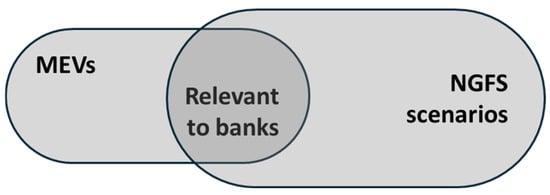
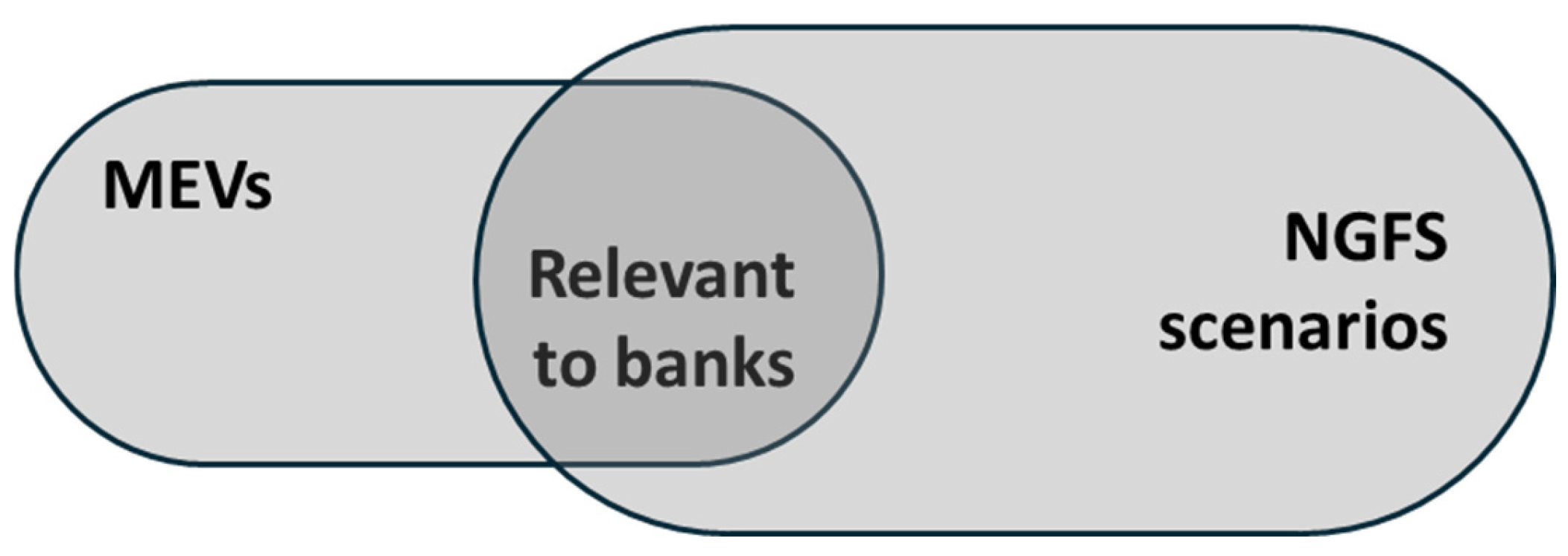
The first step in the process is to select independent variables for the regression equation for which there are also available NGFS scenarios. In this case, the focus is on the transmission of climate risk to banks via its impact on the general economy, so the selected independent variables (Figure 3) should satisfy the following two conditions:
Figure 3.
Relevant independent variables: MEV and NGFS scenario overlap. Source: Authors.
- They should be MEVs for which there are available NGFS scenarios.
- They should be relevant to the banking industry.
An investigation of the latest Phase V long term NGFS scenarios [25] yielded a set of ten independent variables that are MEVs with relevance to the banking industry, as illustrated in Table 1. Note that the “combined” variables are used to capture both transition and physical risk.
Table 1.
Independent variable selection. Source: Authors.
The Phase V NGFS scenarios contain five distinct sets of scenarios: Downscaled_GCAM 6.0 NGFS_data, Downscaled_MESSAGEix-GLOBIOM 2.0-M-R12-NGFS_data, Downscaled_REMIND-MAgPIE 3.3–4.8_data, IAM_data and NiGEM_data. The above chosen variables are only populated in the NiGEM_data scenario set, with data across three different models and five different NGFS scenarios, giving a population of 15 distinct scenarios for each variable, representing fifteen different, but plausible, future outcomes for each variable. These scenarios are tailored to South Africa and are the forward-looking scenarios used in this study to calculate the climate-specific means and standard deviations for the variables to be used as proxies in the Monte Carlo simulations. Table 2 gives a summary of the models and NGFS scenarios that were used in the generation of these scenarios.
Table 2.
NGFS model and scenario combinations. Source: Authors.
For the dependent variable, the authors have chosen the Standard Bank share price. The study considered and tested all the big five banks in South Africa and Standard Bank gave the best results and is therefore used in the case study. The methodology is, however, applicable to all banks. As stated before, the bank’s share price is used as a proxy for the bank’s equity to determine the impact of climate risk on the bank under the premise that losses will be reflected in the bank’s equity via a reduction in retained earnings. Another benefit of using the share price from an outsider’s point of view is that the information is publicly available. However, the authors recognise that other factors, such as market sentiment, have a significant impact on the share price and that MEV’s alone cannot fully explain the variance in the share price. An institution wishing to apply this methodology internally would have access to better data and a range of possible dependent variables, such as CET1 or actual credit losses. Nevertheless, it is a useful proxy for this study to determine the likely impact of climate risk on the bank.
Whereas the above NGFS forward looking data are used to calculate metrics used in the Monte Carlo simulations, historical data are needed for all the independent variables to perform the regression analysis. The required historical data were sourced from the CEIC database [26], by mapping the chosen independent variables to CEIC data series as shown in Table 3. Since GDP data are typically released quarterly, the uninterpolated quarterly data series were used.
Table 3.
CEIC data series mapping. Source: Authors.
For the dependent variable, the Standard Bank share price, historical data were sourced online from the Investing.com website [27]. Since the independent variable data are reported quarterly, dependent variable data were also sourced on a matching quarterly basis. This limits the historical time series of data to 1989, i.e., where the Standard Bank data commence, resulting in a dataset with only 135 observations.
Finally, all the historical data were converted to quarter-on-quarter percentage changes.
3.2. Methodology
A linear regression function relating the independent MEV variables to the dependent variable was constructed as follows:
where
= The dependent variable: Share price
= Intercept
= Coefficient for independent variable i
= 1, 2, …, 10
= Independent variable 1: Private consumption component of GDP
= Independent variable 2: Government consumption component of GDP
= Independent variable 3: Private investment component of GDP
= Independent variable 4: Government investment component of GDP
= Independent variable 5: Exports component of GDP
= Independent variable 6: Imports component of GDP
= Independent variable 7: All share equity index
= Independent variable 8: House price index
= Independent variable 9: SARB repo rate
= Independent variable 10: Long-term government bond yield
= Error term
The linear regression was solved in R-Studio using the historical data described above and the R linear regression algorithm, after checking the data for collinearity using the mctest() and check_collinearity() algorithms. The full R code used is available upon request.
The purpose of the regression was to ascertain the historical impact of the MEV’s on the share price of the bank and not to build a function to predict the share price. As stated before, MEV’s by themselves cannot be expected to accurately predict share prices. The was expected to be relatively low. Hence, given the low number of observations in the dataset, the full dataset was used to solve the linear regression function, instead of dividing the data into a training and a testing set, as would normally be performed.
It is known that GDP and its components tend to have a lagged effect on asset values. Therefore, five different regressions were performed with five different lag periods being applied to the six MEV’s that are components of GDP (GDP_PC, GDP_GC, GDP_PI, GDP_GI, EXP, IMP), while applying no lag to the remaining four MEV’s (EQI_ALL, HPI, SARB_REPO, GBOND_YLD). The five lag periods applied to the GDP variables were: no lag, 3-month lag, 6-month lag, 9-month lag and 12-month lag. The best regression results, as determined by the R2 of the regression, were obtained for the fifth regression, i.e., using a 12-month lag. These are the results discussed in Section 4.
The loss function for the Monte Carlo simulation was created by eliminating the statistically insignificant independent variables from the regression function. Independent variables with p-values larger than 0.05 were eliminated, resulting in a loss function that related the share price of the bank to its statistically significant MEV independent variables, their coefficients and the intercept. The loss function can be described mathematically as follows:
where
= the percentage change in the value of the share price
= the intercept in percentage terms
= the regression coefficient of statistically significant independent variable
= statistically significant independent variable where each SSIV is in {GDP_PC, GDP_GC, GDP_PI, GDP_GI, EXP, IMP, EQI_ALL, HPI, SARB_REPO, GBOND_YLD}
Once the loss function was established, a historical correlation matrix was calculated for all the SSIV’s in (2) and then converted into the covariance matrix required for the Monte Carlo simulation. Next, and were estimated for each SSIV by calculating the mean and standard deviation across all available forward-looking NGFS scenarios for each SSIV, under the assumption that all the scenarios represent plausible future outcomes.
The loss function was then run through 10,000 Monte Carlo simulations and the results analysed to fit a normal loss distribution, which in turn was used to calculate both the expected loss and the maximum loss at a 99% confidence level, using the following formula:
where
= the maximum expected loss at a 99% confidence level
= the mean of the Monte Carlo simulation results
= the standard deviation of the Monte Carlo simulation results,
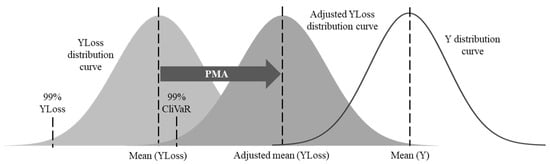
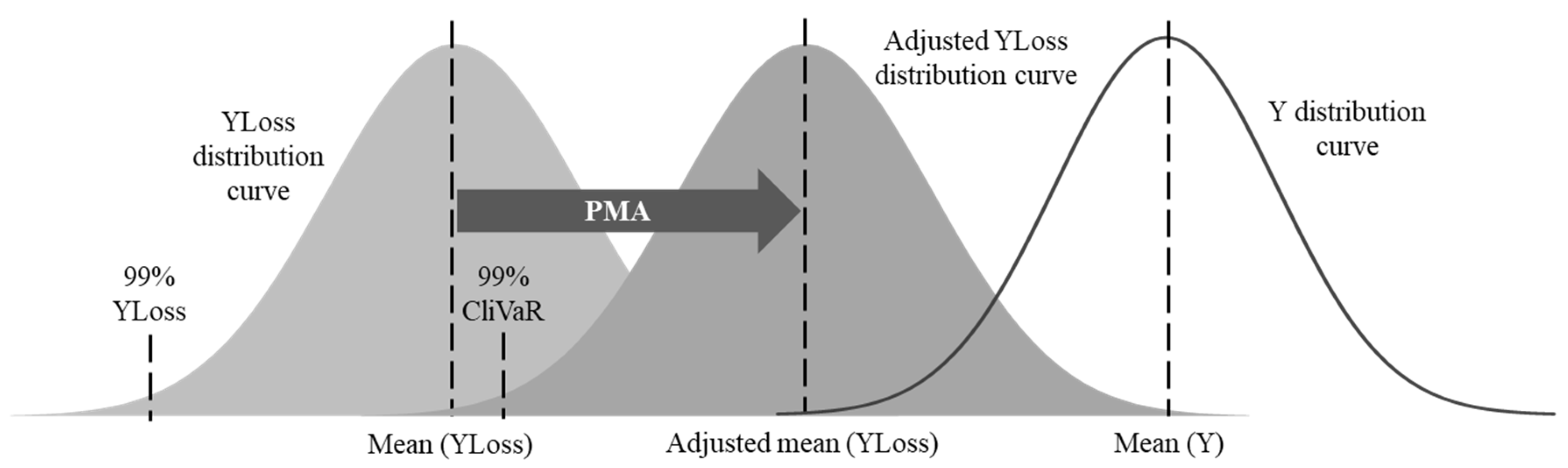
In recognition of the poor fit of the regression, a PMA was needed. To do this, the assumption was made that climate risk will increase the volatility in financial results and therefore the share price and losses, over time. It can be expected that the mean of the explained variance as defined by the loss function in (2), in other words , will be lower than the mean of the error term, or unexplained variance. All other things being equal, the theoretical mean of the unexplained variance should be similar to the historical mean of the share price, in other words .
It follows that the true mean, after taking into account the inefficiency of the regression function and adjusting for the expected mean of the error term, should be somewhere between and . The size of the PMA should also be related to the degree of inefficiency of the regression function. Under this assumption and using as the measure of efficiency, the PMA can be constructed as follows:
where
= the mean of the historical data for the dependent variable
= the mean of the Monte Carlo simulation results
= the of the regression function used to construct the loss function in (2).
Note that (4) displays the desired property of directly relating the size of the PMA to the size of the , such that as , .
Essentially, the PMA has the effect of shifting the distribution of either to the right or the left such that the mean of the adjusted distribution moves closer to the mean of , while still retaining the original standard deviation of . Figure 4 illustrates the process.
Figure 4.
PMA. Source: Authors.
From Figure 4 it can be seen that:
where
= the Climate Value at Risk at a 99% confidence level
= as defined in (3)
= as defined in (4).
Section 4 demonstrates how the CliVaR methodology described above can be applied in practise, using Standard Bank of South Africa as a case study.
4. Results and Discussion
4.1. Performing the Regression
The regression described in (1) was performed in R-Studio using the data described in Section 3.1 and the “lm()” linear regression function in R. Various lags for the GDP component data were regressed against the Standard Bank share price and the best results were obtained for a 1-year lag.
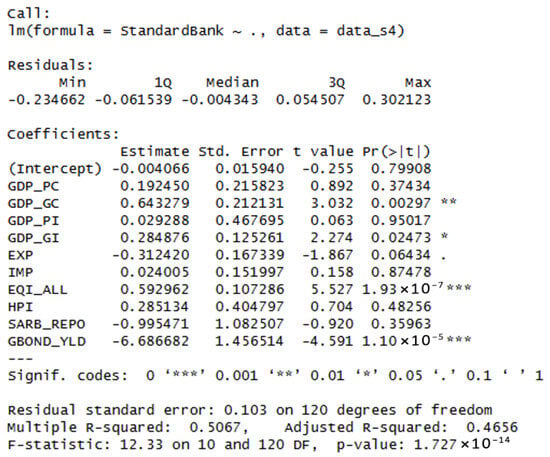
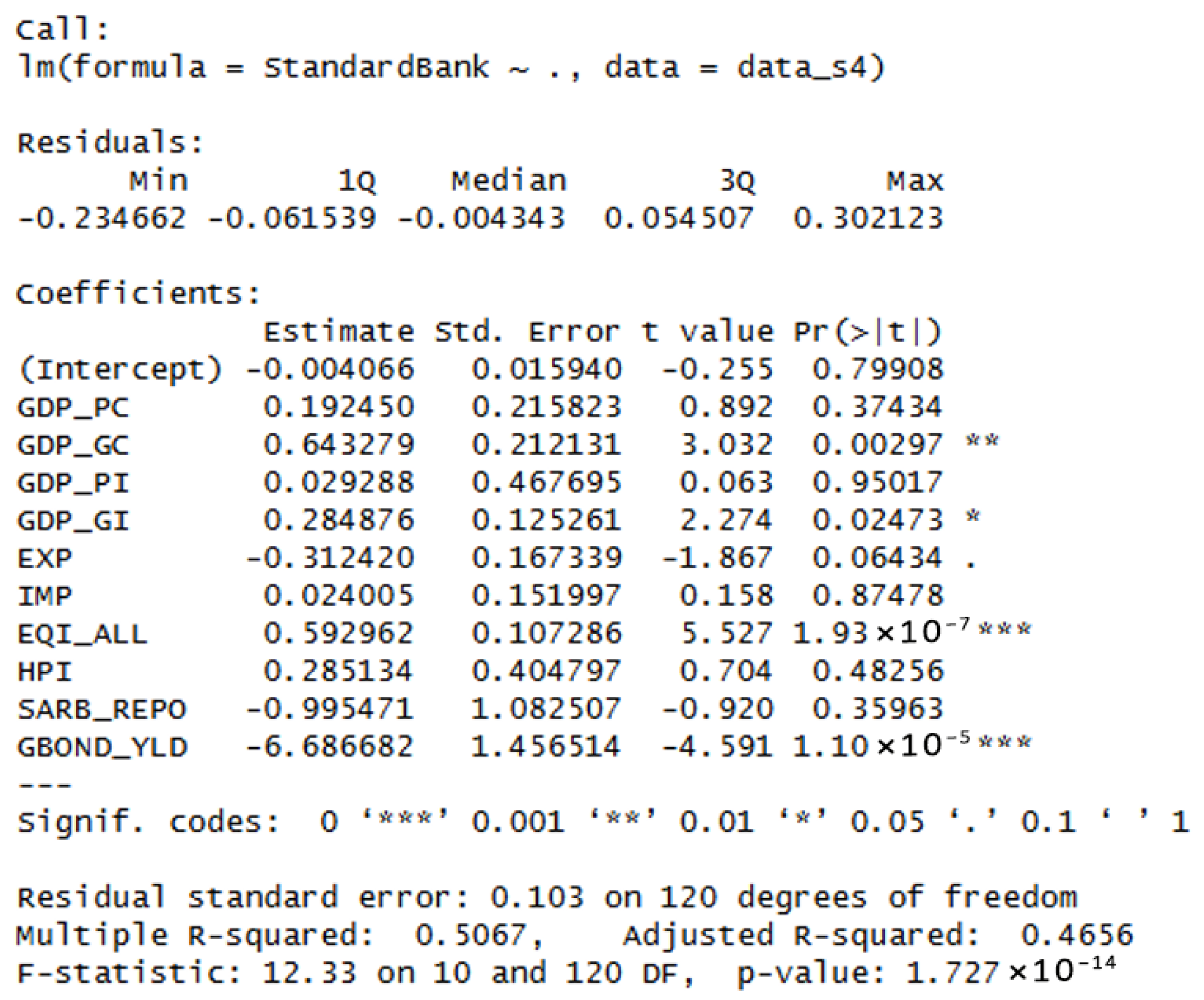
The initial regression yielded the results shown in Figure 5 showing that the initial regression of all the independent variables against the Standard Bank share price had an , and an Adjusted , indicating that there are a number of insignificant independent variables present in (1). By inspecting the -values of the independent variables in Figure 5, it can be seen that of the 10 independent variables, only four have -values and are therefore statistically significant. These are GDP_GC (Government Consumption), GDP_GI (Government Investment), EQI_ALL (All Share Index) and GBOND_YLD (Government Bond Yield).
Figure 5.
Screenshot of the initial regression results in R-Studio. Source: Authors.
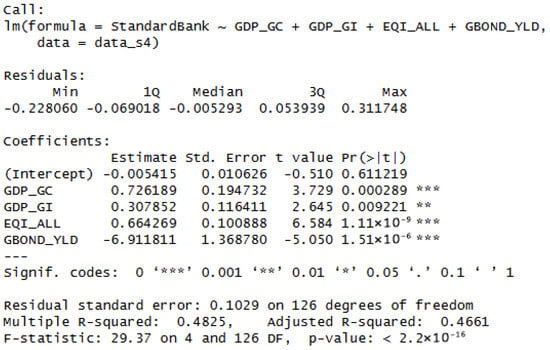
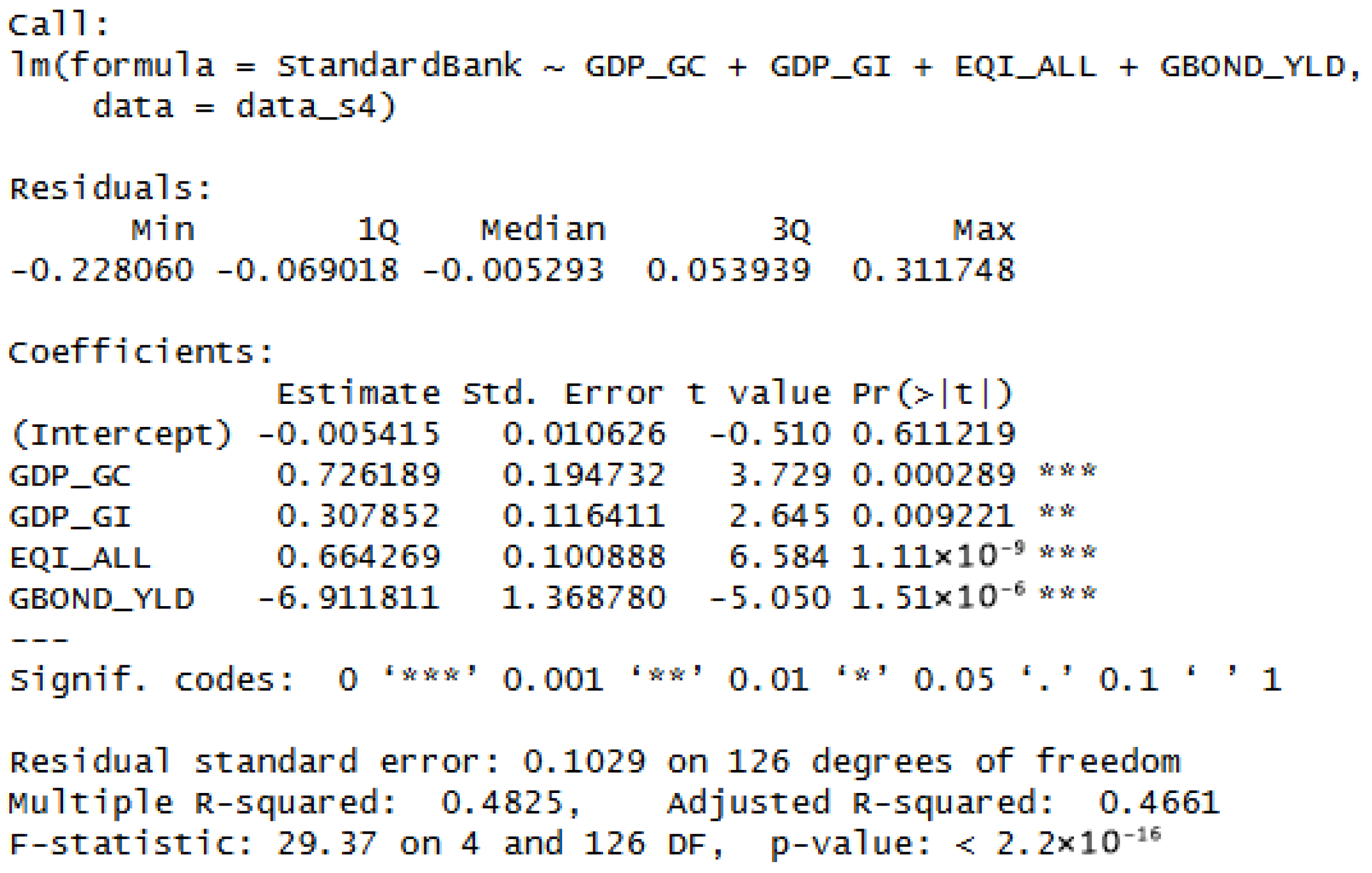
Dropping the insignificant independent variables and performing the regression again with only the statistically significant independent variables yielded the results shown in Figure 6.
Figure 6.
Screenshot of the statistically significant regression results in R-Studio. Source: Authors.
4.2. Constructing the Loss Function
The second regression yielded , much closer to the adjusted than in the initial regression. The value is lower than normal in a regression function to be used to predict future values of the independent variable. However, as stated previously, predicting the share price was not the reason for performing the regression in this case, but rather to determine which MEVs could be expected to have a statistically significant impact on the bank’s share price. By examining the -values in Figure 6, it is clear that all the independent variable in the second regression are statistically significant and are therefore the ones to use in the Loss Function for the Monte Carlo simulation.
As per (2), the Loss Function can now be expressed as
4.3. The Historical Correlation Matrix, NGFS Implied µ and σ and the Covariance Matrix
To construct the covariance matrix required for the Monte Carlo simulations, the historical correlation matrix for the statistically significant independent variables in (6) was first calculated in R. The results are given in Table 4.
Table 4.
Independent variable correlation matrix. Source: Authors.
To calculate the covariance matrix and to perform the Monte Carlo simulations, the means and standard deviations of the above independent variables are required. For the purpose of quantifying the impact of climate risk, the means and standard deviations need to be specifically related to climate risk. As stated before, it is not possible to calculate this from historical data, because these data do not exist.
The proposed methodology solves this problem by calculating implied means and standard deviations from the available NGFS scenarios, as described in Table 1 and Table 2. Table 5 shows the implied mean and standard deviation calculated from the NGFS scenarios associated with each independent variable.
Table 5.
NGFS implied means and standard deviations. Source: Authors.
Using the correlations in Table 4 and the standard deviations in Table 5, the Covariance Matrix was constructed (shown in Table 6).
Table 6.
Covariance matrix. Source: Authors.
4.4. The Monte Carlo Simulations
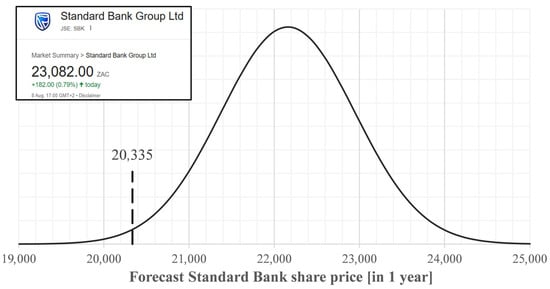
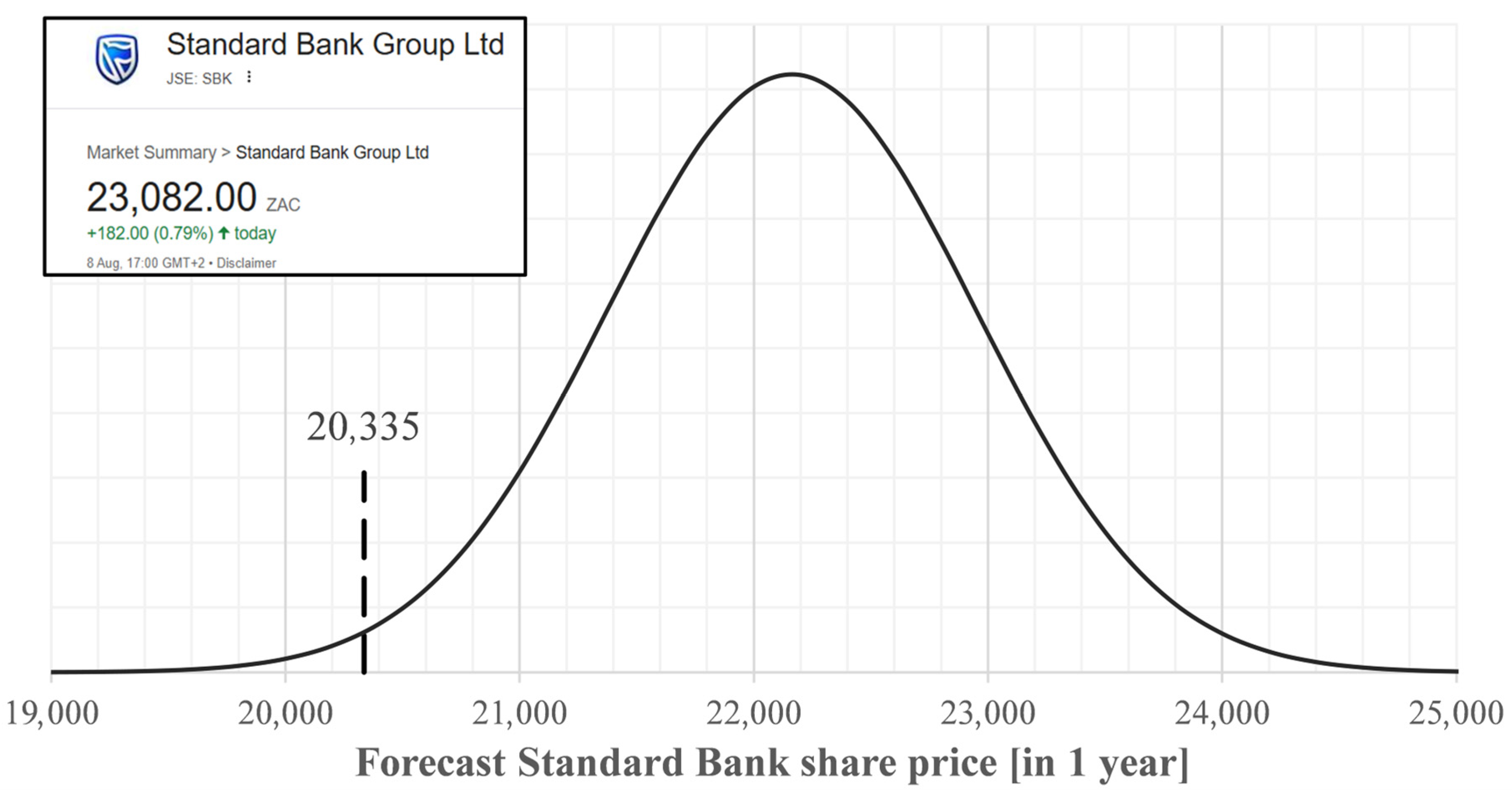
Using the loss function in (6), the NGFS implied means and standard deviations in Table 5 and the covariance matrix in Table 6, 10,000 Monte Carlo simulations were performed. The starting share price was the closing price on the 8th August 2025 (ZAR 23,082).
The results were lognormally distributed with a mean of ZAR 22,162 and a standard deviation of ZAR 785. Using (3), it follows that:
Figure 7 shows the results of the Monte Carlo simulation:
Figure 7.
Monte Carlo results. Source: Authors.
Therefore, given the starting price of ZAR 23,082, the maximum loss at a 99% confidence level can be expressed in percentage terms as follows:
Similarly, can be expressed in percentage terms as follows:
has been calculated from the historical share prices to be 12.19% and the from the regression is 0.48. It follows from (4) that
Using (5), the CliVaR at a 99% confidence level can now be calculated:
According to Standard Bank’s latest available financial statements for the 2024 financial year [28], their Common Equity Tier 1 (CET1) capital and Risk-Weighted Assets (RWA) as of 31 December 2024 were ZAR 239.8bn and ZAR 1772bn, respectively.
Using the share price as a proxy for CET1 equity, with all the caveats already mentioned earlier, along with (11), the Pillar 2A capital requirement for climate risk can be calculated as follows:
Finally, it is standard practise to express the capital requirement as a percentage of RWA. Doing so yields the following Pillar 2A capital add-on for climate risk:
5. Conclusions and Recommendations
5.1. Conclusions
This study sets out a novel and practical methodology for calculating CliVaR using macroeconomic variables and NGFS scenarios, providing financial institutions with a transparent alternative to commercial black-box solutions. The approach addresses the fundamental challenge of insufficient historical climate data by utilising forward-looking scenarios, which are mapped to the independent variables in the loss function, to calculate the means and standard deviations needed for the Monte Carlo simulation and CliVaR calculation.
To account for the inefficiency of the regression, an innovative PMA equation was developed that relates the size of the PMA directly to the inefficiency of the regression, using as the measure of efficiency. This equation automatically adjusts the size of the PMA in relation to , such that as approaches one, the PMA approaches zero.
The methodology’s flexibility allows customisation to institution-specific characteristics while maintaining complete transparency in assumptions and calculations. This transparency enables effective model validation, stakeholder communication and continuous improvement; capabilities that are absent in proprietary vendor solutions. The approach also extends coverage beyond listed entities to include the full spectrum of bank counterparties, enabling comprehensive risk assessment across entire portfolios. This study developed the methodology for banks, but its flexibility also allows banks to use it to calculate CliVaRs for their customers and counterparties.
The Standard Bank case study clearly demonstrates how the methodology can be applied in practise. By going through the steps one by one, it arrives at a 99% CliVaR based Pillar 2A add-on of 0.48% of RWA, providing a concrete metric for regulatory compliance, internal risk management and capital planning.
The authors recognise that although the Standard Bank case study proves the concept of the developed CliVaR model, more research and case studies are needed to prove the broader applicability of the model. The developed model is flexible by design and allows for customisation. It is envisaged that institutions, or researchers, wishing to make use of this model, will tailor it to their specific requirements, characteristics, scenarios and data availability.
5.2. Recommendations
The methodology developed in this study presents several new avenues for further research and development. They are as follows:
- The regression function used in the study was a linear regression function. The authors also tested a ridge regression function, but since the independent variables did not display much multicollinearity, results were not improved. Several other regression functions could be explored, e.g., a polynomial regression may yield better results.
- The regression can also be improved by selecting more or different independent variables. Although this study used MEVs, that is not a requirement of the methodology. The only requirements are that the independent variables should be proxies for transmitters of climate risk to bank balance sheets and they should have associated NGFS, or alternative, forward-looking climate-specific scenarios.
- The dependent variable can also be improved on, especially by institutions who implement this methodology internally, with access to good internal historical data, for example, CET1 or actual credit losses.
- In this study, we have used equally weighted NGFS scenarios to derive μ and σ. However, the methodology could be adapted to allow an institution to apply different weights to different scenarios, in line with their expectations of the future. Alternatively, a completely different set of scenarios could be used.
- Lastly, the PMA developed in this study is innovative and has the desired property of relating the size of the PMA to the inefficiency of the regression. However, through similar innovation a multitude of alternative PMA equations can be developed. The choice of PMA will likely differ for different use cases, as the possibilities are endless, further demonstrating the flexibility of the approach.
Author Contributions
R.v.d.W. and G.v.V.; methodology, R.v.d.W.; software, R.v.d.W. and G.v.V., validation, G.v.V.; formal analysis, R.v.d.W.; investigation, R.v.d.W.; resources, R.v.d.W.; data curation, R.v.d.W.; writing—original draft preparation, R.v.d.W.; writing—review and editing, G.v.V.; visualisation, R.v.d.W.; supervision, G.v.V.; project administration, G.v.V.; funding acquisition, none. All authors have read and agreed to the published version of the manuscript.
Funding
This work is based on the research supported wholly/in part by the National Research Foundation of South Africa (Grant Number 126885).
Data Availability Statement
All data are non-proprietary and are publicly available on relevant websites and databases indicated in the references. Ref. [29] was used to source relevant literature for the study.
Conflicts of Interest
The authors declare no conflicts of interest. The funders had no role in the design of the study; in the collection, analyses, or interpretation of data; in the writing of the manuscript; or in the decision to publish the results.
References
- Network for Greening the Financial System (NGFS). NGFS Long-Term Scenarios for Central Banks and Supervisors. 2024. Available online: https://www.ngfs.net/system/files/import/ngfs/medias/documents/ngfs_scenarios_main_presentation.pdf (accessed on 20 November 2025).
- Van der Walt, R.; van Vuuren, G.; Larney, J.; Verster, T.; Raubenheimer, H. Combining E-Scores with Scenario Analysis to Evaluate the Impact of Transition Risk on Corporate Client Performance. Climate 2024, 12, 107. [Google Scholar] [CrossRef] [Scilit]
- Covington, H.E. The Value at Risk from Climate Change. 2015. Available online: https://papers.ssrn.com/sol3/papers.cfm?abstract_id=2681035 (accessed on 20 November 2025).
- Dietz, S.; Bowen, A.; Dixon, C.; Gradwell, P. ‘Climate value at risk’ of global financial assets. Nat. Clim. Change 2016, 6, 676–679. Available online: https://www.nature.com/articles/nclimate2972 (accessed on 20 November 2025).
- Battiston, S.; Mandel, A.; Monasterolo, I.; Schütze, F.; Visentin, G. A climate stress-test of the financial system. Nat. Clim. Change 2017, 7, 283–288. Available online: https://www.nature.com/articles/nclimate3255 (accessed on 20 November 2025).
- Huang, H.H.; Kerstein, J.; Wang, C. The impact of climate risk on firm performance and financing choices: An international comparison. J. Int. Bus. Stud. 2018, 49, 633–656. Available online: https://link.springer.com/article/10.1057/s41267-017-0125-5 (accessed on 20 November 2025). [CrossRef] [Scilit]
- Chenet, H.; Ryan-Collins, J.; van Lerven, F. Climate-Related Financial Policy in a World of Radical Uncertainty: Towards a Precautionary Approach. 2019. Available online: https://papers.ssrn.com/sol3/papers.cfm?abstract_id=3520224 (accessed on 20 November 2025).
- Boros, E. Risks of climate change and credit institution stress tests. Financ. Econ. Rev. 2020, 19, 107–131. Available online: https://hitelintezetiszemle.mnb.hu/en/fer-19-4-e1-boros (accessed on 20 November 2025). [CrossRef] [Scilit]
- Allen, T.; Dées, S.; Graciano, C.M.C.; Chouard, V.; Clerc, L.; Gaye, A.D.; Devulder, A.; Diot, S.; Lisack, N.; Pegoraro, F.; et al. Climate-Related Scenarios for Financial Stability Assessment: An Application to France. 2020. Available online: https://papers.ssrn.com/sol3/papers.cfm?abstract_id=3653131 (accessed on 20 November 2025).
- Monasterolo, I. Climate change and the financial system. Annu. Rev. Resour. Econ. 2020, 12, 299–320. Available online: https://www.annualreviews.org/content/journals/10.1146/annurev-resource-110119-031134 (accessed on 20 November 2025). [CrossRef] [Scilit]
- Furukawa, K.; Ichiue, H.; Shiraki, N. How Does Climate Change Interact with the Financial System? A Survey. 2020. Available online: https://econpapers.repec.org/RePEc:boj:bojwps:wp20e08 (accessed on 20 November 2025).
- Rudebusch, G.D. Climate Change Is a Source of Financial Risk. 2021. Available online: https://www.frbsf.org/economic-research/files/el2021-03.pdf (accessed on 20 November 2025).
- Alogoskoufis, S.; Dunz, N.; Emambakhsh, T.; Hennig, T.; Kaijser, M.; Kouratzoglou, C.; Muñoz, M.A.; Parisi, L.; Salleo, C. ECB Economy-Wide Climate Stress Test. 2021. Available online: https://ssrn.com/abstract=3929178 (accessed on 20 November 2025).
- Cahen-Fourot, L.; Campiglio, E.; Godin, A.; Kemp-Benedict, E.; Trsek, S. Capital stranding cascades: The impact of decarbonisation on productive asset utilisation. Energy Econ. 2021, 103, 105581. Available online: https://www.sciencedirect.com/science/article/pii/S0140988321004515?via%3Dihub (accessed on 20 November 2025). [CrossRef] [Scilit]
- Demekas, D.G.; Grippa, P. Financial regulation, climate change and the transition to a low-carbon economy: A survey of the issues. Int. Monet. Fund. 2021, 2021, 45. Available online: https://www.elibrary.imf.org/view/journals/001/2021/296/001.2021.issue-296-en.xml (accessed on 20 November 2025).
- Adenot, T.; Briere, M.; Counathe, P.; Jouanneau, M.; Le Berthe, T.; Le Guenedal, T. Cascading Effects of Carbon Price Through the Value Chain: Impact on Firm’s Valuation. 2022. Available online: https://ssrn.com/abstract=4043923 (accessed on 20 November 2025).
- Belloni, M.; Kuik, F.; Mingarelli, L. Euro Area Banks’ Sensitivity to Changes in Carbon Price. 2022. Available online: https://hdl.handle.net/10419/261188 (accessed on 20 November 2025).
- Dimitriadis, K.A.; Koursaros, D.; Savva, C.S. The influence of the “environmental-friendly” character through asymmetries on market crash price of risk in major stock sectors. J. Clim. Financ. 2024, 9, 100052. [Google Scholar] [CrossRef] [Scilit]
- Desnos, B.; Le Guenedal, T.; Morais, P.; Roncalli, T. From Climate Stress Testing to Climate Value-at-Risk: A Stochastic Approach. 2023. Available online: https://ssrn.com/abstract=4497124 (accessed on 20 November 2025).
- Ballotta, L.; Fusai, G. A Gentle Introduction to Value at Risk. 2017. Available online: https://papers.ssrn.com/sol3/papers.cfm?abstract_id=2942138 (accessed on 20 November 2025).
- Kunreuther, H.; Heal, G.; Allen, M.; Edenhofer, O.; Field, C.; Yohe, G. Risk management and climate change. Nat. Clim. Change 2013, 3, 447–450. Available online: https://www.nature.com/articles/nclimate1740 (accessed on 20 November 2025). [CrossRef] [Scilit]
- Mastrandea, M.D.; Schneider, S. Probabilistic integrated assessment of “dangerous” climate change. Science 2004, 304, 571–575. [Google Scholar] [CrossRef] [Scilit] [PubMed]
- Kuang, W. Oil tail-risk forecasts: From financial crisis to COVID-19. Risk Manag. 2022, 24, 420–460. Available online: https://link.springer.com/article/10.1057/s41283-022-00100-2 (accessed on 20 November 2025). [CrossRef] [Scilit]
- Grau-Carles, P.; Sáinz, J. Different Risk-Adjusted Fund Performance Measures: A Comparison. 2009. Available online: https://www.scs-europe.net/dlib/2009/2009-0439.htm (accessed on 20 November 2025).
- Network for Greening the Financial System (NGFS). NGFS Phase 5 Scenario Explorer. 2024. Available online: https://data.ene.iiasa.ac.at/ngfs/?__BVID__225=chart-line#/workspaces (accessed on 20 November 2025).
- CEIC. CEIC Global Database. 2025. Available online: https://www.ceicdata.com/en (accessed on 20 November 2025).
- Investing.com. 2025. Available online: https://www.investing.com/markets/ (accessed on 20 November 2025).
- Standard Bank Group. Standard Bank Group Annual Financial Statements for the Year Ended 31 December 2024. 2025. Available online: https://www.standardbank.com/static_file/Investor%20Relations/Documents/Financial-results/Annual-Results/SBG_2024_Annual-Financial-Statements.pdf (accessed on 20 November 2025).
- Litmaps (Version 2025-01-16) [Search Tool]. Litmaps. 2025. Available online: https://app.litmaps.com (accessed on 20 November 2025).

Disclaimer/Publisher’s Note: The statements, opinions and data contained in all publications are solely those of the individual author(s) and contributor(s) and not of MDPI and/or the editor(s). MDPI and/or the editor(s) disclaim responsibility for any injury to people or property resulting from any ideas, methods, instructions or products referred to in the content. |
© 2025 by the authors. Licensee MDPI, Basel, Switzerland. This article is an open access article distributed under the terms and conditions of the Creative Commons Attribution (CC BY) license (https://creativecommons.org/licenses/by/4.0/).