Systematic Review

Enablers, Barriers and Systems for Organizational Change for Adopting and Implementing Local Governments’ Climate Mitigation Strategies: A Systematic Literature Review


by
Mark Goudsblom
* and
Amelia Clarke
School of Environment, Enterprise and Development (SEED), University of Waterloo, Waterloo, ON N2L 3G1, Canada
*
Author to whom correspondence should be addressed.
Climate 2025, 13(11), 228; https://doi.org/10.3390/cli13110228
Submission received: 26 August 2025 / Revised: 30 October 2025 / Accepted: 31 October 2025 / Published: 2 November 2025
(This article belongs to the Collection Adaptation and Mitigation Practices and Frameworks)

Abstract

By 2050, the global population will be predominantly living in urban areas, and climate change mitigation planning will be crucial for addressing the climate emergency. Local governments are well-positioned to lead in adopting effective climate mitigation strategies. This systematic literature review examines the barriers, enablers, and systems that local governments will need to consider when implementing climate mitigation and strategies. A search across Scopus, Web of Science, and ProQuest databases yielded 411 results, from which 28 articles were selected for detailed analysis. Using Covidence and NVivo 14 software, the study employed a combination of deductive and inductive coding to identify key themes. The study identified themes specific to enablers, such as technology, collaboration, leadership, and management culture, as well as barrier themes, including short-term thinking, uncertainty avoidance, lack of knowledge among decision-makers, resource shortages, and organizational challenges. The findings underscore the importance of addressing organizational issues and allocating appropriate resources to bolster local-level systems change in support of climate change mitigation efforts.

1. Introduction

There is an increasing understanding that local governments play a crucial role in reducing greenhouse gas (GHG) emissions, highlighting the importance of rapid adoption and implementation of policies and climate action to drive further reductions [1,2]. Approximately 76% of global GHG emissions occur from urban areas, and local governments have control or influence on up to 50% of those emissions, putting them at the forefront of climate action [3]. As such, local governments can make a significant contribution to reducing global GHG emissions.
Humanity faces its greatest existential challenge as Earth’s life-giving systems and resources are impacted and depleted much faster than is suitable for humanity to survive [4]. Earth’s life-giving systems, including the atmosphere, are all being rapidly impacted by human-caused behaviour that undermines these critical systems [5]. The impact of climate change is predominantly driven by human consumerism and social and economic systems that run on unsustainable practices [6]. The latest report from the Intergovernmental Panel on Climate Change (IPCC)—IPCC, 2023: Summary for Policymakers, speaks to the current well-established human impact on Earth’s climate by stating that “[h]uman activities, principally through emissions of greenhouse gases, have unequivocally caused global warming, with global surface temperature reaching 1.1 °C above 1850–1900 in 2011–2020” [7] (p. 4). The effects of climate change are experienced as a global phenomenon, but the impacts vary depending on where we live. The effects of climate change are most acutely felt at the local level, with local governments often bearing the brunt of climate-related impacts [8].
Although the anthropogenic impact seems significant, it can be managed. Research, knowledge creation, dissemination, and praxis development can create new opportunities to support a rapid transition to a sustainable future for all human and non-human life on Earth [9,10,11]. Cities are vital centers for ideas, commerce, culture, science, productivity, and social and economic development [12,13]. Cities are projected to host 68% of the global population by 2050 [12]. Continued adaptation and planning must ensure that local governments meet current and future residents’ needs by providing access to essential services while maintaining optimal urban density and development [13]. However, cities and highly populated urban areas are both culprits and victims of climate change, but they can also serve as testing grounds for climate mitigation strategies [14].
Due to various complexities, local governments encounter significant challenges in responding to climate change. First, the impacts of climate change events—such as drought, flooding, poor air quality, and sea level rise—differ widely by geography; consequently, the necessity (or lack thereof) for governmental response also varies [15]. Secondly, there is the local government’s capacity, willingness, and ability to implement the necessary organizational changes [15]. A third consideration is the availability of national support for local governments to resource the essential efforts, and fourth, the potential for collaboration among local governments to learn from each other [16,17].
At the core of addressing these potential deficiencies are considerations of organizational enablers and barriers, often embedded within the construct of organizational change. Organizational change involves shifting internal culture and practices within an organization to respond to new challenges or improve performance, usually involving a mix of systematic change management methods [18]. Systematic change methods focus on understanding and utilizing processes and tools for effective change [18]. These change management methods aim at larger-scale interventions, helping to integrate and institutionalize changes within the organizational culture [18]. This process is crucial for organizations to address climate change, sustainability goals, or market dynamics [19].
Organizational change theory has been described as “the systematic study of factors that increase the probability of successful organizational change” [18] (p. 384). Their idea of a systematic approach involves understanding both process-based and culture-based strategies to facilitate change. Effective organizational change requires both an organizational culture that fosters innovation and collaboration, as well as processes and technologies that embed new practices. Ultimately, successful organizations shift their focus to change internal culture and processes, allowing them to adopt new practices and ways of operating [18].
Organizational change can be viewed as a transformative process that enables people to work differently by altering a company’s culture and its relationships with stakeholders [19]. Successful organizational change—when viewed through a sustainability perspective—must consider that climate change strategies require managers to understand their commitments, organizational goals, and processes, as well as to recognize the need to address cultural, social, and psychological barriers as part of their change management approach. Appelbaum et al. [19] emphasize the importance of engaging employees and communicating the purpose of the change to enhance the chances of success. Organizational change can be described as a complex transformation that organizations undergo when implementing, for example, sustainability initiatives. Focusing on overcoming obstacles and encouraging employee engagement are key practices that support the transition towards greater organizational sustainability [19].
Identifying the systemic barriers and enablers to local governments’ adoption and management of deep decarbonization efforts in their mitigation policies and actions remains an ongoing area of development [3]. There appears to be a dichotomy between the urgent need for an efficient and effective transition towards deep decarbonization in public sector organizations and the slow-changing, highly political public decision-making process rooted in bureaucratic governance structures [20,21,22]. The need for more significant action to deliver measurable results has become critical, and there is a clear need to identify the barriers and enablers for successfully implementing change within the public sector, particularly at the local government level [3,23,24].
This systematic literature review (SLR) focuses on identifying systemic enablers to local governments’ ability to respond to the need for climate change mitigation action and strategies. It aims to address the gap in knowledge in local government—understanding of these barriers and opportunities, and how critically important it is to have this deeper and broader understanding in the work of local government practitioners and leaders in transforming and orchestrating the local governmental response to the climate emergency, as this area remains understudied [23,25,26].
There is a heightened awareness of the urgent need for the swift adoption and implementation of climate policies and actions to reduce GHG emissions [1,17]. The demand for more significant action that delivers measurable results is pressing, and pinpointing the barriers and opportunities for effectively implementing organizational change in the public sector, especially within local governments, is essential [23]. Identifying systemic barriers and opportunities to enhance local government adoption and management of deep decarbonization efforts in mitigation policy and action remains relatively underexplored. This SLR examines the existing organizational literature to describe the barriers to local governments’ adoption of climate change mitigation policies and actions within their organizations, as well as the reductions in GHG emissions within the community they serve. The goal is to identify the current state of the literature and future research opportunities for deeper engagement with this topic. Therefore, the research question for this SLR is: What is the current state of knowledge in the organizational literature regarding the systemic barriers and enablers to local governments’ capacity and ability to adopt and implement climate change mitigation action, policies and strategies?

2. Research Method and Protocol

An SLR methodology was chosen as the most appropriate research approach for identifying the body of scholarly literature related to this study and for critically assessing and synthesizing an emerging yet already diverse research area. The benefits of this methodology have been recognized and described in numerous studies [27,28,29,30].
Employing the PRISMA Framework protocol [31], a systematic literature review methodology was utilized and subsequently registered in the Open Science Framework (OSF) on 26 August 2025. The registration reference is https://osf.io/fdx8e (accessed on 26 August 2025). PRISMA ensures consistency and reliability in results, facilitating replication by other scholars, researchers, and stakeholders.
The literature search was conducted using keyword strings in a title search across the three databases: ProQuest, Web of Science, and Scopus. The keywords are outlined in the section below. Each search result was reviewed by assessing the title and abstract, and, where necessary, a full-text review to determine relevance.
Based on the title keyword search conducted on 23 June 2025, 411 results were obtained, 116 from Scopus, 112 from Web of Science and 183 from ProQuest. Through screening, 28 literature items were assessed to meet the objective of the defined research question, and 383 were noted as irrelevant or duplicates. Results are shown in Figure 1. Excluded items within the title and abstract review included 110 duplicates and/or repeated items.

2.1. Databases

Scopus, Web of Science and ProQuest were selected as the databases due to their vast access to academic literature. Scopus is the central database that supports the Research Intelligence portfolio. It is the preferred database for academic researchers, providing “unparalleled and continuous access to critical research output from around the world” [32]. Web of Science is noted to provide “a common search language, navigation environment, and data structure allowing researchers to search broadly across disparate resources to deliver relevant research results” [33], and ProQuest is a credible scholarly database that is relied on by 99% of the top 400 universities globally; the database includes content that spans disciplines, time, and geography [34].

2.2. Inclusion and Exclusion Criteria

The study focused on local government barriers or enablers to climate mitigation. To gather a broad range of relevant literature, the following inclusion/exclusion criteria were applied. The inclusion and exclusion criteria outlined below ensure the rigour and relevance of this SLR. By meticulously applying these criteria, this SLR captures the most pertinent literature comprehensively. Additionally, the listed criteria enhance the transparency and reproducibility of the SLR process.
  • Inclusion Criteria:
  • English only
  • Peer reviewed
  • Scholarly Journal/Article
  • Empirical data only
  • 10-year Timeframe—1 January 2015–31 December 2024
  • Exclusion Criteria:
  • Must be local government scale (not departmental)
  • Climate mitigation only (the topic)
  • Must be about the organization and/or system changes (the study focus)

2.3. Keyword Search and Screening Results

A series of keywords was initially tested during the early stages of developing the keyword string. Based on this initial exploration and the search results, the following keyword string was created to achieve optimal outcomes and was used on 23 June 2025. The final search string can be seen below:
Title-abstract-keywords (“Local Governance” OR “Local Government*” OR “Municipalit*” OR “City” OR “Town*” OR “Cities” OR “Communit*”)
AND
Title-abstract-keywords (“net zero” OR “climate” OR “greenhouse gas*” OR “GHG*” OR “carbon” OR “Decarboni?ation”)
AND
Title-abstract-keywords (“Organizational Change” OR “Change Management”)
The search in Web of Science, ProQuest, and Scopus yielded 411 results, with 116 from Scopus, 183 from ProQuest, and 112 from Web of Science. These documents were then uploaded to Covidence, a systematic review management platform designed to assist with screening [35]. After uploading, 110 duplicates were removed, resulting in 301 remaining documents. At this stage, the documents from all databases were combined without distinction between those from ProQuest, Web of Science, and Scopus. The selection process began with a title and abstract screening of the 301 documents, excluding 257 articles that did not clearly meet the criteria. The remaining 44 articles were marked as “yes” or “maybe” by the first reviewer and discussed with the second author. Using a two-reviewer screening process to limit bias and ensure consistency of approach led to the exclusion of an additional 16 articles. The final step involved a full-text review of the remaining 28 articles, leaving 28 articles for deductive and inductive coding. Figure 1 illustrates the search and screening process following the PRISMA model [31].

2.4. Literature Coding

The 28 articles were subsequently coded using Covidence and NVivo 14. The coding process was initiated by completing a deductive analysis by a single reviewer. The deductive coding was performed using a predetermined list of variables to help develop an understanding of the current research overview published to date. The variables included reference data, including the year and journal of publication, research methods, discipline or field of study, and country of origin.
The Braun and Clarke [36] thematic analysis method guided the inductive coding process and was used to identify themes within the literature. This involved drawing conclusions from the information in each article and coding for meaning when patterns and logic indicate that no other meaning is possible [36].
The following sub-questions guided the inductive coding:
  • What are the enablers/drivers of climate mitigation adoption in local governments?
  • What are the barriers to the organizational change needed to support climate mitigation strategies?
  • What are the system changes that need to be addressed to enable climate mitigation strategies?
  • What are the gaps researchers are identifying in the literature?
The second author considered the first-level codes and supported the subsequent thematic analysis. Also, reviewed each step of the process to ensure rigour.

3. Analysis and Synthesis

3.1. Descriptive Results

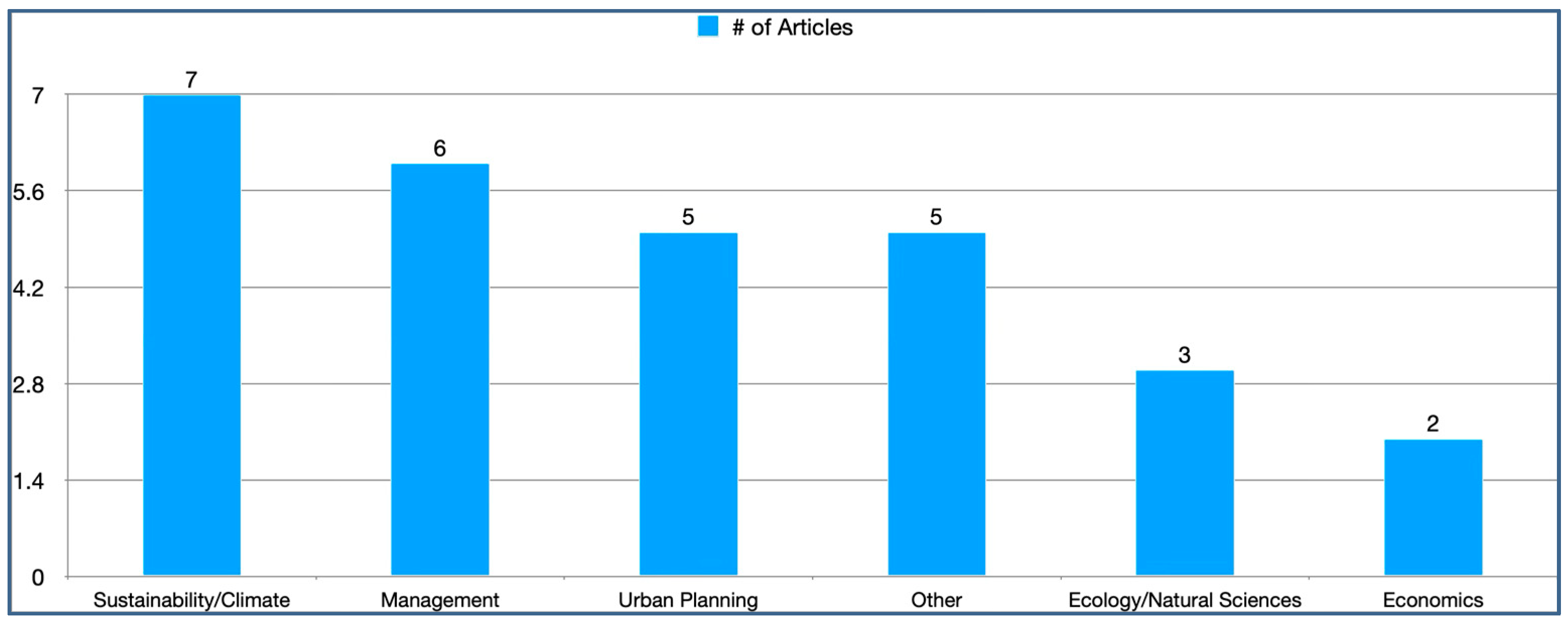
The SLR included n = 28 published journal articles from various fields of study or disciplines. Six main fields can be identified: 1. Sustainability/Climate (n = 7), 2. Management (n = 6), 3. Urban Planning (n = 5), 3. Ecology (n = 3), 4. Social Sciences (n = 3), Economics (n = 2), and Other (n = 2). See Figure 2.
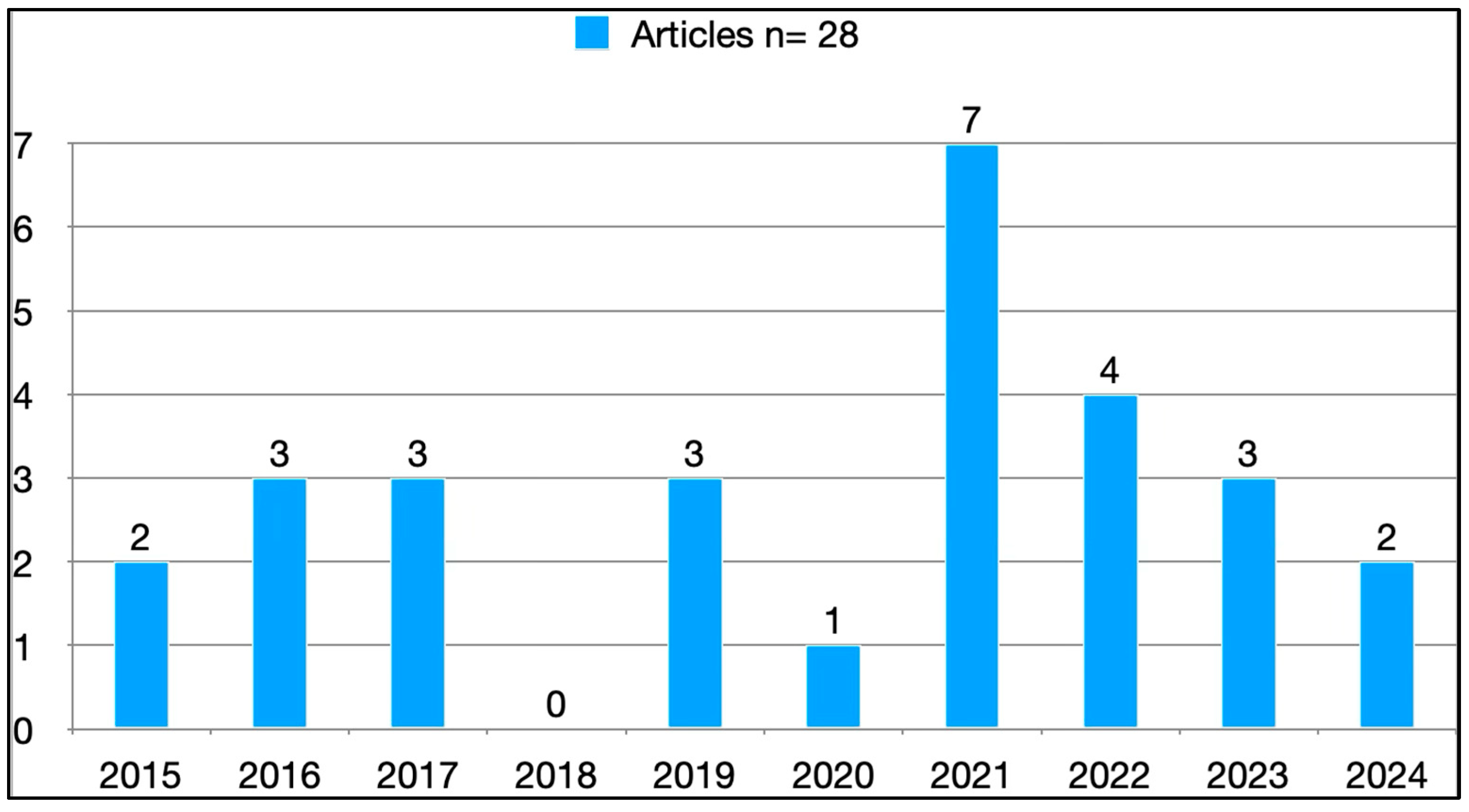
Figure 3 shows the years when the included study articles were published, with 2021 as the highest year.
Articles published came from a wide variety of countries and continents. The USA (n = 6), approximately (17%), and multi-country studies (n = 6) (17%) were the most prevalent. All other countries are identified in Table 1. From the six multi-country studies, one study included 109 countries from six continents, one study included 45 different countries, and one study included six different countries. Table 2 shows the research methods employed in the articles, and Table 3 shows the journals in which the articles have been published.

3.2. Thematic Analysis

In the context of this SLR, organizational change, along with its enablers/drivers and barriers to adopting climate change mitigation strategies, can be achieved by transforming the structures, processes, and practices of local governments [24]. This entails developing new procedures, fostering cross-sectoral collaboration, establishing dedicated roles, implementing mitigation-focused policies and measures, and shifting mindsets to prioritize climate mitigation throughout the organization [24].
The transformational process involves learning mechanisms, both adaptive and transformational, that challenge the status quo and shift from inaction, short-term thinking, and resistance to uncertainty towards an action-oriented approach [37]. Ultimately, organizational change for climate mitigation aims to develop more resilient and sustainable local governance structures capable of addressing complex, long-term climate challenges through climate mitigation strategies [24]. These strategies consider the enablers, barriers, and systems (both technological and organizational) [38] that underpin the need for organizational change at the individual, organizational, and institutional levels [37]. Kristianssen and Granberg [24] add that overcoming barriers requires a strategic perspective, increased coordination, enhanced learning, political prioritization, resource allocation, and a serious review of current local governmental organizational structures and systems. Overcoming barriers also necessitates a broad perspective on collaboration between municipalities, regional, and national actors. The SLR surfaced the following themes in this context, which are summarized in Table 4.

3.2.1. Enablers and Drivers to the Adoption of Climate Mitigation Strategies

In the context of the research sub-question, what are the enablers and drivers of climate mitigation adoption in local governments? It is essential to categorize the included literature on enablers and drivers by theme. The SLR included n = 28 articles. Using NVivo 14, the word “enabler” (including stemmed words) was coded and mentioned 66 times across the articles. The word “driver” (including stemmed words) was coded and mentioned 38 times. However, only five (n = 5) articles mentioned enablers more than four times; drivers were mentioned more than three times in only five articles. These articles, along with their related word counts for enablers and drivers, are presented in Table 5. The emerging themes are described below.
Enablers Theme 1: Technology
Technology emerged in this SLR as a system, tool, or approach that facilitates and supports the development and implementation of urban solutions for improved climate mitigation [39,40]. New technologies are essential to address climate change challenges. They are crucial elements that help overcome barriers to change, facilitating the transformation of socio-ecological systems in response to climate change [38]. More specifically, technology enablers are components that allow local governments to optimize their operations, manage resources more efficiently, and enhance services for their communities. Gabrielli et al. [39] focus on technology examples of enablers identified in information and communication technologies (ICT), the Internet of Things (IoT), big data analytics, cloud computing, and autonomous systems. These technologies can leverage data collection, analysis, and decision-making in local governments. Advances in communication technology are identified as enablers in global governance coordination in areas such as climate change [41]. Technology enables smart infrastructure, such as intelligent energy and power grids. Technology can also deepen citizen engagement through, for example, online access to information, knowledge mobilization, and technology use to improve on sustainability practices [40]. All are key enablers in creating sustainable and livable urban spaces [39]. Cawley [40] also highlights that technological advances enable innovation in support of a transition to the adoption of renewable energy.
Enablers Theme 2: Collaborative Behaviours and Actions
A second theme emerging from the literature is the consideration of collaborative behaviours and actions as an enabler of climate mitigation approaches by institutions and organizations. Internal factors, such as employee influence, should be considered in the overall organizational approach to climate mitigation, recognizing the impact individual actors have within organizations [37,40,42].
These collaborative behaviours and action enablers can include multi-institutional innovations, community co-management involvement, community education and awareness-raising, and policies that empower stakeholders to address new challenges [40]. The adoption of these behaviours enables actors to position themselves not only as hubs facilitating communication and collaboration but also as facilitators between multiple partners across institutional divisions and hierarchies. They guide the creation and implementation of projects and activities that serve as examples of enablers promoting climate action across local governments [40]. Collaborative behaviours include those aspects that encourage multi-stakeholder collaboration [38] and balance staff freedom to go beyond their job descriptions with senior management guidance to ensure coherent direction and performance [42]. These individual behaviours and actions underpin the organizational culture and management approaches [42].
Enablers Theme 3: Management Culture, Structures and Leadership
A third theme identified from the literature is the role of enablers within the management culture, structure, and leadership contexts. These can refer to an actor or approach that facilitates excellent communication, collaboration, and innovation across departmental divisions within an organizational bureaucracy to promote effective climate and sustainability action, or, as Filho et al. [38] describe, enablers are “factors or conditions that facilitate or support the implementation and success of initiatives.” Consideration must be given to fundamental systemic changes in anticipation of climate change impacts and the characteristics that foster employee ownership and active involvement [38]. Other enablers are identified as organizational conditions that enable scaling up and replicating successful strategies, as well as developing features that support innovation and novel approaches to address climate change challenges, and decentralized approaches throughout an organization rather than concentrating them at the top [38]. These internal structures create both integrated and open systems to facilitate exchanges between people and units, and support partnerships outside of the organization, which increases conceptual multi-level linkages around climate issues by emphasizing synergies and co-benefits with other municipalities [22,24]. Other considerations are related to changing existing organizational cultures and establishing structures that develop skills at multiple levels, supporting open network structures that break old routines, bring in new ideas and promote experimentation, learning, and creative problem-solving or in other words growing the leadership capacity in organizational cultures [25] that encourage innovation and risk-taking, rewarding employees who identify and pursue opportunities outside business-as-usual procedures [24].
Enablers Theme 4: Economics, Markets and Federal Policy
A fourth theme emerging from the literature concerns enablers related to the economic and policy context. Cawley [40] identifies various enablers that can help overcome barriers to adopting eco-adaptation strategies, including exploring market opportunities, gaining competitive advantages, and achieving cost savings. They also emphasize the significance of stakeholder influences in areas such as supply chains, markets, and industry drivers, including the development of standards and codes. Additionally, they emphasize the importance of collaborative relationships with the business sector and government, as the latter provides access to policies like subsidies, regulations, and taxes that incentivize eco-friendly and green innovation practices [43].

3.2.2. What Are the Barriers to the Organizational Change Needed to Support Climate Mitigation Strategies?

The word “barrier” (including stemmed forms) was coded and mentioned 75 times. Only five articles referenced barriers more than six times. These articles of note, along with their associated barrier word counts, are also listed in Table 5. Barriers are defined as obstacles or impediments that prevent or hinder progress, action, or the achievement of a goal [18,24,37,43]. In the context of climate change mitigation, barriers refer to factors that inhibit organizations from taking adequate measures to reduce their total greenhouse gas emissions [37]. According to Slawinski et al. [37], these barriers can operate at multiple levels.
Barrier Theme 1: Short-Termism & Uncertainty Avoidance
Short-termism and uncertainty avoidance, as described by Slawinski et al. [37], emphasize the lack of action on climate change at the individual, organizational, and institutional levels. At the individual level, managers with present-focused perspectives and low uncertainty tolerance are less likely to advocate for significant organizational changes, which contributes to conservative attitudes in, for example, older, more mature organizations that may be less inclined to invest in radical green innovations [43]. This is also influenced by managers’ seniority and career background [37], which can hinder people from making substantial changes. Institutional factors, such as market logic and regulatory uncertainty, promote inaction and institutional rigidity, exacerbating financial conditions in declining firms and making them unwilling to invest in high-risk green innovation [43], and associated green technology projects. Innovation typically entails high costs, significant risks, and uncertain returns on investment [43]. These factors undermine the long-term commitments to sustainability and effective climate mitigation action and policy [38].
Furthermore, these individual, organizational and institutional obstacles interact with each other across the different levels, reinforcing each other and exacerbating a “vicious circle” of inaction on climate mitigation. For example, organizational practices driven by short-term thinking can influence managers’ time perspectives, prioritizing routine management focused on immediate results and thus discouraging investments in long-term climate mitigation policies. Recognizing these multi-level barriers driven by short-termism and uncertainty is essential to understanding why many organizations fail to take significant action on climate change, despite its urgency [37].
Barrier Theme 2: Absence of Knowledge for Policy and Decision Making
Various articles in this SLR have identified barriers related to knowledge mobilization or, more precisely, the lack of knowledge [44]. Limited access to information, measurement systems, and awareness about environmental impacts and sustainability practices [40] influence policy and decision-making. The disconnect between science and policy, along with a scarcity of usable and relevant scientific information, results in policy decisions being made without incorporating the latest scientific data, which was identified as a barrier for local government decision makers [18]. Knowledge gaps among politicians and officials contribute to the lack of political prioritization and the political will to address climate action [24], making it challenging to obtain approval from entities such as city councils for plans and budgets [18]. Many politicians still do not regard climate change mitigation as a high priority compared to other issues [24]. As a result, they do not provide clear guidance on how to implement actions or the legal basis for proactive action [24].
Barrier Theme 3: Limited Resources
Limited resources related to budget and personnel (including the number of people as well as those with skills and knowledge) frequently emerge as a recurring barrier in the literature of this SLR. Limited or insufficient funding and the lack of skilled and qualified staff hinder the implementation of sustainability initiatives, impacting research and development, innovation, technology adoption, eco-friendly updates, and climate change strategies—especially in smaller communities where time and resources are scarce [18,24,40,43].
Barrier Theme 4: People and Organization

Local governments are seen as important players that can help address some of the previously mentioned barriers by connecting climate science to municipal practices, providing funding and resources, translating science into practical information, and overcoming the science-policy barrier through fostering active collaboration among various internal and external partners [18]. However, these organizations must be aware of the psychological obstacles faced by management, which stem from the changing attitudes and values of people, by enhancing psychological resilience and adaptability [43]. They should also acknowledge the potential disconnect between the perspectives and goals of managers and skilled workers responsible for implementing environmental design changes, as well as the difficulties of complying with regulatory requirements [40]. Clear assignment of responsibilities and coordination among different municipal departments and sectors are crucial, along with creating opportunities for organizational learning and sharing best practices [24]. An additional important aspect is guiding these changes to become embedded within the organization’s culture, thereby promoting not only organizational progress but also sector-wide action [18,24].
Table 5. Articles of Note.
Article’s of NoteEnablersDriversBarriers
Total mention553275
Abbott, et al. [41]400
Cawley [40]596
Filho, et al. [38]703
Gabrielli, et al. [39]730
Graham & Mitchell [18]308
Yang & Chen [43]007
Kristianssen & Granberg [24]0114
Pasimeni, et al. [14]250

3.2.3. What Are the System Changes That Need to Be Addressed to Enable Climate Mitigation Strategies?

Systems change can be observed at the individual, organizational, and institutional levels [37] within the local governmental context. A comprehensive and holistic approach to addressing complex societal and environmental challenges will be required to transform the underlying structures, relationships, and dynamics within governing systems [45]. This comprehensive approach requires organizations to shift from pragmatic interventions to a more holistic approach that considers the interconnections of organizational systems [45]. A more holistic approach to organizational change is needed to drive long-term climate mitigation action and policy. A holistic approach also recognizes that climate change mitigation action, and strategy need to be deeply embedded across the organization at all levels, which are all interconnected and require coordinated efforts across multiple levels and with various stakeholders to achieve meaningful and long-term solutions [12,13,22,38,45]. For example, institutional innovations can enhance cities’ transformative capacity by enabling more collaborative, flexible, and innovative approaches to urban development [13]. Although systemic changes need to explicitly include climate change considerations in spatial planning at both the national and provincial levels, many details are left to local implementation [46].
Systems Change Theme 1: Strategic Planning
Nistor and Herman [13] describe how strategic vision building can frame the change development process. Having a collectively owned vision helps guide organizational transformation over time. They further highlight the need for the development of tailored participatory approaches for each situation rather than a one-size-fits-all. These approaches should include shifting away from the status quo to a more proactive, experimental planning approach that, for example, considers preparation for future funding changes rather than reactive responses [13], and adopt a longer-term strategic planning approach that looks beyond the two- to three-year window [37].
Furthermore, Klimas [46] emphasized that granting municipalities greater authority to incorporate specific sustainability and climate measures into their master plans, in the absence of detailed national regulations, can ensure that stakeholder involvement truly represents real influence, rather than merely symbolic participation. This approach fosters trust and ownership in the transition from traditional bureaucracy to guide transformative processes [13], thereby facilitating the emergence and enforcement of sustainability policies at the institutional level [12]. Additionally, innovation as a catalyst for change, or carbon accounting and monitoring: implementing comprehensive systems to track emissions across all scopes [12], can create further opportunities for additional funds or savings.
Systems Change Theme 2: Innovation and Systems
Organizational and institutional-level systems that engage a diverse range of stakeholders, resources, and knowledge are essential for fostering a creative innovation process. For example, education on climate mitigation action influences individual and organizational behaviour, and innovations can serve as a driver for early adoption of policy and action [12]. Driving innovation within the organization challenges established procedures and can stimulate engagement with staff, employees, and key stakeholders [13,42]. Developing new organizational structures enhances the system’s capacity to adapt to new activities, such as those involved in urban transformations [13], highlighting the importance of organizational structures in supporting local governmental change and their climate mitigation action and policy development. Integrating climate action into individual, organizational, and institutional level change is considered vital for transforming local governments’ culture and strengthening relationships with its key internal and external stakeholders, as well as its relationship with the environment. Innovation is a key component of organizational change initiatives [43], and enables organizations to adapt to global challenges such as those imposed by climate change [47].
Systems Change Theme 3: Resourcing
The prioritization and allocation of resources in the context of organizational change, climate change mitigation action, and policy development, depend heavily on an organization’s capacity to innovate and adapt. Resourcing is not only an operating funding challenge but also speaks to a gap in knowledge and skills within the organization. Climate change mitigation action and policy development principles should be core to the organizational strategies, including a clear commitment to change, such as prioritizing climate mitigation and innovation as a key planning goal [46]. Kristianssen and Granberg [24] suggest that, for example, the public sector’s prioritization of climate-related needs and problems over other policy and social challenges is skewed, which again challenges the allocation of resources toward climate change priorities.
Another important consideration is that multi-sectoral and multi-stakeholder collaboration is essential for tackling complex issues like climate mitigation [22]. This collaboration requires a comprehensive approach that looks beyond the influence of any single organization. Adequate resourcing and prioritization require understanding the interconnected elements within organizational and urban systems, emphasizing holistic strategies and concentrating on long-term climate mitigation and policy development rather than short-term fixes or temporary management [37], which are often present in existing local government frameworks. Nistor and Herman [13] for example, see the implementation of co-funding and partnership models among public, private, and civil society actors as an opportunity to advance the climate agenda within organizations.
Systems Change Theme 4: Cross-Sector Collaboration and Stakeholder Engagement
Cross-sector collaboration and stakeholder engagement in local governments focusing on climate change highlight the need for broader stakeholder involvement. Cross-sectoral collaboration is a key enabler of effective local organizational change, and coordinated efforts among multiple stakeholders are essential for achieving meaningful, long-term solutions to climate-related challenges in local governments [23]. It emphasizes the importance of building capacity within local governments through engaging a broader stakeholder base. Networking and openness to sharing innovation, along with proven approaches, are vital for helping other organizations overcome resistance to change. These collaborations provide access to new cross-sector ideas and structures and enhance interdisciplinary cooperation [13].
Furthermore, establishing new partnerships and expanding existing ones can unlock new funding sources and program opportunities [37,44], which would otherwise be unavailable to individual or public organizations. This includes collaborating with other organizations, industry, and private businesses to scale up and enhance climate mitigation actions and policies [12]. The literature reviewed in this SLR supports the view that cross-sectoral collaboration and stakeholder engagement are vital for successful organizational change, urban development, and systems transformation, highlighting their role in fostering holistic strategies for climate mitigation and policy development. Cross-sectoral collaboration offers a more comprehensive approach to transdisciplinary climate mitigation knowledge development and dissemination [44].

4. Discussion

This study conducted a systematic literature review to identify and analyze relevant research published over the last ten years. It is important to note that the sample size was modest, comprising 28 articles, which indicates that organizational change in the context of local government and climate action remains understudied. The limited sample size also cautions the researcher against moving beyond the identified themes to sharper, more specific findings. The thematic analysis identified several emerging themes and patterns in the literature, highlighting how enablers, drivers, and barriers support or hinder system-level changes in local governments’ adoption of climate change mitigation action, policy and strategies. Although the literature considered for this SLR met the screening criteria, for example, enablers and barriers were identified from varying perspectives on local government. The main research question (What is the current state of knowledge in the organizational literature regarding the systemic barriers and enablers to local governments’ capacity and ability to adopt and implement climate change mitigation actions, policies, and strategies?) allowed for the consideration of a broader context. These barriers and enablers were often deduced from various settings, not always specific to urban or local government contexts, but sometimes from a national or multi-national perspective. It is also noted that within the analysis of enablers, barriers, and systems, these were not examined for their locality, such as being specific to the USA, Europe, or China. This discussion further synthesizes the literature findings and examines their implications.

4.1. Transforming Local Governments for Climate Mitigation

Organizational change within local government is an essential leverage point for advancing climate change mitigation actions, policies, and strategies. The SLR highlights that transformative change depends on understanding how best to align organizations behind these enablers and how to overcome persistent barriers within the individual, organizational, and institutional dimensions that influence local governments’ capacity to develop a future orientation focused on a decarbonized and resilient local government system. Local governments are adopting climate change mitigation strategies to adapt to the impacts of climate change. However, to ensure that climate change mitigation remains a priority within local governments, these strategies must be integrated into the overall strategic approach. A commitment to long-term climate mitigation planning will shape not only the structure of organizations but also their enduring relationships with key stakeholders and communities. The importance of meaningful, broad cross-sectoral collaboration and stakeholder engagement has become critical [43] and is viewed as essential for addressing local government climate change challenges [46].
The four interconnected enablers identified in this SLR—technology, collaborative behaviours, management culture and leadership, and economic and policy frameworks—have become key factors for supporting local government transformations. Technological progress, along with big data and analytics, backing local decision-making, enhances operational efficiency and encourages innovation [39,40]. Collaborative behaviours and cross-sector partnerships boost knowledge mobilization across departments and organizations, and with both internal and external partners, enabling multi-level governance approaches. Leveraging partnerships among government, business, and industry can support new initiatives and unlock funding opportunities that are otherwise unavailable to the individual organization or public sector. A comprehensive approach to climate mitigation policy and action requires changes in organizational structures, relationships, and dynamics. It involves shifting the focus from short-term, isolated interventions to a holistic, strategic approach that involves coordinated efforts across all levels of the organization. This review highlights local government change as a complex, multi-level process [40] that demands holistic thinking and cross-sectoral collaboration to address climate change mitigation challenges effectively. Moreover, adaptive leadership and management cultures that foster learning, risk-taking, and support open and flexible organizational systems underpin sustainability efforts within local government [25].
Despite the aforementioned enabling conditions, persistent barriers continue to hinder the adoption of climate change mitigation actions and policies at the local level. Short-term thinking and a tendency to avoid uncertainty remain consistent limitations to long-term planning and strategy, reinforcing inertia in local action and policy development [37]. Another ongoing barrier is the lack of relevant knowledge to support evidence-based decision-making, further slowing progress. Simultaneously, insufficient resources continue to undermine local governments’ capacity to fully engage in climate change mitigation, policy, and strategy development [18,24,40]. Additional challenges include issues related to internal organizational culture and the influence of psychological barriers on change management, managing competing priorities, and operating across different levels of the organization—supporting self-reinforcing systems that hinder the innovation and transformation needed to address the emerging challenges of the climate emergency.
To address these challenges, albeit enablers or barriers, systemic organizational transformation is necessary and must embed climate objectives within its governance structures [46]. Innovation—both technological and organizational—should become a priority, and ongoing learning processes that support knowledge mobilization across institutions, organizations, and networks will be crucial [12,45]. Ultimately, transforming local governments to better support local climate change action, policy, and strategy requires a holistic and integrated approach.
The findings of this SLR are relevant to professionals in fields such as urban planning, municipal leadership, and climate change mitigation and policy development, and can serve as a guide for local governments seeking to reduce their climate impact amid rapid urbanization.

4.2. Research Gaps Identified in the Literature

The literature reviewed in this study highlights several consistent themes for future research. Although many of the articles found to deepen the area of study specific to their shared considerations, models and frameworks, other more generalizable themes surfaced as needing further study.

4.2.1. Deepening Our Understanding of Short-Termism and Uncertainty Avoidance

Short-termism is a relatively new concept [37] that can help future researchers explore how organizations can balance short-term pressures, such as resource allocation, with long-term sustainability goals within organizational climate change mitigation planning [48]. Future research could investigate how local government leaders navigate the tension between immediate demands and long-term sustainability objectives, thereby balancing short-term and long-term priorities. Short-termism provides a framework for examining practical strategies to overcome uncertainty avoidance in local government planning and development, particularly in response to climate-related risks. It also supports the development of a plan for policymakers to reconcile urgent urban needs with long-term sustainability goals in policy design, project development, and implementation of change. Additionally, short-termism enhances understanding of stakeholder engagement and collaborative approaches in reducing short-term thinking and uncertainty avoidance in organizational and urban contexts. Future research can further assist decision-making by analyzing the impact of decision-support tools on lowering uncertainty avoidance in climate mitigation efforts.

4.2.2. Leadership and Change Management in Local Government

This topic is consistently addressed in the literature, and, for example, future research should further explore how local government leaders can develop and implement climate change strategies to tackle complex challenges during rapid urbanization, when projections show that 68% of the world’s population will live in urban areas by 2050 [12]. This should include identifying effective methods for implementing and maintaining organizational changes in local government settings, as well as considering the engagement of diverse stakeholders in change management processes, especially in urban planning [22]. Other areas of future research could explore a holistic approach to climate change management, including adopting and promoting systems thinking approaches to tackle interconnected issues through inter- and transdisciplinary collaboration [45].

4.2.3. Organizational Design and Behaviour in Local Governments

Future research on organizational design and behaviour could enhance our understanding of adaptive structures within current local government frameworks. It could also focus on how these governments can develop more flexible organizational structures to effectively respond to the expected rapid urban changes and related climate issues [39]. As Klimas [46] emphasizes, integrating climate change mitigation into sustainability principles is vital for shaping the future organizational design and behaviour of local governments, and investigating the role of multi-stakeholder and cross-sector collaboration in promoting sustainable organizational change will be essential [23].

4.2.4. Linkages Between Corporate Sustainability and Change Management

Future research on the connections between corporate sustainability efforts and change management within local government could explore practical ways to integrate climate principles and goals into organizational change initiatives [19], as well as assess how this integration influences the success and longevity of those initiatives over time [37]. Building on this insight, findings can improve an organization’s ability to adapt to climate change challenges, especially in urban development contexts.

4.2.5. Exploring Cross-Sectoral and Cross-Cutting Success in Differing Organizational Contexts

Future research could explore how various organizational contexts, such as those in the public, private (third-party), and non-profit sectors, approach and implement cross-sectoral initiatives for community sustainability and climate change mitigation strategies amid increased urban development [12,46]. Sharing best practices through collaborative frameworks encourages learning from industry and other sectors about common enablers and barriers that have been previously addressed and can be similarly managed to reduce long-term impacts on organizational performance in tackling climate change [14,24].

4.2.6. Sustainability Policy and Innovation Adoption

Research in sustainability policy and innovation adoption could explore future urban-specific climate policies that identify how cities can develop and implement effective climate change mitigation strategies tailored to address the unique challenges they face as both contributors to and victims of climate change [14,22]. Further research can focus on developing adaptive policy frameworks that are more flexible and responsive to our quickly evolving urban environments and climate conditions [22], as well as investigating factors that influence the adoption and dissemination of innovations across different departments and levels of local government [47].

5. Conclusions

This SLR highlights the current state of knowledge in the organizational literature regarding systemic local governments’ climate change mitigation strategies. By screening 28 literature items, it was assessed whether they met the goal of the defined research question. The themes emerging from the SLR include enablers such as technology, collaborative behaviours and actions, management culture, structures, leadership, economics, and policy. Barriers, on the other hand, were those embedded in short-termism and uncertainty avoidance, lack of knowledge among decision-makers, resource limitations, and challenges within organizations and their personnel. Subsequently, system change considerations are similarly aligned with those of the organization, its people, and resources. Given the broad context of the study findings, they potentially allow for the generalisability of findings across various organizational settings. Although the study identifies varying enablers and barriers to organizational change efforts that can enhance the capacity for adopting climate change mitigation strategies at the local government level, more empirical studies are needed. Additionally, the literature included in this study identified six key research gaps: understanding short-termism and uncertainty avoidance; leadership and change management in the context of local governments; adaptive organizational design and behaviour; the linkage between corporate sustainability and change management; cross-sectoral collaboration for climate mitigation; and innovation adoption in sustainability policy and action in dynamic urban environments. However, further research will need to consider these research opportunities within the local context. Recognizing that locality may play an important role in identifying what climate action strategies work in which settings and locations to further enable the climate action agenda.

Author Contributions

Conceptualization, M.G. and A.C.; methodology, M.G. and A.C.; validation, M.G. and A.C.; formal analysis, M.G. and A.C.; data curation, M.G. and A.C.; writing—original draft preparation, M.G.; writing—review and editing, M.G. and A.C.; supervision, A.C.; project administration, A.C. All authors have read and agreed to the published version of the manuscript.

Funding

This research received no external funding.

Data Availability Statement

Research data from this systematic literature review are available upon request by contacting the first author. This data includes all coded data supporting reported results.

Conflicts of Interest

The authors declare no conflicts of interest.

References

  1. Bulkeley, H. Cities and Climate Change: Urban Sustainability and Global Environmental Governance; Routledge Studies in Physical Geography and Environment; Routledge: London, UK; New York, NY, USA, 2003; ISBN 978-0-203-21925-6. [Google Scholar]
  2. Brody, S.D.; Zahran, S.; Grover, H.; Vedlitz, A. A Spatial Analysis of Local Climate Change Policy in the United States: Risk, Stress, and Opportunity. Landsc. Urban Plan. 2008, 87, 33–41. [Google Scholar] [CrossRef]
  3. Linton, S.; Clarke, A.; Tozer, L. Strategies and Governance for Implementing Deep Decarbonization Plans at the Local Level. Sustainability 2021, 13, 154. [Google Scholar] [CrossRef]
  4. Steffen, W.; Richardson, K.; Rockström, J.; Cornell, S.E.; Fetzer, I.; Bennett, E.M.; Biggs, R.; Carpenter, S.R.; de Vries, W.; de Wit, C.A.; et al. Planetary Boundaries: Guiding Human Development on a Changing Planet. Science 2015, 347, 1259855. [Google Scholar] [CrossRef]
  5. Boulding, K.E. The Economics of the Coming Spaceship Earth. In Environmental Quality in a Growing Economy; Jarret, H., Ed.; Johns Hopkins University Press: Baltimore, MD, USA, 1966; pp. 3–14. [Google Scholar]
  6. Rockström, J.; Gupta, J.; Qin, D.; Lade, S.J.; Abrams, J.F.; Andersen, L.S.; Armstrong McKay, D.I.; Bai, X.; Bala, G.; Bunn, S.E.; et al. Safe and Just Earth System Boundaries. Nature 2023, 619, 102–111. [Google Scholar] [CrossRef]
  7. Calvin, K.; Dasgupta, D.; Krinner, G.; Mukherji, A.; Thorne, P.W.; Trisos, C.; Romero, J.; Aldunce, P.; Barrett, K.; Blanco, G.; et al. IPCC, 2023: Climate Change 2023: Synthesis Report. Contribution of Working Groups I, II and III to the Sixth Assessment Report of the Intergovernmental Panel on Climate Change; Core Writing Team, Lee, H., Romero, J., Eds.; Intergovernmental Panel on Climate Change (IPCC): Geneva, Switzerland, 2023. [Google Scholar]
  8. Forino, G.; von Meding, J.; Brewer, G.; van Niekerk, D. Climate Change Adaptation and Disaster Risk Reduction Integration: Strategies, Policies, and Plans in Three Australian Local Governments. Int. J. Disaster Risk Reduct. 2017, 24, 100–108. [Google Scholar] [CrossRef]
  9. Loorbach, D.; Frantzeskaki, N.; Avelino, F. Sustainability Transitions Research: Transforming Science and Practice for Societal Change. Annu. Rev. Environ. Resour. 2017, 42, 599–626. [Google Scholar] [CrossRef]
  10. Westley, F.; Olsson, P.; Folke, C.; Homer-Dixon, T.; Vredenburg, H.; Loorbach, D.; Thompson, J.; Nilsson, M.; Lambin, E.; Sendzimir, J.; et al. Tipping toward Sustainability: Emerging Pathways of Transformation. Ambio 2011, 40, 762–780. [Google Scholar] [CrossRef]
  11. Gunderson, L.H. Ecological Resilience in Theory and Application. Annu. Rev. Ecol. Syst. 2000, 31, 425–439. [Google Scholar] [CrossRef]
  12. Islam, M.S.; Liu, G.; Xu, D.; Chen, Y.; Li, H.; Chen, C. University Campus Based Zero-Carbon Action Plans for Accelerating the Zero-Carbon City Transition. Sustainability 2023, 15, 13504. [Google Scholar] [CrossRef]
  13. Nistor, C.; Herman, R. Green Cities—A Key Element of the Sustainable Economy. Manager 2021, 34, 16–36. [Google Scholar]
  14. Pasimeni, M.; Valente, D.; Zurlini, G.; Petrosillo, I. The Interplay between Urban Mitigation and Adaptation Strategies to Face Climate Change in Two European Countries. Environ. Sci. Policy 2019, 95, 20–27. [Google Scholar] [CrossRef]
  15. Cities, Climate Change and Multilevel Governance. Available online: https://www.oecd.org/en/publications/cities-climate-change-and-multilevel-governance_220062444715.html (accessed on 18 August 2025).
  16. Kern, K.; Alber, G. Governing Climate Change in Cities: Modes of Urban Climate Governance in Multi-Level Systems. In Proceedings of the International Conference on Competitive Cities and Climate Change, Milan, Italy, 9–10 October 2009; OECD: Paris, France, 2009; pp. 171–196. [Google Scholar]
  17. Brody, S.D.; Zahran, S.; Grover, H.; Vedlitz, A. Risk, Stress, and Capacity: Explaining Metropolitan Commitment to Climate Protection. Urban Aff. Rev. 2008, 43, 447–474. [Google Scholar] [CrossRef]
  18. Graham, A.; Mitchell, C.L. The Role of Boundary Organizations in Climate Change Adaptation from the Perspective of Municipal Practitioners. Clim. Chang. 2016, 139, 381–395. [Google Scholar] [CrossRef]
  19. Appelbaum, S.H.; Calcagno, R.; Magarelli, S.M.; Saliba, M. A Relationship between Corporate Sustainability and Organizational Change (Part One). Ind. Commer. Train. 2016, 48, 16–23. [Google Scholar] [CrossRef]
  20. Biesbroek, R.; Peters, B.G.; Tosun, J. Public Bureaucracy and Climate Change Adaptation. Rev. Policy Res. 2018, 35, 776–791. [Google Scholar] [CrossRef]
  21. Clegg, S.R.; Hardy, C. Studying Organization: Theory and Method; SAGE: Thousand Oaks, CA, USA, 1999; ISBN 978-0-85702-211-0. [Google Scholar]
  22. Osthorst, W. Tensions in Urban Transitions. Conceptualizing Conflicts in Local Climate Policy Arrangements. Sustainability 2021, 13, 78. [Google Scholar] [CrossRef]
  23. Burch, S. Transforming Barriers into Enablers of Action on Climate Change: Insights from Three Municipal Case Studies in British Columbia, Canada. Glob. Environ. Change 2010, 20, 287–297. [Google Scholar] [CrossRef]
  24. Kristianssen, A.C.; Granberg, M. Transforming Local Climate Adaptation Organization: Barriers and Progress in 13 Swedish Municipalities. Climate 2021, 9, 52. [Google Scholar] [CrossRef]
  25. McPherson, C.; Clarke, A. Leadership and Climate Change Mitigation: A Systematic Literature Review. Climate 2024, 12, 207. [Google Scholar] [CrossRef]
  26. Aylett, A. The Socio-Institutional Dynamics of Urban Climate Governance: A Comparative Analysis of Innovation and Change in Durban (KZN, South Africa) and Portland (OR, USA). Urban Stud. 2013, 50, 1386–1402. [Google Scholar] [CrossRef]
  27. Snyder, H. Literature Review as a Research Methodology: An Overview and Guidelines. J. Bus. Res. 2019, 104, 333–339. [Google Scholar] [CrossRef]
  28. Vrontis, D.; Christofi, M. R&D Internationalization and Innovation: A Systematic Review, Integrative Framework and Future Research Directions. J. Bus. Res. 2021, 128, 812–823. [Google Scholar] [CrossRef]
  29. Palmatier, R.W.; Houston, M.B.; Hulland, J. Review Articles: Purpose, Process, and Structure. J. Acad. Mark. Sci. 2018, 46, 1–5. [Google Scholar] [CrossRef]
  30. Tranfield, D.; Denyer, D.; Smart, P. Towards a Methodology for Developing Evidence-Informed Management Knowledge by Means of Systematic Review. Br. J. Manag. 2003, 14, 207–222. [Google Scholar] [CrossRef]
  31. Moher, D.; Liberati, A.; Tetzlaff, J.; Altman, D.G. PRISMA Group Preferred Reporting Items for Systematic Reviews and Meta-Analyses: The PRISMA Statement. PLoS Med. 2009, 6, e1000097. [Google Scholar] [CrossRef] [PubMed]
  32. Scopus|Abstract and Citation Database|Elsevier. Available online: https://www.elsevier.com/products/scopus (accessed on 25 July 2025).
  33. Web of Science Platform|Clarivate. Available online: https://clarivate.com/academia-government/scientific-and-academic-research/research-discovery-and-referencing/web-of-science/ (accessed on 25 July 2025).
  34. Academic. Available online: https://about.proquest.com/en/libraries/academic/ (accessed on 25 July 2025).
  35. Covidence—Better Systematic Review Management. Available online: https://www.covidence.org/ (accessed on 25 July 2025).
  36. Braun, V.; Clarke, V. Can I Use TA? Should I Use TA? Should I Not Use TA? Comparing Reflexive Thematic Analysis and Other Pattern-Based Qualitative Analytic Approaches. Couns. Psychother. Res. 2021, 21, 37–47. [Google Scholar] [CrossRef]
  37. Slawinski, N.; Pinkse, J.; Busch, T.; Banerjee, S.B. The Role of Short-Termism and Uncertainty Avoidance in Organizational Inaction on Climate Change. Bus. Soc. 2017, 56, 253–282. [Google Scholar] [CrossRef]
  38. Filho, W.L.; Wolf, F.; Moncada, S.; Lange, S.A.; Babatunde, B.A.; Skanavis, C.; Kounani, A.; Nunn, P.D. Transformative Adaptation as a Sustainable Response to Climate Change: Insights from Large-Scale Case Studies. Mitig. Adapt. Strateg. Glob. Chang. 2022, 27, 20. [Google Scholar] [CrossRef]
  39. do Livramento Gonçalves, G.; Filho, W.L.; da Silva Neiva, S.; Deggau, A.B.; de Oliveira Veras, M.; Ceci, F.; de Lima, M.A.; de Andrade Guerra, J.B.S.O. The Impacts of the Fourth Industrial Revolution on Smart and Sustainable Cities. Sustainability 2021, 13, 7165. [Google Scholar] [CrossRef]
  40. Cawley, R. Continuity and Adaptability: A Collaborative, Eco-Industrial Park (EIP)-Focused Approach to Managing Small Town Community (STC) Sustainability. Int. J. Sustain. Dev. Plan. 2017, 12, 468–476. [Google Scholar] [CrossRef]
  41. Abbott, K.W.; Green, J.F.; Keohane, R.O. Organizational Ecology and Institutional Change in Global Governance. Int. Organ. 2016, 70, 247–277. [Google Scholar] [CrossRef]
  42. Borry, E.L. Ethical Climate and Rule Bending: How Organzational Norms Contribute to Unintended Rule Consequences. Public Adm. 2017, 95, 78–96. [Google Scholar] [CrossRef]
  43. Jin, H.; Yang, J.; Chen, Y. Energy Saving and Emission Reduction Fiscal Policy and Corporate Green Technology Innovation. Front. Psychol. 2022, 13, 1056038. [Google Scholar] [CrossRef] [PubMed]
  44. Aedi, N. Strategies and Best Practices for Implementing Green Campus: A Change Management Reviews. J. Ecohumanism 2024, 3, 2492–2502. [Google Scholar] [CrossRef]
  45. Mkandawire, B.; Thole, B.; Mamiwa, D.; Mlowa, T.; McClure, A.; Kavonic, J.; Jack, C. Application of Systems-Approach in Modelling Complex City-Scale Transdisciplinary Knowledge Co-Production Process and Learning Patterns for Climate Resilience. Systems 2021, 9, 7. [Google Scholar] [CrossRef]
  46. Klimas, E. Sustainable Development and Urban Planning Regulations in the Context of Climate Change Management Measures. Entrep. Sustain. Issues 2020, 8, 24–37. [Google Scholar] [CrossRef]
  47. Nilssen, M.; Hanssen, G.S. Institutional Innovation for More Involving Urban Transformations: Comparing Danish and Dutch Experiences. Cities 2022, 131, 103845. [Google Scholar] [CrossRef]
  48. Sikandar, S.M.; Ali, S.M.; Hassan, Z. Harmonizing Smart City Tech and Anthropocentrism for Climate Resilience and Nature’s Benefit. Soc. Sci. Humanit. Open 2024, 10, 101026. [Google Scholar] [CrossRef]
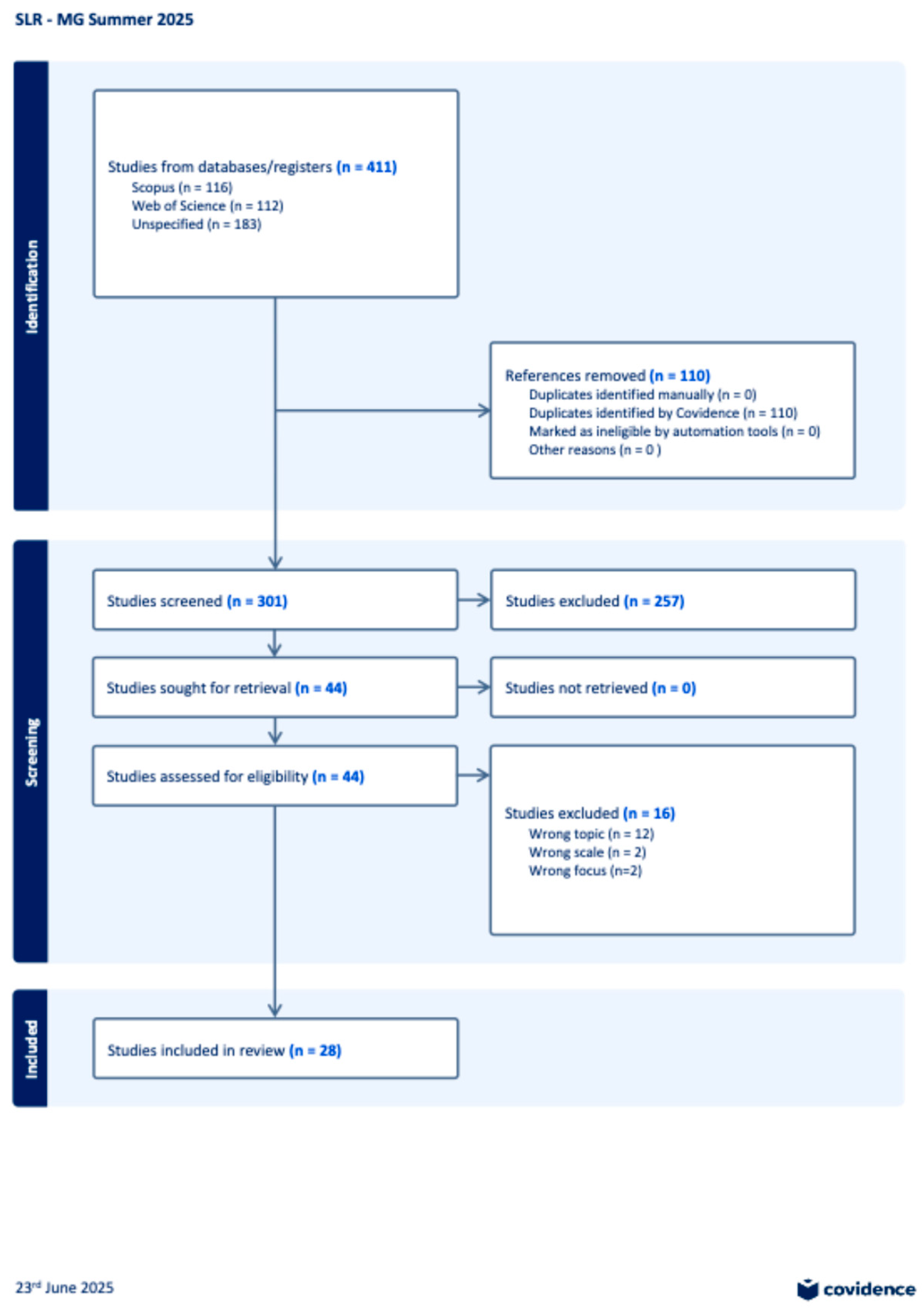
Figure 1. Prisma Model.
Climate 13 00228 g001
Figure 2. Fields of Study/Disciplines.
Climate 13 00228 g002
Figure 3. Years of Publication.
Climate 13 00228 g003
Table 1. Country/Continent of Research.
Country of Research# of Articles—n =
USA6
Multiple Country Study6
Brazil1
Canada1
China1
Lithuania1
South Korea1
Sweden1
UK1
Continent of Research
Africa5
Australia2
Europe2
Total28
Table 2. Research Methods.
Research Method# of Articles—n =
Qualitative14
Quantitative1
Mixed Method Design7
Conceptual4
Other2
Total28
Table 3. Journals.
Table 3. Journals.
Journals# of Articles—n =
Sustainability3
Climatic Change2
Administrative Sciences1
Business and Society1
Climate1
Cities1
Entrepreneurship and Sustainability Issues1
Environmental Science and Policy1
Frontiers in Psychology1
Global Ecology and Conservation1
Industrial and Commercial Training1
Implementation Science1
International Journal of Climate Change Strategies and Management1
International Journal of Sustainable Development and Planning1
International Organization1
Journal of Ecohumanism1
Manager1
Mitigation and Adaptation Strategies for Global Change1
Nature Communications1
Public Administration1
Public Personnel Management1
Scientific Reports1
Social Sciences and Humanities Open1
Systems1
Urban Policy and Research1
Total28
Table 4. Summary of Findings.
Enabler ThemeBarrier ThemeSystems Theme
1TechnologyShort-termism and Uncertainty AvoidanceStrategic Planning
2Collaborative Behaviors and ActionsAbsence of Knowledge for Policy and Decision makingInnovations and Systems
3Management Cultures, structures, and LeadershipLimited ResourcesResourcing
4Economics, Markets and Federal PolicyPeople and CultureCross-sector Collaboration and Stakeholder Engagement
Disclaimer/Publisher’s Note: The statements, opinions and data contained in all publications are solely those of the individual author(s) and contributor(s) and not of MDPI and/or the editor(s). MDPI and/or the editor(s) disclaim responsibility for any injury to people or property resulting from any ideas, methods, instructions or products referred to in the content.